 Скачать презентацию Overcoming barriers to successful implementation Case Study Pat
2cc36ada7f76c9123287bbb9f8057422.ppt
- Количество слайдов: 42



Overcoming barriers to successful implementation Case Study Pat Kennelly General Manager, Customer Service Dimpco
“Change” The process by which the future invades our lives Toffler
Change in context • The last 50, 000 years = 800 lifetimes – 650 of those lifetimes spent in caves – Writing for the last 70 – Printing for the last 6 – Electricity for the last 2 – Computers for the last ½ “The world today is as different from the world in which I was born as that world was from Ceaser’s” Boulding
First Snag • Lean and change are synonymous…. . • In order to understand implementation you first need to understand 3 things: – Why – What – How
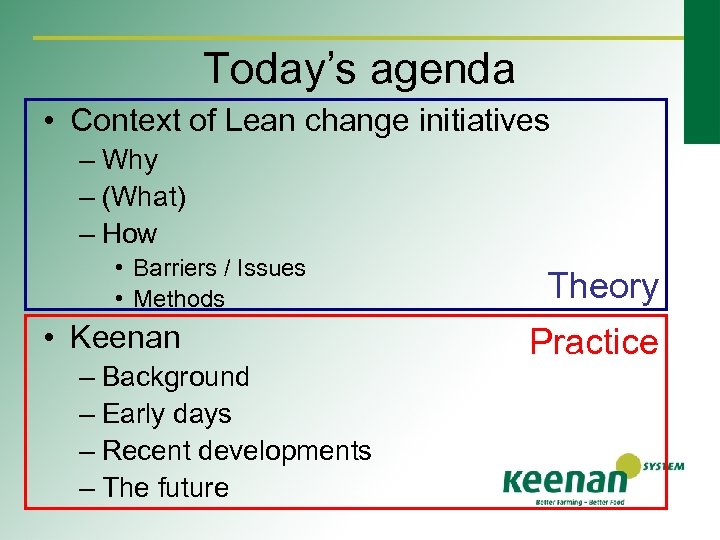
Today’s agenda • Context of Lean change initiatives – Why – (What) – How • Barriers / Issues • Methods • Keenan – Background – Early days – Recent developments – The future Theory Practice
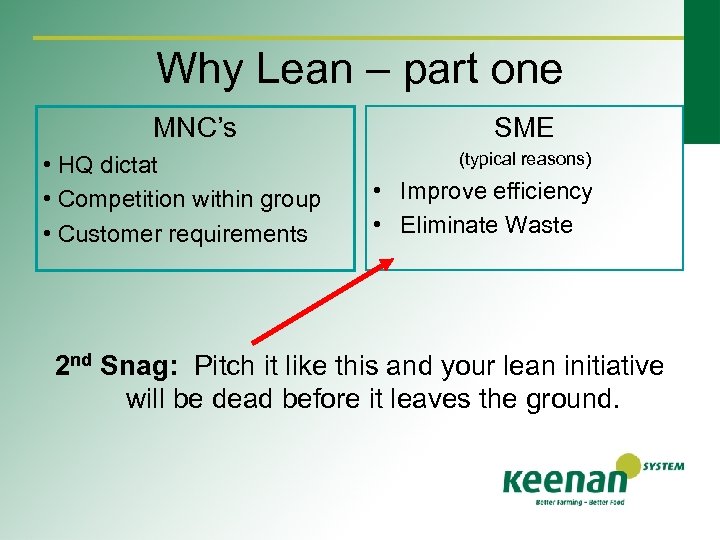
Why Lean – part one MNC’s • HQ dictat • Competition within group • Customer requirements SME (typical reasons) • Improve efficiency • Eliminate Waste 2 nd Snag: Pitch it like this and your lean initiative will be dead before it leaves the ground.
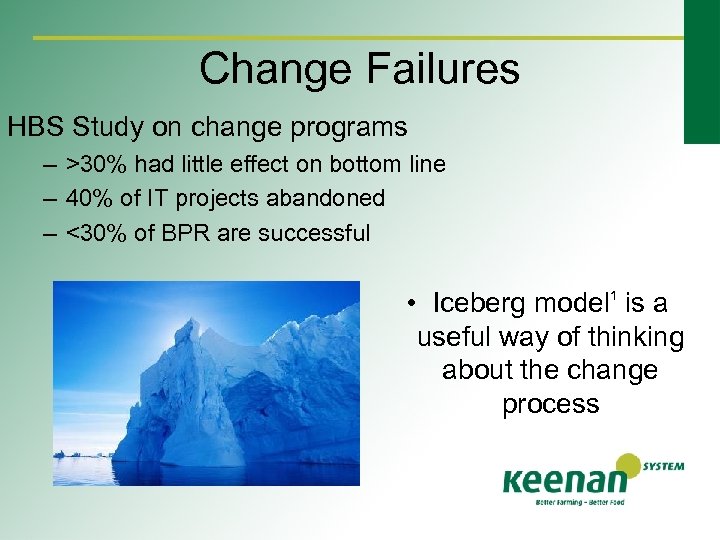
Change Failures HBS Study on change programs – >30% had little effect on bottom line – 40% of IT projects abandoned – <30% of BPR are successful • Iceberg model 1 is a useful way of thinking about the change process
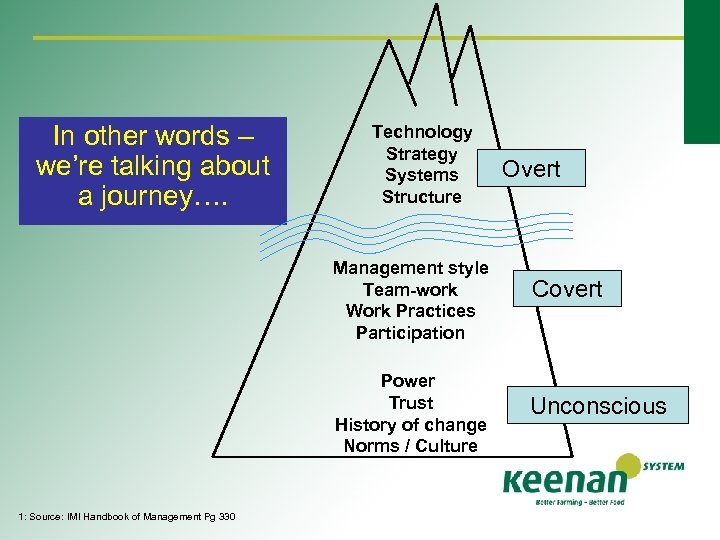
In other words – we’re talking about a journey…. Technology Strategy Systems Structure Management style Team-work Work Practices Participation Power Trust History of change Norms / Culture 1: Source: IMI Handbook of Management Pg 330 Overt Covert Unconscious
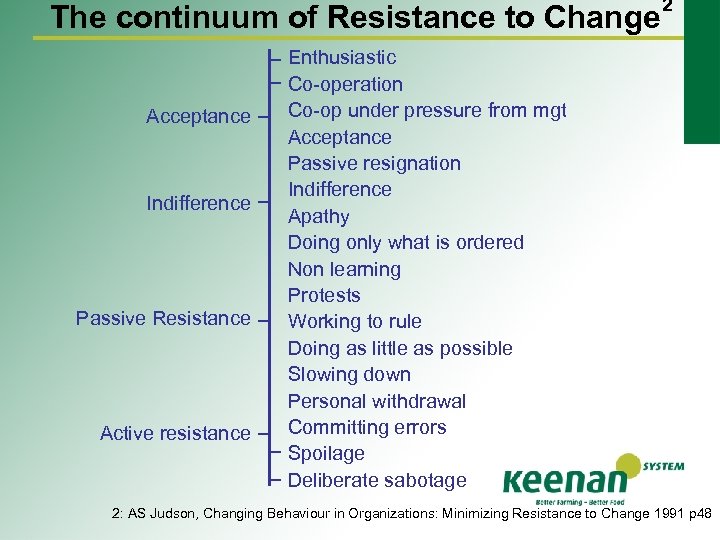
The continuum of Resistance to Change Acceptance Indifference Passive Resistance Active resistance 2 Enthusiastic Co-operation Co-op under pressure from mgt Acceptance Passive resignation Indifference Apathy Doing only what is ordered Non learning Protests Working to rule Doing as little as possible Slowing down Personal withdrawal Committing errors Spoilage Deliberate sabotage 2: AS Judson, Changing Behaviour in Organizations: Minimizing Resistance to Change 1991 p 48
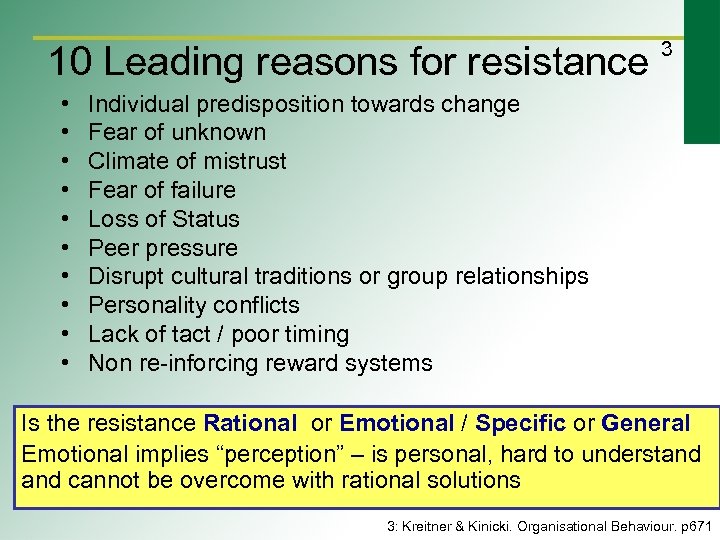
10 Leading reasons for resistance • • • 3 Individual predisposition towards change Fear of unknown Climate of mistrust Fear of failure Loss of Status Peer pressure Disrupt cultural traditions or group relationships Personality conflicts Lack of tact / poor timing Non re-inforcing reward systems Is the resistance Rational or Emotional / Specific or General Emotional implies “perception” – is personal, hard to understand cannot be overcome with rational solutions 3: Kreitner & Kinicki. Organisational Behaviour. p 671
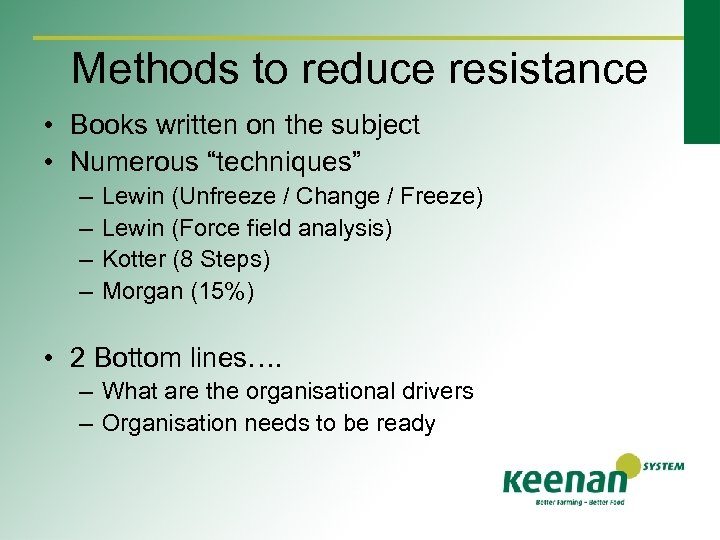
Methods to reduce resistance • Books written on the subject • Numerous “techniques” – – Lewin (Unfreeze / Change / Freeze) Lewin (Force field analysis) Kotter (8 Steps) Morgan (15%) • 2 Bottom lines…. – What are the organisational drivers – Organisation needs to be ready
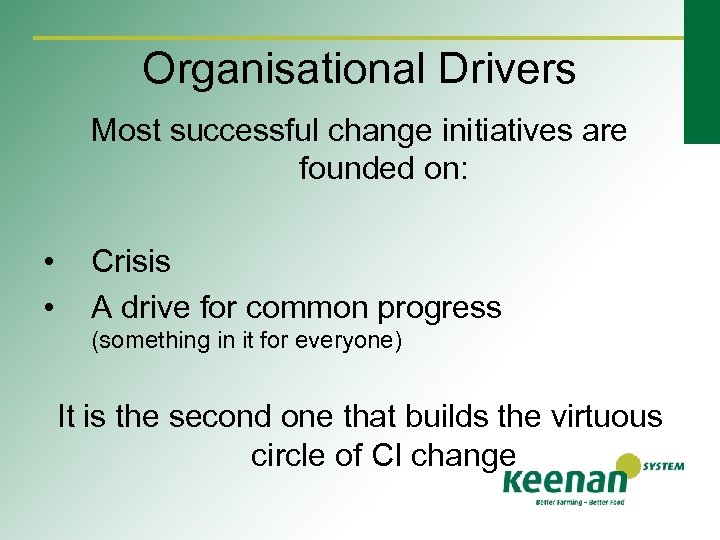
Organisational Drivers Most successful change initiatives are founded on: • • Crisis A drive for common progress (something in it for everyone) It is the second one that builds the virtuous circle of CI change
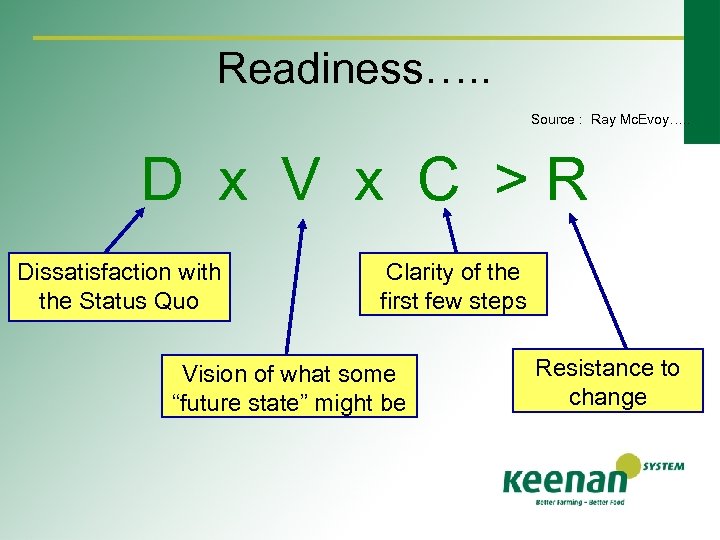
Readiness…. . Source : Ray Mc. Evoy…. . D x V x C >R Dissatisfaction with the Status Quo Clarity of the first few steps Vision of what some “future state” might be Resistance to change
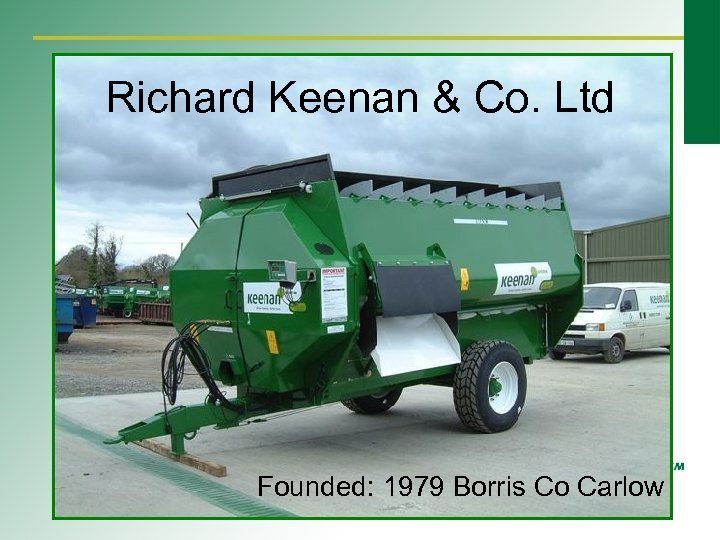
Richard Keenan & Co. Ltd Founded: 1979 Borris Co Carlow
Richard Keenan & Co. Ltd Core Purpose To make a real difference for farmers Vision To become the unique world force in innovative machine based system solutions for farmers
Richard Keenan & Co. Ltd Today… • Corporate headquarters and global manufacturing base is in Borris, Co. Carlow • > € 40 m T/O • 85% Export • 170 people in Ireland • 70 people overseas – including Australia, US, Germany, France & UK • 15, 000 customers in 40 countries
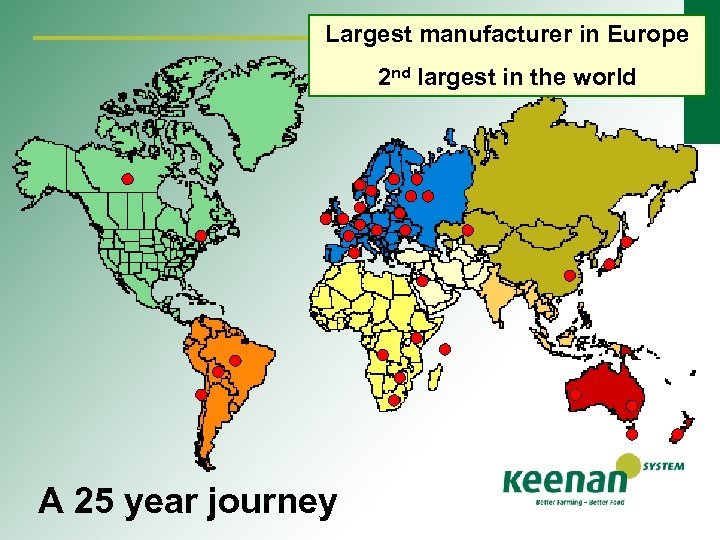
Largest manufacturer in Europe 2 nd largest in the world A 25 year journey
Early Steps – Key Drivers • • BSE - 1996 The need for a clear Vision / Strategy Market change Management Focus A need for Cost Reduction and Better Product A drive towards more Value added for Customer Live or Die !!
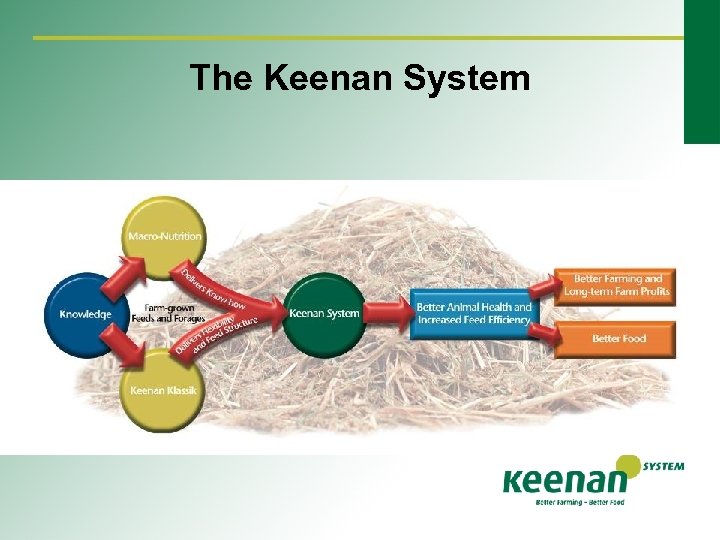
The Keenan System
Keenan Competitiveness • Market position based on machine capability integrated with knowledge • More than simply production efficiency Initial focus was WCB – not just WCM
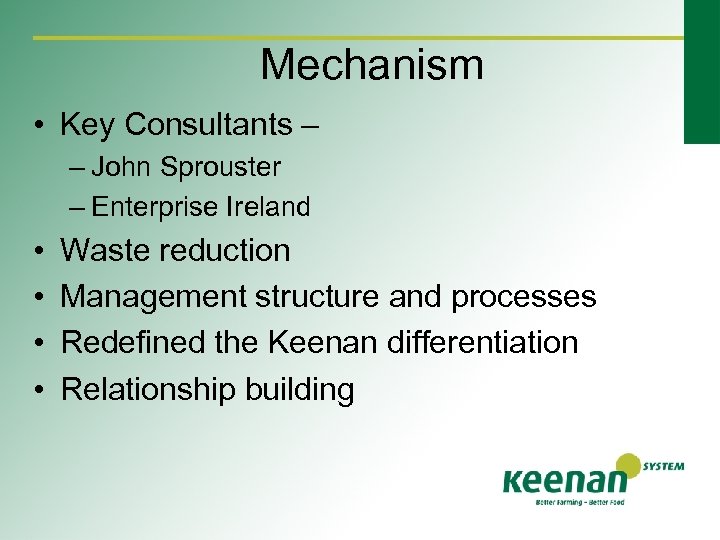
Mechanism • Key Consultants – – John Sprouster – Enterprise Ireland • • Waste reduction Management structure and processes Redefined the Keenan differentiation Relationship building
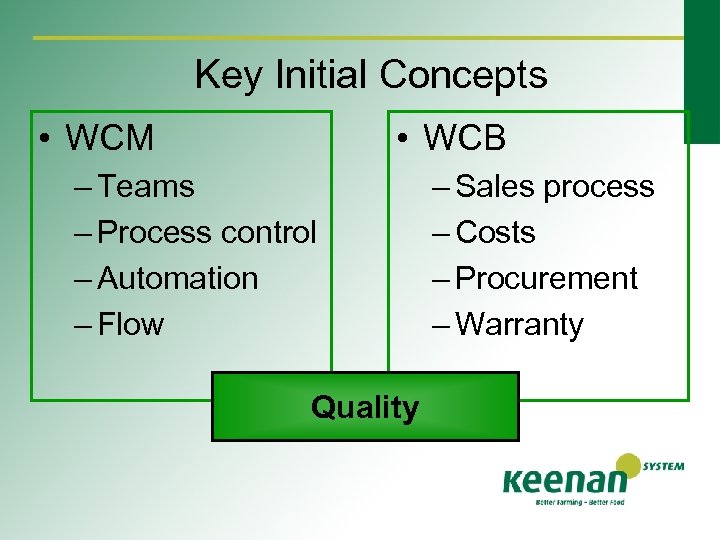
Key Initial Concepts • WCM • WCB – Teams – Process control – Automation – Flow Quality – Sales process – Costs – Procurement – Warranty
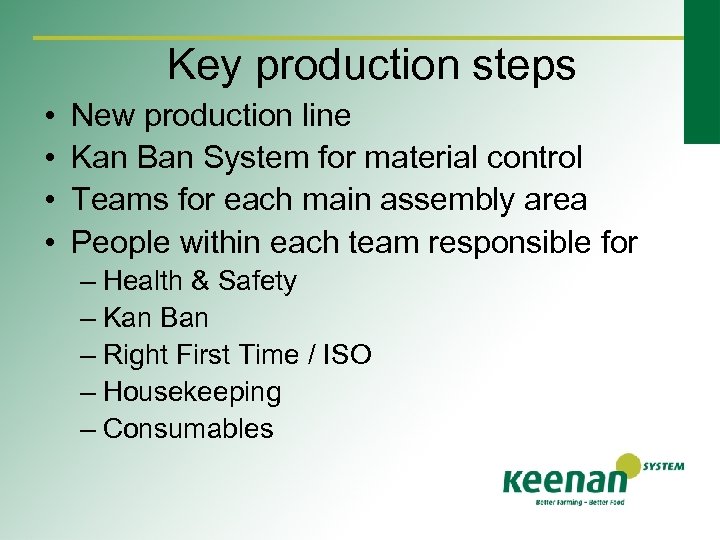
Key production steps • • New production line Kan Ban System for material control Teams for each main assembly area People within each team responsible for – Health & Safety – Kan Ban – Right First Time / ISO – Housekeeping – Consumables
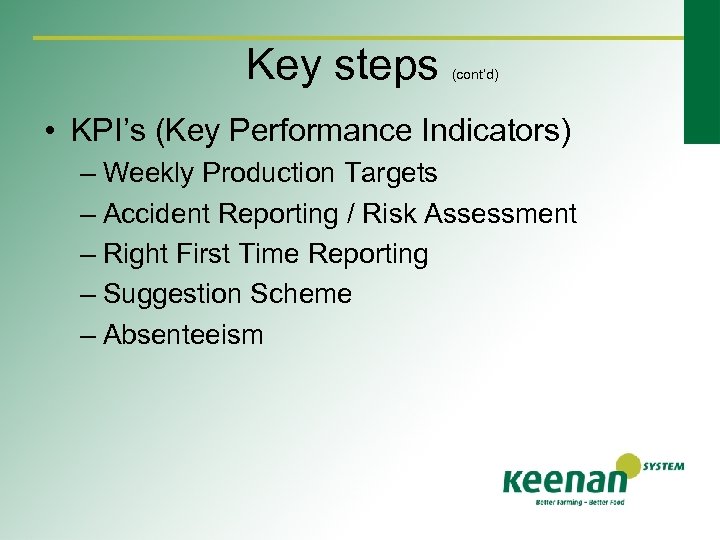
Key steps (cont’d) • KPI’s (Key Performance Indicators) – Weekly Production Targets – Accident Reporting / Risk Assessment – Right First Time Reporting – Suggestion Scheme – Absenteeism
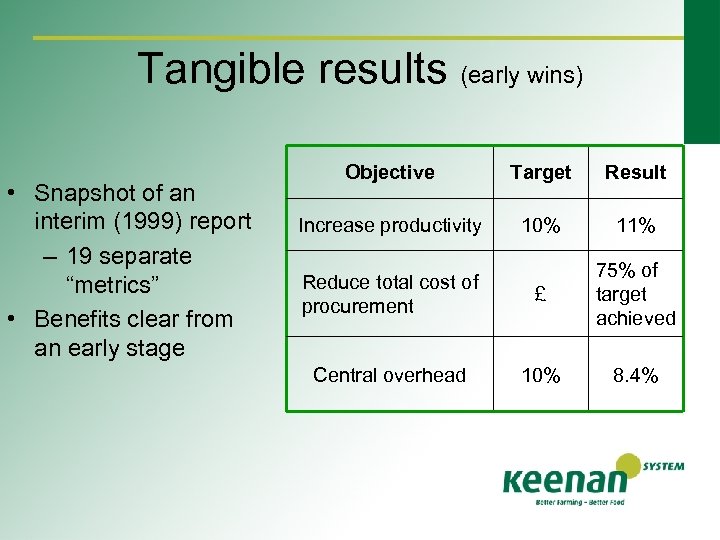
Tangible results (early wins) • Snapshot of an interim (1999) report – 19 separate “metrics” • Benefits clear from an early stage Objective Target Result Increase productivity 10% 11% Reduce total cost of procurement £ 75% of target achieved Central overhead 10% 8. 4%
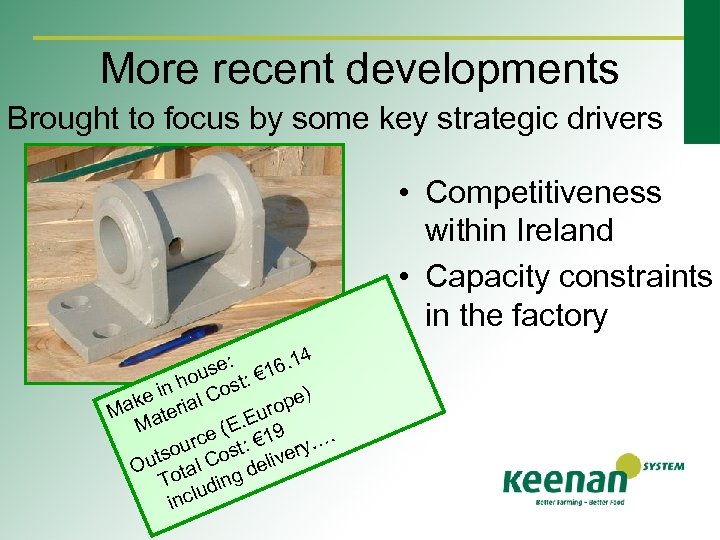
More recent developments Brought to focus by some key strategic drivers • Competitiveness within Ireland • Capacity constraints in the factory 4 e: 6. 1 s 1 hou ost: € in ) ke rial C a te ope r M a. Eu M (E ce t: € 19 y…. ur tso l Cos eliver Ou ota d T ing clud in
Production Strategy • Increase competitiveness – Outsource lower value added activity – Keep key competencies in house – Move towards “high value add” production – Improve layout – Increase Capital investment – Modify machine design to improve efficiency – Build further innovation capability
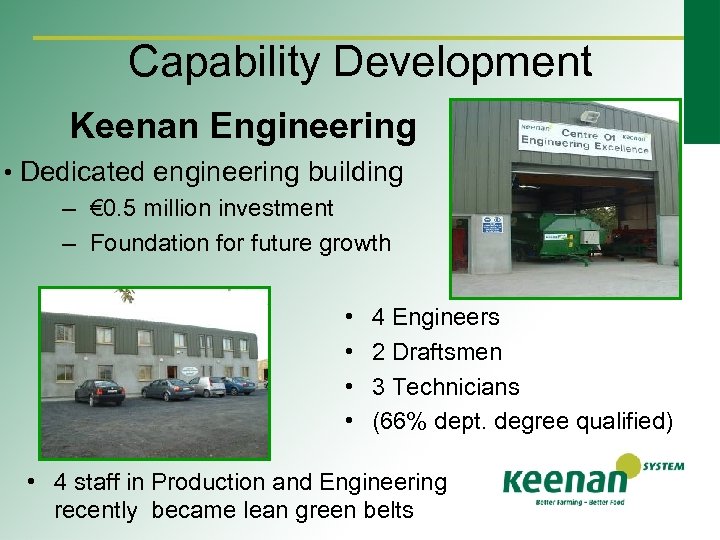
Capability Development Keenan Engineering • Dedicated engineering building – € 0. 5 million investment – Foundation for future growth • • 4 Engineers 2 Draftsmen 3 Technicians (66% dept. degree qualified) • 4 staff in Production and Engineering recently became lean green belts
Example 1 • Paddles – New cell designed and built (group input) – Part specific tooling designed and made in house – New materials allowed design change with lower cost & weight, but higher strength – Capital team built cell, tested process and trained teams • Time to manufacture reduced by >50% • Part cannot be bought in cheaper than can be made in house
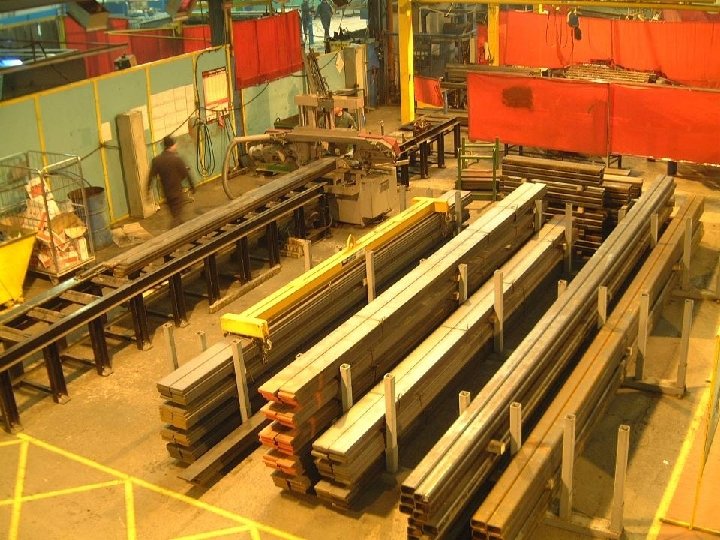
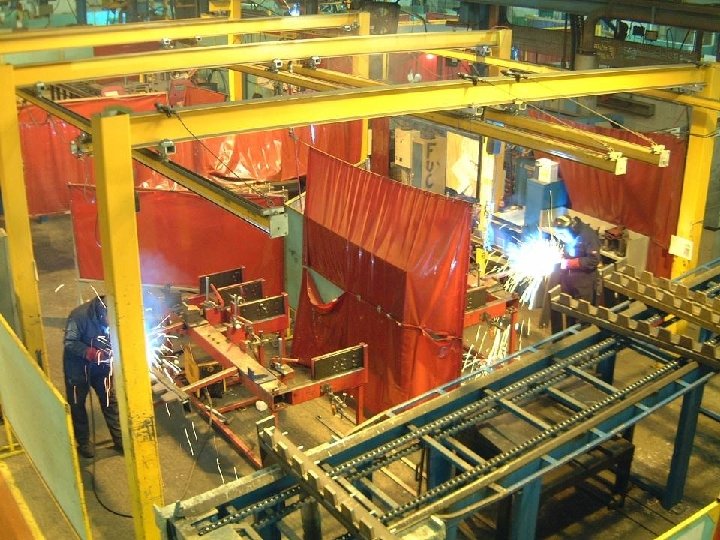
Example 2 • Chassis Cell – Most of the product complexity is in the chassis area – More than 1000 permutations of chassis, wheel, tyre… – Historically built in 2 plants, with lots of material movement – Not suitable for outsourcing
Chassis Cell - results • New cell in a single location • Part specific tooling designed and made in house (reversible jigs & draggers) • Increased capacity • Staff count reduced from 9 to 7 (-22%) • No movement of material
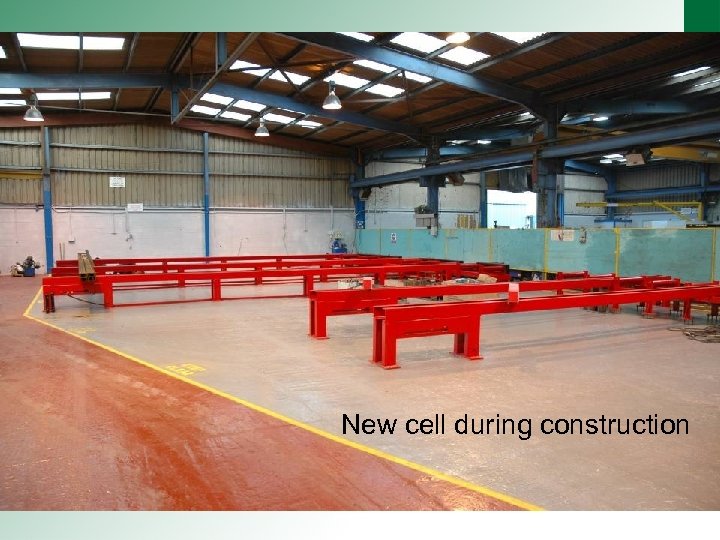
New cell during construction
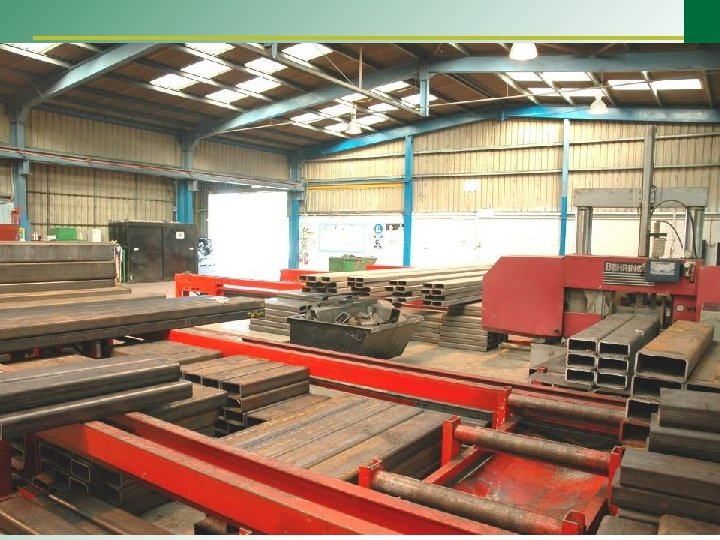
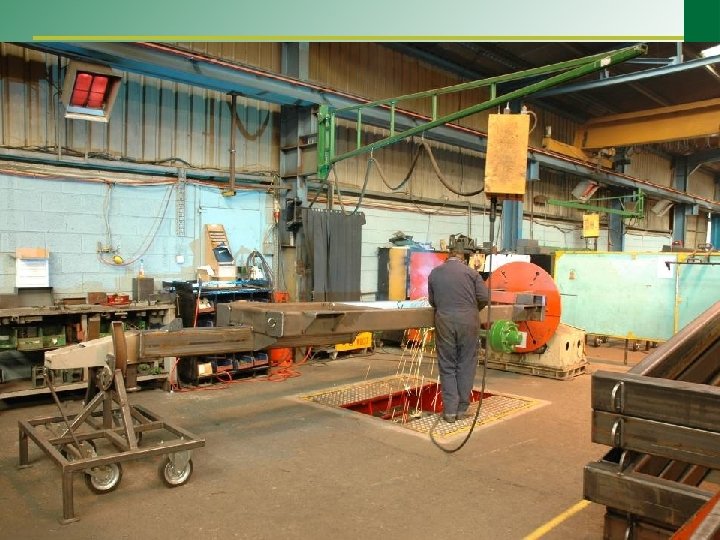
Common Themes • Change credibility built up during late 90’s • Allowed more aggressive changes in the last couple of years • In house skill with jigs and tooling • Combined benefits – Easier working conditions – Better productivity – Redeployment of staff
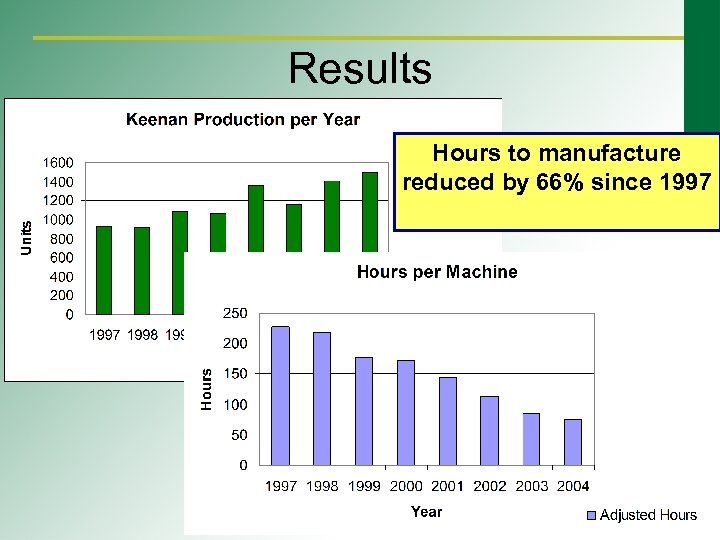
Results Hours to manufacture reduced by 66% since 1997
The Future • Develop the Keenan Manufacturing System – Single assembly plant – Mixed model value stream – Double production capacity (30 min takt time) • Drivers – Current facility is capacity constrained – Future EPA requirements needs state of art painting – Current 2 plant layout not optimum efficiency
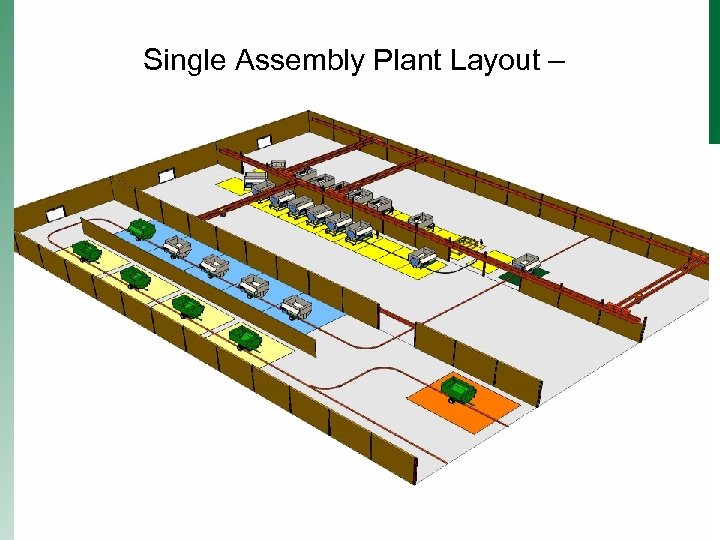
Single Assembly Plant Layout –
Summary • Keenan continue to thrive and prosper in a global business – based in an economy that has been written off from a manufacturing perspective • That they do so, is not just testimony to the product offering, but is a measure of, and just reward for the skill and innovation necessary to keep the product competitive • It can be done….
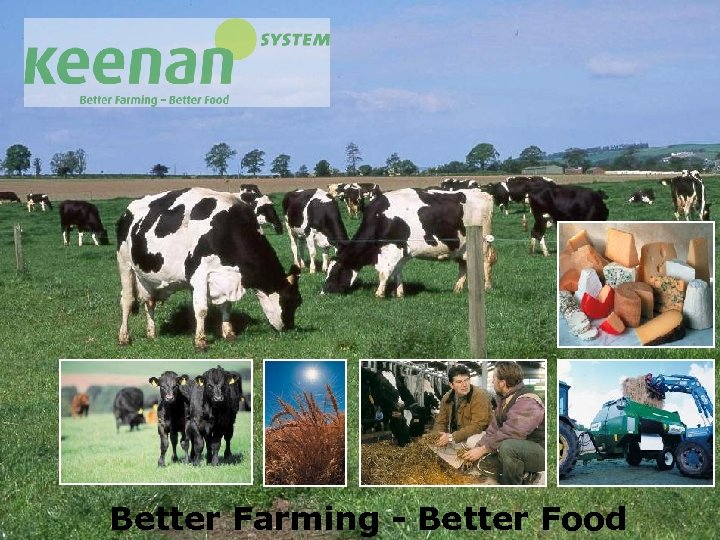
Better Farming - Better Food
Скачать презентацию Overcoming barriers to successful implementation Case Study Pat
2cc36ada7f76c9123287bbb9f8057422.ppt