 Скачать презентацию Outline Two Years of EPRI Feasibility Studies Completed
2623c2a2ee5054c85b32e03c1676d5a5.ppt
- Количество слайдов: 25



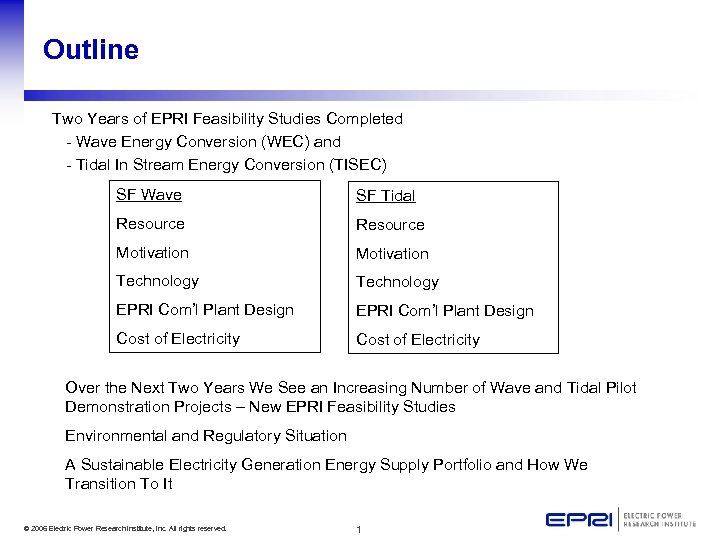
Outline Two Years of EPRI Feasibility Studies Completed - Wave Energy Conversion (WEC) and - Tidal In Stream Energy Conversion (TISEC) SF Wave SF Tidal Resource Motivation Technology EPRI Com’l Plant Design Cost of Electricity Over the Next Two Years We See an Increasing Number of Wave and Tidal Pilot Demonstration Projects – New EPRI Feasibility Studies Environmental and Regulatory Situation A Sustainable Electricity Generation Energy Supply Portfolio and How We Transition To It © 2006 Electric Power Research Institute, Inc. All rights reserved. 1
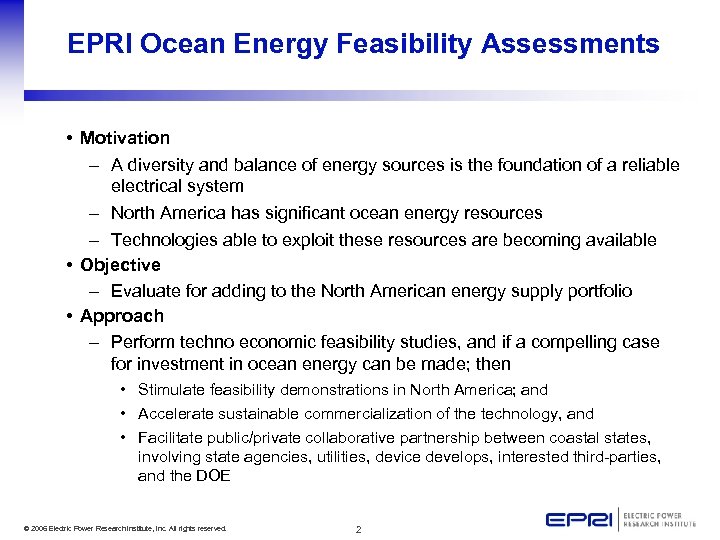
EPRI Ocean Energy Feasibility Assessments • Motivation – A diversity and balance of energy sources is the foundation of a reliable electrical system – North America has significant ocean energy resources – Technologies able to exploit these resources are becoming available • Objective – Evaluate for adding to the North American energy supply portfolio • Approach – Perform techno economic feasibility studies, and if a compelling case for investment in ocean energy can be made; then • Stimulate feasibility demonstrations in North America; and • Accelerate sustainable commercialization of the technology, and • Facilitate public/private collaborative partnership between coastal states, involving state agencies, utilities, device develops, interested third-parties, and the DOE © 2006 Electric Power Research Institute, Inc. All rights reserved. 2
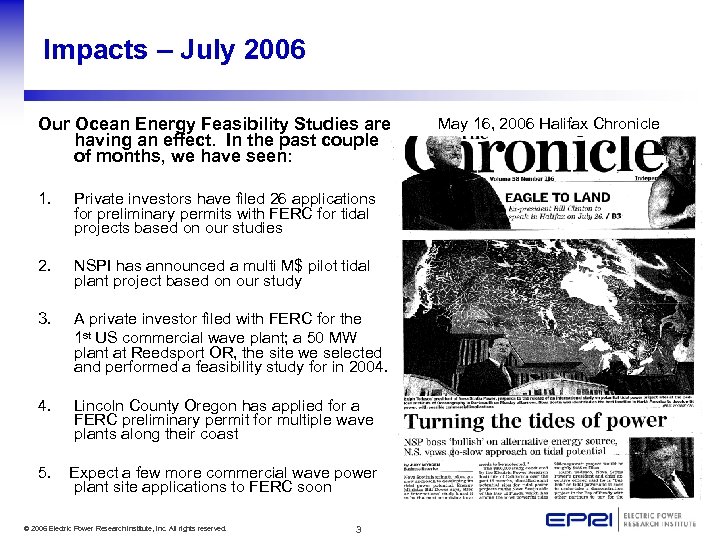
Impacts – July 2006 Our Ocean Energy Feasibility Studies are having an effect. In the past couple of months, we have seen: 1. Private investors have filed 26 applications for preliminary permits with FERC for tidal projects based on our studies 2. NSPI has announced a multi M$ pilot tidal plant project based on our study 3. A private investor filed with FERC for the 1 st US commercial wave plant; a 50 MW plant at Reedsport OR, the site we selected and performed a feasibility study for in 2004. Lincoln County Oregon has applied for a FERC preliminary permit for multiple wave plants along their coast 5. Expect a few more commercial wave power plant site applications to FERC soon © 2006 Electric Power Research Institute, Inc. All rights reserved. 3 May 16, 2006 Halifax Chronicle
Wave and Tidal Energy Resources © 2006 Electric Power Research Institute, Inc. All rights reserved. 4
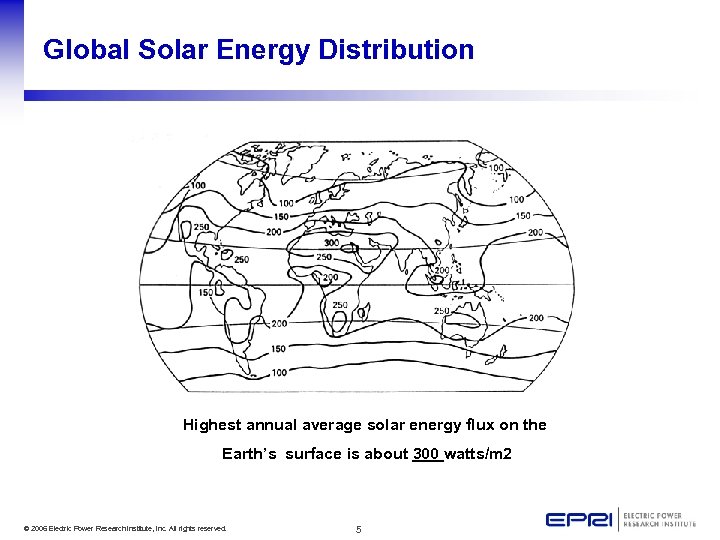
Global Solar Energy Distribution Highest annual average solar energy flux on the Earth’s surface is about 300 watts/m 2 © 2006 Electric Power Research Institute, Inc. All rights reserved. 5
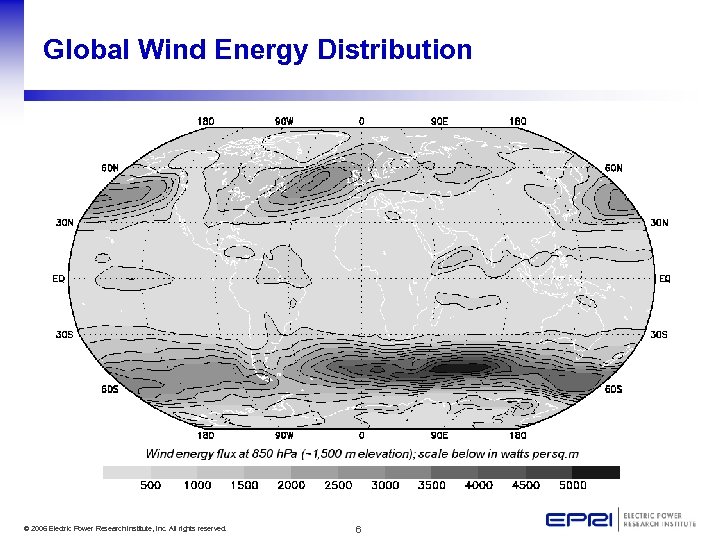
Global Wind Energy Distribution © 2006 Electric Power Research Institute, Inc. All rights reserved. 6
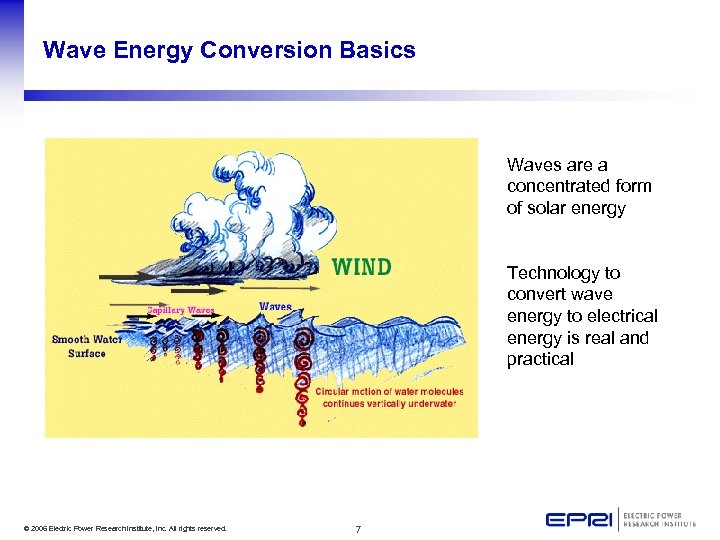
Wave Energy Conversion Basics Waves are a concentrated form of solar energy Technology to convert wave energy to electrical energy is real and practical © 2006 Electric Power Research Institute, Inc. All rights reserved. 7
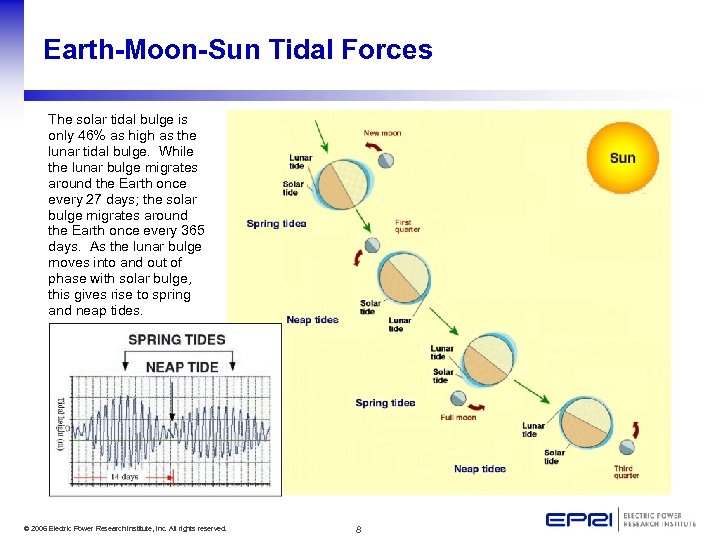
Earth-Moon-Sun Tidal Forces The solar tidal bulge is only 46% as high as the lunar tidal bulge. While the lunar bulge migrates around the Earth once every 27 days; the solar bulge migrates around the Earth once every 365 days. As the lunar bulge moves into and out of phase with solar bulge, this gives rise to spring and neap tides. © 2006 Electric Power Research Institute, Inc. All rights reserved. 8
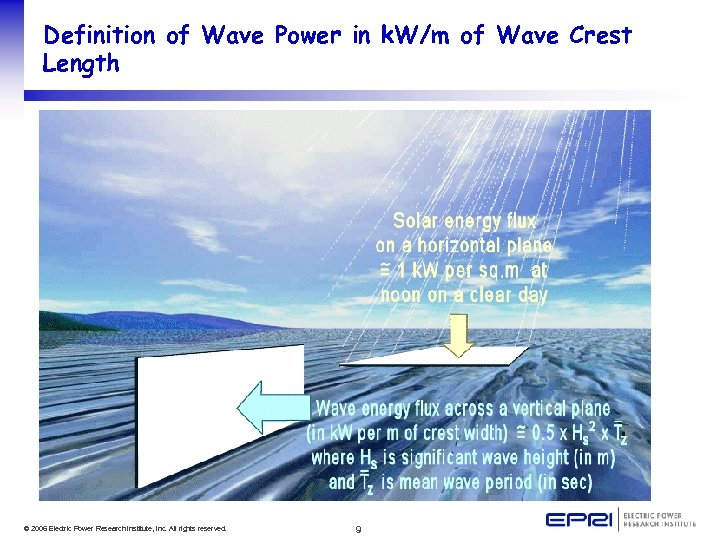
Definition of Wave Power in k. W/m of Wave Crest Length © 2006 Electric Power Research Institute, Inc. All rights reserved. 9
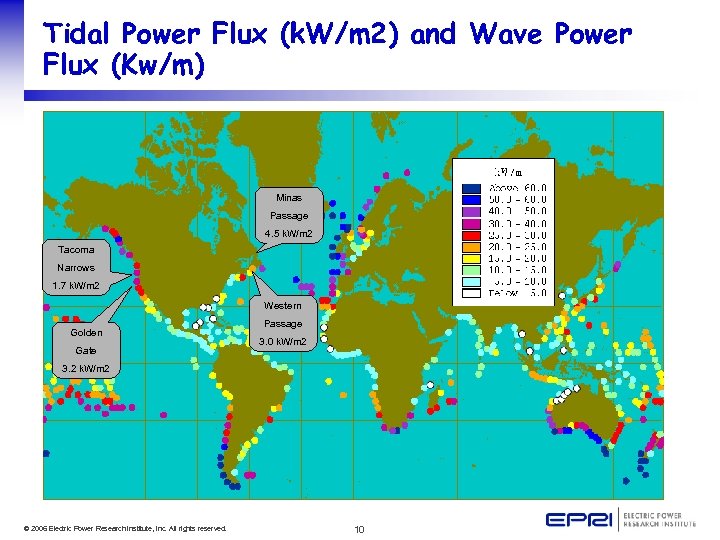
Tidal Power Flux (k. W/m 2) and Wave Power Flux (Kw/m) Minas Passage 4. 5 k. W/m 2 Tacoma Narrows 1. 7 k. W/m 2 Western Golden Gate Passage 3. 0 k. W/m 2 3. 2 k. W/m 2 © 2006 Electric Power Research Institute, Inc. All rights reserved. 10
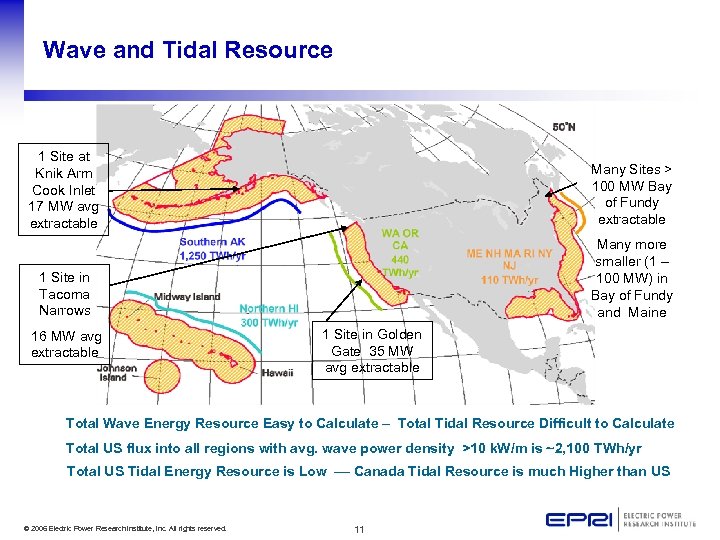
Wave and Tidal Resource 1 Site at Knik Arm Cook Inlet 17 MW avg extractable Many Sites > 100 MW Bay of Fundy extractable 1 Site in Tacoma Narrows Many more smaller (1 – 100 MW) in Bay of Fundy and Maine 16 MW avg extractable 1 Site in Golden Gate 35 MW avg extractable Total Wave Energy Resource Easy to Calculate – Total Tidal Resource Difficult to Calculate Total US flux into all regions with avg. wave power density >10 k. W/m is ~2, 100 TWh/yr Total US Tidal Energy Resource is Low –– Canada Tidal Resource is much Higher than US © 2006 Electric Power Research Institute, Inc. All rights reserved. 11
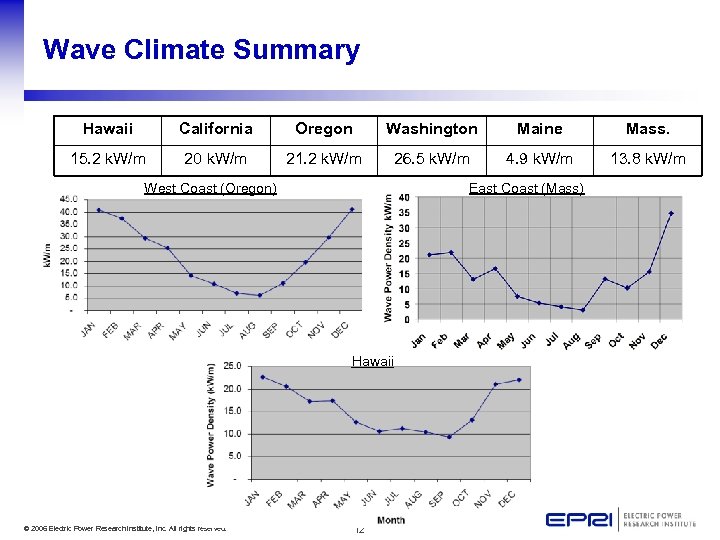
Wave Climate Summary Hawaii California Oregon Washington Maine Mass. 15. 2 k. W/m 20 k. W/m 21. 2 k. W/m 26. 5 k. W/m 4. 9 k. W/m 13. 8 k. W/m West Coast (Oregon) East Coast (Mass) Hawaii © 2006 Electric Power Research Institute, Inc. All rights reserved. 12
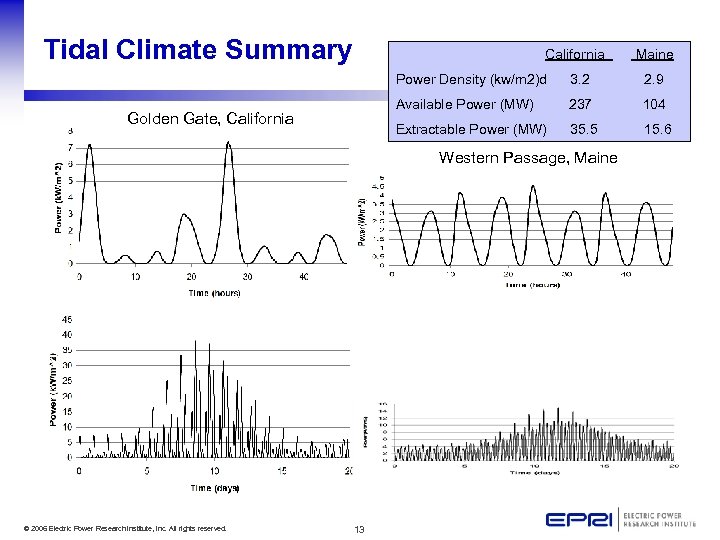
Tidal Climate Summary California Maine Power Density (kw/m 2)d 2. 9 Available Power (MW) 237 104 Extractable Power (MW) Golden Gate, California 3. 2 35. 5 15. 6 Western Passage, Maine © 2006 Electric Power Research Institute, Inc. All rights reserved. 13
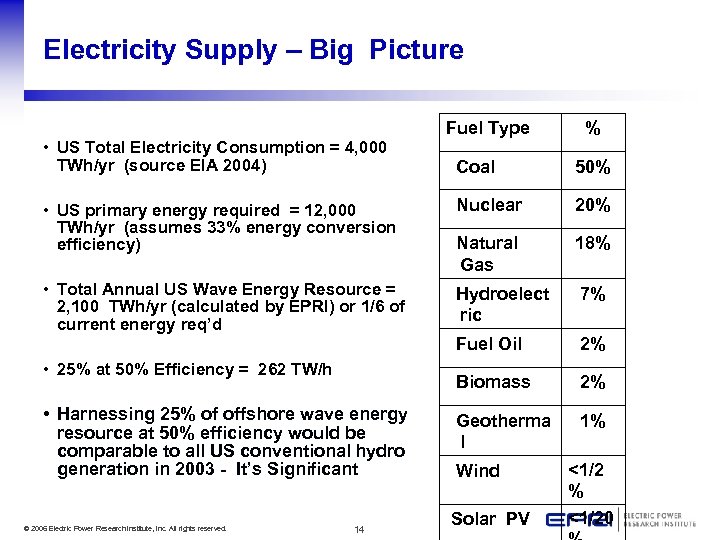
Electricity Supply – Big Picture • US Total Electricity Consumption = 4, 000 TWh/yr (source EIA 2004) Fuel Type % Coal 50% • US primary energy required = 12, 000 TWh/yr (assumes 33% energy conversion efficiency) Nuclear 20% Natural Gas 18% • Total Annual US Wave Energy Resource = 2, 100 TWh/yr (calculated by EPRI) or 1/6 of current energy req’d Hydroelect ric 7% Fuel Oil 2% Biomass 2% Geotherma l 1% • 25% at 50% Efficiency = 262 TW/h • Harnessing 25% of offshore wave energy resource at 50% efficiency would be comparable to all US conventional hydro generation in 2003 - It’s Significant © 2006 Electric Power Research Institute, Inc. All rights reserved. 14 Wind <1/2 % Solar PV <1/20
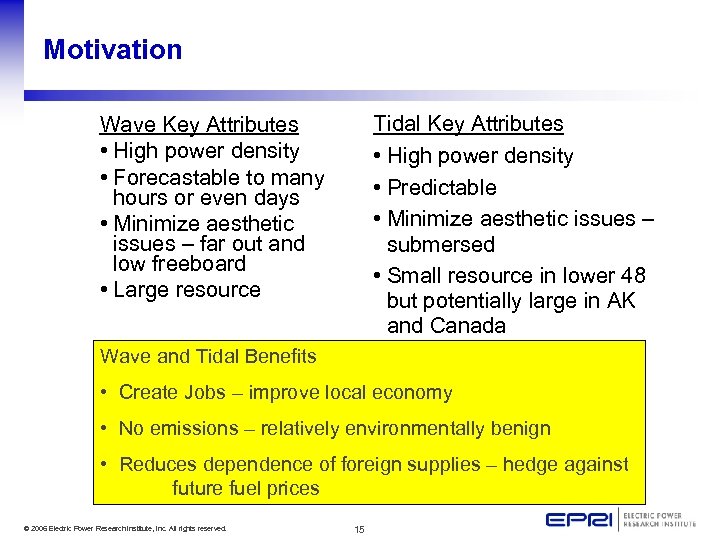
Motivation Tidal Key Attributes • High power density • Predictable • Minimize aesthetic issues – submersed • Small resource in lower 48 but potentially large in AK and Canada Wave Key Attributes • High power density • Forecastable to many hours or even days • Minimize aesthetic issues – far out and low freeboard • Large resource Wave and Tidal Benefits • Create Jobs – improve local economy • No emissions – relatively environmentally benign • Reduces dependence of foreign supplies – hedge against future fuel prices © 2006 Electric Power Research Institute, Inc. All rights reserved. 15
Wave and Tidal Energy Conversion © 2006 Electric Power Research Institute, Inc. All rights reserved. 16
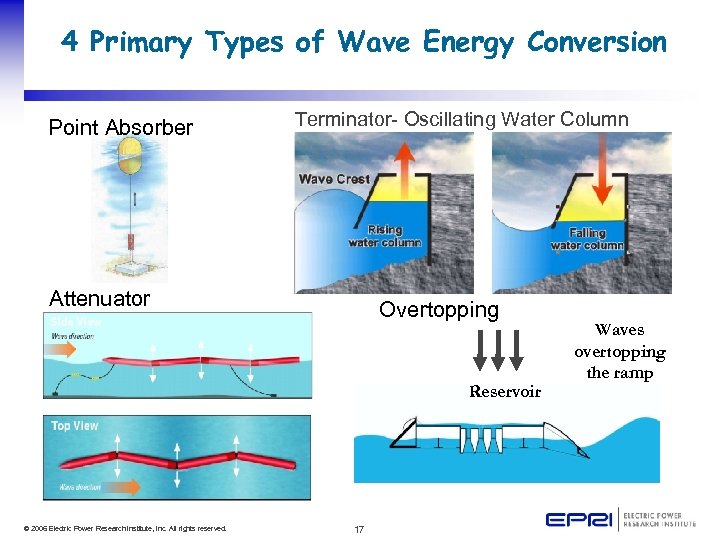
4 Primary Types of Wave Energy Conversion Point Absorber Terminator- Oscillating Water Column Attenuator Overtopping Reservoir © 2006 Electric Power Research Institute, Inc. All rights reserved. 17 Waves overtopping the ramp
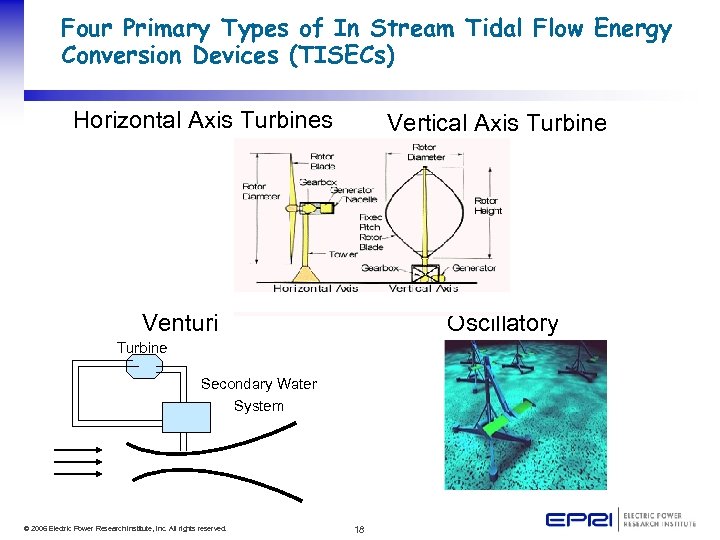
Four Primary Types of In Stream Tidal Flow Energy Conversion Devices (TISECs) Horizontal Axis Turbines Vertical Axis Turbine Venturi Oscillatory Turbine Secondary Water System © 2006 Electric Power Research Institute, Inc. All rights reserved. 18
Wave and Tidal Power Plant Design, Performance Cost and Economics © 2006 Electric Power Research Institute, Inc. All rights reserved. 19
Tidal Site Survey Elements • Tidal channel with annual avg speed of tidal current peaks (ebb and flood) V ≥ 1. 54 m/s (3 knots); equiv 1. 9 k. W/m 2 • Large Cross Section Area “A” (P = 0. 5 r A V 3) • Suitable onshore grid interconnection point/substation – Close proximity to site to reduce transmission cost – Existing grid capable of handling an additional 1 MW or so nominal demonstration project) and commercial plant sized for site) • Environmental concerns/Showstoppers (e. g. , dredged channel, beach ice, etc) • Local public and political support • Nearby harbor to support deployment and servicing – Fabrication infrastructure: large open spaces for staging materials, incoming rail line, cranes, dry dock or graving dock, slipways – Home-ported tugs or workboats – Ongoing shipbuilding and repair activities – Local economic development incentives © 2006 Electric Power Research Institute, Inc. All rights reserved. 20
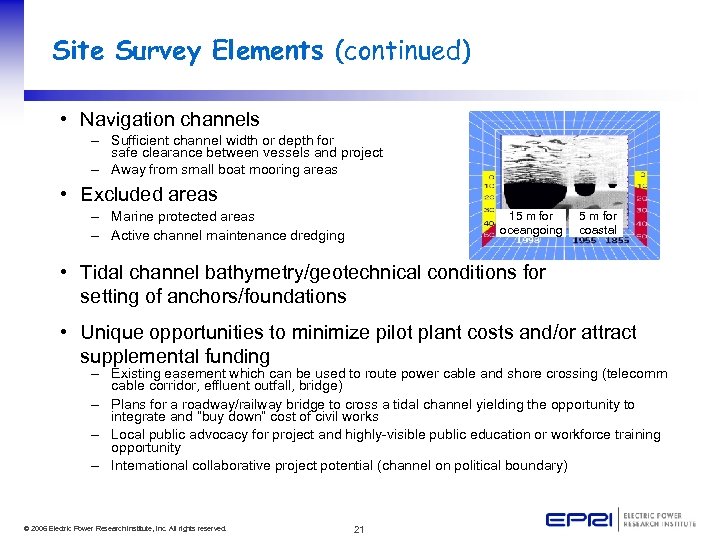
Site Survey Elements (continued) • Navigation channels – Sufficient channel width or depth for safe clearance between vessels and project – Away from small boat mooring areas • Excluded areas – Marine protected areas – Active channel maintenance dredging 15 m for oceangoing 5 m for coastal • Tidal channel bathymetry/geotechnical conditions for setting of anchors/foundations • Unique opportunities to minimize pilot plant costs and/or attract supplemental funding – Existing easement which can be used to route power cable and shore crossing (telecomm cable corridor, effluent outfall, bridge) – Plans for a roadway/railway bridge to cross a tidal channel yielding the opportunity to integrate and “buy down” cost of civil works – Local public advocacy for project and highly-visible public education or workforce training opportunity – International collaborative project potential (channel on political boundary) © 2006 Electric Power Research Institute, Inc. All rights reserved. 21
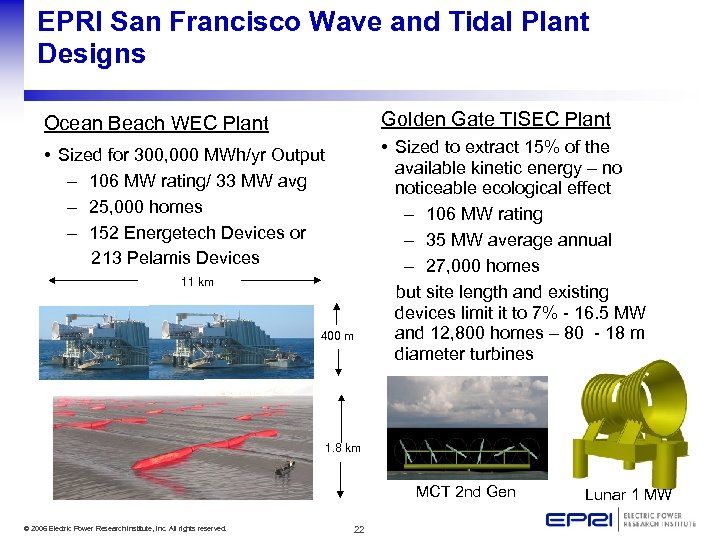
EPRI San Francisco Wave and Tidal Plant Designs Ocean Beach WEC Plant Golden Gate TISEC Plant • Sized for 300, 000 MWh/yr Output – 106 MW rating/ 33 MW avg – 25, 000 homes – 152 Energetech Devices or 213 Pelamis Devices • Sized to extract 15% of the available kinetic energy – no noticeable ecological effect – 106 MW rating – 35 MW average annual – 27, 000 homes but site length and existing devices limit it to 7% - 16. 5 MW and 12, 800 homes – 80 - 18 m diameter turbines 11 km 400 m 1. 8 km MCT 2 nd Gen © 2006 Electric Power Research Institute, Inc. All rights reserved. 22 Lunar 1 MW
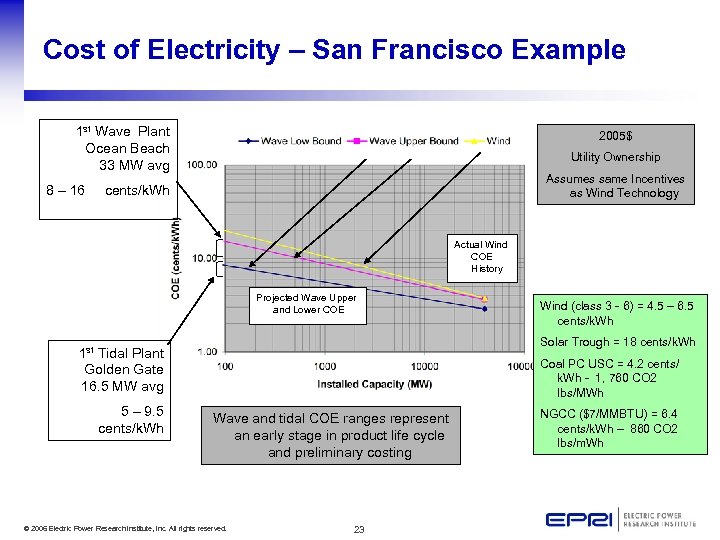
Cost of Electricity – San Francisco Example 1 st Wave Plant Ocean Beach 33 MW avg 8 – 16 2005$ Utility Ownership Assumes same Incentives as Wind Technology cents/k. Wh Actual Wind COE History Projected Wave Upper and Lower COE Solar Trough = 18 cents/k. Wh 1 st Tidal Plant Golden Gate 16. 5 MW avg 5 – 9. 5 cents/k. Wh Wind (class 3 - 6) = 4. 5 – 6. 5 cents/k. Wh Coal PC USC = 4. 2 cents/ k. Wh - 1, 760 CO 2 lbs/MWh Wave and tidal COE ranges represent an early stage in product life cycle and preliminary costing © 2006 Electric Power Research Institute, Inc. All rights reserved. 23 NGCC ($7/MMBTU) = 6. 4 cents/k. Wh – 860 CO 2 lbs/m. Wh
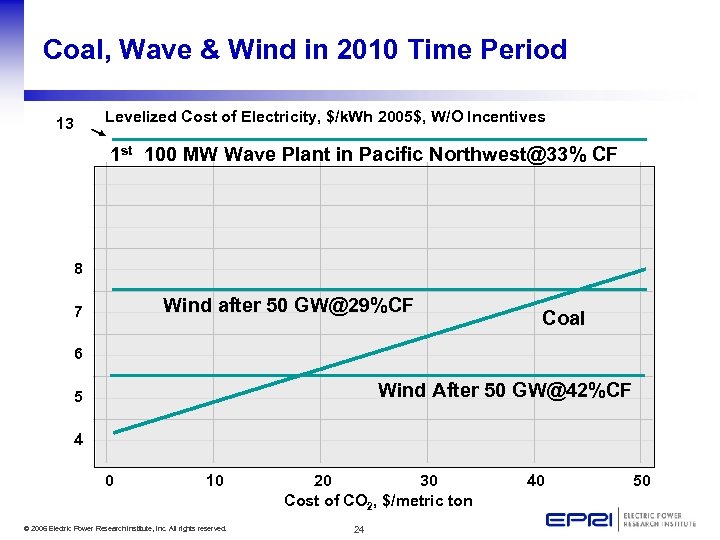
Coal, Wave & Wind in 2010 Time Period 13 Levelized Cost of Electricity, $/k. Wh 2005$, W/O Incentives 1 st 100 MW Wave Plant in Pacific Northwest@33% CF 8 Wind after 50 GW@29%CF 7 Coal 6 Wind After 50 GW@42%CF 5 4 0 10 © 2006 Electric Power Research Institute, Inc. All rights reserved. 20 30 Cost of CO 2, $/metric ton 24 40 50
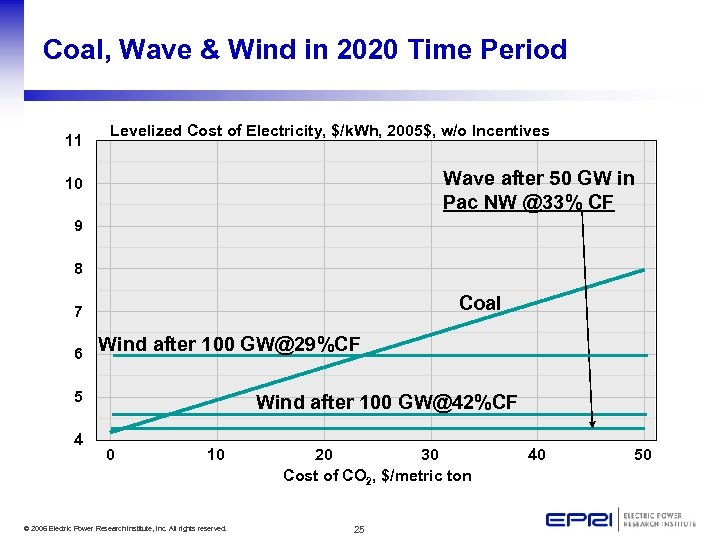
Coal, Wave & Wind in 2020 Time Period 11 Levelized Cost of Electricity, $/k. Wh, 2005$, w/o Incentives Wave after 50 GW in Pac NW @33% CF 10 9 8 Coal 7 6 Wind after 100 GW@29%CF 5 4 Wind after 100 GW@42%CF 0 10 © 2006 Electric Power Research Institute, Inc. All rights reserved. 20 30 Cost of CO 2, $/metric ton 25 40 50
Скачать презентацию Outline Two Years of EPRI Feasibility Studies Completed
2623c2a2ee5054c85b32e03c1676d5a5.ppt