


 Скачать презентацию Out of Many A History of the American
38abffda13bc505973cb208476766ec5.ppt
- Количество слайдов: 82
 Out of Many A History of the American People Seventh Edition Brief Sixth Edition Chapter 19 Production and Consumption in the Gilded Age 1865 -1900 Out of Many: A History of the American People, Brief Sixth Edition John Mack Faragher • Mari Jo Buhle • Daniel Czitrom • Susan H. Armitage Copyright © 2012 by Pearson Education, Inc. All rights reserved.
 The Rise of Industry The Triumph of Business
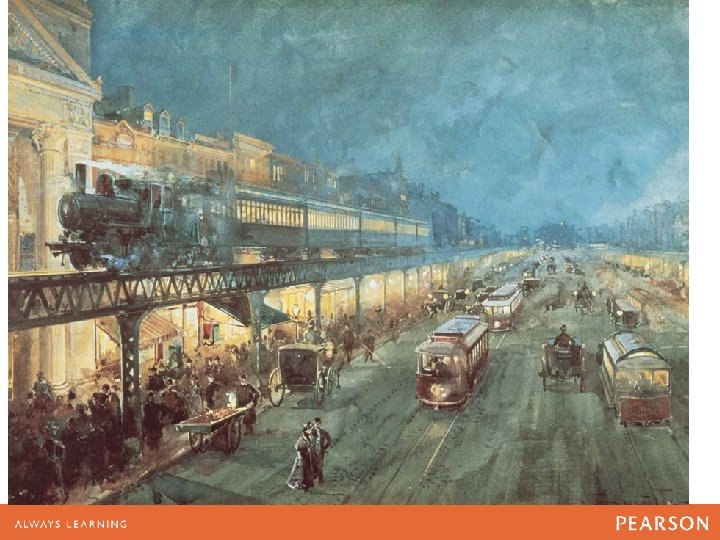 The Bowery at Night
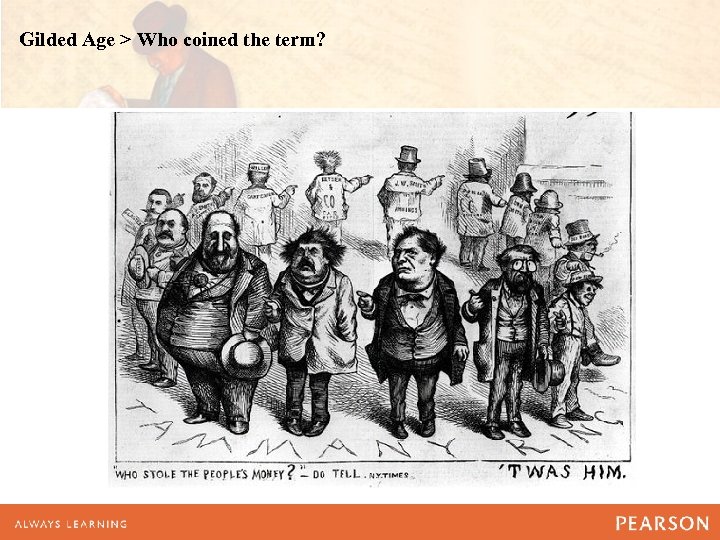 Gilded Age > Who coined the term?
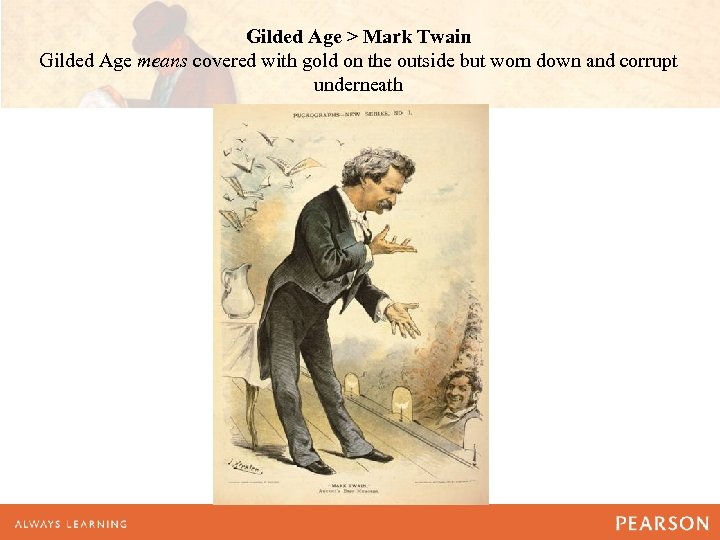 Gilded Age > Mark Twain Gilded Age means covered with gold on the outside but worn down and corrupt underneath
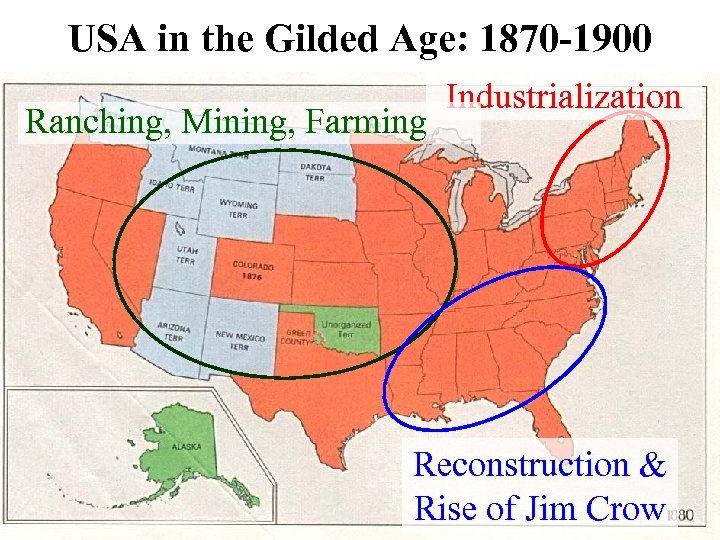 USA in the Gilded Age: 1870 -1900 Ranching, Mining, Farming Industrialization Reconstruction & Rise of Jim Crow
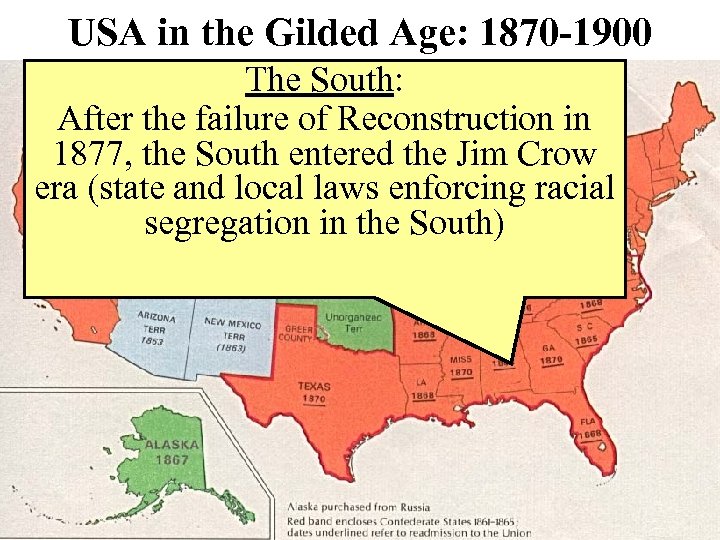 USA in the Gilded Age: 1870 -1900 The South: South After the failure of Reconstruction in 1877, the South entered the Jim Crow era (state and local laws enforcing racial segregation in the South)
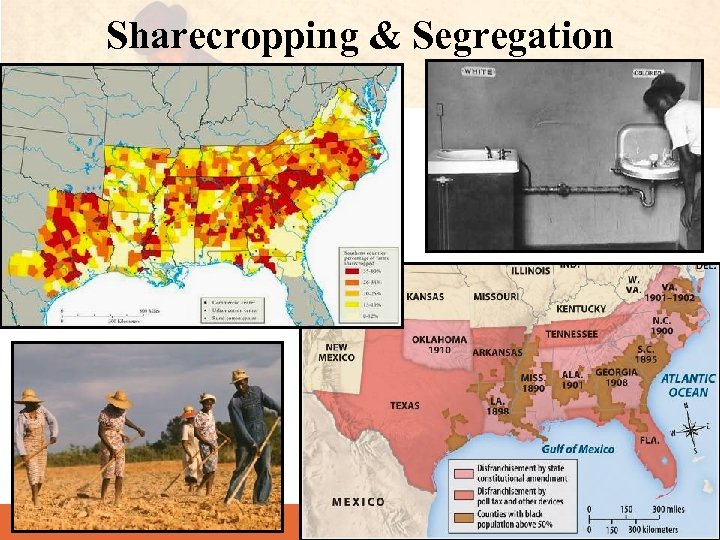 Sharecropping & Segregation
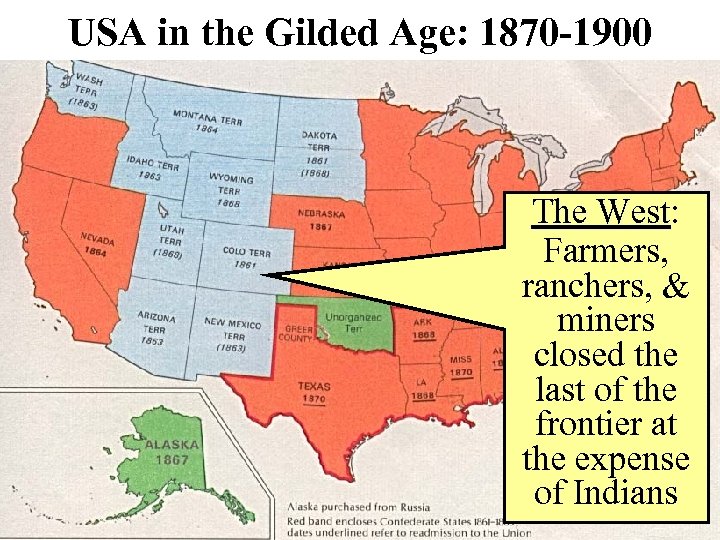 USA in the Gilded Age: 1870 -1900 The West: West Farmers, ranchers, & miners closed the last of the frontier at the expense of Indians
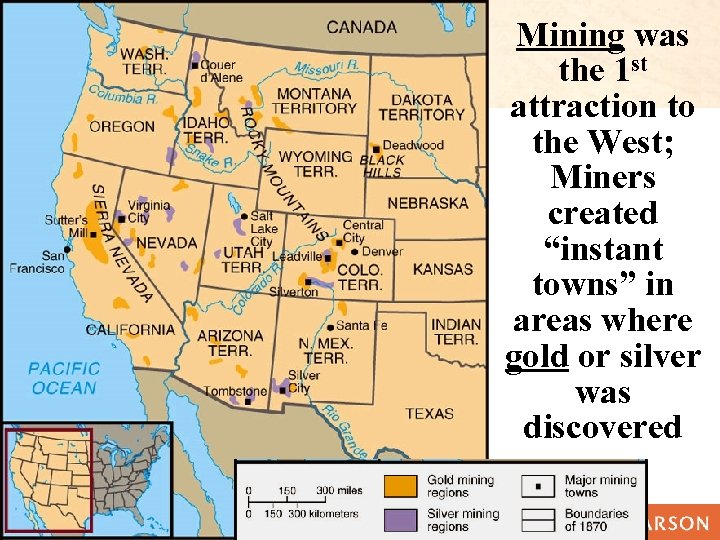 Mining was the 1 st attraction to the West; Miners created “instant towns” in areas where gold or silver was discovered
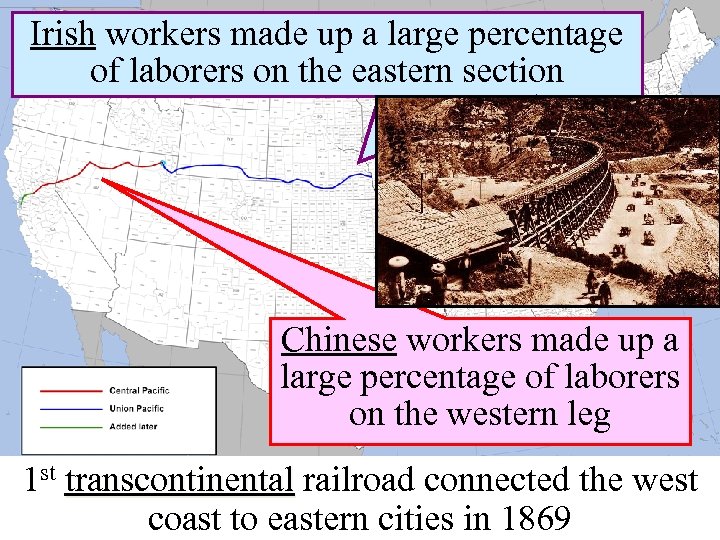 Irish workers made up a large percentage of laborers on the eastern section Chinese workers made up a large percentage of laborers on the western leg 1 st transcontinental railroad connected the west coast to eastern cities in 1869
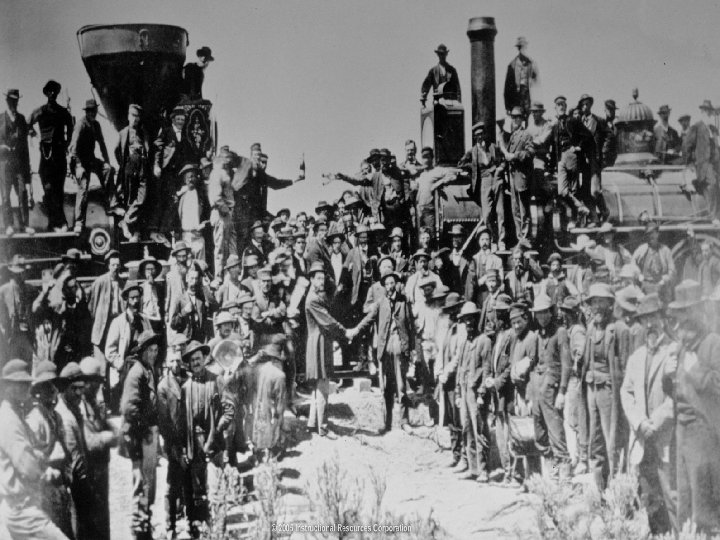
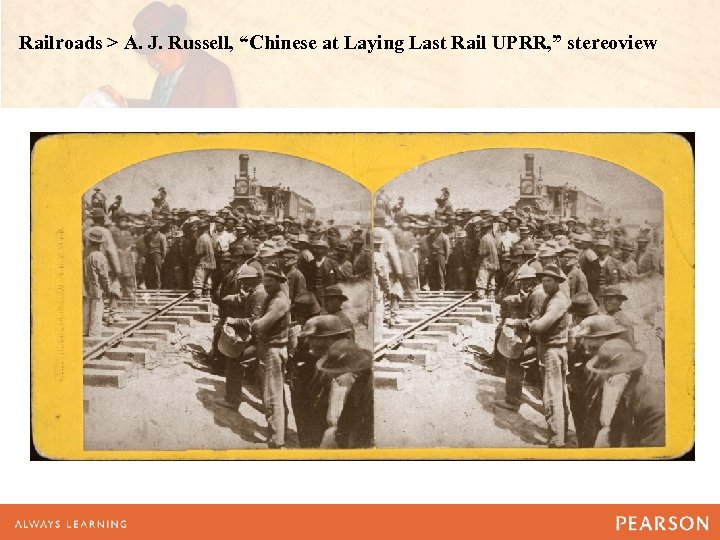 Railroads > A. J. Russell, “Chinese at Laying Last Rail UPRR, ” stereoview
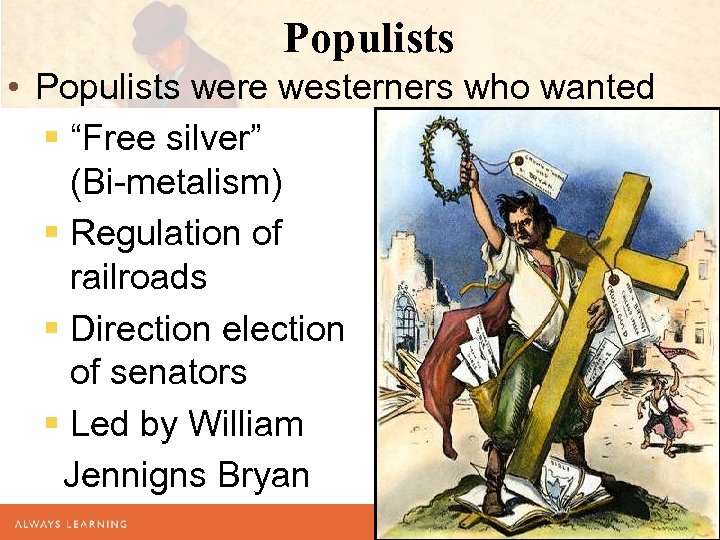 Populists • Populists were westerners who wanted § “Free silver” (Bi-metalism) § Regulation of railroads § Direction election of senators § Led by William Jennigns Bryan
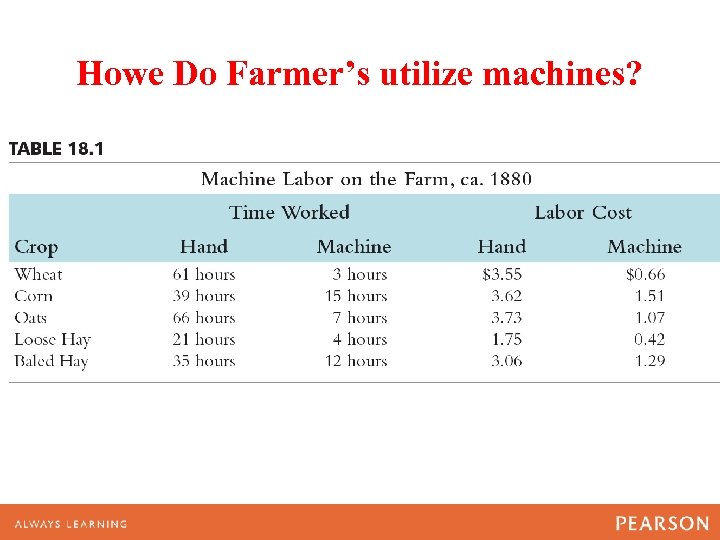 Howe Do Farmer’s utilize machines? TABLE 18. 1 Machine Labor on the Farm, ca. 1880
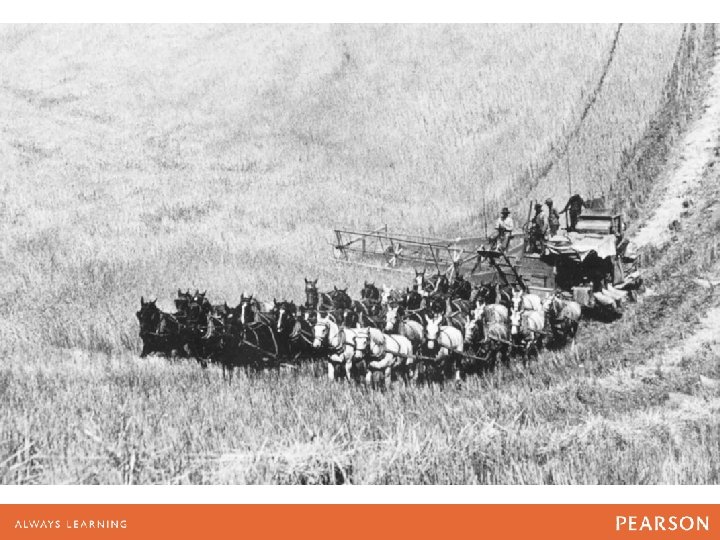 “Thirty-three horse team harvester”
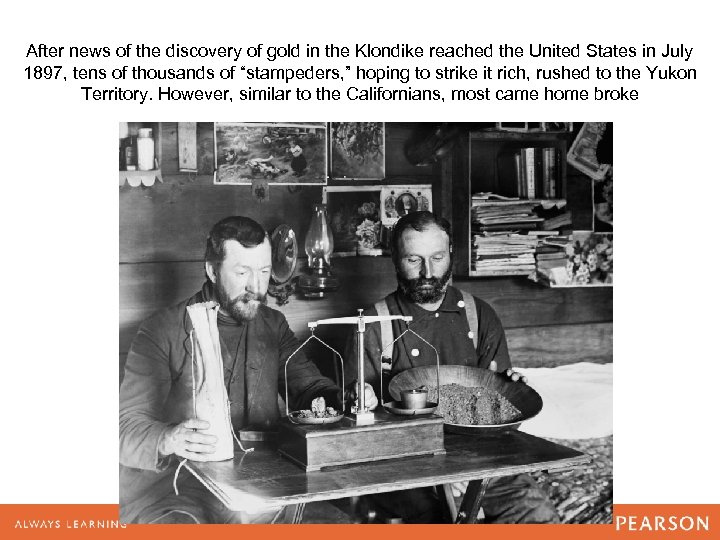 After news of the discovery of gold in the Klondike reached the United States in July 1897, tens of thousands of “stampeders, ” hoping to strike it rich, rushed to the Yukon Territory. However, similar to the Californians, most came home broke “Stampeders, ”
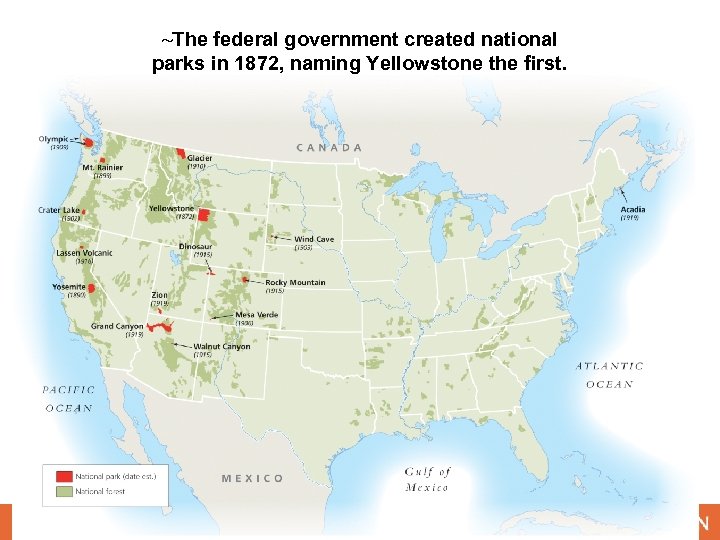 ~The federal government created national parks in 1872, naming Yellowstone the first.
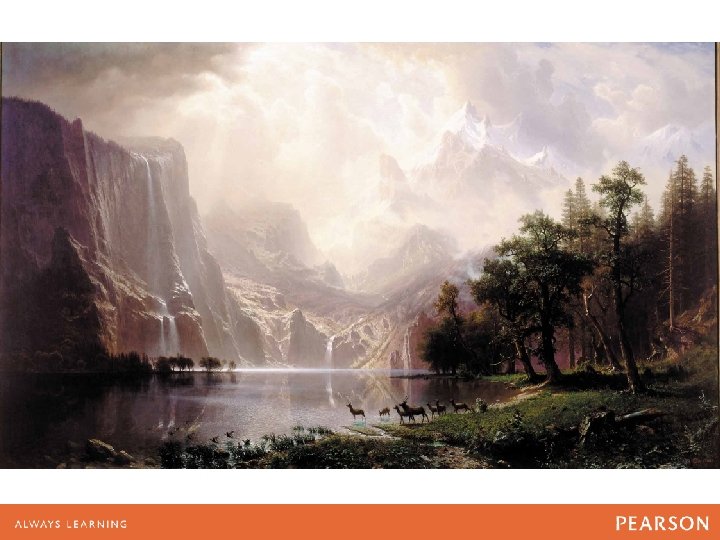 Albert Bierstadt became one of the first artists to capture on enormous canvases the legendary vastness and rugged terrain of western mountains and wilderness
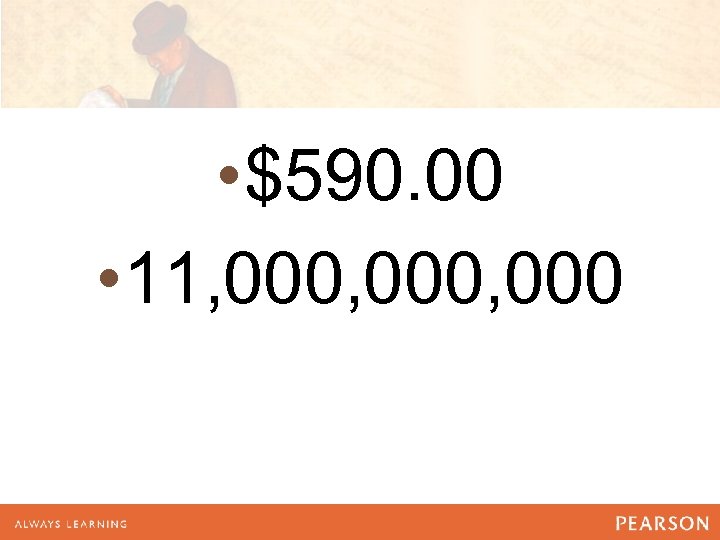 • $590. 00 • 11, 000, 000
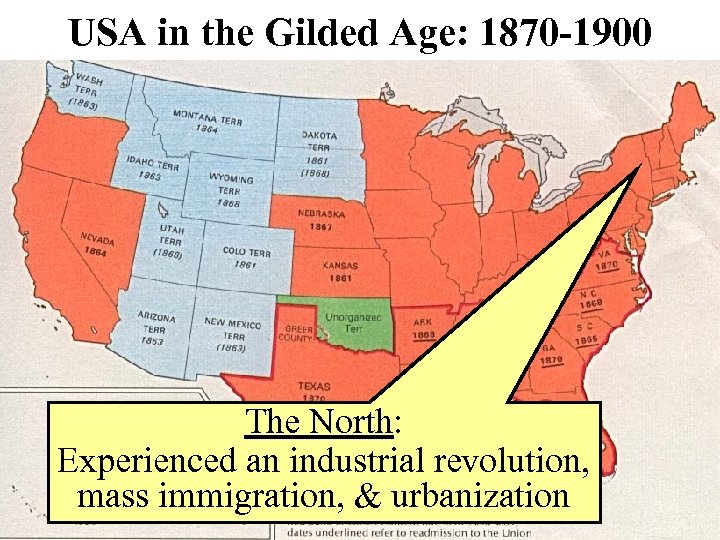 USA in the Gilded Age: 1870 -1900 The North: North Experienced an industrial revolution, mass immigration, & urbanization
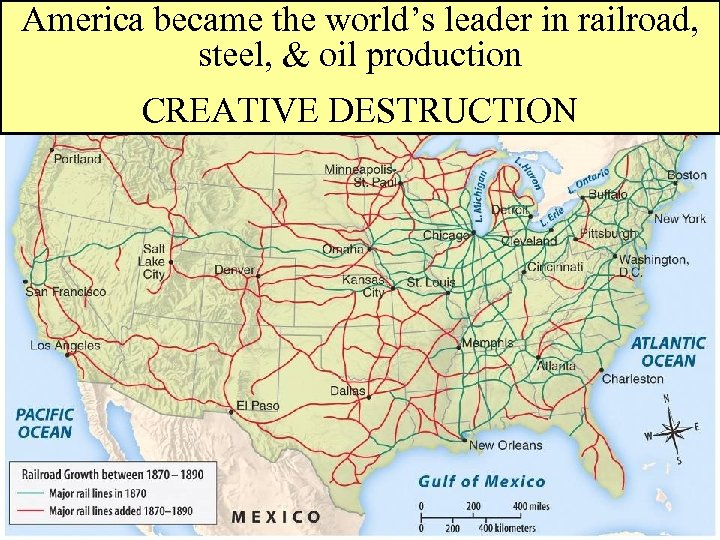 America became the world’s leader in railroad, steel, & oil production CREATIVE DESTRUCTION
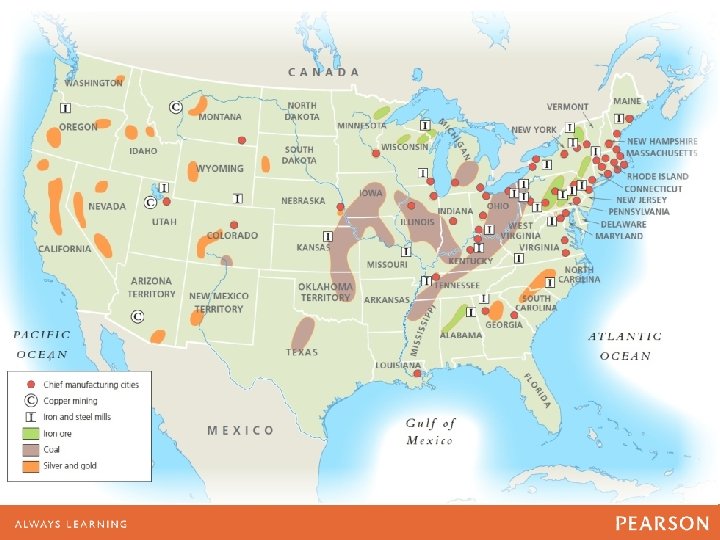 MAP 19. 1 Patterns of Industry, 1900
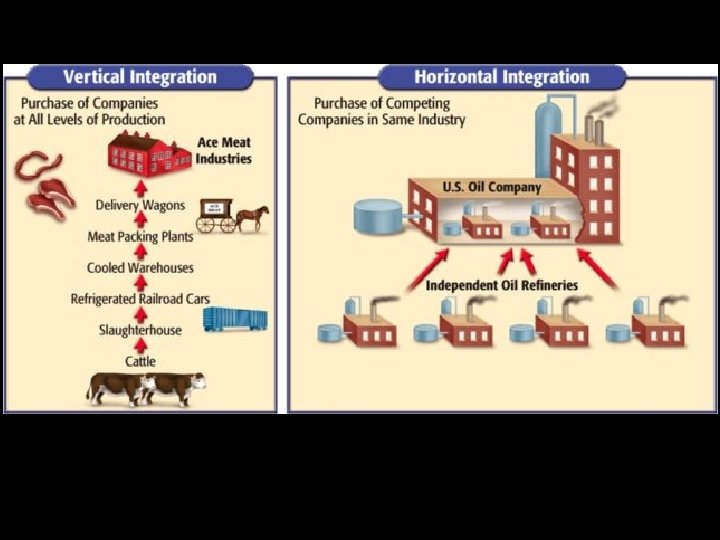
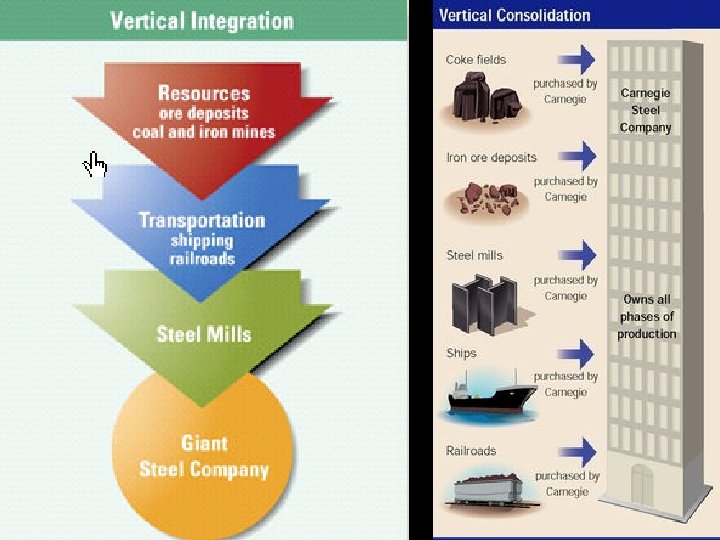
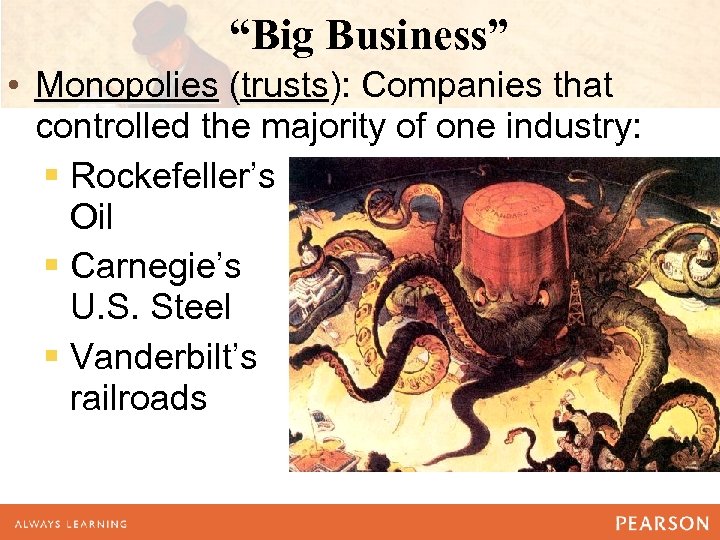 “Big Business” • Monopolies (trusts): Companies that Monopolies trusts controlled the majority of one industry: § Rockefeller’s Standard Oil § Carnegie’s U. S. Steel § Vanderbilt’s railroads
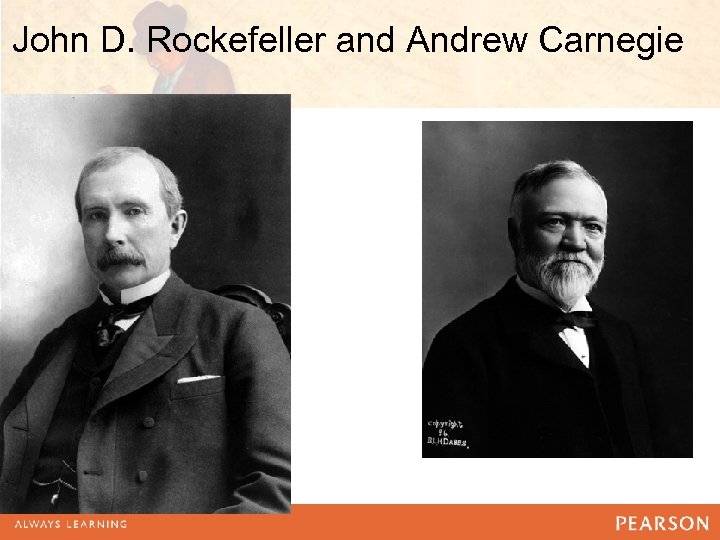 John D. Rockefeller and Andrew Carnegie
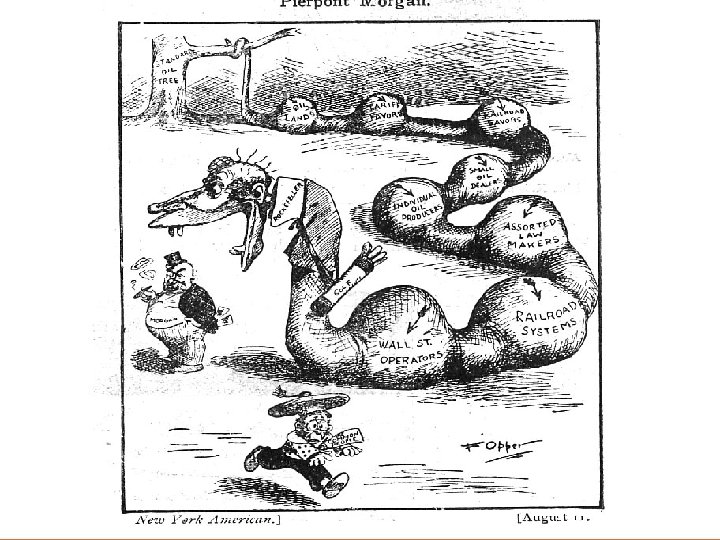
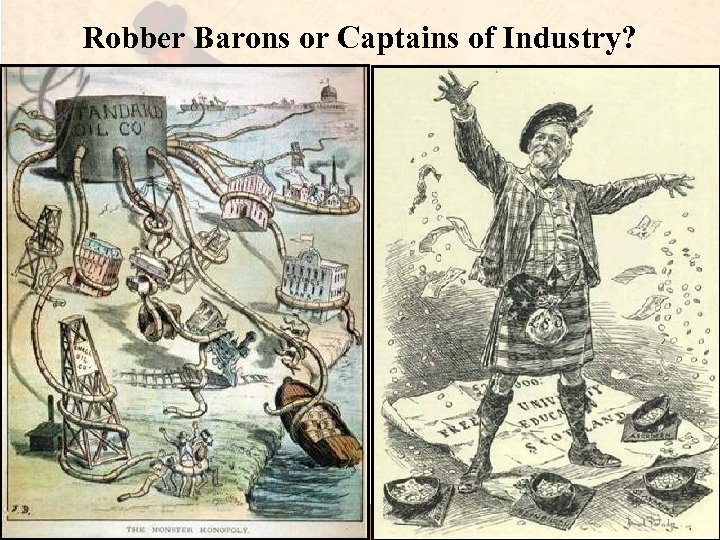 Robber Barons or Captains of Industry?
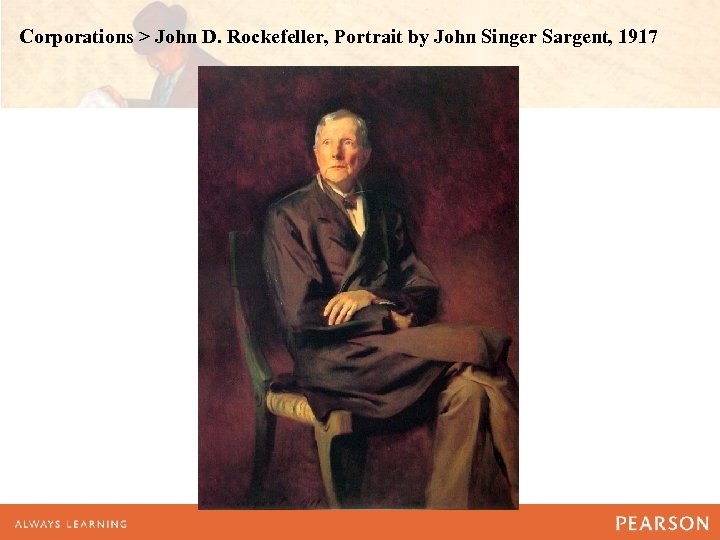 Corporations > John D. Rockefeller, Portrait by John Singer Sargent, 1917
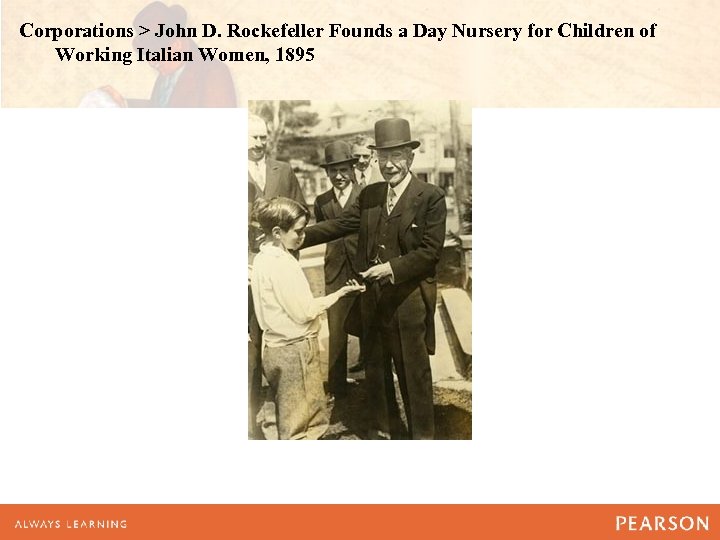 Corporations > John D. Rockefeller Founds a Day Nursery for Children of Working Italian Women, 1895
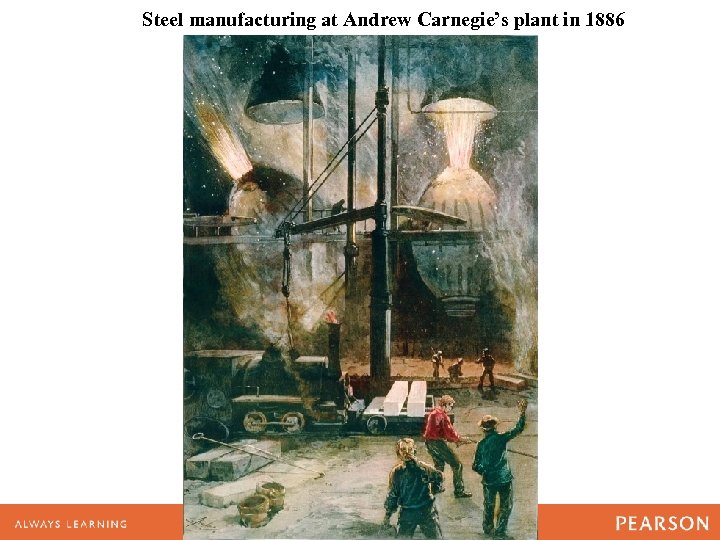 Steel manufacturing at Andrew Carnegie’s plant in 1886
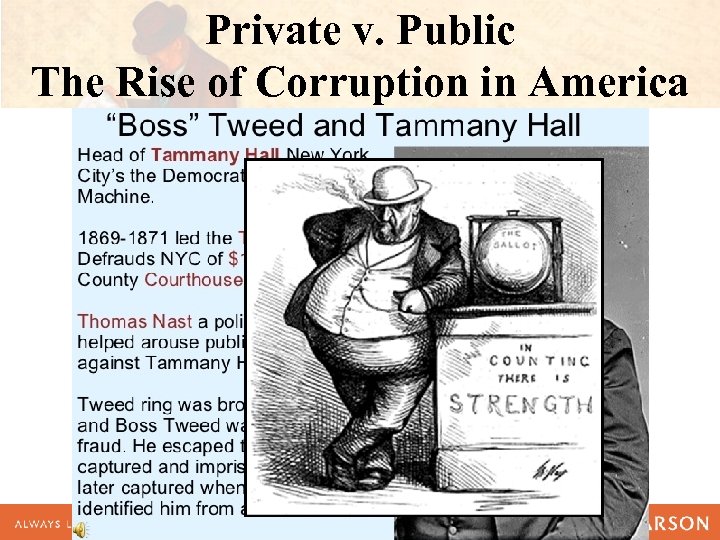 Private v. Public The Rise of Corruption in America
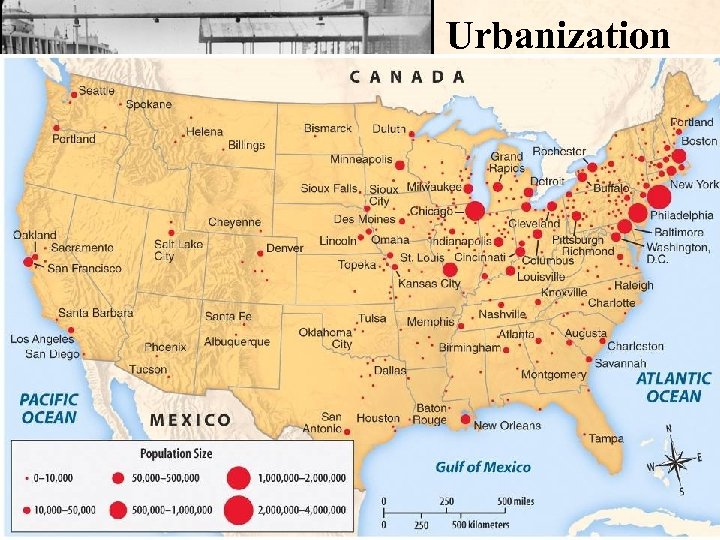 “New Immigration” & Urbanization
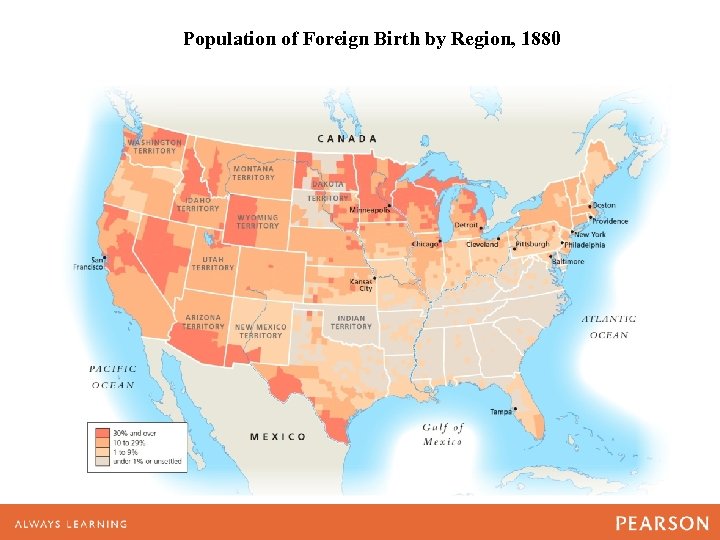 Population of Foreign Birth by Region, 1880
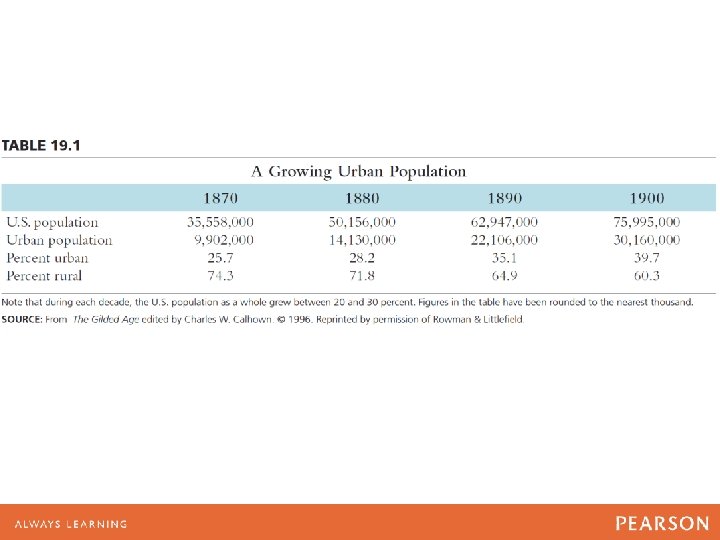 TABLE 19. 1 A Growing Urban Population
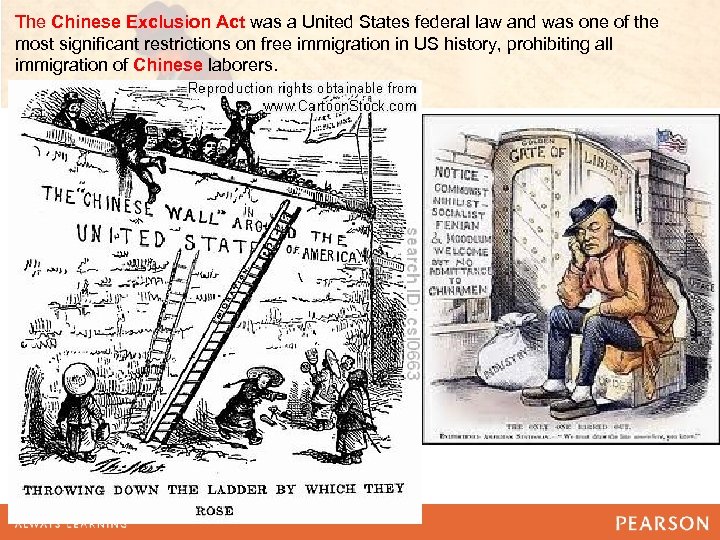 The Chinese Exclusion Act was a United States federal law and was one of the most significant restrictions on free immigration in US history, prohibiting all immigration of Chinese laborers.
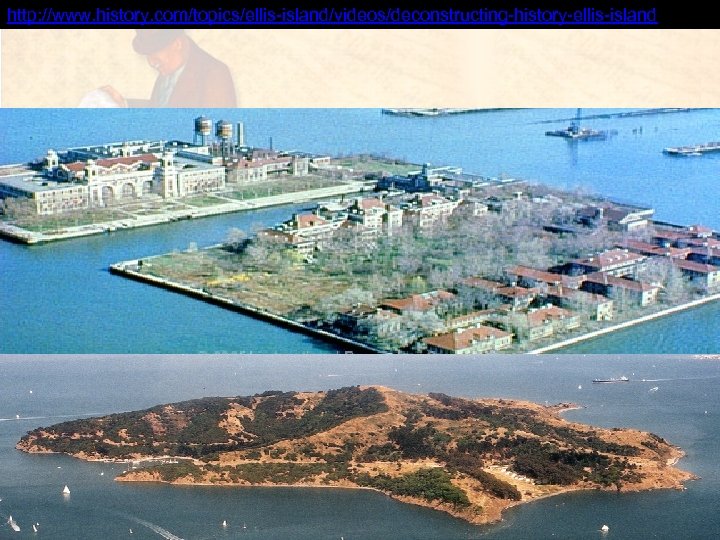 http: //www. history. com/topics/ellis-island/videos/deconstructing-history-ellis-island
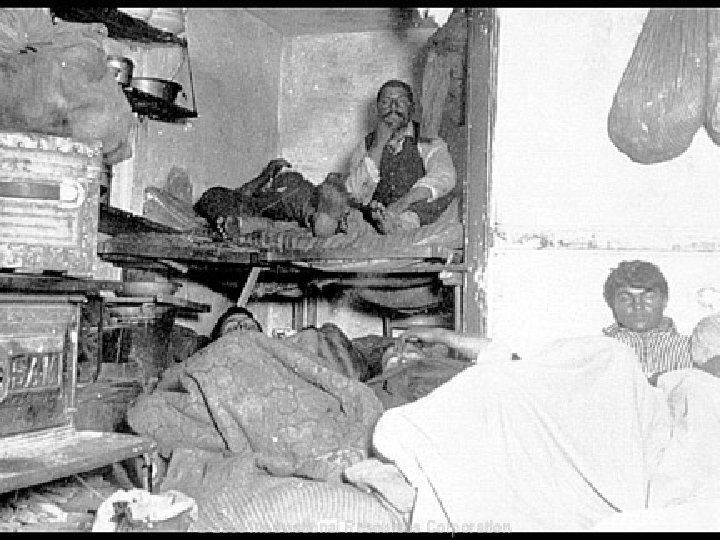
 Life in the Streets • Many working-class people felt disenchanted amid the alien and commercial society. • they established close-knit ethnic communities. § Chinese, Mexicans, African Americans were prevented from living outside of certain ghettos. § European ethnic groups chose to live in closely knit communities.
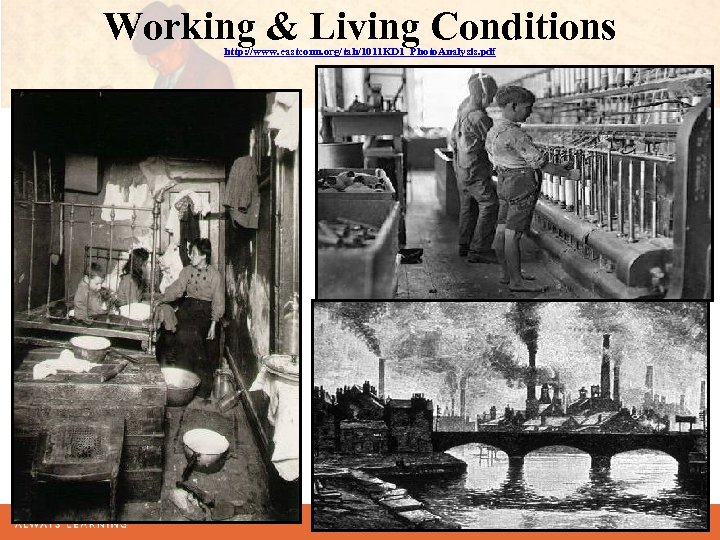 Working & Living Conditions http: //www. eastconn. org/tah/1011 KD 1_Photo. Analysis. pdf
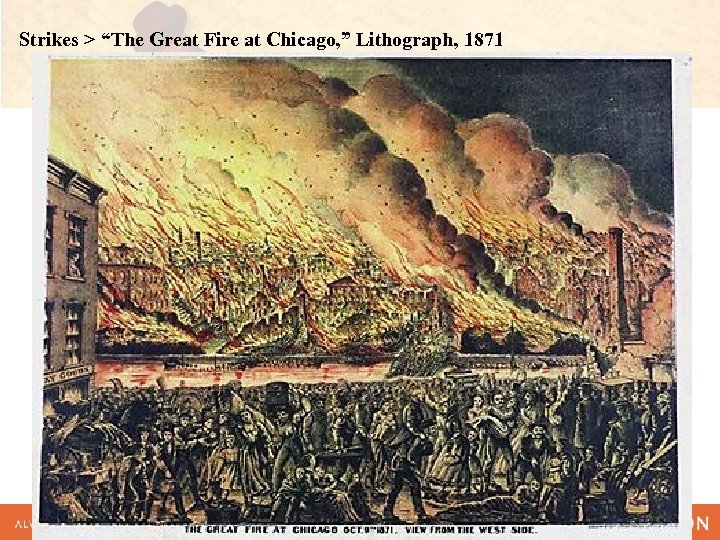 Strikes > “The Great Fire at Chicago, ” Lithograph, 1871
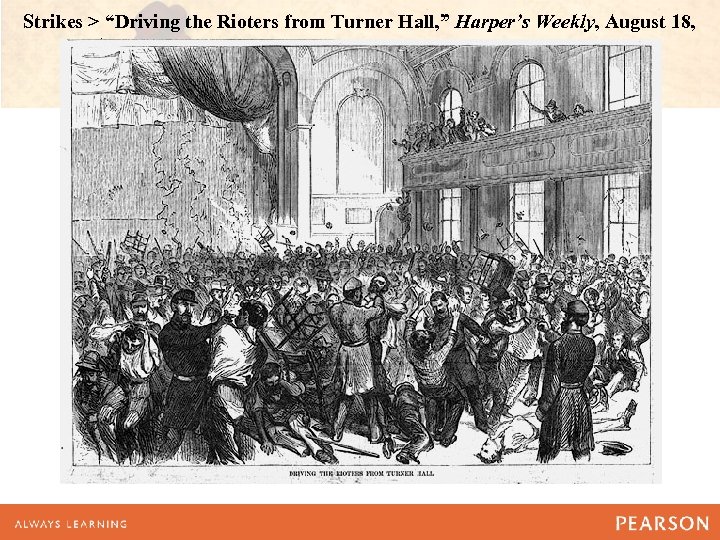 Strikes > “Driving the Rioters from Turner Hall, ” Harper’s Weekly, August 18, 1877
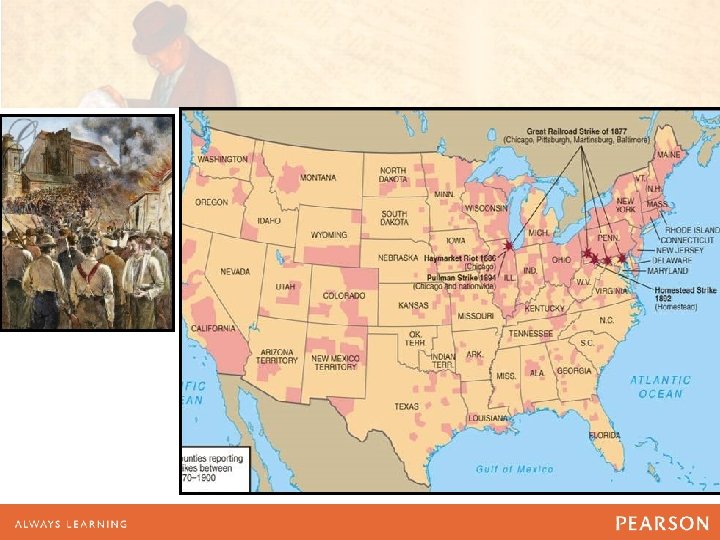
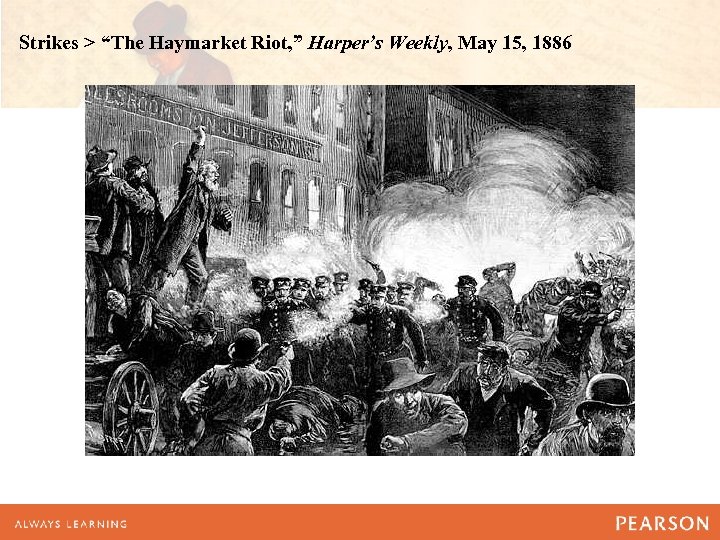 Strikes > “The Haymarket Riot, ” Harper’s Weekly, May 15, 1886
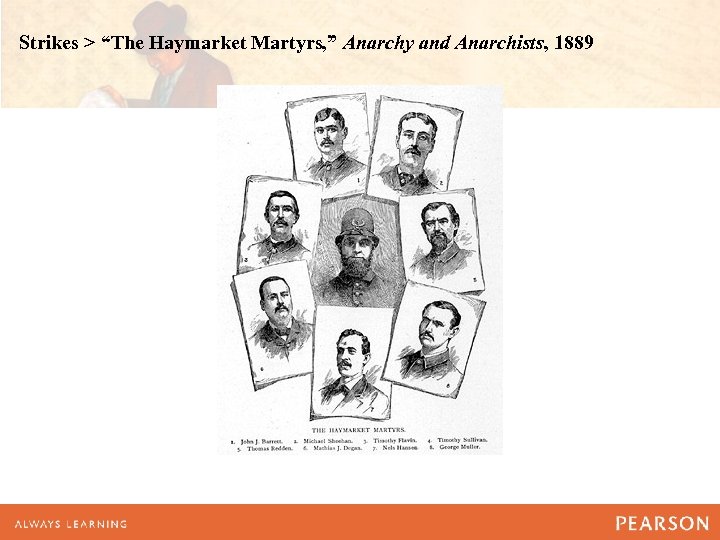 Strikes > “The Haymarket Martyrs, ” Anarchy and Anarchists, 1889
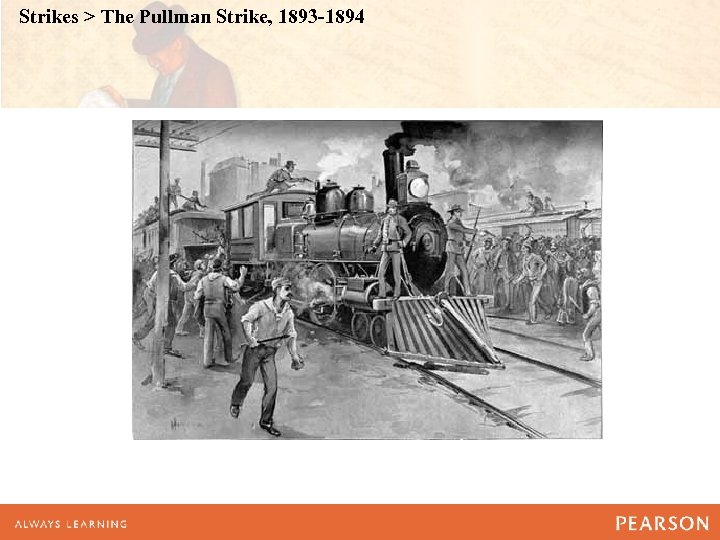 Strikes > The Pullman Strike, 1893 -1894
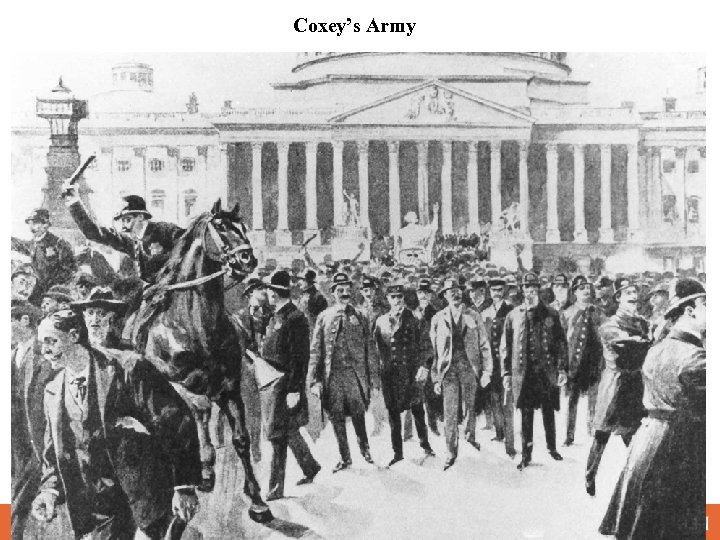 Coxey’s Army
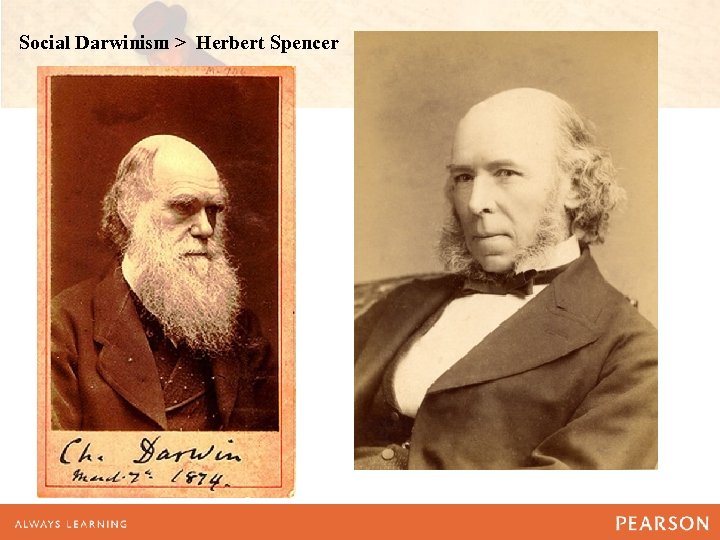 Social Darwinism > Herbert Spencer
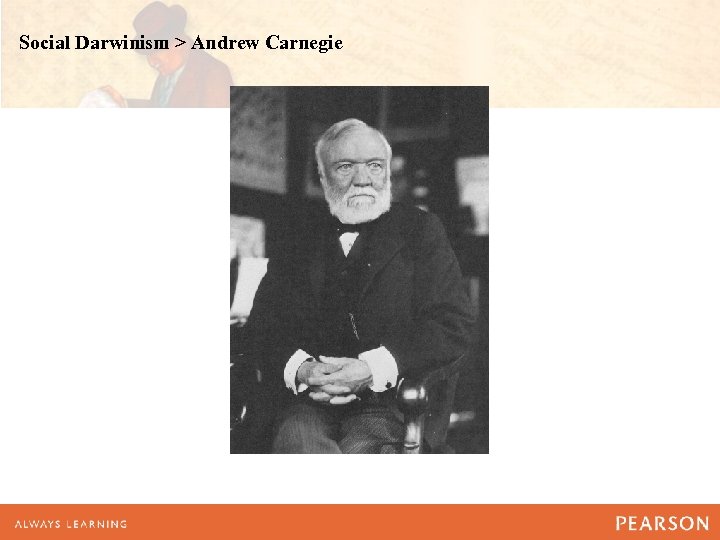 Social Darwinism > Andrew Carnegie
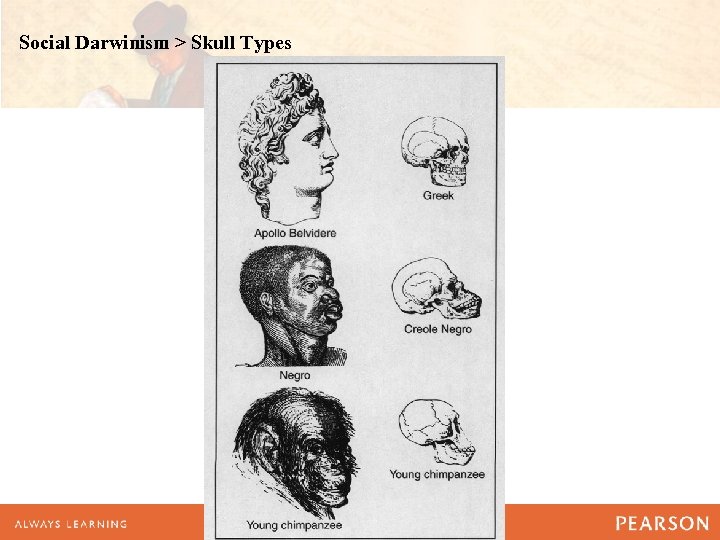 Social Darwinism > Skull Types
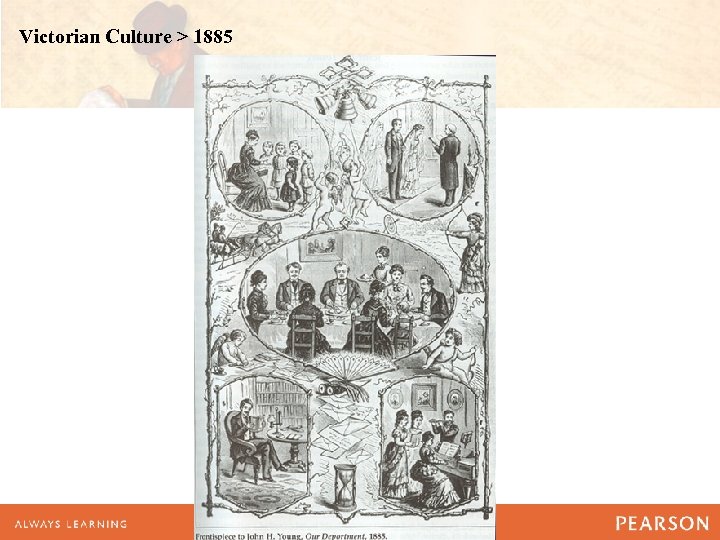 Victorian Culture > 1885
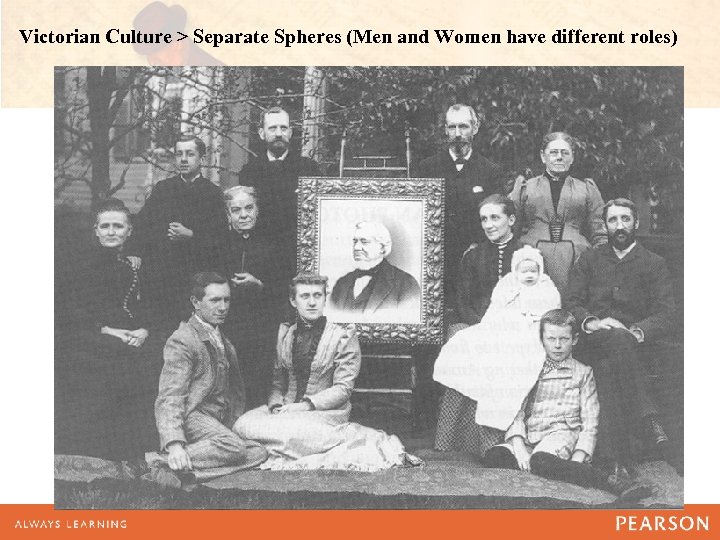 Victorian Culture > Separate Spheres (Men and Women have different roles)
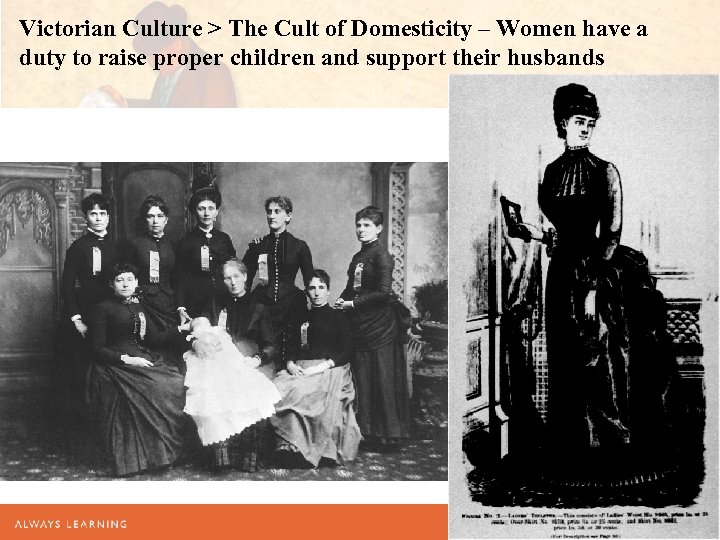 Victorian Culture > The Cult of Domesticity – Women have a duty to raise proper children and support their husbands
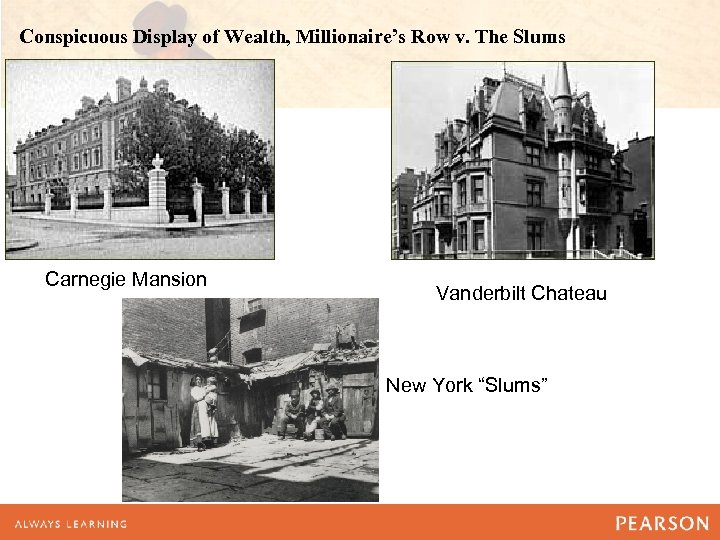 Conspicuous Display of Wealth, Millionaire’s Row v. The Slums Carnegie Mansion Vanderbilt Chateau New York “Slums”
 “Conspicuous Consumption” • The upper classes created a style of “conspicuous consumption“ in order to display their wealth to the world around them. § Galleries and symphonies § Vast mansions and new elite sports § Great open windows in mansions and wealthy hotels § Women adorned with jewels and furs
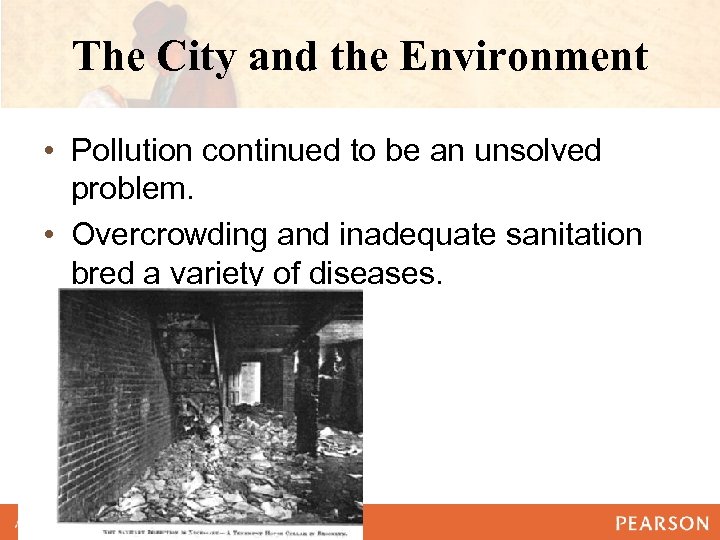 The City and the Environment • Pollution continued to be an unsolved problem. • Overcrowding and inadequate sanitation bred a variety of diseases.
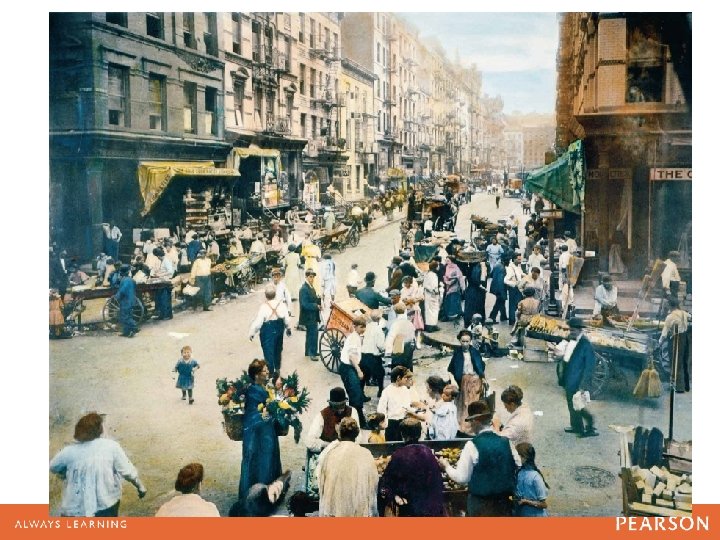 The intersection of Orchard and Hester Streets on New York’s Lower East Side
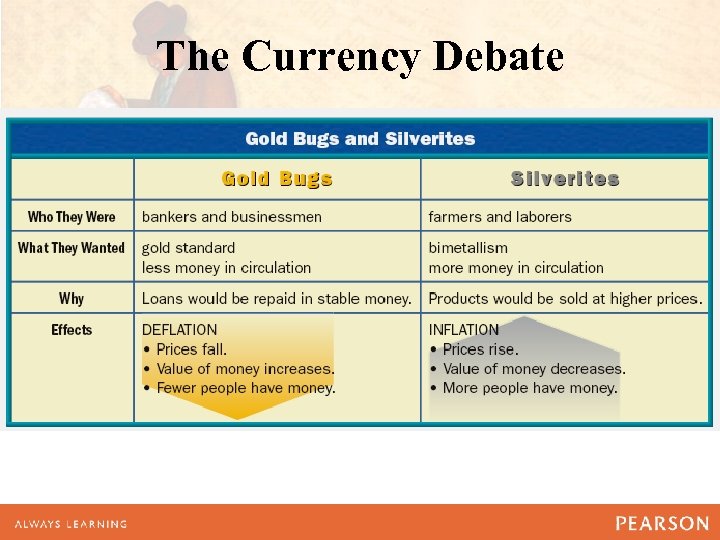 The Currency Debate
 The Rise and Fall of the Populist Party 1867 -1896
 Farmers’ Problems: • Lower prices for crops • Farmers had no cash. . . went further into debt. . . foreclosed on mortgages • Railroads charged outrageous prices to ship crops (no regulation!)
 Different Groups Representing Farmers’ Interests • 1867: The Patrons of Husbandry (The Grange) • 1880 s: Farmers’ Alliance and Colored Farmers’ National Alliance • 1892: Birth of the Populist, or People’s Party
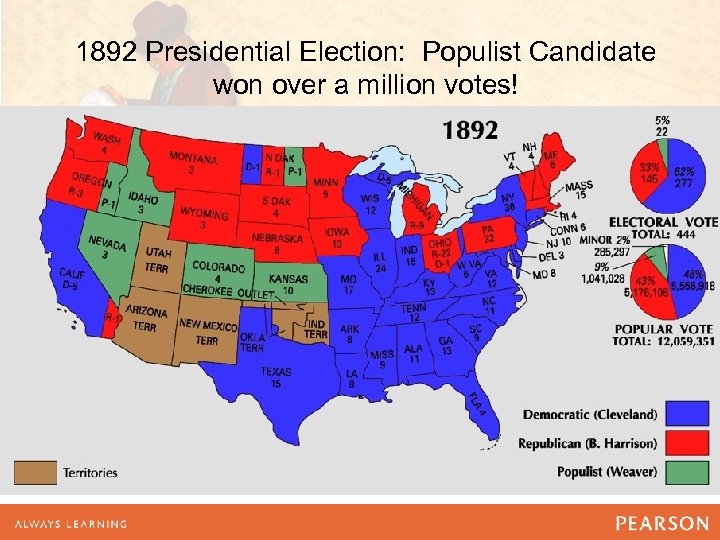 1892 Presidential Election: Populist Candidate won over a million votes!
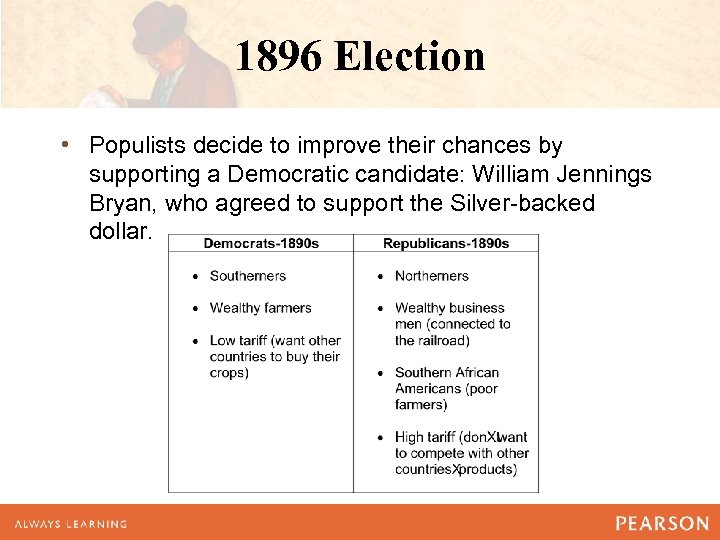 1896 Election • Populists decide to improve their chances by supporting a Democratic candidate: William Jennings Bryan, who agreed to support the Silver-backed dollar.
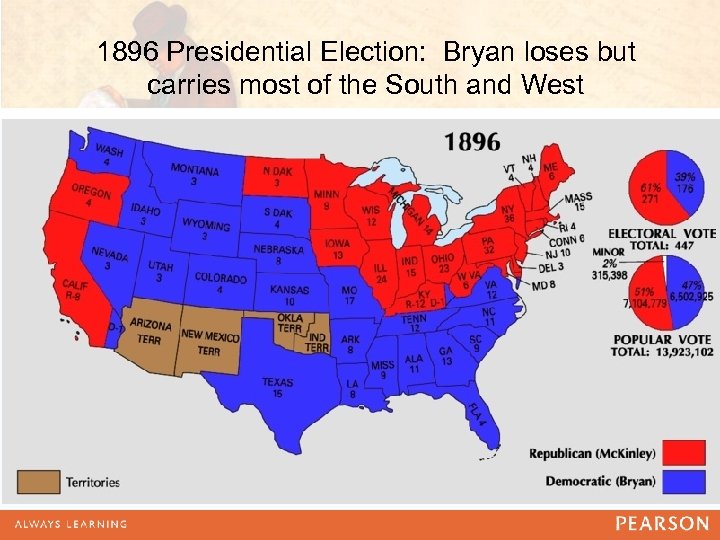 1896 Presidential Election: Bryan loses but carries most of the South and West
 The Annexation of Hawai’i • American sugar planters and missionaries threatened 19 th century Hawai’ian autonomy. • When Lili'uokalani became queen in 1891 she resisted American influence. • On January 17, 1893, the queen was deposed by an American diplomat.
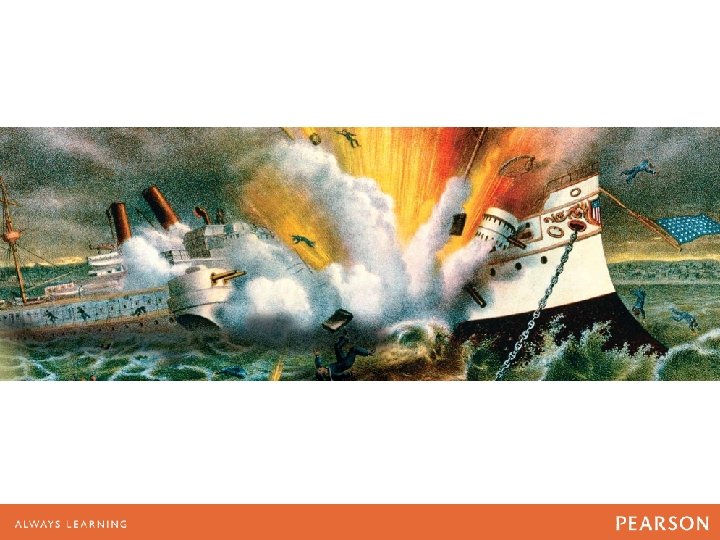 Destruction of the battleship Maine in Havana harbor, 1898.
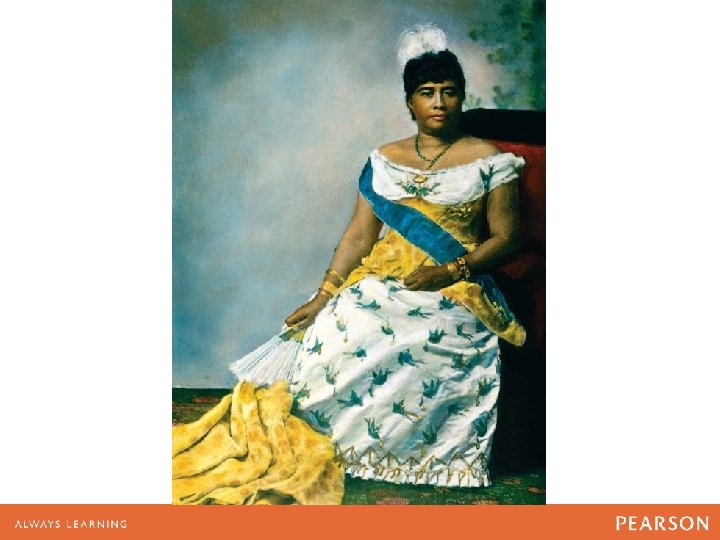 Queen Lili’uokalani
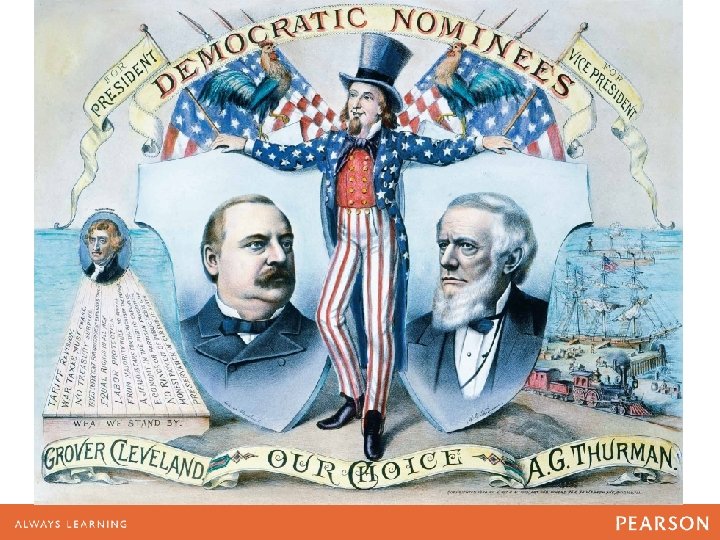 In 1888, Grover Cleveland, with his running mate, Allen G. Thurman, led a spirited campaign for reelection to the presidency.
 Toward a National Governing Class • A growing economy and the legacy of Civil War and Reconstruction put the federal government on an irreversible path to greater size and power. • Many Americans looked to government to serve their demands. • Business leaders saw stronger government as essential to protect property rights.
 The Spoils System and Civil Service Reform • Garfield’s 1881 assassination § Killed by disgruntled job seeker § highlighted spoils system • 1883: Pendleton Civil Service Reform Act § civil service system / professional bureaucracy § Standards developed for certain federal jobs § Also professionalism in other fields § Circuit Court of Appeals Act of 1891
 Women Build Alliances (cont'd) • The greatest female leader was Frances E. Willard, who: § was president of the Women’s Christian Temperance Union § mobilized 200, 000 paid members in the largest organization of women in the world by 1900 § Shifted focus after 1890 to the women’s suffrage issue
 Financial Collapse and Depression • In 1893, the collapse of the nation’s major rail lines precipitated a major depression. • Full recovery was not achieved until the early 1900 s. § Unemployment soared and many suffered great hardships. § Tens of thousands took to the road in search of work or food.
 The Social Gospel • Washington Gladden—called for churches to fight against social injustice • Charles M. Sheldon—“What would Jesus do? ” • Catholic Church—endorsed the right of workers to form trade unions § Immigrant Catholic groups urged priests to ally with the labor movement.
 Nativism and Jim Crow • Neither Mc. Kinley nor Bryan addressed the increased racism and Nativism throughout the nation. • Nativists blamed foreign workers for hard times and considered them unfit for democracy.
 Nativism and Jim Crow (cont’d) • Between 1882 and 1900 lynchings exceeded a hundred each year. § They were announced in newspapers and became public spectacles. § Railroads offered special excursion prices to people traveling to attend lynchings. • Ida B. Wells—anti-lynching crusade • Reformers—accepted segregation and disenfranchisement.
 The White Man’s Burden • What did the readers of Mc. Clure’s magazine understand as “the white man’s burden”? How did this responsibility relate to the belief in a hierarchy of races and civilizations expressed in Kipling’s poem?
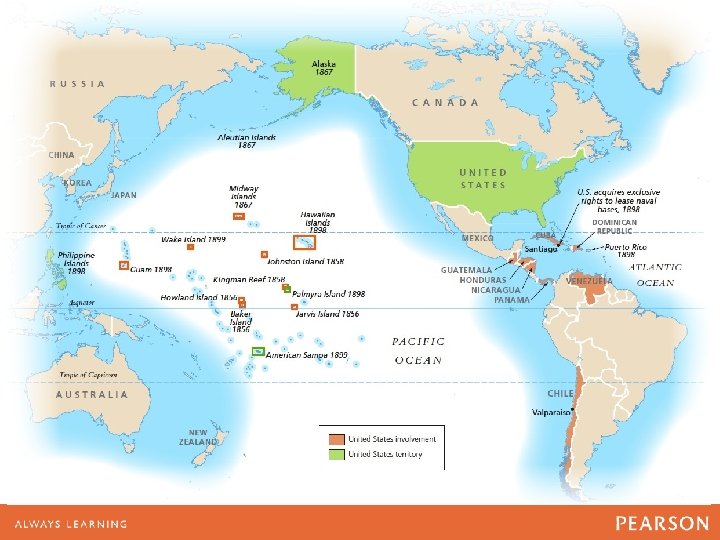 MAP 20. 3 The American Domain, ca. 1900
 A “Splendid Little War” in Cuba • Southerners coveted Cuba and pushed for annexation. • A movement to gain independence from Spain began in the 1860 s. • Americans sympathized with Cuban revolutionaries. § Spanish harsh taxes § grisly horror stories of Spanish treatment of revolutionaries.
 A “Splendid Little War” in Cuba (cont'd) • Mc. Kinley had held off intervention, but public clamor grew following an explosion on the USS Maine.
 A “Splendid Little War” in Cuba (cont’d) • The United States smashed Spanish power in what John Hay called “a splendid little war. ” • Theodore Roosevelt, war hero