


 Скачать презентацию Out of Many A History of the American
5ee108e6e48e2e0bd100ff4fbaf49940.ppt
- Количество слайдов: 98
 Out of Many A History of the American People Seventh Edition Brief Sixth Edition Chapter 31 The United States in a Global Age 1992 -2010 Out of Many: A History of the American People, Brief Sixth Edition John Mack Faragher • Mari Jo Buhle • Daniel Czitrom • Susan H. Armitage Copyright © 2012 by Pearson Education, Inc. All rights reserved.
 The United States in a Global Age 1992 -2010 • The Presidency of Bill Clinton • Changing American Communities • President George W. Bush and the War on Terror • Barack Obama and the Audacity of Hope • Conclusion
 Chapter Focus Questions • As a “New Democrat, ” what changes in public policy did Bill Clinton promote during his presidency? • What factors contributed to the economic boom of the 1990 s? • What major demographic shifts were revealed by the 2000 Census?
 Chapter Focus Questions (cont’d) • How did the presidency of George W. Bush rekindle conservatism in the early years of the twenty-first century? • Is globalization a meaningful term and, if so, how did it affect U. S. policies at home and abroad?
 Chapter Focus Questions (cont’d) • How did the threat of global terrorism transform the American political landscape in the first decade of the twenty-first century?
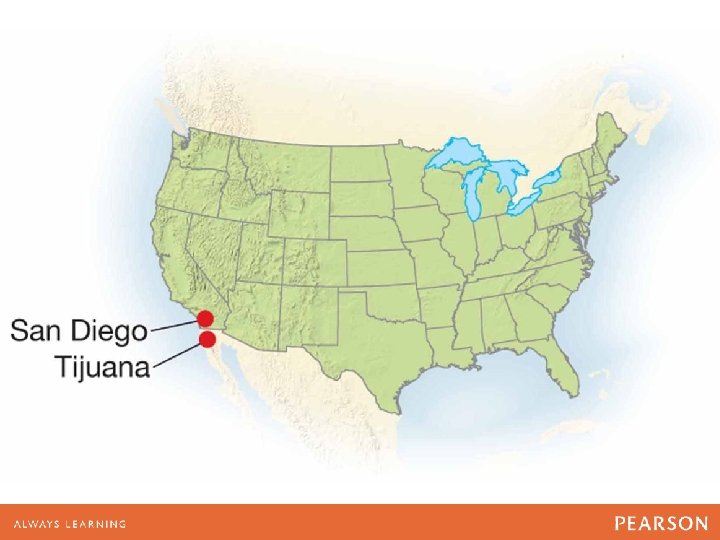 North America, San Diego and Tijuana
 Transnational Communities in San Diego and Tijuana • Borderlanders live on the Mexican. American border and enjoy the best of both nations. • Mexicans came to Tijuana to find better jobs and eventually move to San Diego and the two border communities became more intertwined. • This represented the creation of a community known as globalization.
 The Presidency of Bill Clinton
 The Presidency of Bill Clinton • Clinton promised to bring a new kind of Democratic leadership to the presidency. Responding to the conservative challenge, Democratic Leadership Council members like Clinton sought to shift the Democratic party away from the liberal tradition of FDR and LBJ and recapture blue-collar defectors and white Southern voters “by redefining and reclaiming the political center. ”
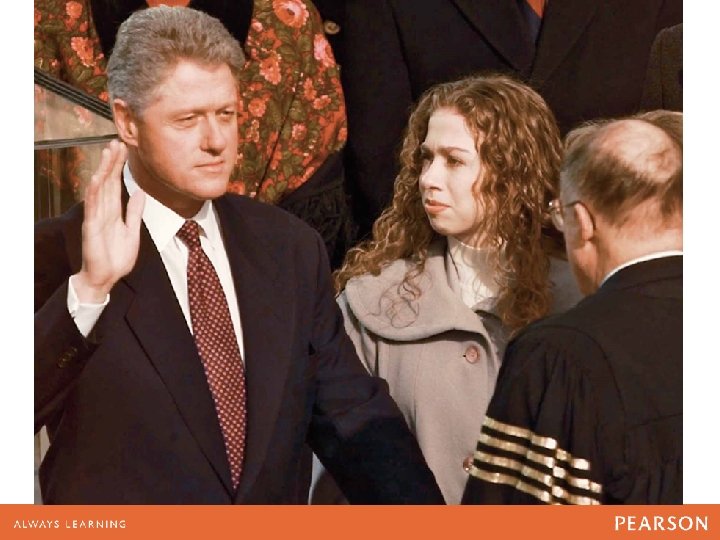 Chief Justice William Rehnquist administers the oath of office to President William Jefferson Clinton
 The Presidency of Bill Clinton (cont’d) • The youthful and energetic, Clinton presented a bold agenda: balancing the federal budget, reforming welfare, reducing crime, promoting economic growth, and ensuring a strong national defense. Reducing the size of the federal government and promoting free markets worldwide became hallmarks of his administration.
 A “New Democrat” in the White House • Despite being an excellent persuader, Clinton got off to a rocky start. • Clinton unsuccessfully promoted a plan for national health insurance. • This led to Republican control of the House and Senate after the 1994 elections. • Led by Newt Gingrich, a new breed of younger conservative Republicans swept the Congressional elections of 1994.
 A “New Democrat” in the White House • Republicans promoted a “Contract with America” to cut welfare and eliminate affirmative action. • Clinton undercut Republicans by adopting many of their positions to his own. • Legislation to “end welfare as we know it” showed Clinton’s skill in repositioning himself. • In 1996, Clinton won reelection over Bob Dole but Republicans continued to hold Congress.
 A “New Democrat” in the White House • In his second term Clinton continued to work with Republicans and passed sweeping deregulation of the banking industry. • Newt Gingrich and Bob Dole after the midterm elections of 1994
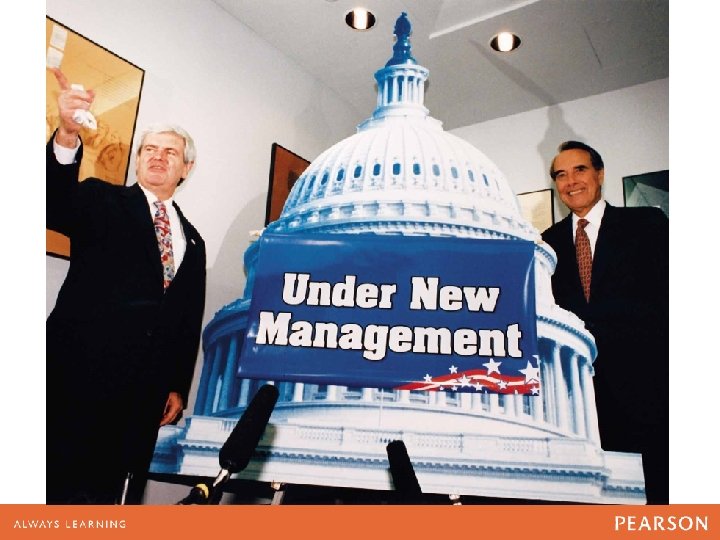 The new Speaker, Newt Gingrich
 The “Globalization” President • Now that the Cold War had ended, Clinton sought to replace containment with humanitarianism. • Transnational human rights emerged as another issue. • Human rights became factors in trade and diplomatic relations (i. e. - China).
 The “Globalization” President • Clinton pushed through a series of trade agreements (NAFTA and GATT), which raised fears that jobs were being sent abroad while environmental standards were being weakened at home. • The UN humanitarian mission to Somalia was a failure.
 The “Globalization” President (cont'd) • Heightened ethnic nationalism and religious fundamentalism created unrest across the globe, especially in the Balkans.
 The “Globalization” President • The civil war in Kosovo between the Serbians and Albanians was the worst foreign crisis of Clinton’s presidency. • Under a “Clinton Doctrine” of intervention for humanitarian reasons, U. S. and NATO forces intervened to end genocide in Yugoslavia and Clinton brokered a Balkan peace accord.
 The “Globalization” President • Despite the Clinton Doctrine, the U. S. failed to intervene to stop a genocidal civil war in Rwanda in 1994 that killed a million people. • And, after an international conference proposed the Kyoto Protocol on global warming, the U. S. failed to ratify the treaty.
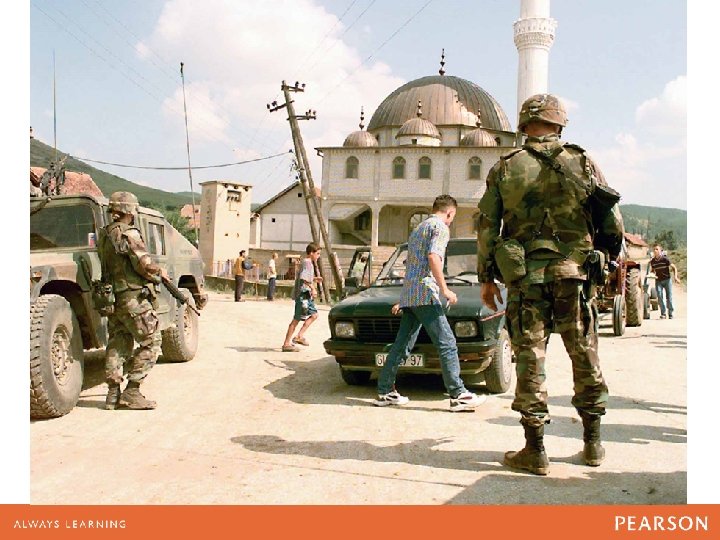 U. S. Army Military Police stop and search vehicles
 Presiding over the Boom • Clinton left a federal budget surplus in 2000. § cut government spending and boosted tax revenues • A soaring stock market, led by “tech” stocks • The resulting economic boom created huge profits and unemployment fell steadily.
 Presiding over the Boom (cont'd) • Critics noted the ill effects of downsizing: the pay disparity between white- and bluecollar workers and the continuing decline of blue-collar jobs.
 High Crimes and Misdemeanors • Bill Clinton: Questions of morality • An investigation into the Whitewater real estate deal went nowhere § But Special Prosecutor Starr continued to probe Clinton’s private life
 High Crimes and Misdemeanors (cont'd) • In 1998, a sex scandal embroiled the White House, leading to impeachment inquiries. The midterm election resulted in Democratic gains, due in part to the economic prosperity.
 High Crimes and Misdemeanors • The Republican House voted to impeach Clinton for perjury and obstruction of justice but the Senate failed to convict him. • Despite the impeachment, Clinton left office with high approval ratings.
 Changing American Communities
 Changing American Communities • The New Economy § globalization and corporate restructuring § the growing service sector - highly paid lawyers, financial analysts, and software designers to poorly paid fast food employees § 1965: About 50% of all jobs were in the service sector; by 2000, the figure had grown to about 70 percent.
 Changing American Communities (cont'd) • The New Economy § Immigration grew to meet the demand for workers, and new electronic media transformed the workplace as well as social relations.
 Silicon Valley • Silicon Valley in northern California emerged as the capital of the American computer industry. § Resembling a suburb, it was a sprawl of 24 cities that expanded rapidly as the computer industry grew.
 Silicon Valley (cont'd) • Silicon Valley divisions § white male managers and engineers living in affluent communities. § non-unionized, Latino, Asian workers living in poor communities. • Early 1990 s: Silicon Valley lost its boomtown atmosphere.
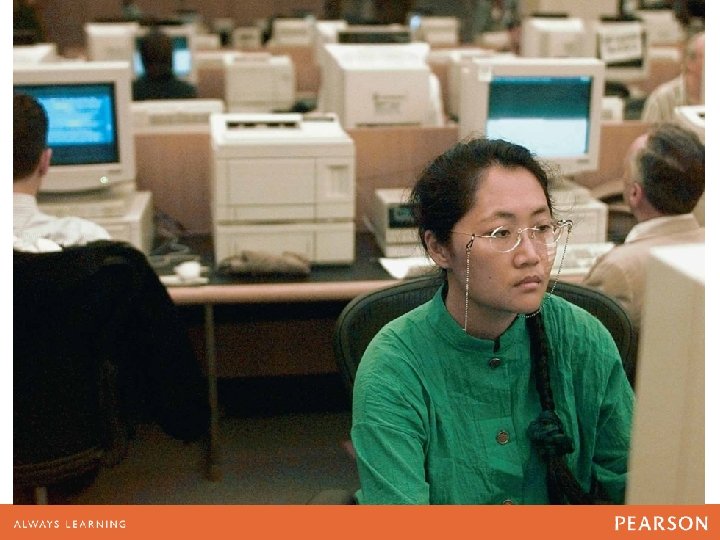 Yi Li, a graduate student from Taiwan, uses a computer terminal
 New Media and Virtual Communities • New computer and telecommunications technologies transformed American cultural life. • VCRs and cable TV revolutionized the American entertainment industry. • CDs and DVD continued the trend, replacing tape-based media and signally a shift to digital media.
 New Media and Virtual Communities (cont'd) • The most revolutionary aspect of the electronic culture was the Internet.
 New Media and Virtual Communities • By 2010, most households and almost all businesses and schools were using the Internet for work, education and entertainment. • Facebook became the most widely used social network, supporting a media community that transcended national boundaries.
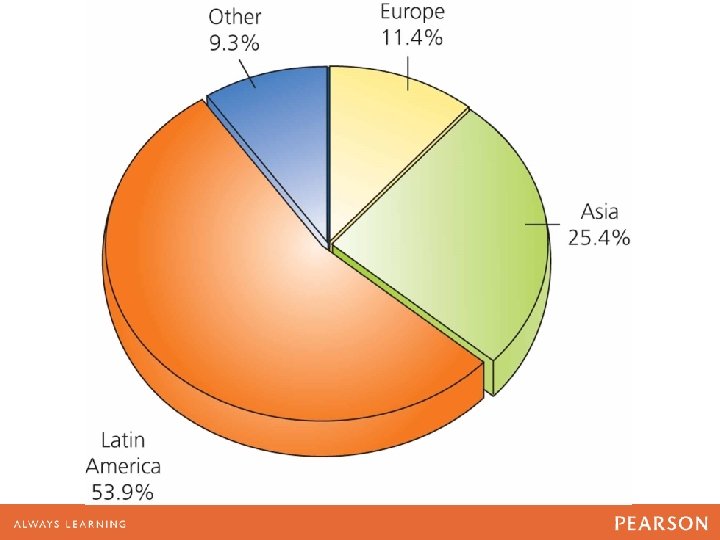 FIGURE 31. 1 Continent of Birth for Immigrants, 1990– 2000
 The New Immigrants • 2000 census: § Greater growth than any other decade § One-third of increase came from foreign immigration, the Latino and Asian populations increasing by 70 percent • Most Mexican immigrants struggled in lowpaying, often dangerous jobs. • Immigrants formed their own communities and maintained their group identity.
 The New Immigrants (cont'd) • Changes in immigration law failed to address the problem of undocumented workers.
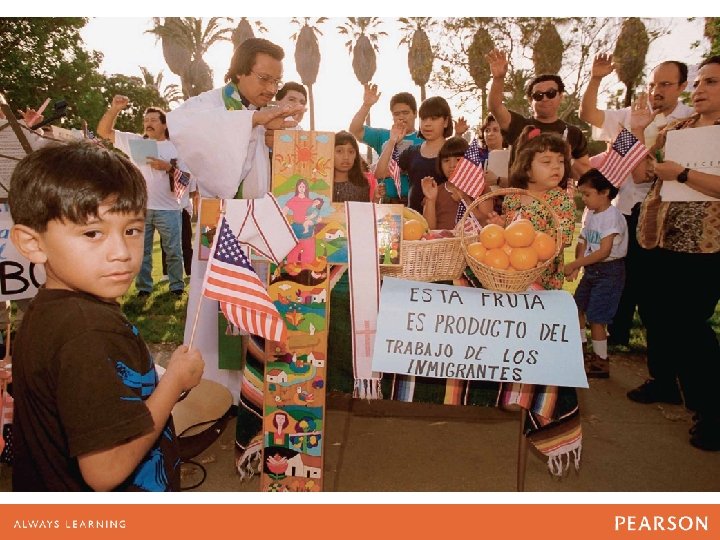 The sign at this 1996 vigil in Echo Park, Los Angeles, reads, “This fruit is the product of immigrants’ labor. ”
 Growing Social Disparities • The prosperity of the 1990 s did little to alleviate economic inequality, which actually increased during the decade. • African Americans, Latinos and women all lagged behind in pay and opportunities. • Riots in South Central Los Angeles after the Rodney King incident highlighted racial and economic tensions.
 Growing Social Disparities • The end of busing led to growing resegregation of schools as distinct racial and ethnic communities grew in many cities. • While crime dropped, prison populations soared with a disproportionate share of blacks and Hispanics.
 The Culture Wars • Pat Buchanan and other conservatives increasingly warned that traditional American values were eroding. • Controversies over gay marriage led to a 1996 federal Defense of Marriage Act, but by 2010 five states allowed gay marriage. • In California, a battle in the courts focused on the constitutionality of allowing or banning gay marriage.
 The Culture Wars • Abortion rights also became a hot button issue, with increasing violence by antiabortion activists. • Stem cell research also became controversial with battles over federal funding and activism from religious groups. • America was becoming more divided over cultural issues.
 The Culture Wars (cont'd) • People protest Proposition 187 in Los Angeles
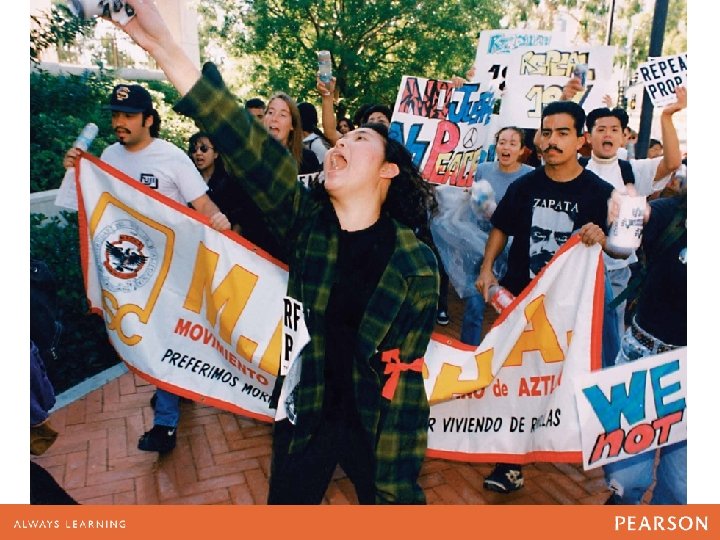 This photograph shows Grace Lee and a group of fellow students demonstrating
 President George W. Bush and the War on Terror
 President George W. Bush and the War on Terror • After the Cold War, the U. S. was the world’s only superpower. This hardly assured security as Soviet communism was succeeded by more fanatic, less predictable foes.
 President George W. Bush and the War on Terror (cont’d) • The September 11, 2001 attacks on the World Trade Center was a defining moment for the Bush Presidency as it looked to reconfigure American foreign policy and domestic politics around the strategy of a “war on terror. ” The Iraq War defined the Bush presidency more than any other issue.
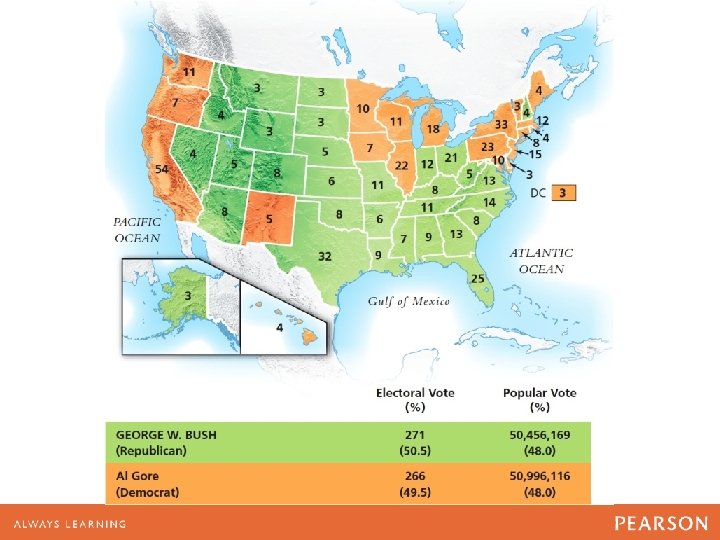 MAP 31. 1 The Election of 2000
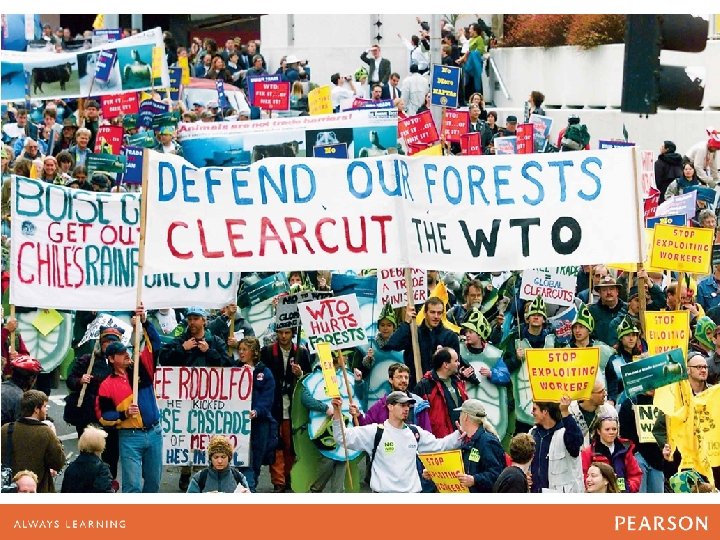 More than 5, 000 activists gathered in Seattle in November 1999 to demonstrate against the meeting of the World Trade Organization
 The Election of 2000 • Democratic VP Al Gore and Republican Texas Governor George W. Bush fought a tight race in the election of 2000. • Initial returns seem to give Gore the victory but turned to doubts as questions arose over the vote count in Florida.
 The Election of 2000 (cont’d) • After state officials and courts reached conflicting conclusions about recounts, the dispute reached the U. S. Supreme Court. • In a 5 -4 ruling, the Court stopped the recounts and gave Bush Florida’s 25 electoral votes and the presidency. • Gore conceded, and Bush was sworn in on January 20, 2001.
 Terrorist Attack on America • During the 1990 s and early twenty-first century, terrorism escalated. • In 1993 a bomb attack on the World Trade Centers in New York City killed six people. • In 1998, Middle East terrorists car-bombed U. S. embassies in Africa. • In 2000, terrorists struck the USS Cole in Yemen, killing seventeen sailors.
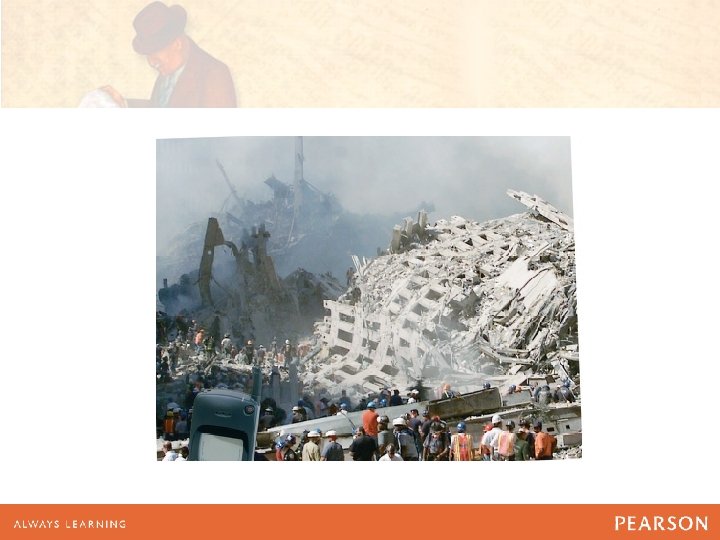
 Terrorist Attack on America (cont'd) • On September 11. 2001, teams of terrorists hijacked four airliners, crashing two into the World Trade Center Towers and another hitting the Pentagon. The fourth plan crashed as passengers fought the hijackers. • More than 3, 000 people died in the attacks, shocking Americans into a massive response.
 Terrorist Attack on America (cont'd) • While Congress authorized Bush to take any necessary action to defend Americans, prayer vigils were held and Americans displayed flags on houses and cars. • Bush identified Osama bin Laden’s Al Qaeda organization as the prime suspect in the attacks.
 Terrorist Attack on America (cont'd) • What role did the media play in shaping our understanding of the events of September 11, 2001?
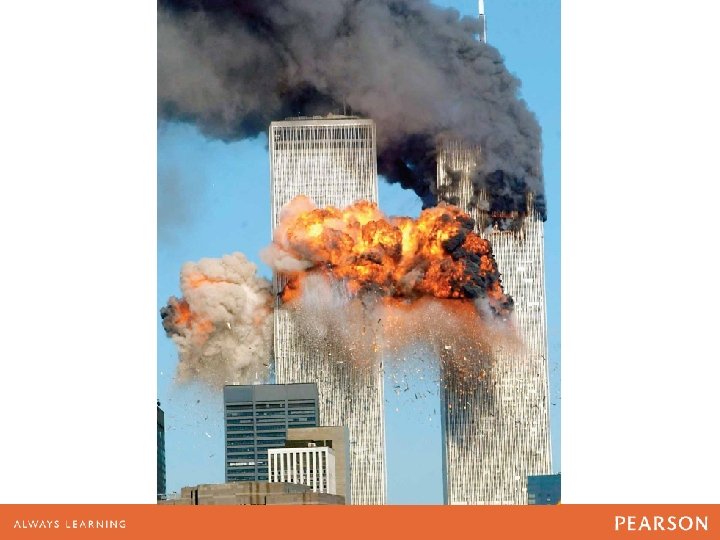 The 9/11 Attacks
 Reshaping U. S. Foreign Policy • Osama bin Laden was thought to be hiding in Afghanistan and supported by the Taliban government. • Bush dispatched aircraft carriers and began air strikes on Afghanistan. • In his 2002 State of the Union address Bush identified North Korea, Iraq and Iran as an “axis of evil” threatening global security.
 Reshaping U. S. Foreign Policy • Partisan bitterness dissolved and Bush was able to push the USA Patriot Act through Congress. • A new Department of Homeland Security was created to coordinate defense against terrorist threats. • In 2004 a commission studying the 9 -11 attacks concluded that FBI-CIA turf battles had left the U. S. vulnerable to attack.
 Invasion of Iraq • Bush and his national security team believed a regime change was necessary in Iraq. • Saddam Hussein needed to be removed because of his biological and chemical weapons, he had direct connections to 9/11, and creating an Iraqi democracy would start political change in the Middle East.
 Invasion of Iraq (cont'd) • Growing opposition to the war led to America seeking international help.
 Invasion of Iraq • With mainly British support, a bombing campaign was followed by a ground invasion, quickly defeating the Iraqi army and overthrowing Saddam’s regime. • On May 1, 2003, Bush announced a premature “Mission Accomplished” in Iraq.
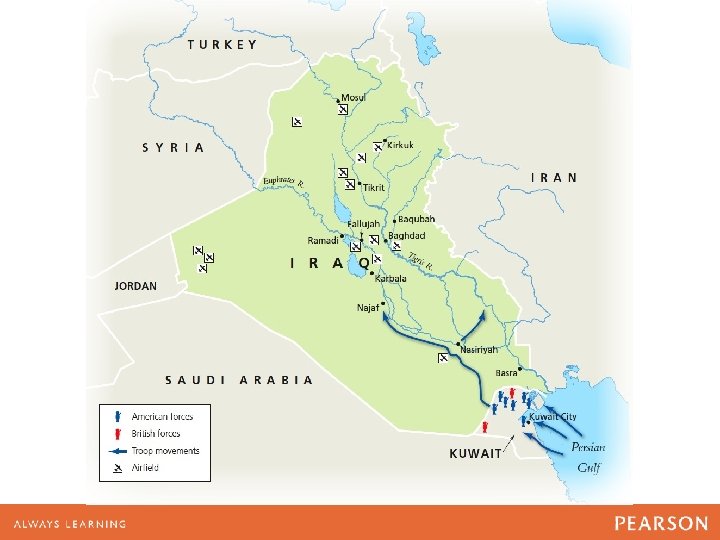 MAP 31. 2 Invasion in Iraq
 Invasion of Iraq • Despite military success, Americans were unable to deal with the worsening security situation in Iraq. • Sectarian tensions and an anti-western insurgency led to growing violence and millions of people were displaced or fled Iraq.
 Invasion of Iraq (cont'd) • A new Iraqi government tried and executed Saddam, but struggled to govern or provide basic services.
 Invasion of Iraq • Abuses at Abu Ghraib prison outraged people across the world, but the White House had apparently authorized harsh treatment of suspected terrorists. • The occupation took a heavy toll on the American military, with 1, 500 dead by 2005 and National Guard troops being forced into repeated tours.
 Invasion of Iraq (cont'd) • Spending on the war led to soaring deficits.
 Bush’s “Compassionate Conservatism” • In the 2004 campaign, Bush identified himself as a wartime president. • John Kerry, a Vietnam veteran and Massachusetts Senator, took the Democratic nomination, but soon faltered. • Bush claimed victory with 51 percent of the popular vote and 279 electoral votes. • Bush claimed his victory was a victory of Iraq war policy.
 Bush’s “Compassionate Conservatism” • Bush won sweeping tax cuts and the No Child Left Behind education law in 2001 and an expanded Medicare prescription drug benefit in 2003, but failed in efforts to reform Social Security. • Bush endured controversy by his response to Hurricane Katrina, which devastated New Orleans in 2005.
 Bush’s “Compassionate Conservatism” (cont'd) • Rescue operations stalled due to bureaucratic mishaps.
 Bush’s “Compassionate Conservatism” • The press blamed Bush for FEMA’s poor response. • The events underscored the shame regarding class and racial divides. • Years after the hurricane, New Orleans had still not fully recovered. • U. S. Coast Guard rescue flood-stranded victims of Hurricane Katrina.
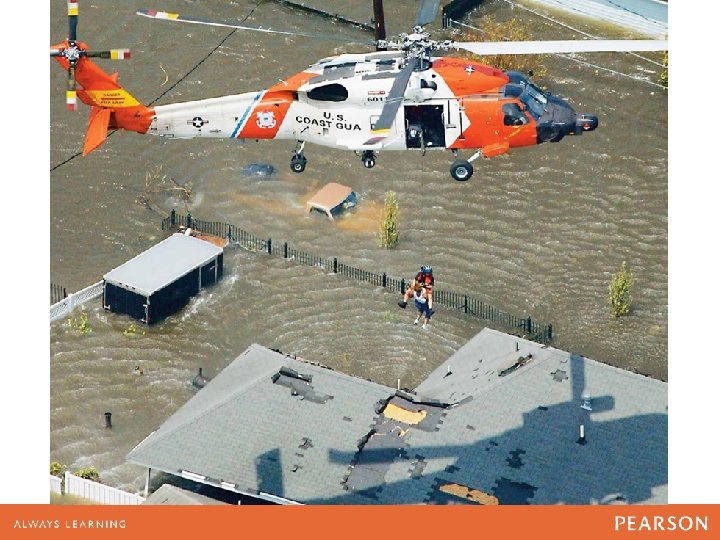 A U. S. Coast Guard helicopter rescues floodstranded victims
 Divided Government, Divided Nation • The Bush administration continued to defend the Iraq war as part of a larger global war on terrorism despite shrinking public support and evidence that he had used false or misleading intelligence to justify the invasion.
 Divided Government, Divided Nation • A controversial troop surge in 2007 seemed to reduce sectarian violence, freeing Bush to redeploy troops from Iraq to Afghanistan but Iraq remained unstable and many refugees refused to return home. • By 2009, 4, 400 Americans had died in the Iraq War.
 Divided Government, Divided Nation (cont'd) • The 2006 mid-term elections gave Democrats control of Congress and blocking any new Bush initiatives.
 Divided Government, Divided Nation • By 2008 the national debt reached $1. 3 trillion with foreign governments holding large shares of American securities. • The IMF warned that U. S. deficits posed a serious threat to the global economy.
 Barack Obama and the Audacity of Hope
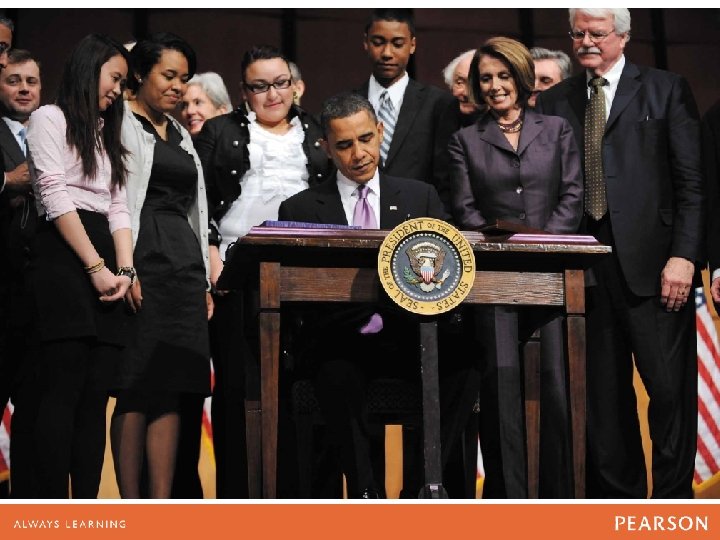 President Obama signing the Health Care and Education Reconciliation Act
 Barack Obama and the Audacity of Hope • The 2008 election came in the midst of financial crisis and widespread doubts about America’s future and brought to office Barack Obama, the nation’s first African American president.
 The Election of 2008 • Born in Hawaii to a white mother and African father, Obama grew up in a multicultural family. • After graduating from Columbia and working as a community organizer in Chicago, Obama earned a law degree from Harvard in 1991.
 The Election of 2008 (cont'd) • Elected to the Illinois state Senate in 1992 and after an unsuccessful run for Congress, he was elected in the U. S. Senate in 2002.
 The Election of 2008 (cont'd) • After a speech at the 2004 Democratic National Convention, Obama began to emerge as a national figure, but was still considered a long shot when he announced his presidential candidacy in January 2007.
 The Election of 2008 (cont'd) • Hillary Clinton, Obama’s main rival, seemed the frontrunner, but stumbled in the Iowa caucuses and an unexpected nomination battle ensued. • A controversy over Rev. Jeremiah Wright led Obama to give a widely admired speech on race in America.
 The Election of 2008 (cont'd) • By June, Obama had secured the nomination and chose Joe Biden as his running mate.
 The Election of 2008 (cont'd) • With a media-savvy campaign, Obama mobilized young people, minorities, who voted in record numbers. • Republican John Mc. Cain chose Alaska Governor Sarah Palin as his running mate. § Palin appealed to the party base, but many questioned her qualifications.
 The Election of 2008 (cont'd) • In November, Obama won convincingly in the popular and electoral vote and carried Virginia and North Carolina, traditionally Republican states.
 The Great Recession • The state of the economy was a decisive issue in the 2008 election and favored Obama. • The collapse of the housing bubble in 2007 led to a stock market panic and a banking crisis by the fall of 2008.
 The Great Recession (cont'd) • Congress passed a massive TARP program to bail out banks and brokers, but the economic slide continued as home foreclosures and unemployment mounted.
 Obama in Office • Congress passed a $787 billion stimulus bill in February 2009, with tax breaks, welfare and unemployment benefits and infrastructure spending, all of which did little to improve the economy. • Critics denounced the stimulus as wasteful but economists warned to was too small to help.
 Obama in Office (cont'd) • In foreign policy, Obama sought to reverse foreign mistrust of America. Secretary of State Hillary Clinton worked with Obama to mend fences.
 Obama in Office • Obama removed combat troops from Iraq, but shifted them to an expanded war in Afghanistan. • In 2009 Obama was awarded what many saw as a premature Nobel Peace Prize.
 Obama in Office (cont'd) • Obama’s main domestic initiative comprehensive health care reform. A compromise bill less comprehensive than he hoped passed in March 2010 with no Republican support.
 Obama in Office (cont'd) • The battles in Congress seemed to refute Obama’s calls for bipartisanship and signaled a growing polarization of American political life and major disagreements about the role of government.
 Conclusion
 Conclusion • From 1992 to 2000, the U. S. faced new challenges, from globalization and multiculturalism to technological change to the threats of international terrorism.
 Conclusion (cont’d) • Presidents Clinton, Bush and Obama each responded to these challenges in different ways, but all struggled with the same problems of America’s place in a changing world and how to deal with internal tensions in a less-than-united United States.
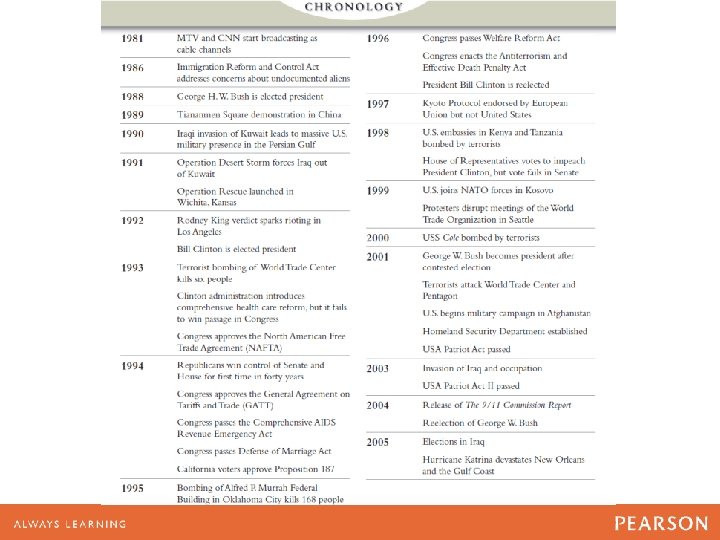 Chronology