


 Скачать презентацию OUR NEW TRICKS FOR YOUR OLD RESERVOIRS Oil
3e6fe28a91bfbf5ab174582a12d246a8.ppt
- Количество слайдов: 102
 OUR “NEW TRICKS” FOR YOUR “OLD RESERVOIRS” Oil Chem Technologies, Inc. Sugar Land, TX
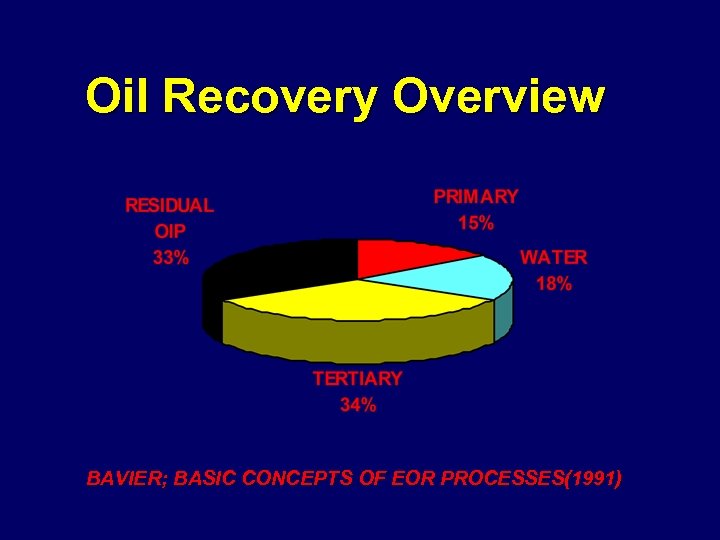 Oil Recovery Overview BAVIER; BASIC CONCEPTS OF EOR PROCESSES(1991)
 YOUR “OLD RESERVOIRS”
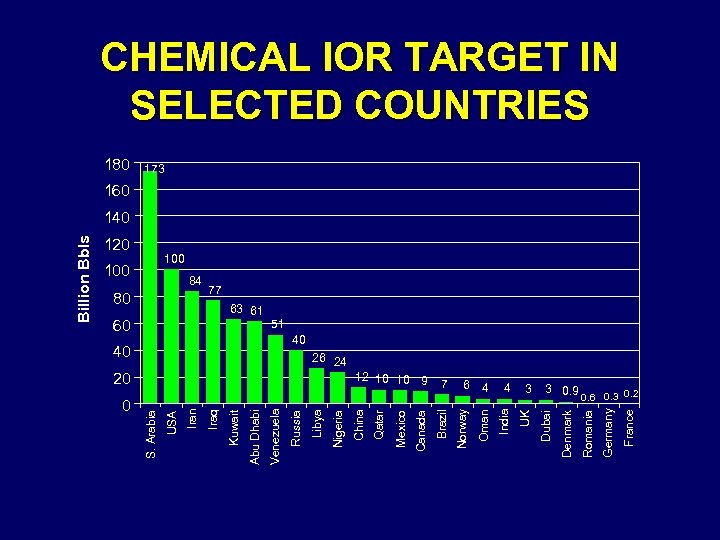 0 6 4 4 3 Oman India UK France Germany 3 0. 9 Romania Denmark Dubai 7 Norway 12 10 10 9 Brazil Canada Mexico Qatar 20 China Nigeria Libya 40 Russia Venezuela 60 Abu Dhabi 80 Kuwait 84 Iraq 100 Iran 120 USA 180 S. Arabia Billion Bbls CHEMICAL IOR TARGET IN SELECTED COUNTRIES 173 160 140 100 77 63 61 51 40 26 24 0. 6 0. 3 0. 2
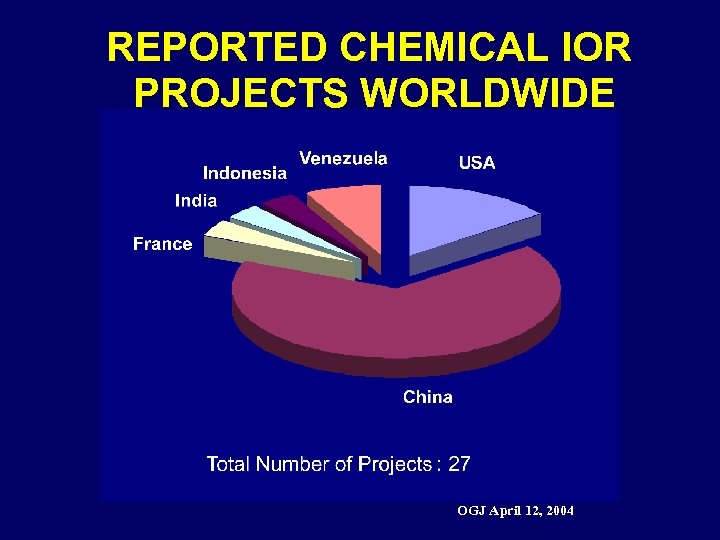 REPORTED CHEMICAL IOR PROJECTS WORLDWIDE OGJ April 12, 2004
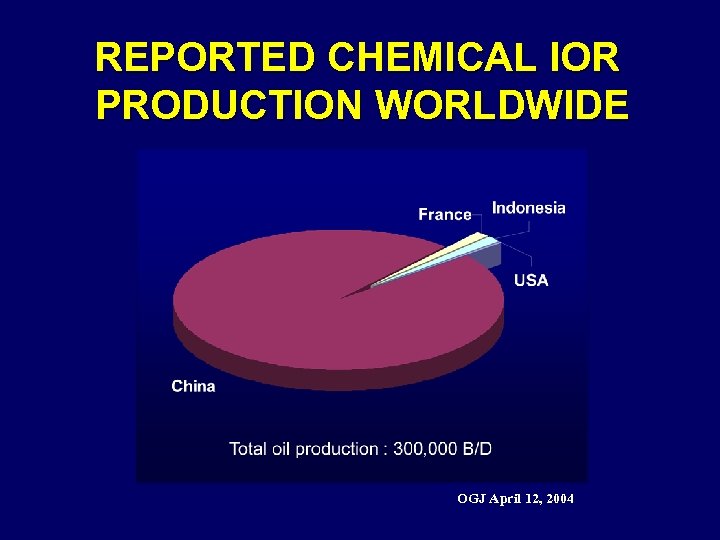 REPORTED CHEMICAL IOR PRODUCTION WORLDWIDE OGJ April 12, 2004
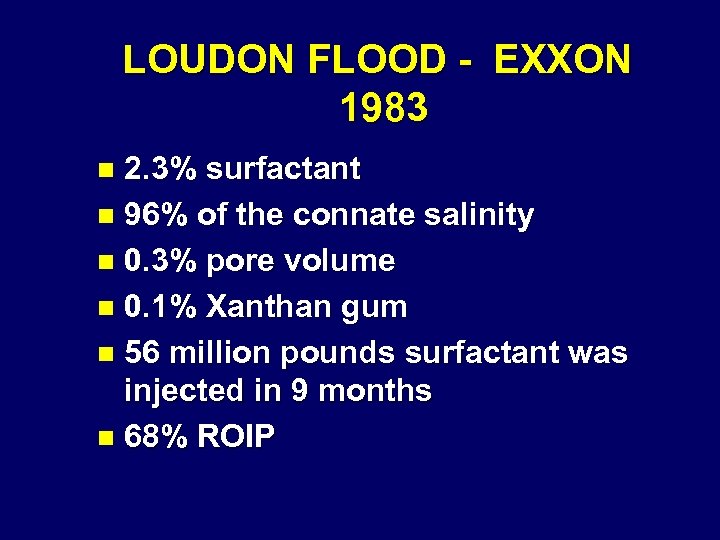 LOUDON FLOOD - EXXON 1983 2. 3% surfactant n 96% of the connate salinity n 0. 3% pore volume n 0. 1% Xanthan gum n 56 million pounds surfactant was injected in 9 months n 68% ROIP n
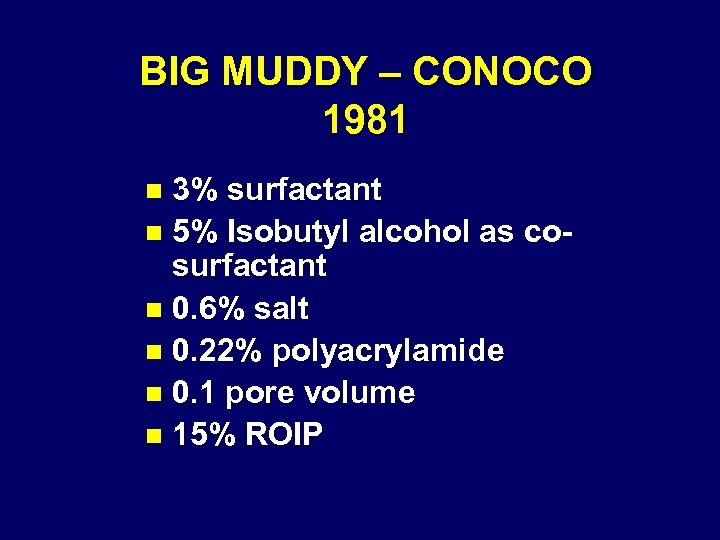 BIG MUDDY – CONOCO 1981 3% surfactant n 5% Isobutyl alcohol as cosurfactant n 0. 6% salt n 0. 22% polyacrylamide n 0. 1 pore volume n 15% ROIP n
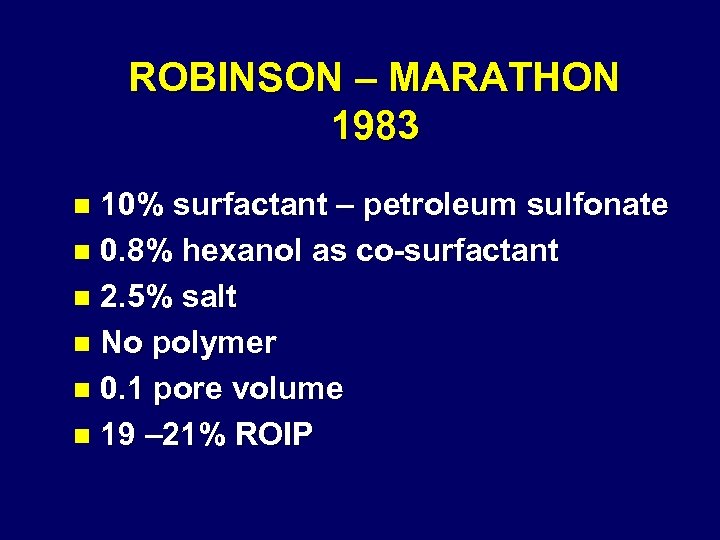 ROBINSON – MARATHON 1983 10% surfactant – petroleum sulfonate n 0. 8% hexanol as co-surfactant n 2. 5% salt n No polymer n 0. 1 pore volume n 19 – 21% ROIP n
 IOR BY CHEMICAL FLOOD Limited commercial success for the past two decades - Reasons? Sensitivity to oil price n Large up-front investment n Unpredictable return on investment n Availability of chemicals n Limitations of chemicals n Poor scaling from lab to field n
 PAST PROBLEMS High surfactant concentration n Salinity optimization required n Optimum salinity shift in the formation n Potential emulsion block n Potential residual additive in the produced oil n Economical Feasibility n
 however, Extensive lab evaluations support the feasibility of chemical flooding n Field data proves chemical flooding is an effective way to recover residual oil n New chemicals and processes open the door for new opportunities n
 OUR “NEW TRICKS” FOR YOUR “OLD RESERVOIRS”
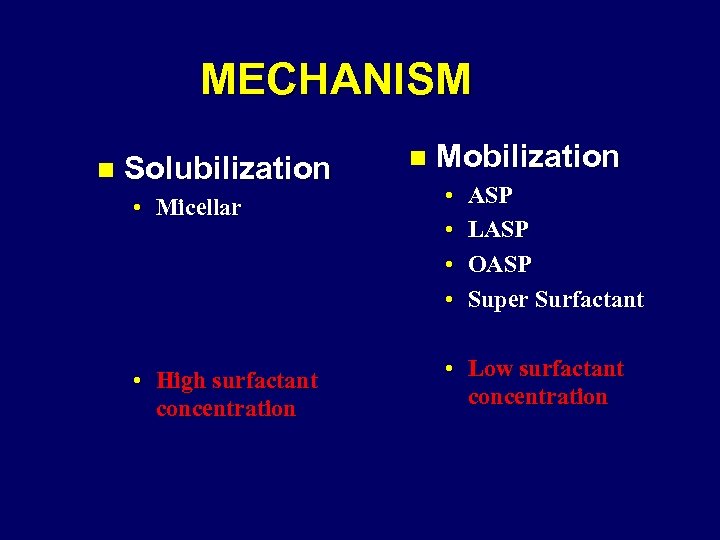 MECHANISM n Solubilization n Mobilization • Micellar • • • High surfactant concentration • Low surfactant concentration ASP LASP OASP Super Surfactant
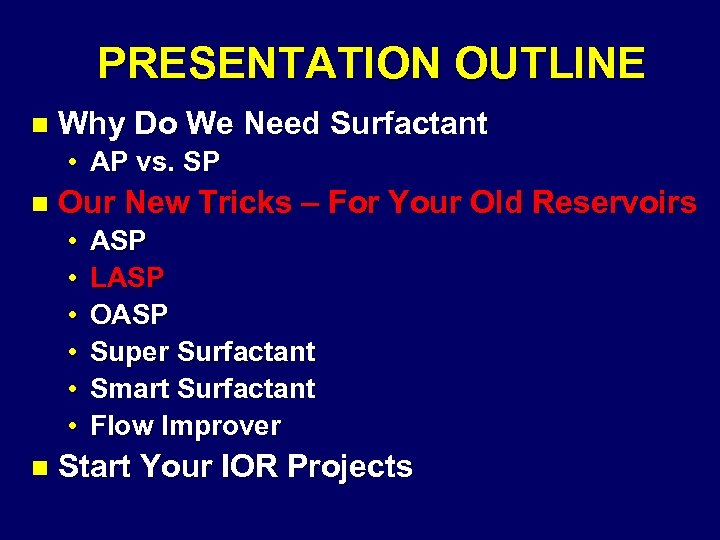
 PRESENTATION OUTLINE n Why Do We Need Surfactant • AP vs. SP n Our New Tricks – For Your Old Reservoirs • • • n ASP LASP OASP Super Surfactant Smart Surfactant Flow Improver Start Your IOR Projects
 PRESENTATION OUTLINE n Why Do We Need Surfactant • AP vs. SP n Our New Tricks – For Your Old Reservoirs • • • n ASP LASP OASP Super Surfactant Smart Surfactant Flow Improver Start Your IOR Projects
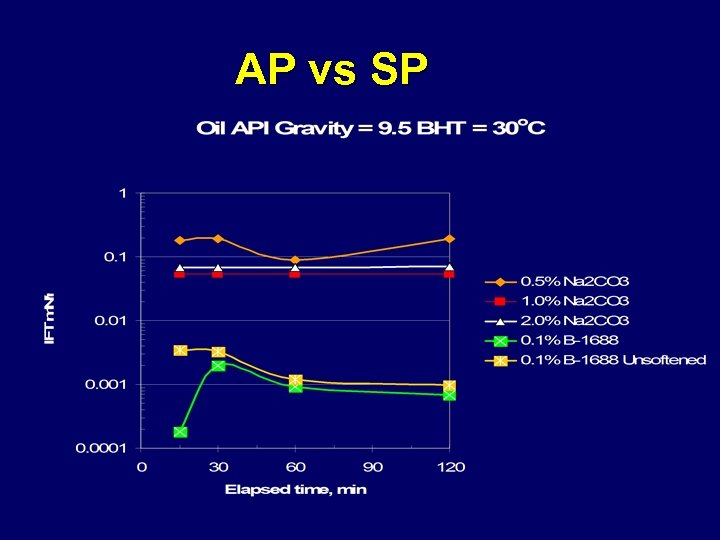 AP vs SP
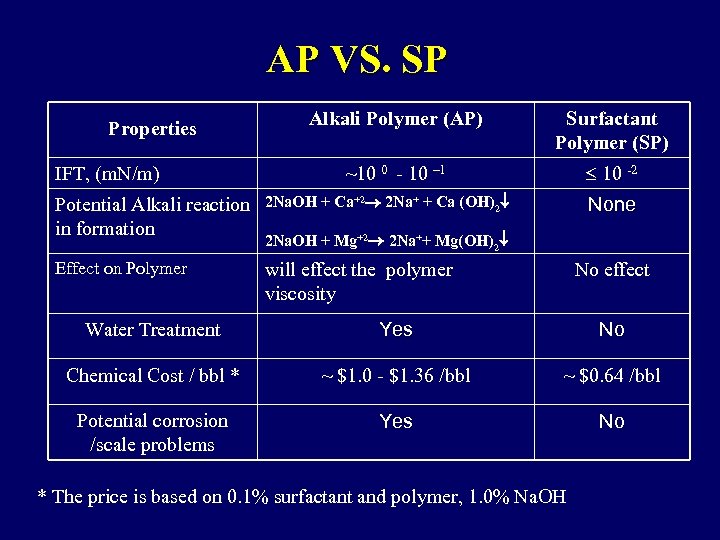 AP VS. SP Properties IFT, (m. N/m) Alkali Polymer (AP) Surfactant Polymer (SP) ~10 0 - 10 – 1 10 -2 Potential Alkali reaction in formation 2 Na. OH + Ca+2 2 Na+ + Ca (OH)2 Effect on Polymer will effect the polymer viscosity None 2 Na. OH + Mg+2 2 Na++ Mg(OH)2 No effect Water Treatment Yes No Chemical Cost / bbl * ~ $1. 0 - $1. 36 /bbl ~ $0. 64 /bbl Potential corrosion /scale problems Yes No * The price is based on 0. 1% surfactant and polymer, 1. 0% Na. OH
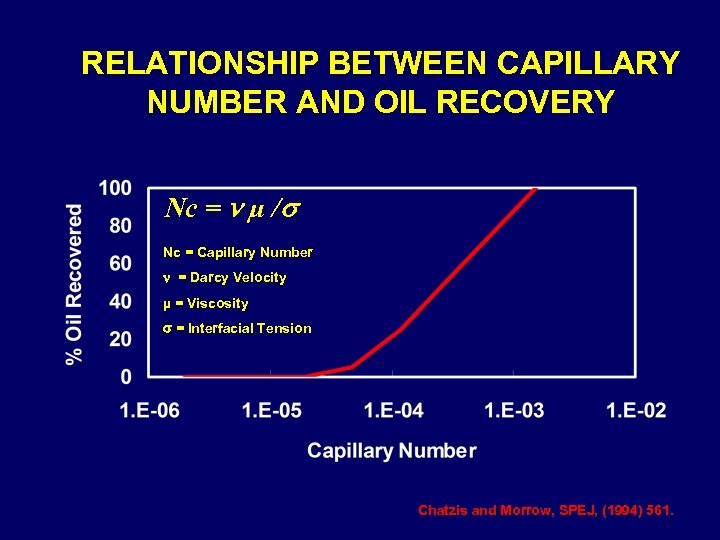 RELATIONSHIP BETWEEN CAPILLARY NUMBER AND OIL RECOVERY Nc = µ / Nc = Capillary Number = Darcy Velocity µ = Viscosity = Interfacial Tension Chatzis and Morrow, SPEJ, (1994) 561.
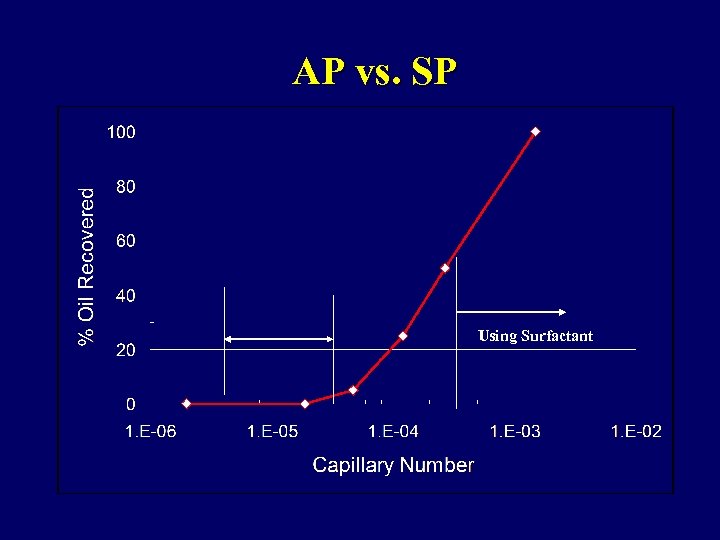 AP vs. SP Using Surfactant
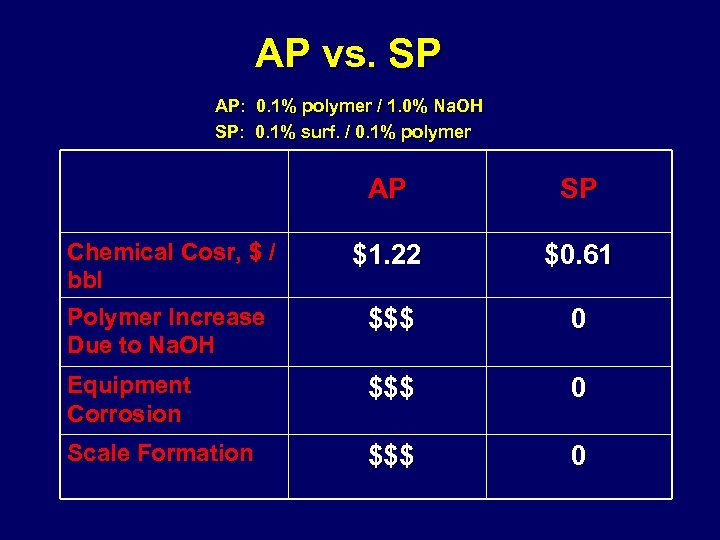 AP vs. SP AP: 0. 1% polymer / 1. 0% Na. OH SP: 0. 1% surf. / 0. 1% polymer AP SP $1. 22 $0. 61 $$$ 0 Equipment Corrosion $$$ 0 Scale Formation $$$ 0 Chemical Cosr, $ / bbl Polymer Increase Due to Na. OH
 PRESENTATION OUTLINE n Why Do We Need Surfactant • AP vs. SP n Our New Tricks – For Your Old Reservoirs • • • n ASP LASP OASP Super Surfactant Smart Surfactant Flow Improver Start Your IOR Projects
 ASP SURFACTANTS ORS & ORS-HF SERIES
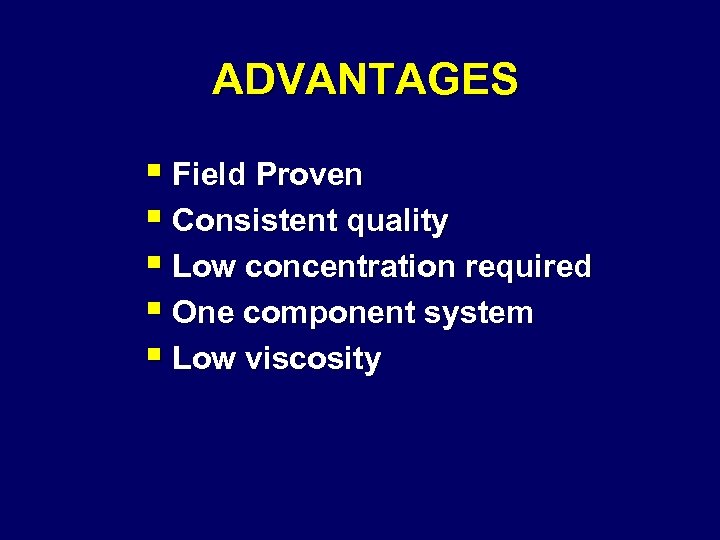 ADVANTAGES § Field Proven § Consistent quality § Low concentration required § One component system § Low viscosity
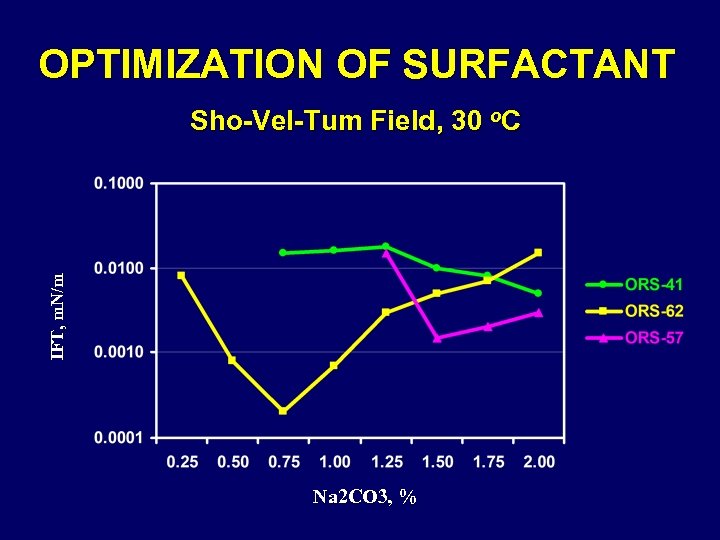
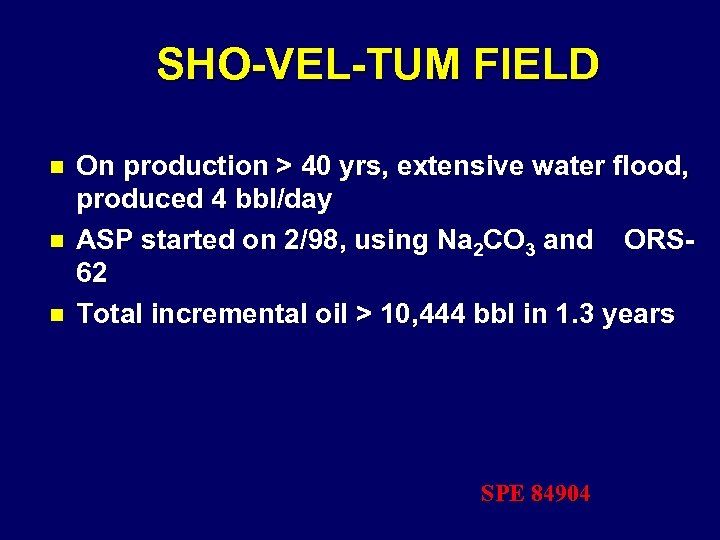 SHO-VEL-TUM FIELD n n n On production > 40 yrs, extensive water flood, produced 4 bbl/day ASP started on 2/98, using Na 2 CO 3 and ORS 62 Total incremental oil > 10, 444 bbl in 1. 3 years SPE 84904
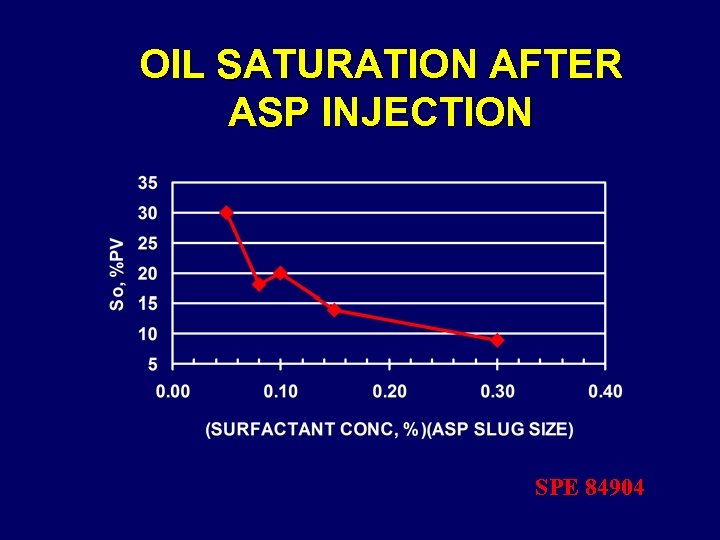 OIL SATURATION AFTER ASP INJECTION SPE 84904
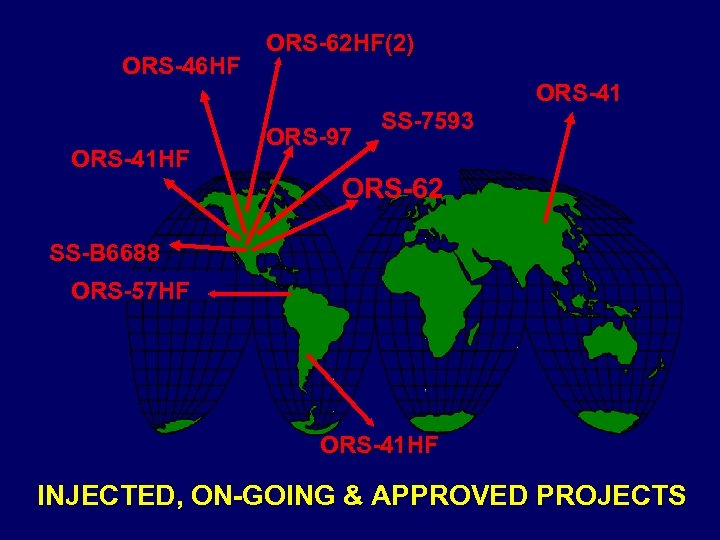 ORS-46 HF ORS-62 HF(2) ORS-41 HF ORS-97 SS-7593 ORS-62 SS-B 6688 ORS-57 HF ORS-41 HF INJECTED, ON-GOING & APPROVED PROJECTS
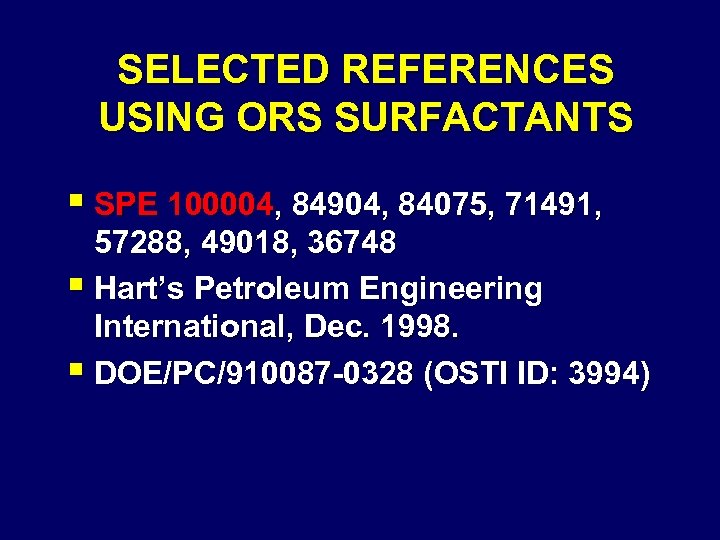 SELECTED REFERENCES USING ORS SURFACTANTS § SPE 100004, 84904, 84075, 71491, 57288, 49018, 36748 § Hart’s Petroleum Engineering International, Dec. 1998. § DOE/PC/910087 -0328 (OSTI ID: 3994)
 PRESENTATION OUTLINE n Why Do We Need Surfactant • AP vs. SP n Our New Tricks – For Your Old Reservoirs • • • n ASP LASP OASP Super Surfactant Smart Surfactant Flow Improver Start Your IOR Projects
 LOW ALKALI SURFACTANT POLYMER FLOOD (LASP)
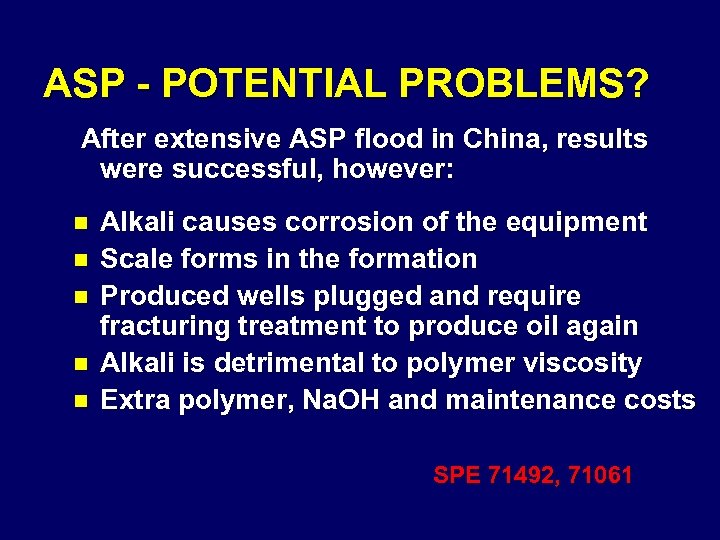 ASP - POTENTIAL PROBLEMS? After extensive ASP flood in China, results were successful, however: Alkali causes corrosion of the equipment n Scale forms in the formation n Produced wells plugged and require fracturing treatment to produce oil again n Alkali is detrimental to polymer viscosity n Extra polymer, Na. OH and maintenance costs n SPE 71492, 71061
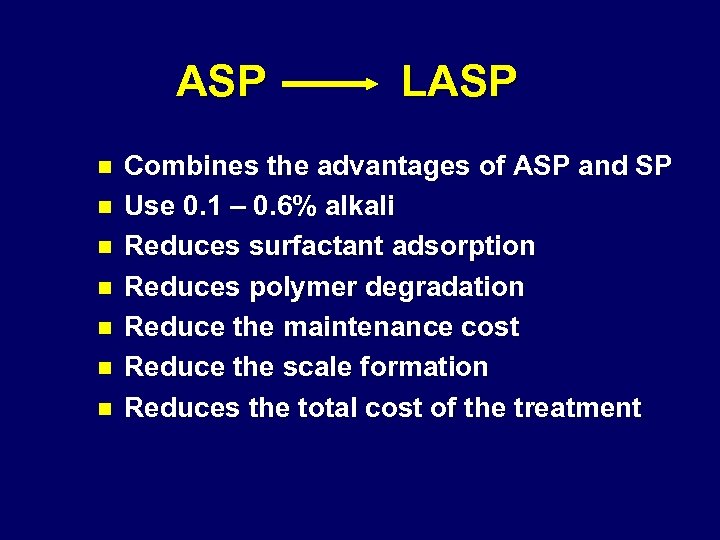 ASP n n n n LASP Combines the advantages of ASP and SP Use 0. 1 – 0. 6% alkali Reduces surfactant adsorption Reduces polymer degradation Reduce the maintenance cost Reduce the scale formation Reduces the total cost of the treatment
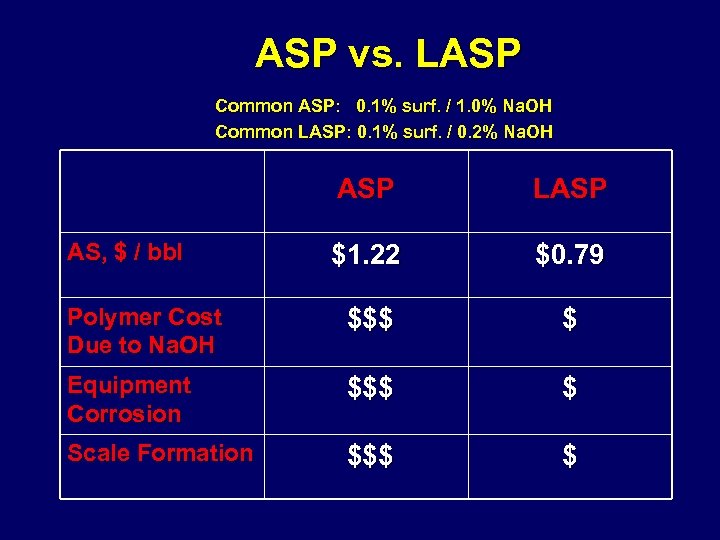 ASP vs. LASP Common ASP: 0. 1% surf. / 1. 0% Na. OH Common LASP: 0. 1% surf. / 0. 2% Na. OH ASP LASP $1. 22 $0. 79 Polymer Cost Due to Na. OH $$$ $ Equipment Corrosion $$$ $ Scale Formation $$$ $ AS, $ / bbl
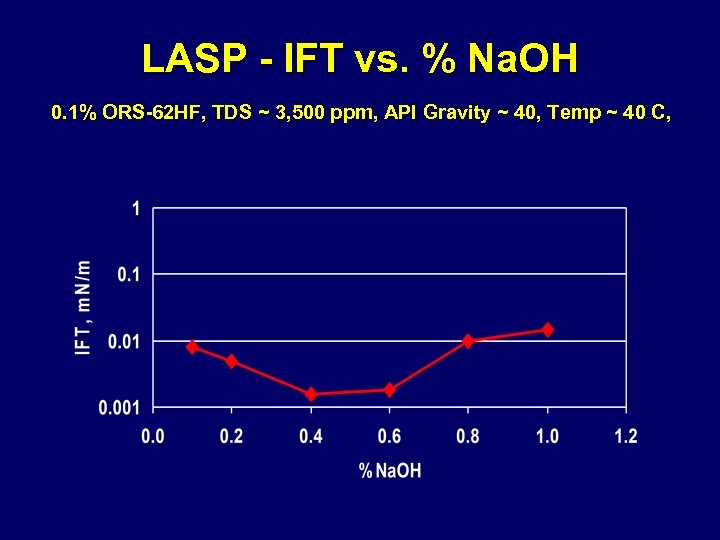 LASP - IFT vs. % Na. OH 0. 1% ORS-62 HF, TDS ~ 3, 500 ppm, API Gravity ~ 40, Temp ~ 40 C,
 PRESENTATION OUTLINE n Why Do We Need Surfactant • AP vs. SP n Our New Tricks – For Your Old Reservoirs • • • n ASP LASP OASP Super Surfactant Smart Surfactant Flow Improver Start Your IOR Projects
 ORGANIC ALKALI SURFACTANT POLYMER FLOOD (OASP) SPE 99581
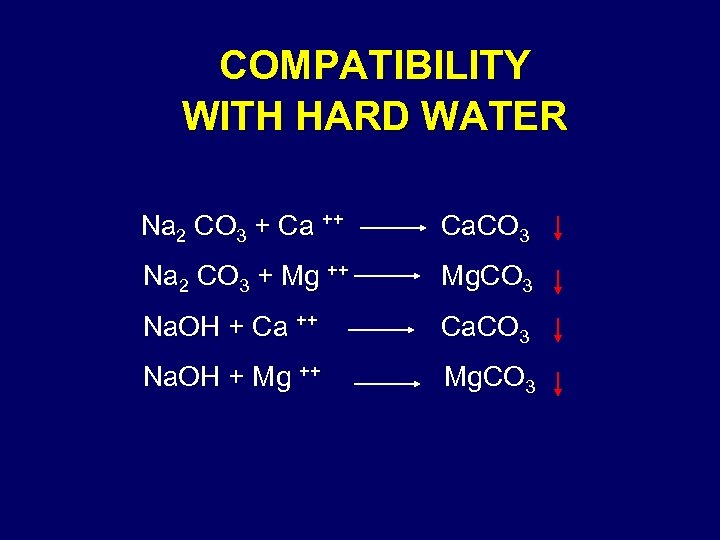 COMPATIBILITY WITH HARD WATER Na 2 CO 3 + Ca ++ Ca. CO 3 Na 2 CO 3 + Mg ++ Mg. CO 3 Na. OH + Ca ++ Ca. CO 3 Na. OH + Mg ++ Mg. CO 3
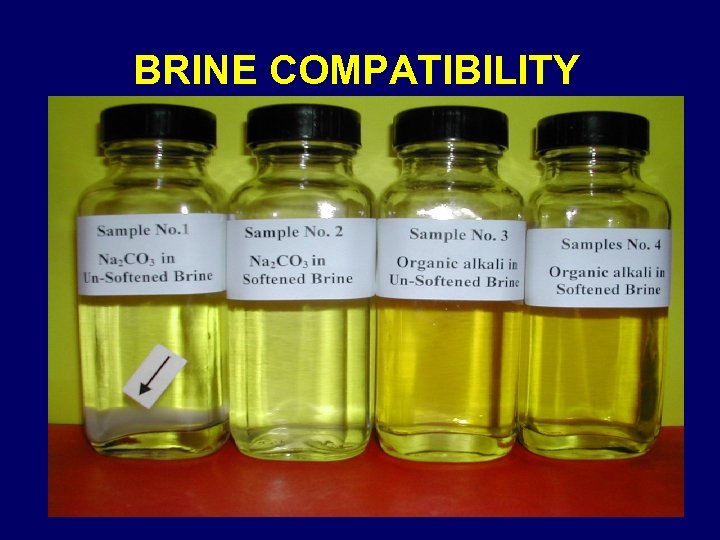 BRINE COMPATIBILITY
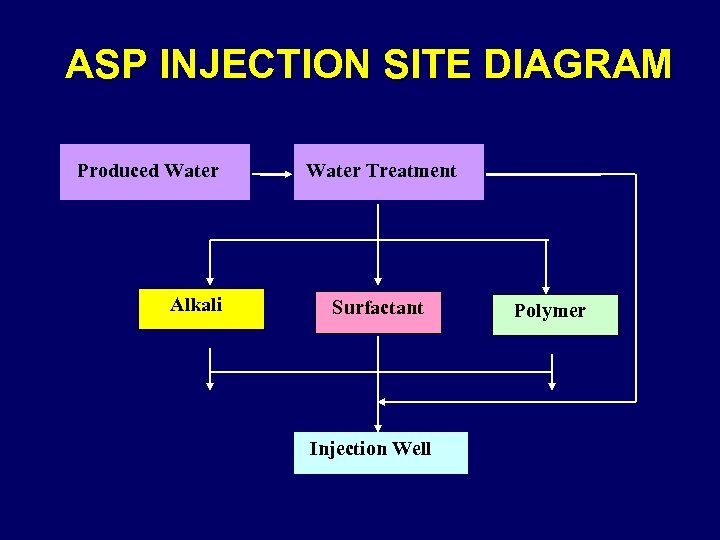 ASP INJECTION SITE DIAGRAM Produced Water Treatment Alkali Surfactant Injection Well Polymer
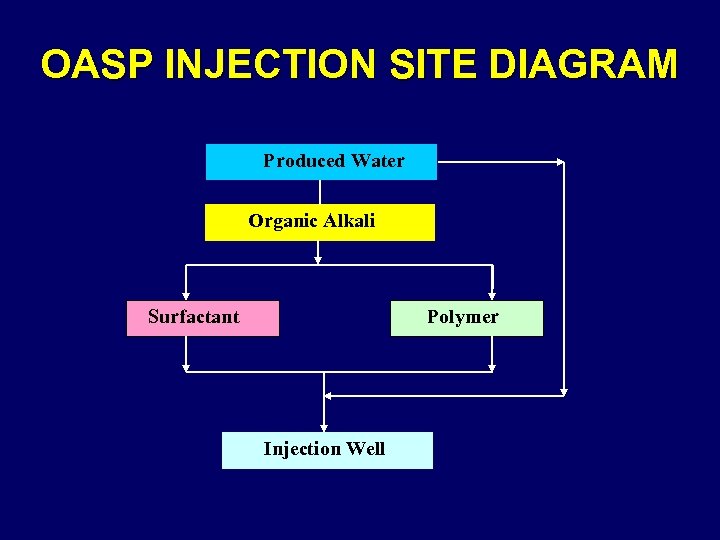 OASP INJECTION SITE DIAGRAM Produced Water Organic Alkali Surfactant Injection Well Polymer
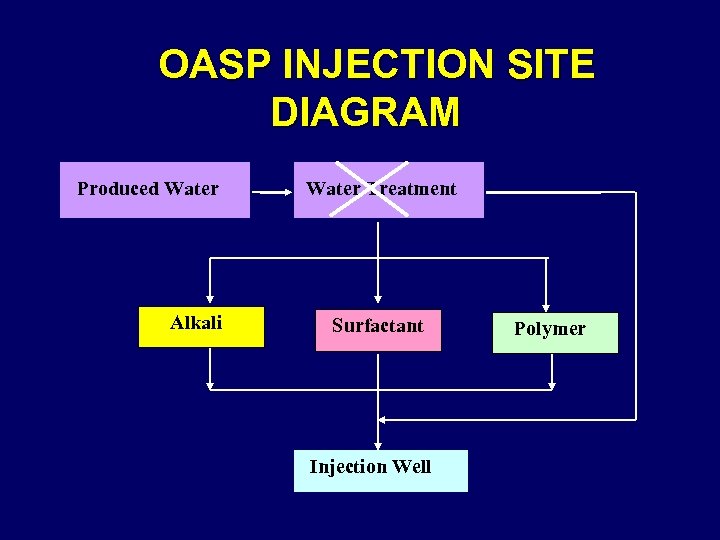 OASP INJECTION SITE DIAGRAM Produced Water Treatment Alkali Surfactant Injection Well Polymer
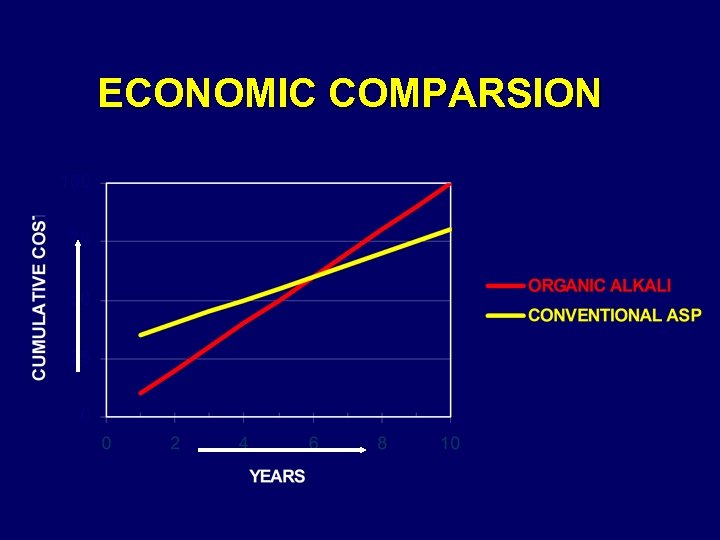 ECONOMIC COMPARSION
 PRESENTATION OUTLINE n Why Do We Need Surfactant • AP vs. SP n Our New Tricks – For Your Old Reservoirs • • • n ASP LASP OASP Super Surfactant Smart Surfactant Flow Improver Start Your IOR Projects
 SUPER SURFACTANTS SS Series
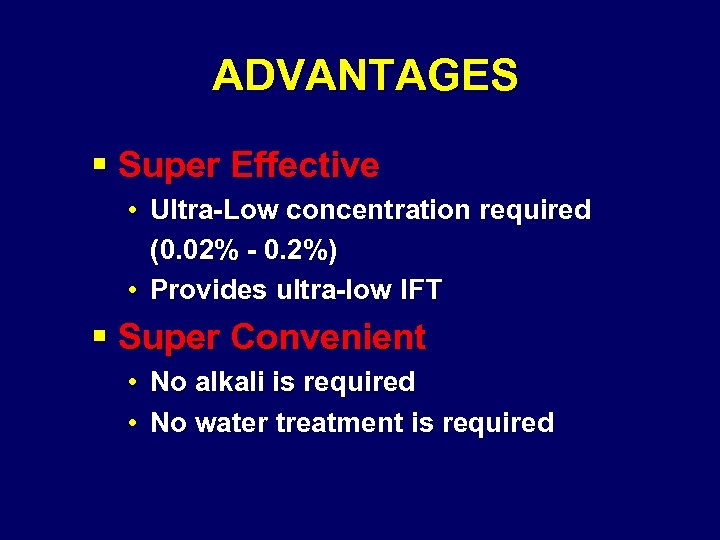 ADVANTAGES § Super Effective • Ultra-Low concentration required (0. 02% - 0. 2%) • Provides ultra-low IFT § Super Convenient • • No alkali is required No water treatment is required
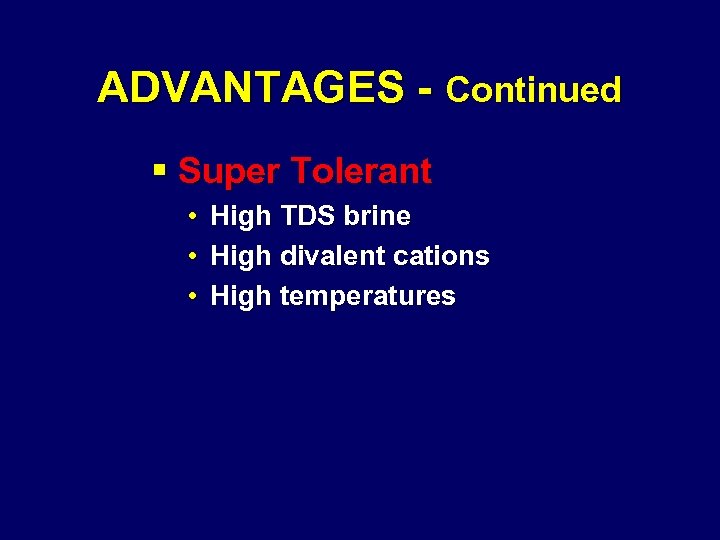 ADVANTAGES - Continued § Super Tolerant • High TDS brine • High divalent cations • High temperatures
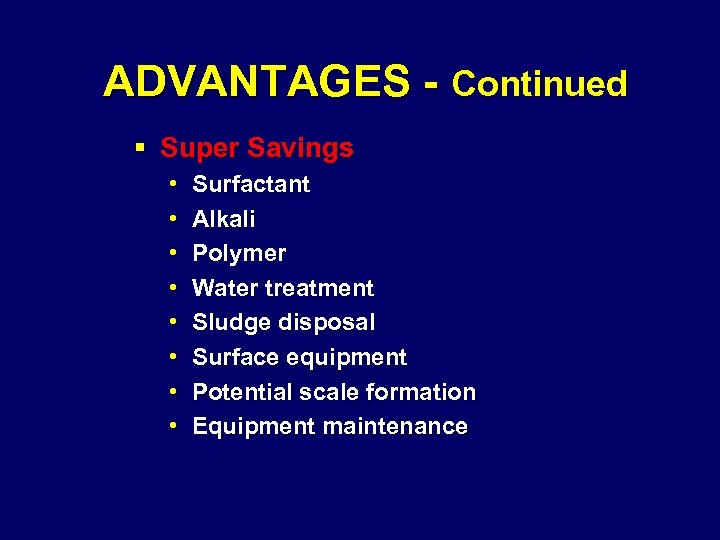 ADVANTAGES - Continued § Super Savings • • Surfactant Alkali Polymer Water treatment Sludge disposal Surface equipment Potential scale formation Equipment maintenance
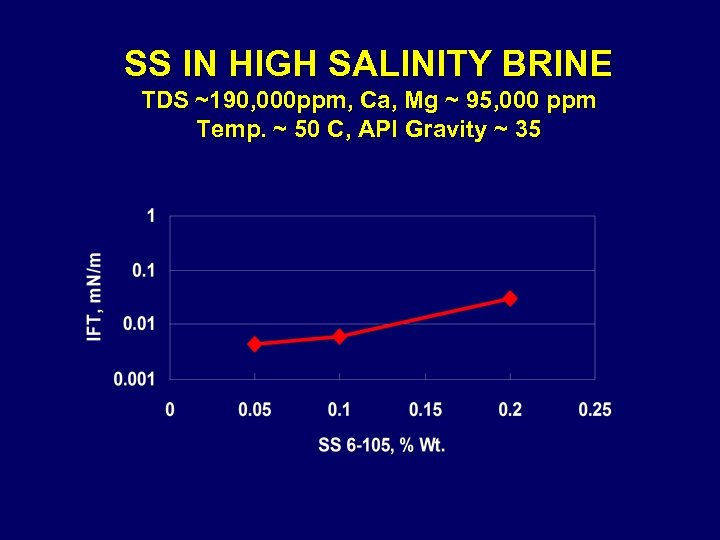 SS IN HIGH SALINITY BRINE TDS ~190, 000 ppm, Ca, Mg ~ 95, 000 ppm Temp. ~ 50 C, API Gravity ~ 35
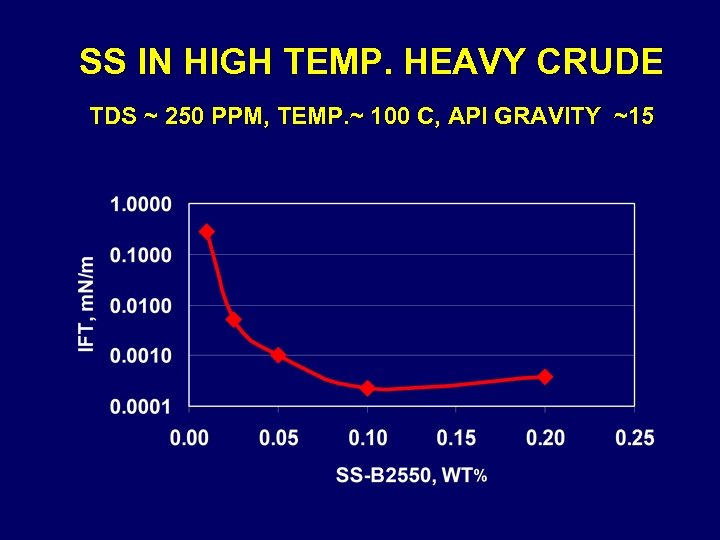 SS IN HIGH TEMP. HEAVY CRUDE TDS ~ 250 PPM, TEMP. ~ 100 C, API GRAVITY ~15
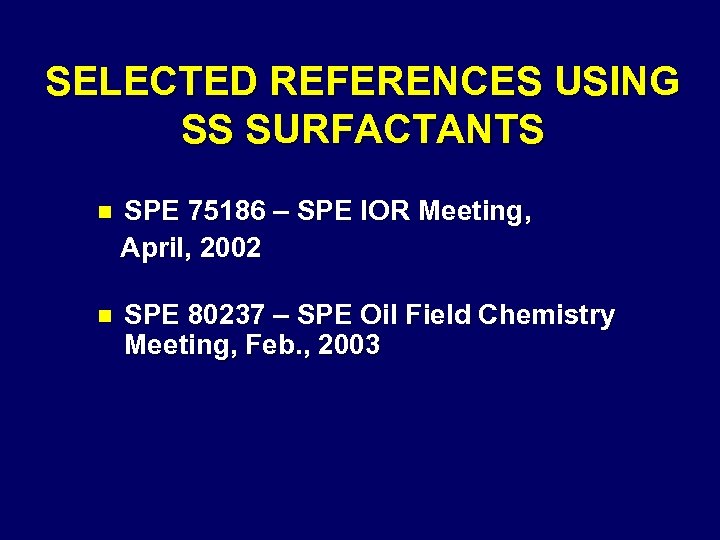 SELECTED REFERENCES USING SS SURFACTANTS n SPE 75186 – SPE IOR Meeting, April, 2002 n SPE 80237 – SPE Oil Field Chemistry Meeting, Feb. , 2003
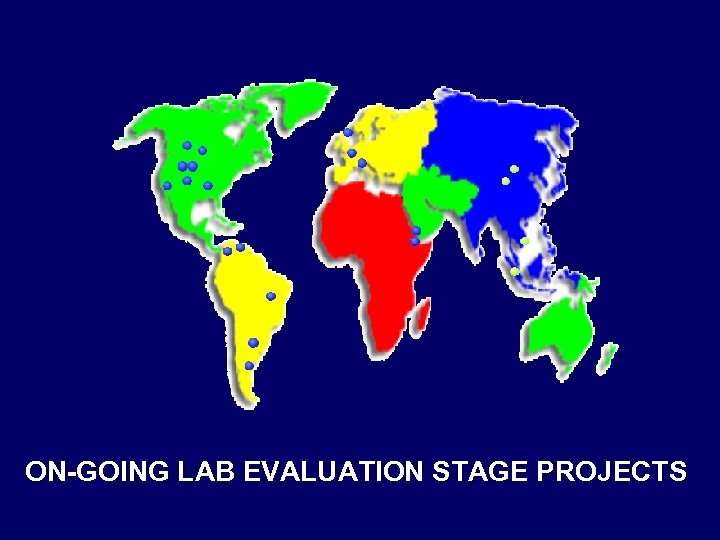 ON-GOING LAB EVALUATION STAGE PROJECTS
 PRESENTATION OUTLINE n Why Do We Need Surfactant • AP vs. SP n Our New Tricks – For Your Old Reservoirs • • • n ASP LASP OASP Super Surfactant Smart Surfactant Flow Improver Start Your IOR Projects
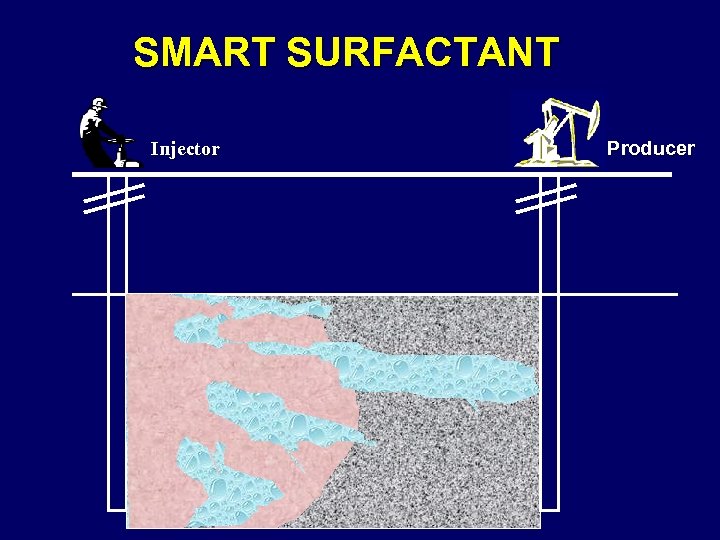
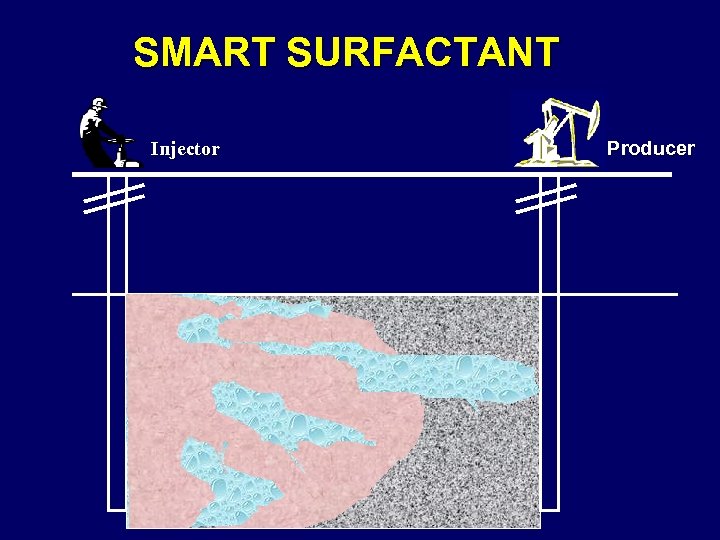
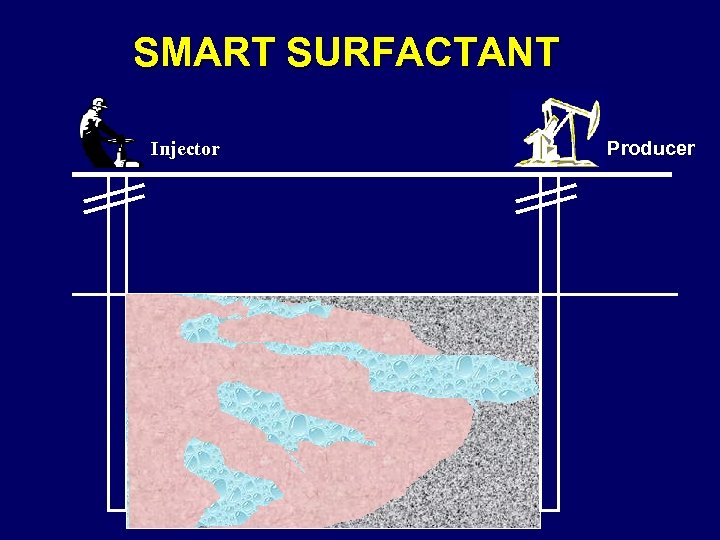
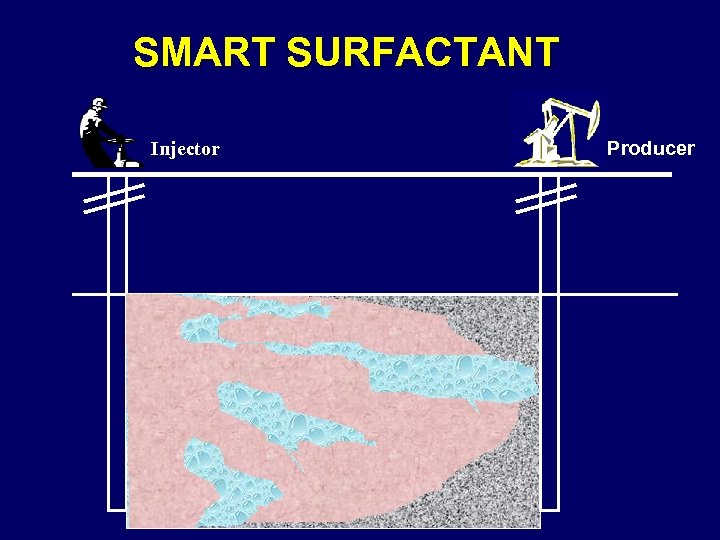
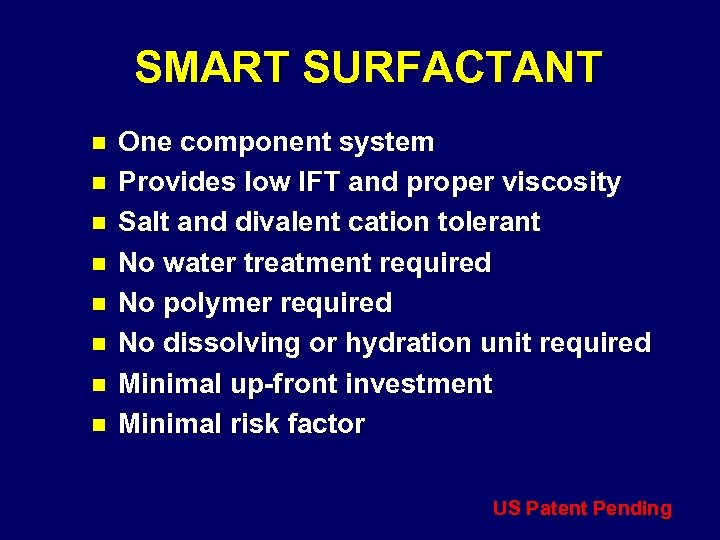 SMART SURFACTANT n n n n One component system Provides low IFT and proper viscosity Salt and divalent cation tolerant No water treatment required No polymer required No dissolving or hydration unit required Minimal up-front investment Minimal risk factor US Patent Pending
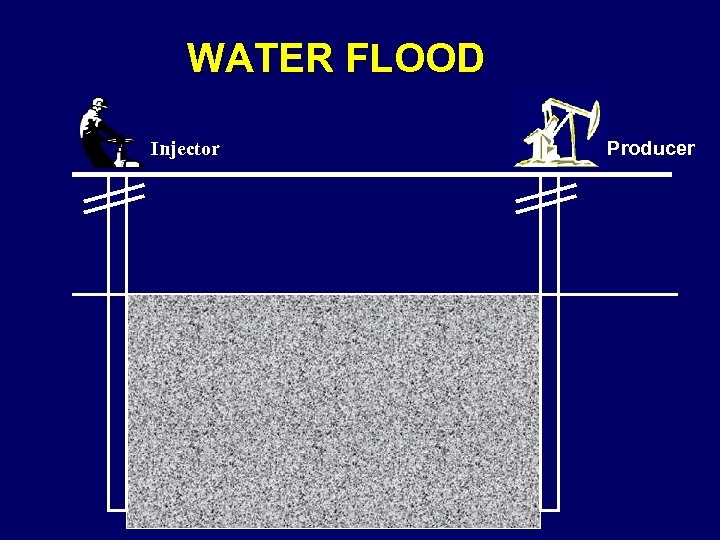 WATER FLOOD Injector Producer
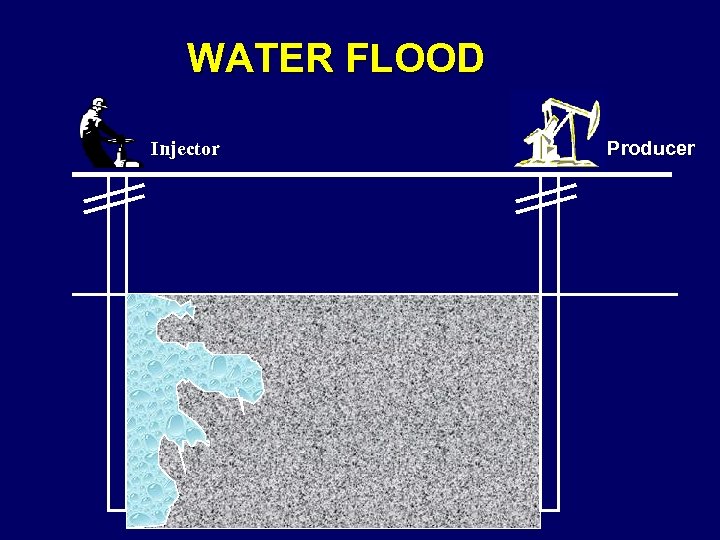 WATER FLOOD Injector Producer
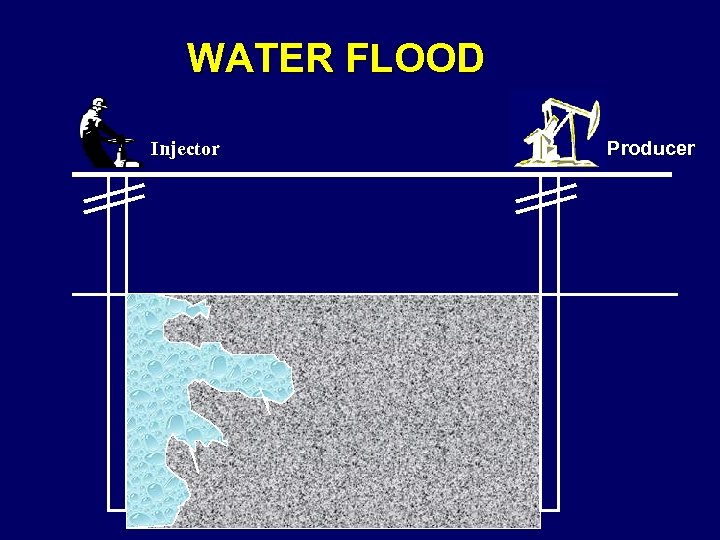 WATER FLOOD Injector Producer
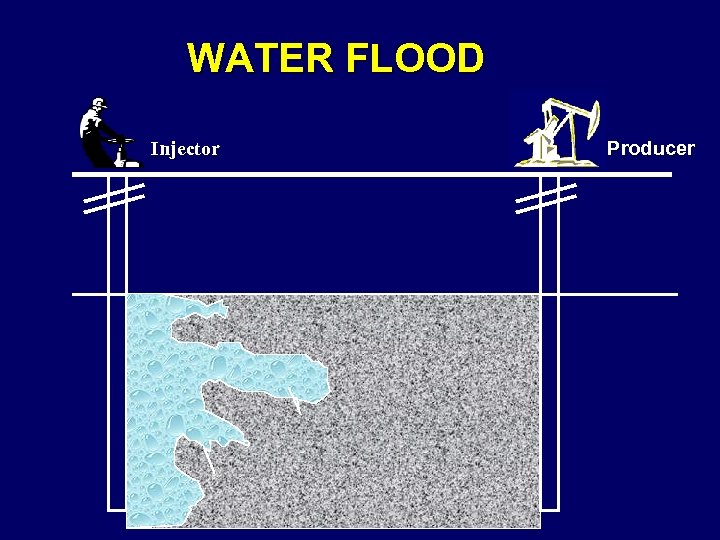 WATER FLOOD Injector Producer
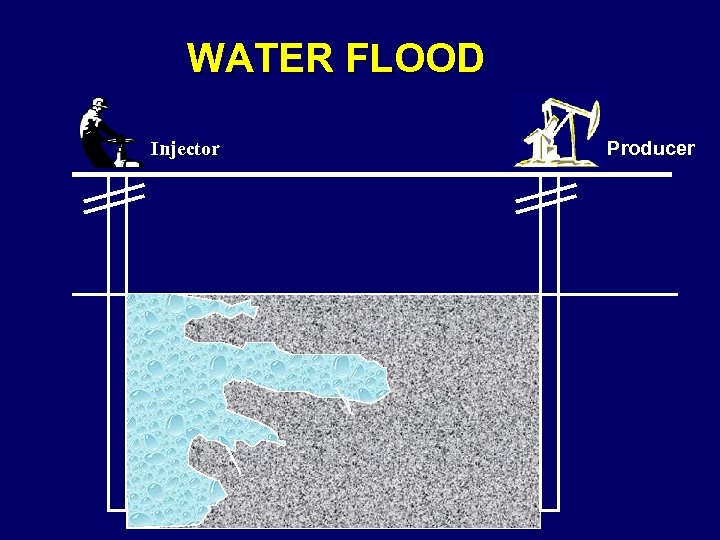 WATER FLOOD Injector Producer
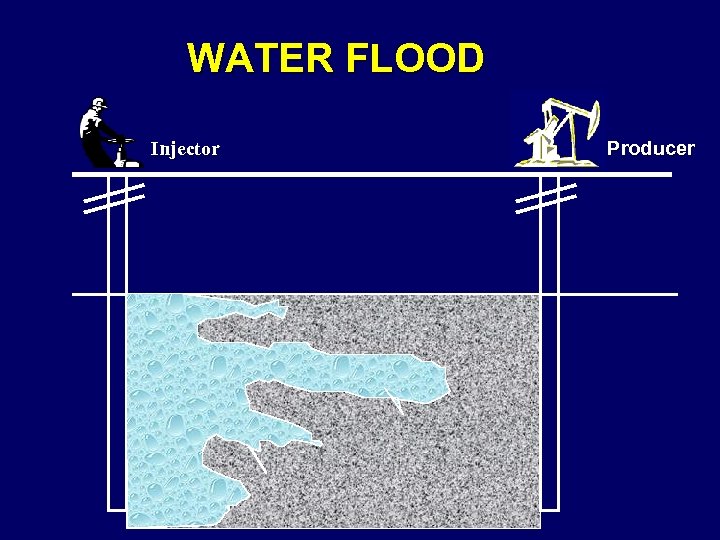 WATER FLOOD Injector Producer
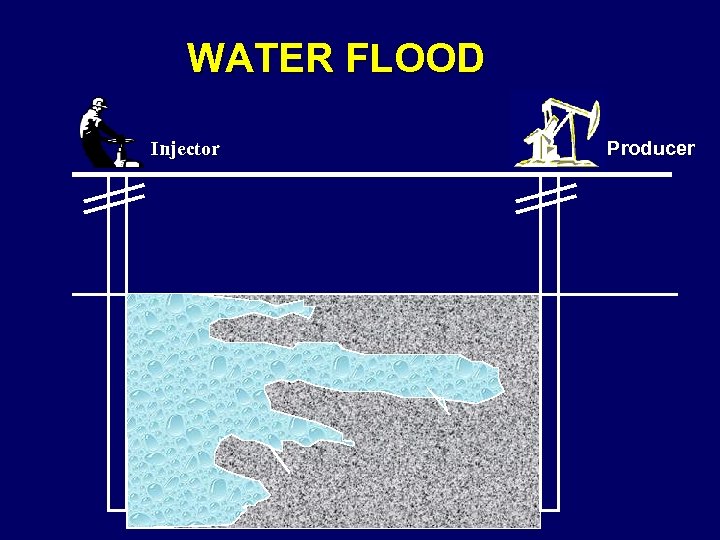 WATER FLOOD Injector Producer
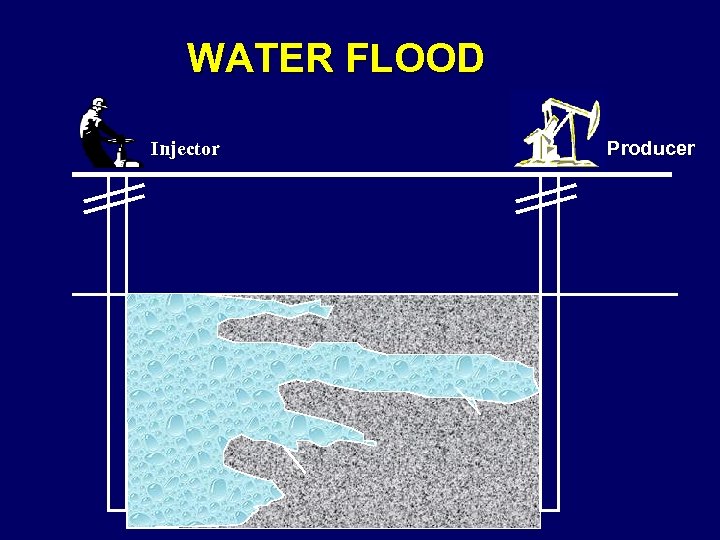 WATER FLOOD Injector Producer
 SURFACTANT FLOOD
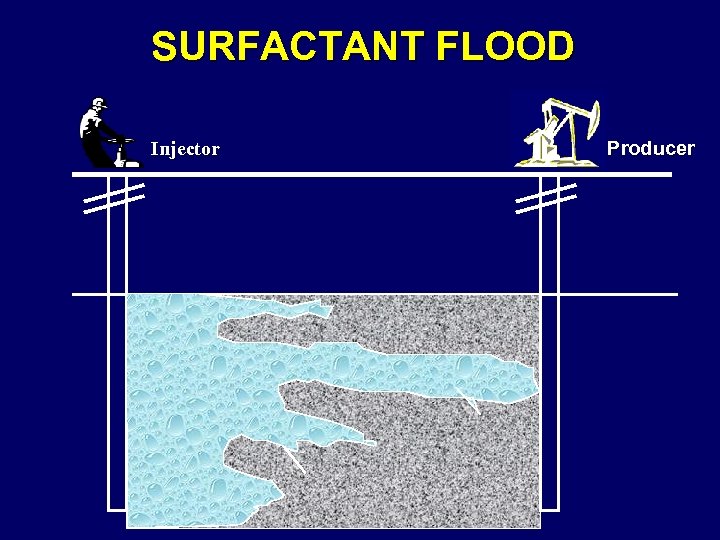 SURFACTANT FLOOD Injector Producer
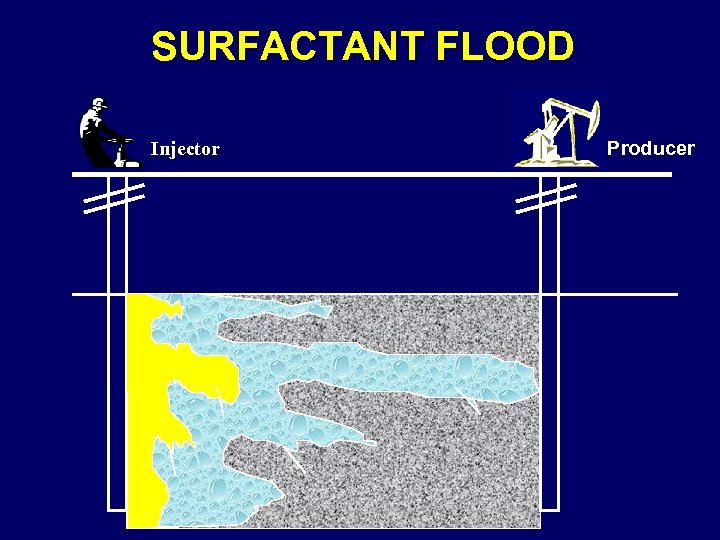 SURFACTANT FLOOD Injector Producer
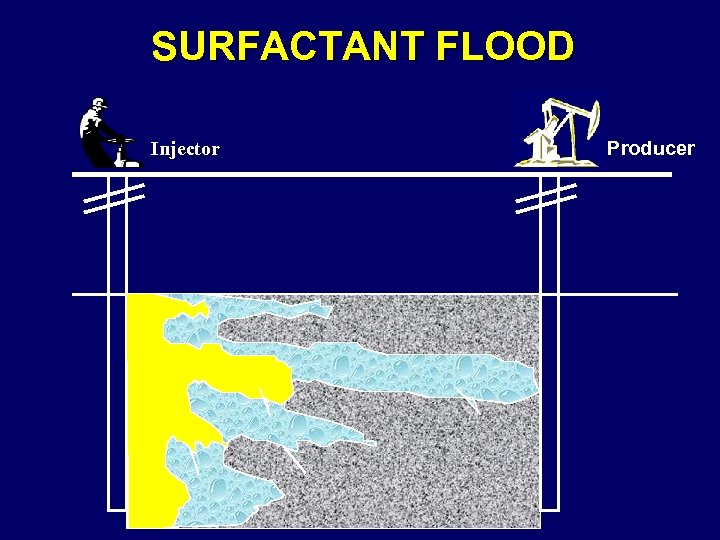 SURFACTANT FLOOD Injector Producer
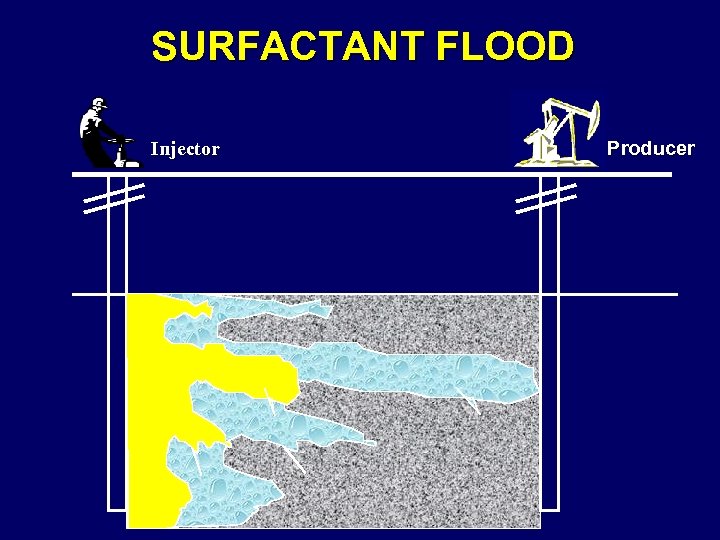 SURFACTANT FLOOD Injector Producer
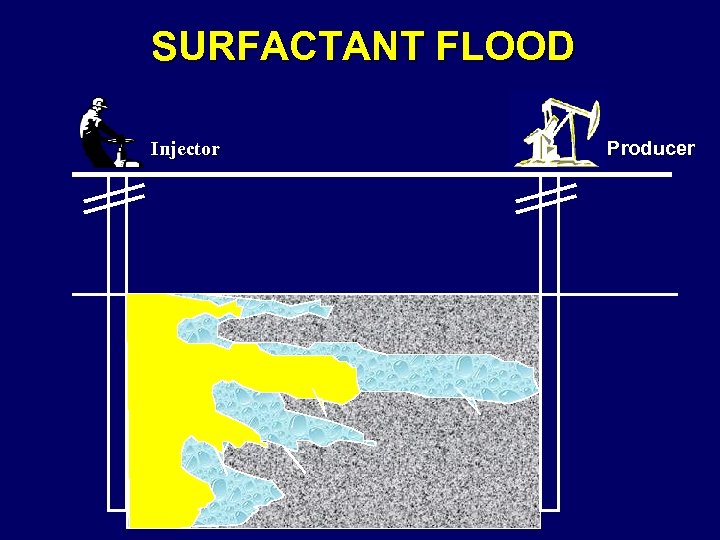 SURFACTANT FLOOD Injector Producer
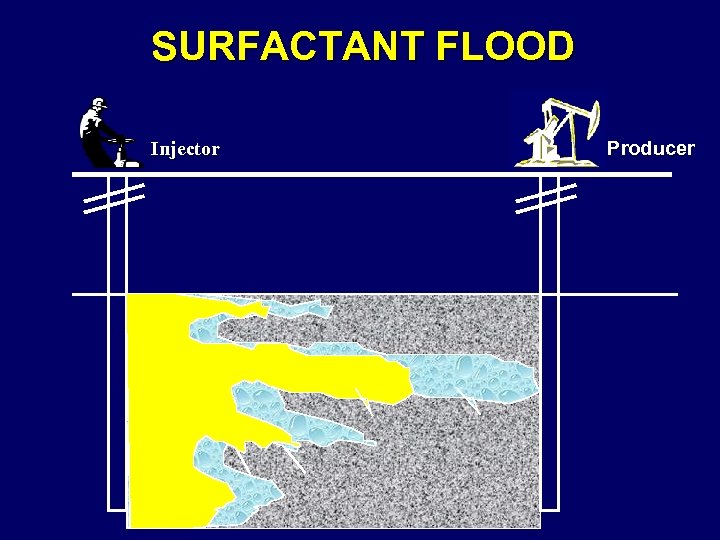 SURFACTANT FLOOD Injector Producer
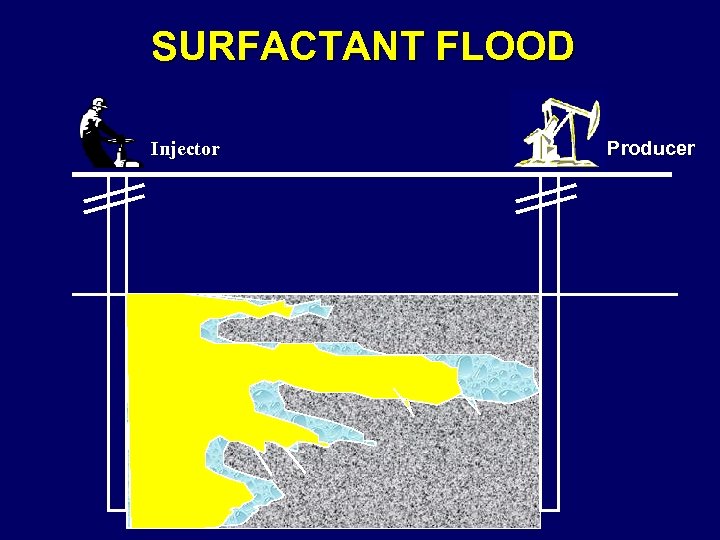 SURFACTANT FLOOD Injector Producer
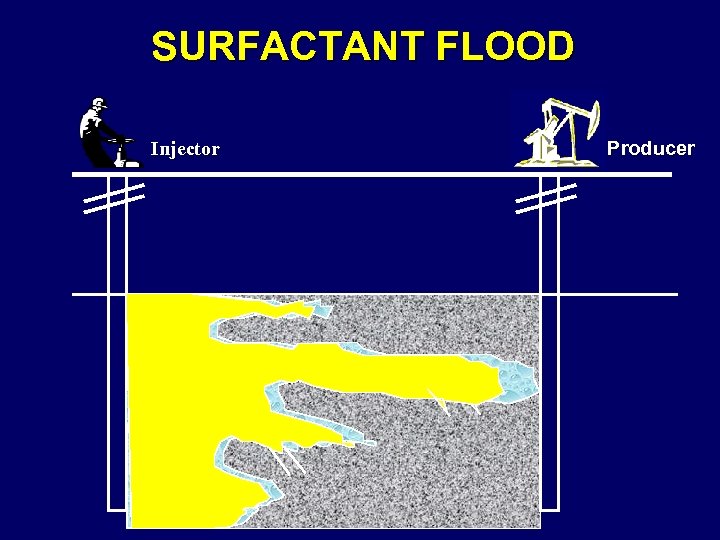 SURFACTANT FLOOD Injector Producer
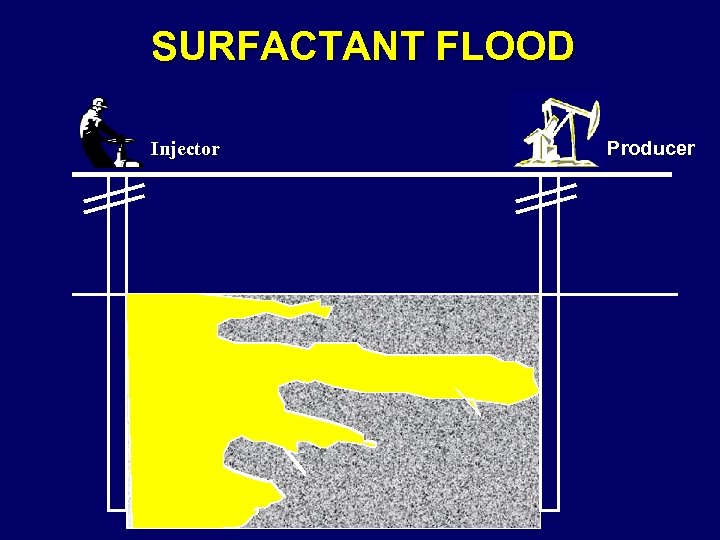 SURFACTANT FLOOD Injector Producer
 SMART SURFACTANT
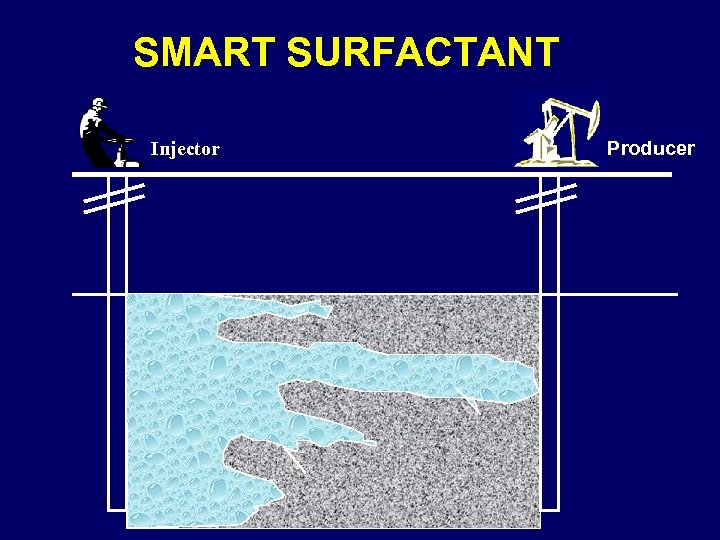 SMART SURFACTANT Injector Producer
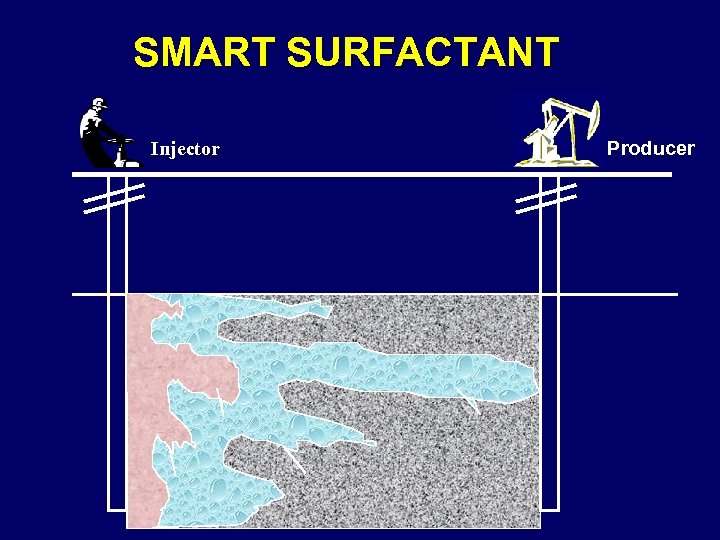 SMART SURFACTANT Injector Producer
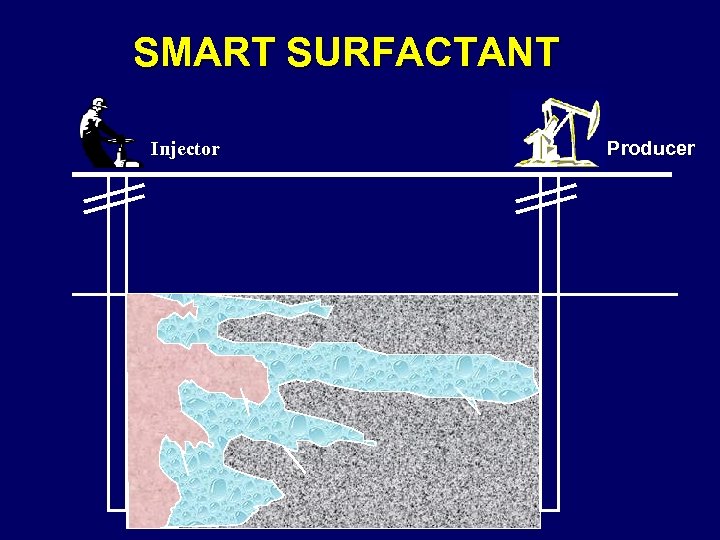 SMART SURFACTANT Injector Producer
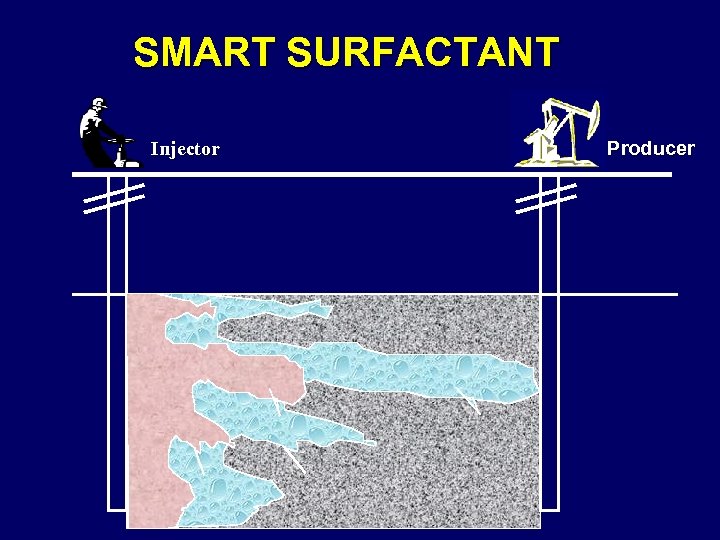 SMART SURFACTANT Injector Producer
 SMART SURFACTANT Injector Producer
 SMART SURFACTANT Injector Producer
 SMART SURFACTANT Injector Producer
 SMART SURFACTANT Injector Producer
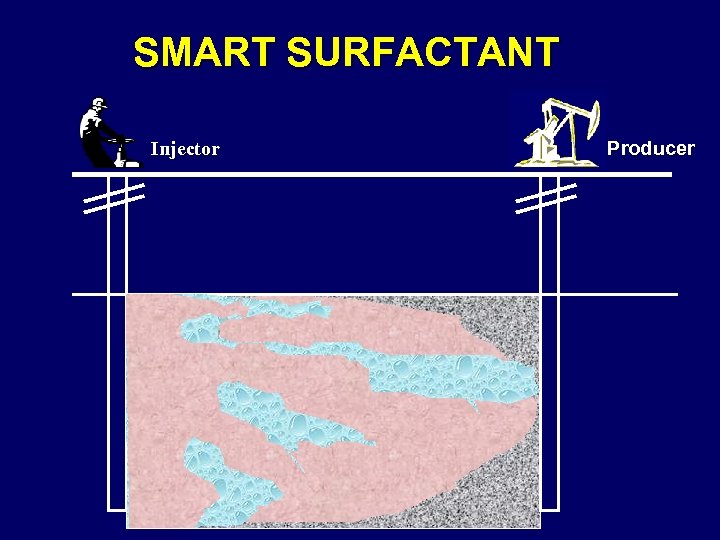 SMART SURFACTANT Injector Producer
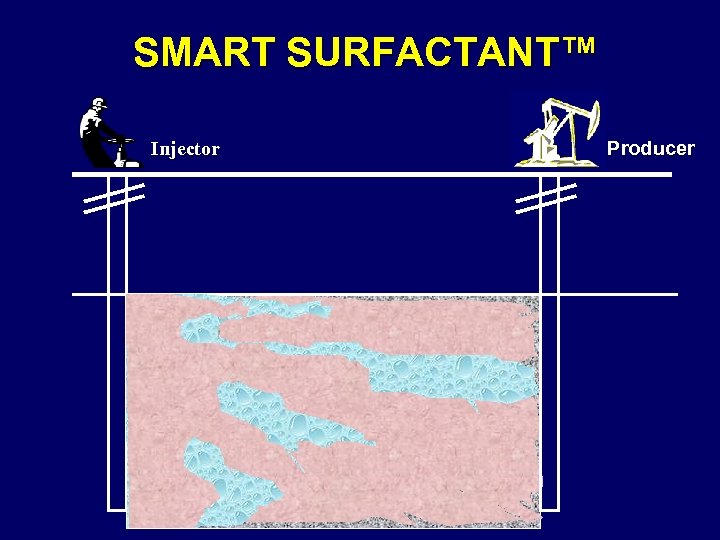 SMART SURFACTANT™ Injector Producer
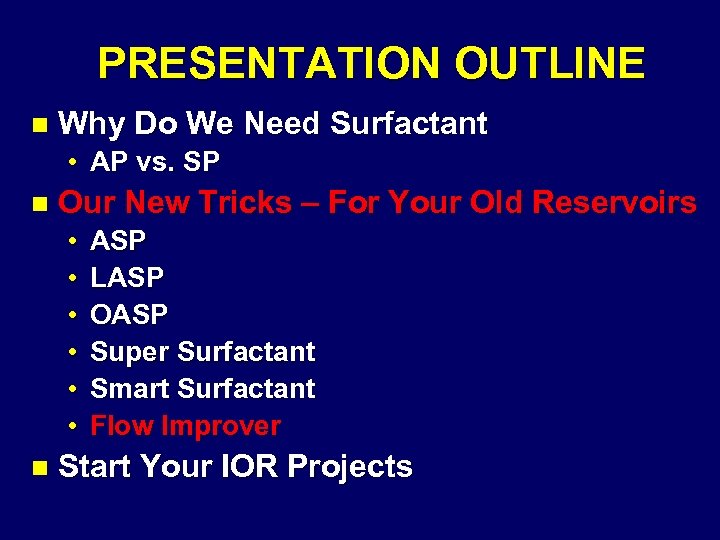 PRESENTATION OUTLINE n Why Do We Need Surfactant • AP vs. SP n Our New Tricks – For Your Old Reservoirs • • • n ASP LASP OASP Super Surfactant Smart Surfactant Flow Improver Start Your IOR Projects
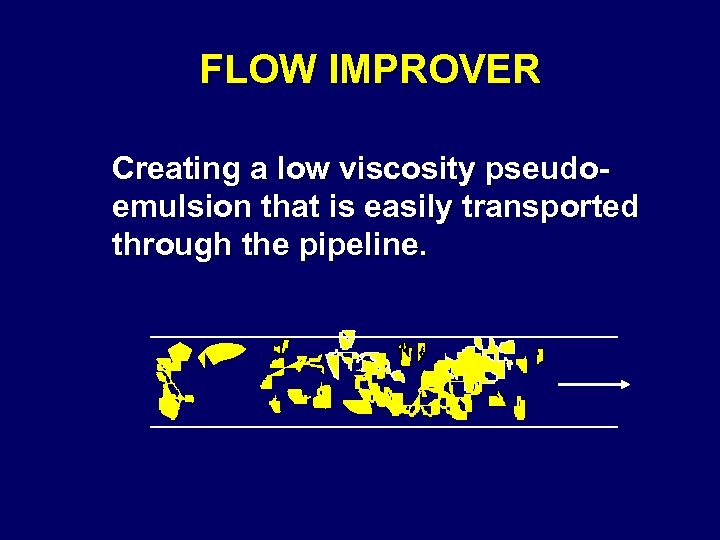 FLOW IMPROVER Creating a low viscosity pseudoemulsion that is easily transported through the pipeline.
 PRESENTATION OUTLINE n Why Do We Need Surfactant • AP vs. SP n Our New Tricks – For Your Old Reservoirs • • • n ASP LASP OASP Super Surfactant Smart Surfactant Flow Improver Start Your IOR Projects
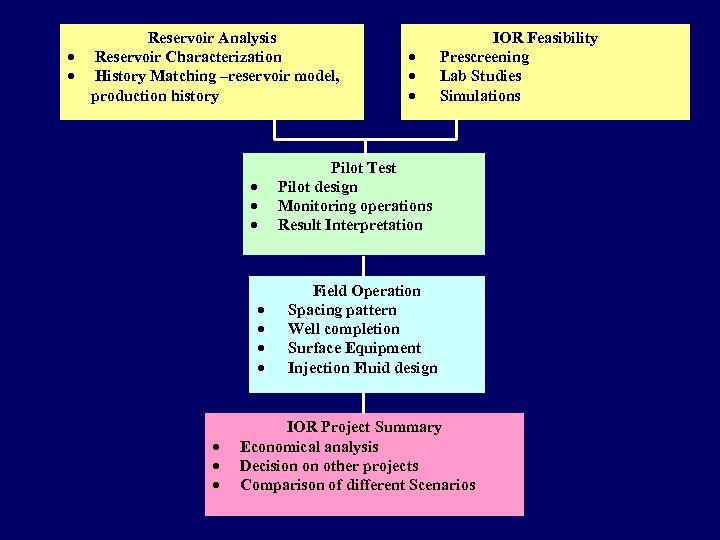 Reservoir Analysis · Reservoir Characterization · History Matching –reservoir model, production history IOR Feasibility · Prescreening · Lab Studies · Simulations Pilot Test · Pilot design · Monitoring operations · Result Interpretation Field Operation · Spacing pattern · Well completion · Surface Equipment · Injection Fluid design IOR Project Summary · Economical analysis · Decision on other projects · Comparison of different Scenarios
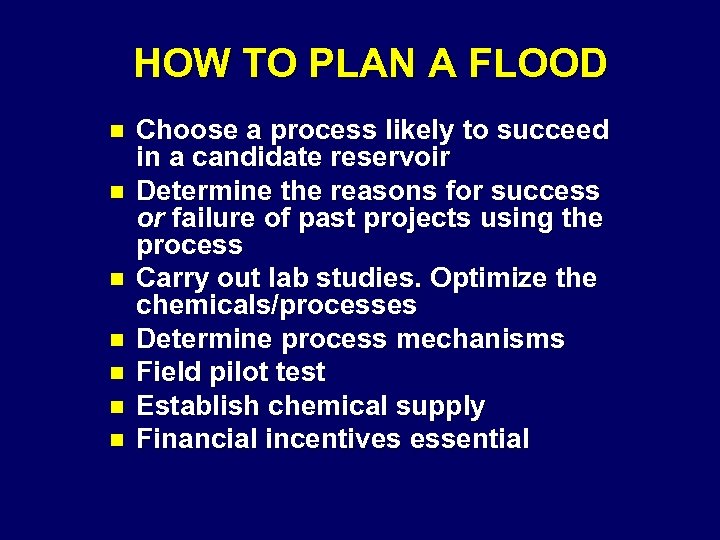 HOW TO PLAN A FLOOD n n n n Choose a process likely to succeed in a candidate reservoir Determine the reasons for success or failure of past projects using the process Carry out lab studies. Optimize the chemicals/processes Determine process mechanisms Field pilot test Establish chemical supply Financial incentives essential
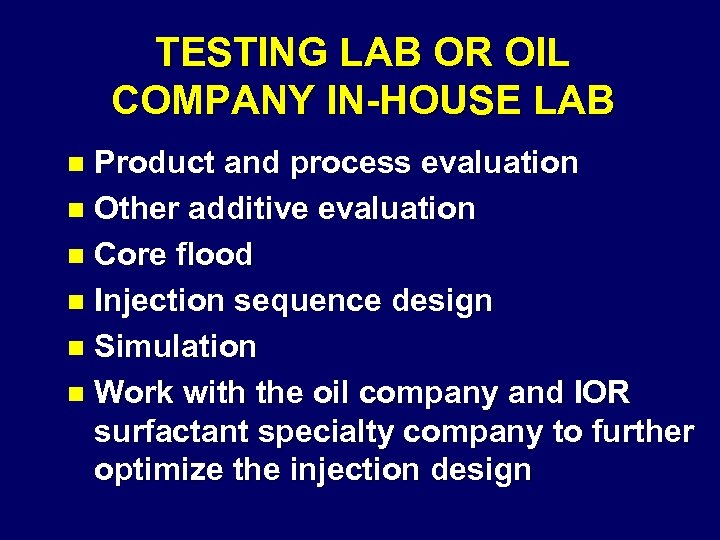
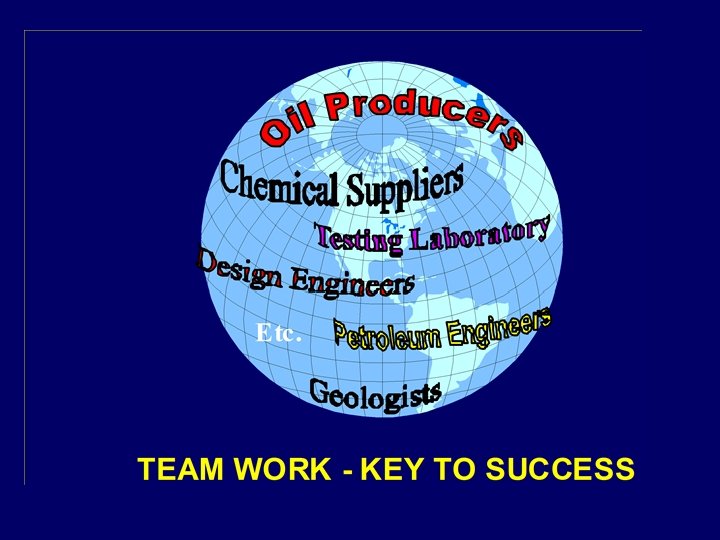
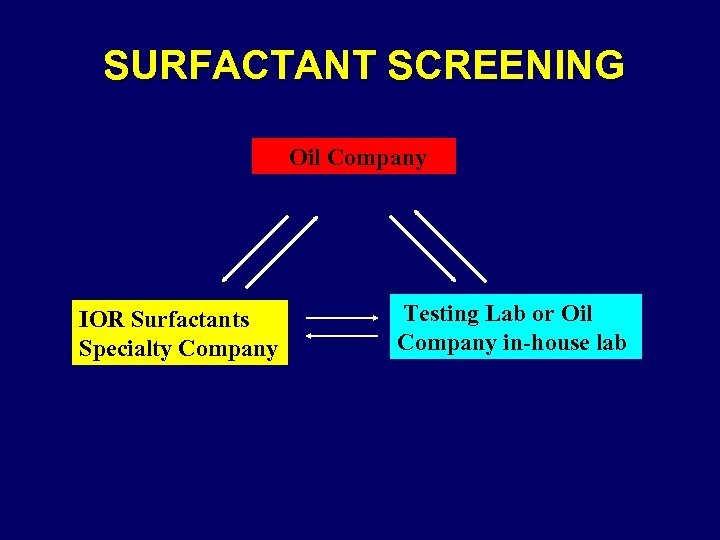 SURFACTANT SCREENING Oil Company IOR Surfactants Specialty Company Testing Lab or Oil Company in-house lab
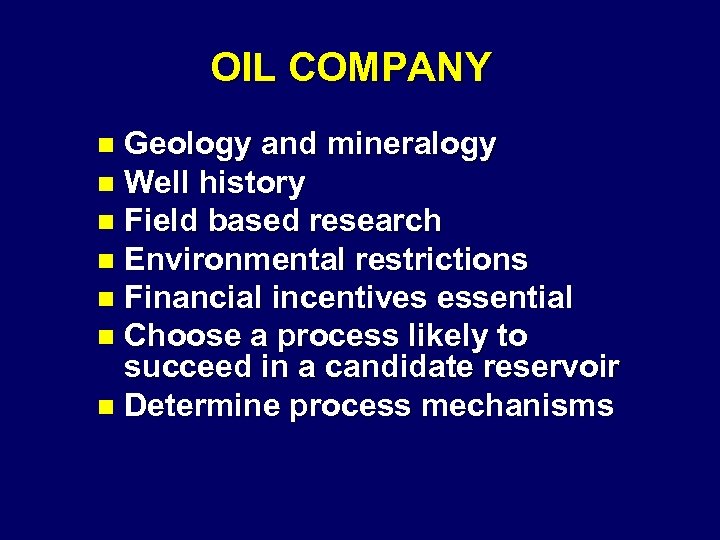 OIL COMPANY Geology and mineralogy n Well history n Field based research n Environmental restrictions n Financial incentives essential n Choose a process likely to succeed in a candidate reservoir n Determine process mechanisms n
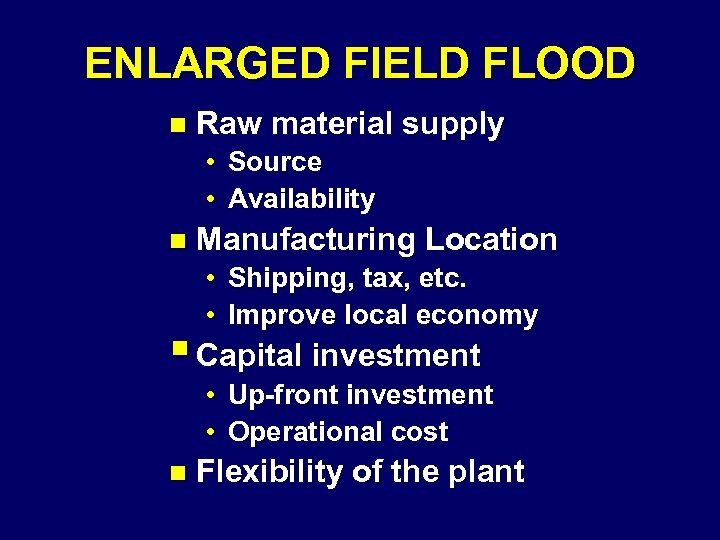
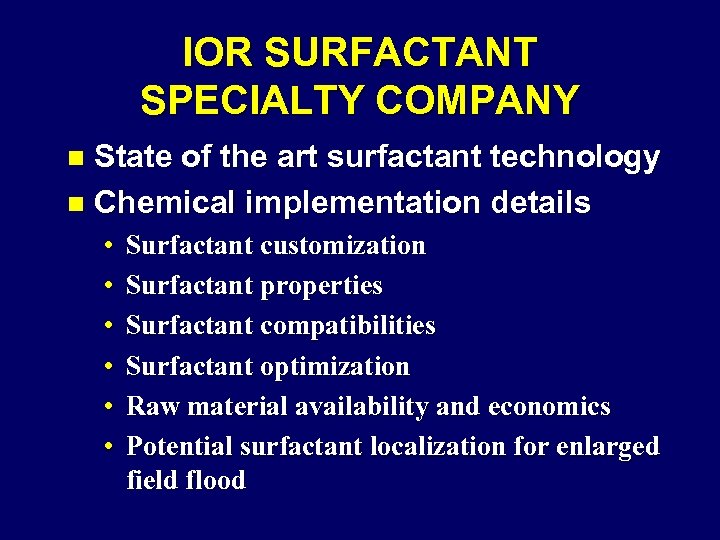 IOR SURFACTANT SPECIALTY COMPANY State of the art surfactant technology n Chemical implementation details n • • • Surfactant customization Surfactant properties Surfactant compatibilities Surfactant optimization Raw material availability and economics Potential surfactant localization for enlarged field flood
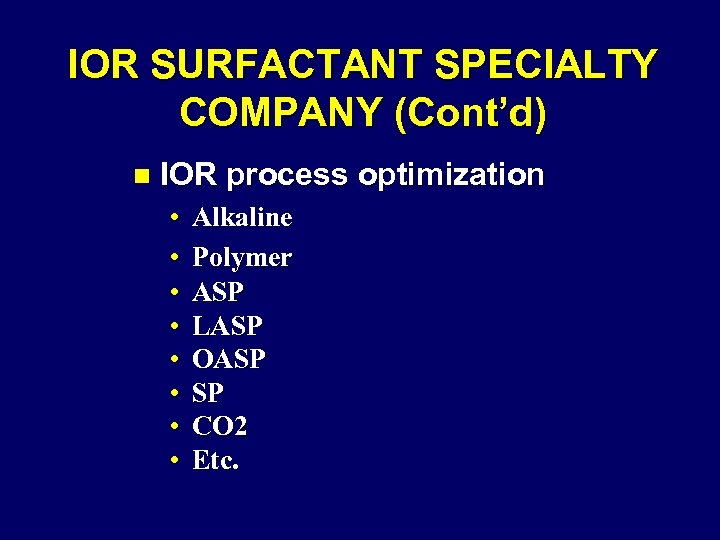 IOR SURFACTANT SPECIALTY COMPANY (Cont’d) n IOR process optimization • • Alkaline Polymer ASP LASP OASP SP CO 2 Etc.
 IOR SURFACTANT SPECIALTY COMPANY (Cont’d) n Continue working with oil company and testing company to further optimize the surfactant /process based on their data.
 OPTIMIZATION OF SURFACTANT IFT, m. N/m Sho-Vel-Tum Field, 30 o. C Na 2 CO 3, %
 TESTING LAB OR OIL COMPANY IN-HOUSE LAB Product and process evaluation n Other additive evaluation n Core flood n Injection sequence design n Simulation n Work with the oil company and IOR surfactant specialty company to further optimize the injection design n
 ENLARGED FIELD FLOOD n Raw material supply • Source • Availability n Manufacturing Location • Shipping, tax, etc. • Improve local economy § Capital investment • Up-front investment • Operational cost n Flexibility of the plant
 CONCLUSIONS n Two trillion bbl of oil remain in depleted or abandoned wells n Chemical floods offer the only chance in many depleted and water flooded reservoirs n Chemical IOR must be re-evaluated based on current technical and economic conditions
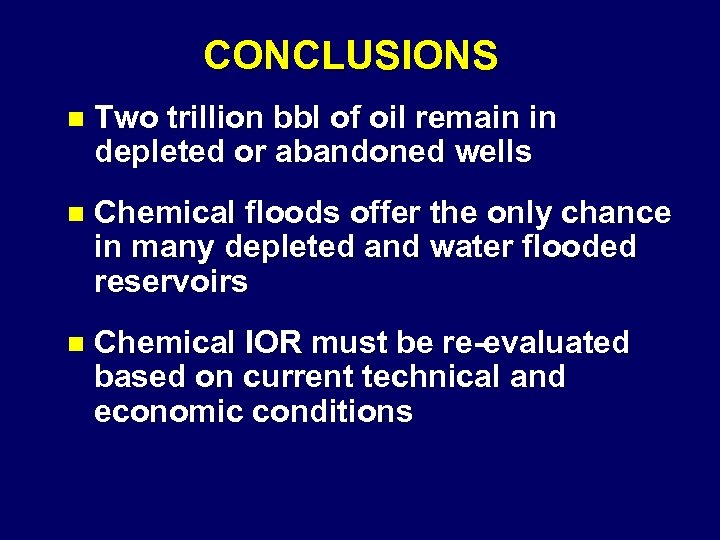
 CONCLUSIONS – CONT’D n Chemical flooding can maximize the reserves in known reservoirs n Improved processes and chemicals are available n Better scaling and modeling has been developed
 START PLANNING ON YOUR CHEMICAL IOR PROJECTS TODAY!!
 COMPLIMENTARY SURFACTANT EVALUATION n You send: • Oil and injection brine samples • Brief field history • Reservoir properties
 COMPLIMENTARY SURFACTANT EVALUATION n We will: • Perform initial Surfactant screening • Send you the sample for your detailed evaluation and injection design or submission to an independent testing lab • Further optimize the surfactant based on your result
 THANK YOU ! Oil Chem Technologies, Inc. 12822 Park One Drive Sugar Land, TX 77478 281 -240 -0161 www. oil-chem. com