


 Скачать презентацию Origins of Judaism Setting the Stage n
d0f0decbe28ff4d3c9b9320a20fa38c8.ppt
- Количество слайдов: 33
 Origins of Judaism
 Setting the Stage n The Phoenicians lived in region at the end of the Mediterranean Sea that was later called Palestine. They were not the only ancient people to live in Palestine. The ancient Hebrews lived in Canaan which was in this region as well.
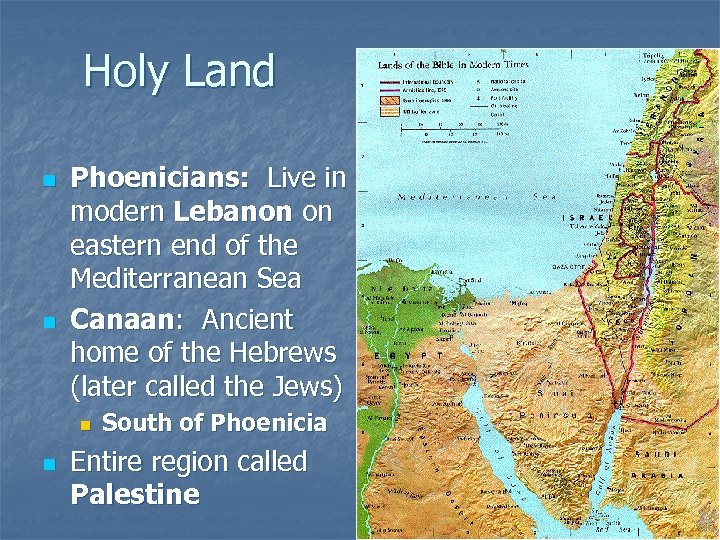 Holy Land n n Phoenicians: Live in modern Lebanon on eastern end of the Mediterranean Sea Canaan: Ancient home of the Hebrews (later called the Jews) n n South of Phoenicia Entire region called Palestine
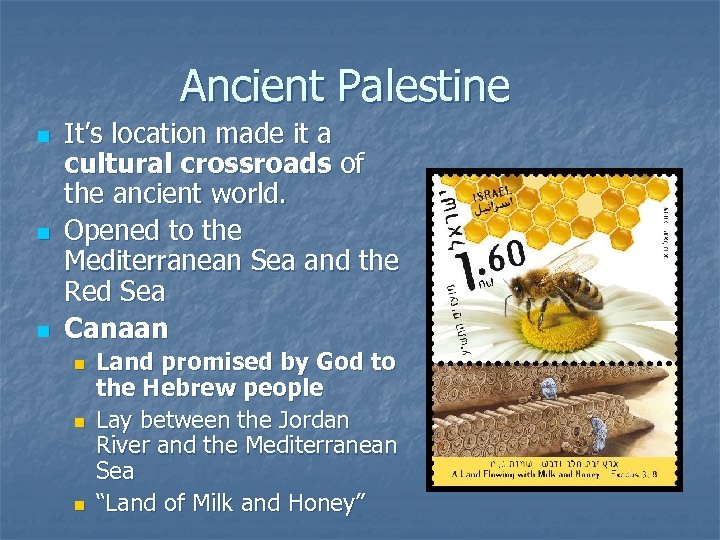 Ancient Palestine n n n It’s location made it a cultural crossroads of the ancient world. Opened to the Mediterranean Sea and the Red Sea Canaan n Land promised by God to the Hebrew people Lay between the Jordan River and the Mediterranean Sea “Land of Milk and Honey”
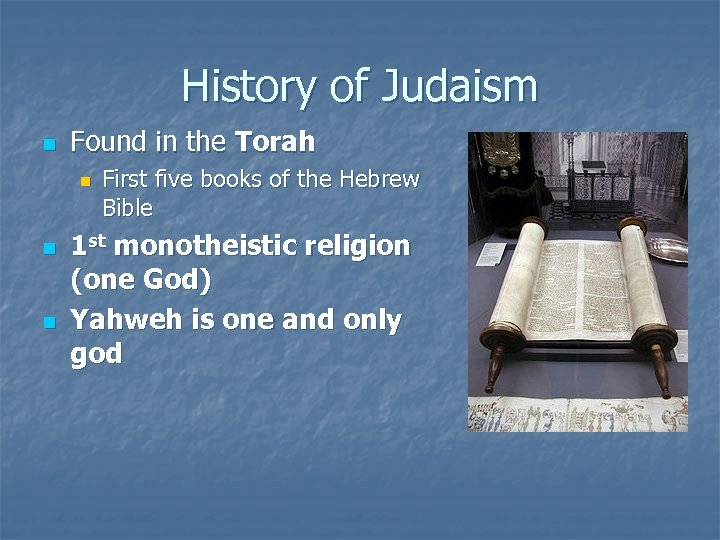 History of Judaism n Found in the Torah n n n First five books of the Hebrew Bible 1 st monotheistic religion (one God) Yahweh is one and only god
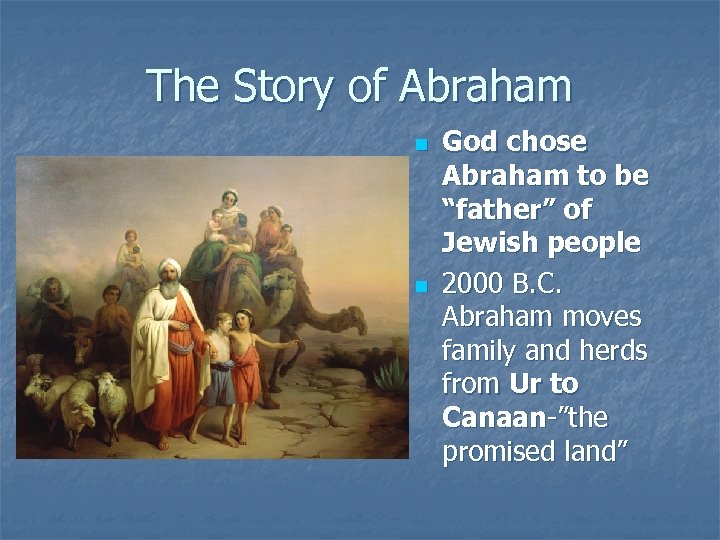 The Story of Abraham n n God chose Abraham to be “father” of Jewish people 2000 B. C. Abraham moves family and herds from Ur to Canaan-”the promised land”
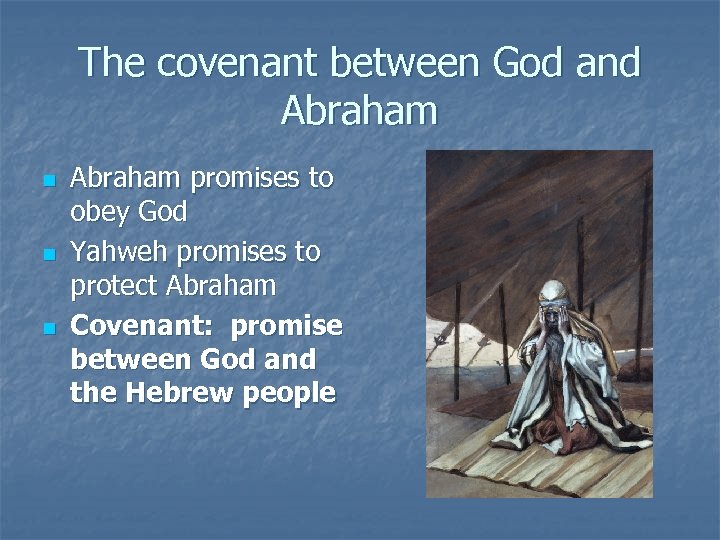 The covenant between God and Abraham n n n Abraham promises to obey God Yahweh promises to protect Abraham Covenant: promise between God and the Hebrew people
 n n Abraham—Isaac—Jacob—Joseph sold into slavery in Egypt and Became a leader to the pharaoh in Egypt Hebrews went to Egypt because of a drought and famine. At first they were honored …. . later forced into slavery.
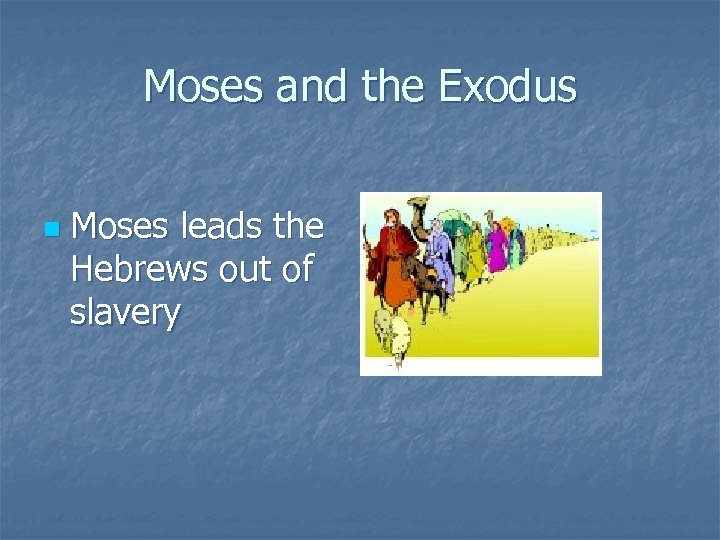 Moses and the Exodus n Moses leads the Hebrews out of slavery
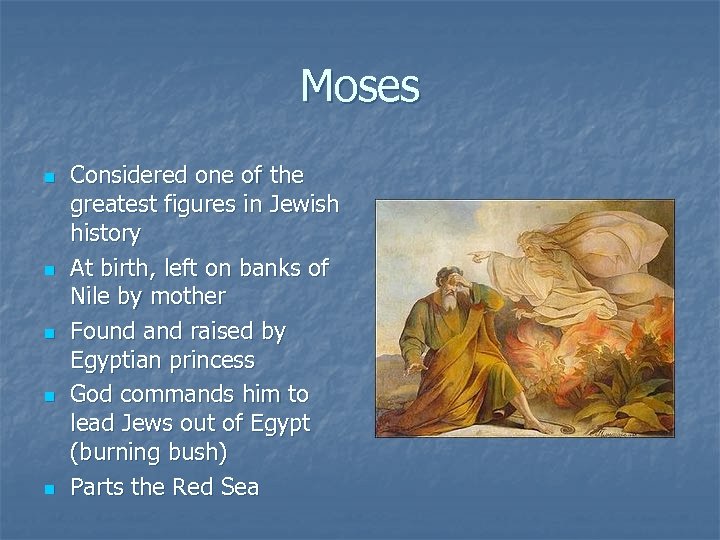 Moses n n n Considered one of the greatest figures in Jewish history At birth, left on banks of Nile by mother Found and raised by Egyptian princess God commands him to lead Jews out of Egypt (burning bush) Parts the Red Sea
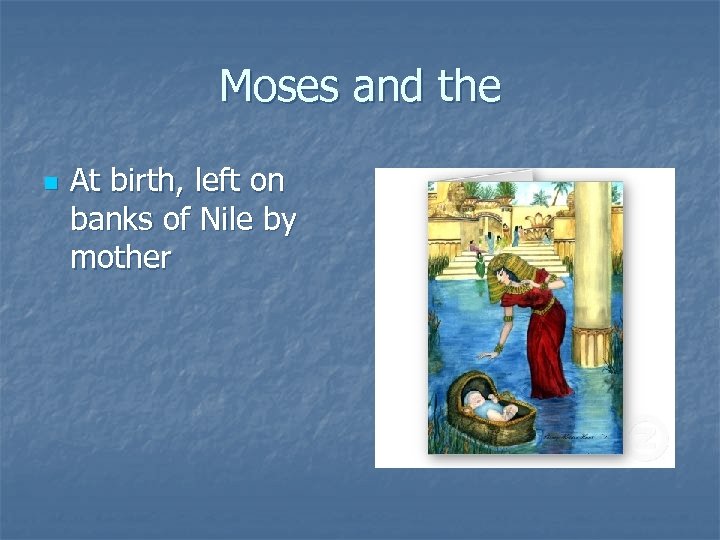 Moses and the n At birth, left on banks of Nile by mother
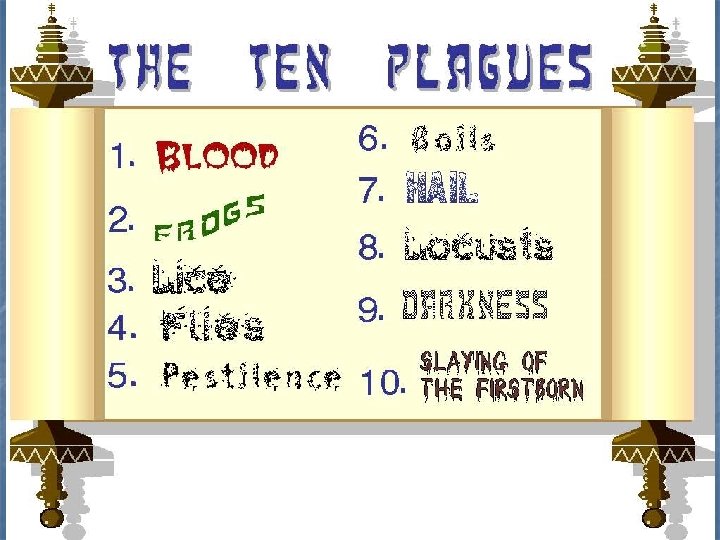
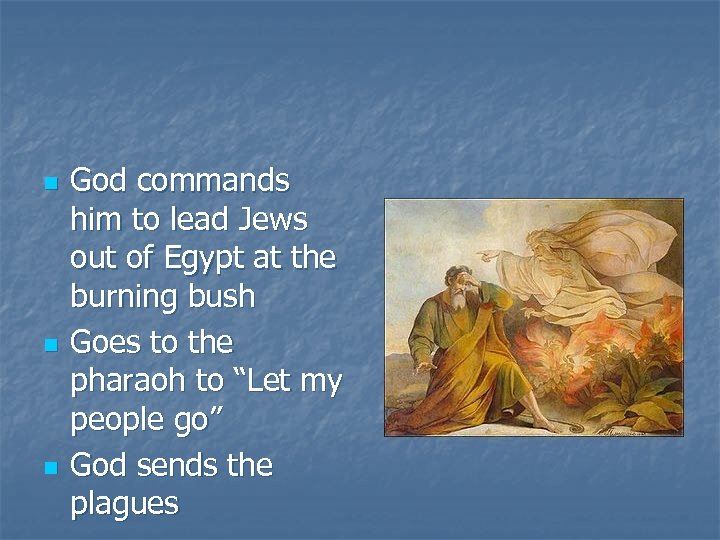 n n n God commands him to lead Jews out of Egypt at the burning bush Goes to the pharaoh to “Let my people go” God sends the plagues
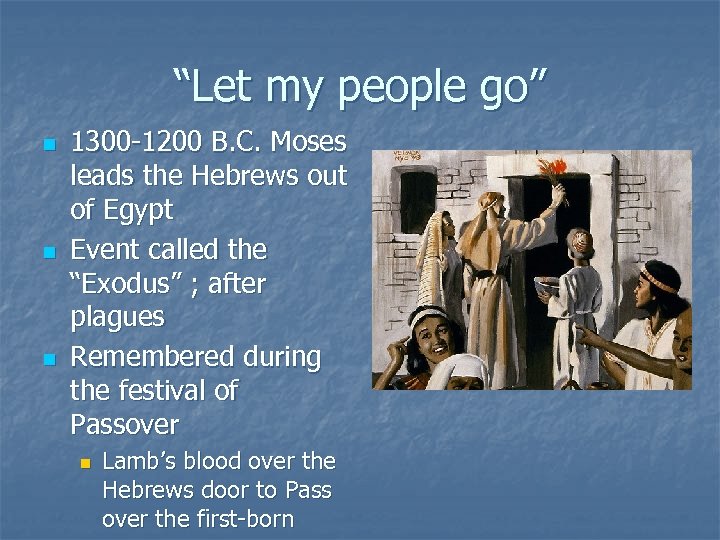 “Let my people go” n n n 1300 -1200 B. C. Moses leads the Hebrews out of Egypt Event called the “Exodus” ; after plagues Remembered during the festival of Passover n Lamb’s blood over the Hebrews door to Pass over the first-born
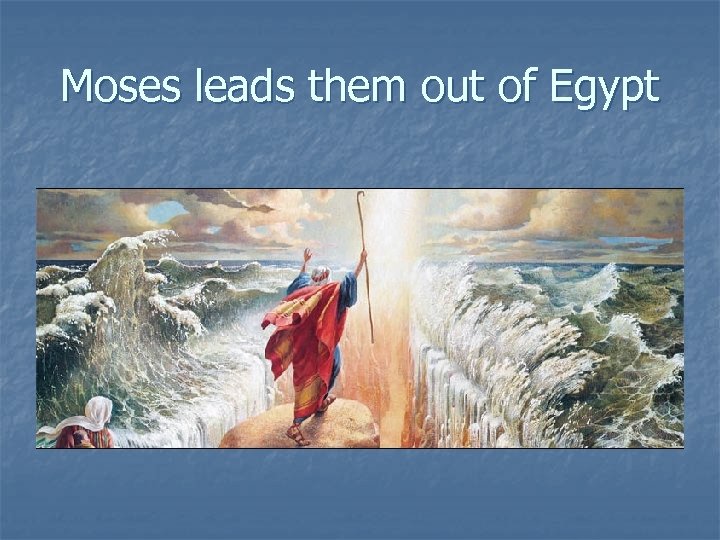 Moses leads them out of Egypt
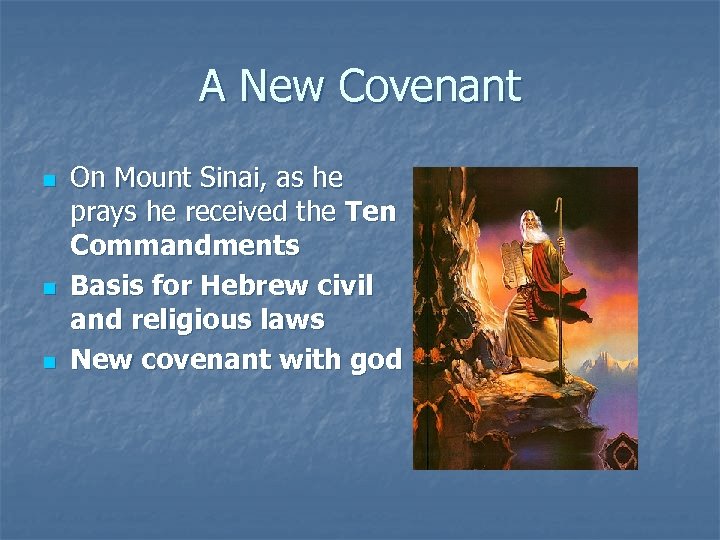 A New Covenant n n n On Mount Sinai, as he prays he received the Ten Commandments Basis for Hebrew civil and religious laws New covenant with god
 The Land the People n n The Hebrews wandered Sinai Desert for 40 years Return to Canaan as 12 loosely organized tribes (Largest tribe was Judah) n n They were self-governed Judges provide leadership (One was a woman-Deborah)
 Hebrew Law: 10 Commandments n n n Men and women have separate roles; responsibilities Laws provided strict justice softened by mercy Prophets interpret laws & teach people to live moral lives (Daniel, Joel, Hosea, Amos, Isaiah) n Ethical monotheism
 The Kingdom of Israel n n Hebrews expand north and south Threatened by the Philistines to north The largest tribe was Judah. Hebrews came to be called Jews and religion called Judaism
 The “new” kingdom of Israel n B/n 1020 to 922 B. C. , the Hebrews unite under three able kings and call the kingdom Israel. The kings are the following: n Saul n David n Solomon
 Saul n Chosen b/c he drove out the Philistines
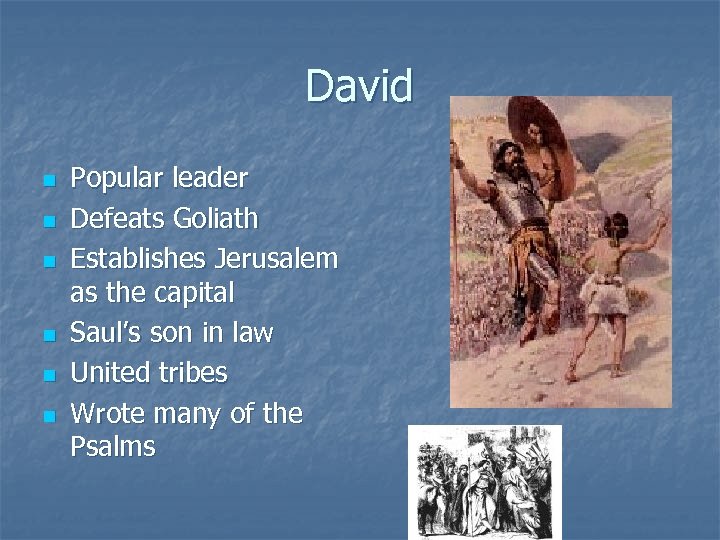 David n n n Popular leader Defeats Goliath Establishes Jerusalem as the capital Saul’s son in law United tribes Wrote many of the Psalms
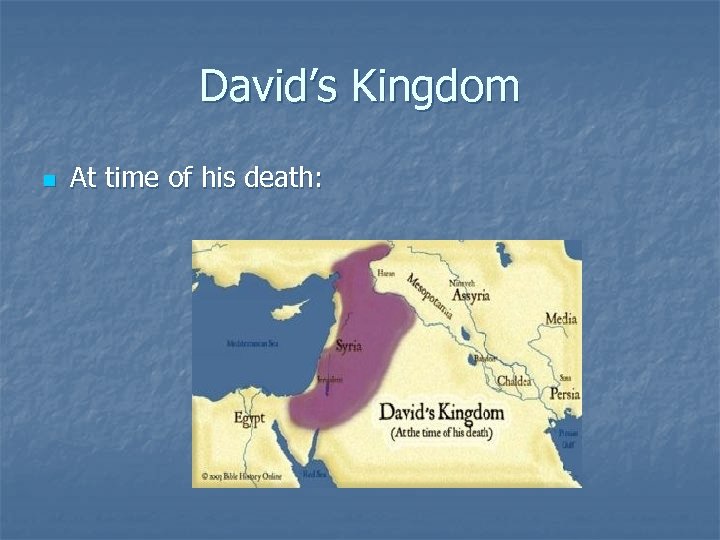 David’s Kingdom n At time of his death:
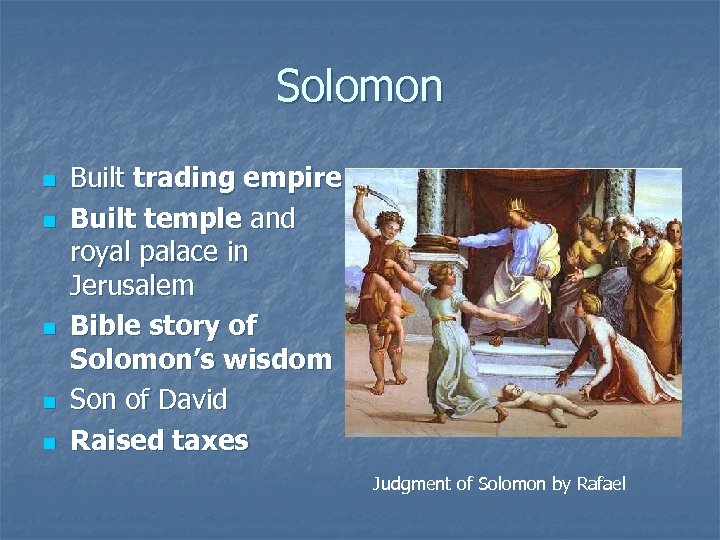 Solomon n n Built trading empire Built temple and royal palace in Jerusalem Bible story of Solomon’s wisdom Son of David Raised taxes Judgment of Solomon by Rafael
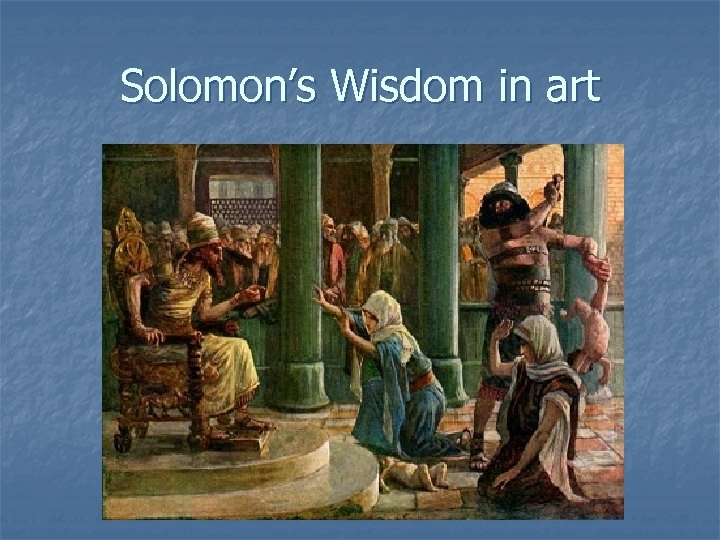 Solomon’s Wisdom in art
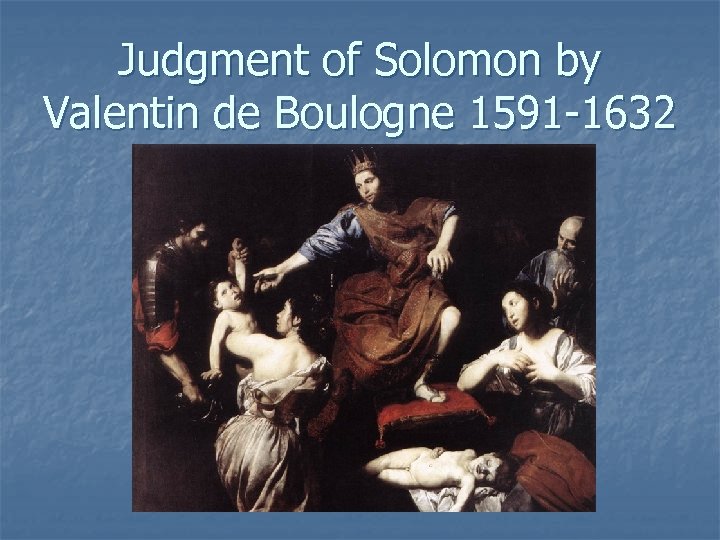 Judgment of Solomon by Valentin de Boulogne 1591 -1632
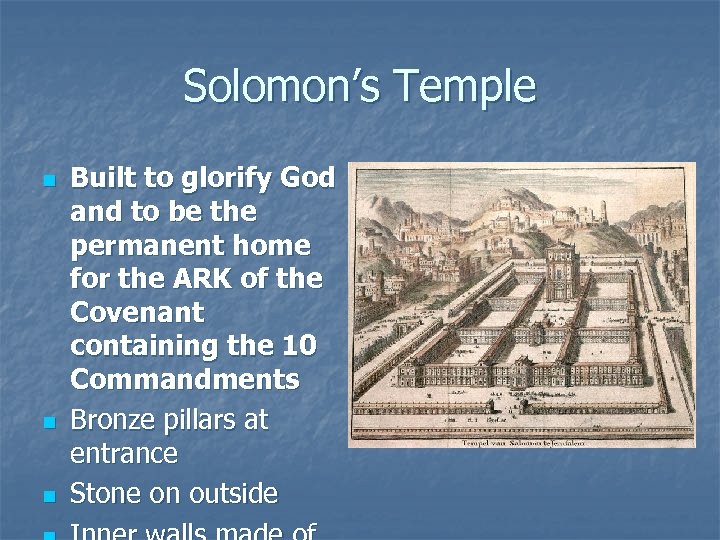 Solomon’s Temple n n n Built to glorify God and to be the permanent home for the ARK of the Covenant containing the 10 Commandments Bronze pillars at entrance Stone on outside
 Kingdom Divides n n Solomon’s building projects required high taxes and forced labor lead Jews in north to revolt By 922 B. C. kingdom divides in two Israel to north n Judah to south n
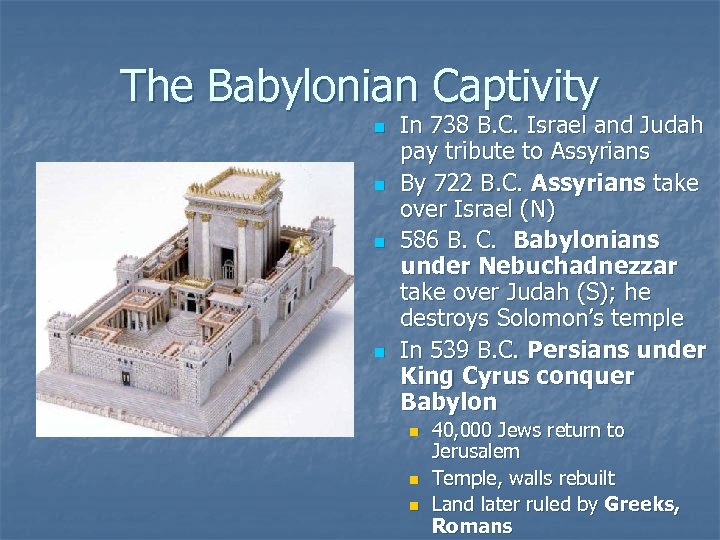 The Babylonian Captivity n n In 738 B. C. Israel and Judah pay tribute to Assyrians By 722 B. C. Assyrians take over Israel (N) 586 B. C. Babylonians under Nebuchadnezzar take over Judah (S); he destroys Solomon’s temple In 539 B. C. Persians under King Cyrus conquer Babylon n 40, 000 Jews return to Jerusalem Temple, walls rebuilt Land later ruled by Greeks, Romans
 70 AD Romans destroy the 2 nd temple and the Hebrews are dispersed (Diaspora) n 1948 AD Israel n
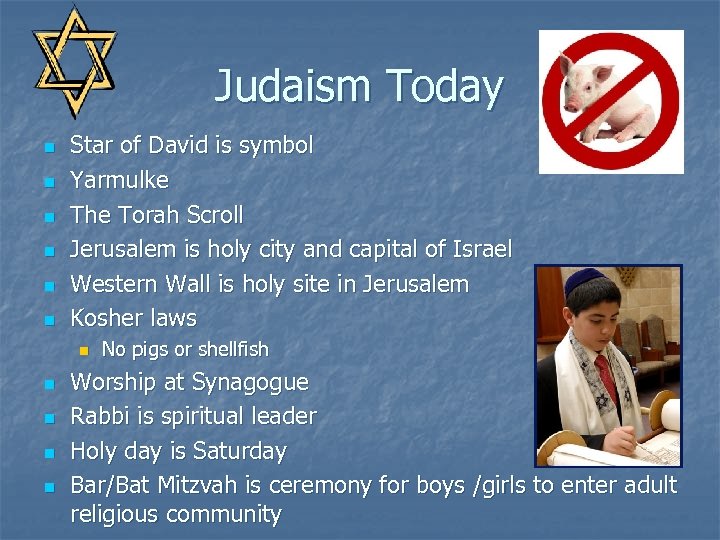 Judaism Today n n n Star of David is symbol Yarmulke The Torah Scroll Jerusalem is holy city and capital of Israel Western Wall is holy site in Jerusalem Kosher laws n n n No pigs or shellfish Worship at Synagogue Rabbi is spiritual leader Holy day is Saturday Bar/Bat Mitzvah is ceremony for boys /girls to enter adult religious community
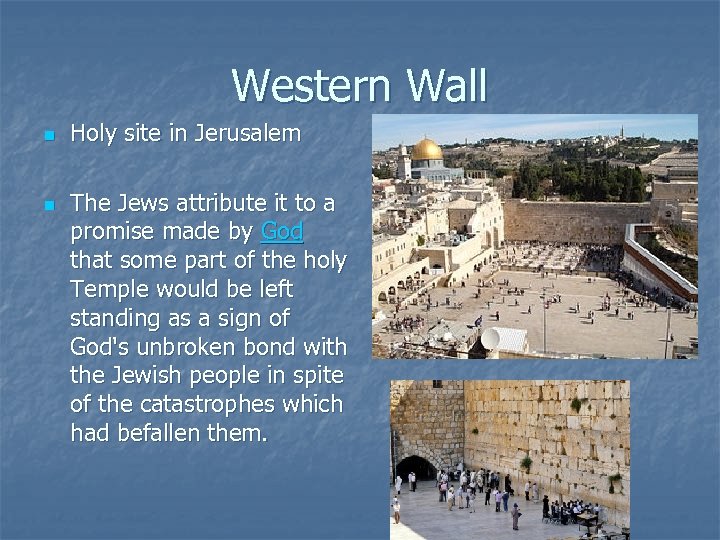 Western Wall n n Holy site in Jerusalem The Jews attribute it to a promise made by God that some part of the holy Temple would be left standing as a sign of God's unbroken bond with the Jewish people in spite of the catastrophes which had befallen them.
" src="https://present5.com/presentation/d0f0decbe28ff4d3c9b9320a20fa38c8/image-33.jpg" alt="" />