


 Скачать презентацию ORGANOLEPTIC QUALITIES OF FOODS q Flavour texture and
12e85b800c19abfd13d4d38f16c8f821.ppt
- Количество слайдов: 14
 ORGANOLEPTIC QUALITIES OF FOODS q Flavour, texture and colour are three most important quality attributes of foods because the consumer can readily assess them. q When we encounter off-flavours, off-colours and poor texture in foods one does not buy or eat the foods. q Flavour is the sum-total of the sensory impression formed when we eat food. It includes the aroma, taste, touch and it involves all our senses. q Food flavour arises from interaction of taste and smell/aroma which imparts a pleasing or displeasing sensory experience to a consumer. q It is the flavour of food that determines its acceptance or rejection by the consumer.
 • • • Flavouring Agents Flavouring agents have been used from earliest times to increase the attractiveness of foods. They are classified into natural and synthetic flavouring agents. Natural flavouring agents are the dried and sometimes powdered form of spices, herbs, roots and stems of plants e. g. cloves, ginger. Other natural flavouring agents include essential oils, vanilla, peppermint, orange and lemon, onion and garlic. Synthetic flavouring agents mimic the flavour of fruit and vegetables.
 • Synthetic flavours are usually in the form of a solution in alcohol or other permitted solvent or in powdered form. • Many of the simpler artificial fruit flavours are esters which are formed when carboxylic acid reacts with alcohols e. g. ethylacetate, ethylfumarate. Flavour intensifiers • These are substances used for flavouring purposes such as meat and yeast extracts. . • They contain protein material which has been hydrolysed or broken down to their constituent amino acids
 • They are known for many years to be excellent in their flavouring properties • Example is the salt of glutamic acid called monosodium glutamate(MSG) • MSG has an attractive meat-like flavour. • It is manufactured on a large scale all over the world but especially in Japan where they call it AJO-NOMOTO(essence of taste). • MSG does not possess a great deal of flavour of its own but has the property of enhancing certain food flavours, especially meat and chicken. • Recent evidence suggests that there may be unpleasant effects when large amounts are ingested.
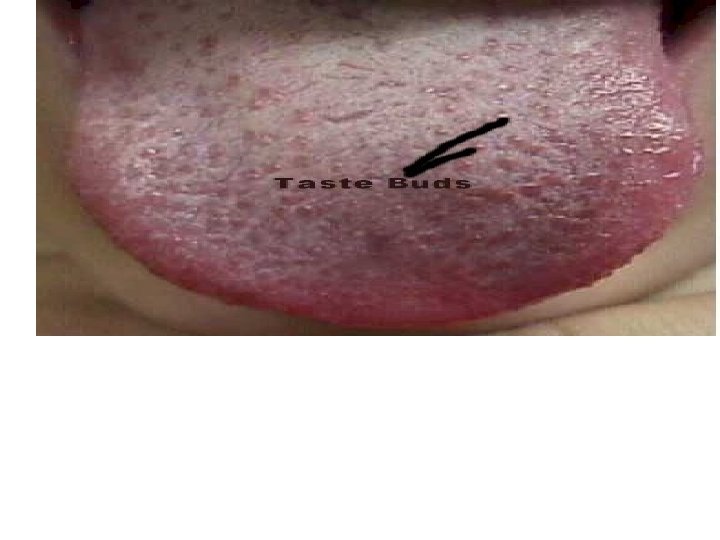
 TASTE SENSATION • Taste sensations are the sum-total of the sensations created by food when it is put in the mouth. The taste sensation is perceived when the taste receptors are stimulated. • Taste buds are the cells associated with taste and they lie on the upper surface of the tongue. • There are 4 primary taste sensations: sweet, bitter, salt and sour. • The areas most sensitive to sweetness and saltiness are on the tip of the tongue, sourness is along the edges while bitterness is tasted at the back of the tongue
 • Babies have large numbers of taste buds at the tip of the tongue, which enable them to appreciate the sweetness of their mother’s milk. • As they grow older, the number of these tastebuds decrease while those at the base of the tongue increase, which appears to be related to the preference for less sweet foods with increasing ages. • The overall number of active taste-buds decrease slowly at the age of 45 and more rapidly at about 70 years of age.
 SMELL SENSATION • Humans possess many millions of the cells sensitive to smell or odour. • The smell/aroma of food influences our food acceptance whether it is liked or not. • It is carried by the air to the nose and transmitted by the olfactory nerves to our brain. • Anything that affects the function of smell impairs enjoyment of food. • Many volatile substances excite the sense of smell. • When food is in the mouth, molecules of the volatile flavour compounds present are carried by diffusion and convection into the still air of the upper nasal cavity over the olfactory hairs. • The sensation is combined with those of the taste buds and
 AROMA IN FOODS • Aroma is an odour sensation. • There are many thousands of odour sensations. • The major food constituents such as sugar, starch, fat and proteins , vitamins and minerals produce no aroma response. • They have no direct nutritional effect. • The aroma substances in foods are only present in small amounts. • They consist of organic compounds belonging to groups of fatty acids and alcohols.
 • • • TEXTURE It refers to the perception of food structure when a food item is held by the fingers, pushed by the tongue against the palate or chewed by the teeth and sensed within the oral cavity. Each food has a particular texture that is associated with. Textural properties of food product changes during storage. The importance of texture in the overall acceptability of foods varies widely, depending upon the type of food. The methods of preparation, ingredients and the manner in which the ingredients are combined affect the texture of foods
 • Some of the texture vocabularies are: crispy, juicy, soft, hard, tough, gummy, crunchy, dry, watery, tender, firm, coarse, slippery, creamy, sticky e. t. c • The sense organs associated with the texture sensation are contained in the palate, tongue, gums around the roots of the teeth and in the muscles and tendons used in mastication
 COLOUR § Color is the one of the most important image features because it contains the basic human vision. § Color significantly affects the consumer perception of quality. § If the color is unacceptable, the other two major quality factors, flavor and texture, are not likely to be judged at all. § Color may be defined as the impact of the wavelengths of light in the visual spectrum from 390 -760 nm on the human retina. § The retinal cells may be sensitive to black and white only or to red, green and blue (RGB) wavelengths of light. § The correct interpretation by the brain in terms of color depends on the adequacy of signals.
 § The appearance of a product as judged by its color often be used to determine the pigment content of a product, which in turn is often an index of quality. § Color measurement can be used to evaluate pigment content (carotenoid, anthocyanin, chlorophyll, etc. ) § Colorimetry and chromatography can be used to measure the pigment content of food product. § In food products, it is possible to make products look better or worse depending on the lighting. § Lighting in supermarkets is designed for the ability to make product more favorable. § However, sometimes this method is considered as a fraud because the consumer sees the actual color when product is unpacked at home.
 • • • COLOUR SCALES Munsell system: In this system, all colours are described by 3 attributes of hue, value, chroma/saturation Hue is an attribute associated with the dominant wavelength in a mixture of light waves, i. e. , it represents the dominant color as perceived by an observer. It is the quality by which we distinguish one colour from another. There are 5 hues: R, Y, G, B and P and 5 intermediate hues: YR, GY, BG, PB, RP Value is the spectral quality by which we distinguish a light colour from a dark one. It indicates brightness of a colour. It goes from 0 for perfect black to 10 for perfect white. Chroma is the quality that tells us how strong or weak a colour is. It denotes richness or purity of a colour and also refers to as saturation. The description of colour in the Munsell system is given as HV/C e. g. a colour indicated as 5 R 2. 8/3. 7 means a colour with a red hue of 5 R, value of 2. 8, chroma of 3. 7 Other popular colour scales are: Hunter system colour scale and CIE system colour scale.