 Скачать презентацию Organic Vegetable Gardening Methods for Success Fran Scher
6dca2c378e6703c2a10b96a43a053a4b.ppt
- Количество слайдов: 34



Organic Vegetable Gardening Methods for Success! Fran Scher, Ph. D. UME Master Gardener, Washington County

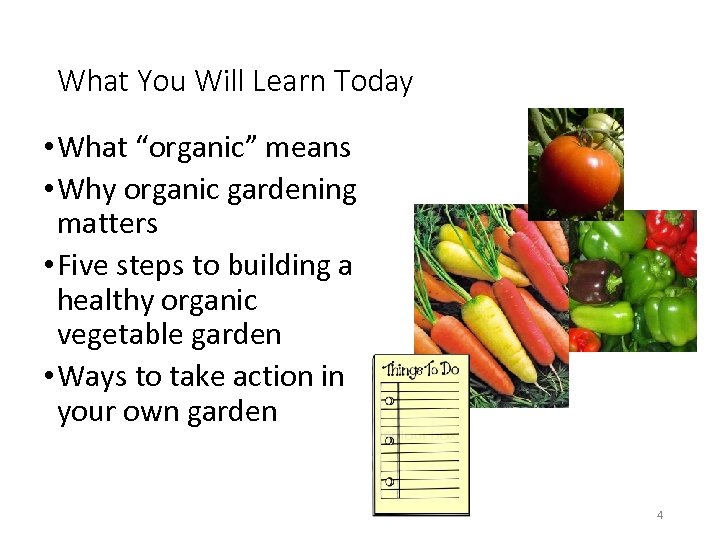
What You Will Learn Today • What “organic” means • Why organic gardening matters • Five steps to building a healthy organic vegetable garden • Ways to take action in your own garden 4
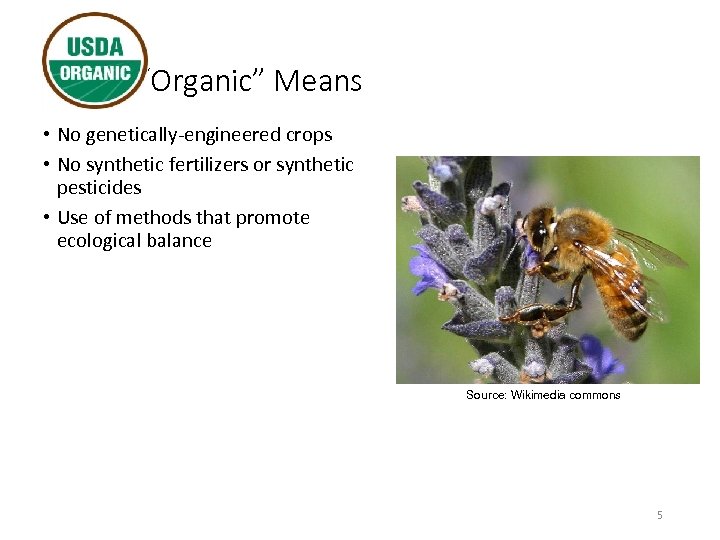
What “Organic” Means • No genetically-engineered crops • No synthetic fertilizers or synthetic pesticides • Use of methods that promote ecological balance Source: Wikimedia commons 5
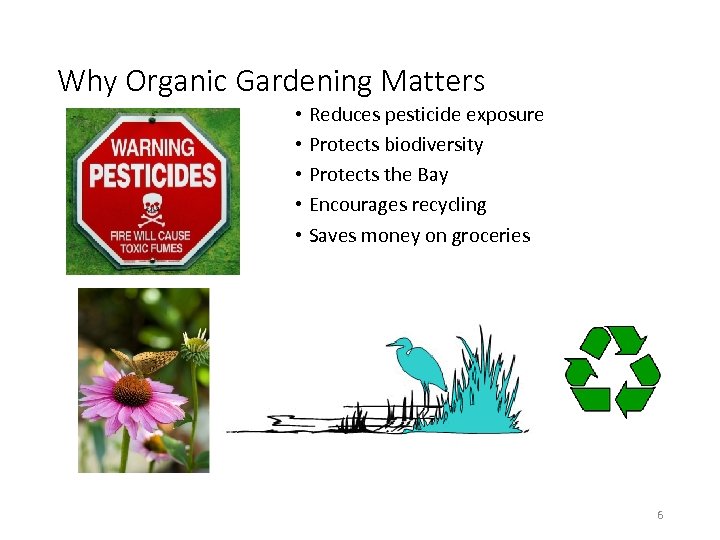
Why Organic Gardening Matters • Reduces pesticide exposure • Protects biodiversity • Protects the Bay • Encourages recycling • Saves money on groceries 6
Five Steps to Your Organic Garden 7
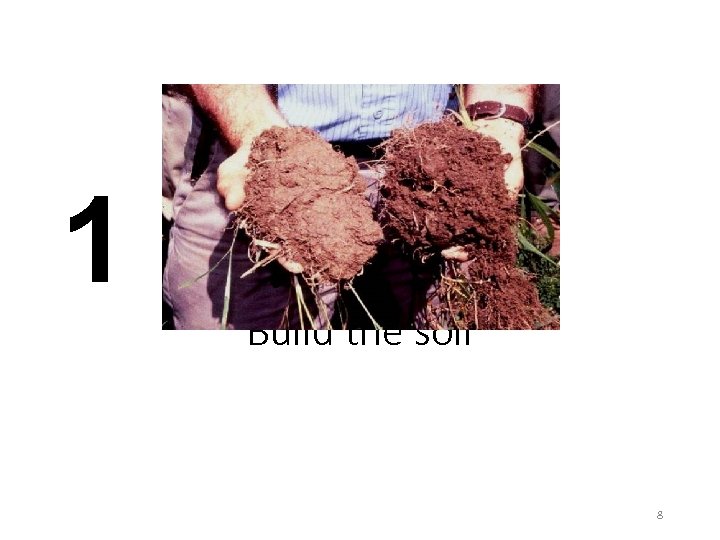
1 Build the soil 8
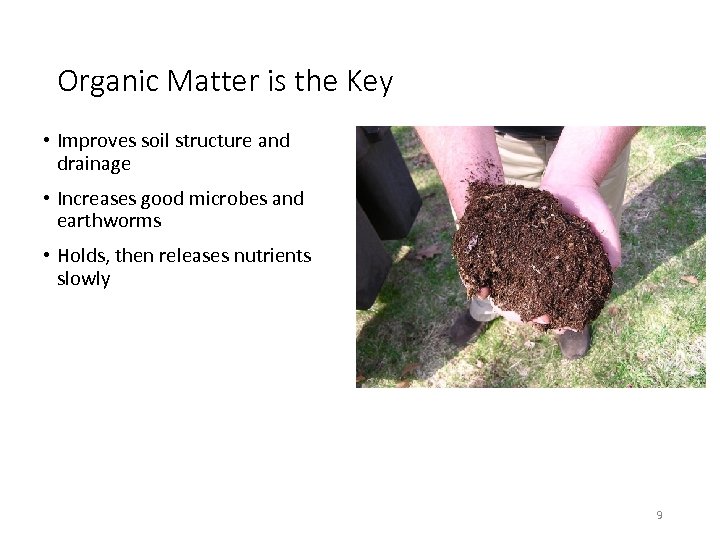
Organic Matter is the Key • Improves soil structure and drainage • Increases good microbes and earthworms • Holds, then releases nutrients slowly 9
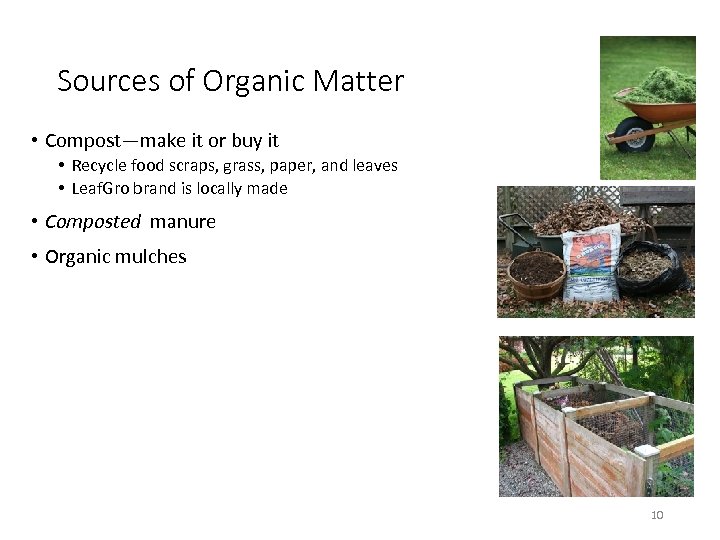
Sources of Organic Matter • Compost—make it or buy it • Recycle food scraps, grass, paper, and leaves • Leaf. Gro brand is locally made • Composted manure • Organic mulches 10
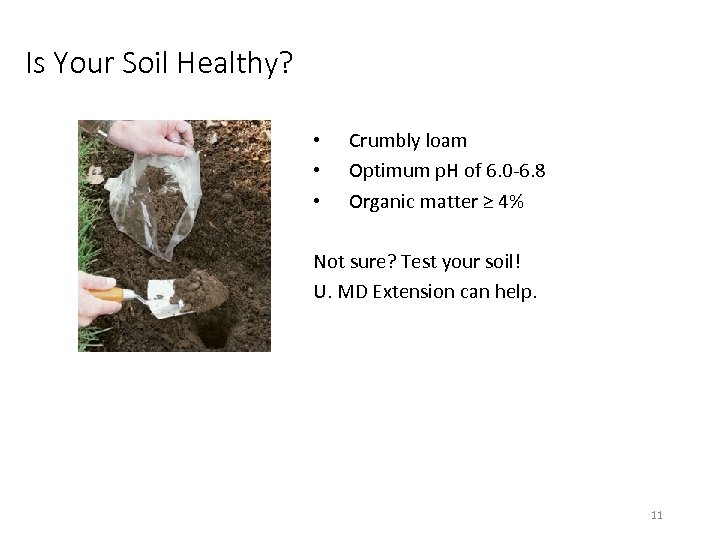
Is Your Soil Healthy? • • • Crumbly loam Optimum p. H of 6. 0 -6. 8 Organic matter ≥ 4% Not sure? Test your soil! U. MD Extension can help. 11
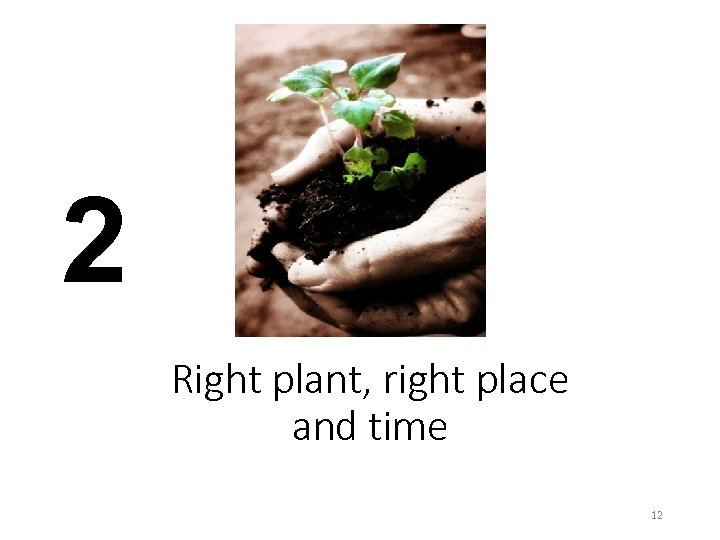
2 Right plant, right place and time 12
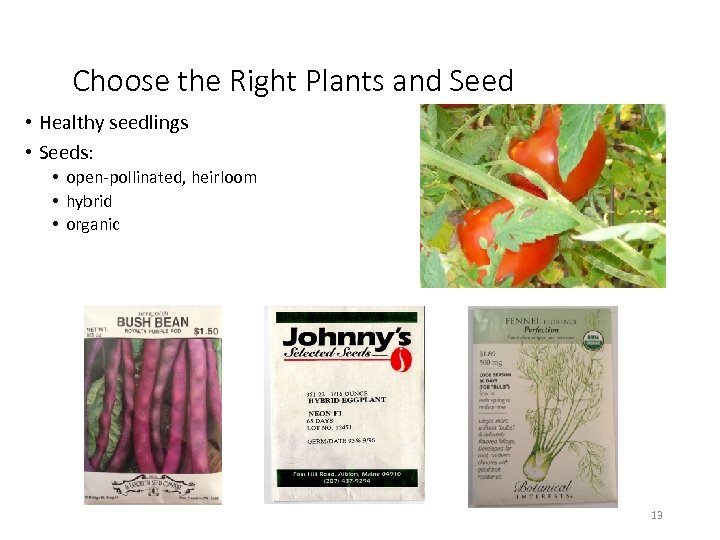
Choose the Right Plants and Seed • Healthy seedlings • Seeds: • open-pollinated, heirloom • hybrid • organic 13
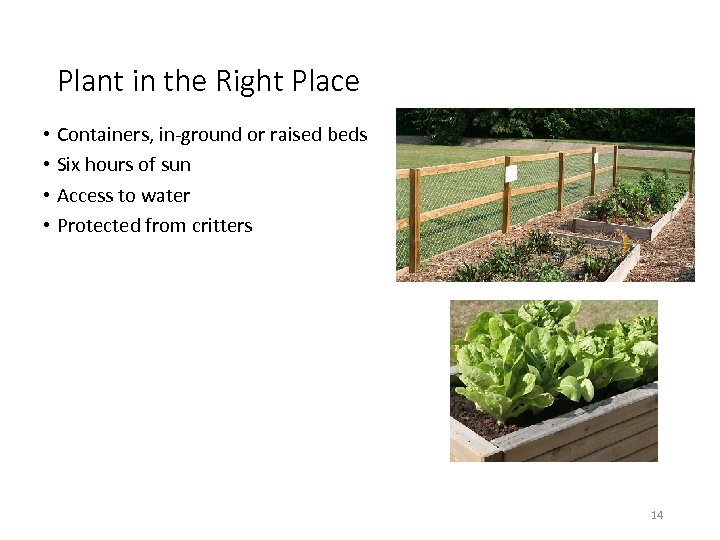
Plant in the Right Place • Containers, in-ground or raised beds • Six hours of sun • Access to water • Protected from critters 14
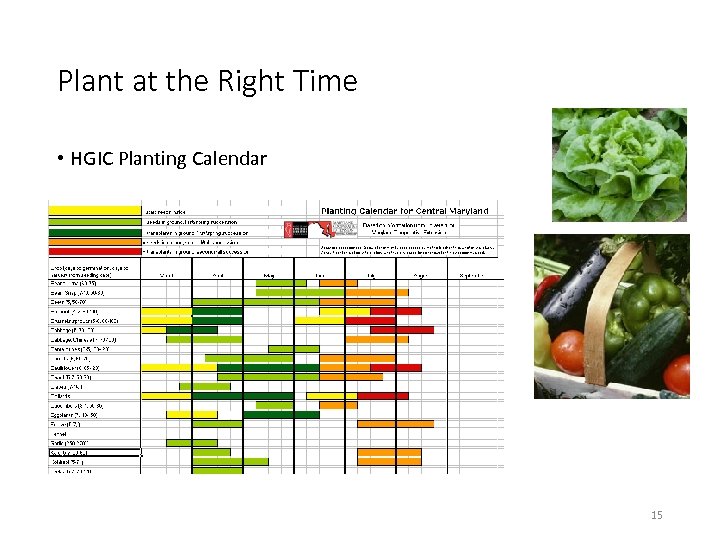
Plant at the Right Time • HGIC Planting Calendar 15
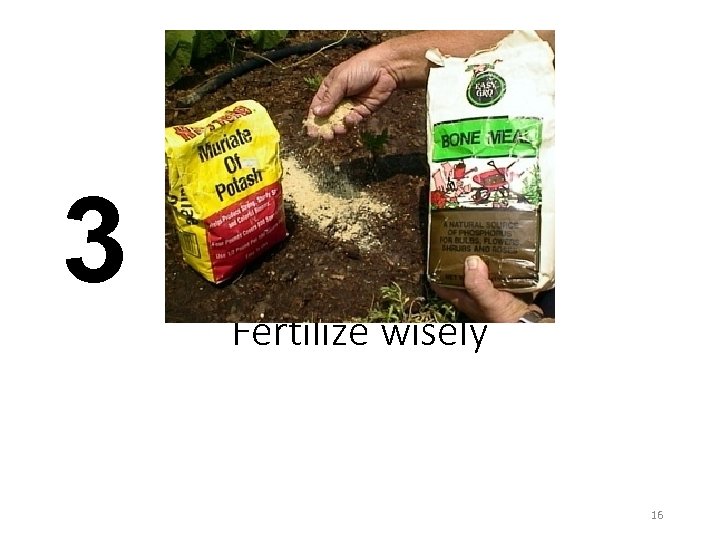
3 Fertilize wisely 16
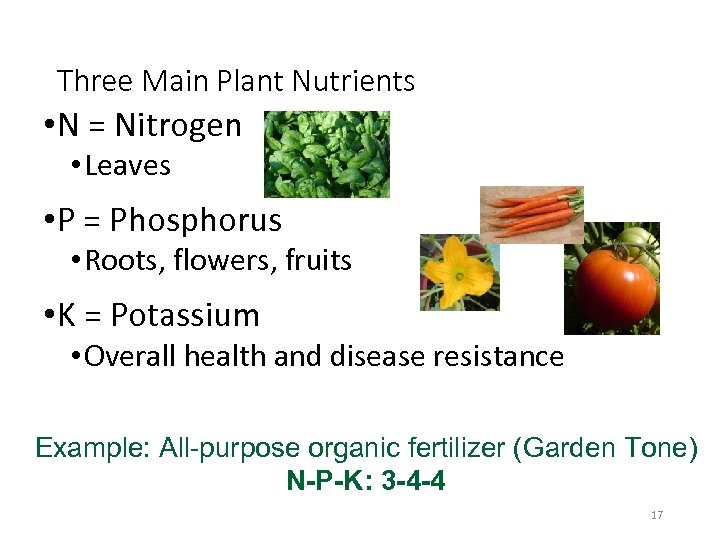
Three Main Plant Nutrients • N = Nitrogen • Leaves • P = Phosphorus • Roots, flowers, fruits • K = Potassium • Overall health and disease resistance Example: All-purpose organic fertilizer (Garden Tone) N-P-K: 3 -4 -4 17
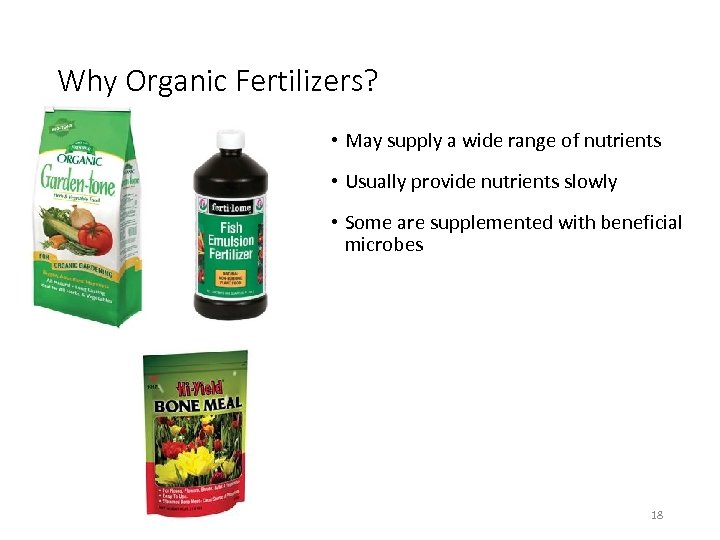
Why Organic Fertilizers? • May supply a wide range of nutrients • Usually provide nutrients slowly • Some are supplemented with beneficial microbes 18
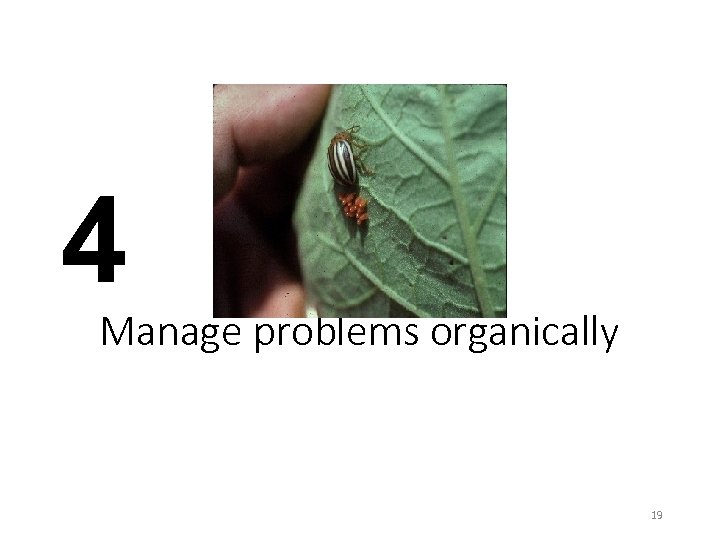
4 Manage problems organically 19
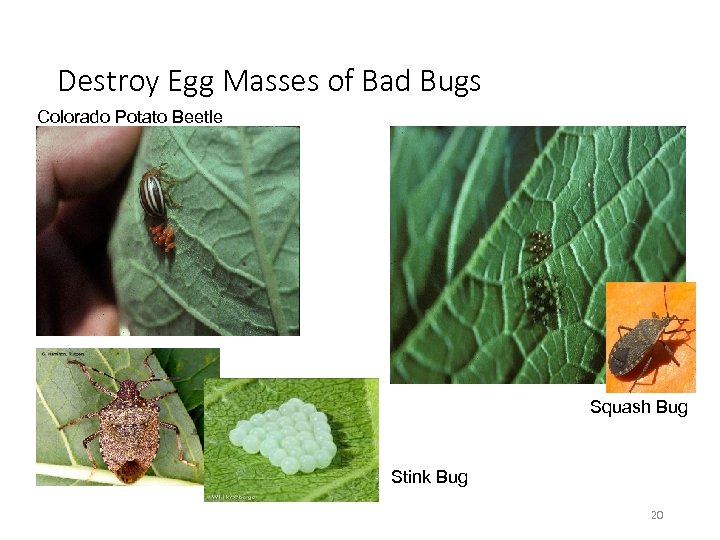
Destroy Egg Masses of Bad Bugs Colorado Potato Beetle Squash Bug Stink Bug 20
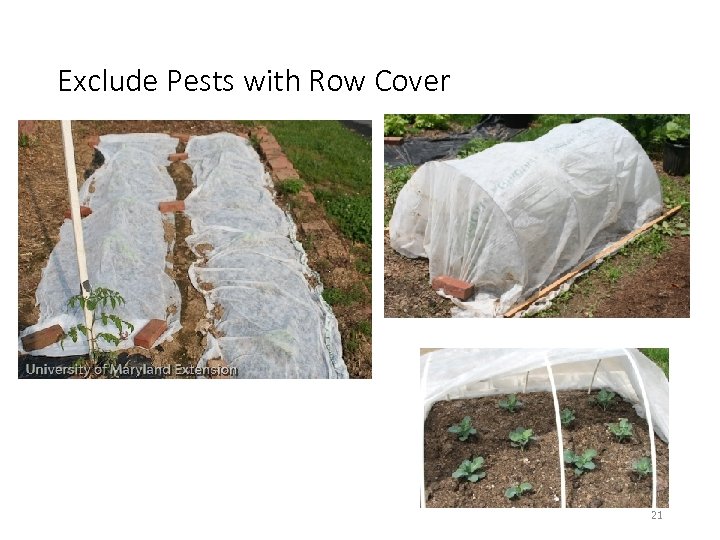
Exclude Pests with Row Cover 21
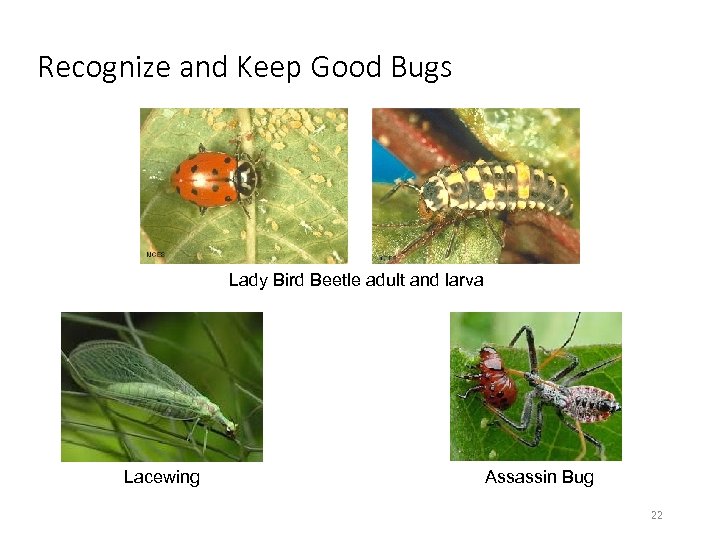
Recognize and Keep Good Bugs Lady Bird Beetle adult and larva Lacewing Assassin Bug 22
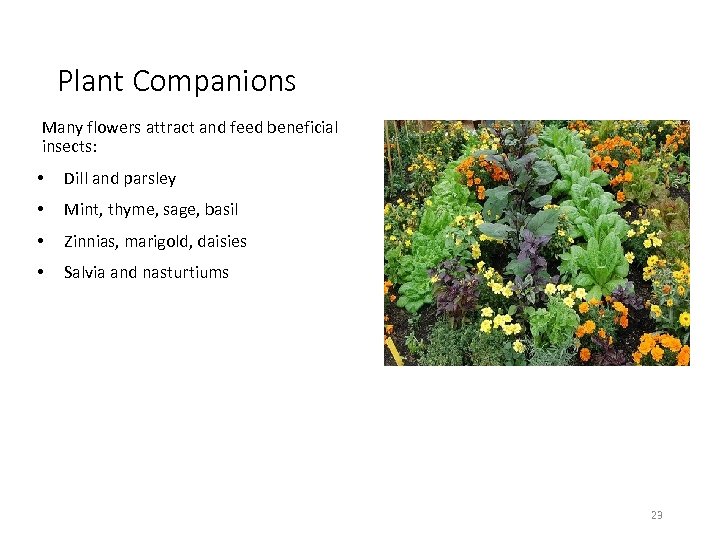
Plant Companions Many flowers attract and feed beneficial insects: • Dill and parsley • Mint, thyme, sage, basil • Zinnias, marigold, daisies • Salvia and nasturtiums 23
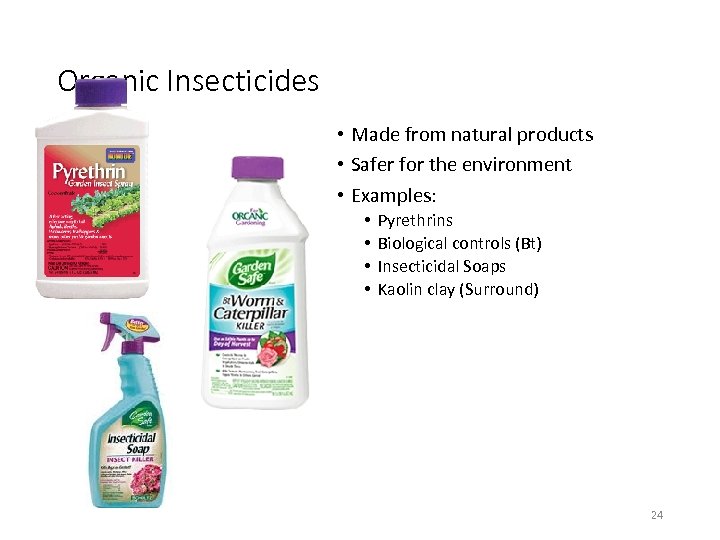
Organic Insecticides • Made from natural products • Safer for the environment • Examples: • • Pyrethrins Biological controls (Bt) Insecticidal Soaps Kaolin clay (Surround) 24
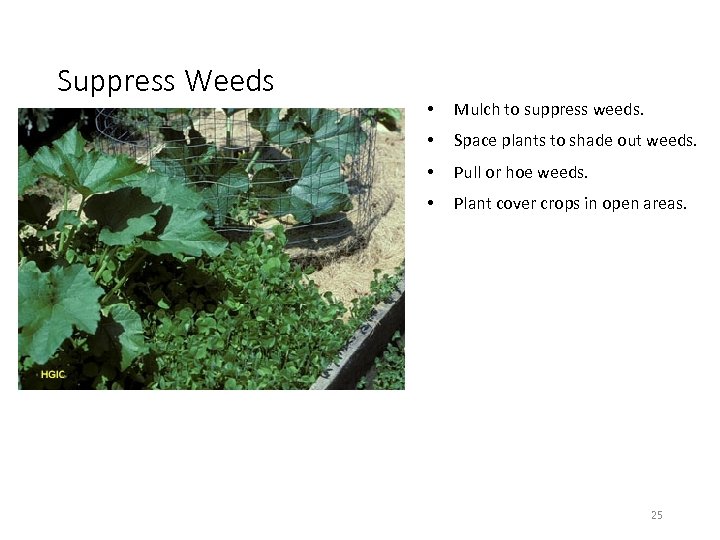
Suppress Weeds • Mulch to suppress weeds. • Space plants to shade out weeds. • Pull or hoe weeds. • Plant cover crops in open areas. 25
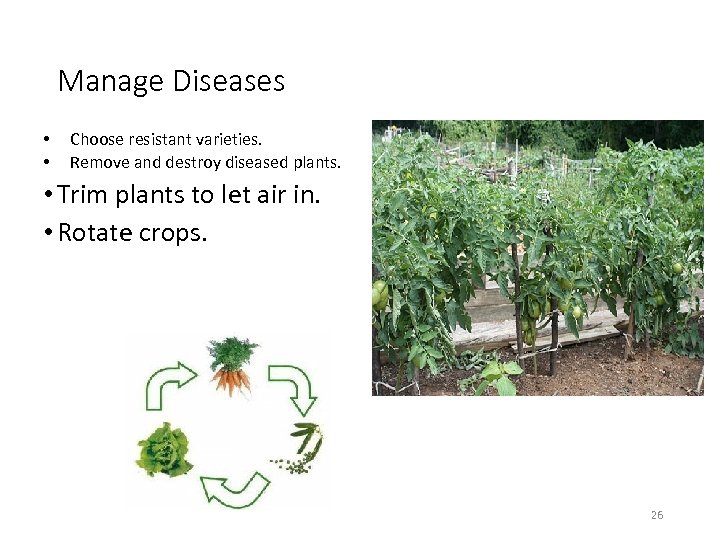
Manage Diseases • • Choose resistant varieties. Remove and destroy diseased plants. • Trim plants to let air in. • Rotate crops. 26
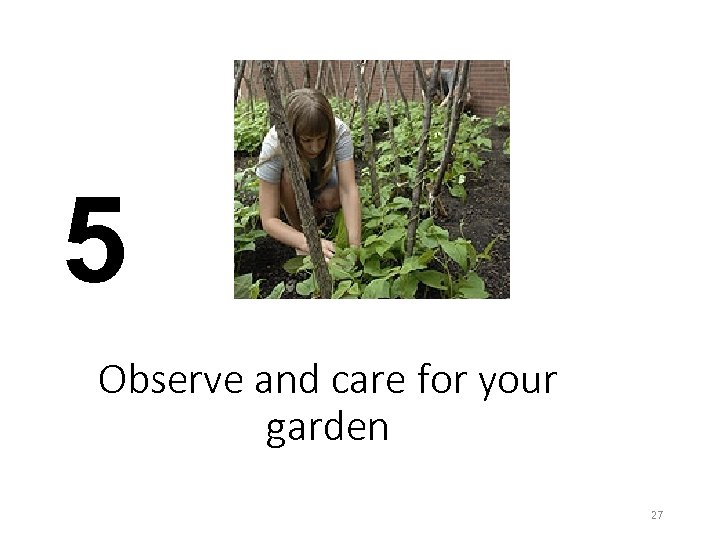
5 Observe and care for your garden 27
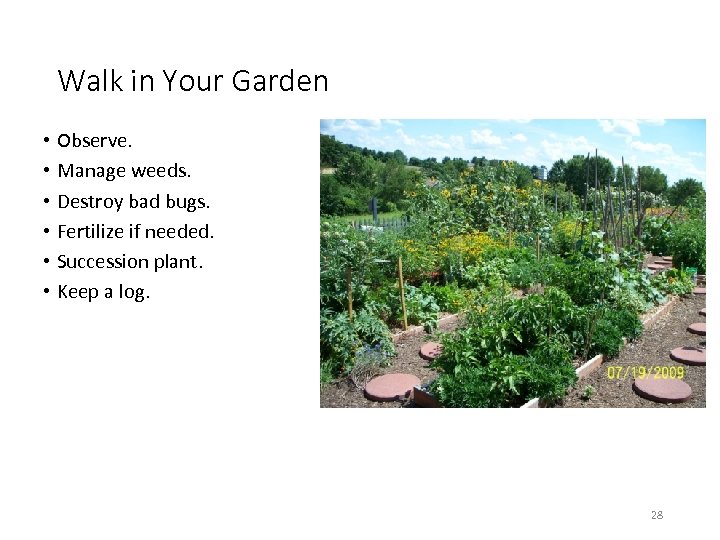
Walk in Your Garden • Observe. • Manage weeds. • Destroy bad bugs. • Fertilize if needed. • Succession plant. • Keep a log. 28
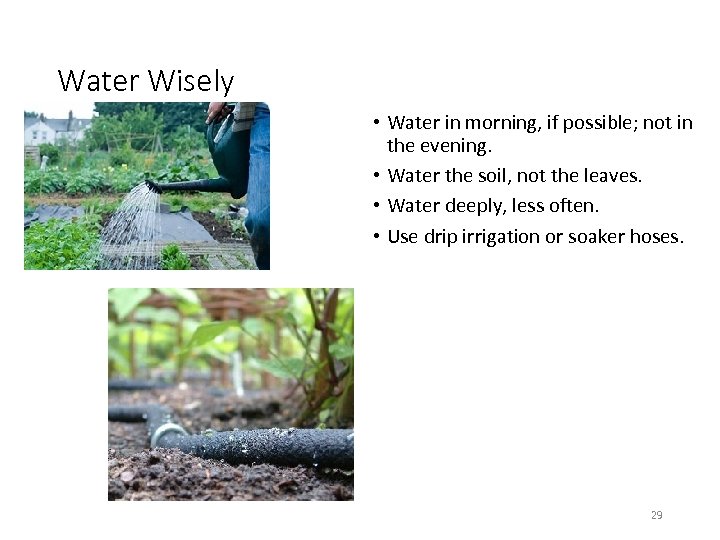
Water Wisely • Water in morning, if possible; not in the evening. • Water the soil, not the leaves. • Water deeply, less often. • Use drip irrigation or soaker hoses. 29
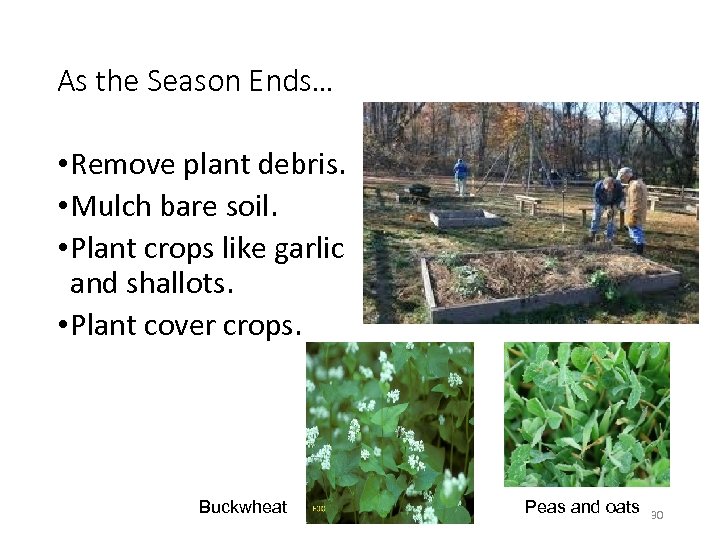
As the Season Ends… • Remove plant debris. • Mulch bare soil. • Plant crops like garlic and shallots. • Plant cover crops. Buckwheat Peas and oats 30
Five Steps to Your Organic Garden 1. Build the soil 2. Right plant, right place and time 3. Fertilize wisely 4. Manage problems organically 5. Observe and care for your garden 31
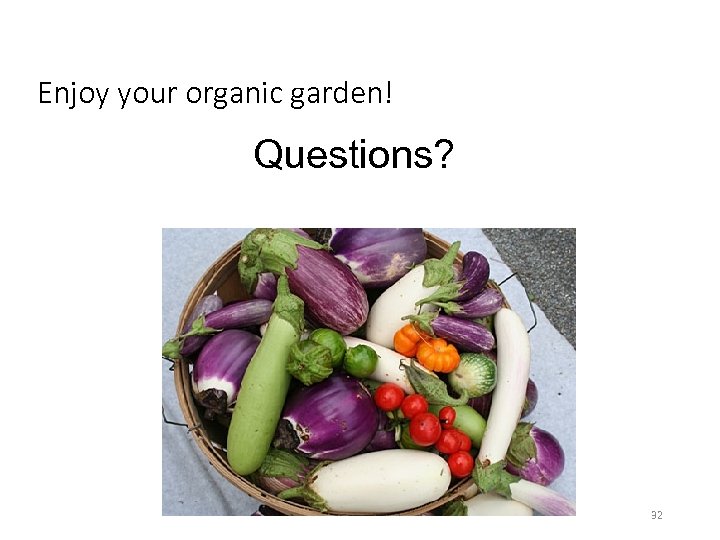
Enjoy your organic garden! Questions? 32
Resources extension. umd. edu/hgic extension. umd. edu/learn/ask-gardening marylandgrows. umd. edu extension. umd. edu/mg • • • extension. umd. edu/growit Take a food gardening class Find local community gardens Learn about youth/school gardens

This program was brought to you by University of Maryland Extension Master Gardener Program Washington County
Скачать презентацию Organic Vegetable Gardening Methods for Success Fran Scher
6dca2c378e6703c2a10b96a43a053a4b.ppt