 Скачать презентацию ORGANIC POULTRY PRODUCTION Ken W Koelkebeck University of
63ce8e99a6a6f47e7e3ebcefeeefed5f.ppt
- Количество слайдов: 31



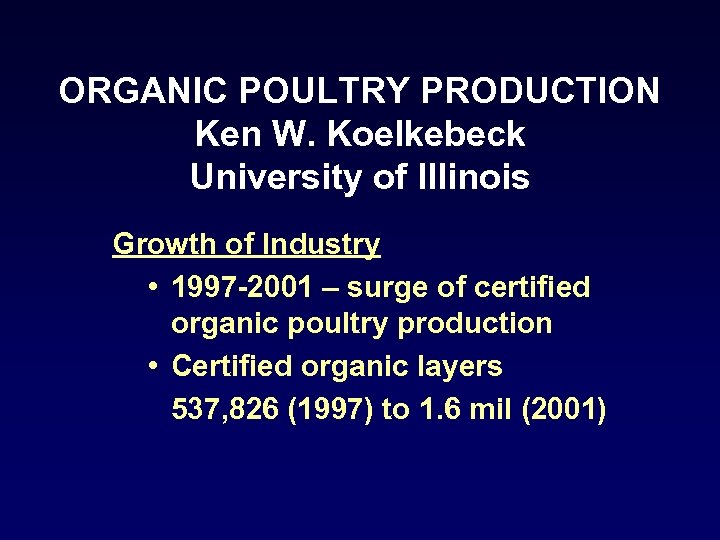
ORGANIC POULTRY PRODUCTION Ken W. Koelkebeck University of Illinois Growth of Industry • 1997 -2001 – surge of certified organic poultry production • Certified organic layers 537, 826 (1997) to 1. 6 mil (2001)
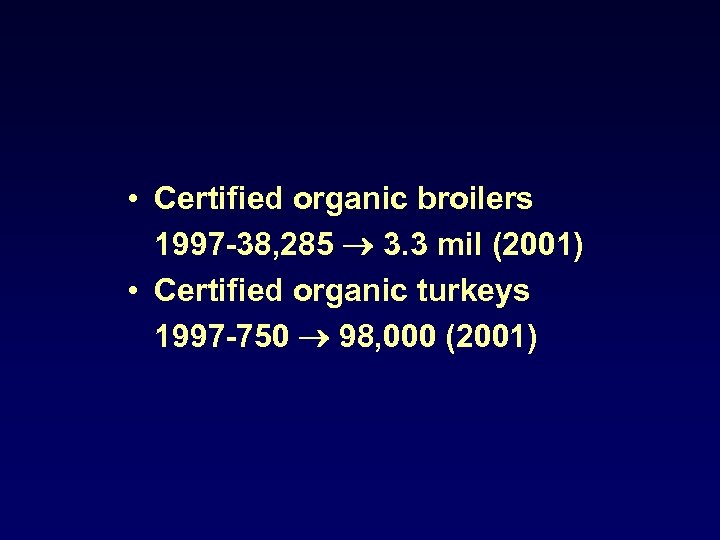
• Certified organic broilers 1997 -38, 285 3. 3 mil (2001) • Certified organic turkeys 1997 -750 98, 000 (2001)
• 2002 – USDA National Organic Program www. ams. usda. gov/nop/index. IE. htm • National standards dictate how broilers, turkeys, layers and others are to be managed and raised
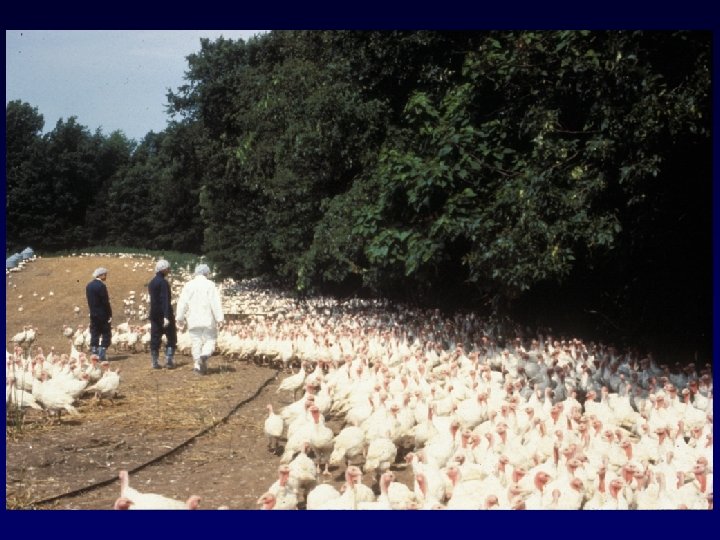
• Standards – poultry not required to have access to pasture, but must be given freedom to: 1) exercise 2) access to fresh air 3) exposure to direct sunlight • Birds can be “housed” if weather is bad exception
• Organic producer will pasture the birds and/or house in semi-confinement and temporary confinement • Producers must create “Organic System Plan” if seek certification 1. Comply with national rules 2. Describe how to manage flock, house, feed, waste, handling, health, welfare, and maintain records
• Resource – National Center for Appropriate Technology (NCAT) Organic Livestock Workbook -A Guide to Sustainable and Allowed Practices From: Agricultural Technology Transfer for Rural Areas (ATTRA) PO Box 3657 Fayetteville, AR 72702 (800) 346 -9140 www. attra. ncat. org/attrapub/PDF/livestockworkbook. pdf
HUSBANDRY AND MANAGEMENT • Birds: Day-old chicks, all species and breeds • Land: Outdoor access (land must be organic)
HUSBANDRY AND MANAGEMENT • Housing: Semi-confinement or pasture • Density: Allow for natural behavior • Equipment: electric fence, poultry netting, feed troughs, water fountains
• Labor: Keep accurate records • Operation: Year-round • Advantages: Premium prices for products, environmentally friendly, endorsed by animal rights groups • Disadvantages: Record keeping, regulated management practices, higher feed costs
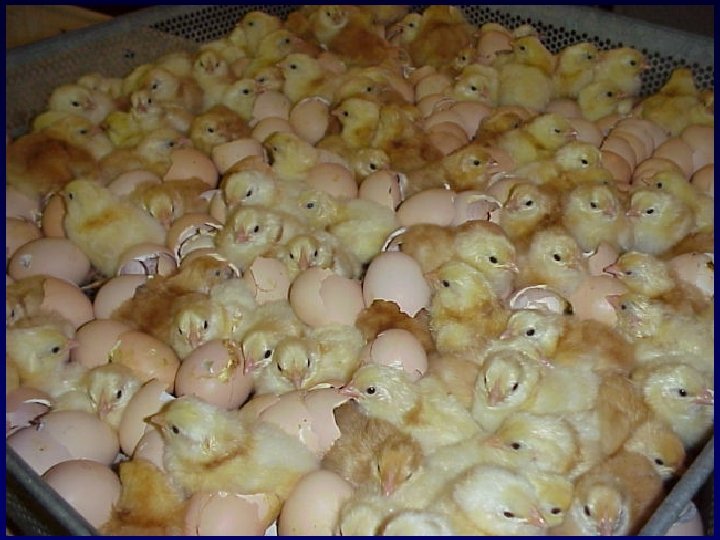
BIRDS • Purchase day-old chicks from conventional stock • Breed and hatch own • Purchase started pullets, but must come from certified organic breeders
BIRDS • Breed selection is vital to success • Nat. Organic Standards prohibit use of conventional medicines/treatments – so get a breed that is hardy
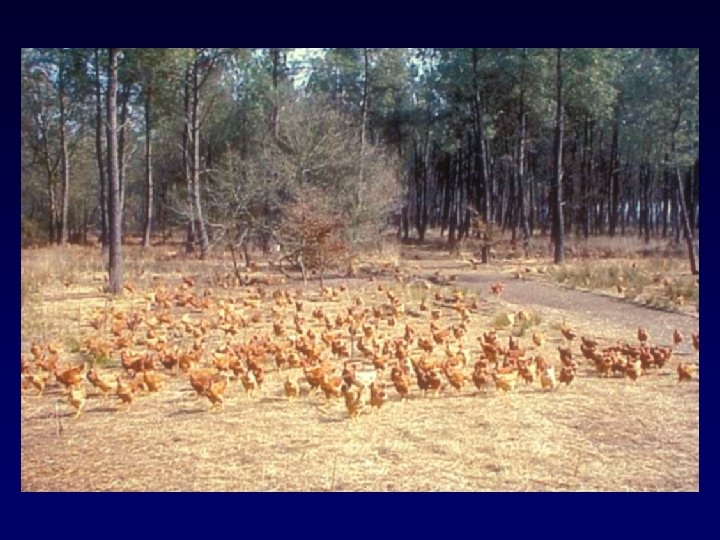
RAISING BIRDS ON PASTURE • Standards – “living conditions which accommodate health and natural behavior of animals” • Pasturing is compliant, but not required • Outdoor access with minimum plant cover are compliant • Outdoor cement yards are not compliant • Many producers keep birds on pasture for 6 months
• If birds on pasture, have to follow the National Organic Standards for pasture seeding • Use organic seed where available and approved practices to control weeds • Organic buyers of birds or eggs may have own guidelines
EQUIPMENT AND SUPPLIES Checklist • Feeders • Artificial lights • Waterers • Electric fence • Litter • Approved cleaners • Nest boxes • Organic certified seed-on pasture • Source: Organic Materials Review Institute (OMRI) – www. omri. org Midwest Organic and Sustainable Education Service (715) 772 -3153 www. mosesorganic. org
HOUSING • Certain living conditions • Exercise • Provide for • Escape bad weather natural behaviors • Provide fresh air • Move birds without injury • Semi-confinement shelters • Equipped with access doors so birds can move freely between inside and outside • Some buyers may dictate stocking density standards do not stipulate
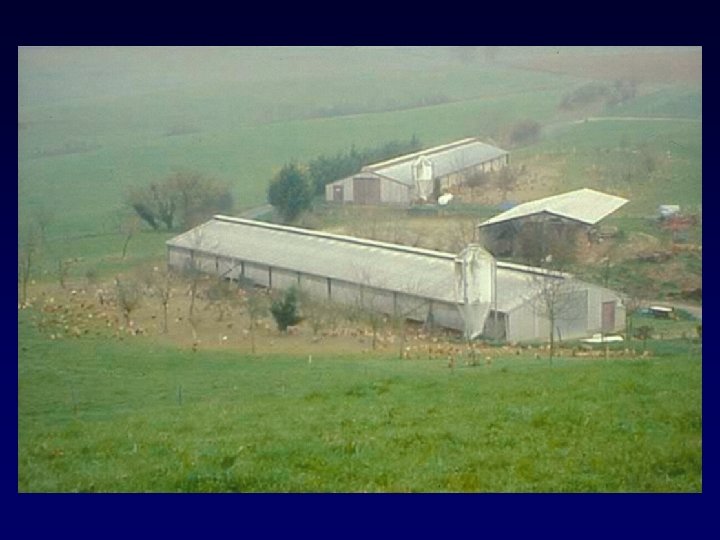
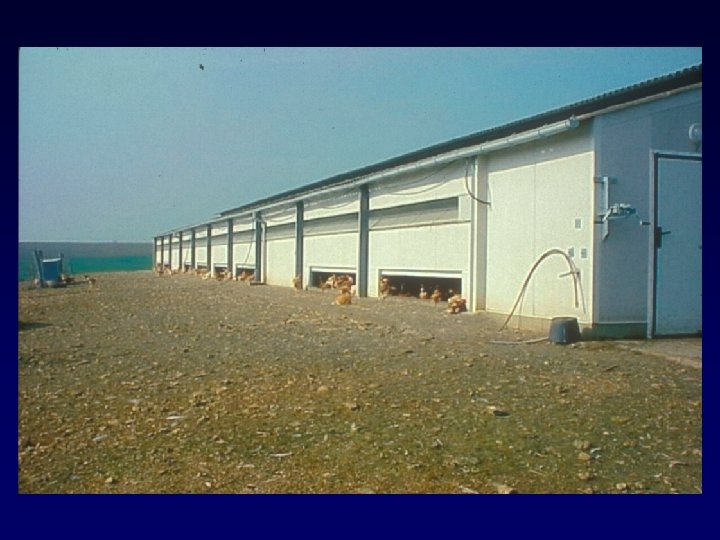
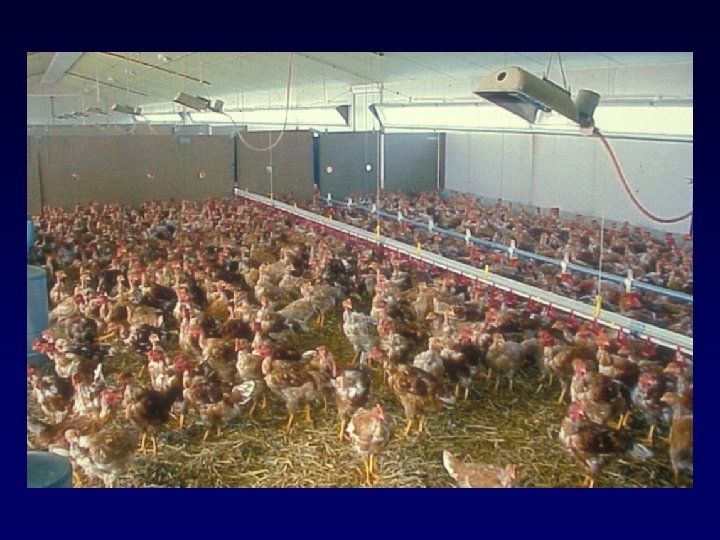
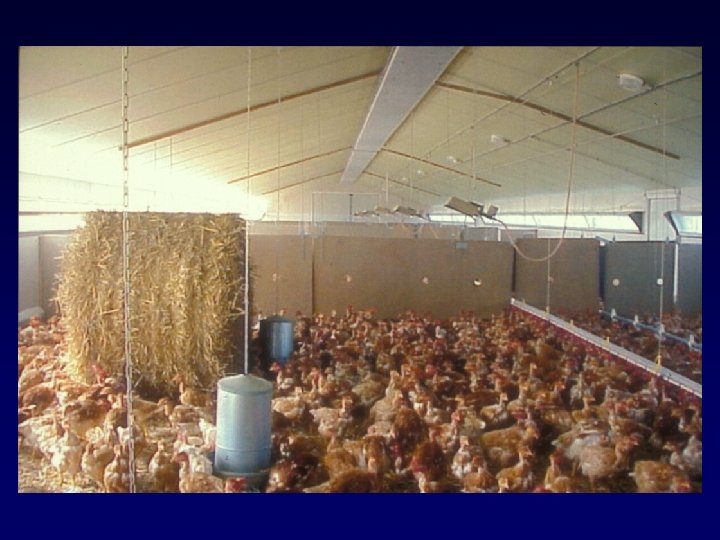
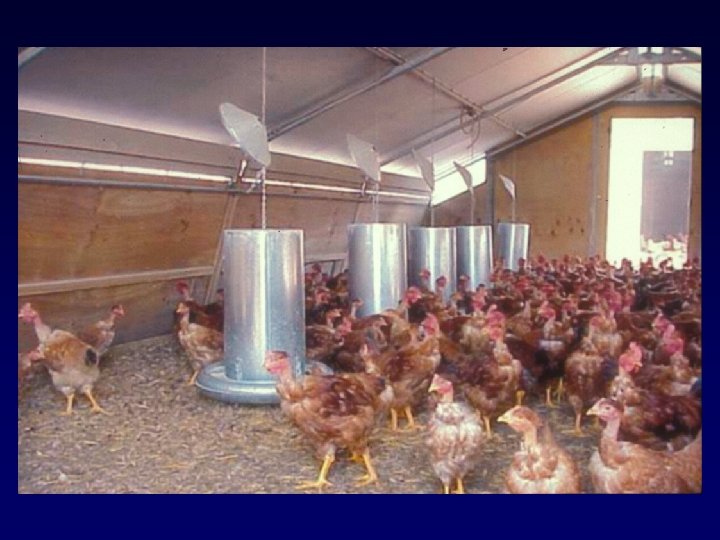
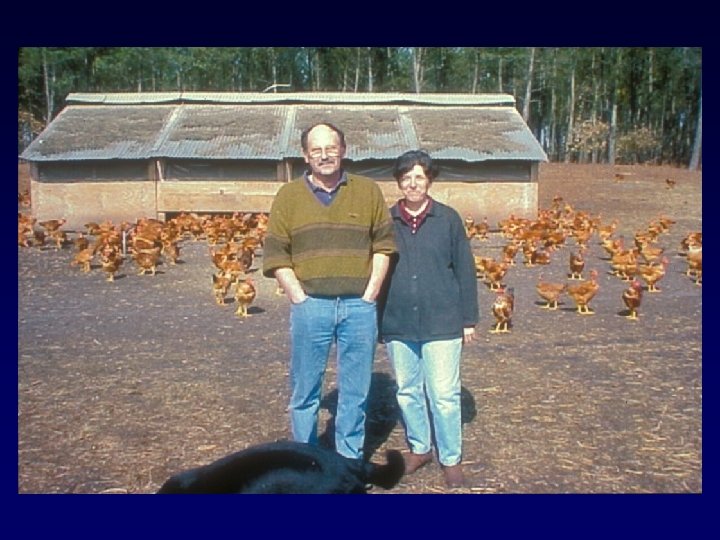
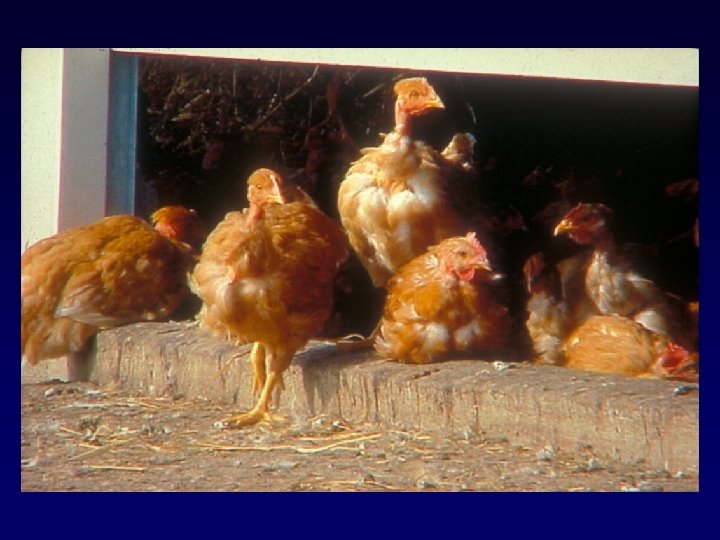
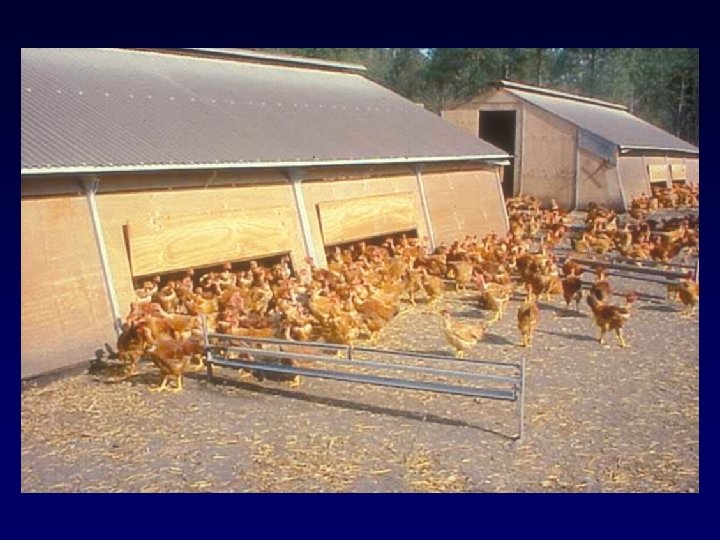
• If build a large or long house for your birds, you should have many access doors – the number of doors not stipulated in standards • Should check with your local certifier
HOUSING FOR LAYERS • Lighting – standards do not include guidelines for artificial lighting or access to natural light and dark cycles • If use artificial lighting to induce molting should check with local certifier if allowed • It is of course important to provide artificial light in the fall and winter months to stimulate good egg production
• Induced molting may be looked upon buyers of eggs as “inhumane”, so check with your local certified if you can molt a flock • Use of cleaning products • It is standard practice to clean and disinfect broiler, turkey, and layer houses in between flocks to prevent buildup of pathogens
• Be sure to check the list of allowed and prohibited substances for cleaning, disinfecting, and sanitizing www. ams. usda. gov/NOP/National. List/List. Home. html under “Processing Materials Decisions”
• The Organic Materials Review Institute (OMRI) screen products to use – www. omri. org
Скачать презентацию ORGANIC POULTRY PRODUCTION Ken W Koelkebeck University of
63ce8e99a6a6f47e7e3ebcefeeefed5f.ppt