 Скачать презентацию Oracle Infrastructure Overview CC Yu 余苓華 Senior Sales
916b31343fe0661b6089f72cc3494d61.ppt
- Количество слайдов: 69



Oracle Infrastructure Overview CC Yu 余苓華 Senior Sales Consultant Oracle Corporation
Agenda Ÿ Oracle 10 g Overview Ÿ HA Solution – Real Application Clusters (RAC) Ÿ Disaster Recovery Solution – Data Guard Ÿ Oracle MAA Architecture (Maximum Availability Architecture) Ÿ Customer's Practice ŸQ&A 2
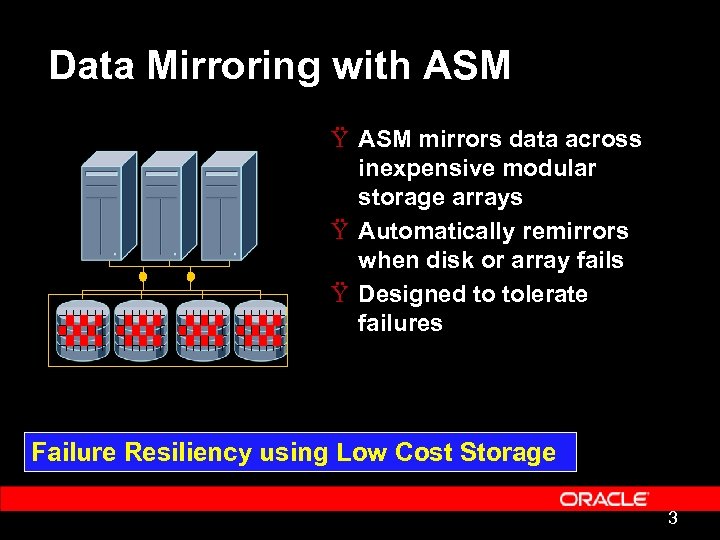
Data Mirroring with ASM Ÿ ASM mirrors data across inexpensive modular storage arrays Ÿ Automatically remirrors when disk or array fails Ÿ Designed to tolerate failures Failure Resiliency using Low Cost Storage 3
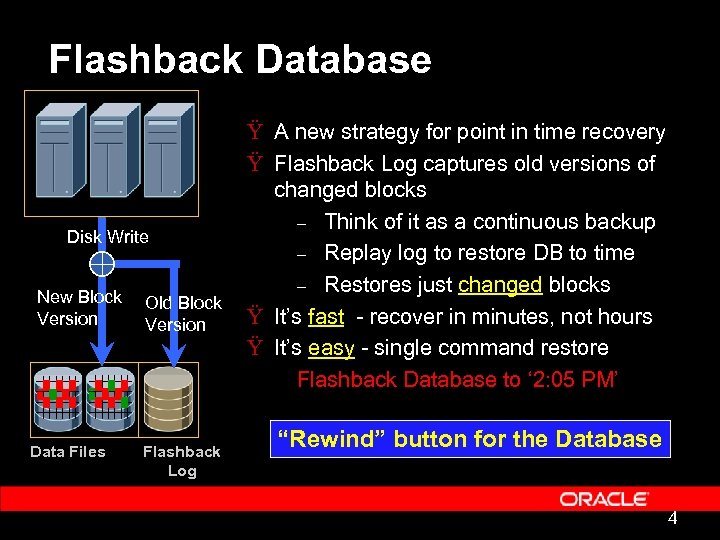
Flashback Database Disk Write New Block Version Data Files Old Block Version Flashback Log Ÿ A new strategy for point in time recovery Ÿ Flashback Log captures old versions of changed blocks – Think of it as a continuous backup – Replay log to restore DB to time – Restores just changed blocks Ÿ It’s fast - recover in minutes, not hours Ÿ It’s easy - single command restore Flashback Database to ‘ 2: 05 PM’ “Rewind” button for the Database 4
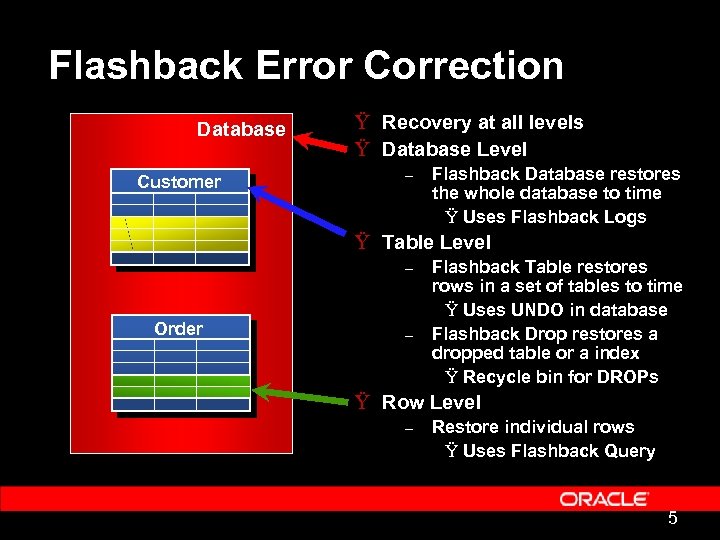
Flashback Error Correction Database Customer Ÿ Recovery at all levels Ÿ Database Level – Flashback Database restores the whole database to time Ÿ Uses Flashback Logs Ÿ Table Level – Order – Flashback Table restores rows in a set of tables to time Ÿ Uses UNDO in database Flashback Drop restores a dropped table or a index Ÿ Recycle bin for DROPs Ÿ Row Level – Restore individual rows Ÿ Uses Flashback Query 5
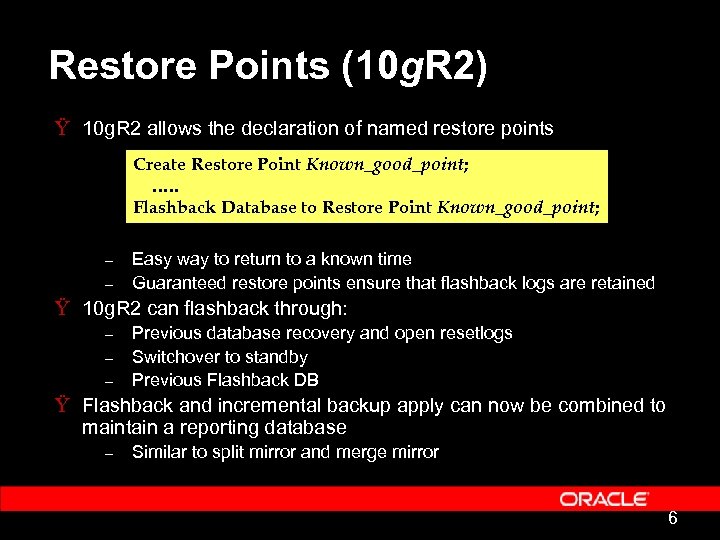
Restore Points (10 g. R 2) Ÿ 10 g. R 2 allows the declaration of named restore points Create Restore Point Known_good_point; …. . Flashback Database to Restore Point Known_good_point; – – Easy way to return to a known time Guaranteed restore points ensure that flashback logs are retained Ÿ 10 g. R 2 can flashback through: – – – Previous database recovery and open resetlogs Switchover to standby Previous Flashback DB Ÿ Flashback and incremental backup apply can now be combined to maintain a reporting database – Similar to split mirror and merge mirror 6
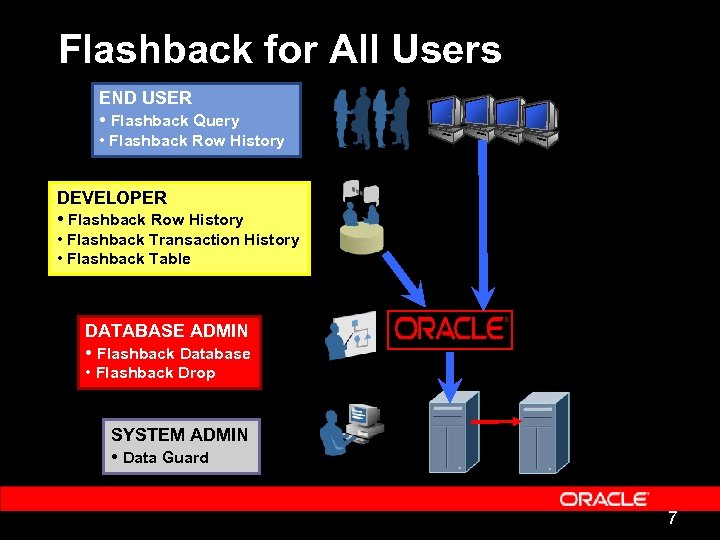
Flashback for All Users END USER • Flashback Query • Flashback Row History DEVELOPER • Flashback Row History • Flashback Transaction History • Flashback Table DATABASE ADMIN • Flashback Database • Flashback Drop SYSTEM ADMIN • Data Guard 7
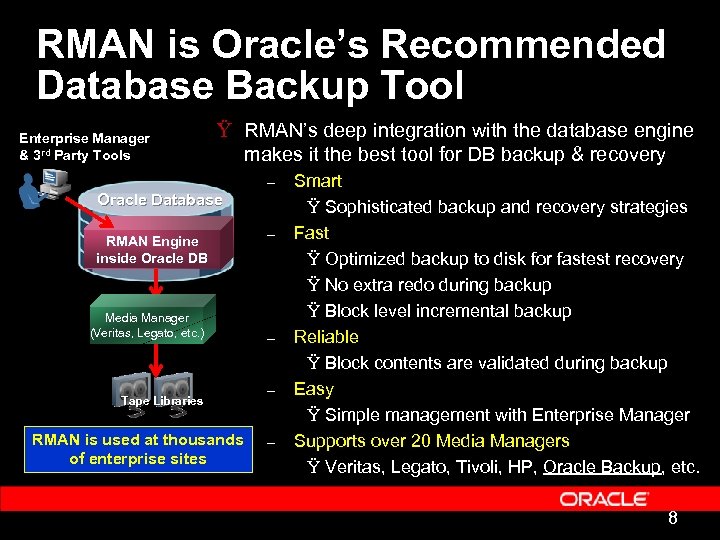
RMAN is Oracle’s Recommended Database Backup Tool Enterprise Manager & 3 rd Party Tools Ÿ RMAN’s deep integration with the database engine makes it the best tool for DB backup & recovery – Oracle Database RMAN Engine inside Oracle DB Media Manager (Veritas, Legato, etc. ) Tape Libraries RMAN is used at thousands of enterprise sites – – Smart Ÿ Sophisticated backup and recovery strategies Fast Ÿ Optimized backup to disk for fastest recovery Ÿ No extra redo during backup Ÿ Block level incremental backup Reliable Ÿ Block contents are validated during backup Easy Ÿ Simple management with Enterprise Manager Supports over 20 Media Managers Ÿ Veritas, Legato, Tivoli, HP, Oracle Backup, etc. 8
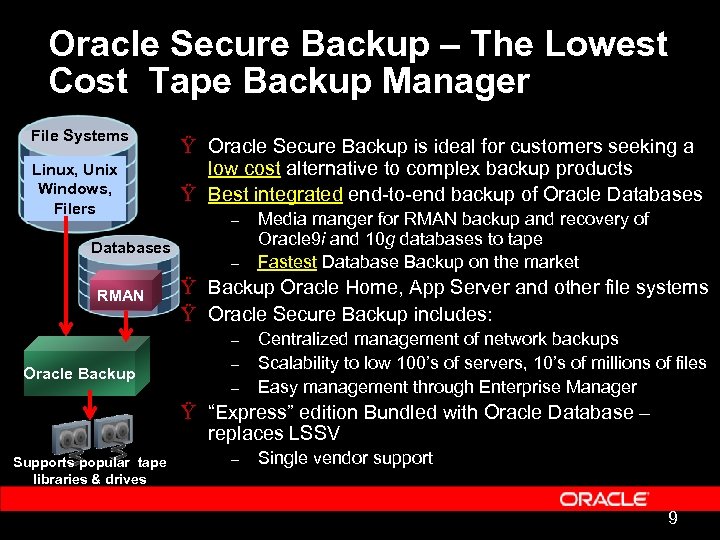
Oracle Secure Backup – The Lowest Cost Tape Backup Manager File Systems Linux, Unix Windows, Filers Databases RMAN Ÿ Oracle Secure Backup is ideal for customers seeking a low cost alternative to complex backup products Ÿ Best integrated end-to-end backup of Oracle Databases – – Ÿ Backup Oracle Home, App Server and other file systems Ÿ Oracle Secure Backup includes: – Oracle Backup Media manger for RMAN backup and recovery of Oracle 9 i and 10 g databases to tape Fastest Database Backup on the market – – Centralized management of network backups Scalability to low 100’s of servers, 10’s of millions of files Easy management through Enterprise Manager Ÿ “Express” edition Bundled with Oracle Database – replaces LSSV Supports popular tape libraries & drives – Single vendor support 9
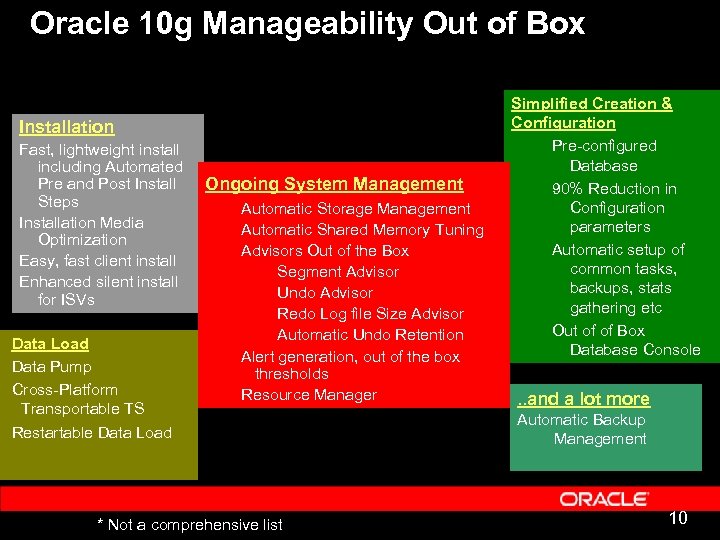
Oracle 10 g Manageability Out of Box Installation Fast, lightweight install including Automated Pre and Post Install Steps Installation Media Optimization Easy, fast client install Enhanced silent install for ISVs Data Load Data Pump Cross-Platform Transportable TS Restartable Data Load Ongoing System Management Automatic Storage Management Automatic Shared Memory Tuning Advisors Out of the Box Segment Advisor Undo Advisor Redo Log file Size Advisor Automatic Undo Retention Alert generation, out of the box thresholds Resource Manager * Not a comprehensive list Simplified Creation & Configuration Pre-configured Database 90% Reduction in Configuration parameters Automatic setup of common tasks, backups, stats gathering etc Out of of Box Database Console . . and a lot more Automatic Backup Management 10
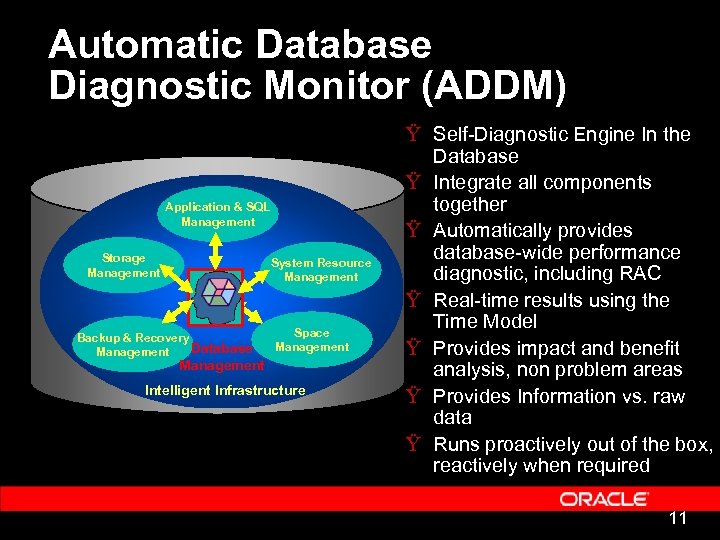
Automatic Database Diagnostic Monitor (ADDM) Application & SQL Management Storage Management System Resource Management Backup & Recovery Database Management Space Management Intelligent Infrastructure Ÿ Self-Diagnostic Engine In the Database Ÿ Integrate all components together Ÿ Automatically provides database-wide performance diagnostic, including RAC Ÿ Real-time results using the Time Model Ÿ Provides impact and benefit analysis, non problem areas Ÿ Provides Information vs. raw data Ÿ Runs proactively out of the box, reactively when required 11
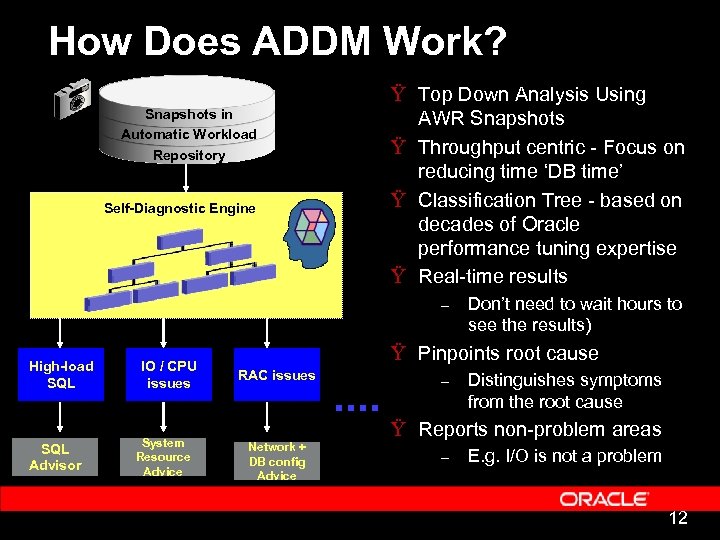
How Does ADDM Work? Snapshots in Automatic Workload Repository Automatic Diagnostic Engine Self-Diagnostic Engine Ÿ Top Down Analysis Using AWR Snapshots Ÿ Throughput centric - Focus on reducing time ‘DB time’ Ÿ Classification Tree - based on decades of Oracle performance tuning expertise Ÿ Real-time results – High-load SQL Advisor IO / CPU issues System Resource Advice Don’t need to wait hours to see the results) Ÿ Pinpoints root cause RAC issues Network + DB config Advice – Distinguishes symptoms from the root cause Ÿ Reports non-problem areas – E. g. I/O is not a problem 12
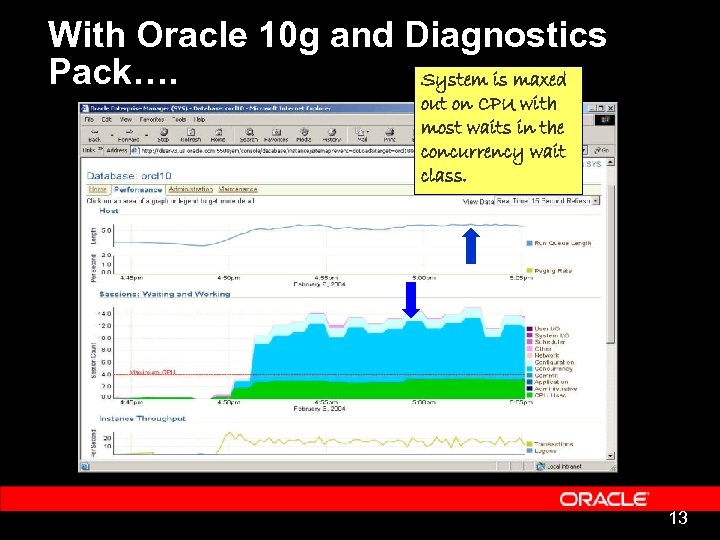
With Oracle 10 g and Diagnostics Pack…. System is maxed out on CPU with most waits in the concurrency wait class. 13
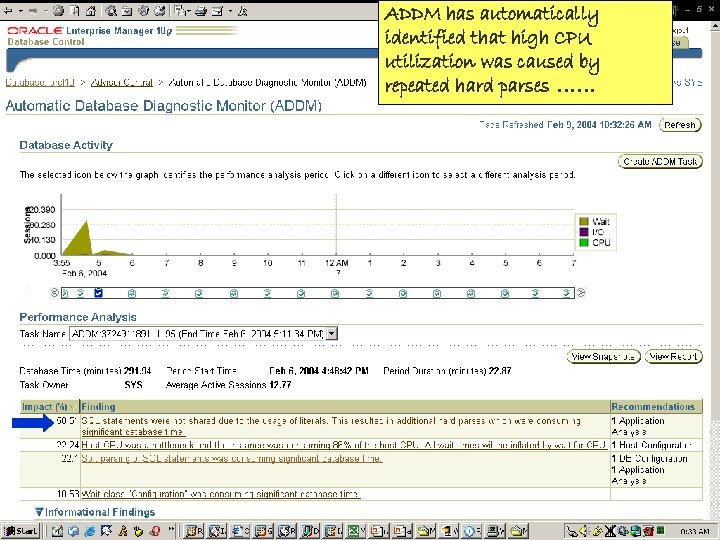
ADDM has automatically identified that high CPU utilization was caused by repeated hard parses …… ADDM Findings 14
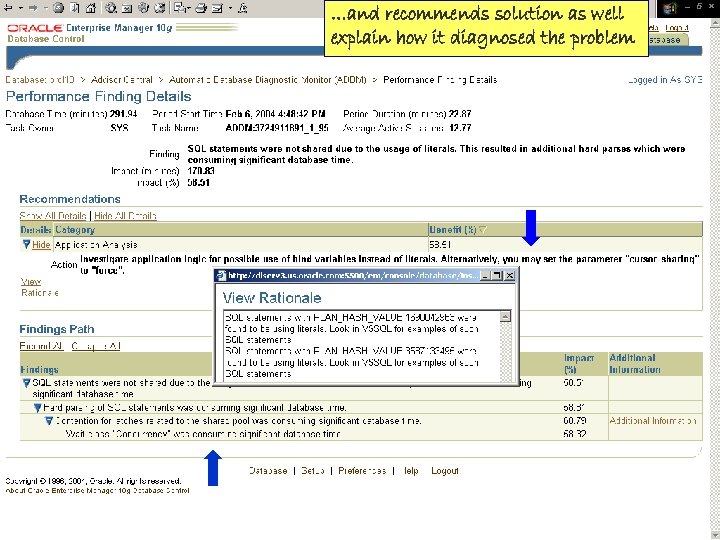
…and recommends solution as well explain how it diagnosed the problem ADDM Findings 15
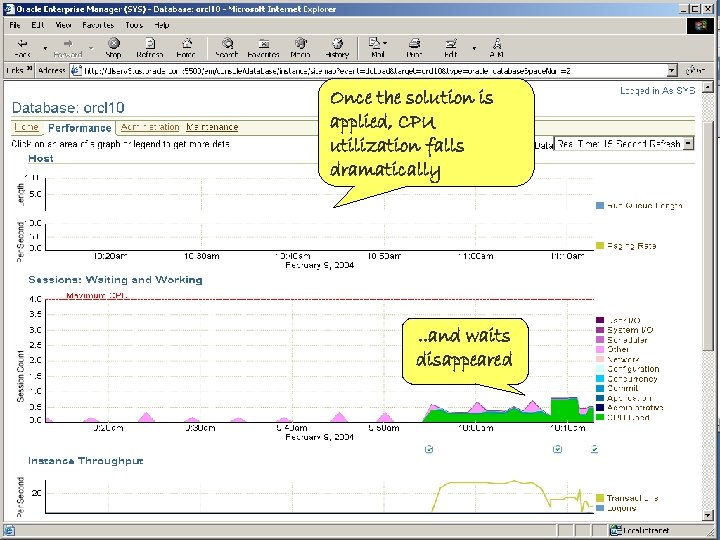
Good Performance Page Once the solution is applied, CPU utilization falls dramatically . . and waits disappeared 16
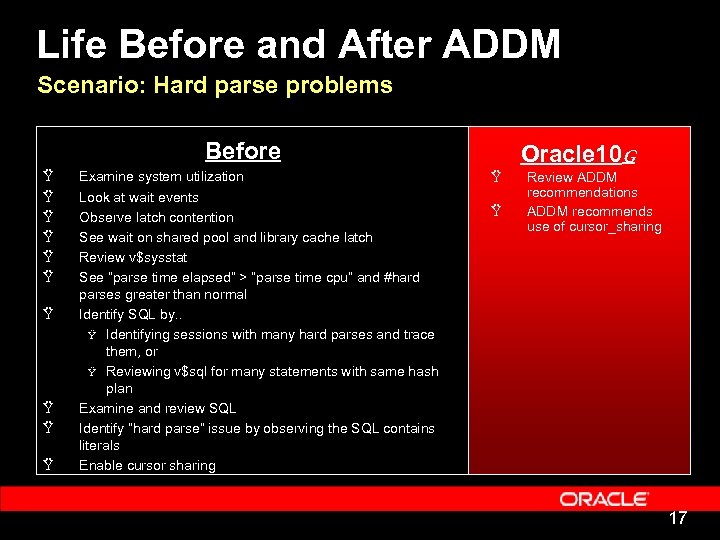
Life Before and After ADDM Scenario: Hard parse problems Before Ÿ Ÿ Ÿ Ÿ Ÿ Examine system utilization Look at wait events Observe latch contention See wait on shared pool and library cache latch Review v$sysstat See “parse time elapsed” > “parse time cpu” and #hard parses greater than normal Identify SQL by. . Ÿ Identifying sessions with many hard parses and trace them, or Ÿ Reviewing v$sql for many statements with same hash plan Examine and review SQL Identify “hard parse” issue by observing the SQL contains literals Enable cursor sharing Oracle 10 G Ÿ Ÿ Review ADDM recommendations ADDM recommends use of cursor_sharing 17
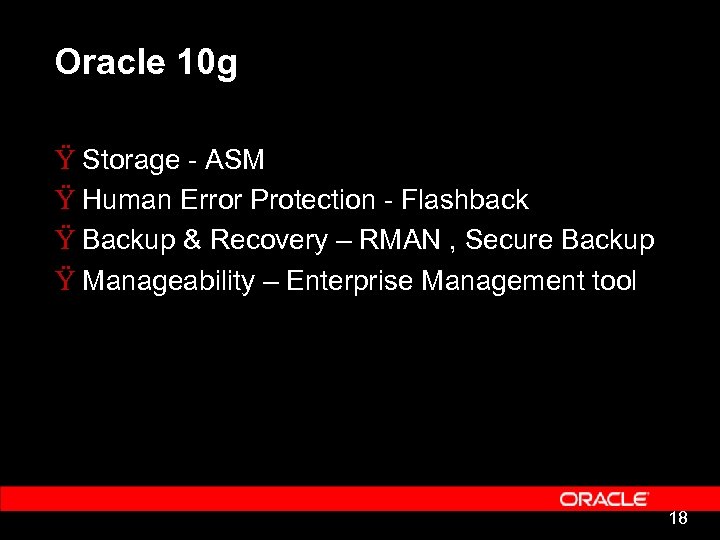
Oracle 10 g Ÿ Storage - ASM Ÿ Human Error Protection - Flashback Ÿ Backup & Recovery – RMAN , Secure Backup Ÿ Manageability – Enterprise Management tool 18
Agenda Ÿ Oracle 10 g Overview Ÿ HA Solution – Real Application Clusters (RAC) Ÿ Disaster Recovery Solution – Data Guard Ÿ Oracle MAA Architecture (Maximum Availability Architecture) Ÿ Customer's Practice ŸQ&A 19
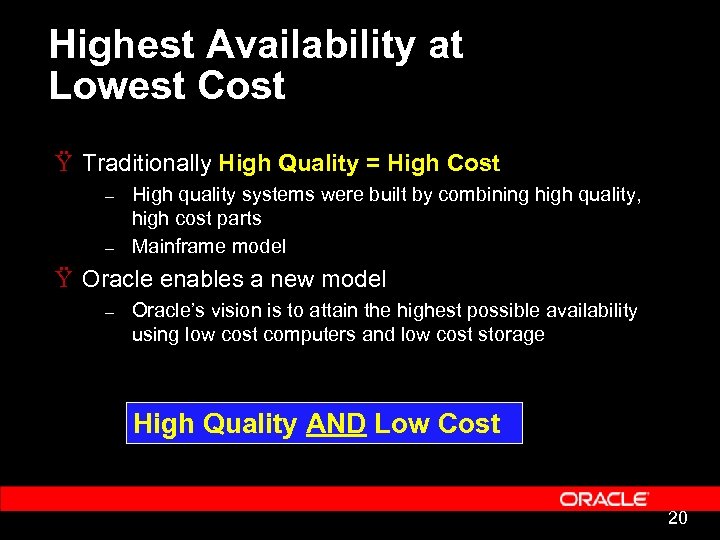
Highest Availability at Lowest Cost Ÿ Traditionally High Quality = High Cost – – High quality systems were built by combining high quality, high cost parts Mainframe model Ÿ Oracle enables a new model – Oracle’s vision is to attain the highest possible availability using low cost computers and low cost storage High Quality AND Low Cost 20
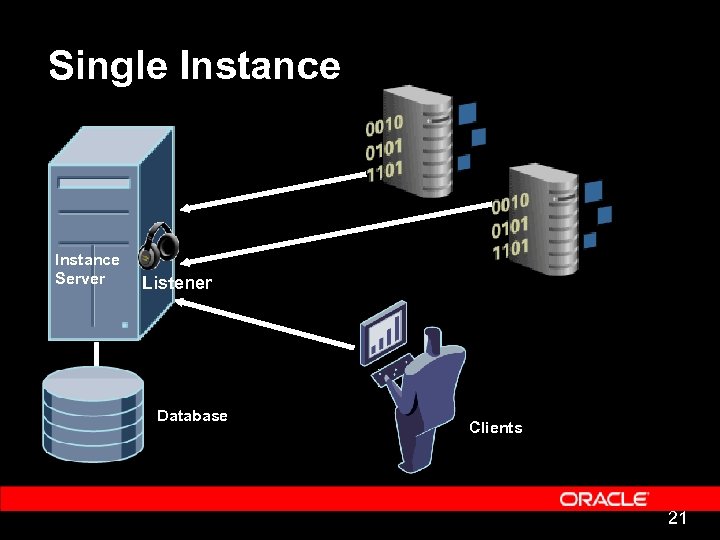
Single Instance Server Listener Database Clients 21
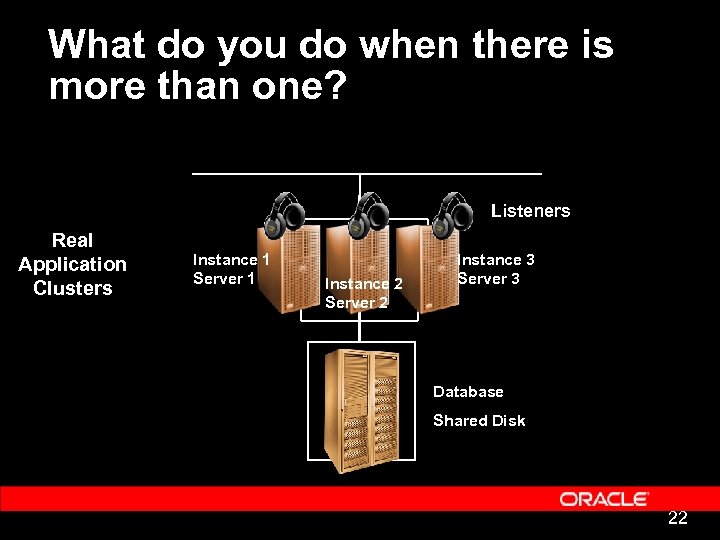
What do you do when there is more than one? Listeners Real Application Clusters Instance 1 Server 1 Instance 2 Server 2 Instance 3 Server 3 Database Shared Disk 22
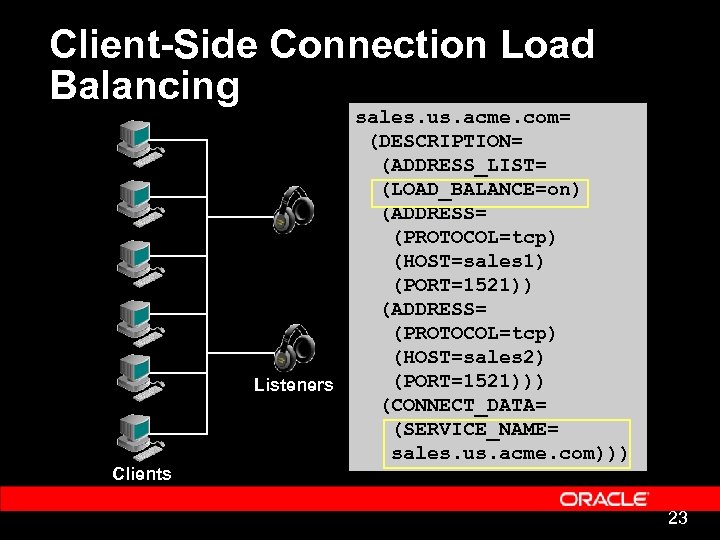
Client-Side Connection Load Balancing Listeners Clients sales. us. acme. com= (DESCRIPTION= (ADDRESS_LIST= (LOAD_BALANCE=on) (ADDRESS= (PROTOCOL=tcp) (HOST=sales 1) (PORT=1521)) (ADDRESS= (PROTOCOL=tcp) (HOST=sales 2) (PORT=1521))) (CONNECT_DATA= (SERVICE_NAME= sales. us. acme. com))) 23
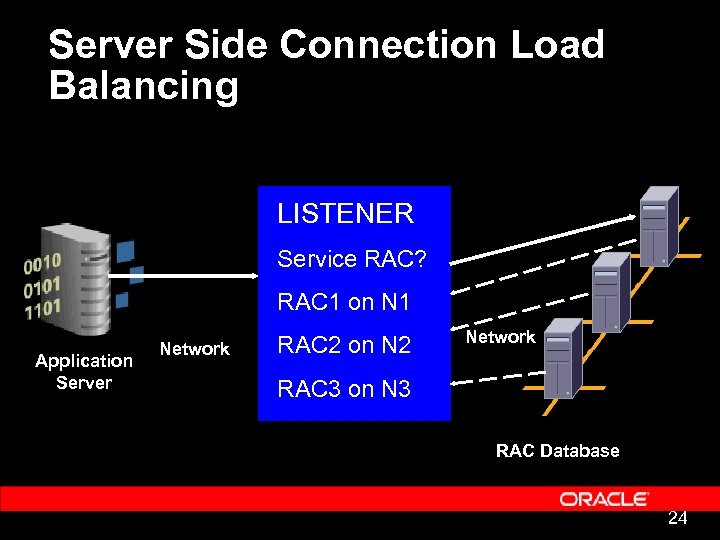
Server Side Connection Load Balancing LISTENER Service RAC? RAC 1 on N 1 Application Server Network RAC 2 on N 2 Network RAC 3 on N 3 RAC Database 24
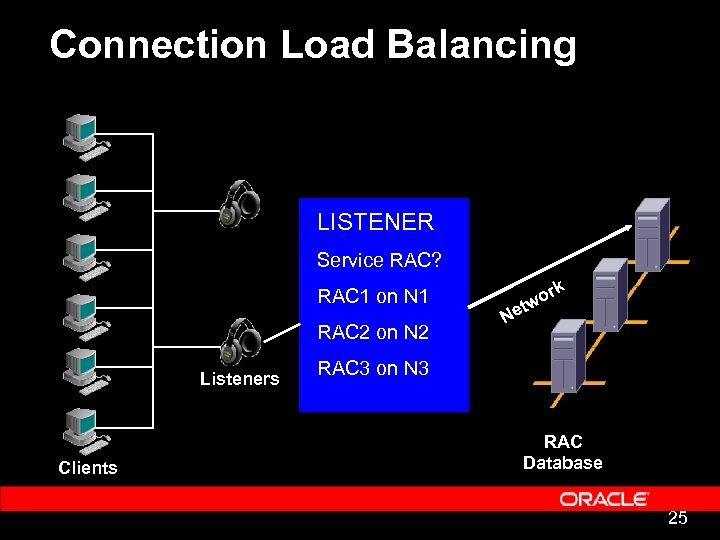
Connection Load Balancing LISTENER Service RAC? RAC 1 on N 1 RAC 2 on N 2 Listeners Clients ork w t Ne RAC 3 on N 3 RAC Database 25
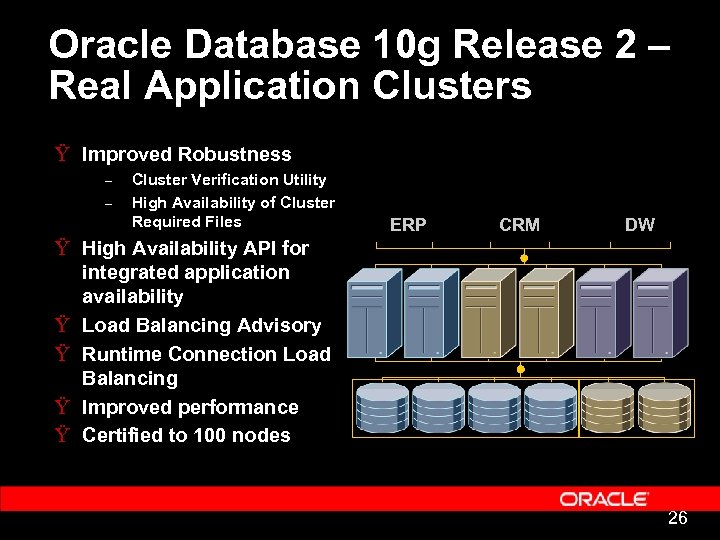
Oracle Database 10 g Release 2 – Real Application Clusters Ÿ Improved Robustness – – Cluster Verification Utility High Availability of Cluster Required Files ERP CRM DW Ÿ High Availability API for integrated application availability Ÿ Load Balancing Advisory Ÿ Runtime Connection Load Balancing Ÿ Improved performance Ÿ Certified to 100 nodes 26
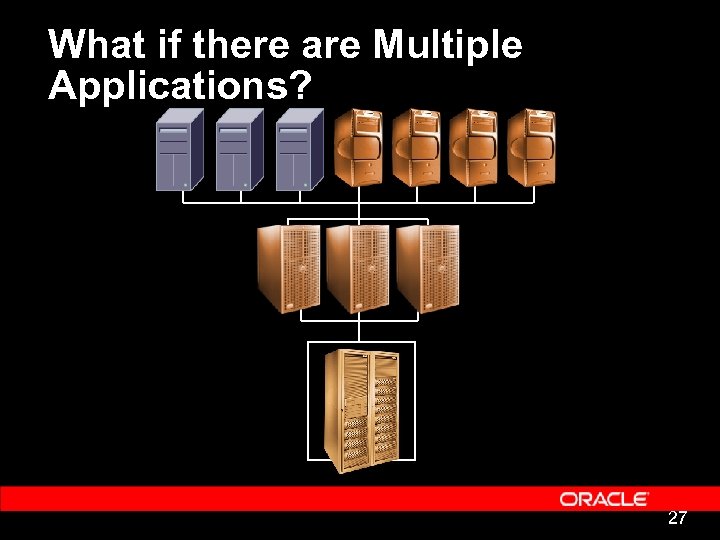
What if there are Multiple Applications? 27
Automatic Workload Management Ÿ Application workloads can be defined as Services – – – Individually managed and controlled Assigned to instances during normal startup On instance failure, automatic re-assignment Service performance individually tracked Finer grained control with Resource Manager Integrated with other Oracle tools / facilities (E. G. Scheduler, Streams) 28
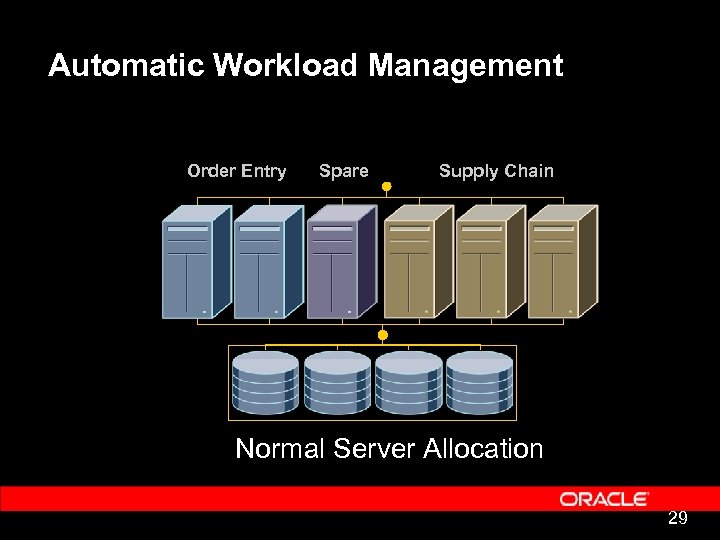
Automatic Workload Management Order Entry Spare Supply Chain Normal Server Allocation 29
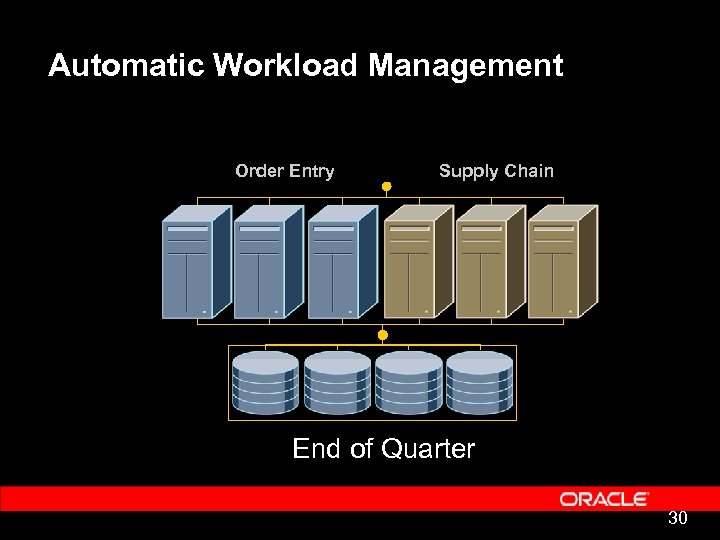
Automatic Workload Management Order Entry Supply Chain End of Quarter 30
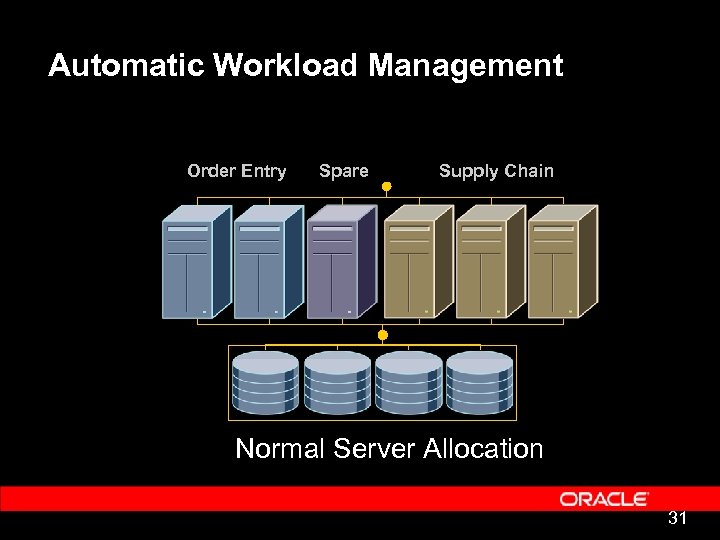
Automatic Workload Management Order Entry Spare Supply Chain Normal Server Allocation 31
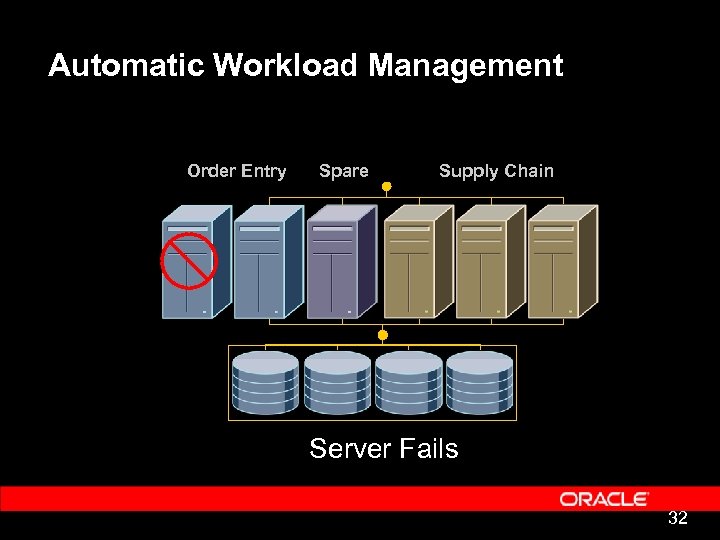
Automatic Workload Management Order Entry Spare Supply Chain Server Fails 32
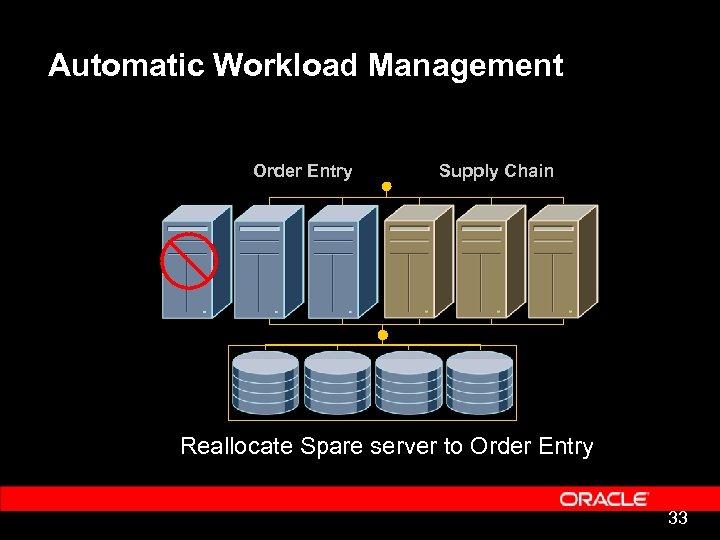
Automatic Workload Management Order Entry Supply Chain Reallocate Spare server to Order Entry 33
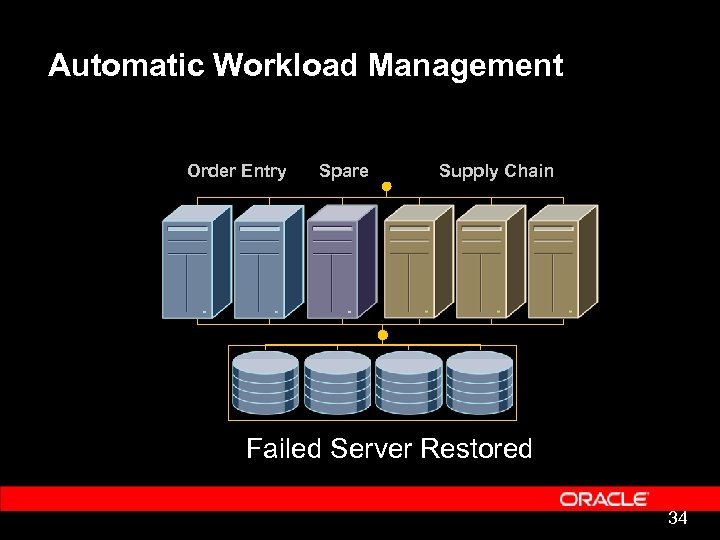
Automatic Workload Management Order Entry Spare Supply Chain Failed Server Restored 34
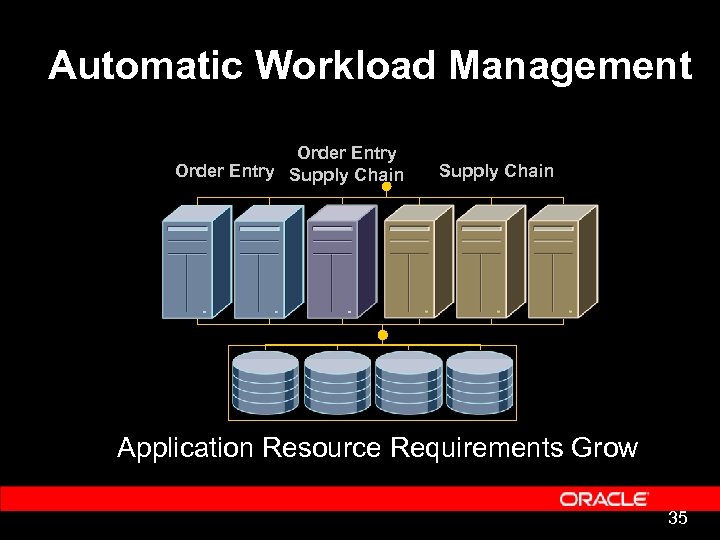
Automatic Workload Management Order Entry Supply Chain Application Resource Requirements Grow 35
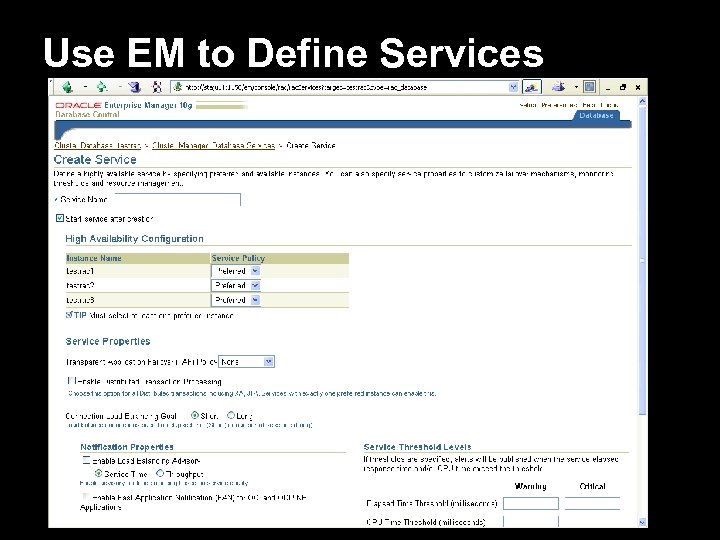
Use EM to Define Services
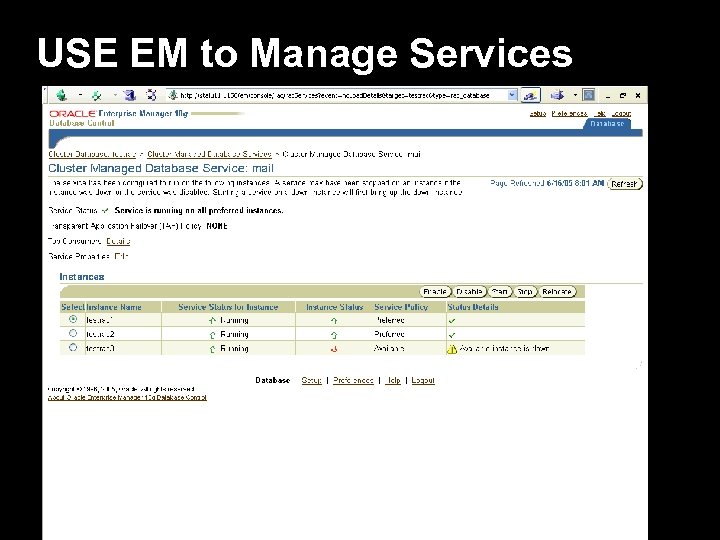
USE EM to Manage Services
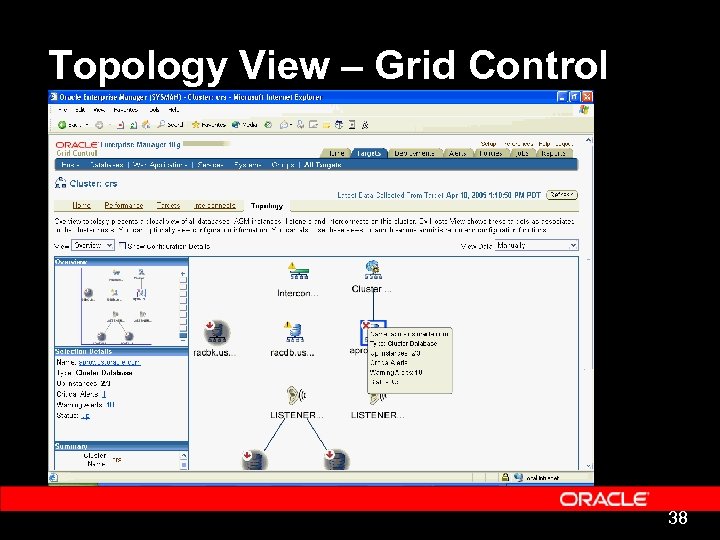
Topology View – Grid Control 38
Load Balancing Advisory Ÿ Load Balancing Advisory is an advisory for balancing work across RAC instances. Ÿ Load balancing advice – Is available to ALL applications that send work. – Directs work to where services are executing well and resources are available. – Adjusts distribution for different power nodes, different priority and shape workloads, changing demand. – Stops sending work to slow, hung, failed nodes early. 39
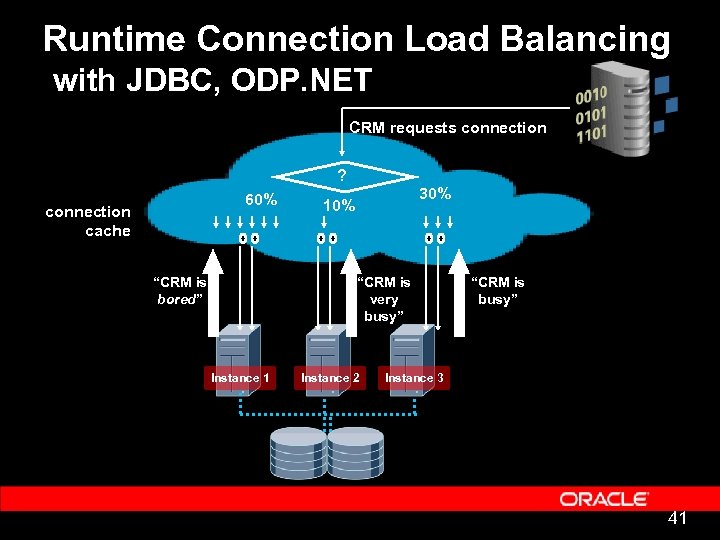
Runtime Connection Load Balancing with JDBC, ODP. NET CRM requests connection ? 60% connection cache “CRM is bored” 30% 10% “CRM is very busy” Instance 1 Instance 2 “CRM is busy” Instance 3 41
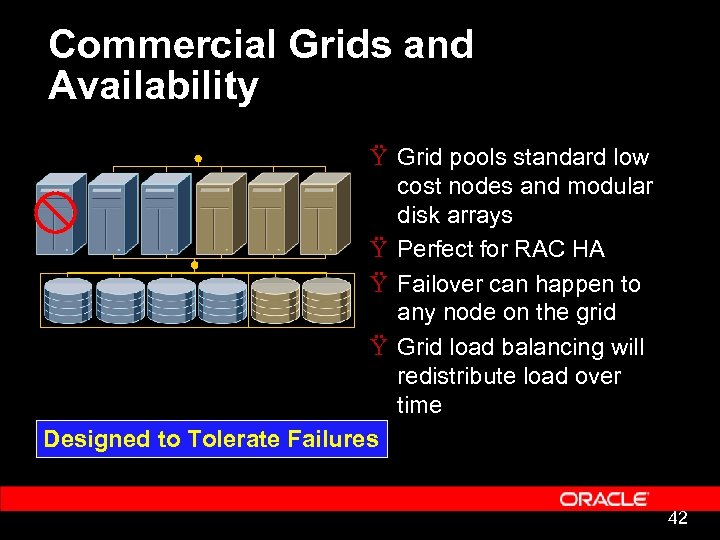
Commercial Grids and Availability Ÿ Grid pools standard low cost nodes and modular disk arrays Ÿ Perfect for RAC HA Ÿ Failover can happen to any node on the grid Ÿ Grid load balancing will redistribute load over time Designed to Tolerate Failures 42
Agenda Ÿ Oracle 10 g Overview Ÿ HA Solution – Real Application Clusters (RAC) Ÿ Disaster Recovery Solution – Data Guard Ÿ Oracle MAA Architecture (Maximum Availability Architecture) Ÿ Customer's Practice ŸQ&A 43
Introducing Oracle Data Guard Ÿ Oracle’s disaster recovery solution for Oracle data Ÿ Automates the creation and maintenance of one or more synchronized copies (standby) of the production (or primary) database Ÿ If the primary database becomes unavailable (disasters, maintenance), a standby database can be activated and assume the primary role Ÿ Feature of Oracle Database Enterprise Edition (EE) – – Available at no extra cost Primary and standby databases need to be licensed EE 44
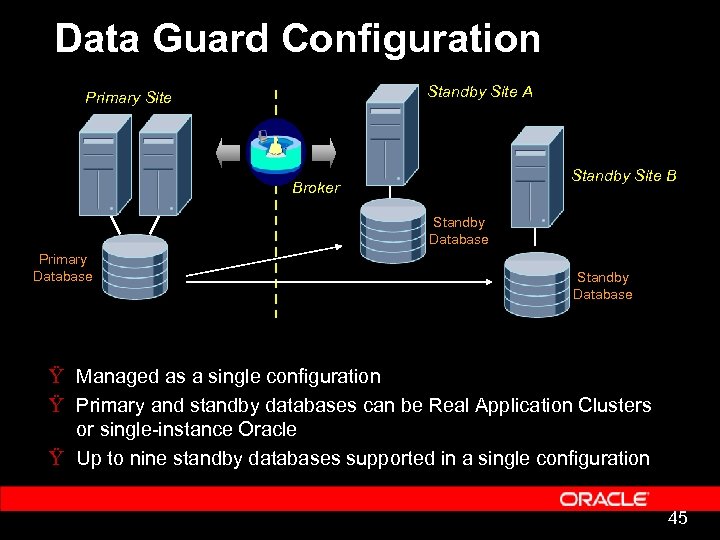
Data Guard Configuration Standby Site A Primary Site Standby Site B Broker Standby Database Primary Database Standby Database Ÿ Managed as a single configuration Ÿ Primary and standby databases can be Real Application Clusters or single-instance Oracle Ÿ Up to nine standby databases supported in a single configuration 45
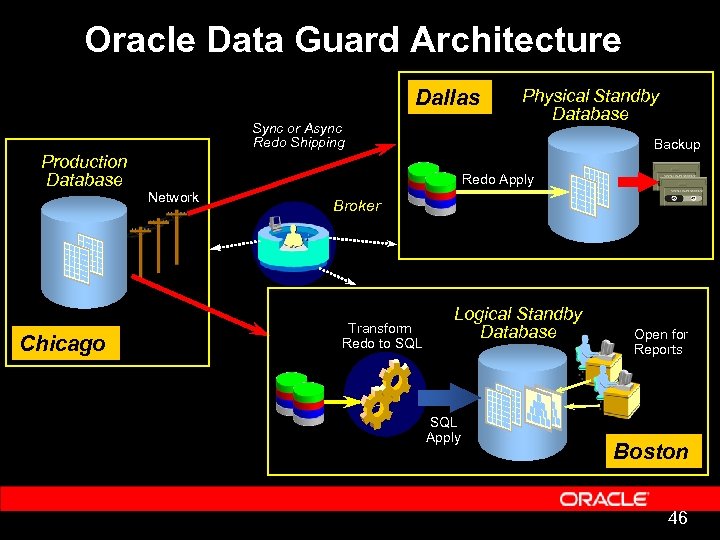
Oracle Data Guard Architecture Dallas Sync or Async Redo Shipping Production Database Chicago Physical Standby Database Backup Redo Apply Network Broker Transform Redo to SQL Logical Standby Database SQL Apply Open for Reports Boston 46
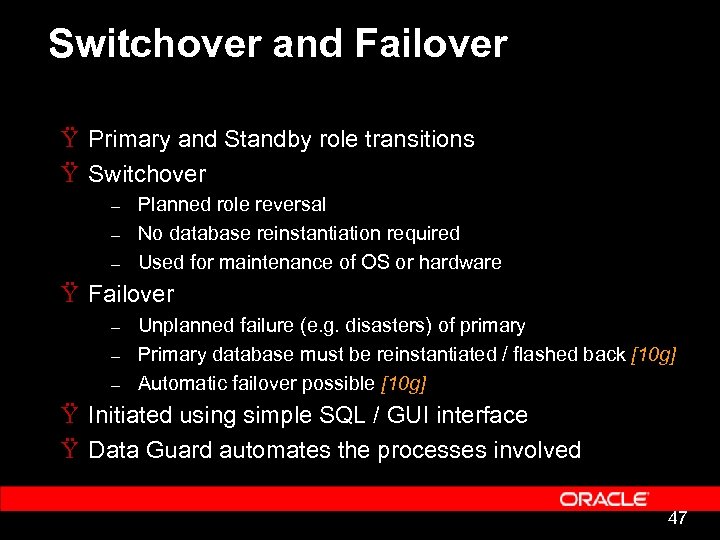
Switchover and Failover Ÿ Primary and Standby role transitions Ÿ Switchover – – – Planned role reversal No database reinstantiation required Used for maintenance of OS or hardware Ÿ Failover – – – Unplanned failure (e. g. disasters) of primary Primary database must be reinstantiated / flashed back [10 g] Automatic failover possible [10 g] Ÿ Initiated using simple SQL / GUI interface Ÿ Data Guard automates the processes involved 47
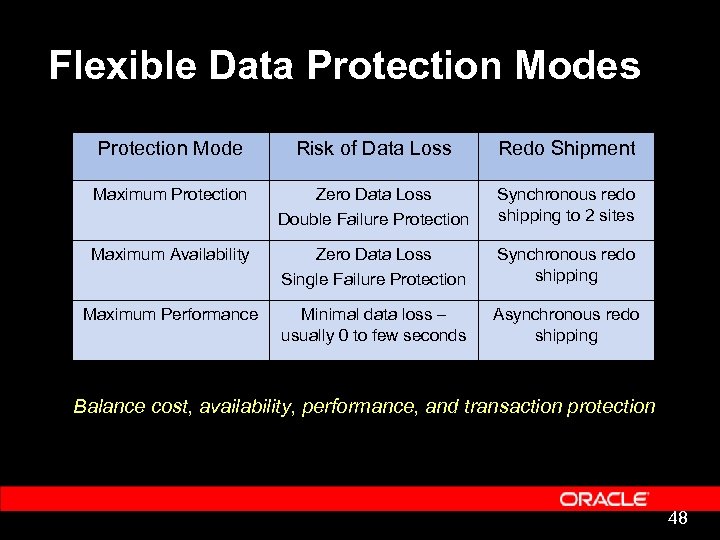
Flexible Data Protection Modes Protection Mode Risk of Data Loss Redo Shipment Maximum Protection Zero Data Loss Double Failure Protection Synchronous redo shipping to 2 sites Maximum Availability Zero Data Loss Single Failure Protection Synchronous redo shipping Maximum Performance Minimal data loss – usually 0 to few seconds Asynchronous redo shipping Balance cost, availability, performance, and transaction protection 48
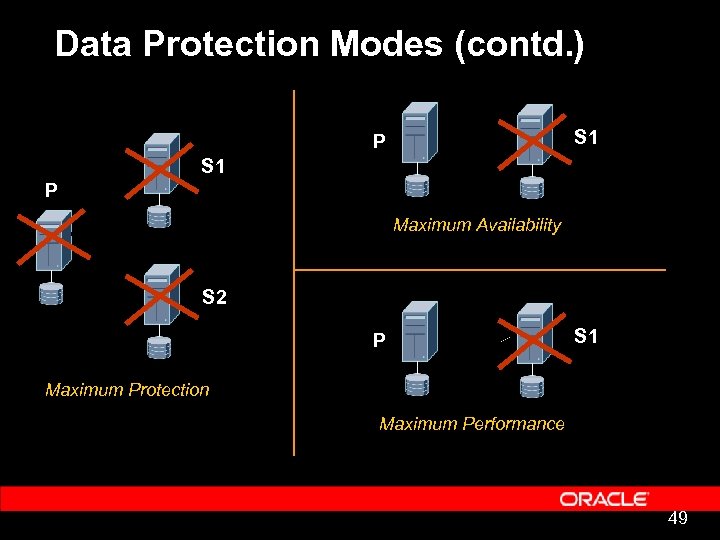
Data Protection Modes (contd. ) S 1 P Maximum Availability S 2 P S 1 Maximum Protection Maximum Performance 49
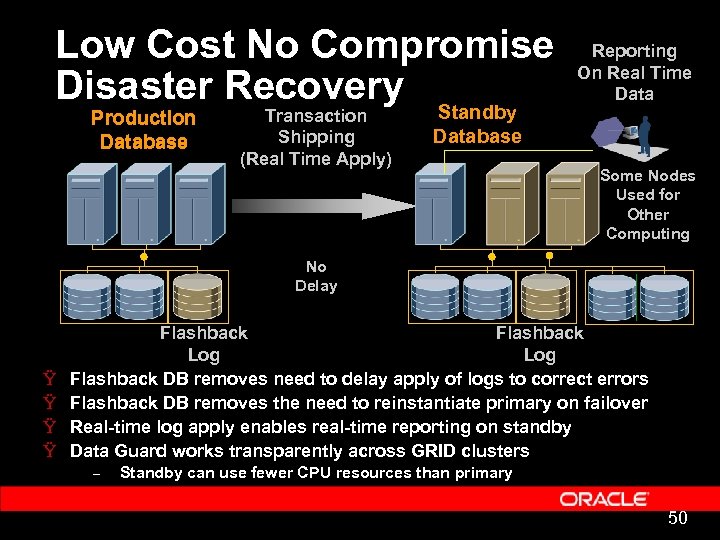
Low Cost No Compromise Disaster Recovery Standby Production Database Transaction Shipping (Real Time Apply) Reporting On Real Time Database Some Nodes Used for Other Computing No Delay Ÿ Ÿ Flashback Log Flashback DB removes need to delay apply of logs to correct errors Flashback DB removes the need to reinstantiate primary on failover Real-time log apply enables real-time reporting on standby Data Guard works transparently across GRID clusters – Standby can use fewer CPU resources than primary 50
Fast-Start Failover Ÿ If primary database lost in a disaster, Data Guard automatically fails over to a previously-chosen, synchronized standby, without requiring any manual steps to invoke the failover Ÿ Used in a Broker configuration (DGMGRL or Enterprise Manager), with a new Broker capability – the Observer, which monitors the environment, and triggers a failover if necessary Ÿ Used in Maximum Availability protection mode, and with Flashback Database – no data loss incurred Ÿ After failover completes, the Broker automatically reinstates the old primary database as a new standby database Ÿ Specialized events generated to facilitate post-failover tasks such as automatic application failover 51
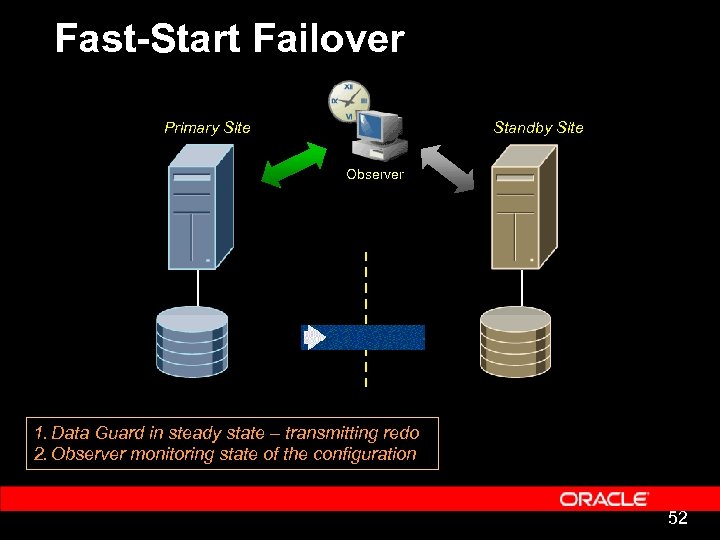
Fast-Start Failover Primary Site Standby Site Observer 1. Data Guard in steady state – transmitting redo 2. Observer monitoring state of the configuration 52
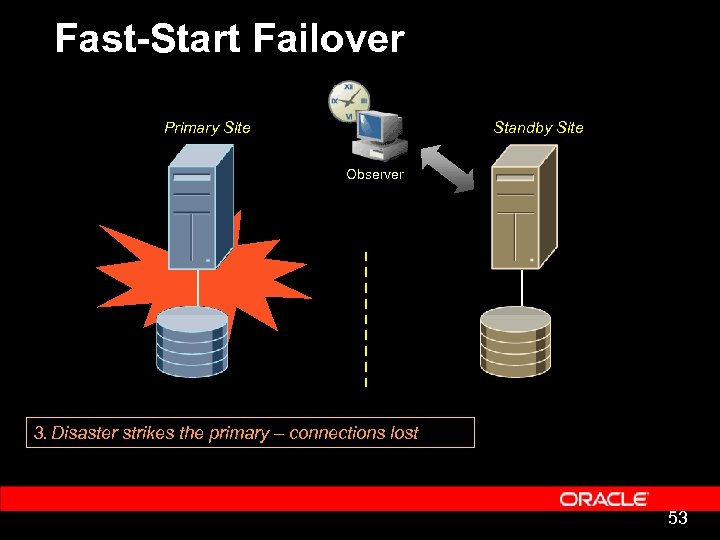
Fast-Start Failover Primary Site Standby Site Observer 3. Disaster strikes the primary – connections lost 53
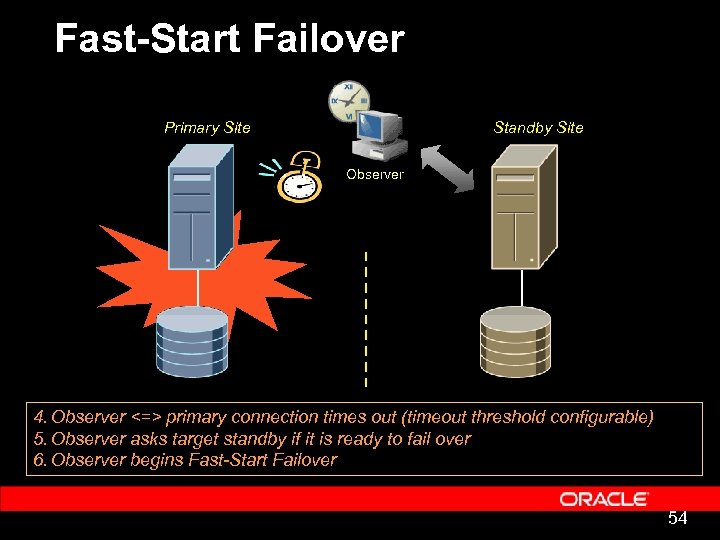
Fast-Start Failover Primary Site Standby Site Observer 4. Observer <=> primary connection times out (timeout threshold configurable) 5. Observer asks target standby if it is ready to fail over 6. Observer begins Fast-Start Failover 54
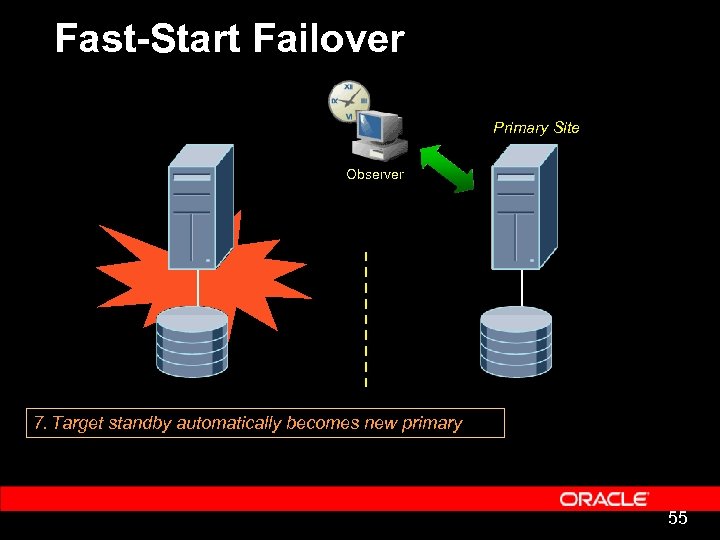
Fast-Start Failover Primary Site Observer 7. Target standby automatically becomes new primary 55
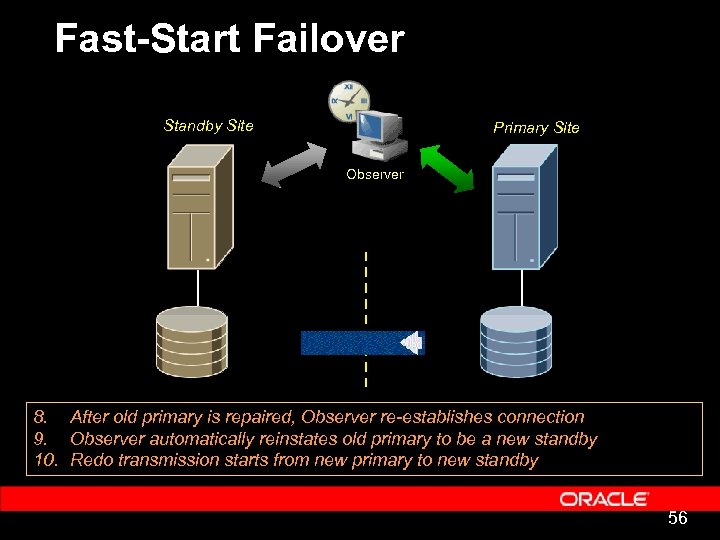
Fast-Start Failover Standby Site Primary Site Observer 8. After old primary is repaired, Observer re-establishes connection 9. Observer automatically reinstates old primary to be a new standby 10. Redo transmission starts from new primary to new standby 56
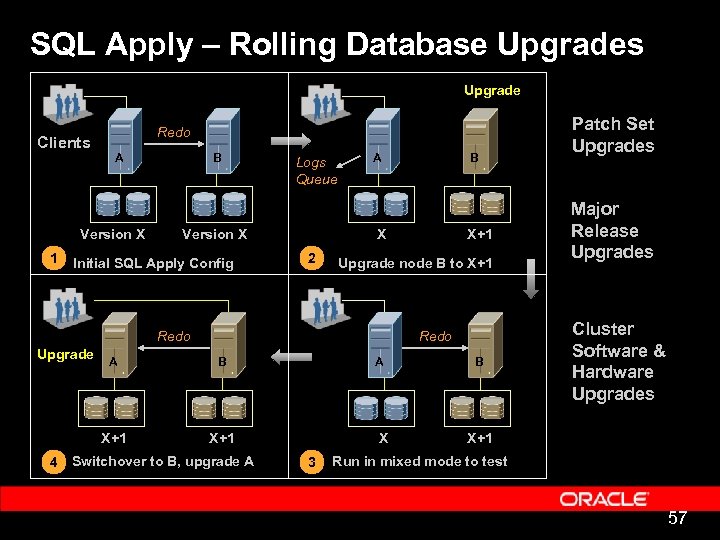
SQL Apply – Rolling Database Upgrades Upgrade Clients Redo A Version X 1 B Logs Queue Version X Initial SQL Apply Config A X 2 X+1 Upgrade node B to X+1 Redo Upgrade B Redo A B X+1 4 Switchover to B, upgrade A A X 3 B Patch Set Upgrades Major Release Upgrades Cluster Software & Hardware Upgrades X+1 Run in mixed mode to test 57
Agenda Ÿ Oracle 10 g Overview Ÿ HA Solution – Real Application Clusters (RAC) Ÿ Disaster Recovery Solution – Data Guard Ÿ Oracle MAA Architecture (Maximum Availability Architecture) Ÿ Customer's Practice ŸQ&A 58
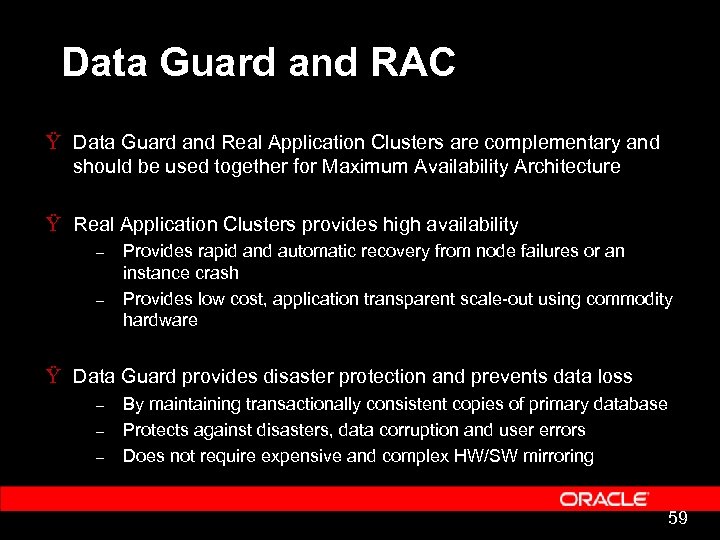
Data Guard and RAC Ÿ Data Guard and Real Application Clusters are complementary and should be used together for Maximum Availability Architecture Ÿ Real Application Clusters provides high availability – – Provides rapid and automatic recovery from node failures or an instance crash Provides low cost, application transparent scale-out using commodity hardware Ÿ Data Guard provides disaster protection and prevents data loss – – – By maintaining transactionally consistent copies of primary database Protects against disasters, data corruption and user errors Does not require expensive and complex HW/SW mirroring 59
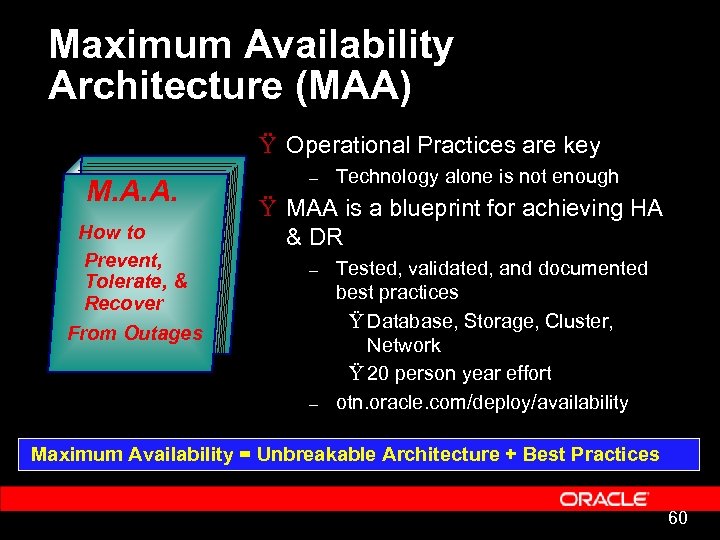
Maximum Availability Architecture (MAA) Ÿ Operational Practices are key M. A. A. How to Prevent, Tolerate, & Recover – Technology alone is not enough Ÿ MAA is a blueprint for achieving HA & DR – From Outages – Tested, validated, and documented best practices Ÿ Database, Storage, Cluster, Network Ÿ 20 person year effort otn. oracle. com/deploy/availability Maximum Availability = Unbreakable Architecture + Best Practices 60
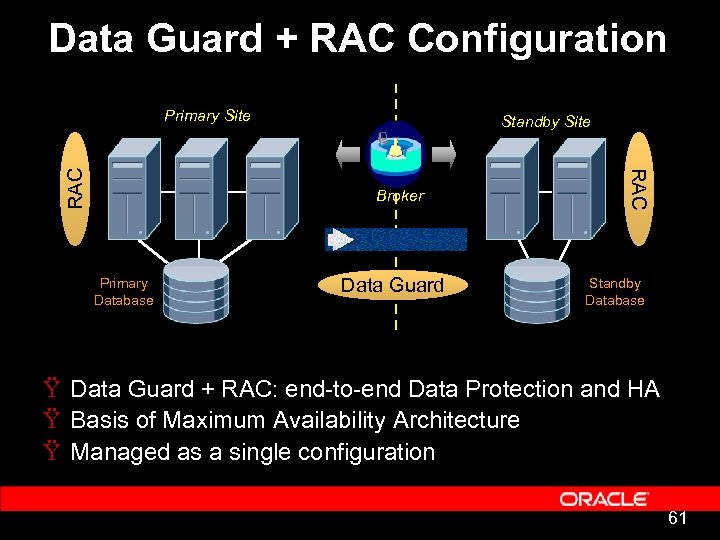
Data Guard + RAC Configuration Standby Site Broker Primary Database Data Guard RAC Primary Site Standby Database Ÿ Data Guard + RAC: end-to-end Data Protection and HA Ÿ Basis of Maximum Availability Architecture Ÿ Managed as a single configuration 61
Agenda Ÿ Oracle 10 g Overview Ÿ HA Solution – Real Application Clusters (RAC) Ÿ Disaster Recovery Solution – Data Guard Ÿ Oracle MAA Architecture (Maximum Availability Architecture) Ÿ Customer's Practice ŸQ&A 62
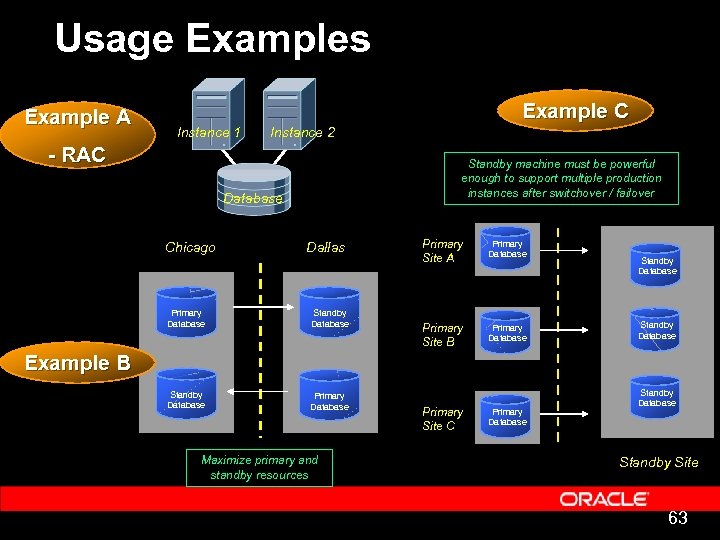
Usage Examples Example A Example C Instance 1 Instance 2 - RAC Standby machine must be powerful enough to support multiple production instances after switchover / failover Database Chicago Dallas Primary Database Standby Database Primary Site A Primary Database Primary Site B Primary Database Standby Database Example B Maximize primary and standby resources Primary Site C Primary Database Standby Site 63
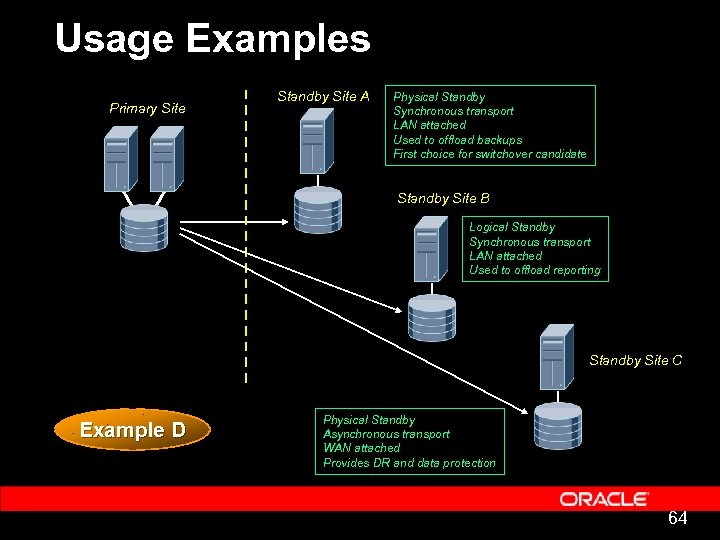
Usage Examples Primary Site Standby Site A Physical Standby Synchronous transport LAN attached Used to offload backups First choice for switchover candidate Standby Site B Logical Standby Synchronous transport LAN attached Used to offload reporting Standby Site C Example D Physical Standby Asynchronous transport WAN attached Provides DR and data protection 64
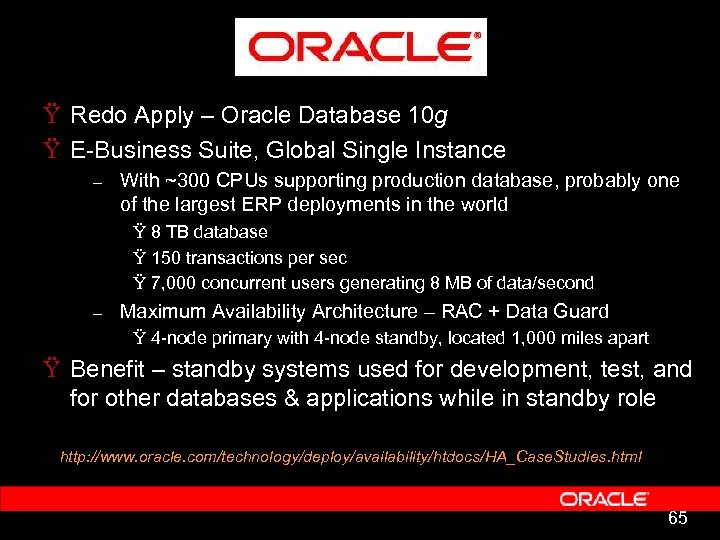
Ÿ Redo Apply – Oracle Database 10 g Ÿ E-Business Suite, Global Single Instance – With ~300 CPUs supporting production database, probably one of the largest ERP deployments in the world Ÿ 8 TB database Ÿ 150 transactions per sec Ÿ 7, 000 concurrent users generating 8 MB of data/second – Maximum Availability Architecture – RAC + Data Guard Ÿ 4 -node primary with 4 -node standby, located 1, 000 miles apart Ÿ Benefit – standby systems used for development, test, and for other databases & applications while in standby role http: //www. oracle. com/technology/deploy/availability/htdocs/HA_Case. Studies. html 65
Ÿ Redo Apply – Oracle Database 10 g Ÿ Data Guard used for Online Mortgage Banking, Customer Service and other applications Ÿ Maximum Availability Architecture (MAA) – RAC (5 nodes), Data Guard, RMAN, ASM on Linux Ÿ Zero Data Loss – synchronous redo transport Ÿ Production and standby sites located 20 miles apart Ÿ Benefits – reduced cost & enhanced data protection by replacing remote-mirroring with Data Guard http: //www. oracle. com/technology/deploy/availability/htdocs/HA_Case. Studies. html 66
Additional Case Studies Ÿ Thomson Financial – MAA (RAC & Data Guard) – www. oracle. com/pls/cis/Profiles. print_html? p_profile_id=101166 Ÿ Pay. Tec – MAA (RAC & Data Guard) – www. oracle. com/technology/oramag/oracle/04 -mar/o 24 available_feature. html Ÿ Osram Sylvania and BASF – SAP & MAA – www. oracle. com/newsletters/sap/volumes/volume 14 -en. pdf Ÿ ADT Security Services – SQL Apply over WAN – www. oracle. com/technology/deploy/availability/htdocs/HA_Case. Studies. html Ÿ Kemira Grow. How – Data Guard replaces outsourced DR service – www. oracle. com/technology/deploy/availability/htdocs/HA_Case. Studies. html Ÿ Amadeus – Data Guard for rolling upgrades – www. oracle. com/technology/deploy/availability/htdocs/HA_Case. Studies. html Ÿ Fannie Mae – Data Guard – High Transaction Rates – www. oracle. com/technology/deploy/availability/htdocs/HA_Case. Studies. html 67
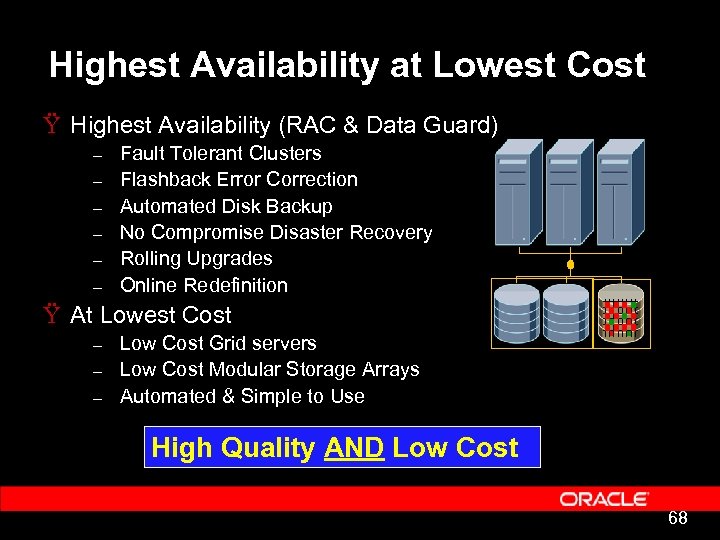
Highest Availability at Lowest Cost Ÿ Highest Availability (RAC & Data Guard) – – – Fault Tolerant Clusters Flashback Error Correction Automated Disk Backup No Compromise Disaster Recovery Rolling Upgrades Online Redefinition Ÿ At Lowest Cost – – – Low Cost Grid servers Low Cost Modular Storage Arrays Automated & Simple to Use High Quality AND Low Cost 68
Q & A Q U E S T I O N S A N S W E R S
For More Information? ŸOracle業務經理 Lisa Chen 陳志勳 0800 -672 -251 分機 62185 chih-hsun. chen@oracle. com ŸOracle 2 Day DBA Course http: //www. oracle. com/technology/obe/2 day_dba/index. html Oracle By Example (OBE) - Oracle Database 10 g Release 2 http: //www. oracle. com/technology/obe/admin/db 10 gr 2. html ŸUseful Website http: //otn. oracle. com 70
Скачать презентацию Oracle Infrastructure Overview CC Yu 余苓華 Senior Sales
916b31343fe0661b6089f72cc3494d61.ppt