


 Скачать презентацию -OR- Make a Canadian Historical Marker l Have
History of Canada.ppt
- Количество слайдов: 43
 -OR- Make a Canadian Historical Marker l Have you ever seen a sign that marks a significant event in history? We have them all over our country, and now you get to create a marker that could be used in Canada! l Review your “History of Canada” Power. Point notes. Which event do you think is the most important event in Canada’s history? You are going to be creating a marker that will tell tourists about the significance of that event.
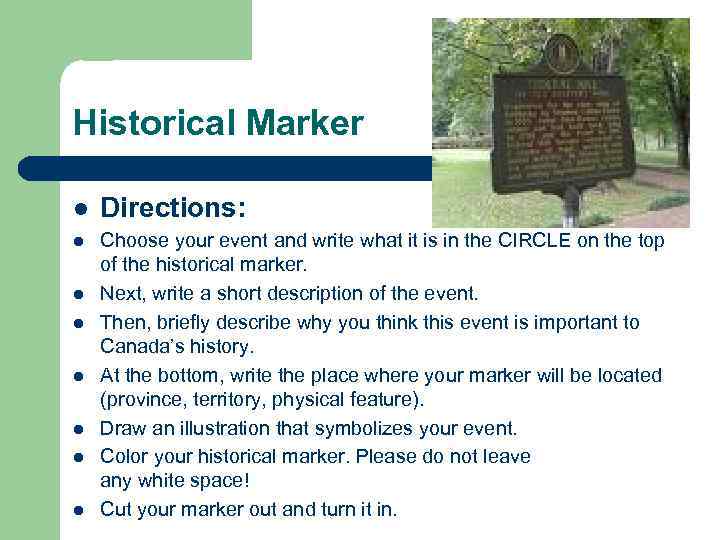 Historical Marker l Directions: l Choose your event and write what it is in the CIRCLE on the top of the historical marker. Next, write a short description of the event. Then, briefly describe why you think this event is important to Canada’s history. At the bottom, write the place where your marker will be located (province, territory, physical feature). Draw an illustration that symbolizes your event. Color your historical marker. Please do not leave any white space! Cut your marker out and turn it in. l l l
 History of Canada European Colonization
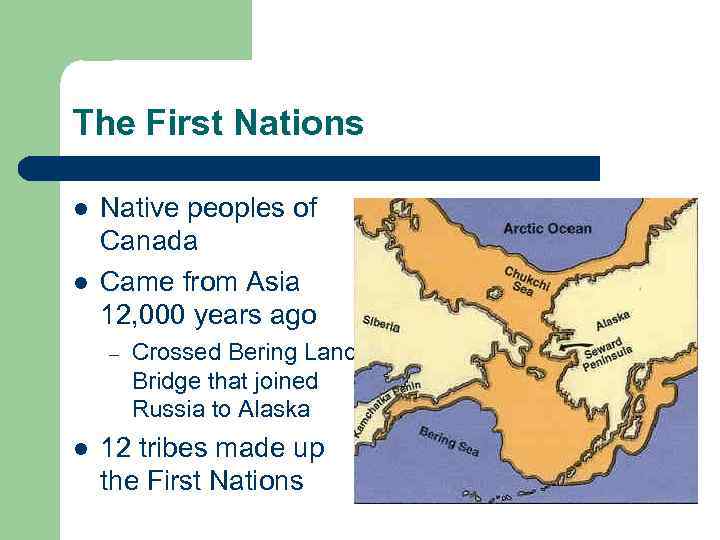 The First Nations l l Native peoples of Canada Came from Asia 12, 000 years ago – l Crossed Bering Land Bridge that joined Russia to Alaska 12 tribes made up the First Nations
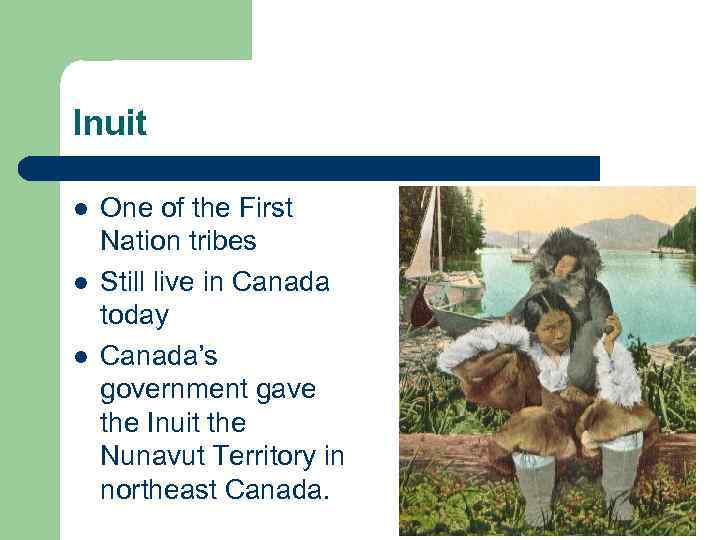 Inuit l l l One of the First Nation tribes Still live in Canada today Canada’s government gave the Inuit the Nunavut Territory in northeast Canada.
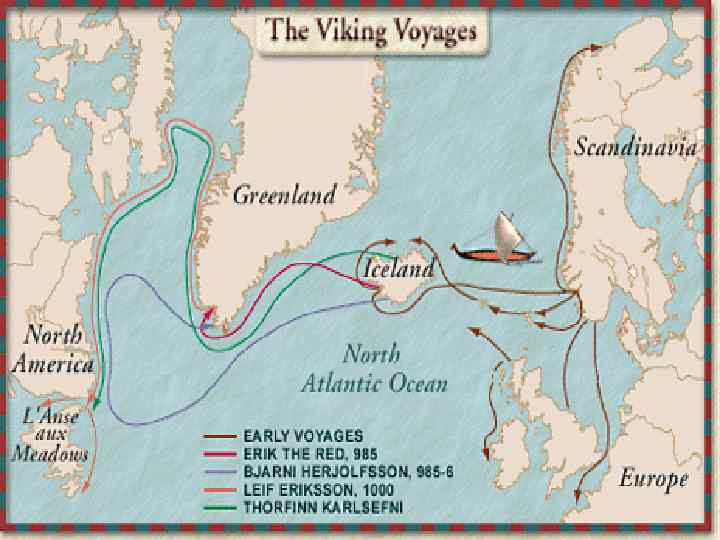
 The Europeans in Canada… l l First explorers to settle Canada were Norse invaders from the Scandinavian Peninsula In 1000 CE, they built a town on the northeast coast of Canada & established a trading relationship with the Inuit – l The Norse deserted the settlement for unknown reasons Europeans did not return to Canada until almost 500 years later…
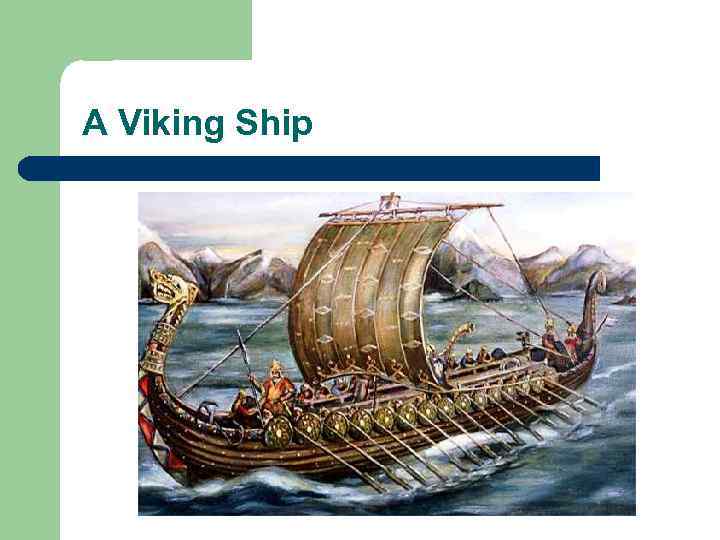 A Viking Ship
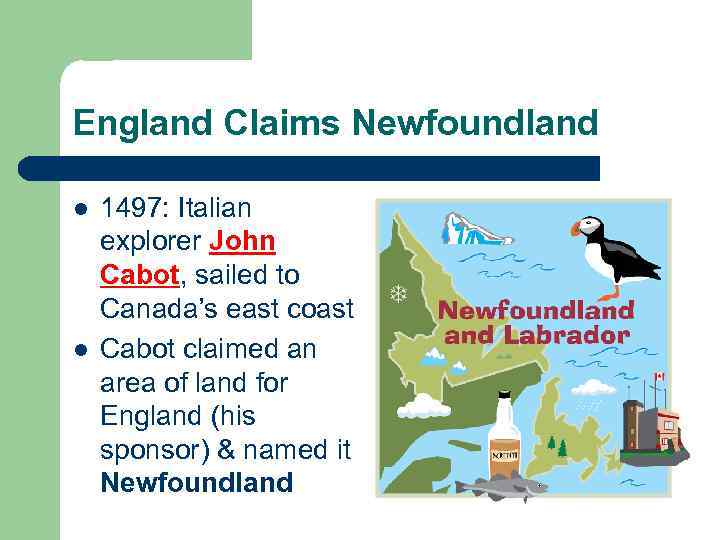 England Claims Newfoundland l l 1497: Italian explorer John Cabot, sailed to Canada’s east coast Cabot claimed an area of land for England (his sponsor) & named it Newfoundland
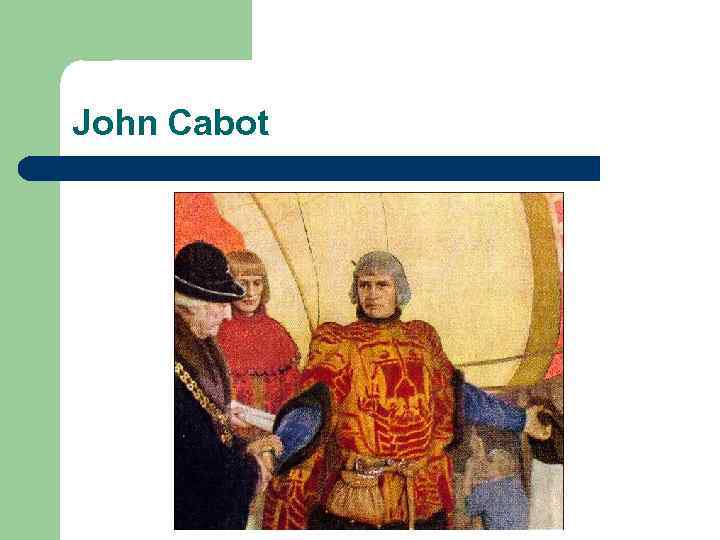 John Cabot
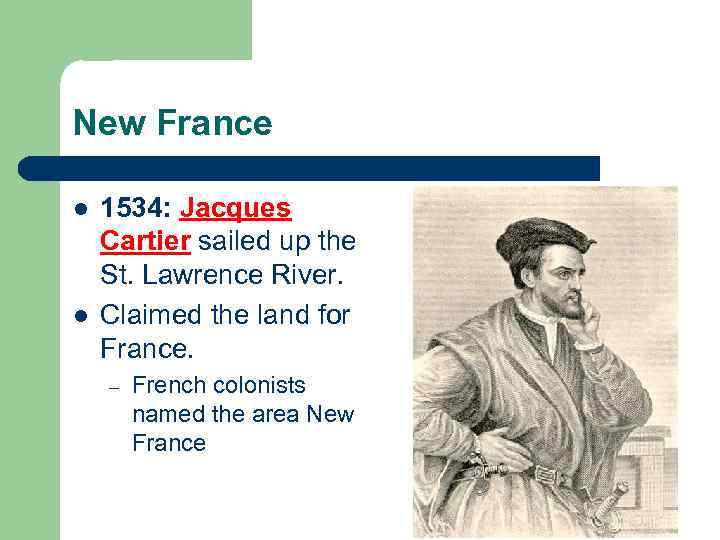 New France l l 1534: Jacques Cartier sailed up the St. Lawrence River. Claimed the land for France. – French colonists named the area New France
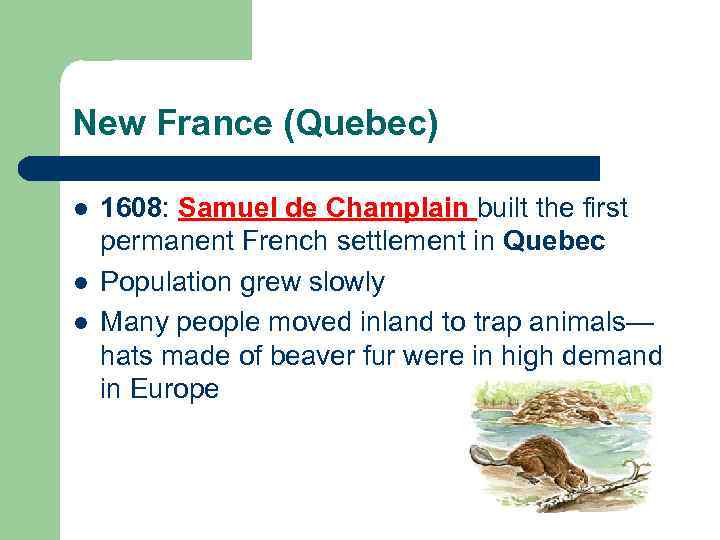 New France (Quebec) l l l 1608: Samuel de Champlain built the first permanent French settlement in Quebec Population grew slowly Many people moved inland to trap animals— hats made of beaver fur were in high demand in Europe
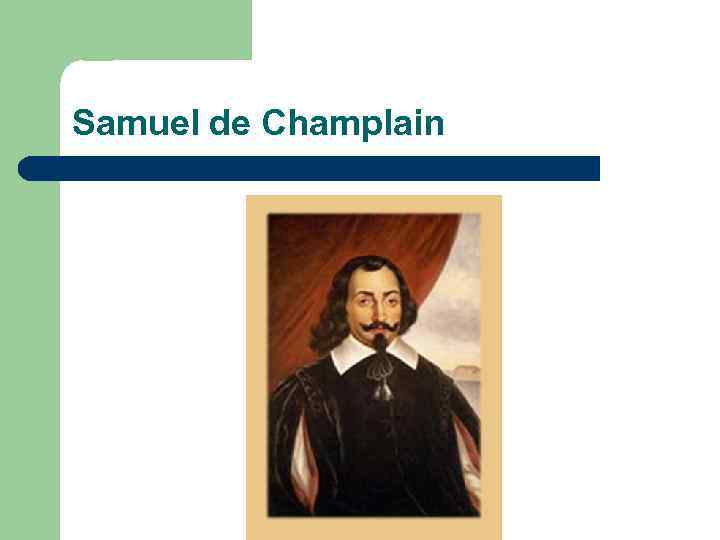 Samuel de Champlain
 New France (Quebec) l l European fur traders were joined by French farmers, merchants, and missionaries from the Catholic Church Brought with them French laws, traditions, & religion – France wouldn’t let anyone move to New France who was not Catholic
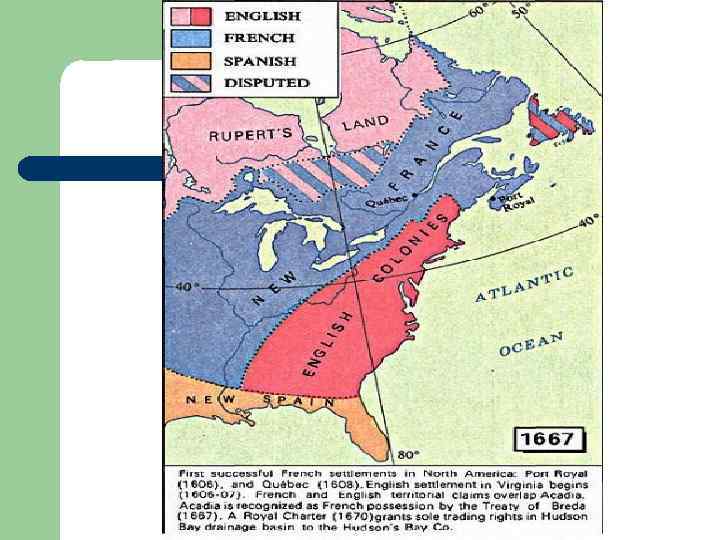
 The British in Canada… l British colonized region south of New France – Saw New France’s success in fur trapping & wanted to take control of the fur trade
 French and Indian War (1754) l l 1754: Led to the French and Indian War where Great Britain fought for control of Canadian territory & the fur trade and conquered Quebec. Great Britain and Iroquois Indians versus France and Huron Indians.
 Treaty of Paris (1763) l l Gave British control of all lands east of the Mississippi River, except for 2 islands off of Newfoundland British forced Nova Scotia’s French-speaking people to leave – Nova Scotia’s French went to another French colony, Louisiana—descendants of these people are the Cajuns
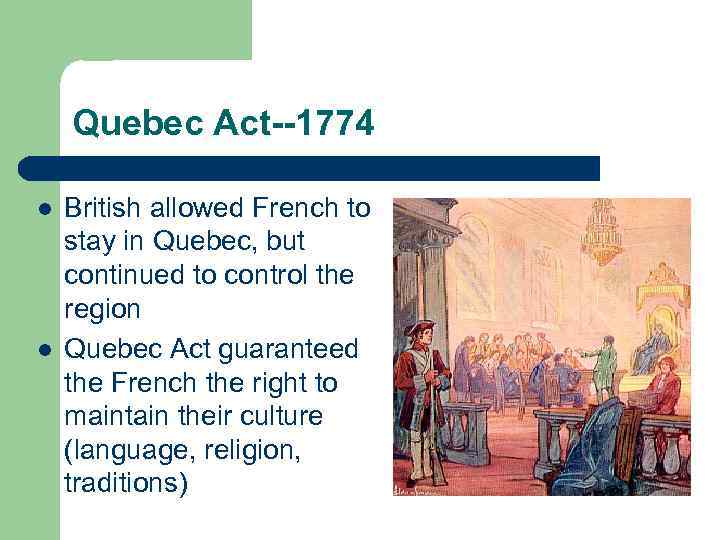 Quebec Act--1774 l l British allowed French to stay in Quebec, but continued to control the region Quebec Act guaranteed the French the right to maintain their culture (language, religion, traditions)
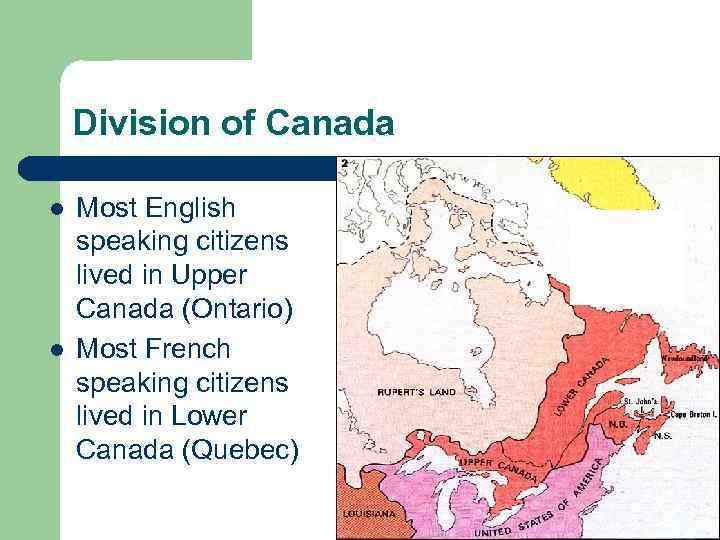 Division of Canada l l Most English speaking citizens lived in Upper Canada (Ontario) Most French speaking citizens lived in Lower Canada (Quebec) D D D
 War of 1812 French and British worked together against the US who tried to invade Canada n War resulted in a draw, but it defined the USCanadian border & increased a sense of Canadian nationalism n n Both French Canadians & English Canadians joined to protect their land—they were more united than ever before
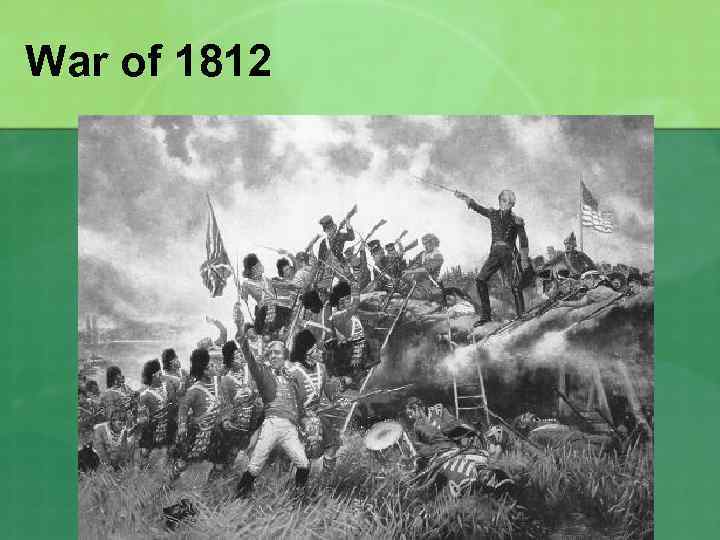 War of 1812
 After the War of 1812 French Canadians & British Canadians realized that they hated being under British rule n They thought that Great Britain was too far away to understand their economic & political needs n
 Province of Canada n Canadians began to rebel against British control n Britain sent a government reformer to examine the Canadian problem Result of the inquiry, Britain discovered an economic need to unify the 2 Canadian provinces n 1841—Upper & Lower Canada were united, establishing the Province of Canada n
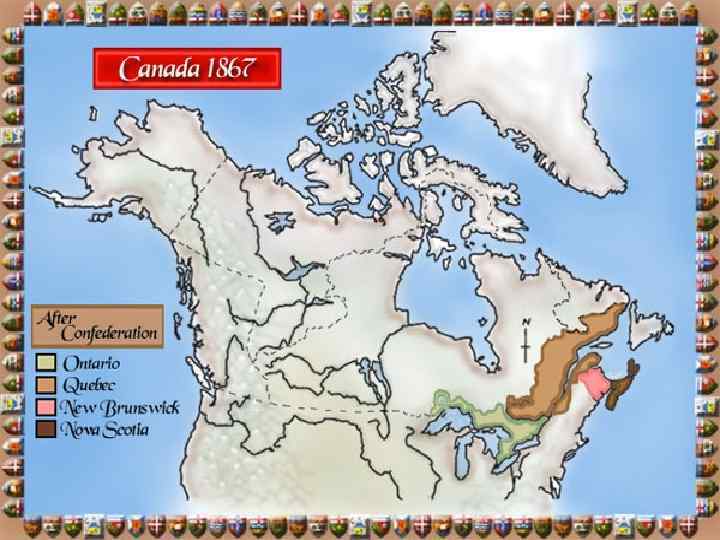
 British North America Act (1867) n 1867: British North America Act: created a federation union of Canada Joined four colonies (Quebec, Ontario, New Brunswick, & Nova Scotia) n 4 colonies became Provinces joined by a common written law (constitution). - Britain accepted the agreement because they were glad to be rid of the responsibility of protecting the colonies (expensive) n
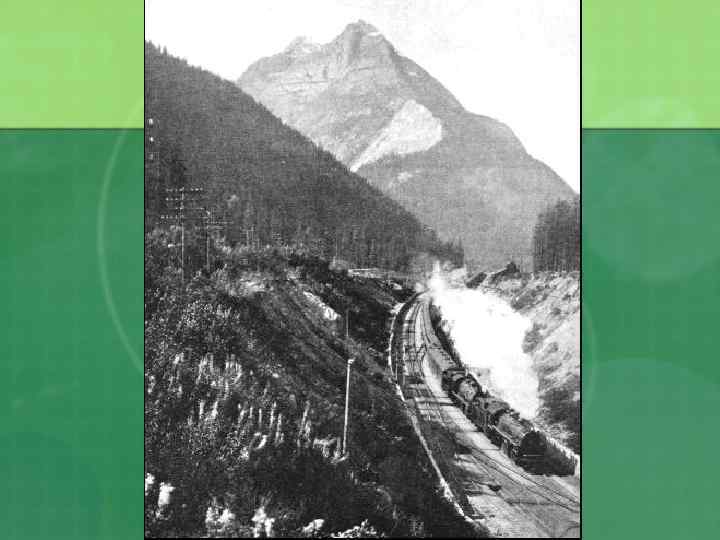
 Results of the British North America Act n Allowed each region to sell goods more easily to one another Improved trade helped the economy n Soon there was enough money to build a railroad across the country n n 1886: Transcontinental Railroad was built & people could now easily travel from the Atlantic Ocean to Pacific Ocean
 Expanding Canada When Canada became a confederation in 1867, there were only 4 provinces n Leaders desired to expand the new country from the Atlantic to the Pacific n Bought land from the Hudson’s Bay Company n Thought the purchase would be a simple process, but problems occurred with the native peoples n
 Expanding Canada n Eventually the First Nations (Inuit) agreed to relocate to reservations (now Nunavut) n n Transcontinental Railroad was built on this land Soon, 3 new provinces & 1 territory were created: Manitoba, British Columbia, Prince Edward Island, and the Northwest Territories
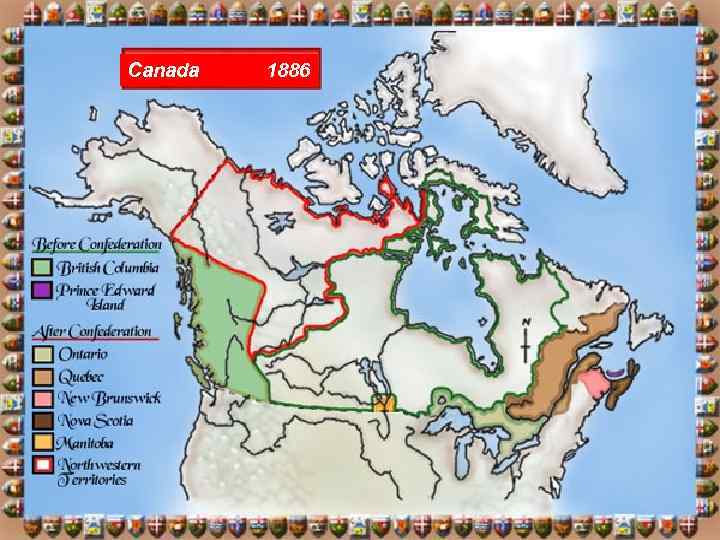 Canada 1886
 Results of the Railroad: Increased shipment of goods across the country n Increased travel from coast to coast n Created new provinces & territories n Birth of Canadian nationalism n n before the railroad, most people only thought of themselves as belonging to their province; after they felt as if they were part of one country
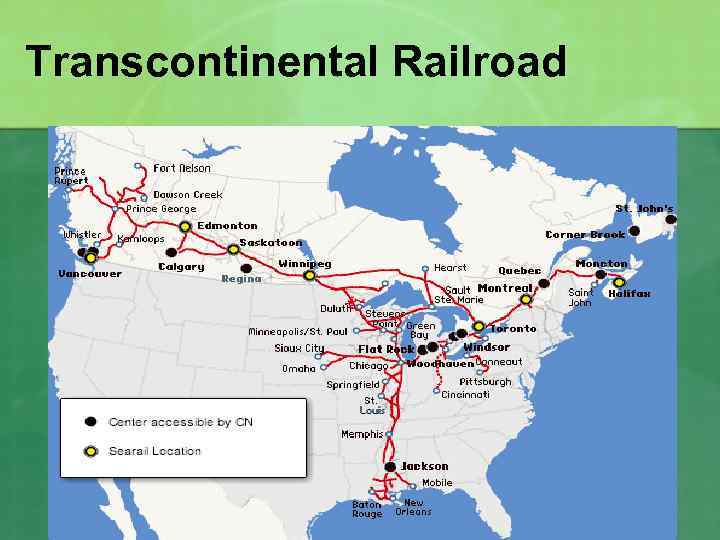 Transcontinental Railroad
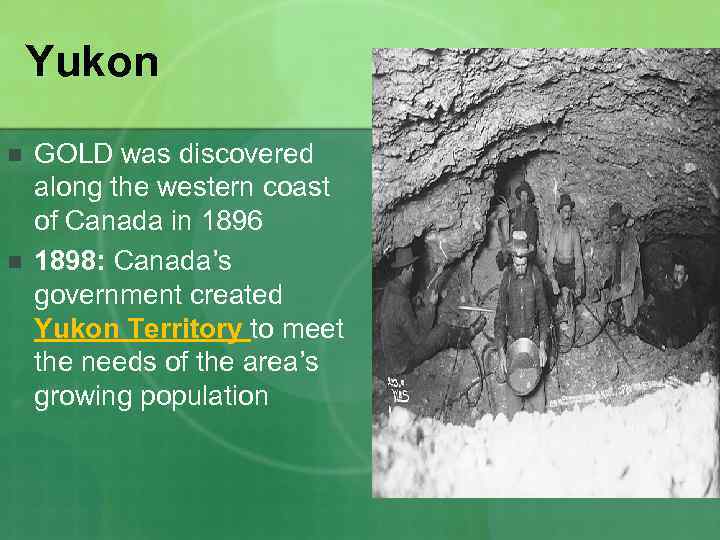 Yukon n n GOLD was discovered along the western coast of Canada in 1896 1898: Canada’s government created Yukon Territory to meet the needs of the area’s growing population
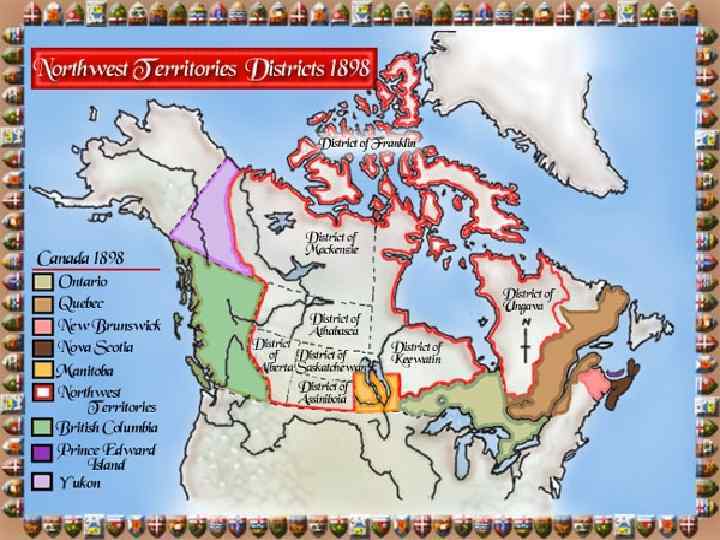
 1905: Saskatchewan & Alberta n n This land was originally part of Northwest Territories, but by early 1900 s, many people wanted this to change Reason 1: economy had shifted from fur trade to farming, mining, logging & railway Reason 2: population grew quickly because of the new industries Reason 3: area could not afford everything people needed (schools) n By forming new provinces, they could collect taxes to pay for these things.
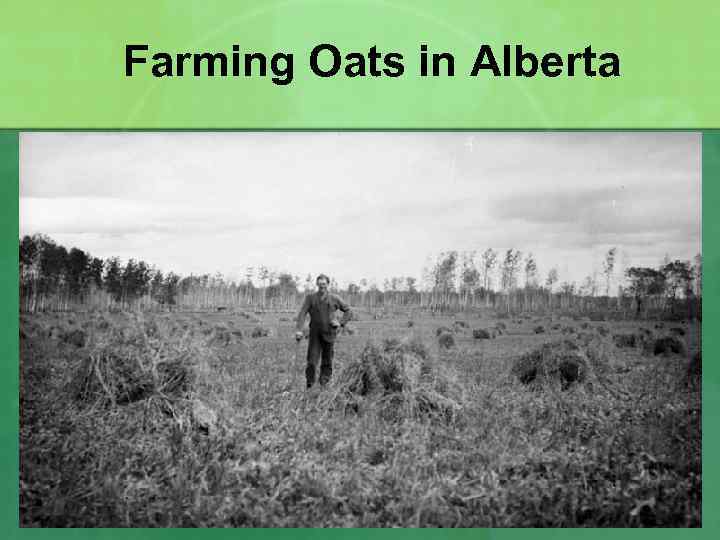 Farming Oats in Alberta
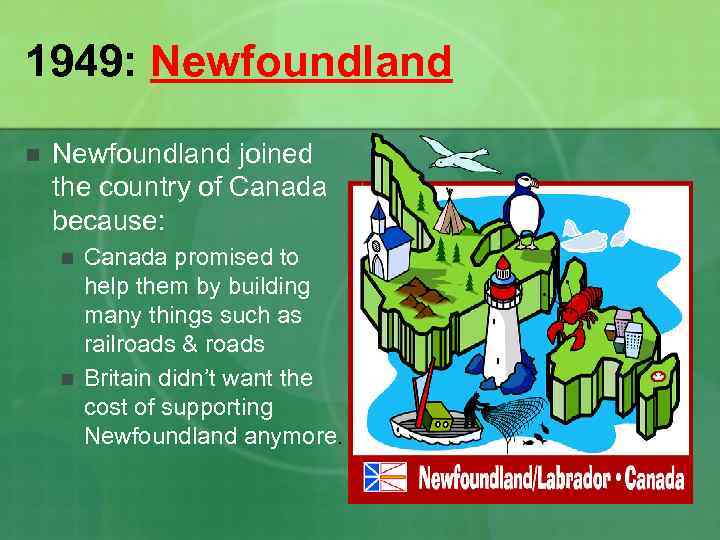 1949: Newfoundland n Newfoundland joined the country of Canada because: n n Canada promised to help them by building many things such as railroads & roads Britain didn’t want the cost of supporting Newfoundland anymore.
 1999: Nunavut Territory n In the 1970 s, Inuit wanted to create a territory called Nunavut because: Wanted their own territory so that they could start making decisions for themselves. They needed their own government. n Wanted control of their land—for many years Canada had used the resources of the Arctic without asking the Inuit n Inuit still live the same way that their ancestors did—they use traditional methods for survival n
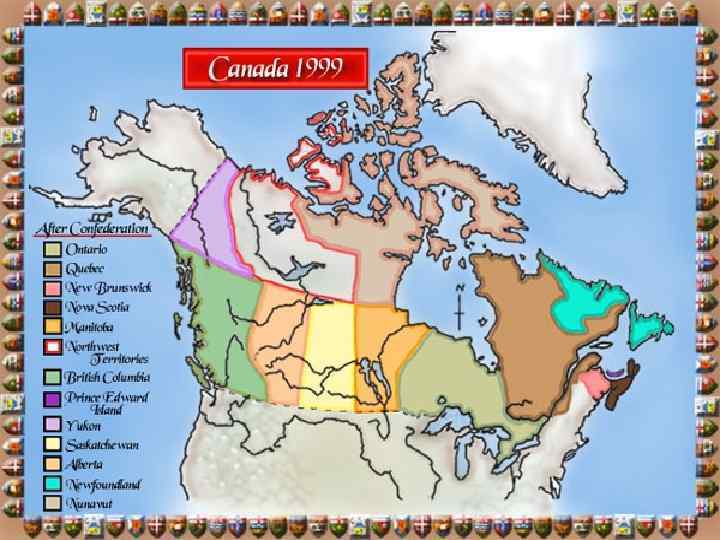
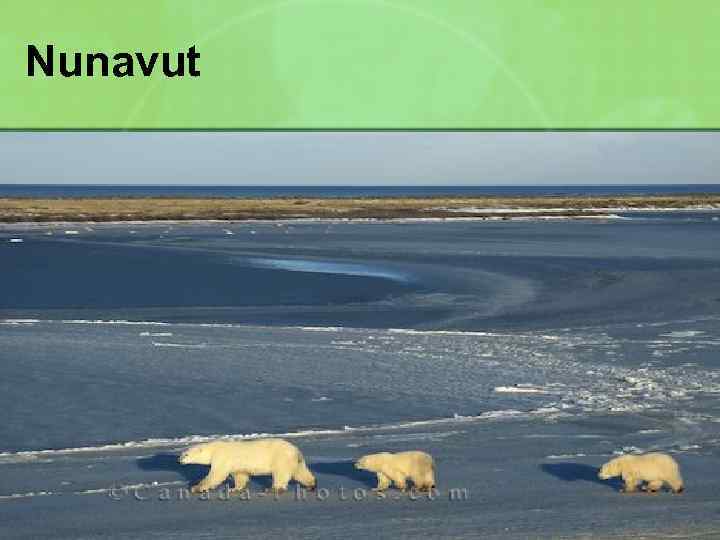 Nunavut
 Canadian Historical Marker n Have you ever seen a sign that marks a significant event in history? We have them all over our country, and now you get to create a marker that could be used in Canada! n Review your “History of Canada” Power. Point notes. Which event do you think is the most important event in Canada’s history? You are going to be creating a marker that will tell tourists about the significance of that event.
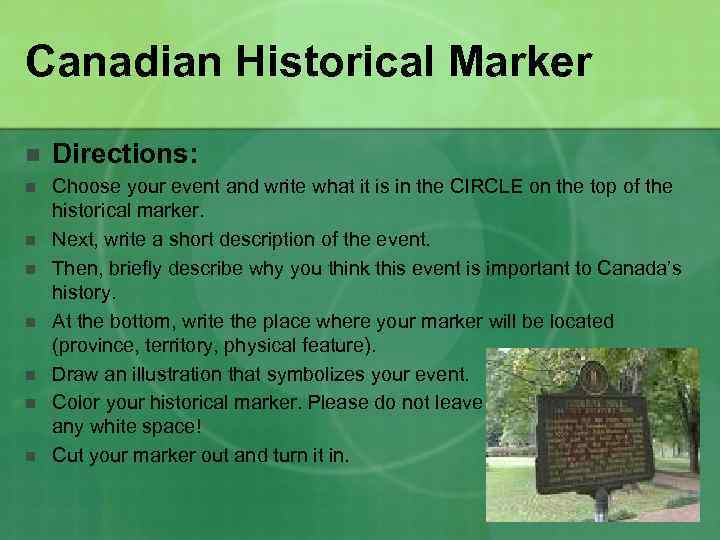 Canadian Historical Marker n Directions: n Choose your event and write what it is in the CIRCLE on the top of the historical marker. Next, write a short description of the event. Then, briefly describe why you think this event is important to Canada’s history. At the bottom, write the place where your marker will be located (province, territory, physical feature). Draw an illustration that symbolizes your event. Color your historical marker. Please do not leave any white space! Cut your marker out and turn it in. n n n