


 Скачать презентацию Optoelectronics the opportunity — optoelectronics has come of
0282a87ee0c5898d0f2f7485d87559f2.ppt
- Количество слайдов: 44
 Optoelectronics: the opportunity - optoelectronics has come of age! Professor Wilson Sibbett, University of St Andrews This perspective is reproduced from a presentation given at an inauguration mini-symposium on the Optoelectronics College held in November 2007 at the Ballathie House Hotel.
 Introductory remarks • Electronic devices are all around us but what about devices that exploit ‘optoelectronics’? • Everyday optoelectronic technologies range from flat-screen displays (TVs, computers, mobile phones …) through the checkout bar-scanners to internet communications links • A growing number of healthcare-related implementations of optoelectronics are beginning to emerge in biology and medicine • In Scotland, we have notable research strengths in optoelectronics and efforts are being made to translate these into more widespread and practical applications
 Basis of this overview • Let us start with an historical perspective on optoelectronics • Then, consider semiconductor devices as the bridge between electronics and optoelectronics • Starting with LEDs we proceed to lasers • We can consider the translation of science to technology • We can look at a few representative applications of optoelectronics • All of this has implications for the teaching of optoelectronics
 2007 marks a century of optoelectronics • HENRY J. ROUND was a key figure in the histroy of optoelectronics. He was: • ‘One of Marconi’s Assistants in England’ and later the Chief of Marconi Research – he published a 24 -line note in ‘Electrical World’ reporting a “bright glow” from a carborundum diode. • [Round, H. J. , Electrical World, 49, 308 (1907)] • Was Henry Round the discoverer of the LED? Maybe not: but most definitely he can be credited with the discovery of electroluminescence! • In any case, 1907 can be pinpointed as the year of birth for optical electronics or optoelectronics!
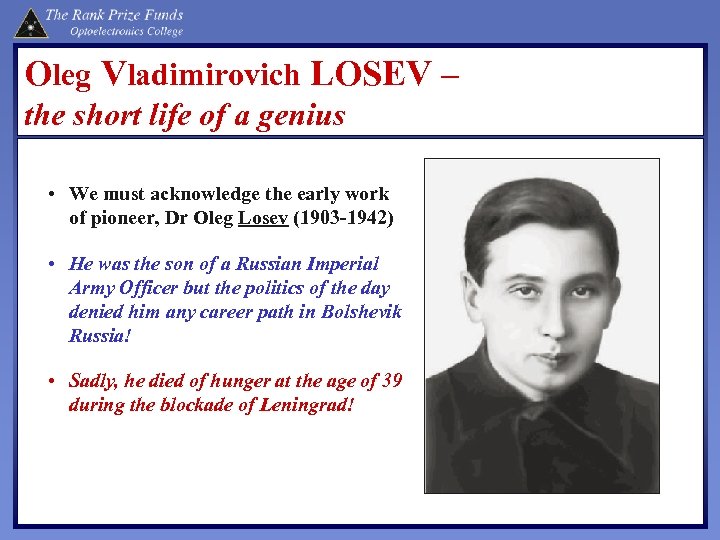 Oleg Vladimirovich LOSEV – the short life of a genius • We must acknowledge the early work of pioneer, Dr Oleg Losev (1903 -1942) • He was the son of a Russian Imperial Army Officer but the politics of the day denied him any career path in Bolshevik Russia! • Sadly, he died of hunger at the age of 39 during the blockade of Leningrad!
 Oleg Losev – the discoverer of the LED? • He was remarkable as self-educated scientist. His Ph. D degree was awarded in 1938 by the Ioffe Institute (Leningrad) without a formal thesis because he had published 43 journal papers and 16 patents. • Working in a besieged Leningrad (1941), he discovered that a 3 -terminal semiconductor device could be constructed to have characteristics similar to those of a triode valve but circumstances prevented publication! Losev had probably invented the TRANSISTOR! • Mid-1920 s: Oleg Losev observed light emission from electrically-biased zinc oxide and silicon carbide crystal rectifier diodes – Light Emitting Diodes or LEDs! • Called the “inverse photo-electric effect”, Losev worked out theory of LED operation and studied the emission spectra and even observed spectral narrowing at high drive currents – evidence perhaps of the stimulated emission that applies to lasers? ! • Notably, the first significant blue LED re-invented in the 1990 s used silicon carbide!!
 Semiconductor LEDs and lasers • LEDs are now commonplace in games consoles, remote controls, vehicle lights, traffic lights and, increasingly, in domestic lighting • By the end of this decade, the market value is predicted to reach $15 B! • Semiconductor lasers: the LED process is at the core of this effect and laser action was first reported in 1962 by four US research groups (2 at GE, IBM, MIT) • The are many everyday applications of semiconductor lasers in barcode readers, CD & DVD players, optical-carrier sources for communications and internet data • NB: The optical frequency for the optimum telecommunications wavelength (~1500 nm) is extremely high - equivalent to ~200 THz (i. e. 200, 000, 000 Hz)!
 Major areas of commercial growth in the optoelectronics marketplace • Flat-panel displays: recorded sales are up 30% year on year: currently, 8% growth in Europe & USA and 9% in Japan • Solid-state vehicle lighting: much more than just brake lights! • Solid-state domestic lighting: replacement of incandescent lighting with LED-based sources would reduce CO 2 emissions by many millions of tonnes worldwide! • Power generation: solar cell technologies are progressing steadily – for example, in Germany a new power station based on solar cells is producing 5 MW to power up 1800 households
 Recent advances in LEDs for domestic lighting By way of background: • Incandescent lights are not efficient and have a so-called luminous efficacy of 13 -14 lumens/Watt (L/W) • Halogen lighting is a little more efficient at 17 L/W • Fluorescent lights are significantly better with typical luminous efficacies of 60 -70 L/W More recently: • White LEDs have achieved 100 L/W and, in the laboratory, figures up to 300 L/W have been reported for tailored ‘warm-white’ LED lighting!
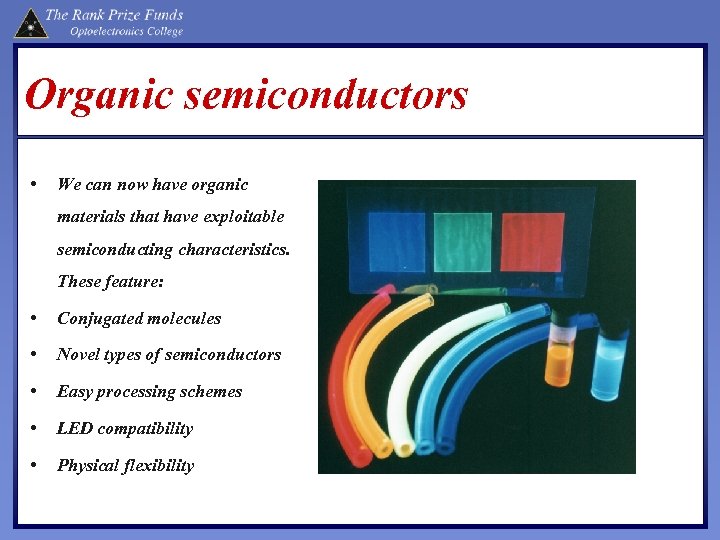 Organic semiconductors • We can now have organic materials that have exploitable semiconducting characteristics. These feature: • Conjugated molecules • Novel types of semiconductors • Easy processing schemes • LED compatibility • Physical flexibility
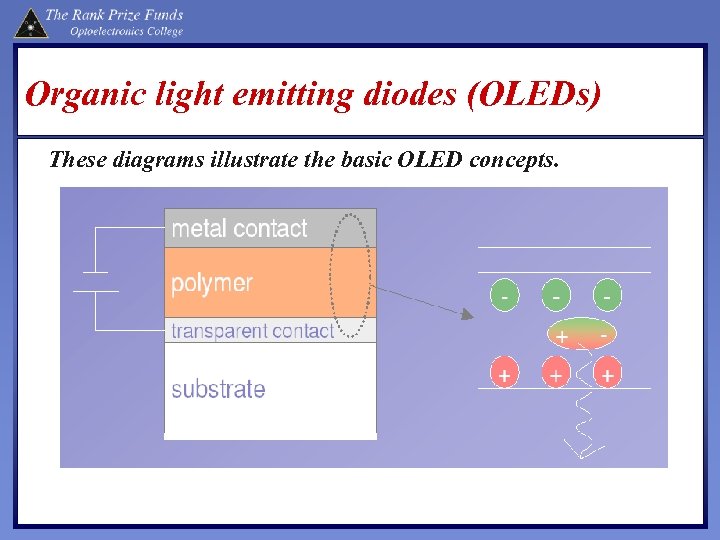 Organic light emitting diodes (OLEDs) These diagrams illustrate the basic OLED concepts.
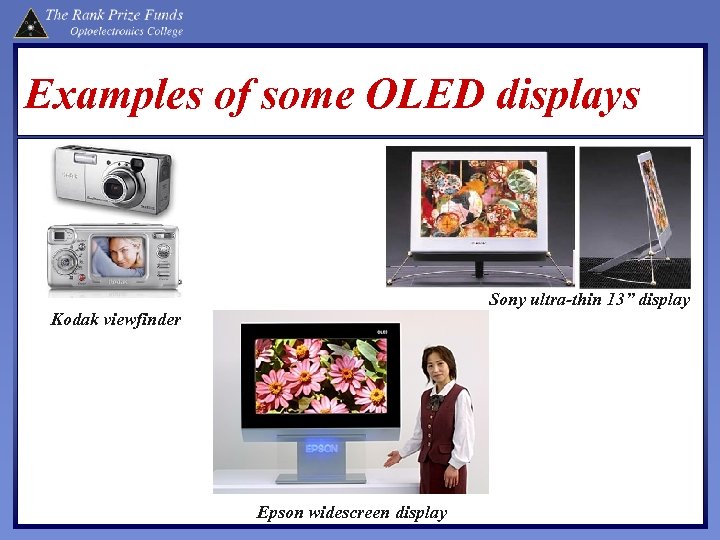 Examples of some OLED displays Sony ultra-thin 13” display Kodak viewfinder Epson widescreen display
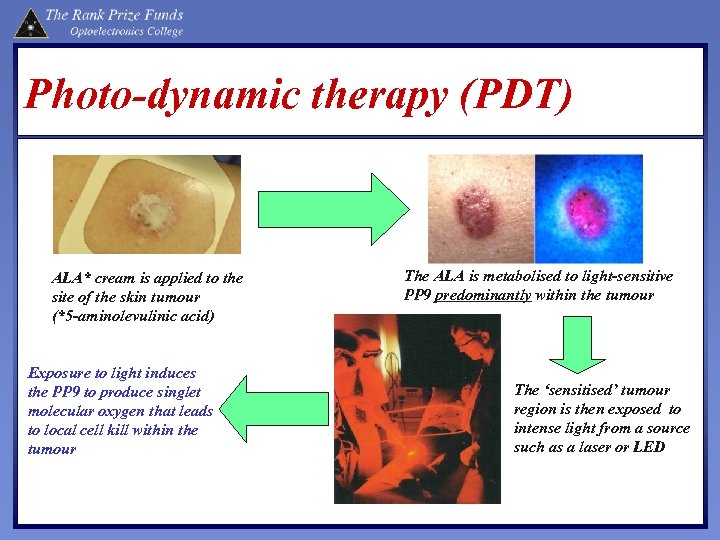 Photo-dynamic therapy (PDT) ALA* cream is applied to the site of the skin tumour (*5 -aminolevulinic acid) Exposure to light induces the PP 9 to produce singlet molecular oxygen that leads to local cell kill within the tumour The ALA is metabolised to light-sensitive PP 9 predominantly within the tumour The ‘sensitised’ tumour region is then exposed to intense light from a source such as a laser or LED
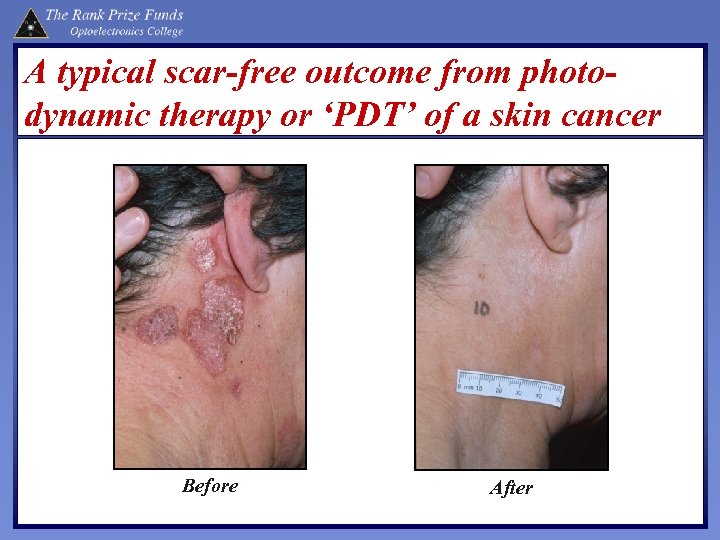 A typical scar-free outcome from photodynamic therapy or ‘PDT’ of a skin cancer Before After
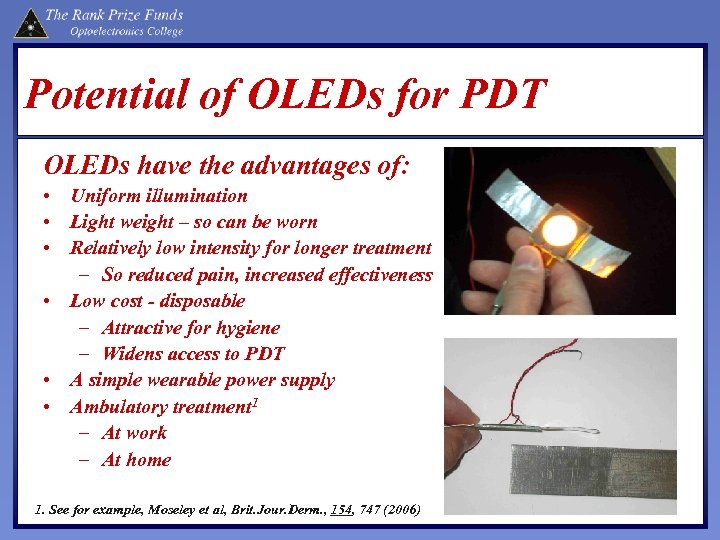 Potential of OLEDs for PDT OLEDs have the advantages of: • Uniform illumination • Light weight – so can be worn • Relatively low intensity for longer treatment – So reduced pain, increased effectiveness • Low cost - disposable – Attractive for hygiene – Widens access to PDT • A simple wearable power supply • Ambulatory treatment 1 – At work – At home 1. See for example, Moseley et al, Brit. Jour. Derm. , 154, 747 (2006)
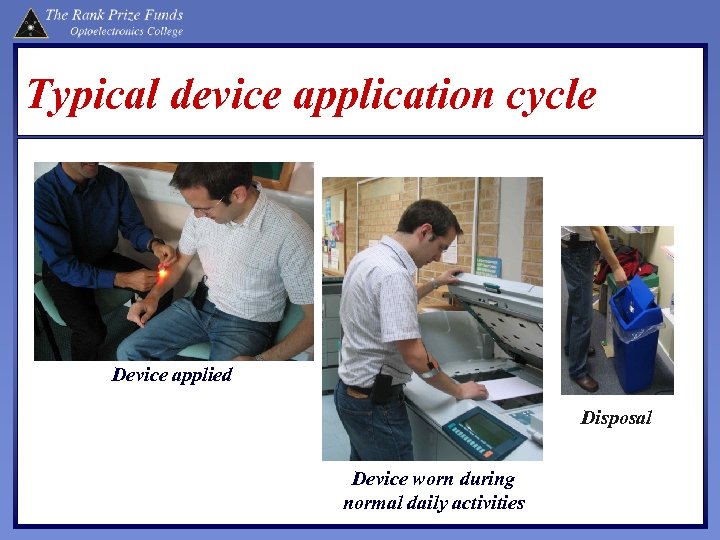 Typical device application cycle Device applied Disposal Device worn during normal daily activities
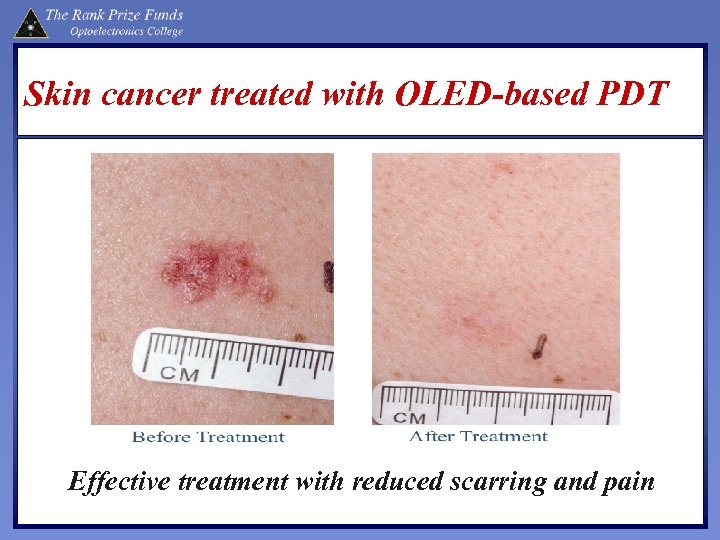 Skin cancer treated with OLED-based PDT Effective treatment with reduced scarring and pain
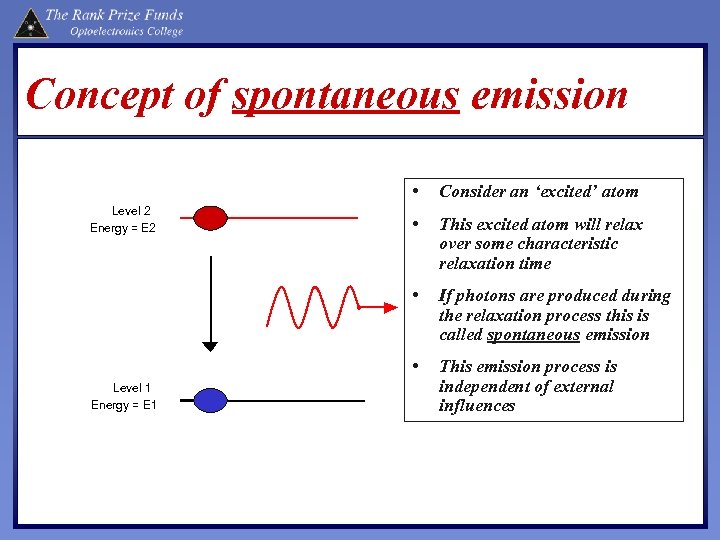 Concept of spontaneous emission • This excited atom will relax over some characteristic relaxation time If photons are produced during the relaxation process this is called spontaneous emission • Level 1 Energy = E 1 • • Level 2 Energy = E 2 Consider an ‘excited’ atom This emission process is independent of external influences
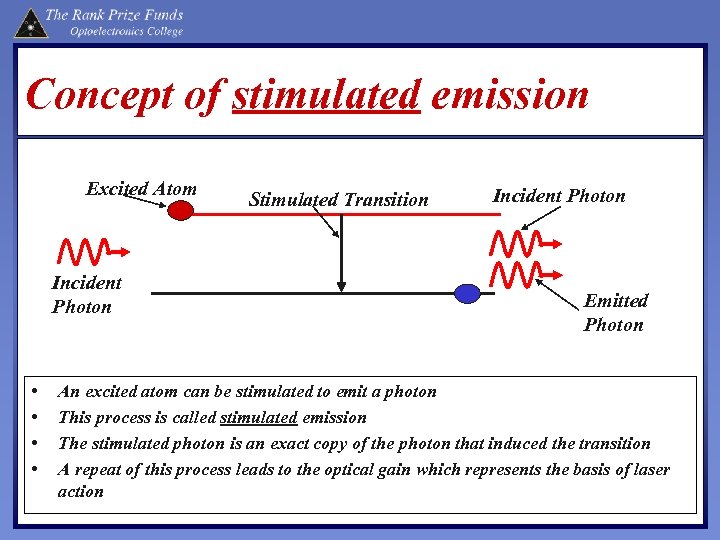 Concept of stimulated emission Excited Atom Incident Photon • • Stimulated Transition Incident Photon Emitted Photon An excited atom can be stimulated to emit a photon This process is called stimulated emission The stimulated photon is an exact copy of the photon that induced the transition A repeat of this process leads to the optical gain which represents the basis of laser action
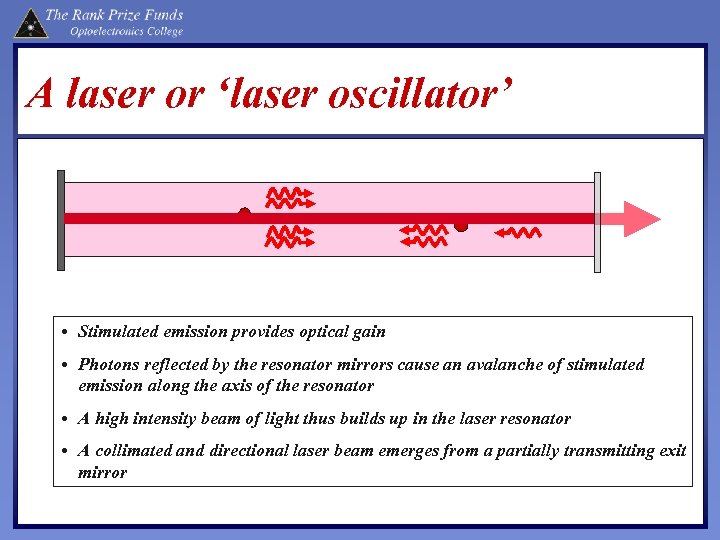 A laser or ‘laser oscillator’ • Stimulated emission provides optical gain • Photons reflected by the resonator mirrors cause an avalanche of stimulated emission along the axis of the resonator • A high intensity beam of light thus builds up in the laser resonator • A collimated and directional laser beam emerges from a partially transmitting exit mirror
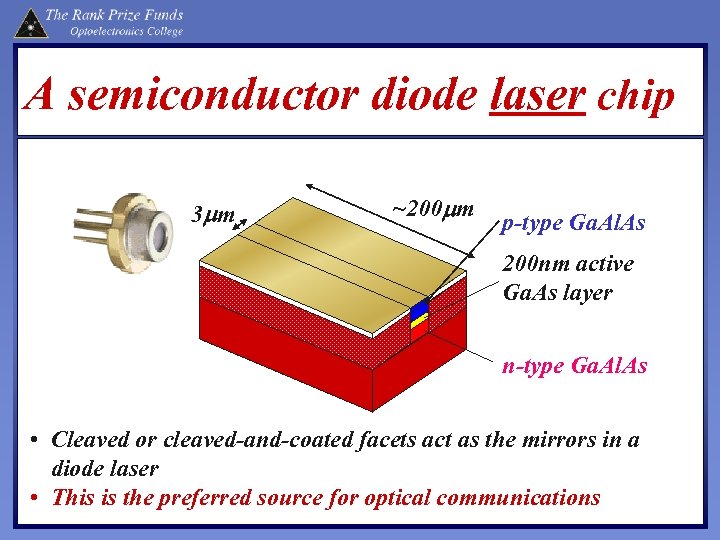 A semiconductor diode laser chip 3 mm ~200 mm p-type Ga. Al. As 200 nm active Ga. As layer n-type Ga. Al. As • Cleaved or cleaved-and-coated facets act as the mirrors in a diode laser • This is the preferred source for optical communications
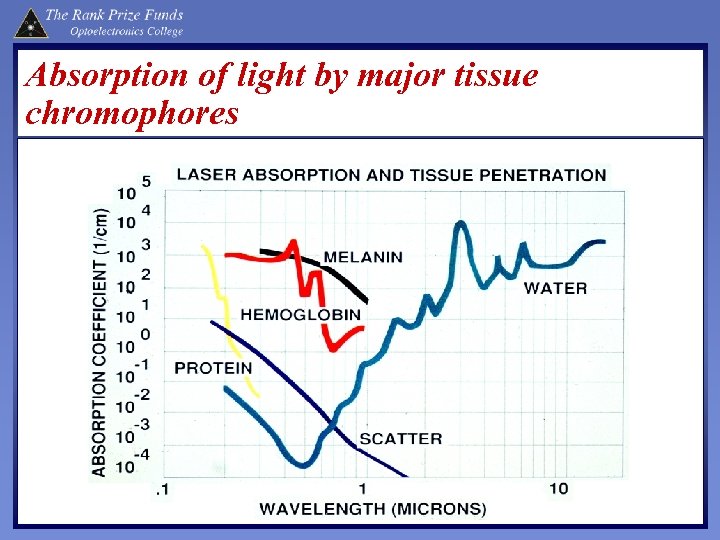 Absorption of light by major tissue chromophores
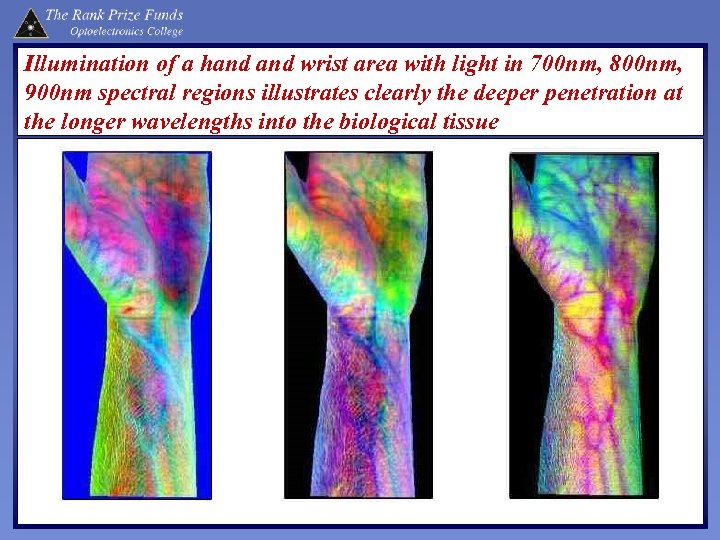 Illumination of a hand wrist area with light in 700 nm, 800 nm, 900 nm spectral regions illustrates clearly the deeper penetration at the longer wavelengths into the biological tissue
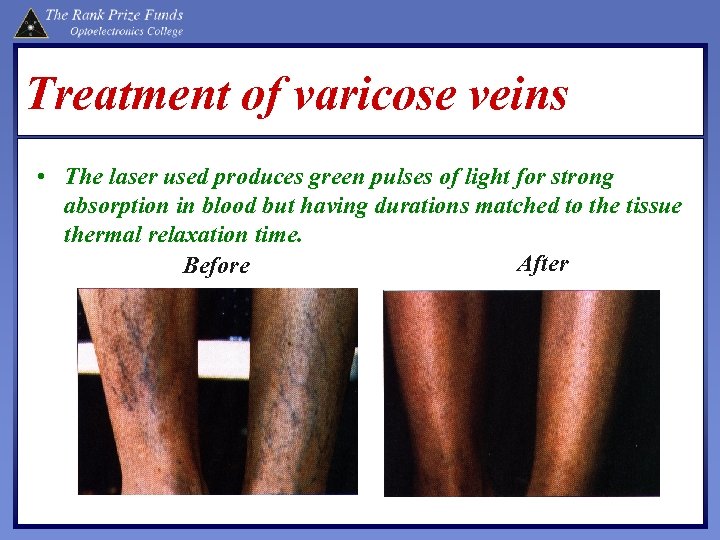 Treatment of varicose veins • The laser used produces green pulses of light for strong absorption in blood but having durations matched to the tissue thermal relaxation time. After Before
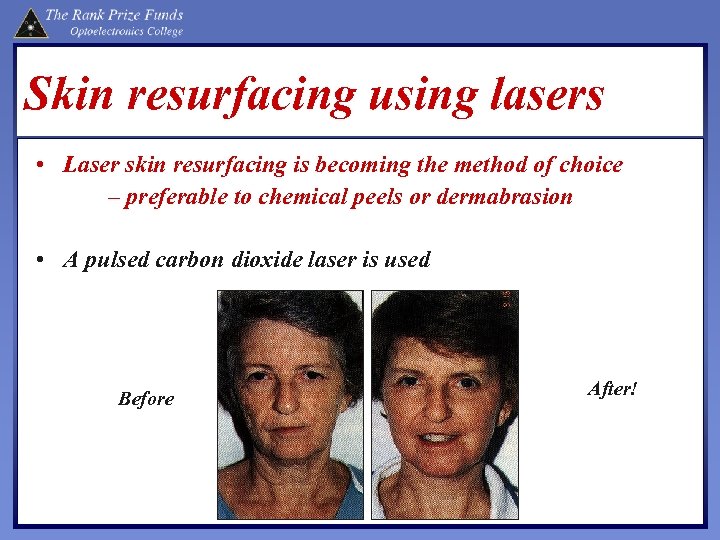 Skin resurfacing using lasers • Laser skin resurfacing is becoming the method of choice – preferable to chemical peels or dermabrasion • A pulsed carbon dioxide laser is used Before After!
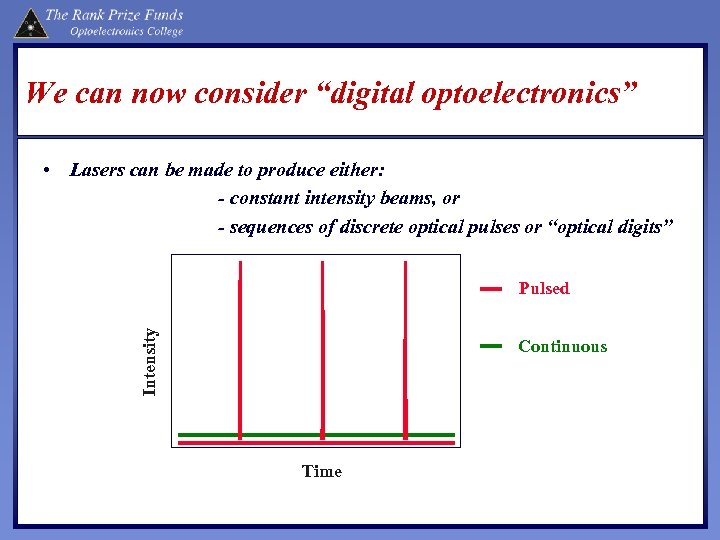 We can now consider “digital optoelectronics” • Lasers can be made to produce either: - constant intensity beams, or - sequences of discrete optical pulses or “optical digits” Intensity Pulsed Continuous Time
 Why might we wish to use optical digits? • The laser pulses or ‘optical digits’ can have very high peak intensity • Thus, these light ‘impulses” can induce either single- photon or rather more interesting multiple-photon interactions • The advantage is strong near-infrared absorption (in tissue) with interactions involving two or three photons that are equivalent to green or blue/uv light • The average power or heating effect can be at a modest level to avoid tissue damage • Ultrashort pulses [picoseconds (10 -12 s) and femtoseconds (10 -15 s)] also imply short exposure times and so we have ultrafast (or snapshot) photography
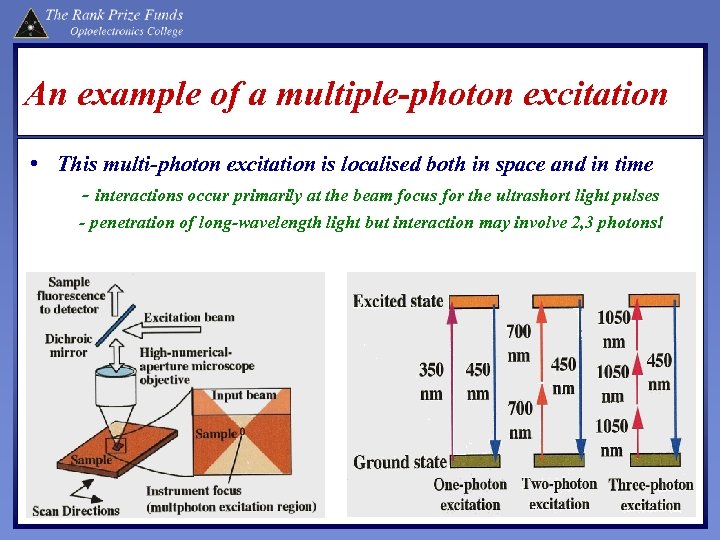 An example of a multiple-photon excitation • This multi-photon excitation is localised both in space and in time - interactions occur primarily at the beam focus for the ultrashort light pulses - penetration of long-wavelength light but interaction may involve 2, 3 photons!
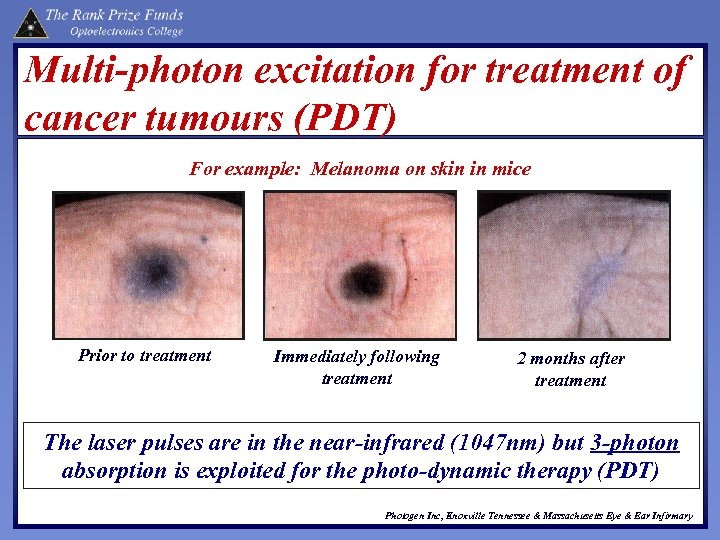 Multi-photon excitation for treatment of cancer tumours (PDT) For example: Melanoma on skin in mice Prior to treatment Immediately following treatment 2 months after treatment The laser pulses are in the near-infrared (1047 nm) but 3 -photon absorption is exploited for the photo-dynamic therapy (PDT) Photogen Inc, Knoxville Tennessee & Massachusetts Eye & Ear Infirmary
![Snapshots in the millisecond regime [Eadweard Muybridge –Galloping Horse, 1887]](https://present5.com/presentation/0282a87ee0c5898d0f2f7485d87559f2/image-30.jpg "Snapshots in the millisecond regime [Eadweard Muybridge –Galloping Horse, 1887]") Snapshots in the millisecond regime [Eadweard Muybridge –Galloping Horse, 1887]
Snapshots in the millisecond regime [Eadweard Muybridge –Galloping Horse, 1887]
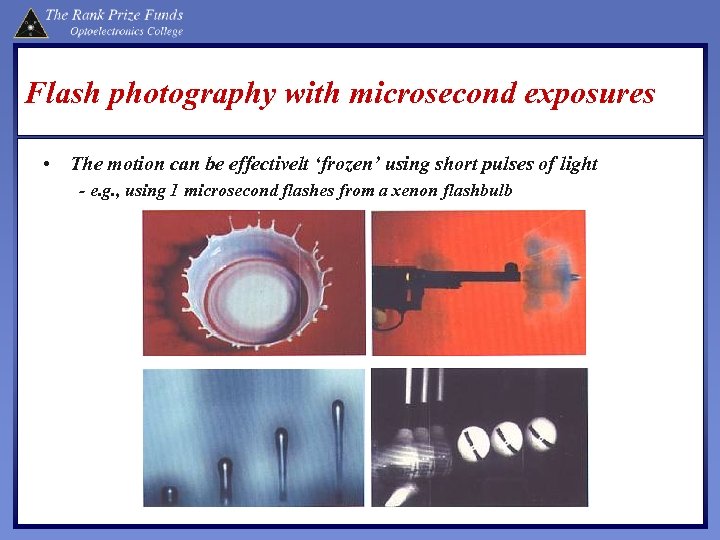 Flash photography with microsecond exposures • The motion can be effectivelt ‘frozen’ using short pulses of light - e. g. , using 1 microsecond flashes from a xenon flashbulb
![An example of ‘frozen motion’! [Harold Edgerton, MIT, 1964]](https://present5.com/presentation/0282a87ee0c5898d0f2f7485d87559f2/image-32.jpg "An example of ‘frozen motion’! [Harold Edgerton, MIT, 1964]") An example of ‘frozen motion’! [Harold Edgerton, MIT, 1964]
An example of ‘frozen motion’! [Harold Edgerton, MIT, 1964]
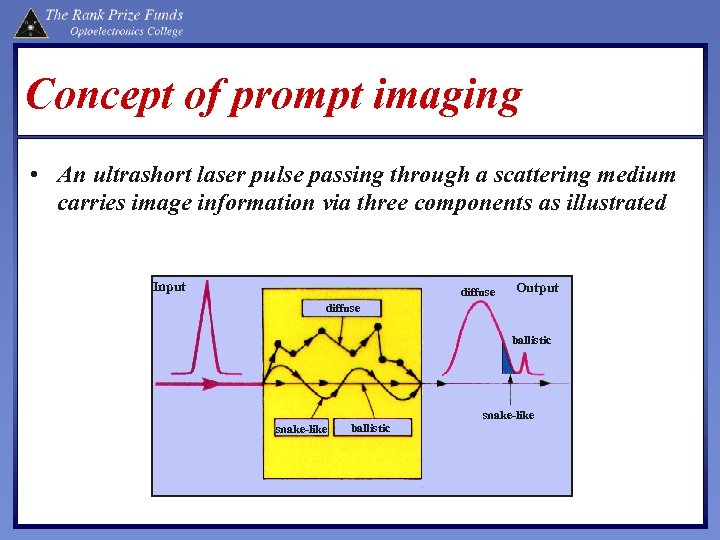 Concept of prompt imaging • An ultrashort laser pulse passing through a scattering medium carries image information via three components as illustrated Input diffuse Output diffuse ballistic snake-like
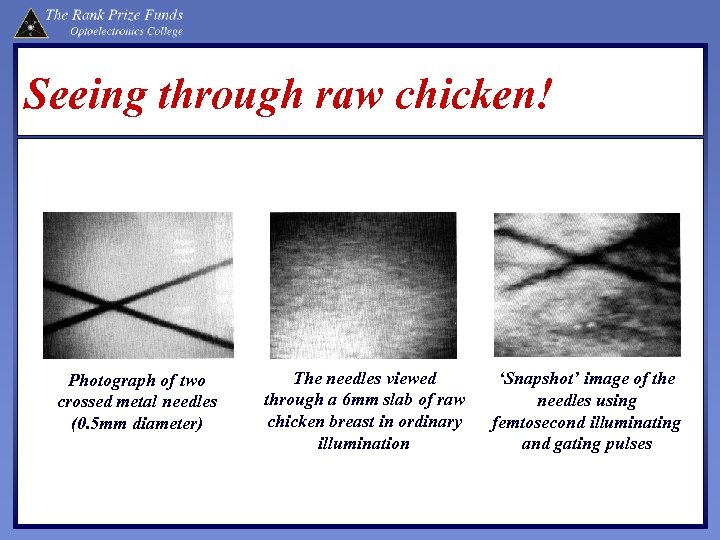 Seeing through raw chicken! Photograph of two crossed metal needles (0. 5 mm diameter) The needles viewed through a 6 mm slab of raw chicken breast in ordinary illumination ‘Snapshot’ image of the needles using femtosecond illuminating and gating pulses
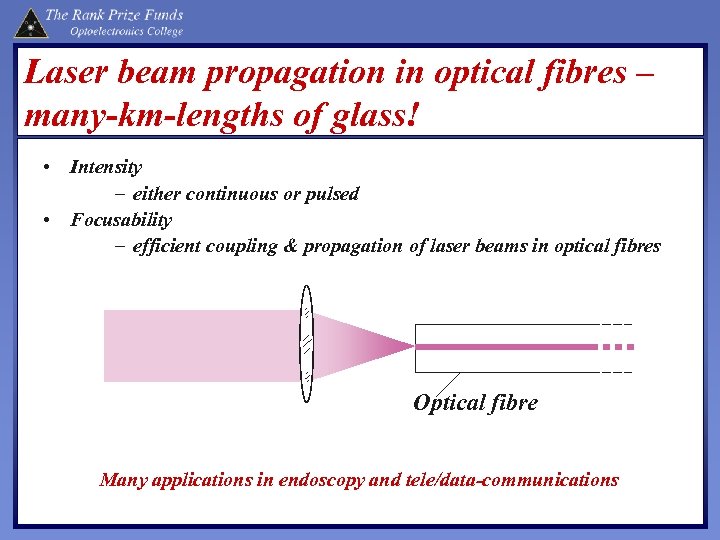 Laser beam propagation in optical fibres – many-km-lengths of glass! • Intensity – either continuous or pulsed • Focusability – efficient coupling & propagation of laser beams in optical fibres Optical fibre Many applications in endoscopy and tele/data-communications
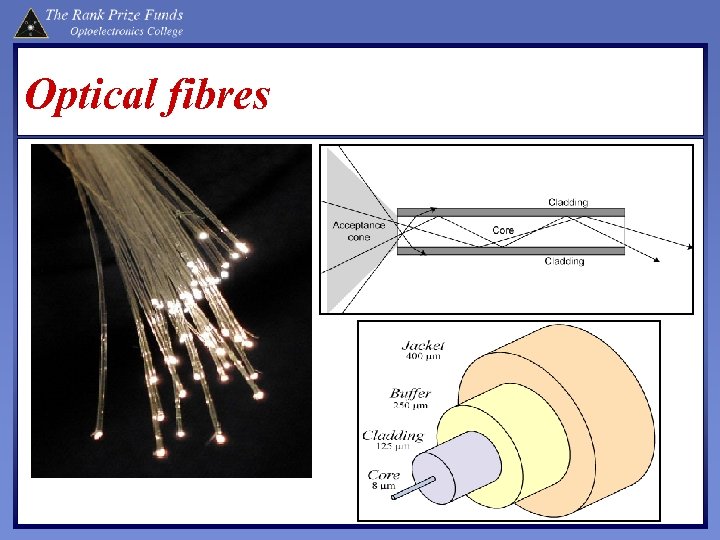 Optical fibres
 Optoelectronic communications
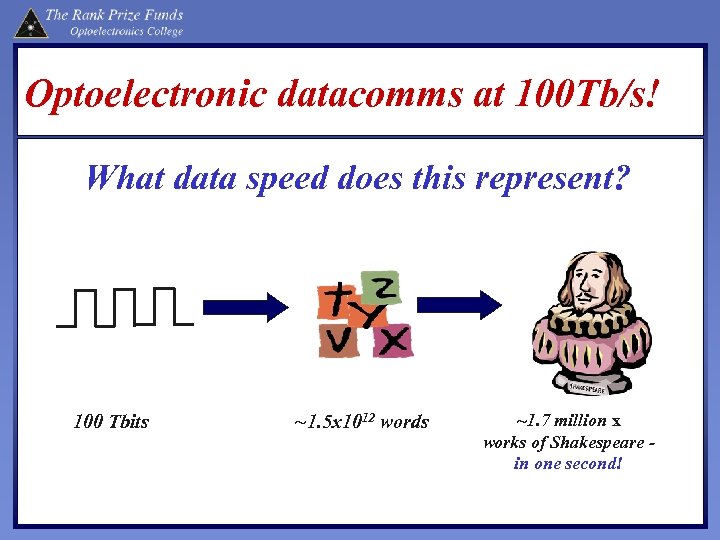 Optoelectronic datacomms at 100 Tb/s! What data speed does this represent? 100 Tbits ~1. 5 x 10¹² words ~1. 7 million x works of Shakespeare in one second!
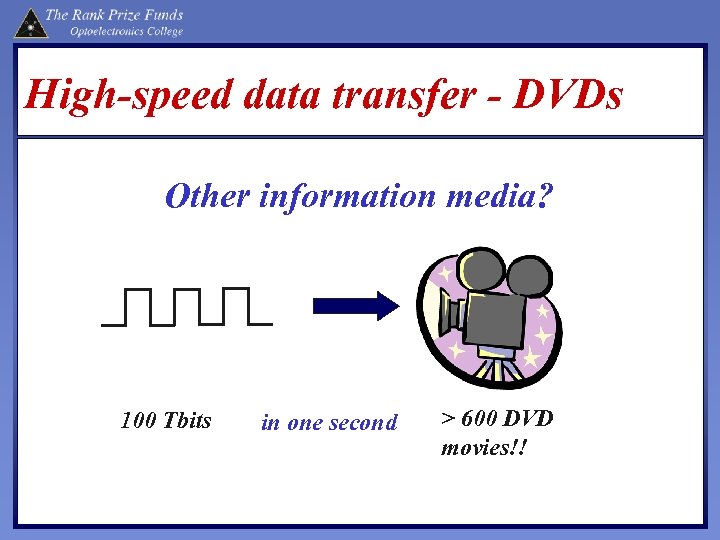 High-speed data transfer - DVDs Other information media? 100 Tbits in one second > 600 DVD movies!!
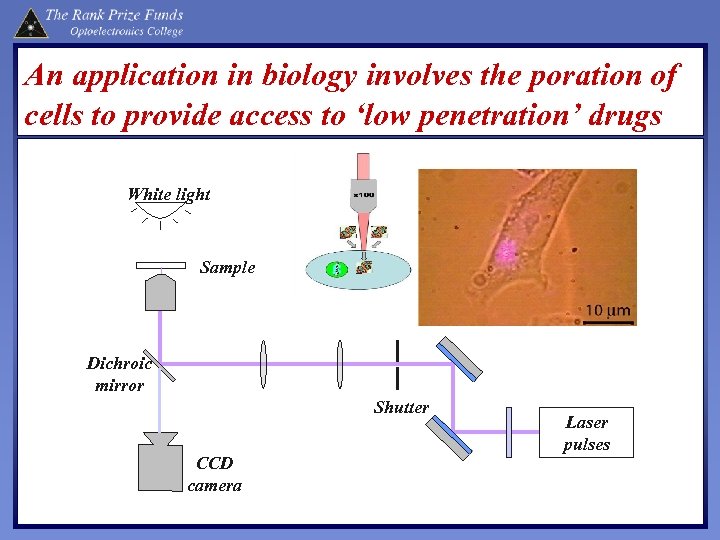 An application in biology involves the poration of cells to provide access to ‘low penetration’ drugs White light Sample Dichroic mirror Shutter CCD camera Laser pulses
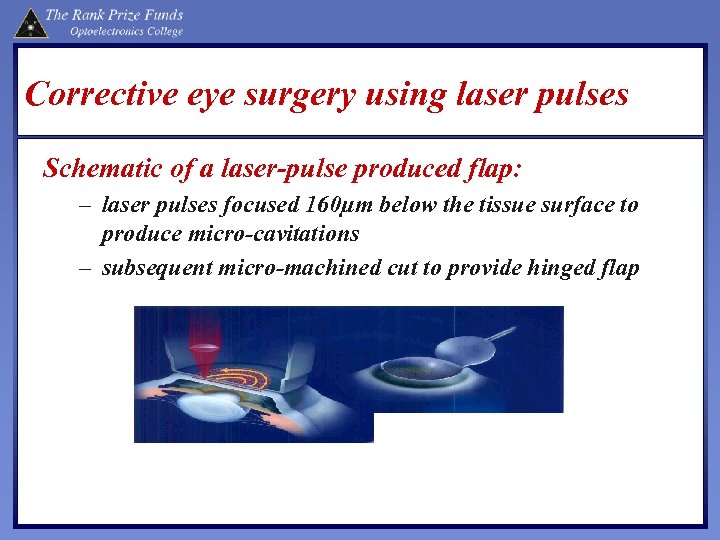 Corrective eye surgery using laser pulses Schematic of a laser-pulse produced flap: – laser pulses focused 160µm below the tissue surface to produce micro-cavitations – subsequent micro-machined cut to provide hinged flap
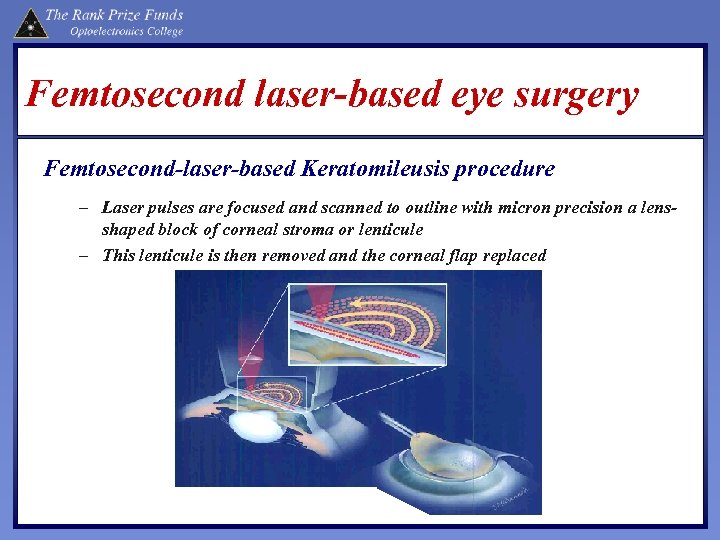 Femtosecond laser-based eye surgery Femtosecond-laser-based Keratomileusis procedure – Laser pulses are focused and scanned to outline with micron precision a lensshaped block of corneal stroma or lenticule – This lenticule is then removed and the corneal flap replaced
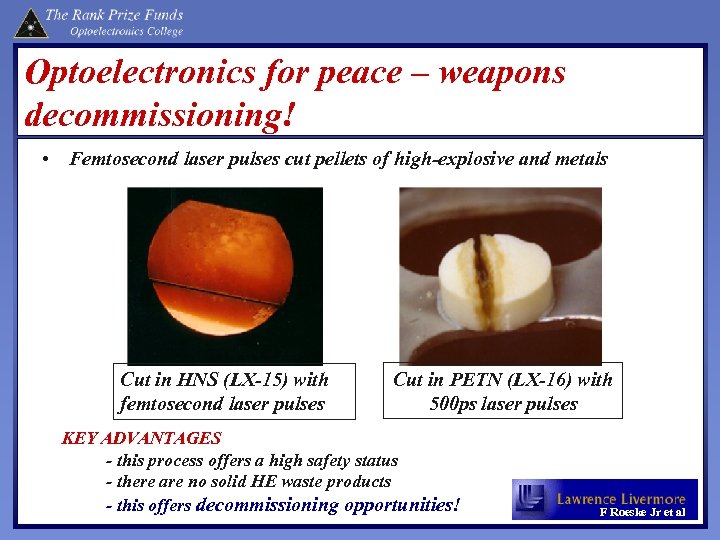 Optoelectronics for peace – weapons decommissioning! • Femtosecond laser pulses cut pellets of high-explosive and metals Cut in HNS (LX-15) with femtosecond laser pulses Cut in PETN (LX-16) with 500 ps laser pulses KEY ADVANTAGES - this process offers a high safety status - there are no solid HE waste products - this offers decommissioning opportunities! F Roeske Jr et al
 Concluding remarks • Optoelectronic devices have come of age and have opened up a wide range of exciting possibilities both within science and in the products used in everyday life • These are re-defining many of the boundaries of modern life and technology • Some knowledge of optoelectronics is vital for all of us living in the 21 st century • It follows, therefore, that the teaching of some practical skills in optoelectronics should now form an ‘exciting’ part of a modern science curriculum and education!