 Скачать презентацию Optimization of Object Extraction Based on One User-Prepared
a79eb001ad2ce9eeae0cb6f79e99b140.ppt
- Количество слайдов: 31



Optimization of Object Extraction Based on One User-Prepared Sample S. Rahnamayan, H. R. Tizhoosh, M. M. A. Salama University of Waterloo, Ontario, Canada MOPTA, Windsor, July 26, 2005
Agenda n n n Objective Proposed Approach Preliminary Results Comparison with Other Methods Conclusion Future Works 2
Main Objective Acquisition of object extraction procedure from user-prepared sample(s) based on genetic optimization of morphological processing chains 3
Reasons for Developing Automated Image Processing Systems Dealing with huge number of images Saving experts valuable time Possibility of using in online applications Overcoming of inconsistent nature of human processing Supporting required high accuracy 4
Why Learning from a Small Number of Samples is Valuable ? Because : It reduces the expected level of expert participation which is the main obstacle for research and development. Preparing some manually generated samples to reflect the experts’ expectations is a reasonable requirement in all image processing environments. 5
Proposed Approach n n Utilizing Mathematical morphology operations, as image processing tools, to build object extraction procedure Using genetic algorithm, as optimizer tools, to find optimal parameters of above mentioned procedure 6
Morphological Operations They are shape-based operations Used to handle a wide range of image processing tasks, ranging from noise filtering to object extraction 7
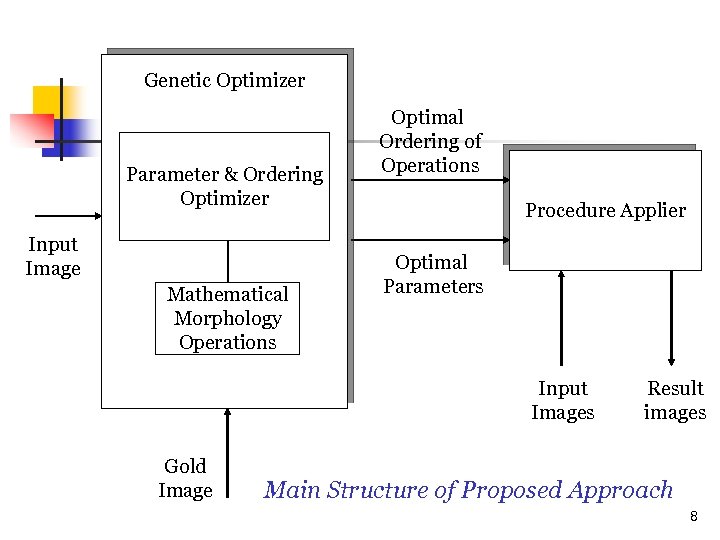
Genetic Optimizer Parameter & Ordering Optimizer Input Image Mathematical Morphology Operations Optimal Ordering of Operations Procedure Applier Optimal Parameters Input Images Gold Image Result images Main Structure of Proposed Approach 8
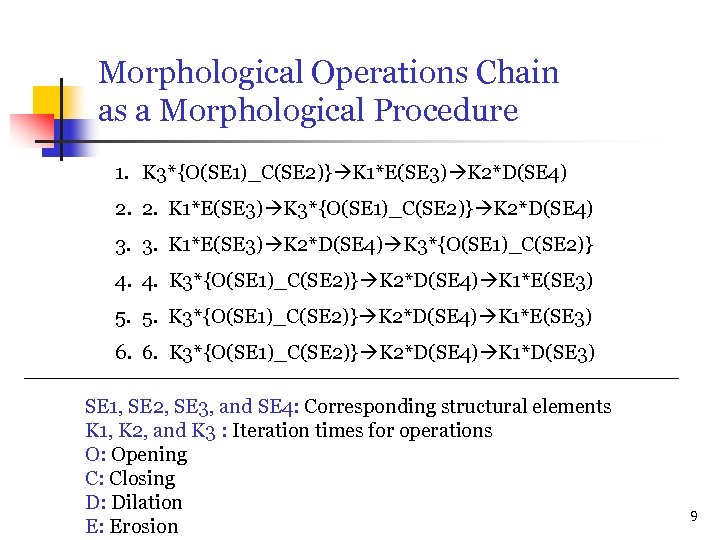
Morphological Operations Chain as a Morphological Procedure 1. K 3*{O(SE 1)_C(SE 2)} K 1*E(SE 3) K 2*D(SE 4) 2. 2. K 1*E(SE 3) K 3*{O(SE 1)_C(SE 2)} K 2*D(SE 4) 3. 3. K 1*E(SE 3) K 2*D(SE 4) K 3*{O(SE 1)_C(SE 2)} 4. 4. K 3*{O(SE 1)_C(SE 2)} K 2*D(SE 4) K 1*E(SE 3) 5. 5. K 3*{O(SE 1)_C(SE 2)} K 2*D(SE 4) K 1*E(SE 3) 6. 6. K 3*{O(SE 1)_C(SE 2)} K 2*D(SE 4) K 1*D(SE 3) SE 1, SE 2, SE 3, and SE 4: Corresponding structural elements K 1, K 2, and K 3 : Iteration times for operations O: Opening C: Closing D: Dilation E: Erosion 9
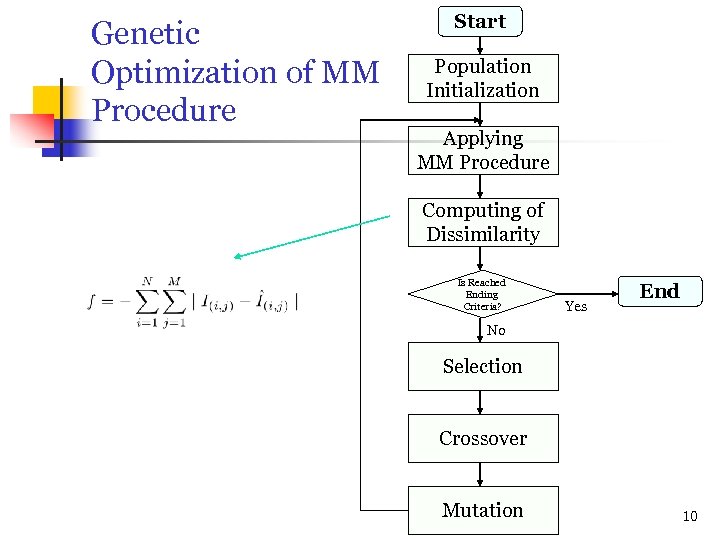
Genetic Optimization of MM Procedure Start Population Initialization Applying MM Procedure Computing of Dissimilarity Is Reached Ending Criteria? Yes End No Selection Crossover Mutation 10
Preliminary Results n n Circle Extraction Triangle Extraction Rectangle Extraction Object Extraction Applied for Grey-level Images 11
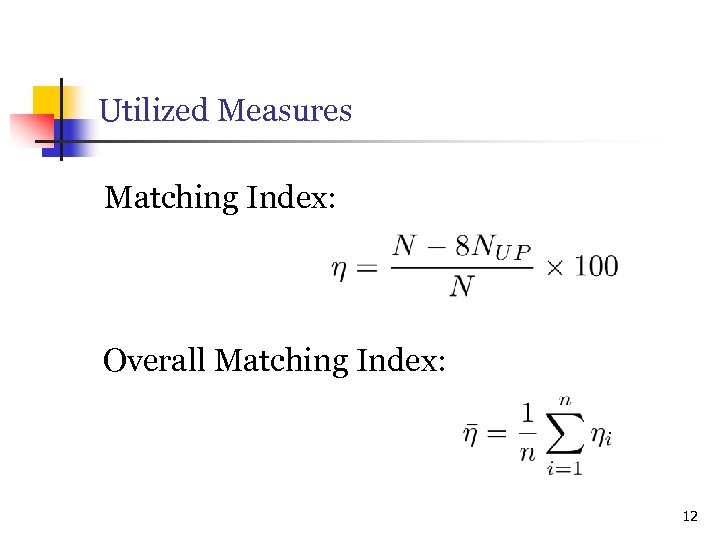
Utilized Measures Matching Index: Overall Matching Index: 12
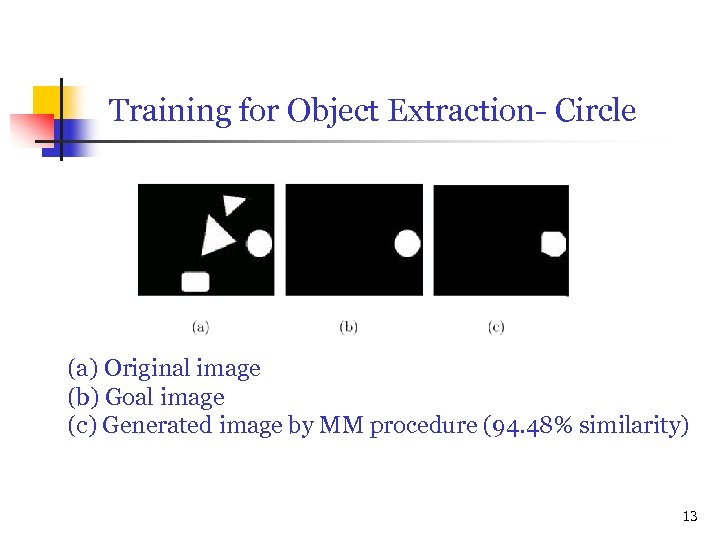
Training for Object Extraction- Circle (a) Original image (b) Goal image (c) Generated image by MM procedure (94. 48% similarity) 13
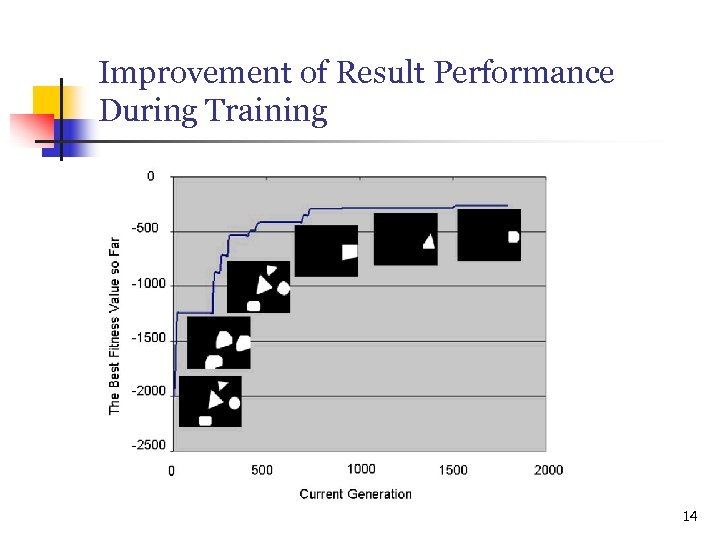
Improvement of Result Performance During Training 14
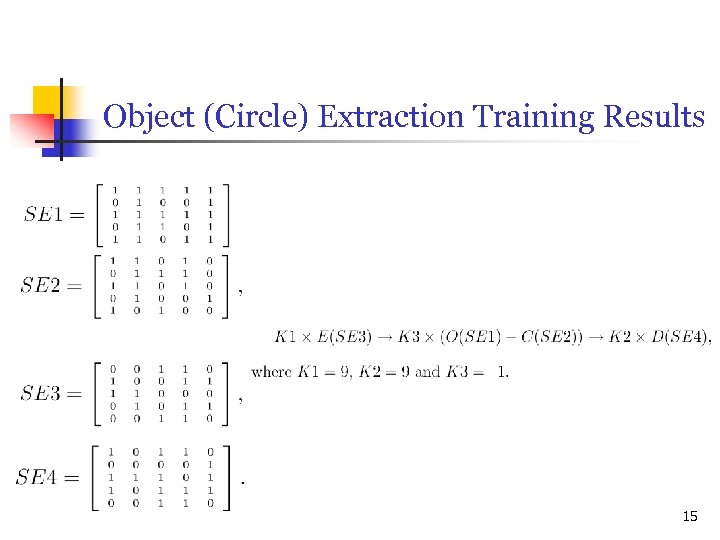
Object (Circle) Extraction Training Results 15
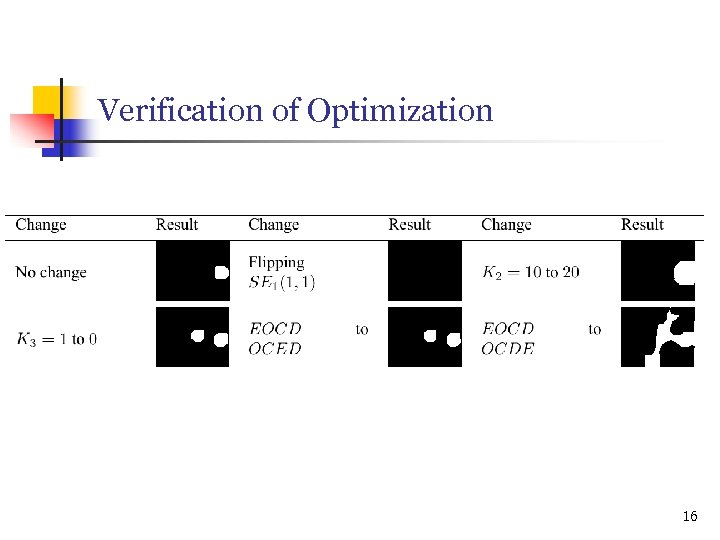
Verification of Optimization 16
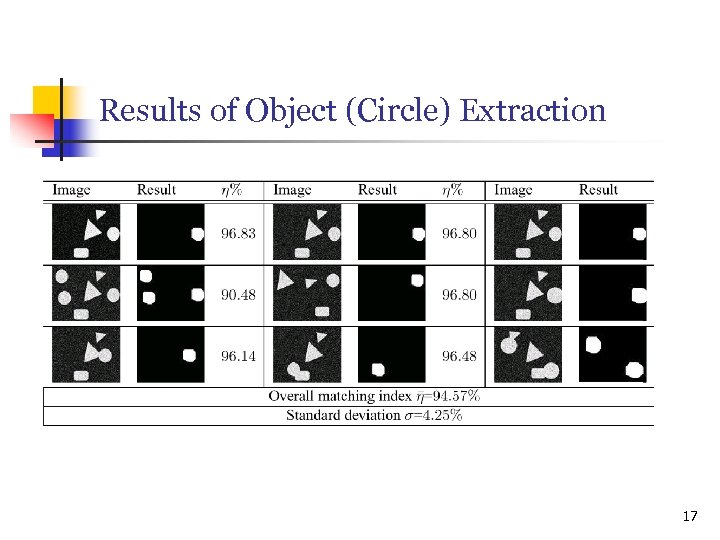
Results of Object (Circle) Extraction 17
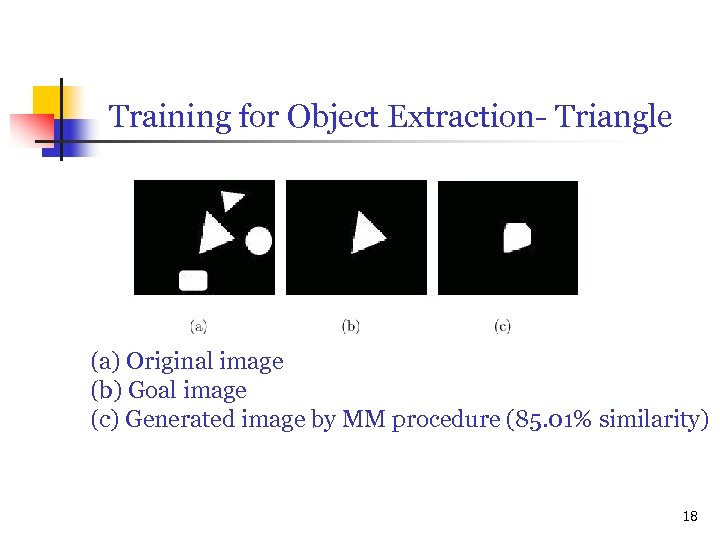
Training for Object Extraction- Triangle (a) Original image (b) Goal image (c) Generated image by MM procedure (85. 01% similarity) 18
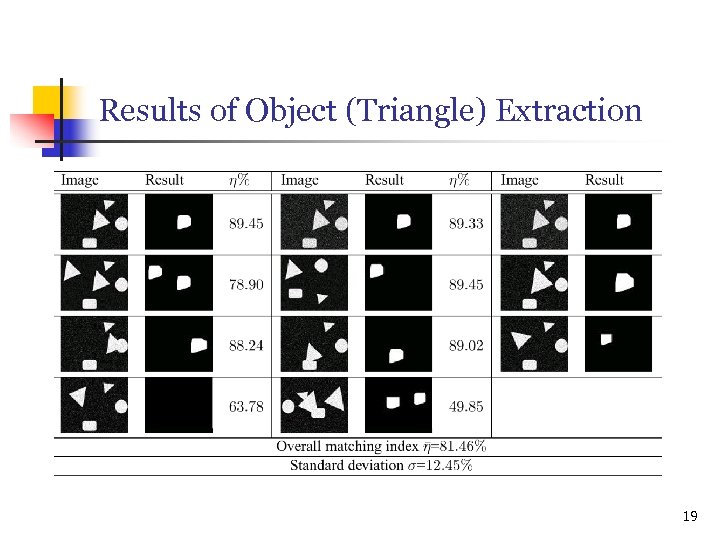
Results of Object (Triangle) Extraction 19
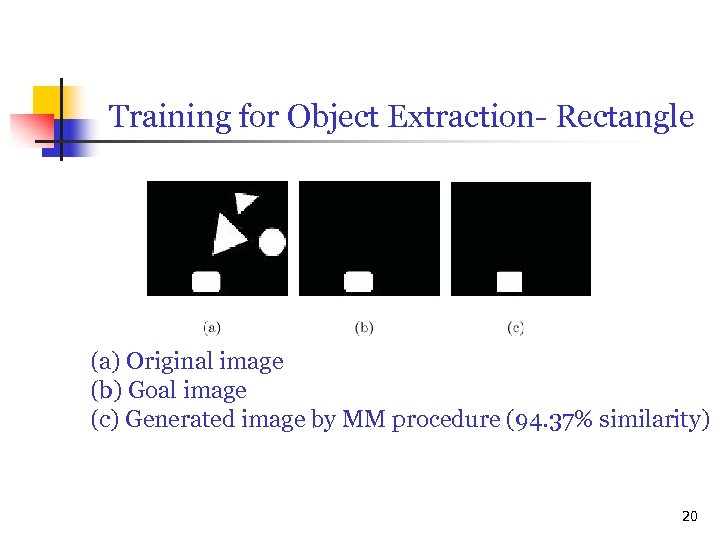
Training for Object Extraction- Rectangle (a) Original image (b) Goal image (c) Generated image by MM procedure (94. 37% similarity) 20
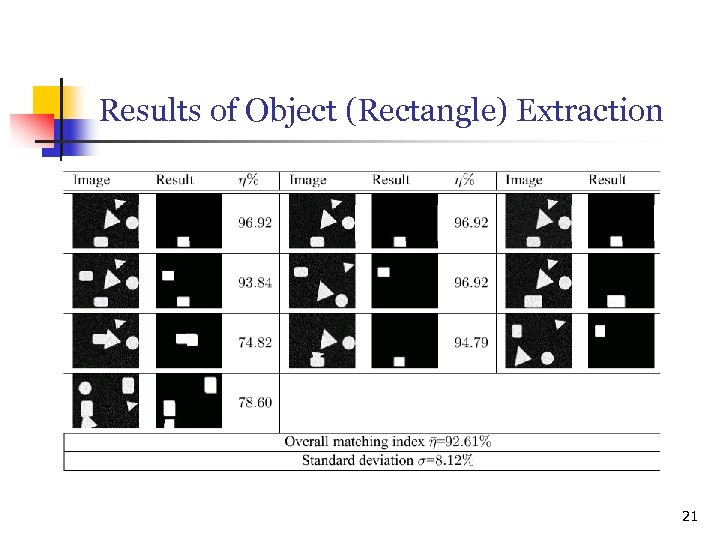
Results of Object (Rectangle) Extraction 21
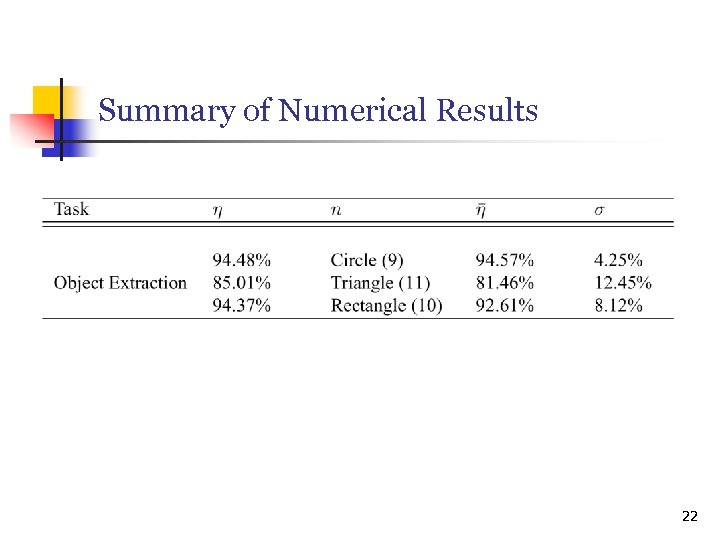
Summary of Numerical Results 22
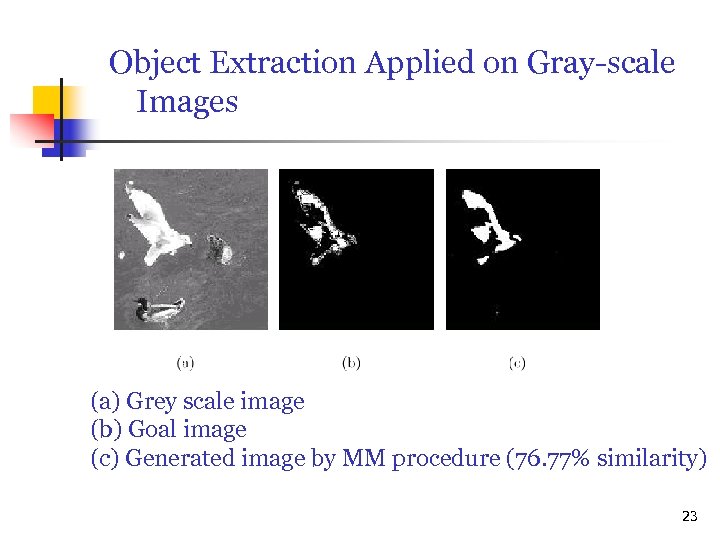
Object Extraction Applied on Gray-scale Images (a) Grey scale image (b) Goal image (c) Generated image by MM procedure (76. 77% similarity) 23
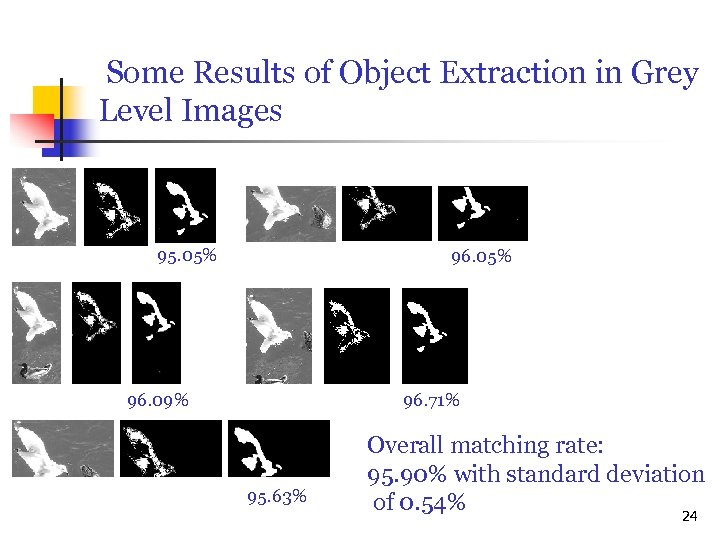
Some Results of Object Extraction in Grey Level Images 95. 05% 96. 09% 96. 71% 95. 63% Overall matching rate: 95. 90% with standard deviation of 0. 54% 24
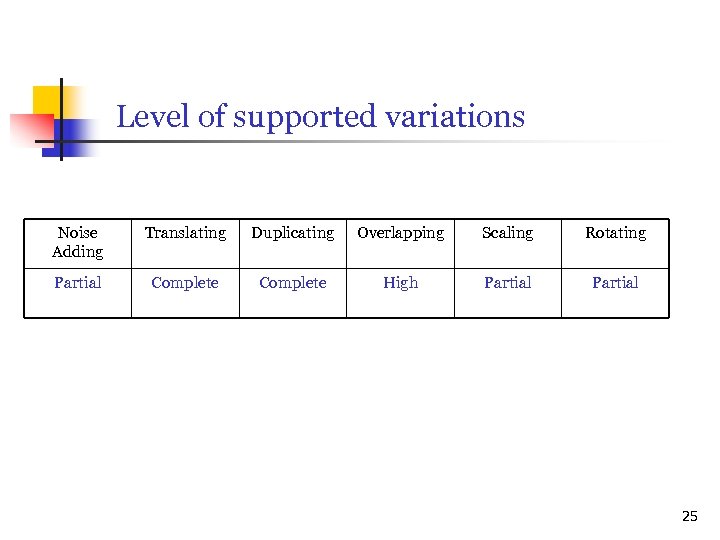
Level of supported variations Noise Adding Translating Duplicating Overlapping Scaling Rotating Partial Complete High Partial 25
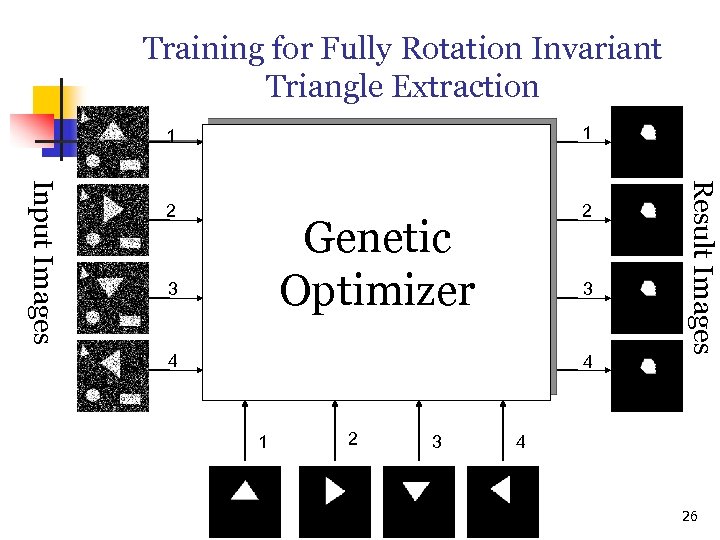
Training for Fully Rotation Invariant Triangle Extraction 1 2 2 Genetic Optimizer 3 3 4 4 1 2 3 Result Images Input Images 1 4 26
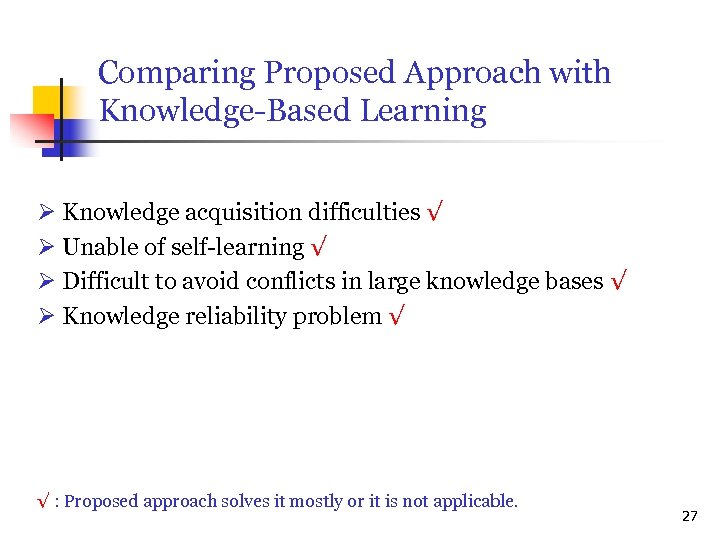
Comparing Proposed Approach with Knowledge-Based Learning Knowledge acquisition difficulties √ Unable of self-learning √ Difficult to avoid conflicts in large knowledge bases √ Knowledge reliability problem √ √ : Proposed approach solves it mostly or it is not applicable. 27
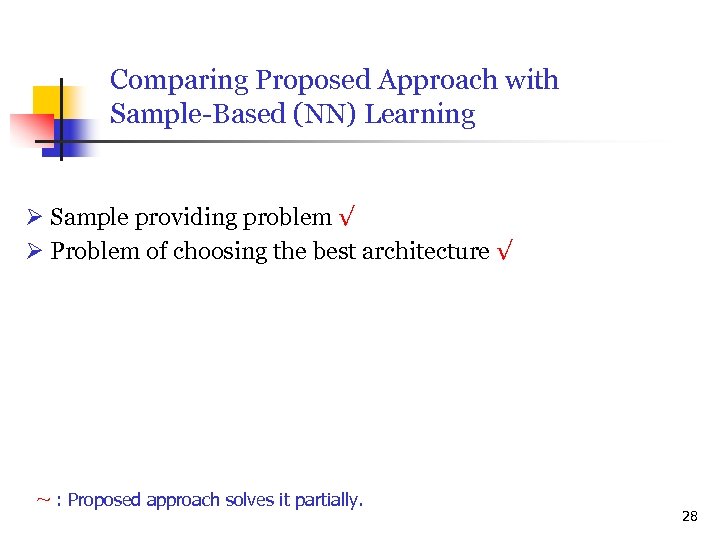
Comparing Proposed Approach with Sample-Based (NN) Learning Sample providing problem √ Problem of choosing the best architecture √ ~ : Proposed approach solves it partially. 28
Conclusion The outstanding features of the proposed approach are as follows: - Training based on a few samples Supporting (semi) automated image processing Mostly invariant for noising, overlapping, translation, rotating, scaling, and duplicating. 29
Future Works - Extending functionality of the system to cover wider range of image processing tasks - Applying on medical image processing 30
Thank you for your attention and patience. 31
Скачать презентацию Optimization of Object Extraction Based on One User-Prepared
a79eb001ad2ce9eeae0cb6f79e99b140.ppt