


 Скачать презентацию Optimising Services Delivery in the Water Industry SCADA Telemetry
d7207f9280efc5bda4d19698bd5592d4.ppt
- Количество слайдов: 19
 Optimising Services Delivery in the Water Industry SCADA/Telemetry & National Operations Management Centre Peter Thornton , Telemetry Specialist, Irish Water Paul Boreham, Alarm & Events Specialist, Irish Water
 What is Telemetry? Measurement & Transmission of Data from Remote Sources Network of field devices reporting data to a central system Reporting tools to turn data into useful information 2
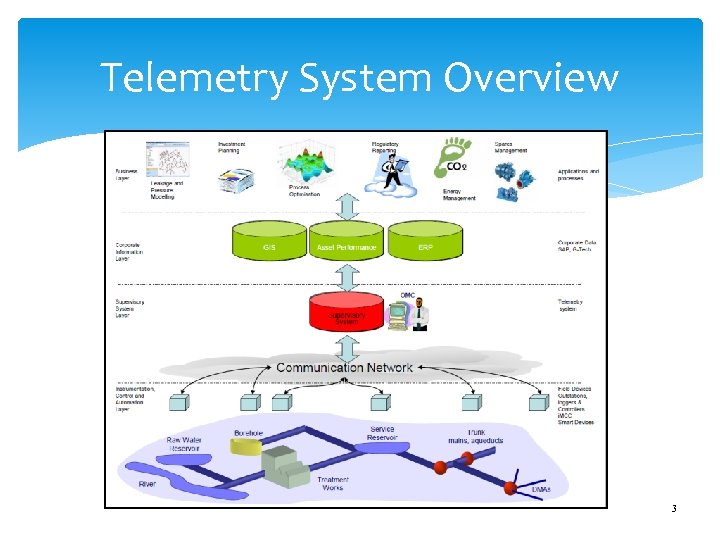 Telemetry System Overview 3
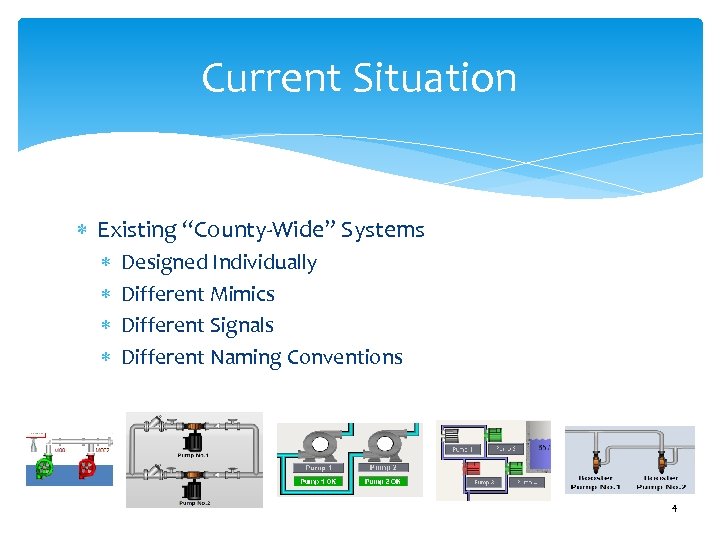 Current Situation Existing “County-Wide” Systems Designed Individually Different Mimics Different Signals Different Naming Conventions 4
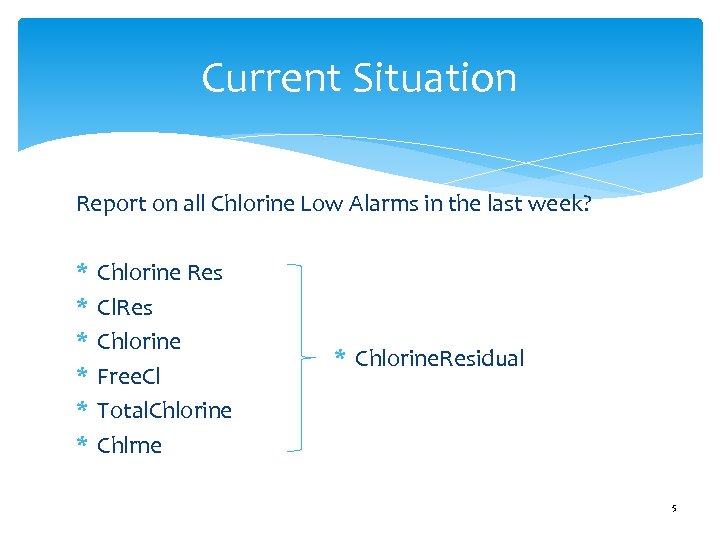 Current Situation Report on all Chlorine Low Alarms in the last week? * * * Chlorine Res Cl. Res Chlorine Free. Cl Total. Chlorine Chlrne * Chlorine. Residual 5
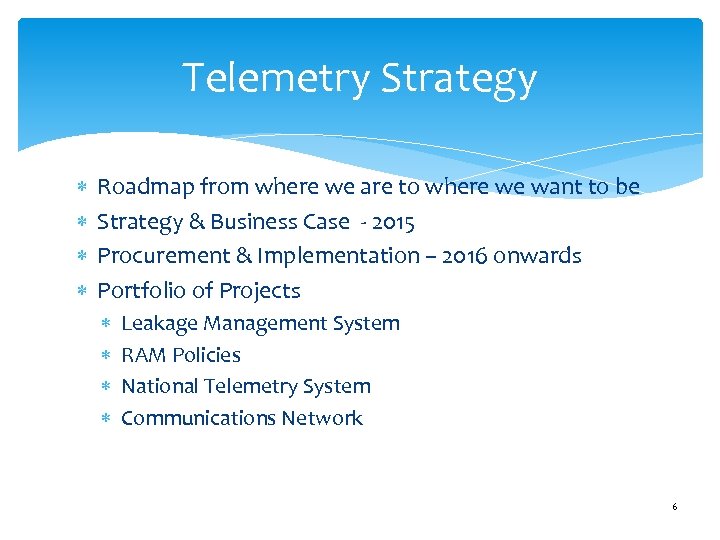 Telemetry Strategy Roadmap from where we are to where we want to be Strategy & Business Case - 2015 Procurement & Implementation – 2016 onwards Portfolio of Projects Leakage Management System RAM Policies National Telemetry System Communications Network 6
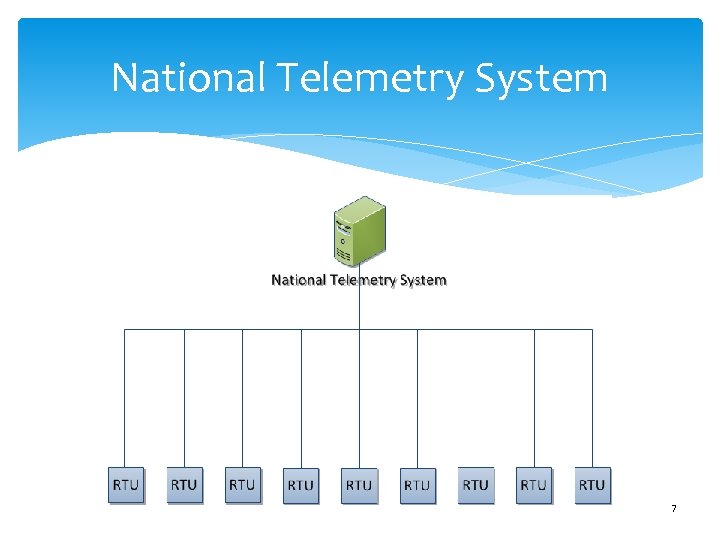 National Telemetry System 7
 Data Logger Solutions Machine To Machine (M 2 M) SIM Platform All SIMs to be issued by Irish Water Managed service with Web Administration Can roam onto all networks to provide better coverage. Cloud Hosting All data transferred to Cloud Available to Local Authorities & Irish Water Leakage Management System 8
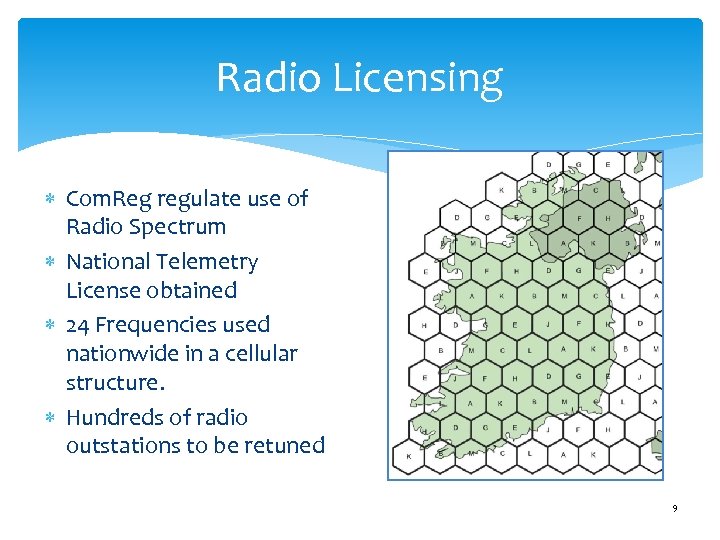 Radio Licensing Com. Reg regulate use of Radio Spectrum National Telemetry License obtained 24 Frequencies used nationwide in a cellular structure. Hundreds of radio outstations to be retuned 9
 National Operations Management Centre Irish Water have established a National Operations Management Centre (NOMC) in Colvill House (3 rd floor) Currently facilitates access to the existing “county-wide” systems for the wider business Carry out reporting and data extracts Provides a central point for real-time visibility of assets, offers Situational Awareness during extreme events 10
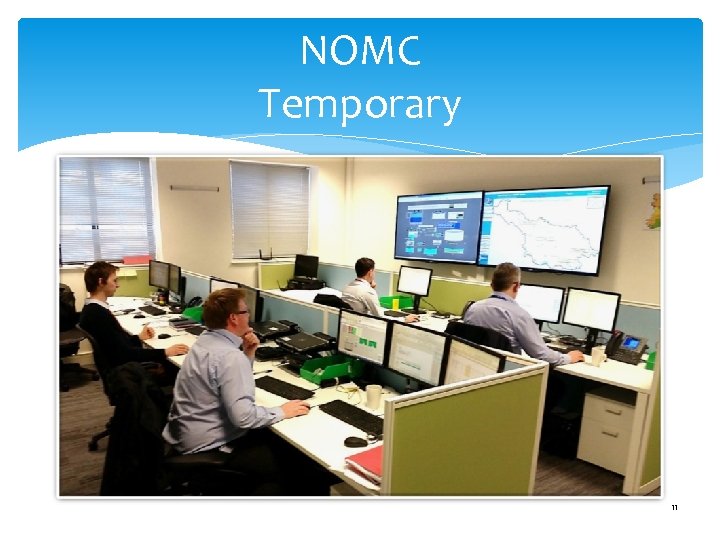 NOMC Temporary 11
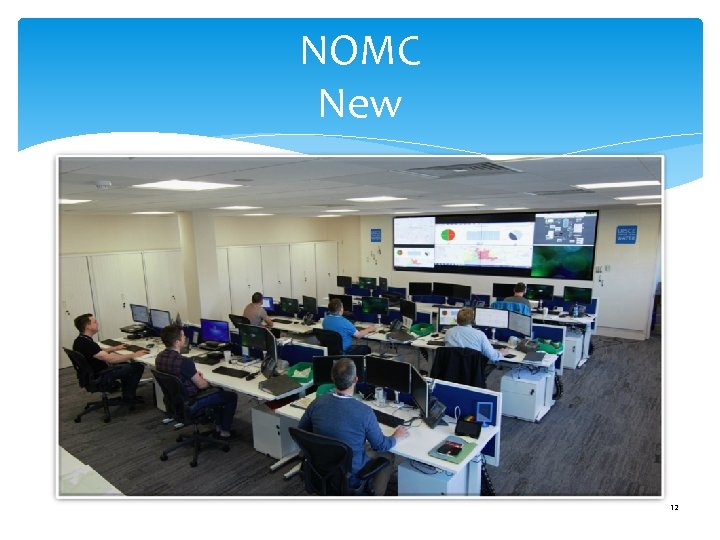 NOMC New 12
 “County-Wide” System Availability in NOMC There are 36 “County-Wide” systems in place covering 28 (of 34) counties. 6 counties have no “County-Wide” system in place. Access to 30 systems covering 24 counties No access currently possible to 6 systems in 4 counties Various access methods used, including: Internet, Citrix, VPN Client, LG-VPN etc. . 13
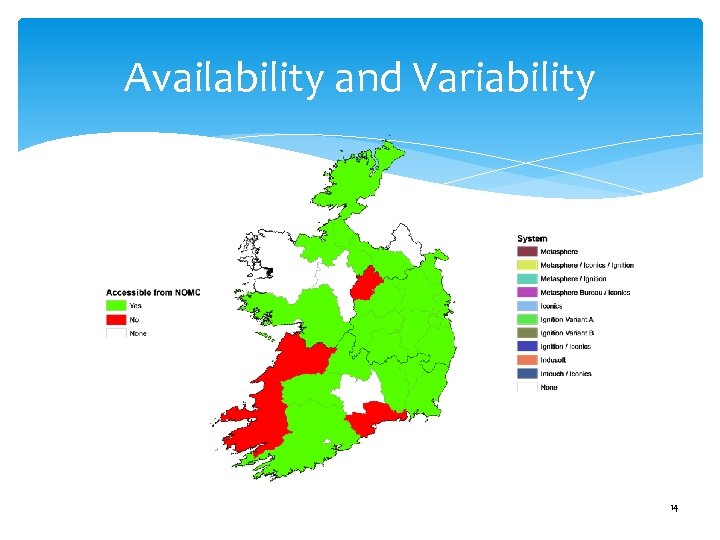 Availability and Variability 14
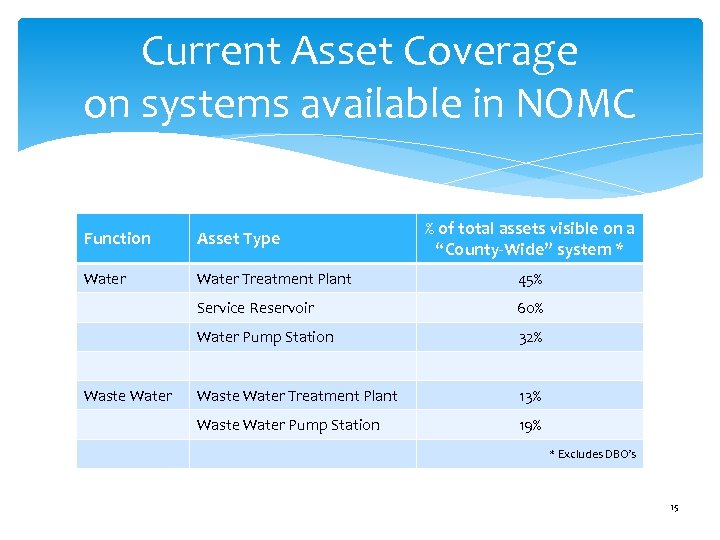 Current Asset Coverage on systems available in NOMC % of total assets visible on a “County-Wide” system * Function Asset Type Water Treatment Plant 45% Service Reservoir 60% Water Pump Station 32% Waste Water Treatment Plant 13% Waste Water Pump Station 19% Waste Water * Excludes DBO’s 15
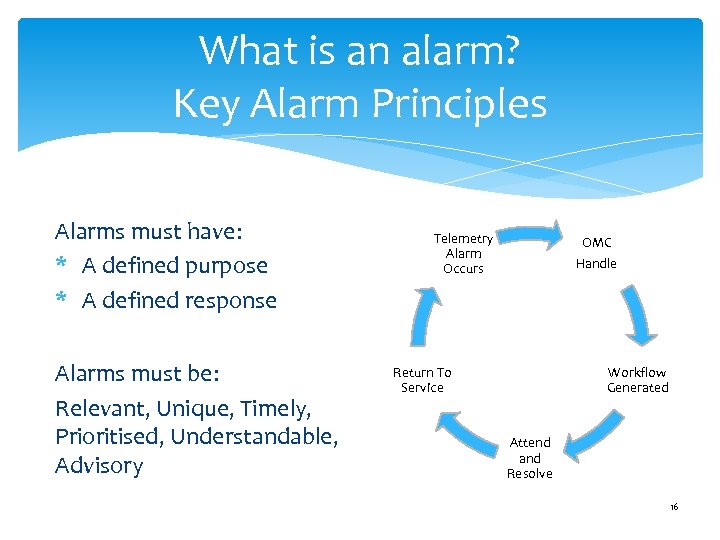 What is an alarm? Key Alarm Principles Alarms must have: * A defined purpose * A defined response Alarms must be: Relevant, Unique, Timely, Prioritised, Understandable, Advisory Telemetry Alarm Occurs OMC Handle Return To Service Workflow Generated Attend and Resolve 16
 Enduring Role of the NOMC Principal Role will be the monitoring and handling of alarms generated by the National Telemetry System Ultimately it will operate 24/7 Support Regional and Local Operations with asset operation 17
 NTS and NOMC Benefits The NTS and NOMC have complementary roles and will adopt a policy based approach with a focus on standardisation of processes and systems This will introduce consistency for: Telemetry Signals and Instrumentation Reporting (Asset Performance) Asset Standards Alarm Configuration and Response (risk based) 18
 NTS and NOMC Benefits This approach will result in reliable and relevant data Give meaningful real-time visibility of asset performance Enable consistent and appropriate response to alarms Timely interventions, ensuring regulatory Compliance and the protection of Public Health Evidence based approach to support asset investment decisions 19