 Скачать презентацию Optimal Load-Balancing Isaac Keslassy Technion Israel Cheng-Shang Chang
6290671bf0b3b2602e640b7cf2002827.ppt
- Количество слайдов: 25



Optimal Load-Balancing Isaac Keslassy (Technion, Israel), Cheng-Shang Chang (National Tsing Hua University, Taiwan), Nick Mc. Keown (Stanford University, U. S. A. ), Duan-Shin Lee (National Tsing Hua University, Taiwan) Spring 2005 044114
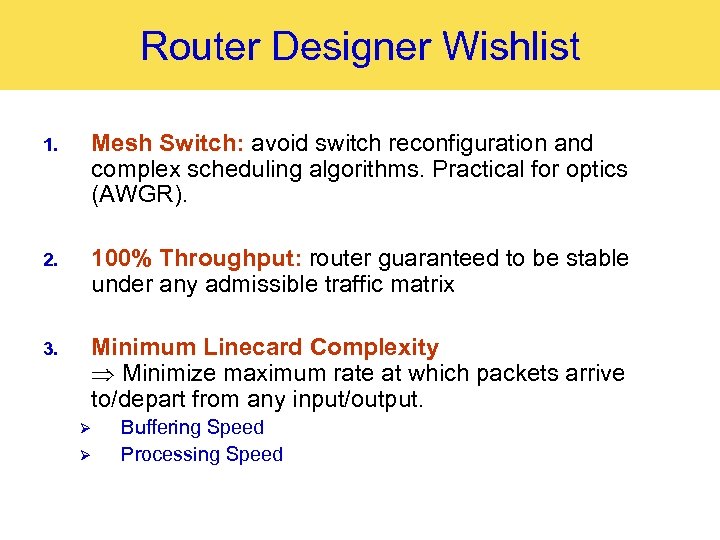
Router Designer Wishlist 1. Mesh Switch: avoid switch reconfiguration and complex scheduling algorithms. Practical for optics (AWGR). 2. 100% Throughput: router guaranteed to be stable under any admissible traffic matrix 3. Minimum Linecard Complexity Minimize maximum rate at which packets arrive to/depart from any input/output. Ø Ø Buffering Speed Processing Speed
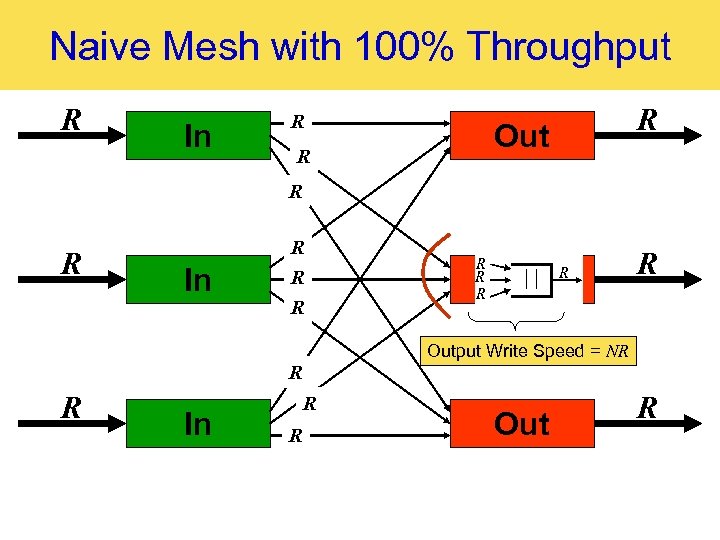
Naive Mesh with 100% Throughput R In R ? R Out R ? R R ? In R ? R R R Output Write Speed = NR R ? R In R ? Out R
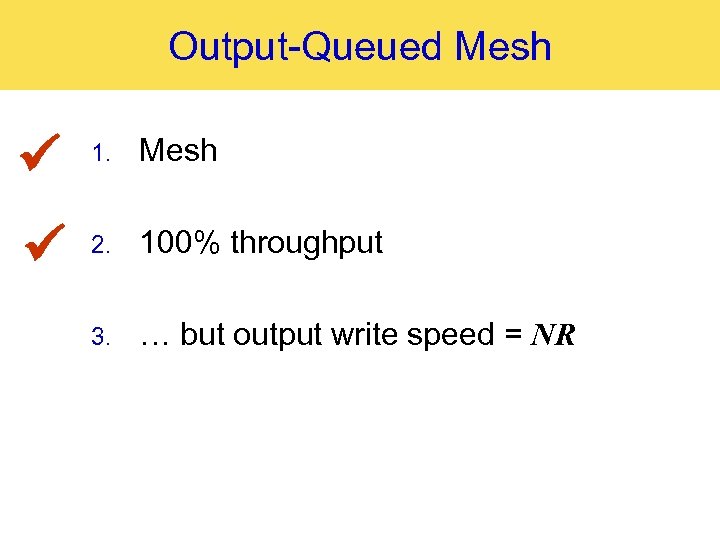
Output-Queued Mesh 1. Mesh 2. 100% throughput 3. … but output write speed = NR
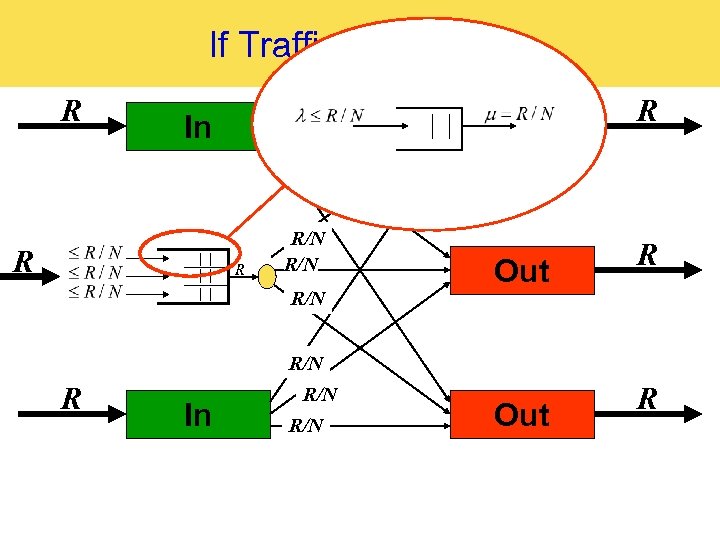
If Traffic Is Uniform R R/N In R/N Out R R/N R R In R R/N R/N Out R R/N R In R/N Out R
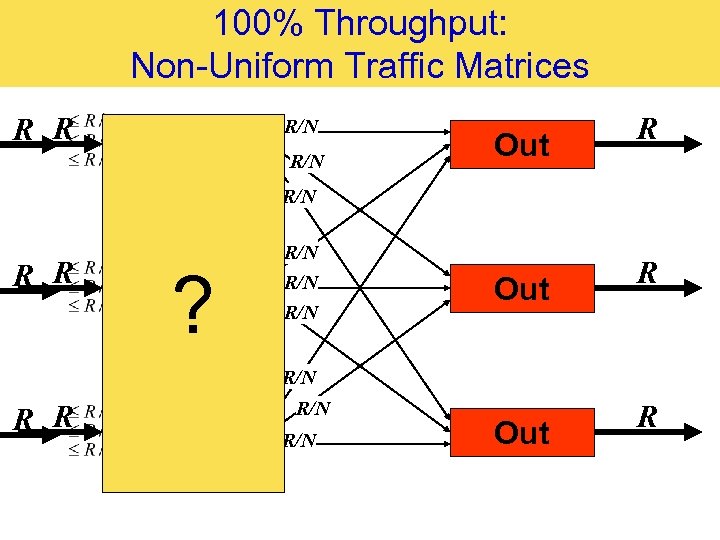
100% Throughput: Non-Uniform Traffic Matrices R R R In R R/N Out R R/N R R R ? In R/N R/N Out R R/N R R R In R R/N Out R
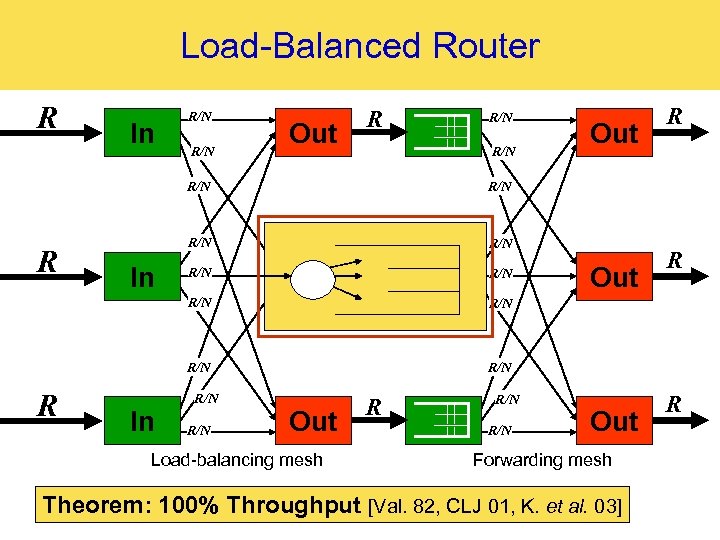
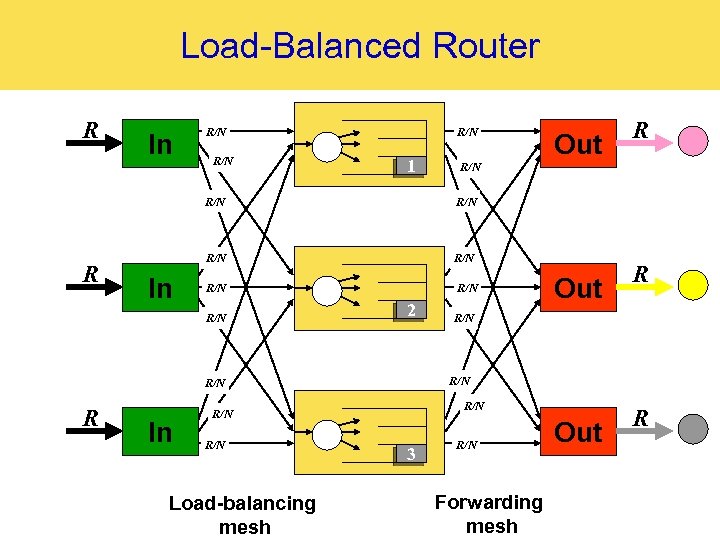
Load-Balanced Router R In R/N Out R R/N R/N R In R/N R/N Out R R/N In Out R R/N R/N R/N Out Load-balancing mesh R R/N Out Forwarding mesh Theorem: 100% Throughput [Val. 82, CLJ 01, K. et al. 03] R
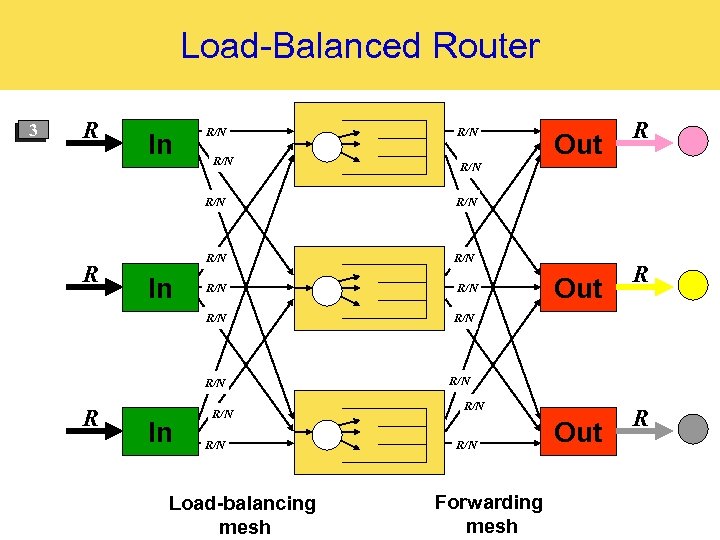
Load-Balanced Router 3 2 1 R In R/N R/N R/N In Out R R/N R Out R/N In R R/N R Out R R/N Load-balancing mesh R/N R/N R/N Forwarding mesh
Load-Balanced Router R In R/N R/N 1 R/N 2 Out R/N R/N Load-balancing mesh R/N R/N In R R/N R Out R 3 R/N Forwarding mesh
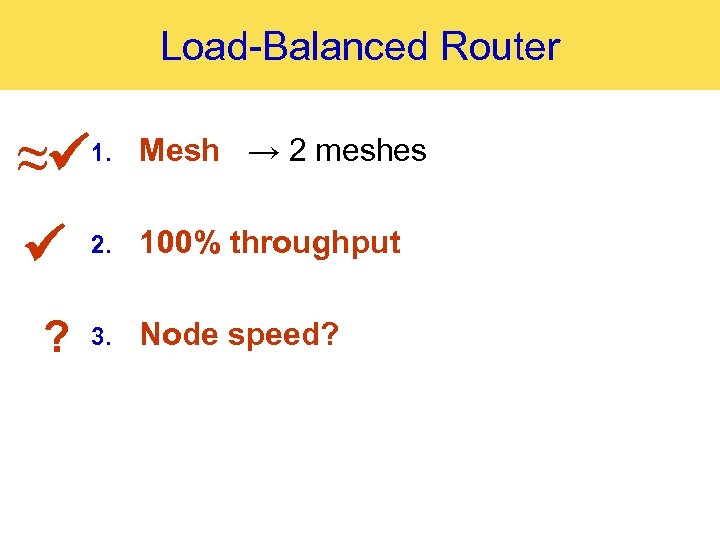
Load-Balanced Router ≈ 1. Mesh → 2 meshes 2. 100% throughput ? 3. Node speed?
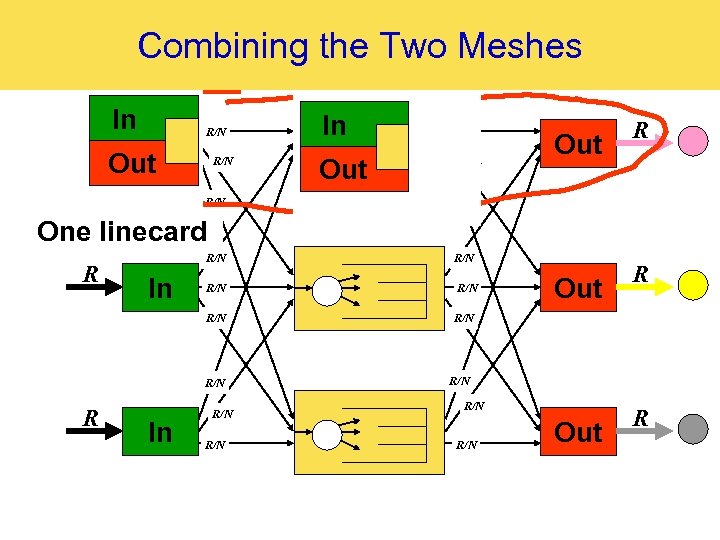
Combining the Two Meshes R In In Out R/N R/N In Out R/N Out R R/N One linecard R R/N In R/N R/N R/N
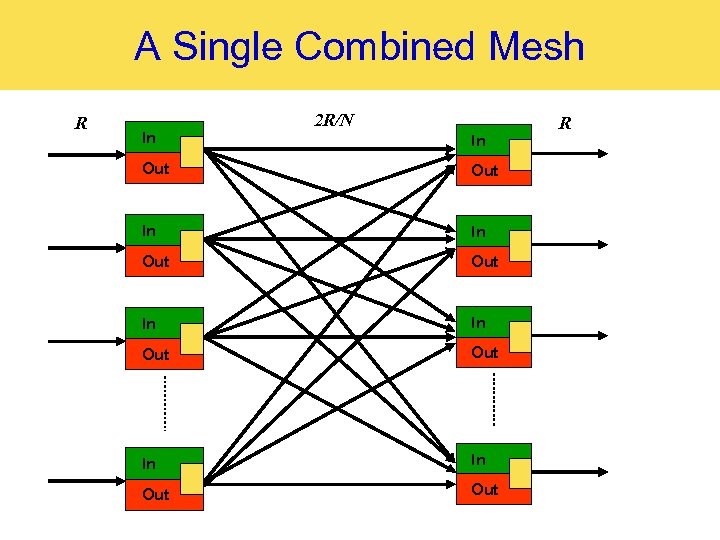
A Single Combined Mesh R In 2 R/N In Out Out In In Out R
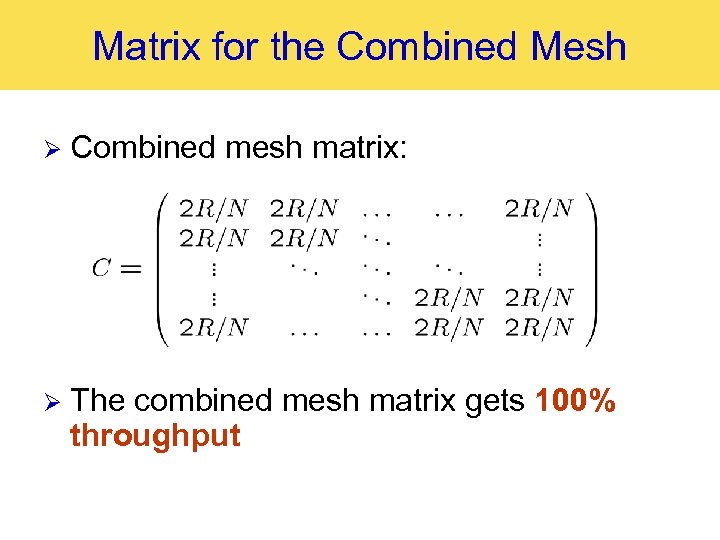
Matrix for the Combined Mesh Ø Combined mesh matrix: Ø The combined mesh matrix gets 100% throughput
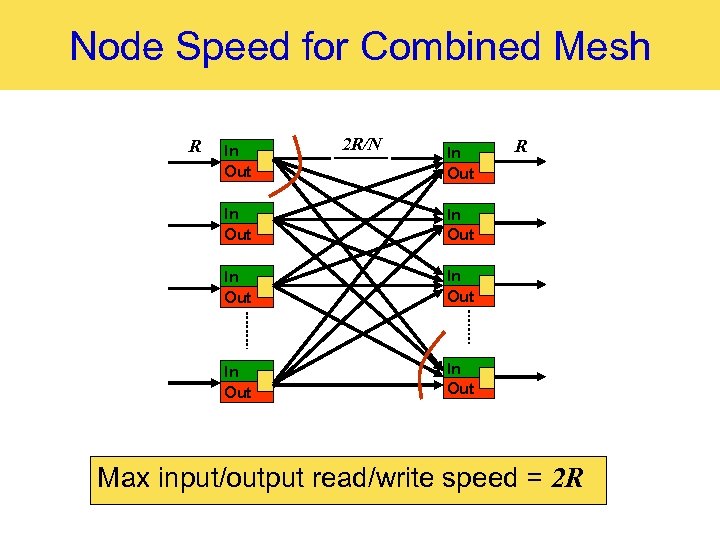
Node Speed for Combined Mesh R In Out 2 R/N In Out In Out R In Out Max input/output read/write speed = 2 R
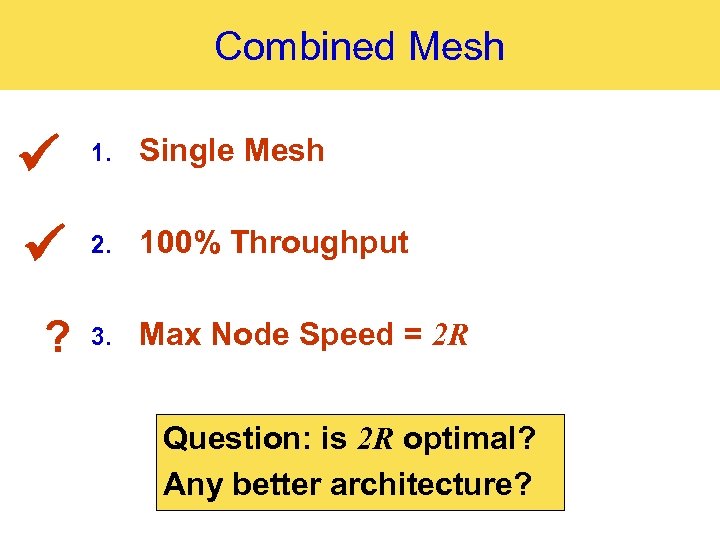
Combined Mesh 1. Single Mesh 2. 100% Throughput ? 3. Max Node Speed = 2 R Question: is 2 R optimal? Any better architecture?
Other Mesh Architectures We Consider Ø Ø Any number of stages (e. g. , 3 stages, 4 stages…. ) Any mesh architecture (e. g. , ring) Any link capacities (e. g. , non-uniform mesh) Any packet routing algorithm (e. g. , adaptive algorithm) Any mesh and any routing.
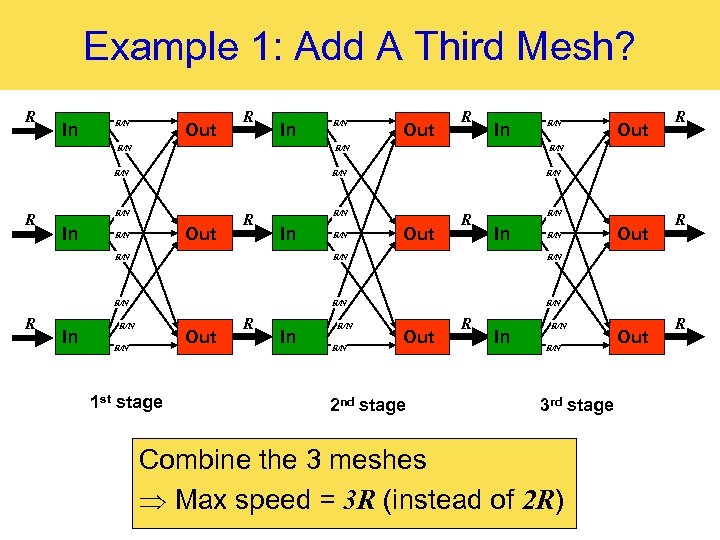
Example 1: Add A Third Mesh? R In R/N Out R In R/N In Out R/N R R/N Out R R/N In R/N R/N Out R R/N R Out R R/N In R/N R/N In Out R R/N R/N R/N Out R/N 1 st stage R In R/N Out 2 nd stage R In R/N 3 rd stage Combine the 3 meshes Max speed = 3 R (instead of 2 R) Out R
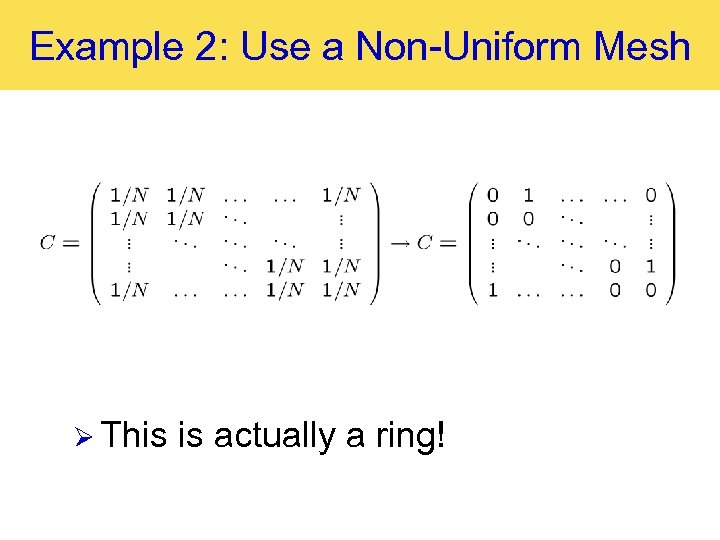
Example 2: Use a Non-Uniform Mesh Ø This is actually a ring!
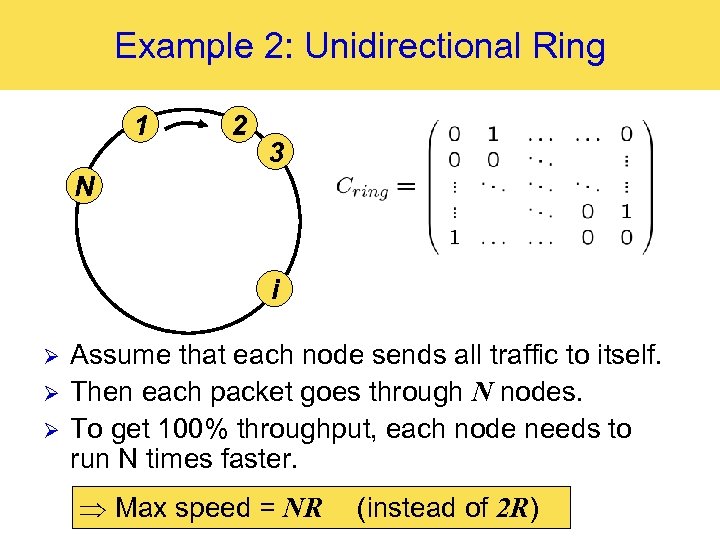
Example 2: Unidirectional Ring 1 2 3 N i Ø Ø Ø Assume that each node sends all traffic to itself. Then each packet goes through N nodes. To get 100% throughput, each node needs to run N times faster. Max speed = NR (instead of 2 R)
At First Glance… Ø … it seems that the uniform mesh is optimal with 2 R! Ø Why: Ø All links have the same capacity, Ø And it is perfectly symmetric. Ø However…. uniform mesh is NOT optimal!
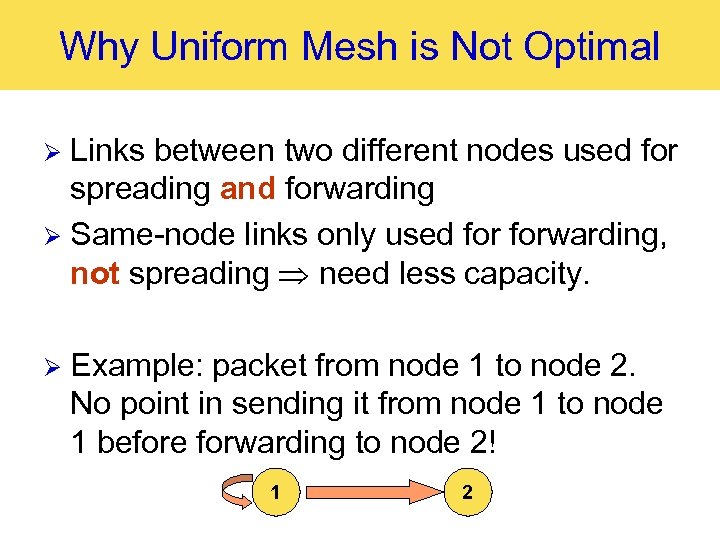
Why Uniform Mesh is Not Optimal Links between two different nodes used for spreading and forwarding Ø Same-node links only used forwarding, not spreading need less capacity. Ø Ø Example: packet from node 1 to node 2. No point in sending it from node 1 to node 1 before forwarding to node 2! 1 2
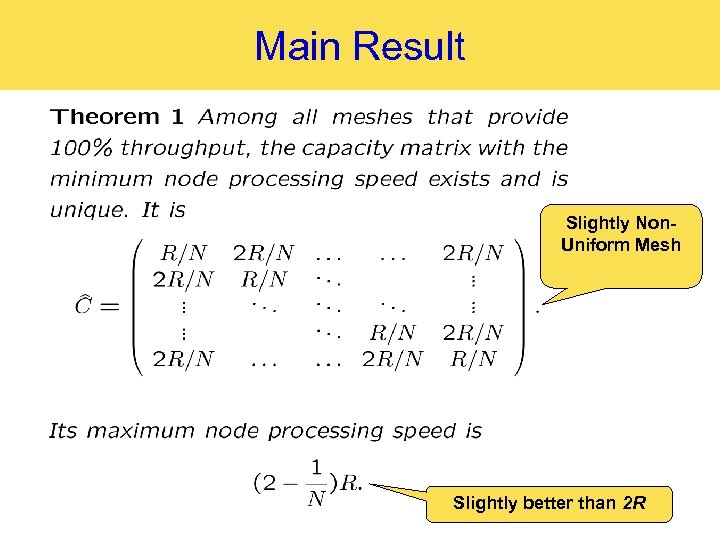
Main Result Slightly Non. Uniform Mesh Slightly better than 2 R
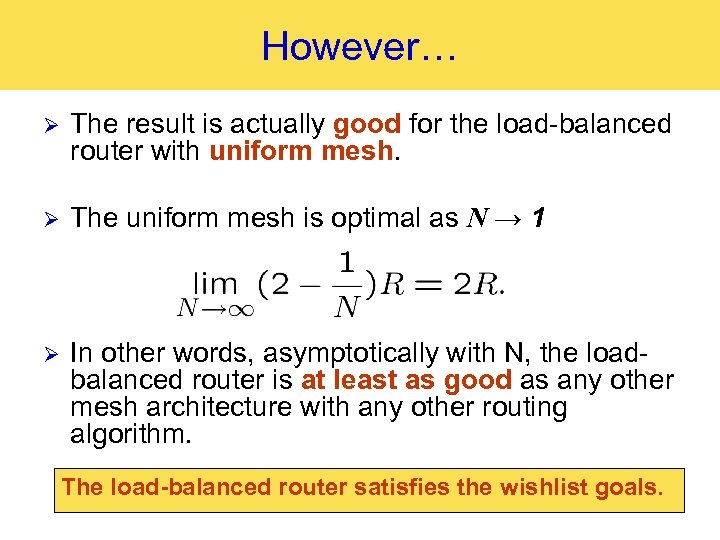
However… Ø The result is actually good for the load-balanced router with uniform mesh. Ø The uniform mesh is optimal as N → 1 Ø In other words, asymptotically with N, the loadbalanced router is at least as good as any other mesh architecture with any other routing algorithm. The load-balanced router satisfies the wishlist goals.
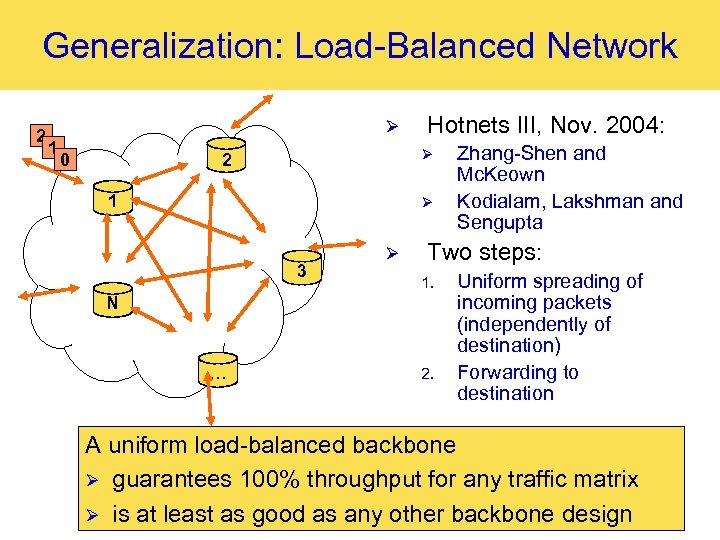
Generalization: Load-Balanced Network 2 Ø 1 0 Hotnets III, Nov. 2004: Ø 2 1 Ø 3 Ø Two steps: 1. N … Zhang-Shen and Mc. Keown Kodialam, Lakshman and Sengupta 2. Uniform spreading of incoming packets (independently of destination) Forwarding to destination A uniform load-balanced backbone Ø guarantees 100% throughput for any traffic matrix Ø is at least as good as any other backbone design

Thank you. Spring 2005 044114
Скачать презентацию Optimal Load-Balancing Isaac Keslassy Technion Israel Cheng-Shang Chang
6290671bf0b3b2602e640b7cf2002827.ppt