


 Скачать презентацию Opportunities in Health Reform to Reduce Infant Mortality
8b50193230a21e40f7ad9e823087a1ac.ppt
- Количество слайдов: 46
 Opportunities in Health Reform to Reduce Infant Mortality Presentation by Kay Johnson, MPH, Ed. M Research Assistant Professor of Pediatrics Dartmouth Medical School Lecturer, Health Policy George Washington University SPHHS/DHP Secretary’s Advisory Committee on Infant Mortality August 2, 2011
 Presentation Objectives 1. Review some history of MCH policy efforts to improve birth outcomes. • • 2. Highlight lessons learned from emphasis on prenatal and neonatal care. Describe current efforts to improve preconception health and health care Discuss strategies and opportunities related to health reform. Kay Johnson, SACIM, 08/02/2011
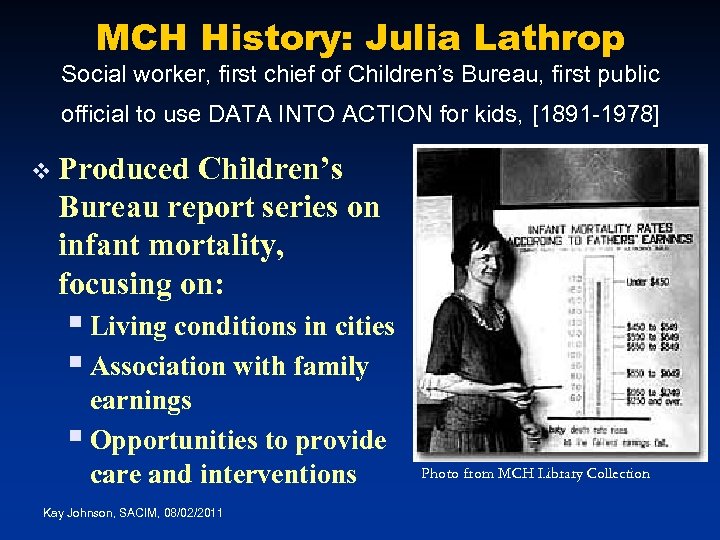 MCH History: Julia Lathrop Social worker, first chief of Children’s Bureau, first public official to use DATA INTO ACTION for kids, [1891 -1978] v Produced Children’s Bureau report series on infant mortality, focusing on: § Living conditions in cities § Association with family earnings § Opportunities to provide care and interventions Kay Johnson, SACIM, 08/02/2011 Photo from MCH Library Collection
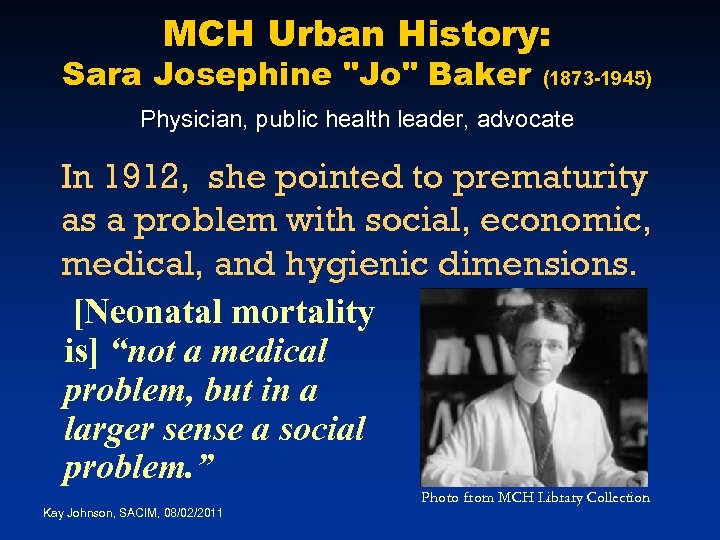 MCH Urban History: Sara Josephine "Jo" Baker (1873 -1945) Physician, public health leader, advocate In 1912, she pointed to prematurity as a problem with social, economic, medical, and hygienic dimensions. [Neonatal mortality is] “not a medical problem, but in a larger sense a social problem. ” Photo from MCH Library Collection Kay Johnson, SACIM, 08/02/2011
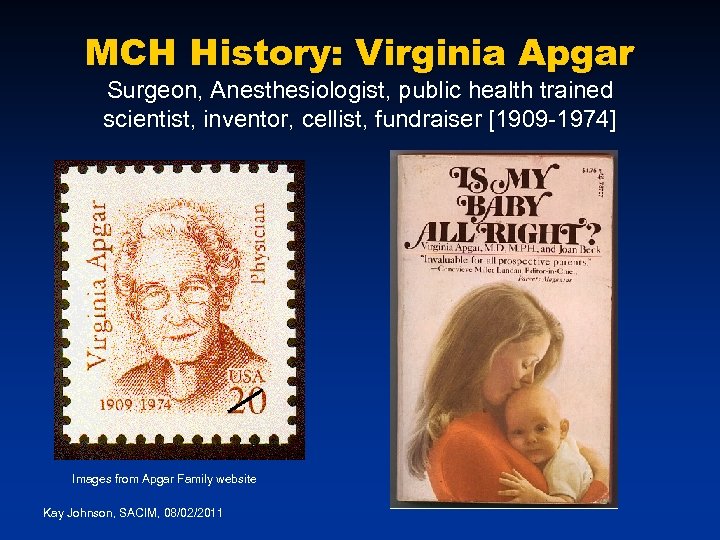 MCH History: Virginia Apgar Surgeon, Anesthesiologist, public health trained scientist, inventor, cellist, fundraiser [1909 -1974] Images from Apgar Family website Kay Johnson, SACIM, 08/02/2011
 TIOP I ( 1976) Kay Johnson, SACIM, 08/02/2011
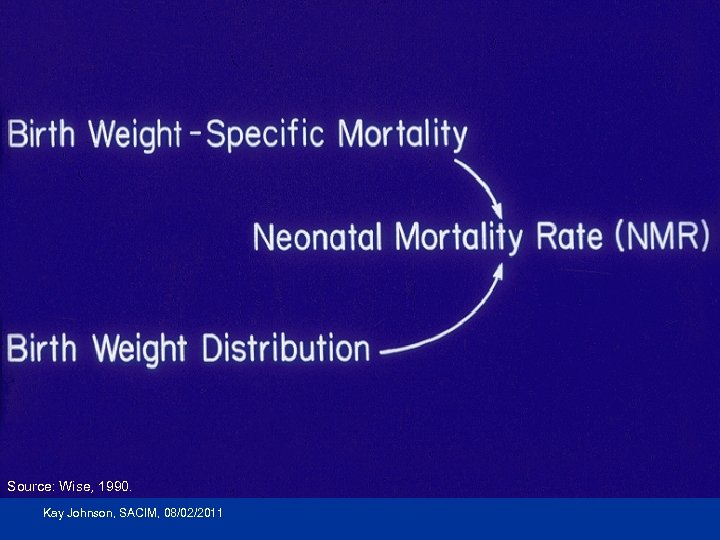 Source: Wise, 1990. Kay Johnson, SACIM, 08/02/2011
 TIOP II ( 1993) Kay Johnson, SACIM, 08/02/2011
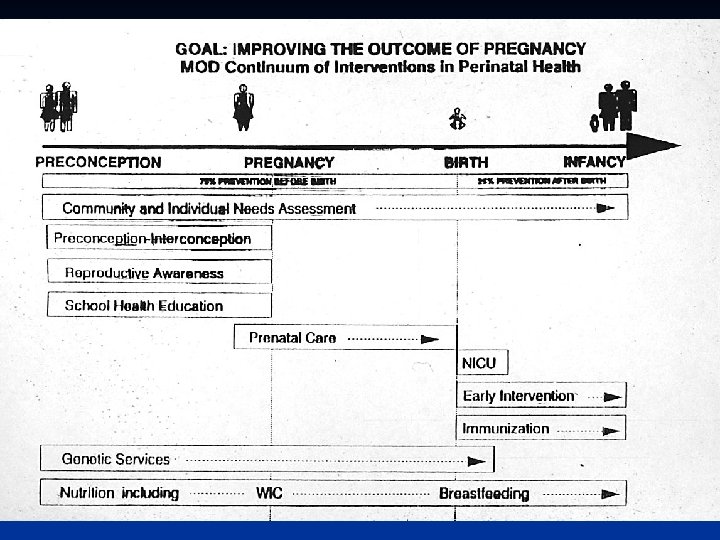 Kay Johnson, SACIM, 08/02/2011
 What did we learn from 20 years of emphasis on neonatal and prenatal care?
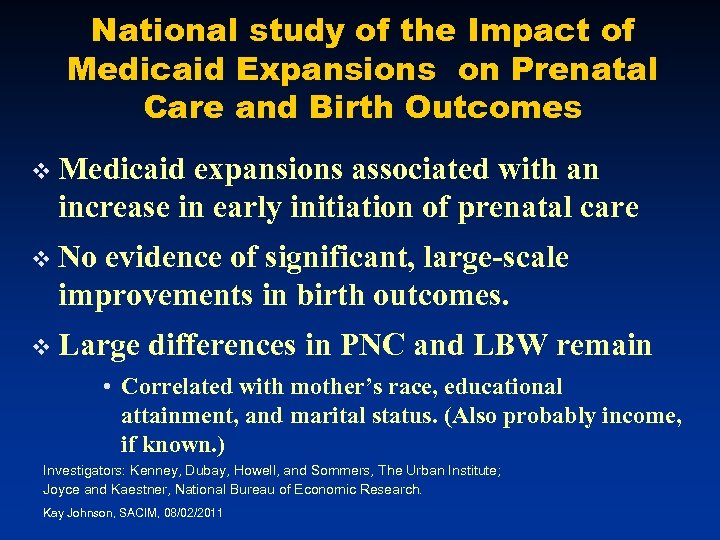 National study of the Impact of Medicaid Expansions on Prenatal Care and Birth Outcomes v Medicaid expansions associated with an increase in early initiation of prenatal care v No evidence of significant, large-scale improvements in birth outcomes. v Large differences in PNC and LBW remain • Correlated with mother’s race, educational attainment, and marital status. (Also probably income, if known. ) Investigators: Kenney, Dubay, Howell, and Sommers, The Urban Institute; Joyce and Kaestner, National Bureau of Economic Research. Kay Johnson, SACIM, 08/02/2011
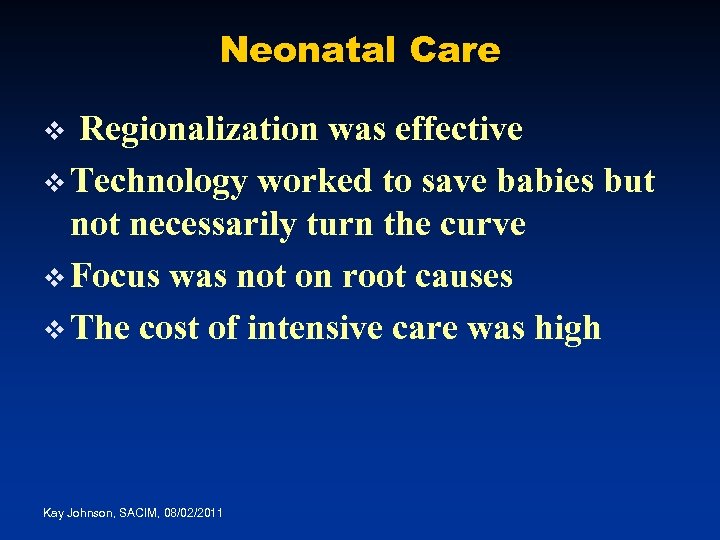 Neonatal Care Regionalization was effective v Technology worked to save babies but not necessarily turn the curve v Focus was not on root causes v The cost of intensive care was high v Kay Johnson, SACIM, 08/02/2011
 Prenatal Care Demonstrated impact on maternal risks v Recommendations for changes in content of care never fully implemented v Policy changes possible in context of 1980 s politics – Medicaid expansion v The interventions were often too little, too late to modify conditions v RCT showed not impact on low birthweight or prematurity rates (Klerman, Ramey, Goldenberg) v Kay Johnson, SACIM, 08/02/2011
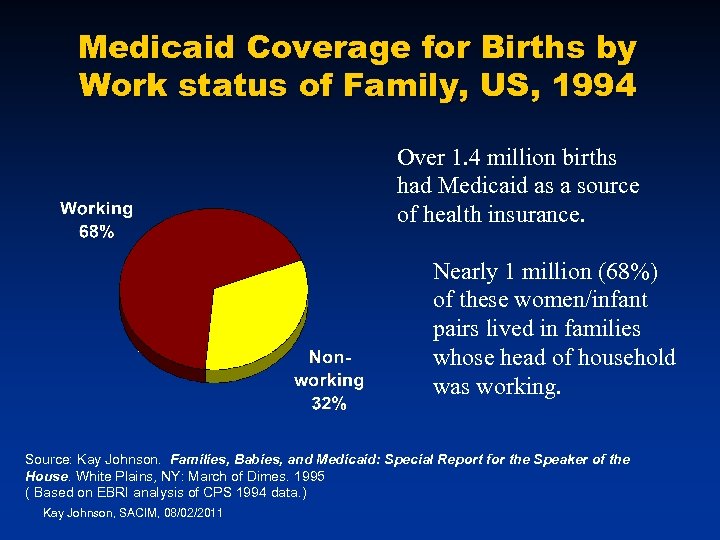 Medicaid Coverage for Births by Work status of Family, US, 1994 Over 1. 4 million births had Medicaid as a source of health insurance. Nearly 1 million (68%) of these women/infant pairs lived in families whose head of household was working. Source: Kay Johnson. Families, Babies, and Medicaid: Special Report for the Speaker of the House. White Plains, NY: March of Dimes. 1995 ( Based on EBRI analysis of CPS 1994 data. ) Kay Johnson, SACIM, 08/02/2011
 Did expanding Medicaid for maternity care coverage have a positive impact? v Goal of Medicaid expansions for pregnancy: § To reduce financial barriers to prenatal care for low -income women, thus improving pregnancy outcomes and reducing spending for high-risk newborn care. v States with a multifaceted strategy to Medicaid prenatal expansions were more successful in improving access to care and outcomes. Kay Johnson, SACIM, 08/02/2011
 Expansion in Rhode Island v Multiple strategies § Increased eligibility levels § Streamlined enrollment process § Provided care coordination § Used health promotion campaigns § Maximized managed care arrangements § Focused on provider participation and pay-for§ v performance Expanded eligibility for family planning Results § Increased prenatal care utilization and initiation § Decreased infant mortality § Eliminated gap in short inter-birth intervals Source: JF Griffin, SACIM, 08/02/2011 JW Hogan, JS Buechner and TM Leddy, “The Effect of a Medicaid Managed Care Program on Kay Johnson, the Adequacy of Prenatal Care Utilization in Rhode Island, ” American Journal of Public Health, 1999: 89.
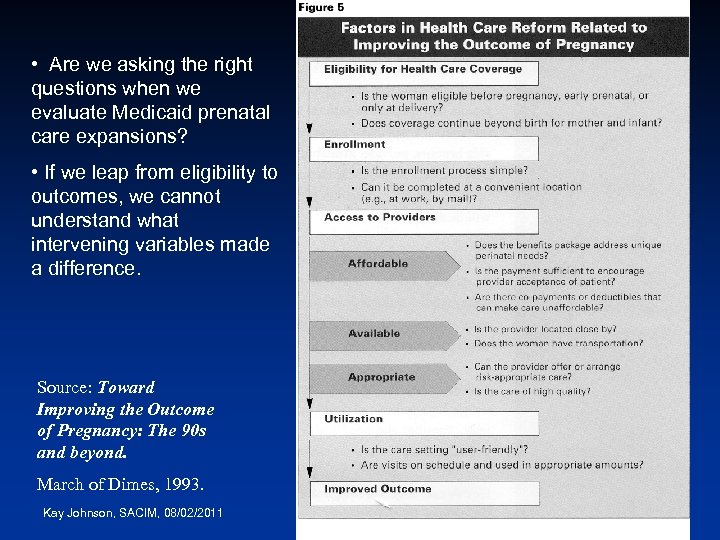 • Are we asking the right questions when we evaluate Medicaid prenatal care expansions? • If we leap from eligibility to outcomes, we cannot understand what intervening variables made a difference. Source: Toward Improving the Outcome of Pregnancy: The 90 s and beyond. March of Dimes, 1993. Kay Johnson, SACIM, 08/02/2011
 Barriers to care continue to limit potential impact v Women eligible only after a confirmed pregnancy test experienced delays in enrollment. v All areas did not assure access to providers who delivered appropriate, high-quality care. v Provider payments were not adequate v The content of prenatal care generally did not conform to recommendations (whether publicly or privately financed). v In managed care, few states continued to emphasize psychosocial interventions, effective care coordination, presumptive eligibility, and other approaches that had shown results. Kay Johnson, SACIM, 08/02/2011
 Focus on preconception health and health care
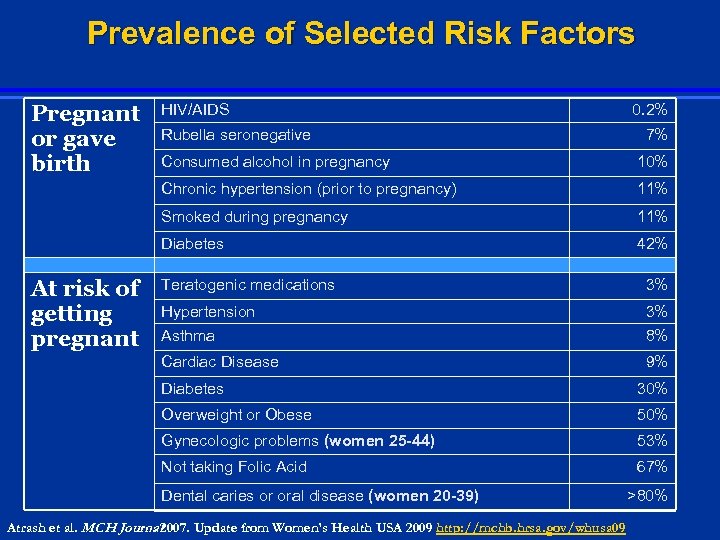 Prevalence of Selected Risk Factors Pregnant or gave birth HIV/AIDS Rubella seronegative 0. 2% 7% 10% Chronic hypertension (prior to pregnancy) 11% Smoked during pregnancy 11% Diabetes At risk of getting pregnant Consumed alcohol in pregnancy 42% Teratogenic medications 3% Hypertension 3% Asthma 8% Cardiac Disease 9% Diabetes 30% Overweight or Obese 50% Gynecologic problems (women 25 -44) 53% Not taking Folic Acid 67% Dental caries or oral disease (women 20 -39) Atrash et al. MCH Journal 2007. Update from Women’s Health USA 2009 http: //mchb. hrsa. gov/whusa 09. >80% 20
![In the policy domain, many of our most important [MCH] policies deem women “…the](https://present5.com/presentation/8b50193230a21e40f7ad9e823087a1ac/image-21.jpg "In the policy domain, many of our most important [MCH] policies deem women “…the") In the policy domain, many of our most important [MCH] policies deem women “…the functional isolation of prenatal care eligible for services the moment they from other components of women's health conceive and jettison them from the program care remains an extraordinary expression of the moment they deliver or…soon thereafter. our disrespect for the continuity of risk and Although the…elevation of prenatal care has patterns of health care utilization over the led to important expansions in public course of a woman's lifetime. . support for prenatal services, … it [is] essential that we recast our analytic [Programs] enhance prenatal care with little approaches and our political strategies to concern for other reproductive health support the larger struggle to improve services, much less for the general health women's health throughout their lives. ” care needs of young women… Kay Johnson, SACIM, 08/02/2011 Source: Wise, AJPH, 1994.
In the policy domain, many of our most important [MCH] policies deem women “…the functional isolation of prenatal care eligible for services the moment they from other components of women's health conceive and jettison them from the program care remains an extraordinary expression of the moment they deliver or…soon thereafter. our disrespect for the continuity of risk and Although the…elevation of prenatal care has patterns of health care utilization over the led to important expansions in public course of a woman's lifetime. . support for prenatal services, … it [is] essential that we recast our analytic [Programs] enhance prenatal care with little approaches and our political strategies to concern for other reproductive health support the larger struggle to improve services, much less for the general health women's health throughout their lives. ” care needs of young women… Kay Johnson, SACIM, 08/02/2011 Source: Wise, AJPH, 1994.
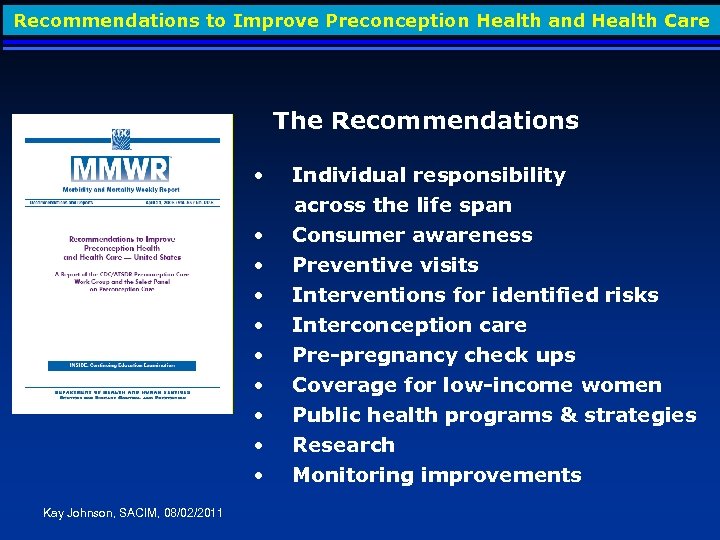 Recommendations to Improve Preconception Health and Health Care The Recommendations • • • Kay Johnson, SACIM, 08/02/2011 Individual responsibility across the life span Consumer awareness Preventive visits Interventions for identified risks Interconception care Pre-pregnancy check ups Coverage for low-income women Public health programs & strategies Research Monitoring improvements
 “First things first” Improving Coverage
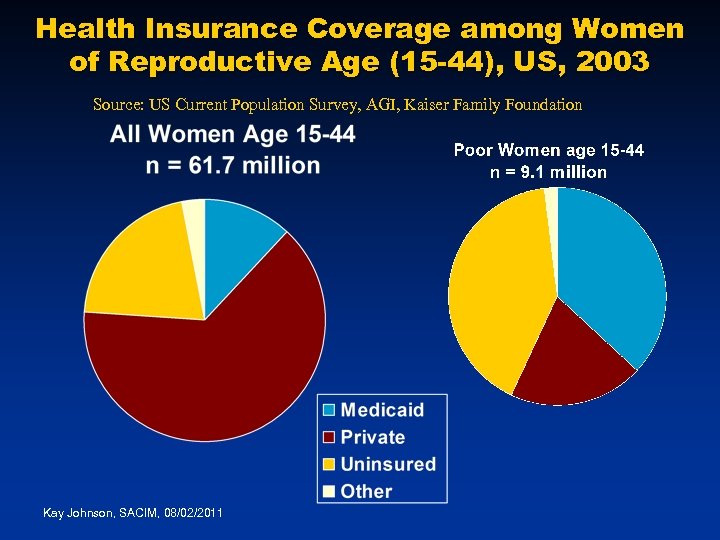 Health Insurance Coverage among Women of Reproductive Age (15 -44), US, 2003 Source: US Current Population Survey, AGI, Kaiser Family Foundation Kay Johnson, SACIM, 08/02/2011
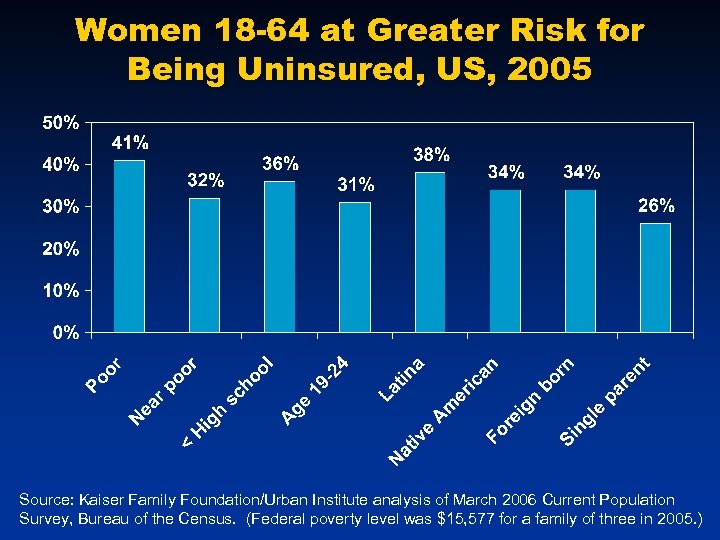 Women 18 -64 at Greater Risk for Being Uninsured, US, 2005 Source: Kaiser Family Foundation/Urban Institute analysis of March 2006 Current Population Kay Johnson, SACIM, 08/02/2011 Survey, Bureau of the Census. (Federal poverty level was $15, 577 for a family of three in 2005. )
 Interconception/Interpregnancy v Interventions for women with prior adverse pregnancy outcome v Grady (Atlanta) Interpregnancy Care § Participants significantly more likely to achieve adequate spacing of subsequent pregnancies and improved outcomes compared to a historical cohort. (Brann and Dunlop) v Georgia and Louisiana have CMS approval for “interpregnancy” care Medicaid waivers § Implementing intensive care coordination, ala disease § management programs Focus on women with prior Medicaid financed birth that had VLBW or other adverse outcome Kay Johnson, SACIM, 08/02/2011
 Interconception Care in Healthy Start v Healthy Start since 1992 v Interconception care has been one of the nine core components since 2001. v 104 grantees each have activities v Together, it forms the largest set of efforts aimed at using interconception care to improve the health of high-risk women, their infants, and their families. Kay Johnson, SACIM, 08/02/2011
 Policy Finance Work Group Recommendation for Well-Woman Health Care Visits, 2007 v Consensus of Work Group §Annual well-woman’s health exam as a covered benefit in public and private plans §Including preconception, FP, etc. v Builds on § EPSDT and Bright Futures definition of wellchild care/preventive services § Medicare preventive exam § Patient-oriented primary care Kay Johnson, SACIM, 08/02/2011
 Trust for America’s Health: Key Public Policy Options to Improve Preconception Health, 2008 v v Health reform to provide coverage for all Under existing Medicaid law states can: § § § v v v Increase reimbursement levels. 60 -day post partum coverage is required – but only 50 -60% of women in Medicaid have a post-partum visit. Maximize family planning and other waivers Title V Maternal and Child Health Block Grant Health Start Infant Mortality Program Community Health Centers Title X Family Planning Research and prevention through CDC and NIH Kay Johnson, SACIM, 08/02/2011
 Health Reform Opportunities Promise of the Affordable Care Act is Enormous! It must be fulfilled through action. Kay Johnson, SACIM, 08/02/2011
 Health Care Reform Legislation Taxonomy National Health Reform Law and Policy Project Thanks to Sara Rosenbaum and colleagues The George Washington University School of Public Health and Health Services Department of Health Policy http: //www. gwumc. edu/sphhs/departments/healthp olicy/health. Reform/ Kay Johnson, SACIM, 08/02/2011
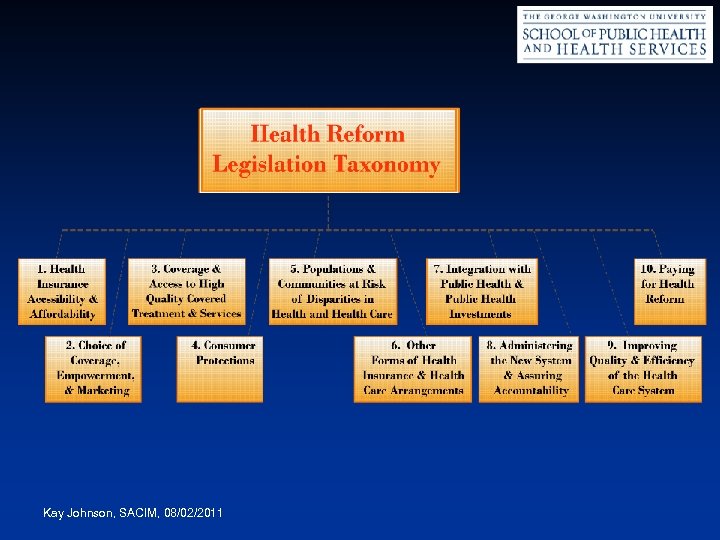 Kay Johnson, SACIM, 08/02/2011
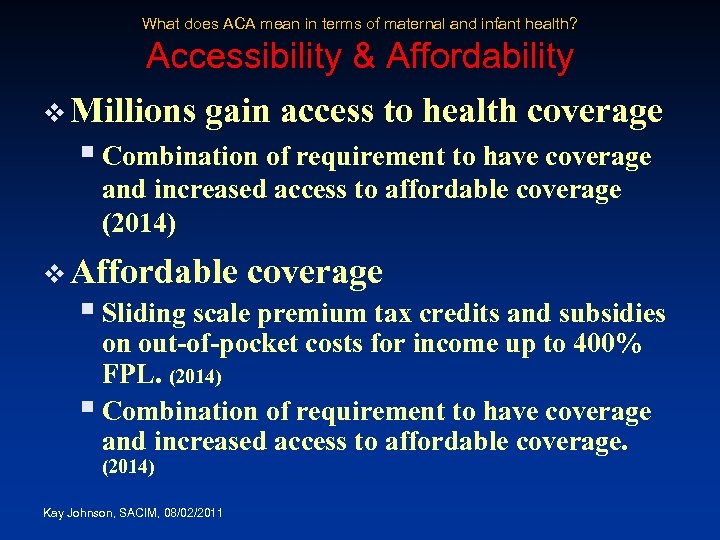 What does ACA mean in terms of maternal and infant health? Accessibility & Affordability v Millions gain access to health coverage § Combination of requirement to have coverage and increased access to affordable coverage (2014) v Affordable coverage § Sliding scale premium tax credits and subsidies on out-of-pocket costs for income up to 400% FPL. (2014) § Combination of requirement to have coverage and increased access to affordable coverage. (2014) Kay Johnson, SACIM, 08/02/2011
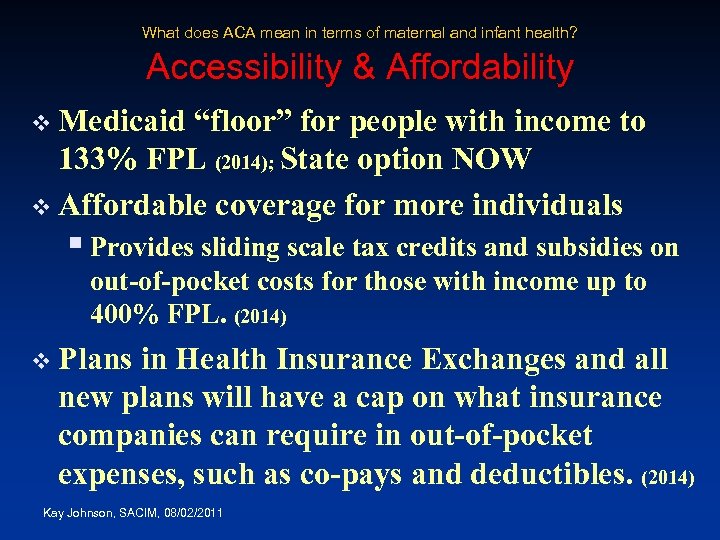 What does ACA mean in terms of maternal and infant health? Accessibility & Affordability v Medicaid “floor” for people with income to 133% FPL (2014); State option NOW v Affordable coverage for more individuals § Provides sliding scale tax credits and subsidies on out-of-pocket costs for those with income up to 400% FPL. (2014) v Plans in Health Insurance Exchanges and all new plans will have a cap on what insurance companies can require in out-of-pocket expenses, such as co-pays and deductibles. (2014) Kay Johnson, SACIM, 08/02/2011
 What does ACA mean in terms of maternal and infant health? Coverage and Benefits v Preventive services for adults § NOW, for new plans, no cost sharing on preventive services rated A or B by US Preventive Services Task Force. § In Exchanges, coverage of prevention and basic health services, including maternity benefits. v By 2014, HHS to establish essential standard benefits package § Improvements in coverage for women’s preventive services based on Institute of Medicine panel recommendations (2013) Kay Johnson, SACIM, 08/02/2011
 What does ACA mean in terms of maternal and infant health? Choice and Empowerment v Health Insurance Exchanges § NOW, states are planning and some are early adopters (e. g. , California). v Simplified processes v Qualified Health Plans Kay Johnson, SACIM, 08/02/2011
 What does ACA mean in terms of maternal and infant health? Coverage & Benefits v v Medicaid family planning coverage (without waiver) for women – State option NOW For new optional categorically-needy eligibility group including: 1. non-pregnant individuals with income up to the highest level applicable to pregnant women covered under Medicaid or CHIP, and 2. individuals eligible under the standards and processes of existing section 1115 waivers that provide family planning services and supplies. v Benefits limited to family planning services and supplies, including related medical diagnostic and treatment services. Kay Johnson, SACIM, 08/02/2011
 What does ACA mean in terms of maternal and infant health? Consumer Protections v The Departments of HHS, Labor, and Treasury issued regulations to implement a new Patient’s Bill of Rights under the ACA. Effective 9/23/2010 federal law: § Prohibits denial of coverage to children due to a pre-existing condition. § Permits young adults to age 26 to stay on parents plans. § Bans lifetime dollar limits on benefits. § Restricts annual dollar limits on coverage. § Covers recommended preventive services with no deductible, copayments, or coinsurance. § Assures choice of any available primary care provider in a plan’s network. § Access to out-of-network emergency care without prior authorization or higher cost sharing than would otherwise be charged. § Improves appeals processes. § Prohibits rescissions of coverage based on a mistake on an application. Kay Johnson, SACIM, 08/02/2011
 What does ACA mean in terms of maternal and infant health? Consumer Protection v NOW, eliminates lifetime limits and prohibits health plans from dropping those who get sick. v NOW, assures access to affordable insurance for uninsured with pre-existing conditions through a temporary subsidized high-risk pool. v NOW prohibits gender rating. v Will prohibit insurance companies from denying any woman coverage because of a pre-existing condition (2014) Kay Johnson, SACIM, 08/02/2011
 What does ACA mean in terms of maternal and infant health? Addressing Disparities v Increase investment in primary care for medically underserved § Community health centers, NHSC, Medicaid primary care payments. v Funding to increase workforce diversity v Community health workers § Grants to States, public health departments, clinics, hospitals, FQHCs and other nonprofits. v Investments Kay Johnson, SACIM, 08/02/2011 in research about disparities
 What does ACA mean in terms of maternal and infant health? Quality & Efficiency Federal v National quality strategy and measures v Patient-Centered Outcomes Research Institute v CMS Center for Innovation More state and local action required v Patient-centered medical home pilots v Community-based Collaborative Care Networks v Community Health Teams to support patientcentered medical home, including OB-GYNs. Kay Johnson, SACIM, 08/02/2011
 What does ACA mean in terms of maternal and infant health? Integration with Public Health v. National Prevention Strategy v. Prevention and Public Health Fund v. Community Transformation Grants § State innovation essential § Emphasis on prevention? chronic disease? Kay Johnson, SACIM, 08/02/2011
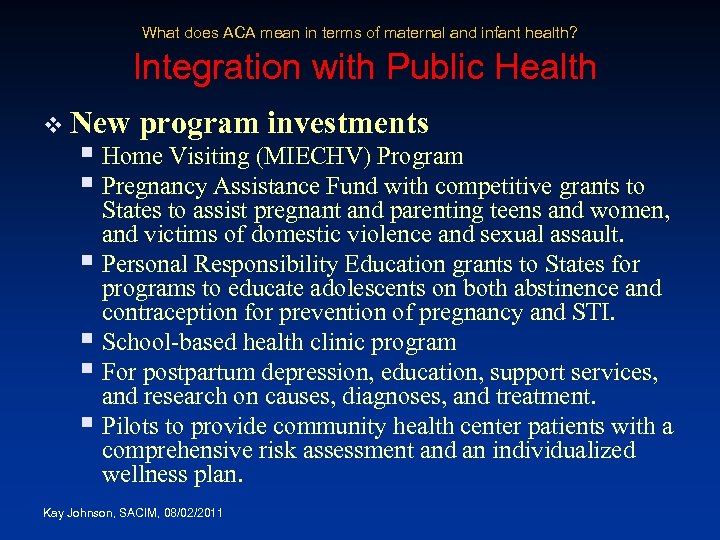 What does ACA mean in terms of maternal and infant health? Integration with Public Health v New program investments § Home Visiting (MIECHV) Program § Pregnancy Assistance Fund with competitive grants to States to assist pregnant and parenting teens and women, and victims of domestic violence and sexual assault. § Personal Responsibility Education grants to States for programs to educate adolescents on both abstinence and contraception for prevention of pregnancy and STI. § School-based health clinic program § For postpartum depression, education, support services, and research on causes, diagnoses, and treatment. § Pilots to provide community health center patients with a comprehensive risk assessment and an individualized wellness plan. Kay Johnson, SACIM, 08/02/2011
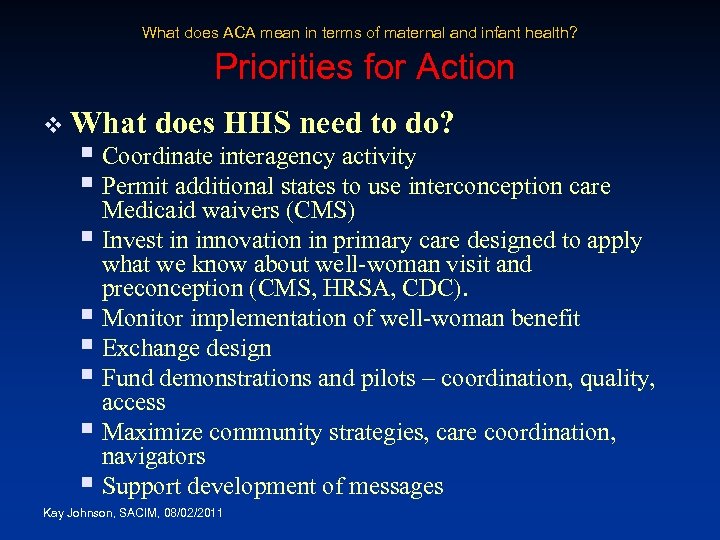 What does ACA mean in terms of maternal and infant health? Priorities for Action v What does HHS need to do? § Coordinate interagency activity § Permit additional states to use interconception care Medicaid waivers (CMS) § Invest in innovation in primary care designed to apply what we know about well-woman visit and preconception (CMS, HRSA, CDC). § Monitor implementation of well-woman benefit § Exchange design § Fund demonstrations and pilots – coordination, quality, access § Maximize community strategies, care coordination, navigators § Support development of messages Kay Johnson, SACIM, 08/02/2011
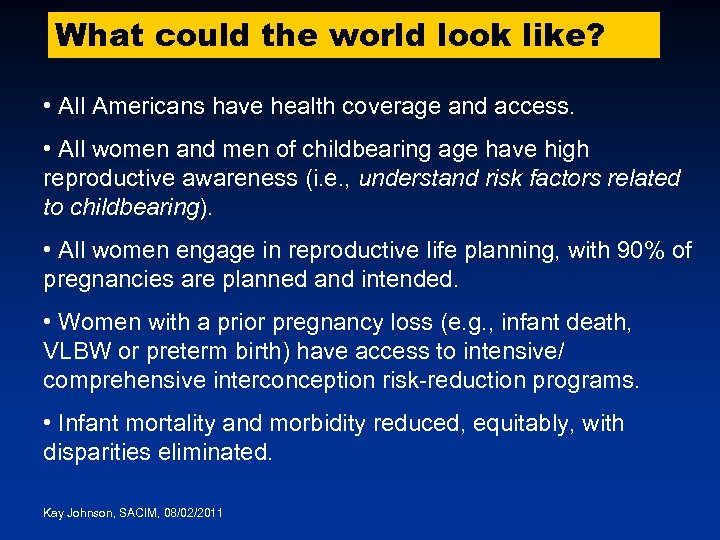 What could the world look like? • All Americans have health coverage and access. • All women and men of childbearing age have high reproductive awareness (i. e. , understand risk factors related to childbearing). • All women engage in reproductive life planning, with 90% of pregnancies are planned and intended. • Women with a prior pregnancy loss (e. g. , infant death, VLBW or preterm birth) have access to intensive/ comprehensive interconception risk-reduction programs. • Infant mortality and morbidity reduced, equitably, with disparities eliminated. Kay Johnson, SACIM, 08/02/2011
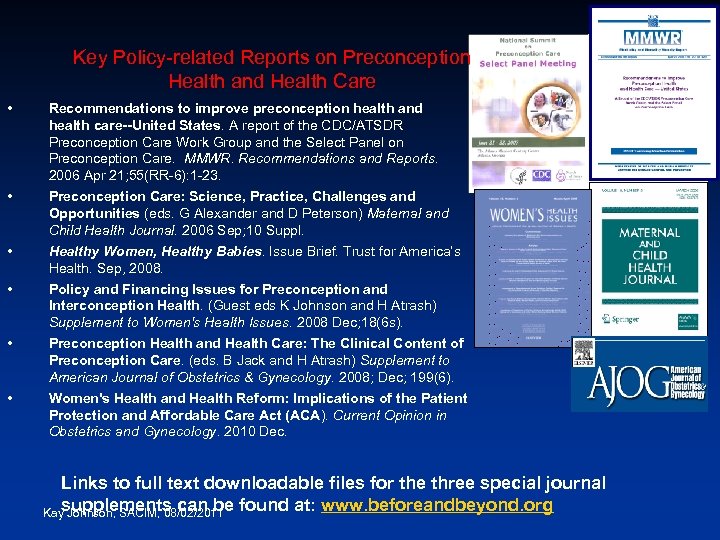 Key Policy-related Reports on Preconception Health and Health Care • • • Recommendations to improve preconception health and health care--United States. A report of the CDC/ATSDR Preconception Care Work Group and the Select Panel on Preconception Care. MMWR. Recommendations and Reports. 2006 Apr 21; 55(RR-6): 1 -23. Preconception Care: Science, Practice, Challenges and Opportunities (eds. G Alexander and D Peterson) Maternal and Child Health Journal. 2006 Sep; 10 Suppl. Healthy Women, Healthy Babies. Issue Brief. Trust for America’s Health. Sep, 2008. Policy and Financing Issues for Preconception and Interconception Health. (Guest eds K Johnson and H Atrash) Supplement to Women's Health Issues. 2008 Dec; 18(6 s). Preconception Health and Health Care: The Clinical Content of Preconception Care. (eds. B Jack and H Atrash) Supplement to American Journal of Obstetrics & Gynecology. 2008; Dec; 199(6). Women's Health and Health Reform: Implications of the Patient Protection and Affordable Care Act (ACA). Current Opinion in Obstetrics and Gynecology. 2010 Dec. Links to full text downloadable files for the three special journal supplements can be found at: www. beforeandbeyond. org Kay Johnson, SACIM, 08/02/2011