


 Скачать презентацию Operations Management Design of Goods and Services Chapter
aa089a6b2cb813e32db5c0b86604c54e.ppt
- Количество слайдов: 38
 Operations Management Design of Goods and Services Chapter 5 1
 Outline ¨ Product Strategy. ¨ Selection. ¨ Product Development Stages. ¨ Design Issues. ¨ Documents. ¨ Service Design. 2
 Goals ¨ Find new products to design, develop and market. ¨ Develop and implement a product strategy that: Meets demands of the marketplace. · Provides a competitive advantage. · Differentiation. · Low cost. · Rapid response. · 3
 Product Strategy ¨ Product strategy includes: ¨ Selection - What good or service should be offered. ¨ Development - From product concept to introduction. ¨ Design (and redesign) - To define and redefine product. 4
 Product Selection ¨ Deciding which products (goods and services) to provide. ¨ Product includes: ¨ Physical good or service, including features, quality, durability, reliability, etc. ¨ Brand. ¨ Packaging. ¨ Service & Warranty. 5
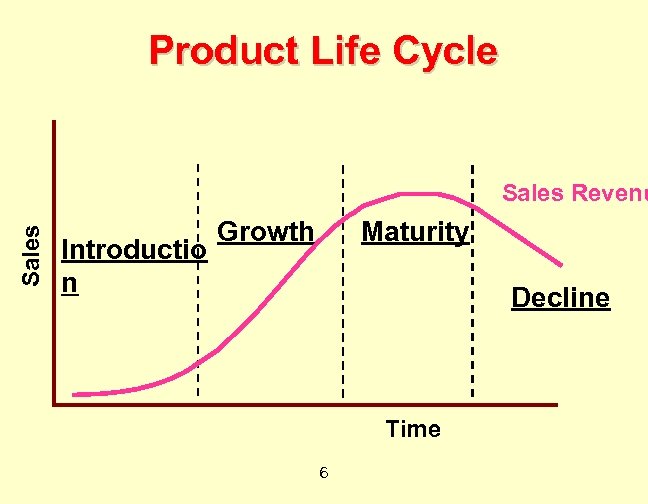 Product Life Cycle Sales Revenu Introductio n Growth Maturity Decline Time 6
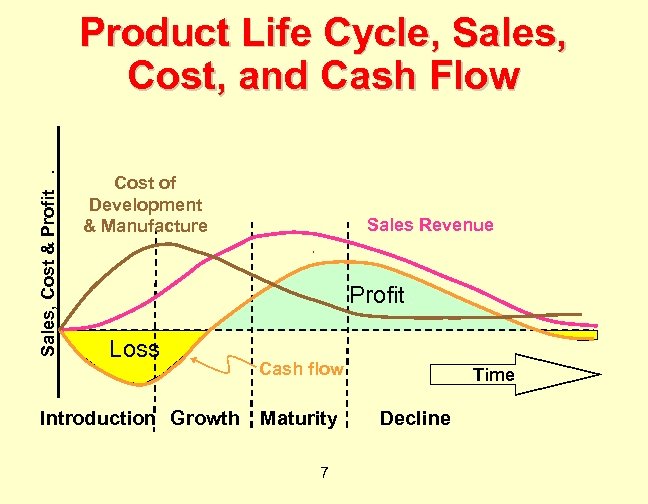 Sales, Cost & Profit. Product Life Cycle, Sales, Cost, and Cash Flow Cost of Development & Manufacture Sales Revenue Profit Loss Cash flow Introduction Growth Maturity 7 Time Decline
 Product Life Cycle Introduction ¨ Initial designs. ¨ Product development. ¨ Process modification and enhancement. ¨ Supplier development. ¨ Increasing costs and revenues. ¨ Generally flow! cost>revenue, so negative cash 8
 Idea Generation ¨ Provides basis for entry into market. ¨ Sources of ideas. Market need (60 -80%). ¨ Engineering & operations (20%). ¨ Technology; competitors; inventions; employees. ¨ ¨ Very few ideas become marketable products & few marketed products are successful! 9
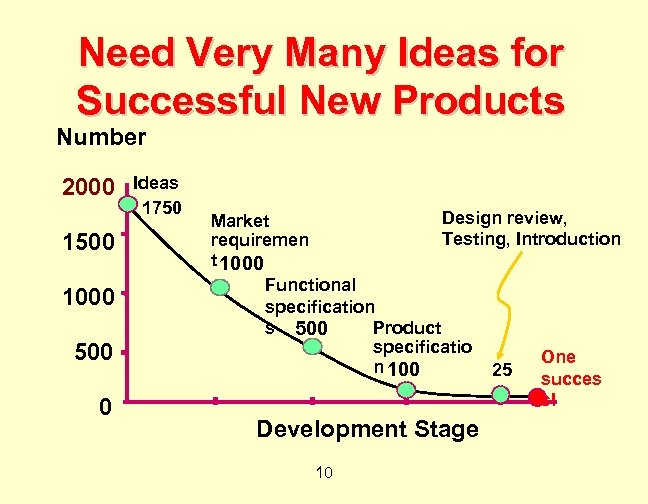 Need Very Many Ideas for Successful New Products Number 2000 1500 1000 500 0 Ideas 1750 Design review, Market Testing, Introduction requiremen t 1000 Functional specification Product s 500 specificatio One n 100 25 succes s! Development Stage 10
 Assess Abilty to Offer Product ¨ Can the firm provide the product/service? ¨ Should the firm provide the product/service? ¨ Make vs. Buy ¨ A firm may be able to purchase the product 11 as a “standard item” from another
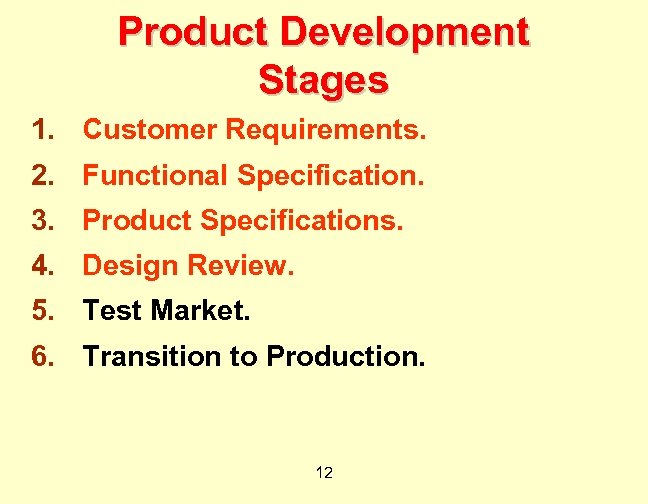 Product Development Stages 1. Customer Requirements. 2. Functional Specification. 3. Product Specifications. 4. Design Review. 5. Test Market. 6. Transition to Production. 12
 1. Customer Requirements ¨ Identifies & positions key product benefits. ¨ Example: Quiet, fast, low cost color printer. ¨ Identifies detailed list of product attributes desired by customer. ¨ Use customer focus groups or interviews. 13
 2. Functional Specification ¨ Defines product in terms of how the product would meet desired attributes. ¨ Identifies product’s engineering characteristics. ¨ Example: Printer noise (d. B), pages per minute. ¨ Prioritizes engineering characteristics. ¨ May rate product compared to competition. 14
 3. Product Specifications ¨ Determines how product will be made. ¨ Gives product’s physical specifications. ¨ Example: Dimensions, material, amount of insulation, technology, etc. ¨ Defined by engineering drawing. ¨ Done often on computer. ¨ Computer-Aided Design (CAD). 15
 4. Design Review ¨ Review design from multiple perspectives. ¨ Evaluate in terms of: ¨ Customer requirements. ¨ Ability to produce product or deliver service. ¨ Revise design if needed. 16
 Quality Function Deployment - QFD ¨ Technique to help: ¨ Identify customer requirements. ¨ Translate these into functional specifications and product specifications. ¨ Also helps focus quality efforts. ¨ Involves creating 4 tabular ‘Matrices’ or ‘Houses’. ¨ Breakdown product design into increasing levels of detail. 17
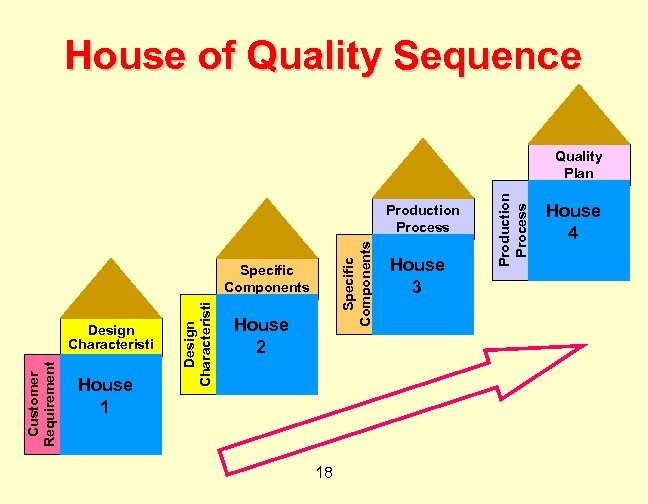 House of Quality Sequence Specific Components Production Process Customer Requirement s Design Characteristi cs House 1 Design Characteristi cs Specific Components House 2 18 House 3 Production Process Quality Plan House 4
 5. & 6. Test Marketing & Transition to Production ¨ Test market product to assess design and market. ¨ Transition to production. ¨ Use a trial period to work the bugs out and revise product and process design. ¨ Refine supplier selections. ¨ Transfer responsibility from design group to production group. 19
 Design Issues ¨ Concurrent design. ¨ Manufacturability & Value Engineering. ¨ Modular Design. ¨ Robust Design. ¨ Computer-aided design. ¨ Environmentally friendly design. ¨ Time-based competition. 20
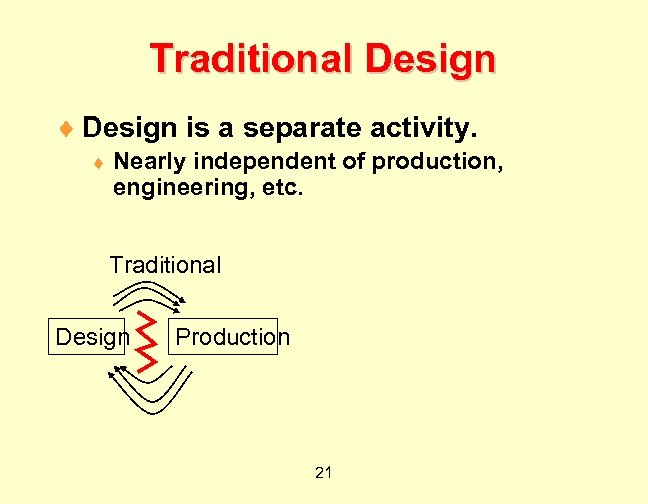 Traditional Design ¨ Design is a separate activity. ¨ Nearly independent of production, engineering, etc. Traditional Design Production 21
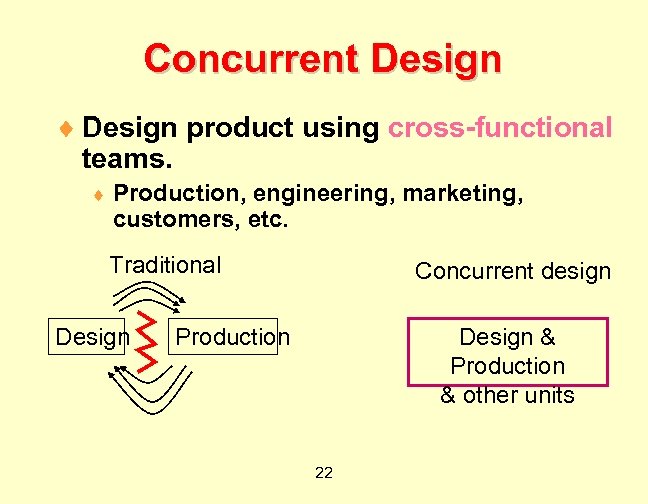 Concurrent Design ¨ Design product using cross-functional teams. ¨ Production, engineering, marketing, customers, etc. Traditional Design Concurrent design Production Design & Production & other units 22
 Manufacturability and Value Engineering ¨ Key is to SIMPLIFY. ¨ Minimize parts. ¨ Use common components in different products. ¨ Use standard off-the-shelf components. ¨ Simplify ¨ Use and mistake-proof assembly. modules to add variety. ¨ Design for robustness. 23
 Modular & Robust Design ¨ Modular design. ¨ Design in easily segmented components. ¨ Modules add flexibility to both production and marketing. ¨ Design for robustness. ¨ Design so small variations in production or assembly do not adversely affect the product. 24
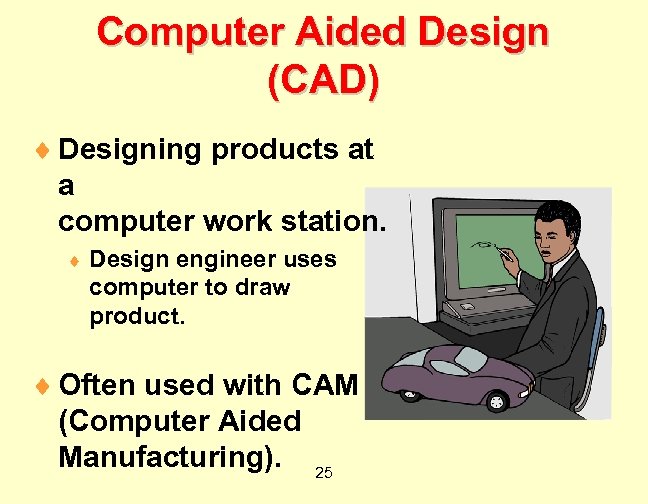 Computer Aided Design (CAD) ¨ Designing products at a computer work station. ¨ Design engineer uses computer to draw product. ¨ Often used with CAM (Computer Aided Manufacturing). 25
 Environmentally Friendly Design ¨ Make products recyclable. ¨ Use recycled materials. ¨ Use less harmful (toxic) ingredients. ¨ Use lighter components. ¨ Less weight lowers transportation cost. ¨ Use less energy and material. 26
 Time-based Competition ¨ Product life cycles are becoming shorter. ¨ Faster developers of new products gain on slower developers and obtain a competitive advantage. ¨ First to market is often the market leader. 27
 Product Documents ¨ Engineering drawing. ¨ Shows dimensions, tolerances, & materials. ¨ Bill of Material. Lists components, quantities & where used. ¨ Shows product structure. ¨ 28
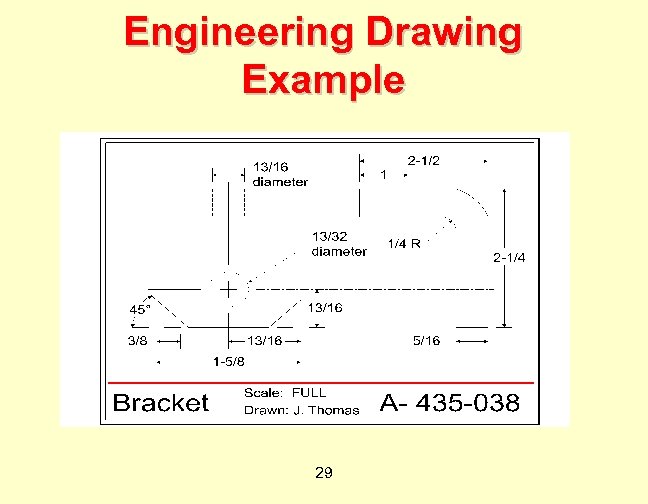 Engineering Drawing Example 29
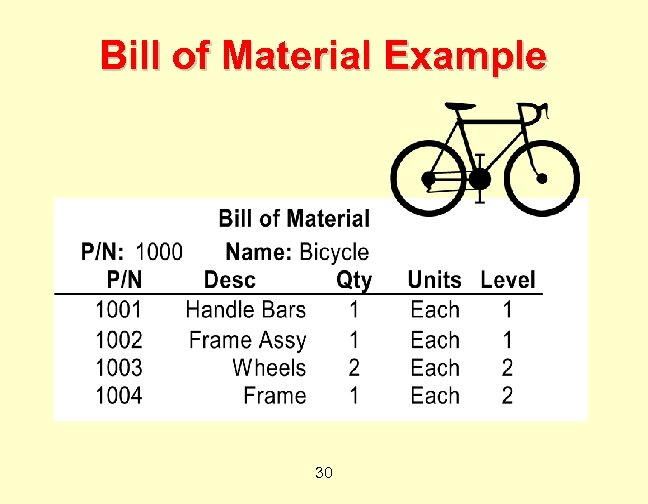 Bill of Material Example 30
 Production Documents ¨ Assembly drawings. ¨ Assembly chart. ¨ Route sheet. ¨ Work order. 31
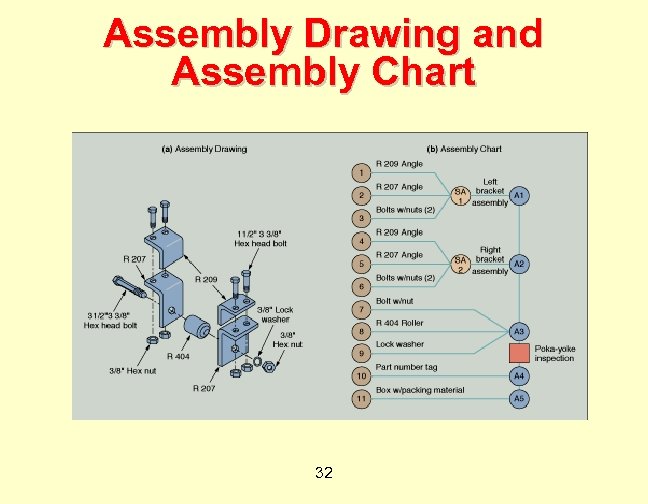 Assembly Drawing and Assembly Chart 32
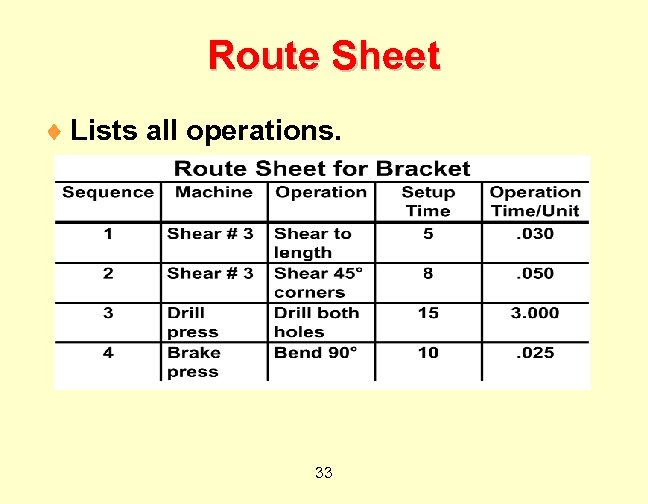 Route Sheet ¨ Lists all operations. 33
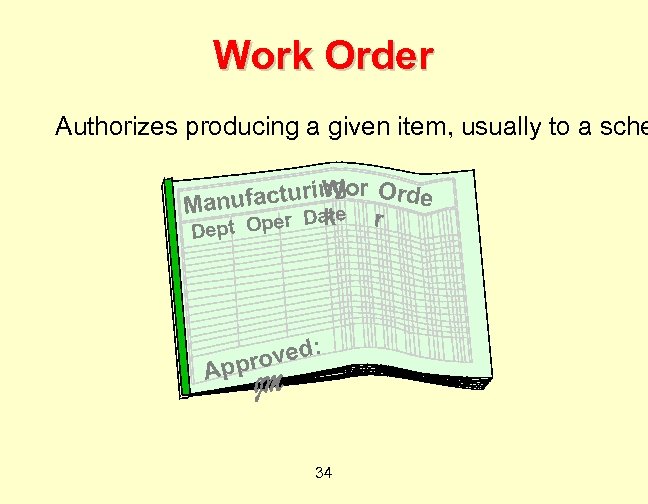 Work Order Authorizes producing a given item, usually to a sche g Wor Orde ufacturin Man Date r k pt Oper e D : roved App JM 34
 Service Design Principles ¨ SIMPLIFY! ¨ Minimize number of steps. ¨ Minimize repetition. ¨ Reduce waiting time for customer. ¨ Use modularity to create variety. ¨ Example: Hospital, University certificate programs. ¨ Design for robustness. ¨ Accommodate large variation, since all people are different. 35
 Service Design Principles ¨ Consider range of services offered. ¨ Customized vs standard services (Medical clinics). ¨ Full service vs. self service (Gasoline station). ¨ Manage expectations. ¨ Gourmet restaurant vs. fast food. ¨ Schedule staff to match demand. ¨ Use appointments. ¨ Provide distractions to ease waiting. 36
 Decision Trees for Product Design ¨ Useful with a series of decisions and outcomes. ¨ Example: Select design of product of service from several options. ¨ Different costs. ¨ Different benefits: Benefits depend on future (unknown) market. 37
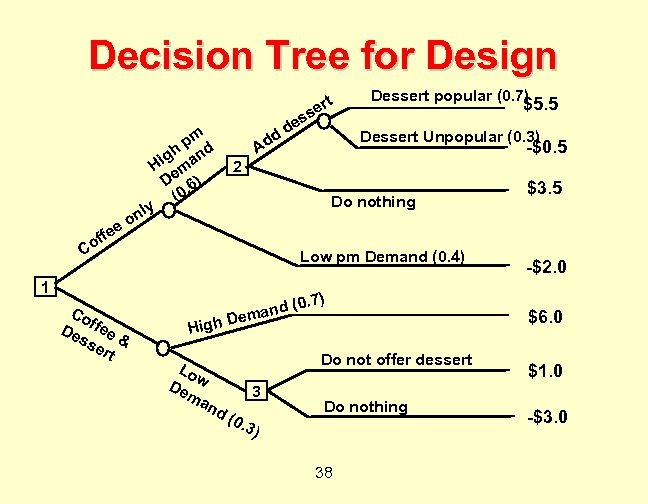 Decision Tree for Design t pm d gh n Hi ma De. 6) (0 nly d Ad d Dessert popular (0. 7) $5. 5 Dessert Unpopular (0. 3) -$0. 5 2 Do nothing o ee ff Co Low pm Demand (0. 4) 1 Co De ffee ss & ert r se es . 7) High d (0 eman D Do not offer dessert Lo De w ma n 3 d( 0. 3 Do nothing ) 38 $3. 5 -$2. 0 $6. 0 $1. 0 -$3. 0