


 Скачать презентацию Open MRS in Rwanda Hamish Fraser Director of
5646a1af8e04fc9b85ac811746507445.ppt
- Количество слайдов: 23
 Open. MRS in Rwanda Hamish Fraser Director of Informatics and Telemedicine, Partners In Health Assistant Prof. Harvard Medical School Co-founder, Open. MRS Collaborative
 Overview • • • Rwanda Health Care System Open. MRS sites Training Rrogram Rwanda National Open. MRS Rollout National e. Health Architecture
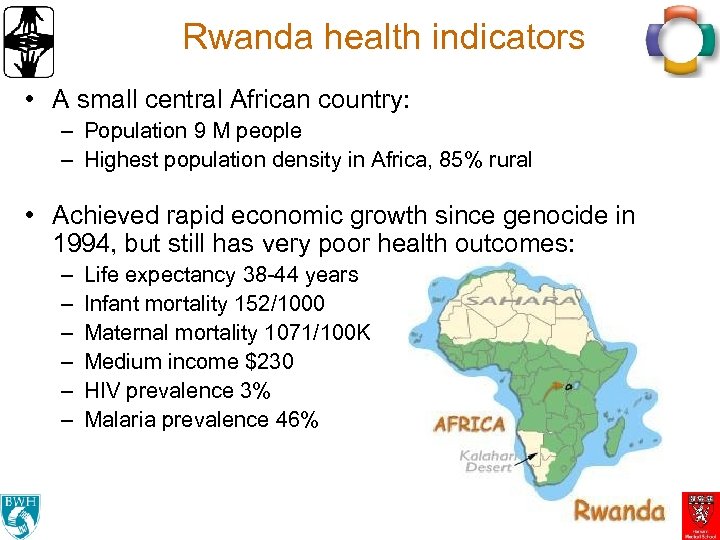 Rwanda health indicators • A small central African country: – Population 9 M people – Highest population density in Africa, 85% rural • Achieved rapid economic growth since genocide in 1994, but still has very poor health outcomes: – – – Life expectancy 38 -44 years Infant mortality 152/1000 Maternal mortality 1071/100 K Medium income $230 HIV prevalence 3% Malaria prevalence 46%
 Open. MRS origins • First Open. MRS site – Eldoret, Kenya February 2006 • Second site – Rwinkwavu, Rwanda August 2006 • Third site – Richmond Hospital, South Africa September/October 2006
 Open. MRS Sites in Rwanda • Clinics run by Ministry of Health – Supported by Partners In Health • The TRAC clinic – Large HIV clinic run by the MOH • Town of Mayange – Millennium Villages project • National Tuberculosis program – Open. MRS-TB
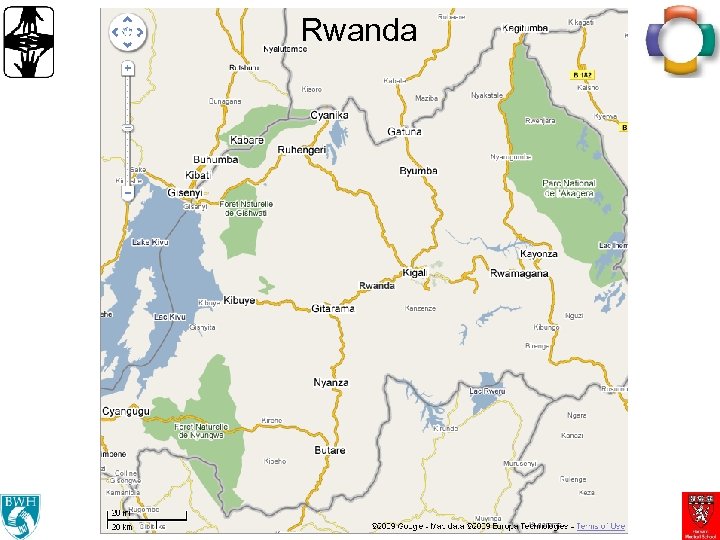 Rwanda
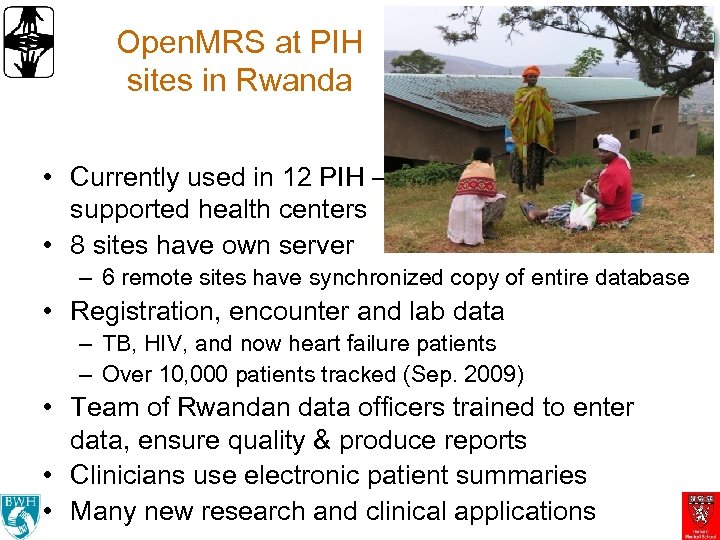 Open. MRS at PIH sites in Rwanda • Currently used in 12 PIH – supported health centers • 8 sites have own server – 6 remote sites have synchronized copy of entire database • Registration, encounter and lab data – TB, HIV, and now heart failure patients – Over 10, 000 patients tracked (Sep. 2009) • Team of Rwandan data officers trained to enter data, ensure quality & produce reports • Clinicians use electronic patient summaries • Many new research and clinical applications
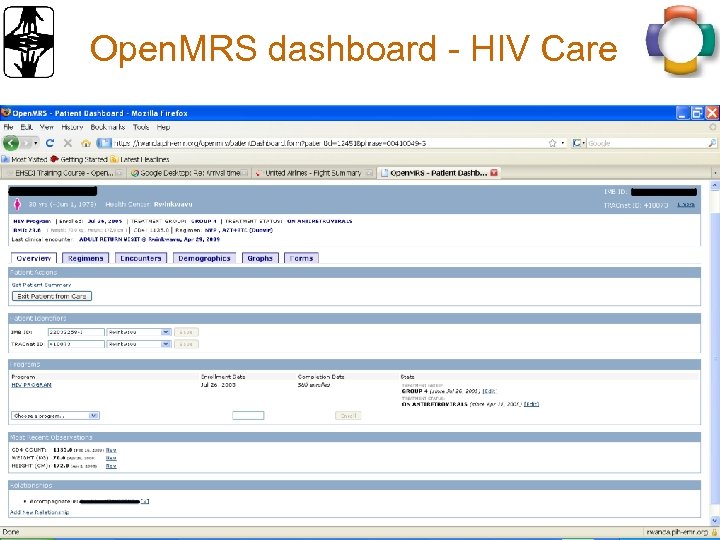 Open. MRS dashboard - HIV Care
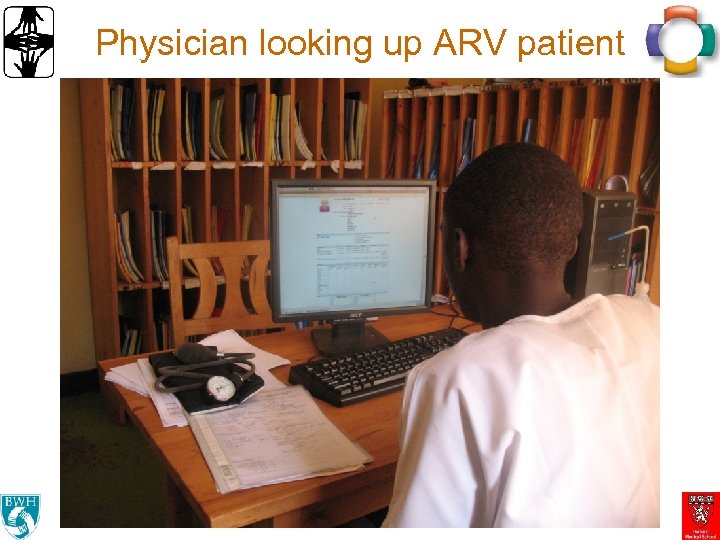 Physician looking up ARV patient
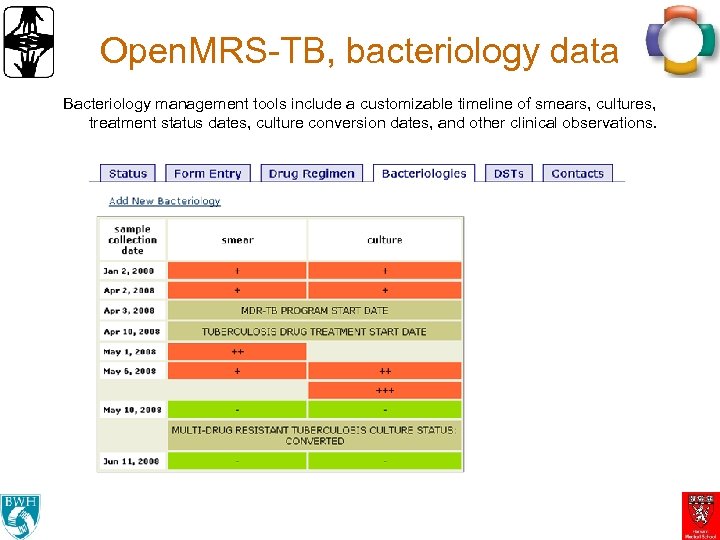 Open. MRS-TB, bacteriology data Bacteriology management tools include a customizable timeline of smears, cultures, treatment status dates, culture conversion dates, and other clinical observations.
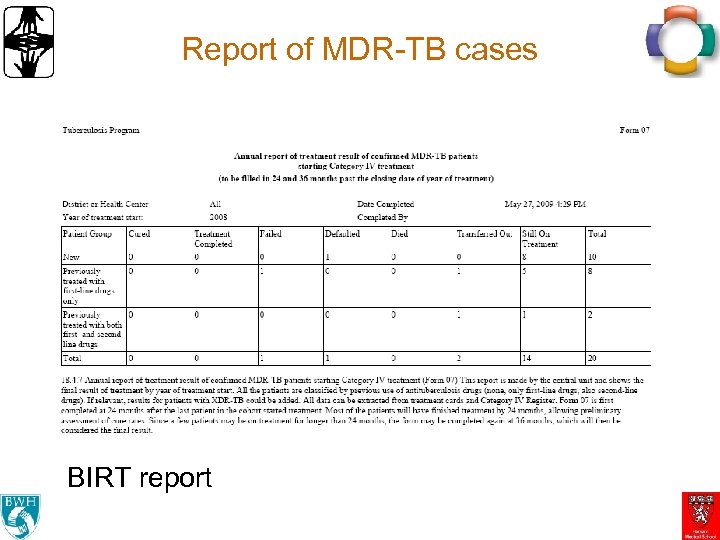 Report of MDR-TB cases BIRT report
 National Open. MRS rollout • MOH and PIH are augmenting Open. MRS for roll out in hundreds of clinics in Rwanda • One month ago we were asked to move ahead with the HIV clinics supported by the GFATM • We are developing a new version for primary care
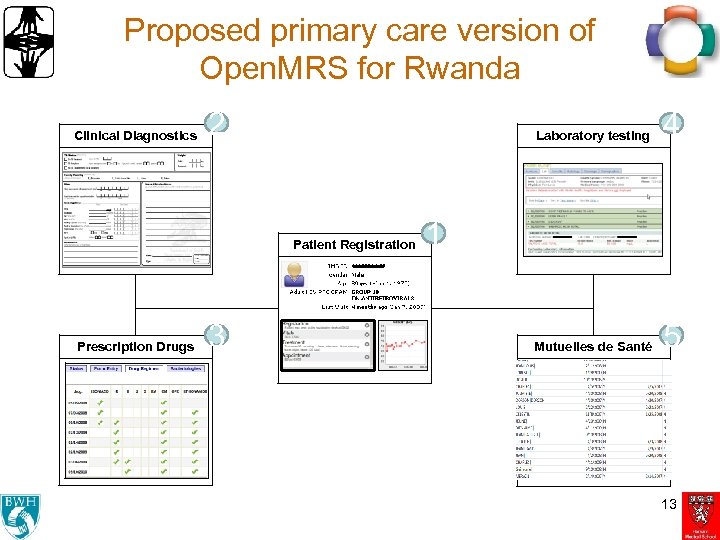 Proposed primary care version of Open. MRS for Rwanda Clinical Diagnostics 2 Laboratory testing Patient Registration Prescription Drugs 3 4 Mutuelles de Santé 5 1
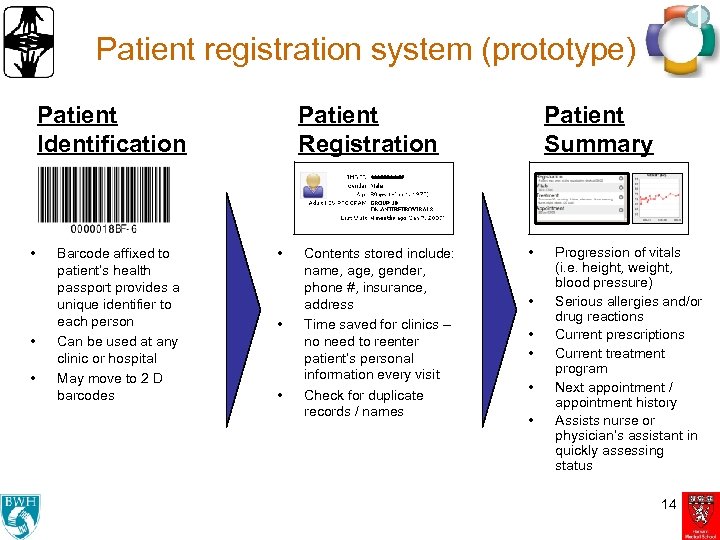 1 Patient registration system (prototype) Patient Identification • • • Barcode affixed to patient’s health passport provides a unique identifier to each person Can be used at any clinic or hospital May move to 2 D barcodes Patient Registration • • • Contents stored include: name, age, gender, phone #, insurance, address Time saved for clinics – no need to reenter patient’s personal information every visit Check for duplicate records / names Patient Summary • • • Progression of vitals (i. e. height, weight, blood pressure) Serious allergies and/or drug reactions Current prescriptions Current treatment program Next appointment / appointment history Assists nurse or physician’s assistant in quickly assessing status 14
 Kigali Developer training • There is a shortage of Java programmers who can work on e. Health systems like Open. MRS • A year ago we set up a training program for computer science graduates to learn these skills • The students graduated last week and are working on modules for the Open. MRS rollout for HIV
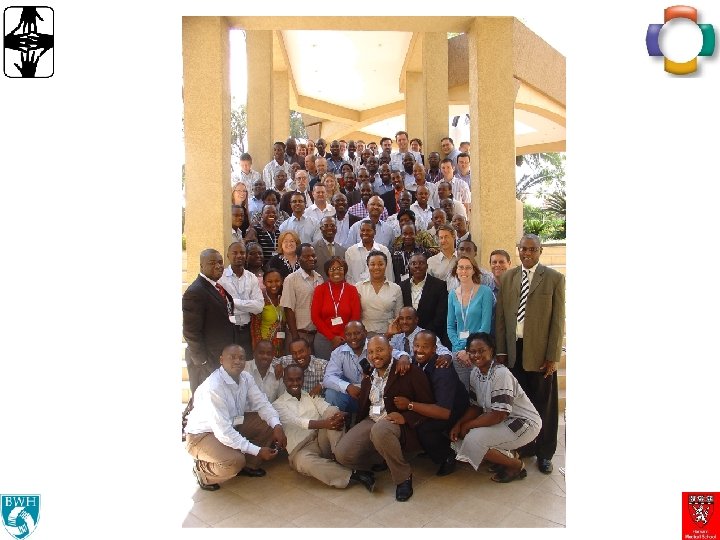
 e. Health Architecture Project • Rwanda has embarked on a plan to create national e. Health architecture • This will define the functions of each components and interoperability standards for each • A meeting was hosted by WHO last week in Kigali. Over 100 people from Rwanda, other African countries and the developed world worked on these specifications and interoperability profiles
 Open standards and interoperability • To be sustainable information systems need to be designed with compliance with open standards • Leverage the expertise and experience of groups in each area: – Laboratory, Pharmacy, EMR, Reporting and surveillance • Business as usual is hundreds of incompatible systems with limited functionality and high cost
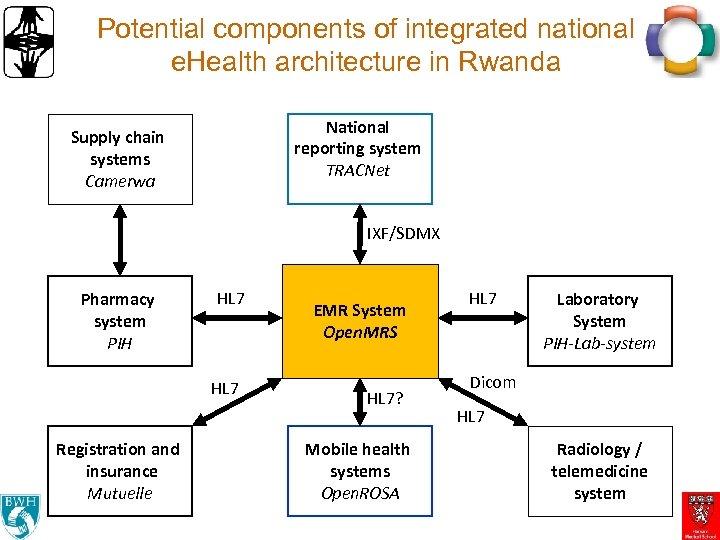 Potential components of integrated national e. Health architecture in Rwanda National reporting system TRACNet Supply chain systems Camerwa IXF/SDMX Pharmacy system PIH HL 7 Registration and insurance Mutuelle EMR System Open. MRS HL 7? Mobile health systems Open. ROSA HL 7 Laboratory System PIH-Lab-system Dicom HL 7 Radiology / telemedicine system
 Challenges for Open. MRS Deployments • • • Equipment, power supplies and networks Data management and quality control Evaluation Sustainability Training – – Programmers IT staff Data entry staff and managers Users
 Conclusions • Open. MRS is now heading for widespread use in Rwanda • There are studies showing benefits from Open. MRS in process and delivery of care as well as reporting • Open standards for data exchange are essential in scaling information systems and reducing costs. • Open source software allow the creation of better, more flexible and sustainable tools and allow local communities to build and modify them
 Collaborators and Funders • • • • Partners In Health Regenstrief institute Medical Research Council, South Africa World Health Organization US Centers for Disease Control Brigham and Women hospital Harvard Medical School University of Kwa. Zulu-Natal Millennium Villages Project International Development Research Centre, Ottawa Rockefeller Foundation Fogarty International Center, NIH Boston Consulting Group Google Inc
 Question? People in the web conference please hold your questions until the panel at 11 am