 Скачать презентацию Open Education Katarína Pišútová Katarina pisutova rec uniba sk
5567f7e95fd0fde81eea9695269b72d9.ppt
- Количество слайдов: 17



Open Education Katarína Pišútová Katarina. pisutova@rec. uniba. sk
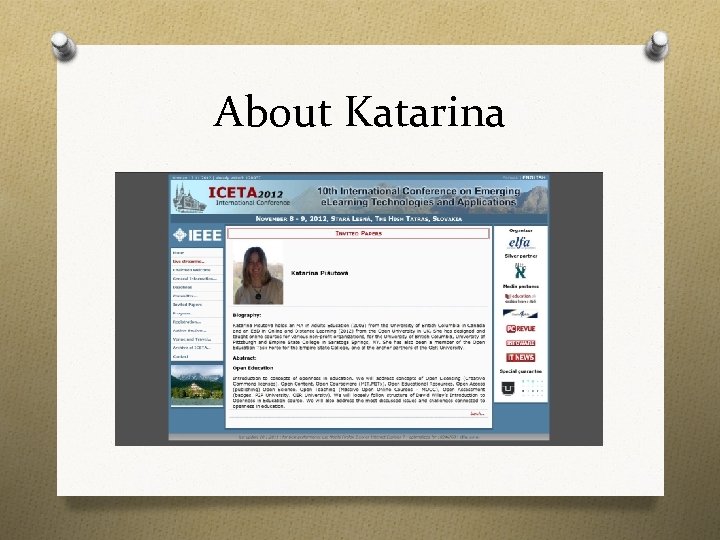
About Katarina
Introduction to Openness in Education O Empire State College and OERu – taskforce O O for Openness in Education Open Course taught by David Wiley http: //openeducation. us/ 12 topics to work through and blog about. Completed work is assessed by Dr. Wiley to earn a badge We incorporated f 2 f element
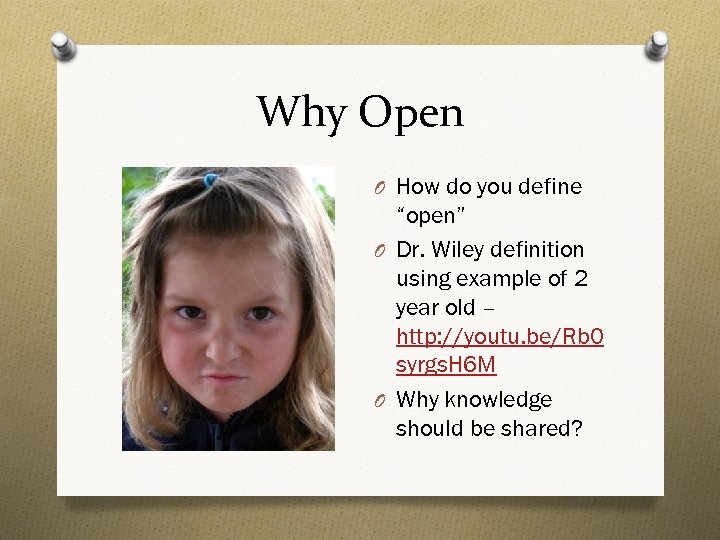
Why Open O How do you define “open” O Dr. Wiley definition using example of 2 year old – http: //youtu. be/Rb 0 syrgs. H 6 M O Why knowledge should be shared?
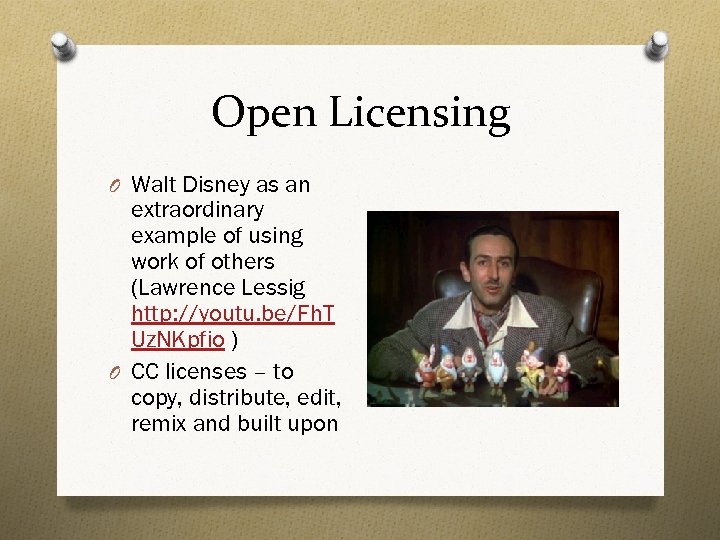
Open Licensing O Walt Disney as an extraordinary example of using work of others (Lawrence Lessig http: //youtu. be/Fh. T Uz. NKpfio ) O CC licenses – to copy, distribute, edit, remix and built upon
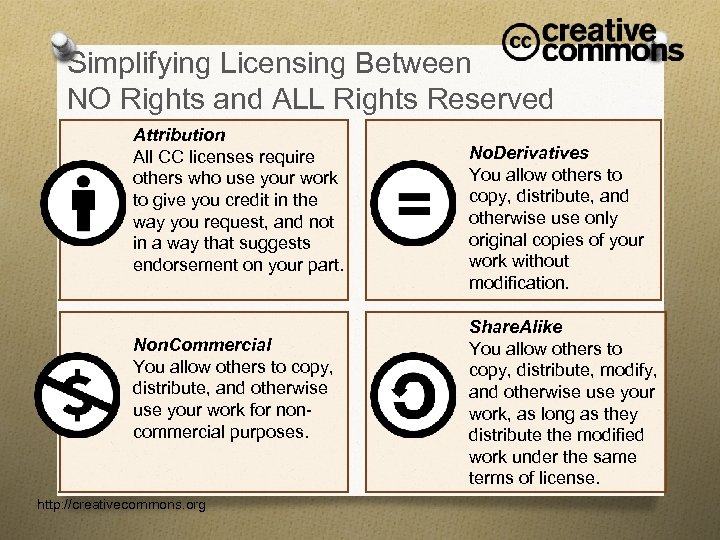
Simplifying Licensing Between NO Rights and ALL Rights Reserved Attribution All CC licenses require others who use your work to give you credit in the way you request, and not in a way that suggests endorsement on your part. Non. Commercial You allow others to copy, distribute, and otherwise use your work for noncommercial purposes. http: //creativecommons. org No. Derivatives You allow others to copy, distribute, and otherwise use only original copies of your work without modification. Share. Alike You allow others to copy, distribute, modify, and otherwise use your work, as long as they distribute the modified work under the same terms of license.
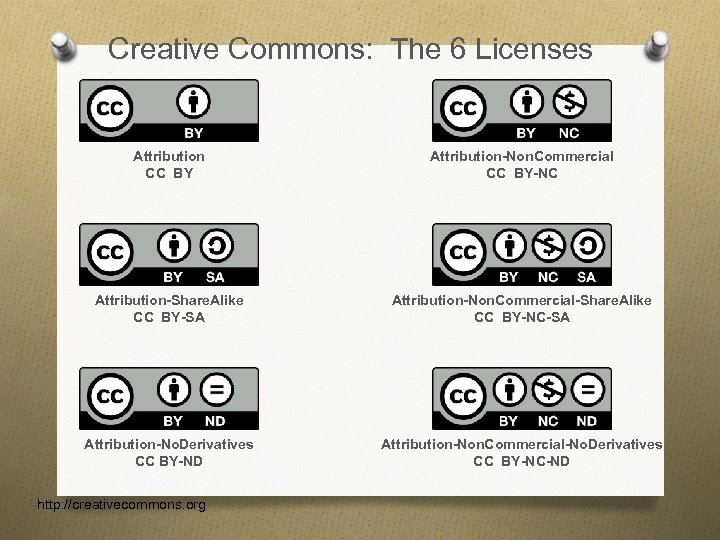
Creative Commons: The 6 Licenses Attribution CC BY Attribution-Non. Commercial CC BY-NC Attribution-Share. Alike CC BY-SA Attribution-Non. Commercial-Share. Alike CC BY-NC-SA Attribution-No. Derivatives CC BY-ND Attribution-Non. Commercial-No. Derivatives CC BY-NC-ND http: //creativecommons. org
Open Source and Open Content O Stuff nobody would buy anyway? O 4 R framework for open content: O Reuse (using in unaltered form) O Revise (adapt, adjust, modify) O Remix (incorporate parts into a mashup) O Redistribute (share copies) O OER Handbook http: //wikieducator. org/OER_Handbook/ed ucator_version_one
Open Courseware O 2001 – MIT http: //youtu. be/4 XFvq. OSRsa 8 O OCW Consortium – now over 200 institutions from over 40 countries O Not replacing traditional courses O True MIT education comes from interaction of students with faculty
Open Teaching – what is MOOC O MOOC - next step beyond providing course content and resources O Definition: O Open (all work done accessible) O Cost free (no payment for participation – credit payment OK) O The work in the course is shared with all participants O Participatory (you gain by interacting with others) O Distributed (discussions and blogs are part of the course, but not at the same website)
MOOC History O 2007 – David Wiley at Colorado State University opened his course on OE (50 people from 8 countries) O 2008 – Siemens and Downs – course on Connectivism (25 students from U of Manitoba, 2, 300 free) – MOOC term O 2011 Stanford AI course – 160, 000 people O Beginning of 2012 Coursera, Udacity (Stanford), Edx (nonprofit, MIT & Harvard)
c. MOOC vs. x. MOOC O c. MOOC –(Downs and Siemens model) courses based on interaction, connections, social networking O x. MOOC – (Coursera) video presentations, short quizzes and testing
Coursera O Gaining partnerships fast – Sept. 2012 16 new universities – No. of courses over 200 O So far no profit. Possible models (in their business agreements): O O O O Certification (pay for certificates/badges) Secure assessments (proctored exams) Employee recruiting (head hunters) Applicant screening (employers) Human tutoring or assignment marking Selling the platform for in-company trainings Sponsorships
MOOC in Slovakia O Univerzita pre moderne Slovensko - http: //www. upms. sk/ (video lectures & tests, over 6, 000 students) O Textbook on Social Policy by Miroslav Beblavy http: //www. socialnapolitika. eu/
Myths and Issues O Media attention – arguments and myths: O Access to education in developing countries (without credits or degrees – no change for developing countries) O Quality issues (a course from famous university is not automatically good. No quality criteria have been developed – 10% completion rate) O Computers personalize learning (traditionaly feeling of abandonment without live instructor)
Future and Possibilities O MOOCs are fashionable now – some O O ventures survive, some won’t Financial sustainability? If it comes cheaper, it will stay Low completion rate - just for motivated and self-sufficient students It is out there and it is free – nothing wrong with that ; o)
Thank you! Katarina. pisutova@rec. uniba. sk Katarina. pisutova@esc. edu
Скачать презентацию Open Education Katarína Pišútová Katarina pisutova rec uniba sk
5567f7e95fd0fde81eea9695269b72d9.ppt