


 Скачать презентацию ONS Economic Forum Email economicforum ons gov uk Twitter
f009136c79875584c2dc3c116b2f3cb9.ppt
- Количество слайдов: 77
 ONS Economic Forum Email: economicforum@ons. gov. uk Twitter: @ONS #ONSeconomy Website: http: //www. ons. gov. uk/ons/about-ons/getinvolved/events/economic-forum/index. html 10 July 2014 1
 ONS Economic Forum - Agenda 09. 45 Introduction 10. 00 NSQR of NA & Bo. P 10. 30 What’s new 10. 45 What’s next 11. 15 Coffee break 11. 45 Recent trends in self-employment 12. 30 Close 2
 Introduction John Pullinger, National Statistician ONS Economic Forum 10 July 2014 3
 National Statistics Quality Review No 2 National Accounts and the Balance of Payments Kate Barker Lead Reviewer July 10 2014 ONS Economic Forum 4
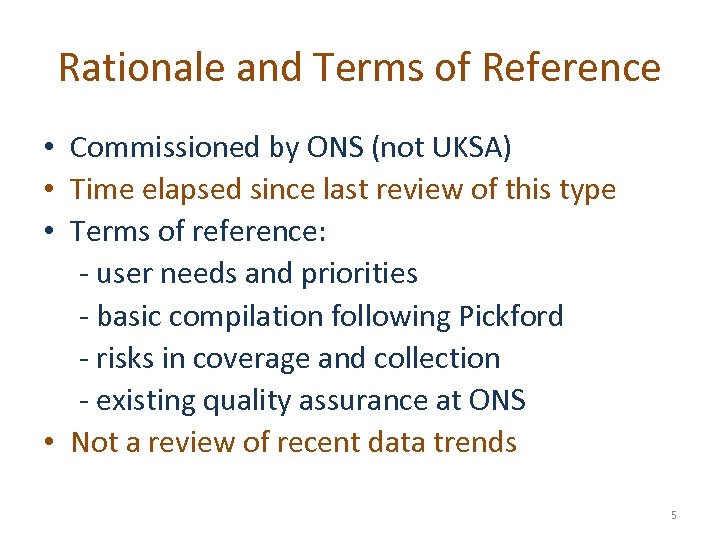 Rationale and Terms of Reference • Commissioned by ONS (not UKSA) • Time elapsed since last review of this type • Terms of reference: - user needs and priorities - basic compilation following Pickford - risks in coverage and collection - existing quality assurance at ONS • Not a review of recent data trends 5
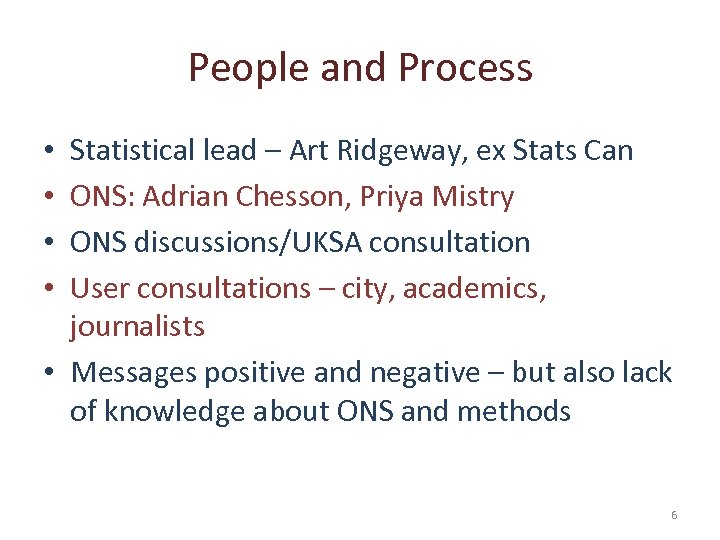 People and Process Statistical lead – Art Ridgeway, ex Stats Can ONS: Adrian Chesson, Priya Mistry ONS discussions/UKSA consultation User consultations – city, academics, journalists • Messages positive and negative – but also lack of knowledge about ONS and methods • • 6
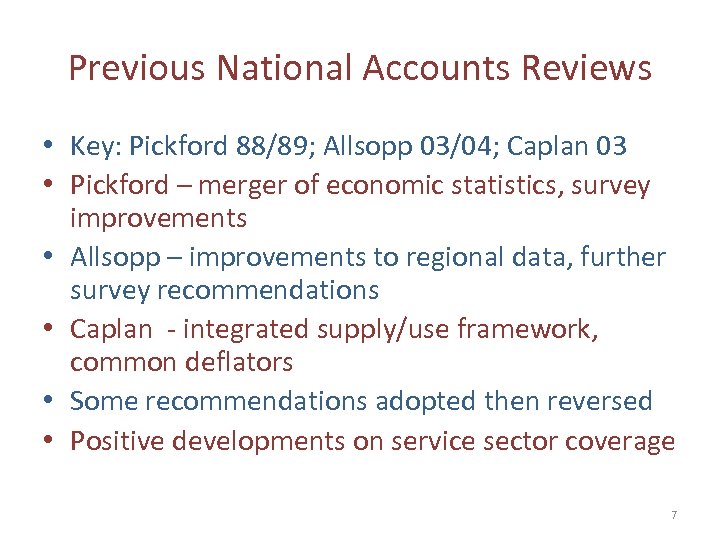 Previous National Accounts Reviews • Key: Pickford 88/89; Allsopp 03/04; Caplan 03 • Pickford – merger of economic statistics, survey improvements • Allsopp – improvements to regional data, further survey recommendations • Caplan - integrated supply/use framework, common deflators • Some recommendations adopted then reversed • Positive developments on service sector coverage 7
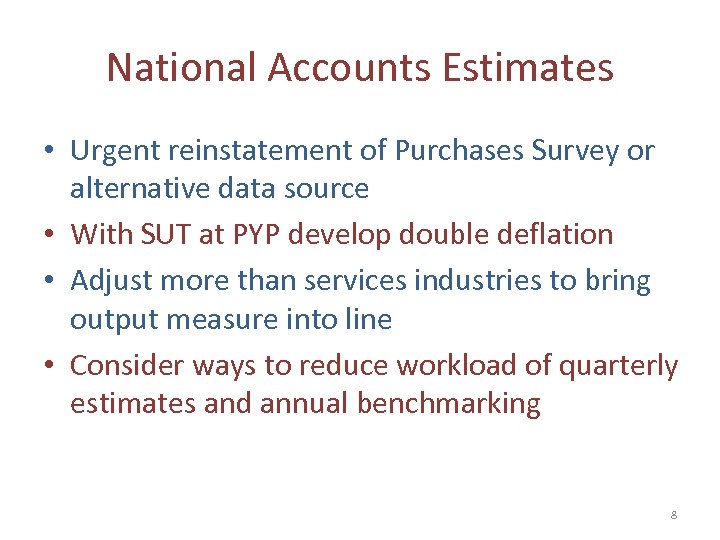 National Accounts Estimates • Urgent reinstatement of Purchases Survey or alternative data source • With SUT at PYP develop double deflation • Adjust more than services industries to bring output measure into line • Consider ways to reduce workload of quarterly estimates and annual benchmarking 8
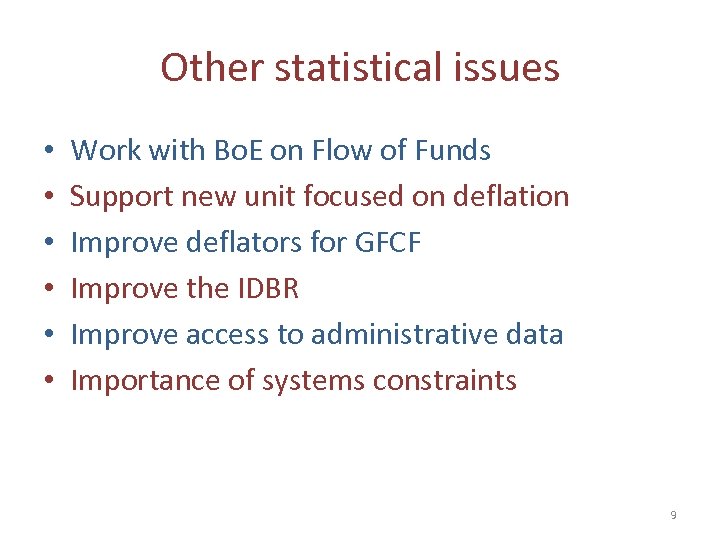 Other statistical issues • • • Work with Bo. E on Flow of Funds Support new unit focused on deflation Improve deflators for GFCF Improve the IDBR Improve access to administrative data Importance of systems constraints 9
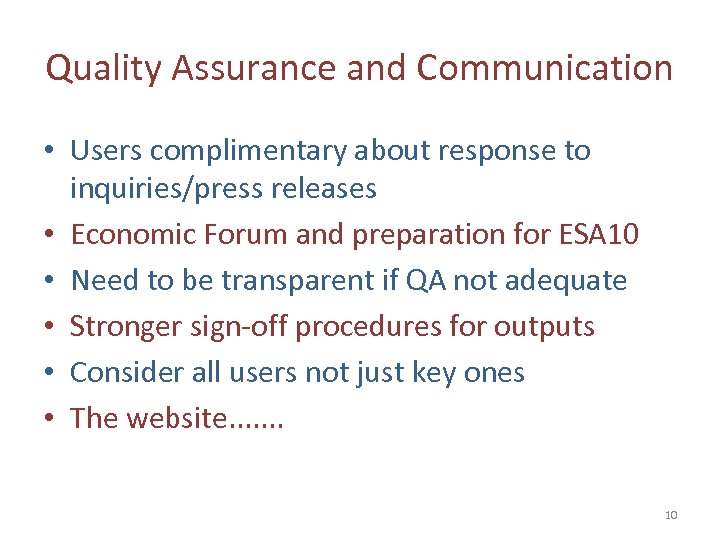 Quality Assurance and Communication • Users complimentary about response to inquiries/press releases • Economic Forum and preparation for ESA 10 • Need to be transparent if QA not adequate • Stronger sign-off procedures for outputs • Consider all users not just key ones • The website. . . . 10
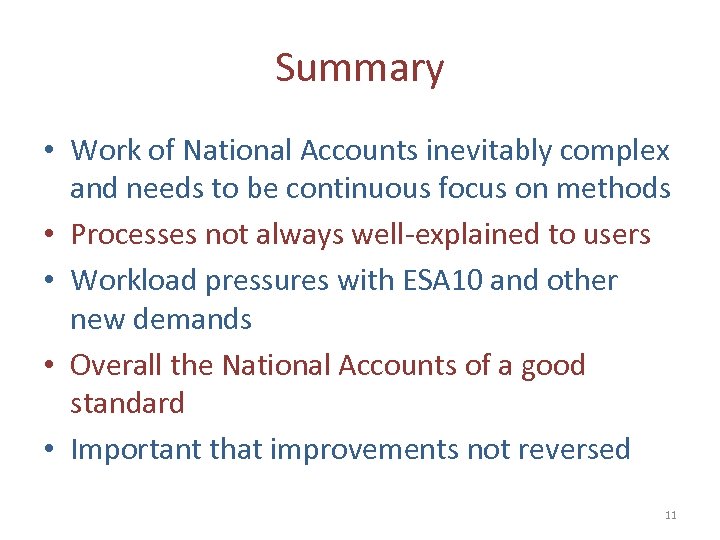 Summary • Work of National Accounts inevitably complex and needs to be continuous focus on methods • Processes not always well-explained to users • Workload pressures with ESA 10 and other new demands • Overall the National Accounts of a good standard • Important that improvements not reversed 11
 What’s new Peter Patterson, Deputy Chief Economic Adviser ONS Economic Forum 10 July 2014 12
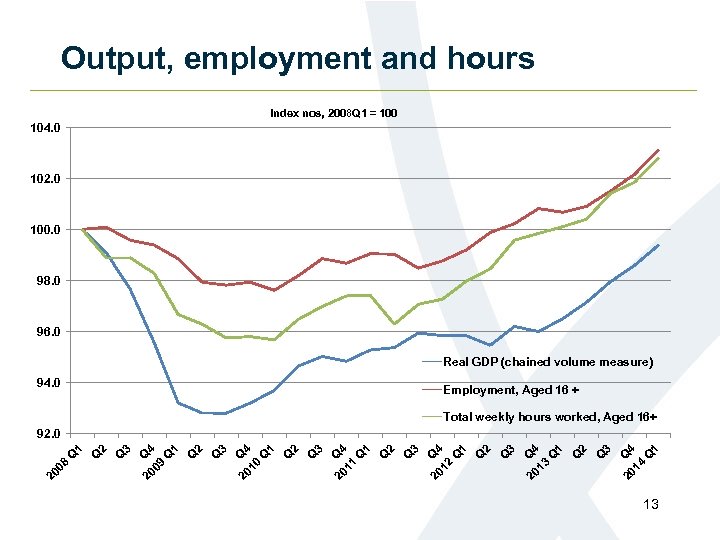 Output, employment and hours Index nos, 2008 Q 1 = 100 104. 0 102. 0 100. 0 98. 0 96. 0 Real GDP (chained volume measure) 94. 0 Employment, Aged 16 + Total weekly hours worked, Aged 16+ Q 2 Q 3 20 Q 4 09 Q 1 Q 2 Q 3 20 Q 4 10 Q 1 Q 2 Q 3 20 Q 4 11 Q 2 Q 3 20 Q 4 12 Q 1 Q 2 Q 3 20 Q 4 13 Q 1 Q 2 Q 3 20 Q 4 14 Q 1 20 08 Q 1 92. 0 13
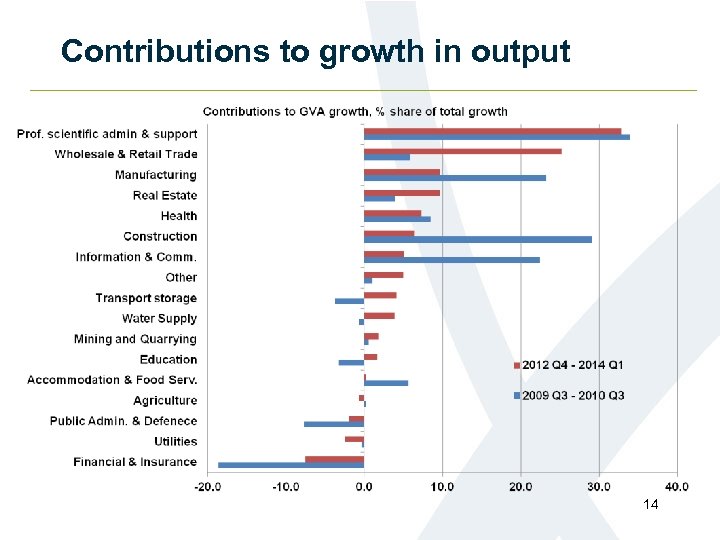 Contributions to growth in output 14
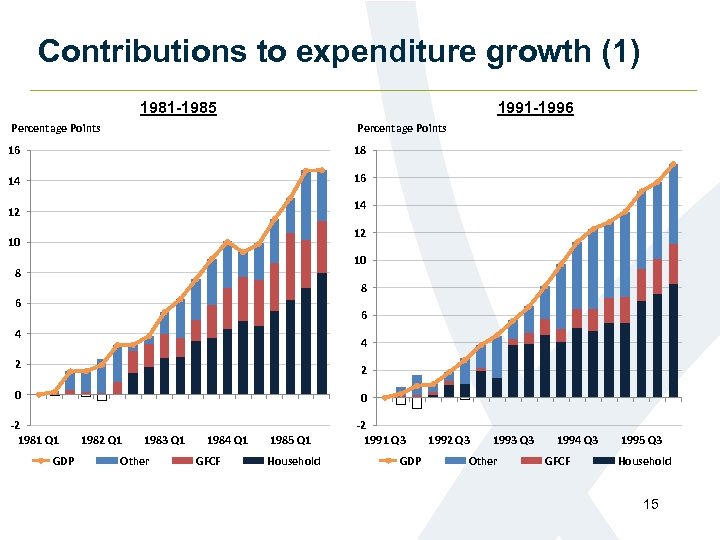 Contributions to expenditure growth (1) 1981 -1985 1991 -1996 Percentage Points 16 18 14 16 14 12 12 10 10 8 8 6 6 4 4 2 2 0 0 -2 1981 Q 1 GDP 1982 Q 1 1983 Q 1 Other 1984 Q 1 GFCF 1985 Q 1 Household -2 1991 Q 3 GDP 1992 Q 3 1993 Q 3 Other 1994 Q 3 GFCF 1995 Q 3 Household 15
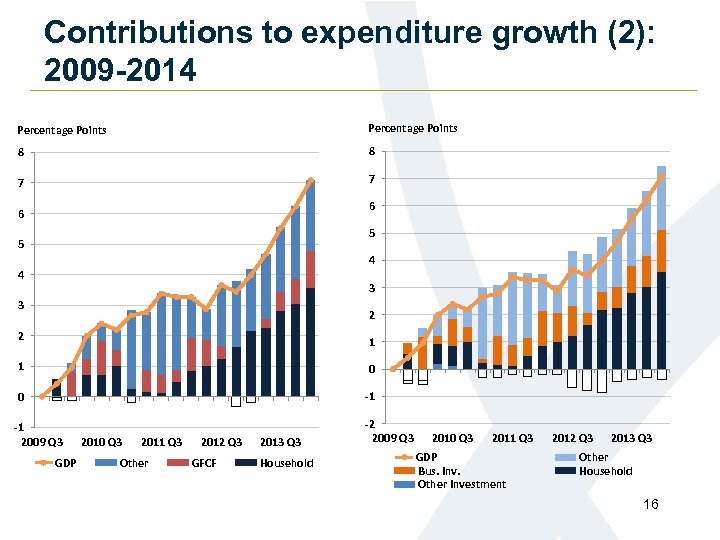 Contributions to expenditure growth (2): 2009 -2014 Percentage Points 8 8 7 7 6 6 5 5 4 4 3 3 2 2 1 1 0 0 -1 -1 2009 Q 3 GDP 2010 Q 3 2011 Q 3 Other 2012 Q 3 GFCF 2013 Q 3 Household -2 2009 Q 3 2010 Q 3 2011 Q 3 GDP Bus. Inv. Other Investment 2012 Q 3 2013 Q 3 Other Household 16
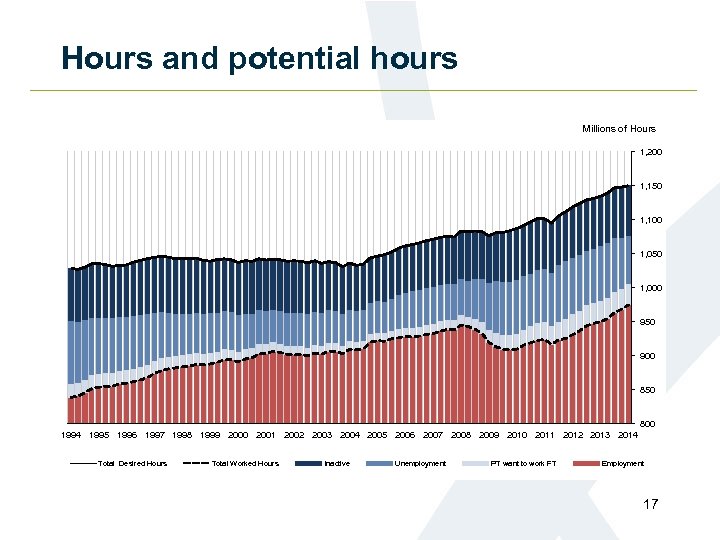 Hours and potential hours Millions of Hours 1, 200 1, 150 1, 100 1, 050 1, 000 950 900 850 800 1994 1995 1996 1997 1998 1999 2000 2001 2002 2003 2004 2005 2006 2007 2008 2009 2010 2011 2012 2013 2014 Total Desired Hours Total Worked Hours Inactive Unemployment PT want to work FT Employment 17
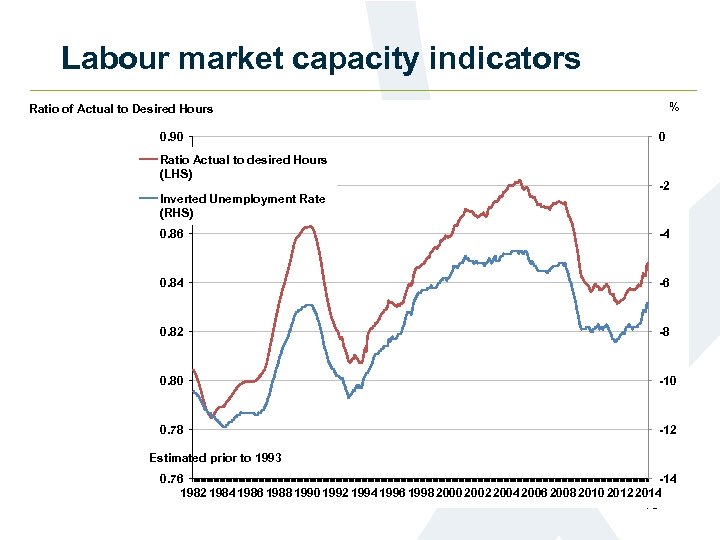 Labour market capacity indicators % Ratio of Actual to Desired Hours 0. 90 0 Ratio Actual to desired Hours (LHS) 0. 88 Inverted Unemployment Rate (RHS) -2 0. 86 -4 0. 84 -6 0. 82 -8 0. 80 -10 0. 78 -12 Estimated prior to 1993 0. 76 -14 1982 1984 1986 1988 1990 1992 1994 1996 1998 2000 2002 2004 2006 2008 2010 2012 2014 18
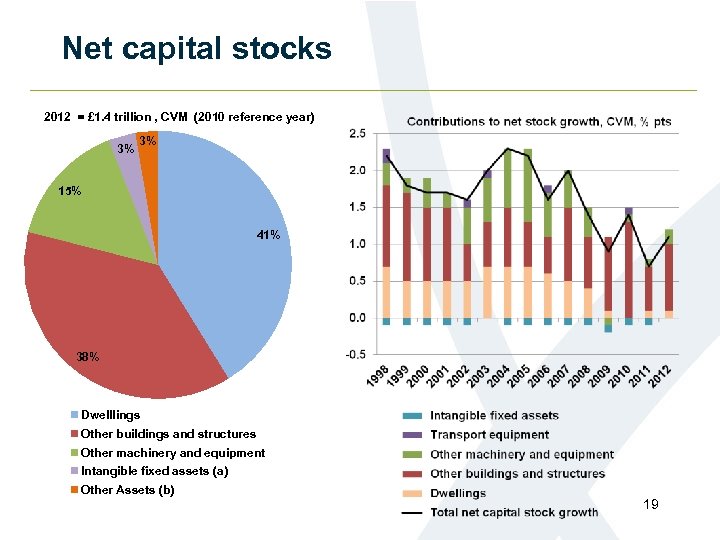 Net capital stocks 2012 = £ 1. 4 trillion , CVM (2010 reference year) 3% 3% 15% 41% 38% Dwelllings Other buildings and structures Other machinery and equipment Intangible fixed assets (a) Other Assets (b) 19
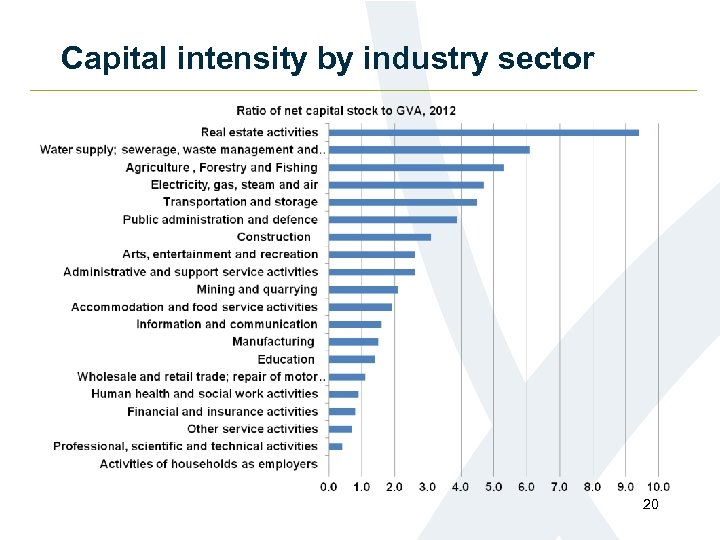 Capital intensity by industry sector 20
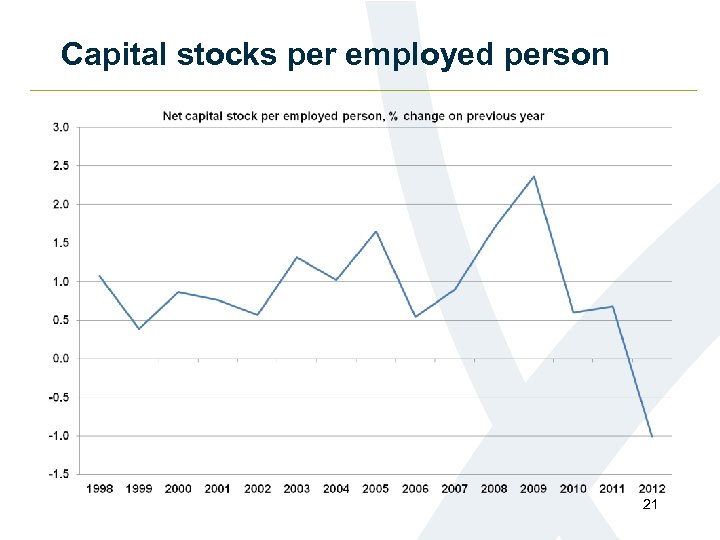 Capital stocks per employed person 21
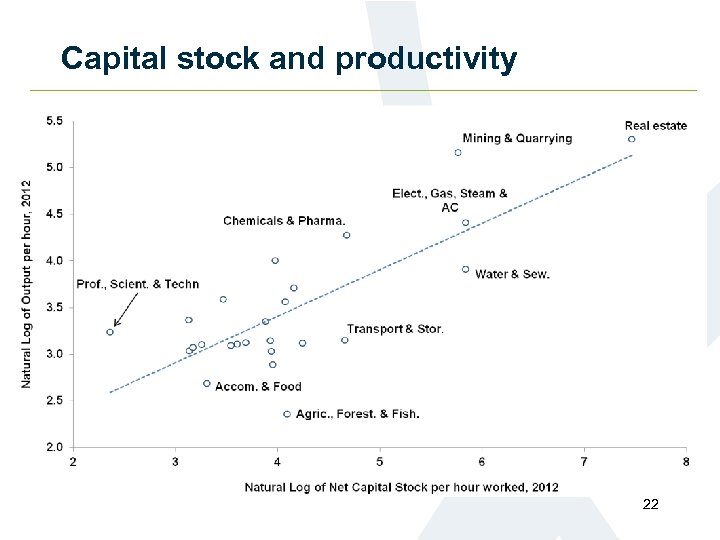 Capital stock and productivity 22
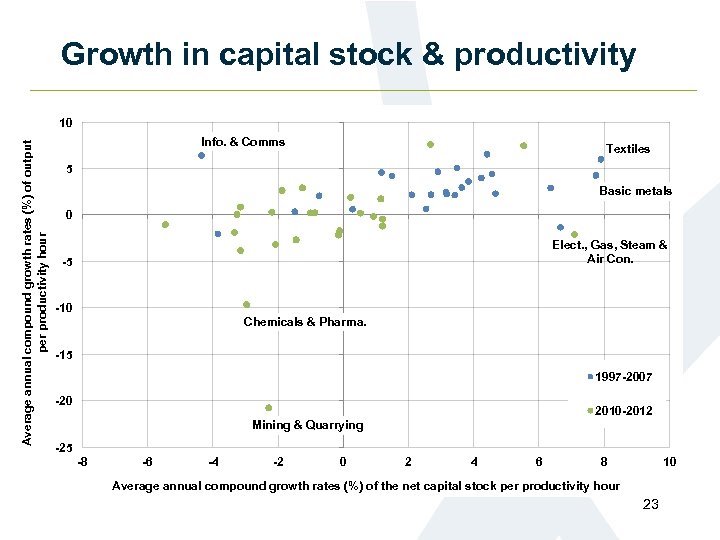 Growth in capital stock & productivity Average annual compound growth rates (%) of output per productivity hour 10 Info. & Comms Textiles 5 Basic metals 0 Elect. , Gas, Steam & Air Con. -5 -10 Chemicals & Pharma. -15 1997 -2007 -20 2010 -2012 Mining & Quarrying -25 -8 -6 -4 -2 0 2 4 6 8 10 Average annual compound growth rates (%) of the net capital stock per productivity hour 23
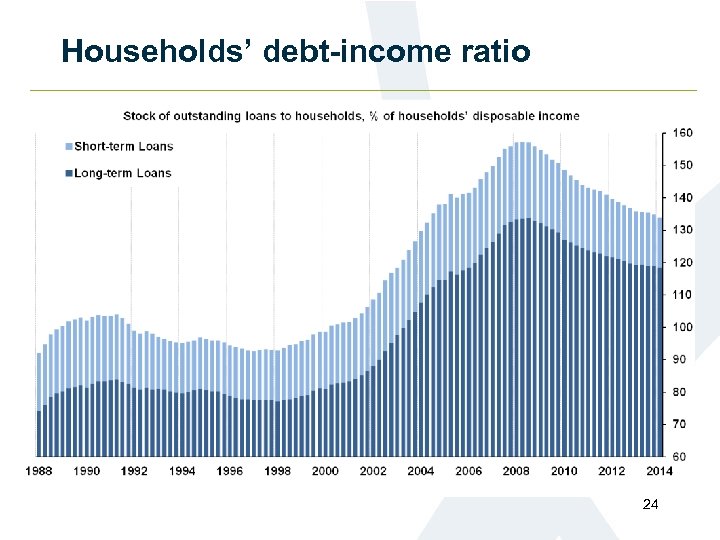 Households’ debt-income ratio 24
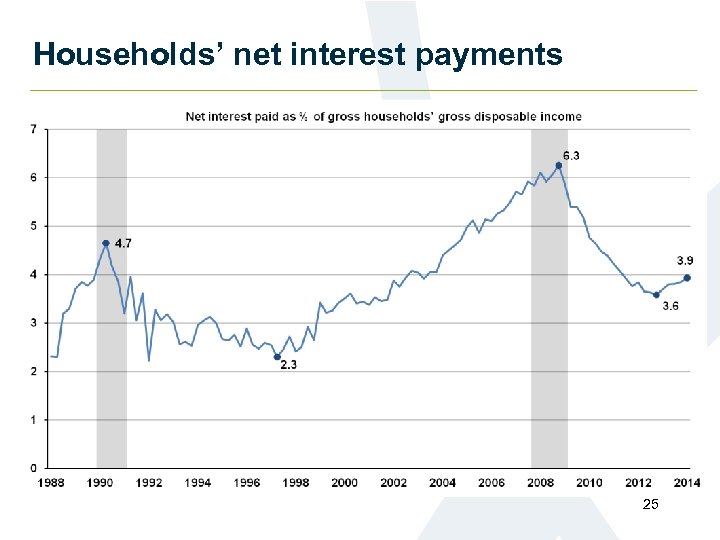 Households’ net interest payments 25
 What’s next Peter Patterson, Deputy Chief Economic Adviser Graeme Walker, Head of National Accounts ONS Economic Forum 10 July 2014 26
 What’s next • Johnson review of price statistics (autumn) • Re-weighting of LFS estimates using 2011 Census data (October) – historic data in September • Blue Book 2014 27
 Improvements to National Accounts in September 2014 Graeme Walker Head of National Accounts ONS Economic Forum: 10 July 2014 28
 Outline • What improvements are being made? • Impact on GDP • Current price levels • Real GDP growths • Other impacts • Public Sector Finances • Sector and Financial Accounts • Balance of Payments • International experience 29
 Improvements • New international frameworks (ESA 2010, BPM 6, MGDD) • Improvements to methods • New data (not relevant for period up to 2009) 30
 New International Frameworks • R&D • Weapons • Decommissioning costs • Pensions • BPM 6 changes • 10 June articles 31
 Improvements to methods • Review of Non-Profit Institution serving Households units (NPISH) • Financial Intermediaries Services Indirectly Measured (FISIM) • Illegal Activities • New Cars • Own-account construction • Exhaustiveness adjustments • Gross Fixed Capital Formation • Inventories • 29 May articles 32
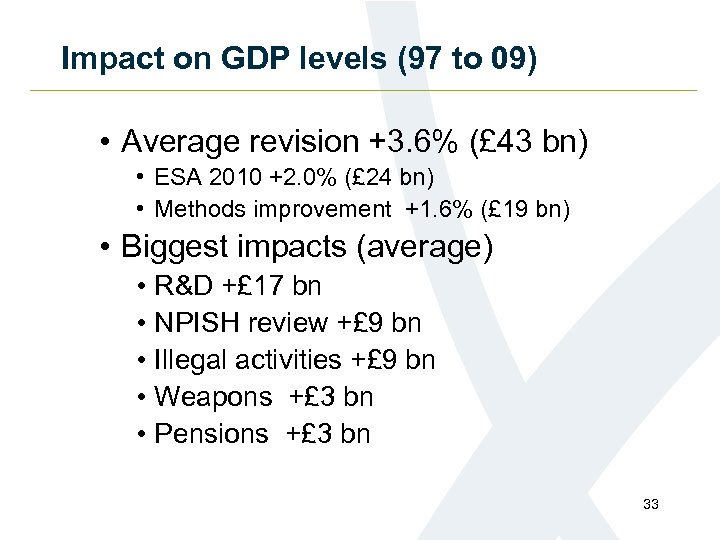 Impact on GDP levels (97 to 09) • Average revision +3. 6% (£ 43 bn) • ESA 2010 +2. 0% (£ 24 bn) • Methods improvement +1. 6% (£ 19 bn) • Biggest impacts (average) • R&D +£ 17 bn • NPISH review +£ 9 bn • Illegal activities +£ 9 bn • Weapons +£ 3 bn • Pensions +£ 3 bn 33
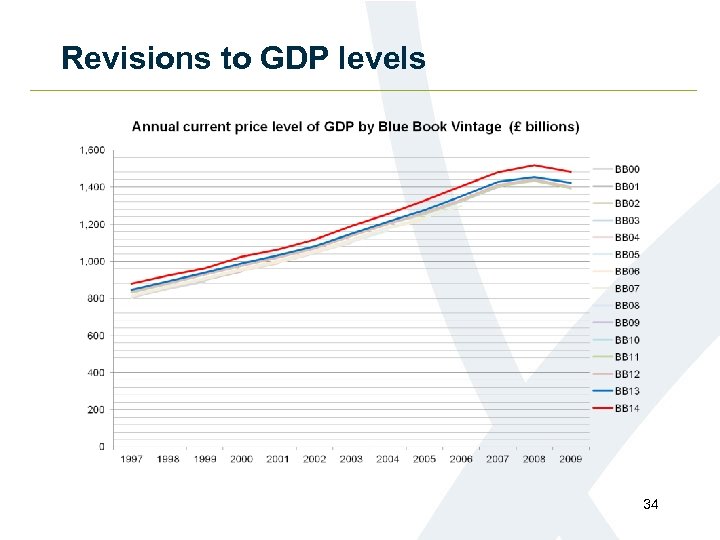 Revisions to GDP levels 34
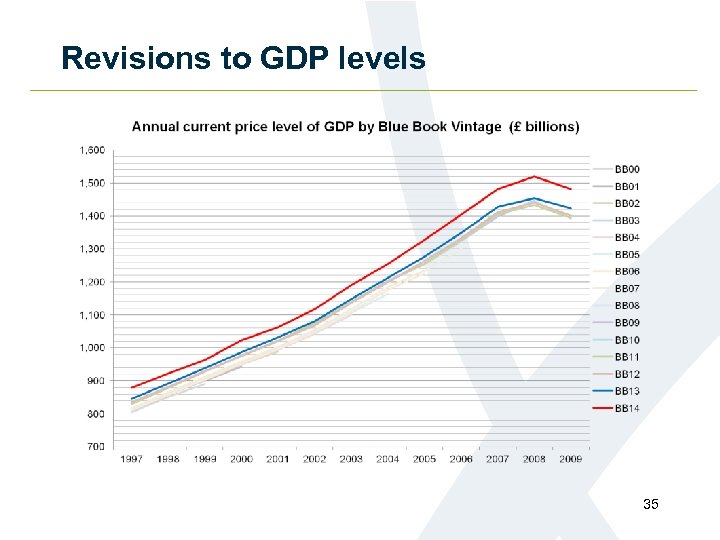 Revisions to GDP levels 35
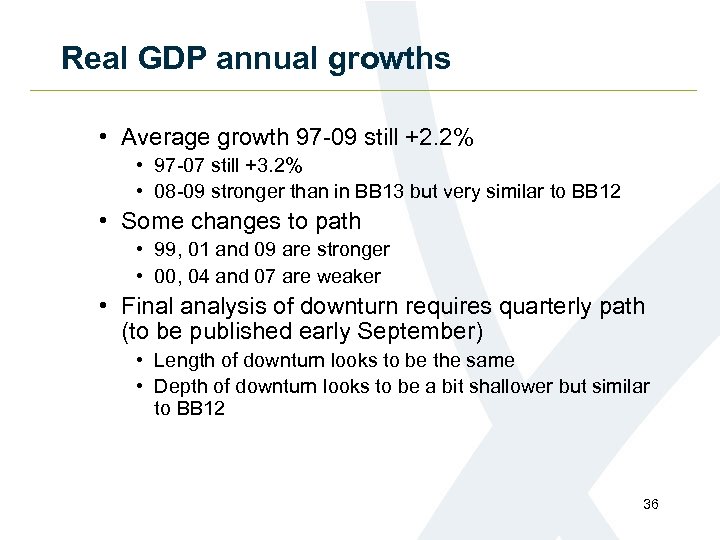 Real GDP annual growths • Average growth 97 -09 still +2. 2% • 97 -07 still +3. 2% • 08 -09 stronger than in BB 13 but very similar to BB 12 • Some changes to path • 99, 01 and 09 are stronger • 00, 04 and 07 are weaker • Final analysis of downturn requires quarterly path (to be published early September) • Length of downturn looks to be the same • Depth of downturn looks to be a bit shallower but similar to BB 12 36
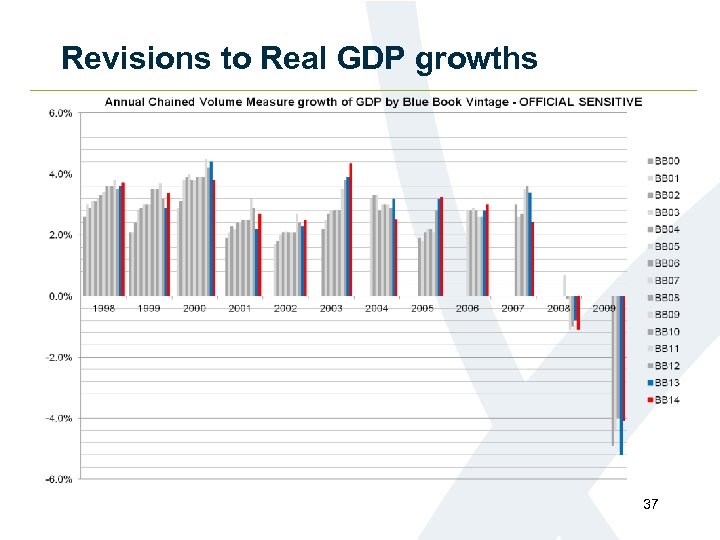 Revisions to Real GDP growths 37
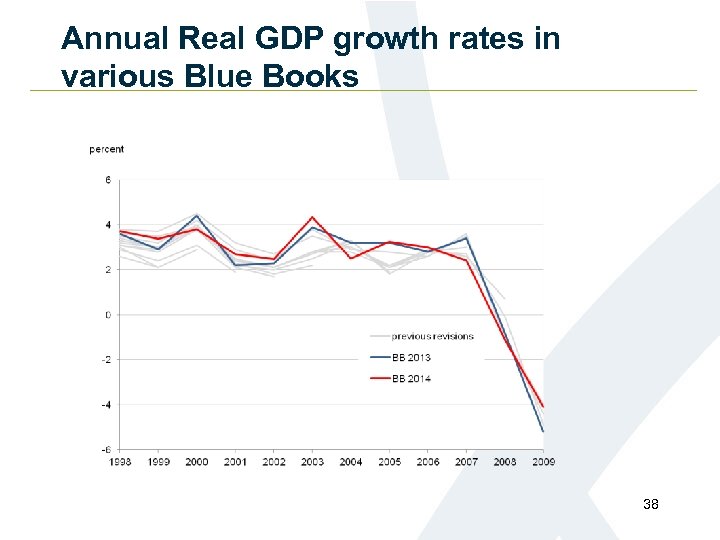 Annual Real GDP growth rates in various Blue Books 38
 Public Sector Finances • PSND increased by around £ 30 bn in recent years • all due to the reclassification of network rail to central government • PSF only change at this stage due to timing of advice from Eurostat • PSNB generally increased by £ 2 bn - £ 4 bn in recent years • mainly due to network rail and change in treatment of Local Authority pension schemes • Pension scheme impact on GDP already described; network rail is PSF only • Change to treatment of receipts from 3 G/4 G mobile phone licence auctions alter the PSNB profile • increase of £ 22 bn in 2000 offset over subsequent years • PSF only change due to timing of advice from Eurostat 39
 Public Sector Finances • Change to treatment of the Royal Mail Pension Plan transfer also alters the profile of PSNB • increase of £ 36 bn in 2012 offset over subsequent years • current/capital transfers with no impact on GDP • Weapons/R&D capitalisation switches • spending from current budget to net investment without changing PSNB (GDP impact already described) • Changes announced in December/February with detailed article published in June • PSF bulletin now includes detailed estimates of ESA 10 impact on deficit and debt 40
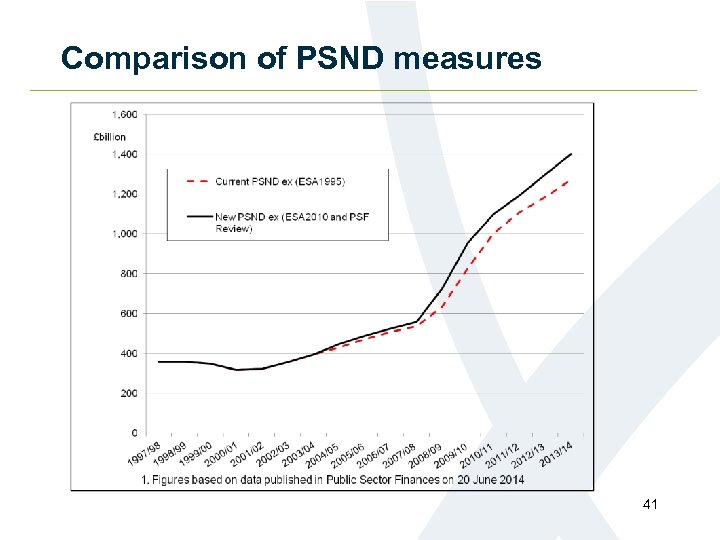 Comparison of PSND measures 41
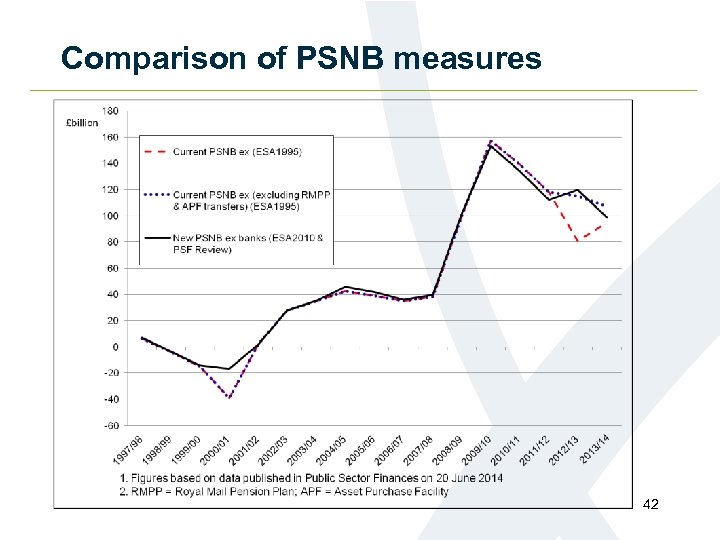 Comparison of PSNB measures 42
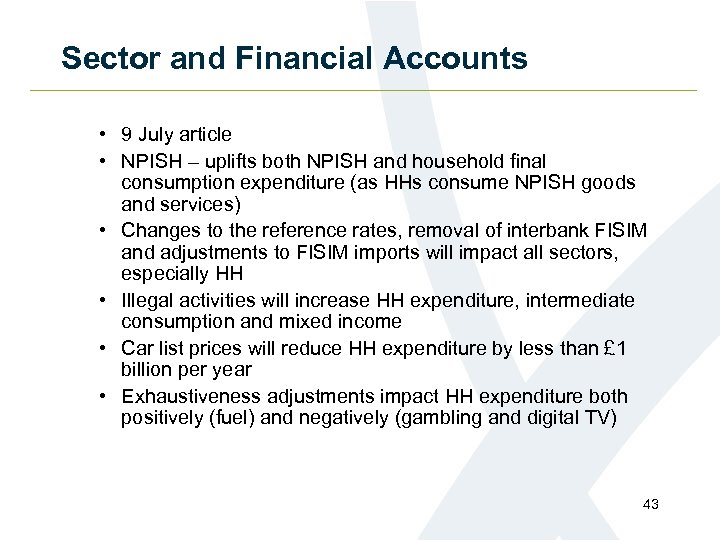 Sector and Financial Accounts • 9 July article • NPISH – uplifts both NPISH and household final consumption expenditure (as HHs consume NPISH goods and services) • Changes to the reference rates, removal of interbank FISIM and adjustments to FISIM imports will impact all sectors, especially HH • Illegal activities will increase HH expenditure, intermediate consumption and mixed income • Car list prices will reduce HH expenditure by less than £ 1 billion per year • Exhaustiveness adjustments impact HH expenditure both positively (fuel) and negatively (gambling and digital TV) 43
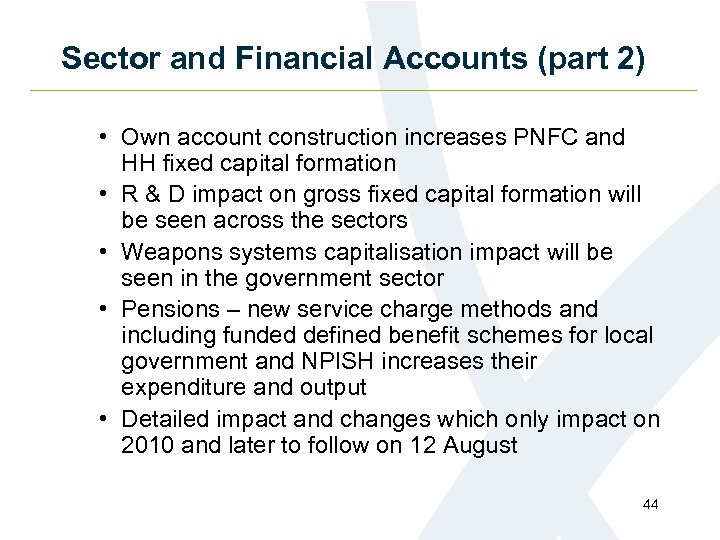 Sector and Financial Accounts (part 2) • Own account construction increases PNFC and HH fixed capital formation • R & D impact on gross fixed capital formation will be seen across the sectors • Weapons systems capitalisation impact will be seen in the government sector • Pensions – new service charge methods and including funded defined benefit schemes for local government and NPISH increases their expenditure and output • Detailed impact and changes which only impact on 2010 and later to follow on 12 August 44
 Balance of Payments (Bo. P) • Biggest change - measurement basis of direct investment profits for monetary financial instructions changes from an all inclusive (AI) to a current operating performance basis (COP) • Other changes include: • Revised treatment of non monetary gold • Introduction of remote gambling • Revised treatment of goods sent abroad for processing • Overall impact of Bo. P changes: • Before financial crisis – improvement in current account balance • During the financial crisis – deterioration in current account balance 45
 International experience • Worldwide implementation of SNA 2008 completed for US, Canada and Australia • Impacts described by ONS for UK GDP are of the same magnitude and direction as those seen across EU member states and worldwide • ONS has already provided more detailed information than most countries • Most impacts expressed in nominal terms 46
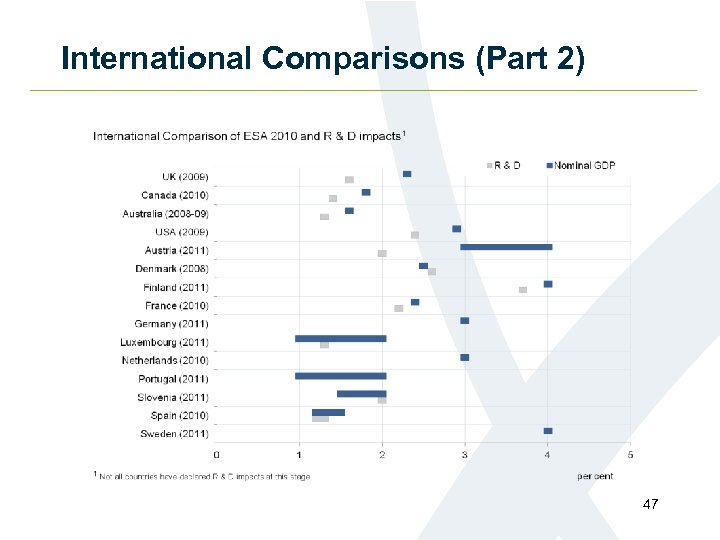 International Comparisons (Part 2) 47
 Publication Schedule • 9 July– Summary of impact on Sector and Financial Accounts (SFA) and Balance of Payments, International Comparisons, Layout of Blue Book, Pink Book and UKEA publications • 23 July - Impact on GDP components of ESA 2010 and non ESA 2010 changes for 1997 – 2009 • 12 August (prov) – Detailed impact on SFA and Balance of Payments 48
 Publication Schedule (part 2) • Mid/End August - 2010 – 2012 real and nominal GDP annual changes • Early September – Reminder of all impacts plus quarterly path of real GDP 1997 2012 • 30 September – Publication of Quarterly National Accounts and Balance of Payments on ESA 2010/BPM 6 basis • 31 October – Publication of Blue Book and Pink Book 2014 49
 Questions Email: graeme. walker@ons. gov. uk 50
 ONS Economic Forum Email: economicforum@ons. gov. uk Twitter: @ONS #ONSeconomy Website: http: //www. ons. gov. uk/ons/about-ons/getinvolved/events/economic-forum/index. html 10 July 2014 51
 Trends in self-employment Nick Palmer, Labour Market Statistics ONS Economic Forum 10 July 2014 52
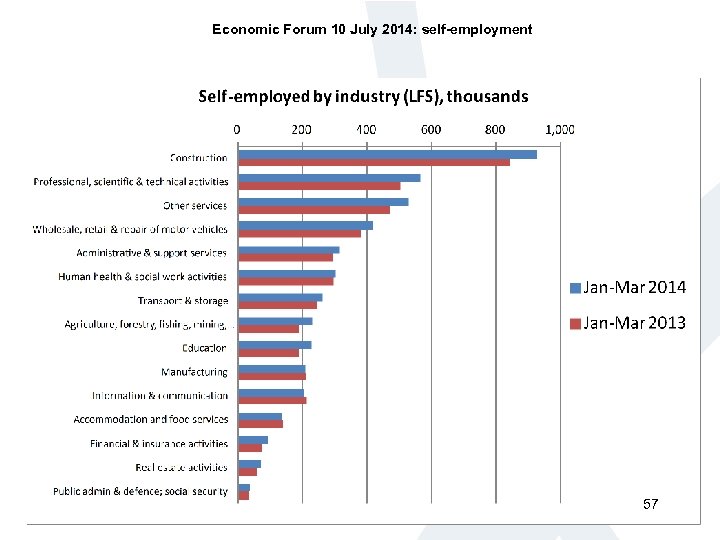
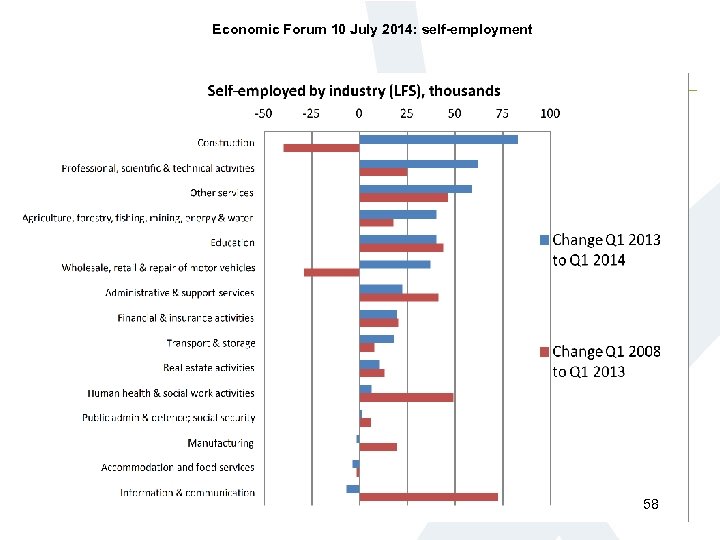
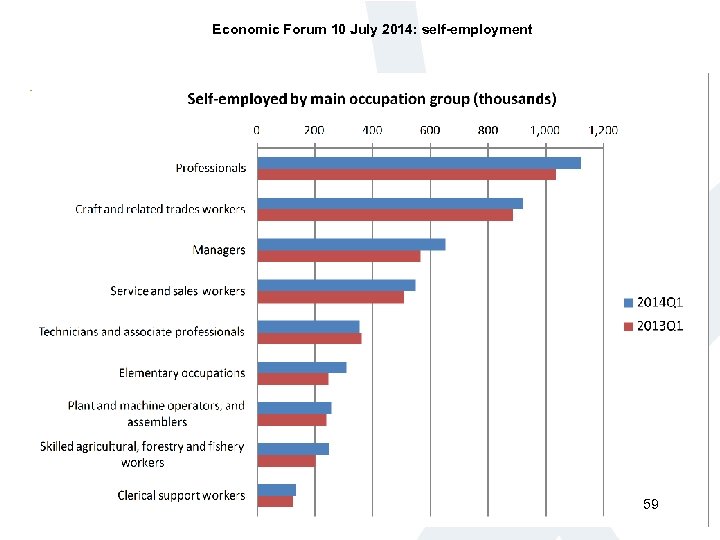
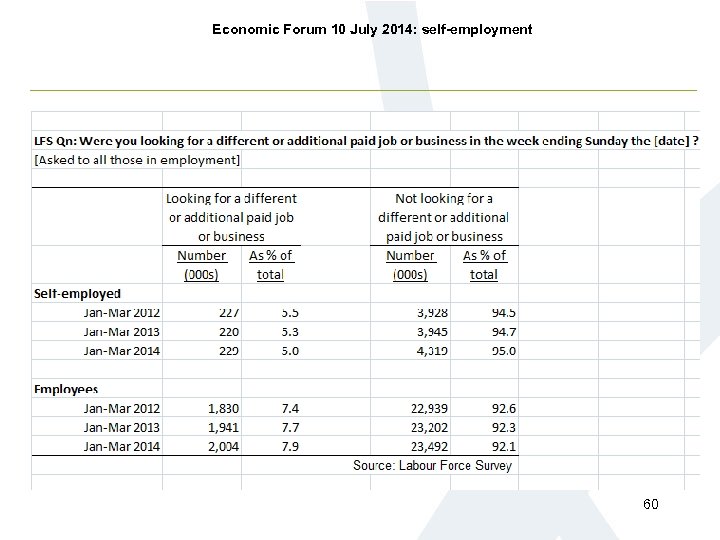
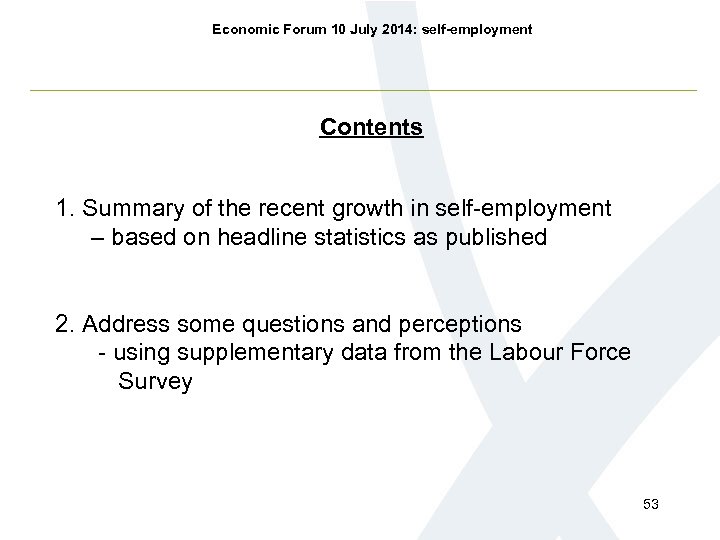 Economic Forum 10 July 2014: self-employment Contents 1. Summary of the recent growth in self-employment – based on headline statistics as published 2. Address some questions and perceptions - using supplementary data from the Labour Force Survey 53
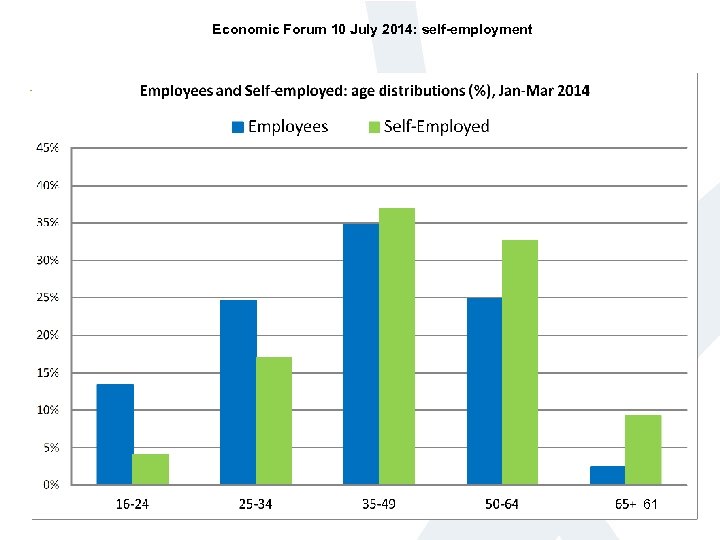
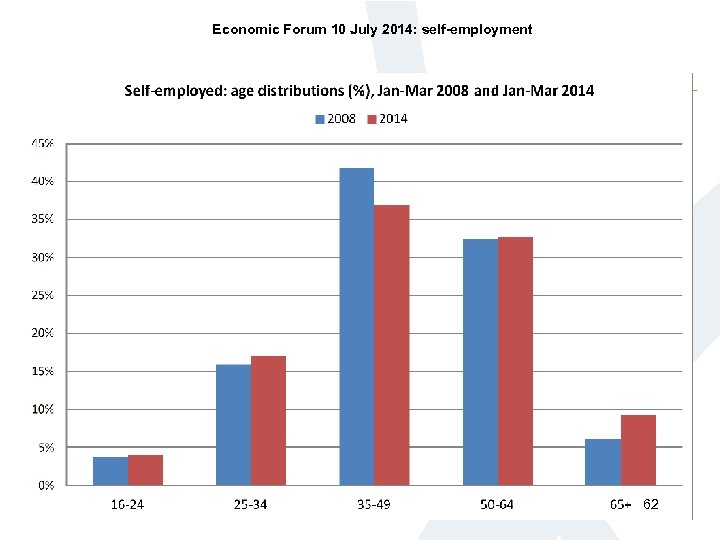
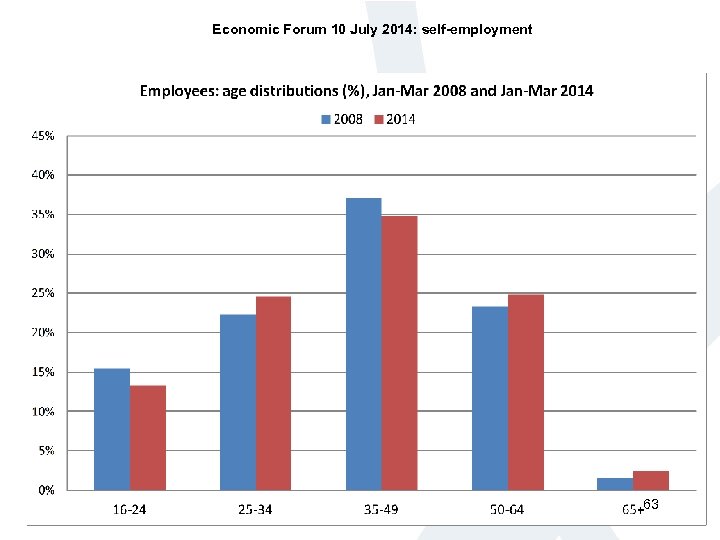
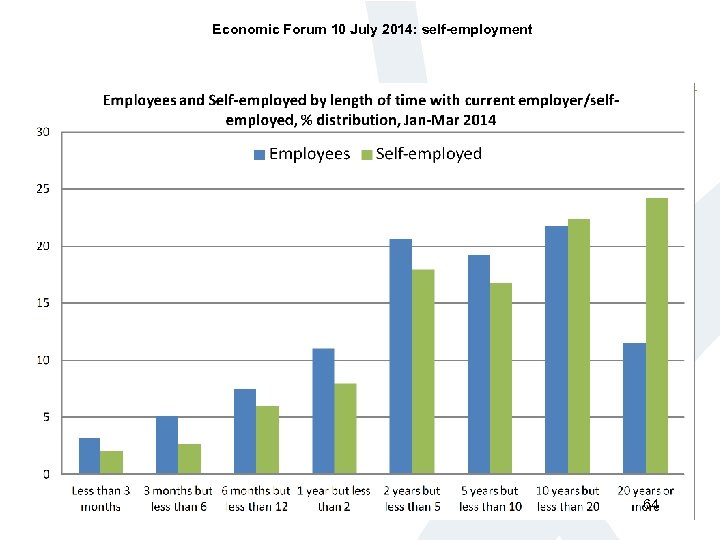
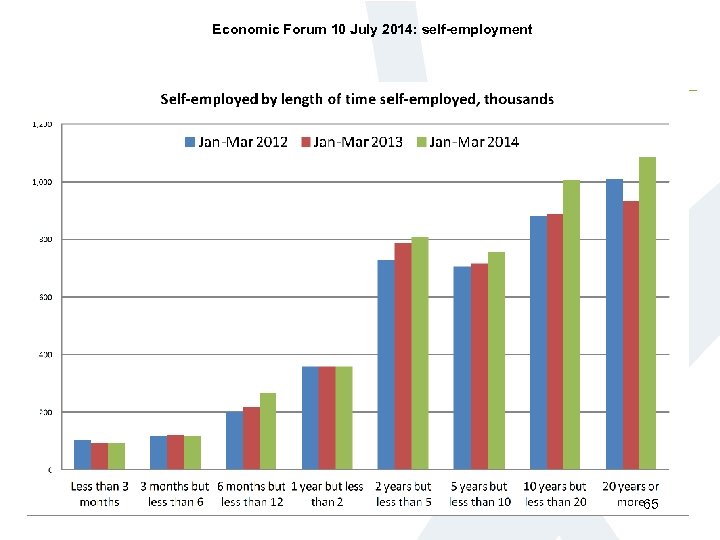
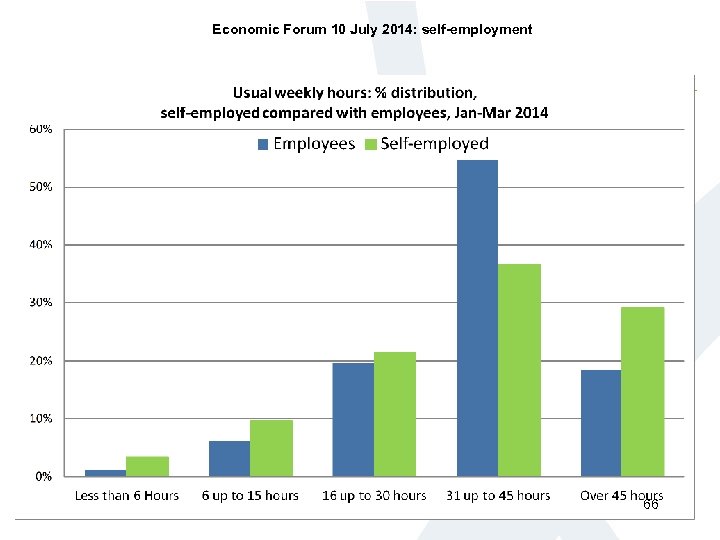
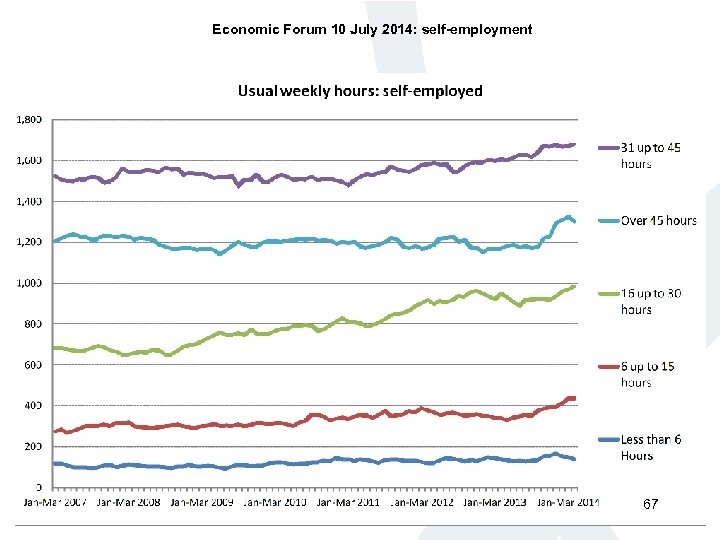
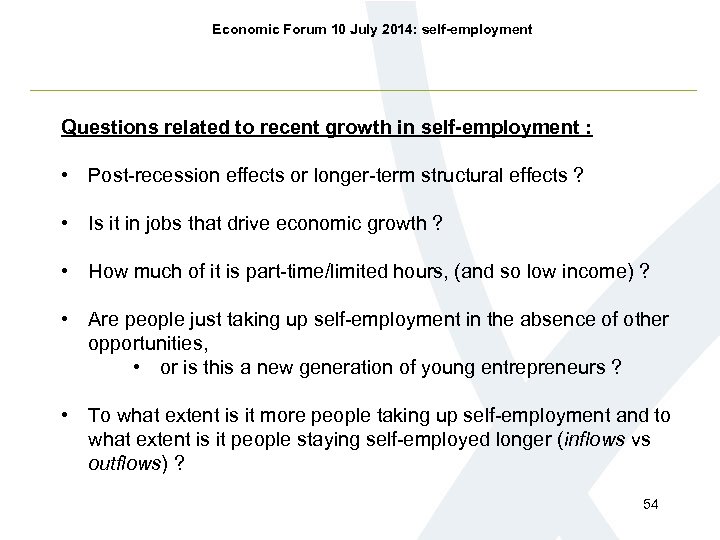 Economic Forum 10 July 2014: self-employment Questions related to recent growth in self-employment : • Post-recession effects or longer-term structural effects ? • Is it in jobs that drive economic growth ? • How much of it is part-time/limited hours, (and so low income) ? • Are people just taking up self-employment in the absence of other opportunities, • or is this a new generation of young entrepreneurs ? • To what extent is it more people taking up self-employment and to what extent is it people staying self-employed longer (inflows vs outflows) ? 54
 Economic Forum 10 July 2014: self-employment 55
 Economic Forum 10 July 2014: self-employment 56
 Economic Forum 10 July 2014: self-employment 57
 Economic Forum 10 July 2014: self-employment 58
 Economic Forum 10 July 2014: self-employment 59
 Economic Forum 10 July 2014: self-employment 60
 Economic Forum 10 July 2014: self-employment 61
 Economic Forum 10 July 2014: self-employment 62
 Economic Forum 10 July 2014: self-employment 63
 Economic Forum 10 July 2014: self-employment 64
 Economic Forum 10 July 2014: self-employment 65
 Economic Forum 10 July 2014: self-employment 66
 Economic Forum 10 July 2014: self-employment 67
 Economic Forum 10 July 2014: self-employment 68
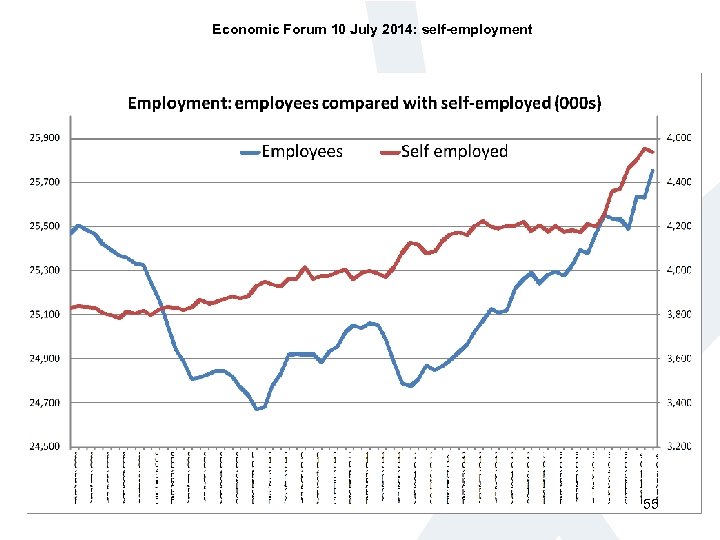
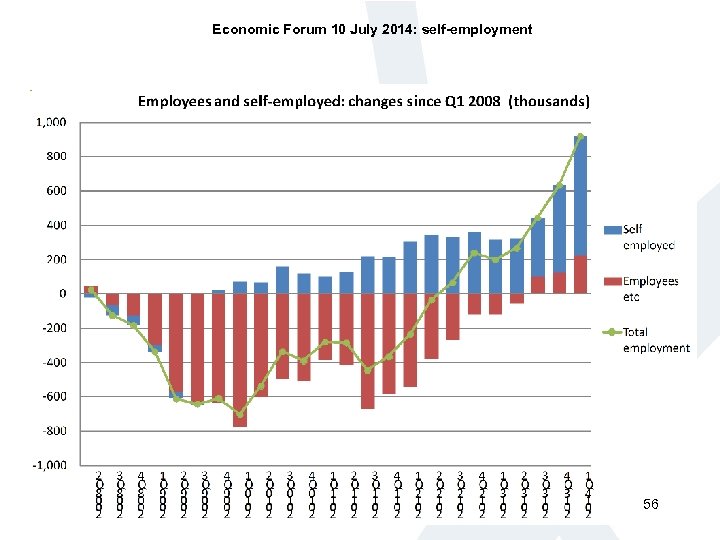
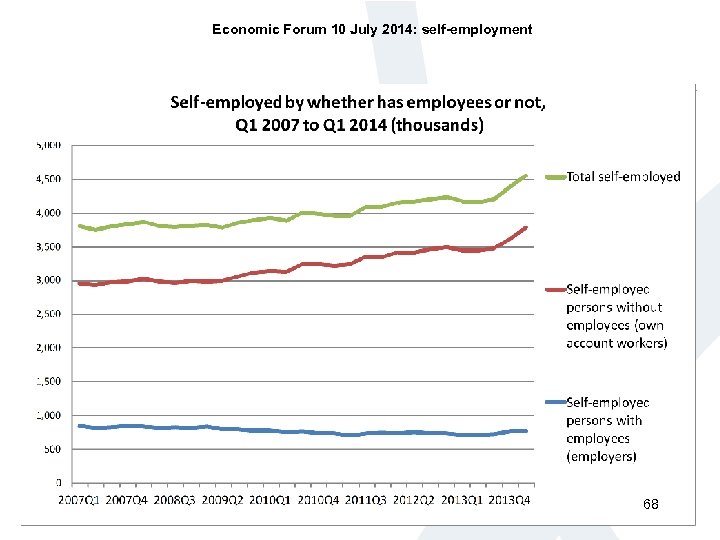
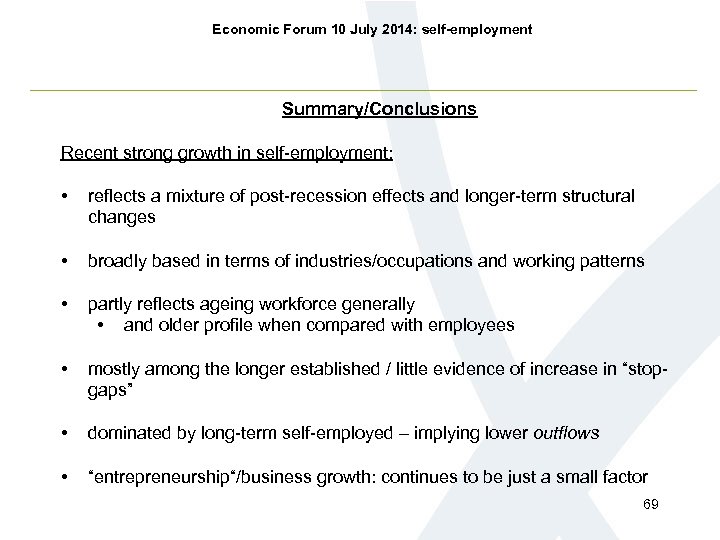 Economic Forum 10 July 2014: self-employment Summary/Conclusions Recent strong growth in self-employment: • reflects a mixture of post-recession effects and longer-term structural changes • broadly based in terms of industries/occupations and working patterns • partly reflects ageing workforce generally • and older profile when compared with employees • mostly among the longer established / little evidence of increase in “stopgaps” • dominated by long-term self-employed – implying lower outflows • “entrepreneurship“/business growth: continues to be just a small factor 69
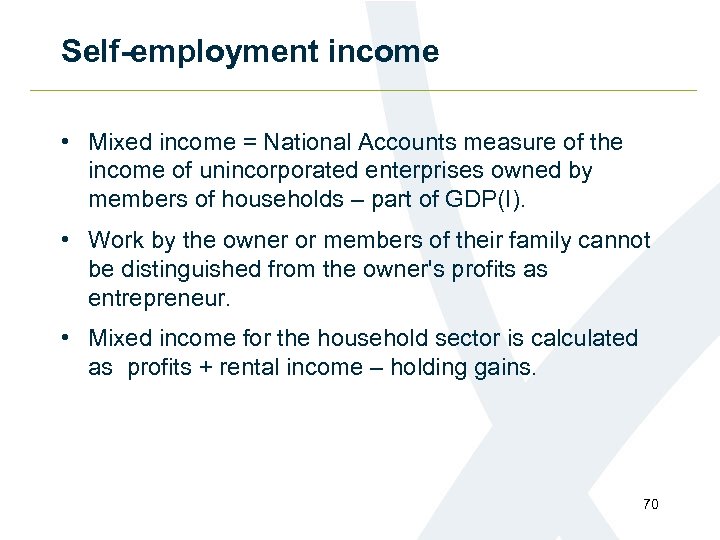 Self-employment income • Mixed income = National Accounts measure of the income of unincorporated enterprises owned by members of households – part of GDP(I). • Work by the owner or members of their family cannot be distinguished from the owner's profits as entrepreneur. • Mixed income for the household sector is calculated as profits + rental income – holding gains. 70
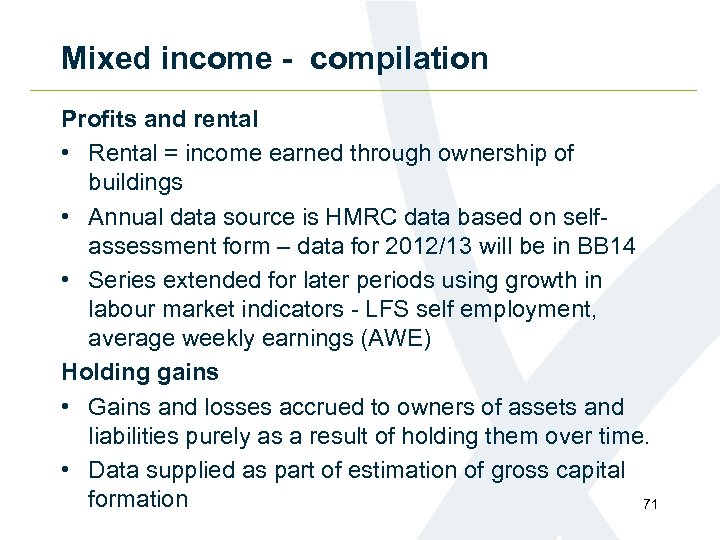 Mixed income - compilation Profits and rental • Rental = income earned through ownership of buildings • Annual data source is HMRC data based on selfassessment form – data for 2012/13 will be in BB 14 • Series extended for later periods using growth in labour market indicators - LFS self employment, average weekly earnings (AWE) Holding gains • Gains and losses accrued to owners of assets and liabilities purely as a result of holding them over time. • Data supplied as part of estimation of gross capital formation 71
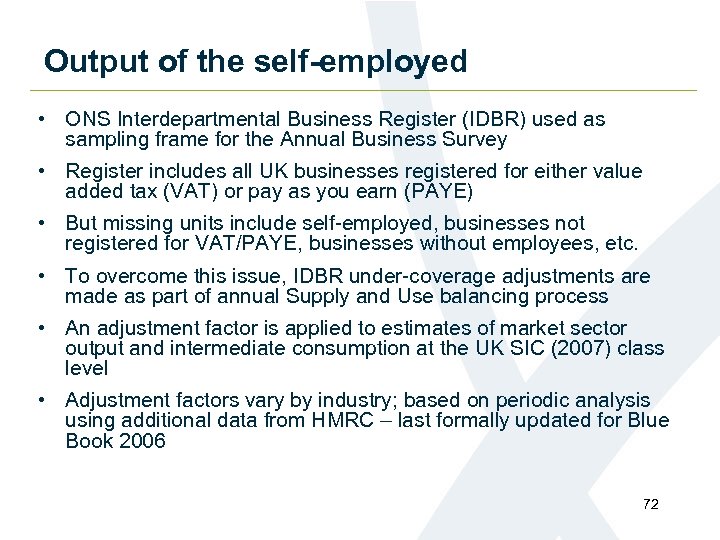 Output of the self-employed • ONS Interdepartmental Business Register (IDBR) used as sampling frame for the Annual Business Survey • Register includes all UK businesses registered for either value added tax (VAT) or pay as you earn (PAYE) • But missing units include self-employed, businesses not registered for VAT/PAYE, businesses without employees, etc. • To overcome this issue, IDBR under-coverage adjustments are made as part of annual Supply and Use balancing process • An adjustment factor is applied to estimates of market sector output and intermediate consumption at the UK SIC (2007) class level • Adjustment factors vary by industry; based on periodic analysis using additional data from HMRC – last formally updated for Blue Book 2006 72
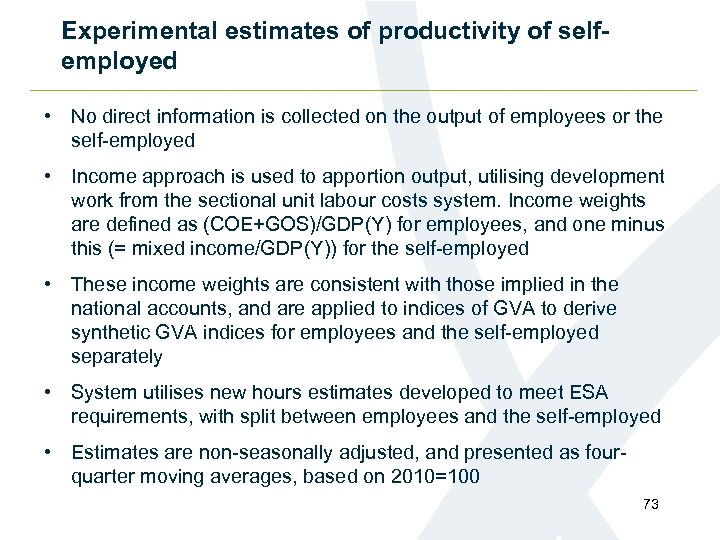 Experimental estimates of productivity of selfemployed • No direct information is collected on the output of employees or the self-employed • Income approach is used to apportion output, utilising development work from the sectional unit labour costs system. Income weights are defined as (COE+GOS)/GDP(Y) for employees, and one minus this (= mixed income/GDP(Y)) for the self-employed • These income weights are consistent with those implied in the national accounts, and are applied to indices of GVA to derive synthetic GVA indices for employees and the self-employed separately • System utilises new hours estimates developed to meet ESA requirements, with split between employees and the self-employed • Estimates are non-seasonally adjusted, and presented as fourquarter moving averages, based on 2010=100 73
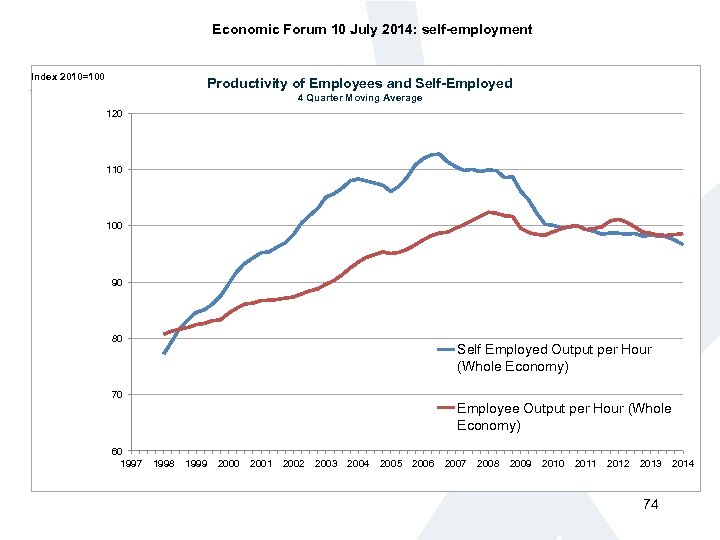 Economic Forum 10 July 2014: self-employment Index 2010=100 Productivity of Employees and Self-Employed 4 Quarter Moving Average 120 110 100 90 80 Self Employed Output per Hour (Whole Economy) 70 60 1997 Employee Output per Hour (Whole Economy) 1998 1999 2000 2001 2002 2003 2004 2005 2006 2007 2008 2009 2010 2011 2012 2013 74 2014
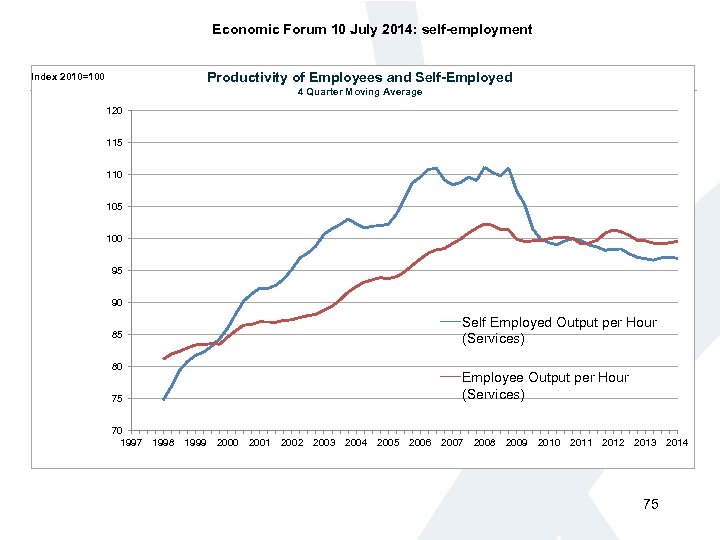 Economic Forum 10 July 2014: self-employment Productivity of Employees and Self-Employed Index 2010=100 4 Quarter Moving Average 120 115 110 105 100 95 90 85 80 75 Self Employed Output per Hour (Services) Employee Output per Hour (Services) 70 1997 1998 1999 2000 2001 2002 2003 2004 2005 2006 2007 2008 2009 2010 2011 2012 2013 2014 75
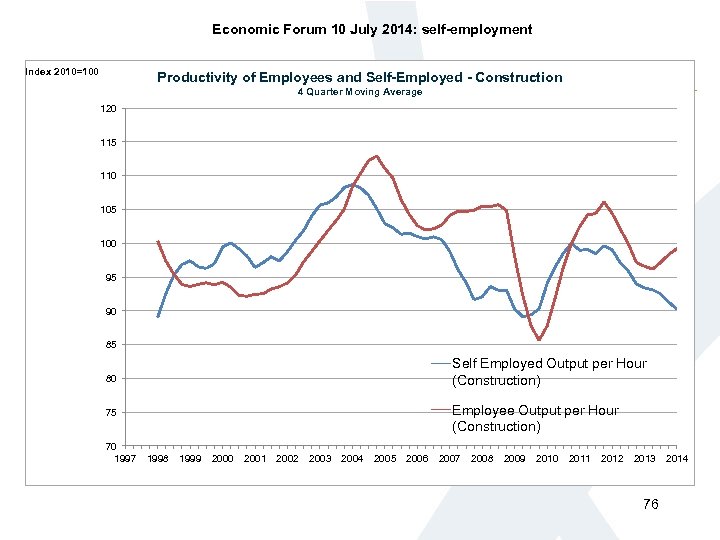 Economic Forum 10 July 2014: self-employment Index 2010=100 Productivity of Employees and Self-Employed - Construction 4 Quarter Moving Average 120 115 110 105 100 95 90 85 Self Employed Output per Hour (Construction) 80 Employee Output per Hour (Construction) 75 70 1997 1998 1999 2000 2001 2002 2003 2004 2005 2006 2007 2008 2009 2010 2011 2012 2013 76 2014
 Email: economicforum@ons. gov. uk Twitter: @ONS #ONSeconomy Website: ons. gov. uk/ons/about-ons/getinvolved/events/economic-forum/index. html 77