


 Скачать презентацию Online Prediction of the Running Time Of Tasks
d128911e7555e8893a64b8924a30bb10.ppt
- Количество слайдов: 39
 Online Prediction of the Running Time Of Tasks Peter A. Dinda Department of Computer Science Northwestern University http: //www. cs. northwestern. edu/~pdinda
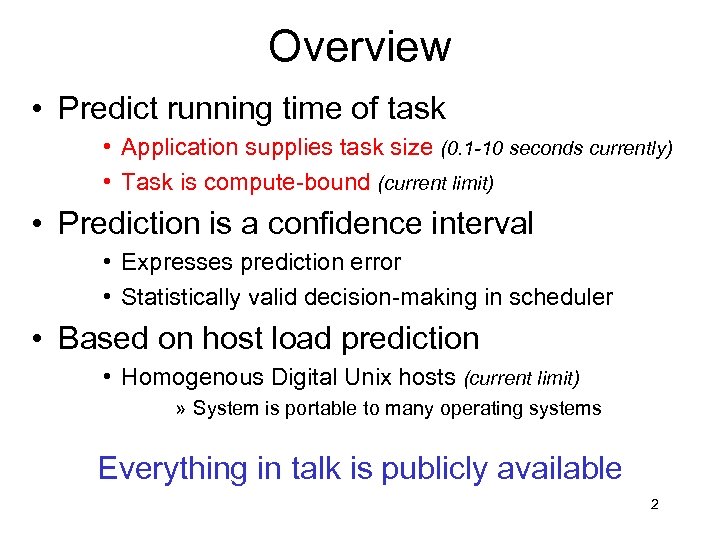 Overview • Predict running time of task • Application supplies task size (0. 1 -10 seconds currently) • Task is compute-bound (current limit) • Prediction is a confidence interval • Expresses prediction error • Statistically valid decision-making in scheduler • Based on host load prediction • Homogenous Digital Unix hosts (current limit) » System is portable to many operating systems Everything in talk is publicly available 2
 Outline • • • Running time advisor Host load results Computing confidence intervals Performance evaluation Related work Conclusions 3
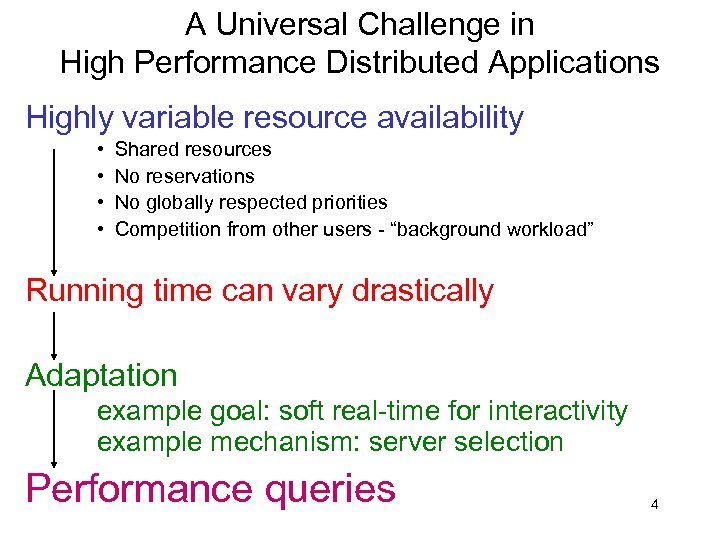 A Universal Challenge in High Performance Distributed Applications Highly variable resource availability • • Shared resources No reservations No globally respected priorities Competition from other users - “background workload” Running time can vary drastically Adaptation example goal: soft real-time for interactivity example mechanism: server selection Performance queries 4
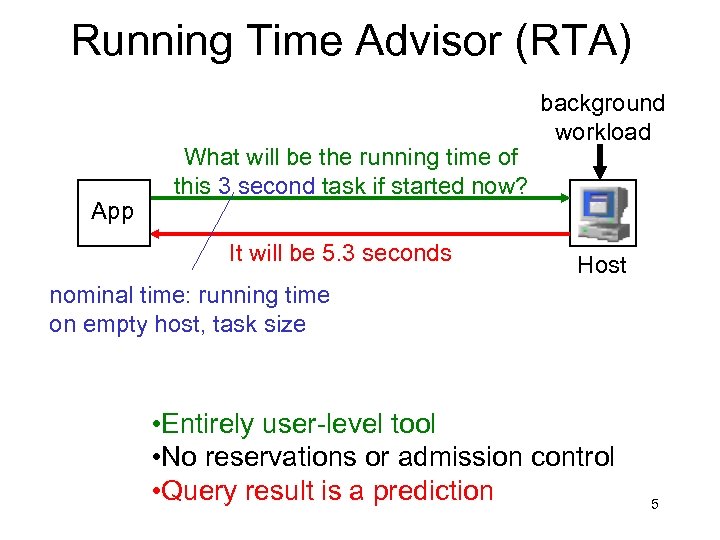 Running Time Advisor (RTA) App What will be the running time of this 3 second task if started now? It will be 5. 3 seconds background workload Host nominal time: running time on empty host, task size • Entirely user-level tool • No reservations or admission control • Query result is a prediction 5
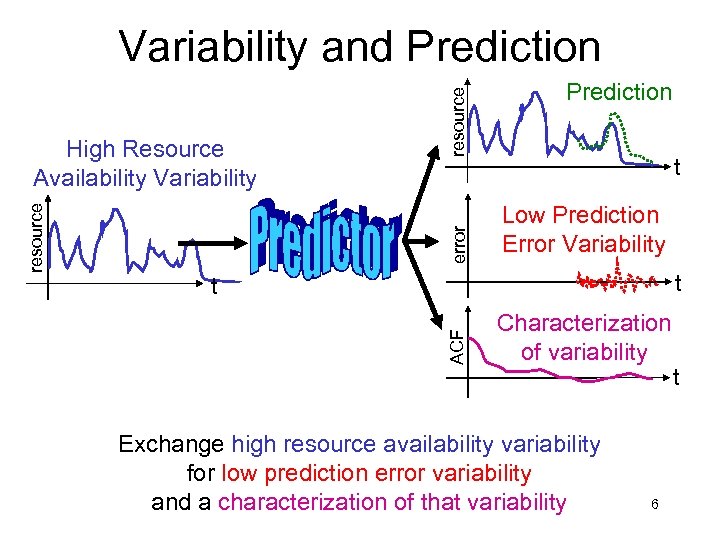 error Prediction t Low Prediction Error Variability t t ACF resource High Resource Availability Variability resource Variability and Prediction Characterization of variability Exchange high resource availability variability for low prediction error variability and a characterization of that variability 6 t
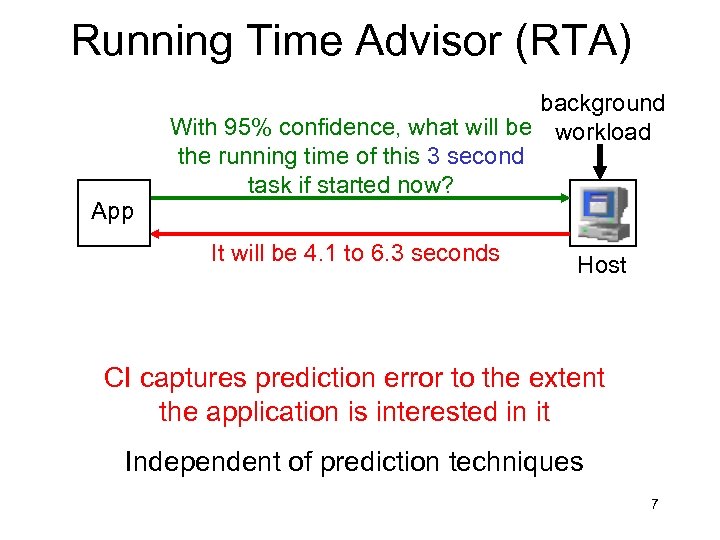 Running Time Advisor (RTA) App background With 95% confidence, what will be workload the running time of this 3 second task if started now? It will be 4. 1 to 6. 3 seconds Host CI captures prediction error to the extent the application is interested in it Independent of prediction techniques 7
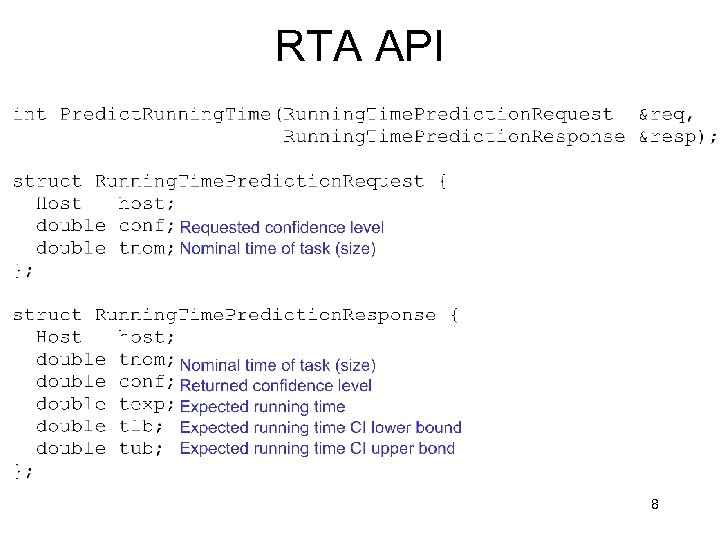 RTA API 8
 Outline • • • Running time advisor Host load results Computing confidence intervals Performance evaluation Related work Conclusions 9
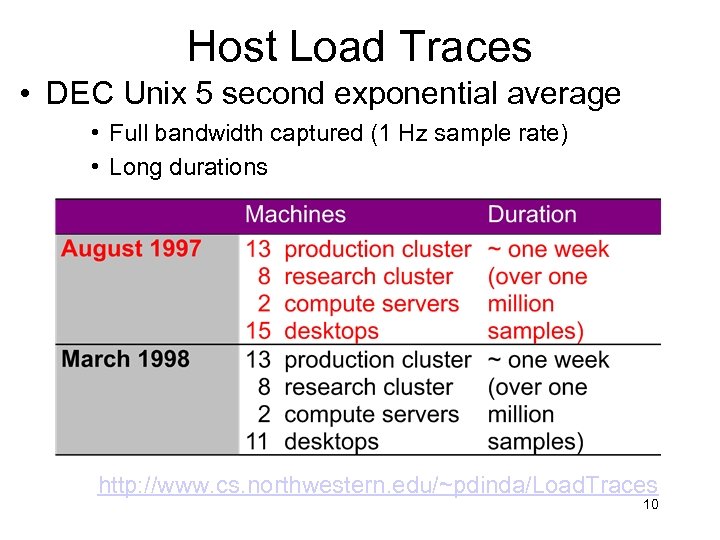 Host Load Traces • DEC Unix 5 second exponential average • Full bandwidth captured (1 Hz sample rate) • Long durations http: //www. cs. northwestern. edu/~pdinda/Load. Traces 10
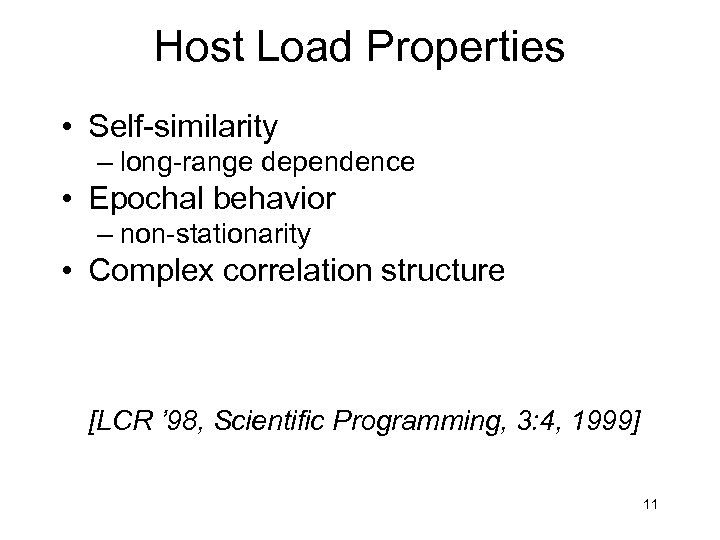 Host Load Properties • Self-similarity – long-range dependence • Epochal behavior – non-stationarity • Complex correlation structure [LCR ’ 98, Scientific Programming, 3: 4, 1999] 11
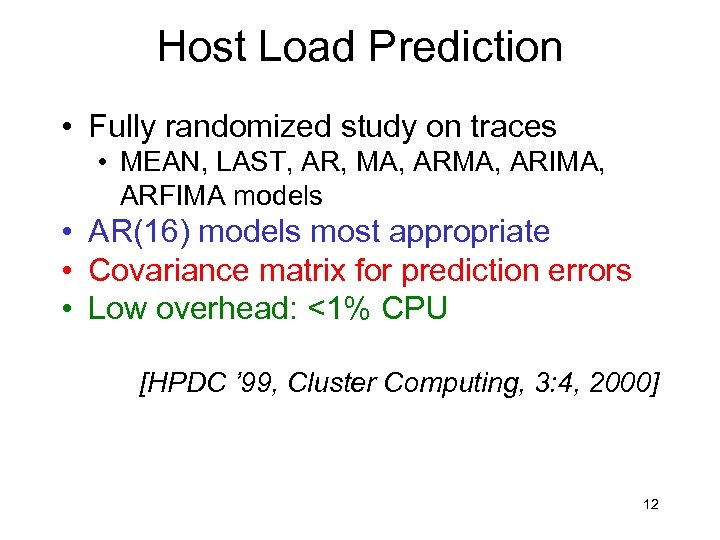 Host Load Prediction • Fully randomized study on traces • MEAN, LAST, AR, MA, ARIMA, ARFIMA models • AR(16) models most appropriate • Covariance matrix for prediction errors • Low overhead: <1% CPU [HPDC ’ 99, Cluster Computing, 3: 4, 2000] 12
 RPS Toolkit • Extensible toolkit for implementing resource signal prediction systems • Easy “buy-in” for users • C++ and sockets (no threads) • Prebuilt prediction components • Libraries (sensors, time series, communication) • Users have bought in • Incorporated in CMU Remos, BBN Qu. O [CMU-CS-99 -138] http: //www. cs. northwestern. edu/~RPS 13
 Outline • • • Running time advisor Host load results Computing confidence intervals Performance evaluation Related work Conclusions 14
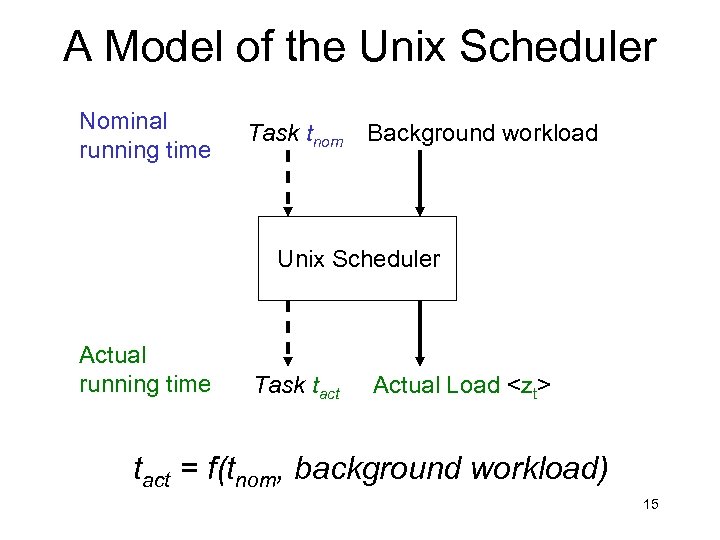 A Model of the Unix Scheduler Nominal running time Task tnom Background workload Unix Scheduler Actual running time Task tact Actual Load
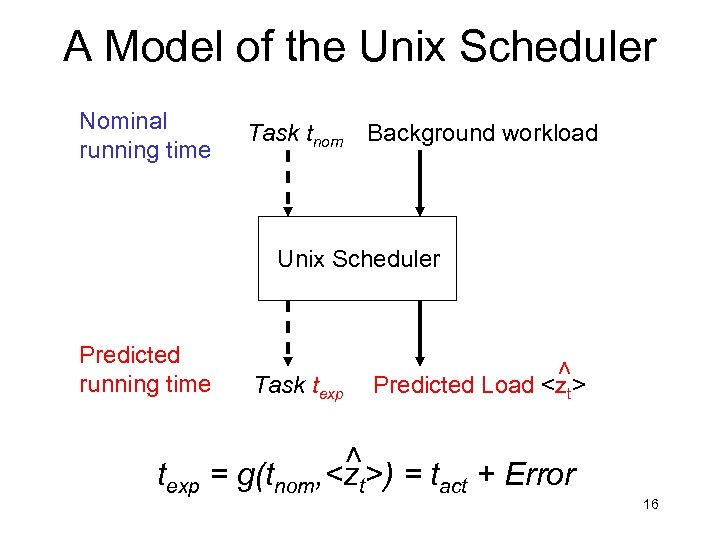 A Model of the Unix Scheduler Nominal running time Task tnom Background workload Task texp Predicted Load
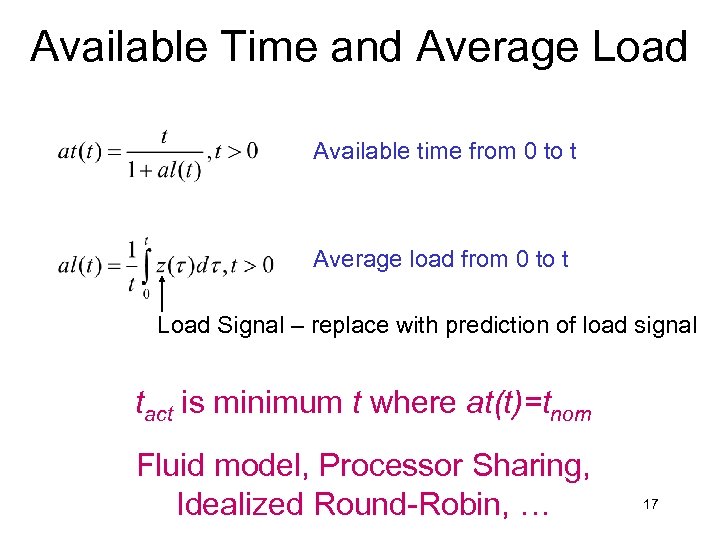 Available Time and Average Load Available time from 0 to t Average load from 0 to t Load Signal – replace with prediction of load signal tact is minimum t where at(t)=tnom Fluid model, Processor Sharing, Idealized Round-Robin, … 17
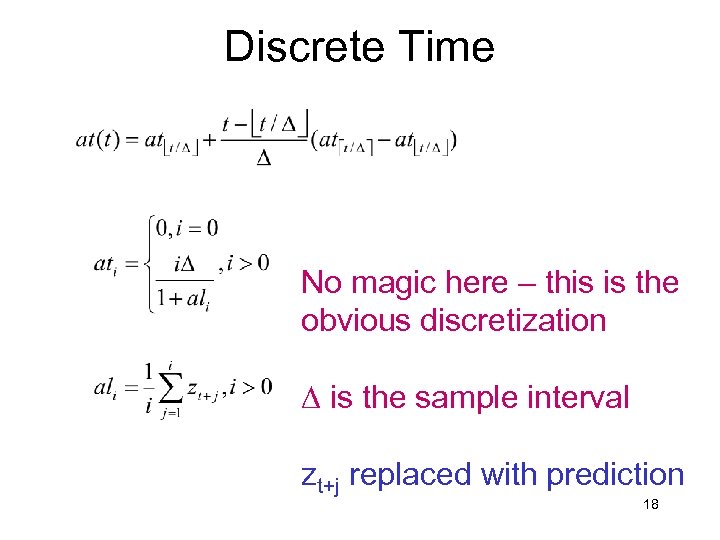 Discrete Time No magic here – this is the obvious discretization D is the sample interval zt+j replaced with prediction 18
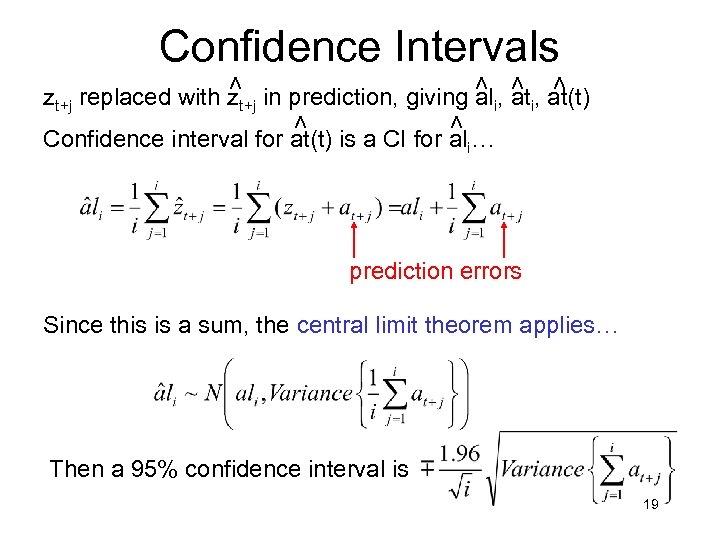 > > Confidence Intervals > > zt+j replaced with zt+j in prediction, giving ali, at(t) Confidence interval for at(t) is a CI for ali… prediction errors Since this is a sum, the central limit theorem applies… Then a 95% confidence interval is 19
 The Variance of the Sum • Prediction errors at+j are not independent • Predictor’s covariance matrix captures this Predictor makes it possible to compute this variance and thus the CI Important detail: load discounting 20
 Outline • • • Running time advisor Host load results Computing confidence intervals Performance evaluation Related work Conclusions 21
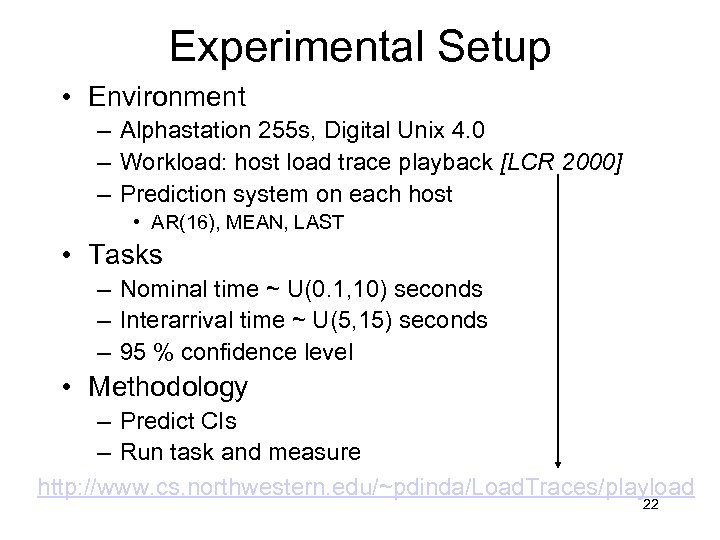 Experimental Setup • Environment – Alphastation 255 s, Digital Unix 4. 0 – Workload: host load trace playback [LCR 2000] – Prediction system on each host • AR(16), MEAN, LAST • Tasks – Nominal time ~ U(0. 1, 10) seconds – Interarrival time ~ U(5, 15) seconds – 95 % confidence level • Methodology – Predict CIs – Run task and measure http: //www. cs. northwestern. edu/~pdinda/Load. Traces/playload 22
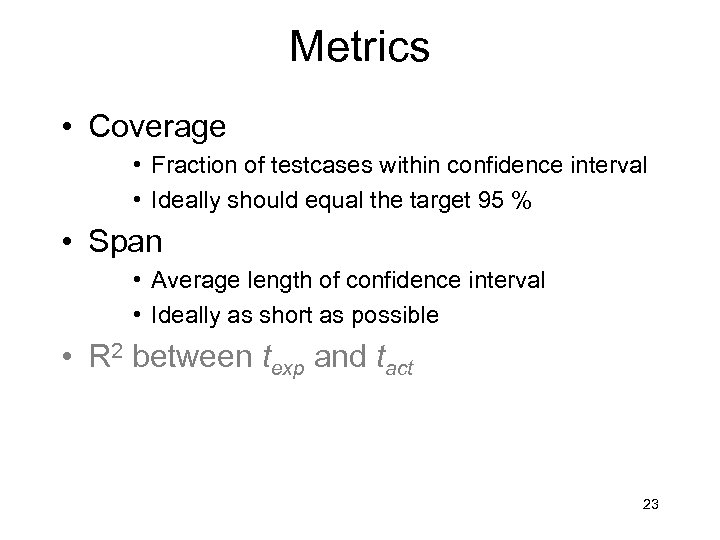 Metrics • Coverage • Fraction of testcases within confidence interval • Ideally should equal the target 95 % • Span • Average length of confidence interval • Ideally as short as possible • R 2 between texp and tact 23
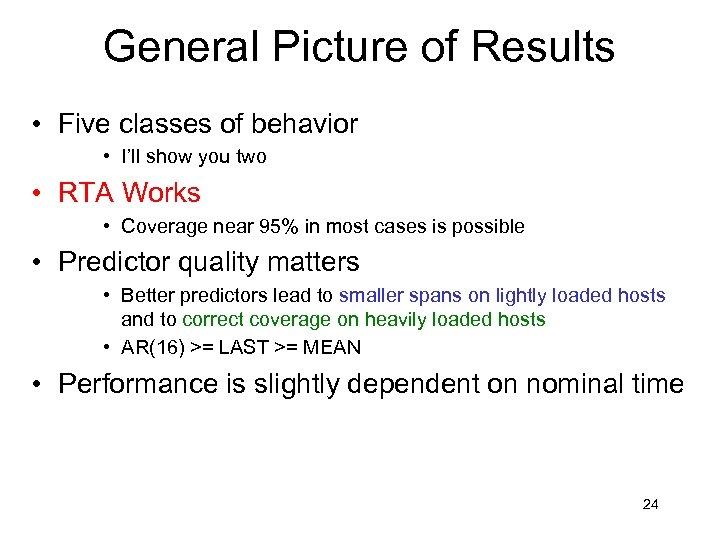 General Picture of Results • Five classes of behavior • I’ll show you two • RTA Works • Coverage near 95% in most cases is possible • Predictor quality matters • Better predictors lead to smaller spans on lightly loaded hosts and to correct coverage on heavily loaded hosts • AR(16) >= LAST >= MEAN • Performance is slightly dependent on nominal time 24
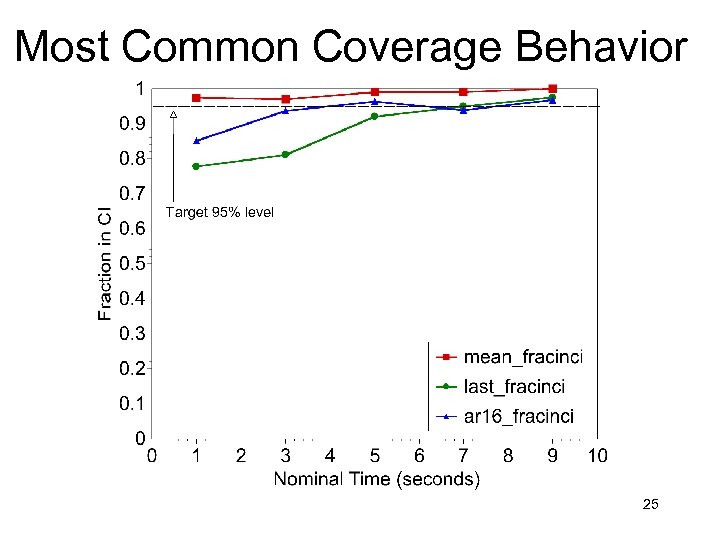 Most Common Coverage Behavior 25
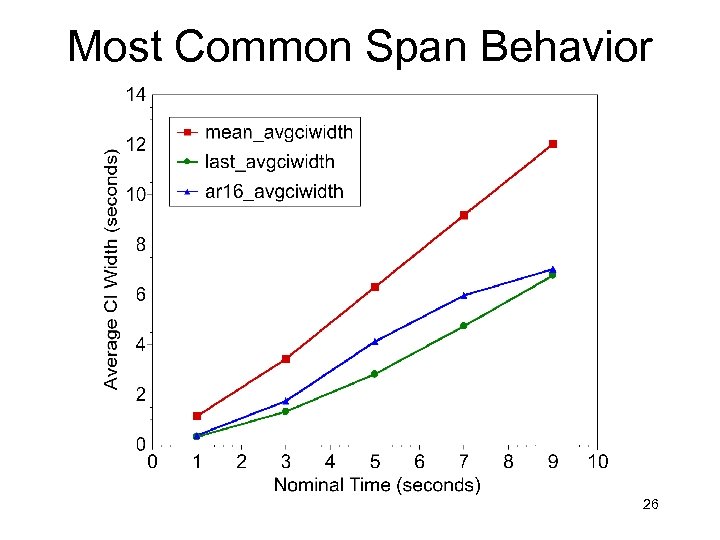 Most Common Span Behavior 26
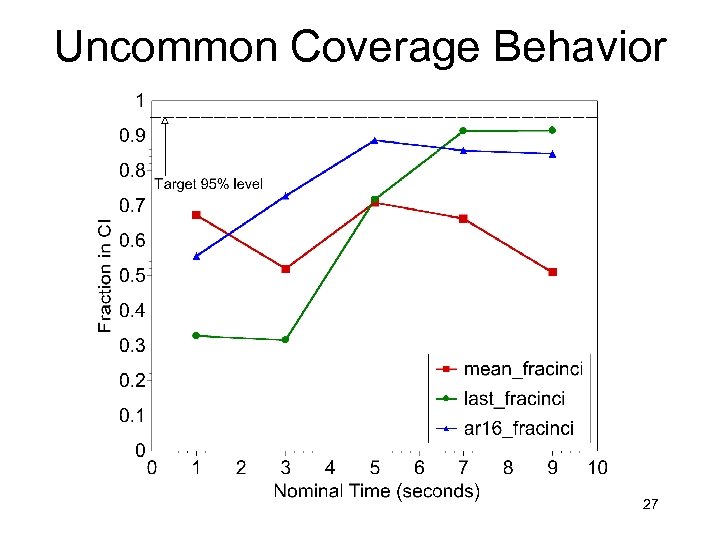 Uncommon Coverage Behavior 27
 Uncommon Span Behavior 28
![Related Work • Distributed interactive applications • Quake. Viz/ Dv, Aeschlimann [PDPTA’ 99] •](https://present5.com/presentation/d128911e7555e8893a64b8924a30bb10/image-29.jpg "Related Work • Distributed interactive applications • Quake. Viz/ Dv, Aeschlimann [PDPTA’ 99] •") Related Work • Distributed interactive applications • Quake. Viz/ Dv, Aeschlimann [PDPTA’ 99] • Quality of service • Qu. O, Zinky, Bakken, Schantz [TPOS, April 97] • QRAM, Rajkumar, et al [RTSS’ 97] • Distributed soft real-time systems • Lawrence, Jensen [assorted] • Workload studies for load balancing • Mutka, et al [Perf. Eval ‘ 91] • Harchol-Balter, et al [SIGMETRICS ‘ 96] • Resource signal measurement systems • Remos [HPDC’ 98] • Network Weather Service [HPDC‘ 97, HPDC’ 99] • Host load prediction • Wolski, et al [HPDC’ 99] (NWS) • Samadani, et al [PODC’ 95] • Hailperin [‘ 93] • Application-level scheduling • Berman, et al [HPDC’ 96] • Stochastic Scheduling, Schopf [Supercomputing ‘ 99] 29
Related Work • Distributed interactive applications • Quake. Viz/ Dv, Aeschlimann [PDPTA’ 99] • Quality of service • Qu. O, Zinky, Bakken, Schantz [TPOS, April 97] • QRAM, Rajkumar, et al [RTSS’ 97] • Distributed soft real-time systems • Lawrence, Jensen [assorted] • Workload studies for load balancing • Mutka, et al [Perf. Eval ‘ 91] • Harchol-Balter, et al [SIGMETRICS ‘ 96] • Resource signal measurement systems • Remos [HPDC’ 98] • Network Weather Service [HPDC‘ 97, HPDC’ 99] • Host load prediction • Wolski, et al [HPDC’ 99] (NWS) • Samadani, et al [PODC’ 95] • Hailperin [‘ 93] • Application-level scheduling • Berman, et al [HPDC’ 96] • Stochastic Scheduling, Schopf [Supercomputing ‘ 99] 29
 Conclusions • • Predict running time of compute-bound task Based on host load prediction Prediction is a confidence interval Confidence interval algorithm • Covariance matrix • Load discounting • Effective for domain • Digital Unix, 0. 1 -10 second tasks, 5 -15 second interarrival • Extensions in progress 30
 For More Information • All software and traces are available • RPS + RTA + RTSA http: //www. cs. northwestern. edu/~RPS • Load Traces and playback http: //www. cs. northwestern. edu/~pdinda/Load. Traces • Prescience Lab • Peter Dinda, Jason Skicewicz, Dong Lu • http: //www. cs. northwestern. edu/~plab 31
 Outline • • • Running time advisor Host load results Computing confidence intervals Performance evaluation Related work Conclusions 32
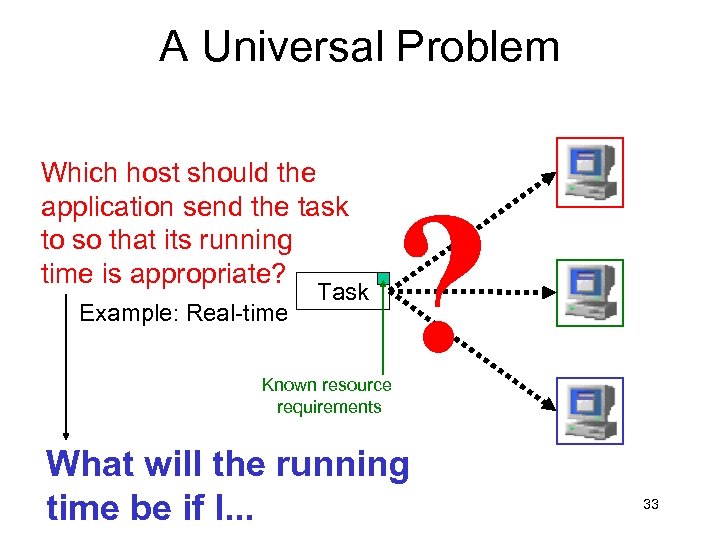 A Universal Problem Which host should the application send the task to so that its running time is appropriate? Example: Real-time Task Known resource requirements ? What will the running time be if I. . . 33
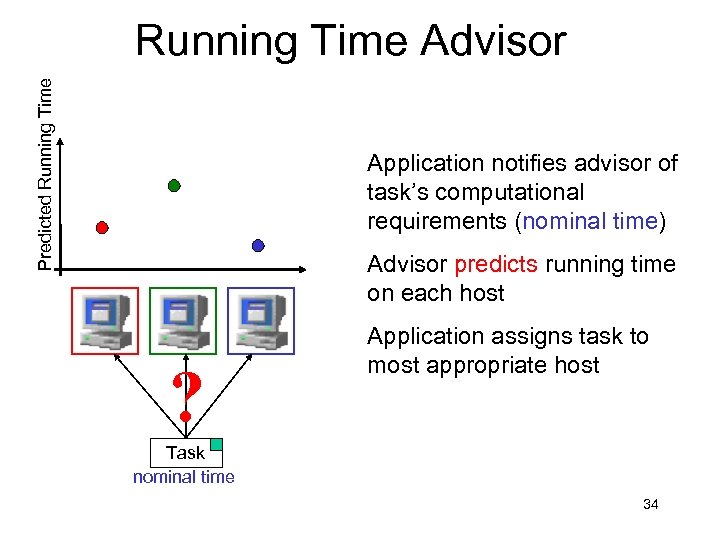 Predicted Running Time Advisor Application notifies advisor of task’s computational requirements (nominal time) Advisor predicts running time on each host ? Application assigns task to most appropriate host Task nominal time 34
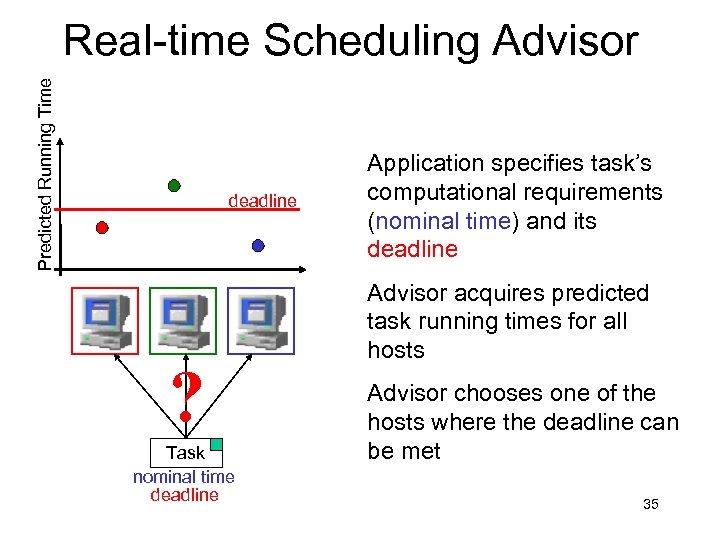 Predicted Running Time Real-time Scheduling Advisor deadline ? Task nominal time deadline Application specifies task’s computational requirements (nominal time) and its deadline Advisor acquires predicted task running times for all hosts Advisor chooses one of the hosts where the deadline can be met 35
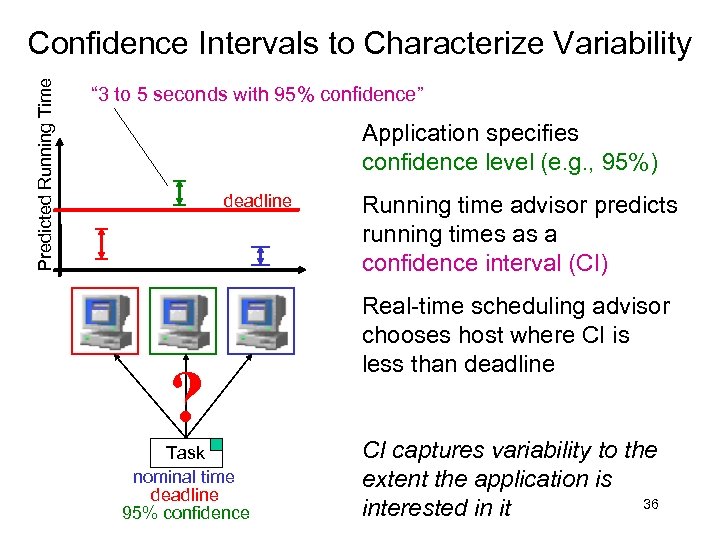 Predicted Running Time Confidence Intervals to Characterize Variability “ 3 to 5 seconds with 95% confidence” Application specifies confidence level (e. g. , 95%) deadline ? Task nominal time deadline 95% confidence Running time advisor predicts running times as a confidence interval (CI) Real-time scheduling advisor chooses host where CI is less than deadline CI captures variability to the extent the application is 36 interested in it
 Prototype System This Paper 37
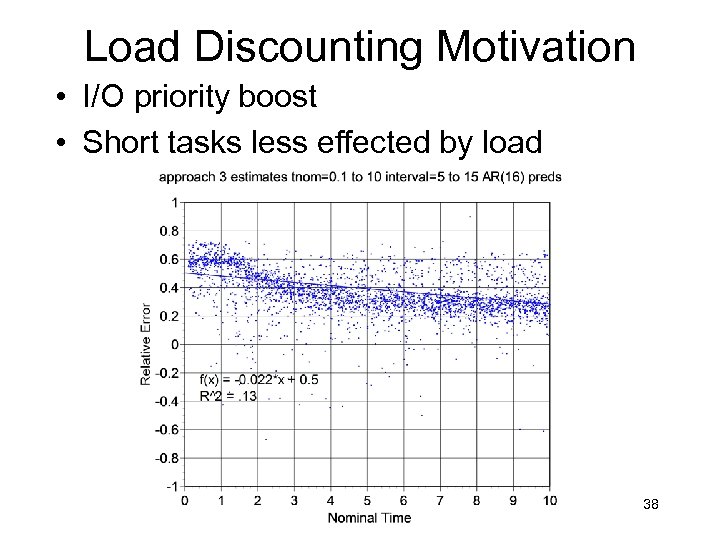 Load Discounting Motivation • I/O priority boost • Short tasks less effected by load 38
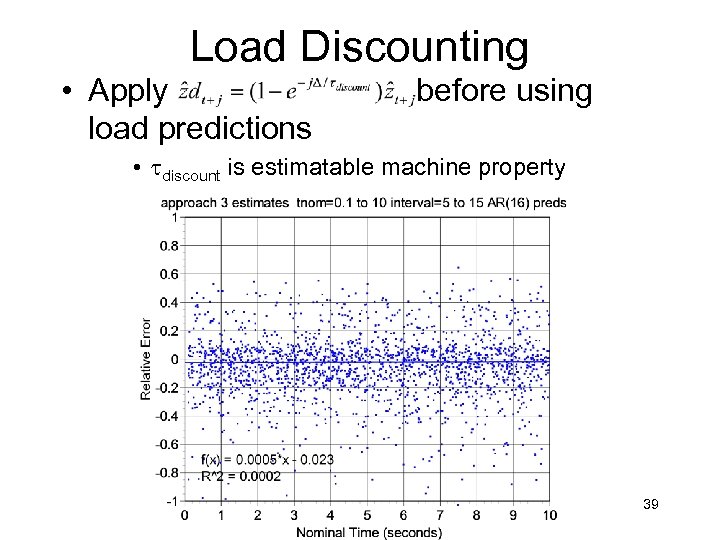 Load Discounting • Apply load predictions before using • tdiscount is estimatable machine property 39