 Скачать презентацию Online Guide to Using Key Cite http slisweb
a4129a5a36aa2d939fc1633b30892810.ppt
- Количество слайдов: 55



Online Guide to Using Key. Cite http: //slisweb. sjsu. edu/resources/westlaw/keycite. pdf
What is Key. Cite? Key. Cite is the citation service available on Westlaw. You can use Key. Cite to view the history of a case, statute, administrative decision, or regulation to help determine whether it is good law and to retrieve citing references.
What Can Be Searched in Key. Cite? v. Case law v. Statutory citations v. Regulations v. Constitutional provisions v. Court rules v. Agency decisions Restatements v Law review articles v U. S. patents v
How to Access Key. Cite v From the Directory Page of Westlaw v Use Find to retrieve a specific citation v Link to document from search results v Open Key. Cite.
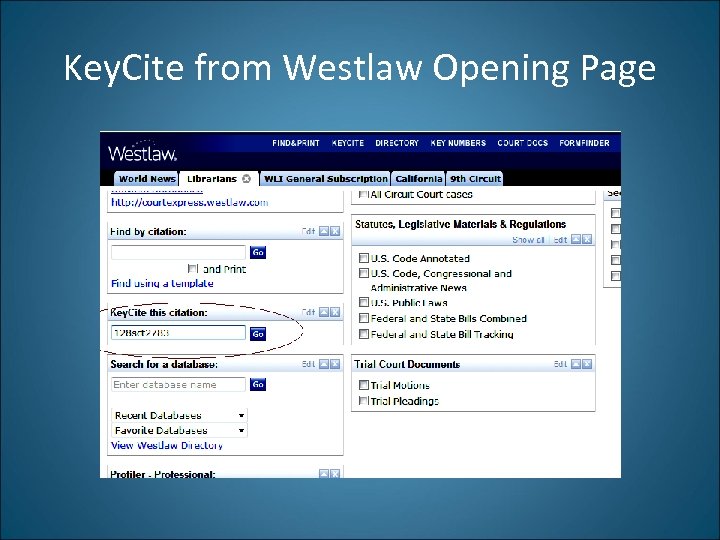
Key. Cite from Westlaw Opening Page
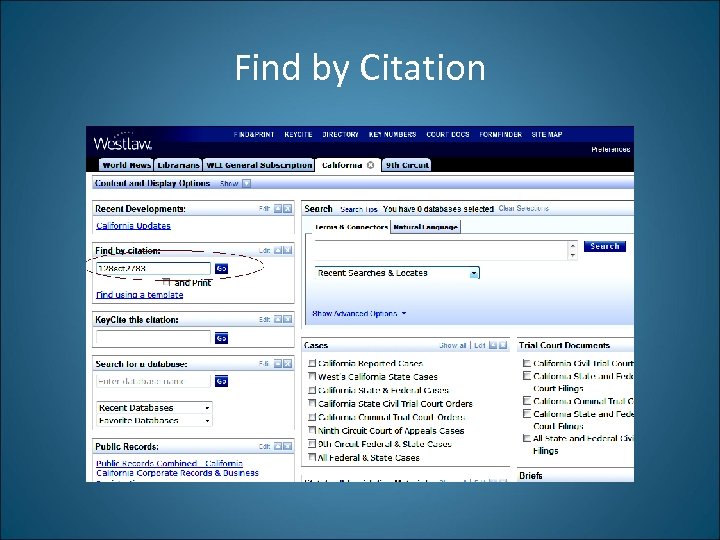
Find by Citation
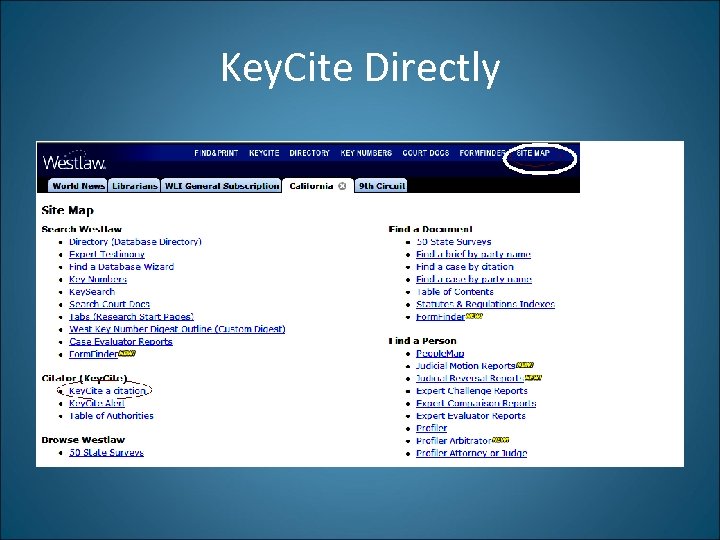
Key. Cite Directly
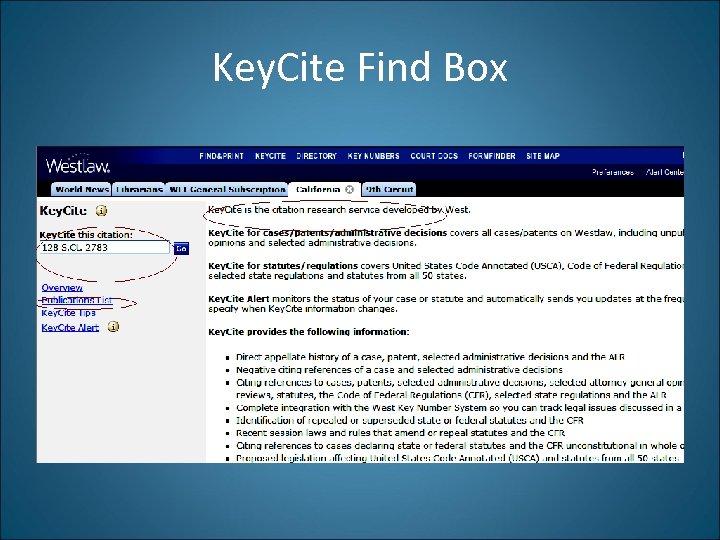
Key. Cite Find Box
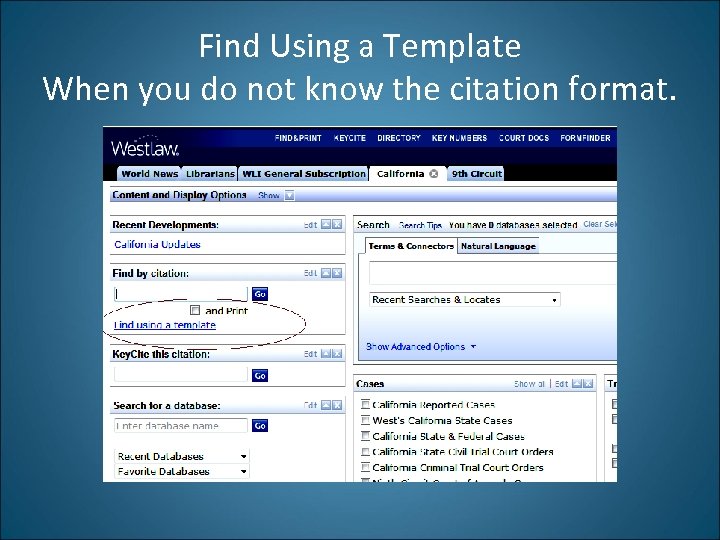
Find Using a Template When you do not know the citation format.
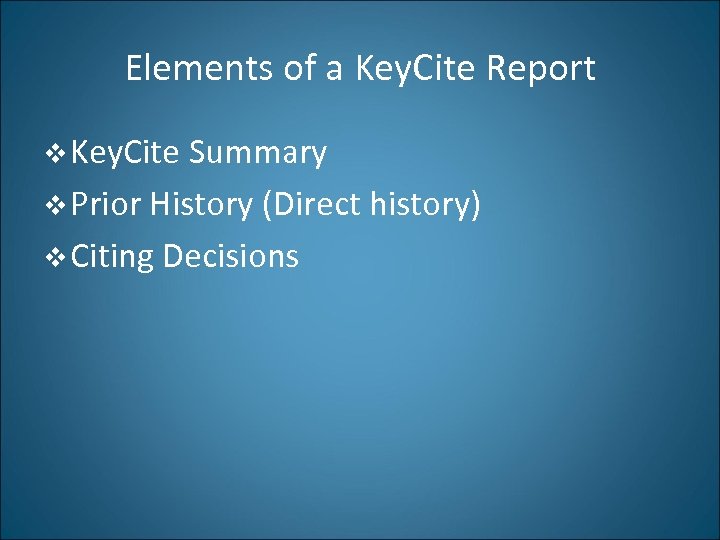
Elements of a Key. Cite Report v Key. Cite Summary v Prior History (Direct history) v Citing Decisions
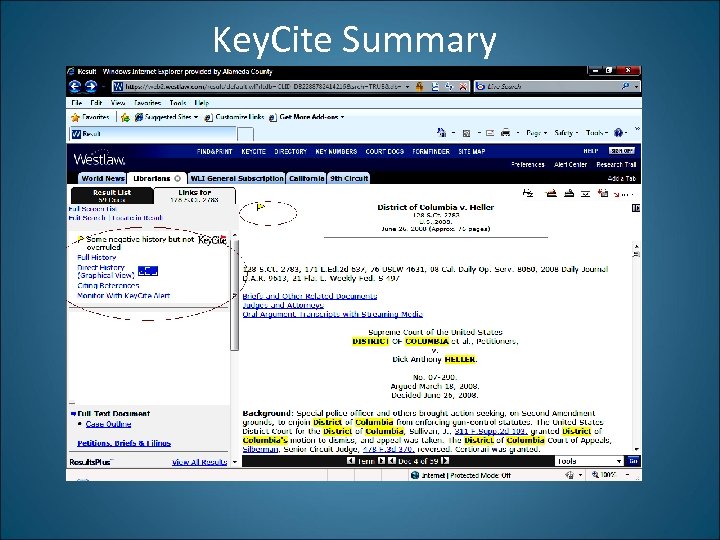
Key. Cite Summary
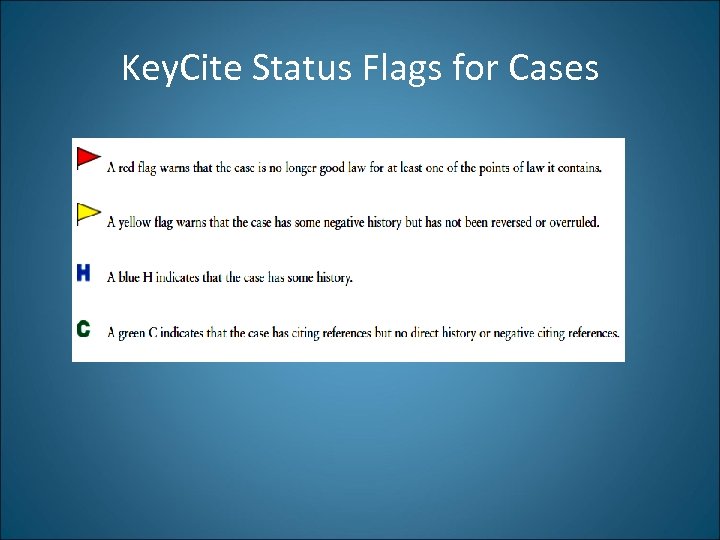
Key. Cite Status Flags for Cases
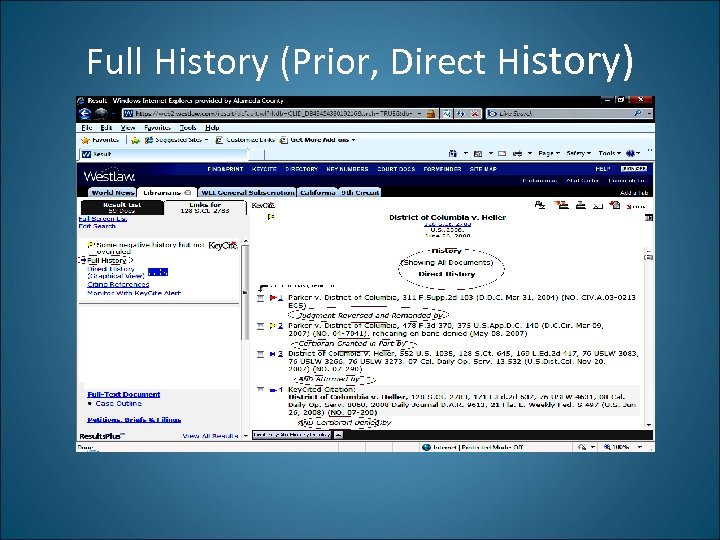
Full History (Prior, Direct History)
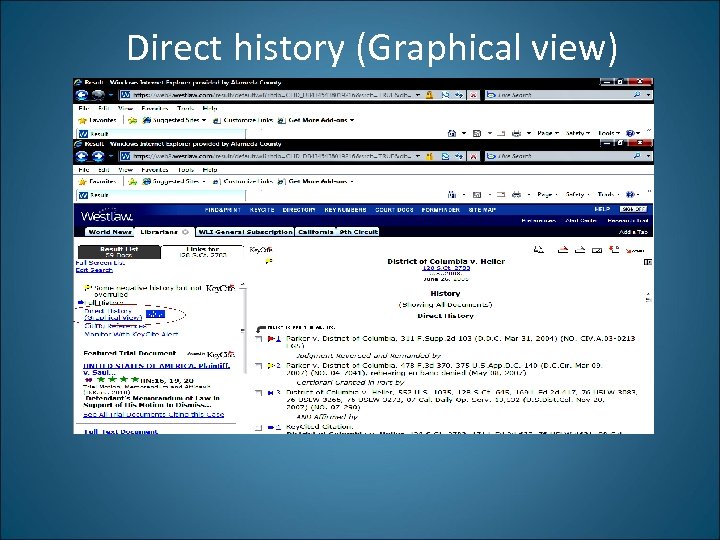
Direct history (Graphical view)
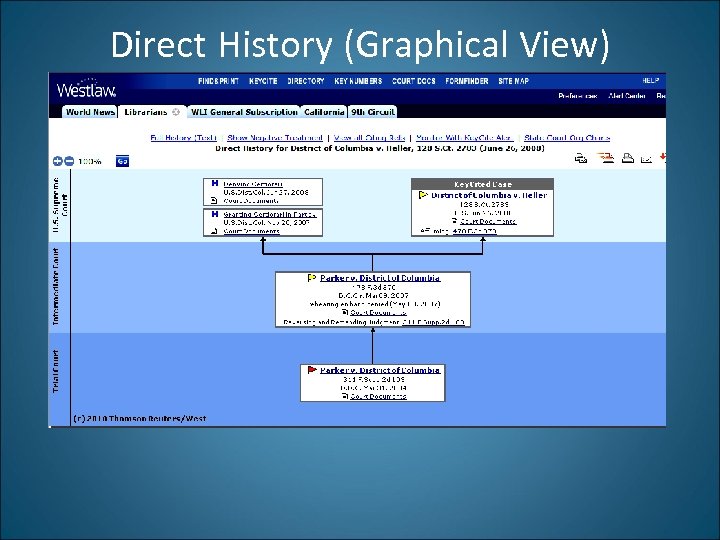
Direct History (Graphical View)
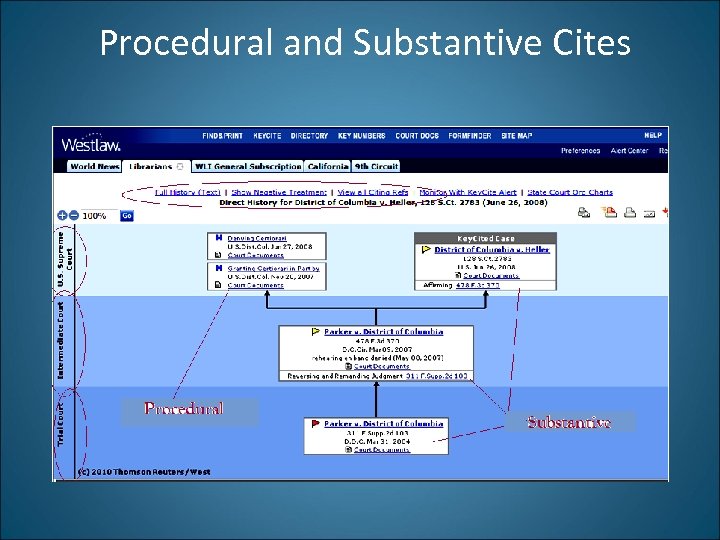
Procedural and Substantive Cites
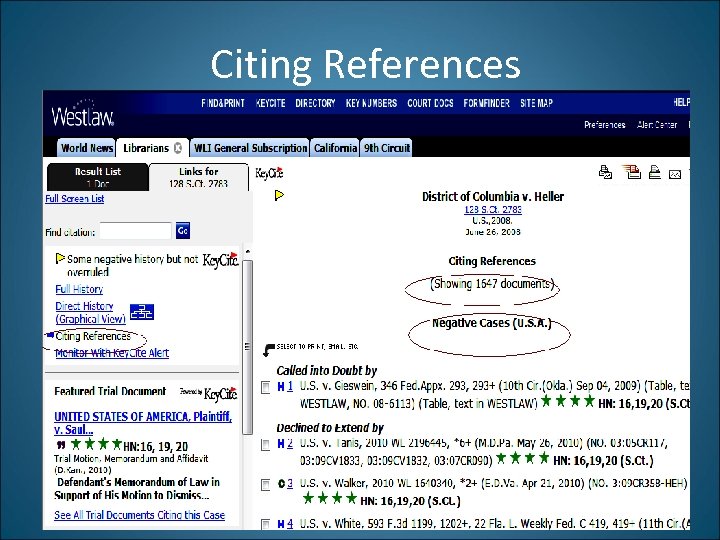
Citing References
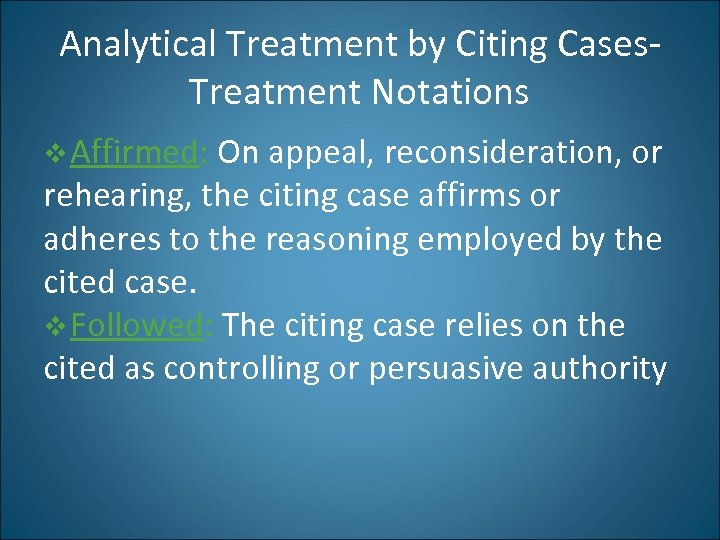
Analytical Treatment by Citing Cases. Treatment Notations v Affirmed: On appeal, reconsideration, or rehearing, the citing case affirms or adheres to the reasoning employed by the cited case. v Followed: The citing case relies on the cited as controlling or persuasive authority
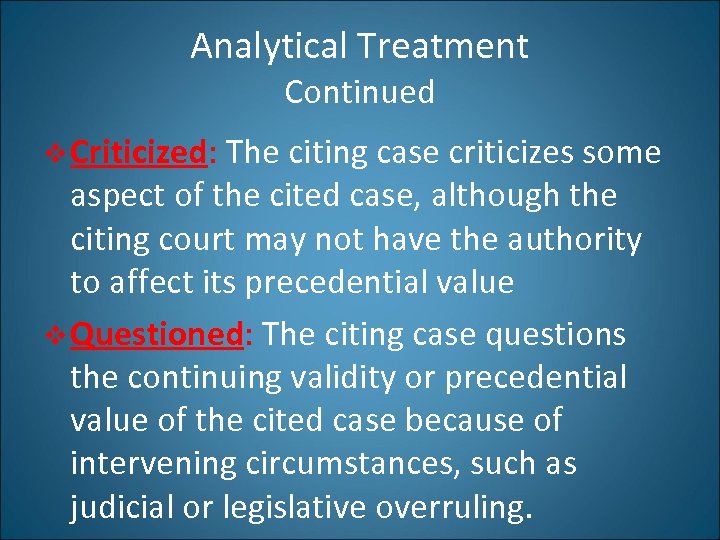
Analytical Treatment Continued v Criticized: The citing case criticizes some aspect of the cited case, although the citing court may not have the authority to affect its precedential value v Questioned: The citing case questions the continuing validity or precedential value of the cited case because of intervening circumstances, such as judicial or legislative overruling.
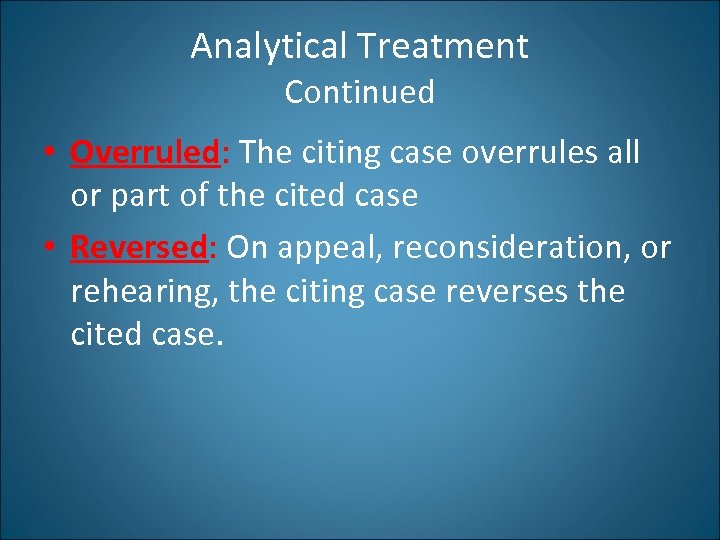
Analytical Treatment Continued • Overruled: The citing case overrules all or part of the cited case • Reversed: On appeal, reconsideration, or rehearing, the citing case reverses the cited case.
Analytical Treatment Continued v Explained: The citing case explains or interprets the reasoning or holding of the cited case. v Distinguished: The citing case differs from the cited case in either fact situation or legal issue.
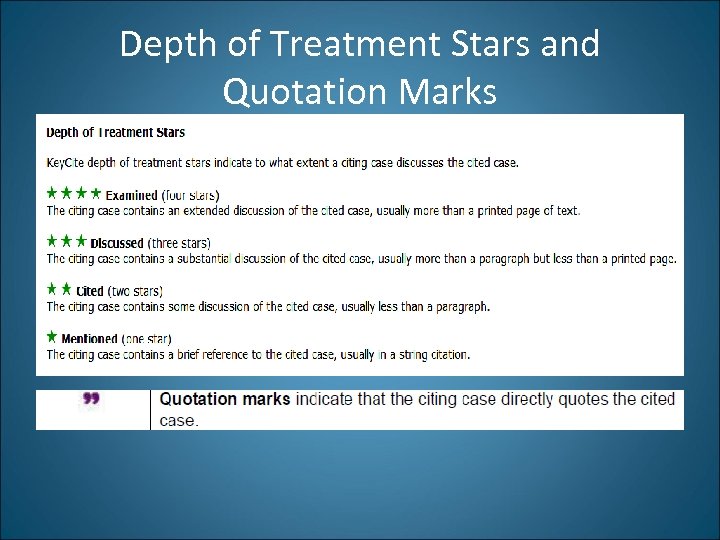
Depth of Treatment Stars and Quotation Marks
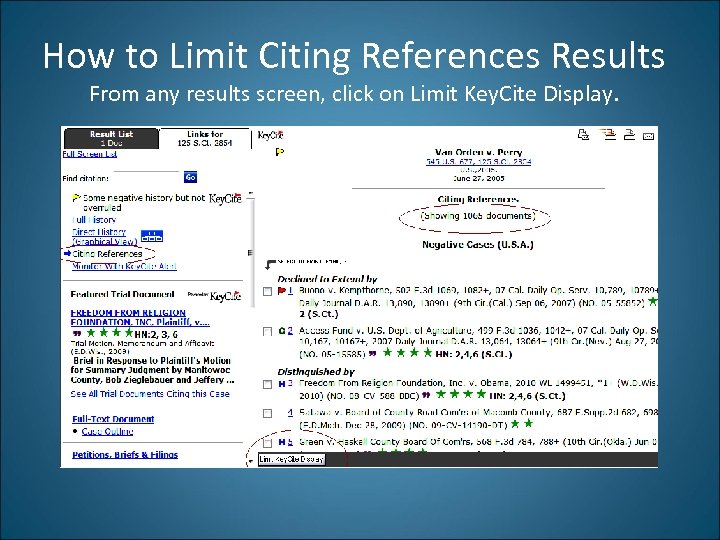
How to Limit Citing References Results From any results screen, click on Limit Key. Cite Display.
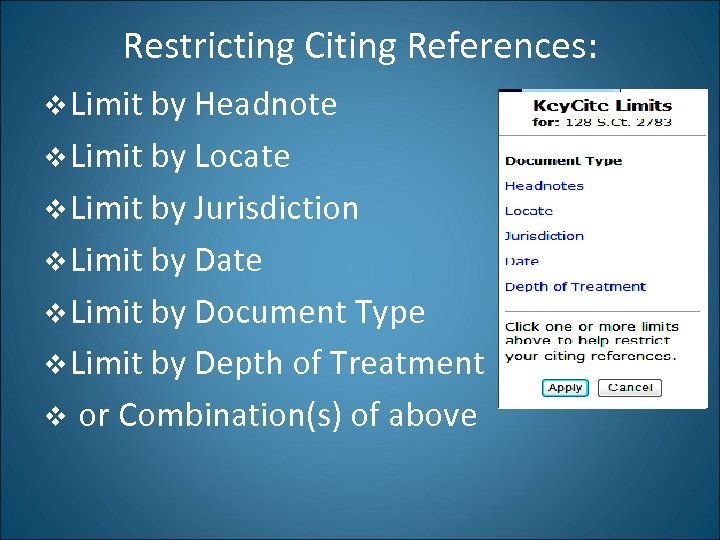
Restricting Citing References: v Limit by Headnote v Limit by Locate v Limit by Jurisdiction v Limit by Date v Limit by Document Type v Limit by Depth of Treatment v or Combination(s) of above
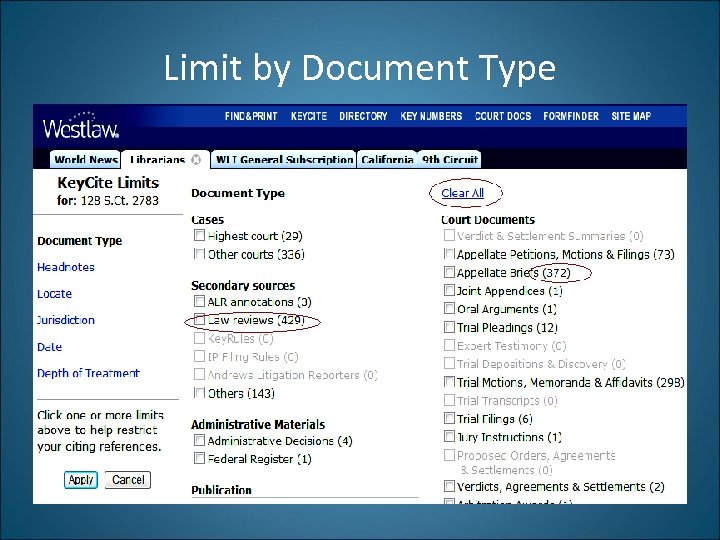
Limit by Document Type
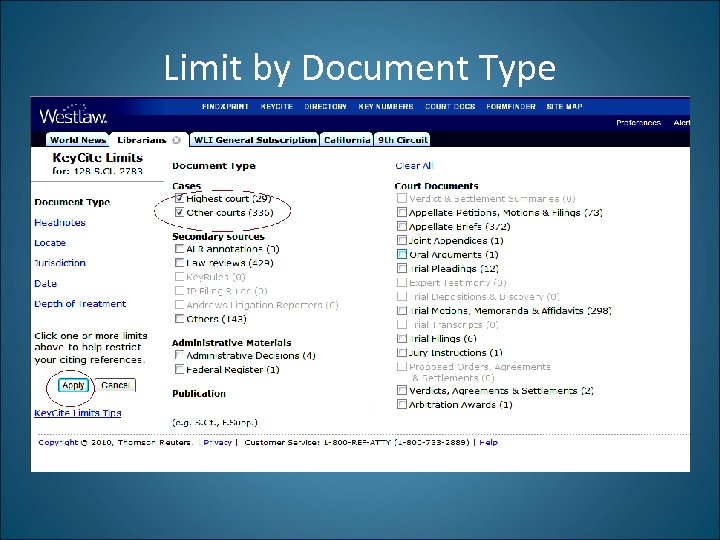
Limit by Document Type
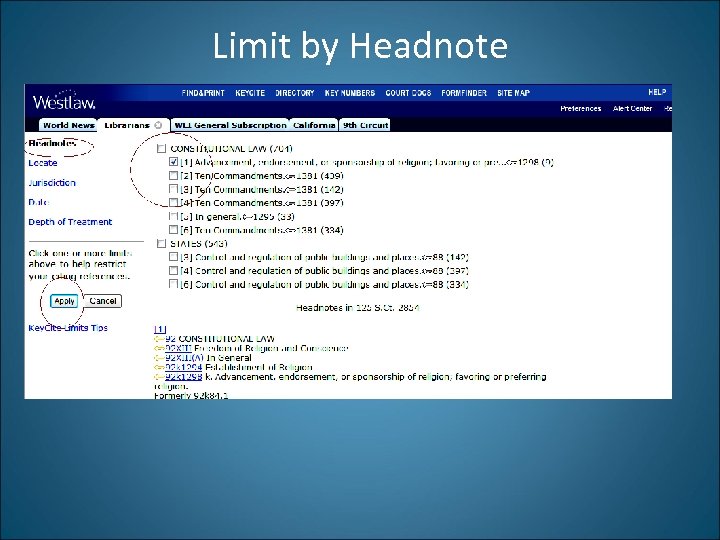
Limit by Headnote
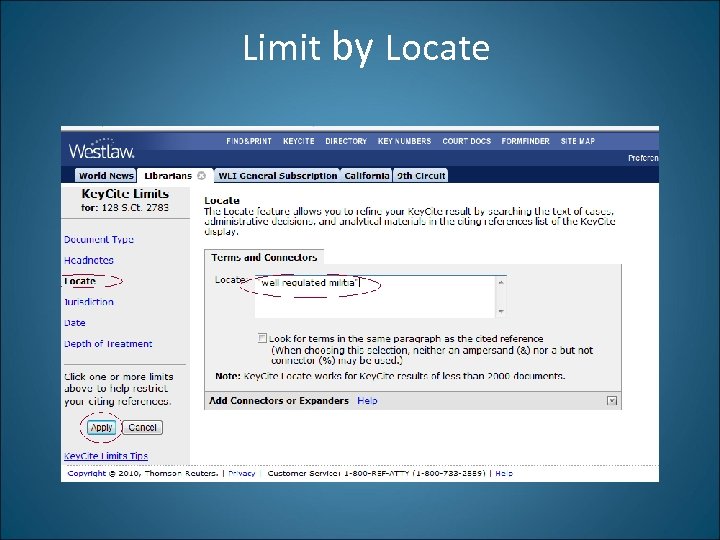
Limit by Locate
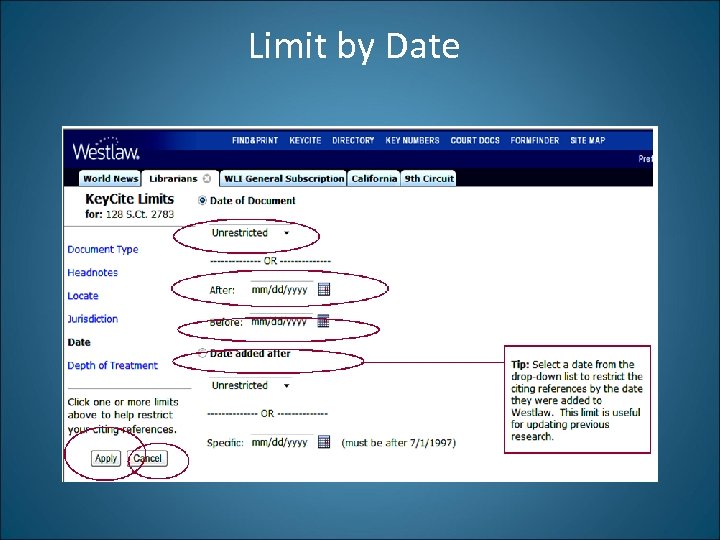
Limit by Date
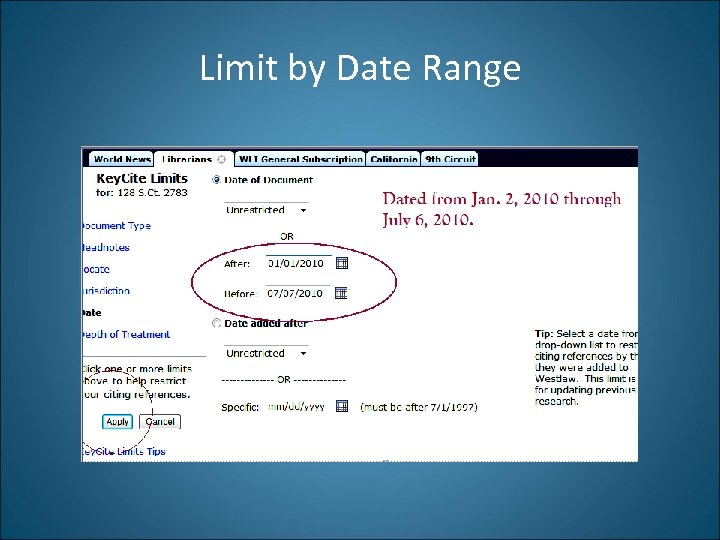
Limit by Date Range
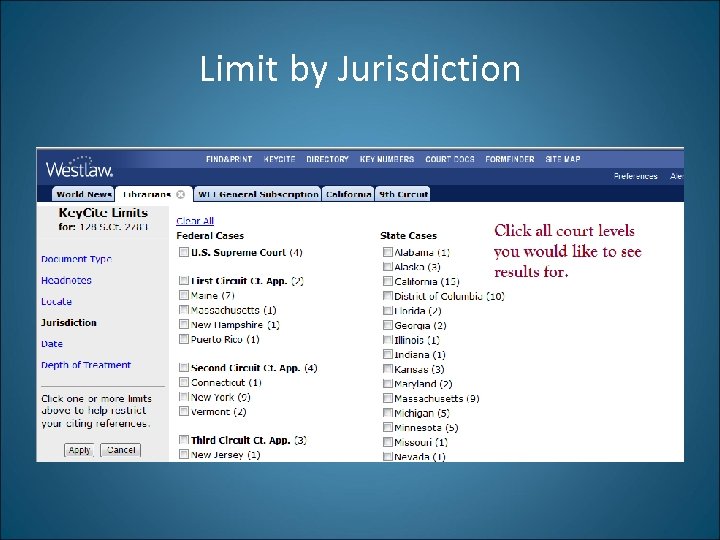
Limit by Jurisdiction
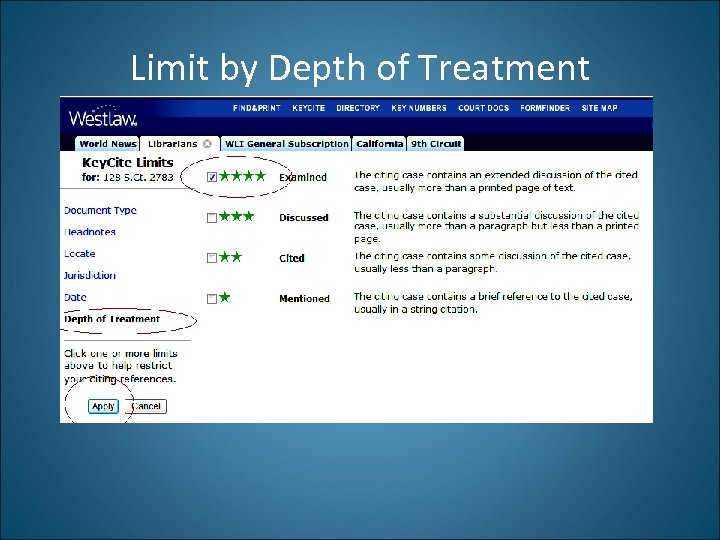
Limit by Depth of Treatment
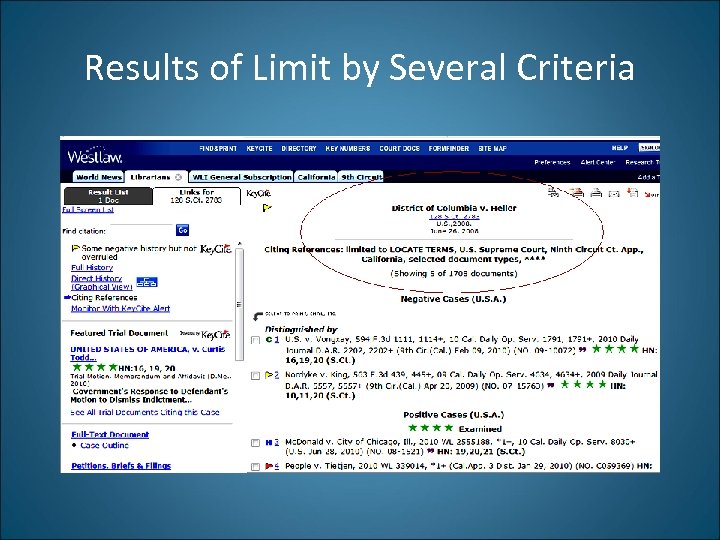
Results of Limit by Several Criteria
Table of Authorities The Table of Authorities lists the cases cited by a case. It is a useful tool for finding hidden weaknesses in a case because it not only lists the cases on which your case relies but also shows whether those cases have significant negative history.
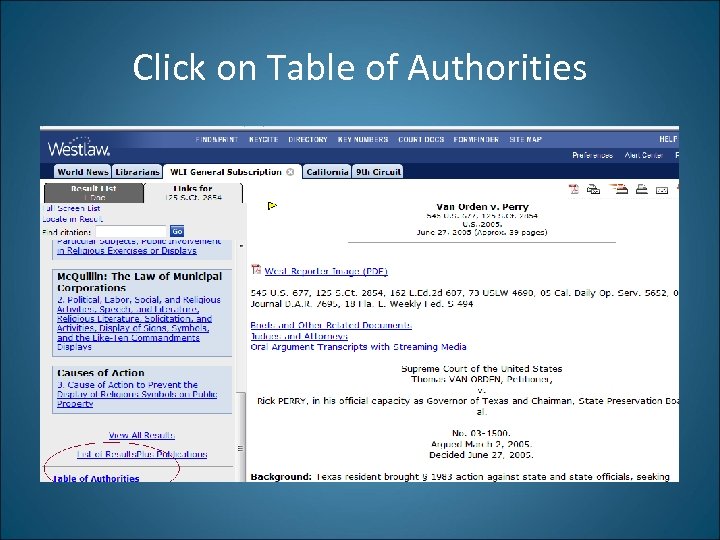
Click on Table of Authorities
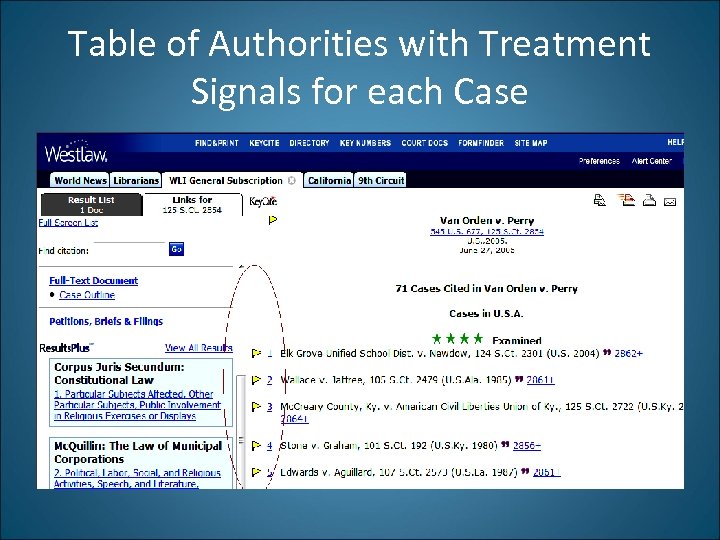
Table of Authorities with Treatment Signals for each Case
Elements of Key. Cite Report for Statutes v Key. Cite Summary v Prior History (Direct history) v Citing Decisions
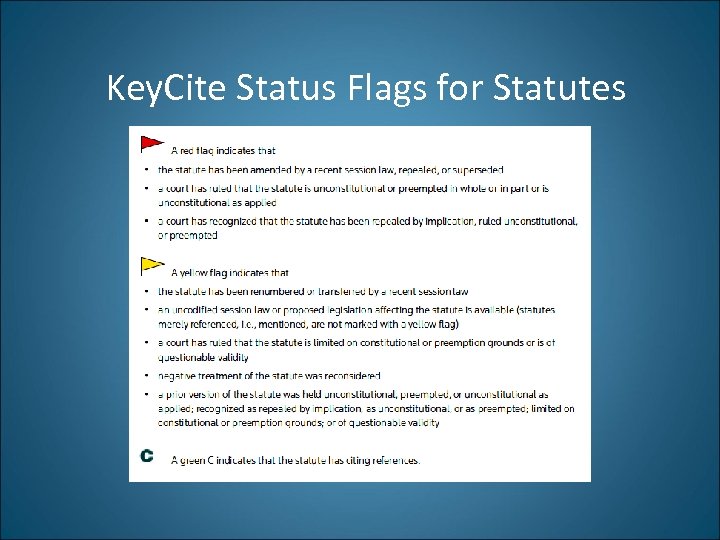
Key. Cite Status Flags for Statutes
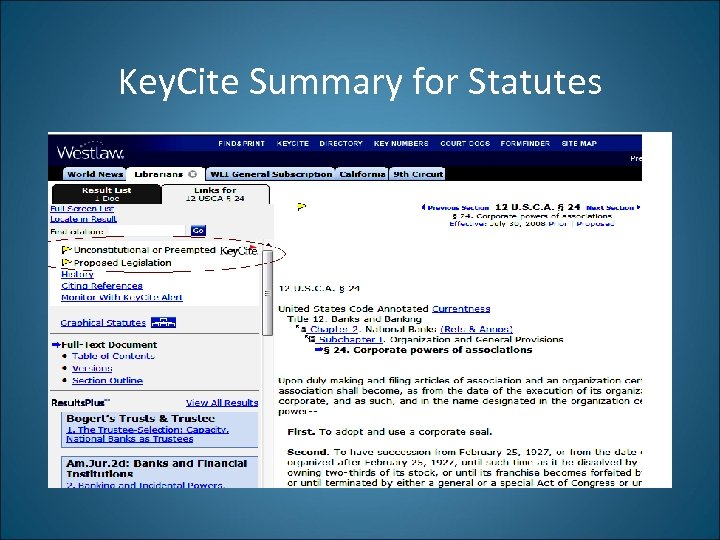
Key. Cite Summary for Statutes
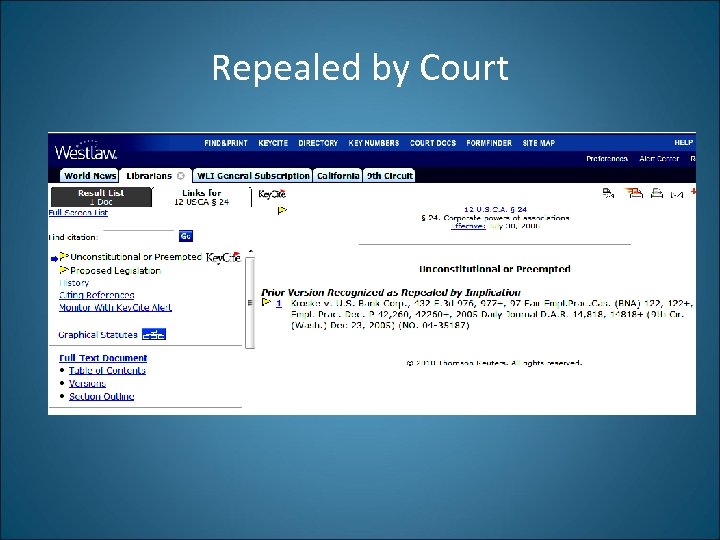
Repealed by Court
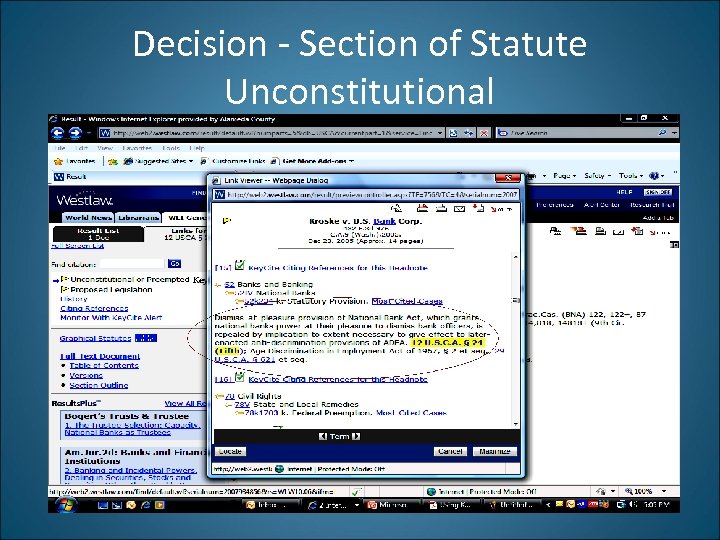
Decision - Section of Statute Unconstitutional
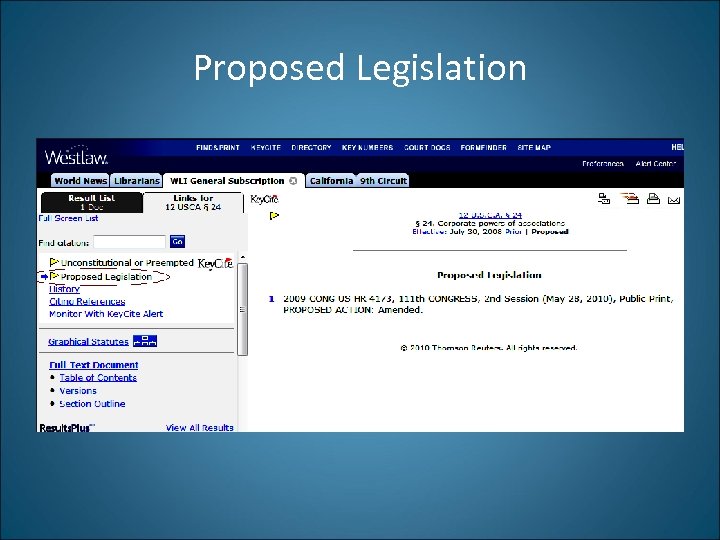
Proposed Legislation
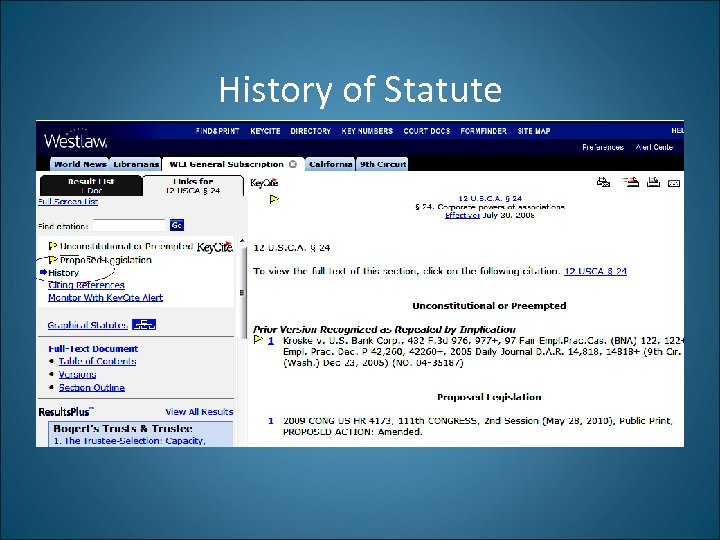
History of Statute
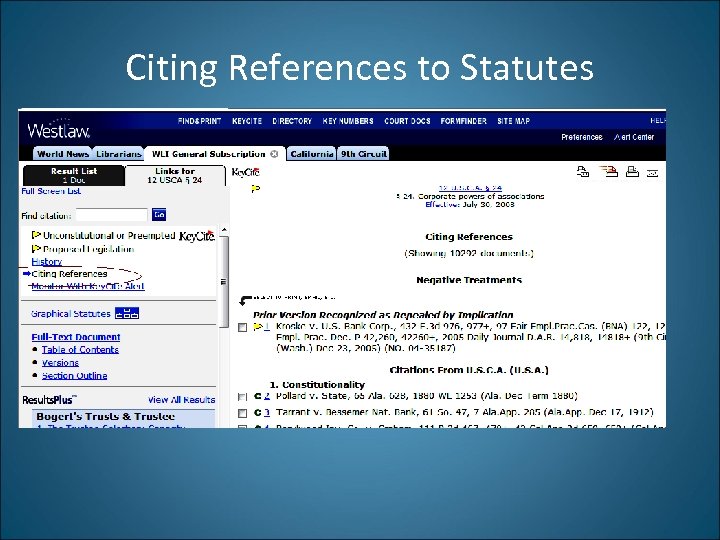
Citing References to Statutes
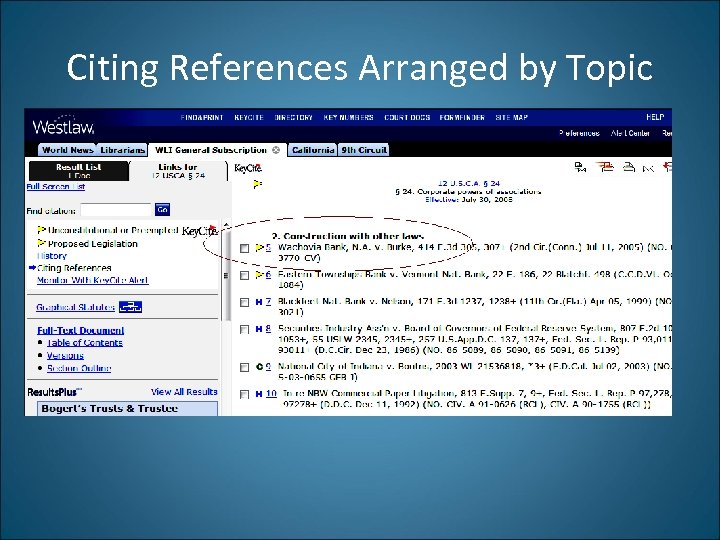
Citing References Arranged by Topic
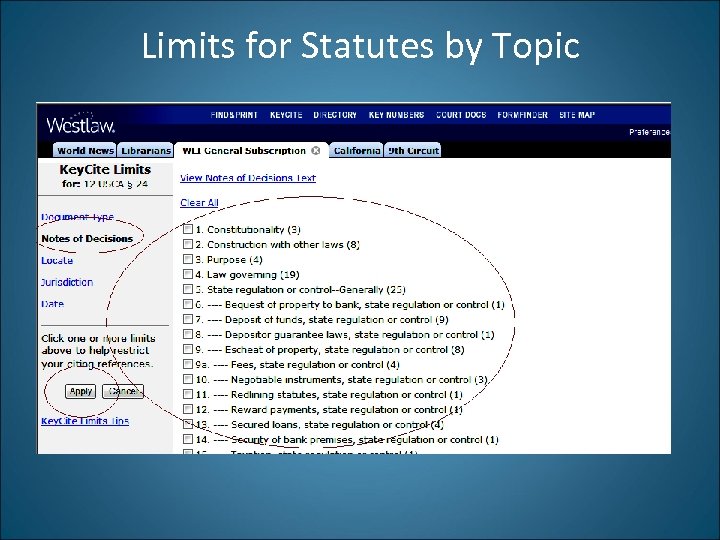
Limits for Statutes by Topic
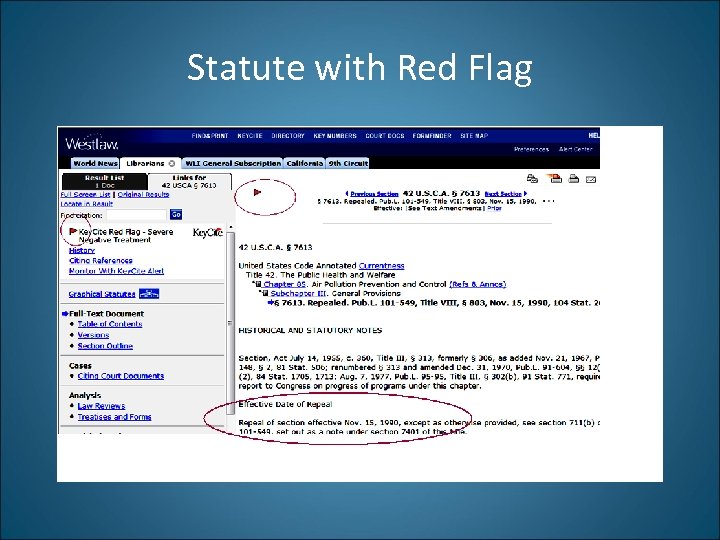
Statute with Red Flag
Methods of Delivery v. Print v. Save to Flash Drive
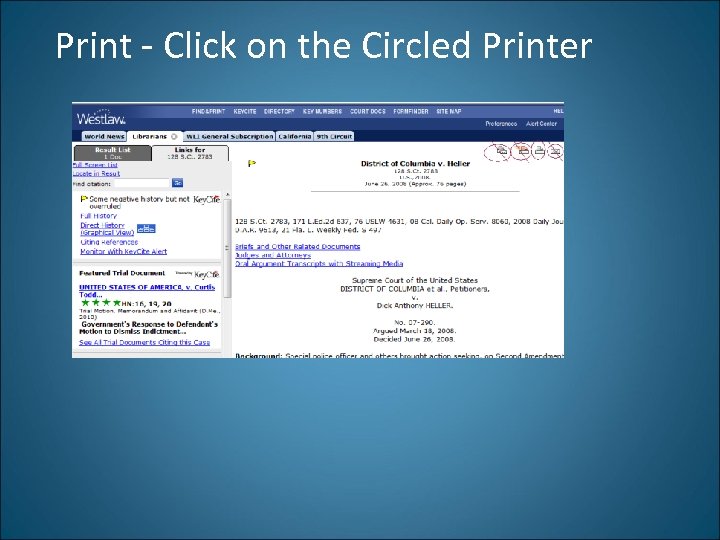
Print - Click on the Circled Printer
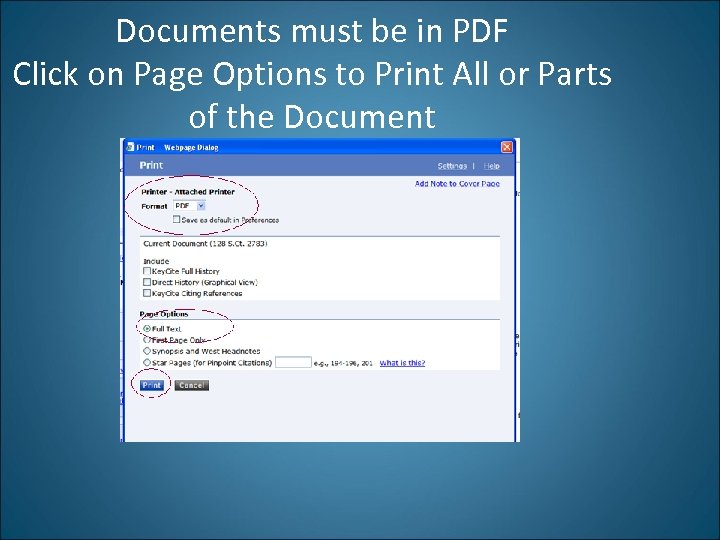
Documents must be in PDF Click on Page Options to Print All or Parts of the Document
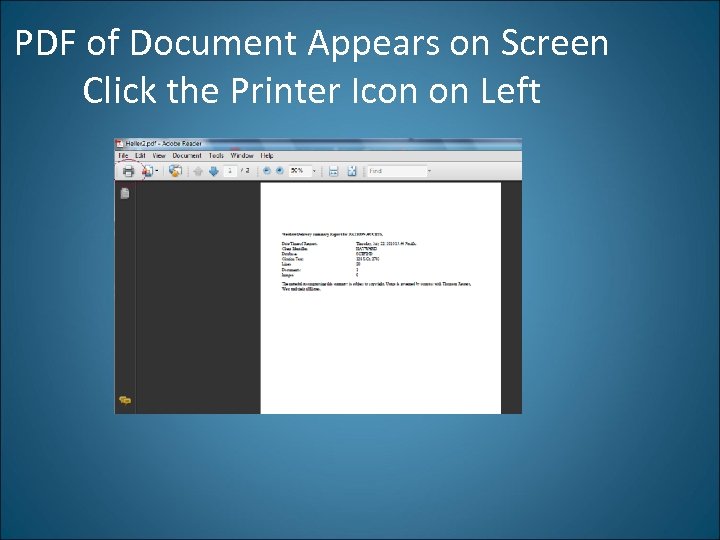
PDF of Document Appears on Screen Click the Printer Icon on Left
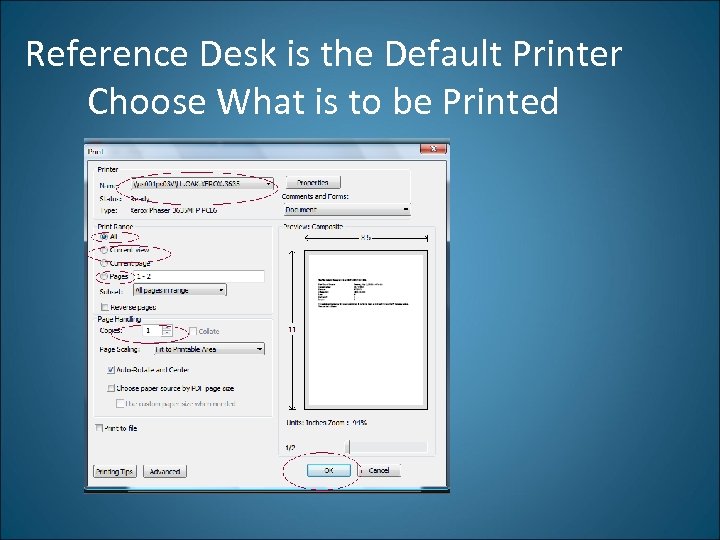
Reference Desk is the Default Printer Choose What is to be Printed
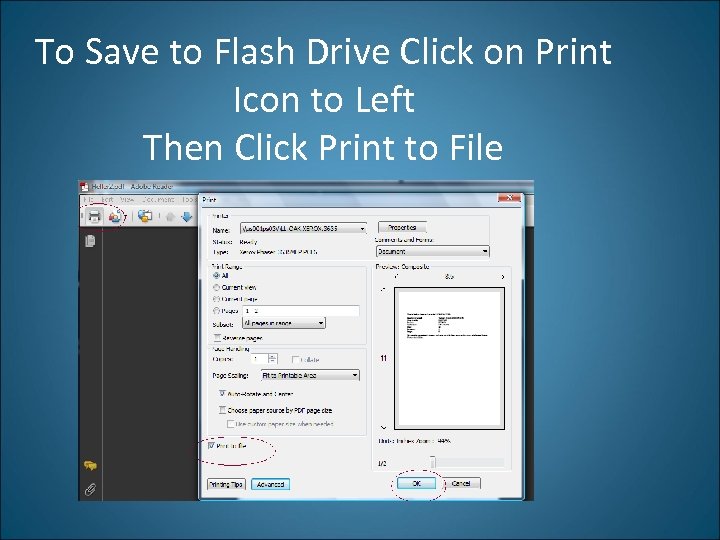
To Save to Flash Drive Click on Print Icon to Left Then Click Print to File
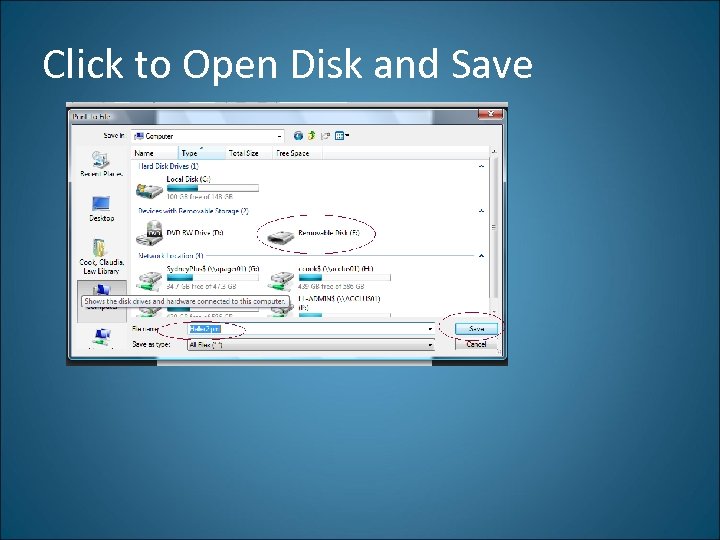
Click to Open Disk and Save
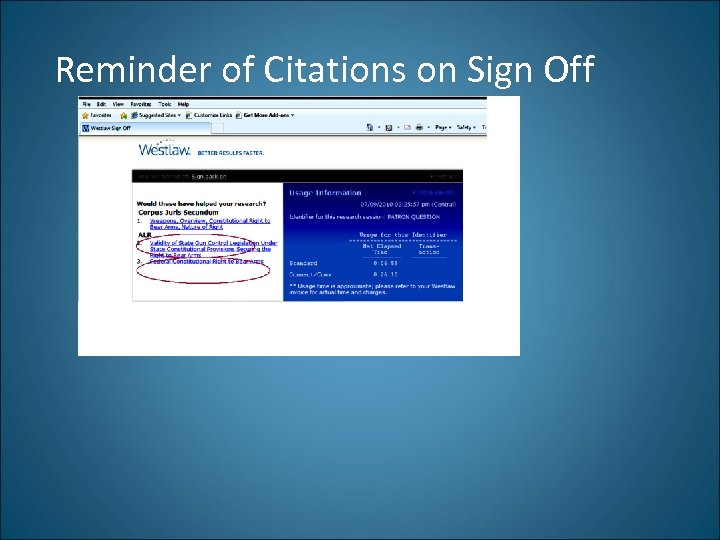
Reminder of Citations on Sign Off
Скачать презентацию Online Guide to Using Key Cite http slisweb
a4129a5a36aa2d939fc1633b30892810.ppt