


 Скачать презентацию One of the penalties of an ecological education
garlic mustard & Japanese knotweed.pptx
- Количество слайдов: 42
 One of the penalties of an ecological education is that one lives alone in a world of wounds. . . --Aldo Leopold, 1972 Round River From the Journals of Aldo Leopold, Oxford Press, NYC
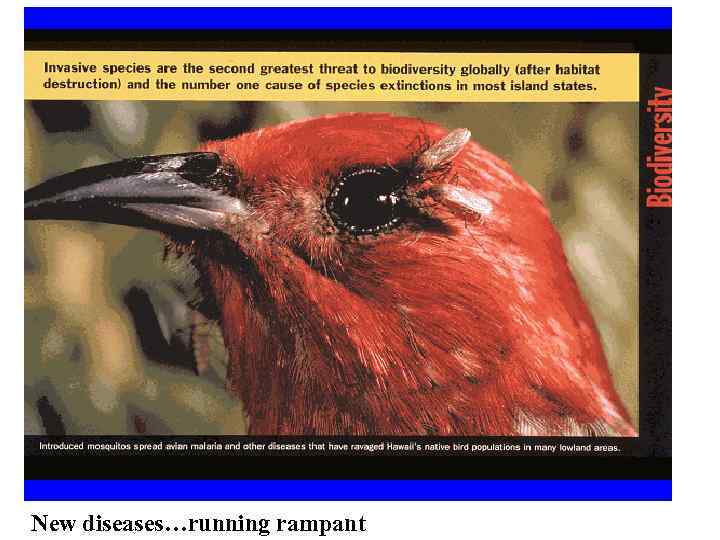 New diseases…running rampant
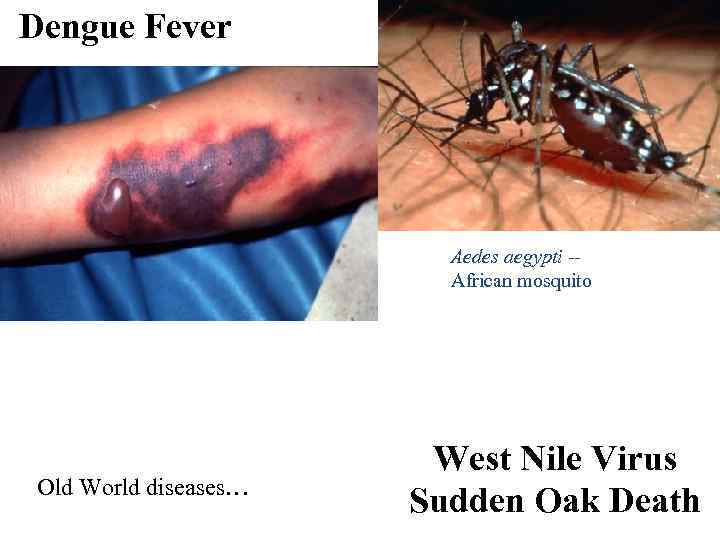 Dengue Fever Aedes aegypti -African mosquito Old World diseases… West Nile Virus Sudden Oak Death
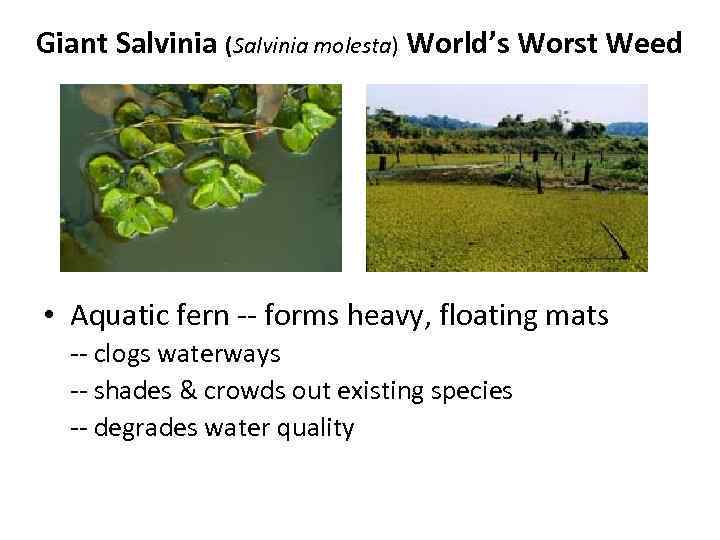 Giant Salvinia (Salvinia molesta) World’s Worst Weed • Aquatic fern -- forms heavy, floating mats -- clogs waterways -- shades & crowds out existing species -- degrades water quality
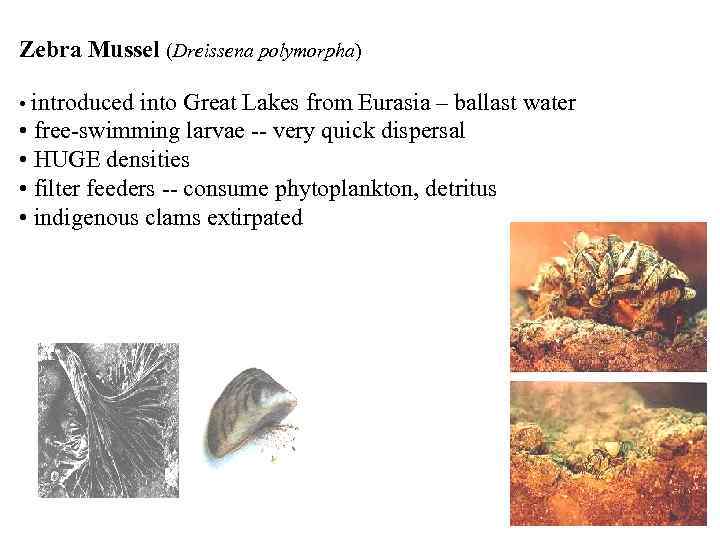 Zebra Mussel (Dreissena polymorpha) • introduced into Great Lakes from Eurasia – ballast water • free-swimming larvae -- very quick dispersal • HUGE densities • filter feeders -- consume phytoplankton, detritus • indigenous clams extirpated
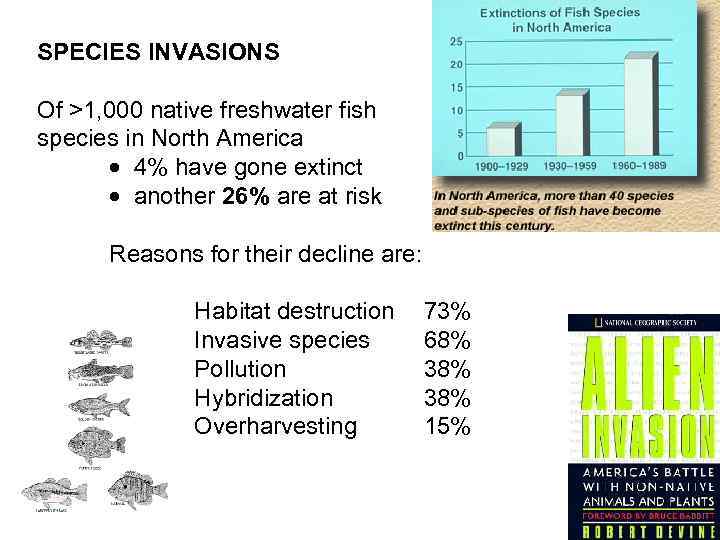 SPECIES INVASIONS Of >1, 000 native freshwater fish species in North America · 4% have gone extinct · another 26% are at risk Reasons for their decline are: Habitat destruction Invasive species Pollution Hybridization Overharvesting 73% 68% 38% 15%
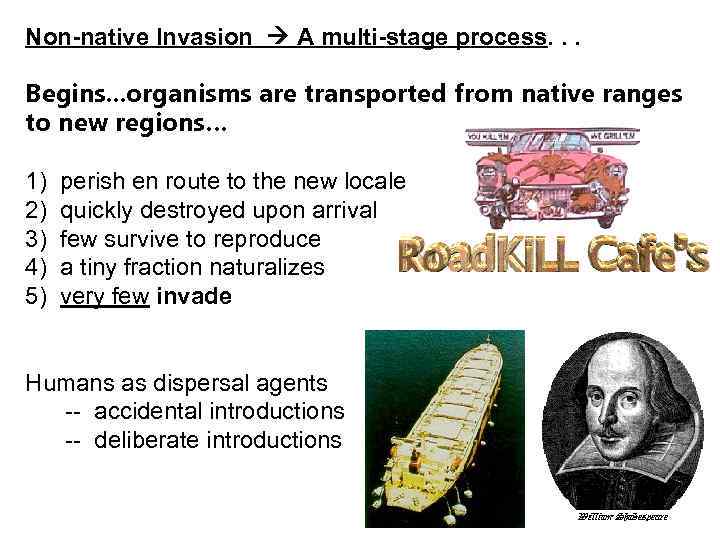 Non-native Invasion A multi-stage process. . . Begins. . . organisms are transported from native ranges to new regions… 1) 2) 3) 4) 5) perish en route to the new locale quickly destroyed upon arrival few survive to reproduce a tiny fraction naturalizes very few invade Humans as dispersal agents -- accidental introductions -- deliberate introductions
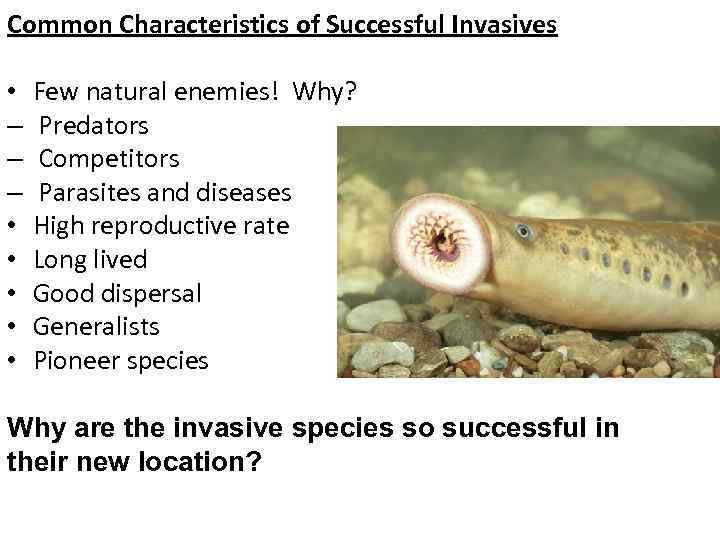 Common Characteristics of Successful Invasives • – – – • • • Few natural enemies! Why? Predators Competitors Parasites and diseases High reproductive rate Long lived Good dispersal Generalists Pioneer species Why are the invasive species so successful in their new location?
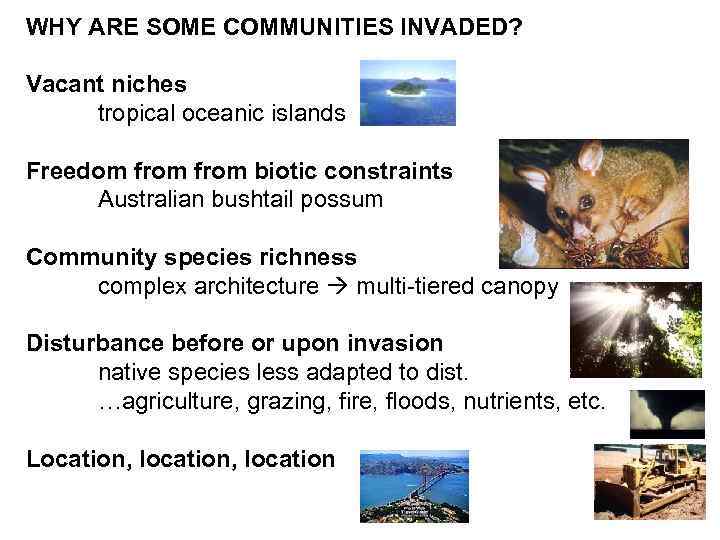 WHY ARE SOME COMMUNITIES INVADED? Vacant niches tropical oceanic islands Freedom from biotic constraints Australian bushtail possum Community species richness complex architecture multi-tiered canopy Disturbance before or upon invasion native species less adapted to dist. …agriculture, grazing, fire, floods, nutrients, etc. Location, location
 Direct threats of invasive species: • preying on native species • out-competing native species for food or other resources • causing or carrying disease • preventing native species from reproducing or killing their young Indirect threats of invasive species: • Changing food webs by destroying or replacing native food sources. • Decreasing biodiversity • Altering ecosystems light regimes soil chemistry water availability wildfires stream biogeochemical cycles grasslandification and desertification Etc………. .
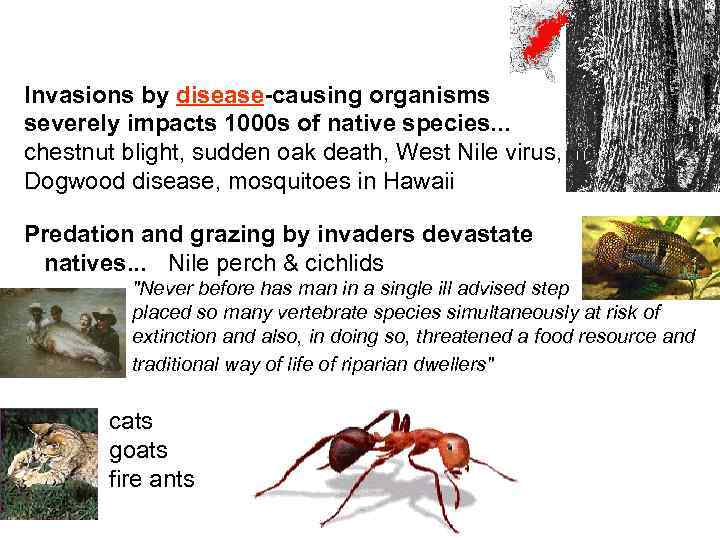 Invasions by disease-causing organisms severely impacts 1000 s of native species. . . chestnut blight, sudden oak death, West Nile virus, Dogwood disease, mosquitoes in Hawaii Predation and grazing by invaders devastate natives. . . Nile perch & cichlids "Never before has man in a single ill advised step placed so many vertebrate species simultaneously at risk of extinction and also, in doing so, threatened a food resource and traditional way of life of riparian dwellers" cats goats fire ants
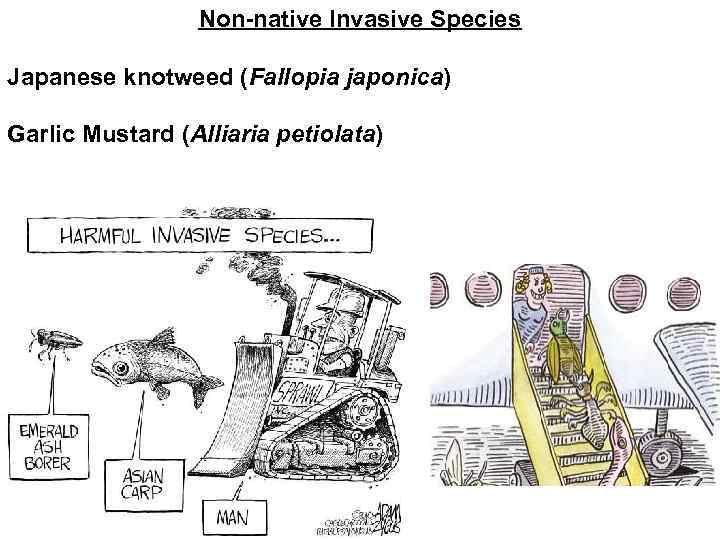 Non-native Invasive Species Japanese knotweed (Fallopia japonica) Garlic Mustard (Alliaria petiolata)
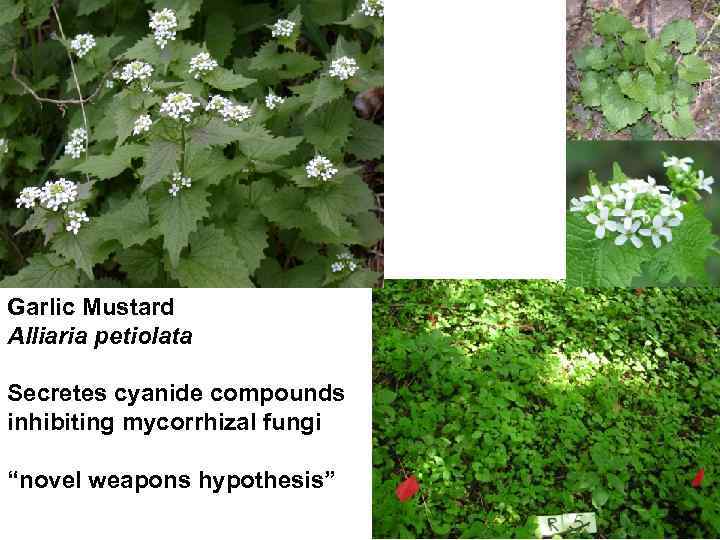 Garlic Mustard Alliaria petiolata Secretes cyanide compounds inhibiting mycorrhizal fungi “novel weapons hypothesis”
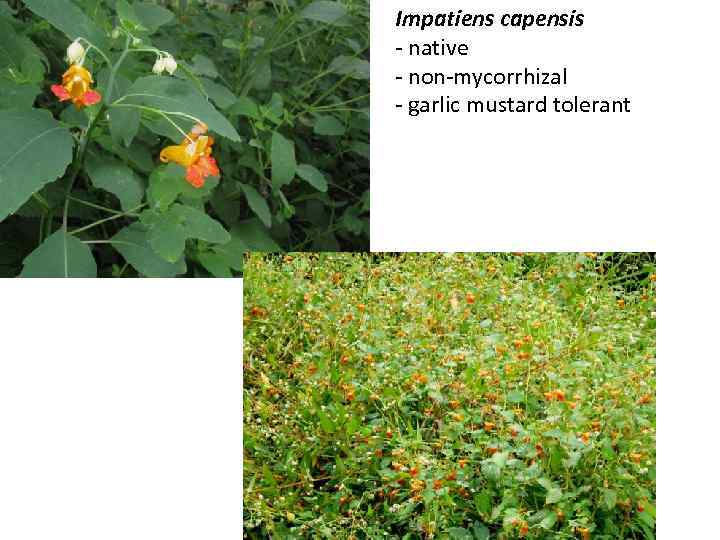 Impatiens capensis - native - non-mycorrhizal - garlic mustard tolerant
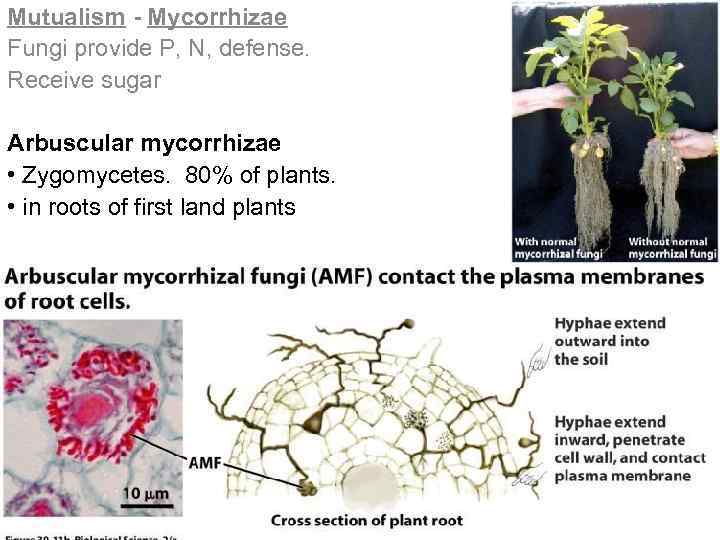 Mutualism - Mycorrhizae Fungi provide P, N, defense. Receive sugar Arbuscular mycorrhizae • Zygomycetes. 80% of plants. • in roots of first land plants
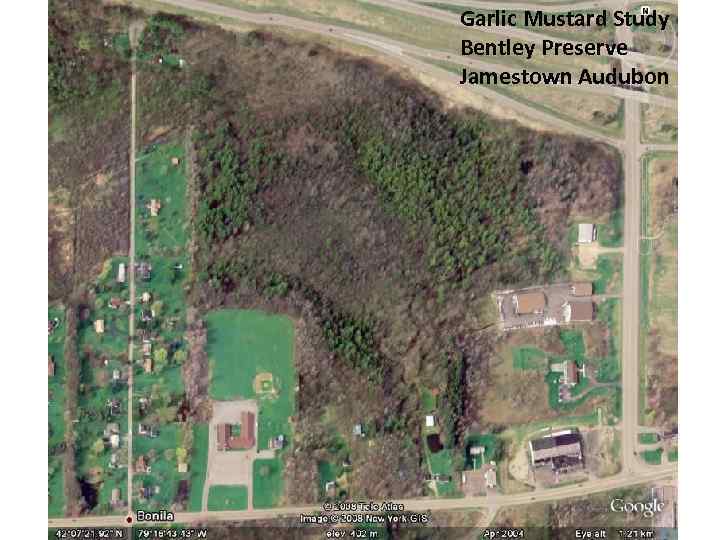 Garlic Mustard Study Bentley Preserve Jamestown Audubon
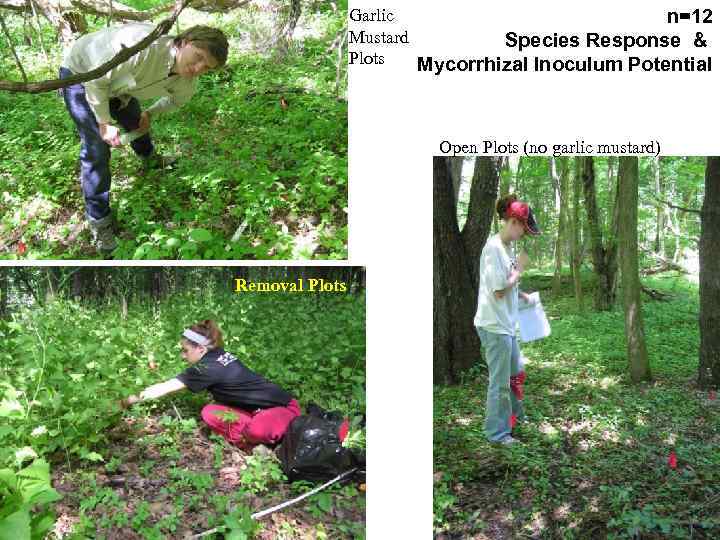 Garlic n=12 Mustard Species Response & Plots Mycorrhizal Inoculum Potential Open Plots (no garlic mustard) Removal Plots
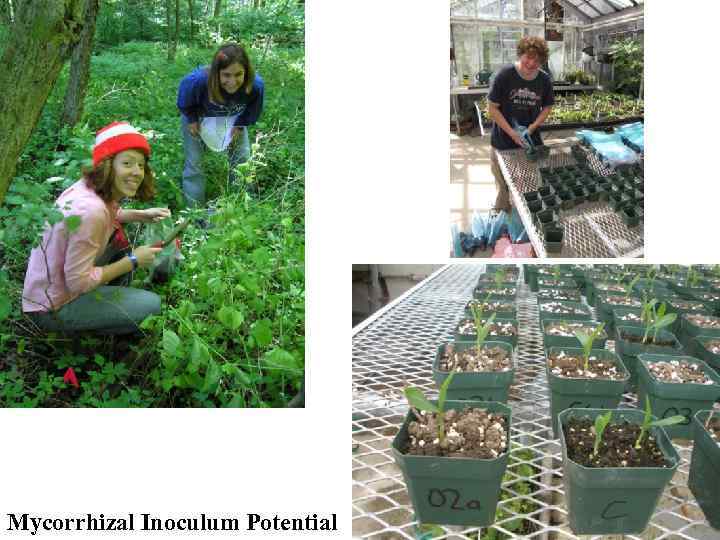 Mycorrhizal Inoculum Potential
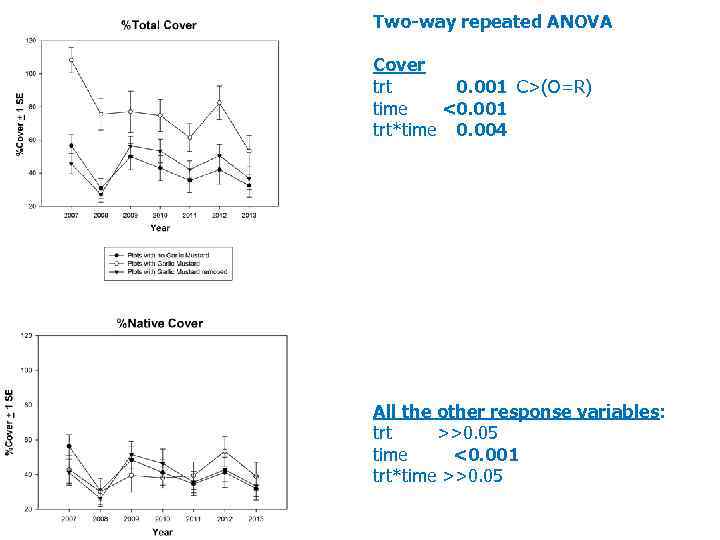 Two-way repeated ANOVA Cover trt 0. 001 C>(O=R) time <0. 001 trt*time 0. 004 All the other response variables: trt >>0. 05 time <0. 001 trt*time >>0. 05
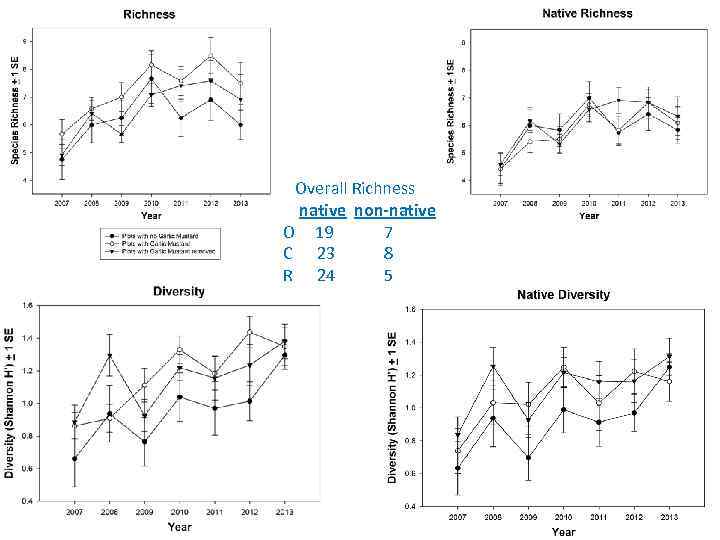 Overall Richness native non-native O 19 7 C 23 8 R 24 5
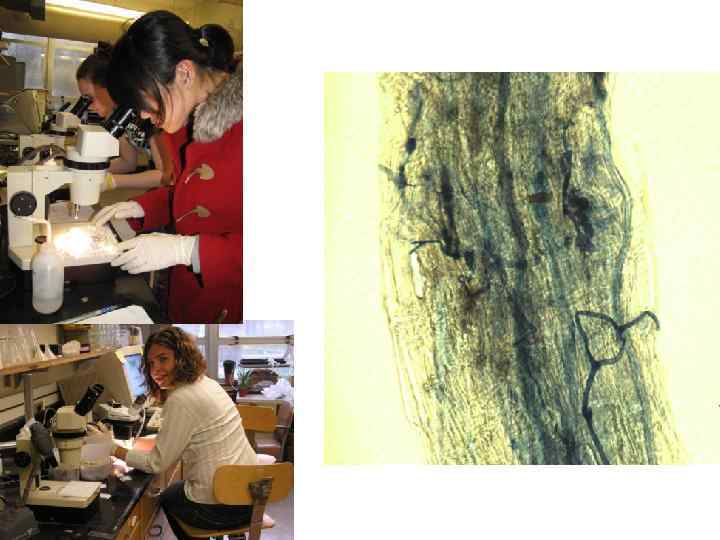
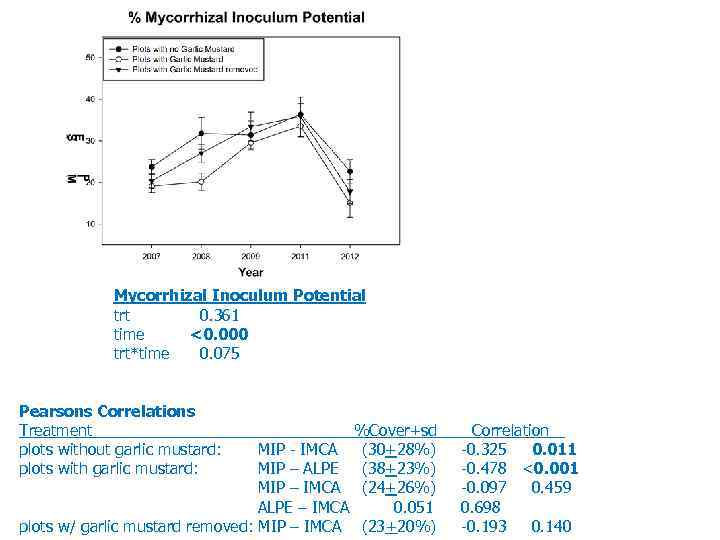 Mycorrhizal Inoculum Potential trt 0. 361 time <0. 000 trt*time 0. 075 Pearsons Correlations Treatment plots without garlic mustard: plots with garlic mustard: %Cover+sd MIP - IMCA (30+28%) MIP – ALPE (38+23%) MIP – IMCA (24+26%) ALPE – IMCA 0. 051 plots w/ garlic mustard removed: MIP – IMCA (23+20%) Correlation -0. 325 0. 011 -0. 478 <0. 001 -0. 097 0. 459 0. 698 -0. 193 0. 140
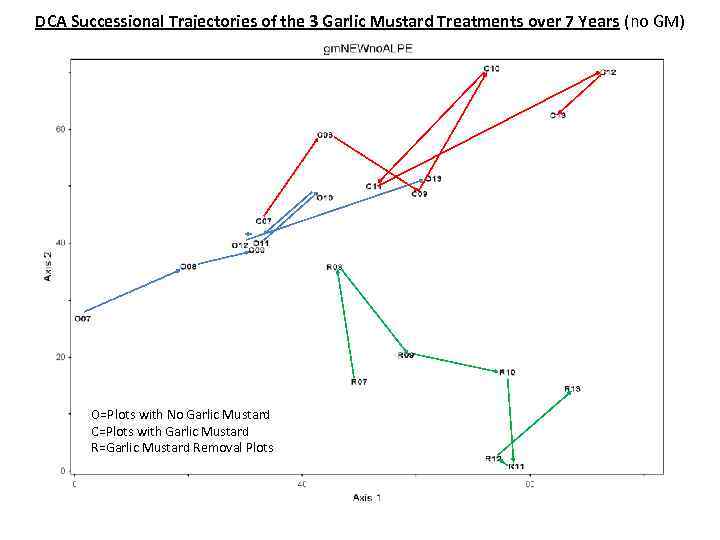 DCA Successional Trajectories of the 3 Garlic Mustard Treatments over 7 Years (no GM) O=Plots with No Garlic Mustard C=Plots with Garlic Mustard R=Garlic Mustard Removal Plots
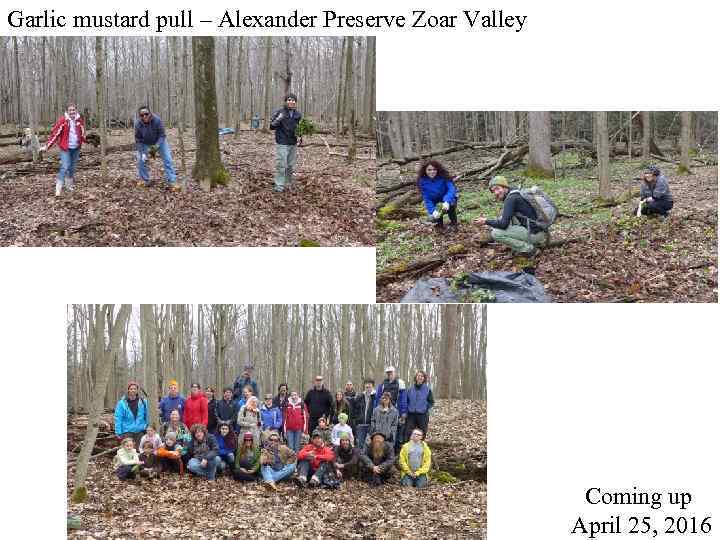 Garlic mustard pull – Alexander Preserve Zoar Valley Coming up April 25, 2016
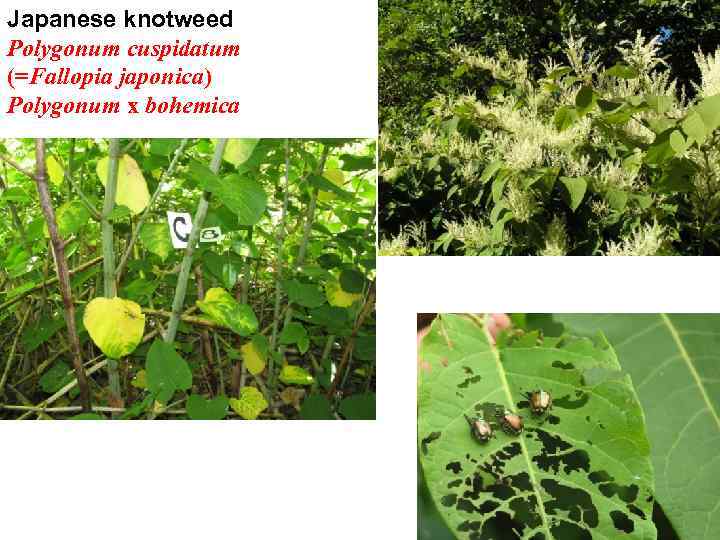 Japanese knotweed Polygonum cuspidatum (=Fallopia japonica) Polygonum x bohemica
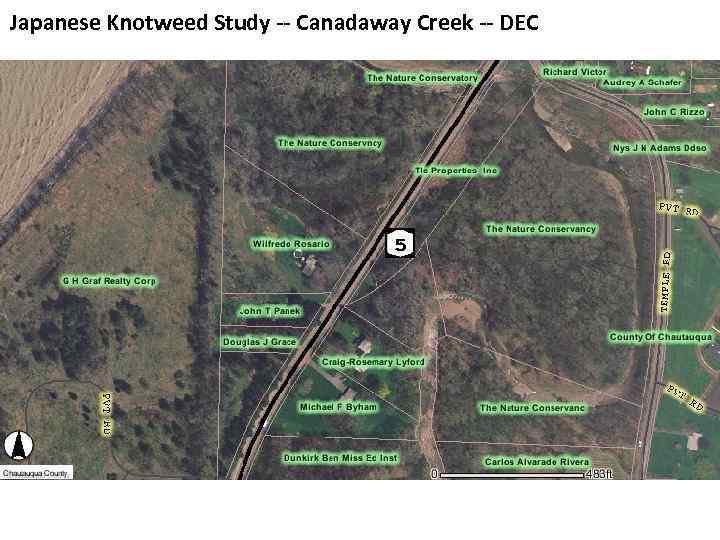 Japanese Knotweed Study -- Canadaway Creek -- DEC
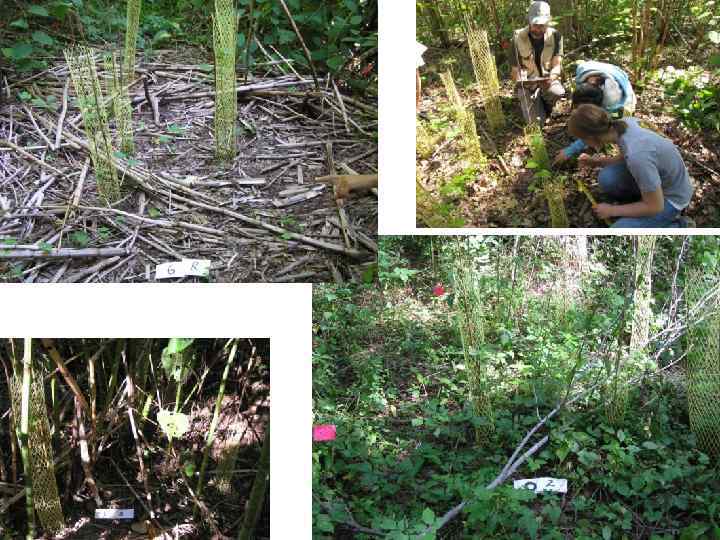
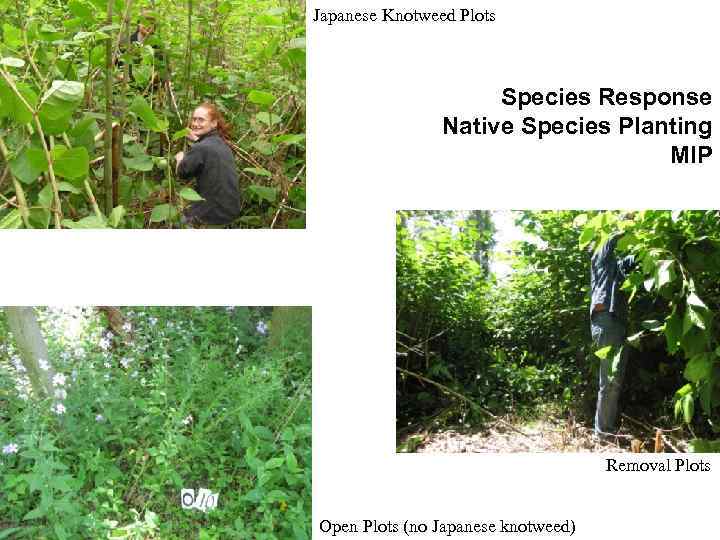 Japanese Knotweed Plots Species Response Native Species Planting MIP Removal Plots Open Plots (no Japanese knotweed)
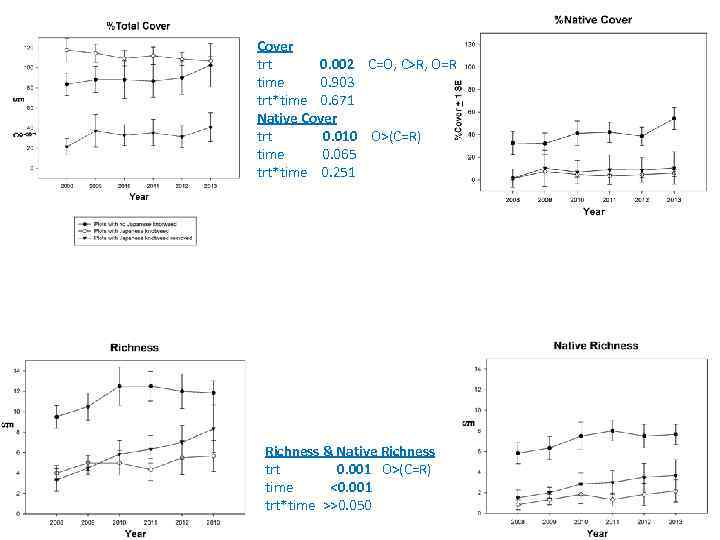 Cover trt 0. 002 C=O, C>R, O=R time 0. 903 trt*time 0. 671 Native Cover trt 0. 010 O>(C=R) time 0. 065 trt*time 0. 251 Richness & Native Richness trt 0. 001 O>(C=R) time <0. 001 trt*time >>0. 050
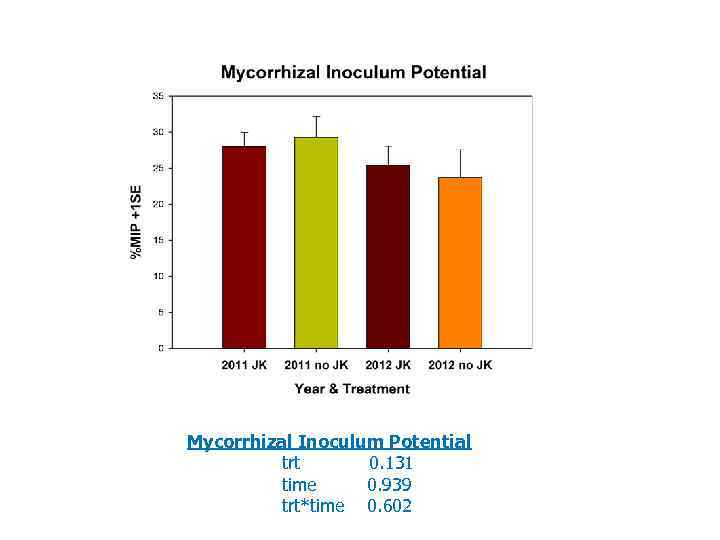 Mycorrhizal Inoculum Potential trt 0. 131 time 0. 939 trt*time 0. 602
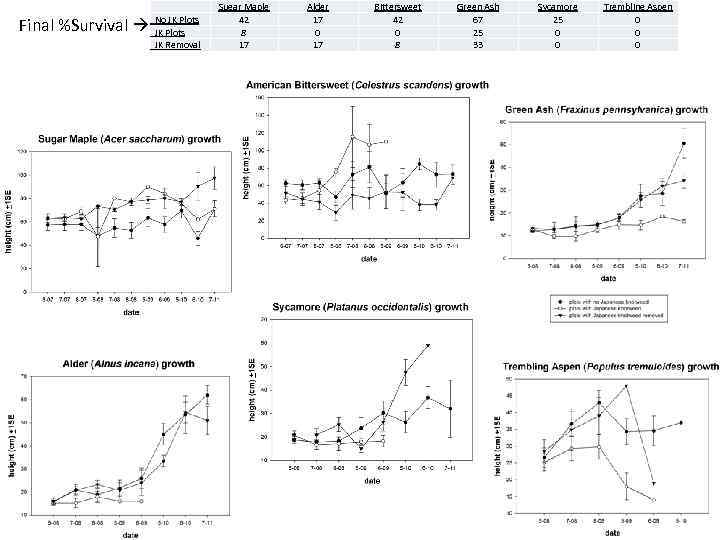 Final %Survival No JK Plots JK Removal Sugar Maple 42 8 17 Alder 17 0 17 Bittersweet 42 0 8 Green Ash 67 25 33 Sycamore 25 0 0 Trembling Aspen 0 0 0
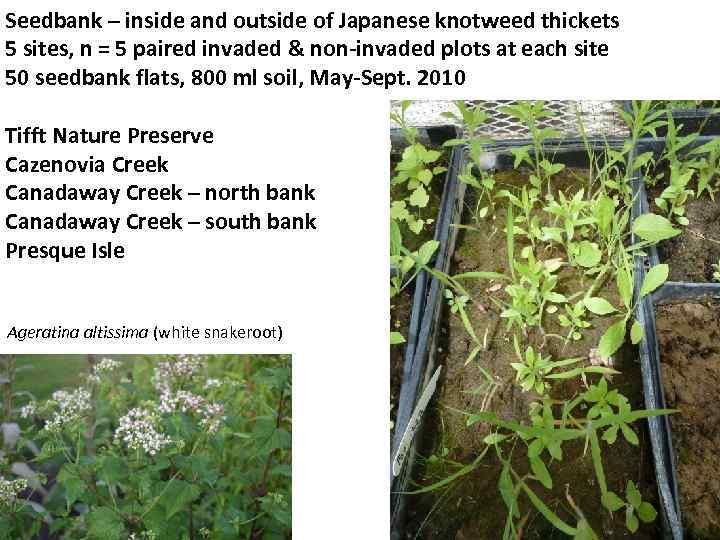 Seedbank – inside and outside of Japanese knotweed thickets 5 sites, n = 5 paired invaded & non-invaded plots at each site 50 seedbank flats, 800 ml soil, May-Sept. 2010 Tifft Nature Preserve Cazenovia Creek Canadaway Creek – north bank Canadaway Creek – south bank Presque Isle Ageratina altissima (white snakeroot)
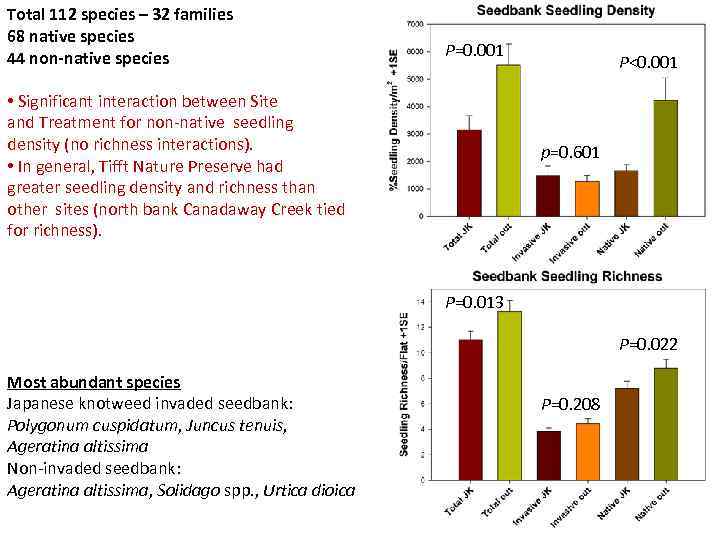 Total 112 species – 32 families 68 native species 44 non-native species P=0. 001 • Significant interaction between Site and Treatment for non-native seedling density (no richness interactions). • In general, Tifft Nature Preserve had greater seedling density and richness than other sites (north bank Canadaway Creek tied for richness). P<0. 001 p=0. 601 P=0. 013 P=0. 022 Most abundant species Japanese knotweed invaded seedbank: Polygonum cuspidatum, Juncus tenuis, Ageratina altissima Non-invaded seedbank: Ageratina altissima, Solidago spp. , Urtica dioica P=0. 208
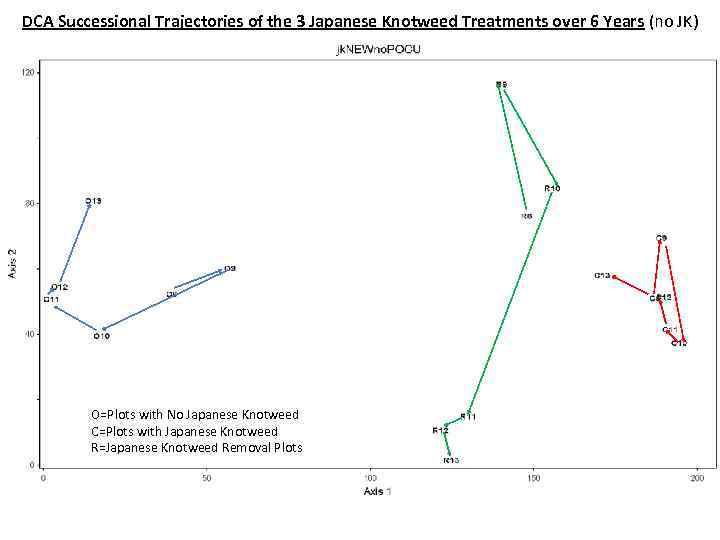 DCA Successional Trajectories of the 3 Japanese Knotweed Treatments over 6 Years (no JK) O=Plots with No Japanese Knotweed C=Plots with Japanese Knotweed R=Japanese Knotweed Removal Plots
 …Conclusions -- MIP is relatively unaffected (different than some studies) although garlic mustard and impatiens do appear to have some effect. -- The rich spring ephemeral and summer herbaceous flora at Bentley disappeared long ago. Today the site is compromised and seed bank exhausted so native species do not return in 7 years -- Native species richness is strongly impacted by Japanese knotweed. -- Species response may require more time and/or much bigger plots. -- The native seedbank, at least in Japanese knotweed thickets, is not exhausted. -- Tifft Nature Preserve, the most disturbed site, had the greatest seedling density and richness.
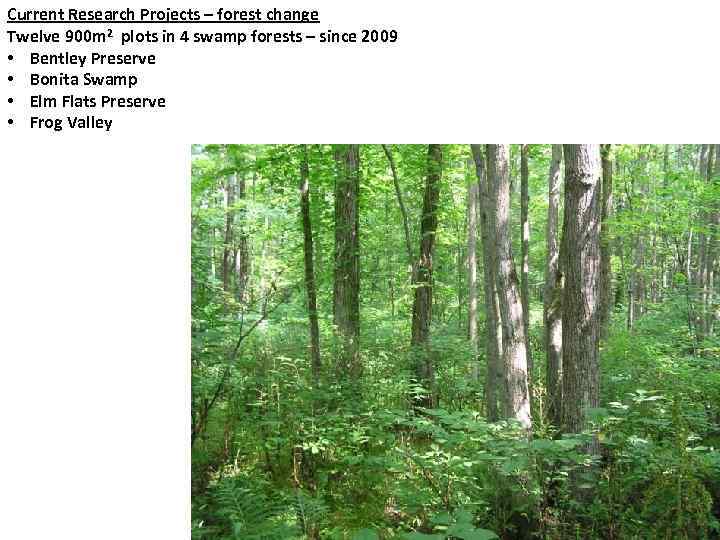 Current Research Projects – forest change Twelve 900 m 2 plots in 4 swamp forests – since 2009 • Bentley Preserve • Bonita Swamp • Elm Flats Preserve • Frog Valley
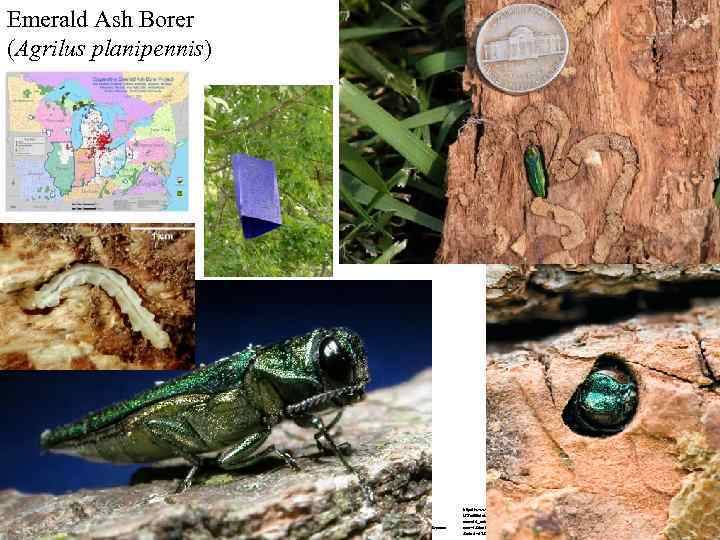 Emerald Ash Borer (Agrilus planipennis) http: //www. google. com/imgres? q=emerald+ash+borer&hl=en&clie nt=firefox-a&rls=org. mozilla: en. US: official&channel=s&biw=1680&bih=867&tbm=isch&tbnid=v k. ULm. H 0 Bk. Vp. Yh. M: &imgrefurl=http: //www. tonawanda. ny. us/ind ex. aspx%253 FNID%253 D 370&docid=u. Q 1 HCpirl. W_yw. M&w=22 0&h=165&ei=_zt. MTu. Dg. IJLAtger 3 Zia. Cg&zoom=1&iact=hc&vpx =673&vpy=335&dur=154&hovh=132&hovw=176&tx=73&ty=71 &page=4&tbnh=132&tbnw=176&start=90&ndsp=29&ved=1 t: 429, r: 24, s: 90 http: //www. google. com/imgres? q=emerald+ash+borer&hl=en&client=firefox-a&rls=org. mozilla: en. US: official&channel=s&biw=1680&bih=867&tbm=isch&tbnid=8 uzo 4 w. DQS 7 h. QZM: &imgrefurl=http: //www. freshfromflorida. com/pi/ enpp/ento/emerald_ash_borer. html&docid=Gn 2 Im. Ef. Oqd_z. M&w=768&h=532&ei=_zt. MTu. Dg. IJLAtger 3 Zia. Cg&zoom=1&iact=hc&vpx=1369&vpy=200&dur=180&hovh=187&hovw=270&t x=186&ty=93&page=1&tbnh=164&tbnw=226&start=0&ndsp=29&ved=1 t: 429, r: 13, s: 0 http: //www. google. com/imgres? q=emerald+ash+borer&hl=en&client=firefox-a&rls=org. mozilla: en. US: official&channel=s&biw=1680&bih=867&tbm=isch&tbnid=vh. Dn. QKFn. Zkiff. M: &imgrefurl=http: //www. emeraldashborer. info/&docid=3 DJ 51 Im. R_EHRNM&w=610&h=367&ei=_zt. MTu. Dg. IJLAtger 3 Zia. Cg&zoom =1&iact=hc&vpx=398&vpy=147&dur=913&hovh=174&hovw=290&tx=141&ty=95&page=1&tbnh=128&tbnw=212&start=0&ndsp=29&ved=1 t: 429, r: 1, s: 0 http: //www. google. com/imgres? q=emerald+ash+borer&hl=en&client=firefox-a&rls=org. mozilla: en. US: official&channel=s&biw=1680&bih=867&tbm=isch&tbnid=g 4 e. Ia. Sb. LYc 9 N 6 M: &imgrefurl=http: //freshare. net/article/e merald_ash_borer_trapping_underway/&docid=p. DHG 3 Ep. Jmr. Oz. FM&w=324&h=414&ei=_zt. MTu. Dg. IJLAtger 3 Zia. Cg&zo om=1&iact=hc&vpx=1323&vpy=113&dur=5496&hovh=254&hovw=199&tx=99&ty=138&page=3&tbnh=158&tbnw=124 &start=57&ndsp=33&ved=1 t: 429, r: 22, s: 57
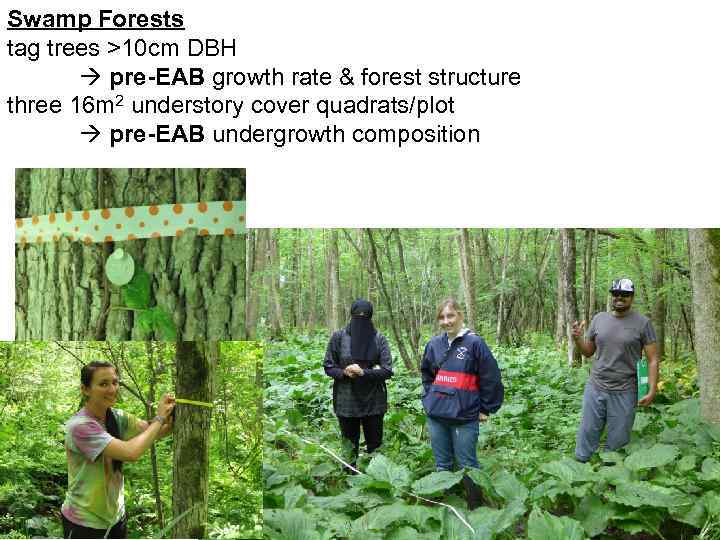 Swamp Forests tag trees >10 cm DBH pre-EAB growth rate & forest structure three 16 m 2 understory cover quadrats/plot pre-EAB undergrowth composition
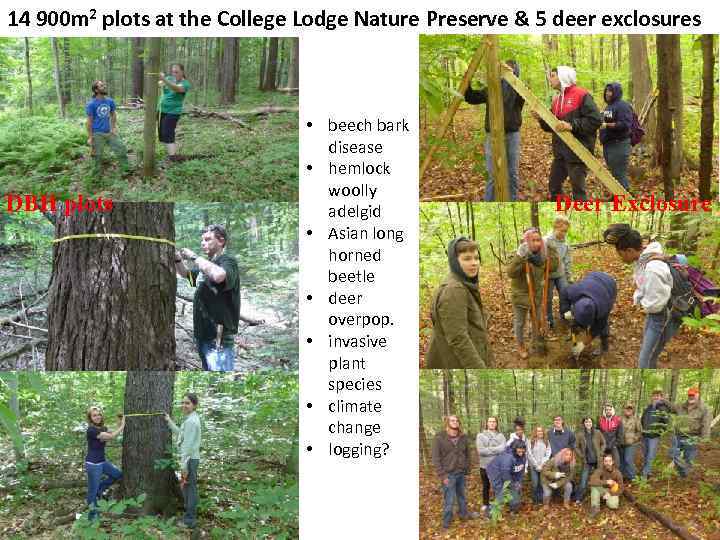 14 900 m 2 plots at the College Lodge Nature Preserve & 5 deer exclosures DBH plots • beech bark disease • hemlock woolly adelgid • Asian long horned beetle • deer overpop. • invasive plant species • climate change • logging? Deer Exclosure
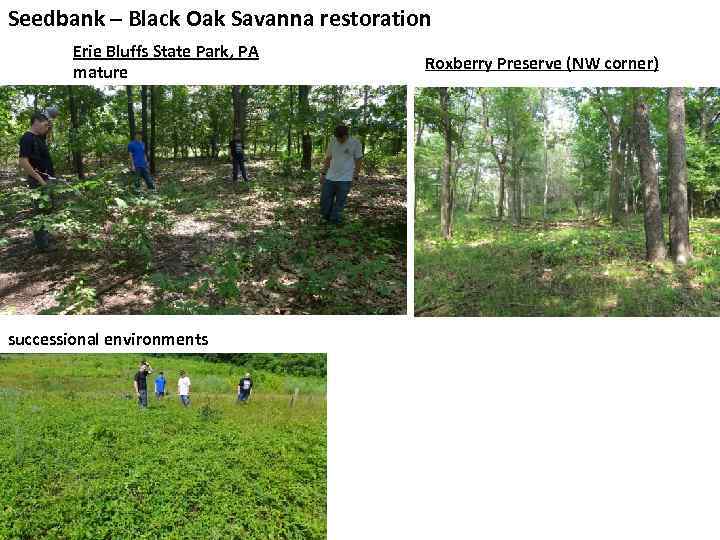 Seedbank – Black Oak Savanna restoration Erie Bluffs State Park, PA mature successional environments Roxberry Preserve (NW corner)
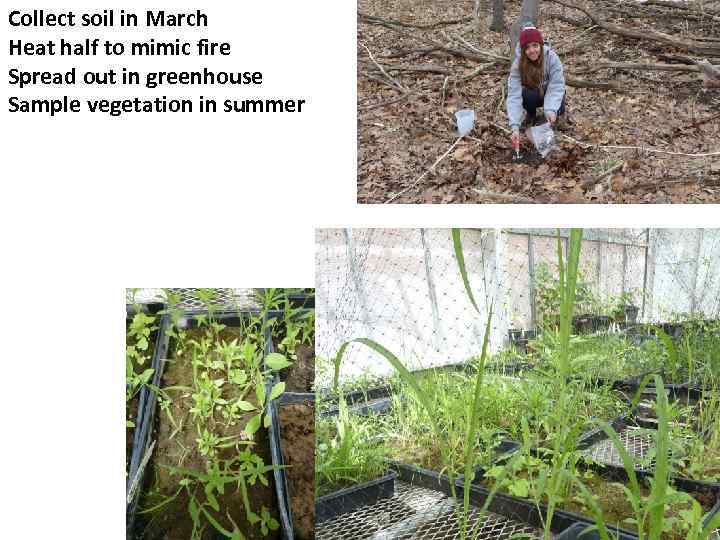 Collect soil in March Heat half to mimic fire Spread out in greenhouse Sample vegetation in summer
 THE END