


 Скачать презентацию One-Dimensional Kinematics Position Distance Displacement Average Speed Velocity Acceleration
3c2df5a6e45fa08e2fe557506709a26f.ppt
- Количество слайдов: 22
 One-Dimensional Kinematics Position, Distance, Displacement Average Speed/Velocity Acceleration
 Online Tools/Announcements • http: /aw-bc. com/walker/ • Online homework coming soon • QUIZ over Chapter 2 one week from Thursday ( 9/6 ) • “Chapter Summary” may be useful for each chapter
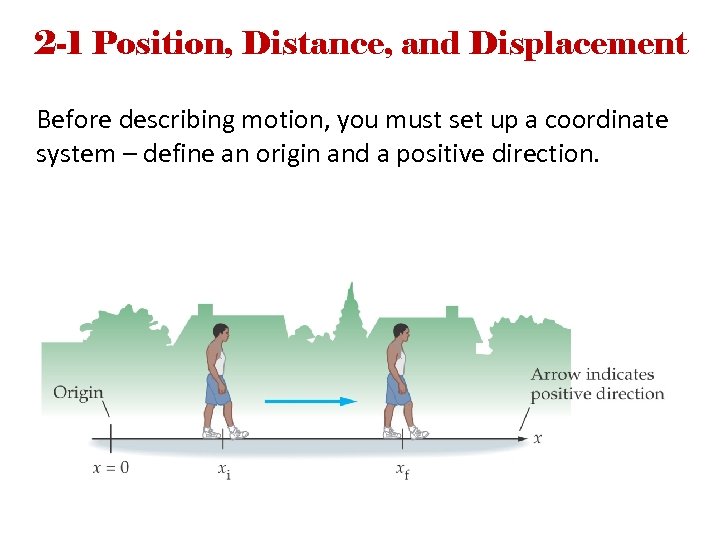 2 -1 Position, Distance, and Displacement Before describing motion, you must set up a coordinate system – define an origin and a positive direction.
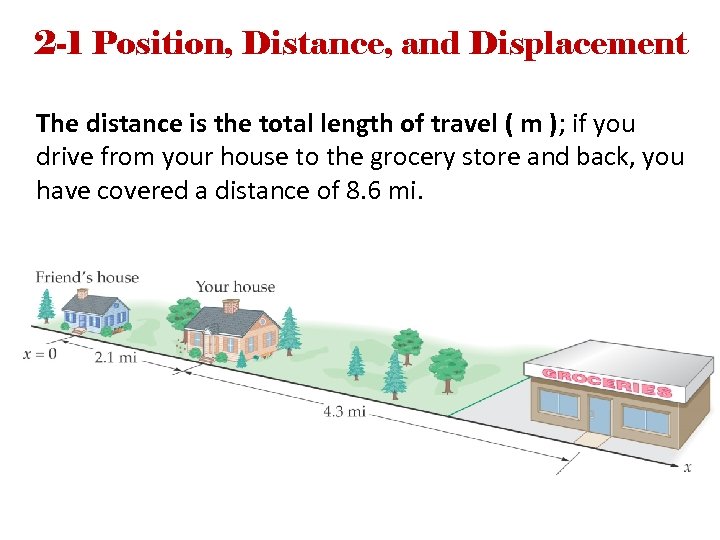 2 -1 Position, Distance, and Displacement The distance is the total length of travel ( m ); if you drive from your house to the grocery store and back, you have covered a distance of 8. 6 mi.
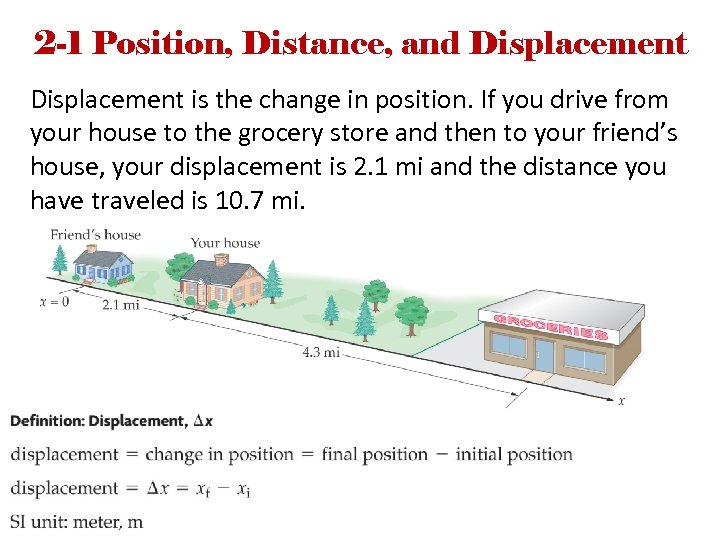 2 -1 Position, Distance, and Displacement is the change in position. If you drive from your house to the grocery store and then to your friend’s house, your displacement is 2. 1 mi and the distance you have traveled is 10. 7 mi.
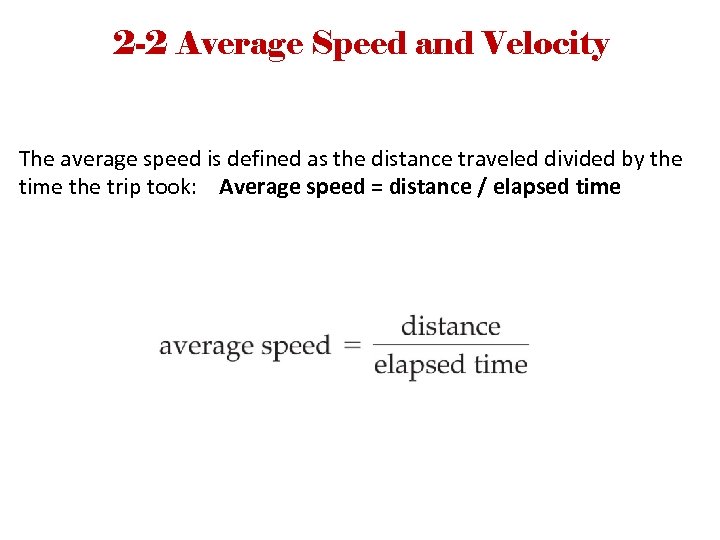 2 -2 Average Speed and Velocity The average speed is defined as the distance traveled divided by the time the trip took: Average speed = distance / elapsed time
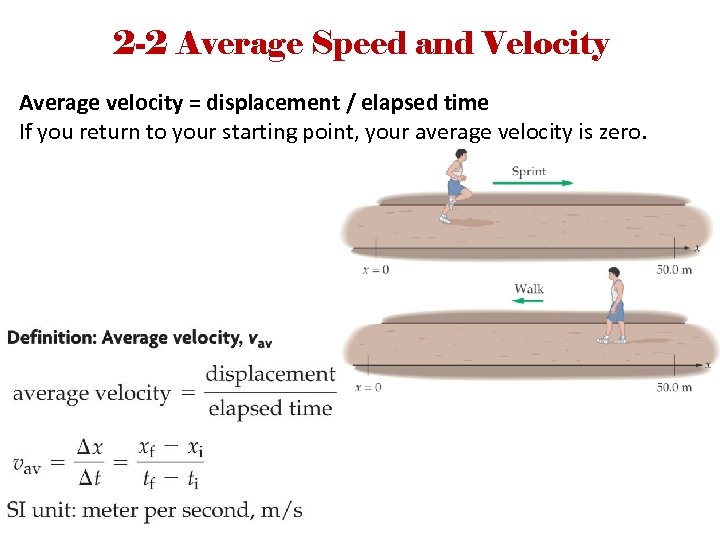 2 -2 Average Speed and Velocity Average velocity = displacement / elapsed time If you return to your starting point, your average velocity is zero.
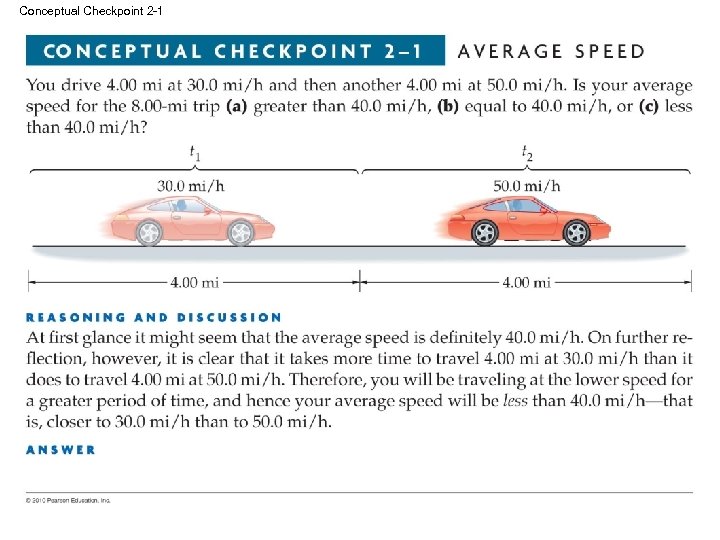 Conceptual Checkpoint 2 -1
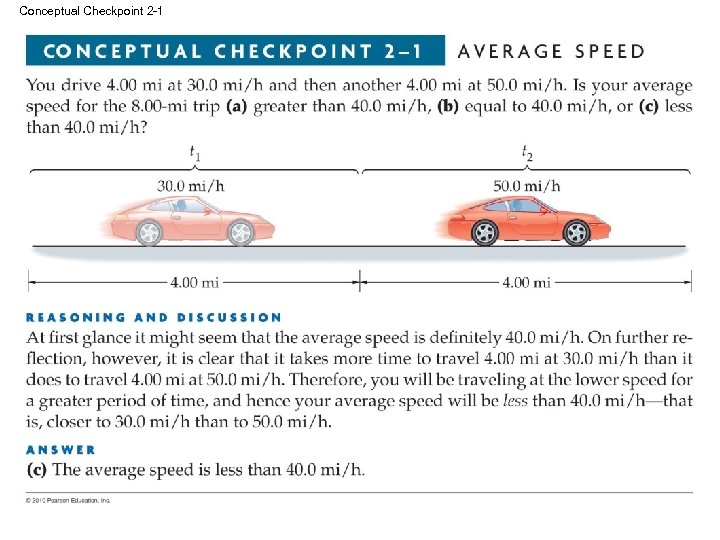 Conceptual Checkpoint 2 -1
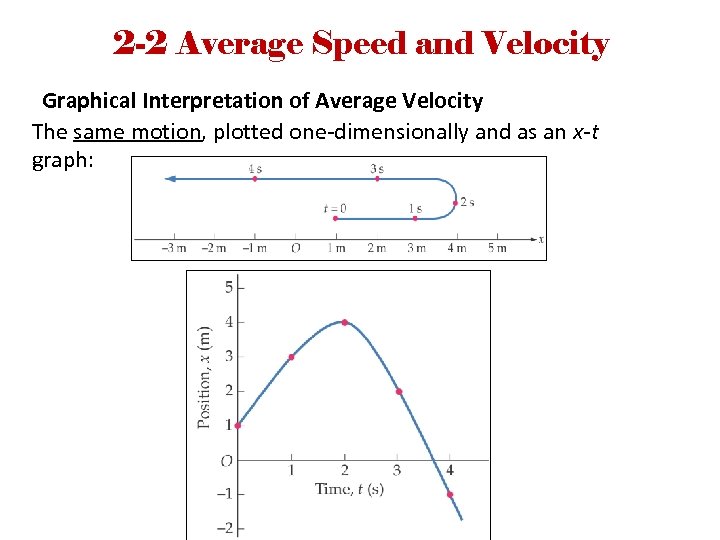 2 -2 Average Speed and Velocity Graphical Interpretation of Average Velocity The same motion, plotted one-dimensionally and as an x-t graph:
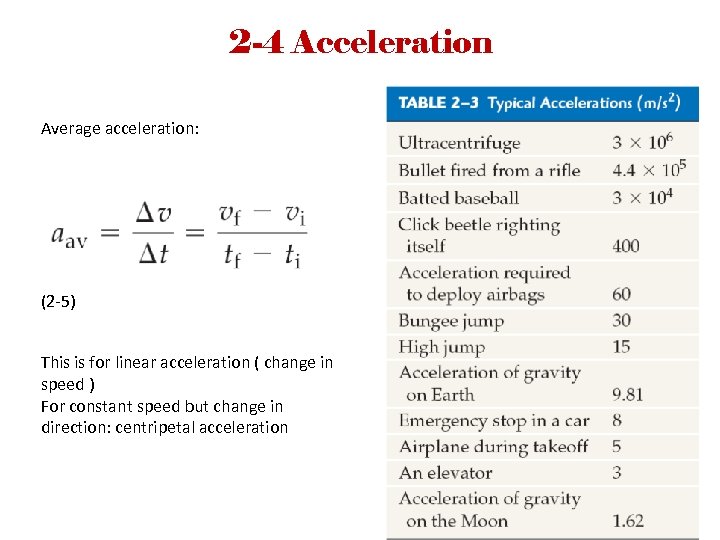 2 -4 Acceleration Average acceleration: (2 -5) This is for linear acceleration ( change in speed ) For constant speed but change in direction: centripetal acceleration
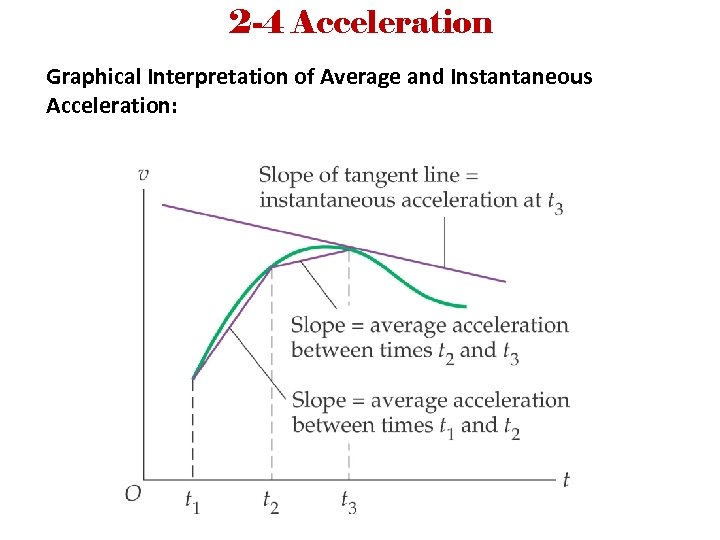 2 -4 Acceleration Graphical Interpretation of Average and Instantaneous Acceleration:
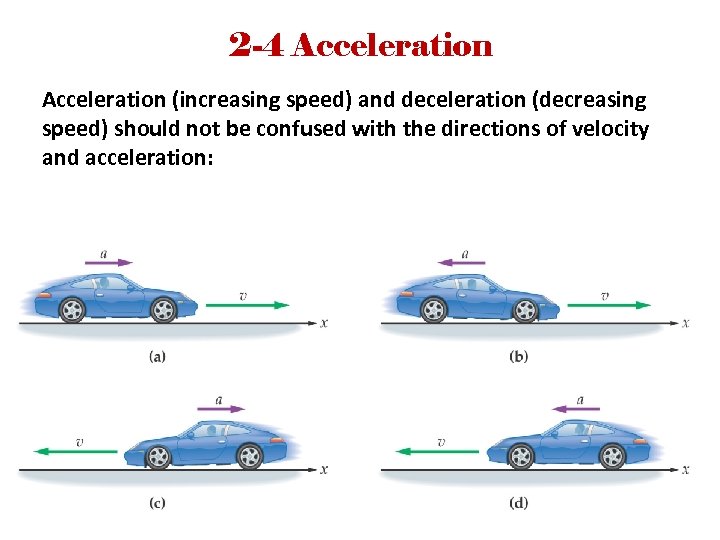 2 -4 Acceleration (increasing speed) and deceleration (decreasing speed) should not be confused with the directions of velocity and acceleration:
 THURSDAY!! • Go to lab stations as soon as you get to class
 HOMEWORK ( show work )!! • EVERYONE: • Pg 48 ( #s 4, 10 ) Pg 49 ( # 14 ) • AP: • Pg 48 ( # 6 ) Pg 49 ( # 23 ) Pg 50 ( # 32 )
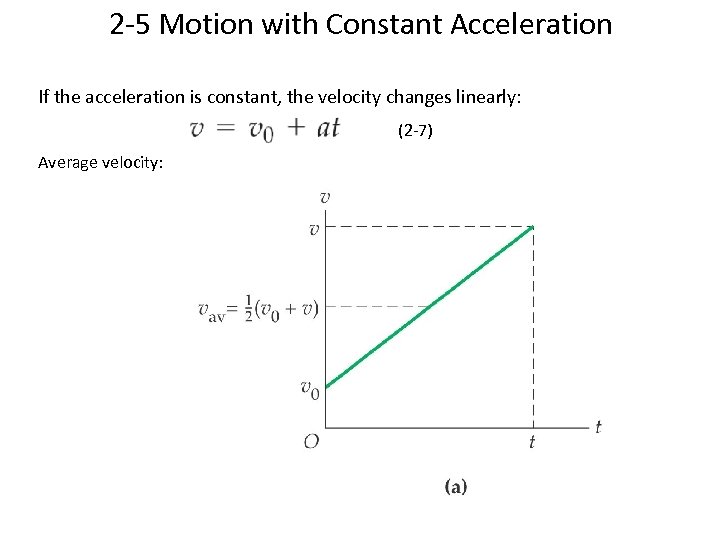 2 -5 Motion with Constant Acceleration If the acceleration is constant, the velocity changes linearly: (2 -7) Average velocity:
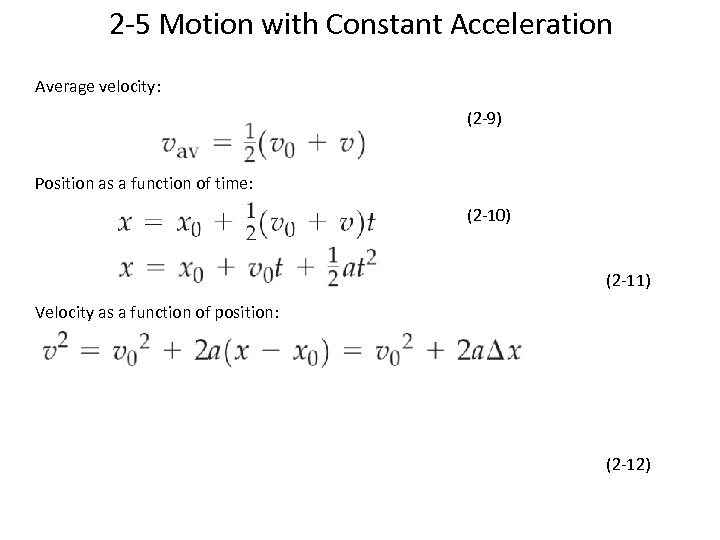 2 -5 Motion with Constant Acceleration Average velocity: (2 -9) Position as a function of time: (2 -10) (2 -11) Velocity as a function of position: (2 -12)
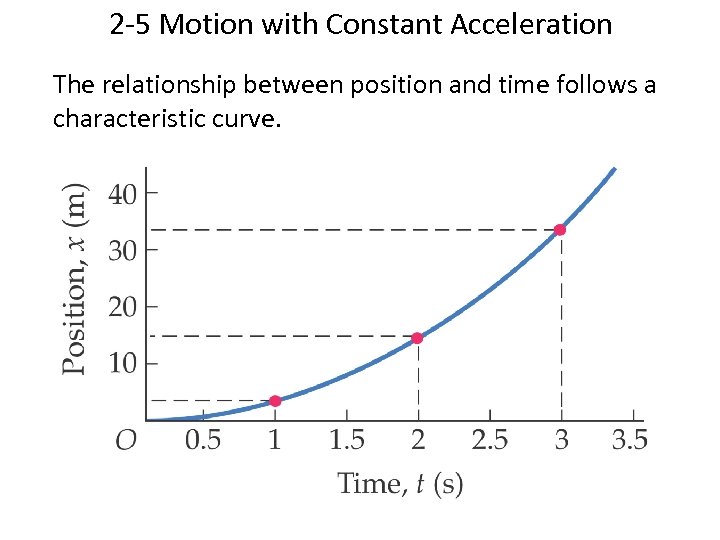 2 -5 Motion with Constant Acceleration The relationship between position and time follows a characteristic curve.
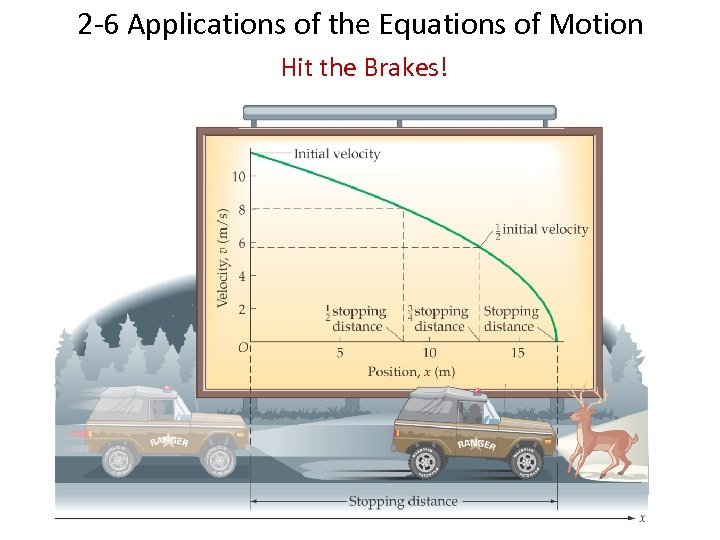 2 -6 Applications of the Equations of Motion Hit the Brakes!
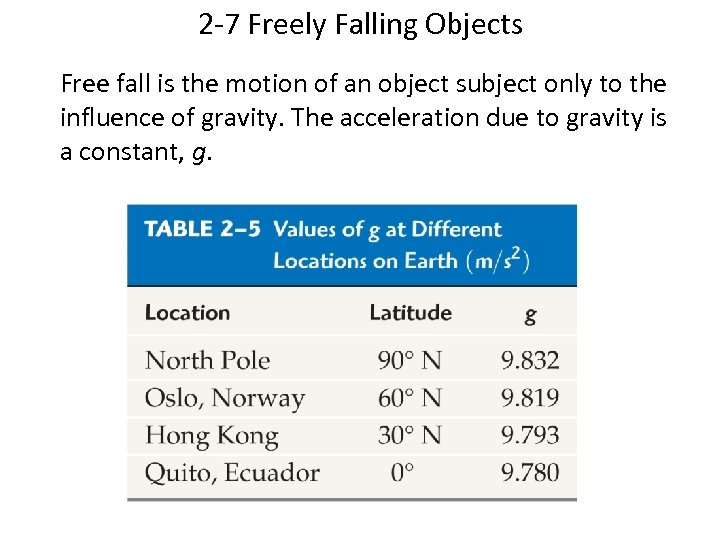 2 -7 Freely Falling Objects Free fall is the motion of an object subject only to the influence of gravity. The acceleration due to gravity is a constant, g.
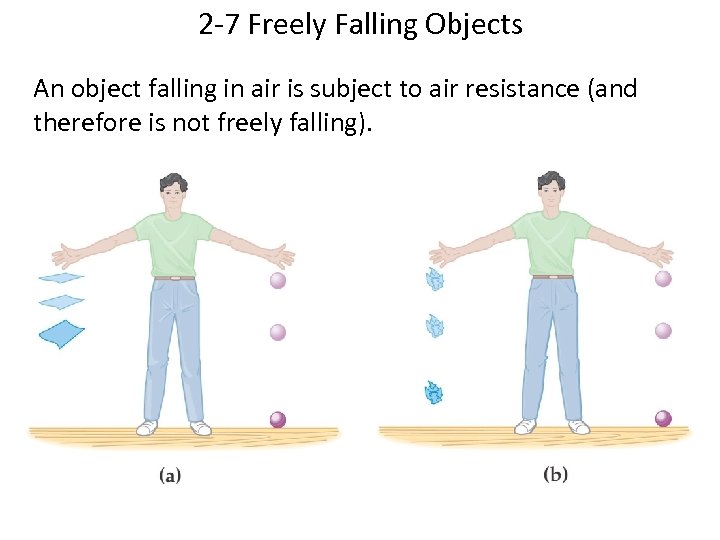 2 -7 Freely Falling Objects An object falling in air is subject to air resistance (and therefore is not freely falling).
 HOMEWORK!! • Pg. 50 ( #44 ) • Pg. 51 ( # 49 )