 Скачать презентацию ON THE SYNTAX AND SEMANTICS OF THE BIBLICAL
d9d76da3647006b078353014b96ddd0e.ppt
- Количество слайдов: 27



ON THE SYNTAX AND SEMANTICS OF THE BIBLICAL HEBREW INFINITE ABSOLUTE Vincent De. Caen University of Toronto <decaen@decaen. ca>
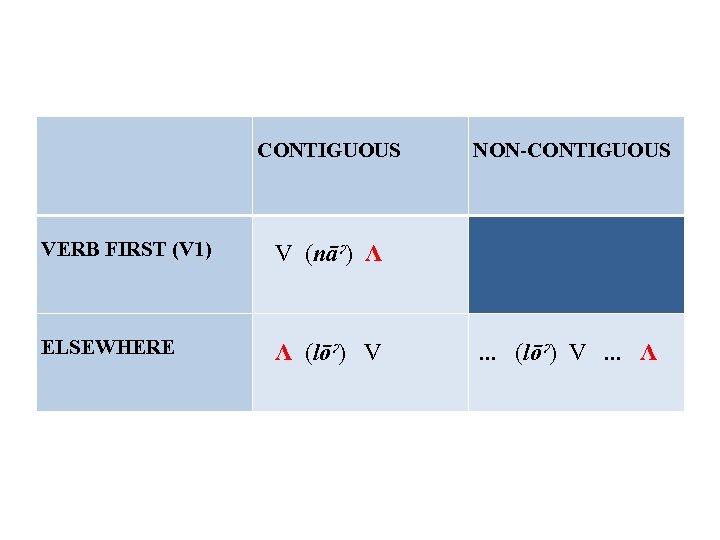
CONTIGUOUS VERB FIRST (V 1) V (nāˀ) Λ ELSEWHERE Λ (lōˀ) V NON-CONTIGUOUS . . . (lōˀ) V. . . Λ
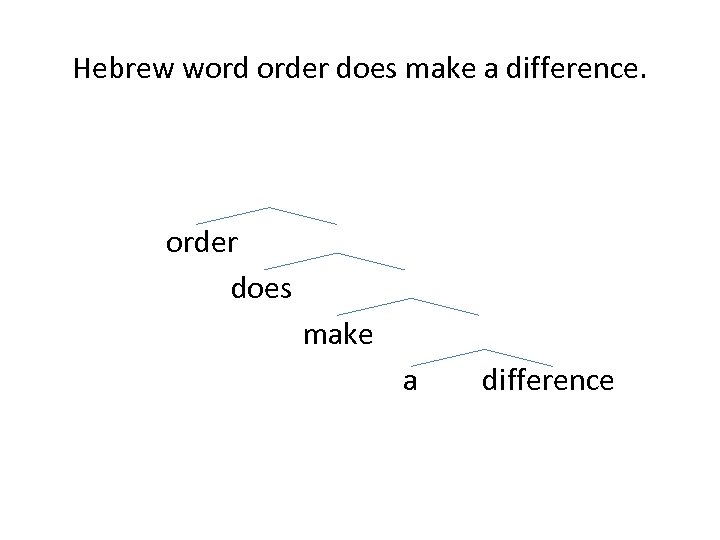
Hebrew word order does make a difference. order does make a difference
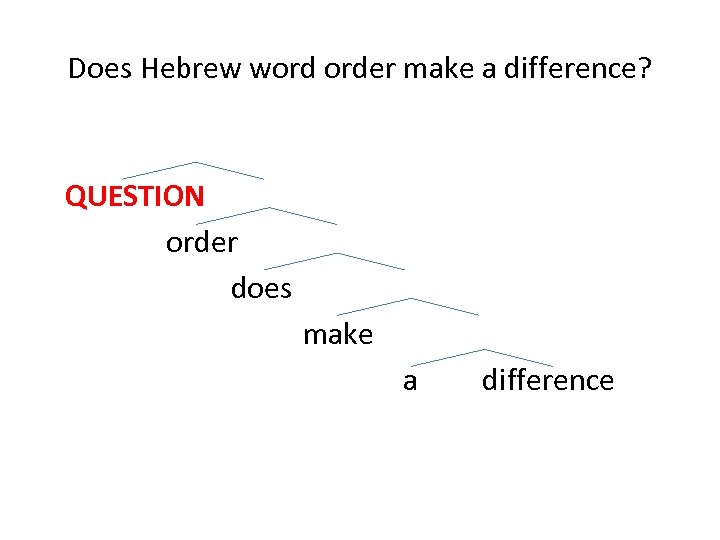
Does Hebrew word order make a difference? QUESTION order does make a difference
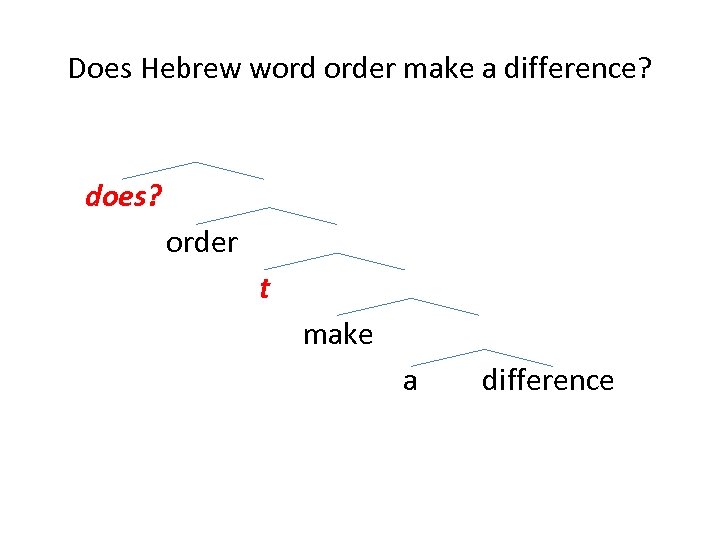
Does Hebrew word order make a difference? does? order t make a difference
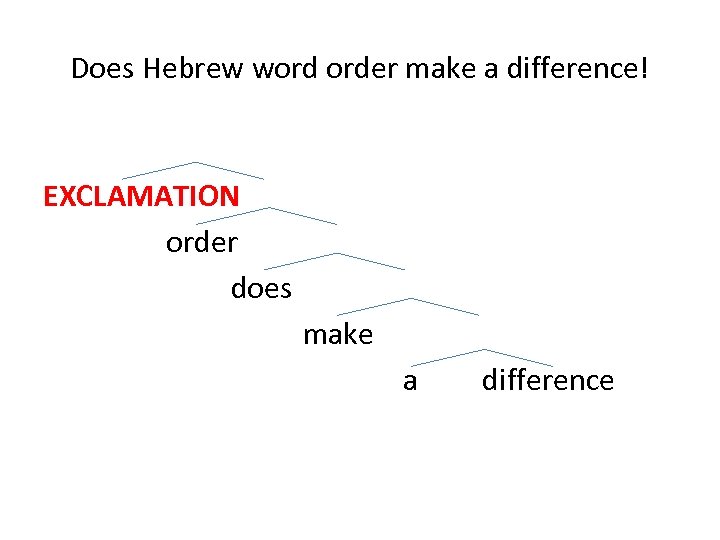
Does Hebrew word order make a difference! EXCLAMATION order does make a difference
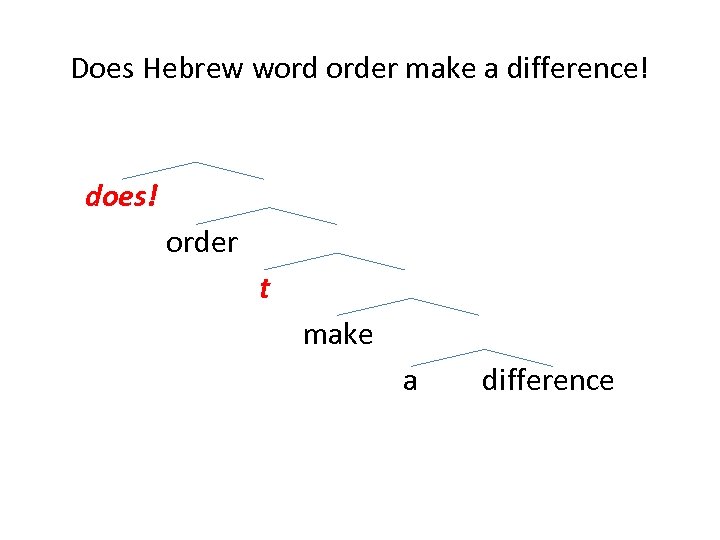
Does Hebrew word order make a difference! does! order t make a difference
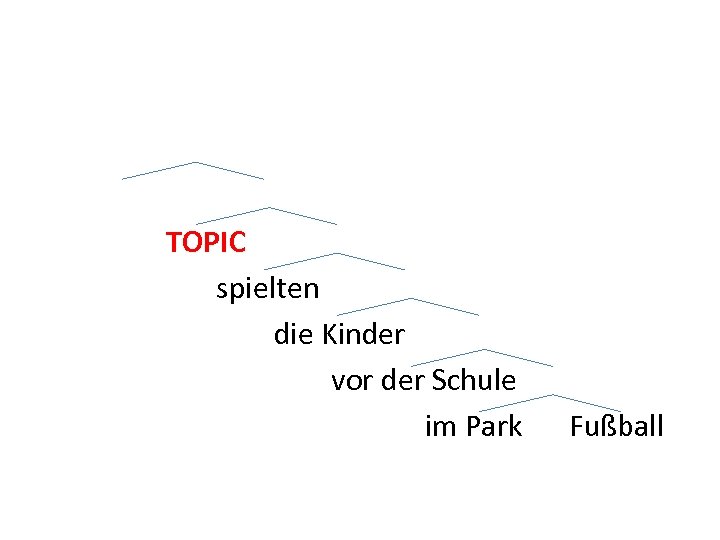
TOPIC spielten die Kinder vor der Schule im Park Fußball
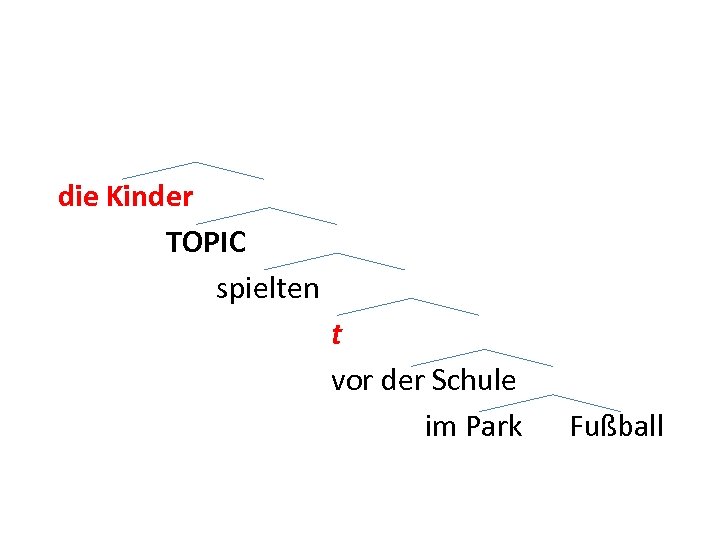
die Kinder TOPIC spielten t vor der Schule im Park Fußball
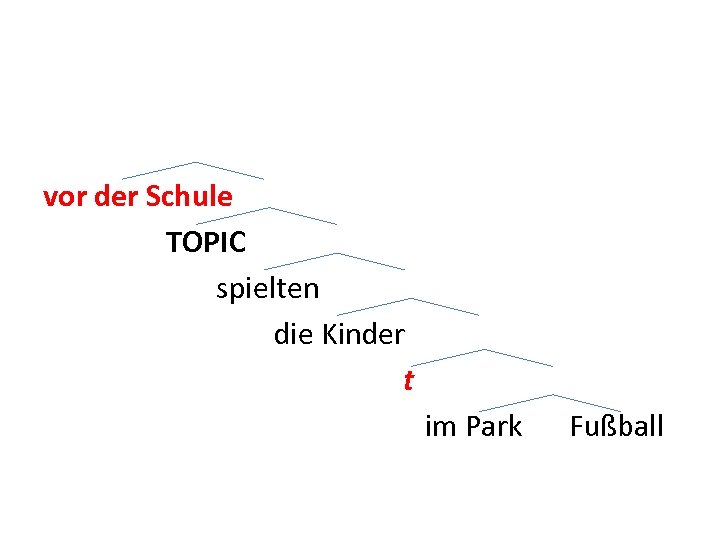
vor der Schule TOPIC spielten die Kinder t im Park Fußball
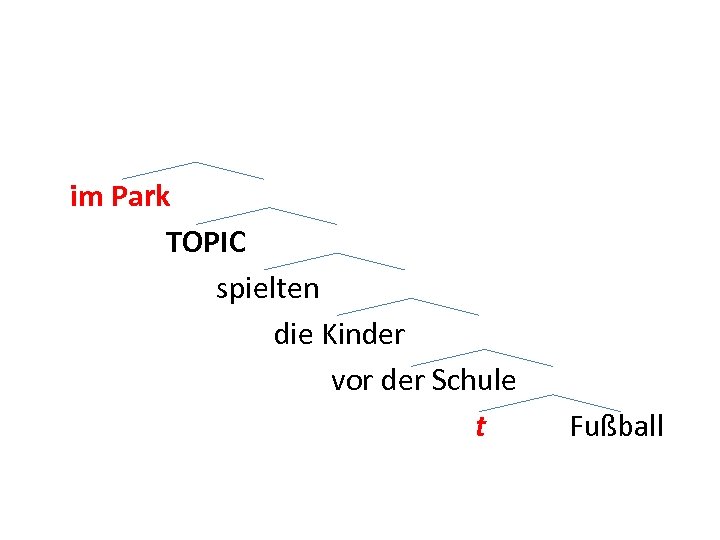
im Park TOPIC spielten die Kinder vor der Schule t Fußball
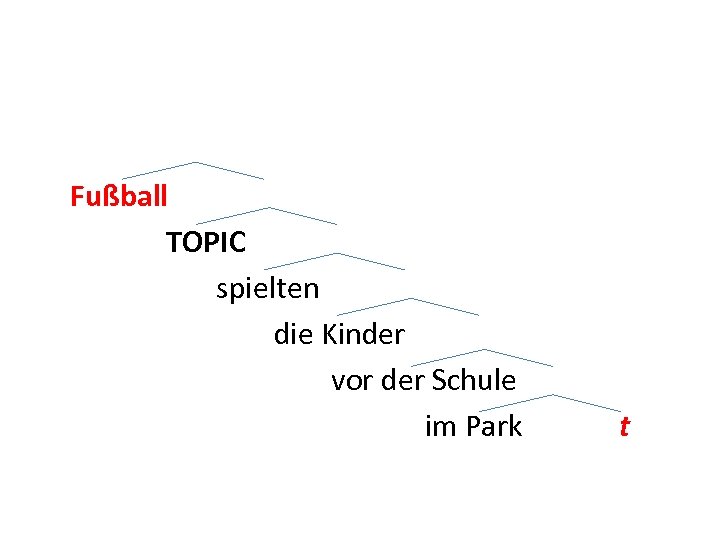
Fußball TOPIC spielten die Kinder vor der Schule im Park t
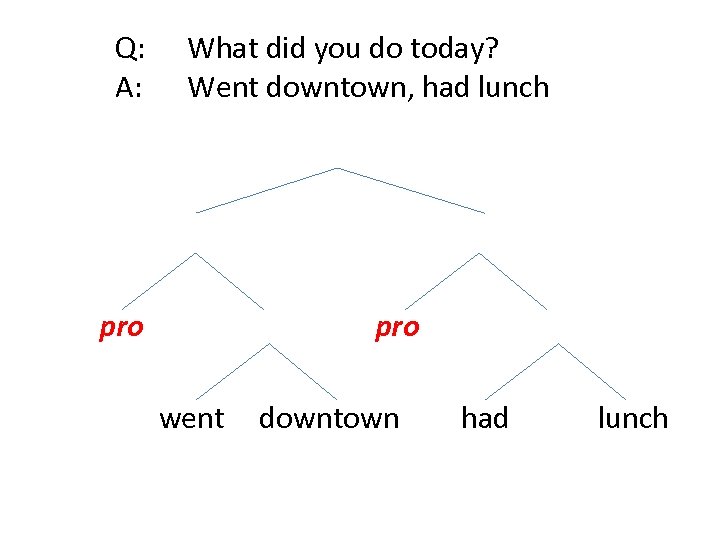
Q: What did you do today? A: Went downtown, had lunch pro went pro downtown had lunch
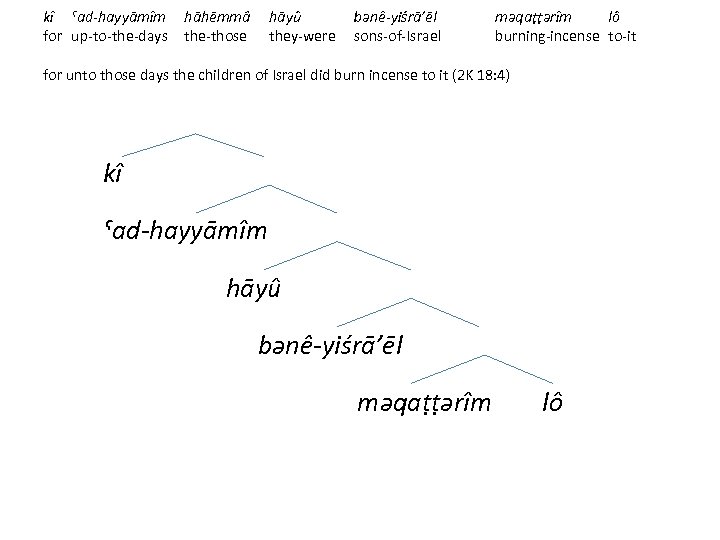
kî ˁad-hayyāmîm hāhēmmâ hāyû bənê-yiśrā’ēl məqaṭṭərîm lô for up-to-the-days the-those they-were sons-of-Israel burning-incense to-it for unto those days the children of Israel did burn incense to it (2 K 18: 4) kî ˁad-hayyāmîm hāyû bənê-yiśrā’ēl məqaṭṭərîm lô
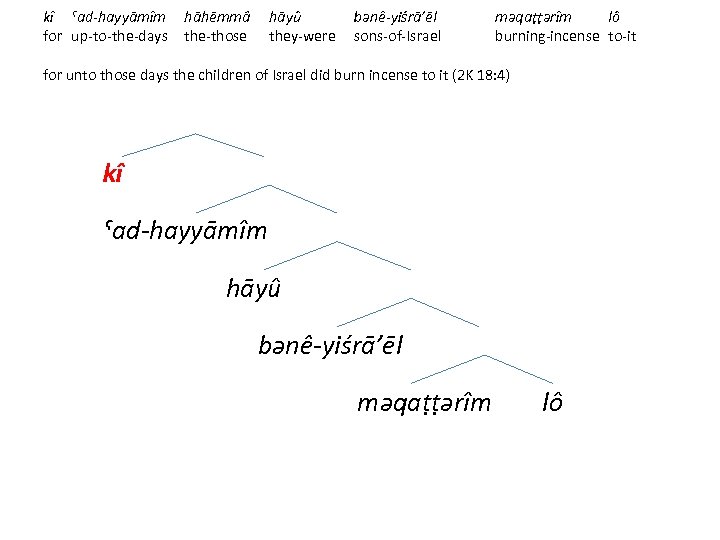
kî ˁad-hayyāmîm hāhēmmâ hāyû bənê-yiśrā’ēl məqaṭṭərîm lô for up-to-the-days the-those they-were sons-of-Israel burning-incense to-it for unto those days the children of Israel did burn incense to it (2 K 18: 4) kî ˁad-hayyāmîm hāyû bənê-yiśrā’ēl məqaṭṭərîm lô
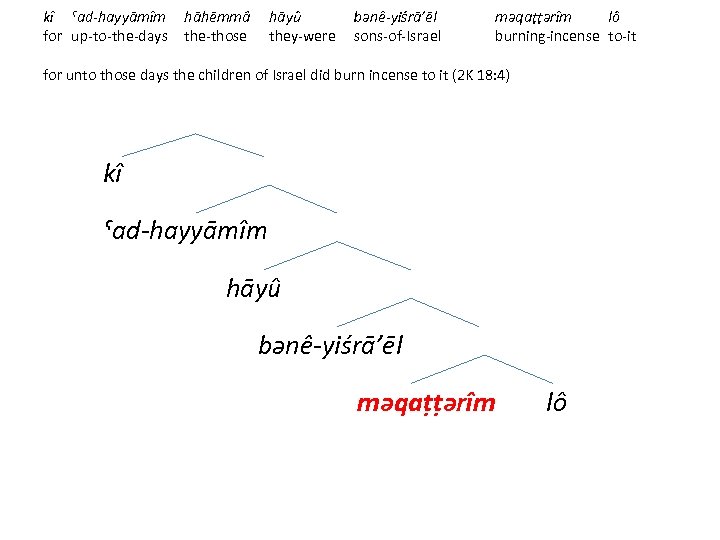
kî ˁad-hayyāmîm hāhēmmâ hāyû bənê-yiśrā’ēl məqaṭṭərîm lô for up-to-the-days the-those they-were sons-of-Israel burning-incense to-it for unto those days the children of Israel did burn incense to it (2 K 18: 4) kî ˁad-hayyāmîm hāyû bənê-yiśrā’ēl məqaṭṭərîm lô
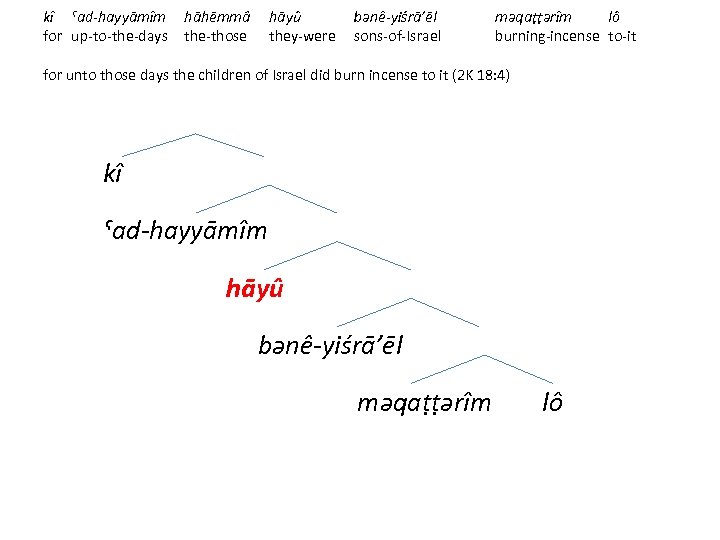
kî ˁad-hayyāmîm hāhēmmâ hāyû bənê-yiśrā’ēl məqaṭṭərîm lô for up-to-the-days the-those they-were sons-of-Israel burning-incense to-it for unto those days the children of Israel did burn incense to it (2 K 18: 4) kî ˁad-hayyāmîm hāyû bənê-yiśrā’ēl məqaṭṭərîm lô
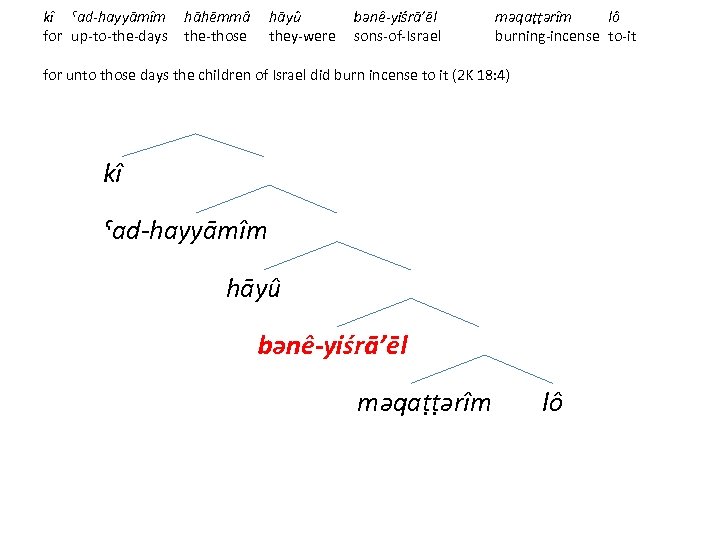
kî ˁad-hayyāmîm hāhēmmâ hāyû bənê-yiśrā’ēl məqaṭṭərîm lô for up-to-the-days the-those they-were sons-of-Israel burning-incense to-it for unto those days the children of Israel did burn incense to it (2 K 18: 4) kî ˁad-hayyāmîm hāyû bənê-yiśrā’ēl məqaṭṭərîm lô
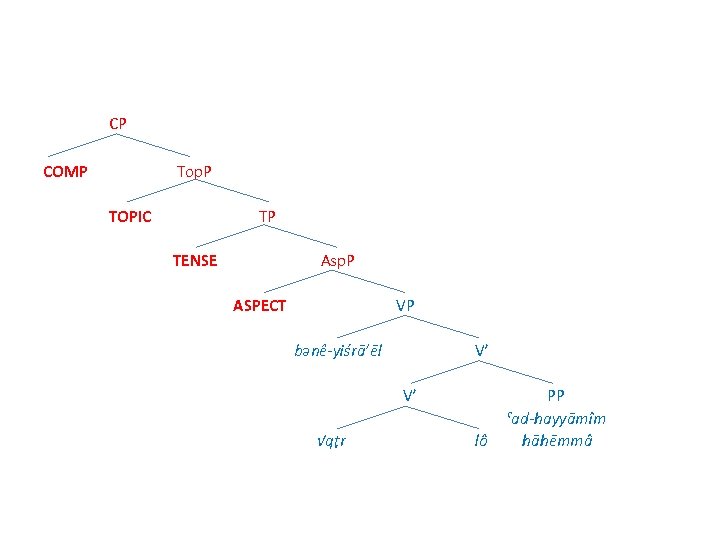
CP COMP Top. P TOPIC TENSE TP Asp. P ASPECT VP bənê-yiśrā’ēl V′ V′ √qṭr lô PP ˁad-hayyāmîm hāhēmmâ
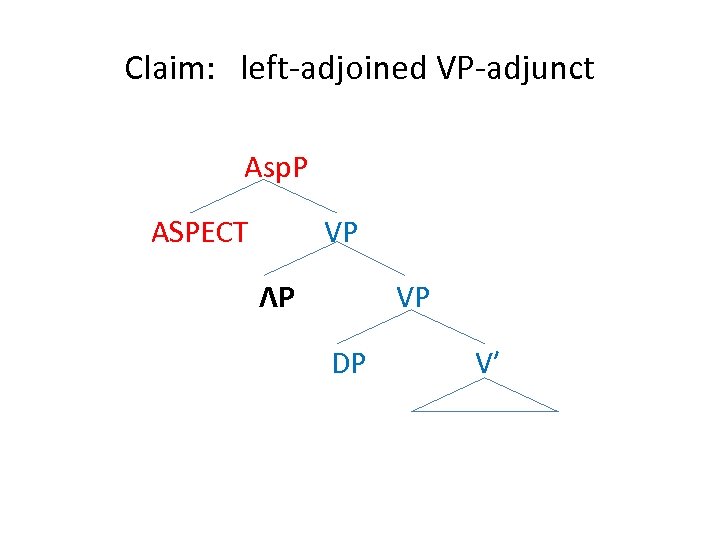
Claim: left-adjoined VP-adjunct Asp. P ASPECT VP ΛP VP DP V′
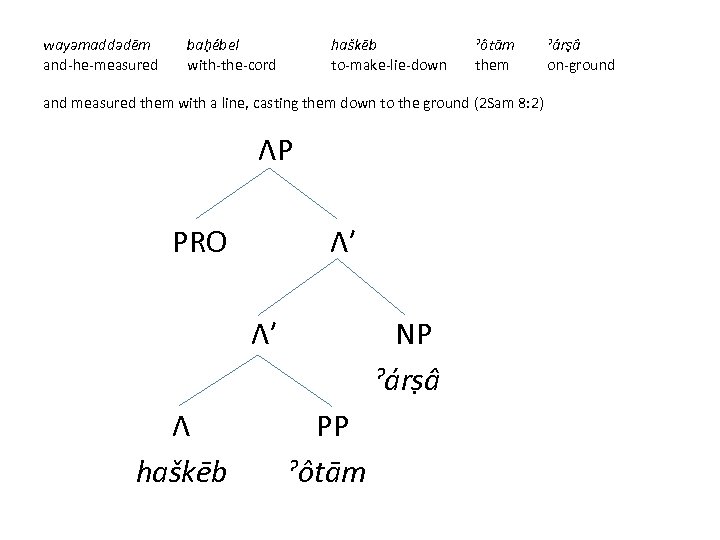
wayǝmaddǝdēm baḥébel haškēb ˀôtām ˀárṣâ and-he-measured with-the-cord to-make-lie-down them on-ground and measured them with a line, casting them down to the ground (2 Sam 8: 2) ΛP PRO Λ′ NP ˀárṣâ Λ PP haškēb ˀôtām
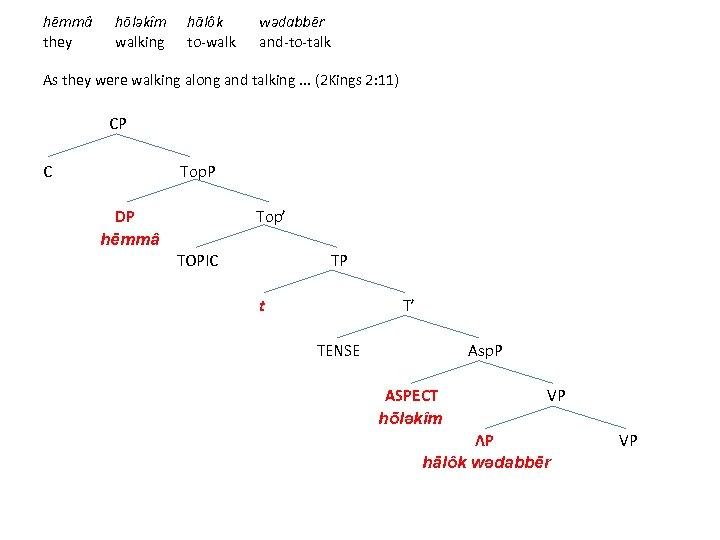
hēmmâ they hōlǝkîm walking hālôk to-walk wǝdabbēr and-to-talk As they were walking along and talking. . . (2 Kings 2: 11) CP C Top. P DP Top′ hēmmâ TOPIC TP t T′ TENSE Asp. P ASPECT hōlǝkîm VP ΛP hālôk wǝdabbēr VP
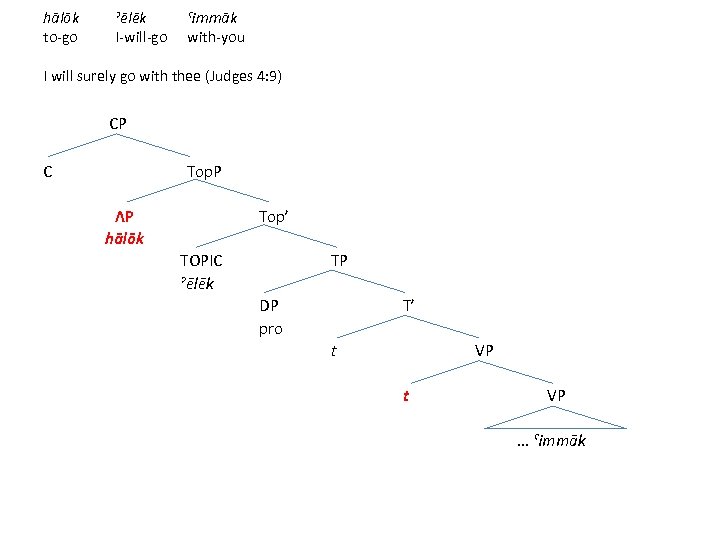
hālōk to-go ˀēlēk I-will-go ˁimmāk with-you I will surely go with thee (Judges 4: 9) CP C Top. P ΛP hālōk TOPIC ˀēlēk Top′ TP DP pro t T′ VP t VP … ˁimmāk
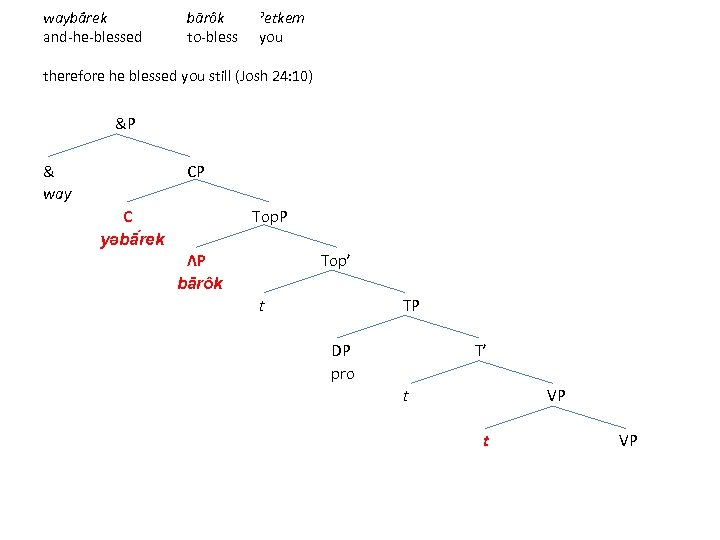
waybā rek and-he-blessed bārôk to-bless ˀetkem you therefore he blessed you still (Josh 24: 10) &P & way CP C yəbā rek Top. P ΛP bārôk Top′ t TP DP pro T′ t VP
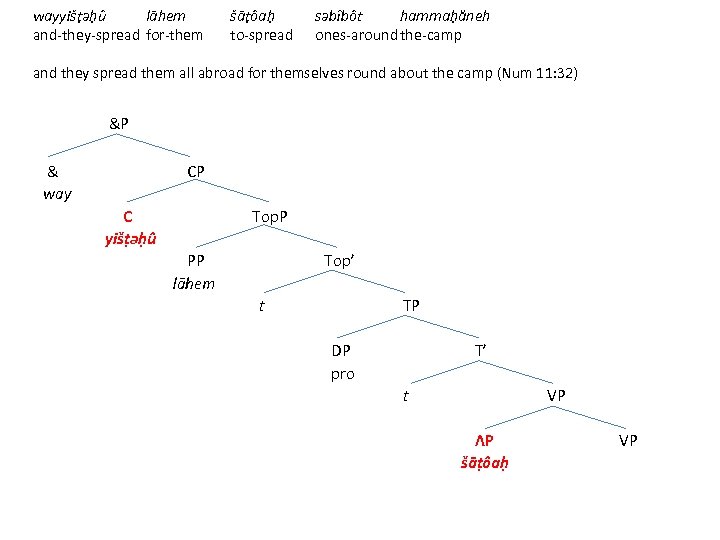
wayyišṭǝḥû lāhem šāṭôaḥ sǝbîbôt hammaḥăneh and-they-spread for-them to-spread ones-around the-camp and they spread them all abroad for themselves round about the camp (Num 11: 32) &P & way CP C yišṭǝḥû Top. P PP lāhem Top′ t TP DP pro T′ t VP ΛP šāṭôaḥ VP
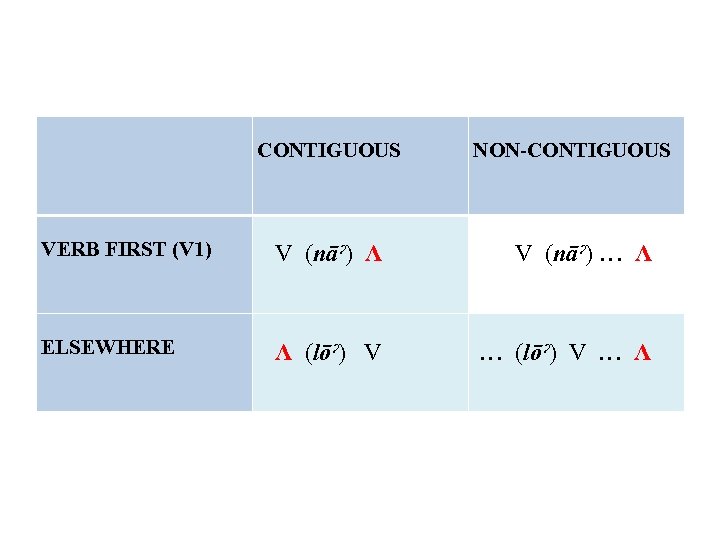
CONTIGUOUS NON-CONTIGUOUS VERB FIRST (V 1) V (nāˀ) Λ V (nāˀ) … Λ ELSEWHERE Λ (lōˀ) V … Λ
Bergsträsser, G. 1983. Introduction to the Semitic Languages. Trans. and sup. by P. T. Daniels. Winona Lake IN: Eisenbrauns. Bjorkman, Bronwyn. 2011. “BE-ing Default: The Morphosyntax of Auxiliaries. ” Ph. D. diss. , MIT. Callaham, Scott N. 2010. Modality and the Biblical Hebrew Infinitive Absolute. Abhandlungen für die Kunde des Morgenlandes, no. 71. Wiesbaden: Harrassowitz. De. Caen, Vincent. 1999. “A Unified Analysis of Verbal and Verbless Clauses within Government-Binding Theory. ” Pp. 109 -131 in The Verbless Clause in Biblical Hebrew: Linguistic Approaches, edited by Cynthia L. Miller. Linguistic Studies in Ancient West Semitic, vol. 1. Winona Lake IN: Eisenbrauns. De. Caen, Vincent. 1995. “On the Placement and Interpretation of the Verb in Standard Biblical Hebrew Prose. ” Ph. D. diss. , Department of Near Eastern Studies, University of Toronto. Englund, Donald L. 2006. “The Syntactic Structure of the Focused Adverbial Cognate Object in Biblical Hebrew”. MA diss. , University of Kansas. Goldenberg, Gideon. 1971. “Tautological Infinitive”. Israel Oriental Studies 1: 36 -85. Harbour, Daniel. 1999. “The Two Types of Predicate Clefts: Classical Hebrew and Beyond”. Pp. 159 -175 in Papers on Morphology and Syntax: Cycle Two. Edited by Vivian I-Wen Lin, et al. MIT Working Papers in Linguistics 34. Kim, Yoo-ki. 2009. The Function of the Tautological Infinitive in Classical Biblical Hebrew. Harvard Semitic Museum Publications. Winona Lake IN: Eisenbrauns. Pereltsvaig, Asya. 2002. “Cognate Objects in Modern and Biblical Hebrew”. Pp. 107 -136 in Themes in Arabic and Hebrew Syntax. Edited by Jamal Ouhalla and Ur Shlonsky. Studies in Natural Language and Linguistic Theory, no. 53. Dordrecht: Kluwer. Tov, Emanuel. 1999. “Renderings of Combinations of the Infinitive Absolute and Finite Verbs in the Septuagint—Their Nature and Distribution”. Ch. 17, pp. 247 -256 in his The Greek and Hebrew Bible: Collected Essays on the Septuagint. Supplements to Vetus Testamentum, no. 72. Leiden: Brill. Waltke, Bruce K. , and M. O’Connor. 1990. An Introduction to Biblical Hebrew Syntax. Winona Lake IN: Eisenbrauns. Wang, Ting. 2003. “The Use of the Infinitive Absolute in the Hebrew Bible”. Ph. D. diss. , Hebrew Union College.
Скачать презентацию ON THE SYNTAX AND SEMANTICS OF THE BIBLICAL
d9d76da3647006b078353014b96ddd0e.ppt