


 Скачать презентацию On-line Analytical Processing OLAP a step forward in
54bc0a16a598cbd8c026a83989c20b75.ppt
- Количество слайдов: 1
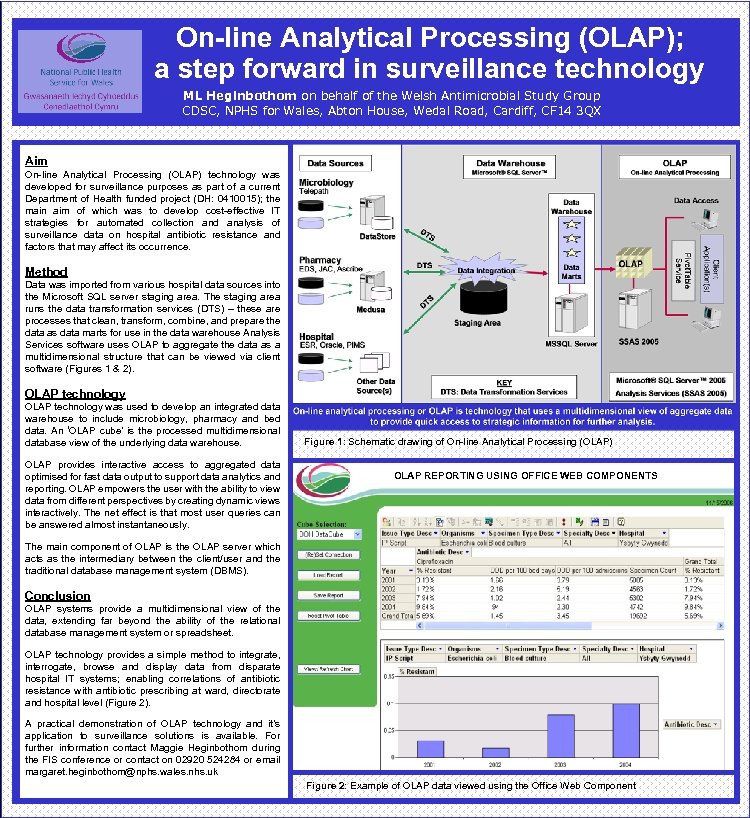 On-line Analytical Processing (OLAP); a step forward in surveillance technology ML Heginbothom on behalf of the Welsh Antimicrobial Study Group CDSC, NPHS for Wales, Abton House, Wedal Road, Cardiff, CF 14 3 QX Aim On-line Analytical Processing (OLAP) technology was developed for surveillance purposes as part of a current Department of Health funded project (DH: 0410015); the main aim of which was to develop cost-effective IT strategies for automated collection and analysis of surveillance data on hospital antibiotic resistance and factors that may affect its occurrence. Method Data was imported from various hospital data sources into the Microsoft SQL server staging area. The staging area runs the data transformation services (DTS) – these are processes that clean, transform, combine, and prepare the data as data marts for use in the data warehouse Analysis Services software uses OLAP to aggregate the data as a multidimensional structure that can be viewed via client software (Figures 1 & 2). OLAP technology was used to develop an integrated data warehouse to include microbiology, pharmacy and bed data. An ‘OLAP cube’ is the processed multidimensional database view of the underlying data warehouse. OLAP provides interactive access to aggregated data optimised for fast data output to support data analytics and reporting. OLAP empowers the user with the ability to view data from different perspectives by creating dynamic views interactively. The net effect is that most user queries can be answered almost instantaneously. Figure 1: Schematic drawing of On-line Analytical Processing (OLAP) OLAP REPORTING USING OFFICE WEB COMPONENTS The main component of OLAP is the OLAP server which acts as the intermediary between the client/user and the traditional database management system (DBMS). Conclusion OLAP systems provide a multidimensional view of the data, extending far beyond the ability of the relational database management system or spreadsheet. OLAP technology provides a simple method to integrate, interrogate, browse and display data from disparate hospital IT systems; enabling correlations of antibiotic resistance with antibiotic prescribing at ward, directorate and hospital level (Figure 2). A practical demonstration of OLAP technology and it’s application to surveillance solutions is available. For further information contact Maggie Heginbothom during the FIS conference or contact on 02920 524284 or email margaret. heginbothom@nphs. wales. nhs. uk Figure 2: Example of OLAP data viewed using the Office Web Component