


 Скачать презентацию Omzetting van polluenten in maagdarm systeem Tom Van
688310af8a5f4791a726d1885a933063.ppt
- Количество слайдов: 23
 Omzetting van polluenten in maagdarm systeem Tom Van de Wiele, Ph. D Lab. MET Laboratory of Microbial Ecology and Technology Ghent University Chemicals in People Studienamiddag TI-KVIV 15 mei 2006 1
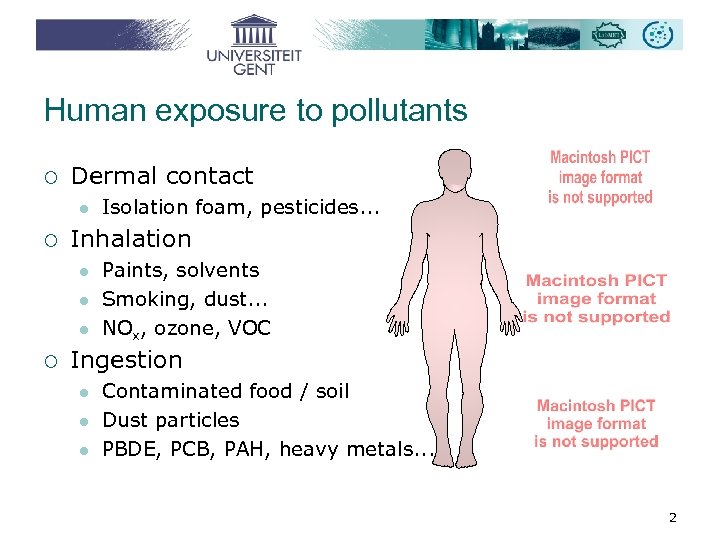 Human exposure to pollutants ¡ Dermal contact l ¡ Inhalation l l l ¡ Isolation foam, pesticides. . . Paints, solvents Smoking, dust. . . NOx, ozone, VOC Ingestion l l l Contaminated food / soil Dust particles PBDE, PCB, PAH, heavy metals. . . 2
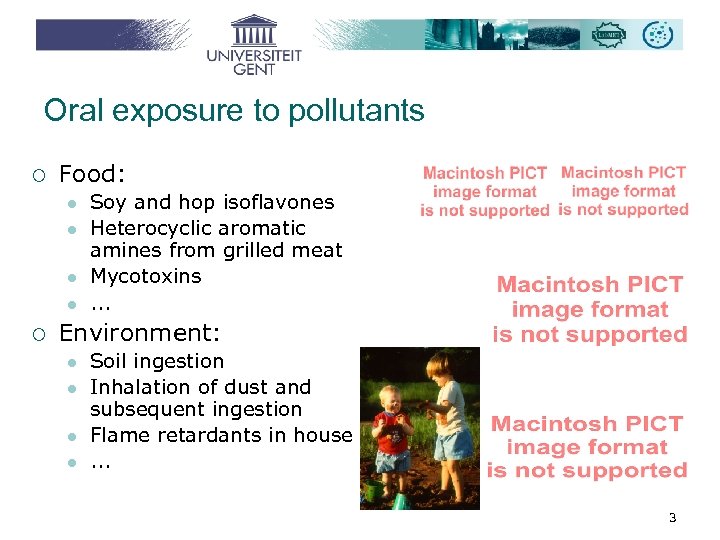 Oral exposure to pollutants ¡ Food: l l ¡ Soy and hop isoflavones Heterocyclic aromatic amines from grilled meat Mycotoxins. . . Environment: l l Soil ingestion Inhalation of dust and subsequent ingestion Flame retardants in house. . . 3
 Human health risk assessment ¡ Biological availability l ¡ What fraction of the pollutant reaches the blood circulation? Biological activity l What fraction of the pollutant causes toxicity in target organs? 4
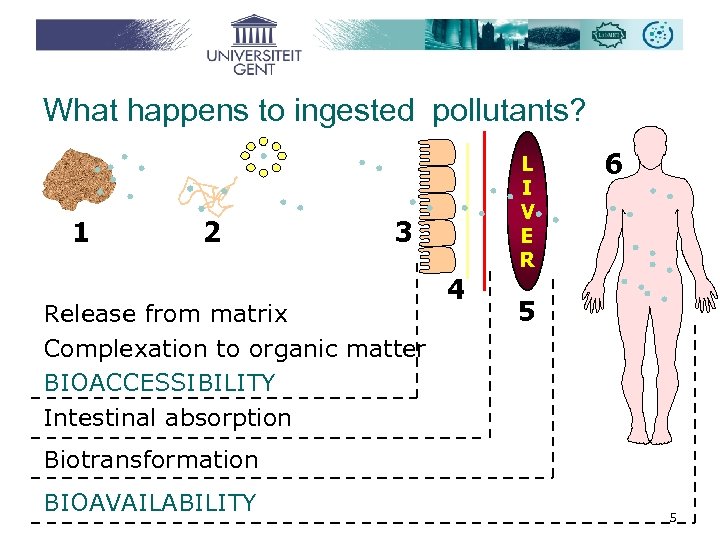 What happens to ingested pollutants? 1 2 L I V E R 3 Release from matrix Complexation to organic matter BIOACCESSIBILITY Intestinal absorption 4 6 5 Biotransformation BIOAVAILABILITY 5
 What happens to absorbed pollutants ? ¡ Liver and intestinal epithelium cells: Biotransformation reactions (phase I and II) l Make compound more hydrophilic l Removal from body in urine or bile DETOXIFICATION l ¡ But: Biotransformation sometimes goes wrong l Dead-end metabolite may be formed l Higher toxicity than parent compound TOXIFICATION l 6
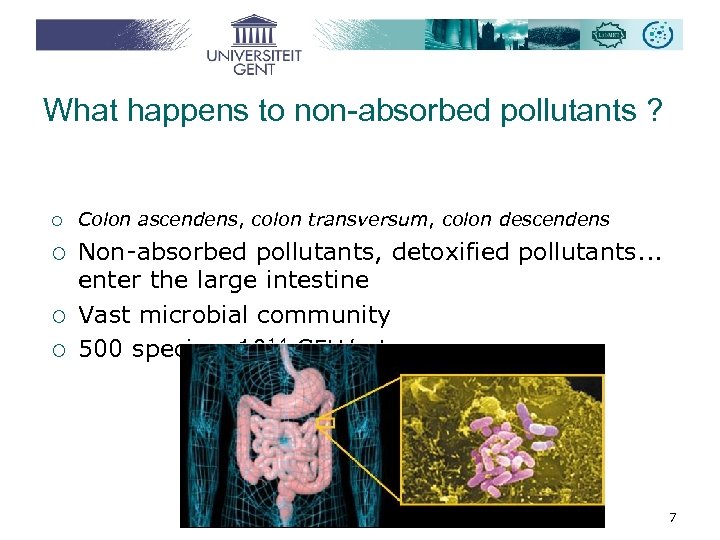 What happens to non-absorbed pollutants ? ¡ ¡ Colon ascendens, colon transversum, colon descendens Non-absorbed pollutants, detoxified pollutants. . . enter the large intestine Vast microbial community 500 species, 1014 CFU/m. L 7
 Colon microbiota and health ¡ ¡ ¡ Further digestion Useful fatty acids Vitamin K, B 12 Immunostimulation Health-promoting metabolic conversions ¡ ¡ Pathogens Formation of toxins Fat uptake and synthesis Production of (geno)toxic metabolites 8
 How to study intestinal microbiota? ¡ In vivo studies: animals, humans (if possible) l Most relevant l Physiological factors taken into account But: l Black box l No mechanistic studies l Ethical constraints l Costly ! 9
 How to study intestinal microbiota? ¡ In vitro studies: simulation of the gut l Not physiologically accurate l Validation in vivo needed But: l Mechanistic studies l Reproducible l Microbial community from entire gut l Metabolism of chemicals can be monitored 10
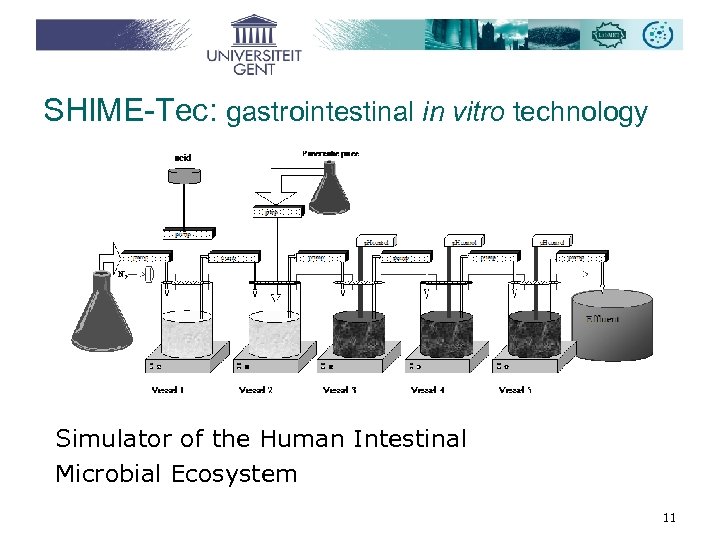 SHIME-Tec: gastrointestinal in vitro technology Simulator of the Human Intestinal Microbial Ecosystem 11
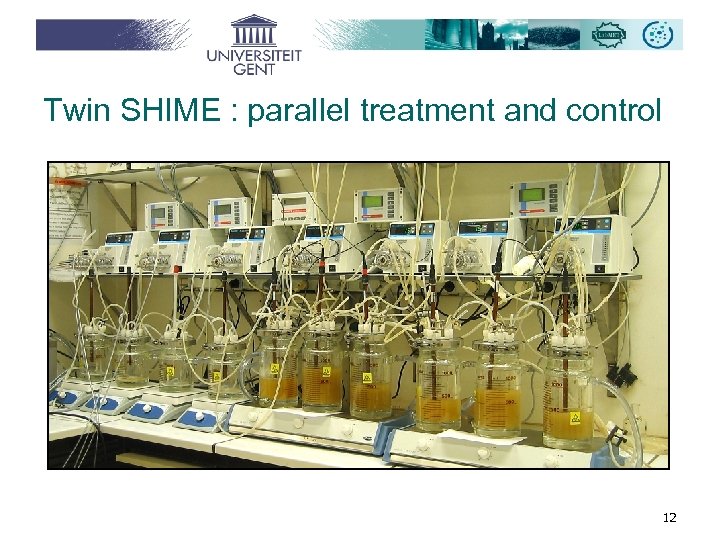 Twin SHIME : parallel treatment and control 12
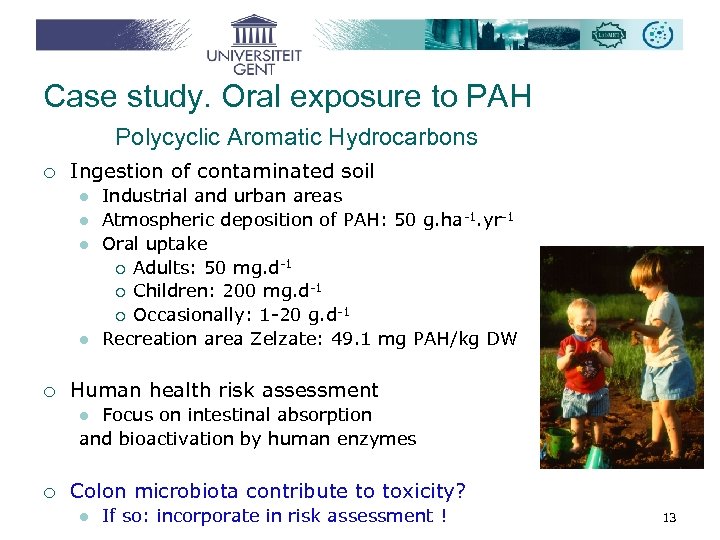 Case study. Oral exposure to PAH Polycyclic Aromatic Hydrocarbons ¡ Ingestion of contaminated soil l l ¡ Industrial and urban areas Atmospheric deposition of PAH: 50 g. ha-1. yr-1 Oral uptake ¡ Adults: 50 mg. d-1 ¡ Children: 200 mg. d-1 ¡ Occasionally: 1 -20 g. d-1 Recreation area Zelzate: 49. 1 mg PAH/kg DW Human health risk assessment Focus on intestinal absorption and bioactivation by human enzymes l ¡ Colon microbiota contribute to toxicity? l If so: incorporate in risk assessment ! 13
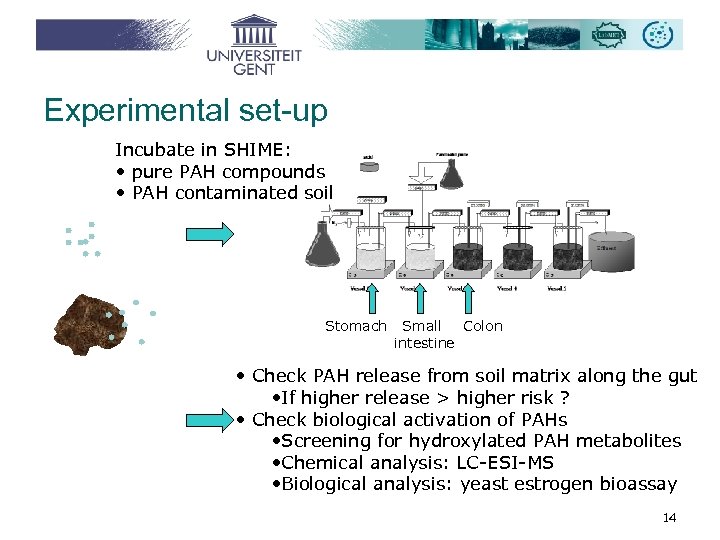 Experimental set-up Incubate in SHIME: • pure PAH compounds • PAH contaminated soil Stomach Small Colon intestine • Check PAH release from soil matrix along the gut • If higher release > higher risk ? • Check biological activation of PAHs • Screening for hydroxylated PAH metabolites • Chemical analysis: LC-ESI-MS • Biological analysis: yeast estrogen bioassay 14
 SHIME: colon microbiota activate PAHs PAH as such are not estrogenic !!! Hydroxylated PAH metabolites have estrogenic properties 15
 Chemical analysis ¡ LC-ESI-MS: hydroxylation of PAHs l l 1 -OH pyrene: 4. 3 µg/L 7 -OH B(a)P: 1. 9 µg/L OH EE 2 7 -OH B(a)P Colon microbiota produce hydroxylated PAHs !!! 16
 Urban playground soil: 49. 1 ppm PAH Lower release gives higher biological activity !!! 17
 Biological activity assessment ¡ ¡ PAH exposure from contaminated soil ingestion Adult: 5 g PAH/d Child: 50 g PAH/d Released PAHs lowest in colon, but highest bioactivity Colon microbiota convert PAH to pseudoestrogenic metabolites ¡ Relevant biological activity in vivo ? Contributes to general PAH toxicity? ¡ Van de Wiele et al. (2005) Environmental Health Perspectives ¡ 18
 Other examples: Heterocyclic aromatic amines l l Intestinal bacteria convert procarcinogen PHIP in nonactive metabolite Detoxification mechanism Lower risk than expected Vanhaecke et al. (2006) Journal of Agricultural and Food Chemistry 19
 Other examples: mycotoxins l l l Conversion of zearalenone to zearalenol Increase in estrogenic properties Relationship with aetiology of cancer development 20
 Other examples: phytoestrogens ¡ ¡ ¡ Gut bacteria convert isoxanthohumol to hoppein Most powerful phytoestrogen Food supplements Hormone substitution therapy Prevention of hormone related cancers (breast/prostate) Possemiers et al. (2005) Journal of Nutrition 21
 Take home messages ¡ Metabolic potency from gut microbiota l l Identification of responsible bacteria and process conditions needed Interindividual variability ! l Modulation of biological activation through dietary factors, microbial community composition. . . l Higher than currently anticipated Consider this process for risk assessment l 22
 Contact information Lab. MET – Ghent University Coupure Links 653 B-9000 Gent tom. vandewiele@ugent. be http: //lab. MET. ugent. be/ www. shimetec. be www. food 2 know. be +32 9 264. 59. 76 23