


 Скачать презентацию Oklahoma Wind Power Initiative OWPI Tim Hughes OU
5433e0af3dfa12fc1f26db5a0b1f52a1.ppt
- Количество слайдов: 28
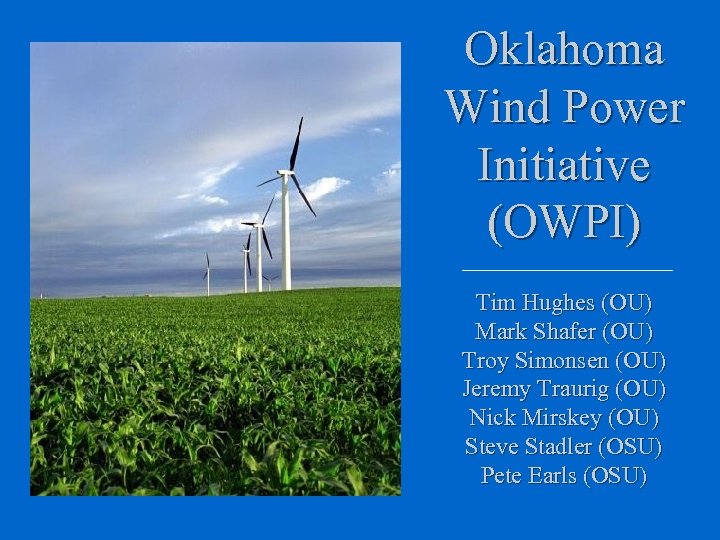 Oklahoma Wind Power Initiative (OWPI) Tim Hughes (OU) Mark Shafer (OU) Troy Simonsen (OU) Jeremy Traurig (OU) Nick Mirskey (OU) Steve Stadler (OSU) Pete Earls (OSU)
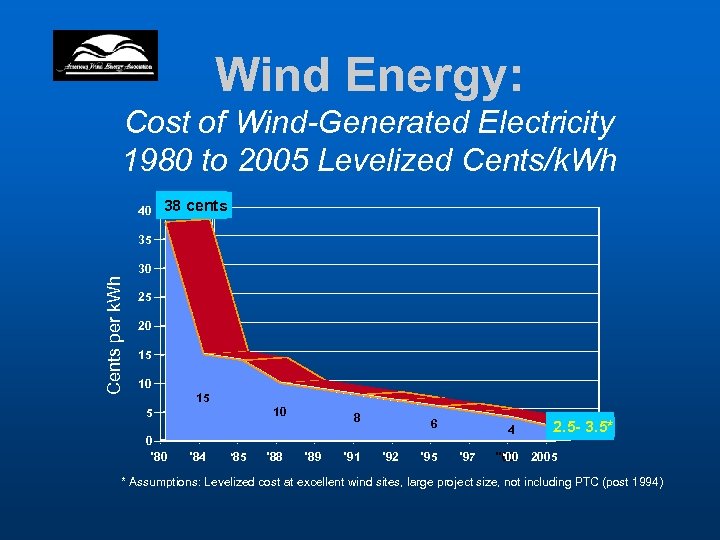 Wind Energy: Cost of Wind-Generated Electricity 1980 to 2005 Levelized Cents/k. Wh 40 38 cents 35 Cents per k. Wh 30 25 20 15 10 5 0 '84 ‘ 85 '88 8 '89 '91 6 '92 '95 4 '97 ''00 ‘ 00 2. 5 - 3. 5* 2005 * Assumptions: Levelized cost at excellent wind sites, large project size, not including PTC (post 1994)
 OWPI GOALS: • Resource Assessment • Policy Study • Outreach • Educational programs • Community meetings • Promote Economic Development
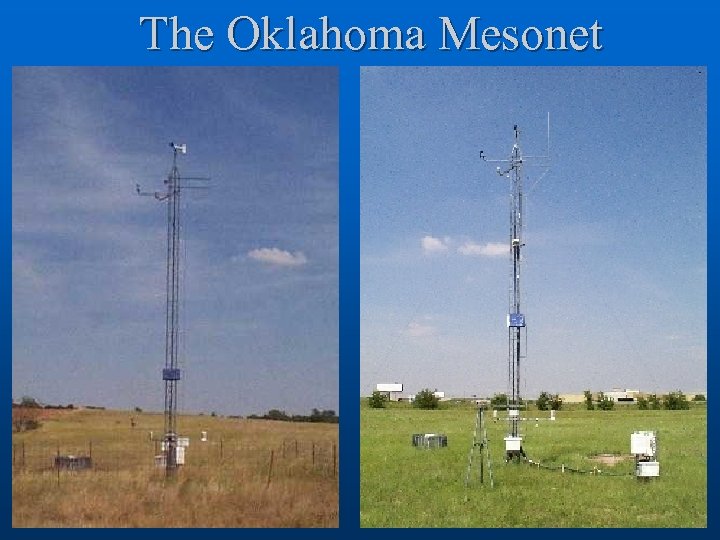 The Oklahoma Mesonet
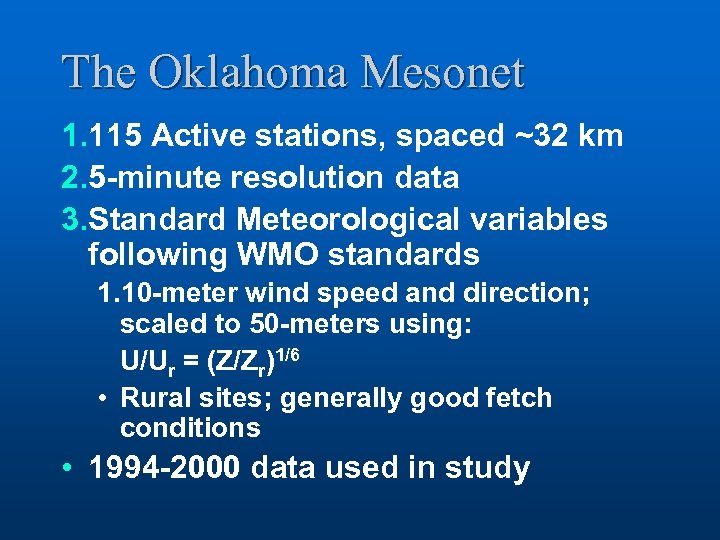 The Oklahoma Mesonet 1. 115 Active stations, spaced ~32 km 2. 5 -minute resolution data 3. Standard Meteorological variables following WMO standards 1. 10 -meter wind speed and direction; scaled to 50 -meters using: U/Ur = (Z/Zr)1/6 • Rural sites; generally good fetch conditions • 1994 -2000 data used in study
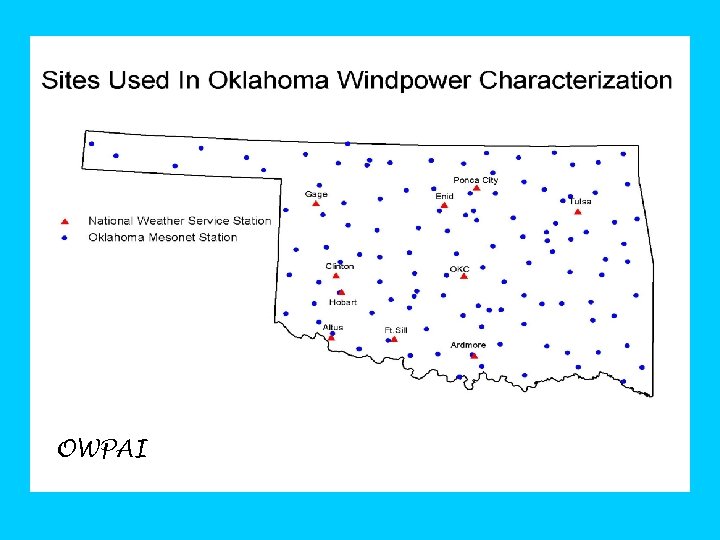 OWPAI
OWPAI
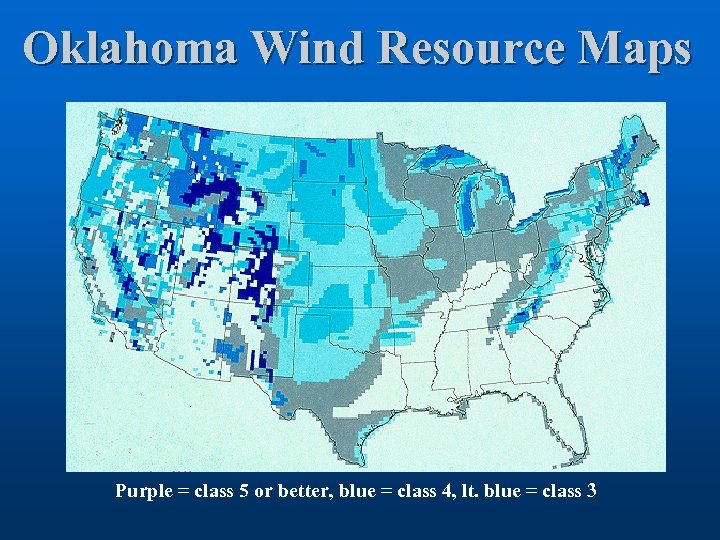 Oklahoma Wind Resource Maps Purple = class 5 or better, blue = class 4, lt. blue = class 3
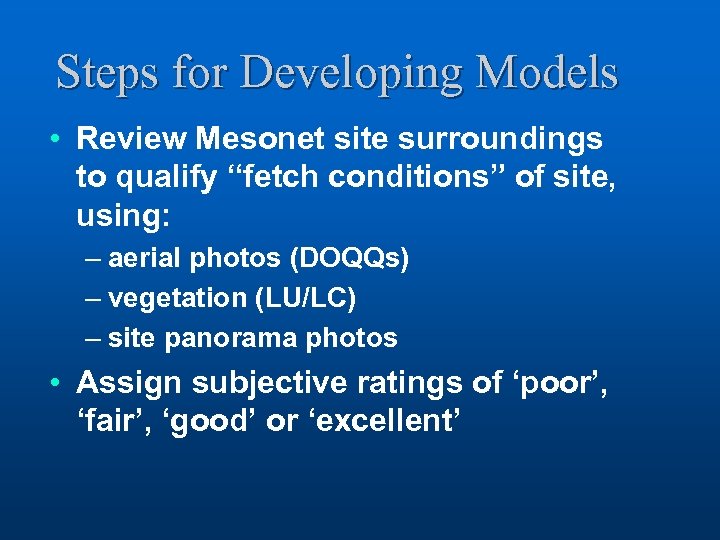 Steps for Developing Models • Review Mesonet site surroundings to qualify “fetch conditions” of site, using: – aerial photos (DOQQs) – vegetation (LU/LC) – site panorama photos • Assign subjective ratings of ‘poor’, ‘fair’, ‘good’ or ‘excellent’
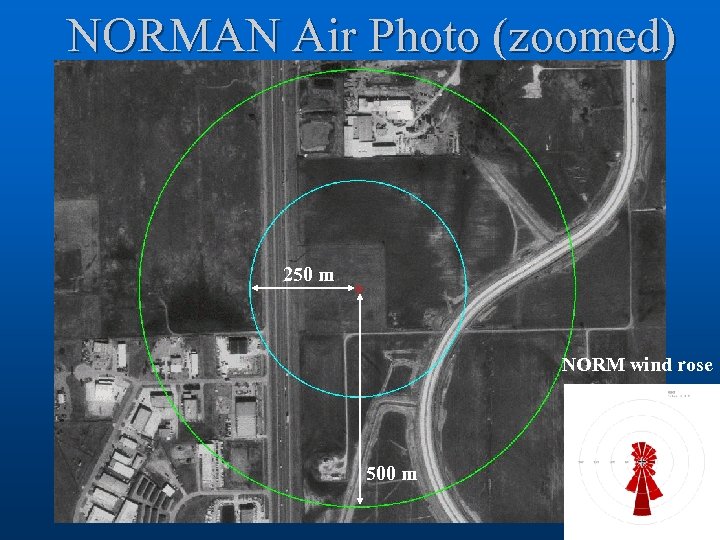 NORMAN Air Photo (zoomed) 250 m NORM wind rose 500 m
 Steps for Developing Models • Combine information from: • Mesonet Station data (wind, pressure, temperature - 735, 000 readings of each per station) h. DEM elevation data h. Vegetation data (roughness) • Input into two different models: • analytical model (Windmap) • empirical model (using neural networks for non-linear relationship)
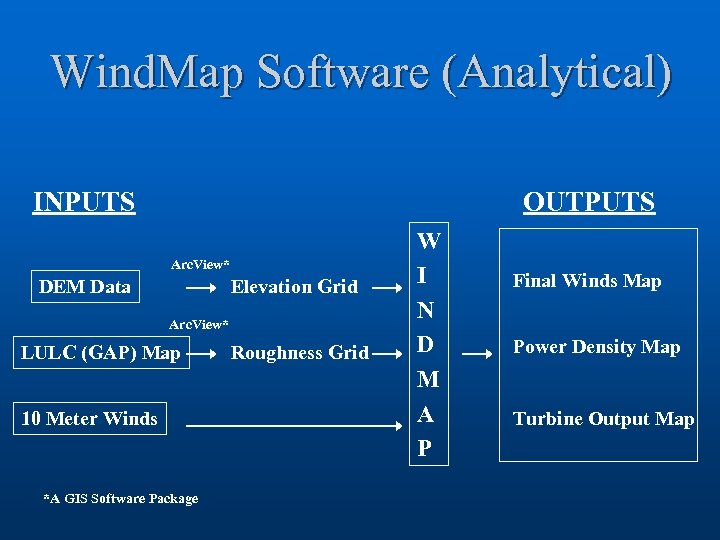 Wind. Map Software (Analytical) INPUTS OUTPUTS Arc. View* DEM Data Elevation Grid Arc. View* LULC (GAP) Map 10 Meter Winds *A GIS Software Package Roughness Grid W I N D M A P Final Winds Map Power Density Map Turbine Output Map
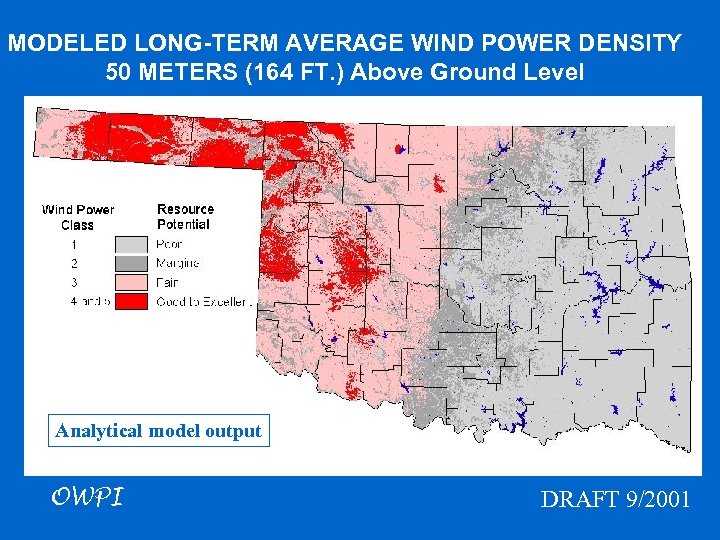 MODELED LONG-TERM AVERAGE WIND POWER DENSITY 50 METERS (164 FT. ) Above Ground Level Analytical model output OWPI DRAFT 9/2001
 Neural Network (Empirical) • Correlate wind power values calculated at Mesonet sites, with neural network scheme, to: – site elevations – north and south terrain exposures – north and south average roughness • Get equations for wind power density as function of the above • Fill in grid for whole state
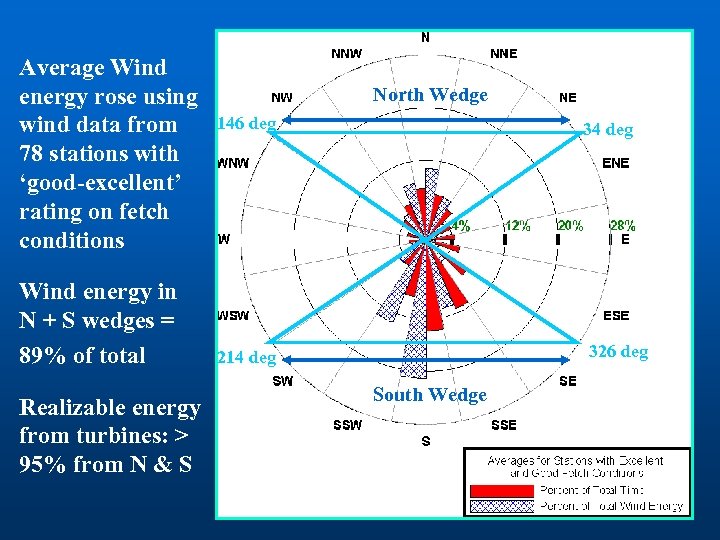 Average Wind energy rose using wind data from 78 stations with ‘good-excellent’ rating on fetch conditions Wind energy in N + S wedges = 89% of total Realizable energy from turbines: > 95% from N & S North Wedge 146 deg 34 deg 326 deg 214 deg South Wedge
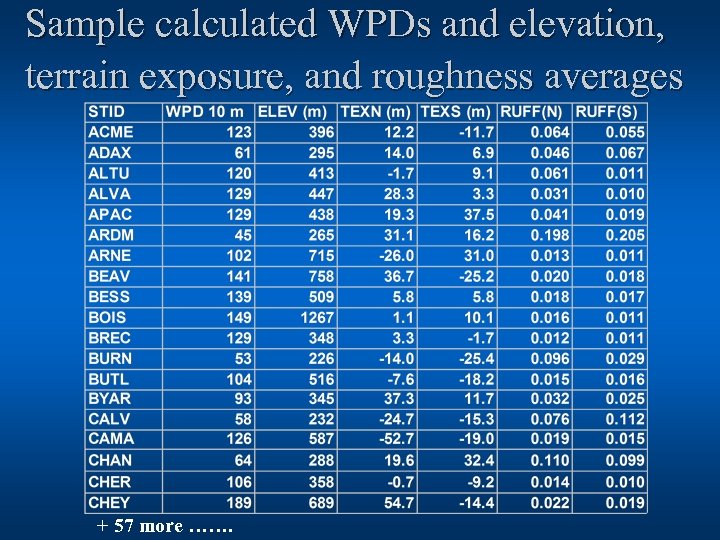 Sample calculated WPDs and elevation, terrain exposure, and roughness averages + 57 more …….
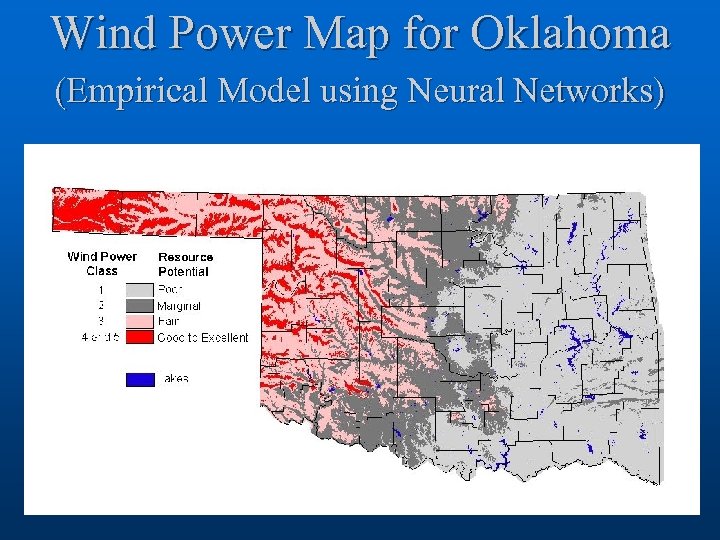 Wind Power Map for Oklahoma (Empirical Model using Neural Networks)
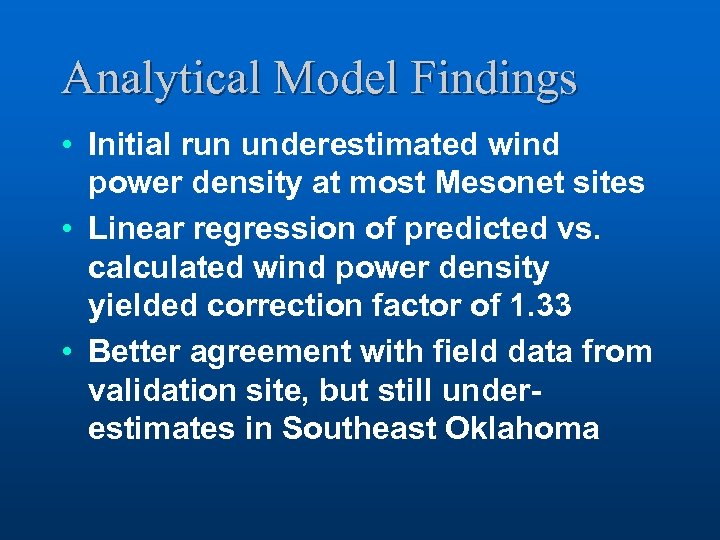 Analytical Model Findings • Initial run underestimated wind power density at most Mesonet sites • Linear regression of predicted vs. calculated wind power density yielded correction factor of 1. 33 • Better agreement with field data from validation site, but still underestimates in Southeast Oklahoma
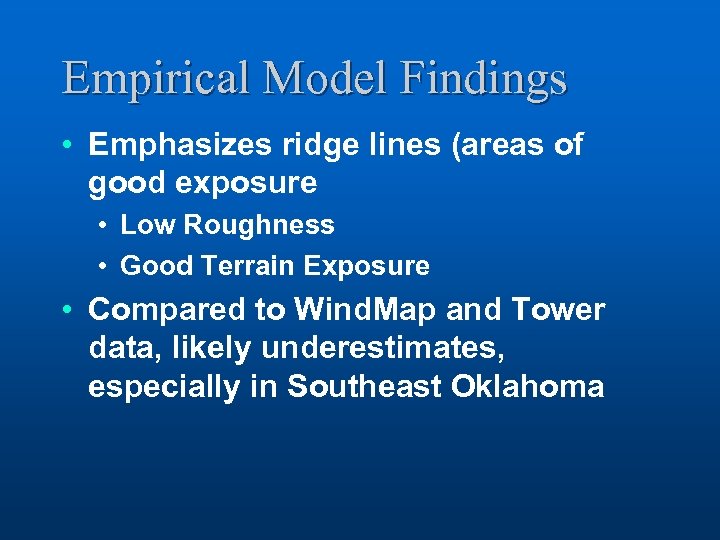 Empirical Model Findings • Emphasizes ridge lines (areas of good exposure • Low Roughness • Good Terrain Exposure • Compared to Wind. Map and Tower data, likely underestimates, especially in Southeast Oklahoma
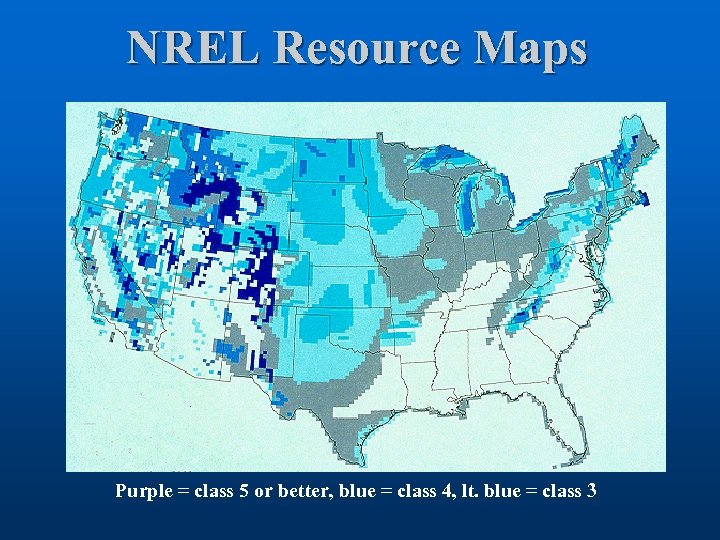 NREL Resource Maps Purple = class 5 or better, blue = class 4, lt. blue = class 3
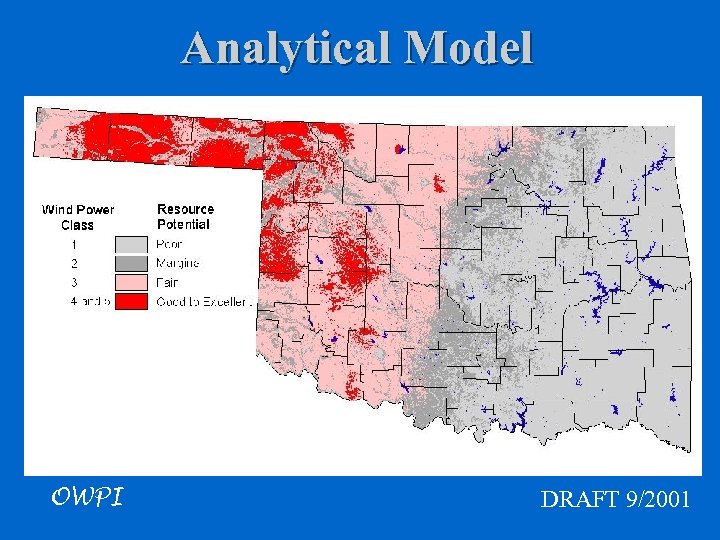 Analytical Model OWPI DRAFT 9/2001
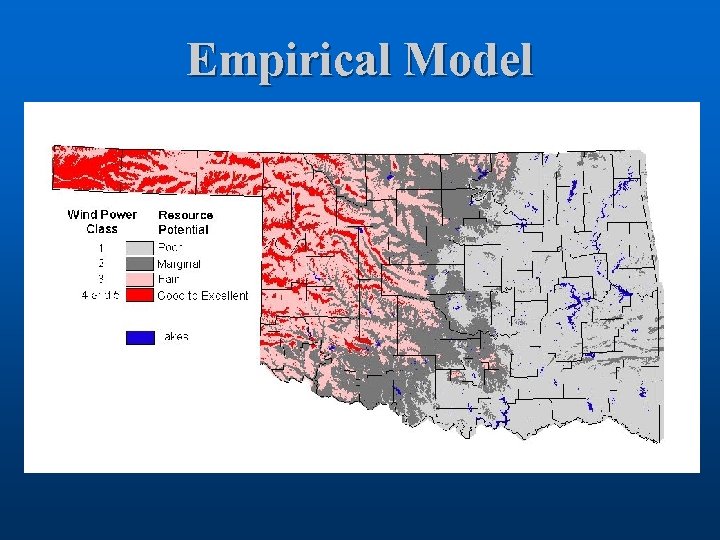 Empirical Model
 OWPI’s Oklahoma Wind Climatology Products
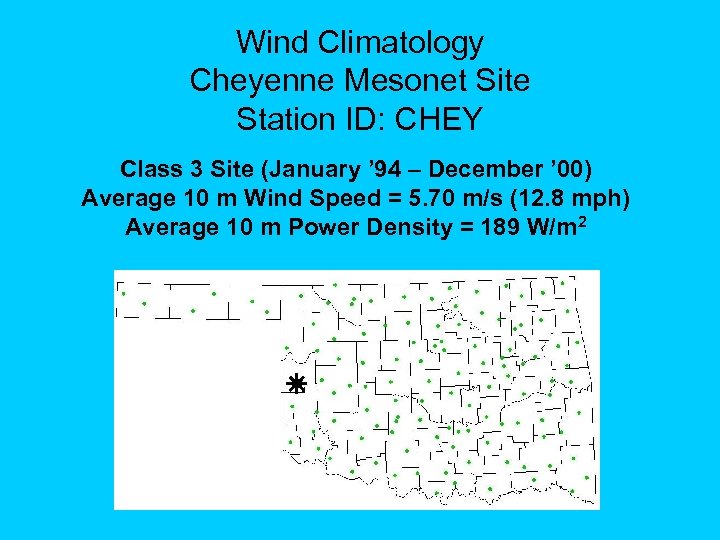 Wind Climatology Cheyenne Mesonet Site Station ID: CHEY Class 3 Site (January ’ 94 – December ’ 00) Average 10 m Wind Speed = 5. 70 m/s (12. 8 mph) Average 10 m Power Density = 189 W/m 2
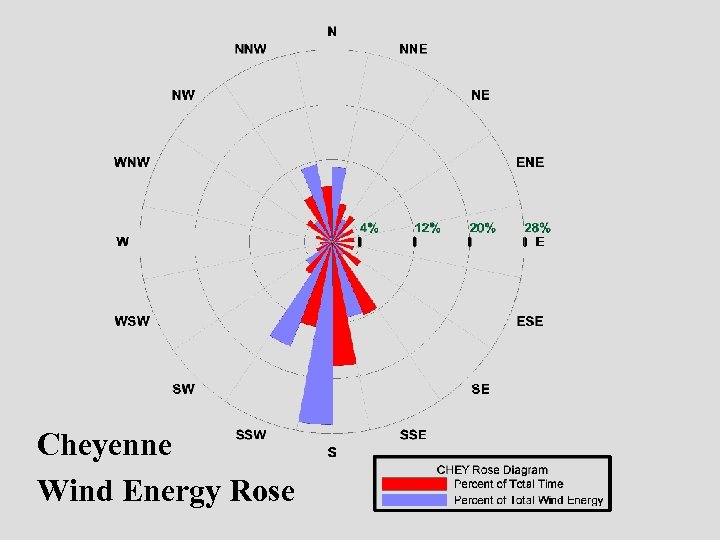 Cheyenne Wind Energy Rose
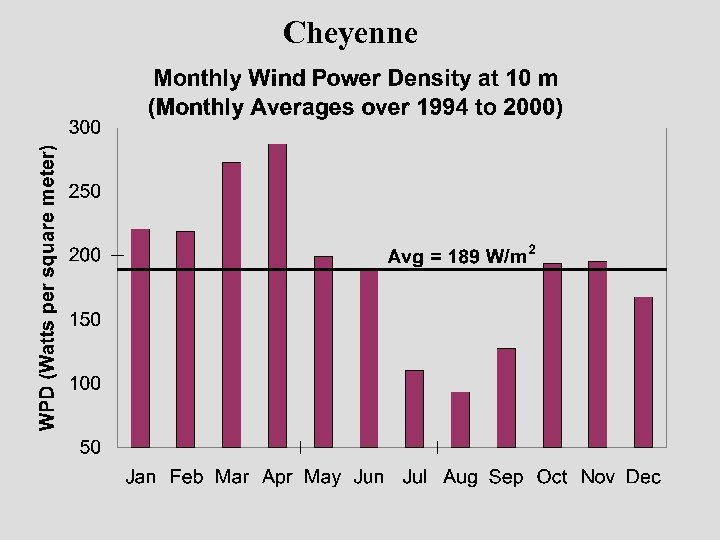 Cheyenne
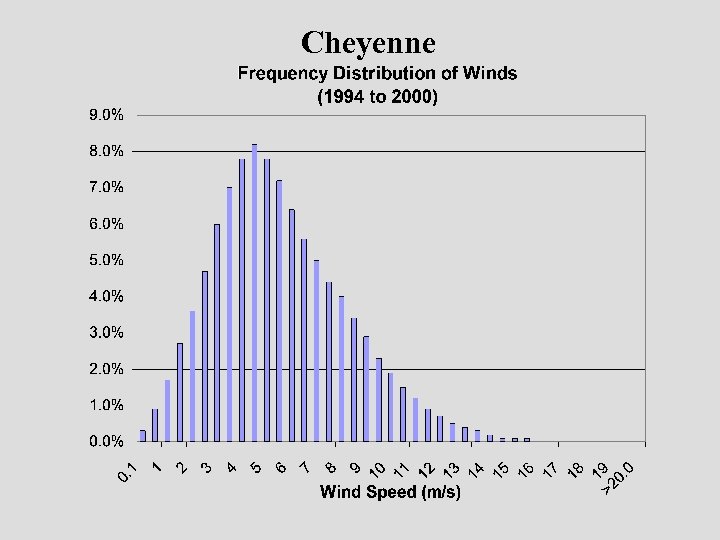 Cheyenne
 For information on OWPI: • Oklahoma Wind Power Initiative • www. seic. okstate. edu/owpai • Contact Tim Hughes: thughes@ou. edu For information on OREC: • Oklahoma Renewable Energy Council • www. seic. okstate. edu/OREC