


 Скачать презентацию OHIO STATE Freshman Engineering Conference Helping New Faculty
98ae5cd8f9c0339cf9bc23ddbf04cb72.ppt
- Количество слайдов: 42
 OHIO STATE Freshman Engineering Conference Helping New Faculty Succeed and Using Course Revision for Faculty Development Bruce Litchfield University of Illinois April 20, 2001
 Conclusions: The Illinois program has … • progressed from a course about teaching to a HR-style program • benefited students and faculty • earned broad support • been personally rewarding
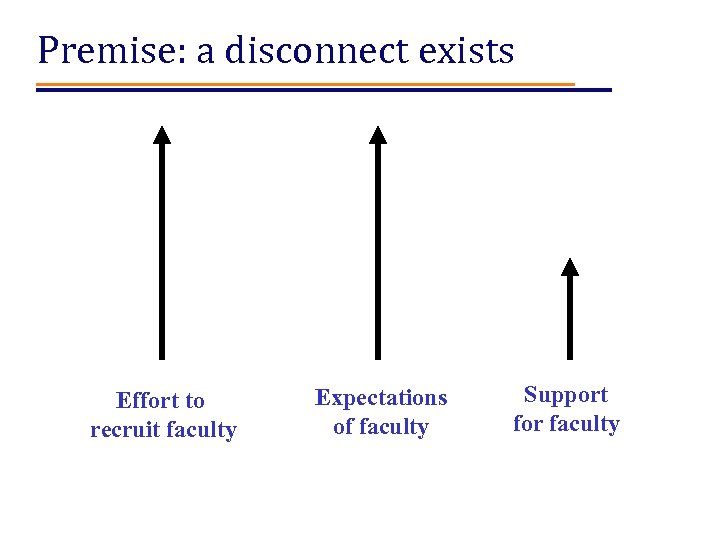 Premise: a disconnect exists Effort to recruit faculty Expectations of faculty Support for faculty
 Proposed plan for the next 30 minutes … • A brief description of new faculty development, especially at Illinois • A dialog about “senior” faculty development: Q: What can we do for senior faculty? • Q & A (throughout)
 The “Teaching College” Our primary goal is to help new faculty members succeed and excel in all aspects of their careers, including executing efficient and effective instruction
 Characteristics of the Best New Faculty? Q: What characteristics distinguish those new faculty who excel? write/pair/share, 4 -5 minutes
 Some Research: Common Characteristics of New Faculty (Boice) • equated good teaching with good content (cake demonstration) • practiced defensive teaching (to avoid student complaints), primarily concerned that students would complain about content errors • received student evaluations that fell below their expectations, and blamed results on external factors (invalid rating systems, poor students, unfavorable class times and sizes)
 Common Characteristics, con’t. , 2 of 3 • were slow to reach high levels of comfort, efficiency, and student acceptance • did not seek help • experienced a sense of loneliness and lack of collegial acceptance; had difficulty establishing productive contacts with supportive colleagues
 Common Characteristics, con’t. , 3 of 3 • had time management as a central problem – admitted to being over prepared (more material than could be covered) – rushed to complete many classroom tasks, often at the expense of student participation – spent ~30 hours/week on class preparation – spent far less time on scholarly writing (proposals and papers) than needed for P&T
 “Quick Starters” Those new faculty (~5 -10%) who during their first 2 -3 years … • wrote enough proposals and papers for strong progress toward P&T • scored in top quartile of peer and student ratings of teaching • scored in top quartile of self ratings of their enjoyment and comfort levels as teachers How did they do it?
 Unlike the majority of new faculty, quick starters • reduced time spent preparing courses (after the first semester, averaged 1 -1. 5 hours of preparation per hour of class time) • spent more time on scholarly and grant writing (3 hours or more per week) • integrated their research into their undergraduate classes
 Quick starters, con’t. , 2 of 3 • discussed teaching with their colleagues • sought support from mentors and faculty development programs, averaging 4 hours per week on discussions of research and teaching • were satisfied with supportiveness and competence of both their colleagues and their students
 Quick starters, con’t. , 3 of 3 • lectured at a relaxed pace • encouraged student participation Summary: Quick starters were effective, efficient, and satisfied.
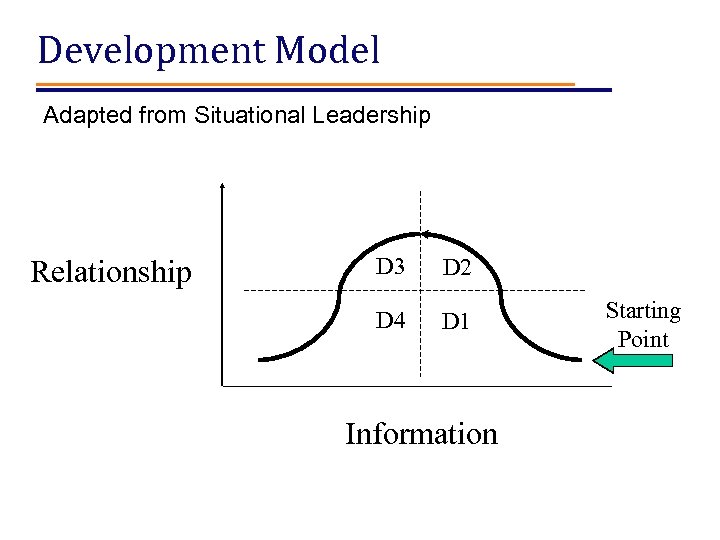 Development Model Adapted from Situational Leadership Relationship D 3 D 2 D 4 D 1 Information Starting Point
 Instructional Goals • Manage all aspects of an academic career. • Become a reflective and thoughtful instructor. • Plan, implement, and manage effective, research-based instruction. • Design evaluations of learning and instruction.
 TC/FAST Start Activities • Group activities – Stage 1: Workshop (5 days) – Stage 2: Consultations (syllabi, lesson plans, research proposals, mission statements and development plans, etc) – Stage 3: monthly seminars » Class project: teaching seminar » Excellent teacher visits (as group and individual) • Personal development projects • Mentoring and being mentored • Paired observer assessments with videotaping total ~ 60 -70 hours
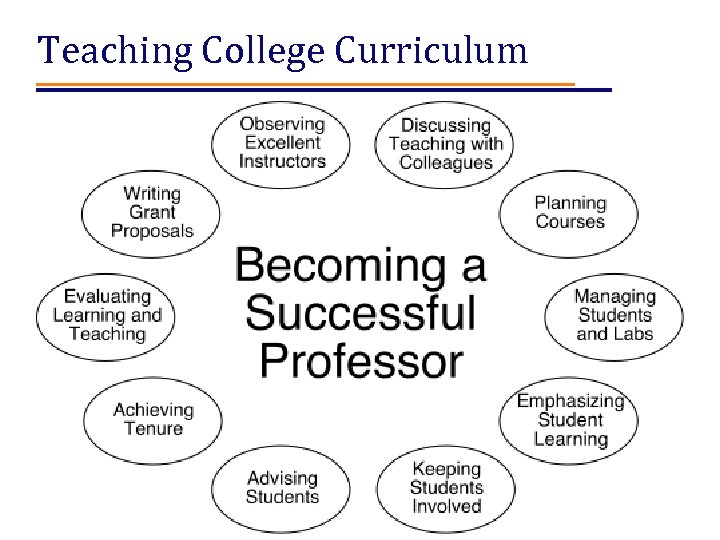 Teaching College Curriculum
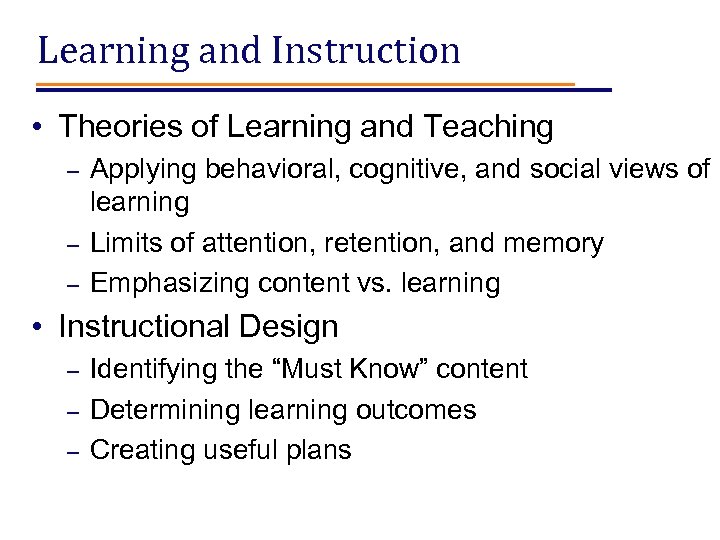 Learning and Instruction • Theories of Learning and Teaching – – – Applying behavioral, cognitive, and social views of learning Limits of attention, retention, and memory Emphasizing content vs. learning • Instructional Design – – – Identifying the “Must Know” content Determining learning outcomes Creating useful plans
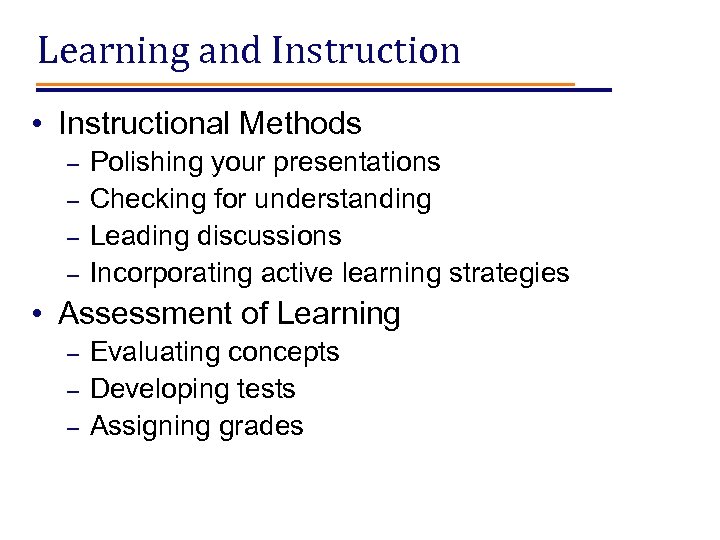 Learning and Instruction • Instructional Methods – – Polishing your presentations Checking for understanding Leading discussions Incorporating active learning strategies • Assessment of Learning – – – Evaluating concepts Developing tests Assigning grades
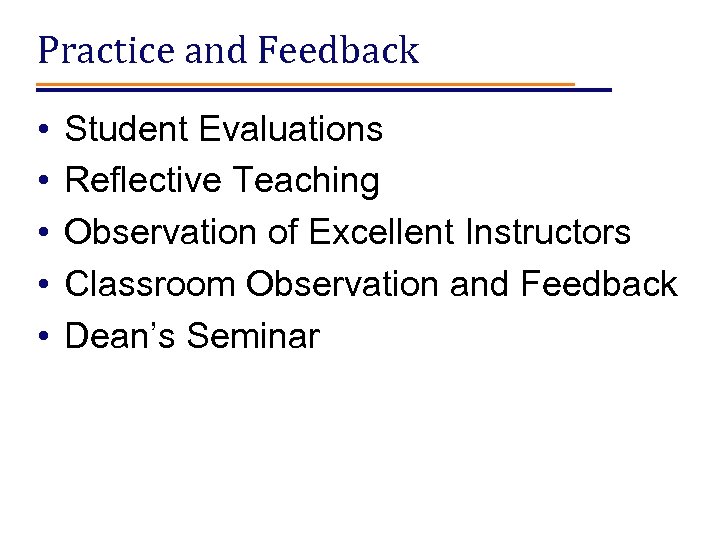 Practice and Feedback • • • Student Evaluations Reflective Teaching Observation of Excellent Instructors Classroom Observation and Feedback Dean’s Seminar
 Elements of Reflective Teaching 1 • Simultaneous sessions demonstrate alternative approaches • Experiential learning is in a safe environment • Feedback is immediate • Videotaping is done for later review • Reflection is cultivated Cruickshank, D. R. , et al. (1981). Reflective teaching. Bloomington, Indiana: Phi Delta Kappa. (From OSU!) 1
 Elements of Observations • Observers and participants are trained • Engineering and Education specialists observe • Videotaping is encouraged • Follow-up is included • Confidentiality is ensured • Collegial tone is present: assidere
 Become a Successful Professor • • • Achieving Tenure Developing Professional Networks Grant Writing Mentoring Students Managing Students and Labs Creating Personal Mission Statements and Development Plans (PDP’s)
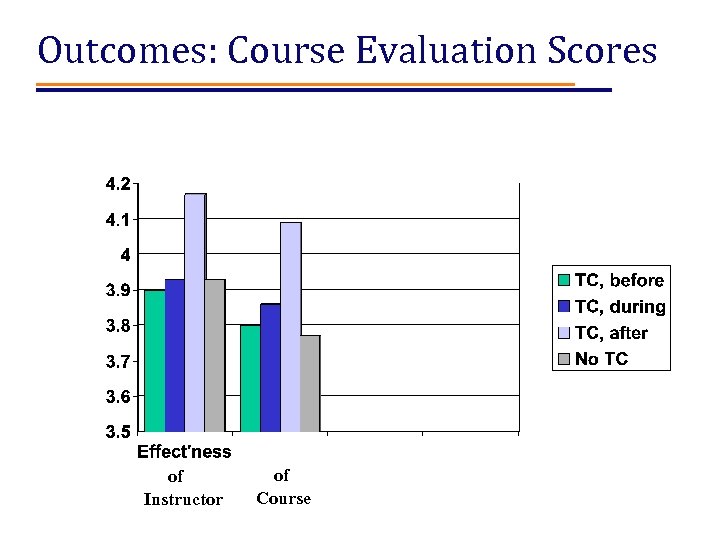 Outcomes: Course Evaluation Scores of Instructor of Course
 Quotes from TC “graduates” “It makes me much more efficient in preparing lectures. My preparation time was reduced from 12 -15 hours/lecture to 4 -5 hours/lecture with better feedback from students. ”
 Quotes, con’t. “It gave me tools and confidence to take charge of my curriculum and my class. It inspired me to get off the ‘content treadmill’ and to enjoy teaching and effectively educating others in my field. ”
 Quotes, con’t. “The opportunity to participate in an atmosphere where issues related to teaching could be discussed with others who have similar doubts, fears, and successes was very beneficial. ”
 Quotes, con’t. “I am more relaxed. ” “I feel more comfortable in the classroom. ” “My undergraduate advising has improved. ”
 Conclusions: Teaching College has … • progressed from a course about teaching to an individualized, HR-style development program • been beneficial to students and faculty • earned support from individuals, corporate sponsors, provost’s office, and the college • been personally rewarding to organize and coordinate
 Teaching Academies at Illinois • 1994 – Engineering • 1996 – ACES Teaching College • 1996 – Provost’s Office: Campus Teaching Advancement Board • 1999 – LAS Teaching Academy • 2000 – CBA, Education/Social Work, Vet Med
 Teaching Academies at Illinois The college-based teaching academies at Illinois include some or all of the following: • Workshops, seminars • Community: support, camaraderie, mentoring • Classroom observations There also differences.
 Program Support: What has helped us 1. 2. 3. 4. 5. 6. 7. A dedicated team of implementers Dean and Associate Dean(s) Department Heads General Electric Fund Campus/Provost’s teaching program College of Education Office of Instructional Resources
 Keys to Your Success Q: What do you see as the keys to a successful faculty development program at your campus?
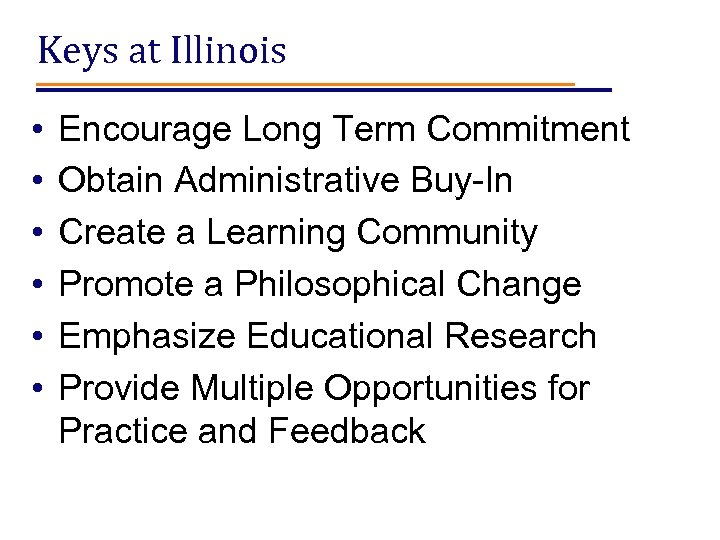 Keys at Illinois • • • Encourage Long Term Commitment Obtain Administrative Buy-In Create a Learning Community Promote a Philosophical Change Emphasize Educational Research Provide Multiple Opportunities for Practice and Feedback
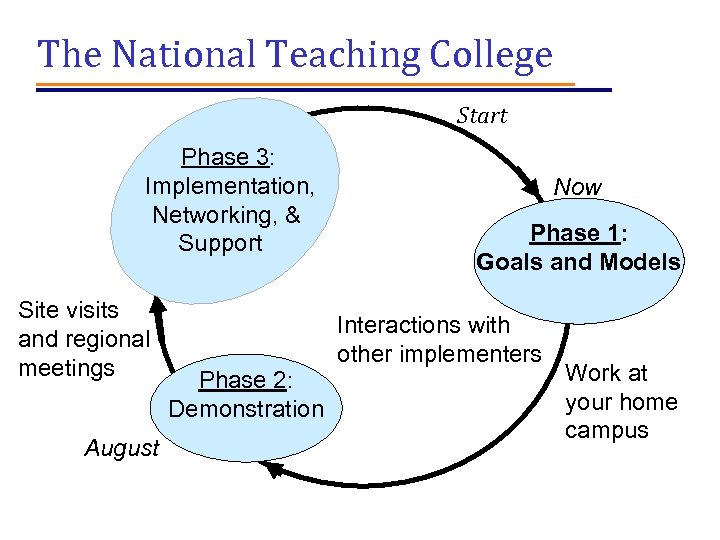 The National Teaching College Start Phase 3: Implementation, Networking, & Support Site visits and regional meetings August Phase 2: Demonstration Now Phase 1: Goals and Models Interactions with other implementers Work at your home campus
 Item #2: How to reach “older” faculty? Q: What is our goal? A? : To help ineffective instructors become effective. • What have you tried (or know about) that worked? • What other ideas do you have?
 ARC – Architecture for Change • Select large, interdisciplinary courses • Spend 1+ semester observing/learning – – – Student surveys and focus groups Classroom observations Course material reviews • Work with teams of disciplinary experts, education experts, change agents – – – Learn about pedagogy Observe courses that work Experiment with different approaches
 History of Teaching College • Deans’ Seminars for Teaching Improvement • Dean’s retreat (‘ 94) – – – experienced Ed Psych grad course at Purdue identified need for new faculty at Illinois developed “Teaching College” with faculty team
 TC History, con’t 2 of 3 • TC enhanced by grant from GE (‘ 96) shifted to HR-style development model – added collaboration with HR Education – • AE 3 created with expanded mission (‘ 97)
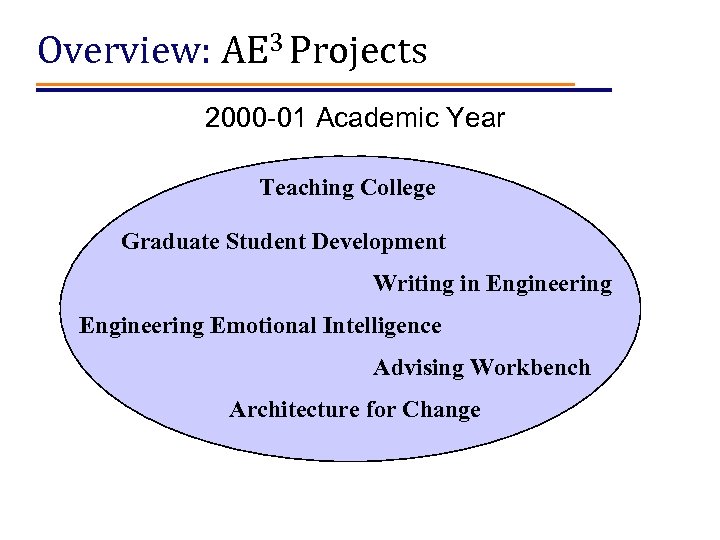 Overview: AE 3 Projects 2000 -01 Academic Year Teaching College Graduate Student Development Writing in Engineering Emotional Intelligence Advising Workbench Architecture for Change
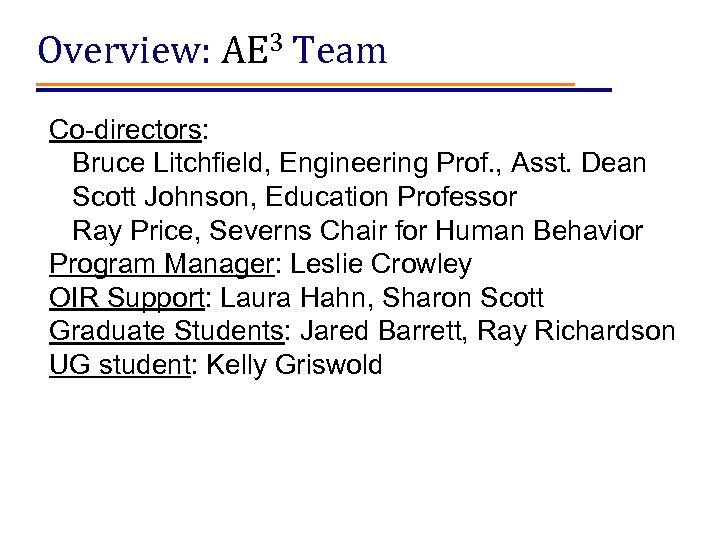 Overview: AE 3 Team Co-directors: Bruce Litchfield, Engineering Prof. , Asst. Dean Scott Johnson, Education Professor Ray Price, Severns Chair for Human Behavior Program Manager: Leslie Crowley OIR Support: Laura Hahn, Sharon Scott Graduate Students: Jared Barrett, Ray Richardson UG student: Kelly Griswold
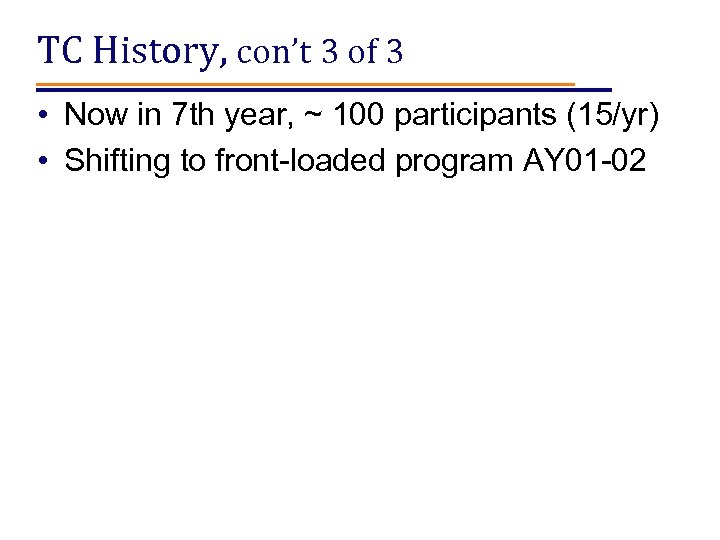 TC History, con’t 3 of 3 • Now in 7 th year, ~ 100 participants (15/yr) • Shifting to front-loaded program AY 01 -02