


 Скачать презентацию Officers meeting Tuesday 16 — 12 — 2008
736deadd109a41418ce06c6e4761ac53.ppt
- Количество слайдов: 45
 Officers meeting Tuesday 16 - 12 - 2008 Environment & Energy At Warwick University The Estates Office
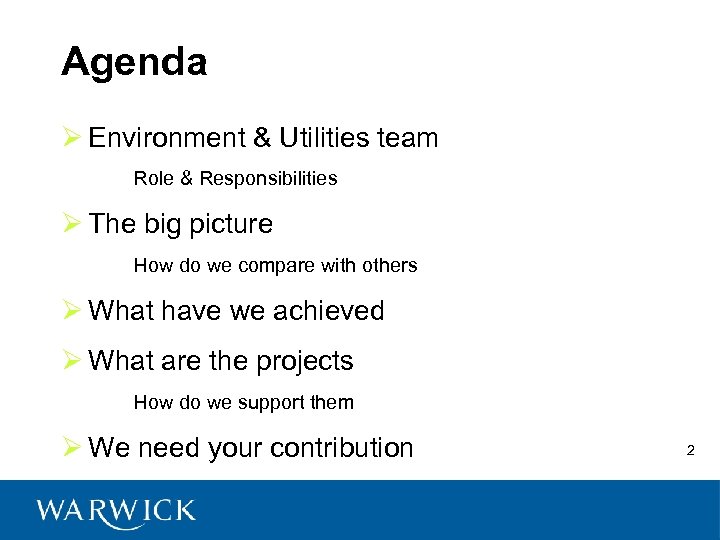 Agenda Ø Environment & Utilities team Role & Responsibilities Ø The big picture How do we compare with others Ø What have we achieved Ø What are the projects How do we support them Ø We need your contribution 2
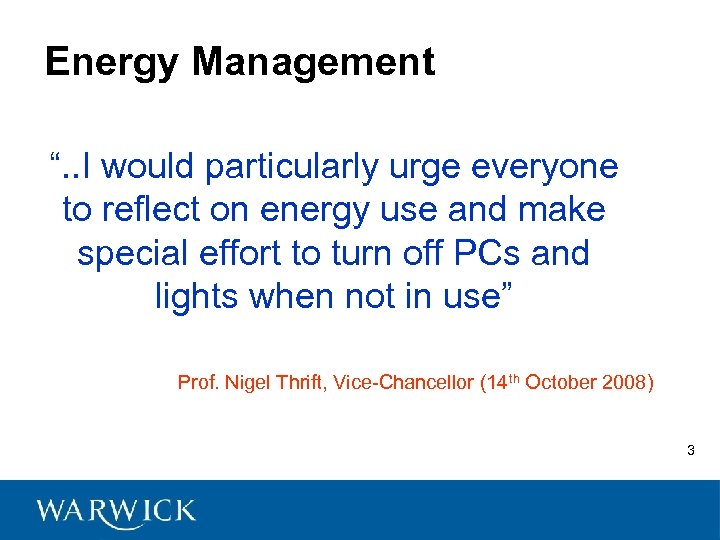 Energy Management “. . I would particularly urge everyone to reflect on energy use and make special effort to turn off PCs and lights when not in use” Prof. Nigel Thrift, Vice-Chancellor (14 th October 2008) 3
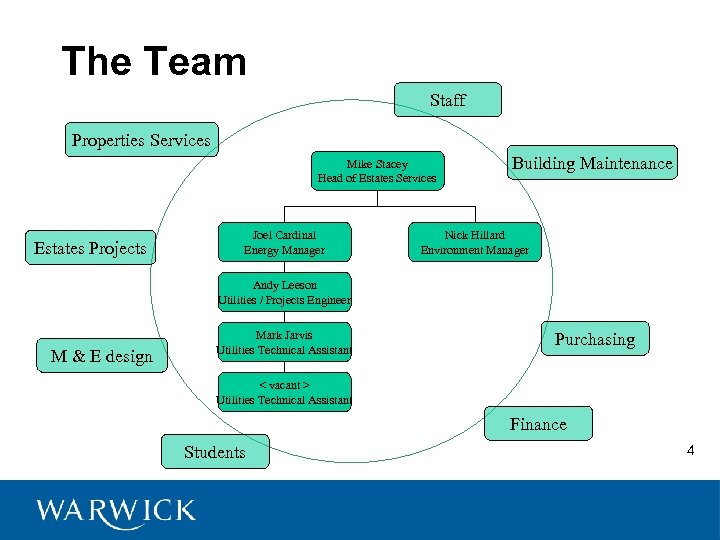 The Team Staff Properties Services Mike Stacey Head of Estates Services Estates Projects Joel Cardinal Energy Manager Building Maintenance Nick Hillard Environment Manager Andy Leeson Utilities / Projects Engineer M & E design Mark Jarvis Utilities Technical Assistant Purchasing < vacant > Utilities Technical Assistant Finance Students 4
 The aim § Environment & Energy are working toward same goal § Optimise use of resources § In today’s economy resources are scarce and expensive. § food & drink, supplies and packaging § Energy Gas, Electricity § Water § The aim is to control costs implications § Cost of waste § Cost of Energy procurement § Raise awareness to students and staff 5
 Area of collaboration Environment § Waste policy § Waste control § Environment communication § Carbon Footprint § Support national CO 2 target Utilities § Procurement § Consumption monitoring § Invoices - recharges § Legal reporting (EUETS, CRC, CHPQA, CCL) § Energy & CO² saving projects Raise awareness Together Change mentalities Gain commitment 6
 Utilities team Role & Responsibilities § Gather utility market information § Purchasing recommendation § Monitoring & Targeting § Design & maintain automatic metering § Report utility consumption across site § Set Targeting 7
 Utilities team Role & Responsibilities § Advise on Energy and CO 2 reduction § Conduct buildings energy audit § Manage projects § Report carbon emissions (EUETS, CRC) § Energy advice on buildings § Promote Energy Awareness University 8
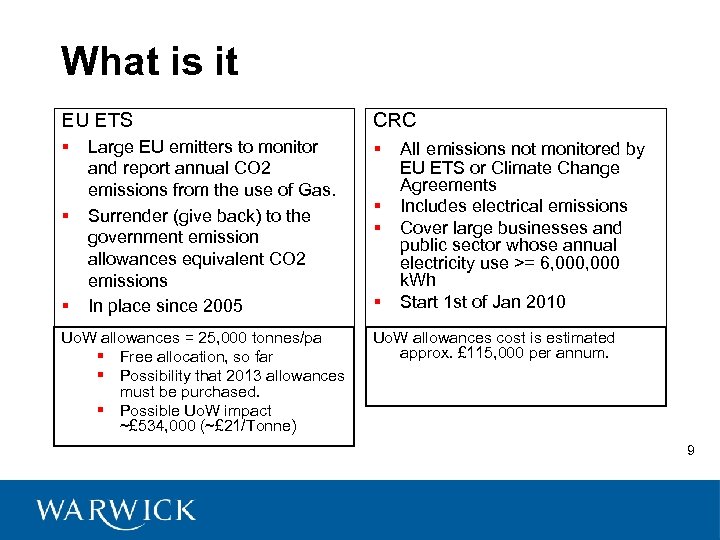 What is it EU ETS CRC § § Large EU emitters to monitor and report annual CO 2 emissions from the use of Gas. Surrender (give back) to the government emission allowances equivalent CO 2 emissions In place since 2005 Uo. W allowances = 25, 000 tonnes/pa § Free allocation, so far § Possibility that 2013 allowances must be purchased. § Possible Uo. W impact ~£ 534, 000 (~£ 21/Tonne) § § § All emissions not monitored by EU ETS or Climate Change Agreements Includes electrical emissions Cover large businesses and public sector whose annual electricity use >= 6, 000 k. Wh Start 1 st of Jan 2010 Uo. W allowances cost is estimated approx. £ 115, 000 per annum. 9
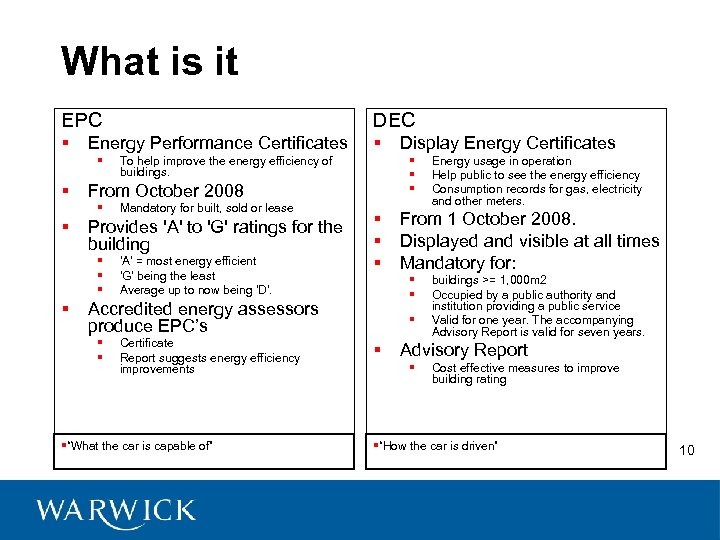 What is it EPC DEC § § Energy Performance Certificates § § § Mandatory for built, sold or lease Provides 'A' to 'G' ratings for the building § § § § To help improve the energy efficiency of buildings. From October 2008 § 'A' = most energy efficient 'G' being the least Average up to now being 'D'. § § § Certificate Report suggests energy efficiency improvements §“What the car is capable of” § § Energy usage in operation Help public to see the energy efficiency Consumption records for gas, electricity and other meters. From 1 October 2008. Displayed and visible at all times Mandatory for: § § Accredited energy assessors produce EPC’s § § Display Energy Certificates buildings >= 1, 000 m 2 Occupied by a public authority and institution providing a public service Valid for one year. The accompanying Advisory Report is valid for seven years. Advisory Report § Cost effective measures to improve building rating §“How the car is driven” 10
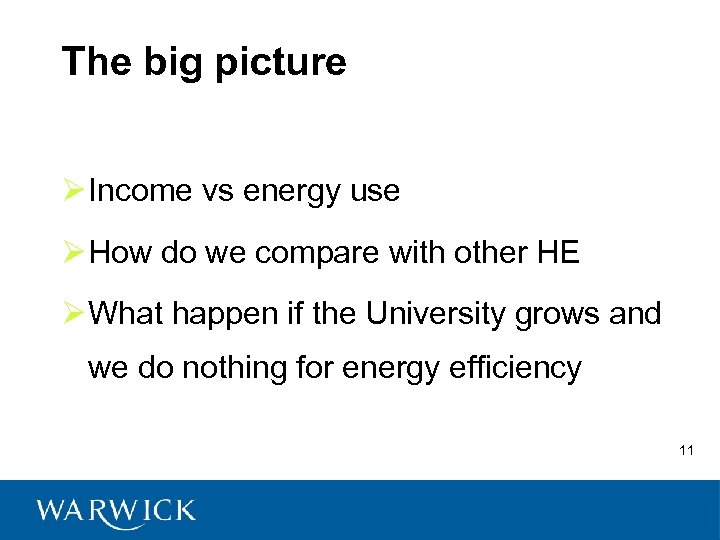 The big picture Ø Income vs energy use Ø How do we compare with other HE Ø What happen if the University grows and we do nothing for energy efficiency 11
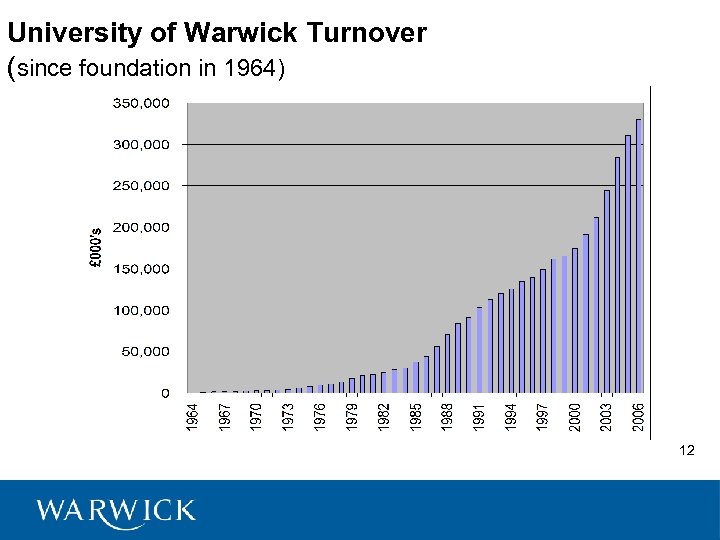 University of Warwick Turnover (since foundation in 1964) 12
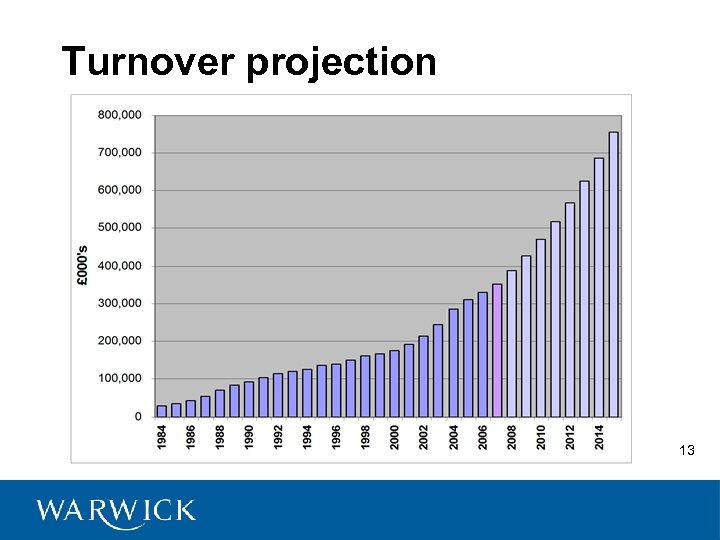 Turnover projection 13
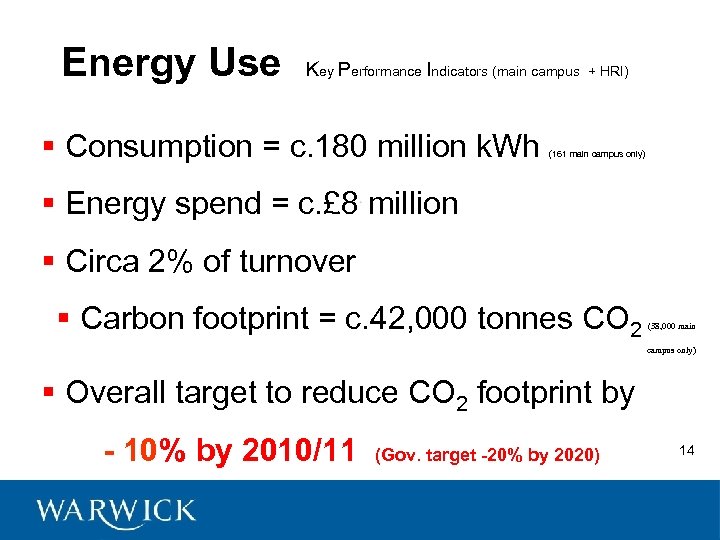 Energy Use K ey Performance Indicators (main campus + HRI) § Consumption = c. 180 million k. Wh (161 main campus only) § Energy spend = c. £ 8 million § Circa 2% of turnover § Carbon footprint = c. 42, 000 tonnes CO 2 (38, 000 main campus only) § Overall target to reduce CO 2 footprint by - 10% by 2010/11 (Gov. target -20% by 2020) 14
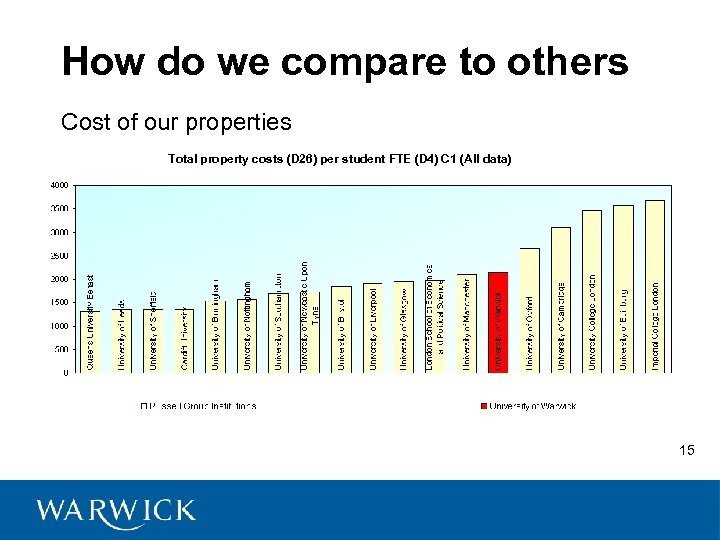 How do we compare to others Cost of our properties Total property costs (D 26) per student FTE (D 4) C 1 (All data) 15
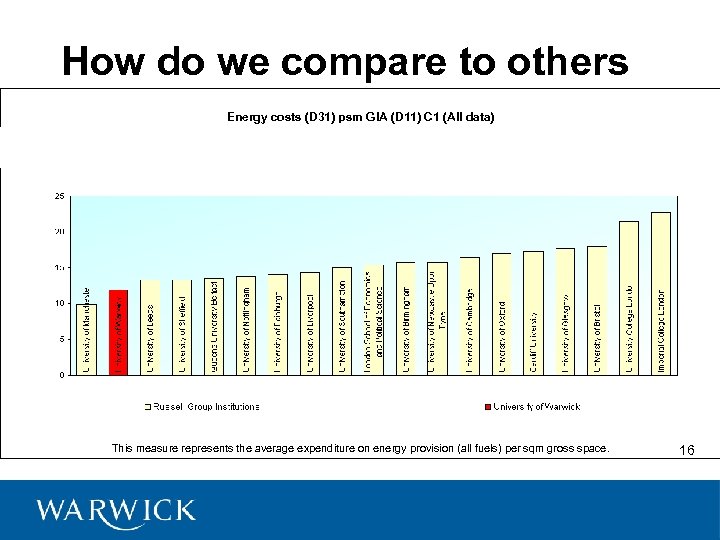 How do we compare to others Energy costs (D 31) psm GIA (D 11) C 1 (All data) This measure represents the average expenditure on energy provision (all fuels) per sqm gross space. 16
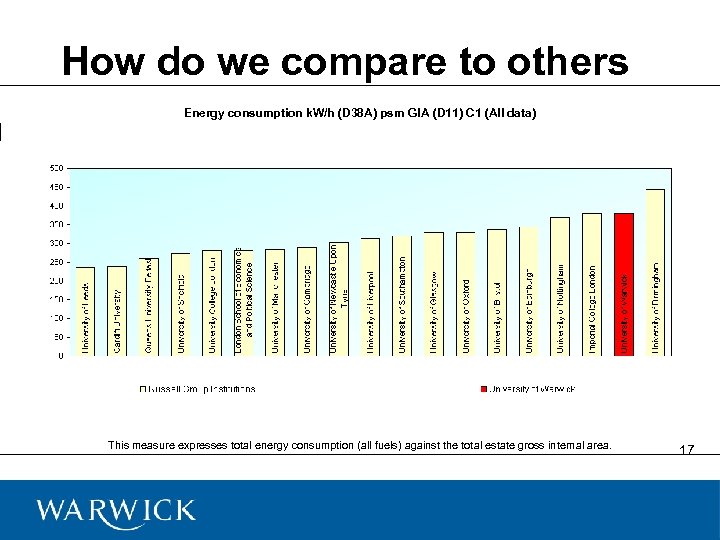 How do we compare to others Energy consumption k. W/h (D 38 A) psm GIA (D 11) C 1 (All data) This measure expresses total energy consumption (all fuels) against the total estate gross internal area. 17
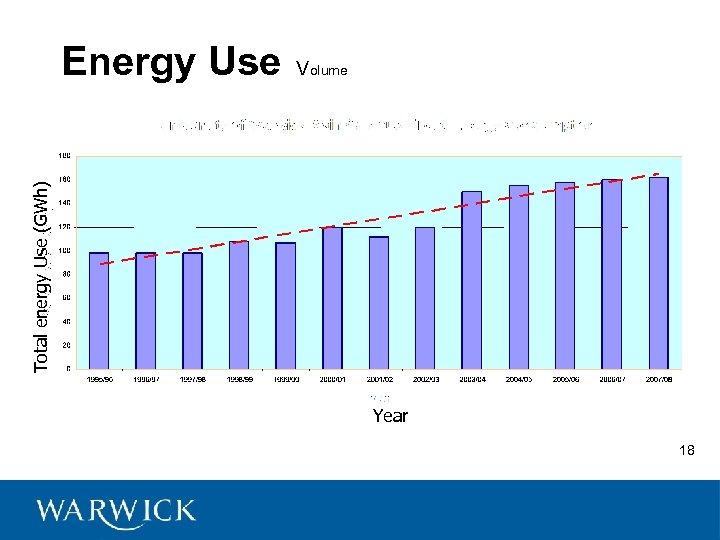 Energy Use V Total energy Use (GWh) olume Year 18
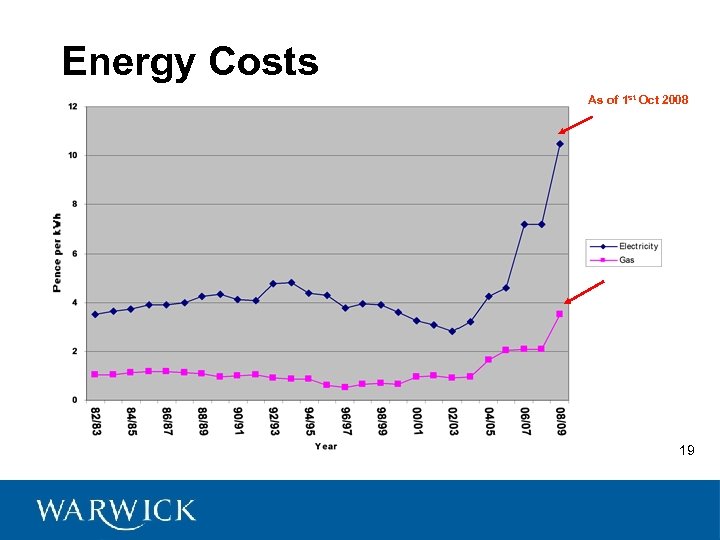 Energy Costs As of 1 st Oct 2008 19
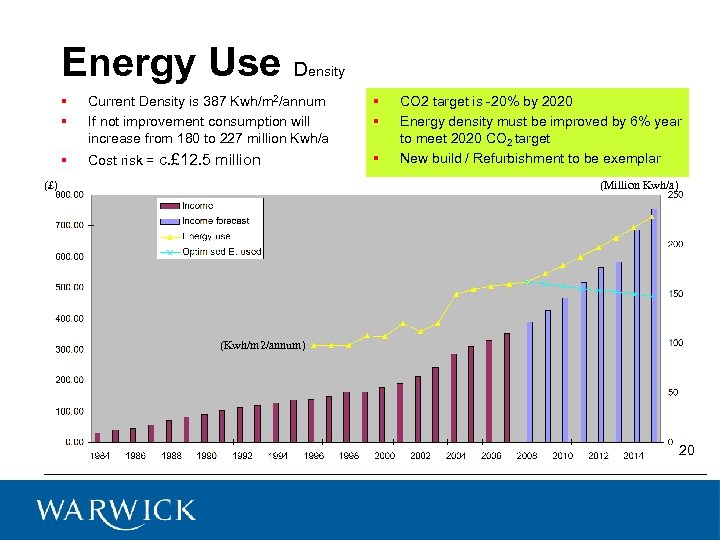 Energy Use Density § § Current Density is 387 Kwh/m 2/annum If not improvement consumption will increase from 180 to 227 million Kwh/a § § § Cost risk = c. £ 12. 5 million § (£) CO 2 target is -20% by 2020 Energy density must be improved by 6% year to meet 2020 CO 2 target New build / Refurbishment to be exemplar (Million Kwh/a) (Kwh/m 2/annum) 20
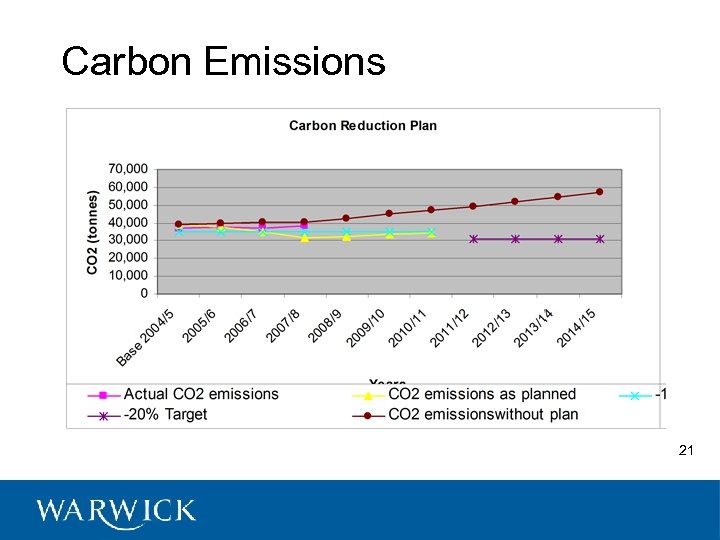 Carbon Emissions 21
 What have we achieved Energy Management § Energy audits since the 1980’s § Collaborative work between academia and University administration § HE Carbon Management Programme § Save 10% of our carbon footprint § BREEAM Excellent Target on new builds § Strengthening of energy team 22
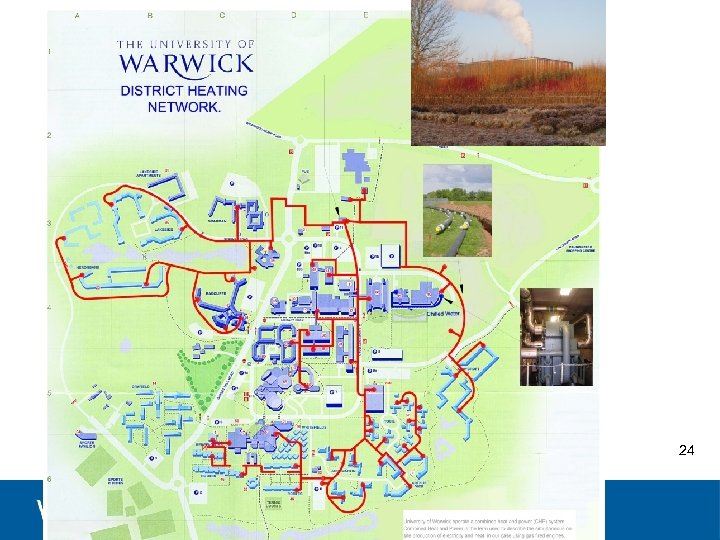
 What have we achieved Energy Management CHP and District Heating § Electricity generation (4. 7 MWe) § Heating, hot water and chilled water (14. 1 MWth) § Capital costs of circa £ 5 M § Annual savings in the region of £ 1 M pa. § >16 km u/g pipe work covering c. 60% § Maintenance costs less cf. stand alone plant § Optimisation of system includes thermal storage, increasing of summer heat load and ongoing system balancing. 23
 24
24
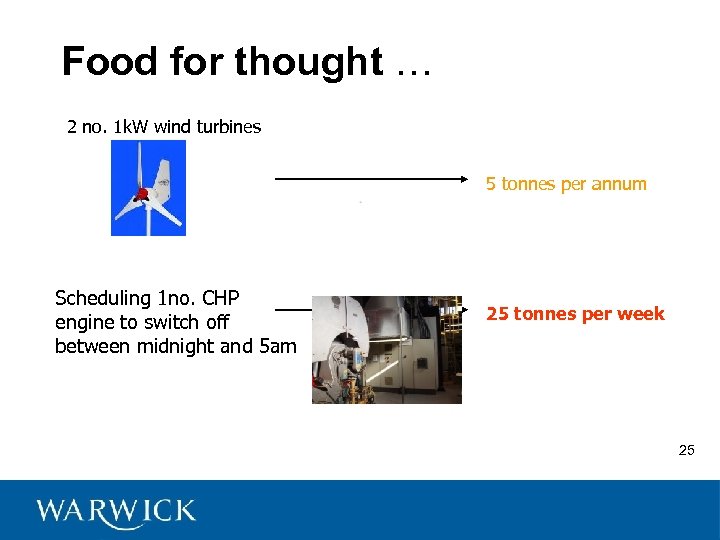 Food for thought … 2 no. 1 k. W wind turbines 5 tonnes per annum Scheduling 1 no. CHP engine to switch off between midnight and 5 am 25 tonnes per week 25
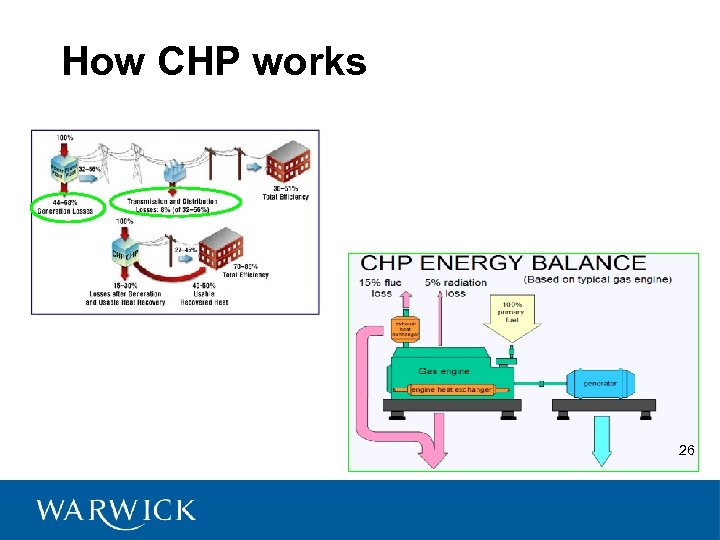 How CHP works 26
 What has been achieved Energy Management § Because CHP are more efficient they attract tax benefits § CCL: Carbon Charge Levy (reduce the costs of the Gas we buy) § CHPQA: Quality assurance for CHP (enhanced capital allowance – for private businesses) 27
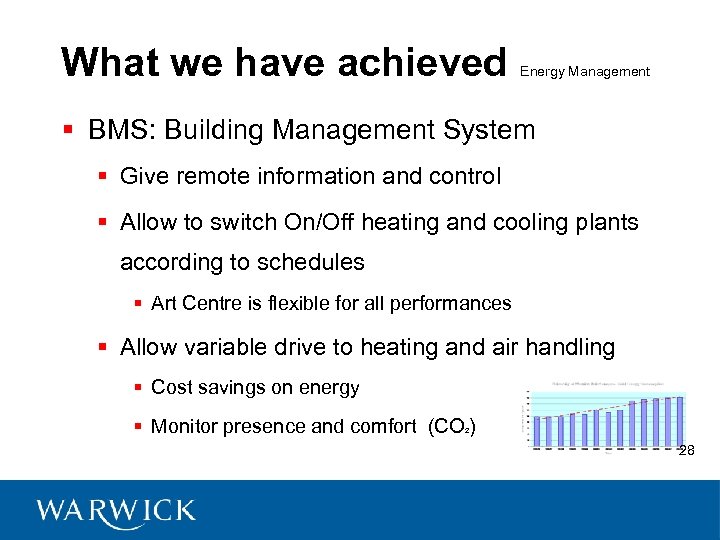 What we have achieved Energy Management § BMS: Building Management System § Give remote information and control § Allow to switch On/Off heating and cooling plants according to schedules § Art Centre is flexible for all performances § Allow variable drive to heating and air handling § Cost savings on energy § Monitor presence and comfort (CO²) 28
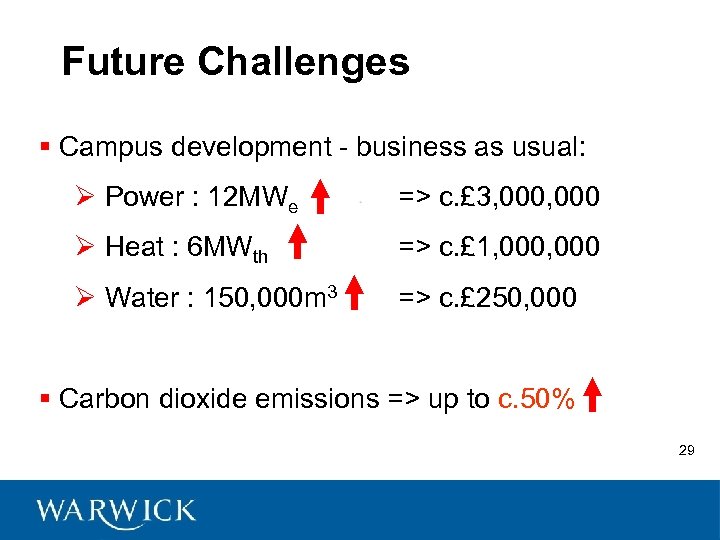 Future Challenges § Campus development - business as usual: Ø Power : 12 MWe => c. £ 3, 000 Ø Heat : 6 MWth => c. £ 1, 000 Ø Water : 150, 000 m 3 => c. £ 250, 000 § Carbon dioxide emissions => up to c. 50% 29
 The Future § Given the projected campus growth and intensification of the research aspects of the University’s operation – it is unlikely that overall energy consumption will fall. § It will however be necessary for the carbon intensity of the University’s energy procurement to fall (partially through mandate). § Local ownership, empowerment and ideas generation will be essential to the reduction of energy consumption per square unit. 30
 What is the strategy § Energy providers § requested for extra capacity § CHP + District Heating extension § Biomass CHP to save 3, 500 t CO² § Design Energy lean buildings § Reduce energy use / m 2 for whole life § Passivhaus benchmark ~ 100 vs 387 kwh/m 2/a today § Involve staff and students to gain buy-in and accountability 31
 What are the projects § Planned additions to the network § Complete “ring” via Warwickshire land § New energy centre on Warwickshire land (biomass fuelled) § More absorption cooling for summer § Replacement of stand-alone boilers 32
 What are the projects § Improve synergies § Utilities part of design team from project kick off § Activate the Energy Champions network § Share best practices and opportunities. § Obtain students and staff buy-in § Reinforce energy audits § Analysis of metering data § Utilities experience and staff feedback § Use of EPC / DEC advisory reports 33
 What are the projects § Continue to focus on energy and CO² conservation § Some buildings are heated 24/7 § Some areas do not have thermostatic control § Improve lighting with more efficient fittings § Loft and wall insulation § Install Variable speed drive & Install voltage control 34
 What are the projects § Continue to focus on energy and CO² conservation § Adjust lighting control in public areas (Within safety limits) § Install double glazing § Stand by and switch off of PC’s (feasibility pending) § Solar panels applications (thermal and Photovoltaic) § Laundry, HRI glasshouses…. § Natural / reduced air conditioning in IT server rooms 35
 How to support the projects? § SALIX revolving green fund § Awaiting final decision after compliance audit § Dedicated to Energy & CO² savings § Combine payback and CO² savings § 5 - 7. 5 years payback and max capital cost £ 50 - 100/t. CO² / LT life § SALIX Transformational fund § Project = Biomass CHP project funding § Extend District heating in south of campus § Increase electricity production by 30%; increase self sufficiency § Save 3, 500 tons CO² additional per year § Increase resources § +2 on Utilities team 36
 What can you do? Ø Food for thought Ø What people say Ø Your personal contribution 37
 Food for thought … § 2 k. W fan heater is equivalent to running more than 100 compact fluorescent lights § The standby cost of a vending machine can be £ 255 pa (cf. an overall energy cost of £ 268) § 500 W halogen flood lights can be replaced by 60 W low energy alternatives § A computer left on standby vs switched off costs up to £ 10 pa. 38
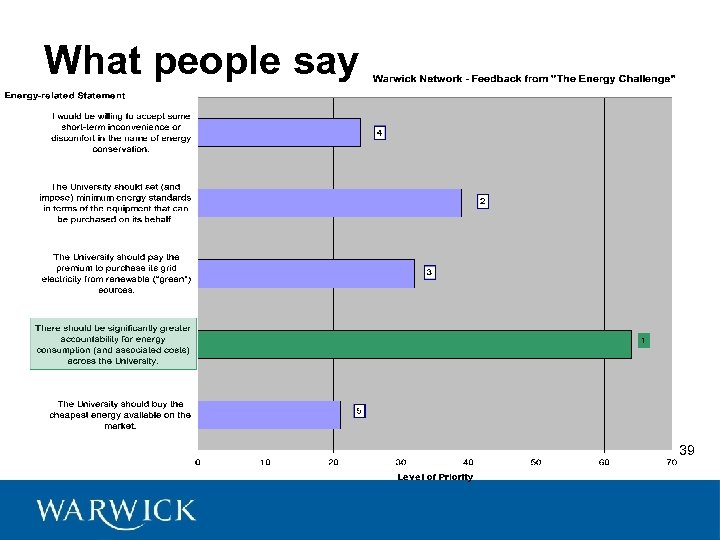 What people say 39
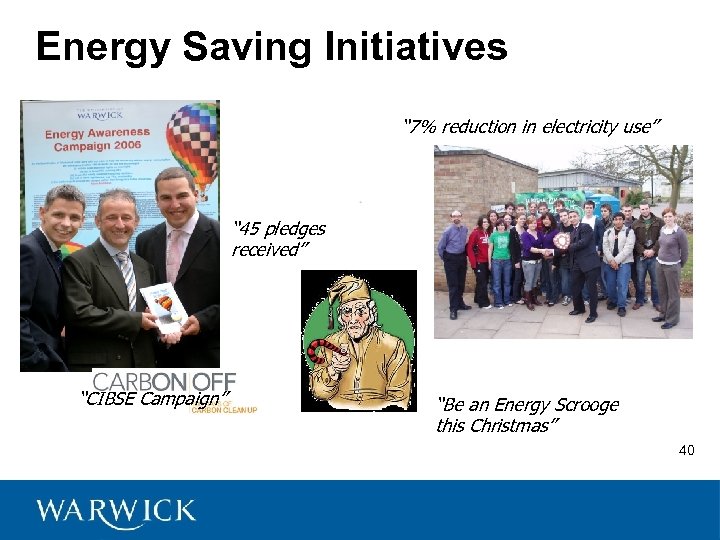 Energy Saving Initiatives “ 7% reduction in electricity use” “ 45 pledges received” “CIBSE Campaign” “Be an Energy Scrooge this Christmas” 40
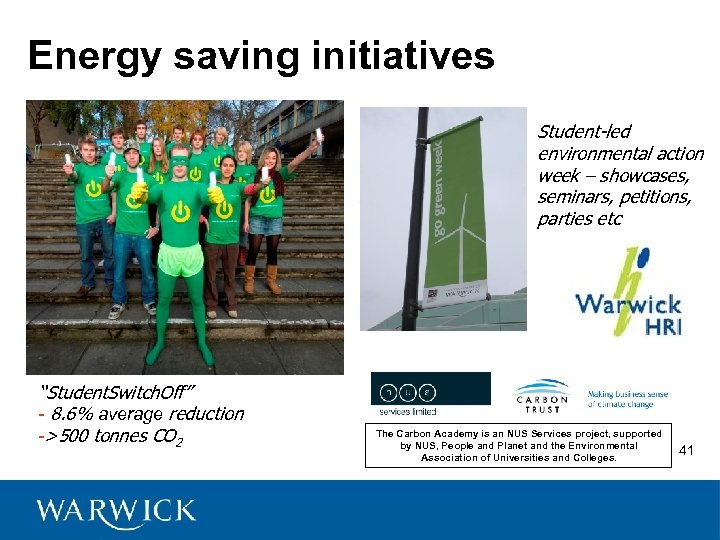 Energy saving initiatives Student-led environmental action week – showcases, seminars, petitions, parties etc “Student. Switch. Off” - 8. 6% average reduction ->500 tonnes CO 2 The Carbon Academy is an NUS Services project, supported by NUS, People and Planet and the Environmental Association of Universities and Colleges. 41
 What can you do? § “Free” actions at minimal constraints can save £ 000’s /annum § Vending machines § 100+ machines to be switched off at night and week end § Can save £ 6, 000 per year § Water dispensers § Can save £ 6000 Stop chilled water dispensers § 350 on site @ 1 Kwh / 24 h each § Can save £ 14, 000 per year § Computers § 7, 000 computers. Assume 10% remain on at night and week end § Can save £ 65, 000 per year § This money could be invested in larger Energy & CO² savings projects 42
 What can you do? § Working in pairs/threes § Consider your own work area / general university operation § Identify potential projects in the following areas: Ø One quick-win electricity saving projects Ø A high profile renewable energy “showpiece” Ø One “Off the wall” initiative 43
 Energy Champions Network § Energy consumption is a daily battle § As senior officers you are key enablers § What can you act on from tomorrow in your area § Estates will facilitate the Energy Champions Network § Estates will act on all projects to improve energy and CO 2 performance 44
 Thank You • Any comments / suggestions – – Joel Cardinal: ext. 50973 Andy Leeson: ext. 72612 Mark Jarvis: ext. 74209 Nick Hillard: ext. 23404 Switch OFF before you leave for holidays 45