 Скачать презентацию Of Capping Lids Drylines and Alberta Thunderstorms
1a1f123927ebddf54468ddd62a329bfe.ppt
- Количество слайдов: 19



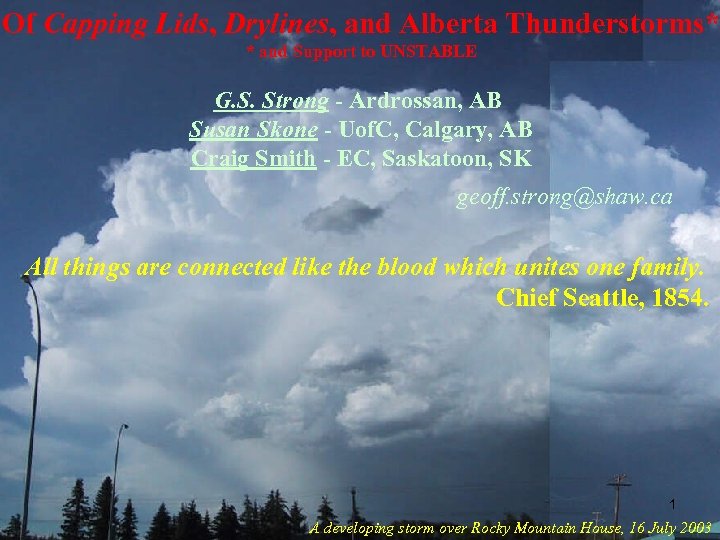
Of Capping Lids, Drylines, and Alberta Thunderstorms* * and Support to UNSTABLE G. S. Strong - Ardrossan, AB Susan Skone - Uof. C, Calgary, AB Craig Smith - EC, Saskatoon, SK geoff. strong@shaw. ca All things are connected like the blood which unites one family. Chief Seattle, 1854. 1 A developing storm over Rocky Mountain House, 16 July 2003
To acknowledge all(? ) our Sponsors & Contributors. . 2
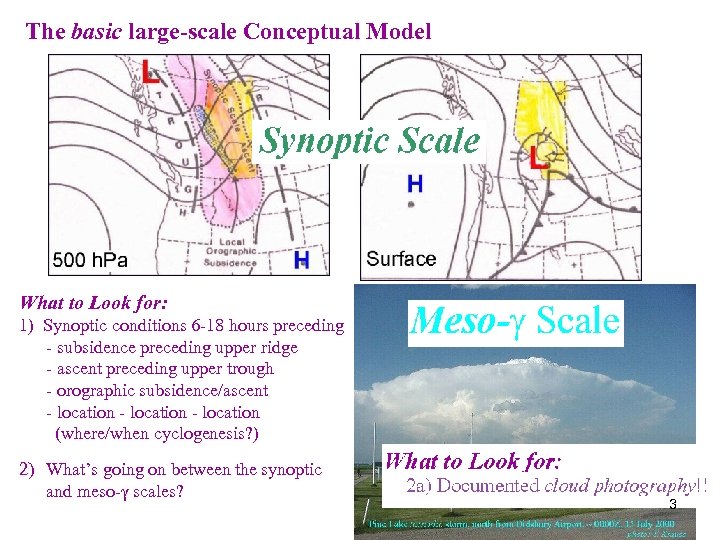
The basic large-scale Conceptual Model What to Look for: 1) Synoptic conditions 6 -18 hours preceding - subsidence preceding upper ridge - ascent preceding upper trough - orographic subsidence/ascent - location (where/when cyclogenesis? ) 2) What’s going on between the synoptic and meso-γ scales? 3
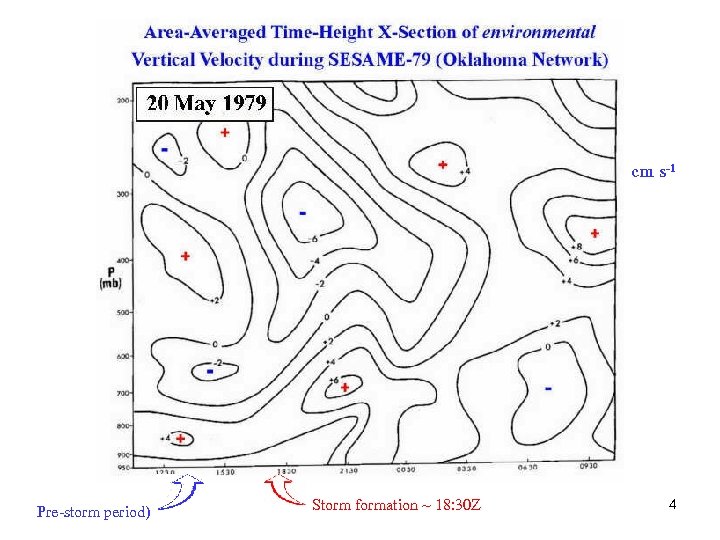
cm s-1 Pre-storm period) Storm formation ~ 18: 30 Z 4
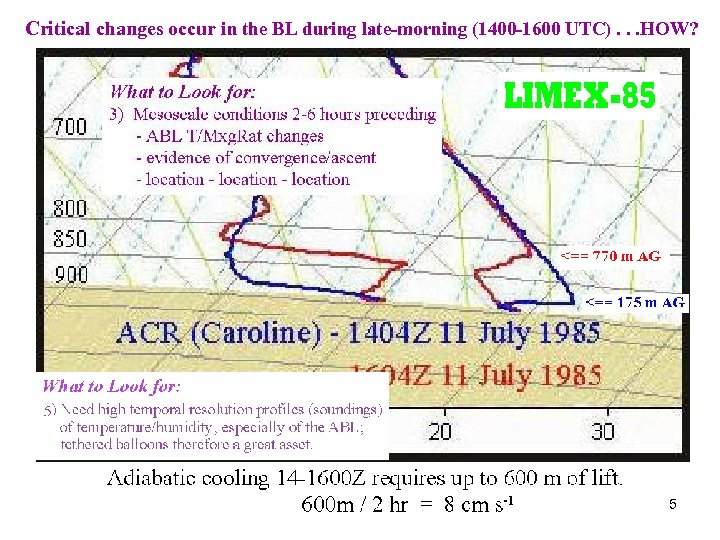
Critical changes occur in the BL during late-morning (1400 -1600 UTC). . . HOW? 5
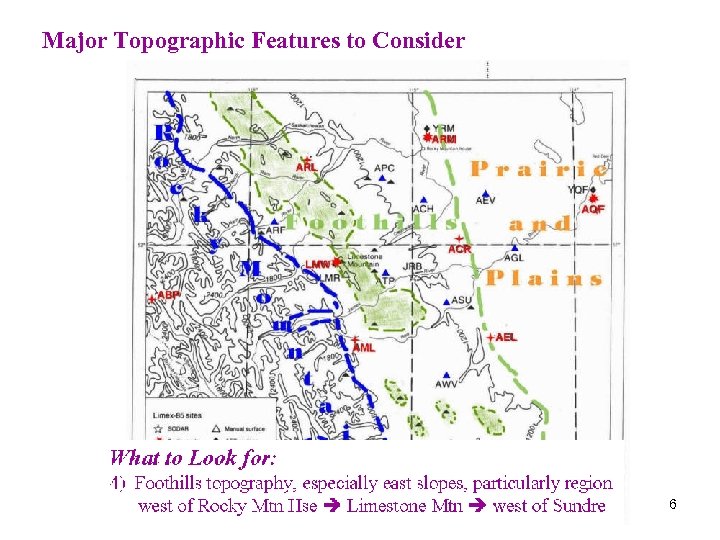
Major Topographic Features to Consider 6
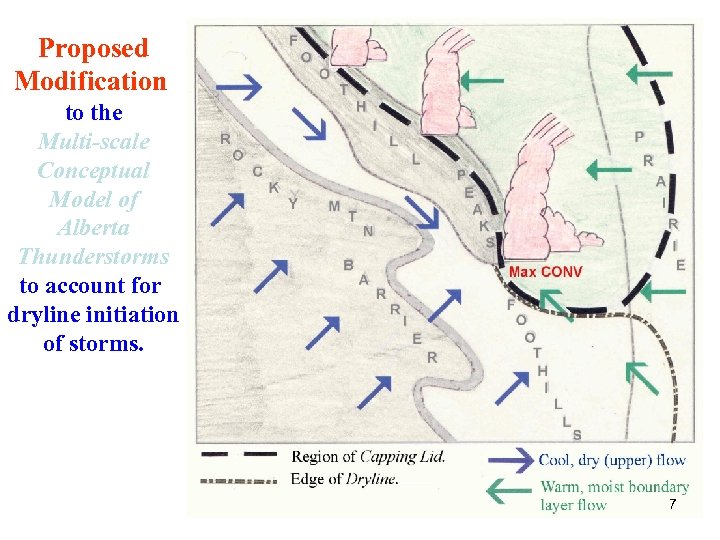
Proposed Modification to the Multi-scale Conceptual Model of Alberta Thunderstorms to account for dryline initiation of storms. 7
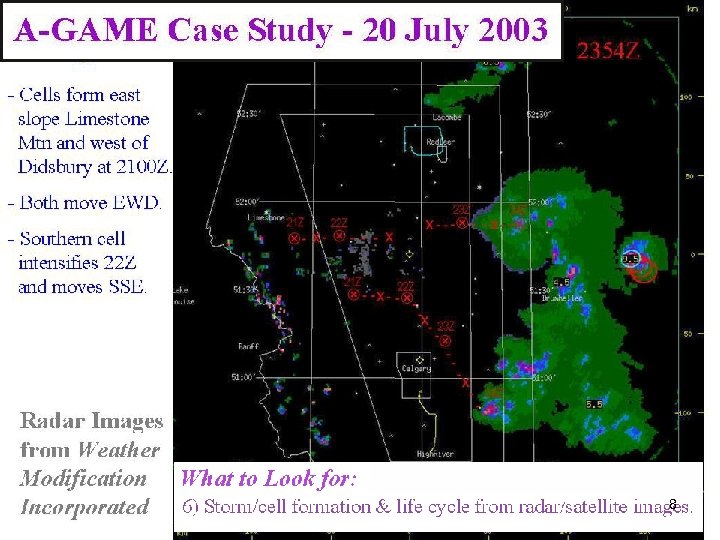
8
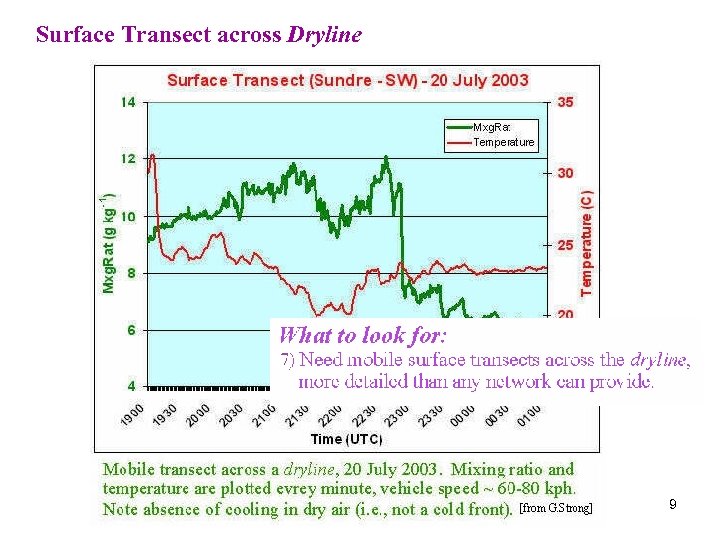
Surface Transect across Dryline 9
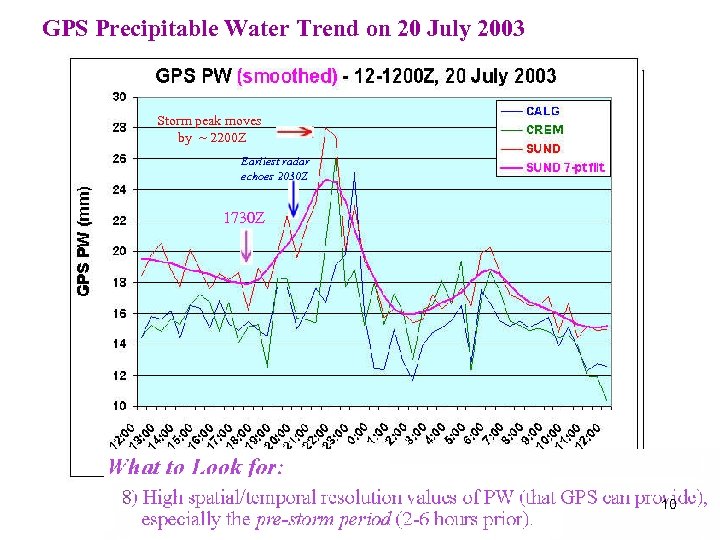
GPS Precipitable Water Trend on 20 July 2003 Storm peak moves by ~ 2200 Z Earliest radar echoes 2030 Z 1730 Z 10
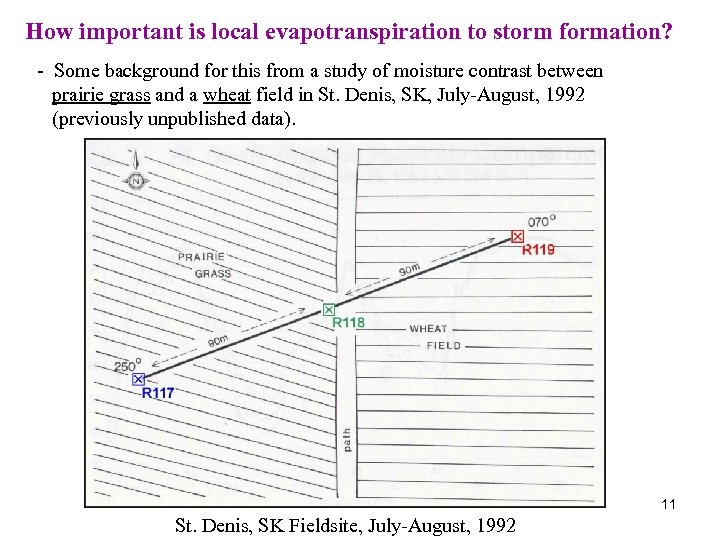
How important is local evapotranspiration to storm formation? - Some background for this from a study of moisture contrast between prairie grass and a wheat field in St. Denis, SK, July-August, 1992 (previously unpublished data). 11 St. Denis, SK Fieldsite, July-August, 1992
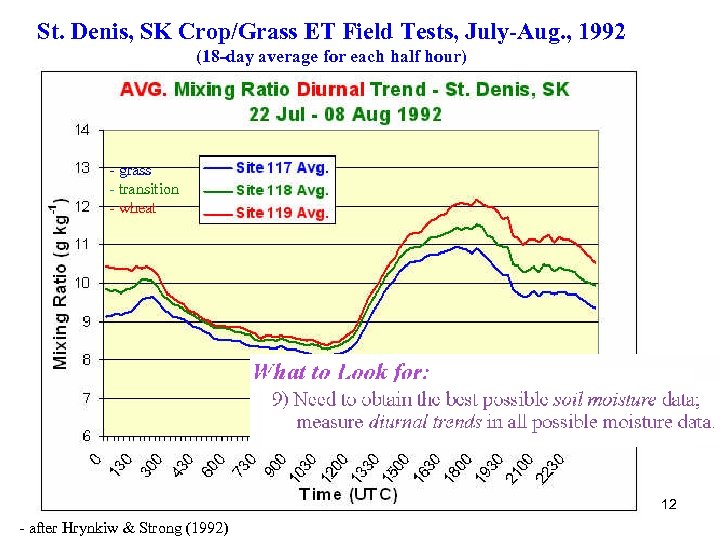
St. Denis, SK Crop/Grass ET Field Tests, July-Aug. , 1992 (18 -day average for each half hour) - grass - transition - wheat 12 - after Hrynkiw & Strong (1992)
Conclusions/Recommendations for UNSTABLE: 1. Preceding (6 -18 hours) synoptic conditions. 2. What’s going on between scales? 2 a) Everyone: Documented cloud photography and manual observations!! 3) Document mesoscale conditions over foothills 2 -6 hours preceding storm initiation. 4) Note foothills topography. 5) Need high temporal resolution soundings (2 -hour intervals recommended during morning); tethered balloons and/or instrumented towers (100 -m) would be great assets. 6) Document storm initiation & life cycle (radar/satellite). 7) Mobile surface transects deep into the foothills (late morning and mid-afternoon). 8) High spatial/temporal resolution GPS PW data, concentrate on -4 to +2 hours of storm initiation. 9) Need reliable soil moisture (and ET) data in major soil zones regions. Analyses: 1. 2. 3. 4. 5. Precedent synoptic conditions, 6 -18 hours. Precedent mesoscale conditions, 2 -6 hours. Everything for storm initiation period (-1 to + hours)! Storm-scale (meso-gamma) for storm life cycle. Diurnal trends in all variables. 13

14
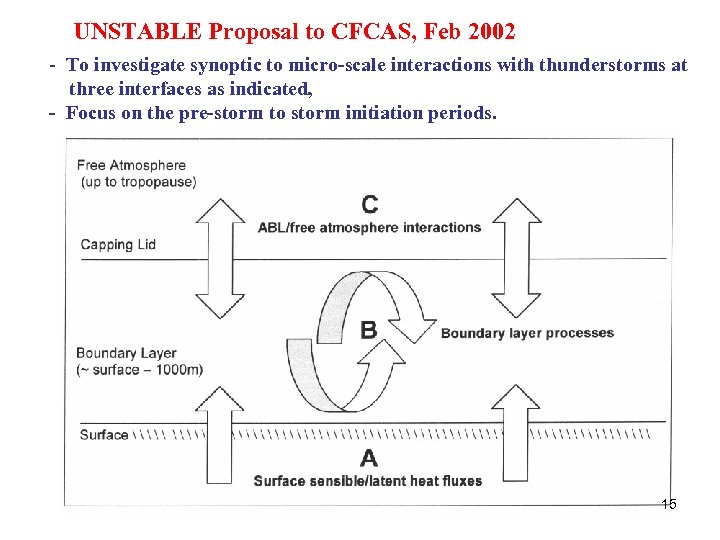
UNSTABLE Proposal to CFCAS, Feb 2002 - To investigate synoptic to micro-scale interactions with thunderstorms at three interfaces as indicated, - Focus on the pre-storm to storm initiation periods. 15
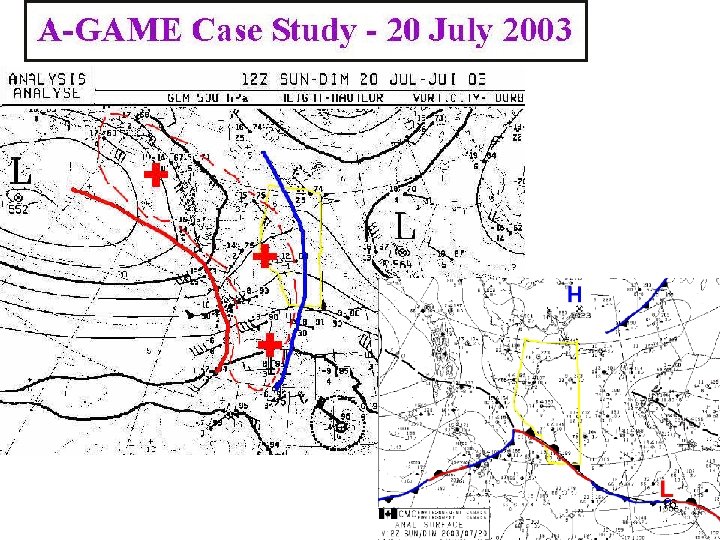
16
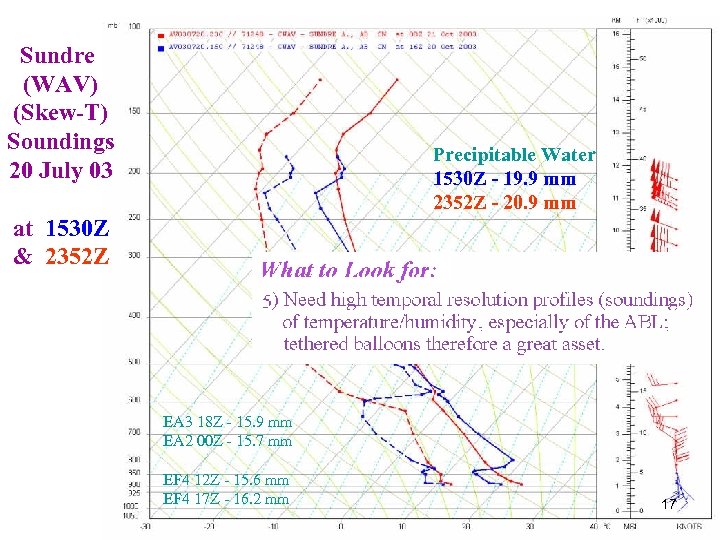
Sundre (WAV) (Skew-T) Soundings 20 July 03 Precipitable Water 1530 Z - 19. 9 mm 2352 Z - 20. 9 mm at 1530 Z & 2352 Z EA 3 18 Z - 15. 9 mm EA 2 00 Z - 15. 7 mm EF 4 12 Z - 15. 6 mm EF 4 17 Z - 16. 2 mm 17
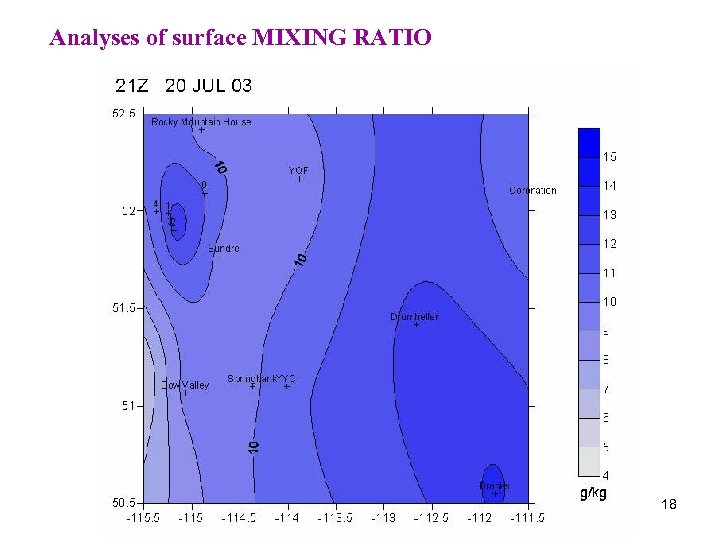
Analyses of surface MIXING RATIO 18
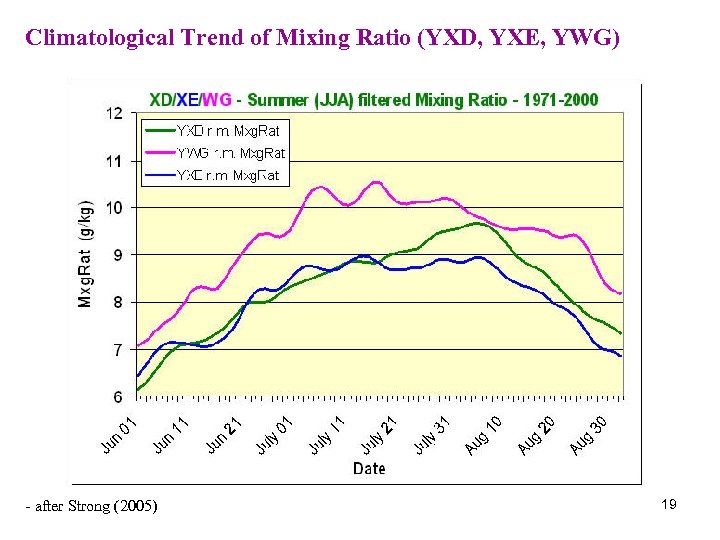
Climatological Trend of Mixing Ratio (YXD, YXE, YWG) - after Strong (2005) 19
Скачать презентацию Of Capping Lids Drylines and Alberta Thunderstorms
1a1f123927ebddf54468ddd62a329bfe.ppt