 Скачать презентацию OECD Global Forum on Sustainable Development 2 -3
ee8153051e5fe1a6b8780b2161fcfff7.ppt
- Количество слайдов: 28



OECD Global Forum on Sustainable Development 2 -3 December, 2004, Paris Optimizing Compliance Monitoring and Enforcement: Japanese Experience in Water Pollution Control Hidefumi IMURA Nagoya University Japan
Water Environment in Japan • Much rainfall: 1, 700 mm / year • Many small rivers • Semi-closed water bodies such as Tokyo Bay, Ise Bay and Seto Inland Sea • Long Coastal lines • Many lakes and reservoirs • Pollution by Industrial Waste Water • Urbanization and Pollution by Domestic Waste Water • Agriculture and Pollution by Non-Point Sources • Health Damage, e. g. , Minamata Disease • Degradation of Living Environment and Amenities • Damage on Fisheries
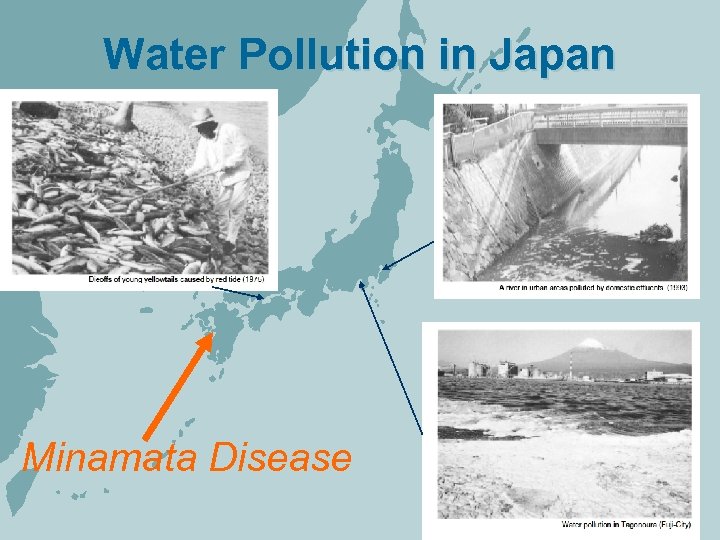
Water Pollution in Japan Minamata Disease
Water Pollution Control in Japan 1. Environmental Quality Standards l EQS for Protecting Human Health・・・ 26 substances (heavy metals, PCBs and other toxic chemicals) l EQS for Protecting the Living Environment ・・・p. H, BOD (COD), SS, DO, total coliform; Classification of rivers, lakes, and seas according to the type of water use. 2. Effluent Regulation and Standards l National Uniform Effluent Standards l More Stringent Prefectural Effluent Standards 3. Total Pollutant Load Control l Eg. Tokyo Bay, Ise Bay, Seto Inland Sea, Designated Lakes
Monitoring of Water Quality Automated water quality monitoring l 125 points operated by prefectures and designated cities l 199 points in 93 major waterways operated by River Management Office of MLIT (Ministry of Land, Infrastructure and Transport)
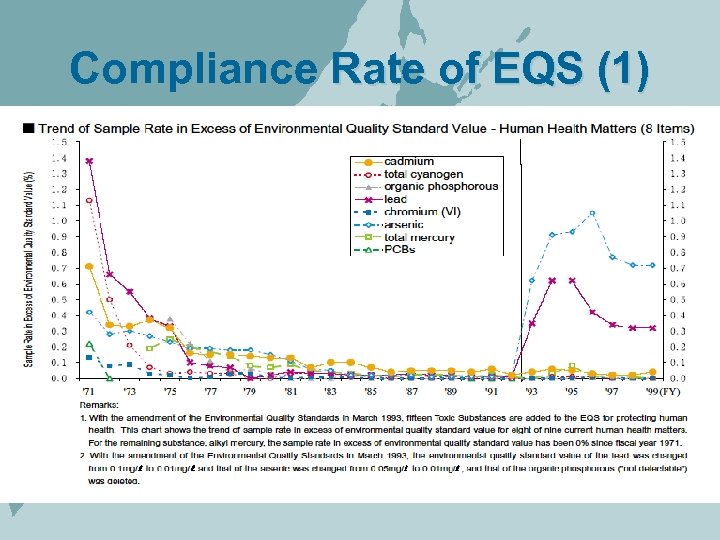
Compliance Rate of EQS (1)
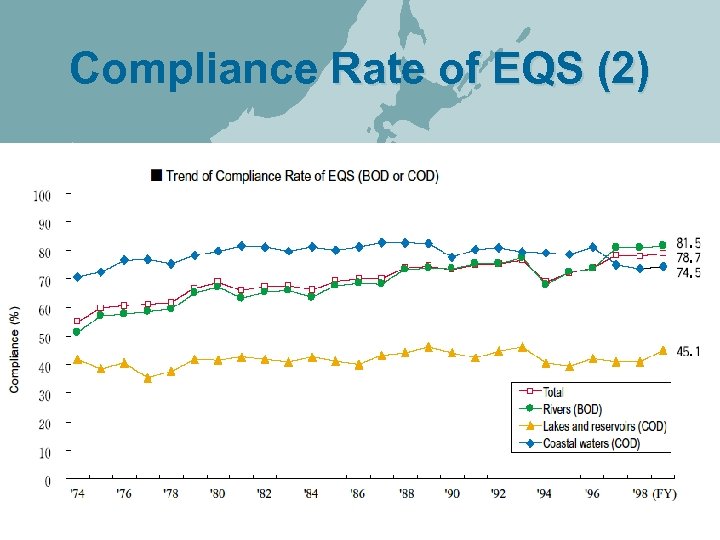
Compliance Rate of EQS (2)
Effluent Regulations 1. Laws 1. Water Pollution Control Law 2. Special Law for Environmental Preservation of Seto Inland Sea 3. Law of Special Measures for Lake Water Quality 4. Prefectural and municipal ordinances 5. [Sewerage Law] 2. Designation of “specified facilities” 1. 300, 000 factories and other commercial facilities (hotels, stock raising, cleaning, night soil treatment, etc. ) 2. Large facilities (more than 50 m 3/day) 13% 3. Small facilities (less than 50 m 3/day) 87% 3. Role of prefectures and designated cities 1. Request reports from specified facilities 2. On-site inspections to monitor compliance 3. Take administrative action such as “improvement order”
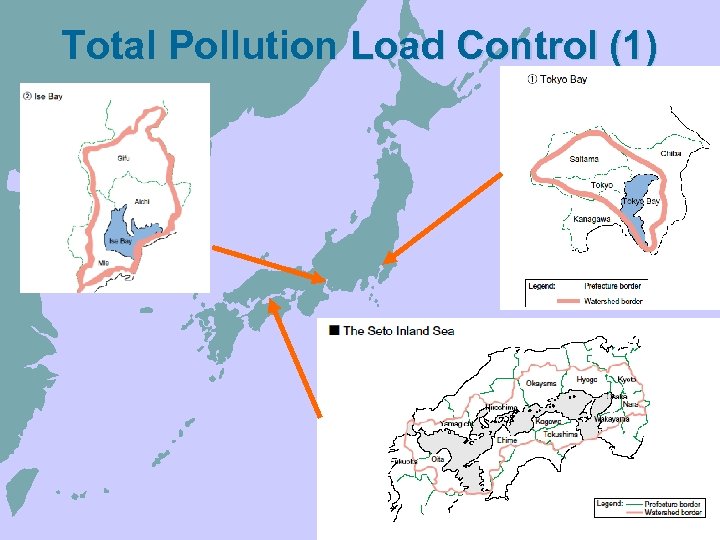
Total Pollution Load Control (1)
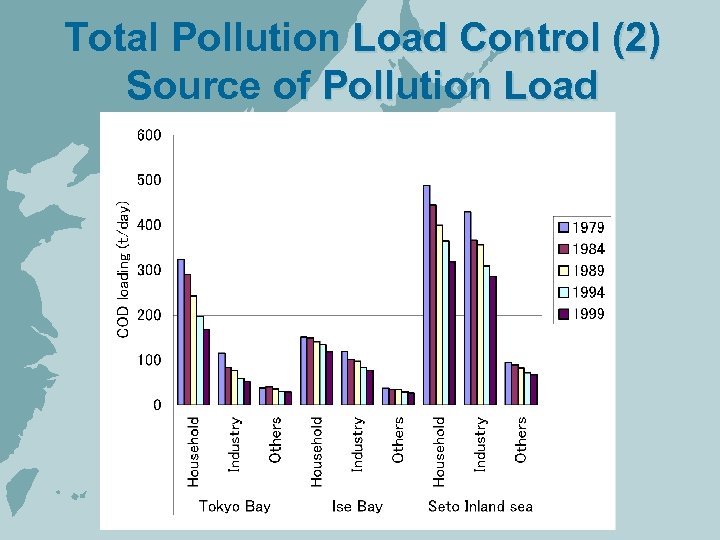
Total Pollution Load Control (2) Source of Pollution Load
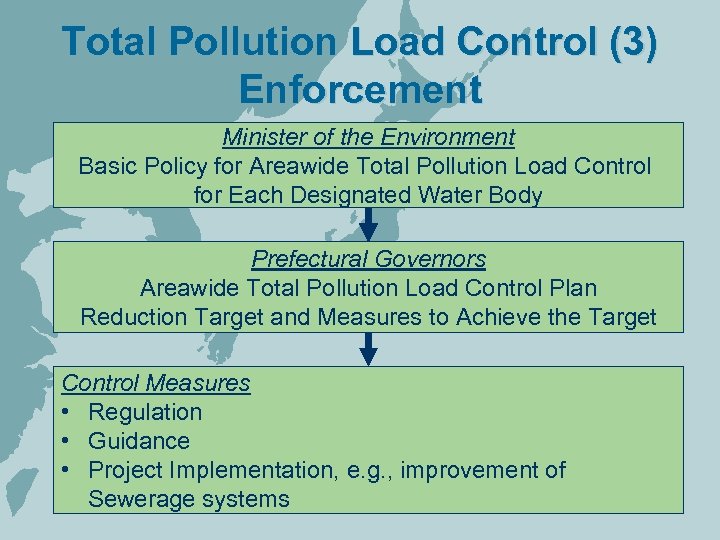
Total Pollution Load Control (3) Enforcement Minister of the Environment Basic Policy for Areawide Total Pollution Load Control for Each Designated Water Body Prefectural Governors Areawide Total Pollution Load Control Plan Reduction Target and Measures to Achieve the Target Control Measures • Regulation • Guidance • Project Implementation, e. g. , improvement of Sewerage systems
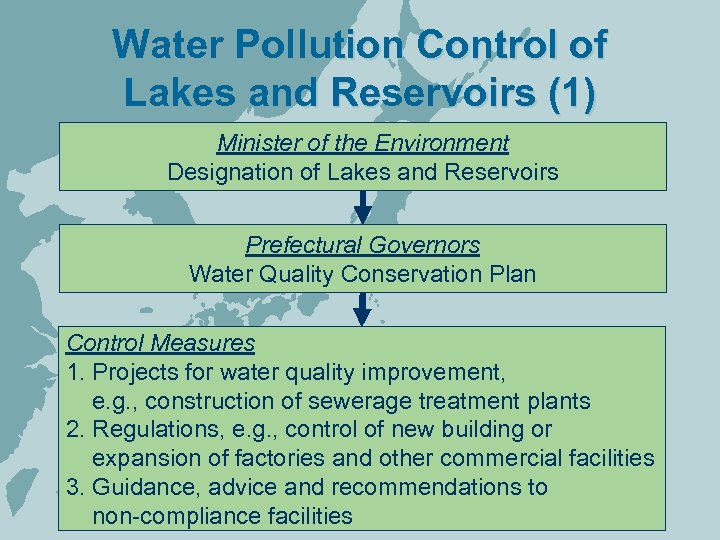
Water Pollution Control of Lakes and Reservoirs (1) Minister of the Environment Designation of Lakes and Reservoirs Prefectural Governors Water Quality Conservation Plan Control Measures 1. Projects for water quality improvement, e. g. , construction of sewerage treatment plants 2. Regulations, e. g. , control of new building or expansion of factories and other commercial facilities 3. Guidance, advice and recommendations to non-compliance facilities
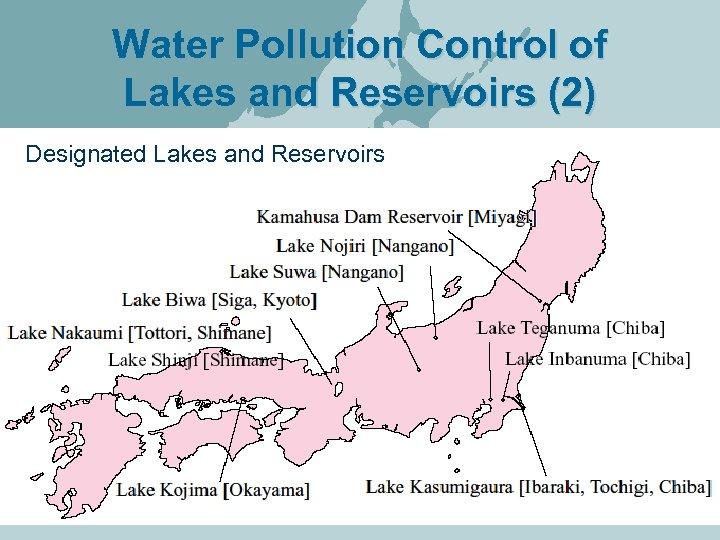
Water Pollution Control of Lakes and Reservoirs (2) Designated Lakes and Reservoirs
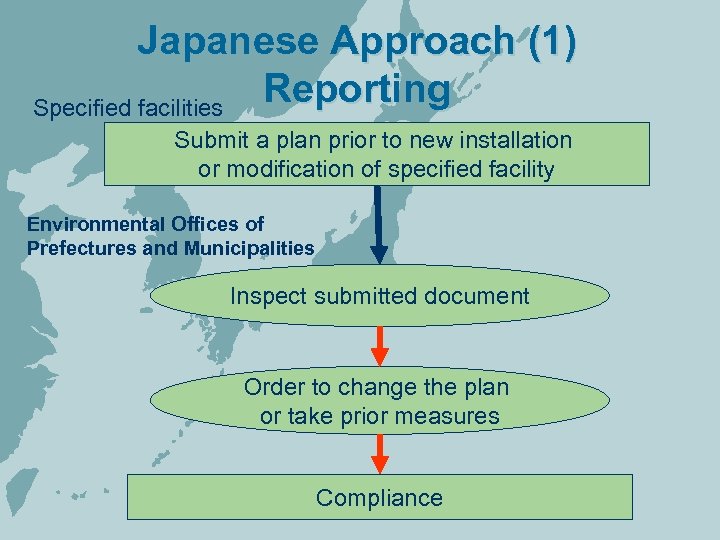
Japanese Approach (1) Reporting Specified facilities Submit a plan prior to new installation or modification of specified facility Environmental Offices of Prefectures and Municipalities Inspect submitted document Order to change the plan or take prior measures Compliance
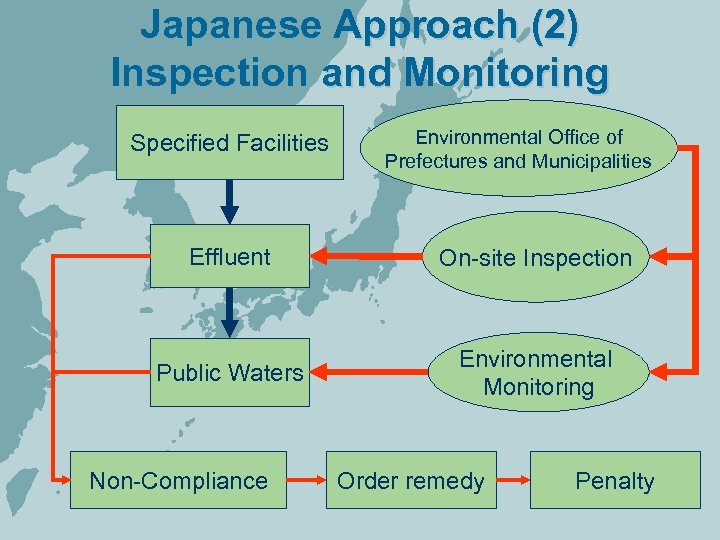
Japanese Approach (2) Inspection and Monitoring Specified Facilities Environmental Office of Prefectures and Municipalities Effluent On-site Inspection Public Waters Environmental Monitoring Non-Compliance Order remedy Penalty
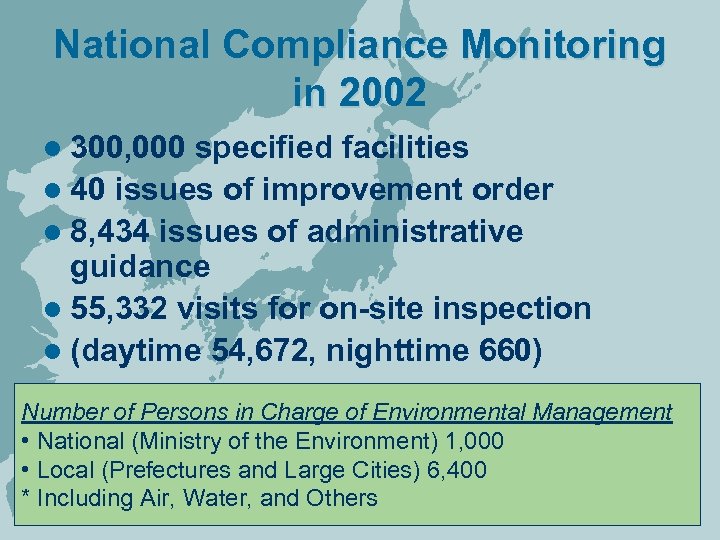
National Compliance Monitoring in 2002 l 300, 000 specified facilities l 40 issues of improvement order l 8, 434 issues of administrative guidance l 55, 332 visits for on-site inspection l (daytime 54, 672, nighttime 660) Number of Persons in Charge of Environmental Management • National (Ministry of the Environment) 1, 000 • Local (Prefectures and Large Cities) 6, 400 * Including Air, Water, and Others
Compliance Monitoring Case of Kitakyushu City l Industrial City with a population of 1 million people l Monitoring and Inspection based on two systems (1) Water Pollution Control Law and Seto Inland Special Law (2) Sewerage Law l Operated officials) by a small unit (about 5
Monitoring and Inspection by Water Pollution Control Law Case of Kitakyushu City, 2002 l 242 specified facilities l 0 issues of improvement order l 4 issues of administrative guidance l 91 visits for on-site inspection (daytime 83, nighttime 8) l Operated by a small unit (about 5 officials)
Monitoring and Inspection by Sewerage Law Case of Kitakyushu City, 2003 l 1, 071 facilities releasing effluent to urban sewerage system (average waste water volume 62. 1 m 3 / day) l 515 facilities under monitoring l 434 visits for on-site inspection l 3, 791 measurement samples, 21 noncompliance samples (0. 6%) l 1, 078 self-measurement samples, 17 noncompliance
Japanese Approach (1) Government l l l l l Basic Policy formulated by National Government Decentralized enforcement system operated by prefectural and municipal governments Technical expertise accumulated in prefectures and municipalities Environmental Research and Monitoring Centers Automated monitoring Financial assistance to SMEs Policy-based financing Tax incentives Public investment in urban sewerage systems
Industrial Response (1) l Large Factories l Specified facilities with a volume of effluent more than 10, 000 m 3/day must have pollution control managers who are qualified by the relevant law l SMEs Reporting and guidance by local environmental authorities l Subject to monitoring and inspection by prefectures and municipalities l Financial assistance by JEC (Japan Environmental Corporation) and local governments l Relocation to industrial parks with collective treatment systems l
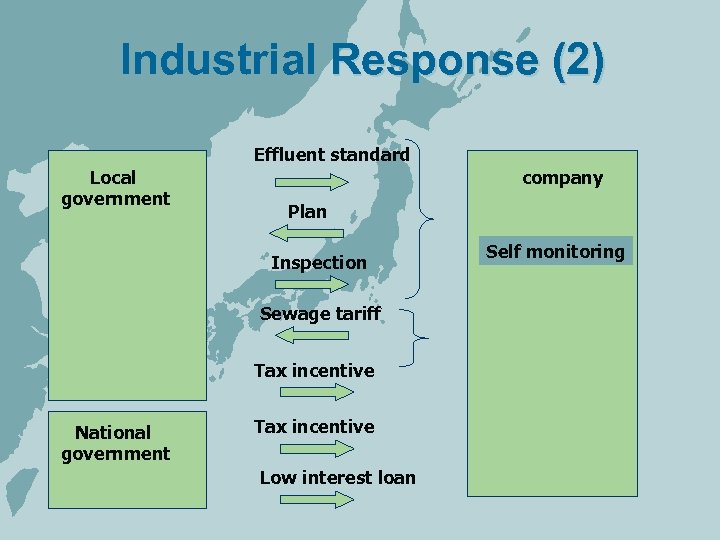
Industrial Response (2) Effluent standard Local government company Plan Inspection Sewage tariff Tax incentive National government Tax incentive Low interest loan Self monitoring
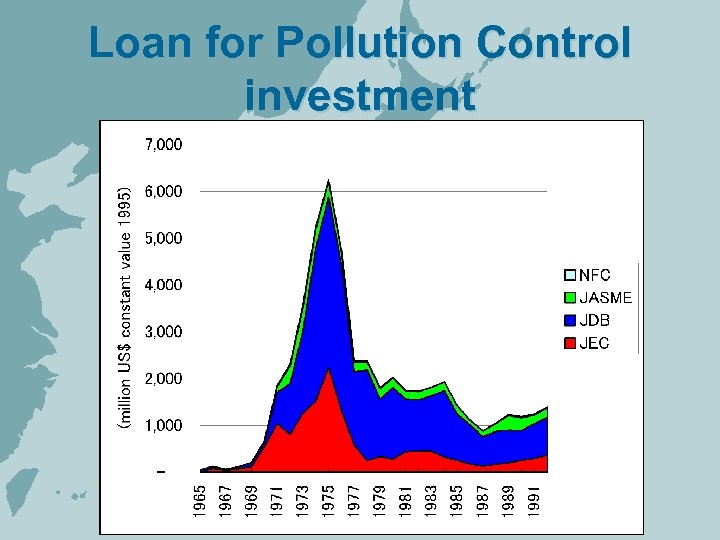
Loan for Pollution Control investment
Domestic Waste Water l Improvement of urban sewerage systems l Improvement of decentralized treatment systems (“Jokaso”) in rural areas
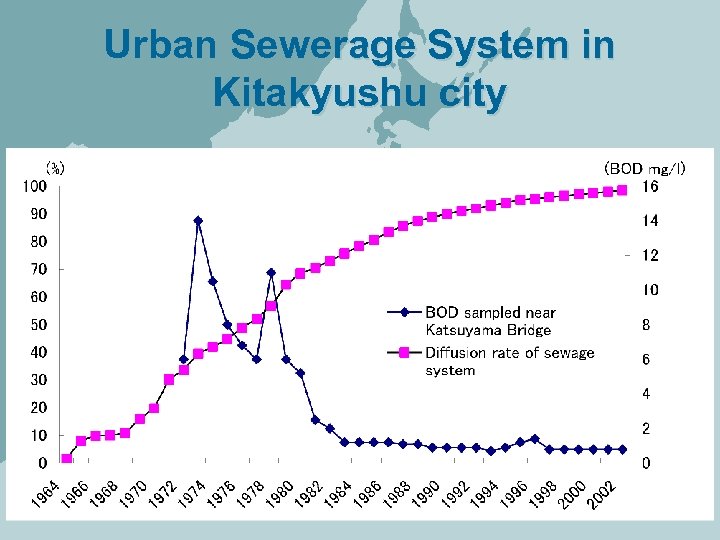
Urban Sewerage System in Kitakyushu city
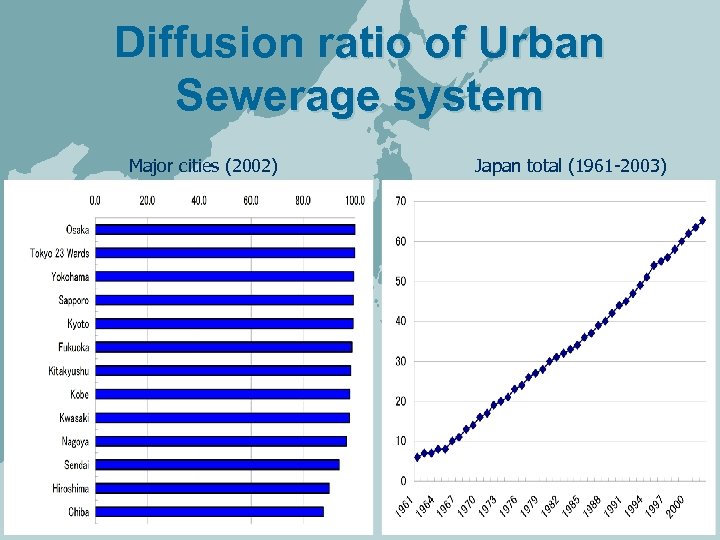
Diffusion ratio of Urban Sewerage system Major cities (2002) Japan total (1961 -2003)
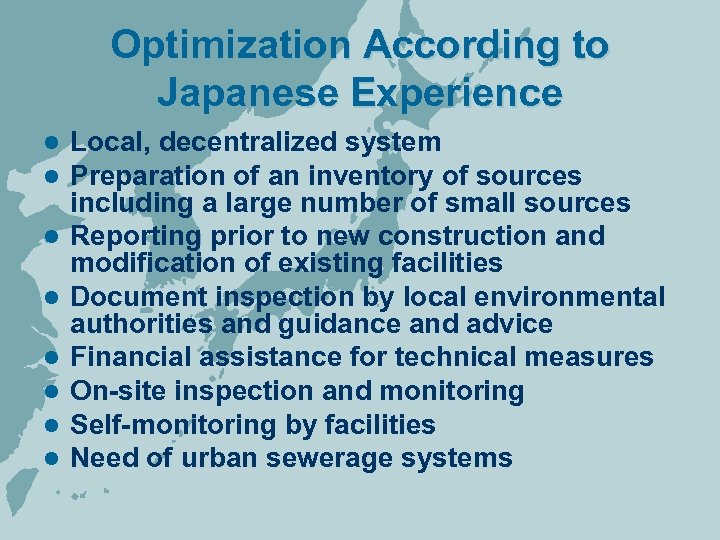
Optimization According to Japanese Experience l l l l Local, decentralized system Preparation of an inventory of sources including a large number of small sources Reporting prior to new construction and modification of existing facilities Document inspection by local environmental authorities and guidance and advice Financial assistance for technical measures On-site inspection and monitoring Self-monitoring by facilities Need of urban sewerage systems
Thank you!
Скачать презентацию OECD Global Forum on Sustainable Development 2 -3
ee8153051e5fe1a6b8780b2161fcfff7.ppt