 Скачать презентацию October 25 2016 Role of Tribes in Fossil
3c78446767dcc91d63f952a845ede5bd.ppt
- Количество слайдов: 23



October 25, 2016 Role of Tribes in Fossil Fuel and Clean Energy Policies John E. Sirois, Committee Coordinator
Talking Points 1. Tribes Connection to Land 2. UCUT and Regional Roles in Fossil Fuels Policy 3. Tribes Nationally Changing Fossil Fuel Policy 4. International Implications of COP 21 5. Renewable Energy Opportunities 6. Conclusions/Questions
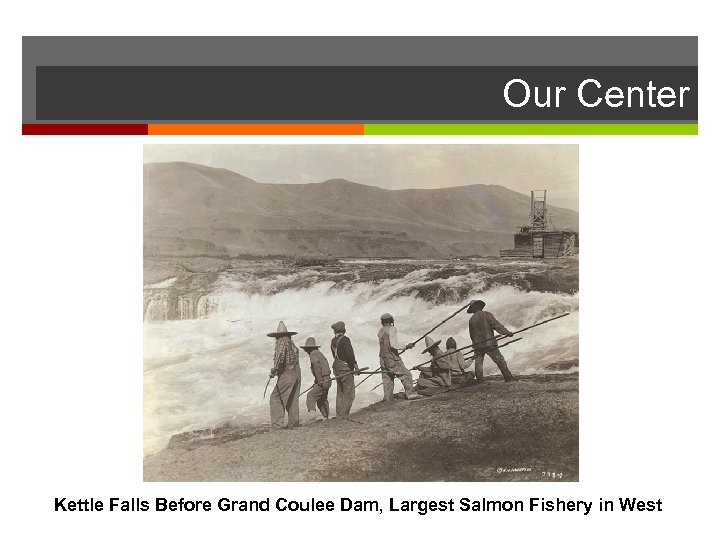
Our Center Kettle Falls Before Grand Coulee Dam, Largest Salmon Fishery in West
mus il’mithlm • All begins with water; medicine, travel, food • Four Chiefs; • salmon, bear, bitterroots, service berry • Relied heavily on that source of nourishment • First Scientists knew the seasons and harvested what the land provided -not nomadic
Traditional Responsibility • The cultural and traditional beliefs bound to our environment have sustained our people for tens of thousands of years. • These gifts of the First Foods also carry a responsibility of active stewardship of those gifts; It is our foundation. • We honor that responsibility by taking action on Climate Change Impacts to ensure the environment will provide for generations to come
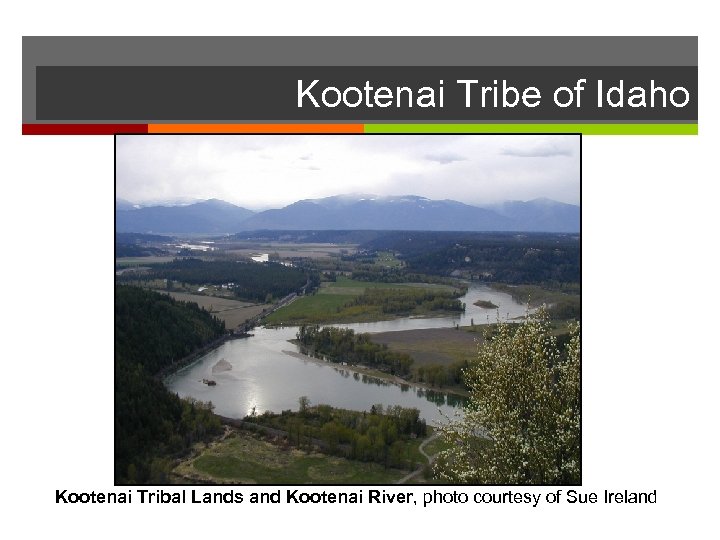
Kootenai Tribe of Idaho Kootenai Tribal Lands and Kootenai River, photo courtesy of Sue Ireland
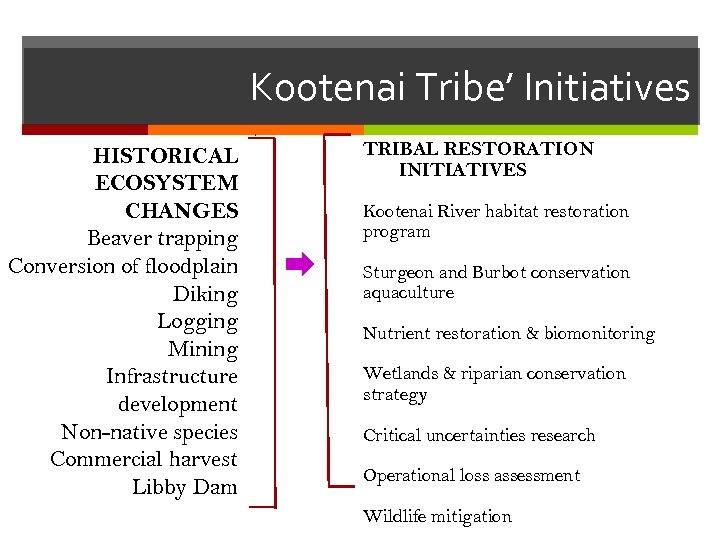
Kootenai Tribe’ Initiatives HISTORICAL ECOSYSTEM CHANGES Beaver trapping Conversion of floodplain Diking Logging Mining Infrastructure development Non-native species Commercial harvest Libby Dam TRIBAL RESTORATION INITIATIVES Kootenai River habitat restoration program Sturgeon and Burbot conservation aquaculture Nutrient restoration & biomonitoring Wetlands & riparian conservation strategy Critical uncertainties research Operational loss assessment Wildlife mitigation
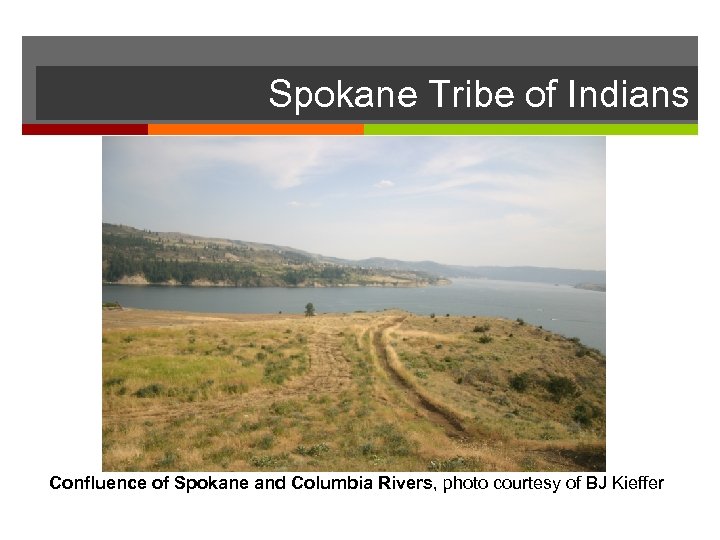
Spokane Tribe of Indians Confluence of Spokane and Columbia Rivers, photo courtesy of BJ Kieffer
Spokane Tribe’s Actions Mines, Waterways and Dams • Midnight Mine Restoration – Superfund Site, inactive open pit uranium mine • Renovated Fish Hatchery for kokanee and rainbow trout • Spokane River Water Quality and Quantity • Mount Spokane Preservation of First Foods and Sacred Sites • Ongoing Mitigation Efforts for Grand Coulee Dam
NW Treaty Tribes • Historic Meeting with the White House Council on Environmental Quality to Protect Puget Sound • Stopping Habitat Loss, Increasing Pressure from Urban Growth • Opposing Coal and Oil Transport through Treaty Lands • State of Our Watersheds Report • 2016 Tribes and State agreed to a reduced Fishery for protection of salmon • Pushing for Strong Laws to Protect Salmon and Habitat
Lummi Nation Fights Cherry Point Lummi Nation Gathered Allies to Fight Cherry Point • Coal would be hauled from mines to port by BNSF Railways. • 18 daily coal trains (9 full, 9 empty). Each 1. 5 mile long train, comprising about 150 cars. • Peabody Energy is the world’s largest private sector coal company. • Carrix/SSA Marine, partnered with Goldman Sachs, is one of the largest cargo terminal operators in the world. • Cherry Point is a Lummi Nation burial site and an Aquatic Reserve • Totem Pole transported across the North American to protest Bakken Oil and Coal
Tribes Oppose Oil and Coal ATNI Unifies Tribes to Oppose Bakken Oil and Coal Transports From ATNI Resolution RESOLUTION #13 – 47; ATNI is in opposition of the transportation and export of fossil energy in the Northwest based on infringement and endangerment upon indigenous, inherent, and treaty-protected resources, impacts on human health, economies, sacred places and our traditional way of life; and BE IT FURTHER RESOLVED, the tribes of ATNI support a strategy to document the impacts of these fossil fuel energy transport and export proposals, which includes baseline studies of science from a local approach, impacts to the economies, as well as legal and policy initiatives.
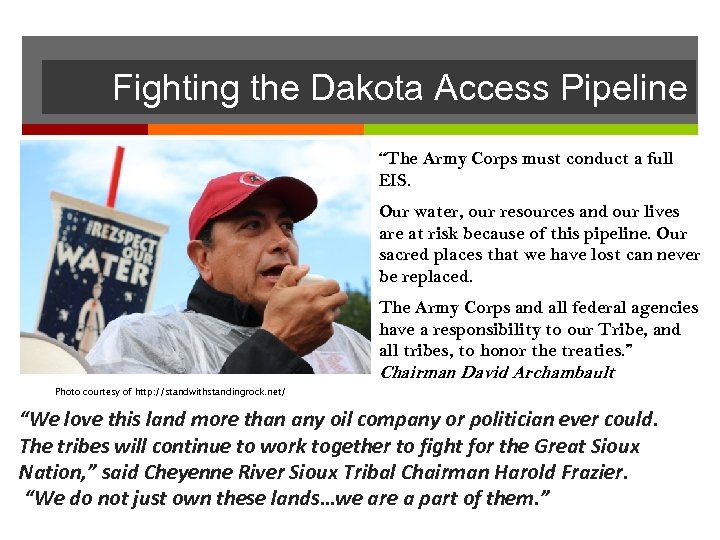
Fighting the Dakota Access Pipeline “The Army Corps must conduct a full EIS. Our water, our resources and our lives are at risk because of this pipeline. Our sacred places that we have lost can never be replaced. The Army Corps and all federal agencies have a responsibility to our Tribe, and all tribes, to honor the treaties. ” Chairman David Archambault Photo courtesy of http: //standwithstandingrock. net/ “We love this land more than any oil company or politician ever could. The tribes will continue to work together to fight for the Great Sioux Nation, ” said Cheyenne River Sioux Tribal Chairman Harold Frazier. “We do not just own these lands…we are a part of them. ”
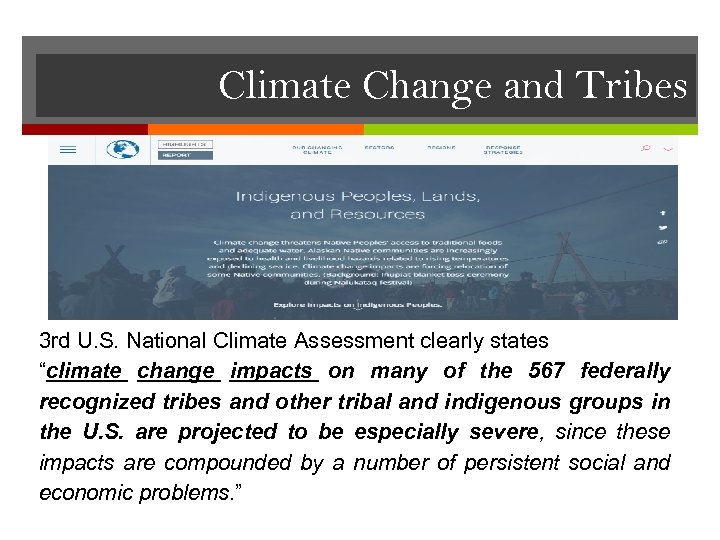
Climate Change and Tribes 3 rd U. S. National Climate Assessment clearly states “climate change impacts on many of the 567 federally recognized tribes and other tribal and indigenous groups in the U. S. are projected to be especially severe, since these impacts are compounded by a number of persistent social and economic problems. ”
US Federal Government Consult? The Obama Administration and the U. S State Department DID NOT conduct any meaningful consultations with any of the 567 Tribes with regard to the US Position on Climate Change at the COP 21 negotiations nor included Tribal Governments at any table NOTE: Canada put First Nations leaders on their negotiation team! New Zealand also did and Norway consulted the Saami regularly at COP 21!
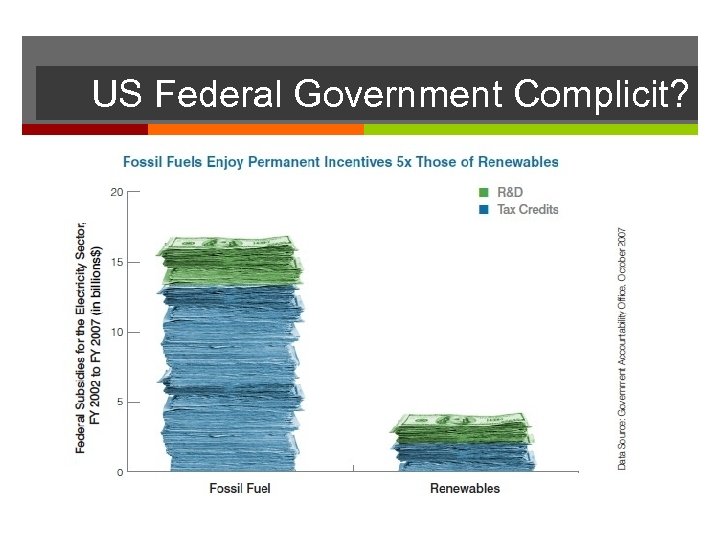
US Federal Government Complicit?
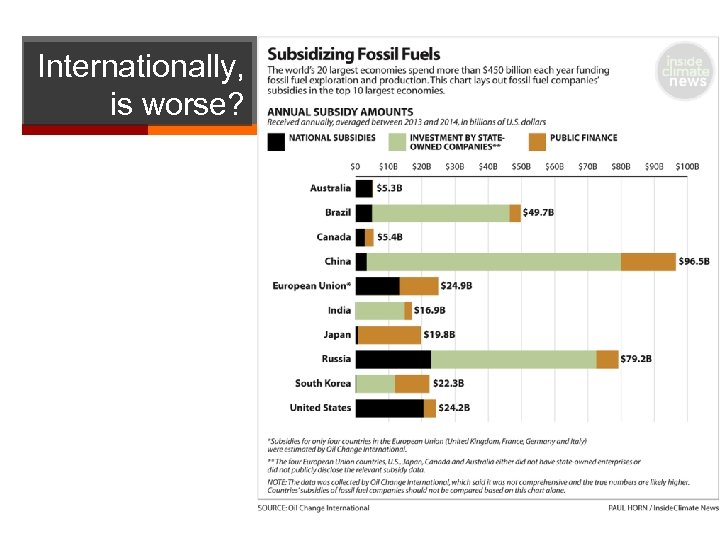
Internationally, is worse?
COP 21 Outcomes, Local Impacts • Outcomes can be debated, however it was a turning point on putting limits on emissions in a global sense. • A legally binding Agreement was signed by 187 States! • Emphasis on healthy forest and landscapes but through a market based approach like REDD+ (reducing emissions from deforestation and forest degradation) • Funding for protecting and promoting forest health. • A recognition of the rights of Indigenous Peoples and knowledge of the first stewards of the land.
19 Renewable Energy on Indian Lands NREL’s Key Findings • The US Department of Energy (DOE) Office of Indian Energy Policy and Programs found that American Indian land comprises 2% of US land but contains an estimated 5% of all renewable energy resources • The total technical potential on tribal lands for electricity generation from utility-scale rural Solar resource is about 14 billion MWh, or 5. 1% of total US generation potential • The total technical potential on tribal lands for electricity generation from Wind resources is about 1, 100 million MWh, or about 3. 4% of the total US technical potential • The total technical potential on tribal lands for electricity generation from Hydropower resource is about 13 million MWh, or about 5. 1% of the total US technical potential. Ø Source: http: //www. nrel. gov/docs/fy 13 osti/57048. pdf
20 Tribes Deploy Clean Energy Projects • • • $3. 6 Million for Feasibility Studies – Thirteen projects will receive $3. 6 million to assess the technical and economic viability of developing renewable energy resources on tribal lands to generate utility-scale power or study the feasibility of installing renewable energy systems on buildings to reduce energy use by 30 percent. $1. 7 Million for Renewable Energy Development Projects – Four projects will receive $1. 7 million for pre-construction development activities. Three are developing more than 250 megawatts of new renewable energy generation, and one, when implemented, would reduce the need for diesel fuel for heating by 80 percent – or 9, 600 gallons annually. $1. 3 Million for Installation Projects – Two projects will receive $1. 3 million to deploy renewable energy technologies to convert waste and other biomass to energy. The projects will generate 5 megawatts of energy per hour using municipal solid waste and using cordwood for heating to save between 2, 500 and 3, 200 gallons of propane. Source: http: //energy. gov/indianenergy/office-indian-energy-policy-and-programs
21 Clean Energy Future • • • Tribes can leap frog many fossil fuels to go to solar or other renewables Tribes must analyze these projects from all angles and make sure they are not compromising our water or cultural resources Renewable Energy sources are cost friendly, especially given the direction the global communities will take refusing fossil fuels Just like Climate Change funding, there is more support available for Tribes from Department of Energy, NREL, BIA and many other programs Renewable Energy sources are compatible with our traditional beliefs and responsibilities
22 Conclusions • Indigenous Peoples rights and traditional knowledge can lead moving away from fossil fuels • The federal government has to honor that meaningful consultation in fossil fuel projects, International agreements and clean energy policies. Tribes are uniting to call for that action! • Tribal clean energy is happening! • Tribal efforts and collaborative movements have provided an example in addressing climate change, moving away from fossil fuels and developing clean energy policies. • Tribal Efforts are changing the national discussion on fossil fuel policy
Questions? Thank You for Your Time Limpt’
Скачать презентацию October 25 2016 Role of Tribes in Fossil
3c78446767dcc91d63f952a845ede5bd.ppt