


 Скачать презентацию Ocean and Air Cargo Handling and Containerization International
be79e987a967838cd91d36aea58e5458.ppt
- Количество слайдов: 43
 Ocean and Air: Cargo Handling and Containerization International Logistics
 Learning Objectives § Compare Domestic with International Logistics § Provide accessible overview of Ocean and Air Cargo Handling and Containerization § “Virtual” Picture Tour of Port Operations and Containerization
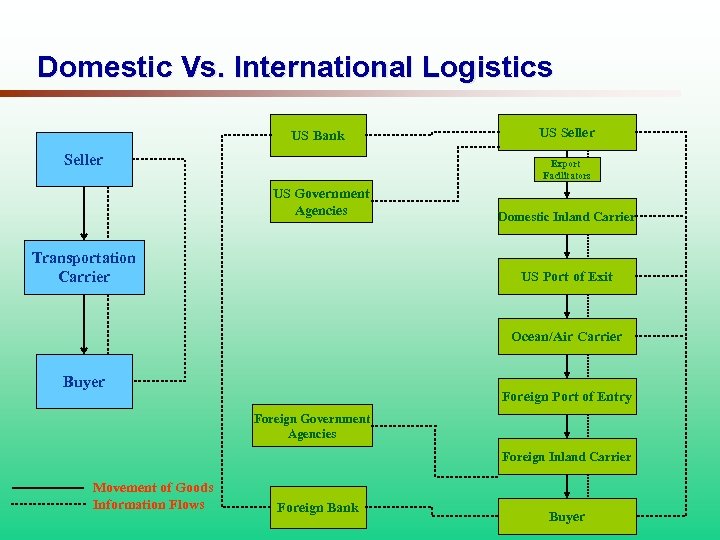 Domestic Vs. International Logistics US Bank Seller US Seller Export Facilitators US Government Agencies Transportation Carrier Domestic Inland Carrier US Port of Exit Ocean/Air Carrier Buyer Foreign Port of Entry Foreign Government Agencies Foreign Inland Carrier Movement of Goods Information Flows Foreign Bank Buyer
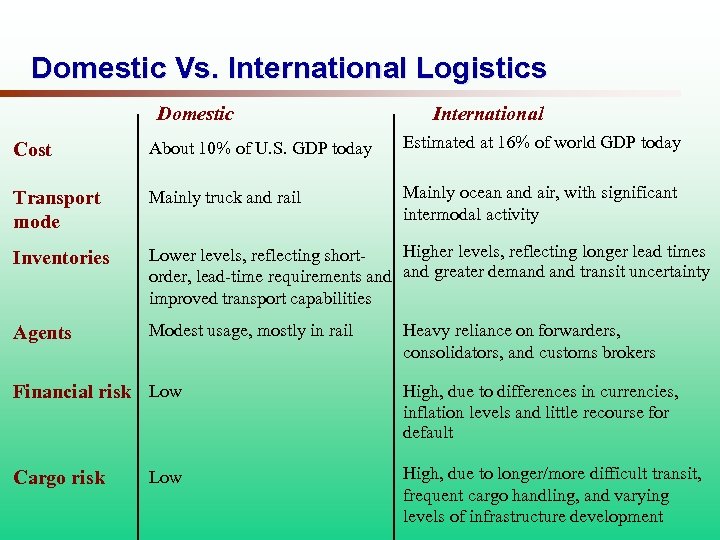 Domestic Vs. International Logistics Domestic International Cost About 10% of U. S. GDP today Estimated at 16% of world GDP today Transport mode Mainly truck and rail Mainly ocean and air, with significant intermodal activity Inventories Higher levels, reflecting longer lead times Lower levels, reflecting shortorder, lead-time requirements and greater demand transit uncertainty improved transport capabilities Agents Modest usage, mostly in rail Heavy reliance on forwarders, consolidators, and customs brokers Financial risk Low High, due to differences in currencies, inflation levels and little recourse for default Cargo risk High, due to longer/more difficult transit, frequent cargo handling, and varying levels of infrastructure development Low
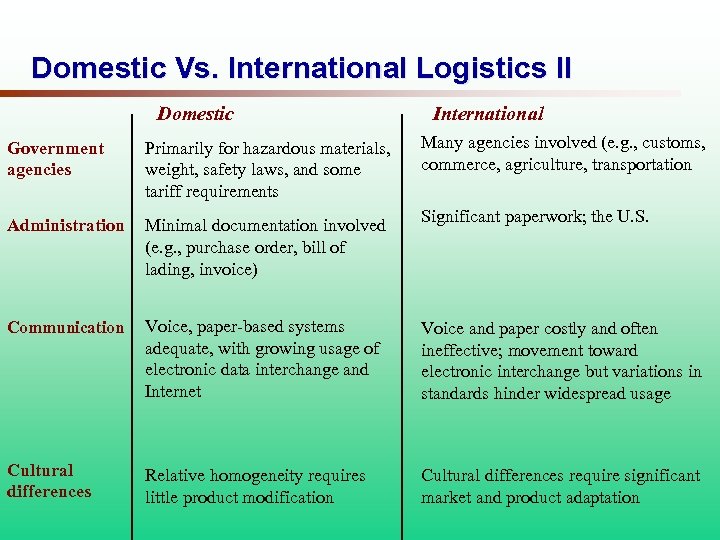 Domestic Vs. International Logistics II Domestic International Many agencies involved (e. g. , customs, commerce, agriculture, transportation Government agencies Primarily for hazardous materials, weight, safety laws, and some tariff requirements Administration Minimal documentation involved (e. g. , purchase order, bill of lading, invoice) Communication Voice, paper-based systems adequate, with growing usage of electronic data interchange and Internet Voice and paper costly and often ineffective; movement toward electronic interchange but variations in standards hinder widespread usage Cultural differences Relative homogeneity requires little product modification Cultural differences require significant market and product adaptation Significant paperwork; the U. S.
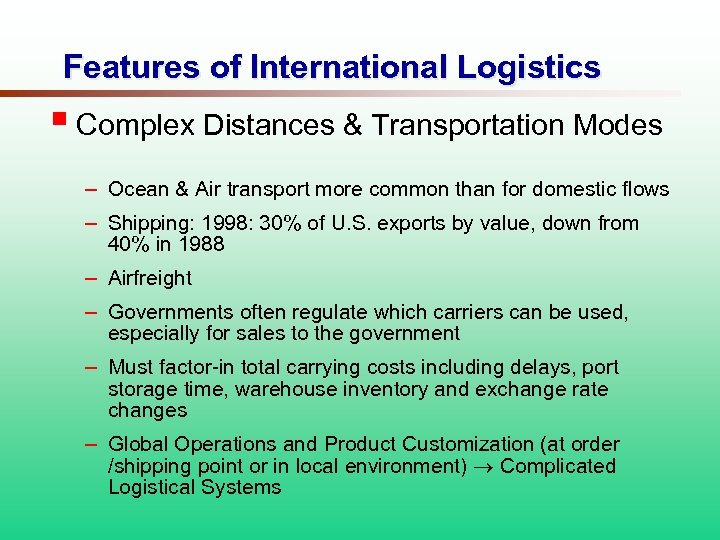 Features of International Logistics § Complex Distances & Transportation Modes – Ocean & Air transport more common than for domestic flows – Shipping: 1998: 30% of U. S. exports by value, down from 40% in 1988 – Airfreight – Governments often regulate which carriers can be used, especially for sales to the government – Must factor-in total carrying costs including delays, port storage time, warehouse inventory and exchange rate changes – Global Operations and Product Customization (at order /shipping point or in local environment) Complicated Logistical Systems
 Brainstorming Session l (Obvious) Differences exist between ocean and air cargo transportation. – Define the factors that characterize these differences – Identify these differences
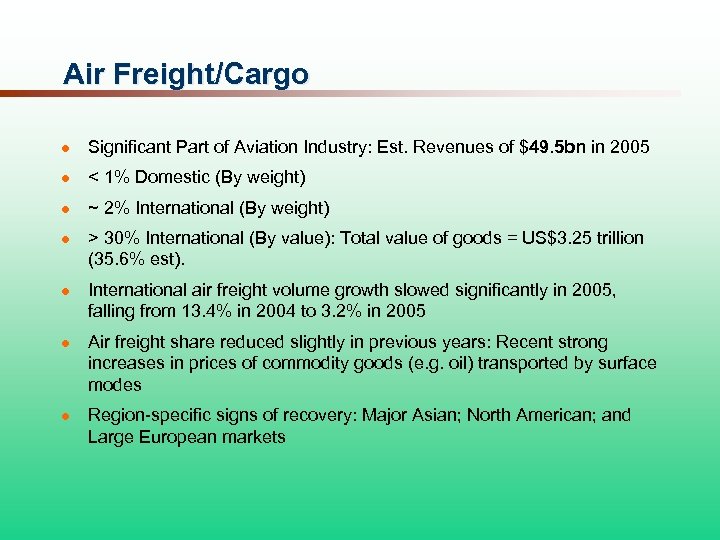 Air Freight/Cargo l Significant Part of Aviation Industry: Est. Revenues of $49. 5 bn in 2005 l < 1% Domestic (By weight) l ~ 2% International (By weight) l l > 30% International (By value): Total value of goods = US$3. 25 trillion (35. 6% est). International air freight volume growth slowed significantly in 2005, falling from 13. 4% in 2004 to 3. 2% in 2005 Air freight share reduced slightly in previous years: Recent strong increases in prices of commodity goods (e. g. oil) transported by surface modes Region-specific signs of recovery: Major Asian; North American; and Large European markets
 Advantages of Air Transportation for International Logistics l Speed l Wider Market Areas l l Advantageous over Surface Transportation Systems (congestion, poorly developed infrastructure, etc. ) Air-appropriate goods: Define Characteristics?
 Air Transportation - Conducive Business Characteristics l High-Value, Low-Bulk Cargo l “JIT” Inventory Management Practices l Lean Production Methods l Short(er) Order Cycle times l l l Globalization: Impact on Sourcing, Production and Logistics Practices Outsourcing – International Contract Manufacturing Alliances Commercial Development of Emerging Economies
 Ocean Shipping Cargo Handling l Transfer of Cargo in and out of Ship’s Holds l Handling Cargo on Dock l l Transfer of Cargo to Ground Transportation and Stowage Determines vessel’s turnaround time in Port earning power Historically Manual (Longshoremen OR Stevedores) Today Mechanical – Optimized Cargo Stowage Programs
 Cargo Handling Equipment l l l Yard trucks (hostlers) Cranes Top and side handlers Forklifts Loaders, etc
 Cargo Handling Methods l l l Crane/Conveyor Combi (Dry Bulk Cargo) Pipeline (Liquid Bulk cargo) Breakbulk Cargo – Palletized – LO/LO (Crane lifted) – RO/RO (Automobiles and equipment - Driven Cargo) l Containers (>54% of all cargo)
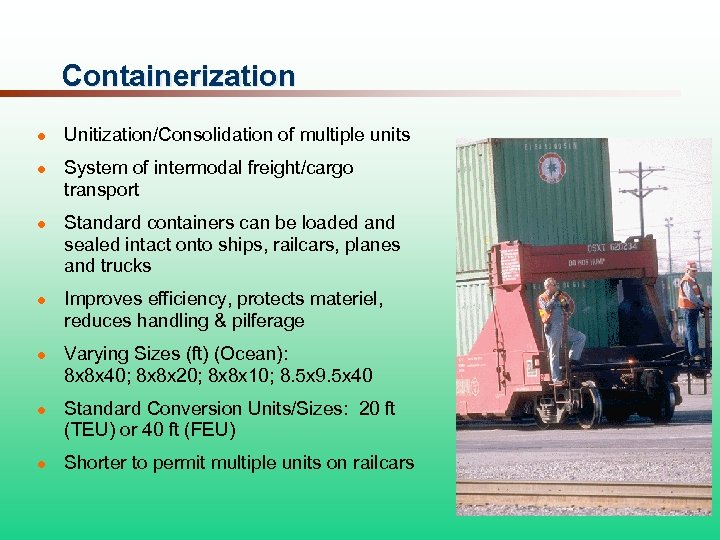 Containerization l l l l Unitization/Consolidation of multiple units System of intermodal freight/cargo transport Standard containers can be loaded and sealed intact onto ships, railcars, planes and trucks Improves efficiency, protects materiel, reduces handling & pilferage Varying Sizes (ft) (Ocean): 8 x 8 x 40; 8 x 8 x 20; 8 x 8 x 10; 8. 5 x 9. 5 x 40 Standard Conversion Units/Sizes: 20 ft (TEU) or 40 ft (FEU) Shorter to permit multiple units on railcars
 Containerization - History - 26 th April 1956: The ideal–X. l Trucking entrepreneur Malcom Mc. Lean put 58 containers aboard a refitted tanker ship, the “Ideal-X”" and sailed them from Newark to Houston l l l Had watched teams of dock workers unloading goods from trucks and transferring them to ships and came up with a more efficient way Refitted two oil tankers and designed truck containers that could be stacked on or below their decks Significant growth during Vietnam War
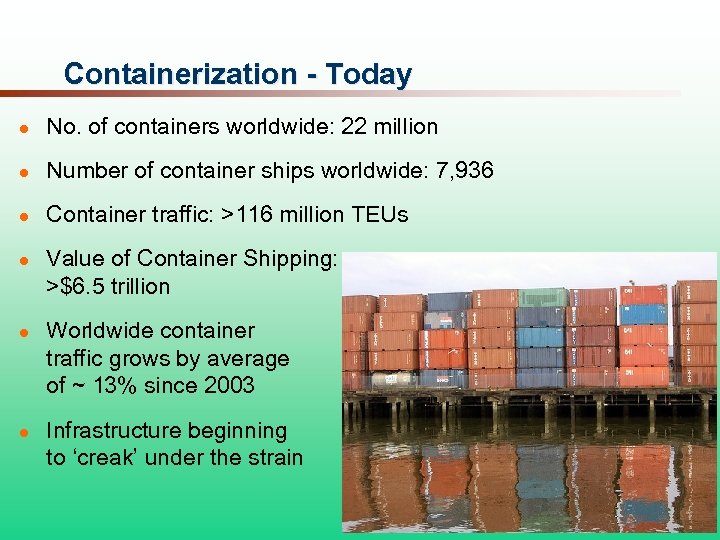 Containerization - Today l No. of containers worldwide: 22 million l Number of container ships worldwide: 7, 936 l Container traffic: >116 million TEUs l l l Value of Container Shipping: >$6. 5 trillion Worldwide container traffic grows by average of ~ 13% since 2003 Infrastructure beginning to ‘creak’ under the strain
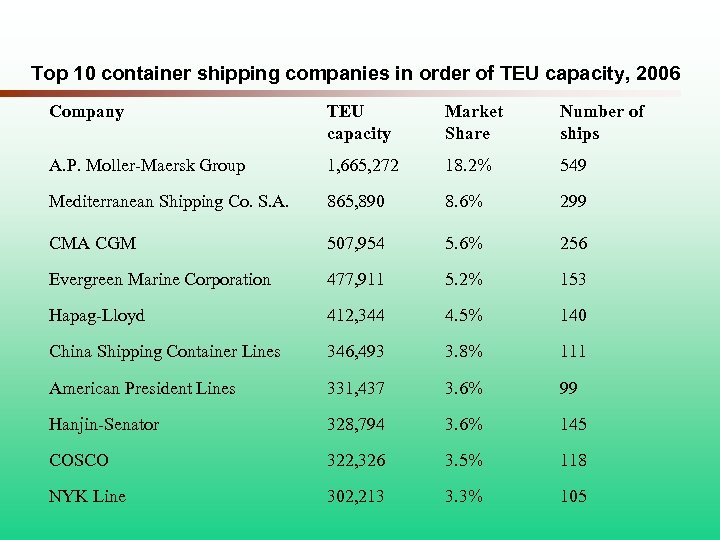 Top 10 container shipping companies in order of TEU capacity, 2006 Company TEU capacity Market Share Number of ships A. P. Moller-Maersk Group 1, 665, 272 18. 2% 549 Mediterranean Shipping Co. S. A. 865, 890 8. 6% 299 CMA CGM 507, 954 5. 6% 256 Evergreen Marine Corporation 477, 911 5. 2% 153 Hapag-Lloyd 412, 344 4. 5% 140 China Shipping Container Lines 346, 493 3. 8% 111 American President Lines 331, 437 3. 6% 99 Hanjin-Senator 328, 794 3. 6% 145 COSCO 322, 326 3. 5% 118 NYK Line 302, 213 3. 3% 105
 “Virtual Picture” Tour No substitute for the real thing – JAXPORT Tour!
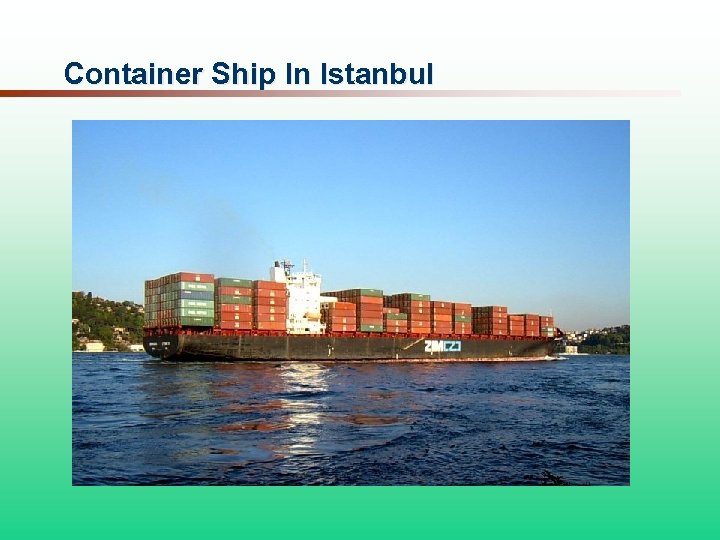 Container Ship In Istanbul
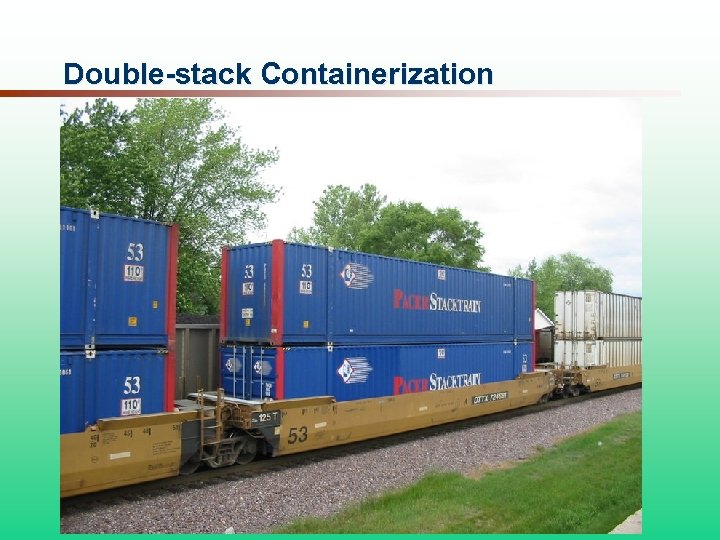 Double-stack Containerization
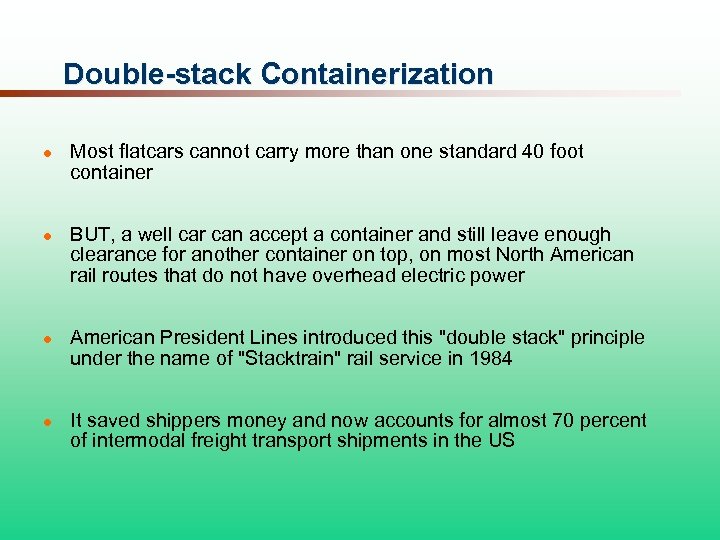 Double-stack Containerization l l Most flatcars cannot carry more than one standard 40 foot container BUT, a well car can accept a container and still leave enough clearance for another container on top, on most North American rail routes that do not have overhead electric power American President Lines introduced this "double stack" principle under the name of "Stacktrain" rail service in 1984 It saved shippers money and now accounts for almost 70 percent of intermodal freight transport shipments in the US
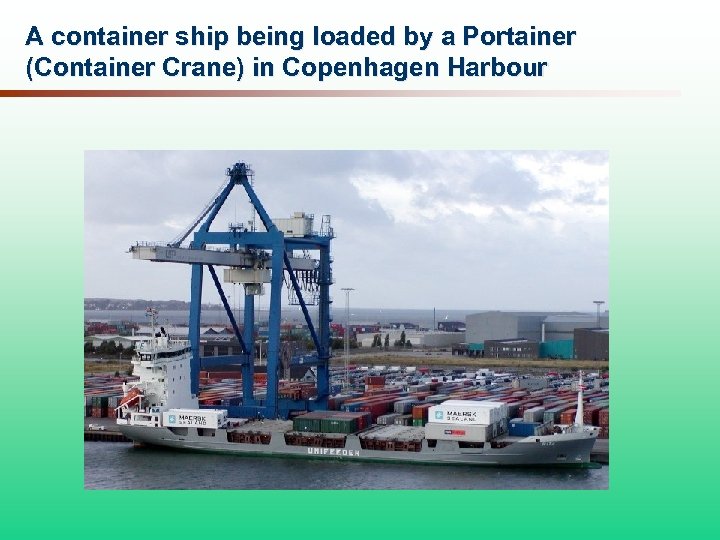 A container ship being loaded by a Portainer (Container Crane) in Copenhagen Harbour
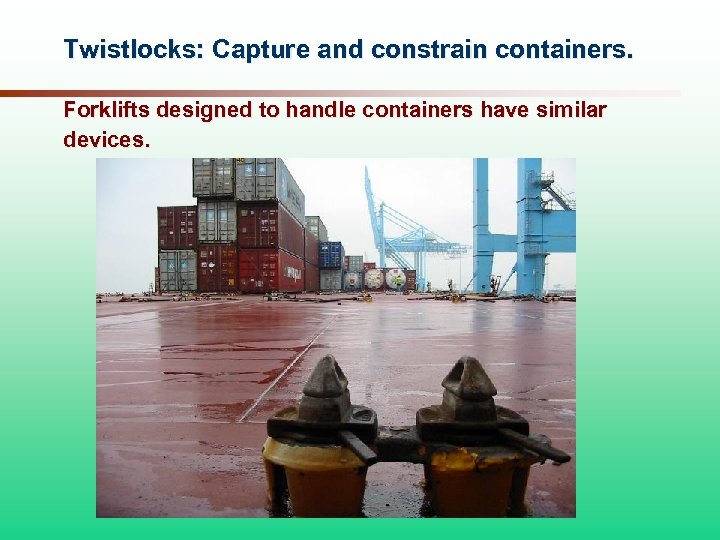 Twistlocks: Capture and constrain containers. Forklifts designed to handle containers have similar devices.
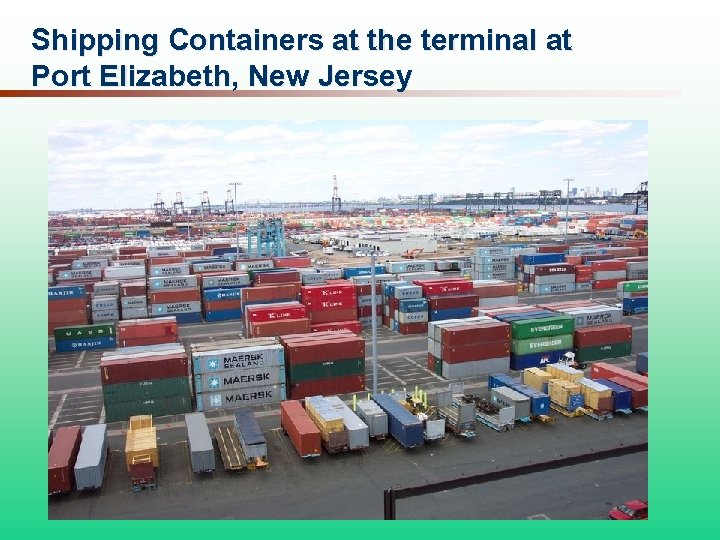 Shipping Containers at the terminal at Port Elizabeth, New Jersey
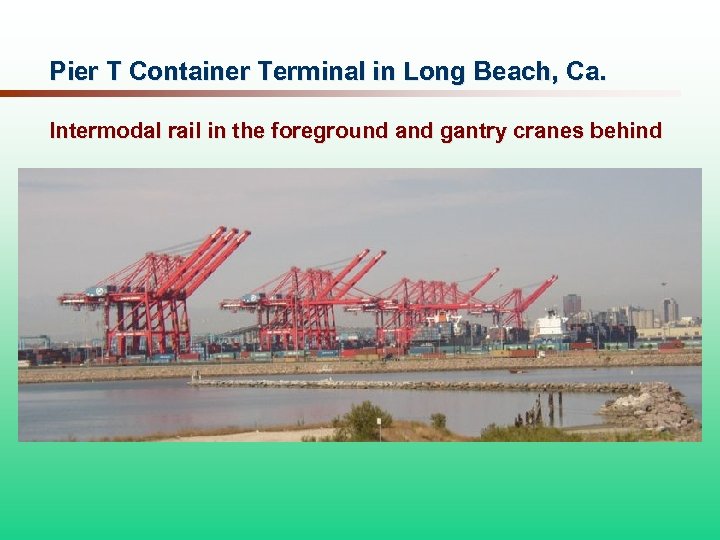 Pier T Container Terminal in Long Beach, Ca. Intermodal rail in the foreground and gantry cranes behind
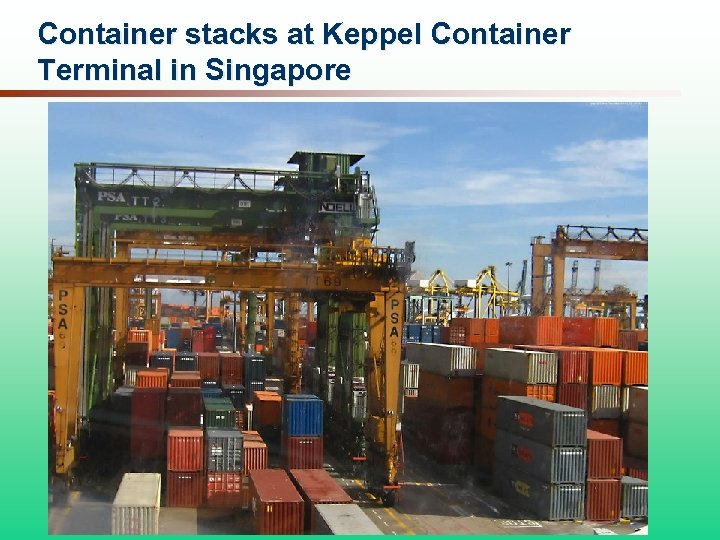 Container stacks at Keppel Container Terminal in Singapore
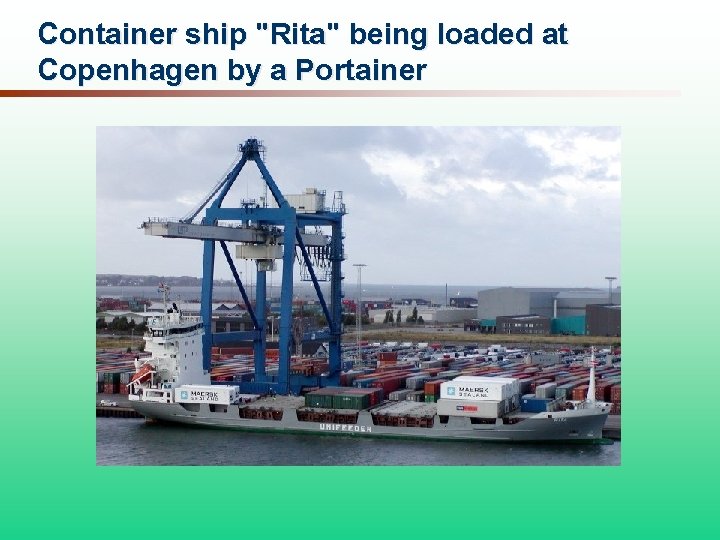 Container ship "Rita" being loaded at Copenhagen by a Portainer
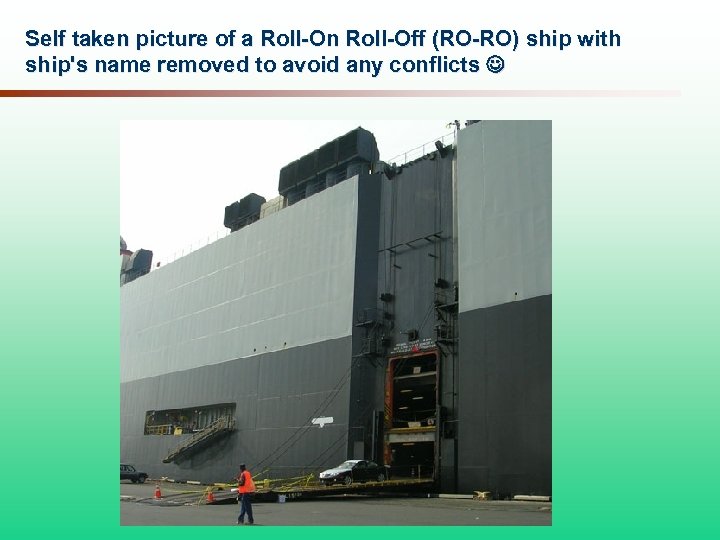 Self taken picture of a Roll-On Roll-Off (RO-RO) ship with ship's name removed to avoid any conflicts
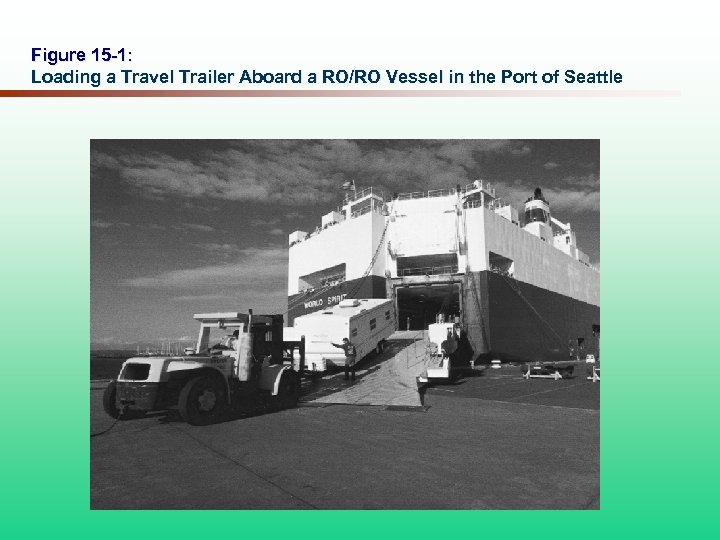 Figure 15 -1: Loading a Travel Trailer Aboard a RO/RO Vessel in the Port of Seattle
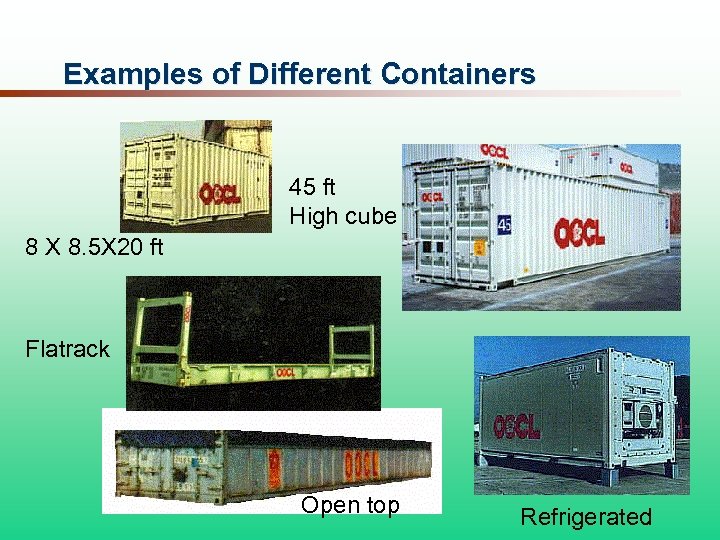 Examples of Different Containers 45 ft High cube 8 X 8. 5 X 20 ft Flatrack Open top Refrigerated
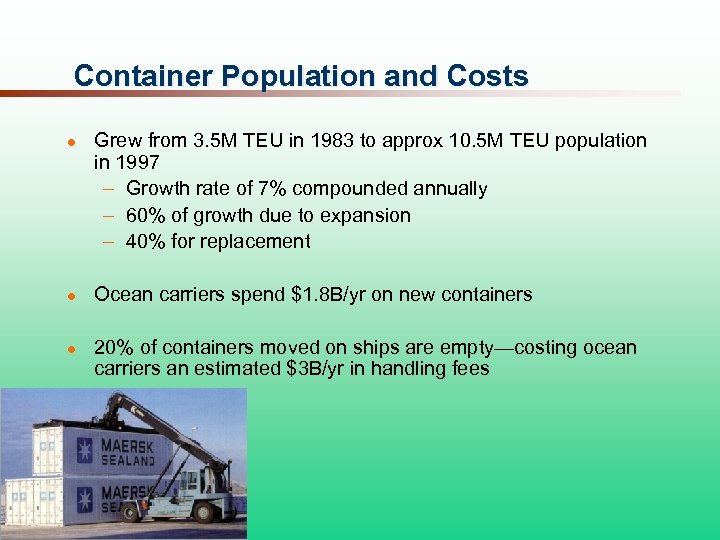 Container Population and Costs l l l Grew from 3. 5 M TEU in 1983 to approx 10. 5 M TEU population in 1997 – Growth rate of 7% compounded annually – 60% of growth due to expansion – 40% for replacement Ocean carriers spend $1. 8 B/yr on new containers 20% of containers moved on ships are empty—costing ocean carriers an estimated $3 B/yr in handling fees
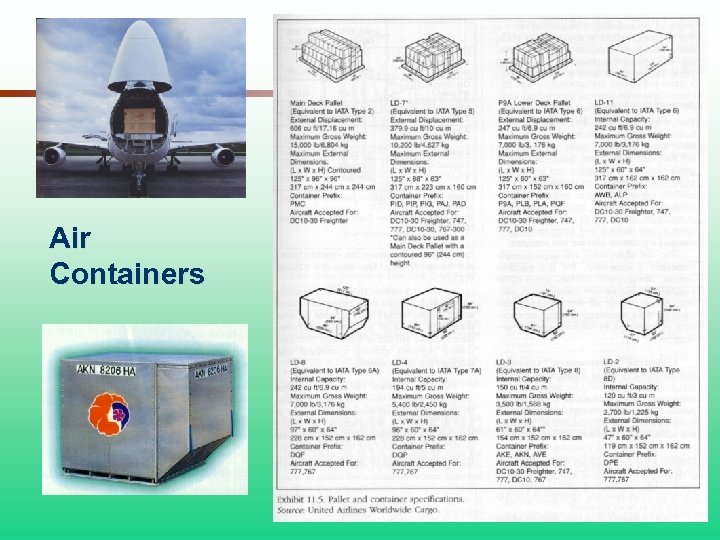 Air Containers
 Unit Load Devices (ULDs) l l l Pallets and containers used to load luggage, freight, and mail on wide-body aircraft and specific narrow-body aircraft Benefits: – Fewer units to load – Saves ground crews time and effort – Helps prevent delayed flights – Contents can be tracked since each ULD is manifested separately Come in 2 Forms: – Pallets: Rugged sheets of aluminum with rims designed to lock onto cargo net lugs – Containers: • Also known as Cans and Pods • Fully enclosed containers made of aluminum or combination of aluminum (frame) and plastic (walls) • May have refrigeration units built-in depending on nature of goods inside l Aircraft loadings can be made up of all containers, all pallets, or a mix of ULD types, depending on convenience
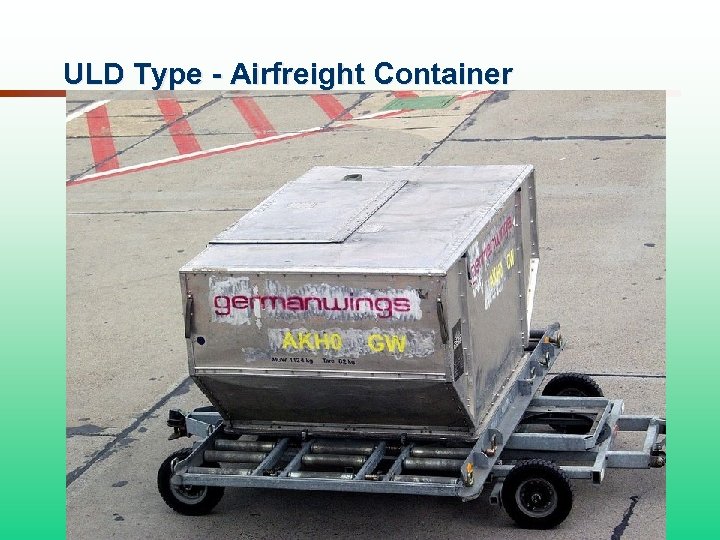 ULD Type - Airfreight Container
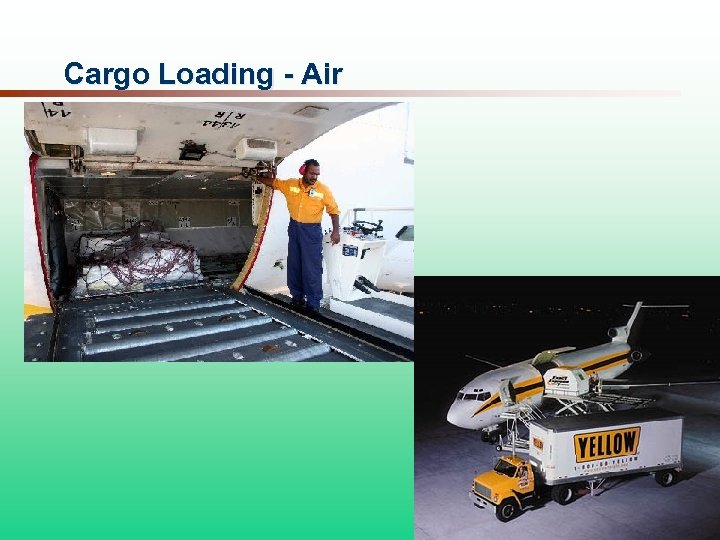 Cargo Loading - Air
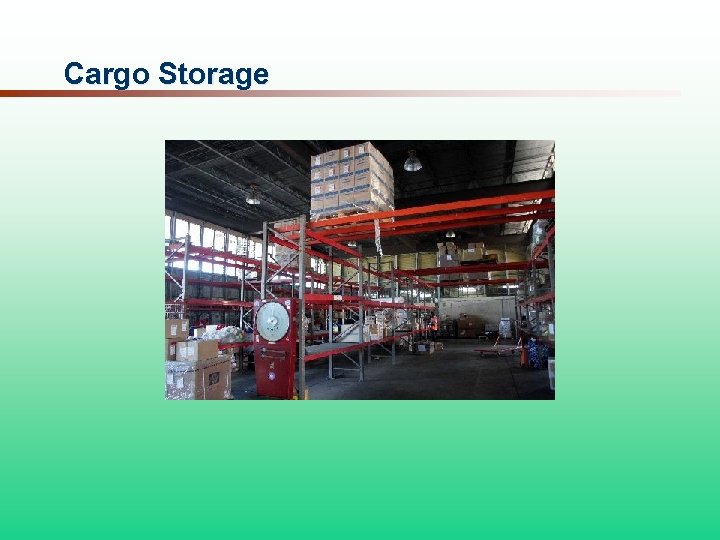 Cargo Storage
 Ocean Ports - Exercise l l Consider the table “World Port Rankings -2002” which follows the assigned reading Chapter 13 by Thomchik. Explain the difference between the table components “Total Cargo Volume, Metric Tons (000 s)” and “Container Traffic (TEUs, 000). Next, consider “Table 25 (Top 20 Foreign Trade Freight Gateways by Value of Shipments: 2002)” which focuses on USA gateways. Print out a USA map and plot the location of the 20 gateways on the map. What observations can you make from the plotted map with respect to the type and mix of the modal gateways, geographic locations, economic development and impact, etc. ?
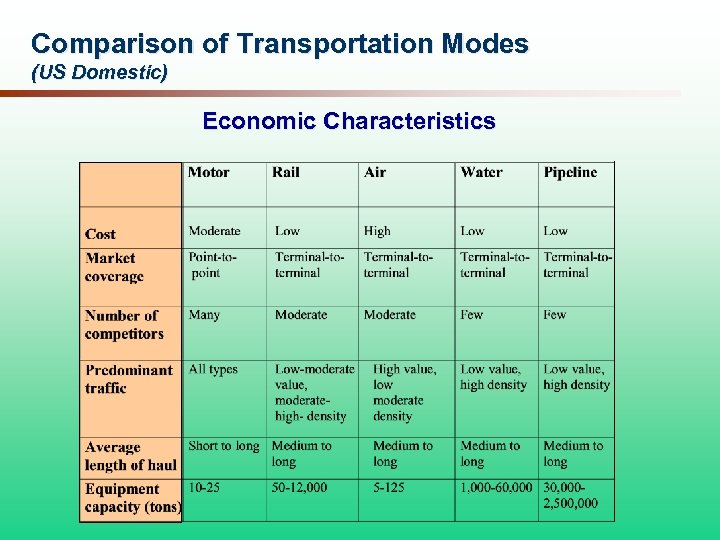 Comparison of Transportation Modes (US Domestic) Economic Characteristics
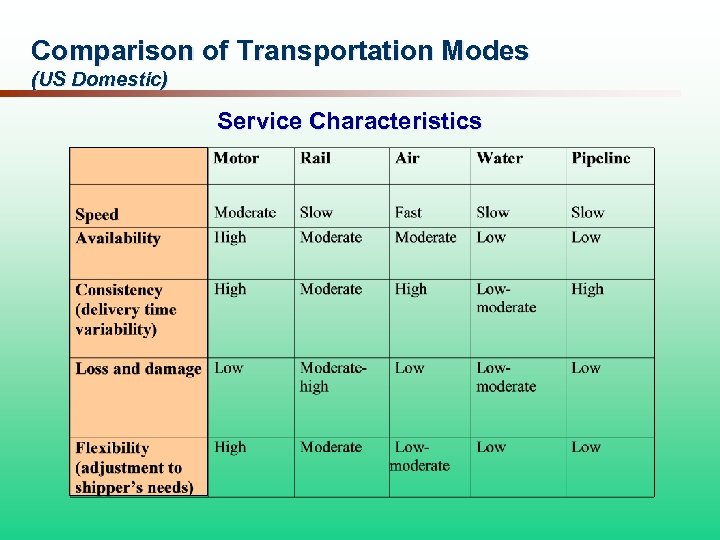 Comparison of Transportation Modes (US Domestic) Service Characteristics
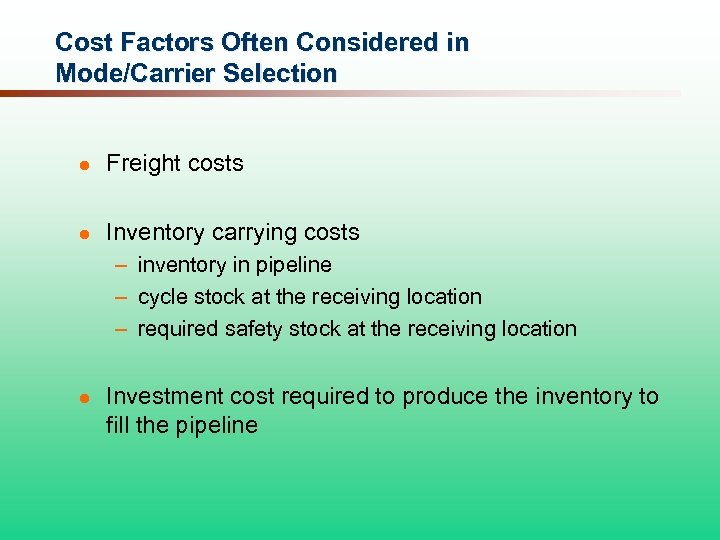 Cost Factors Often Considered in Mode/Carrier Selection l Freight costs l Inventory carrying costs – inventory in pipeline – cycle stock at the receiving location – required safety stock at the receiving location l Investment cost required to produce the inventory to fill the pipeline
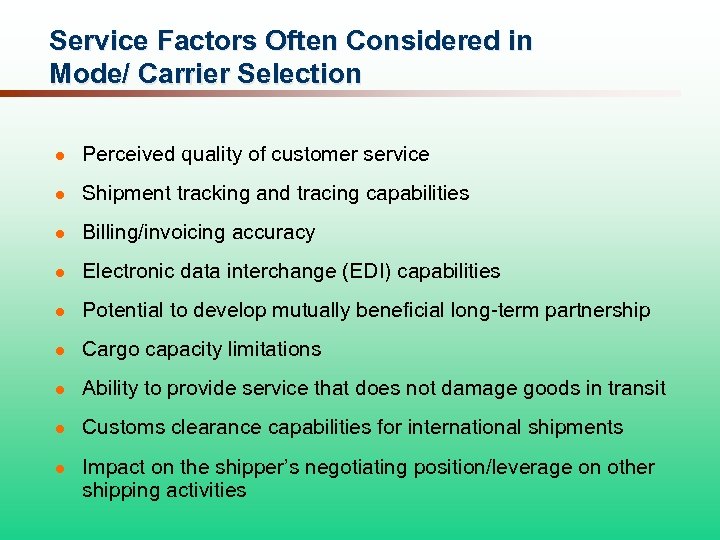 Service Factors Often Considered in Mode/ Carrier Selection l Perceived quality of customer service l Shipment tracking and tracing capabilities l Billing/invoicing accuracy l Electronic data interchange (EDI) capabilities l Potential to develop mutually beneficial long-term partnership l Cargo capacity limitations l Ability to provide service that does not damage goods in transit l Customs clearance capabilities for international shipments l Impact on the shipper’s negotiating position/leverage on other shipping activities
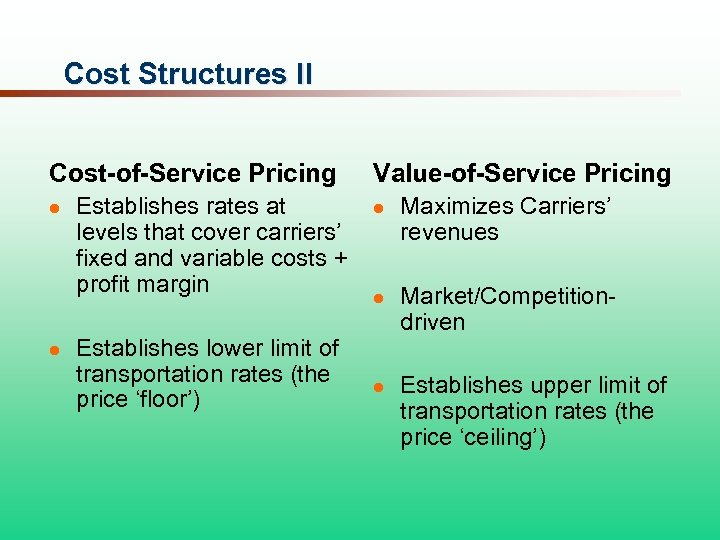 Cost Structures II Cost-of-Service Pricing l l Establishes rates at levels that cover carriers’ fixed and variable costs + profit margin Establishes lower limit of transportation rates (the price ‘floor’) Value-of-Service Pricing l l l Maximizes Carriers’ revenues Market/Competitiondriven Establishes upper limit of transportation rates (the price ‘ceiling’)
 Total Logistics Cost Analysis – Ocean vs. Air l l Factors to consider (Table 11 -3) The Higher the Value : Weight ratio, the more likely justification for Air Cargo