


 Скачать презентацию Occupational Health and the Heart John D Meyer
d99409638c0345a557e3667cb1e742dd.ppt
- Количество слайдов: 50
 Occupational Health and the Heart John D Meyer MD MPH West Virginia University of Manchester, UK
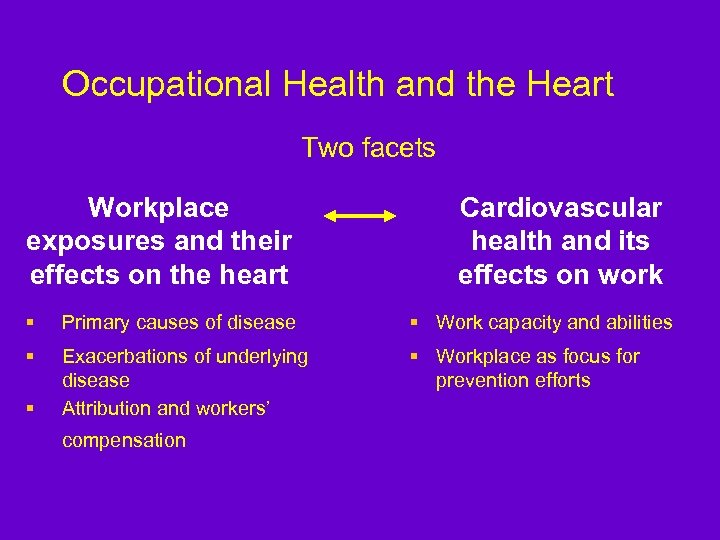 Occupational Health and the Heart Two facets Workplace exposures and their effects on the heart Cardiovascular health and its effects on work § Primary causes of disease § Work capacity and abilities § Exacerbations of underlying disease Attribution and workers’ § Workplace as focus for prevention efforts § compensation
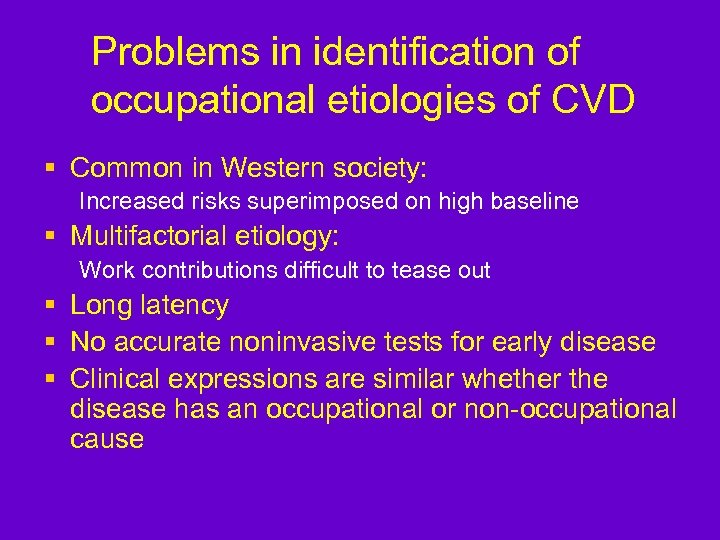 Problems in identification of occupational etiologies of CVD § Common in Western society: Increased risks superimposed on high baseline § Multifactorial etiology: Work contributions difficult to tease out § Long latency § No accurate noninvasive tests for early disease § Clinical expressions are similar whether the disease has an occupational or non-occupational cause
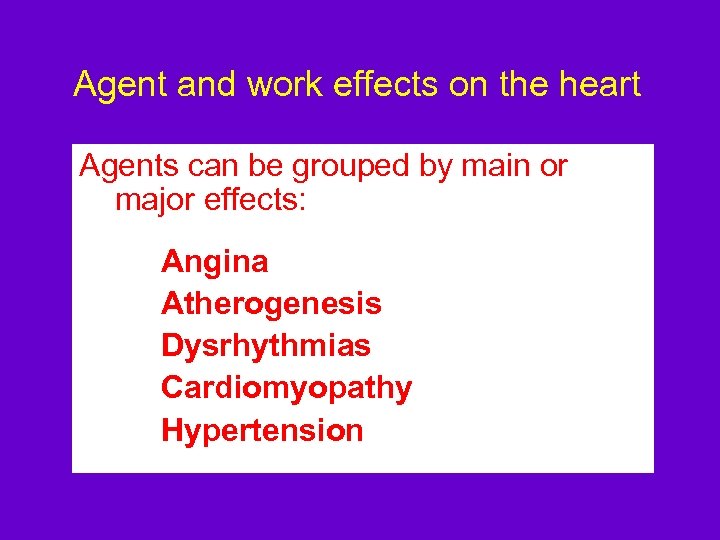 Agent and work effects on the heart Agents can be grouped by main or major effects: Angina Atherogenesis Dysrhythmias Cardiomyopathy Hypertension
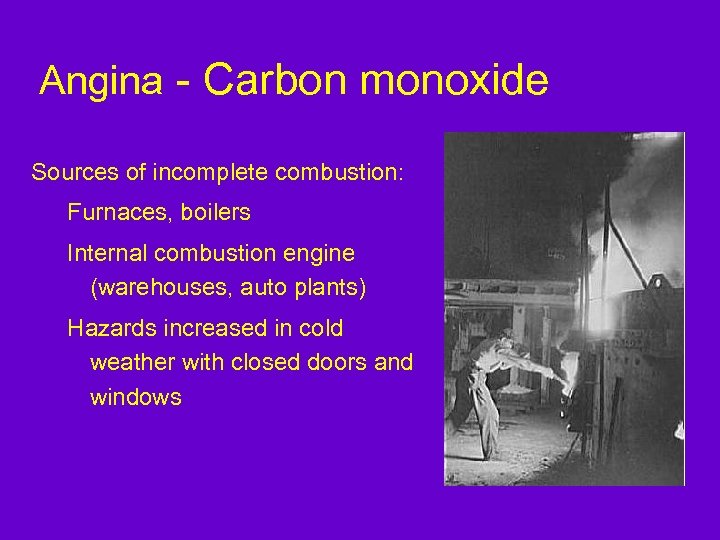 Angina - Carbon monoxide Sources of incomplete combustion: Furnaces, boilers Internal combustion engine (warehouses, auto plants) Hazards increased in cold weather with closed doors and windows
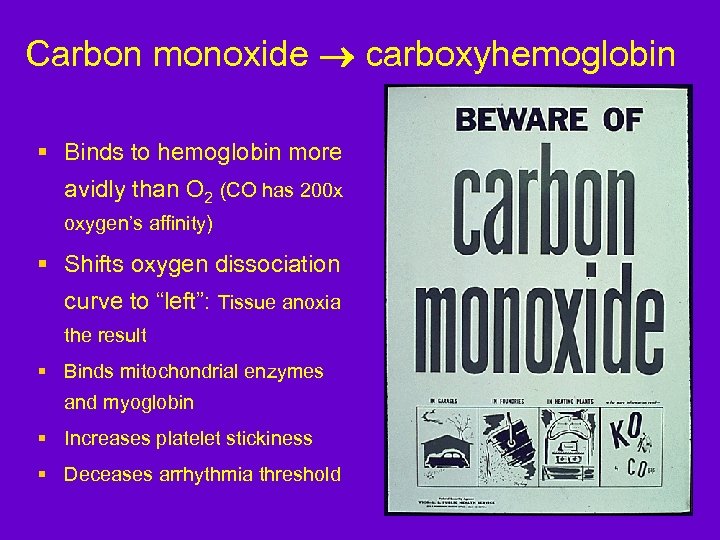 Carbon monoxide carboxyhemoglobin § Binds to hemoglobin more avidly than O 2 (CO has 200 x oxygen’s affinity) § Shifts oxygen dissociation curve to “left”: Tissue anoxia the result § Binds mitochondrial enzymes and myoglobin § Increases platelet stickiness § Deceases arrhythmia threshold
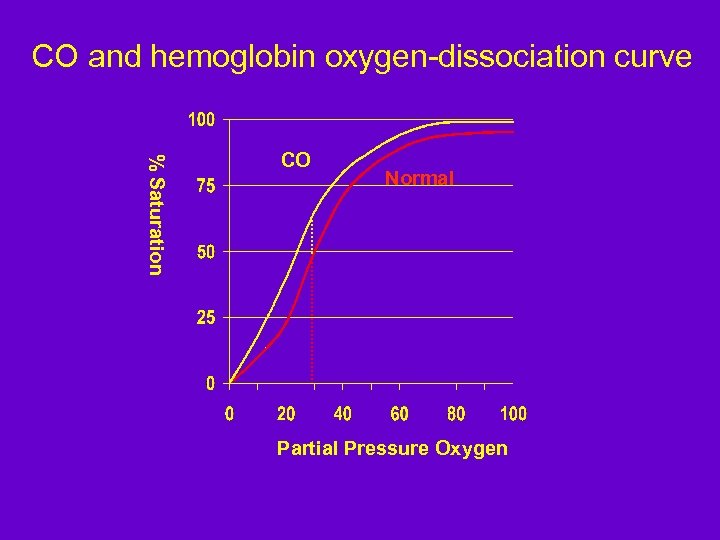 CO and hemoglobin oxygen-dissociation curve % Saturation CO Normal Partial Pressure Oxygen
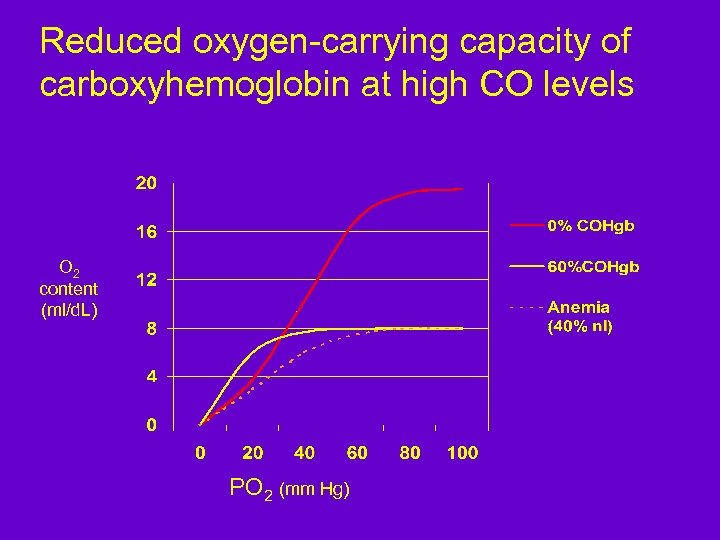 Reduced oxygen-carrying capacity of carboxyhemoglobin at high CO levels O 2 content (ml/d. L) PO 2 (mm Hg)
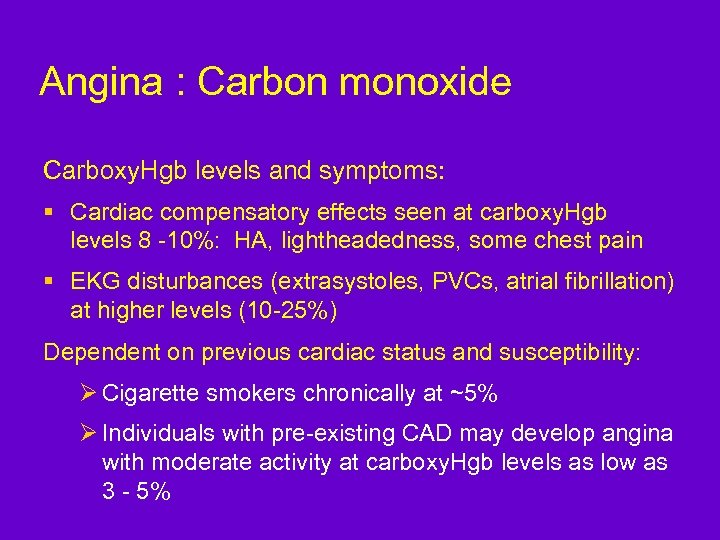 Angina : Carbon monoxide Carboxy. Hgb levels and symptoms: § Cardiac compensatory effects seen at carboxy. Hgb levels 8 -10%: HA, lightheadedness, some chest pain § EKG disturbances (extrasystoles, PVCs, atrial fibrillation) at higher levels (10 -25%) Dependent on previous cardiac status and susceptibility: Ø Cigarette smokers chronically at ~5% Ø Individuals with pre-existing CAD may develop angina with moderate activity at carboxy. Hgb levels as low as 3 - 5%
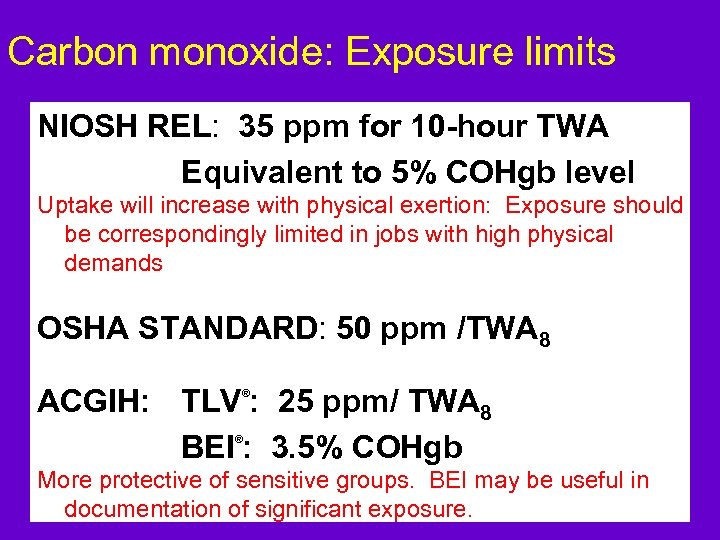 Carbon monoxide: Exposure limits NIOSH REL: 35 ppm for 10 -hour TWA Equivalent to 5% COHgb level Uptake will increase with physical exertion: Exposure should be correspondingly limited in jobs with high physical demands OSHA STANDARD: 50 ppm /TWA 8 ACGIH: TLV : 25 ppm/ TWA 8 BEI : 3. 5% COHgb ® ® More protective of sensitive groups. BEI may be useful in documentation of significant exposure.
 Carbon monoxide Methylene Chloride CH 2 Cl 2 ØSolvent: degreasing, paint stripping ØAbsorption through respiratory route or through skin ØMetabolized in bloodstream to CO
 Methylene Chloride May elevate carboxyhemoglobin to 10% or more especially in poorly ventilated space Probably not significant to healthy person; may become mildly symptomatic Cigarette smokers, those with angina or current CHD a concern: excess CO may trigger symptoms
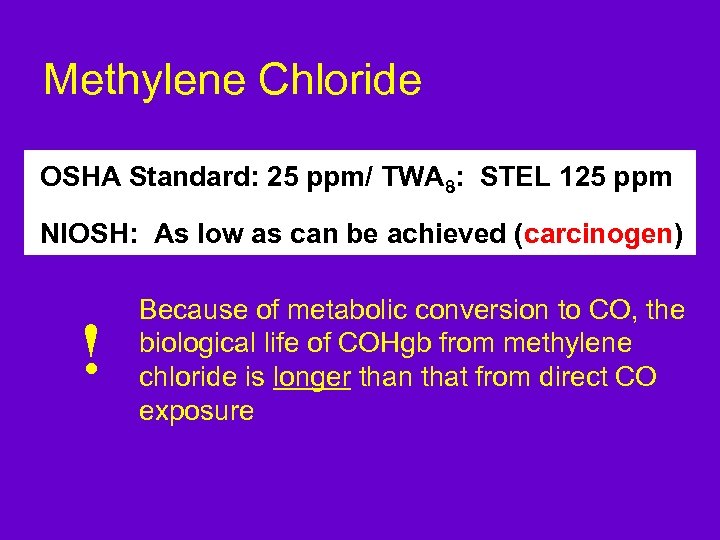 Methylene Chloride OSHA Standard: 25 ppm/ TWA 8: STEL 125 ppm NIOSH: As low as can be achieved (carcinogen) ! Because of metabolic conversion to CO, the biological life of COHgb from methylene chloride is longer than that from direct CO exposure
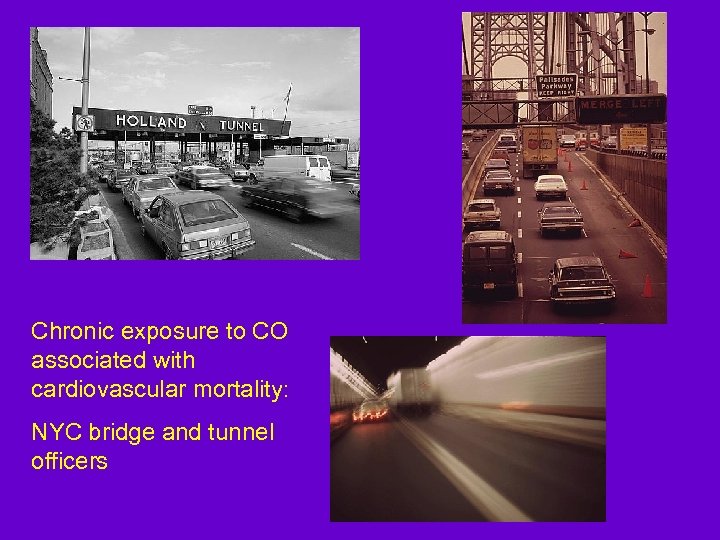 Chronic exposure to CO associated with cardiovascular mortality: NYC bridge and tunnel officers
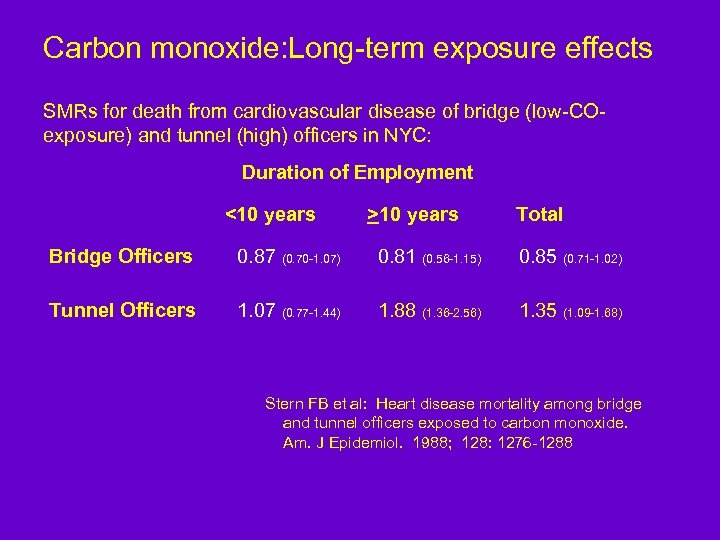 Carbon monoxide: Long-term exposure effects SMRs for death from cardiovascular disease of bridge (low-COexposure) and tunnel (high) officers in NYC: Duration of Employment <10 years >10 years Total Bridge Officers 0. 87 (0. 70 -1. 07) 0. 81 (0. 56 -1. 15) 0. 85 (0. 71 -1. 02) Tunnel Officers 1. 07 (0. 77 -1. 44) 1. 88 (1. 36 -2. 56) 1. 35 (1. 09 -1. 68) Stern FB et al: Heart disease mortality among bridge and tunnel officers exposed to carbon monoxide. Am. J Epidemiol. 1988; 128: 1276 -1288
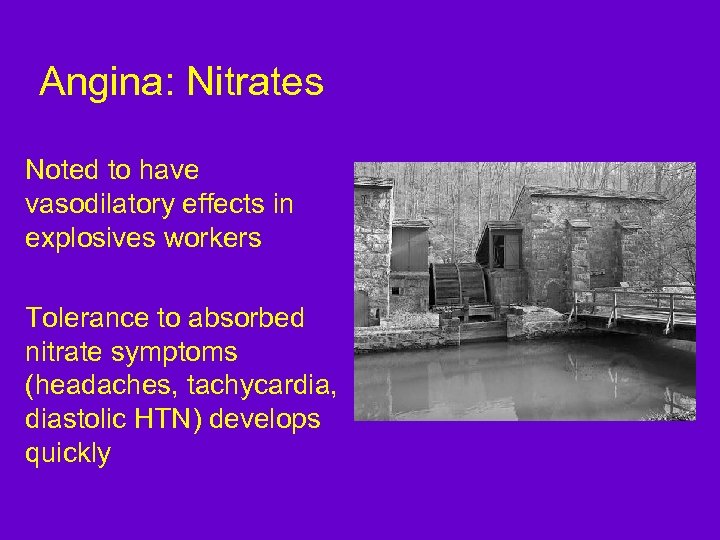 Angina: Nitrates Noted to have vasodilatory effects in explosives workers Tolerance to absorbed nitrate symptoms (headaches, tachycardia, diastolic HTN) develops quickly
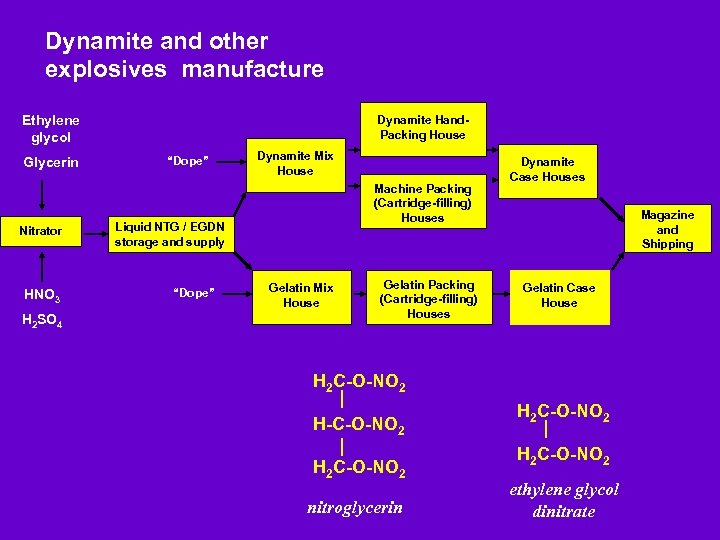 Dynamite and other explosives manufacture Ethylene glycol Glycerin Nitrator HNO 3 H 2 SO 4 Dynamite Hand. Packing House “Dope” Dynamite Mix House Machine Packing (Cartridge-filling) Houses Liquid NTG / EGDN storage and supply “Dope” Gelatin Packing (Cartridge-filling) Houses Gelatin Mix House Dynamite Case Houses Magazine and Shipping Gelatin Case House H 2 C-O-NO 2 H-C-O-NO 2 H 2 C-O-NO 2 nitroglycerin H 2 C-O-NO 2 ethylene glycol dinitrate
 Acute effects in workers noted in early 1960 s: Sudden death: 24 -96 hours after exposure ceased (weekends/holidays) “Monday Morning Angina”: Relieved by RTW, nitrate meds: coronary spasm in absence of CAD Three-fold increase in acute deaths in younger men from ischemic CHD
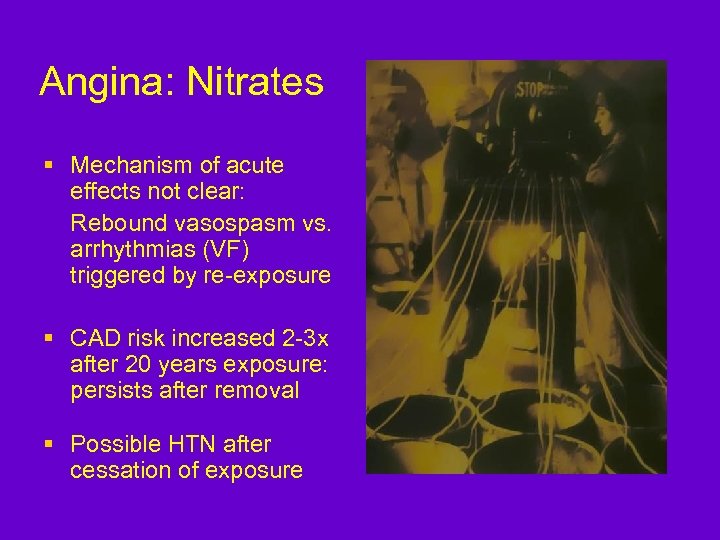 Angina: Nitrates § Mechanism of acute effects not clear: Rebound vasospasm vs. arrhythmias (VF) triggered by re-exposure § CAD risk increased 2 -3 x after 20 years exposure: persists after removal § Possible HTN after cessation of exposure
 Atherogenesis Carbon disulfide (CS 2) • Cellulose-derived materials • Rayon • Cellophane • • Solvent for rubber, oils Pesticides Fumigant for grain, books Microelectronics industry
 Viscose process for Rayon manufacture CS 2 Lye Wood Flakes Raw Cellulose Xanthate H + Solution Viscose Zn++ “Ripening” H 2 SO 4 Rayon Filaments Spinning CS 2 Filtering CS 2
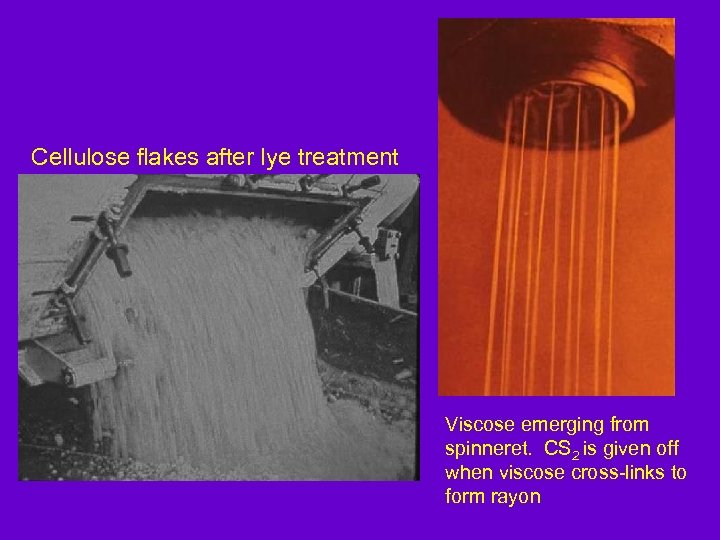 Cellulose flakes after lye treatment Viscose emerging from spinneret. CS 2 is given off when viscose cross-links to form rayon
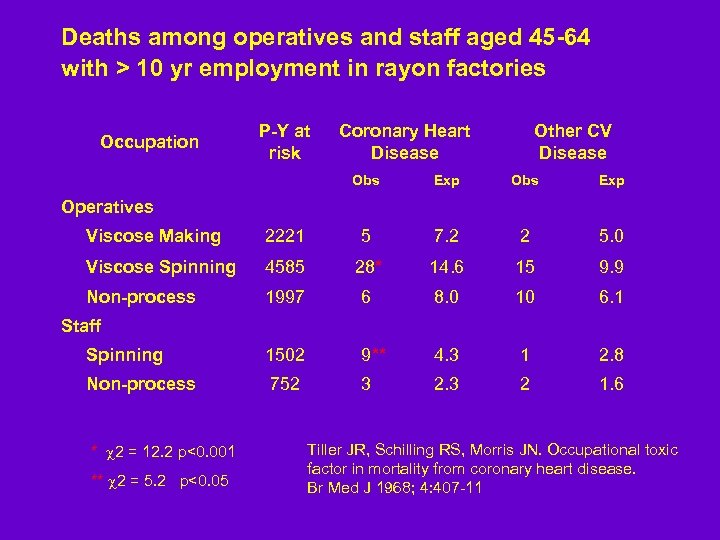 Deaths among operatives and staff aged 45 -64 with > 10 yr employment in rayon factories Occupation P-Y at risk Coronary Heart Disease Other CV Disease Obs Exp Operatives Viscose Making 2221 5 7. 2 2 5. 0 Viscose Spinning 4585 28* 14. 6 15 9. 9 Non-process 1997 6 8. 0 10 6. 1 Spinning 1502 9** 4. 3 1 2. 8 Non-process 752 3 2 1. 6 Staff * 2 = 12. 2 p<0. 001 ** 2 = 5. 2 p<0. 05 Tiller JR, Schilling RS, Morris JN. Occupational toxic factor in mortality from coronary heart disease. Br Med J 1968; 4: 407 -11
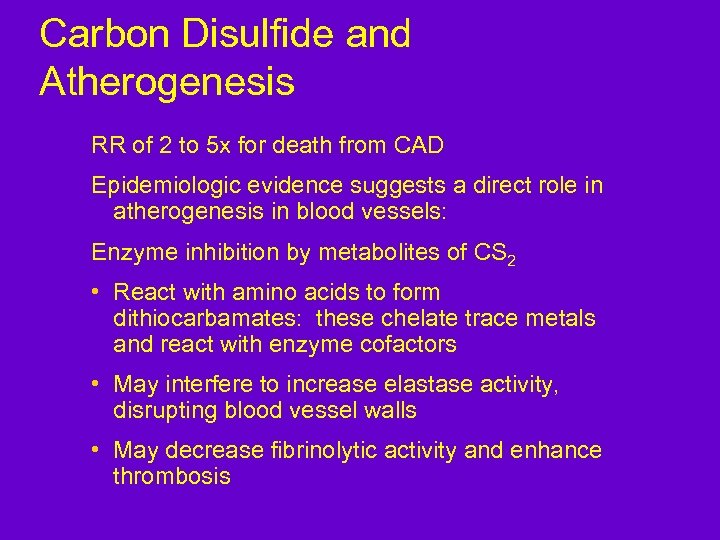 Carbon Disulfide and Atherogenesis RR of 2 to 5 x for death from CAD Epidemiologic evidence suggests a direct role in atherogenesis in blood vessels: Enzyme inhibition by metabolites of CS 2 • React with amino acids to form dithiocarbamates: these chelate trace metals and react with enzyme cofactors • May interfere to increase elastase activity, disrupting blood vessel walls • May decrease fibrinolytic activity and enhance thrombosis
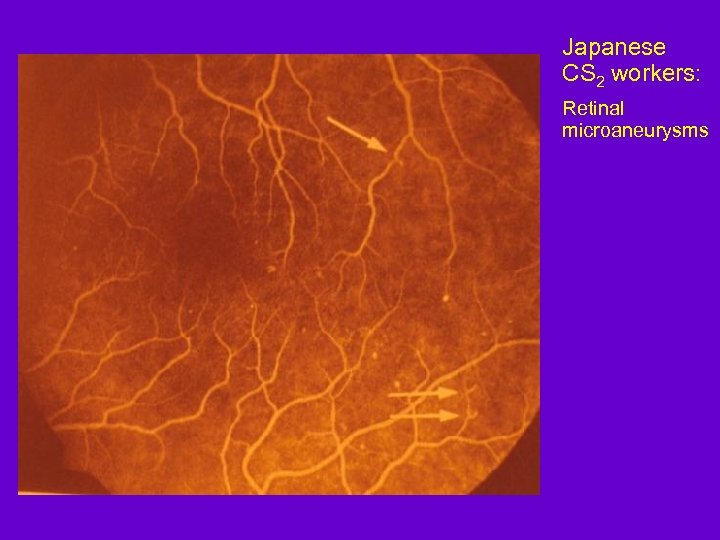 Japanese CS 2 workers: Retinal microaneurysms
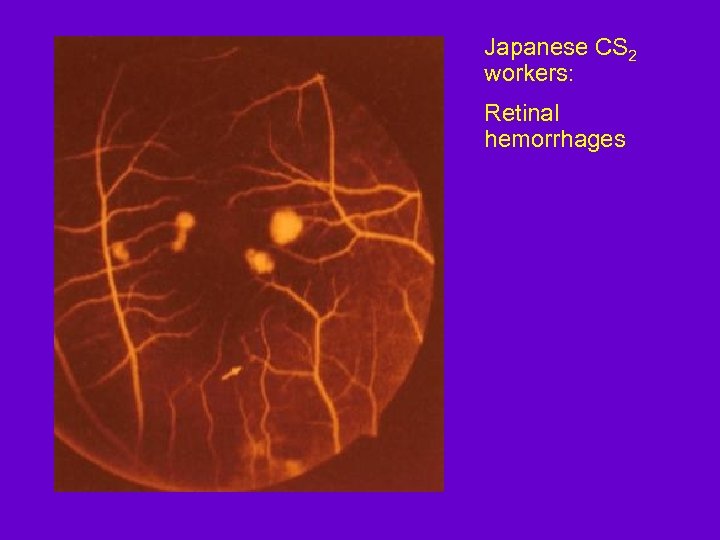 Japanese CS 2 workers: Retinal hemorrhages
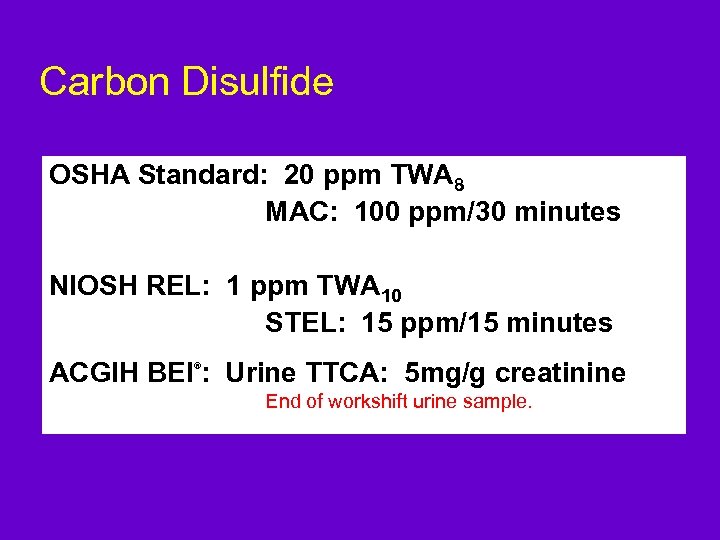 Carbon Disulfide OSHA Standard: 20 ppm TWA 8 MAC: 100 ppm/30 minutes NIOSH REL: 1 ppm TWA 10 STEL: 15 ppm/15 minutes ACGIH BEI : Urine TTCA: 5 mg/g creatinine ® End of workshift urine sample.
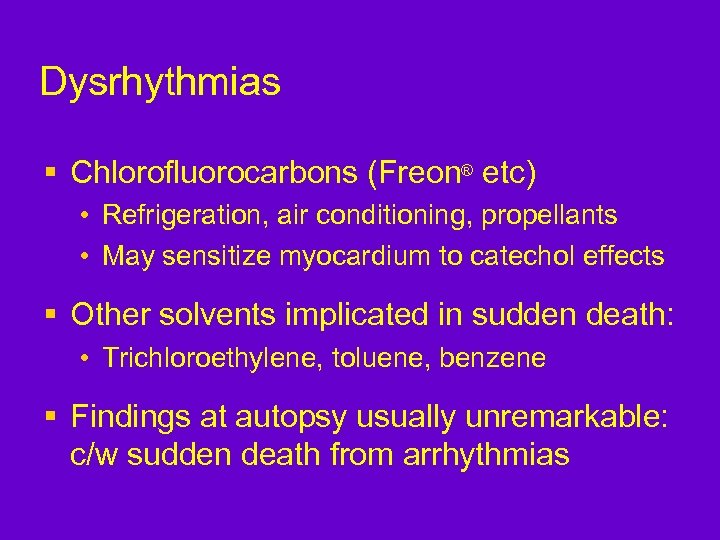 Dysrhythmias § Chlorofluorocarbons (Freon® etc) • Refrigeration, air conditioning, propellants • May sensitize myocardium to catechol effects § Other solvents implicated in sudden death: • Trichloroethylene, toluene, benzene § Findings at autopsy usually unremarkable: c/w sudden death from arrhythmias
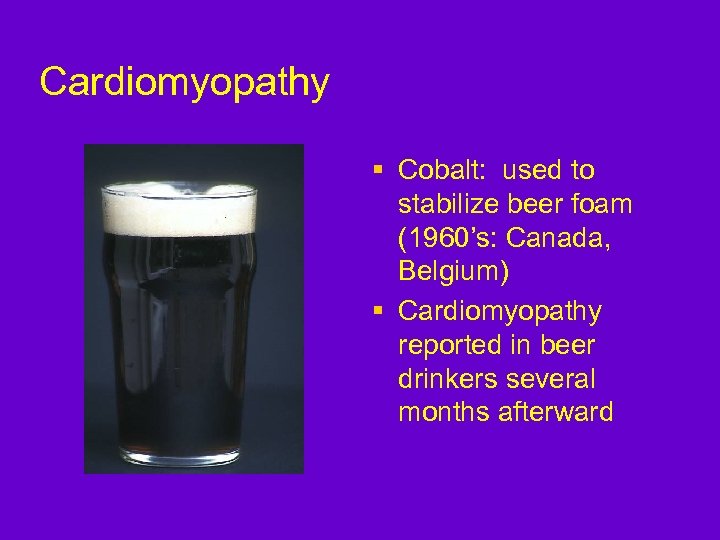 Cardiomyopathy § Cobalt: used to stabilize beer foam (1960’s: Canada, Belgium) § Cardiomyopathy reported in beer drinkers several months afterward
 Cardiomyopathy: Cobalt Dose-related: seen in heavy drinkers greatest risk in those drinking >10 L/day (!) 22 - 50% mortality in some series Why this group? ØCM not seen in cobalt therapy for anemia Probable synergistic effect with alcohol, poor diet
 Hypertension Associations with several occupational exposures and agents Mechanisms are varied and depend on action of agent
 Hypertension Lead § Probable mechanism is via renal injury § May also increase vascular tone and resistance § Chelation may improve HTN in acute Pb intoxication, but will not reverse if longstanding renal damage is present Cadmium possibly associated with HTN; noted to occur at levels below nephrotoxic dose
 Hypertension Carbon disulfide § Vascular nephropathy and accelerated atherogenesis appear to be mechanisms Noise, shiftwork § Postulated effects mediated by stress response (increase sympathetic and hormonal mediator release)
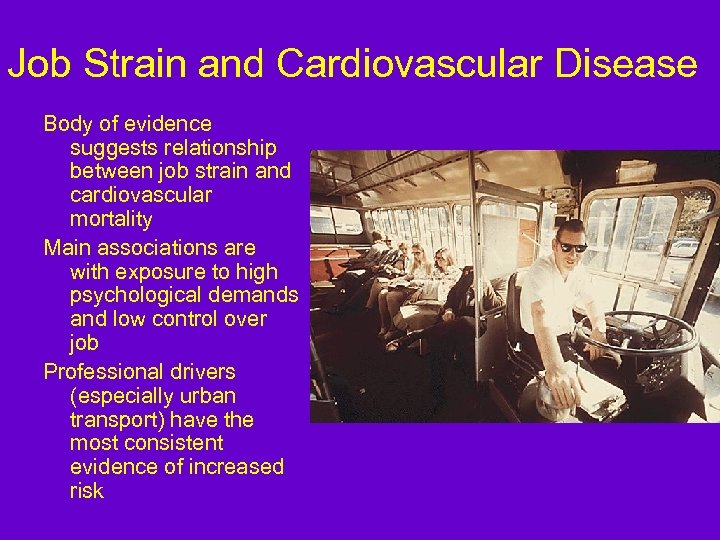 Job Strain and Cardiovascular Disease Body of evidence suggests relationship between job strain and cardiovascular mortality Main associations are with exposure to high psychological demands and low control over job Professional drivers (especially urban transport) have the most consistent evidence of increased risk
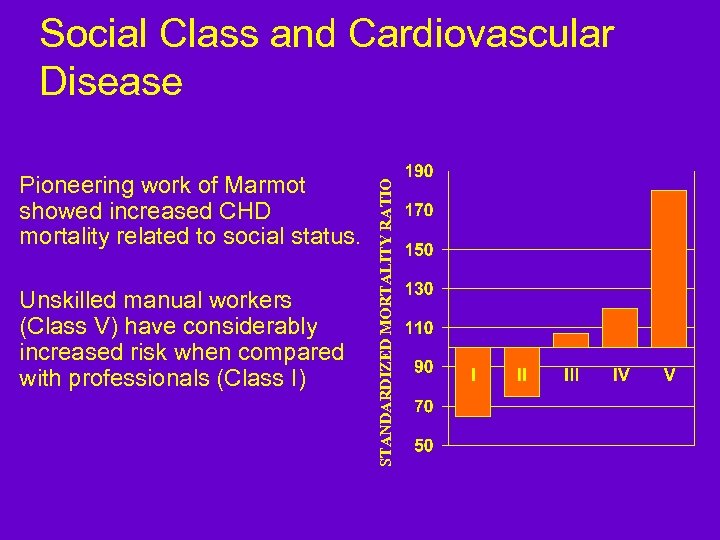 Pioneering work of Marmot showed increased CHD mortality related to social status. Unskilled manual workers (Class V) have considerably increased risk when compared with professionals (Class I) STANDARDIZED MORTALITY RATIO Social Class and Cardiovascular Disease
 Cardiovascular effects on work Some figures on heart disease in US: § 1. 5 million MI each year § Nearly 200, 000 CABG per year § Over 80% of workers are generally able to return to work after initial MI or CABG
 Cardiovascular effects: Return-to-Work after MI Medical Factors Major predictors of RTW: • LV dysfunction • persistent ischemia / angina after treatment Non-Medical Factors • • Coping styles Perception of work (demands, satisfaction) Age, gender, education Benefits/incentives
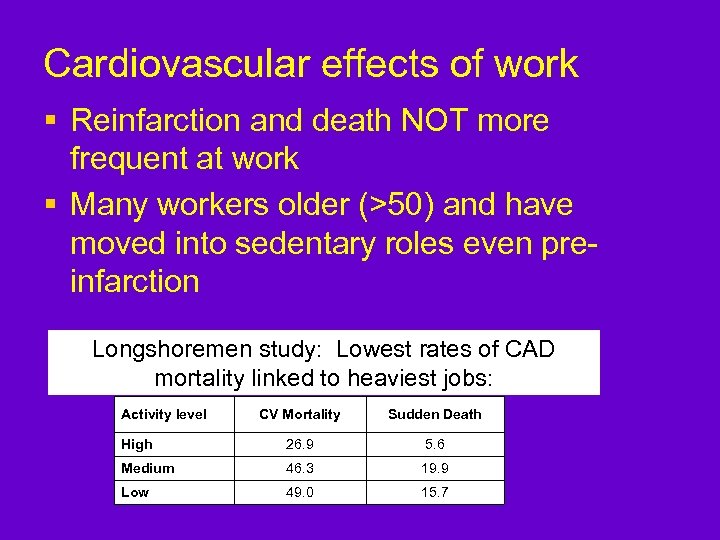 Cardiovascular effects of work § Reinfarction and death NOT more frequent at work § Many workers older (>50) and have moved into sedentary roles even preinfarction Longshoremen study: Lowest rates of CAD mortality linked to heaviest jobs: Activity level CV Mortality Sudden Death High 26. 9 5. 6 Medium 46. 3 19. 9 Low 49. 0 15. 7
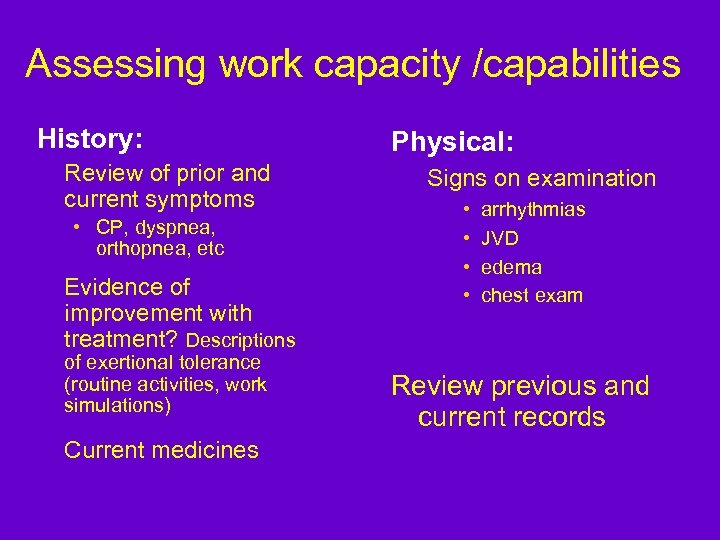 Assessing work capacity /capabilities History: Review of prior and current symptoms • CP, dyspnea, orthopnea, etc Evidence of improvement with treatment? Descriptions of exertional tolerance (routine activities, work simulations) Current medicines Physical: Signs on examination • • arrhythmias JVD edema chest exam Review previous and current records
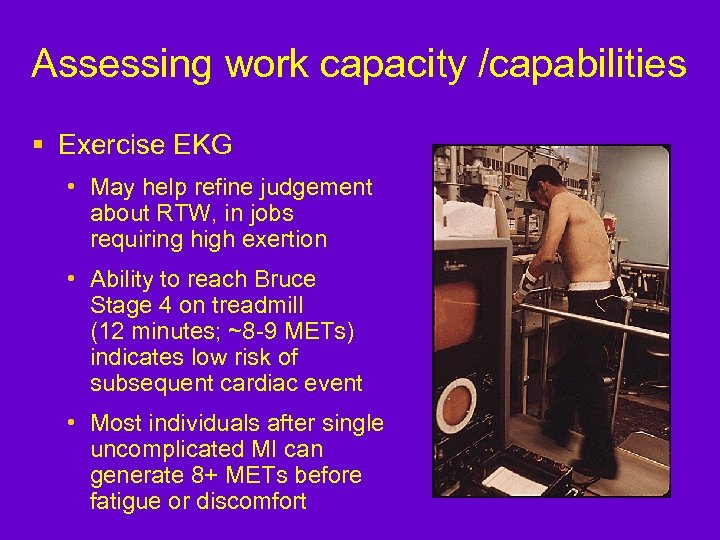 Assessing work capacity /capabilities § Exercise EKG • May help refine judgement about RTW, in jobs requiring high exertion • Ability to reach Bruce Stage 4 on treadmill (12 minutes; ~8 -9 METs) indicates low risk of subsequent cardiac event • Most individuals after single uncomplicated MI can generate 8+ METs before fatigue or discomfort
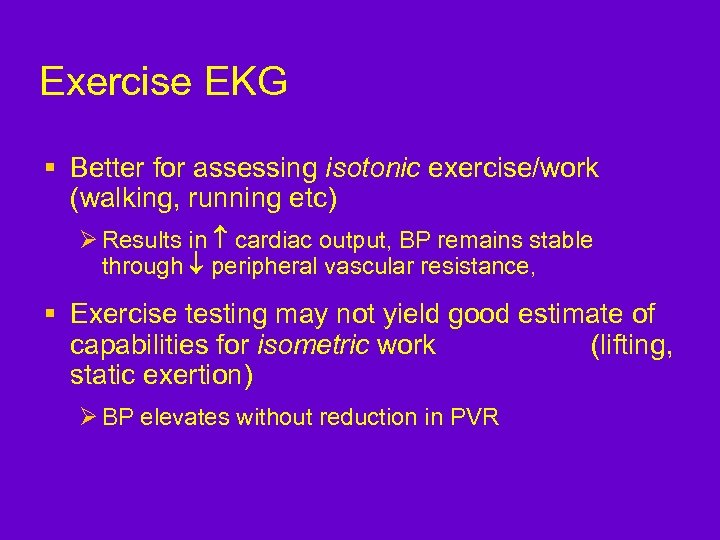 Exercise EKG § Better for assessing isotonic exercise/work (walking, running etc) Ø Results in cardiac output, BP remains stable through peripheral vascular resistance, § Exercise testing may not yield good estimate of capabilities for isometric work (lifting, static exertion) Ø BP elevates without reduction in PVR
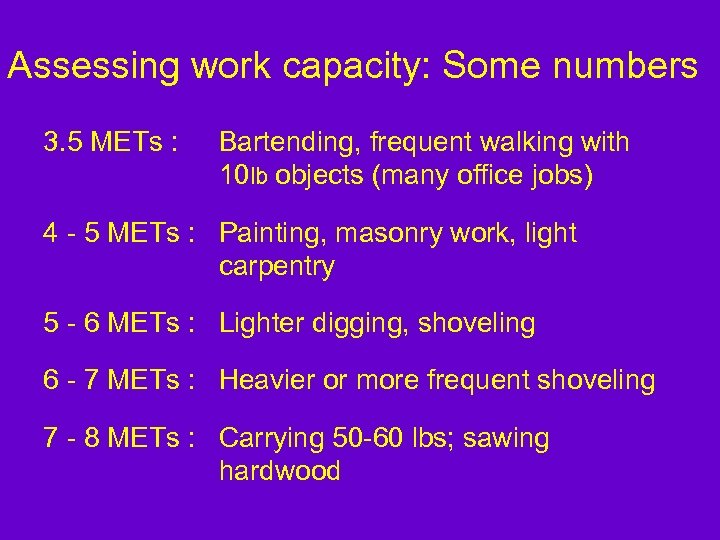 Assessing work capacity: Some numbers 3. 5 METs : Bartending, frequent walking with 10 lb objects (many office jobs) 4 - 5 METs : Painting, masonry work, light carpentry 5 - 6 METs : Lighter digging, shoveling 6 - 7 METs : Heavier or more frequent shoveling 7 - 8 METs : Carrying 50 -60 lbs; sawing hardwood
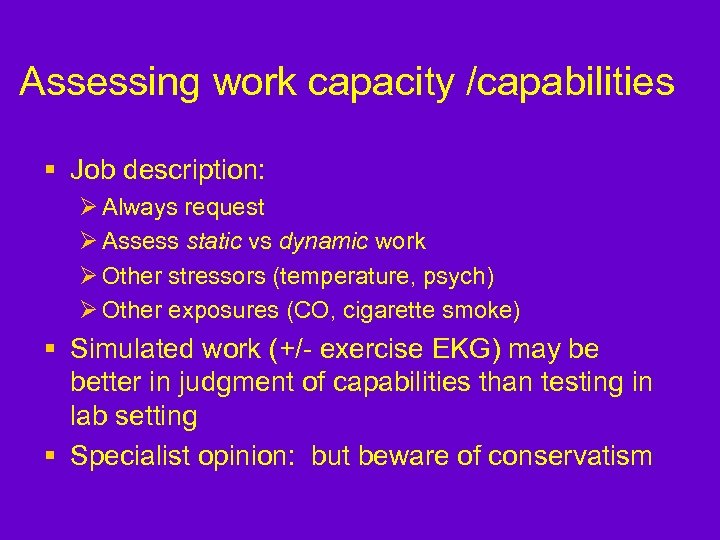 Assessing work capacity /capabilities § Job description: Ø Always request Ø Assess static vs dynamic work Ø Other stressors (temperature, psych) Ø Other exposures (CO, cigarette smoke) § Simulated work (+/- exercise EKG) may be better in judgment of capabilities than testing in lab setting § Specialist opinion: but beware of conservatism
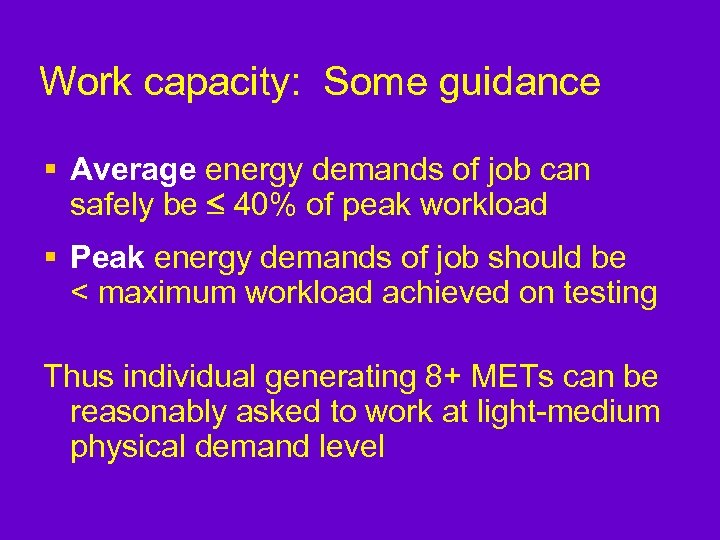 Work capacity: Some guidance § Average energy demands of job can safely be 40% of peak workload § Peak energy demands of job should be < maximum workload achieved on testing Thus individual generating 8+ METs can be reasonably asked to work at light-medium physical demand level
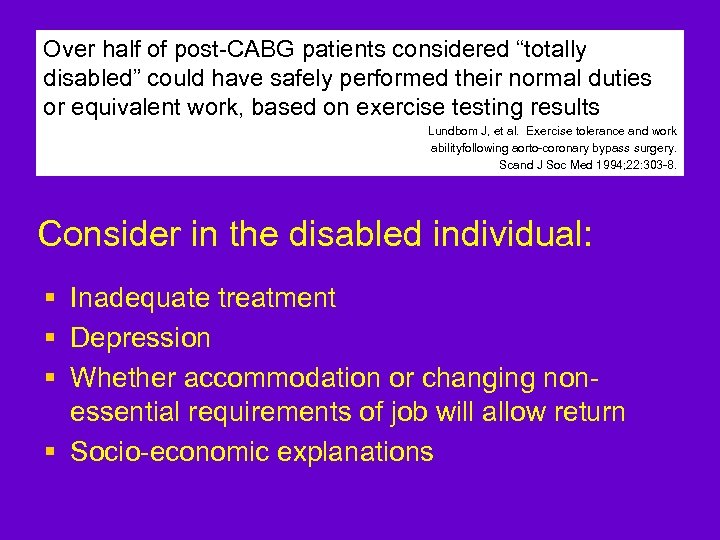 Over half of post-CABG patients considered “totally disabled” could have safely performed their normal duties or equivalent work, based on exercise testing results Lundbom J, et al. Exercise tolerance and work abilityfollowing aorto-coronary bypass surgery. Scand J Soc Med 1994; 22: 303 -8. Consider in the disabled individual: § Inadequate treatment § Depression § Whether accommodation or changing nonessential requirements of job will allow return § Socio-economic explanations
 What about exercise-testing of asymptomatic workers? ? § Predictive value of positive test is low in younger asymptomatic individuals: High false-positive rate requires additional work -up in many cases § May have better predictive value in > 40 yo with other risk factors (smoking, obesity, +FH, hypercholesterolemia, etc)
 Fitness-for-Duty Evaluations Many safety-sensitive jobs (fire, police) have qualification requirements based on exercise testing or physical fitness standards Principles outlined in last slide apply: predictive value may be low in younger/healthier workers Be careful not to exclude asymptomatic workers on basis of positive exercise test only ADA conflicts: May not be limited in performance of job
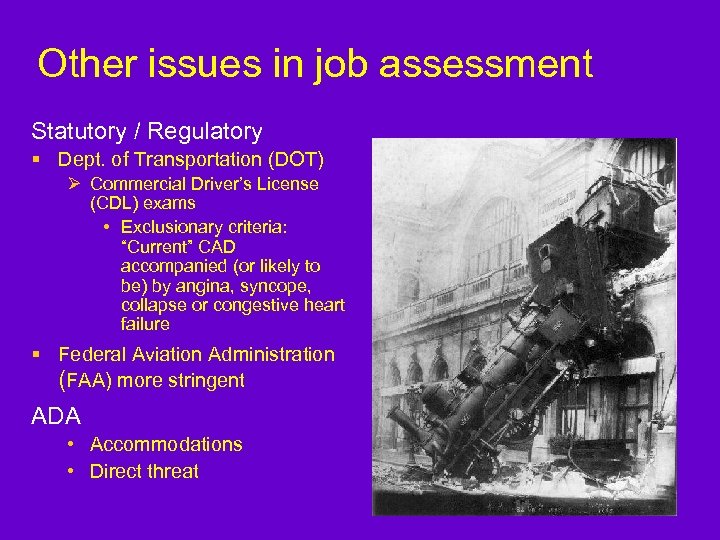 Other issues in job assessment Statutory / Regulatory § Dept. of Transportation (DOT) Ø Commercial Driver’s License (CDL) exams • Exclusionary criteria: “Current” CAD accompanied (or likely to be) by angina, syncope, collapse or congestive heart failure § Federal Aviation Administration (FAA) more stringent ADA • Accommodations • Direct threat
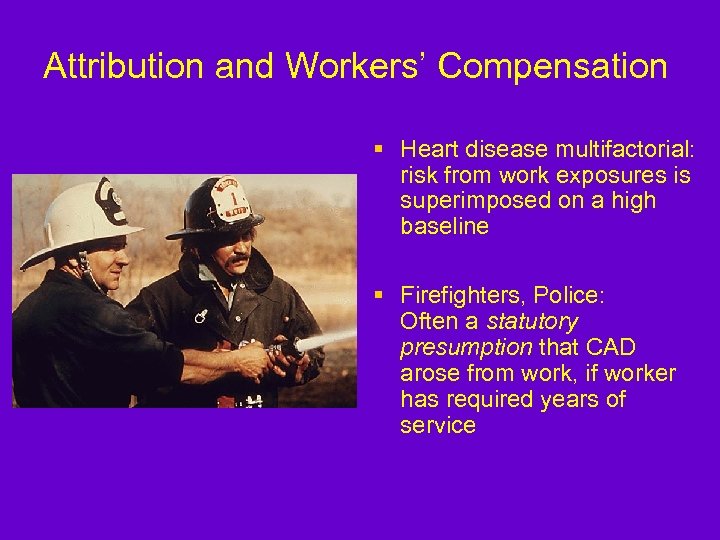 Attribution and Workers’ Compensation § Heart disease multifactorial: risk from work exposures is superimposed on a high baseline § Firefighters, Police: Often a statutory presumption that CAD arose from work, if worker has required years of service
 Acknowledgments The author would particularly like to thank Glenn Pransky MD MOcc. H for the prior edition of this module as well as for photographs of rayon manufacture and retinal abnormalities Other photos courtesy National Archives and Library of Congress Beer photograph courtesy Free. Foto. com