 Скачать презентацию OBSERVING THE MOON Charlie Elliott Wildlife Center January
aa997765ae97c19f001f9575bd9193a3.ppt
- Количество слайдов: 89



OBSERVING THE MOON Charlie Elliott Wildlife Center, January 19, 2008 Theo Ramakers
Bad choice for my presentation! Needed a lot of research such as: Moon Observations The Moon (Movies and the Web)

Researching the Web brings language issues: Such as:
Researching the Web brings language issues: Such as: Is someone who is observing the moon a Lunatic
Researching the Web brings language issues: Such as: Is someone who is observing the moon a Lunatic While Observing the moon – Mooning?
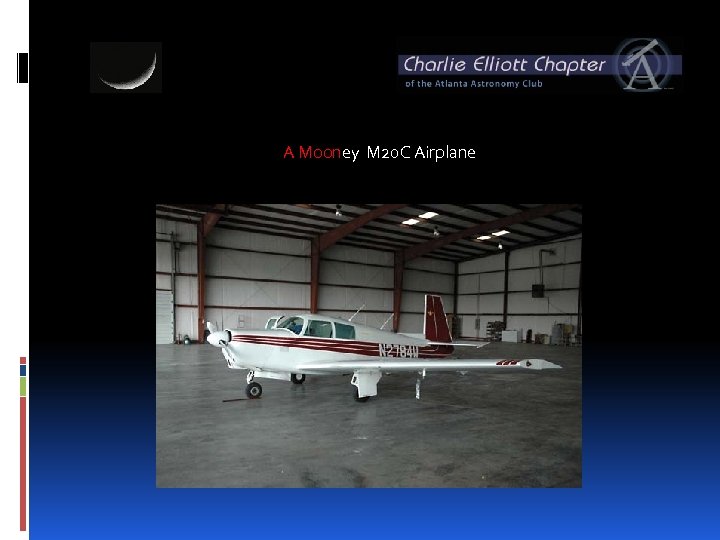
A Mooney M 20 C Airplane
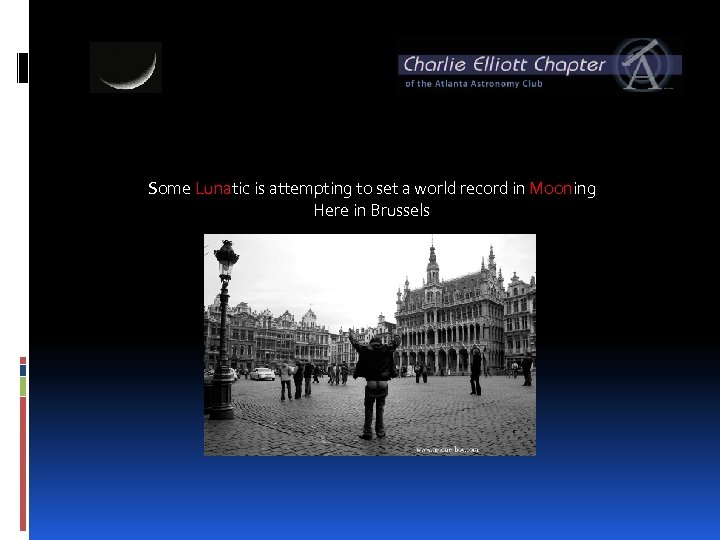
Some Lunatic is attempting to set a world record in Mooning Here in Brussels
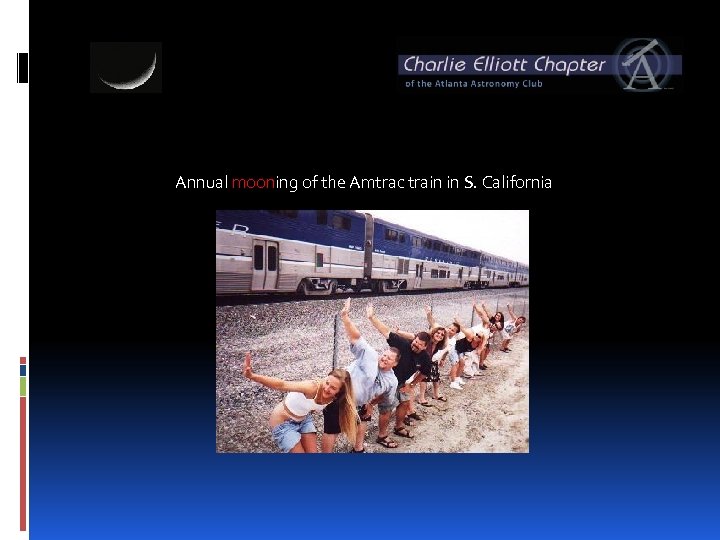
Annual mooning of the Amtrac train in S. California
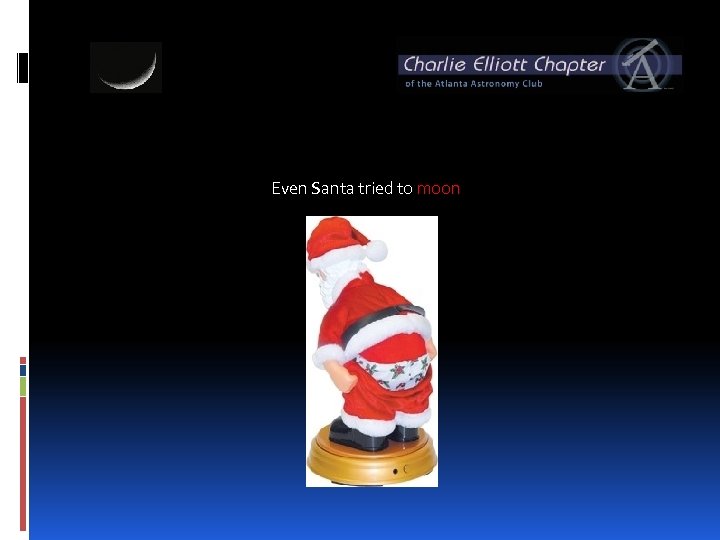
Even Santa tried to moon
Concluded that Larry did not want a presentation on how to observe those kind of moons Went back in time more than a century attempting to learn about the basics of the moon
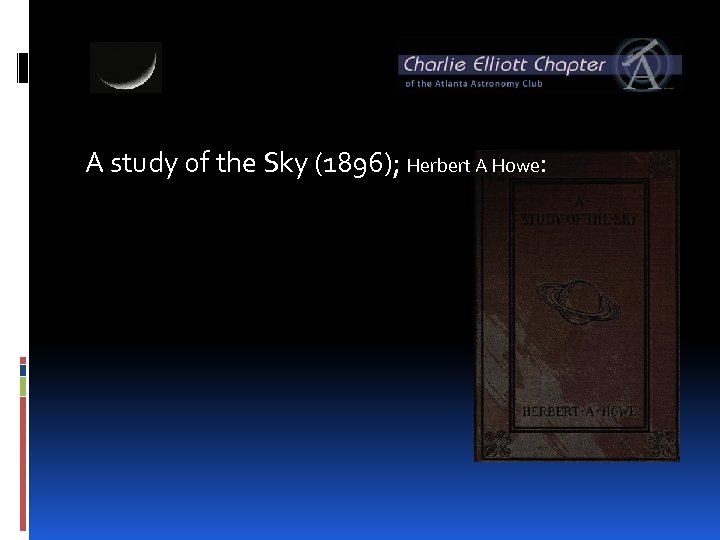
A study of the Sky (1896); Herbert A Howe:
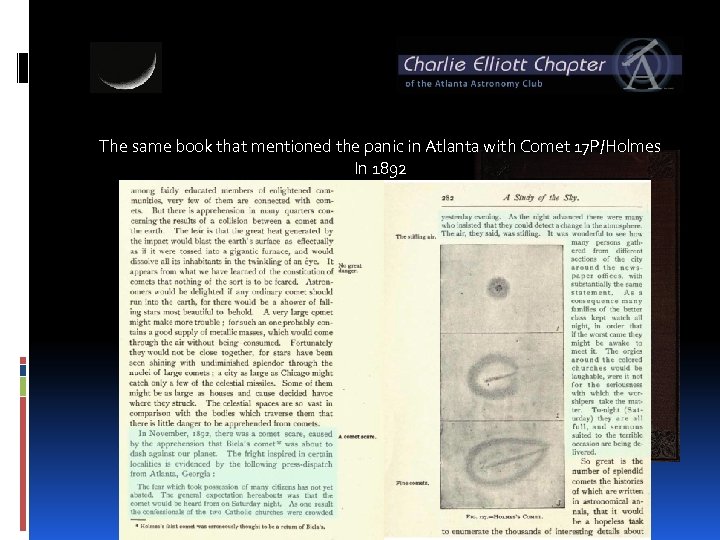
The same book that mentioned the panic in Atlanta with Comet 17 P/Holmes In 1892
A study of the Sky (1896); Herbert A Howe: Alexander from Humbolt: People from Asia Minor say the moon exhibits a reflection of earth as if it were a mirror
A study of the Sky (1896); Herbert A Howe: Alexander from Humbolt: People from Asia Minor say the moon exhibits a reflection of earth as if it were a mirror This would be great: We could use Google Earth as a guide and map to observe the moon
A study of the Sky (1896); Herbert A Howe: Alexander from Humbolt: People from Asia Minor say the moon exhibits a reflection of earth as if it were a mirror In the minds of many, a human figure is outlined: Judas Iscariot
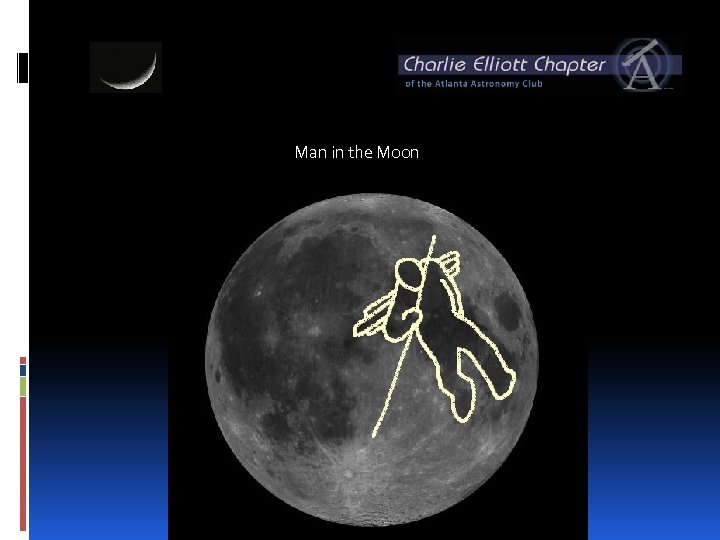
Man in the Moon
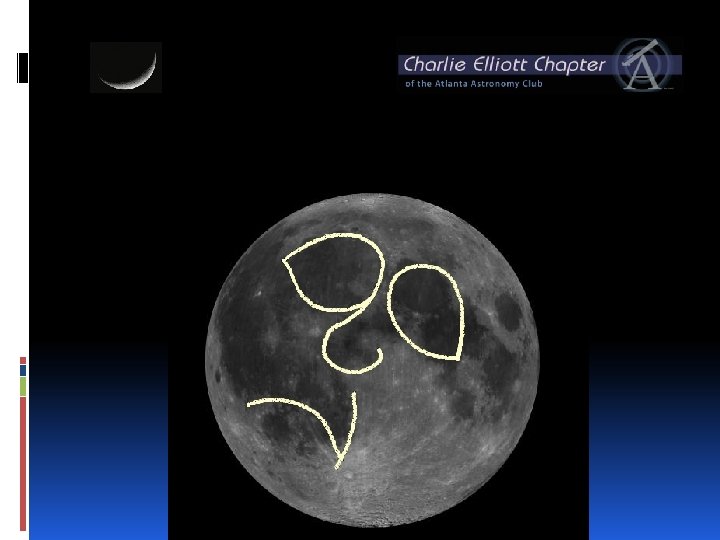
A study of the Sky (1896); Herbert A Howe: Alexander from Humbolt: People from Asia Minor say the moon exhibits a reflection of earth as if it were a mirror In the minds of many, a human figure is outlined: Judas Iscariot The casual onlooker perceives a human face with eyes, nose and mouth.
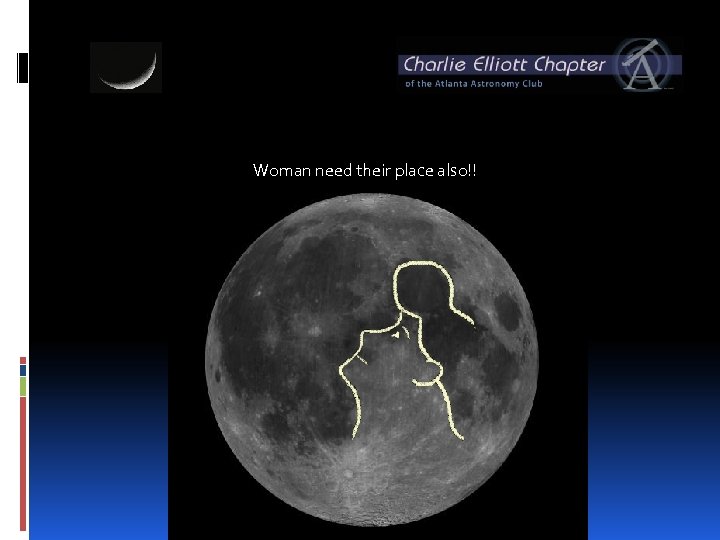
Woman need their place also!!
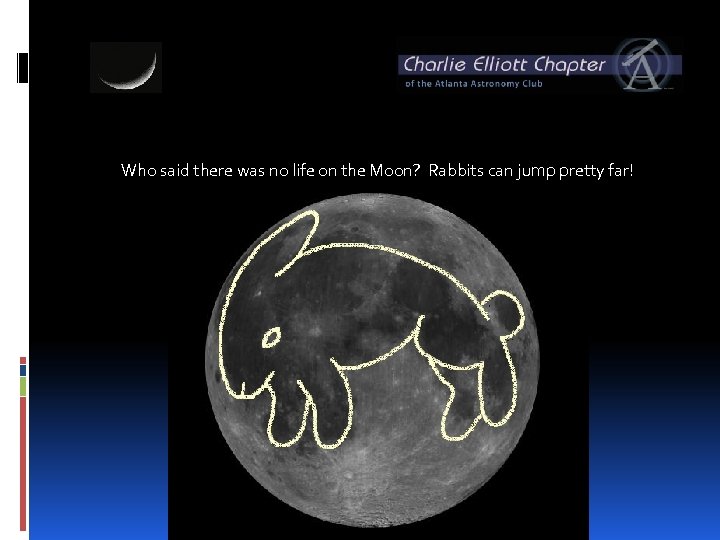
Who said there was no life on the Moon? Rabbits can jump pretty far!
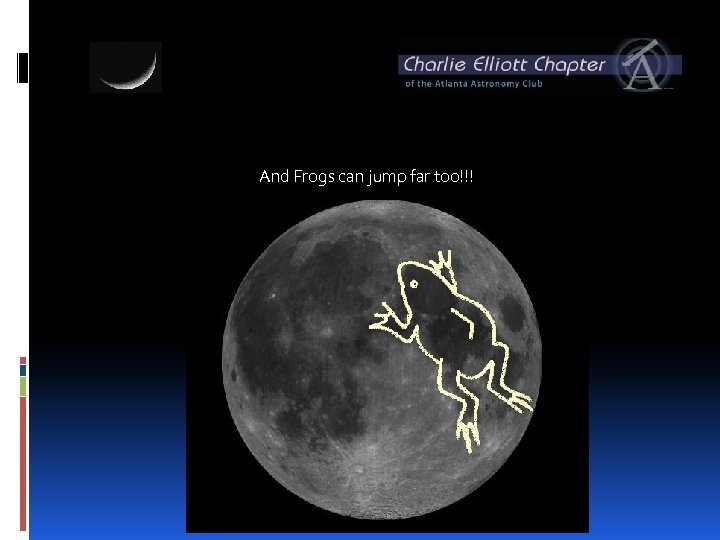
And Frogs can jump far too!!!
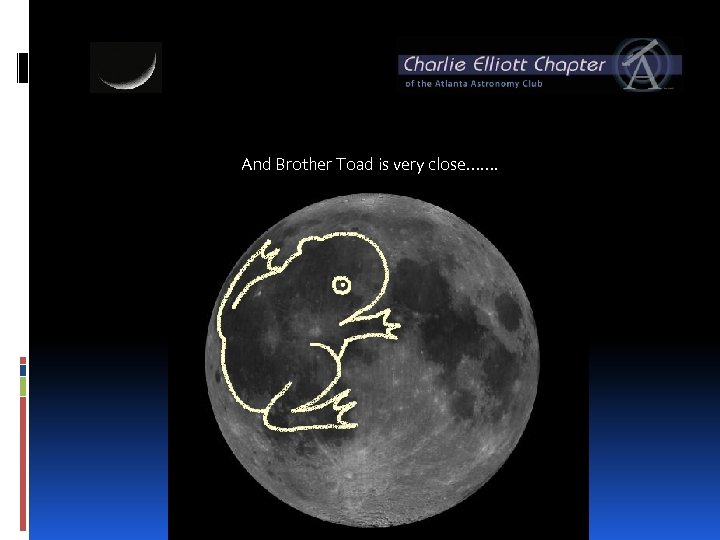
And Brother Toad is very close…….
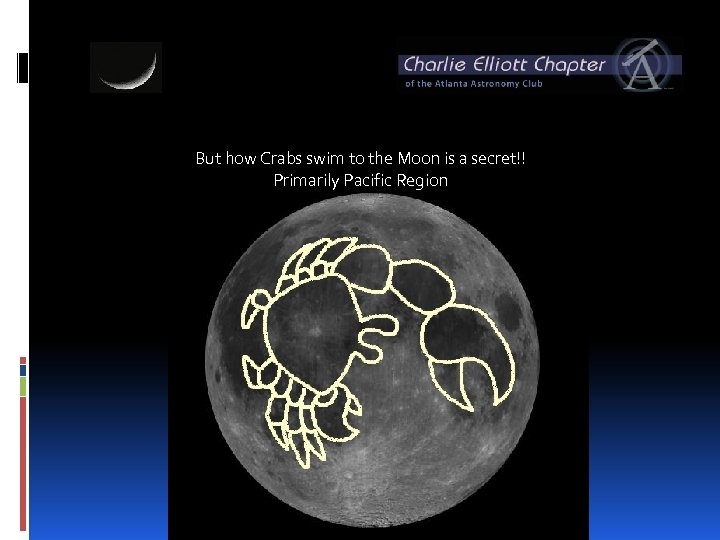
But how Crabs swim to the Moon is a secret!! Primarily Pacific Region
Most Notable Phases of the moon: New Moon Waxing Cresent First Quarter Gibbeous Waxing
Most Notable Phases of the moon: New Moon Waxing Cresent First Quarter Gibbeous Waxing Full Moon Gibeous Waning Last Quarter Waning Cresent (Complete Phase: lunation)
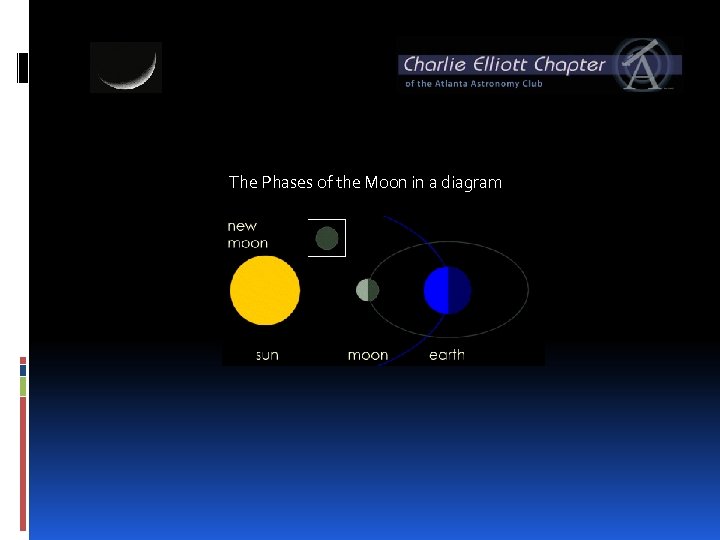
The Phases of the Moon in a diagram
Observing the Moon Constellations and Stars move across the sky in yearly cycles from East to West The Moon’s sidereal orbit takes 27. 3 days The Moon’s phase takes 29. 5359 days, The Moon moves each day approx 12 degrees east against the night sky Optimal Observation points of interest on the moon change approx. 12 degrees each day. Limiting conditions for optimum observation during a given month
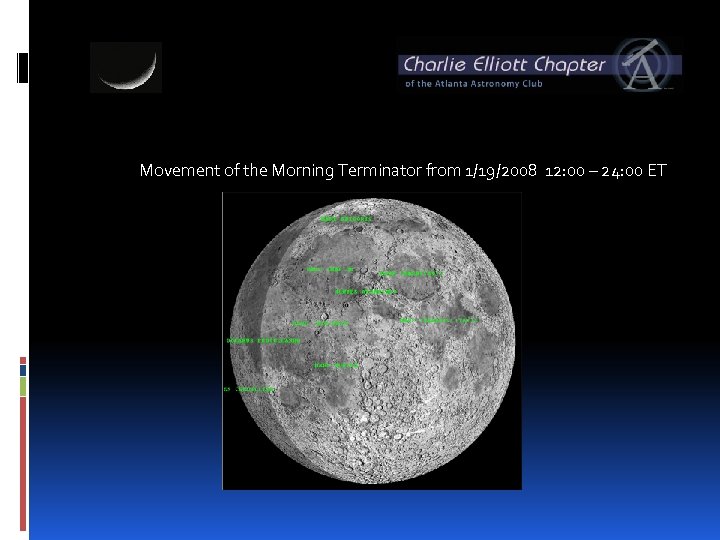
Movement of the Morning Terminator from 1/19/2008 12: 00 – 24: 00 ET
Locations on the moon are identified in: Selenographic coordinates Moon axis runs through the North and South Poles Lunar Equator Prime meridian runs through apparent center of the disk with both longitude and latitude libration O Coordinates are expressed in North and South East and West. (sometimes you might see + and - signs
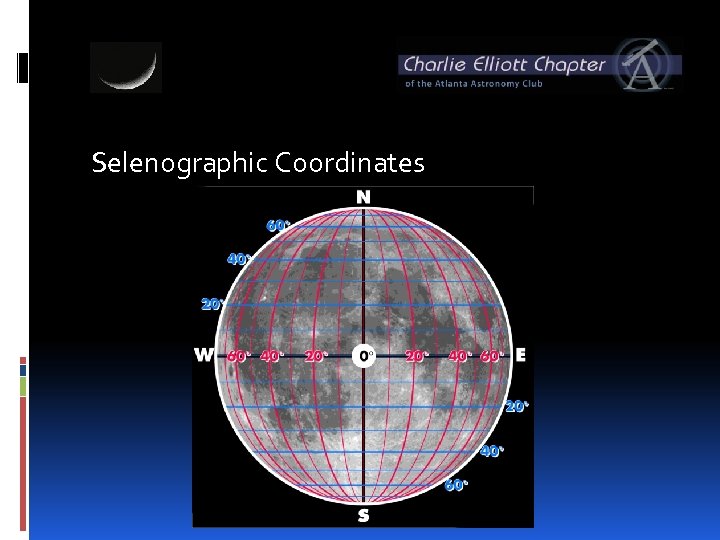
Selenographic Coordinates
Selenographic Colongitude: Points of Sunrise on the Moon Location of Morning terminator in degrees west from the Prime Meridian Sunrise at Prime Meridian concurs with First Quarter Goes from O-360 degrees
Selenographic Colongitude: Points of Sunrise on the Moon Location of Morning terminator in degrees west from the Prime Meridian Sunrise at Prime Meridian concurs with First Quarter Goes from O-360 degrees Anything >90° West or East not visible from Earth, with the exception of Libration
Libration Orbit of the moon is elliptical Rotation is constant Speed is sometimes faster, sometimes slower
Libration Orbit of the moon is elliptical Rotation is constant Speed is sometimes faster, sometimes slower So the moon is: Sometimes a little ahead, sometimes a little behind
Libration Orbit of the moon is elliptical Rotation is constant Speed is sometimes faster, sometimes slower So the moon is: Sometimes a little ahead, sometimes a little behind Moon’s orbit is inclined to Earth’s orbital plane Appears to nod up and down Net exposure 7 53 East and West; 6 51 North and South
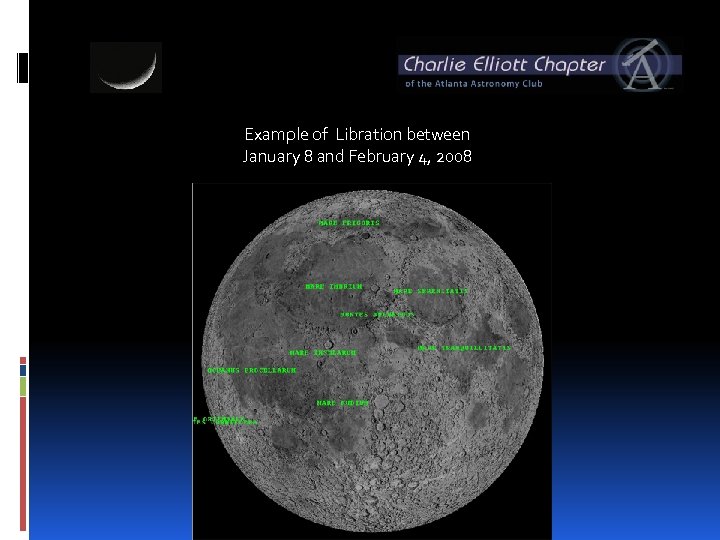
Example of Libration between January 8 and February 4, 2008
Observing the moon Observe details at times when they are most distinct (Highest contrast) for the object you want to see/capture (Objects near terminator)
Observing the moon Observe details at times when they are most distinct (Highest contrast) for the object you want to see/capture Make the moon part of a special configuration with other celestial or earth objects
Different ways to observe the moon Observe details at times when they are most distinct (Highest contrast) for the object you want to see/capture Make the moon part of a special configuration with other celestial or earth objects Make many images, increasing the chance of having an extraordinary image
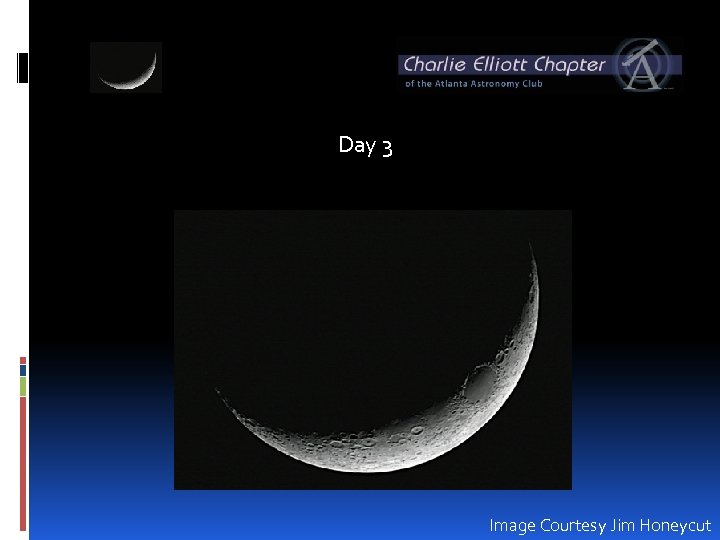
Day 3 Image Courtesy Jim Honeycut
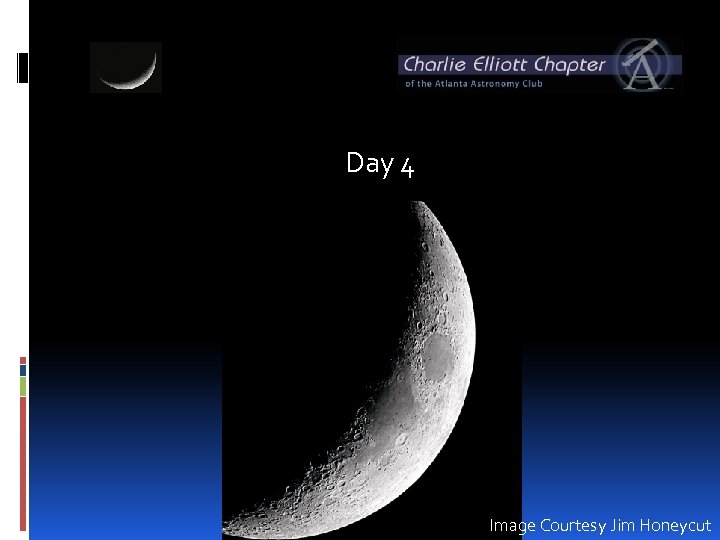
Day 4 Image Courtesy Jim Honeycut
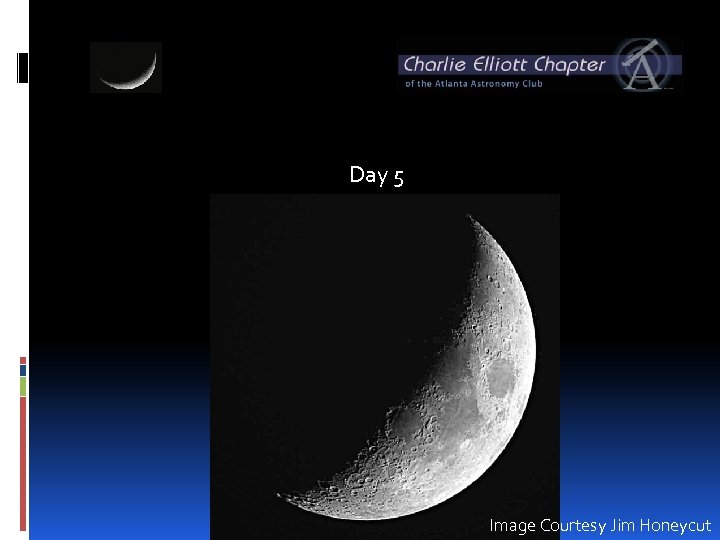
Day 5 Image Courtesy Jim Honeycut
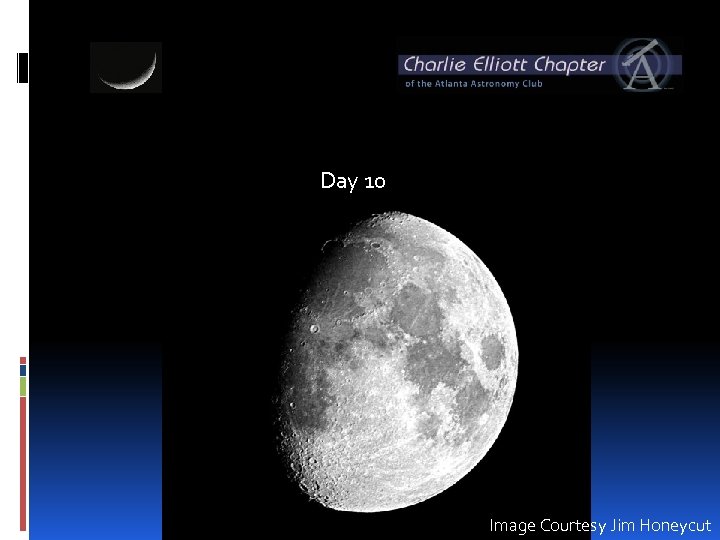
Day 10 Image Courtesy Jim Honeycut
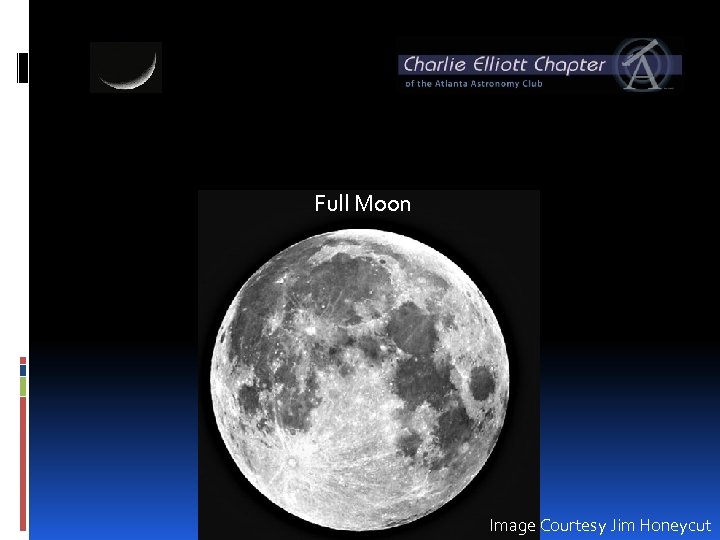
Full Moon Image Courtesy Jim Honeycut
To get the best out of your Moon observations: Use a good Atlas Determine when the object is visible Use Filters to bring out contrast Verify the Phase of the moon (Observation time) You can observe some features during daytime Plan the observations in advance Anticipate what you will see
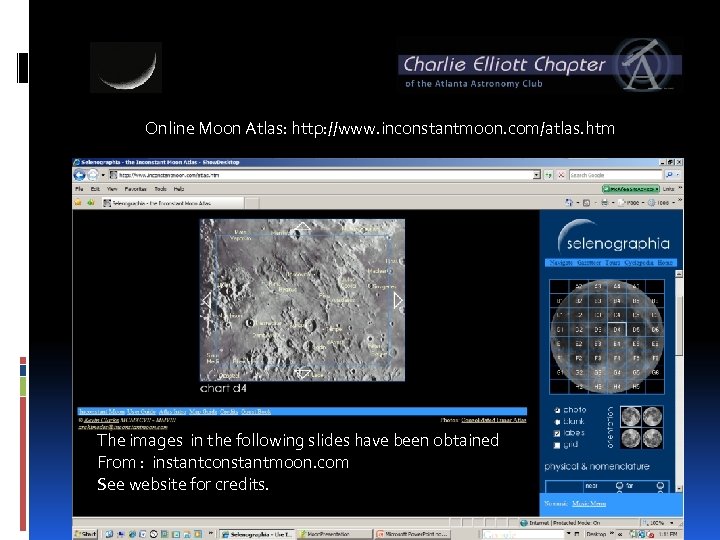
Online Moon Atlas: http: //www. inconstantmoon. com/atlas. htm The images in the following slides have been obtained From : instantconstantmoon. com See website for credits.
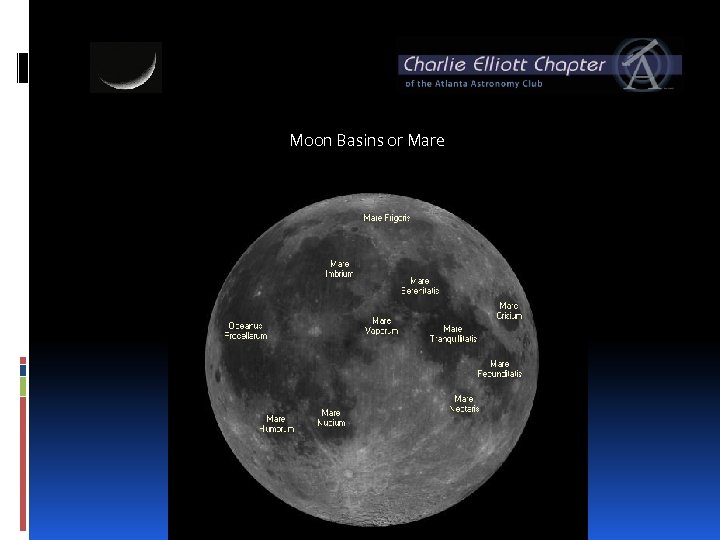
Moon Basins or Mare
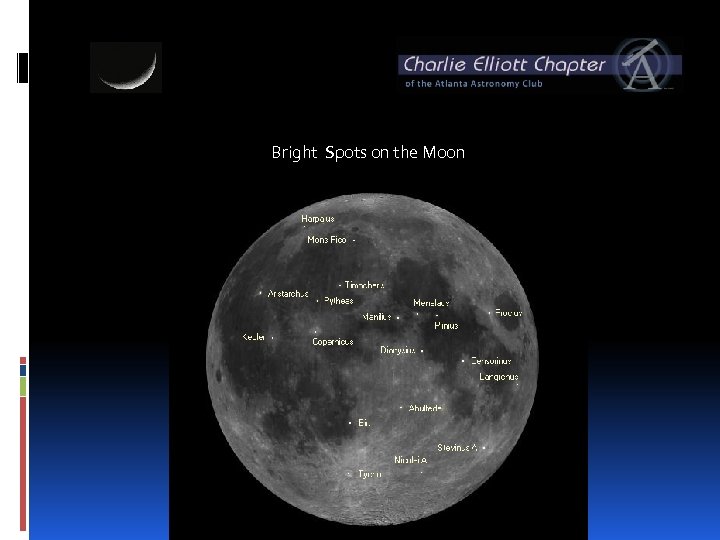
Bright Spots on the Moon
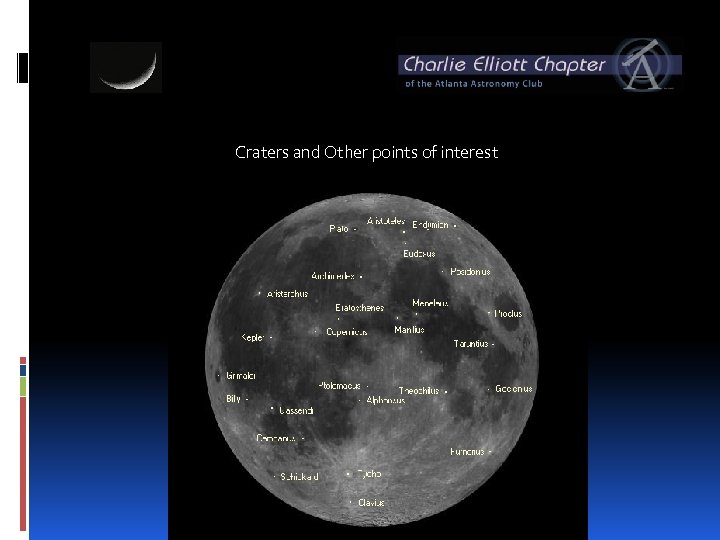
Craters and Other points of interest
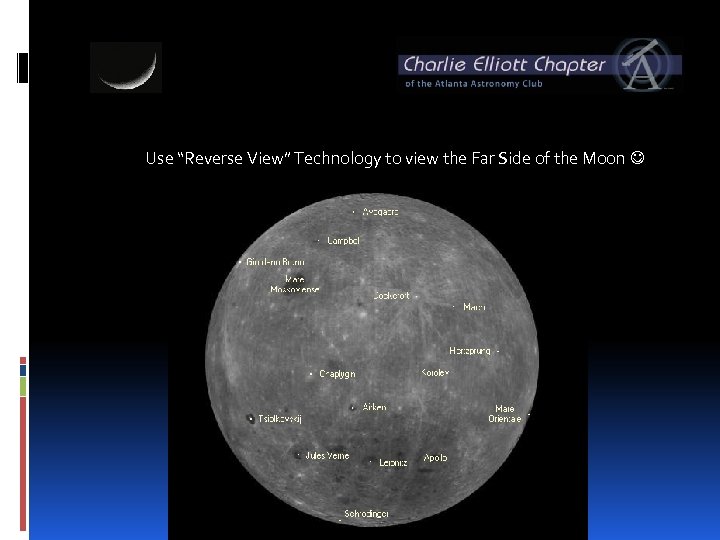
Use “Reverse View” Technology to view the Far Side of the Moon
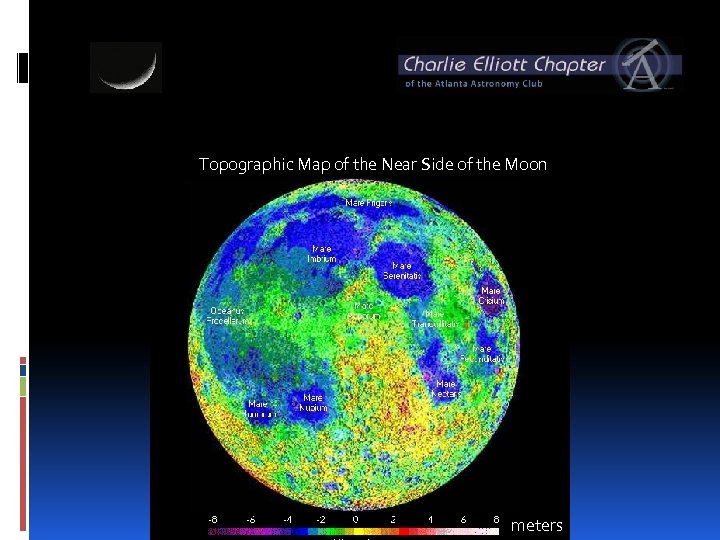
Topographic Map of the Near Side of the Moon meters
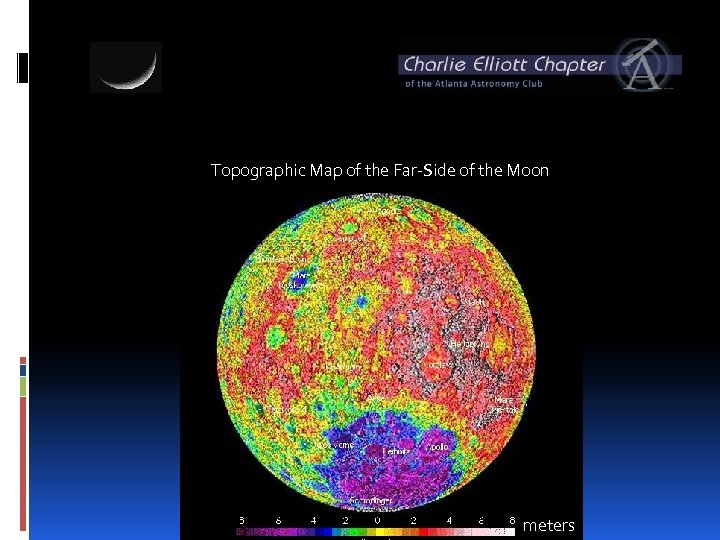
Topographic Map of the Far-Side of the Moon meters
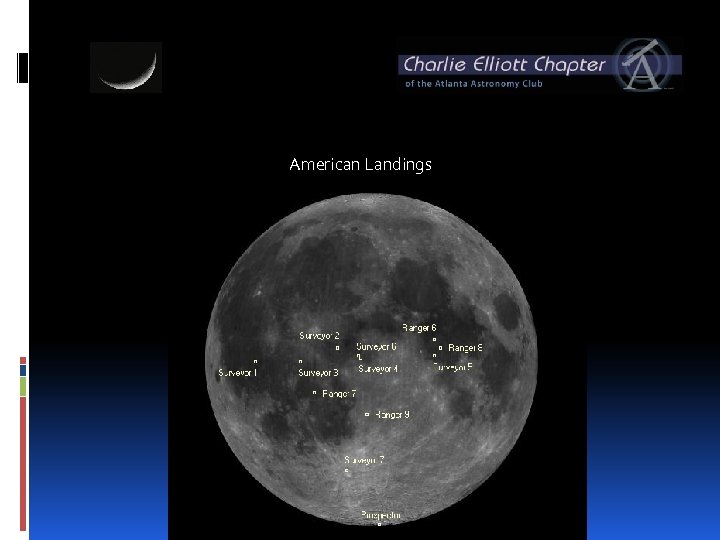
American Landings
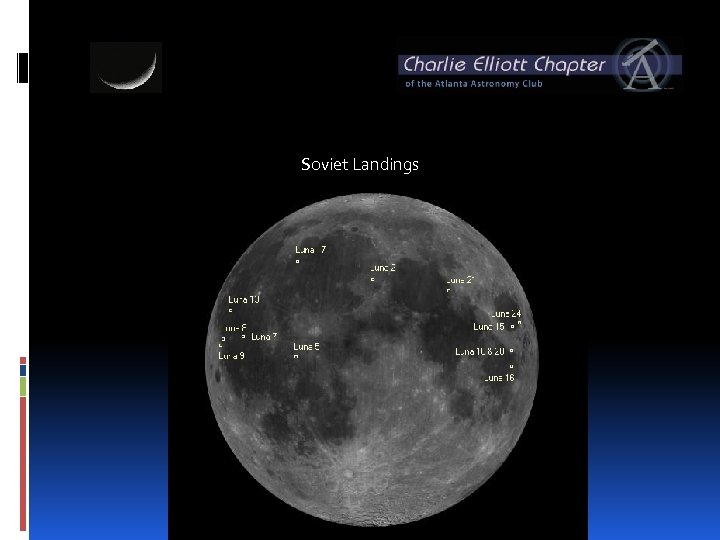
Soviet Landings
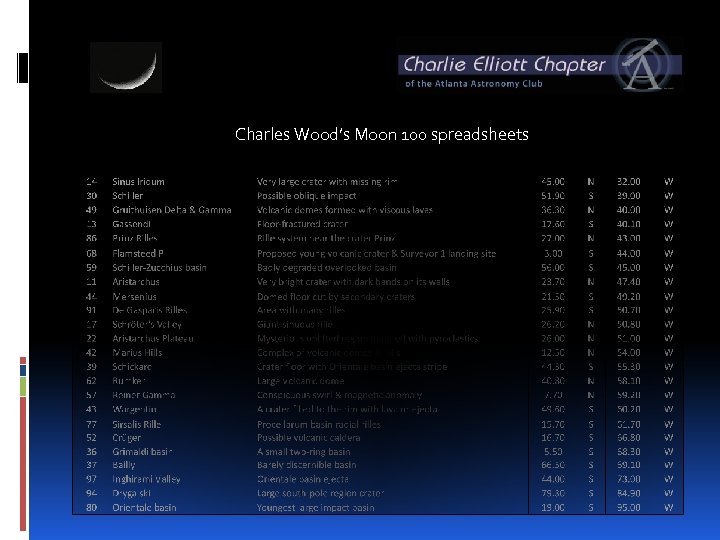
Charles Wood’s Moon 100 spreadsheets
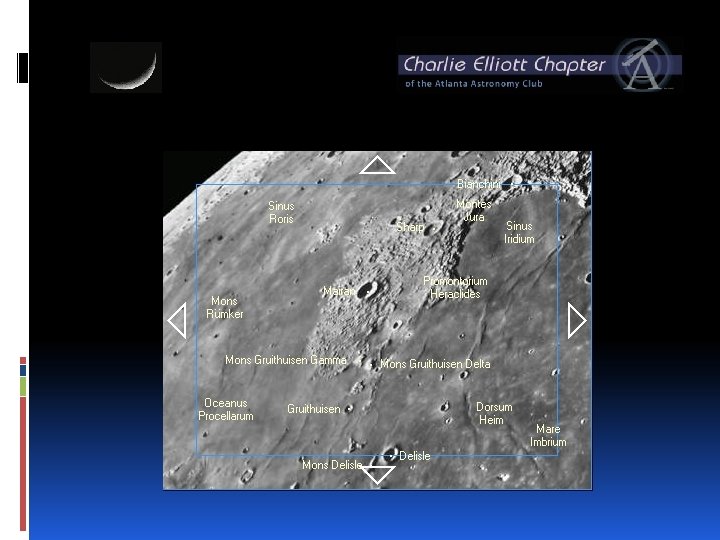
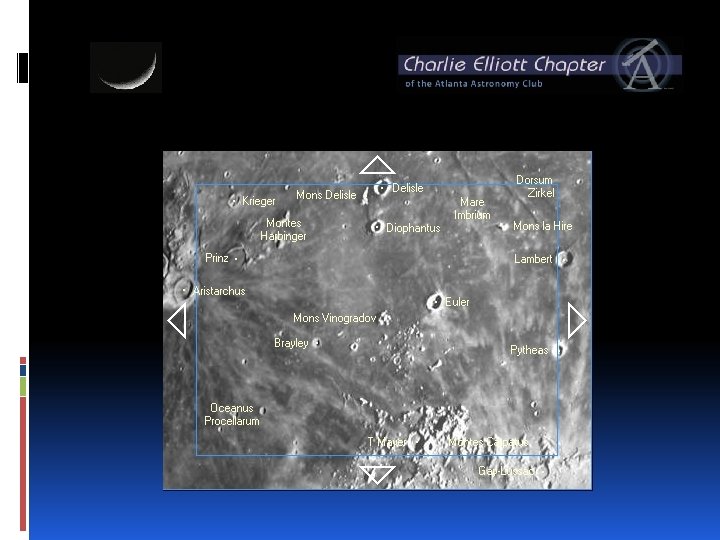
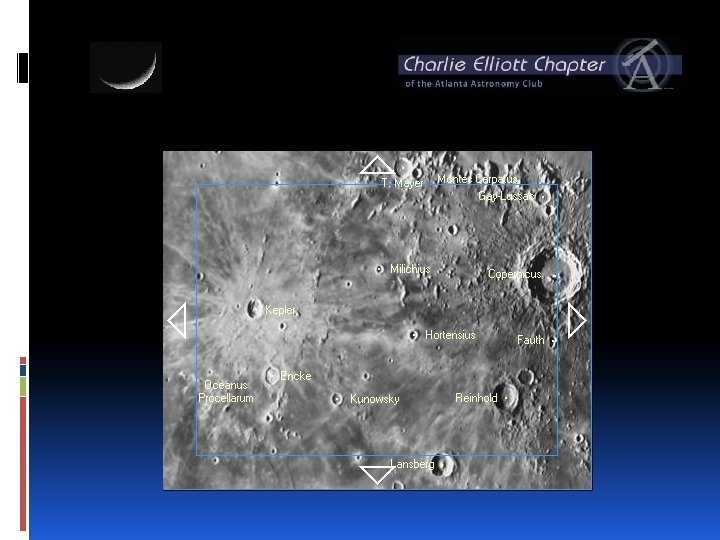
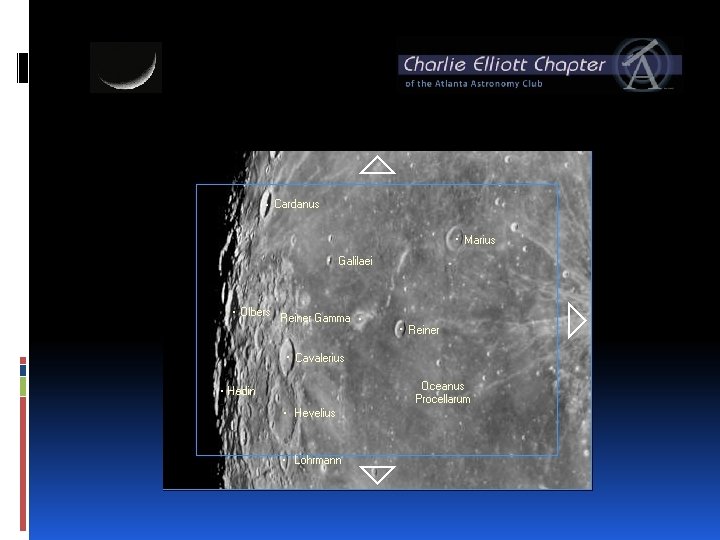
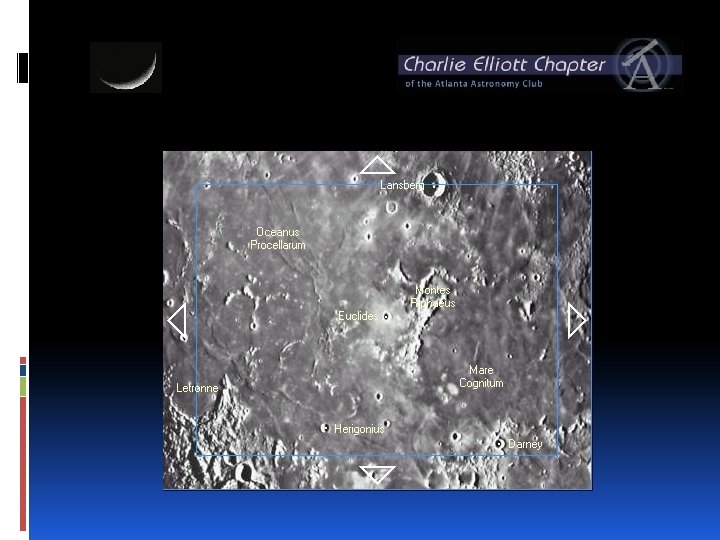
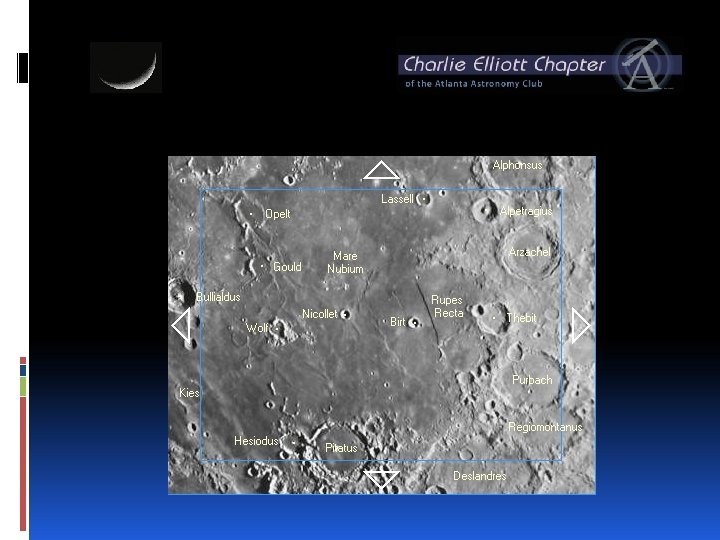
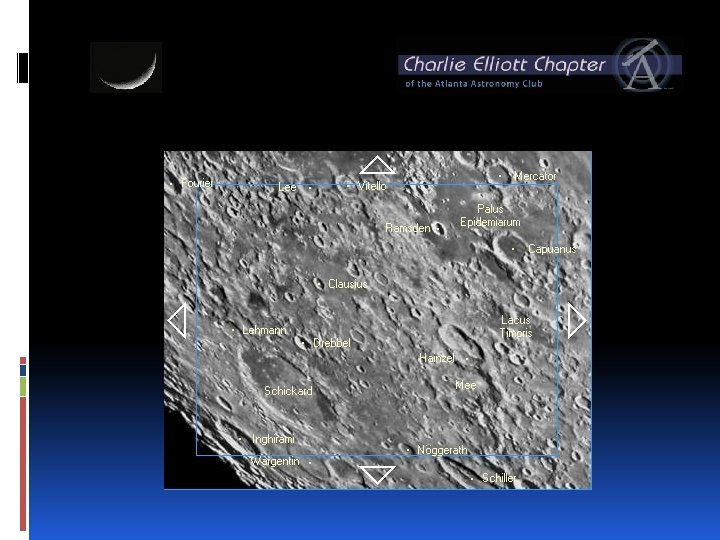
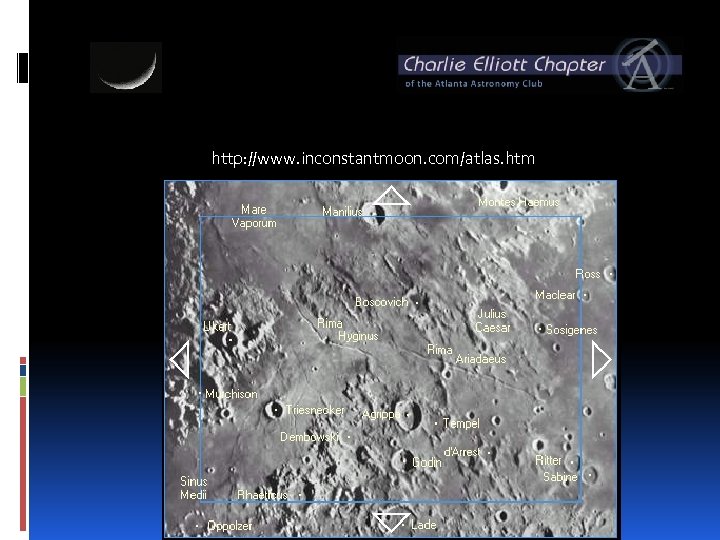
http: //www. inconstantmoon. com/atlas. htm
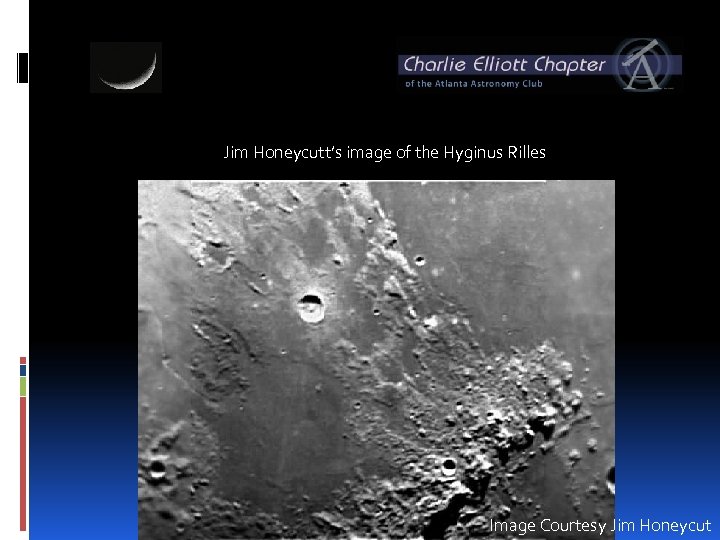
Jim Honeycutt’s image of the Hyginus Rilles Image Courtesy Jim Honeycut
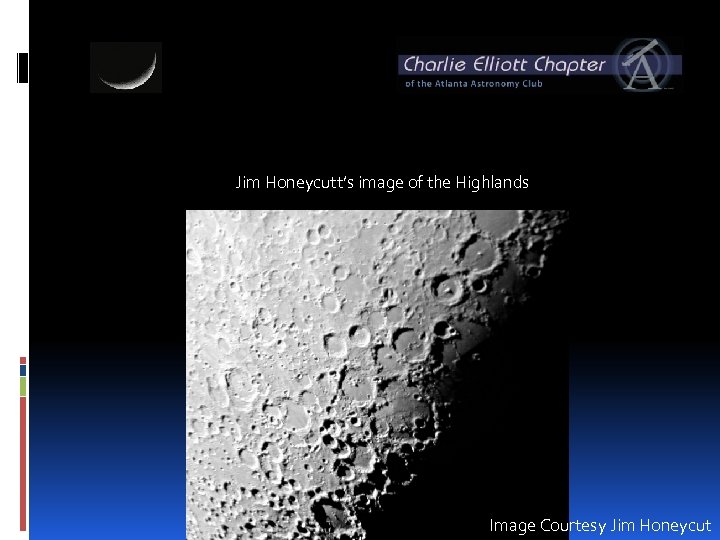
Jim Honeycutt’s image of the Highlands Image Courtesy Jim Honeycut
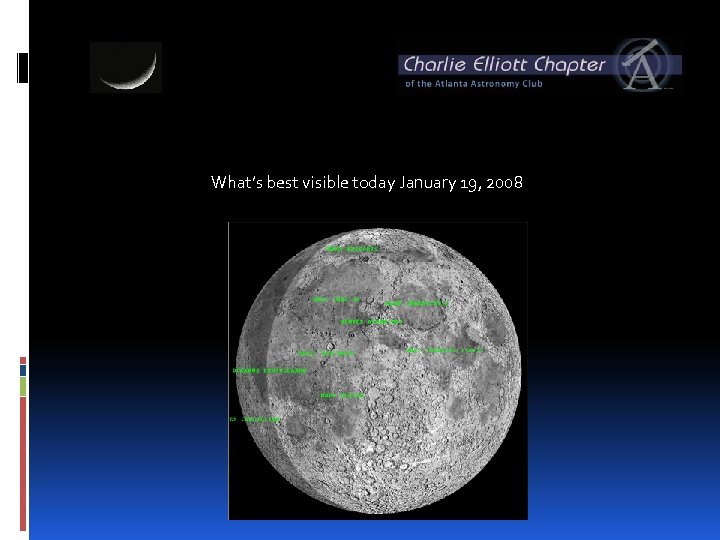
What’s best visible today January 19, 2008
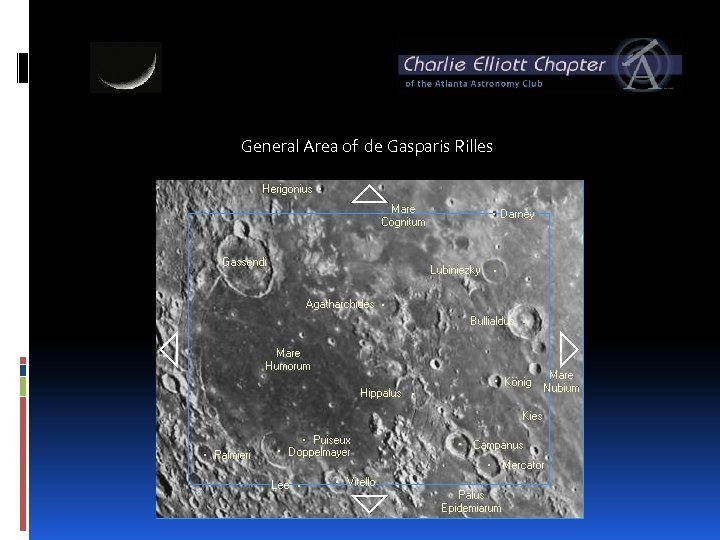
General Area of de Gasparis Rilles
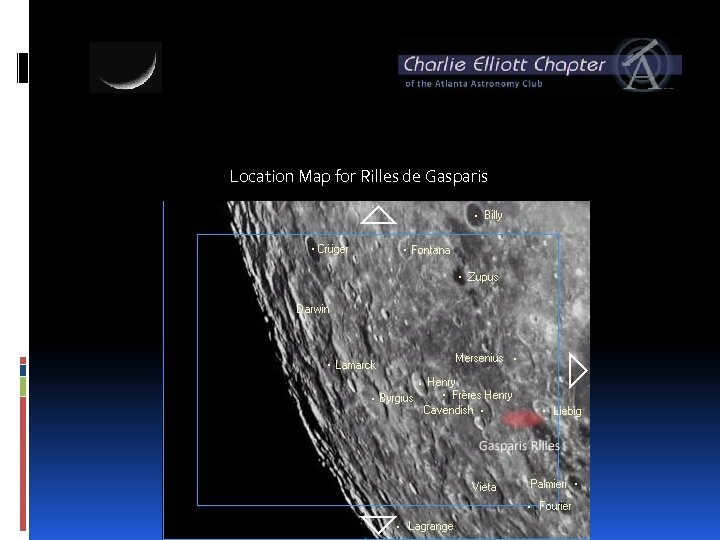
Location Map for Rilles de Gasparis
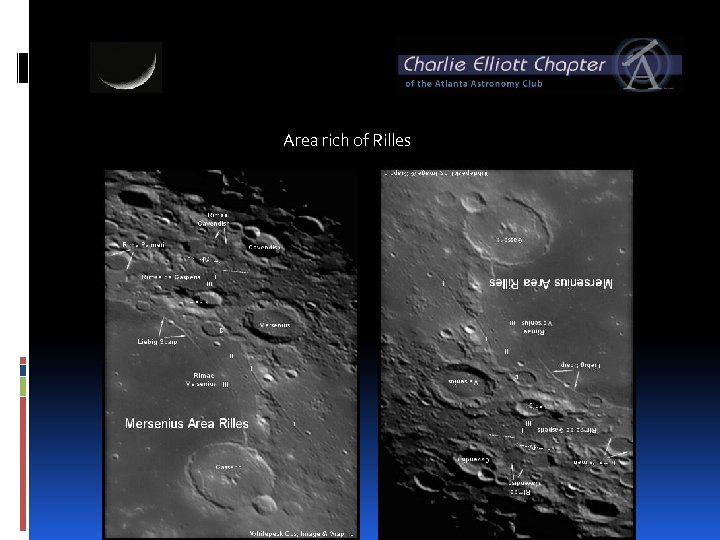
Area rich of Rilles
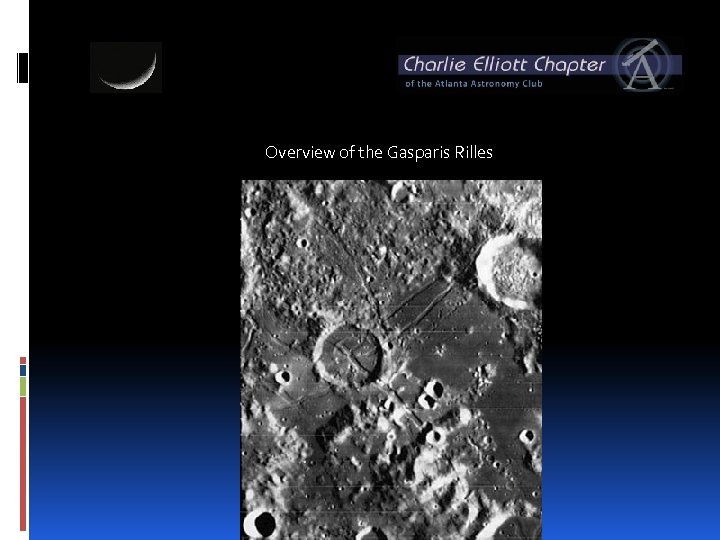
Overview of the Gasparis Rilles
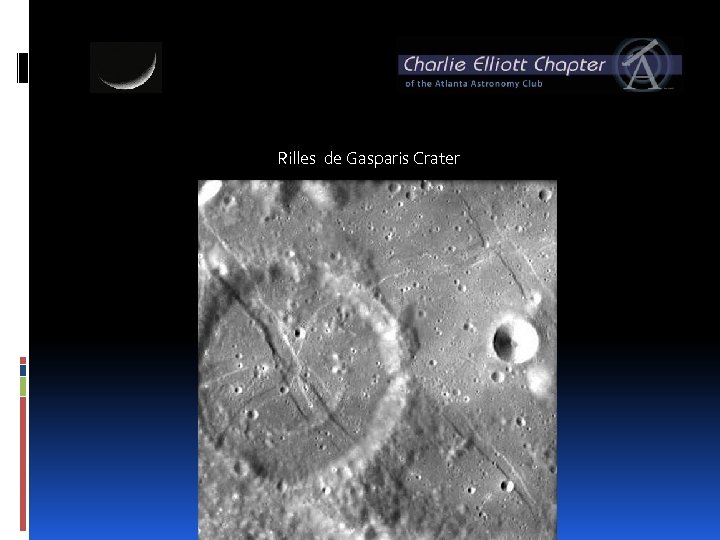
Rilles de Gasparis Crater
The Moon and other celestial objects Eclipses Occultations Near misses Grazing Special configurations
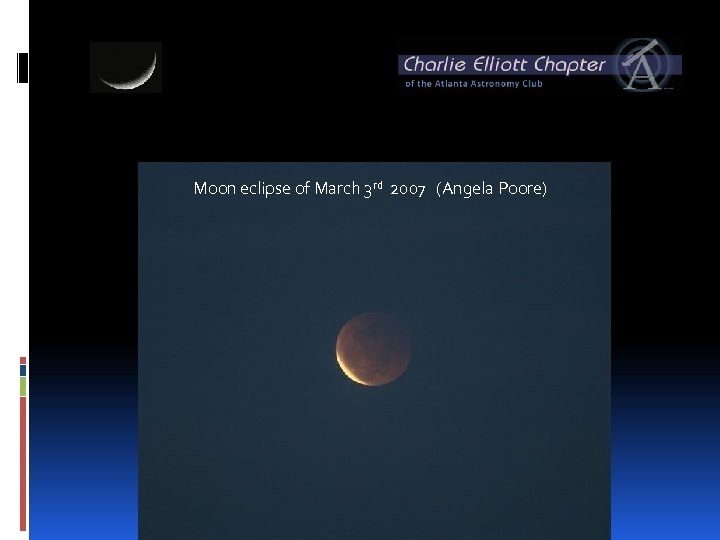
Moon eclipse of March 3 rd 2007 (Angela Poore)
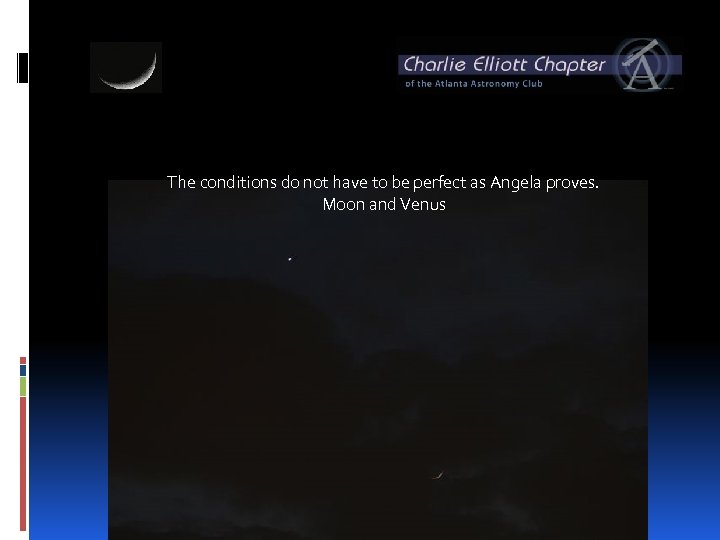
The conditions do not have to be perfect as Angela proves. Moon and Venus
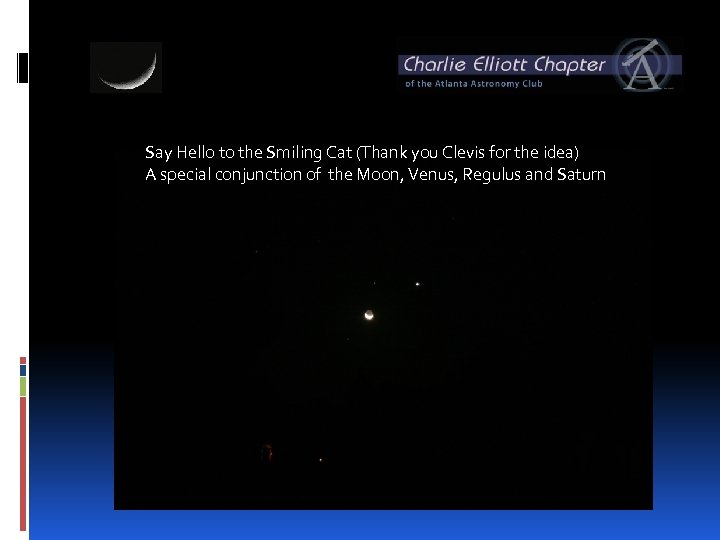
Say Hello to the Smiling Cat (Thank you Clevis for the idea) A special conjunction of the Moon, Venus, Regulus and Saturn
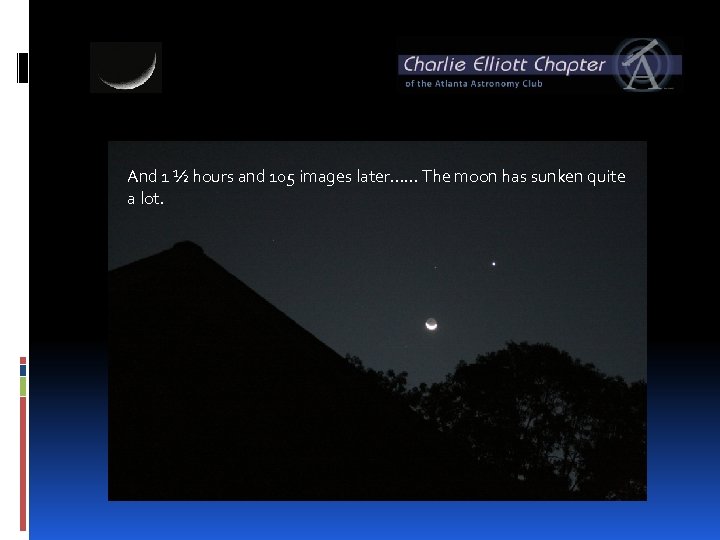
And 1 ½ hours and 105 images later…… The moon has sunken quite a lot.
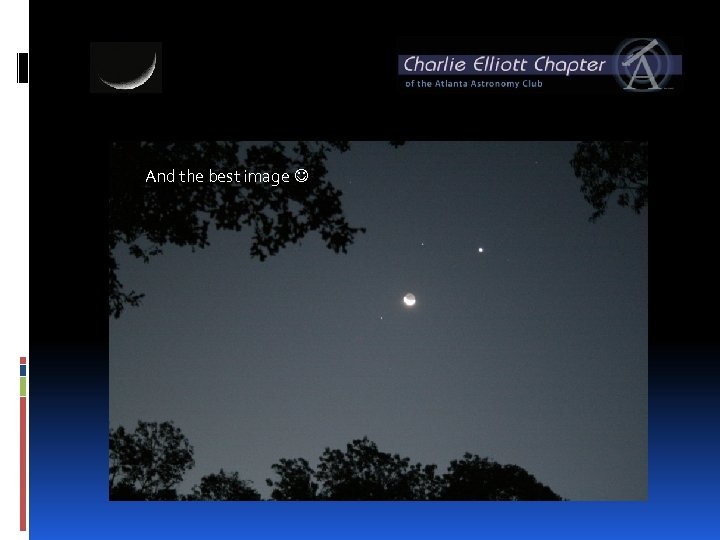
And the best image
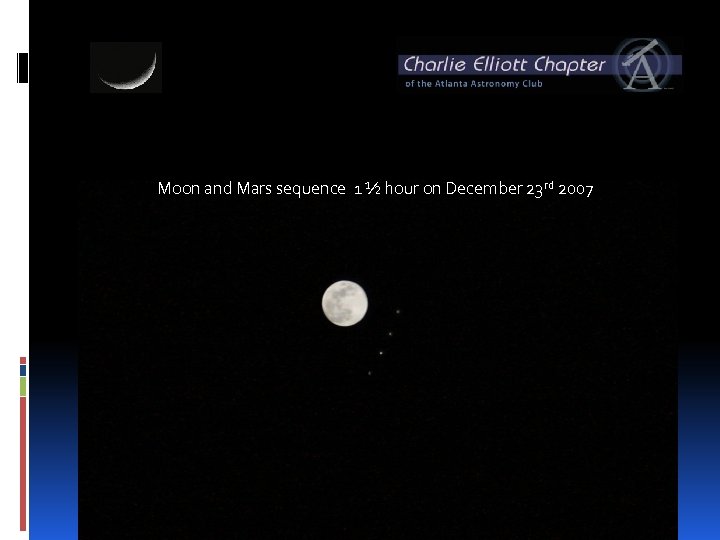
Moon and Mars sequence 1 ½ hour on December 23 rd 2007
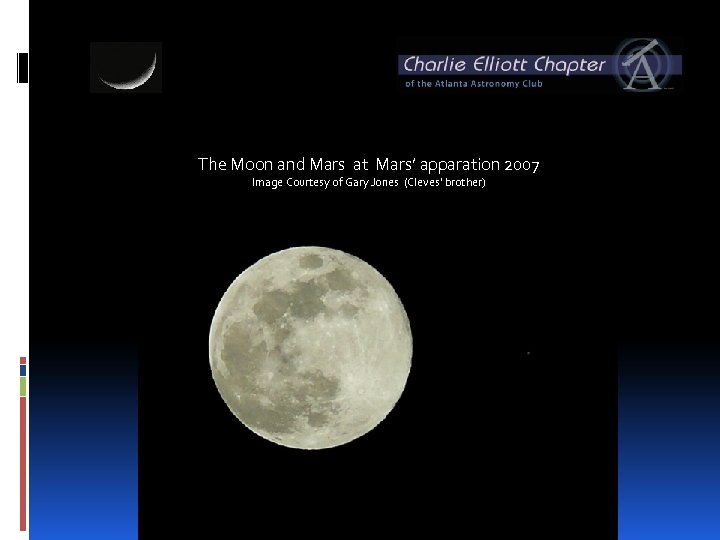
The Moon and Mars at Mars’ apparation 2007 Image Courtesy of Gary Jones (Cleves’ brother)
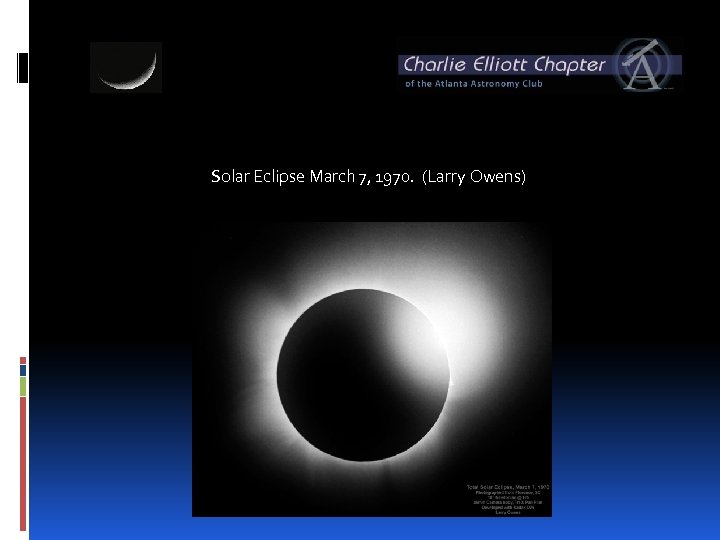
Solar Eclipse March 7, 1970. (Larry Owens)
Reference Material The next pages show some interesting websites Download Charles Woods’ “Moon 100” in Excel format for easy Sorting, and planning of interesting moon features from my FILES- section in the CE - Yahoo group Virtual Moon Atlas On-line Moon Maps and images A number of images in this presentation, unless mentioned differently, have been taken from some of these website
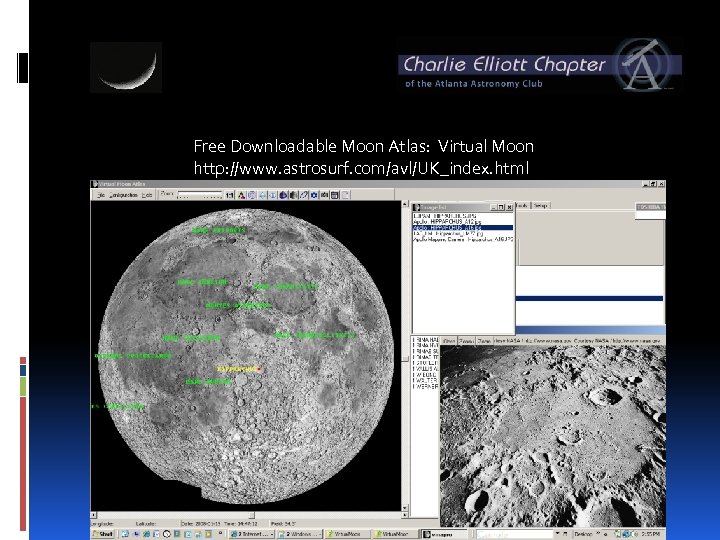
Free Downloadable Moon Atlas: Virtual Moon http: //www. astrosurf. com/avl/UK_index. html
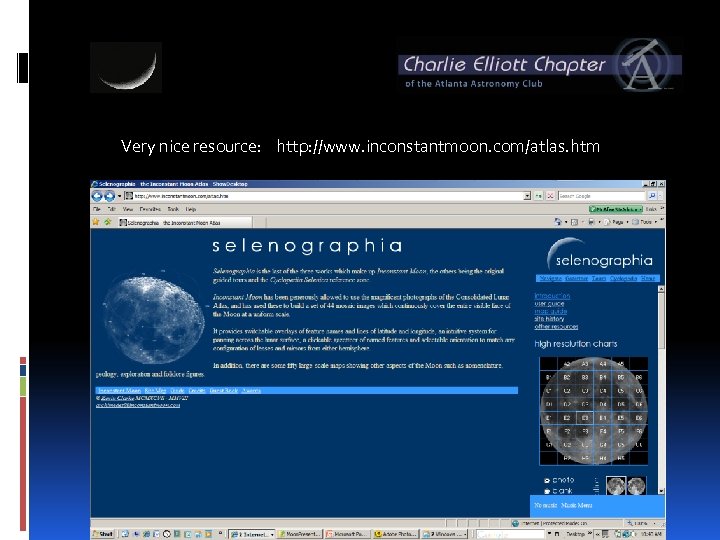
Very nice resource: http: //www. inconstantmoon. com/atlas. htm
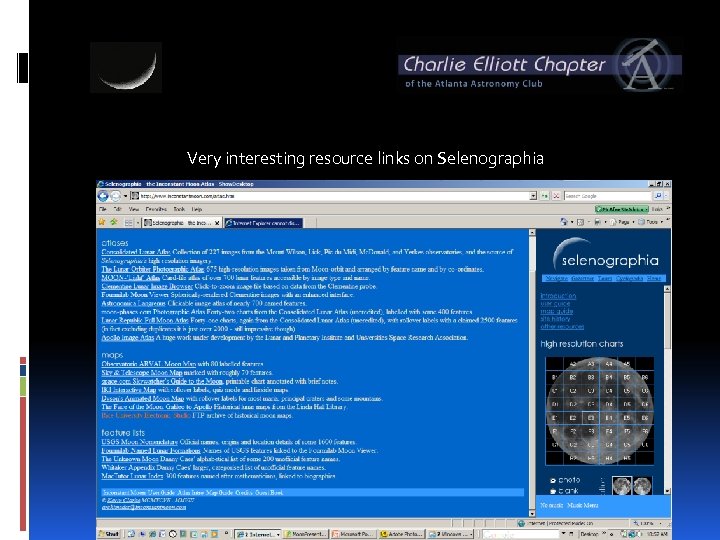
Very interesting resource links on Selenographia
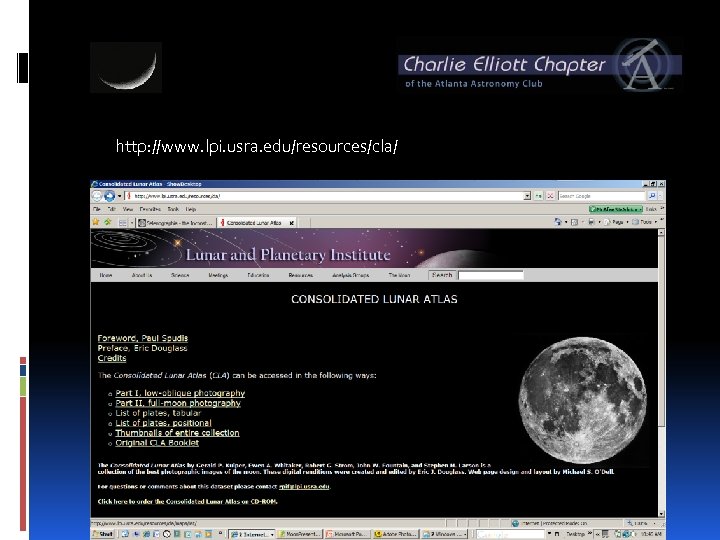
http: //www. lpi. usra. edu/resources/cla/
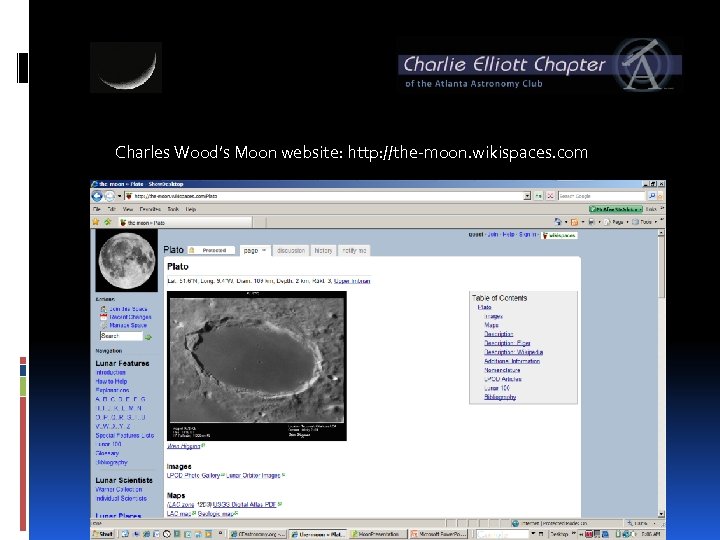
Charles Wood’s Moon website: http: //the-moon. wikispaces. com
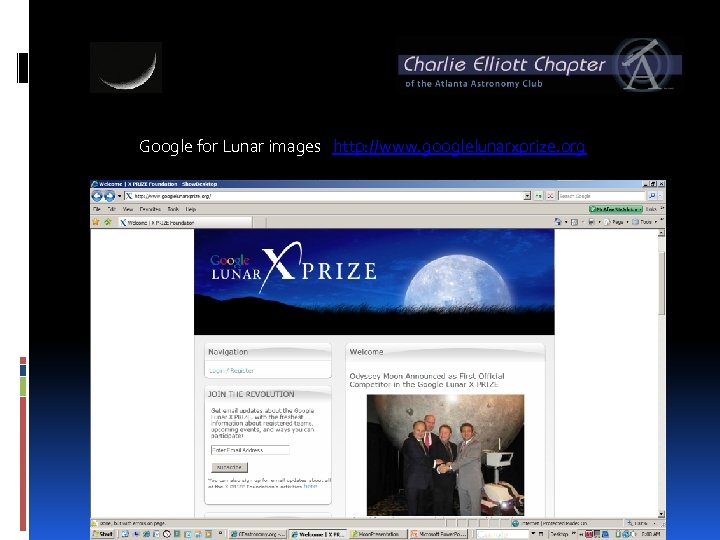
Google for Lunar images http: //www. googlelunarxprize. org
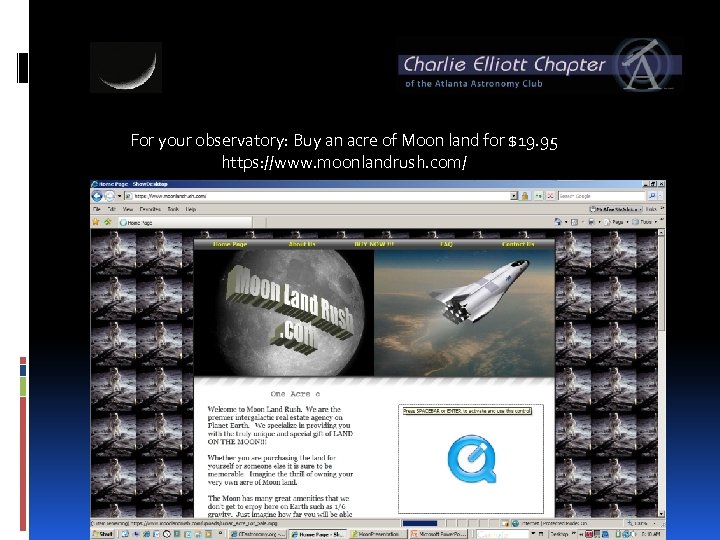
For your observatory: Buy an acre of Moon land for $19. 95 https: //www. moonlandrush. com/
Thank You See you on the moon?
Скачать презентацию OBSERVING THE MOON Charlie Elliott Wildlife Center January
aa997765ae97c19f001f9575bd9193a3.ppt