 Скачать презентацию Objetivo repaso Estudiantes aprenderán y aplicarán el uso
0f1151b5b6f550f5b4ed58de86e5f5af.ppt
- Количество слайдов: 20



Objetivo: repaso Estudiantes aprenderán y aplicarán el uso de adjectivos. Estudiantes escribiran descripciones de personas, cosas y animales.
Pair/Share Busca una pareja para trabajar Escoje unos de los dibujos Describe el dibujo Ecribe una definicion de “Adjetivo”
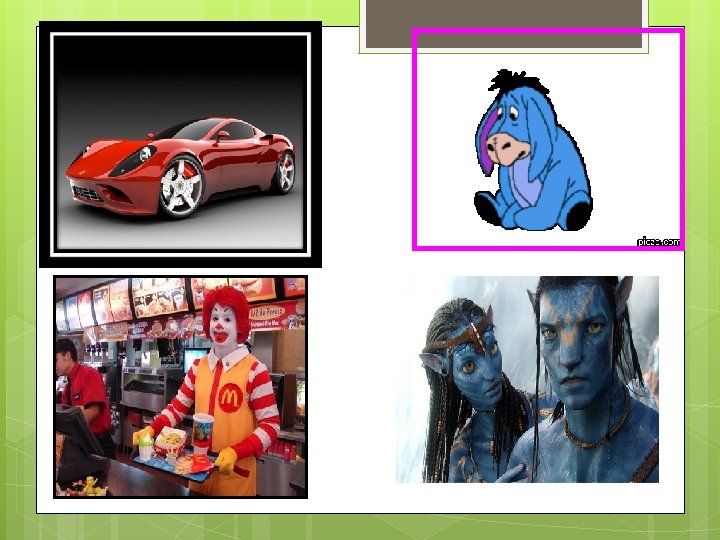
Mi definición :
The Spanish language uses adjectives in a similar way to English. • An adjective is a word that describes a noun or a pronoun in some way. • In Spanish, an adjective almost always follows the noun it describes.
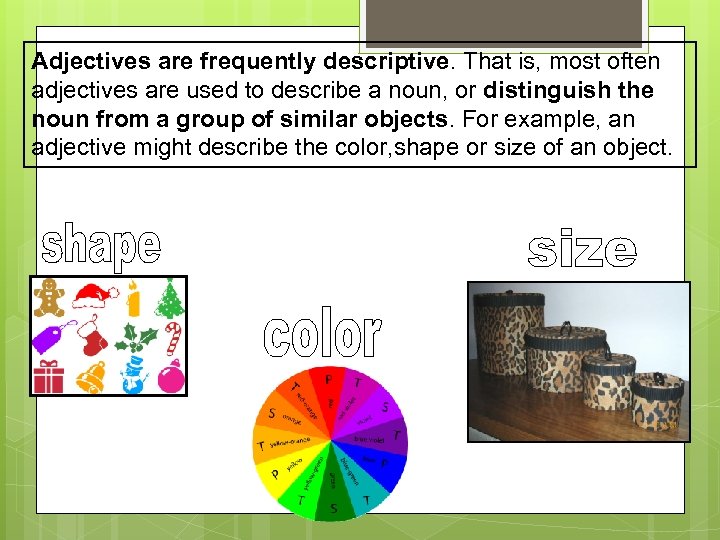
Adjectives are frequently descriptive. That is, most often adjectives are used to describe a noun, or distinguish the noun from a group of similar objects. For example, an adjective might describe the color, shape or size of an object.
• Adjectives agree in : a. ) Gender = masculine / femenine b. ) Number= singular/ plural
In Spanish, adjectives are variable words, that is, they are going to take on different forms depending on the noun they go with, as they always have to agree with it. Example : La casa bonita. -las casas bonitas. (The beautiful house. - the beautiful houses) El coche rojo (The red car - los coches rojos. - the red cars) : ) Adjectives in Spanish usually go after the noun.
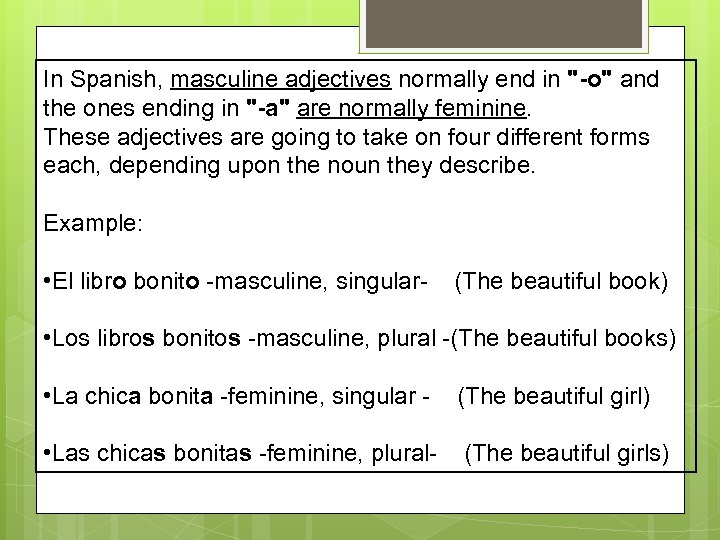
In Spanish, masculine adjectives normally end in "-o" and the ones ending in "-a" are normally feminine. These adjectives are going to take on four different forms each, depending upon the noun they describe. Example: • El libro bonito -masculine, singular- (The beautiful book) • Los libros bonitos -masculine, plural -(The beautiful books) • La chica bonita -feminine, singular - (The beautiful girl) • Las chicas bonitas -feminine, plural- (The beautiful girls)
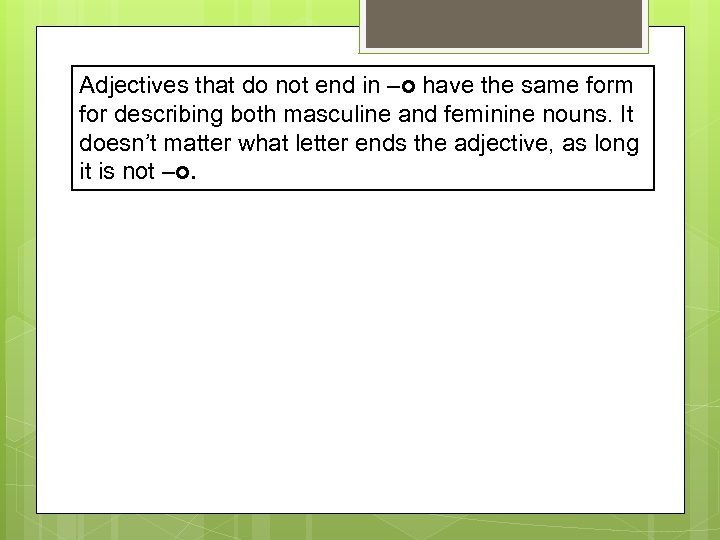
Adjectives that do not end in –o have the same form for describing both masculine and feminine nouns. It doesn’t matter what letter ends the adjective, as long it is not –o.
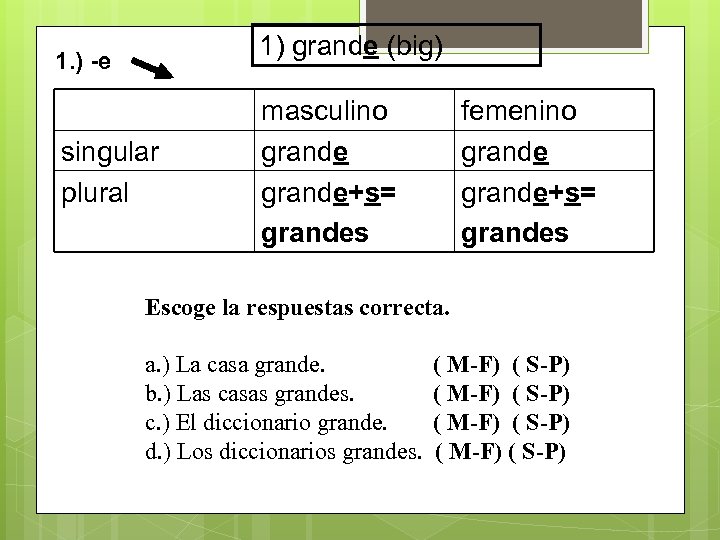
1) grande (big) 1. ) -e singular plural masculino grande+s= grandes femenino grande+s= grandes Escoge la respuestas correcta. a. ) La casa grande. b. ) Las casas grandes. c. ) El diccionario grande. d. ) Los diccionarios grandes. ( M-F) ( S-P)
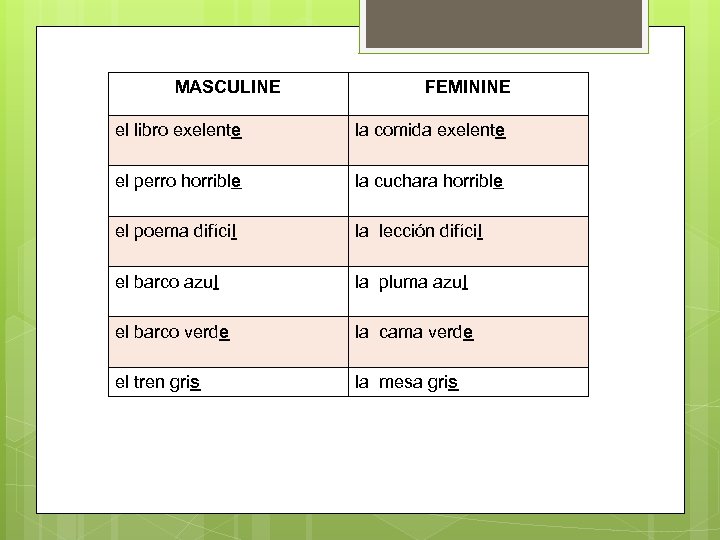
MASCULINE FEMININE el libro exelente la comida exelente el perro horrible la cuchara horrible el poema difícil la lección difícil el barco azul la pluma azul el barco verde la cama verde el tren gris la mesa gris
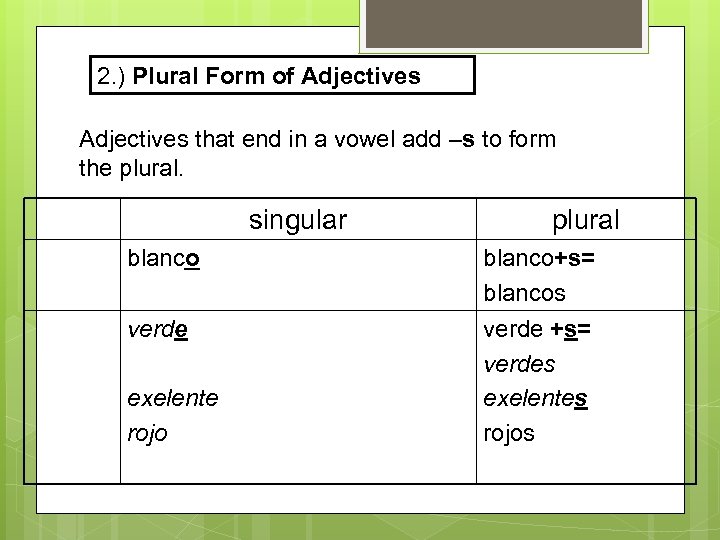
2. ) Plural Form of Adjectives that end in a vowel add –s to form the plural. singular blanco verde exelente rojo plural blanco+s= blancos verde +s= verdes exelentes rojos
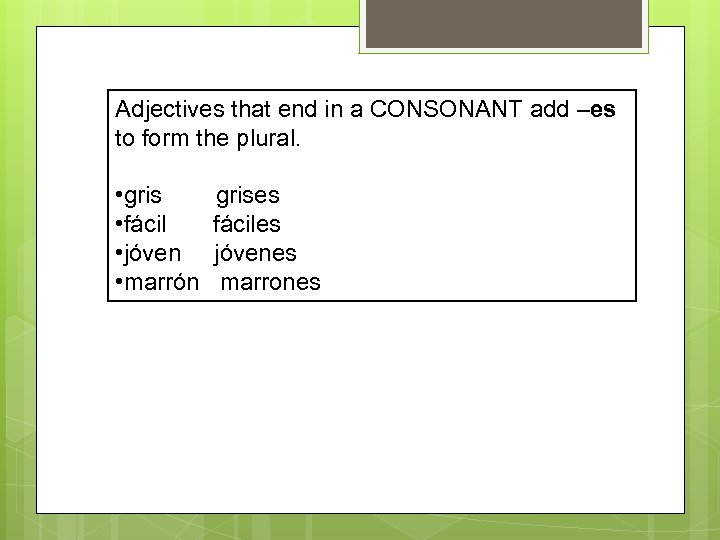
Adjectives that end in a CONSONANT add –es to form the plural. • gris • fácil • jóven • marrón grises fáciles jóvenes marrones
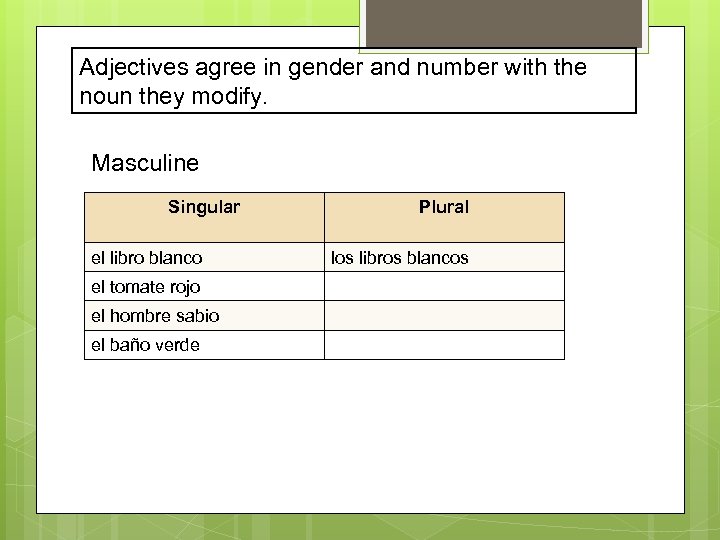
Adjectives agree in gender and number with the noun they modify. Masculine Singular el libro blanco el tomate rojo el hombre sabio el baño verde Plural los libros blancos
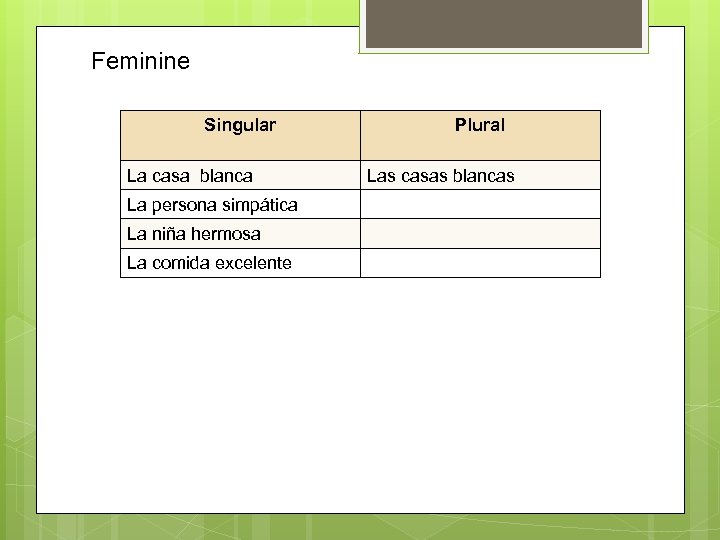
Feminine Singular La casa blanca La persona simpática La niña hermosa La comida excelente Plural Las casas blancas
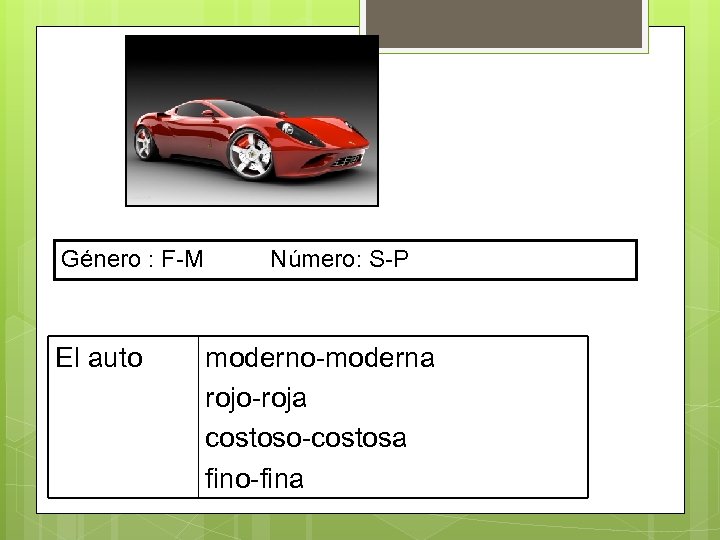
Género : F-M El auto Número: S-P moderno-moderna rojo-roja costoso-costosa fino-fina
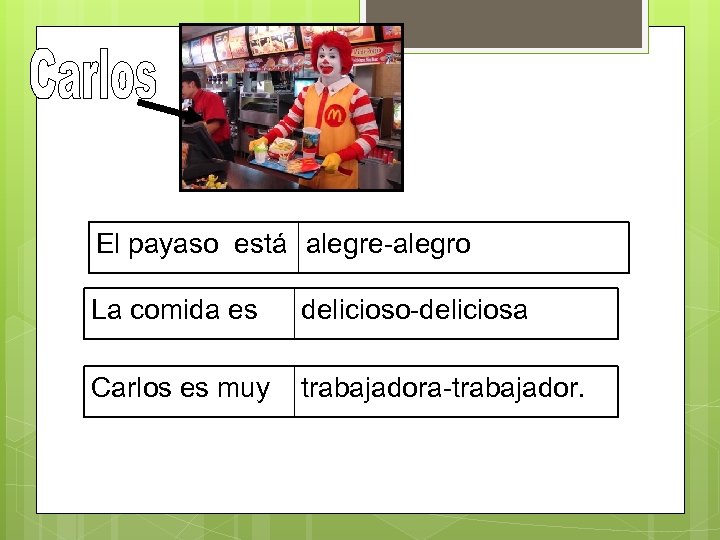
El payaso está alegre-alegro La comida es delicioso-deliciosa Carlos es muy trabajadora-trabajador.
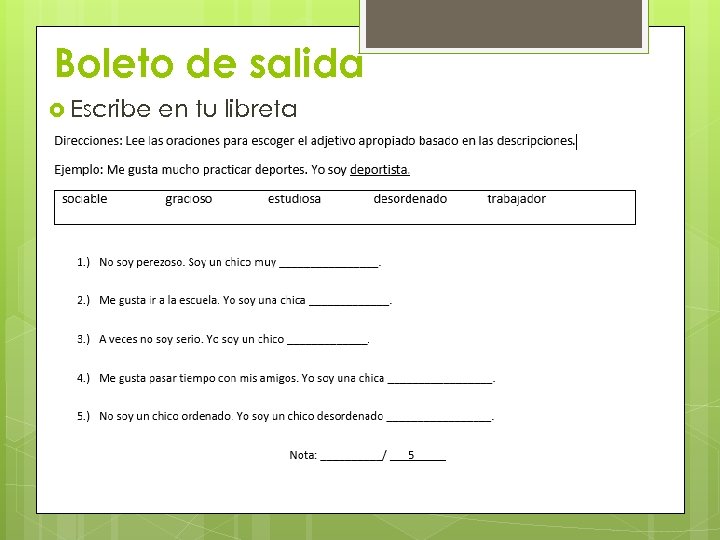
Boleto de salida Escribe en tu libreta
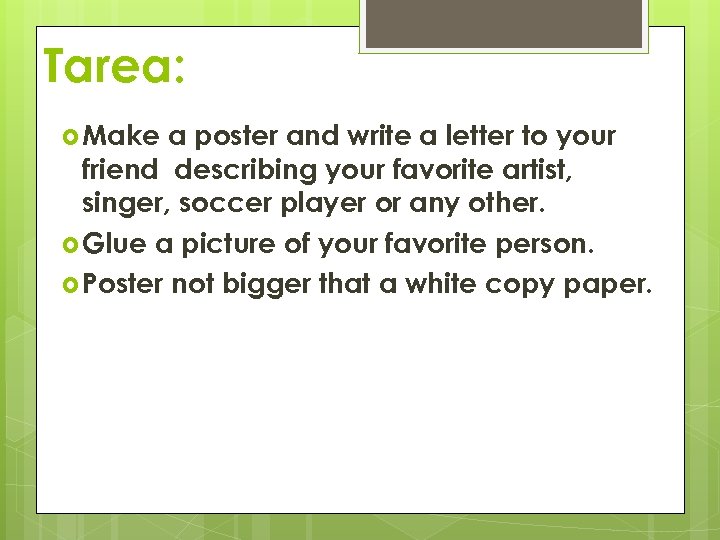
Tarea: Make a poster and write a letter to your friend describing your favorite artist, singer, soccer player or any other. Glue a picture of your favorite person. Poster not bigger that a white copy paper.
Скачать презентацию Objetivo repaso Estudiantes aprenderán y aplicarán el uso
0f1151b5b6f550f5b4ed58de86e5f5af.ppt