 Скачать презентацию Objectives To provide a general overview of
ccb5d61a9b3238f096b9ca46bbb02a9a.ppt
- Количество слайдов: 48



Objectives § To provide a general overview of quality improvement and key steps for success § To provide an example of a quality improvement project using the CPAC Rectal Cancer Project
Quality Improvement § Method of continuously examining processes and making them more effective § 4 main principles § Strong focus on customer/client/stakeholder § Continuous § Team Work § Focus on use of data
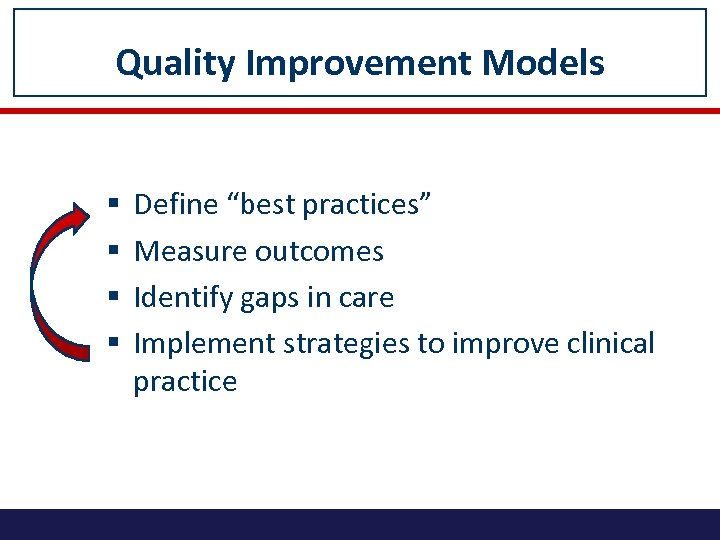
Quality Improvement Models § § Define “best practices” Measure outcomes Identify gaps in care Implement strategies to improve clinical practice
Key Steps For Success § § § § Identify problem or gap in care Make a good plan Pick a great team Patient Engagement Sustainability Funding Flexibility
Identify Problem § Needs assessment § Is it really a problem? § Identify key stakeholders § Involve the BEGINNING (“integrated KT”) § Get “buy in” § Bottom up vs top down § Multidisciplinary
Make a Good Plan § § § What intervention are you going to implement? How will you measure improvement? How will you define success? What strategies will help improve performance? What is the communication plan? Will any of this work after completion of the study? § How will it be maintained after the study? § Is it sustainable?
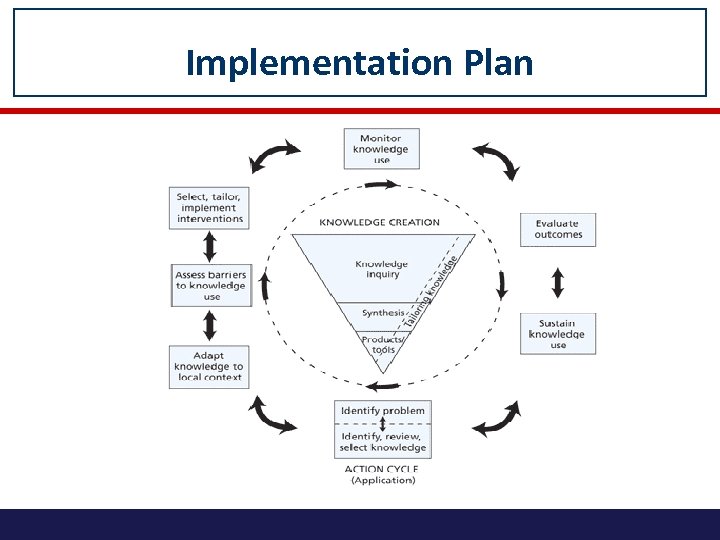
Implementation Plan
Changing Physician Behaviour § Changes of 10% are considered SUCCESSFUL! § Most effective strategies § Communities of Practice § Opinion Leaders § Audit and Feedback
COMMUNITY OF PRACTICE § Groups of people who share a concern, a set of problems or a passion for a topic and who deepen their knowledge and expertise in this area by interacting on an ongoing basis § Different knowledge sets and opinions who work together to set priorities and implement change § Integrate different perspectives; important for transitions of care § Promotes team building and team work
OPINION LEADERS § Act as role models § Able to influence other individuals’ attitudes and behaviours informally § Status earned and maintained by individual’s technical competence, social accessibility and conformity to system’s norms § Important project team members
AUDIT AND FEEDBACK § Any summary of clinical performance over a specified period of time given in a written, electronic or verbal format § Encourages individuals’ to modify their practice based on feedback § Most effective when baseline measures are low § Feedback is delivered more intensely § Best when it is feedback is based on local data
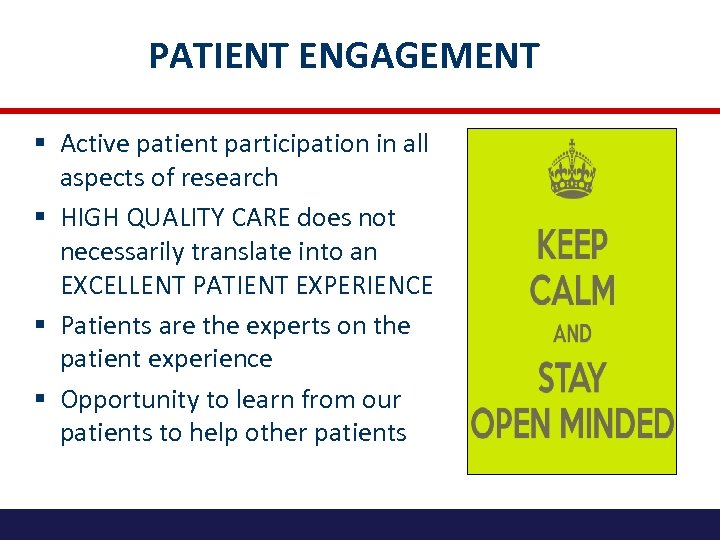
PATIENT ENGAGEMENT § Active patient participation in all aspects of research § HIGH QUALITY CARE does not necessarily translate into an EXCELLENT PATIENT EXPERIENCE § Patients are the experts on the patient experience § Opportunity to learn from our patients to help other patients
Sustainability § Quality improvements that are not sustained are a waste of time and resources § Sustainability not well studied in the literature § Needs to be addressed early in the project and ideally built into the initial study § Best to assess both during the study and post hoc
Pre-requisites for Sustainability § Adequate, ongoing resources § Clear responsibility and capacity for maintenance § Intervention will not overburden the system in maintenance requirements § Intervention fits the implementing culture and variations of the patient population
Funding § Necessary
Flexibility § Quality improvement projects are not RCTs § Need to be flexible! § Need to reassess and change the plan throughout the course of the study based on feedback § Need to let each centre decide how to implement locally and help to support § Important for sustainability
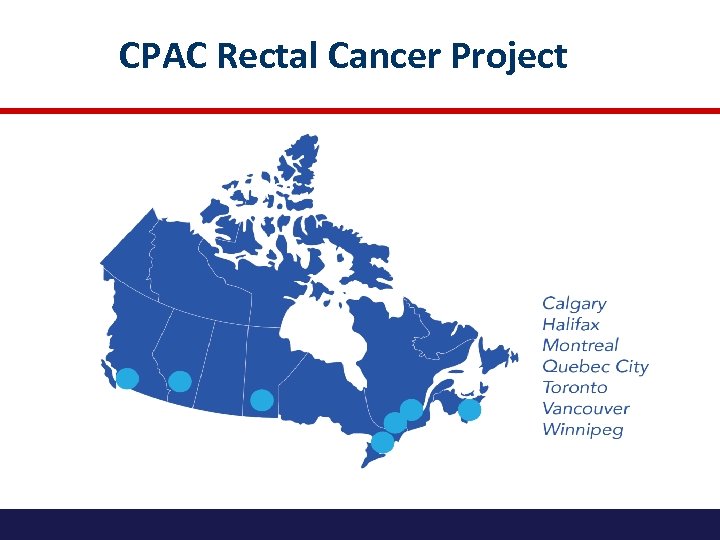
CPAC Rectal Cancer Project
CPAC Rectal Cancer Project (2014 -2017) § Quality improvement project § Funded by Canadian Partnership Against Cancer (CPAC); $903 K § 8 centres across Canada § Build multidisciplinary community of practice (COP) to share best practices § Reduce unwarranted variation § Identify gaps in care § Implement strategies to close gaps
Objectives - CPAC Rectal Cancer Project To develop a multidisciplinary, pan Canadian Community Of Practice to improve the overall quality of rectal cancer care: 1. Implement quality initiatives: § § Preoperative staging with MRI Multidisciplinary Cancer Conference (MCC) High quality radiotherapy and surgical care High quality pathologic assessment 2. Select and measure process indicators 3. Identify gaps in care 4. Implement strategies to close existing gaps
END PRODUCTS § A multidisciplinary model to improve quality of care for rectal cancer § participating centres will be able to take lead to disseminate model in respective provinces § Development of a well coordinated COP § Continue to work together on projects including grant capture and trials
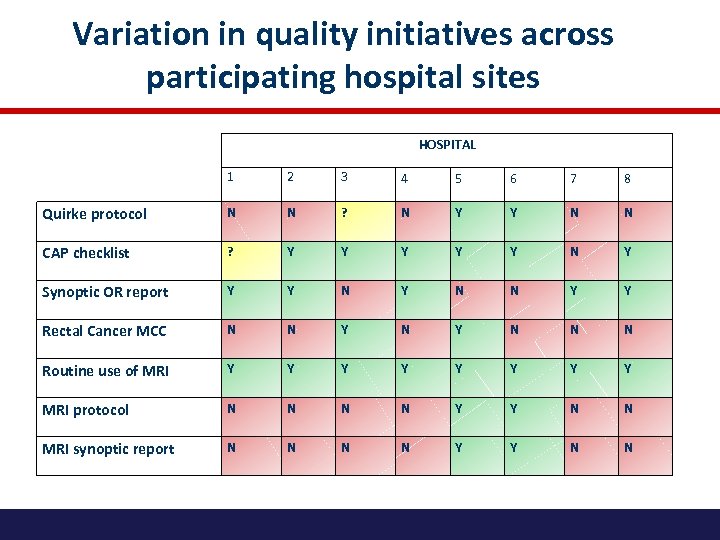
Variation in quality initiatives across participating hospital sites HOSPITAL 1 2 3 4 5 6 7 8 Quirke protocol N N ? N Y Y N N CAP checklist ? Y Y Y N Y Synoptic OR report Y Y N N Y Y Rectal Cancer MCC N N Y N N N Routine use of MRI Y Y Y Y MRI protocol N N Y Y N N MRI synoptic report N N Y Y N N
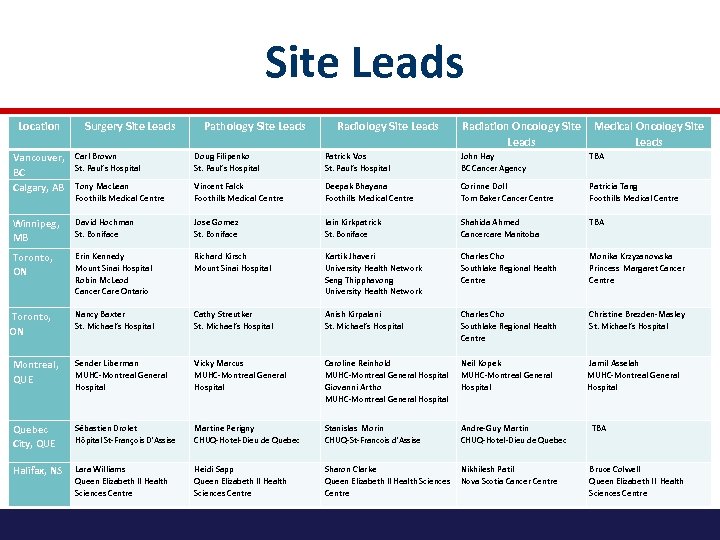
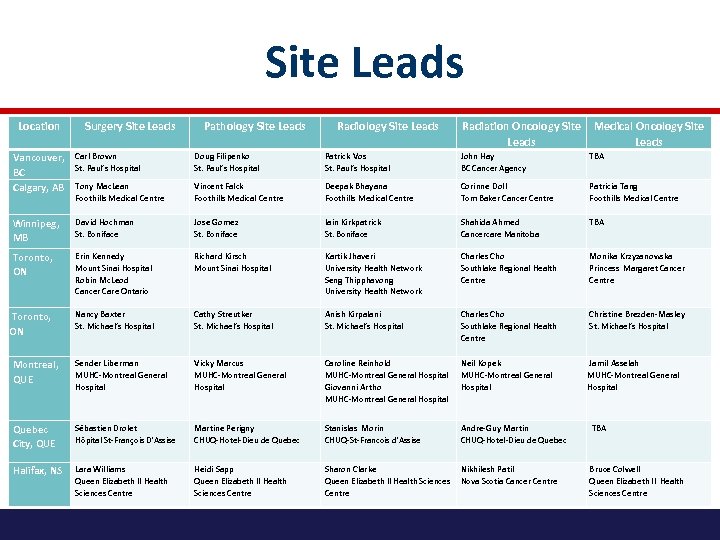
Site Leads Location Surgery Site Leads Vancouver, Carl Brown St. Paul’s Hospital BC Calgary, AB Tony Mac. Lean Pathology Site Leads Radiation Oncology Site Leads Medical Oncology Site Leads Doug Filipenko St. Paul’s Hospital Patrick Vos St. Paul’s Hospital John Hay BC Cancer Agency TBA Foothills Medical Centre Vincent Falck Foothills Medical Centre Deepak Bhayana Foothills Medical Centre Corinne Doll Tom Baker Cancer Centre Patricia Tang Foothills Medical Centre Winnipeg, MB David Hochman St. Boniface Jose Gomez St. Boniface Iain Kirkpatrick St. Boniface Shahida Ahmed Cancercare Manitoba TBA Toronto, ON Erin Kennedy Mount Sinai Hospital Robin Mc. Leod Cancer Care Ontario Richard Kirsch Mount Sinai Hospital Kartik Jhaveri University Health Network Seng Thipphavong University Health Network Charles Cho Southlake Regional Health Centre Monika Krzyzanowska Princess Margaret Cancer Centre Toronto, ON Nancy Baxter St. Michael’s Hospital Cathy Streutker St. Michael’s Hospital Anish Kirpalani St. Michael’s Hospital Charles Cho Southlake Regional Health Centre Christine Brezden-Masley St. Michael’s Hospital Montreal, QUE Sender Liberman MUHC-Montreal General Hospital Vicky Marcus MUHC-Montreal General Hospital Caroline Reinhold MUHC-Montreal General Hospital Giovanni Artho MUHC-Montreal General Hospital Neil Kopek MUHC-Montreal General Hospital Jamil Asselah MUHC-Montreal General Hospital Quebec City, QUE Sébastien Drolet Hôpital St-François D'Assise Martine Perigny CHUQ-Hotel-Dieu de Quebec Stanislas Morin CHUQ-St-Francois d'Assise Andre-Guy Martin CHUQ-Hotel-Dieu de Quebec TBA Halifax, NS Lara Williams Queen Elizabeth II Health Sciences Centre Heidi Sapp Queen Elizabeth II Health Sciences Centre Sharon Clarke Nikhilesh Patil Queen Elizabeth II Health Sciences Nova Scotia Cancer Centre Bruce Colwell Queen Elizabeth II Health Sciences Centre
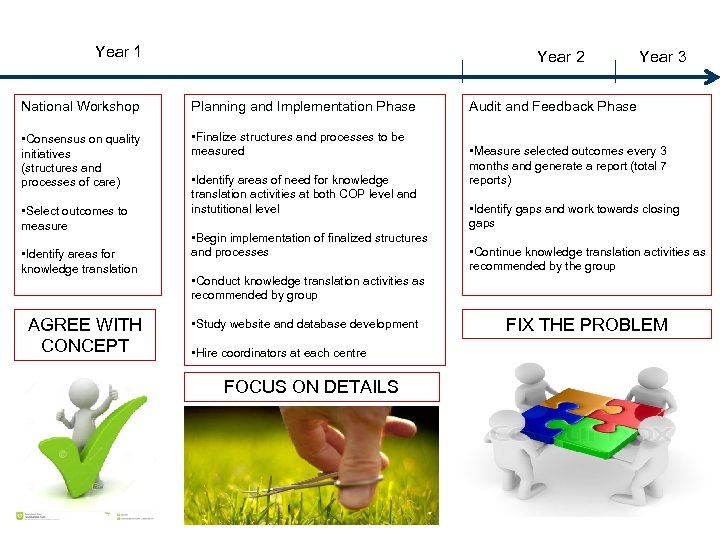
Year 1 Year 2 National Workshop Planning and Implementation Phase • Consensus on quality initiatives (structures and processes of care) • Finalize structures and processes to be measured • Select outcomes to measure • Identify areas for knowledge translation AGREE WITH CONCEPT • Identify areas of need for knowledge translation activities at both COP level and instutitional level • Begin implementation of finalized structures and processes Year 3 Audit and Feedback Phase • Measure selected outcomes every 3 months and generate a report (total 7 reports) • Identify gaps and work towards closing gaps • Continue knowledge translation activities as recommended by the group • Conduct knowledge translation activities as recommended by group • Study website and database development • Hire coordinators at each centre FOCUS ON DETAILS FIX THE PROBLEM
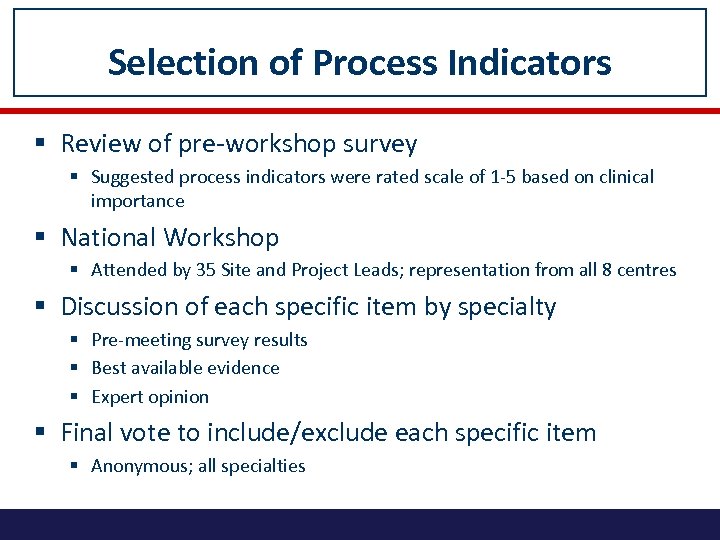
Selection of Process Indicators § Review of pre-workshop survey § Suggested process indicators were rated scale of 1 -5 based on clinical importance § National Workshop § Attended by 35 Site and Project Leads; representation from all 8 centres § Discussion of each specific item by specialty § Pre-meeting survey results § Best available evidence § Expert opinion § Final vote to include/exclude each specific item § Anonymous; all specialties
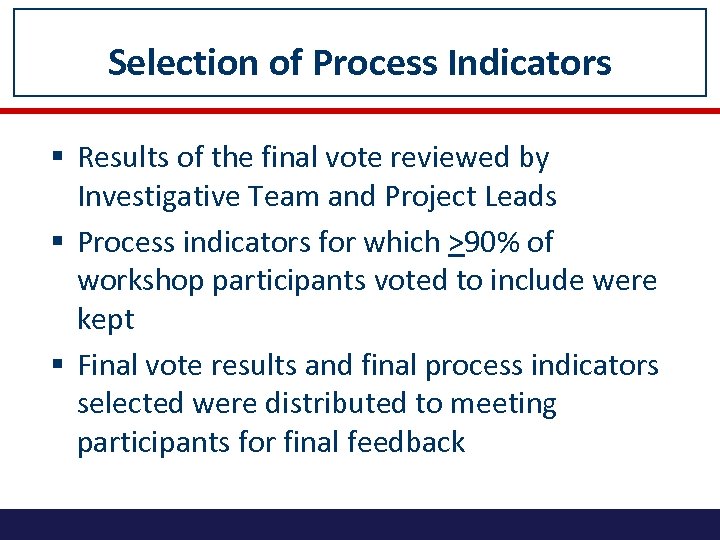
Selection of Process Indicators § Results of the final vote reviewed by Investigative Team and Project Leads § Process indicators for which >90% of workshop participants voted to include were kept § Final vote results and final process indicators selected were distributed to meeting participants for final feedback
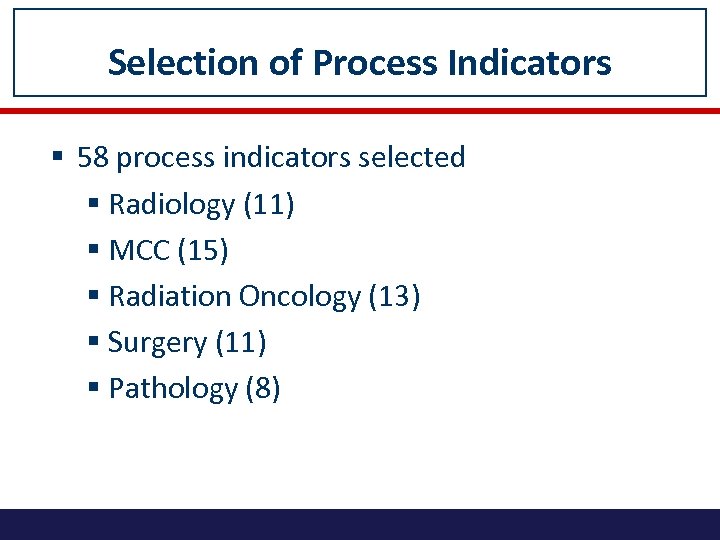
Selection of Process Indicators § 58 process indicators selected § Radiology (11) § MCC (15) § Radiation Oncology (13) § Surgery (11) § Pathology (8)
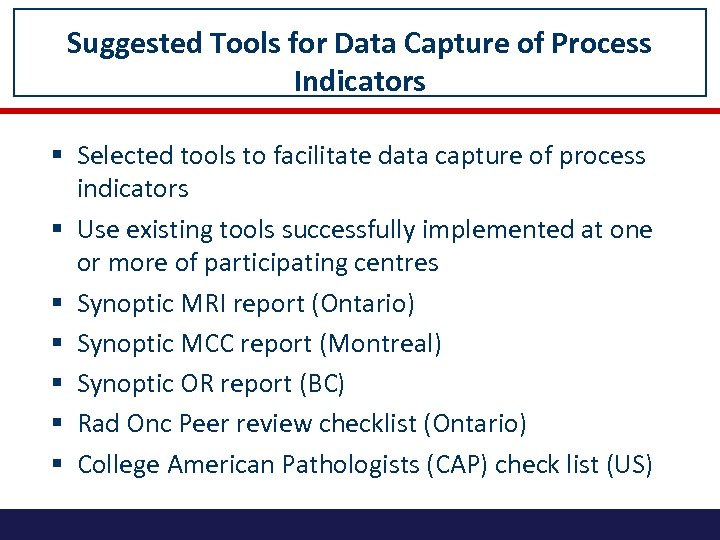
Suggested Tools for Data Capture of Process Indicators § Selected tools to facilitate data capture of process indicators § Use existing tools successfully implemented at one or more of participating centres § Synoptic MRI report (Ontario) § Synoptic MCC report (Montreal) § Synoptic OR report (BC) § Rad Onc Peer review checklist (Ontario) § College American Pathologists (CAP) check list (US)
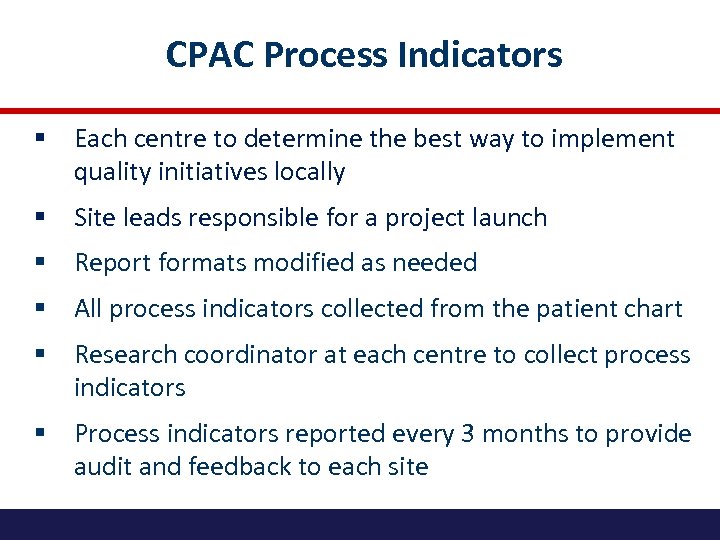
CPAC Process Indicators § Each centre to determine the best way to implement quality initiatives locally § Site leads responsible for a project launch § Report formats modified as needed § All process indicators collected from the patient chart § Research coordinator at each centre to collect process indicators § Process indicators reported every 3 months to provide audit and feedback to each site
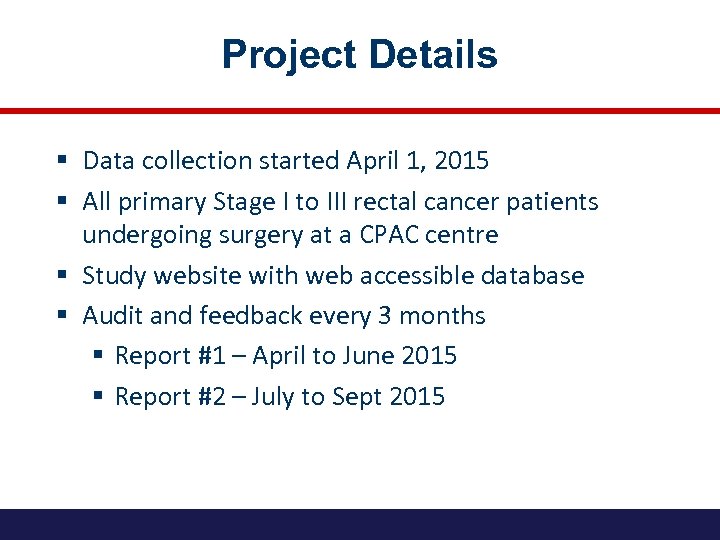
Project Details § Data collection started April 1, 2015 § All primary Stage I to III rectal cancer patients undergoing surgery at a CPAC centre § Study website with web accessible database § Audit and feedback every 3 months § Report #1 – April to June 2015 § Report #2 – July to Sept 2015
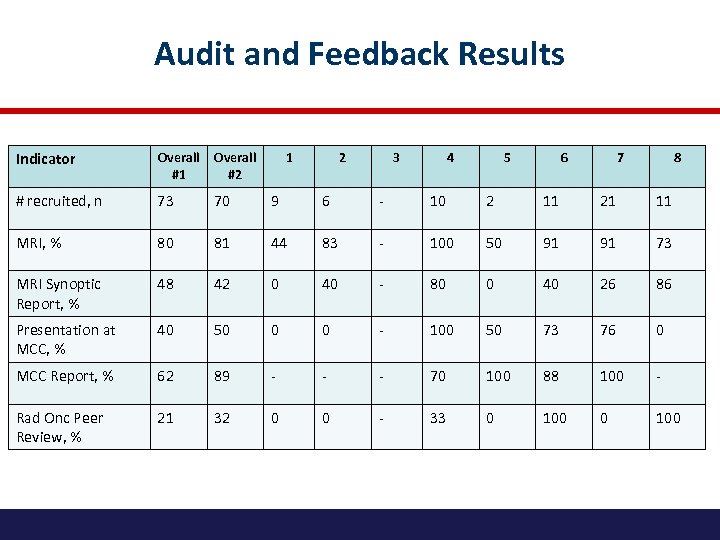
Audit and Feedback Results Indicator Overall #1 Overall #2 # recruited, n 73 70 9 6 - 10 2 11 21 11 MRI, % 80 81 44 83 - 100 50 91 91 73 MRI Synoptic Report, % 48 42 0 40 - 80 0 40 26 86 Presentation at MCC, % 40 50 0 0 - 100 50 73 76 0 MCC Report, % 62 89 - - - 70 100 88 100 - Rad Onc Peer Review, % 21 32 0 0 - 33 0 100 1 2 3 4 5 6 7 8
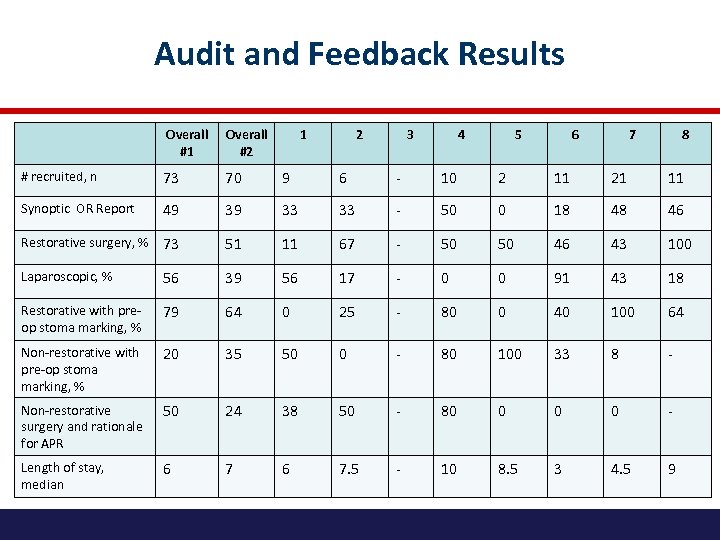
Audit and Feedback Results Overall #1 Overall #2 1 2 3 4 5 6 7 8 # recruited, n 73 70 9 6 - 10 2 11 21 11 Synoptic OR Report 49 39 33 33 - 50 0 18 48 46 Restorative surgery, % 73 51 11 67 - 50 50 46 43 100 Laparoscopic, % 56 39 56 17 - 0 0 91 43 18 Restorative with preop stoma marking, % 79 64 0 25 - 80 0 40 100 64 Non-restorative with pre-op stoma marking, % 20 35 50 0 - 80 100 33 8 - Non-restorative surgery and rationale for APR 50 24 38 50 - 80 0 - Length of stay, median 6 7. 5 - 10 8. 5 3 4. 5 9
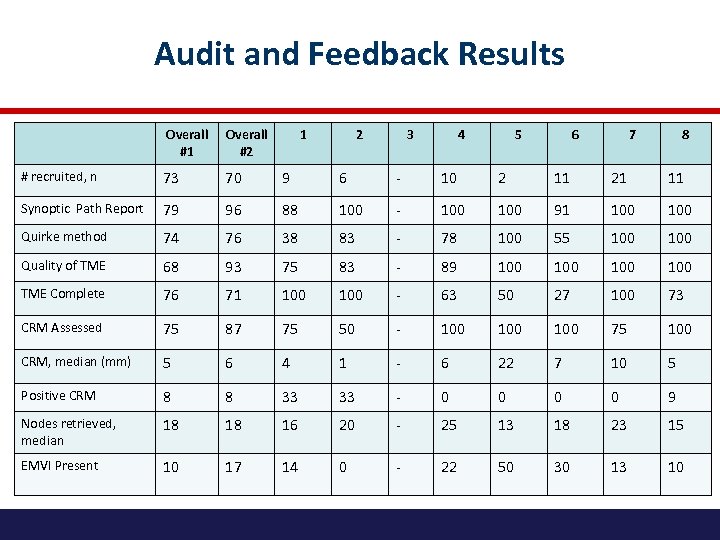
Audit and Feedback Results Overall #1 Overall #2 1 2 3 4 5 6 7 8 # recruited, n 73 70 9 6 - 10 2 11 21 11 Synoptic Path Report 79 96 88 100 - 100 91 100 Quirke method 74 76 38 83 - 78 100 55 100 Quality of TME 68 93 75 83 - 89 100 100 TME Complete 76 71 100 - 63 50 27 100 73 CRM Assessed 75 87 75 50 - 100 100 75 100 CRM, median (mm) 5 6 4 1 - 6 22 7 10 5 Positive CRM 8 8 33 33 - 0 0 9 Nodes retrieved, median 18 18 16 20 - 25 13 18 23 15 EMVI Present 10 17 14 0 - 22 50 30 13 10
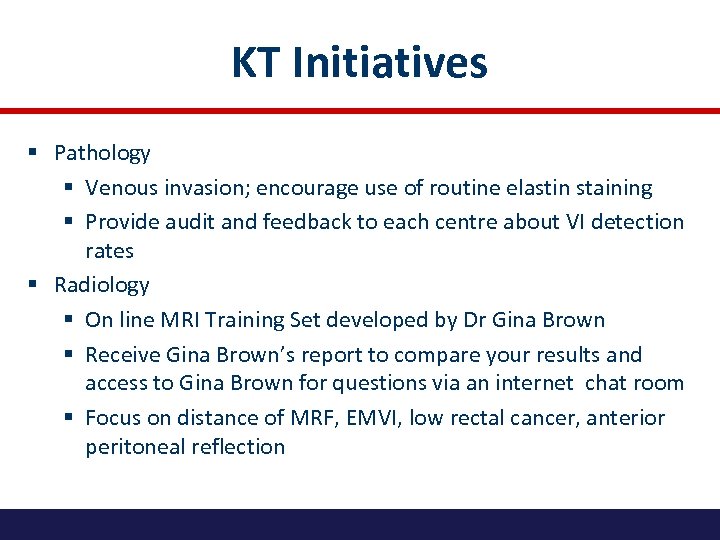
KT Initiatives § Radiation Oncology § Significant variation in contouring § Planning KT initiative to review current contouring guidelines and assess variation in contouring across centres § Webinar to discuss results, review current guidelines and develop Canadian guideline and develop strategies to minimize variation
PATIENT ENGAGEMENT Meaningful involvement of patients caregivers, clinicians and other health care stakeholders throughout the research process
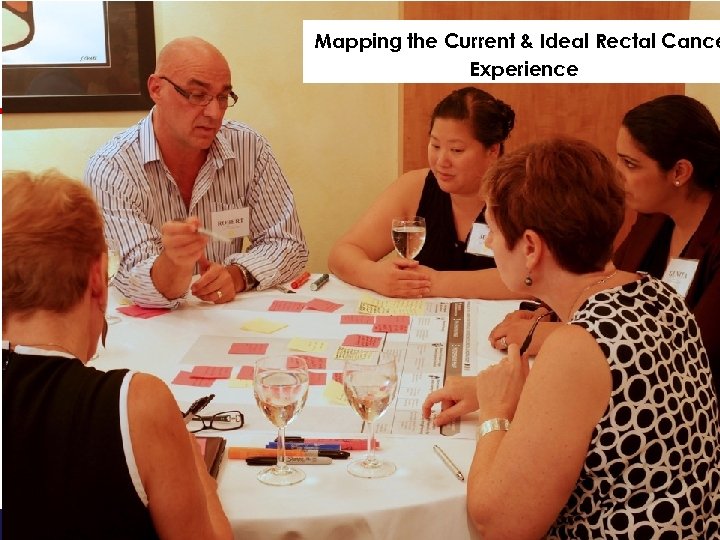
Mapping the Current & Ideal Rectal Cance Experience
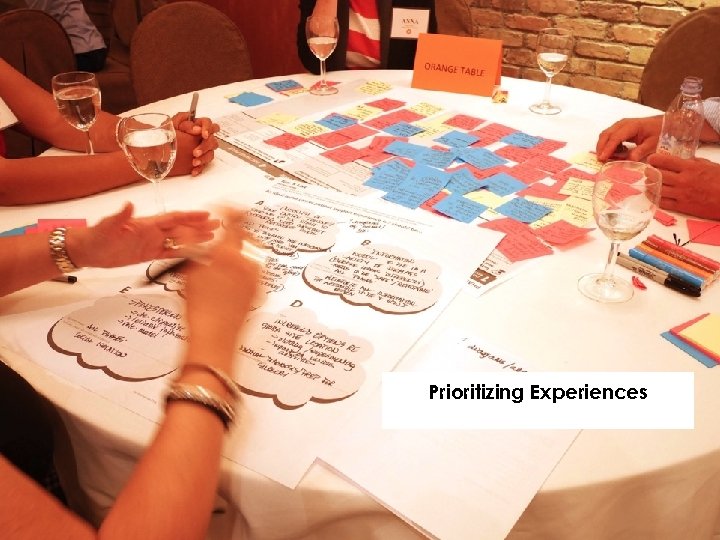
Prioritizing Experiences
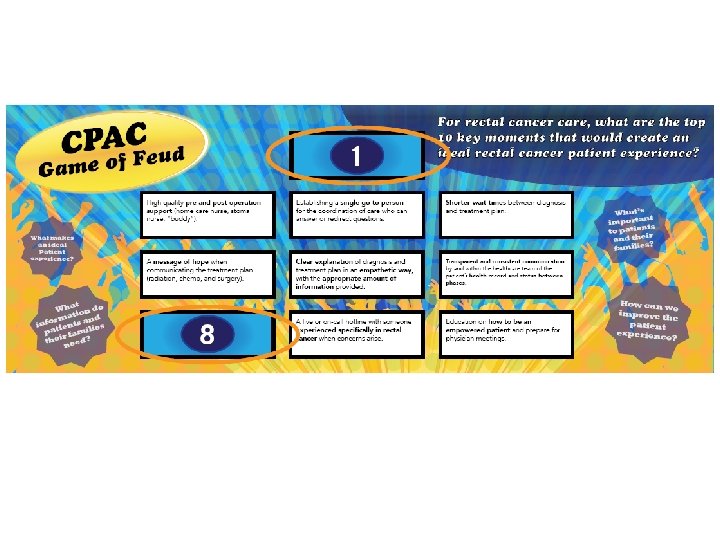
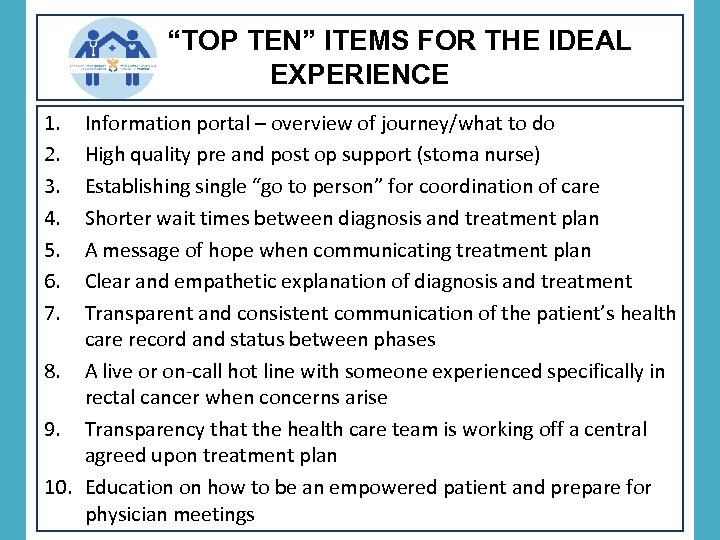
“TOP TEN” ITEMS FOR THE IDEAL EXPERIENCE 1. 2. 3. 4. 5. 6. 7. Information portal – overview of journey/what to do High quality pre and post op support (stoma nurse) Establishing single “go to person” for coordination of care Shorter wait times between diagnosis and treatment plan A message of hope when communicating treatment plan Clear and empathetic explanation of diagnosis and treatment Transparent and consistent communication of the patient’s health care record and status between phases 8. A live or on-call hot line with someone experienced specifically in rectal cancer when concerns arise 9. Transparency that the health care team is working off a central agreed upon treatment plan 10. Education on how to be an empowered patient and prepare for physician meetings
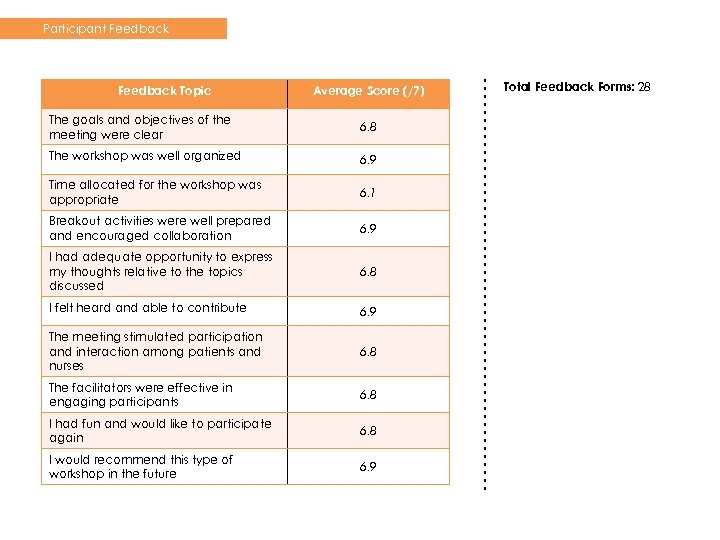
Participant Feedback Topic Average Score (/7) The goals and objectives of the meeting were clear 6. 8 The workshop was well organized 6. 9 Time allocated for the workshop was appropriate 6. 1 Breakout activities were well prepared and encouraged collaboration 6. 9 I had adequate opportunity to express my thoughts relative to the topics discussed 6. 8 I felt heard and able to contribute 6. 9 The meeting stimulated participation and interaction among patients and nurses 6. 8 The facilitators were effective in engaging participants 6. 8 I had fun and would like to participate again 6. 8 I would recommend this type of workshop in the future 6. 9 Total Feedback Forms: 28
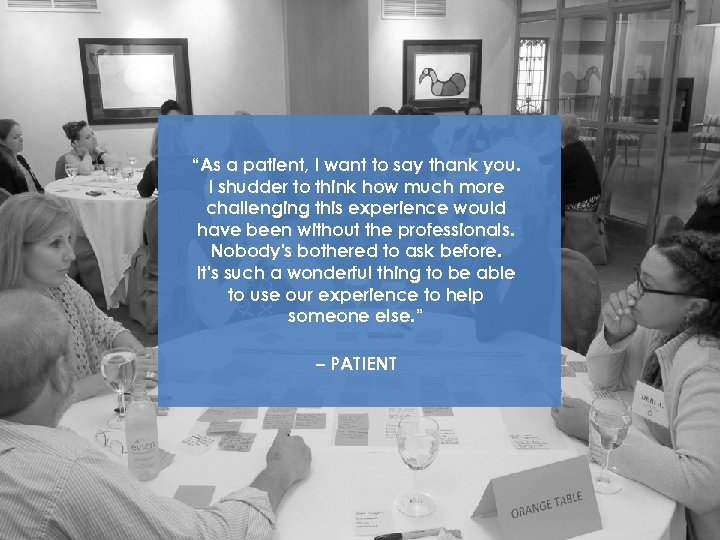
“As a patient, I want to say thank you. I shudder to think how much more challenging this experience would have been without the professionals. Nobody's bothered to ask before. It's such a wonderful thing to be able to use our experience to help someone else. ” – PATIENT
Sustainability § Continued use of core elements and persistent gains in performance after funding is withdrawn § In person meeting April 2016 to develop plan § § review report results what to measure how to measure when to measure § Qualitative interviews with 32 site leads to identify facilitator and barriers to sustainability § Continued access to database
Flexibility § Expanded on patient engagement and sustainability aspects of the study § Additional patient meeting with Enterostomal Therapy Nurses § Additional in person Site Lead meeting to discuss sustainability and next steps
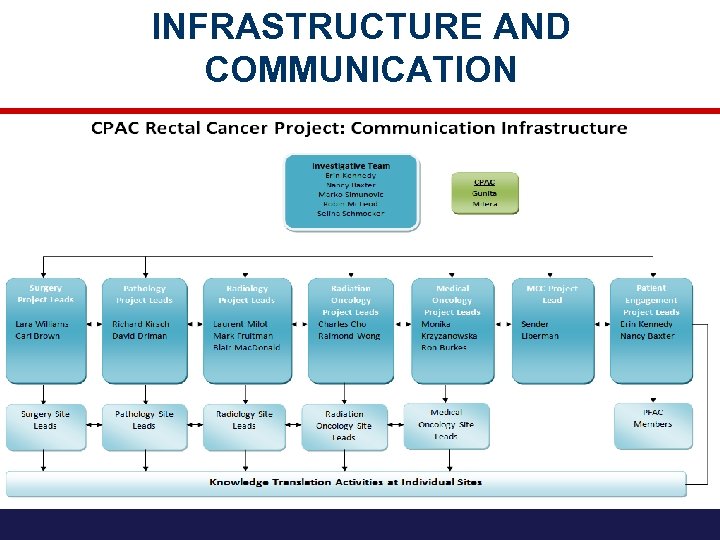
Key Steps to Success § Project was important to physicians § Pick a great team! § Involve from the BEGINNING (“integrated KT”) § Get “buy in” § Bottom up vs top down § Multidisciplinary § Funding § Flexibility § Communication (newsletters, teleconferences)
Relevance § Multidisciplinary pan Canadian COP § participating centres to disseminate model in respective provinces § continue to work together on projects including grant capture and trials (Quick. Silver) § May be used as model for other disease sites: § Breast (RUBY) § Patient Engagement § Sustainability
Site Leads Location Surgery Site Leads Vancouver, Carl Brown St. Paul’s Hospital BC Calgary, AB Tony Mac. Lean Pathology Site Leads Radiation Oncology Site Leads Medical Oncology Site Leads Doug Filipenko St. Paul’s Hospital Patrick Vos St. Paul’s Hospital John Hay BC Cancer Agency TBA Foothills Medical Centre Vincent Falck Foothills Medical Centre Deepak Bhayana Foothills Medical Centre Corinne Doll Tom Baker Cancer Centre Patricia Tang Foothills Medical Centre Winnipeg, MB David Hochman St. Boniface Jose Gomez St. Boniface Iain Kirkpatrick St. Boniface Shahida Ahmed Cancercare Manitoba TBA Toronto, ON Erin Kennedy Mount Sinai Hospital Robin Mc. Leod Cancer Care Ontario Richard Kirsch Mount Sinai Hospital Kartik Jhaveri University Health Network Seng Thipphavong University Health Network Charles Cho Southlake Regional Health Centre Monika Krzyzanowska Princess Margaret Cancer Centre Toronto, ON Nancy Baxter St. Michael’s Hospital Cathy Streutker St. Michael’s Hospital Anish Kirpalani St. Michael’s Hospital Charles Cho Southlake Regional Health Centre Christine Brezden-Masley St. Michael’s Hospital Montreal, QUE Sender Liberman MUHC-Montreal General Hospital Vicky Marcus MUHC-Montreal General Hospital Caroline Reinhold MUHC-Montreal General Hospital Giovanni Artho MUHC-Montreal General Hospital Neil Kopek MUHC-Montreal General Hospital Jamil Asselah MUHC-Montreal General Hospital Quebec City, QUE Sébastien Drolet Hôpital St-François D'Assise Martine Perigny CHUQ-Hotel-Dieu de Quebec Stanislas Morin CHUQ-St-Francois d'Assise Andre-Guy Martin CHUQ-Hotel-Dieu de Quebec TBA Halifax, NS Lara Williams Queen Elizabeth II Health Sciences Centre Heidi Sapp Queen Elizabeth II Health Sciences Centre Sharon Clarke Nikhilesh Patil Queen Elizabeth II Health Sciences Nova Scotia Cancer Centre Bruce Colwell Queen Elizabeth II Health Sciences Centre
THANK YOU www. rcacprojects. ca ekennedy@mtsinai. on. ca
KT Initiatives § Pathology § Venous invasion; encourage use of routine elastin staining § Provide audit and feedback to each centre about VI detection rates § Radiology § On line MRI Training Set developed by Dr Gina Brown § Receive Gina Brown’s report to compare your results and access to Gina Brown for questions via an internet chat room § Focus on distance of MRF, EMVI, low rectal cancer, anterior peritoneal reflection
INFRASTRUCTURE AND COMMUNICATION
Скачать презентацию Objectives To provide a general overview of
ccb5d61a9b3238f096b9ca46bbb02a9a.ppt