 Скачать презентацию Objectives Reading Unit 2 Lesson 14 Module A
16fc1e51028e18ab09bdca7b3382265b.ppt
- Количество слайдов: 17



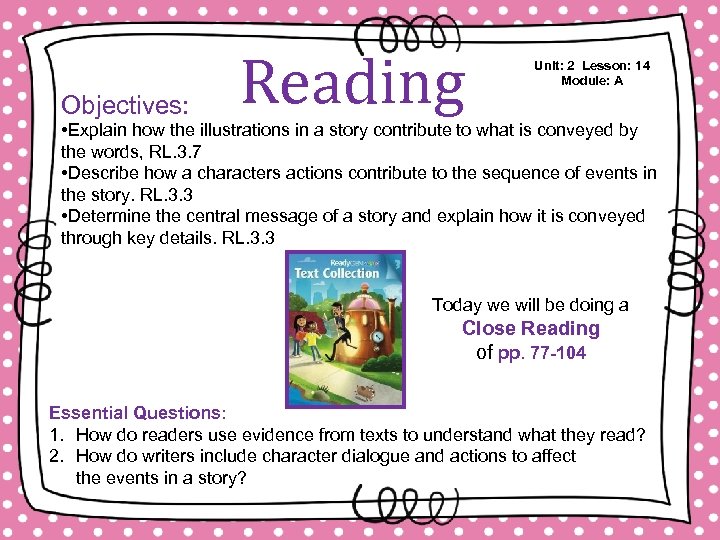
Objectives: Reading Unit: 2 Lesson: 14 Module: A • Explain how the illustrations in a story contribute to what is conveyed by the words, RL. 3. 7 • Describe how a characters actions contribute to the sequence of events in the story. RL. 3. 3 • Determine the central message of a story and explain how it is conveyed through key details. RL. 3. 3 Today we will be doing a Close Reading of pp. 77 -104 Essential Questions: 1. How do readers use evidence from texts to understand what they read? 2. How do writers include character dialogue and actions to affect the events in a story?
Building Understanding Let’s Set the Purpose! Enduring Understanding: Learners understand that relationships within a community are affected by culture and traditions. We are going to see the effect traditions and culture can have on a community and its members' relationships.
Let’s Get Engaged! Today we’ll be reading The Frog Princess: A Tlingit Legend from Alaska. You should think about the Essential Questions as the class reads, talks, and writes about this text In this lesson, we are going to learn how illustrations can be used to help us understand a character's actions.
Reading Routine In this first reading, you should be reading for an understanding of what the text is mainly about. Turn and Talk: Turn to a partner and discuss these questions using examples from the text: Where does the young man in green take the headman's daughter?
Close Read You can use illustrations in a story to understand what you are reading. We’ll use these questions to guide the discussion. Support your answers with evidence. 1. Look at the illustrations on pages 80 and 87. How has the headman‘s daughter changed? 2. What is the lesson of this story? Which of the illustrations makes you think that? 3. What about the traveler's story interests the headman? 4. Why does the young man in green knock on the girl's door? Explain why this is an important part of the story.
Benchmark Vocabulary • suitor, p. 80 • threshold, p. 83 • mourned, p. 89 • consent, p. 93 • exchange, p. 95 • morsel, p. 99 • feast, p. 99 • unnatural, p. 102 • summons, p. 103 Find and read sentences from the text with the above vocabulary words. Vocabulary Quick Check Practice: Use p. 141 in the Reader’s and Writer’s Journal to show contextual understanding of the Benchmark Vocabulary.
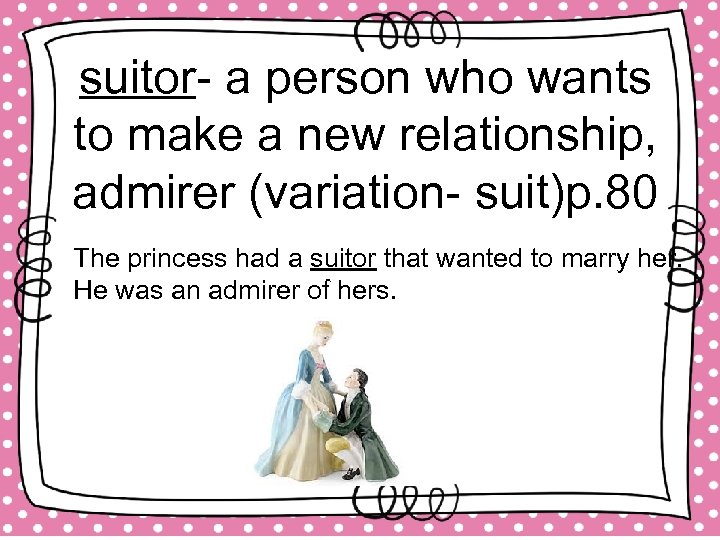
suitor- a person who wants to make a new relationship, admirer (variation- suit)p. 80 The princess had a suitor that wanted to marry her. He was an admirer of hers.
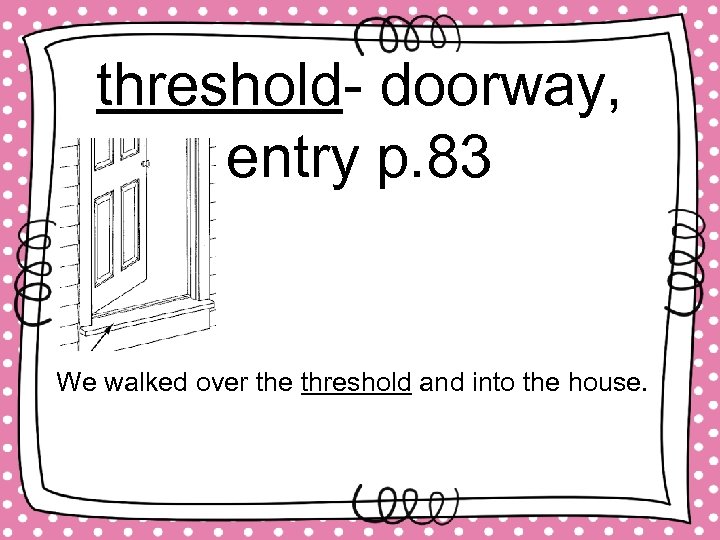
threshold- doorway, entry p. 83 We walked over the threshold and into the house.
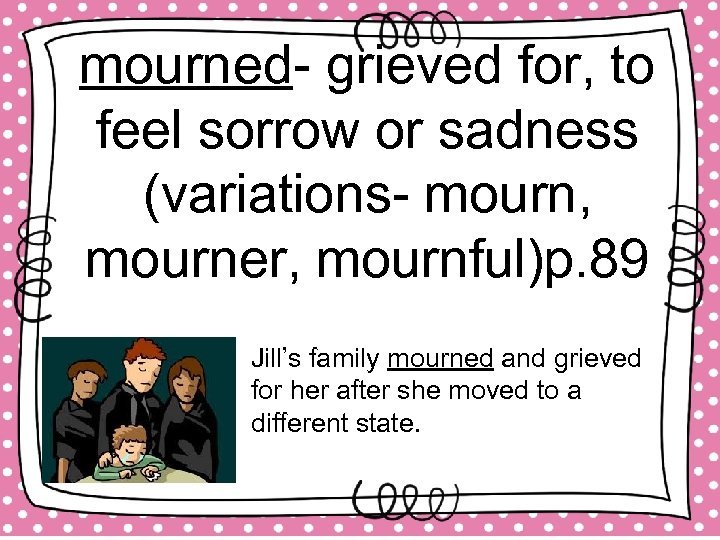
mourned- grieved for, to feel sorrow or sadness (variations- mourn, mourner, mournful)p. 89 Jill’s family mourned and grieved for her after she moved to a different state.
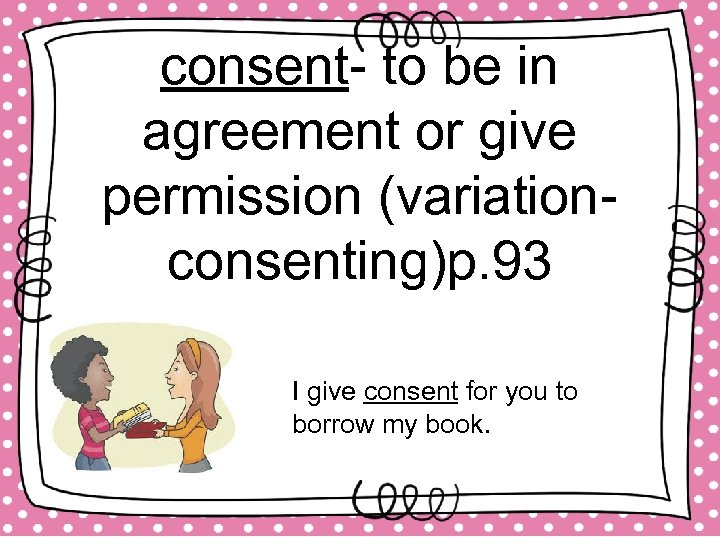
consent- to be in agreement or give permission (variationconsenting)p. 93 I give consent for you to borrow my book.
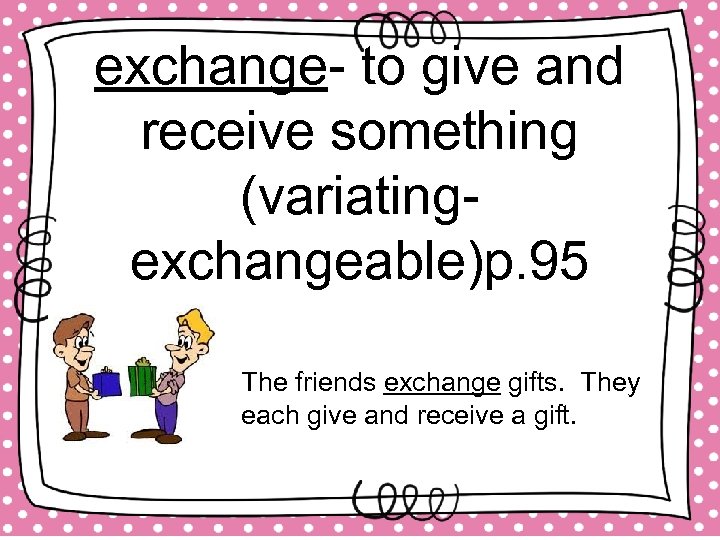
exchange- to give and receive something (variatingexchangeable)p. 95 The friends exchange gifts. They each give and receive a gift.
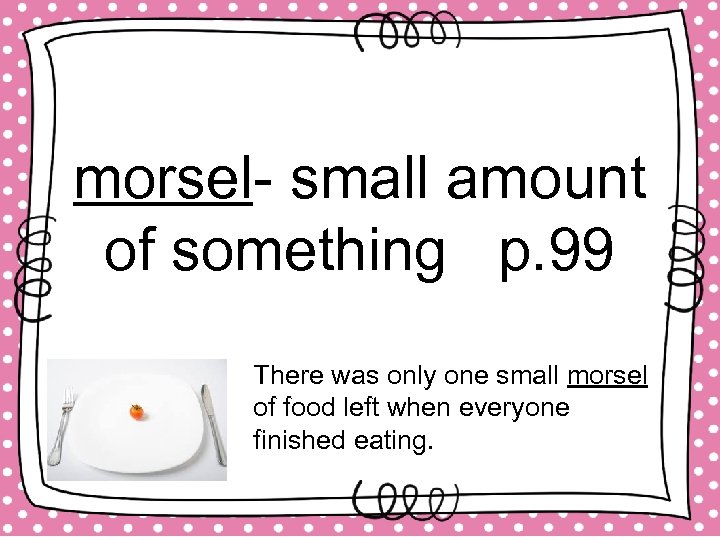
morsel- small amount of something p. 99 There was only one small morsel of food left when everyone finished eating.

feast- a large meal or celebration (variationfeasting) p. 99 The family celebrated the holiday and gathered together for a large feast.
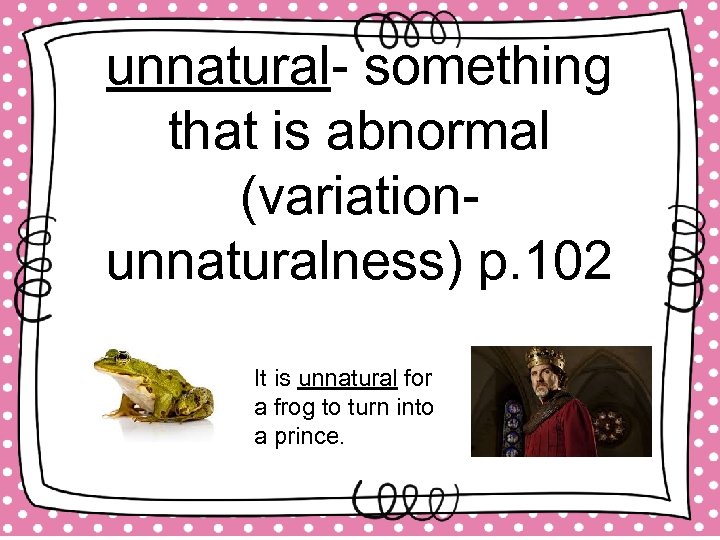
unnatural- something that is abnormal (variationunnaturalness) p. 102 It is unnatural for a frog to turn into a prince.
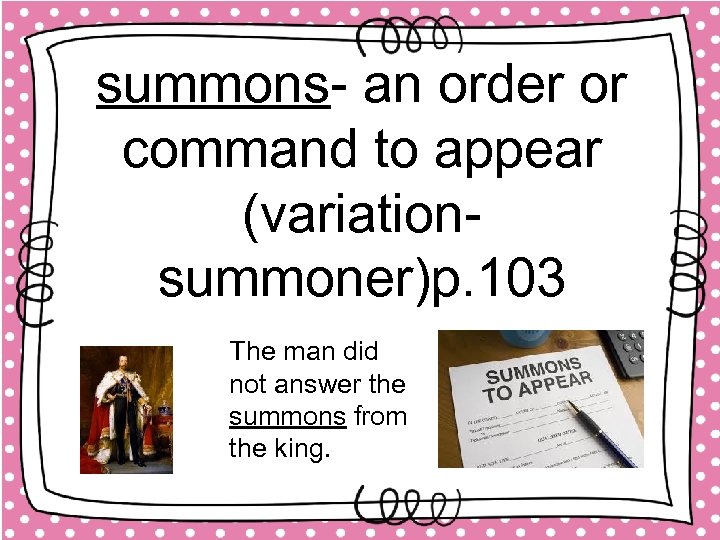
summons- an order or command to appear (variationsummoner)p. 103 The man did not answer the summons from the king.
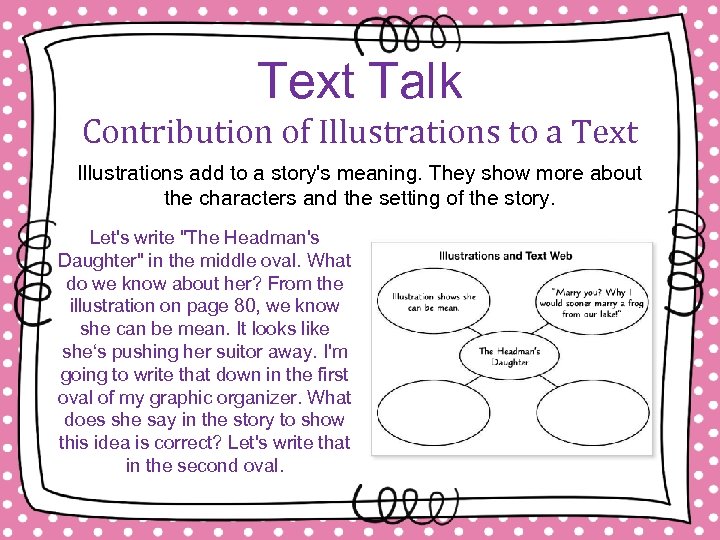
Text Talk Contribution of Illustrations to a Text Illustrations add to a story's meaning. They show more about the characters and the setting of the story. Let's write "The Headman's Daughter" in the middle oval. What do we know about her? From the illustration on page 80, we know she can be mean. It looks like she‘s pushing her suitor away. I'm going to write that down in the first oval of my graphic organizer. What does she say in the story to show this idea is correct? Let's write that in the second oval.
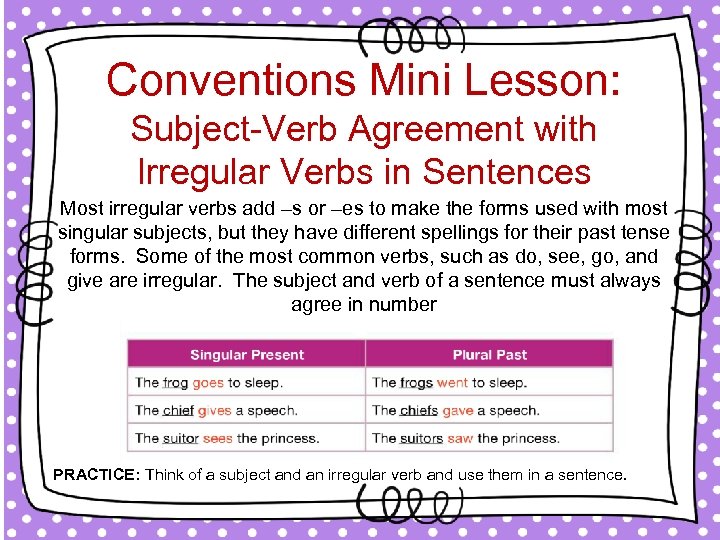
Conventions Mini Lesson: Subject-Verb Agreement with Irregular Verbs in Sentences Most irregular verbs add –s or –es to make the forms used with most singular subjects, but they have different spellings for their past tense forms. Some of the most common verbs, such as do, see, go, and give are irregular. The subject and verb of a sentence must always agree in number PRACTICE: Think of a subject and an irregular verb and use them in a sentence.
Скачать презентацию Objectives Reading Unit 2 Lesson 14 Module A
16fc1e51028e18ab09bdca7b3382265b.ppt