 Скачать презентацию Objectives n n n n Definition of terms
7608f95f1666924ffbe8739b68e623f1.ppt
- Количество слайдов: 42



Objectives n n n n Definition of terms Importance of data modeling Write good names and definitions for entities, relationships, and attributes Distinguish unary, binary, and ternary relationships Model different types of attributes, entities, relationships, and cardinalities Draw E-R diagrams for common business situations Convert many-to-many relationships to associative entities Model time-dependent data using time stamps Chapter 3 © 2005 by Prentice Hall 1
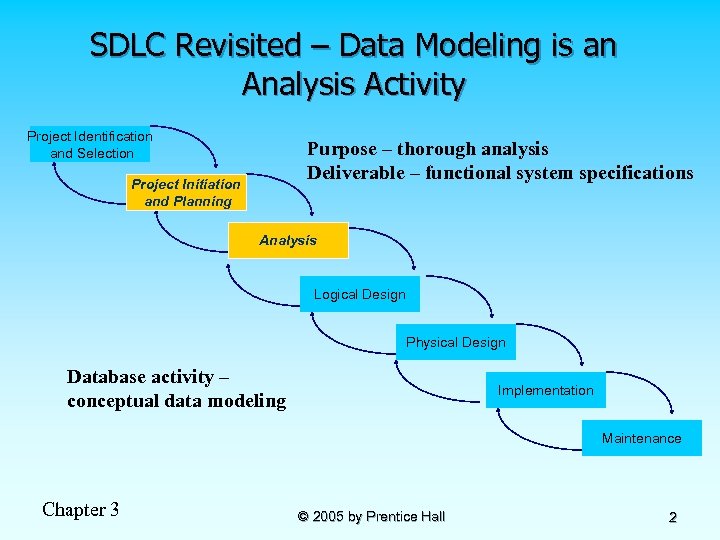
SDLC Revisited – Data Modeling is an Analysis Activity Project Identification and Selection Purpose – thorough analysis Deliverable – functional system specifications Project Initiation and Planning Analysis Logical Design Physical Design Database activity – conceptual data modeling Implementation Maintenance Chapter 3 © 2005 by Prentice Hall 2
Business Rules n n n Statements that define or constrain some aspect of the business Assert business structure Control/influence business behavior Expressed in terms familiar to end users Automated through DBMS software Chapter 3 © 2005 by Prentice Hall 3
A Good Business Rule is: n n n n Declarative – what, not how Precise – clear, agreed-upon meaning Atomic – one statement Consistent – internally and externally Expressible – structured, natural language Distinct – non-redundant Business-oriented – understood by business people Chapter 3 © 2005 by Prentice Hall 4
A Good Data Name is: n n n Related to business, not technical, characteristics Meaningful and self-documenting Unique Readable Composed of words from an approved list Repeatable Chapter 3 © 2005 by Prentice Hall 5
Data Definitions n Explanation of a term or fact n n n Term – word or phrase with specific meaning Fact – association between two or more terms Guidelines for good data definition n n Gathered in conjunction with systems requirements Accompanied by diagrams Iteratively created and refined Achieved by consensus Chapter 3 © 2005 by Prentice Hall 6
E-R Model Constructs n n n Entity instance - person, place, object, event, concept (often corresponds to a row in a table) Entity Type – collection of entities (often corresponds to a table) Attribute - property or characteristic of an entity type (often corresponds to a field in a table) Relationship instance – link between entities (corresponds to primary key-foreign key equivalencies in related tables) Relationship type – category of relationship…link between entity types Chapter 3 © 2005 by Prentice Hall 7
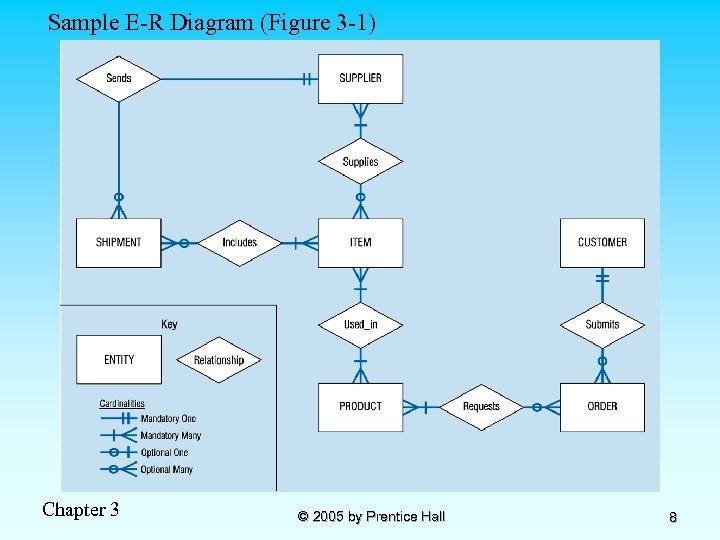
Sample E-R Diagram (Figure 3 -1) Chapter 3 © 2005 by Prentice Hall 8
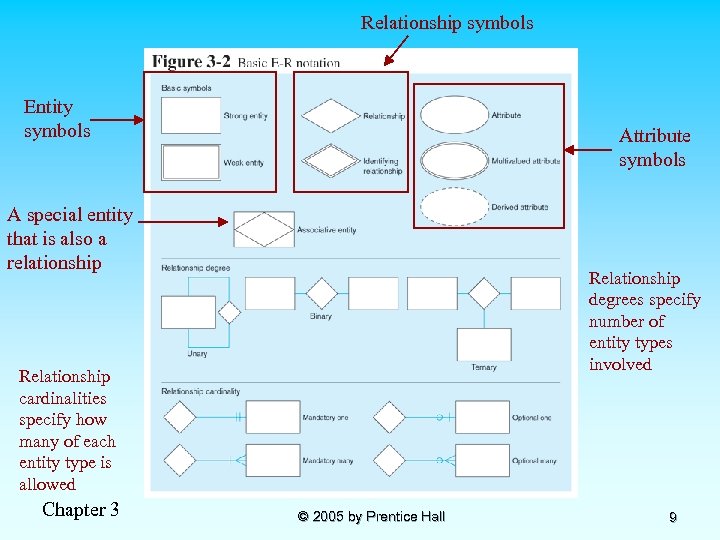
Relationship symbols Entity symbols Attribute symbols A special entity that is also a relationship Relationship degrees specify number of entity types involved Relationship cardinalities specify how many of each entity type is allowed Chapter 3 © 2005 by Prentice Hall 9
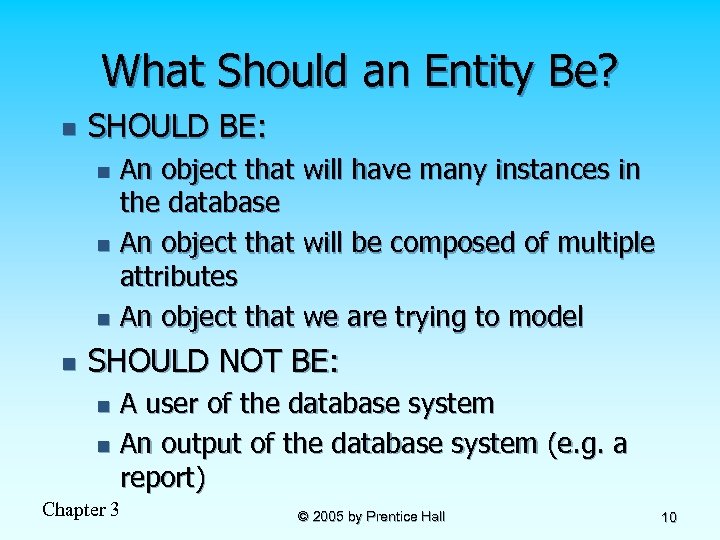
What Should an Entity Be? n SHOULD BE: An object that will have many instances in the database n An object that will be composed of multiple attributes n An object that we are trying to model n n SHOULD NOT BE: A user of the database system n An output of the database system (e. g. a report) n Chapter 3 © 2005 by Prentice Hall 10
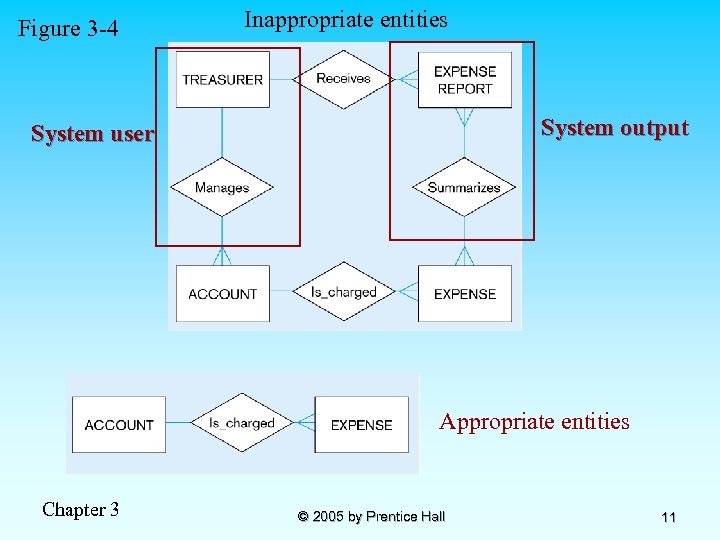
Figure 3 -4 Inappropriate entities System output System user Appropriate entities Chapter 3 © 2005 by Prentice Hall 11
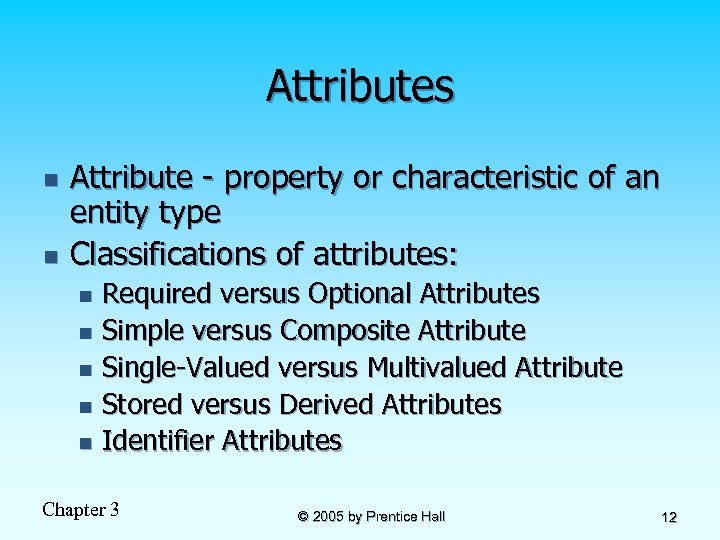
Attributes n n Attribute - property or characteristic of an entity type Classifications of attributes: Required versus Optional Attributes n Simple versus Composite Attribute n Single-Valued versus Multivalued Attribute n Stored versus Derived Attributes n Identifier Attributes n Chapter 3 © 2005 by Prentice Hall 12
Identifiers (Keys) n n n Identifier (Key) - An attribute (or combination of attributes) that uniquely identifies individual instances of an entity type Simple Key versus Composite Key Candidate Key – an attribute that could be a key…satisfies the requirements for being a key Chapter 3 © 2005 by Prentice Hall 13
Characteristics of Identifiers n n Will not change in value Will not be null No intelligent identifiers (e. g. containing locations or people that might change) Substitute new, simple keys for long, composite keys Chapter 3 © 2005 by Prentice Hall 14
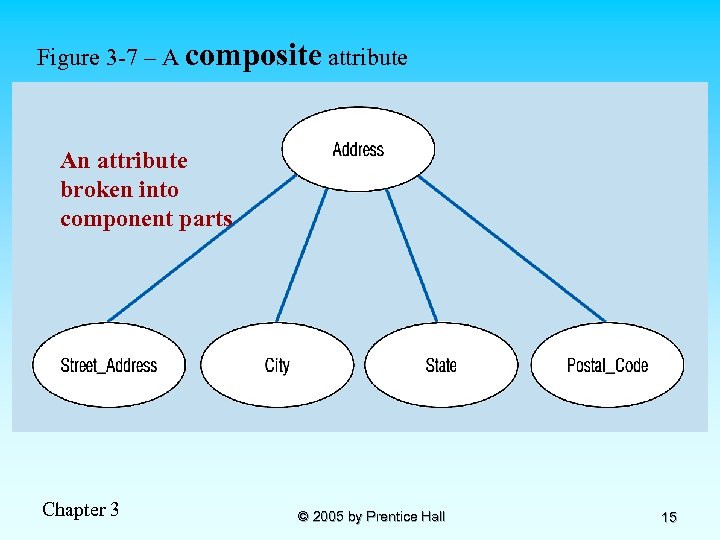
Figure 3 -7 – A composite attribute An attribute broken into component parts Chapter 3 © 2005 by Prentice Hall 15
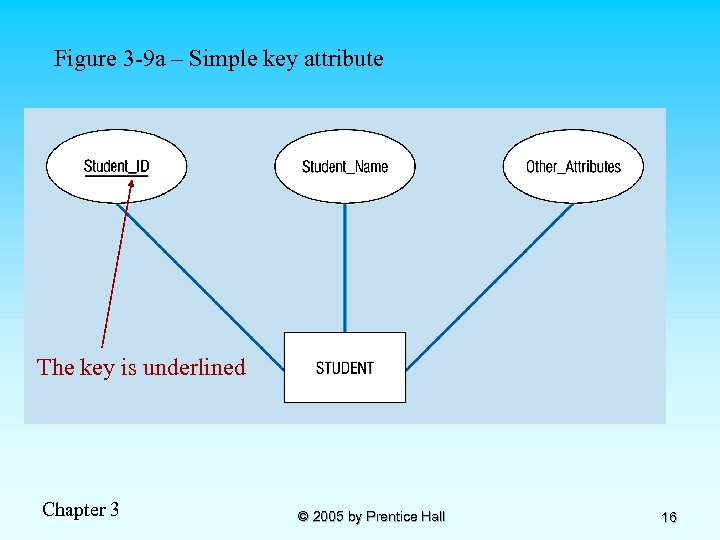
Figure 3 -9 a – Simple key attribute The key is underlined Chapter 3 © 2005 by Prentice Hall 16
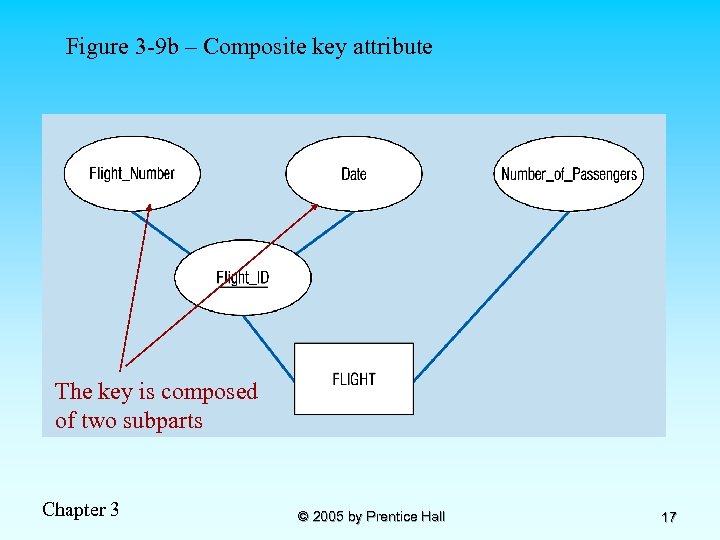
Figure 3 -9 b – Composite key attribute The key is composed of two subparts Chapter 3 © 2005 by Prentice Hall 17
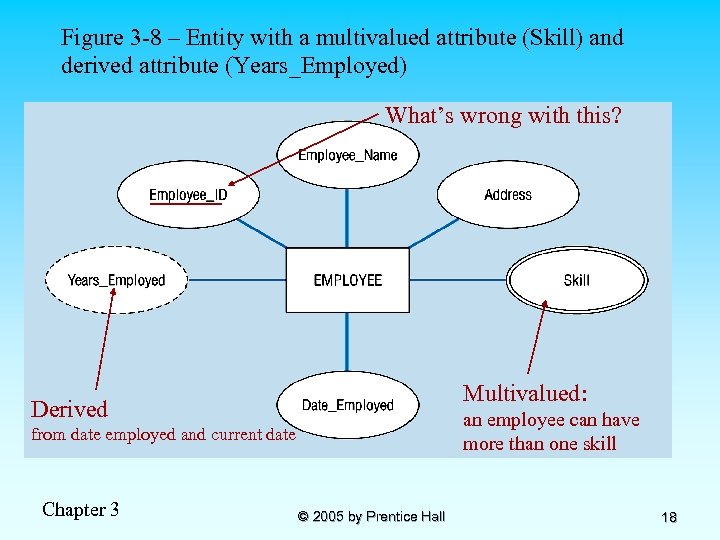
Figure 3 -8 – Entity with a multivalued attribute (Skill) and derived attribute (Years_Employed) What’s wrong with this? Multivalued: Derived an employee can have more than one skill from date employed and current date Chapter 3 © 2005 by Prentice Hall 18
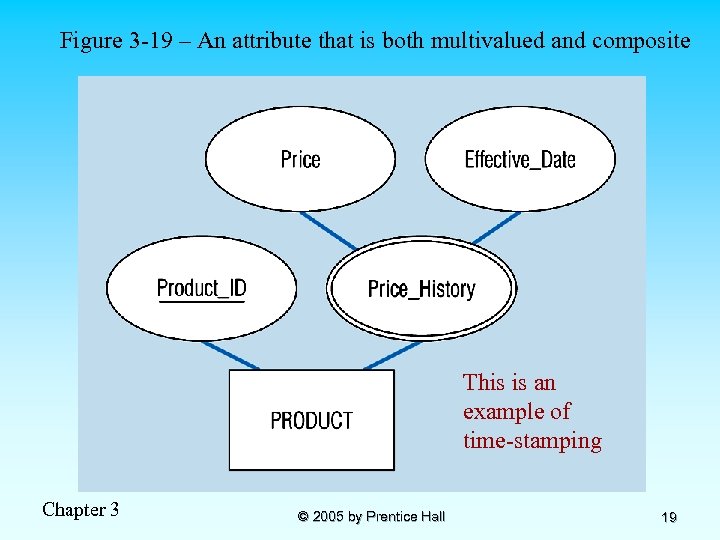
Figure 3 -19 – An attribute that is both multivalued and composite This is an example of time-stamping Chapter 3 © 2005 by Prentice Hall 19
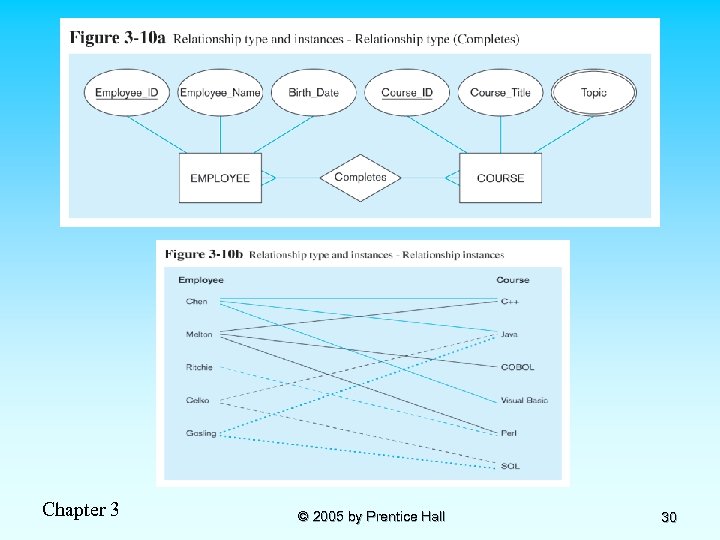
More on Relationships n Relationship Types vs. Relationship Instances n n Relationships can have attributes n n n The relationship type is modeled as the diamond and lines between entity types…the instance is between specific entity instances These describe features pertaining to the association between the entities in the relationship Two entities can have more than one type of relationship between them (multiple relationships) Associative Entity – combination of relationship and entity Chapter 3 © 2005 by Prentice Hall 20
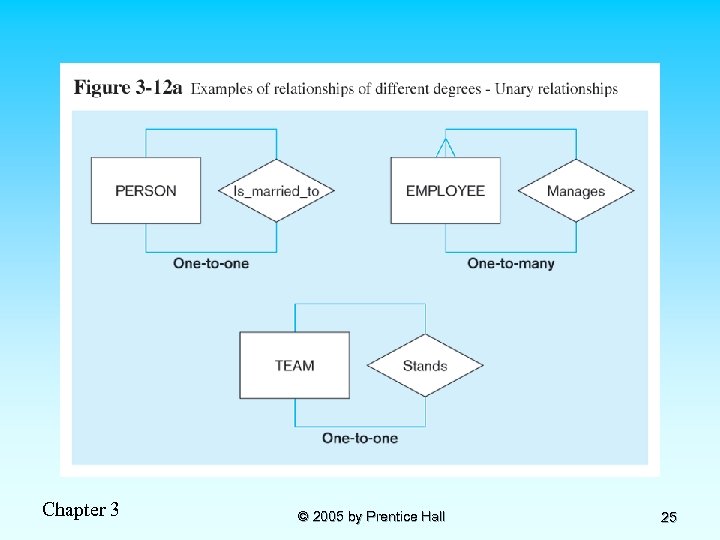
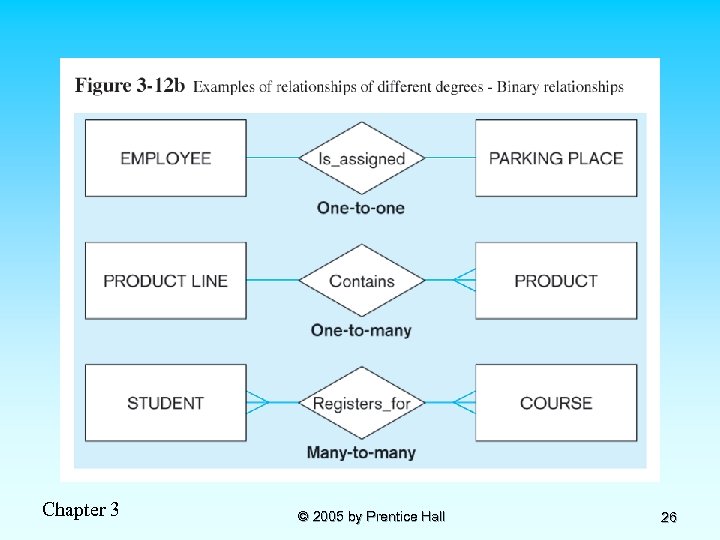
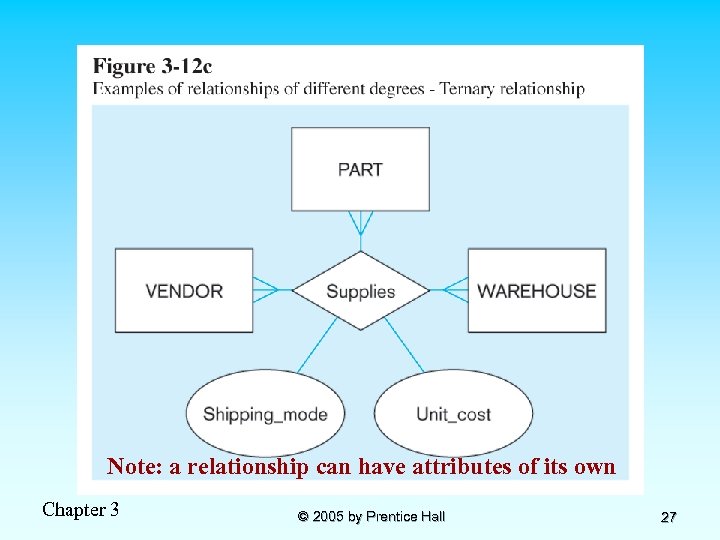
Degree of Relationships n Degree of a relationship is the number of entity types that participate in it n Unary Relationship n Binary Relationship n Ternary Relationship Chapter 3 © 2005 by Prentice Hall 21
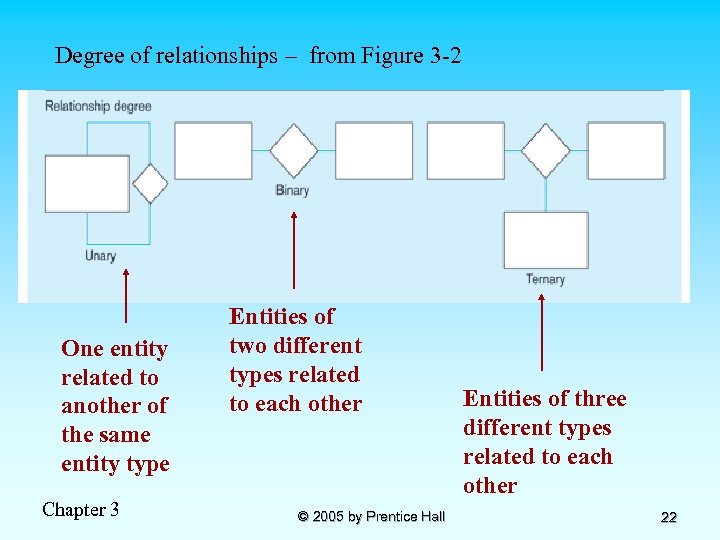
Degree of relationships – from Figure 3 -2 One entity related to another of the same entity type Chapter 3 Entities of two different types related to each other © 2005 by Prentice Hall Entities of three different types related to each other 22
Cardinality of Relationships n One-to-One n n One-to-Many n n Each entity in the relationship will have exactly one related entity An entity on one side of the relationship can have many related entities, but an entity on the other side will have a maximum of one related entity Many-to-Many n Entities on both sides of the relationship can have many related entities on the other side Chapter 3 © 2005 by Prentice Hall 23
Cardinality Constraints n n Cardinality Constraints - the number of instances of one entity that can or must be associated with each instance of another entity Minimum Cardinality If zero, then optional n If one or more, then mandatory n n Maximum Cardinality n The maximum number Chapter 3 © 2005 by Prentice Hall 24
Chapter 3 © 2005 by Prentice Hall 25
Chapter 3 © 2005 by Prentice Hall 26
Note: a relationship can have attributes of its own Chapter 3 © 2005 by Prentice Hall 27
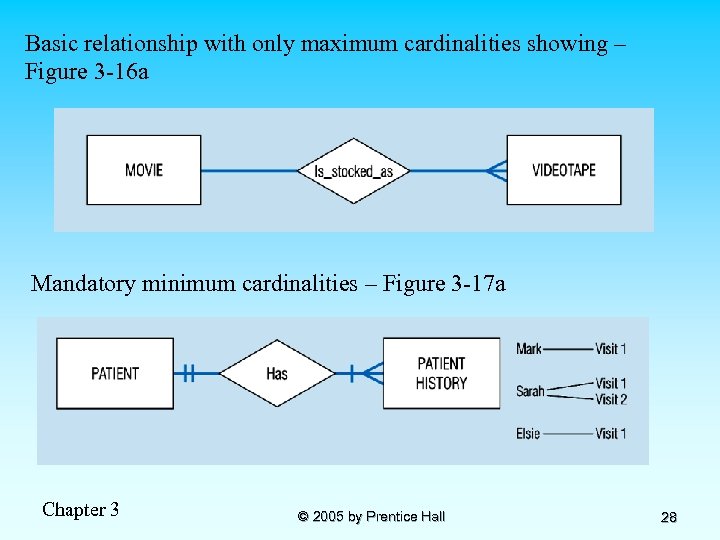
Basic relationship with only maximum cardinalities showing – Figure 3 -16 a Mandatory minimum cardinalities – Figure 3 -17 a Chapter 3 © 2005 by Prentice Hall 28
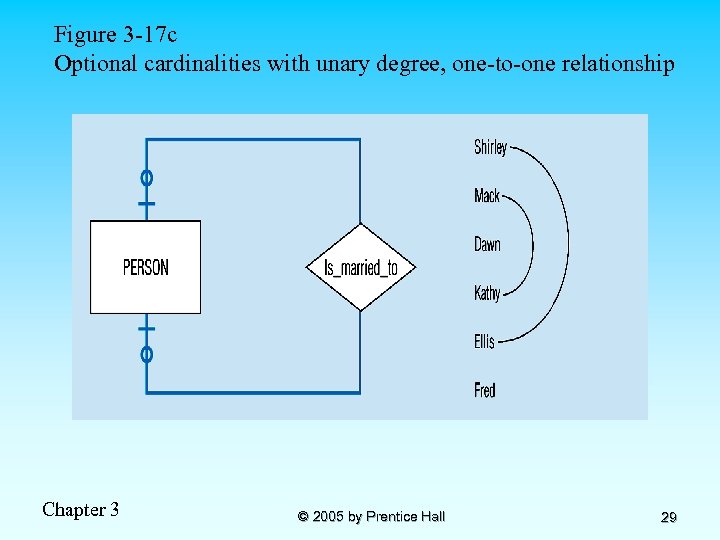
Figure 3 -17 c Optional cardinalities with unary degree, one-to-one relationship Chapter 3 © 2005 by Prentice Hall 29
Chapter 3 © 2005 by Prentice Hall 30
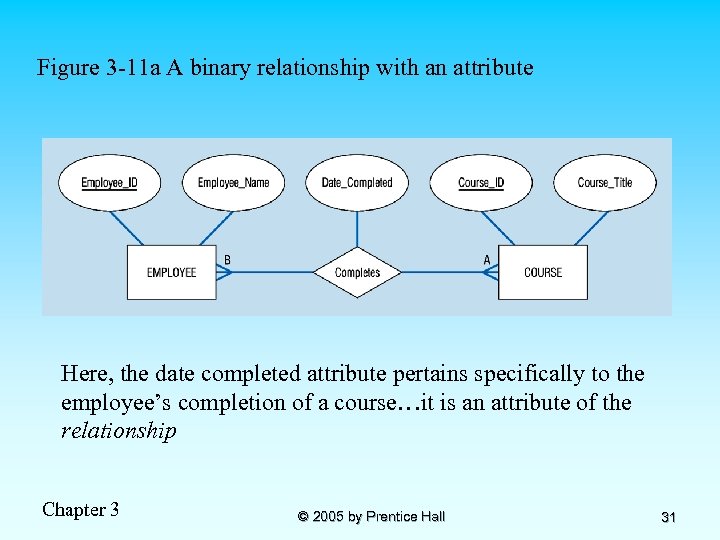
Figure 3 -11 a A binary relationship with an attribute Here, the date completed attribute pertains specifically to the employee’s completion of a course…it is an attribute of the relationship Chapter 3 © 2005 by Prentice Hall 31
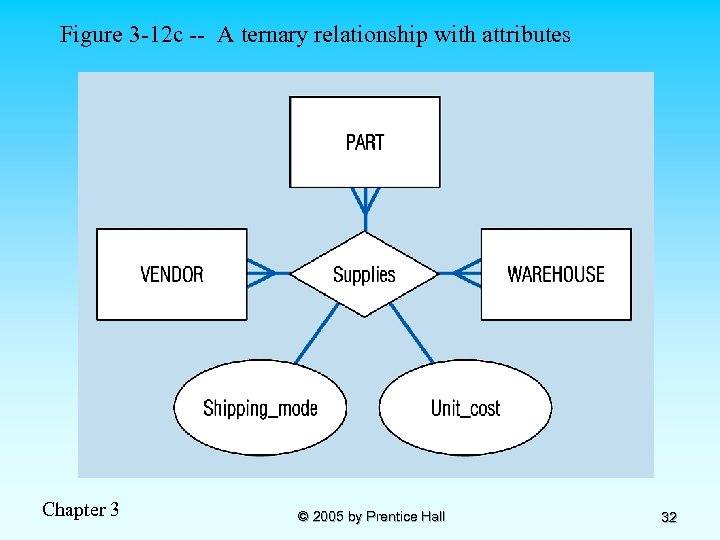
Figure 3 -12 c -- A ternary relationship with attributes Chapter 3 © 2005 by Prentice Hall 32
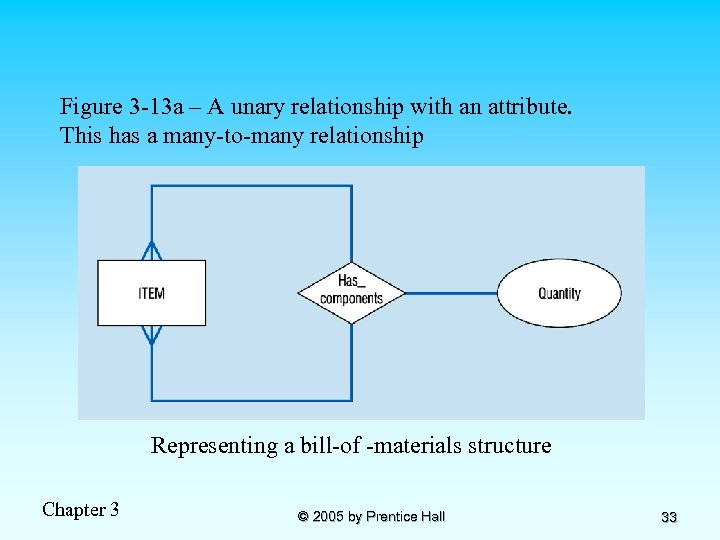
Figure 3 -13 a – A unary relationship with an attribute. This has a many-to-many relationship Representing a bill-of -materials structure Chapter 3 © 2005 by Prentice Hall 33
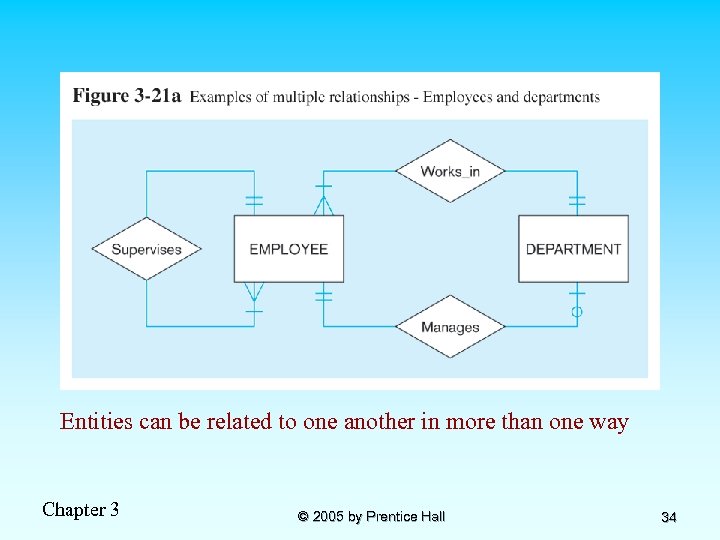
Entities can be related to one another in more than one way Chapter 3 © 2005 by Prentice Hall 34
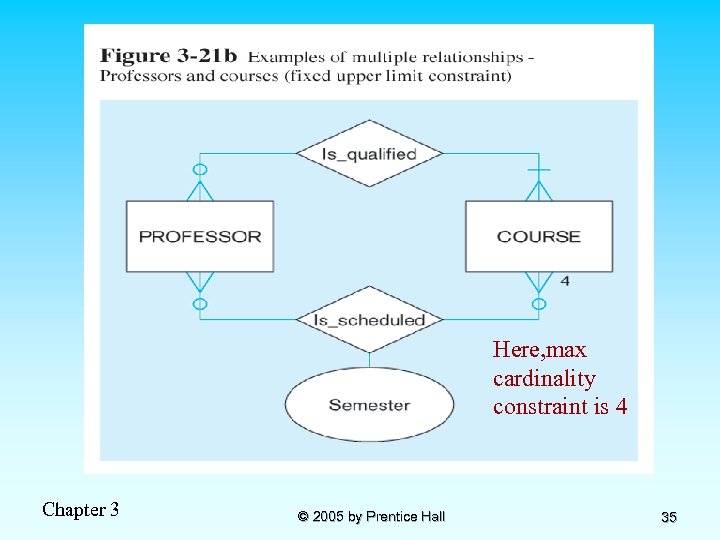
Here, max cardinality constraint is 4 Chapter 3 © 2005 by Prentice Hall 35
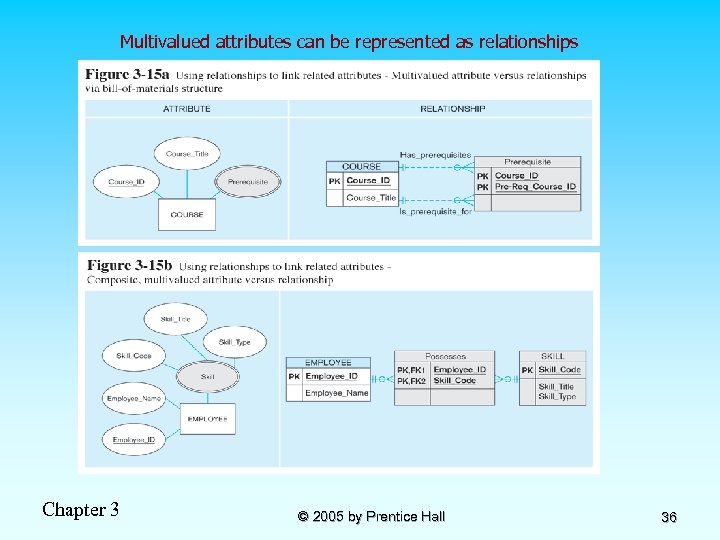
Multivalued attributes can be represented as relationships Chapter 3 © 2005 by Prentice Hall 36
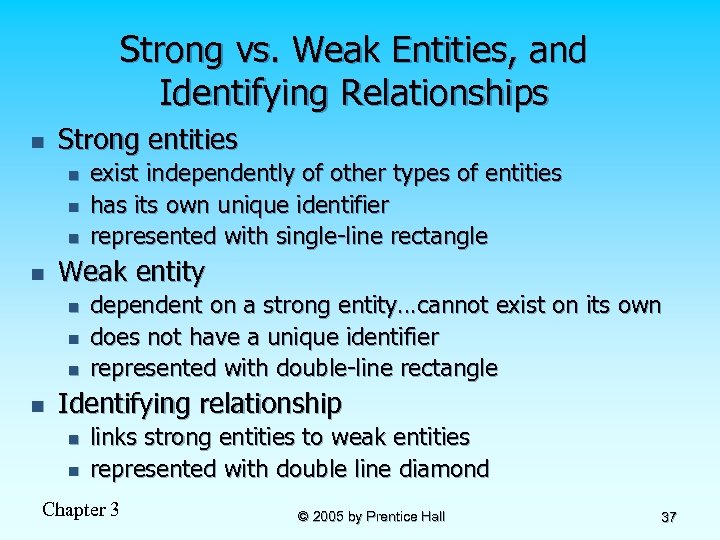
Strong vs. Weak Entities, and Identifying Relationships n Strong entities n n Weak entity n n exist independently of other types of entities has its own unique identifier represented with single-line rectangle dependent on a strong entity…cannot exist on its own does not have a unique identifier represented with double-line rectangle Identifying relationship n n links strong entities to weak entities represented with double line diamond Chapter 3 © 2005 by Prentice Hall 37
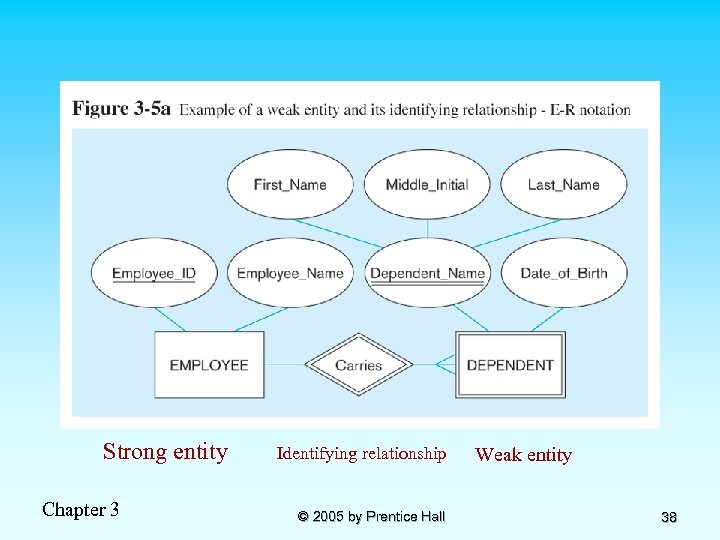
Strong entity Chapter 3 Identifying relationship © 2005 by Prentice Hall Weak entity 38
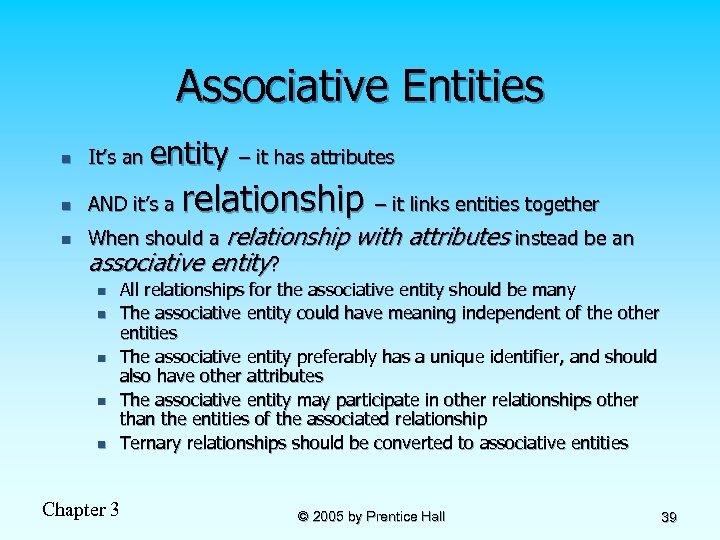
Associative Entities entity – it has attributes n It’s an n AND it’s a n relationship – it links entities together When should a relationship associative entity? n n n with attributes instead be an All relationships for the associative entity should be many The associative entity could have meaning independent of the other entities The associative entity preferably has a unique identifier, and should also have other attributes The associative entity may participate in other relationships other than the entities of the associated relationship Ternary relationships should be converted to associative entities Chapter 3 © 2005 by Prentice Hall 39
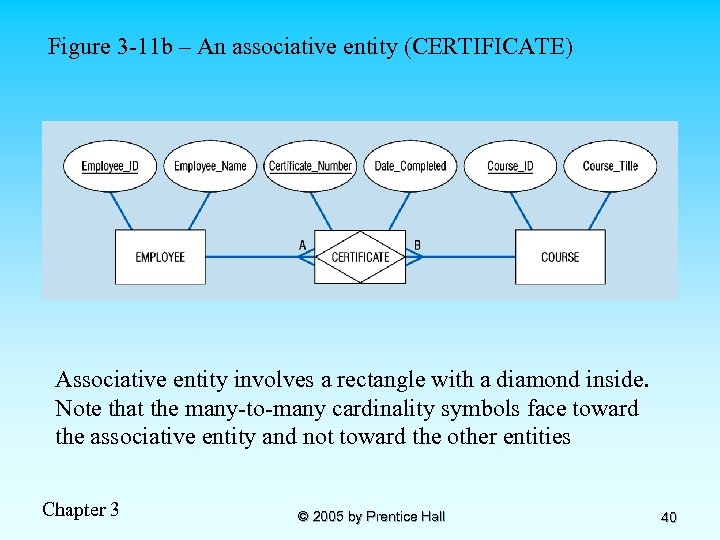
Figure 3 -11 b – An associative entity (CERTIFICATE) Associative entity involves a rectangle with a diamond inside. Note that the many-to-many cardinality symbols face toward the associative entity and not toward the other entities Chapter 3 © 2005 by Prentice Hall 40
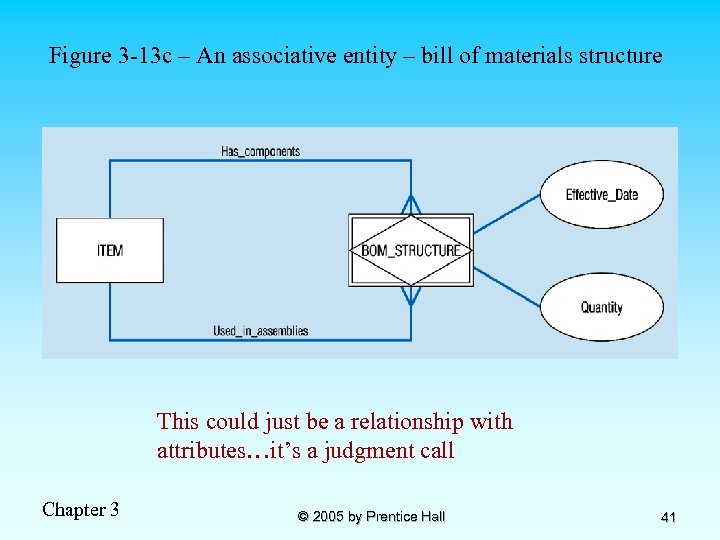
Figure 3 -13 c – An associative entity – bill of materials structure This could just be a relationship with attributes…it’s a judgment call Chapter 3 © 2005 by Prentice Hall 41
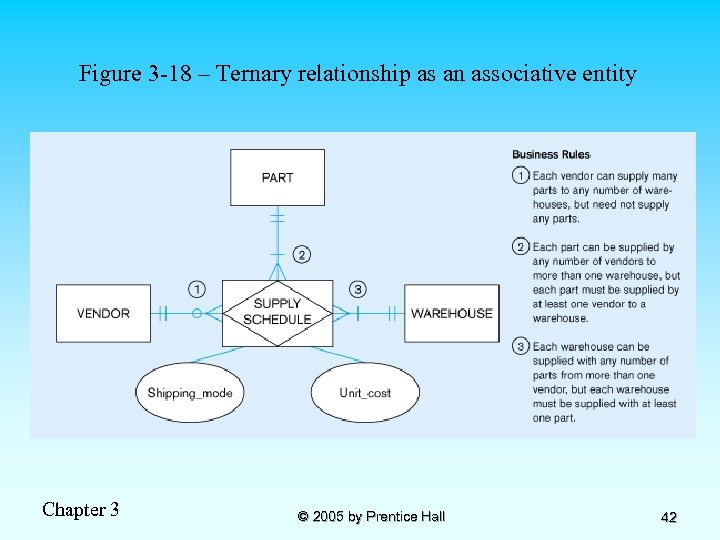
Figure 3 -18 – Ternary relationship as an associative entity Chapter 3 © 2005 by Prentice Hall 42
Скачать презентацию Objectives n n n n Definition of terms
7608f95f1666924ffbe8739b68e623f1.ppt