 Скачать презентацию Oat shoots tend to bend toward the light
ce3ffce080d93d7c9f1d86e99546a843.ppt
- Количество слайдов: 69





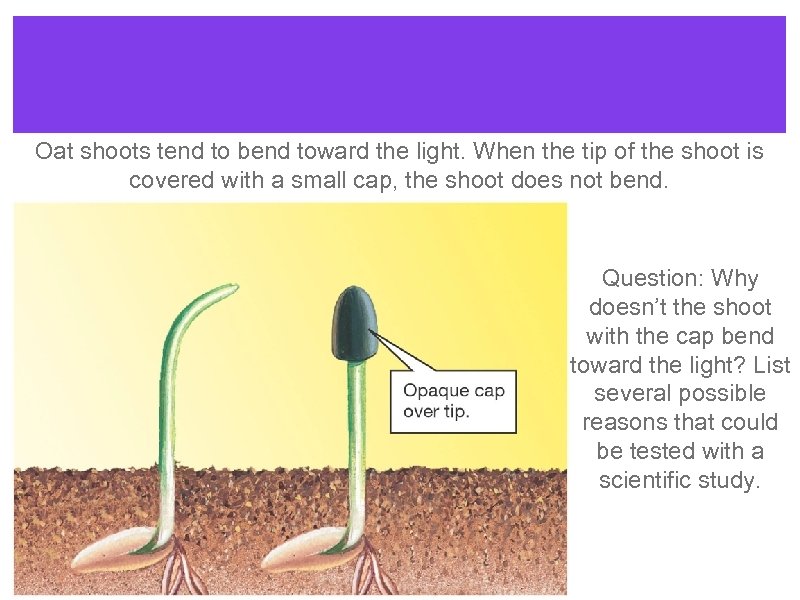
Oat shoots tend to bend toward the light. When the tip of the shoot is covered with a small cap, the shoot does not bend. Question: Why doesn’t the shoot with the cap bend toward the light? List several possible reasons that could be tested with a scientific study.

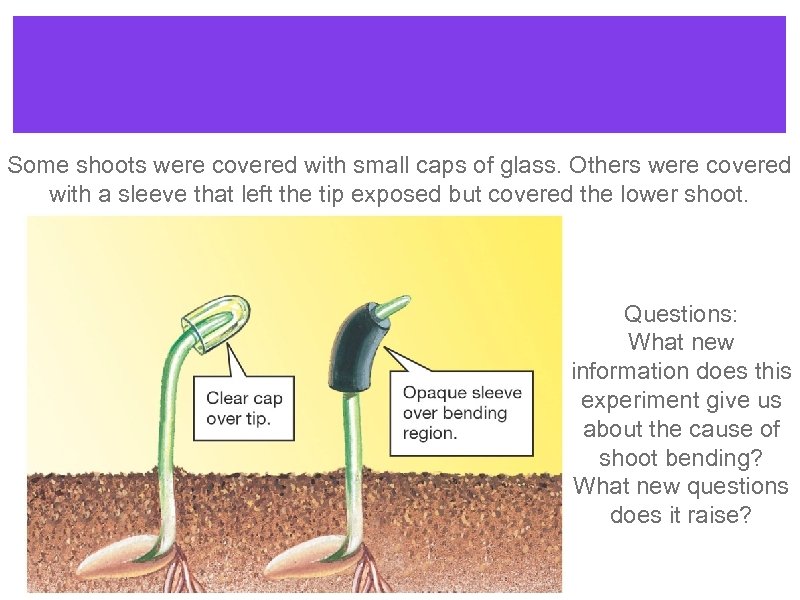
Some shoots were covered with small caps of glass. Others were covered with a sleeve that left the tip exposed but covered the lower shoot. Questions: What new information does this experiment give us about the cause of shoot bending? What new questions does it raise?



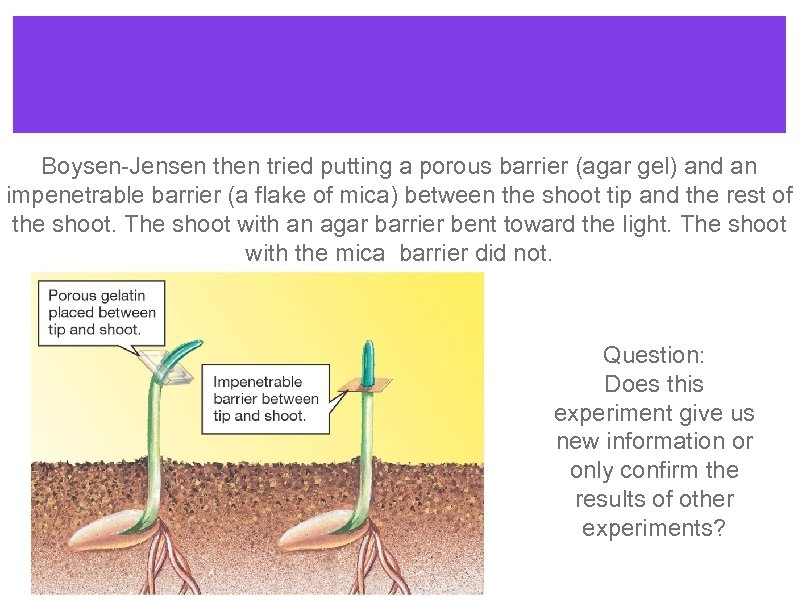
Boysen-Jensen then tried putting a porous barrier (agar gel) and an impenetrable barrier (a flake of mica) between the shoot tip and the rest of the shoot. The shoot with an agar barrier bent toward the light. The shoot with the mica barrier did not. Question: Does this experiment give us new information or only confirm the results of other experiments?
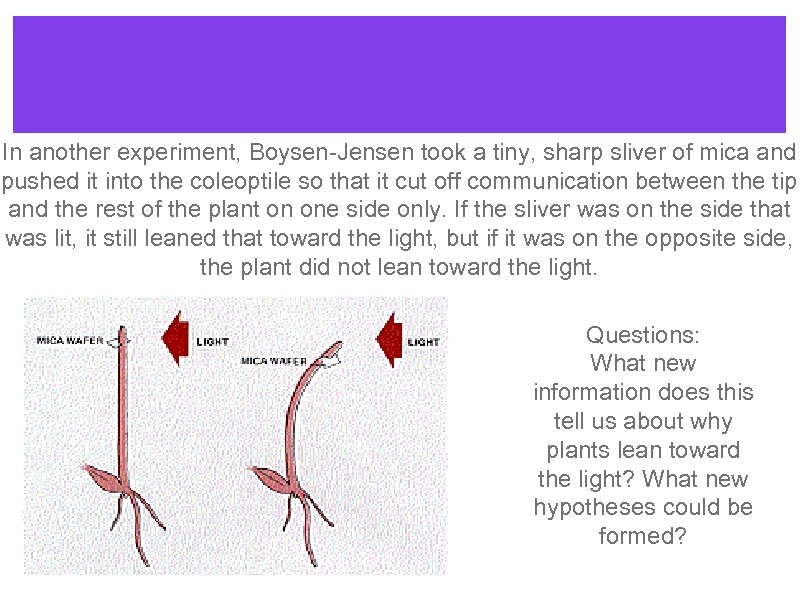
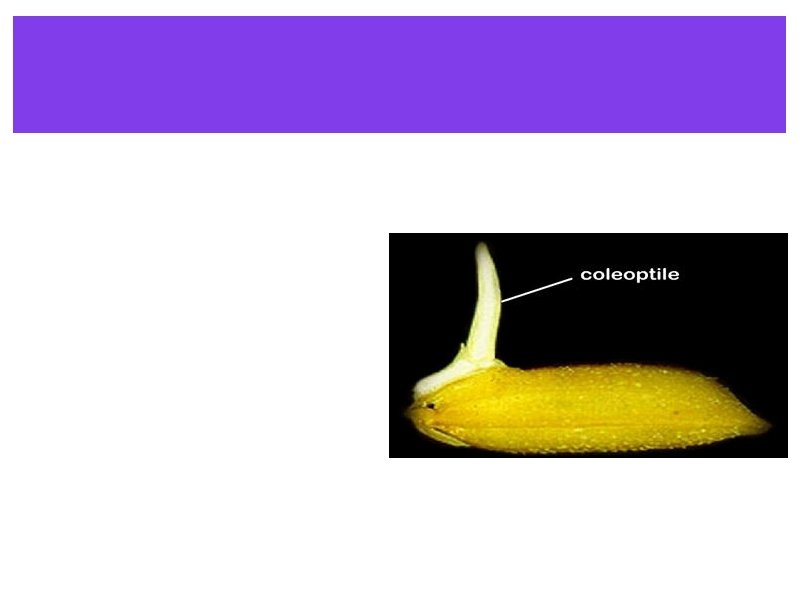
In another experiment, Boysen-Jensen took a tiny, sharp sliver of mica and pushed it into the coleoptile so that it cut off communication between the tip and the rest of the plant on one side only. If the sliver was on the side that was lit, it still leaned that toward the light, but if it was on the opposite side, the plant did not lean toward the light. Questions: What new information does this tell us about why plants lean toward the light? What new hypotheses could be formed?

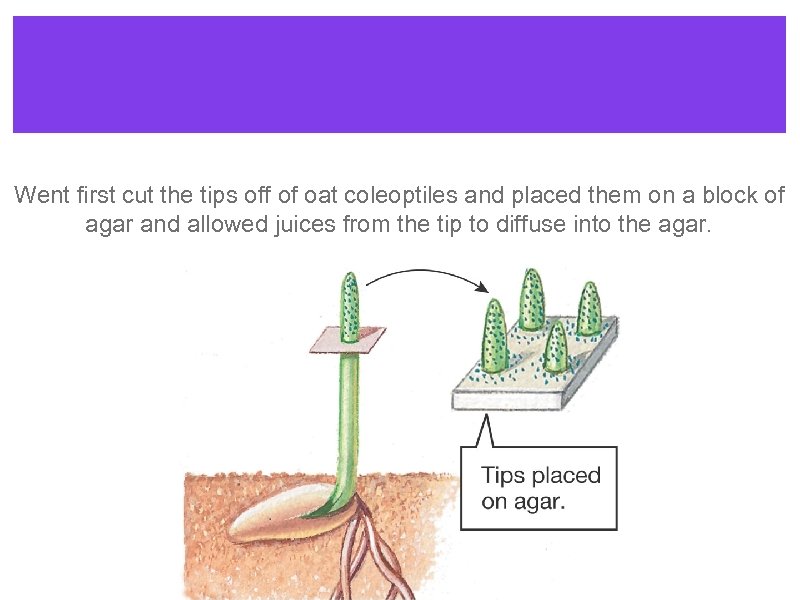
Went first cut the tips off of oat coleoptiles and placed them on a block of agar and allowed juices from the tip to diffuse into the agar.
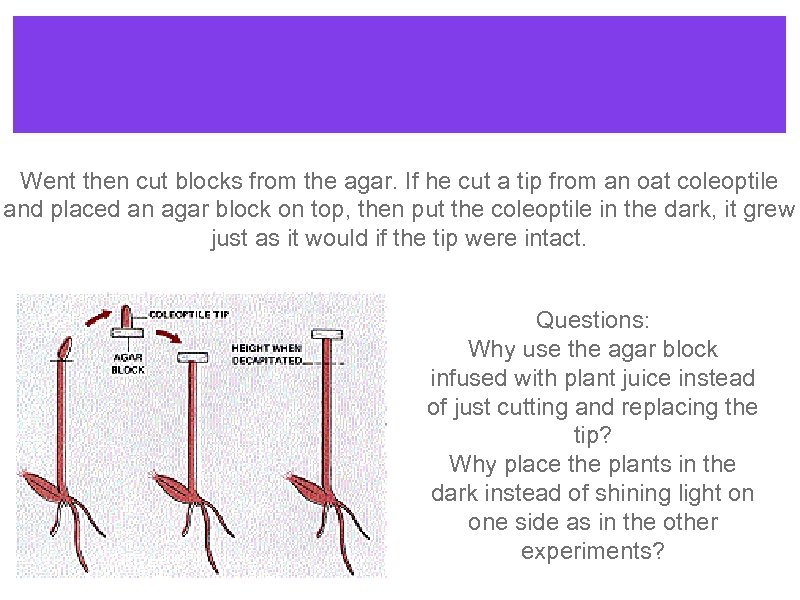
Went then cut blocks from the agar. If he cut a tip from an oat coleoptile and placed an agar block on top, then put the coleoptile in the dark, it grew just as it would if the tip were intact. Questions: Why use the agar block infused with plant juice instead of just cutting and replacing the tip? Why place the plants in the dark instead of shining light on one side as in the other experiments?
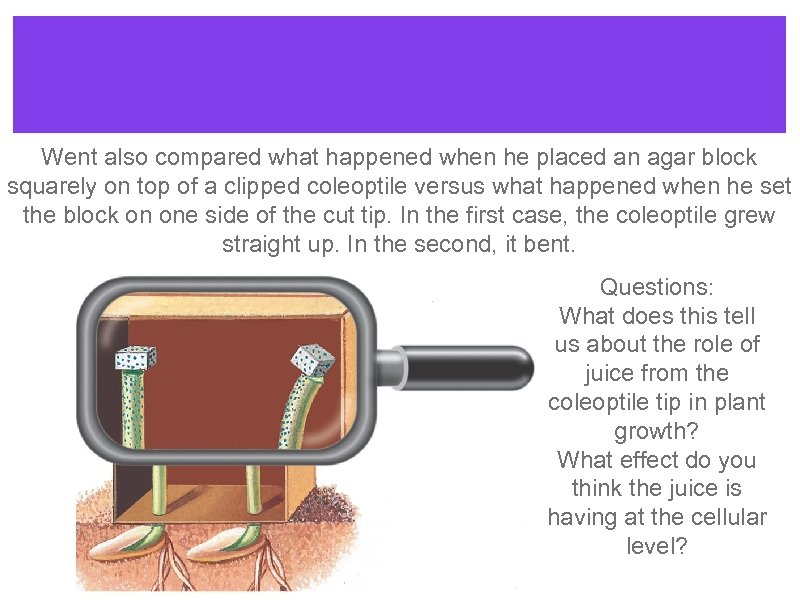
Went also compared what happened when he placed an agar block squarely on top of a clipped coleoptile versus what happened when he set the block on one side of the cut tip. In the first case, the coleoptile grew straight up. In the second, it bent. Questions: What does this tell us about the role of juice from the coleoptile tip in plant growth? What effect do you think the juice is having at the cellular level?





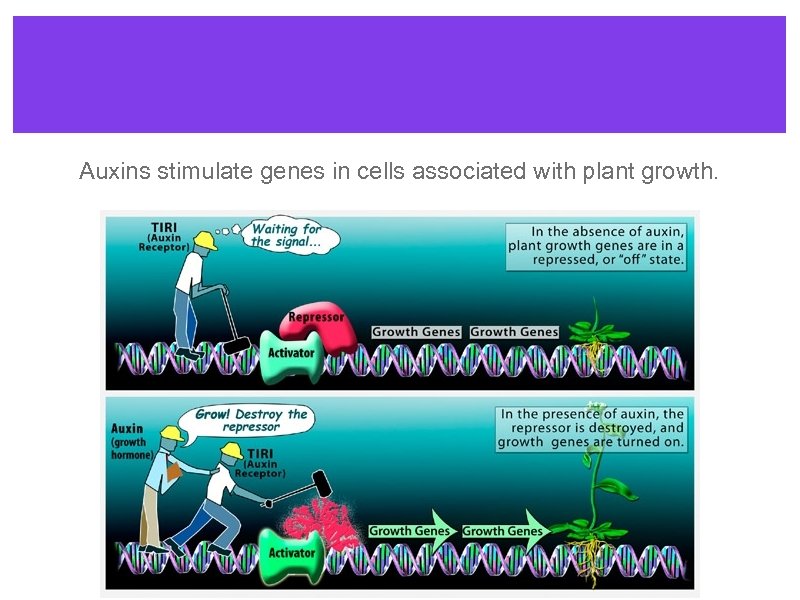
Auxins stimulate genes in cells associated with plant growth.


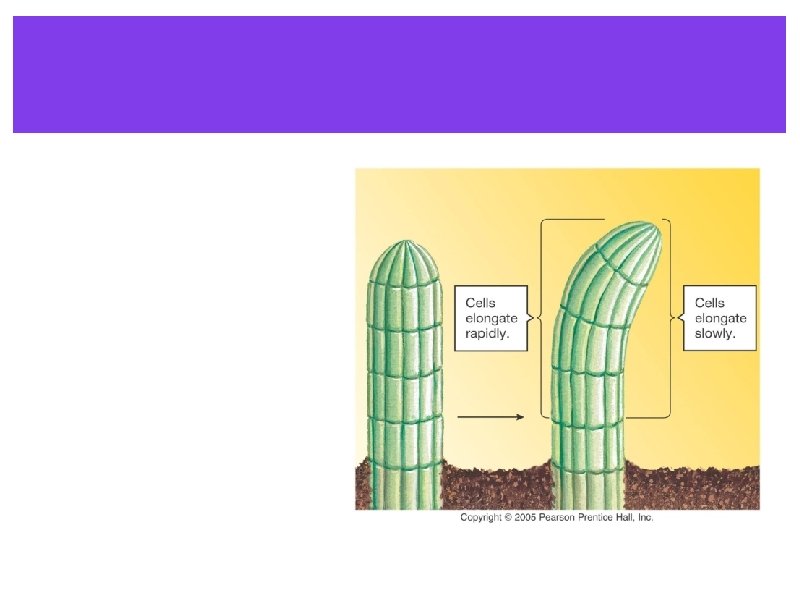
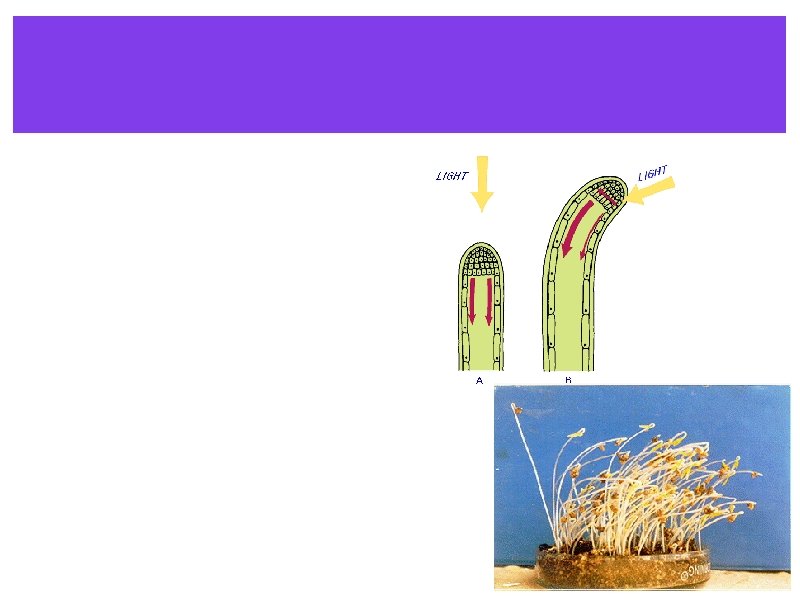
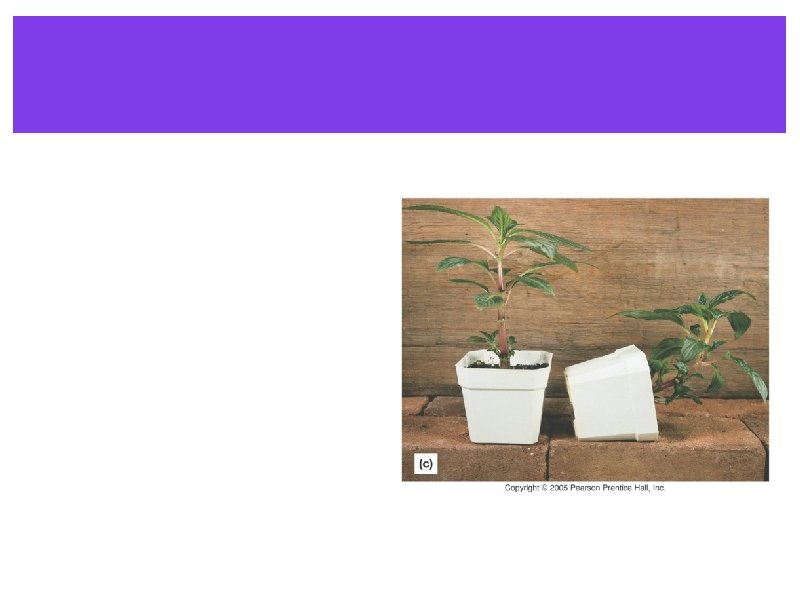
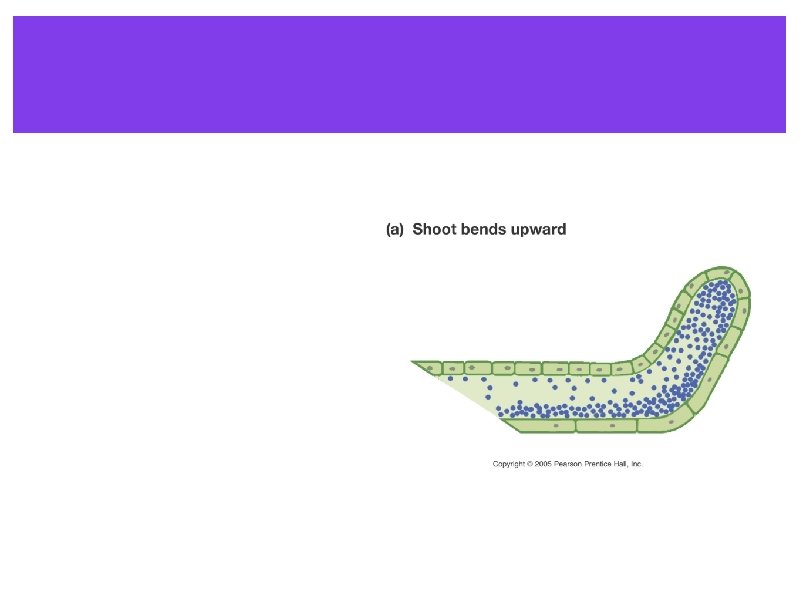
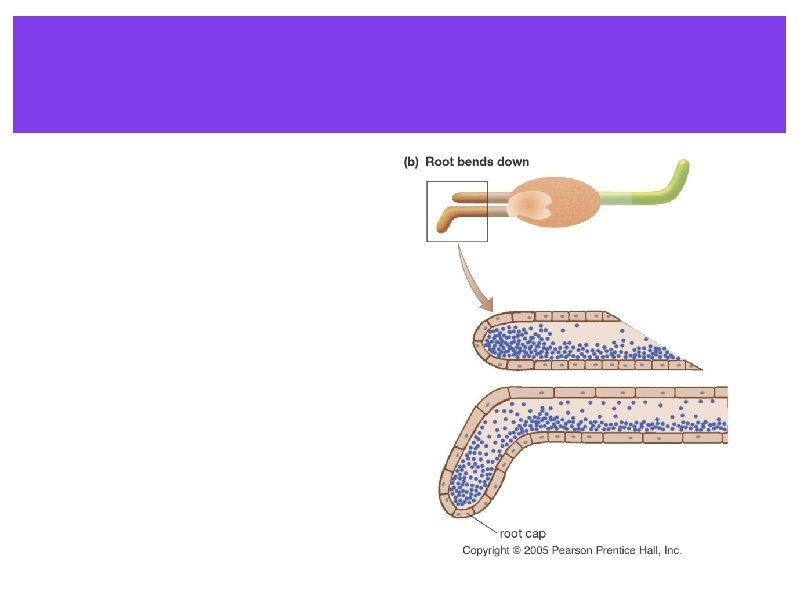
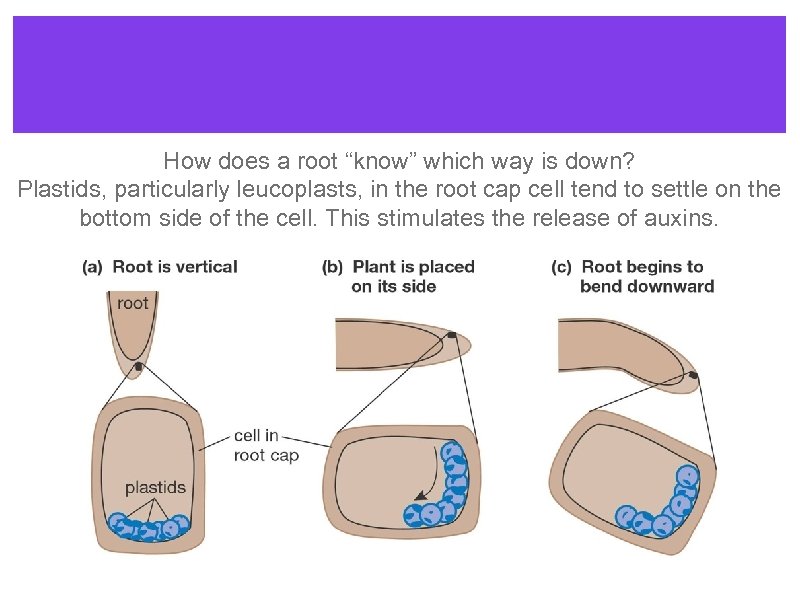
How does a root “know” which way is down? Plastids, particularly leucoplasts, in the root cap cell tend to settle on the bottom side of the cell. This stimulates the release of auxins.


























 Скачать презентацию Oat shoots tend to bend toward the light
ce3ffce080d93d7c9f1d86e99546a843.ppt