


 Скачать презентацию NZ DAIRY INDUSTRY 2003 INTERLACT NUTRITION CONFERENCE Tony
e52e7e23acb5a3cbbe29ebd5fd685d4a.ppt
- Количество слайдов: 111
 NZ DAIRY INDUSTRY 2003 INTERLACT NUTRITION CONFERENCE Tony Baldwin Independent Adviser Honeymoon Bay Motueka 9 June 2003
 Why I’ve taken an interest? No strong ideological bent Lack of intellectual honesty Weak leadership Poor process Very poor monitoring (out of view) Impact on allocation of resources in economy Would like to see it do well 2
 Some experience and expertise Old fashioned sense of public duty Note – I am only presenting publicly available information 3
 OUTLINE • Part 1: Origins • Part 2: Mega Merger • Part 3: Change 4
 PART 1: ORIGINS • Cultural roots • Approach to marketing • Strategy + outcomes of first 125 years 5
 CULTURAL ROOTS 6
 “Know the past if you would divine the future” Confucius 7
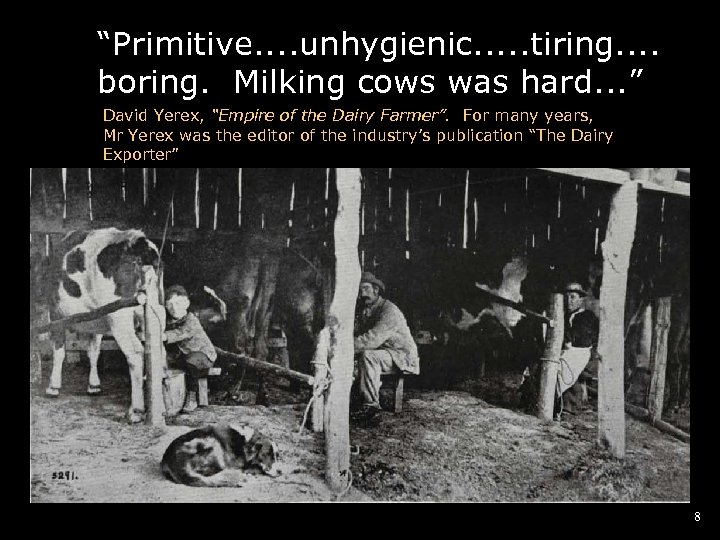 “Primitive. . unhygienic. . . tiring. . boring. Milking cows was hard. . . ” David Yerex, “Empire of the Dairy Farmer”. For many years, Mr Yerex was the editor of the industry’s publication “The Dairy Exporter” 8
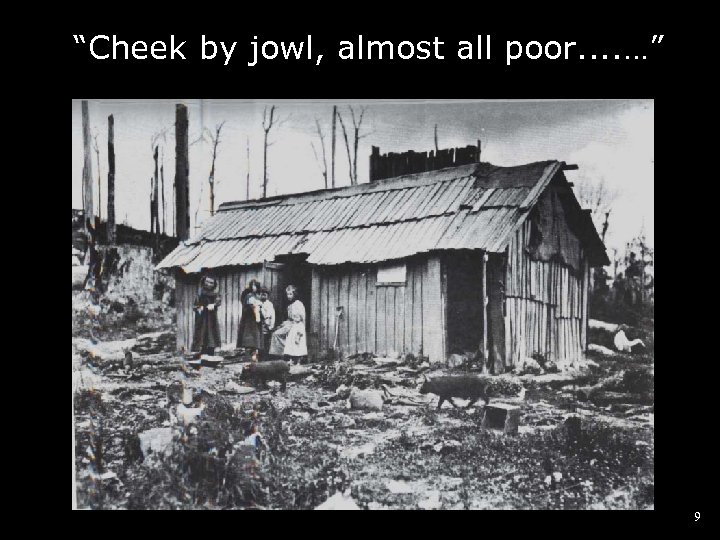 “Cheek by jowl, almost all poor. . …” 9
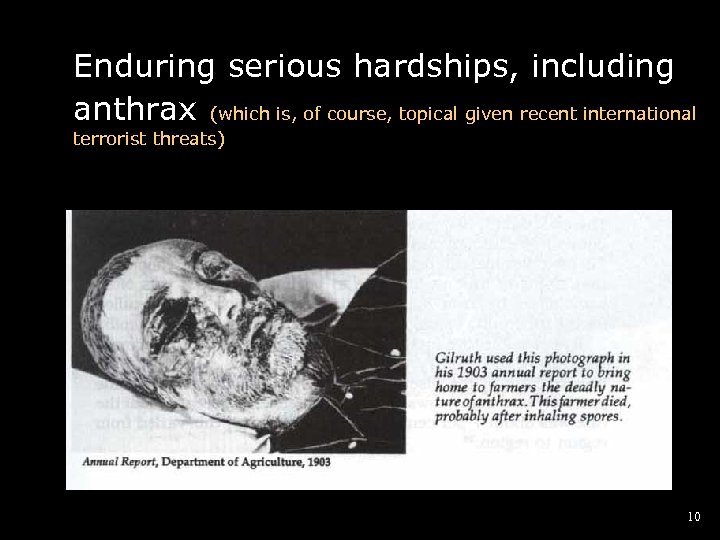 Enduring serious hardships, including anthrax (which is, of course, topical given recent international terrorist threats) 10
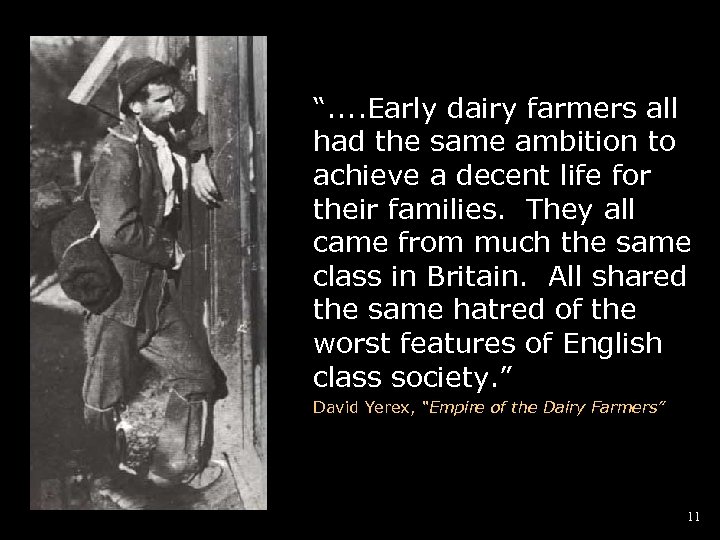 “. . Early dairy farmers all had the same ambition to achieve a decent life for their families. They all came from much the same class in Britain. All shared the same hatred of the worst features of English class society. ” David Yerex, “Empire of the Dairy Farmers” 11
 Like gold prospectors of the era, dairy farmers shared a dream that milk production would deliver independence and prosperity. As Arthur Ward: “No industry involved in the production of food would ever fail in a hungry world”. Dairy farmers’ dreams were best summed up by William Bowron, the Government’s Chief Dairy Expert, in his report to Parliament in 1894: 12
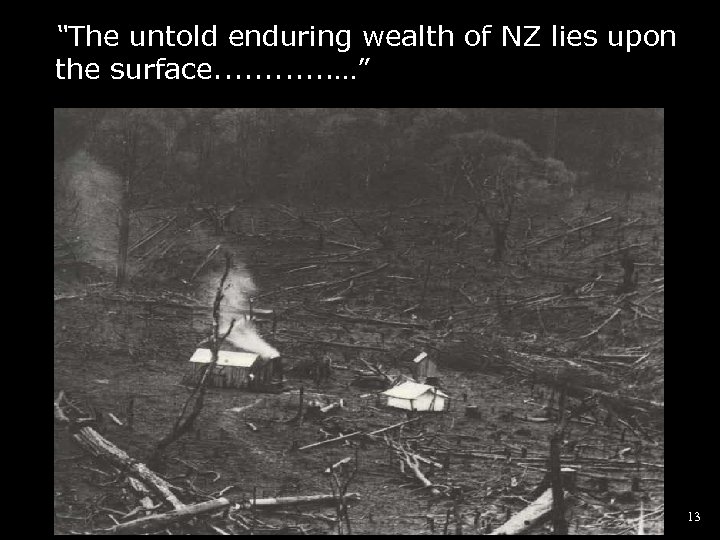 “The untold enduring wealth of NZ lies upon the surface. . . …” 13
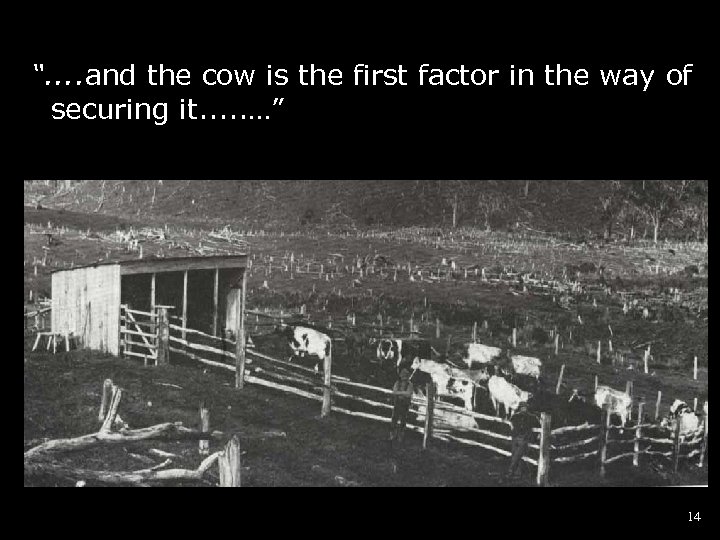 “. . and the cow is the first factor in the way of securing it. . . …” 14
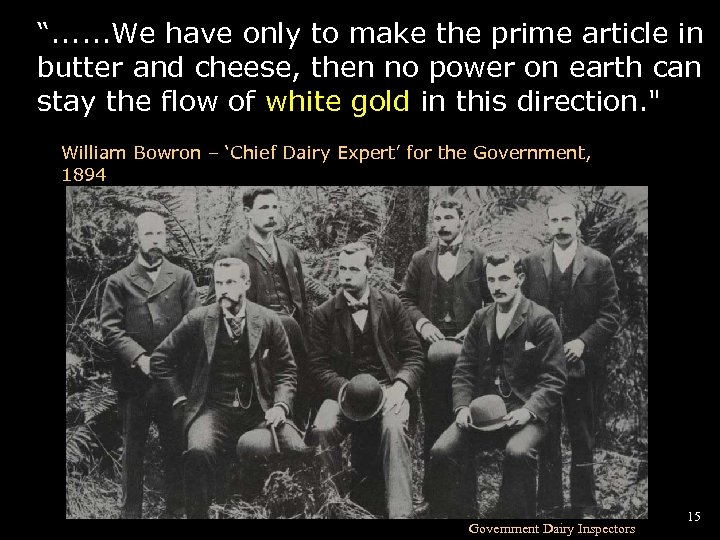 “. . . We have only to make the prime article in butter and cheese, then no power on earth can stay the flow of white gold in this direction. " William Bowron – ‘Chief Dairy Expert’ for the Government, 1894 Government Dairy Inspectors 15
 WAIKATO TIMES, 11 OCT 1997 “As Waikato's white gold builds to a record flush, milk tankers work around the clock to collect it from over 6000 farmers. . …” THE PRESS, 14 OCT 2000 “The great silver trucks glide up and down Ashburton's West Street, and then spread out to the plains of Mid Canterbury to fill their bellies with white gold”. NZ DAIRY BOARD, 6 APRIL 2001 “Milksolids are the white gold left for export processing. . . . and the Dairy Board sells it all. . . ” Neville Martin THE SOUTHLAND TIMES, 21 JUN 2001 White gold flows on down in Southland dairy sheds 16
 “Dairy farmers developed a suspicion of city and urban interests. . . were seeking more than a fair share of his hard-won livelihood. ” Arthur Ward, “A Command of Co-operatives” These ‘outside’ interests included virtually everyone beyond the farm gate: “processors, quality controllers, wholesalers, distributors, merchants, advertising agents, bureaucrats, retailers, financiers and tax gatherers. ” David Yerex Farmers were particularly suspicious, without good reason, that Tooley St merchants (UK importers) were screwing them. 17
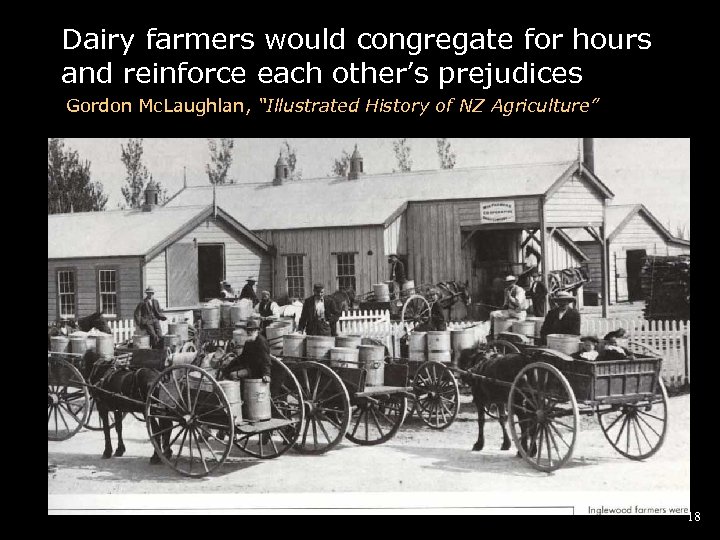 Dairy farmers would congregate for hours and reinforce each other’s prejudices Gordon Mc. Laughlan, “Illustrated History of NZ Agriculture” 18
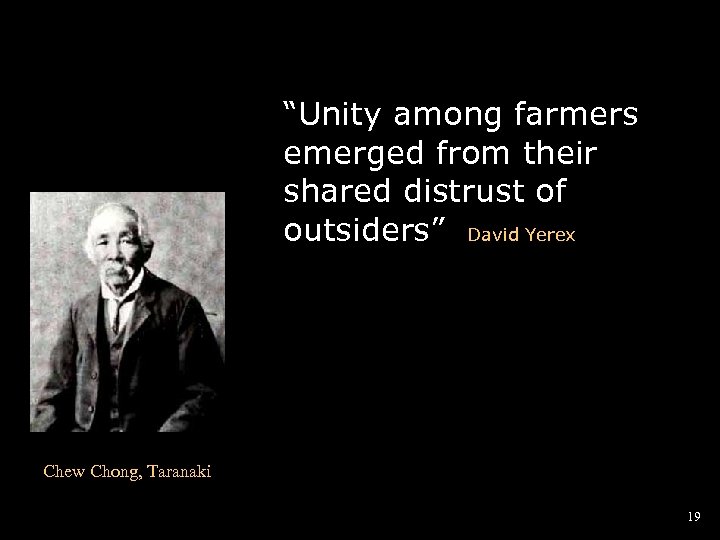 “Unity among farmers emerged from their shared distrust of outsiders” David Yerex Chew Chong, Taranaki 19
 “Dairy farmers came to believe - and it was an article of faith - that they secured more of the selling price of their produce by the cooperative method” Arthur Ward, “A Command of Co-operatives” “After a slow start, the concept of the cooperative dairy company spread like a faith – an extension of the small-holder’s desire for as tight a mastery as possible over his destiny” Gordon Mc. Laughlan, “An Illustrated History of NZ Agriculture” 20
 The industry’s culture is driven by a fierce determination among farmers to be ‘free men’ It is a strange paradox, then, to find the industry was largely created by the Government. And for 100 years, whenever problems arose, the industry always turned to the Government. 21
 Arthur Ward, Gordon Mc. Laughlan, David Yerex: Culture and values of pioneering days are strong influences in the modern era. 22
 MARKETING 23
 “The essence of any business is to capture value from customers” How did the industry organised itself to manage marketing risks and opportunities? What are the key risks and opportunities? Broadly, the same as any export marketing business…. 24
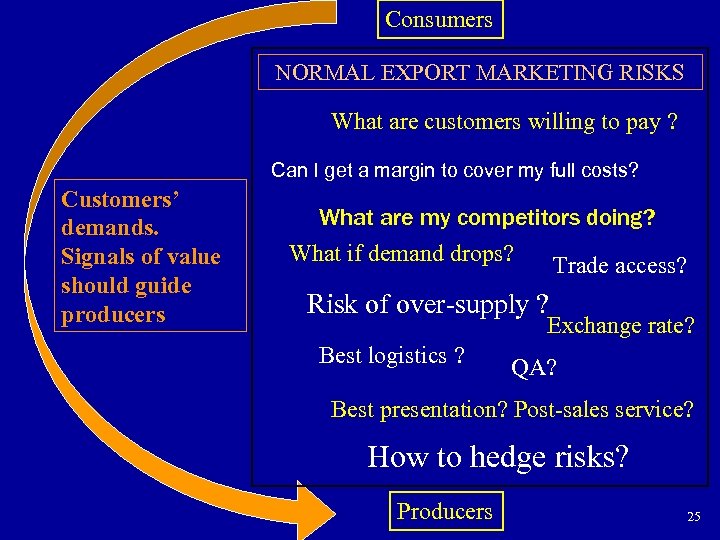 Consumers NORMAL EXPORT MARKETING RISKS What are customers willing to pay ? Can I get a margin to cover my full costs? Customers’ demands. Signals of value should guide producers What are my competitors doing? What if demand drops? Trade access? Risk of over-supply ? Exchange rate? Best logistics ? QA? Best presentation? Post-sales service? How to hedge risks? Producers 25
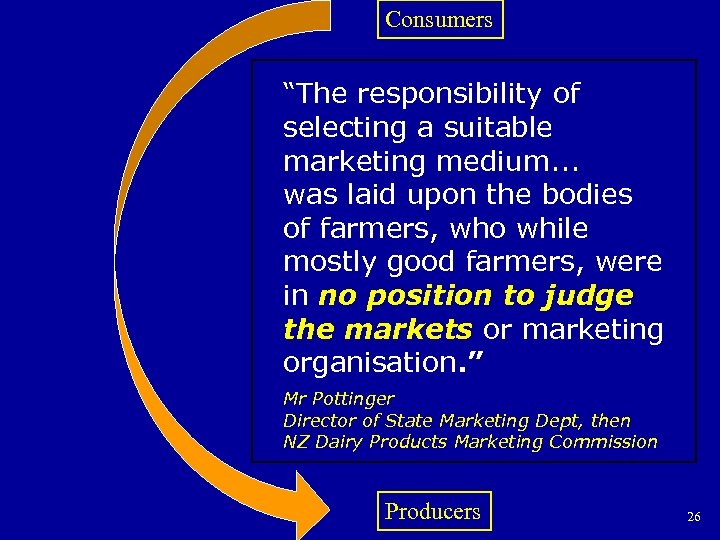 Consumers “The responsibility of selecting a suitable marketing medium. . . was laid upon the bodies of farmers, who while mostly good farmers, were in no position to judge the markets or marketing organisation. ” Mr Pottinger Director of State Marketing Dept, then NZ Dairy Products Marketing Commission Producers 26
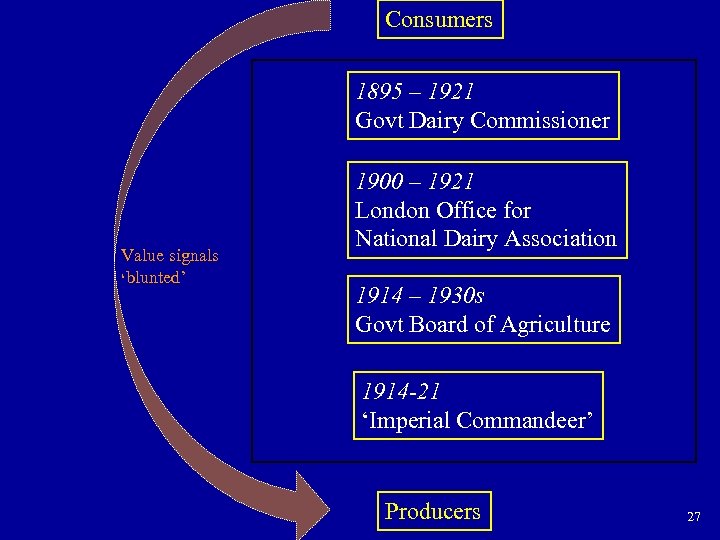 Consumers 1895 – 1921 Govt Dairy Commissioner Value signals ‘blunted’ 1900 – 1921 London Office for National Dairy Association 1914 – 1930 s Govt Board of Agriculture 1914 -21 ‘Imperial Commandeer’ Producers 27
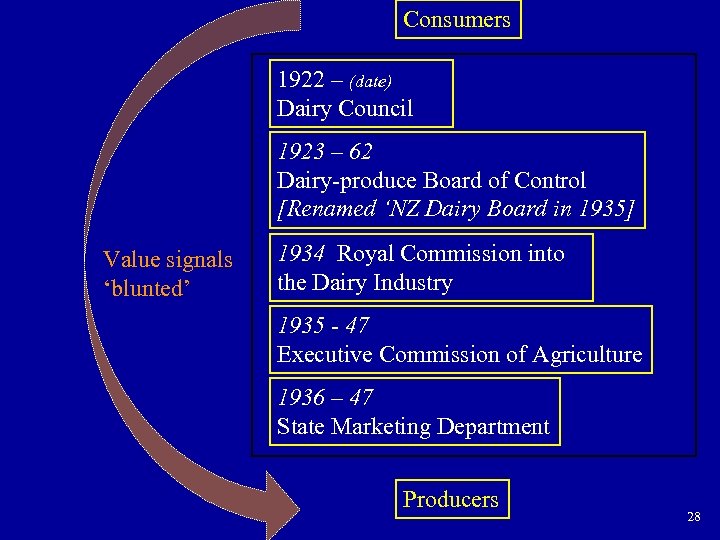 Consumers 1922 – (date) Dairy Council 1923 – 62 Dairy-produce Board of Control [Renamed ‘NZ Dairy Board in 1935] Value signals ‘blunted’ 1934 Royal Commission into the Dairy Industry 1935 - 47 Executive Commission of Agriculture 1936 – 47 State Marketing Department Producers 28
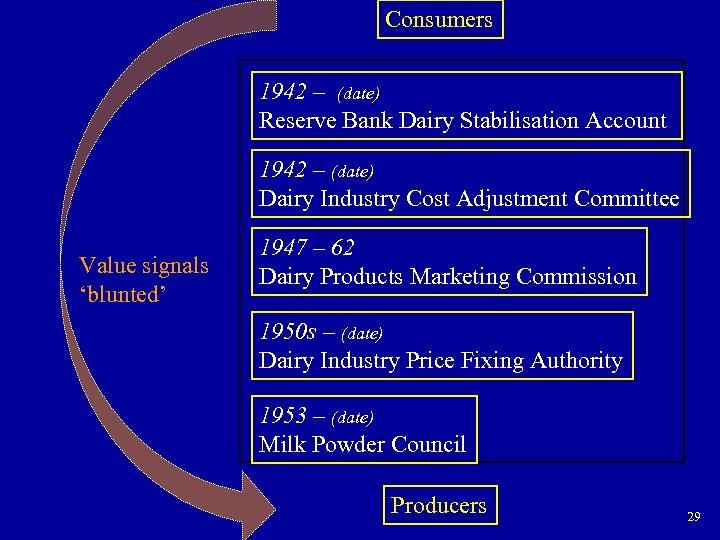 Consumers 1942 – (date) Reserve Bank Dairy Stabilisation Account 1942 – (date) Dairy Industry Cost Adjustment Committee Value signals ‘blunted’ 1947 – 62 Dairy Products Marketing Commission 1950 s – (date) Dairy Industry Price Fixing Authority 1953 – (date) Milk Powder Council Producers 29
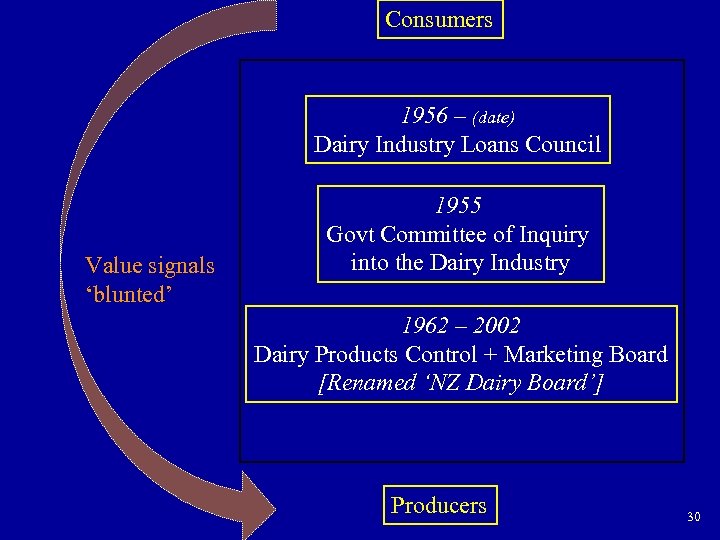 Consumers 1956 – (date) Dairy Industry Loans Council Value signals ‘blunted’ 1955 Govt Committee of Inquiry into the Dairy Industry 1962 – 2002 Dairy Products Control + Marketing Board [Renamed ‘NZ Dairy Board’] Producers 30
 Diagrammatically………………. . 31
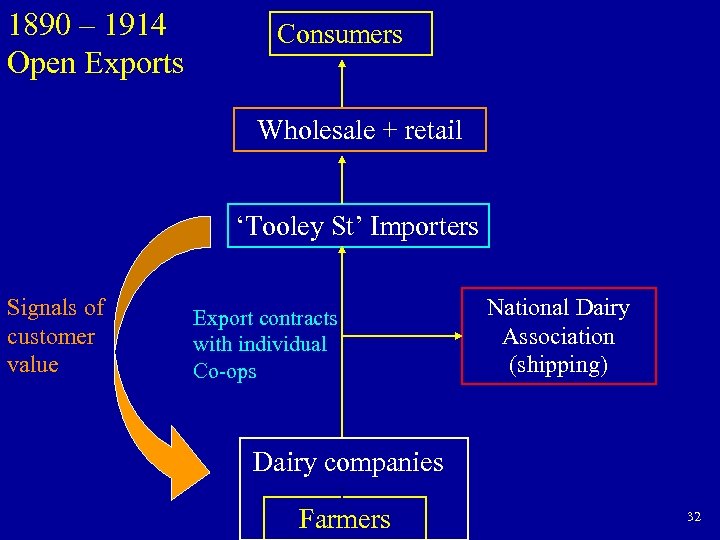 1890 – 1914 Open Exports Consumers Wholesale + retail ‘Tooley St’ Importers Signals of customer value Export contracts with individual Co-ops National Dairy Association (shipping) Dairy companies Farmers 32
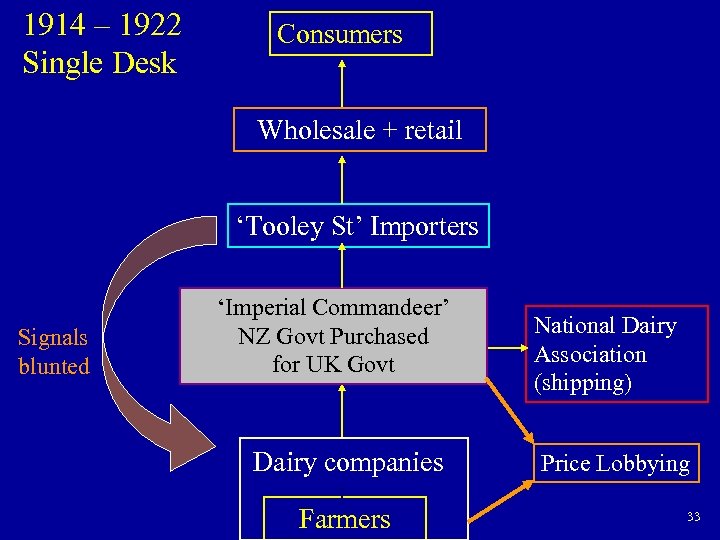 1914 – 1922 Single Desk Consumers Wholesale + retail ‘Tooley St’ Importers Signals blunted ‘Imperial Commandeer’ NZ Govt Purchased for UK Govt Dairy companies Farmers National Dairy Association (shipping) Price Lobbying 33
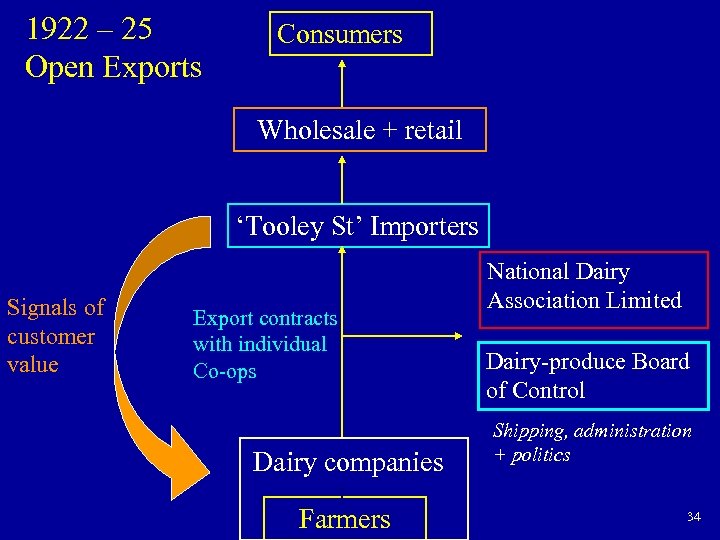 1922 – 25 Open Exports Consumers Wholesale + retail ‘Tooley St’ Importers Signals of customer value Export contracts with individual Co-ops Dairy companies Farmers National Dairy Association Limited Dairy-produce Board of Control Shipping, administration + politics 34
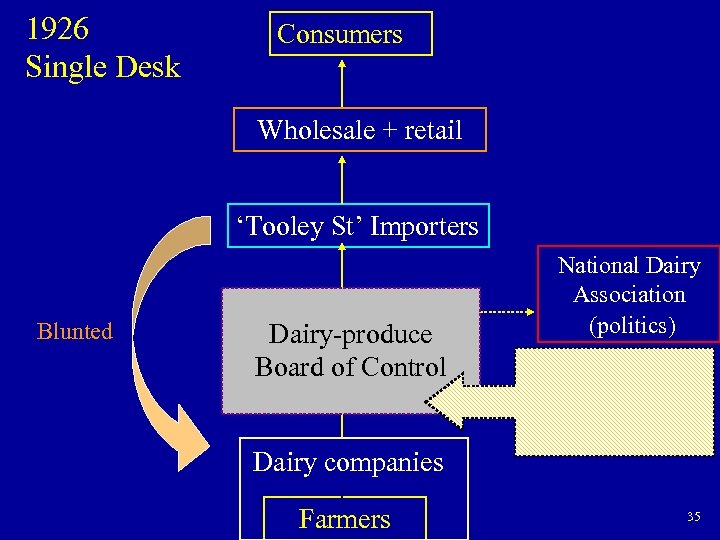 1926 Single Desk Consumers Wholesale + retail ‘Tooley St’ Importers Blunted Dairy-produce Board of Control National Dairy Association (politics) Dairy-produce Board of Control Dairy companies Farmers 35
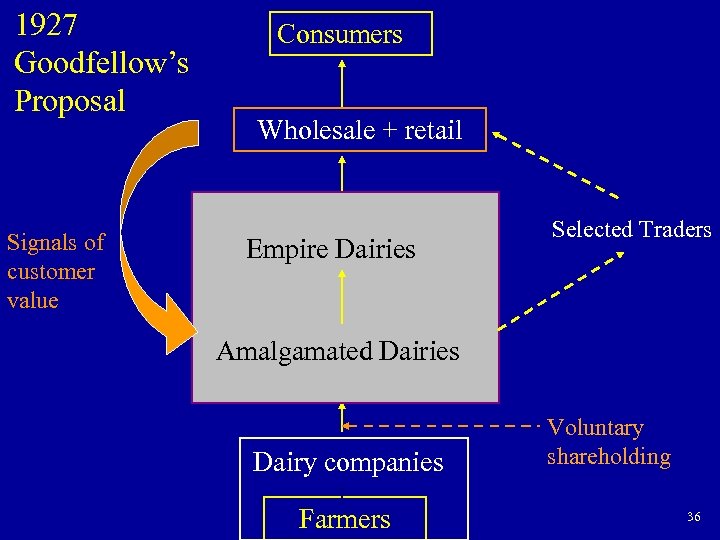 1927 Goodfellow’s Proposal Signals of customer value Consumers Wholesale + retail Empire Dairies Selected Traders Amalgamated Dairies Dairy companies Farmers Voluntary shareholding 36
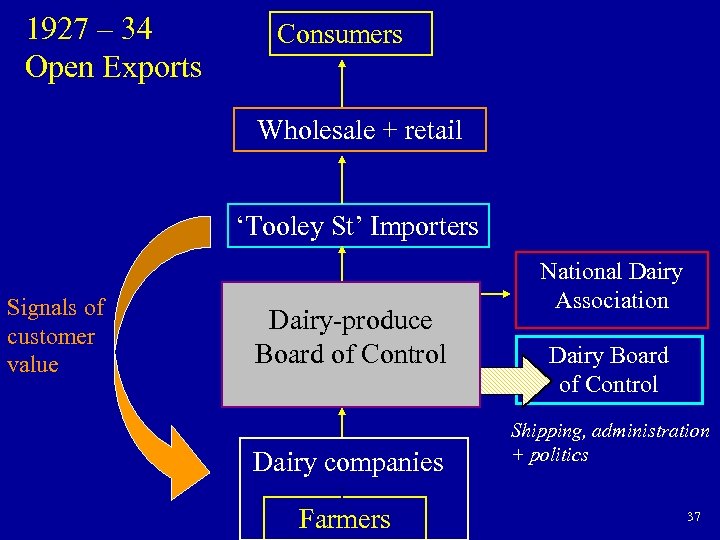 1927 – 34 Open Exports Consumers Wholesale + retail ‘Tooley St’ Importers Signals of customer value Dairy-produce Export contracts Board of Control with individual Co-ops Dairy companies Farmers National Dairy Association Dairy Board of Control Shipping, administration + politics 37
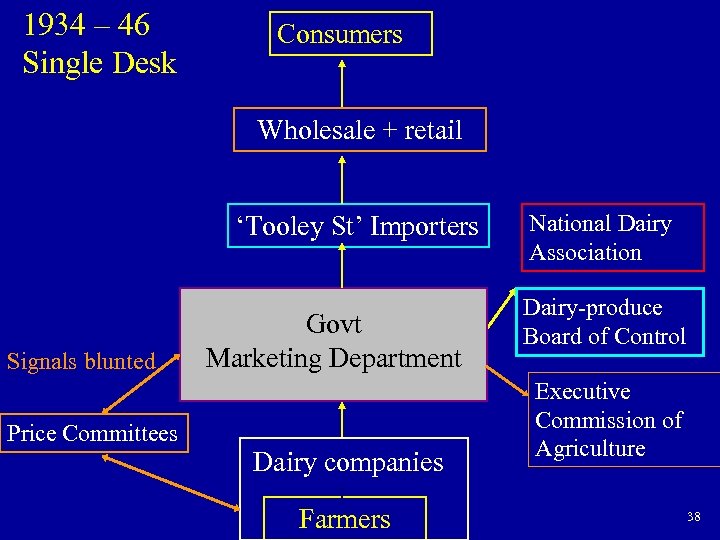 1934 – 46 Single Desk Consumers Wholesale + retail ‘Tooley St’ Importers Signals blunted Price Committees Govt Marketing Department Dairy companies Farmers National Dairy Association Dairy-produce Board of Control Executive Commission of Agriculture 38
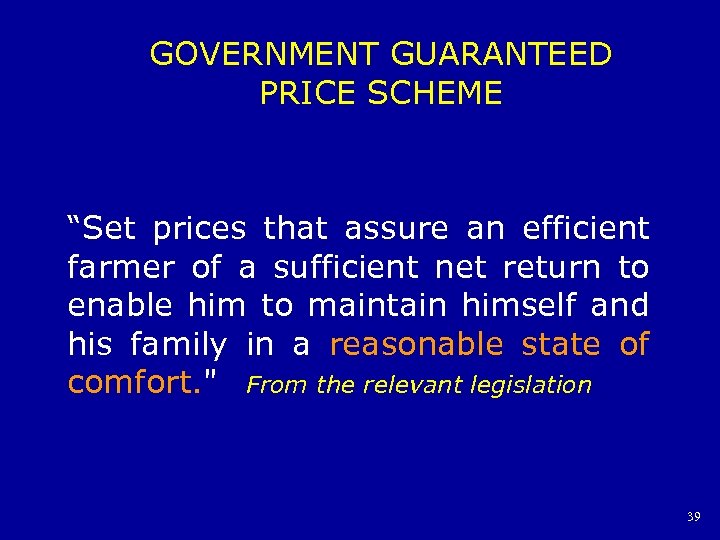 GOVERNMENT GUARANTEED PRICE SCHEME “Set prices that assure an efficient farmer of a sufficient net return to enable him to maintain himself and his family in a reasonable state of comfort. " From the relevant legislation 39
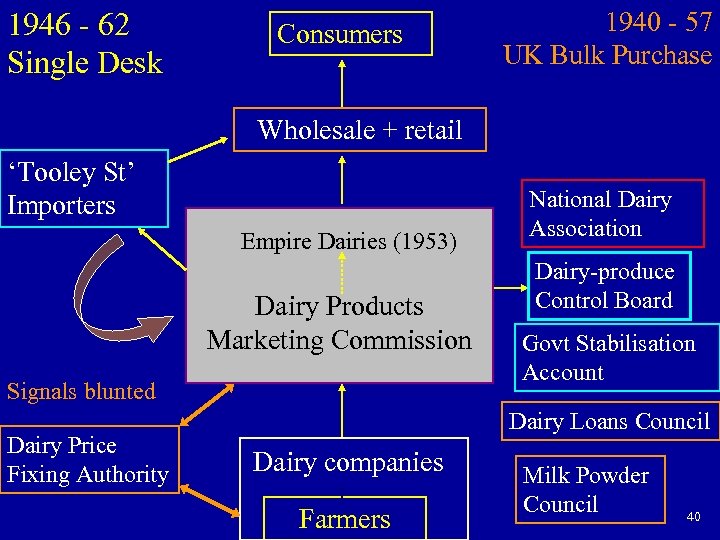 1946 - 62 Single Desk Consumers 1940 - 57 UK Bulk Purchase Wholesale + retail ‘Tooley St’ Importers Empire Dairies (1953) Dairy Products Marketing Commission Signals blunted Dairy Price Fixing Authority National Dairy Association Dairy-produce Control Board Govt Stabilisation Account Dairy Loans Council Dairy companies Farmers Milk Powder Council 40
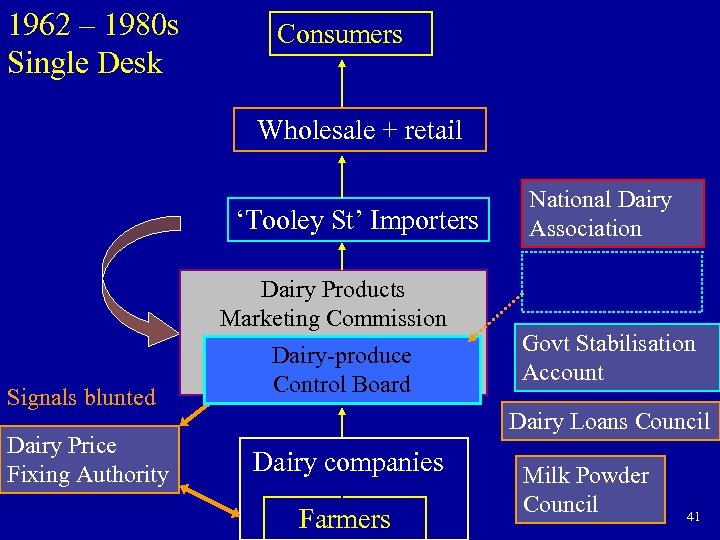 1962 – 1980 s Single Desk Consumers Wholesale + retail ‘Tooley St’ Importers Dairy Products Marketing Commission Signals blunted Dairy Price Fixing Authority Dairy-produce Control Board National Dairy Association Govt Stabilisation Account Dairy Loans Council Dairy companies Farmers Milk Powder Council 41
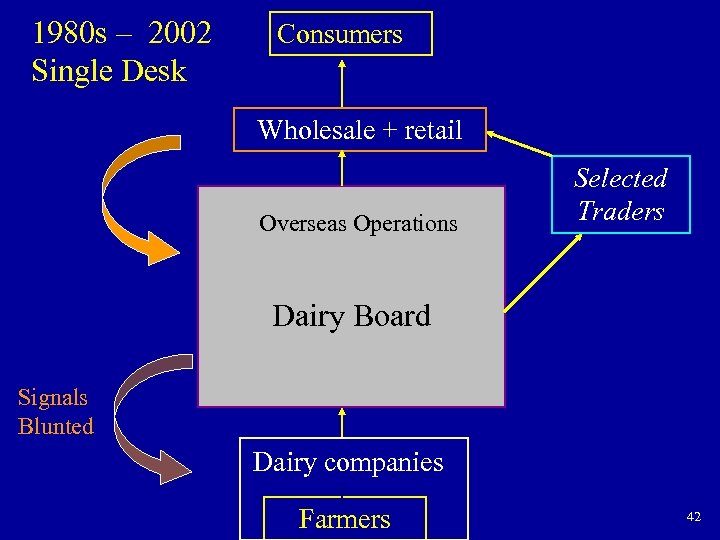 1980 s – 2002 Single Desk Consumers Wholesale + retail Overseas Operations Selected Traders Dairy Board Signals Blunted Dairy companies Farmers 42
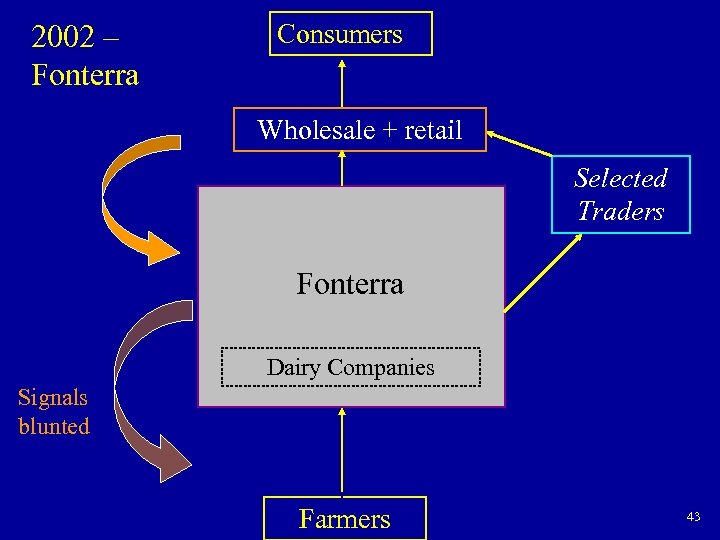 2002 – Fonterra Consumers Wholesale + retail Selected Traders Fonterra Dairy Companies Signals blunted Farmers 43
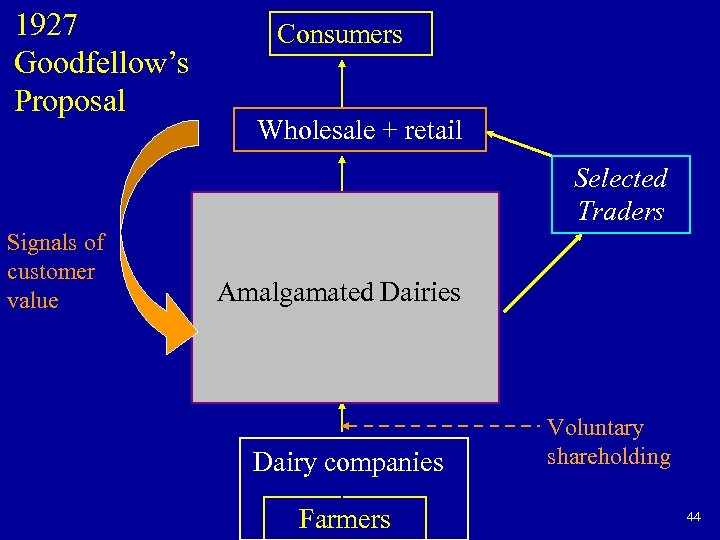 1927 Goodfellow’s Proposal Consumers Wholesale + retail Selected Traders Signals of customer value Amalgamated Dairies Dairy companies Farmers Voluntary shareholding 44
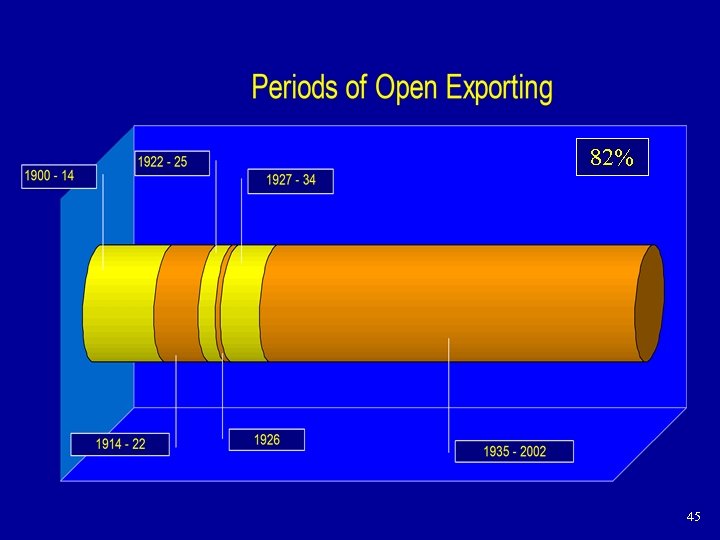 82% 45
 STRATEGY + OUTCOMES OF FIRST 125 YEARS 46
 47
47
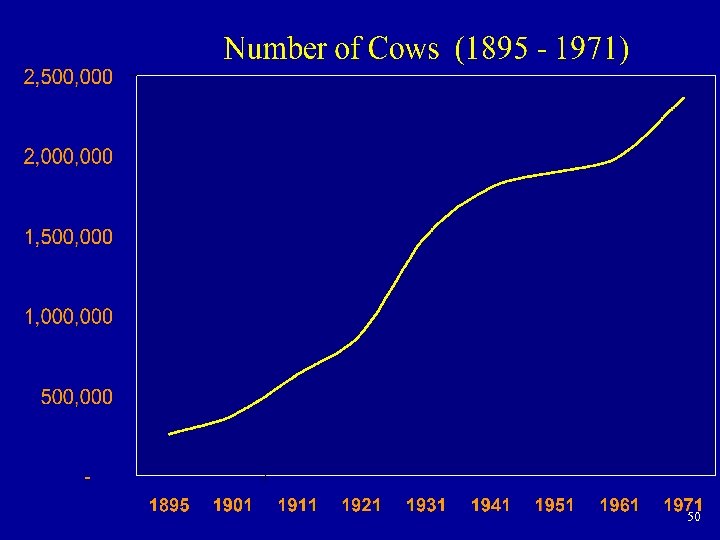
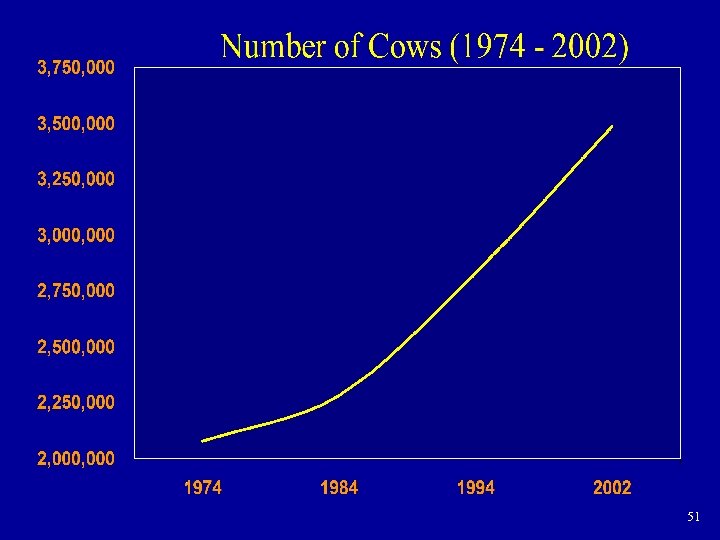
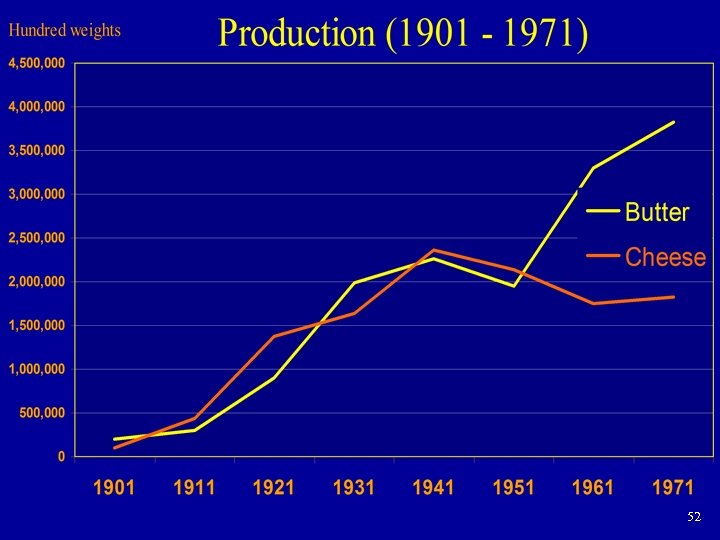
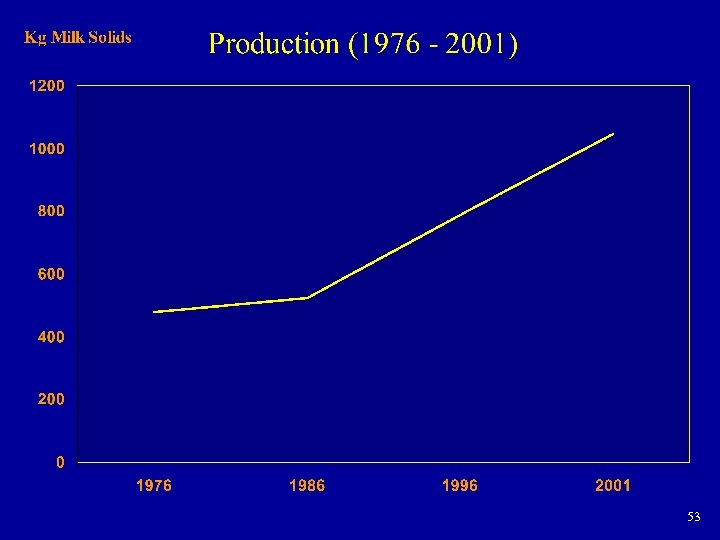
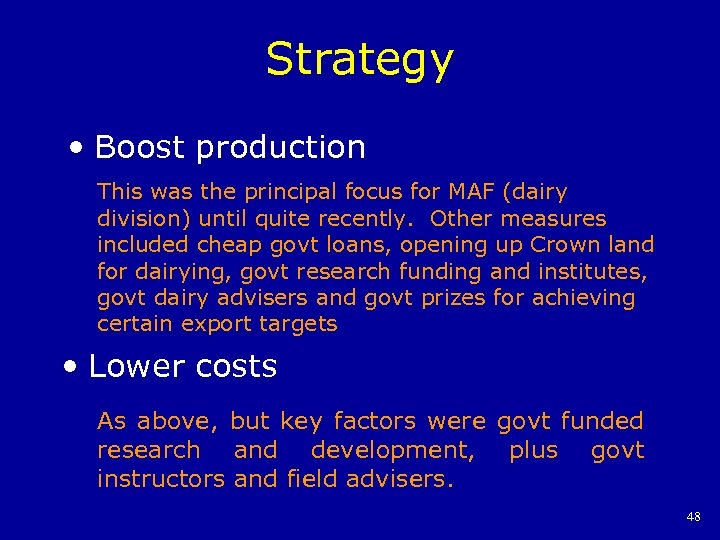 Strategy • Boost production This was the principal focus for MAF (dairy division) until quite recently. Other measures included cheap govt loans, opening up Crown land for dairying, govt research funding and institutes, govt dairy advisers and govt prizes for achieving certain export targets • Lower costs As above, but key factors were govt funded research and development, plus govt instructors and field advisers. 48
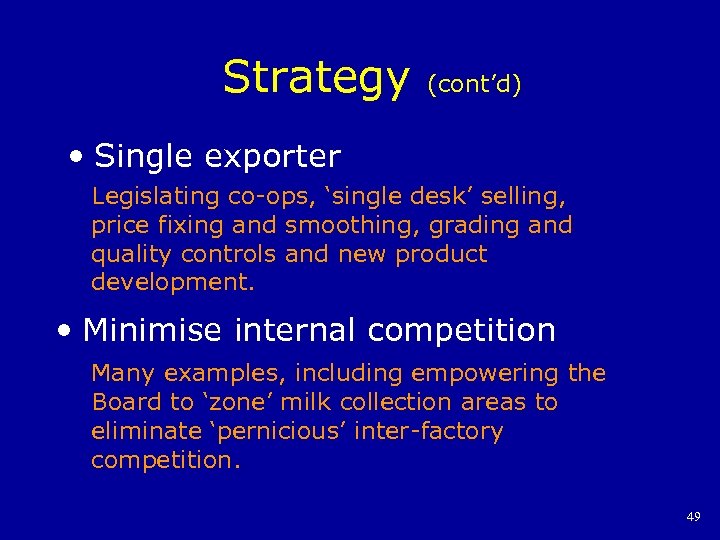 Strategy (cont’d) • Single exporter Legislating co-ops, ‘single desk’ selling, price fixing and smoothing, grading and quality controls and new product development. • Minimise internal competition Many examples, including empowering the Board to ‘zone’ milk collection areas to eliminate ‘pernicious’ inter-factory competition. 49
 50
50
 51
51
 52
52
 53
53
 54
54
 NUMBER OF DAIRY CO-OPS 55
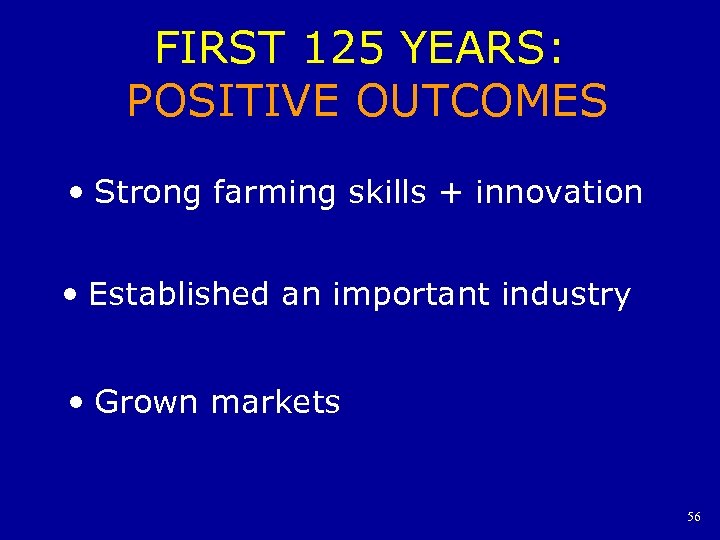 FIRST 125 YEARS: POSITIVE OUTCOMES • Strong farming skills + innovation • Established an important industry • Grown markets 56
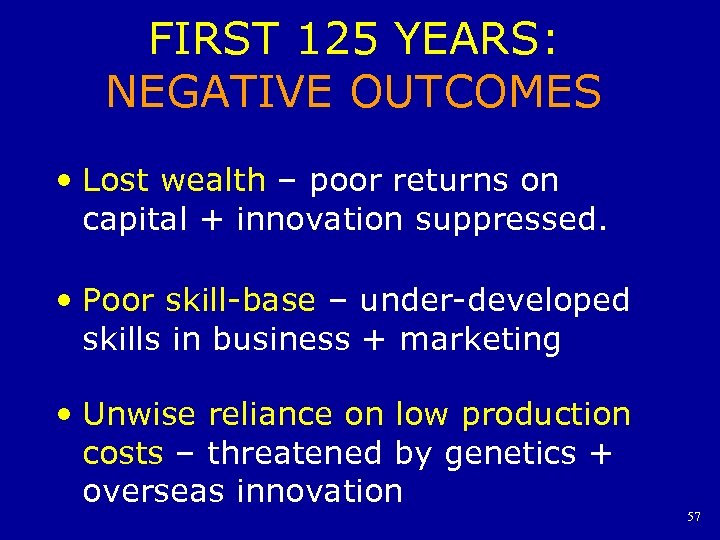 FIRST 125 YEARS: NEGATIVE OUTCOMES • Lost wealth – poor returns on capital + innovation suppressed. • Poor skill-base – under-developed skills in business + marketing • Unwise reliance on low production costs – threatened by genetics + overseas innovation 57
 125 YEAR STRATEGY: NEGATIVE OUTCOMES (cont’d) • Inflexible assets – misallocated investment in large, inflexible plant • Lack of diversification – narrow product base • Weak governance + political leadership –leadership is still afraid. 58
 CULTURAL BARRIERS • Misplaced ‘faith’ in pure co-operative – Pure producer co-ops do not work well in highly differentiated markets. • ‘White gold’ myth – F’s job is to turn milk into cash. Get richer by making more milk. NO! 59
 CULTURAL BARRIERS (cont’d) • Rights to wealth – Those who produce raw milk are entitled to the lion’s share of wealth created from milk. NO! The real value is extracted by those who change raw milk and its ingredients into products that consumers value highly. Compare milk to timber – standard wood cuts used to build a new house do not give it value. The value comes from the house’s design, aspect, fittings, and furnishings. Suppliers of those products capture the lion’s share of the value, not the people who grow and harvest trees. 60
 CULTURAL BARRIERS (cont’d) • Who the exporter serves – Farmers expect F to serve them as producers. Should serve customers. • Fixation with ‘control’ – Farmers are not in ‘control’. Blind to more efficient ways of gaining ‘control’. • Don’t trust ‘outsiders’ – “Farmers are unnecessarily suspicious of approaches from business interests” Arthur Ward 61
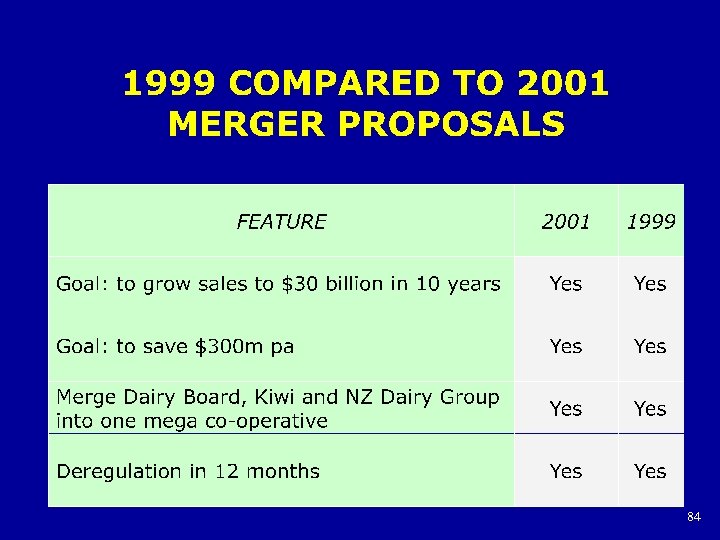
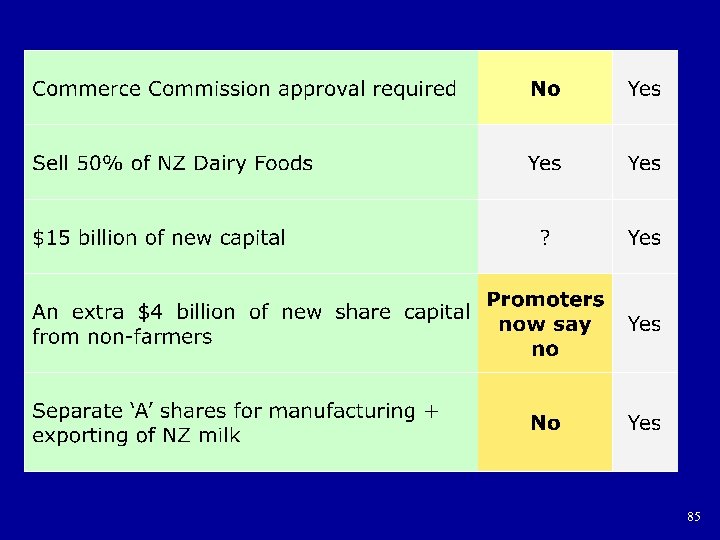
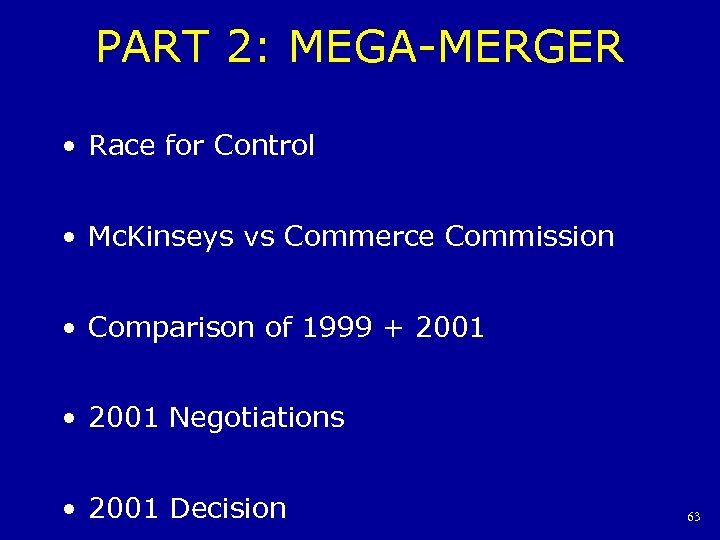 PART 2: MEGA-MERGER • Race for Control • Mc. Kinseys vs Commerce Commission • Comparison of 1999 + 2001 • 2001 Negotiations • 2001 Decision 63
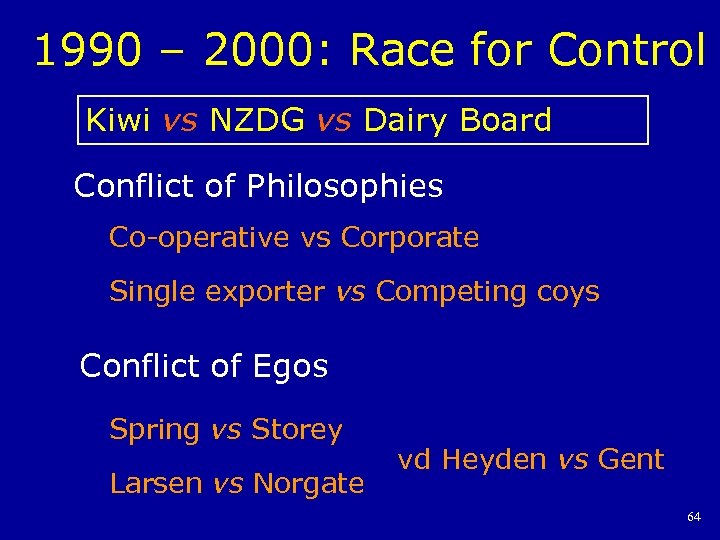 1990 – 2000: Race for Control Kiwi vs NZDG vs Dairy Board Conflict of Philosophies Co-operative vs Corporate Single exporter vs Competing coys Conflict of Egos Spring vs Storey Larsen vs Norgate vd Heyden vs Gent 64
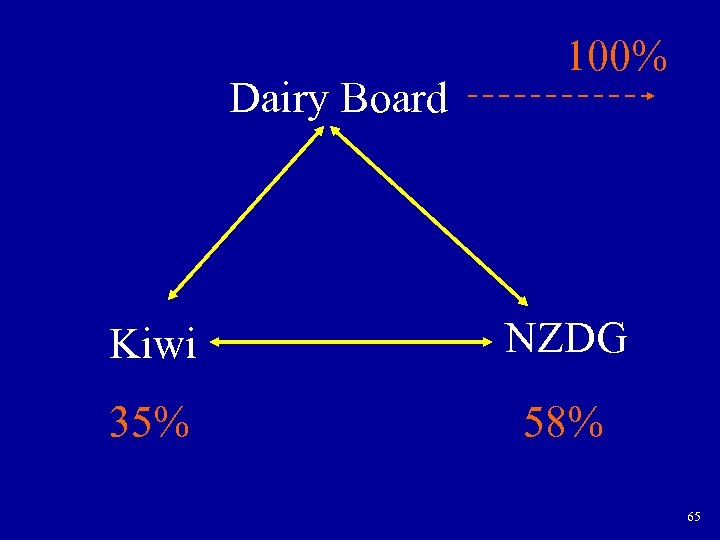 Dairy Board 100% Kiwi NZDG 35% 58% 65
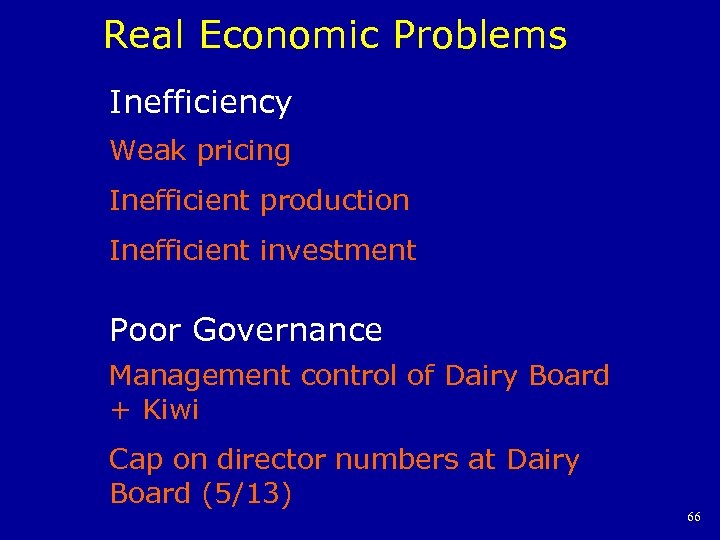 Real Economic Problems Inefficiency Weak pricing Inefficient production Inefficient investment Poor Governance Management control of Dairy Board + Kiwi Cap on director numbers at Dairy Board (5/13) 66
 Mc. Kinseys
 68
68
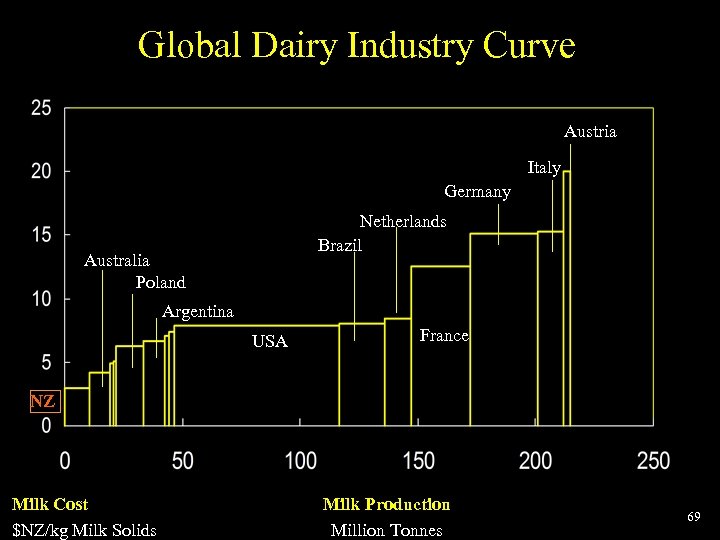 Global Dairy Industry Curve Austria Italy Germany Netherlands Brazil Australia Poland Argentina USA France NZ Milk Cost $NZ/kg Milk Solids Milk Production Million Tonnes 69
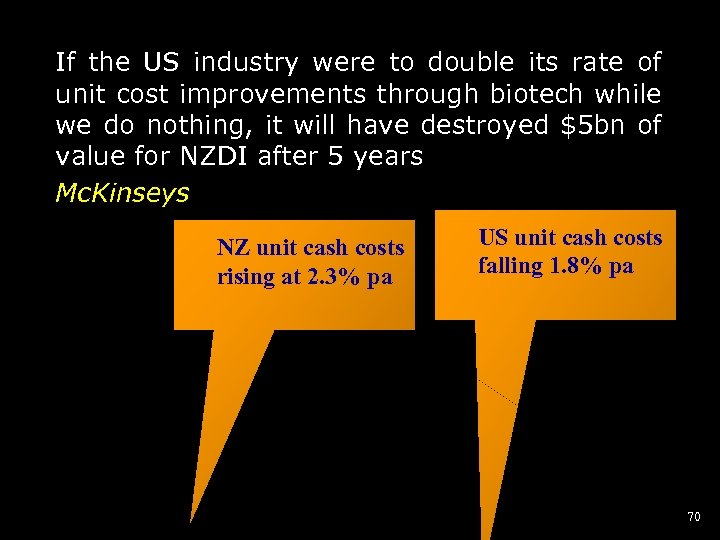 If the US industry were to double its rate of unit cost improvements through biotech while we do nothing, it will have destroyed $5 bn of value for NZDI after 5 years Mc. Kinseys NZ unit cash costs rising at 2. 3% pa US unit cash costs falling 1. 8% pa 70
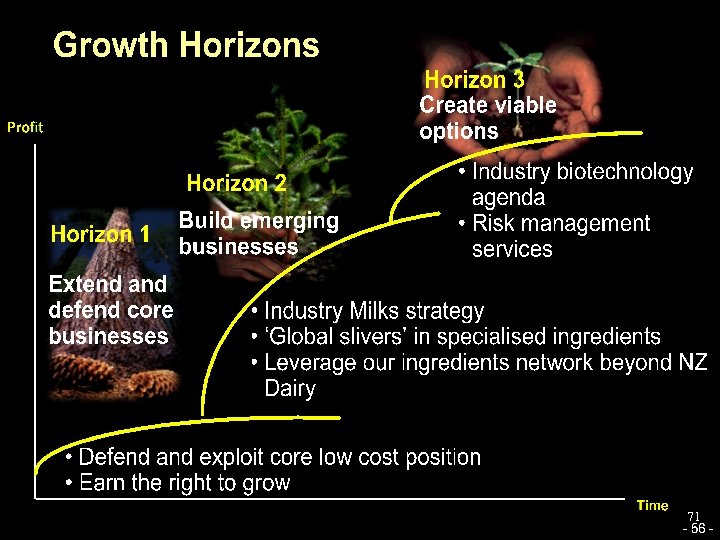 71
71
 72
72
 73
73
 74
74
 75
75
 76
76
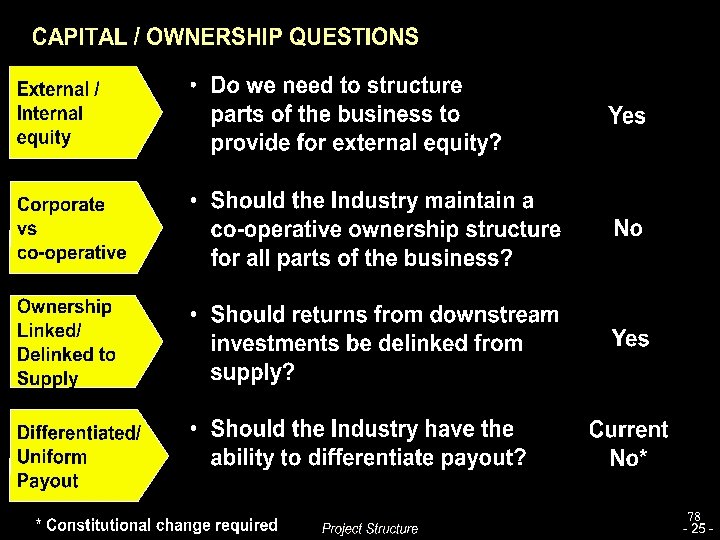
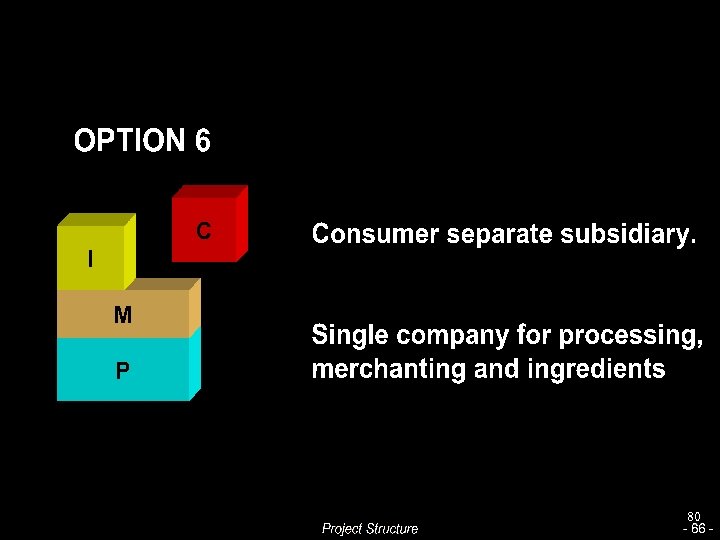
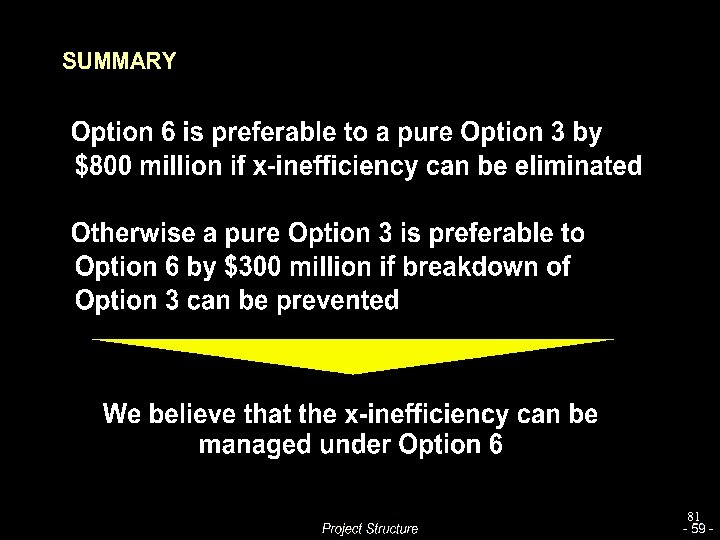
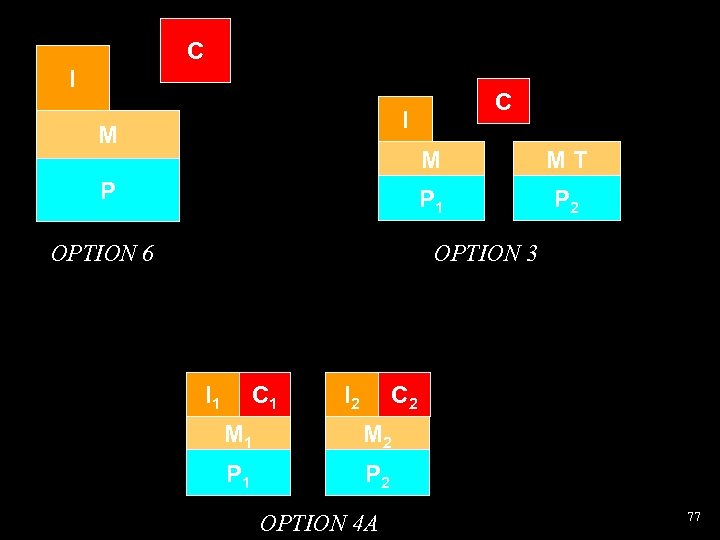 C I M M P 1 P OPTION 6 MT P 2 OPTION 3 I 1 C 1 I 2 C 2 M 1 M 2 P 1 P 2 OPTION 4 A 77
 78
78
 79
79
 80
80
 81
81
 82
82
 83
83
 84
84
 85
85
 86
86
 87
87
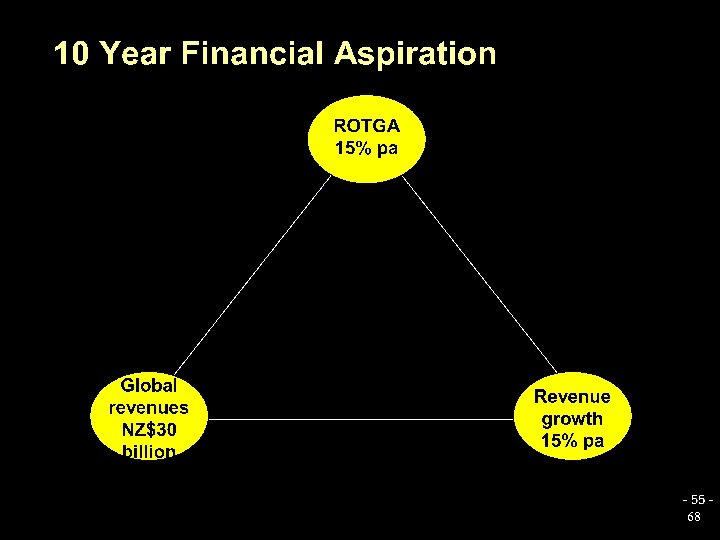
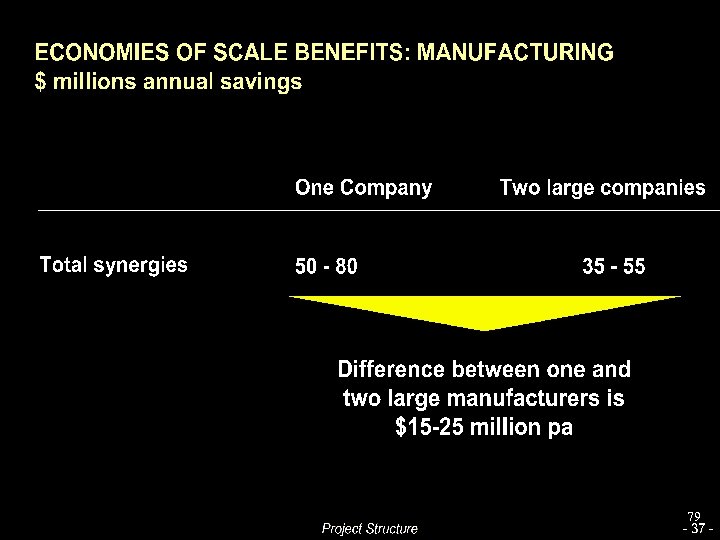
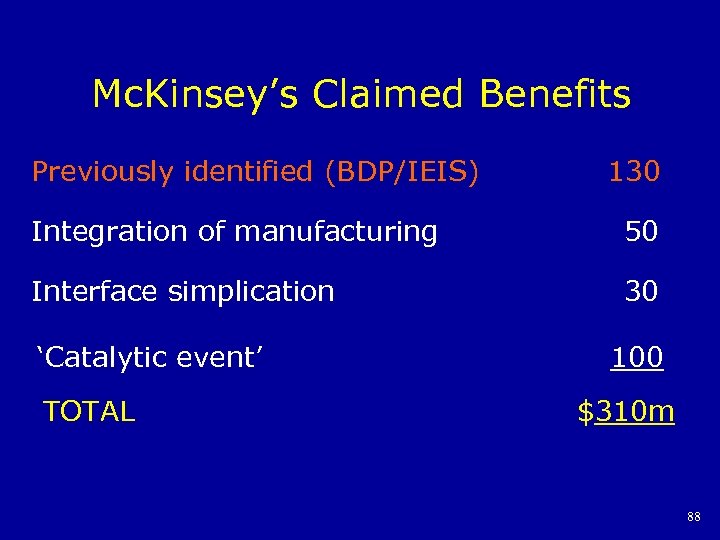 Mc. Kinsey’s Claimed Benefits Previously identified (BDP/IEIS) 130 Integration of manufacturing 50 Interface simplication 30 ‘Catalytic event’ 100 TOTAL $310 m 88
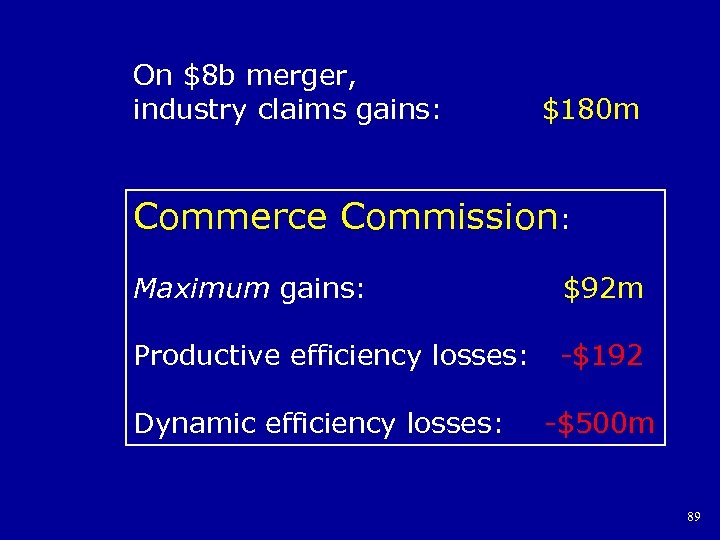 On $8 b merger, industry claims gains: $180 m Commerce Commission: Maximum gains: $92 m Productive efficiency losses: -$192 Dynamic efficiency losses: -$500 m 89
 2000/01 Negotiations 90
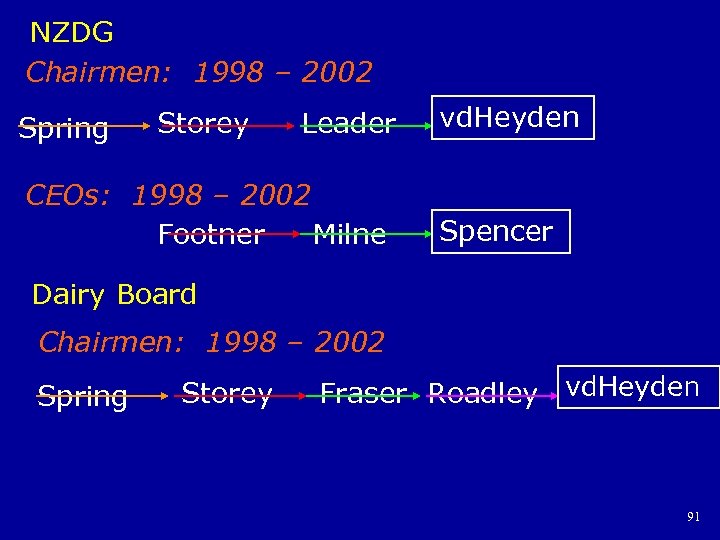 NZDG Chairmen: 1998 – 2002 Spring Storey Leader CEOs: 1998 – 2002 Footner Milne vd. Heyden Spencer Dairy Board Chairmen: 1998 – 2002 Spring Storey Fraser Roadley vd. Heyden 91
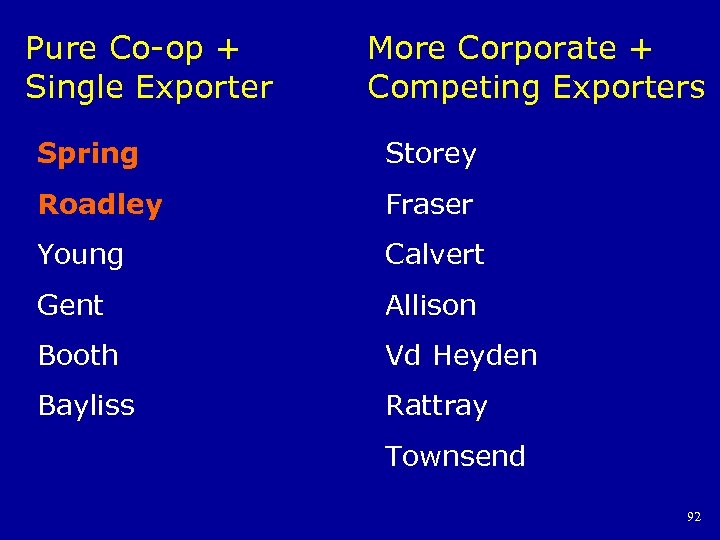 Pure Co-op + Single Exporter More Corporate + Competing Exporters Spring Storey Roadley Fraser Young Calvert Gent Allison Booth Vd Heyden Bayliss Rattray Townsend 92
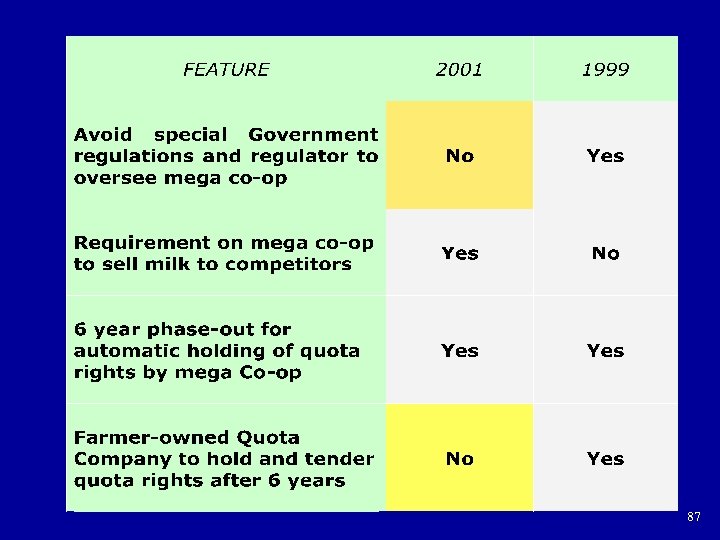
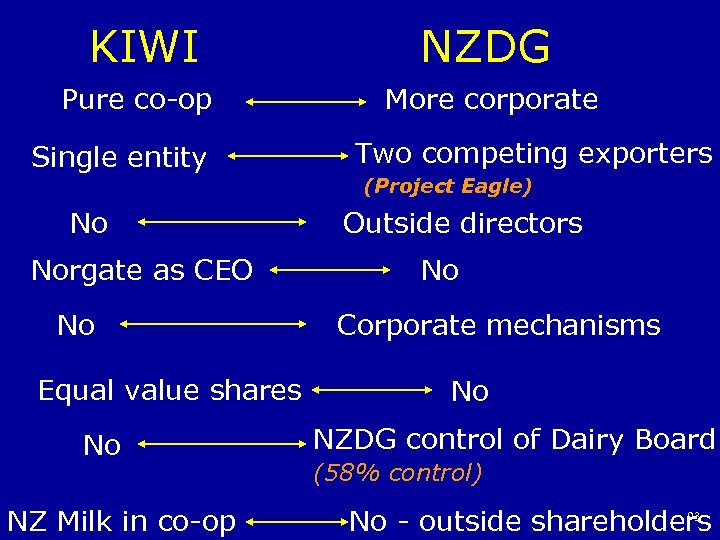 KIWI NZDG Pure co-op More corporate Single entity Two competing exporters (Project Eagle) No Norgate as CEO No Equal value shares No NZ Milk in co-op Outside directors No Corporate mechanisms No NZDG control of Dairy Board (58% control) 93 No - outside shareholders
 Wellington, Oct 13, 1998, NZPA - Retiring Dairy Board chairman Sir Dryden Spring today put the boot into the Government's plan for the deregulation of producer boards, describing it as a “gigantic economic hoax” Dairy Board chairman Sir Dryden Spring is adamant the industry…will remain farmer-owned and continue selling through a single marketer owned by the co-operatives following deregulation 94
 Decision 2001 In Brian Edward’s biography – The PM is states that she shot a line across officials and gave directions that the legislation was to be prepared authorising the merger. Dryden Spring was the key player 95
 PART 3: CHANGE • Nature of Fonterra • Four fundamentals • Eight specifics • Drivers of change 96
 Fonterra is a structure in transition: q From serving producers and appease their competing perceptions of fairness q To serving customers – to capture the value they put on different products and services 97
 FOUR FUNDAMENTALS • Farmers need to receive from F real signals of how customers value their products. • Fonterra needs to receive from shareholders real signals of how they value Fonterra’s performance. 98
 FOUR FUNDAMENTALS • Farmers need to develop new skills – To participate as shareholders, not just as producers • Directors need to provide some real leadership – 99
 EIGHT SPECIFIC CHANGES • Volume + Price – F would offer suppliers a choice of contracting options, eg – fixed prices volumes • fixed at in set advance; • no fixed volume at ‘spot’ prices; or • part fixed, part open. F’s menu of contracts would be customer driven – ie how to best maximise value from customers – eg contracts for supplies to ‘value-added’ may be for specified volumes. Supplies for ‘commodities’ may be less volume constrained. Suppliers would select the options that best matched their skills and circumstances. 100
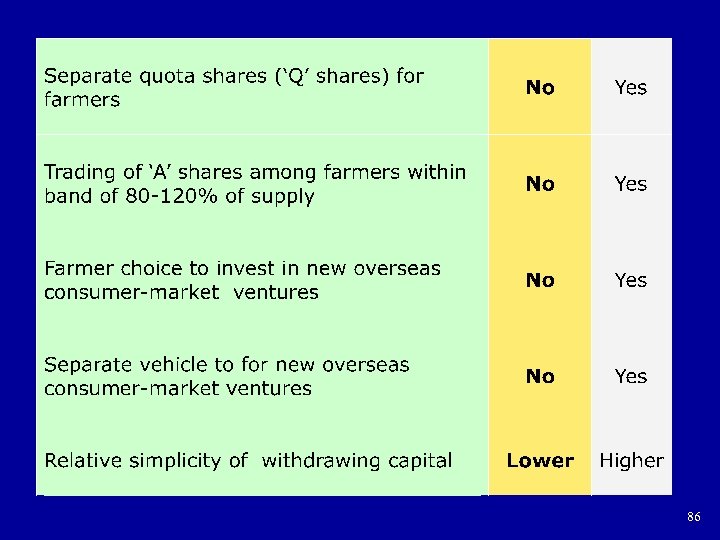
 EIGHT SPECIFIC CHANGES • ‘Surplus milk’ – F would pay the true marginal value of ‘surplus’ milk (ie it charges full costs for processing an extra unit of milk) • Dividends – Paid out to farmers as a separate dividend (esp NZ Milk) 101
 EIGHT SPECIFIC CHANGES • Share value + monitoring – F’s co-op shares are tradable among farmers within 80 -120% of their supply. This would provide on-going (not just annual) and multiple (not just a single valuer’s) signals to F of how shareholders value its performance. It would also significantly reduce F’s current ‘redemption risk’, which is like a ‘run on a bank’, where farmers all at once want to cash up their F shares. To mitigate this risk, F has put in place a number of very distorting devices, including its option to redeem not with cash, but by issuing redeemable preference shares and capital notes. F has also imposed a tight window on when 102 shares can be redeemed.
 EIGHT SPECIFIC CHANGES • Value added business – NZ Milk separate. Share tradable among farmers. Later open to outside investors (up to say 49%). • Board of directors – Reduced to nine as originally proposed. The current number (13) is simply a carry over from the Dairy Board and (before that) the Dairy Products Marketing Commission (since around 1947). • Diversify beyond milk – Use skills and some risk capital to capture margins in new markets Like its competitors Kerry, Nestle, Danone, Kraft and 103
 EIGHT SPECIFIC CHANGES • F ceases to be a monopoly – Sell down enough of F’s business in NZ (10 – 15%) to end restrictions of Government regulations. The gains of maintaining a near-monopoly in NZ, particularly in processing raw milk, are unlikely to outweigh the costs. Between 1890 and 1920, the market for processing raw milk was highly competitive in NZ. The ‘cooperative culture’ viewed this competition as ‘pernicious’ as some co-operatives failed. Introducing a competitive environment is likely to significantly boost F’s performance, to the benefit of farmer-shareholders. 104
 DRIVERS OF CHANGE • Consumer competition – need to be more customer driven and less capital constrained • Supplier expectations – ‘big’ vs ‘small’. Change of generation. Cross-subsidies will be removed. Userpays transport costs. Fixed collection fees. Regional milk payouts 105
 “THE STORY OF TWO HENRYS” 106
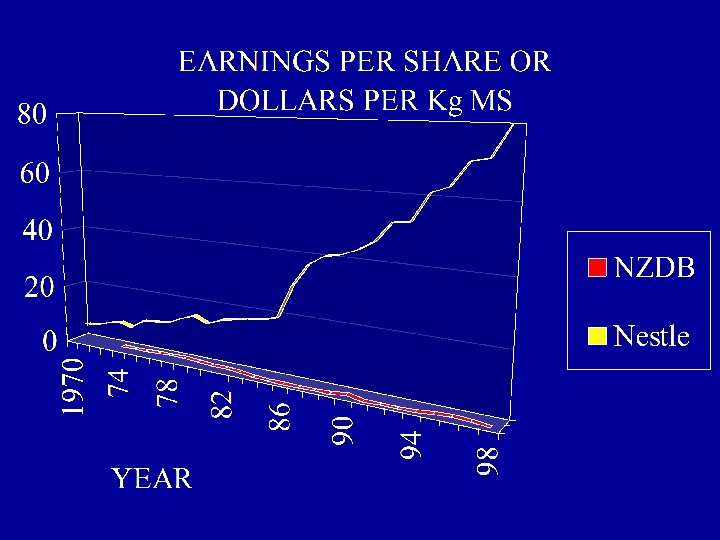
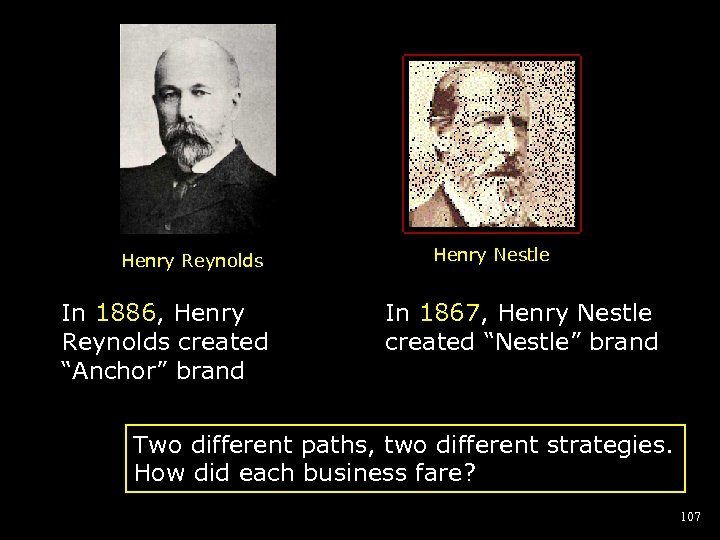 Henry Reynolds In 1886, Henry Reynolds created “Anchor” brand Henry Nestle In 1867, Henry Nestle created “Nestle” brand Two different paths, two different strategies. How did each business fare? 107
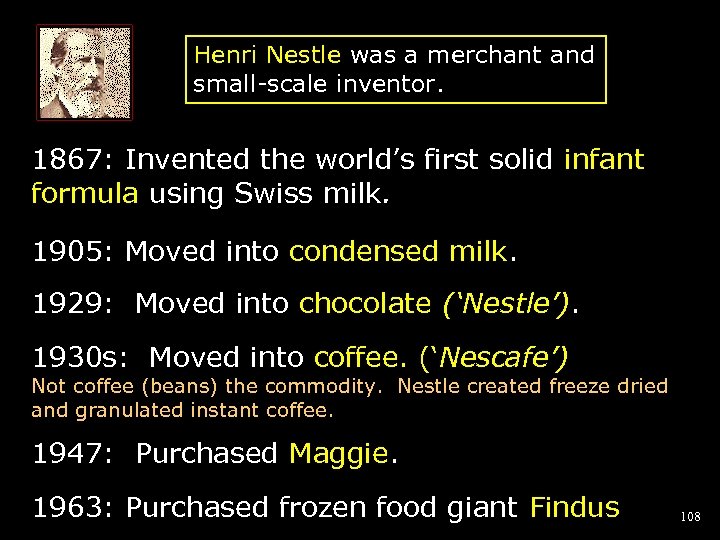 Henri Nestle was a merchant and small-scale inventor. 1867: Invented the world’s first solid infant formula using Swiss milk. 1905: Moved into condensed milk. 1929: Moved into chocolate (‘Nestle’). 1930 s: Moved into coffee. (‘Nescafe’) Not coffee (beans) the commodity. Nestle created freeze dried and granulated instant coffee. 1947: Purchased Maggie. 1963: Purchased frozen food giant Findus 108
![Henri Reynolds was a businessman. 1896: Sold factories to NZ Dairy Association. [ ]:](https://present5.com/presentation/e52e7e23acb5a3cbbe29ebd5fd685d4a/image-109.jpg "Henri Reynolds was a businessman. 1896: Sold factories to NZ Dairy Association. [ ]:") Henri Reynolds was a businessman. 1896: Sold factories to NZ Dairy Association. [ ]: Merged to form the ‘Big Octopus’ – NZ Cooperative Dairy Company ‘Anchor’ brand remained tied to one key product – NZ butter in England. 109
Henri Reynolds was a businessman. 1896: Sold factories to NZ Dairy Association. [ ]: Merged to form the ‘Big Octopus’ – NZ Cooperative Dairy Company ‘Anchor’ brand remained tied to one key product – NZ butter in England. 109
 CONCLUSION • Industry founders’ shared goal was to be ‘free men’. Not servile or afraid. • The goal has not been achieved. • The key is thinking with a ‘free mind’. Look outside the box. 110
 www. baldwin. org. nz 111