 Скачать презентацию Nutritional Guidelines for Osteoporosis Sisira Siribaddana Director SLTR
c691f0deaad5d8c1c03709b3e27e8bc4.ppt
- Количество слайдов: 34



Nutritional Guidelines for Osteoporosis Sisira Siribaddana Director SLTR Staff Specialist in Medicine SJGH SH Siribaddana
Introduction Guidelines Sri Lankan research Post guidelines development SH Siribaddana
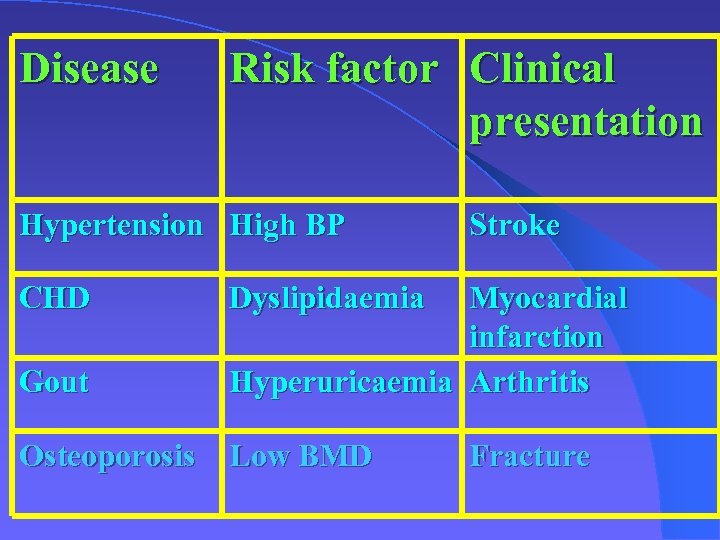
Disease Risk factor Clinical presentation Hypertension High BP CHD Stroke Dyslipidaemia Gout Myocardial infarction Hyperuricaemia Arthritis Osteoporosis Low BMD Fracture
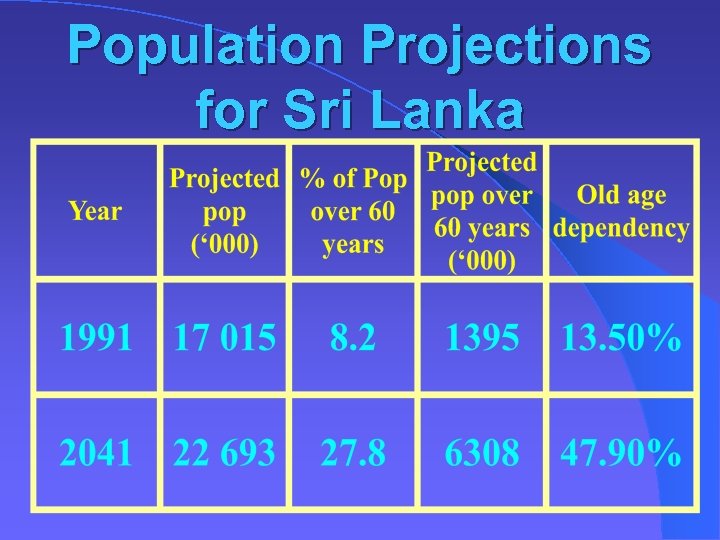
Population Projections for Sri Lanka
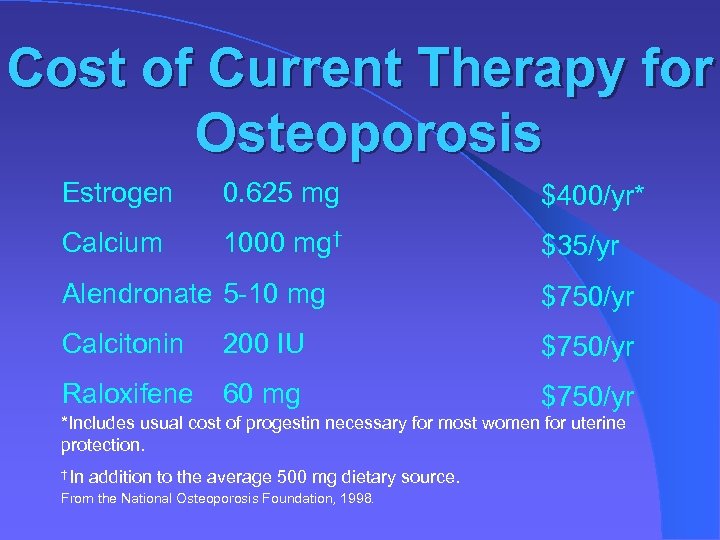
Cost of Current Therapy for Osteoporosis Estrogen 0. 625 mg $400/yr* Calcium 1000 mg† $35/yr Alendronate 5 -10 mg $750/yr Calcitonin 200 IU $750/yr Raloxifene 60 mg $750/yr *Includes usual cost of progestin necessary for most women for uterine protection. † In addition to the average 500 mg dietary source. From the National Osteoporosis Foundation, 1998.
Guidelines SH Siribaddana
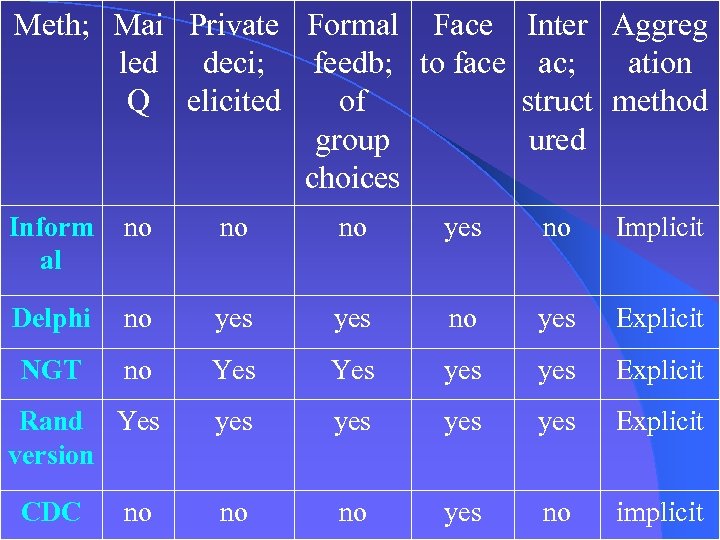
Meth; Mai Private Formal Face Inter Aggreg led deci; feedb; to face ac; ation Q elicited of struct method group ured choices Inform al no no no yes no Implicit Delphi no yes Explicit NGT no Yes yes Explicit Rand Yes version yes yes Explicit no no yes no implicit CDC no
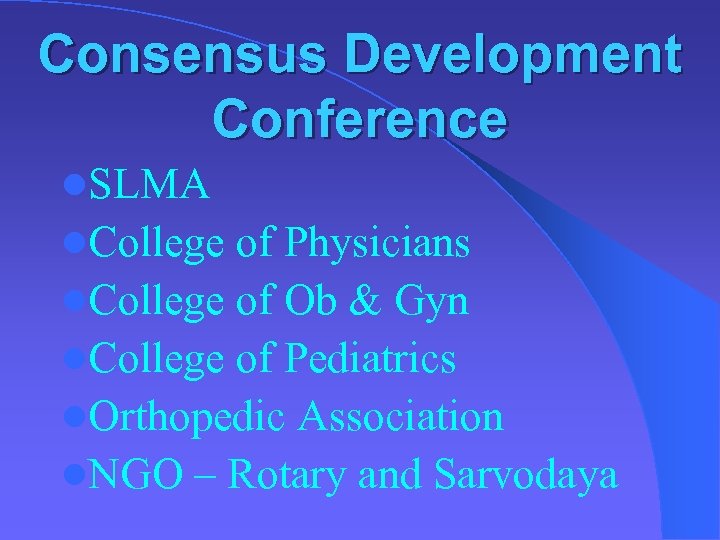
Consensus Development Conference l. SLMA l. College of Physicians l. College of Ob & Gyn l. College of Pediatrics l. Orthopedic Association l. NGO – Rotary and Sarvodaya
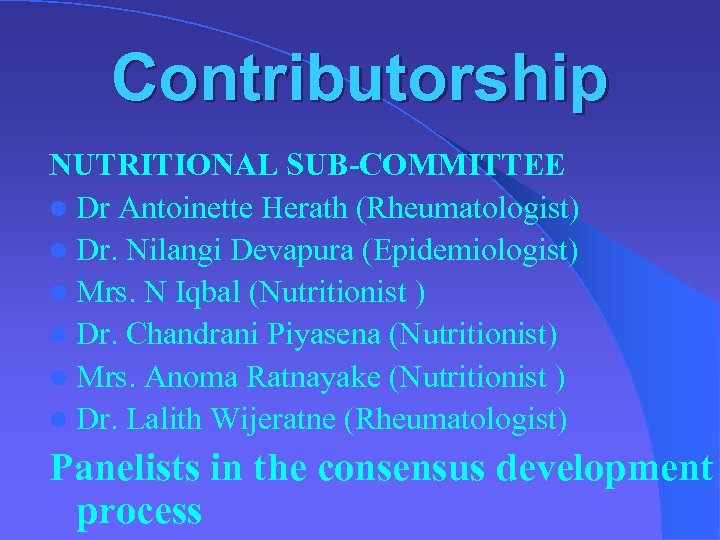
Contributorship NUTRITIONAL SUB-COMMITTEE l Dr Antoinette Herath (Rheumatologist) l Dr. Nilangi Devapura (Epidemiologist) l Mrs. N Iqbal (Nutritionist ) l Dr. Chandrani Piyasena (Nutritionist) l Mrs. Anoma Ratnayake (Nutritionist ) l Dr. Lalith Wijeratne (Rheumatologist) Panelists in the consensus development process
Publication Ethics l. As research into Osteoporosis is inadequate the guidelines have borrowed heavily from abroad l. Disclosure of the conflict of interests – As charity funding NA
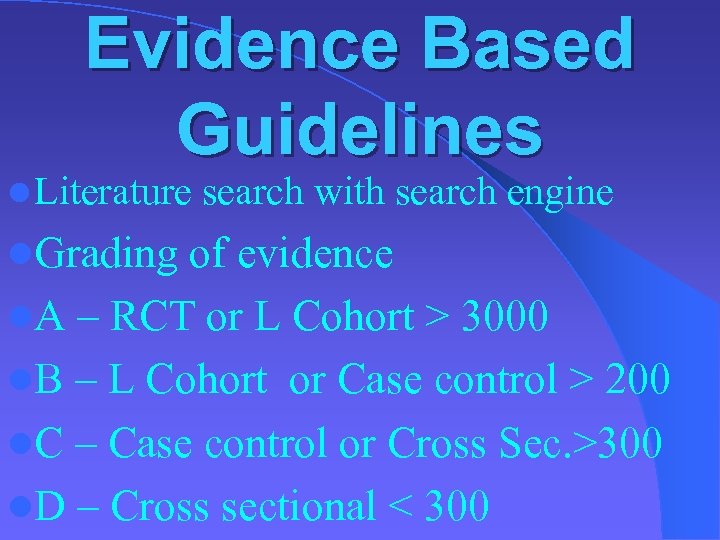
Evidence Based Guidelines l Literature l. Grading search with search engine of evidence l. A – RCT or L Cohort > 3000 l. B – L Cohort or Case control > 200 l. C – Case control or Cross Sec. >300 l. D – Cross sectional < 300
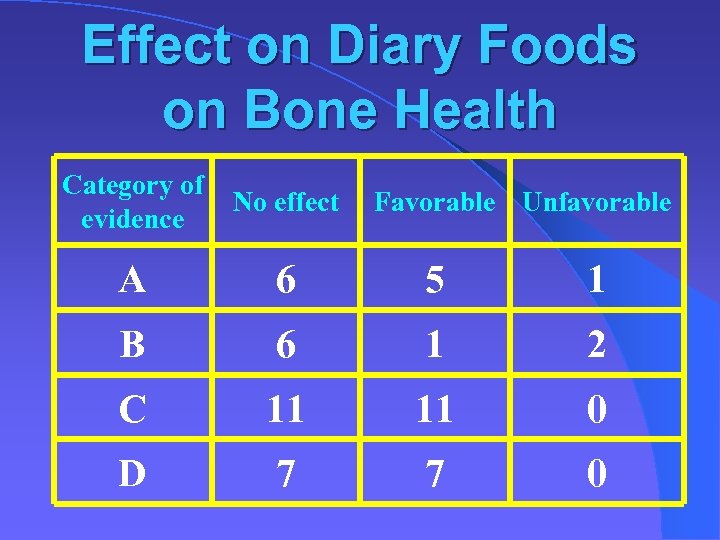
Effect on Diary Foods on Bone Health Category of evidence No effect A 6 5 1 B 6 1 2 C 11 11 0 D 7 7 0 Favorable Unfavorable
Breaking the 400 mg barrier l “Adaptation to low Ca intake in reference to the calcium requirements of a tropical population” Lucius Nichollas & Ananda Nimalasuriya-Observational study in 1939 l 3 large RCT in 1990’s with long term follow up l WHO guidelines recommending 1000
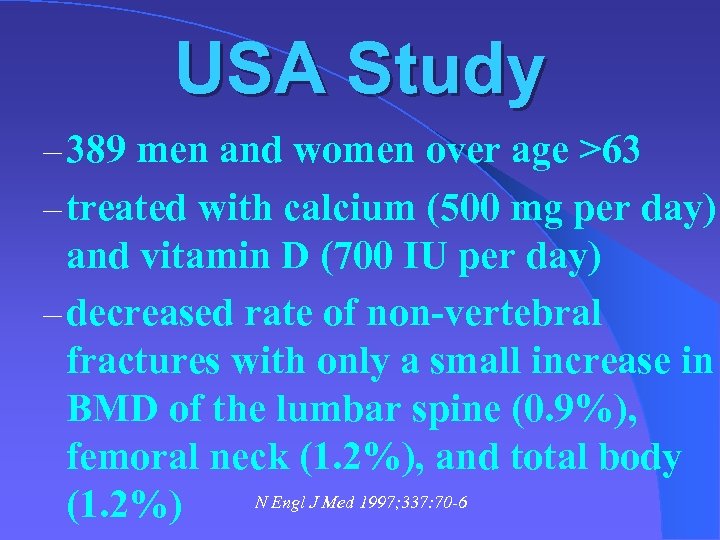
USA Study – 389 men and women over age >63 – treated with calcium (500 mg per day) and vitamin D (700 IU per day) – decreased rate of non-vertebral fractures with only a small increase in BMD of the lumbar spine (0. 9%), femoral neck (1. 2%), and total body N Engl J Med 1997; 337: 70 -6 (1. 2%)
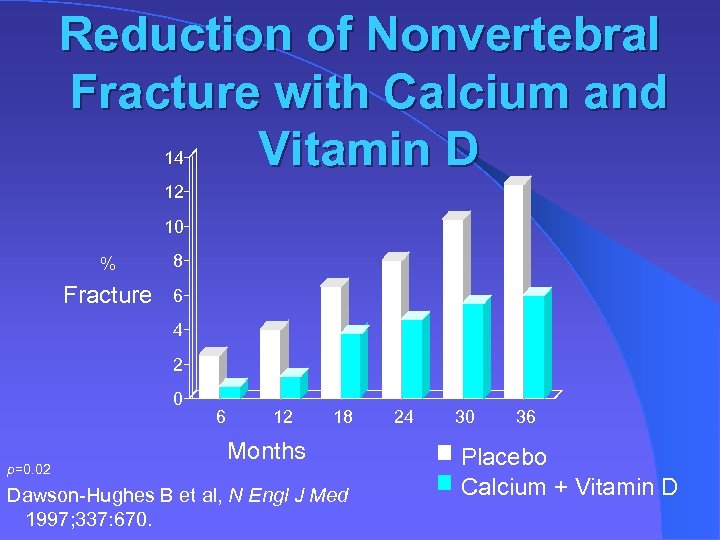
Reduction of Nonvertebral Fracture with Calcium and Vitamin D 14 12 10 % 8 Fracture 6 4 2 0 p=0. 02 6 12 18 Months Dawson-Hughes B et al, N Engl J Med 1997; 337: 670. 24 30 36 Placebo Calcium + Vitamin D
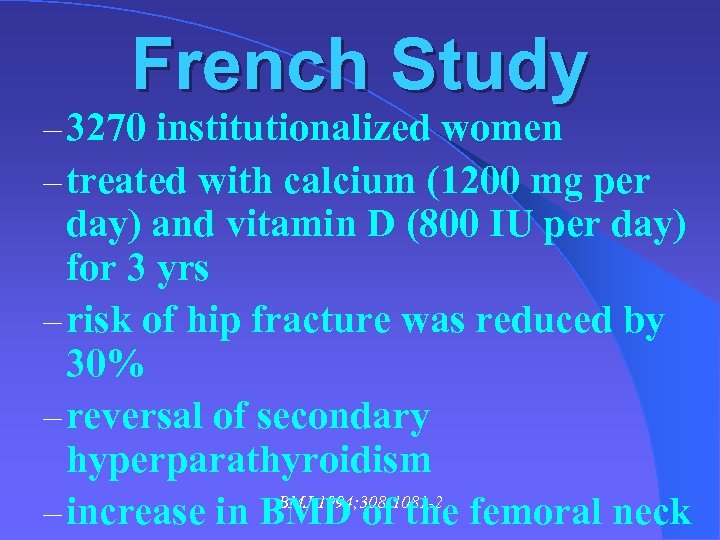
French Study – 3270 institutionalized women – treated with calcium (1200 mg per day) and vitamin D (800 IU per day) for 3 yrs – risk of hip fracture was reduced by 30% – reversal of secondary hyperparathyroidism BMJ 1994; 308: 1081 -2 – increase in BMD of the femoral neck
Summary of the guidelines l Adequate calcium intake – teenagers and postmenopasal women not taking estrogen need 1, 500 mg of calcium per day – other adults need 1, 000 mg per day l Vitamin D l Adequate exercise
Sri Lankan Research SH Siribaddana
Indo Asians l. Hip fractures occur at a relatively earlier age compared to Europids l. Higher male-to-female ratio l. Shorter hip axis length l. High prevalence of fluorosis
Determining the Prevalence of Fragility Fracture Rates Calcium Intake and BUA in Suburban Sri Lankan Population (Siribaddana, Deshabandu, Hewage, Fernando) l One year after hip fracture, 40% of patients unable to walk independently l About 40% Caucasian women suffer at least one osteoporotic fracture after the age of 50 years
Aim & Methods -1 §Calcium intake from SQFFQ. §To measure the BUA & Stiffness using “Lunar Achilles” ultrasound. § 700 females from The SJU community survey.
Aim & Methods -2 Randomization based on streets from 3 PHW areas l. All house hold members over 20 years invited l. Quality assurance through repeated measures of 15 medical students l
Ultrasound Measurement of the Bone l Inexpensive and radiation free scanning device for low bone mass. l Qualitative aspects that determine the bone strength. l Transmission of sound through tissue leads to alterations in two acoustic properties, wave velocity and wave amplitude.
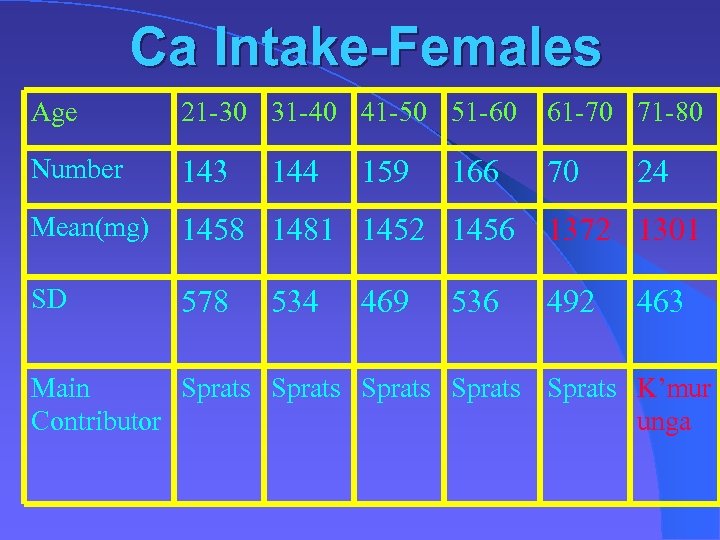
Ca Intake-Females Age 21 -30 31 -40 41 -50 51 -60 61 -70 71 -80 Number 143 70 Mean(mg) 1458 1481 1452 1456 1372 1301 SD 578 492 144 534 159 469 166 536 24 463 Main Sprats Sprats K’mur Contributor unga
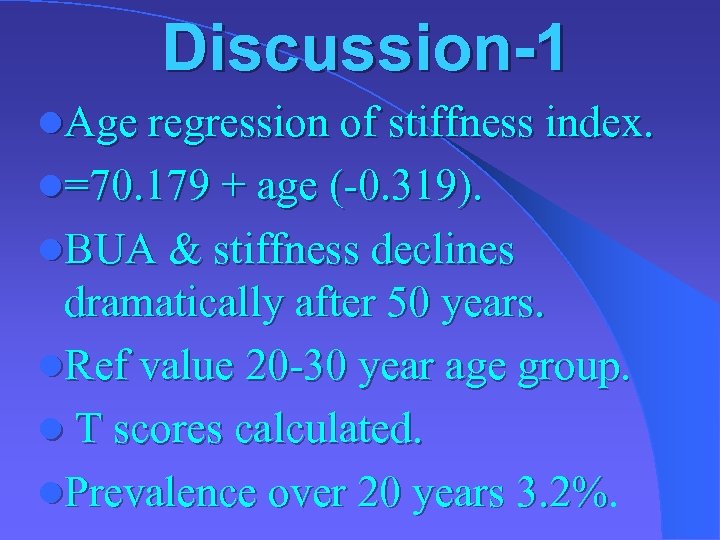
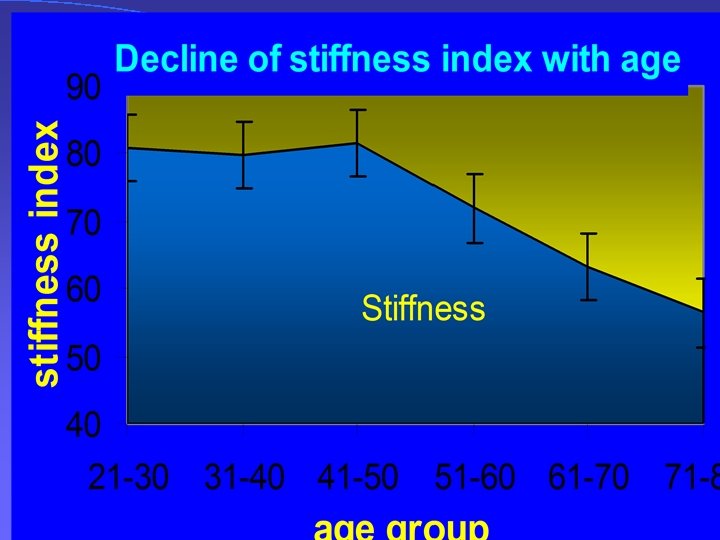
Discussion-1 l. Age regression of stiffness index. l=70. 179 + age (-0. 319). l. BUA & stiffness declines dramatically after 50 years. l. Ref value 20 -30 year age group. l T scores calculated. l. Prevalence over 20 years 3. 2%
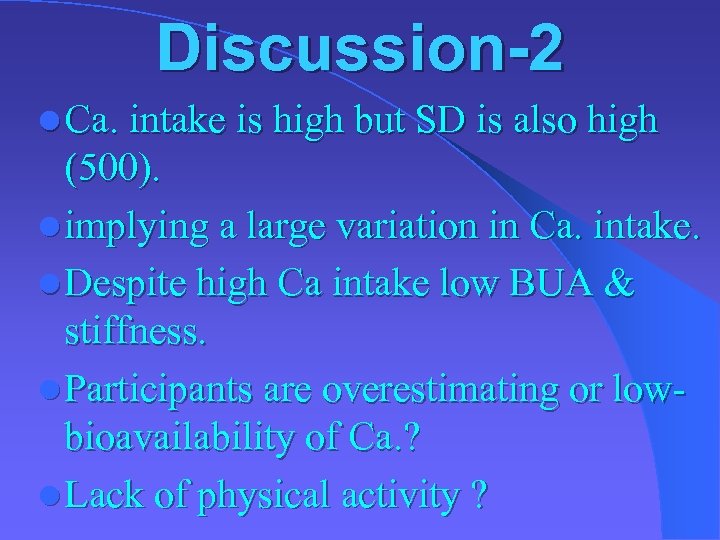
Discussion-2 l Ca. intake is high but SD is also high (500). l implying a large variation in Ca. intake. l Despite high Ca intake low BUA & stiffness. l Participants are overestimating or lowbioavailability of Ca. ? l Lack of physical activity ?
Post Guidelines Developments SH Siribaddana
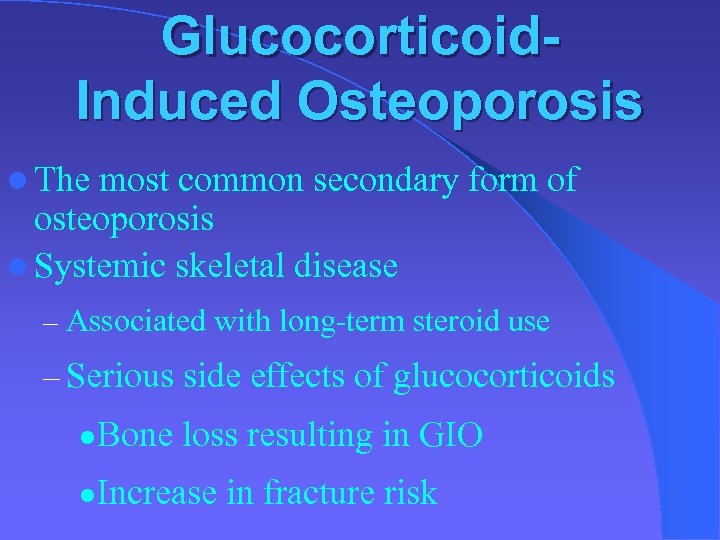
Glucocorticoid. Induced Osteoporosis l The most common secondary form of osteoporosis l Systemic skeletal disease – Associated with long-term steroid use – Serious side effects of glucocorticoids l Bone loss resulting in GIO l Increase in fracture risk
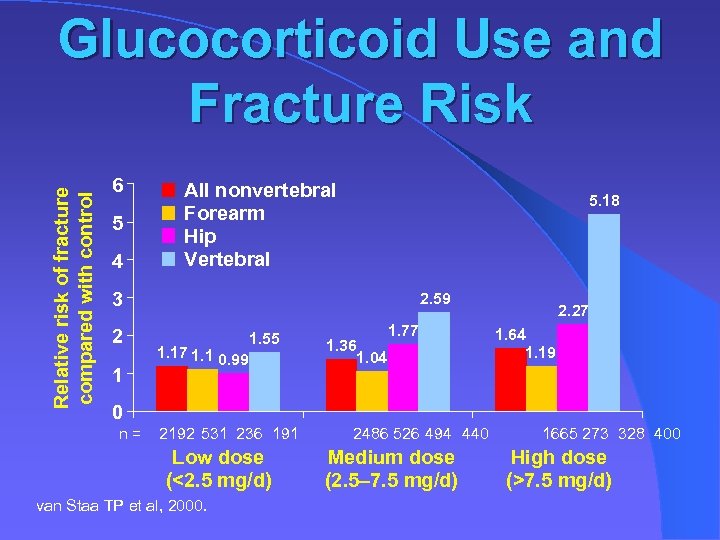
Relative risk of fracture compared with control Glucocorticoid Use and Fracture Risk 6 5 4 All nonvertebral Forearm Hip Vertebral 5. 18 3 2 1 2. 59 1. 17 1. 1 0. 99 1. 55 1. 36 1. 04 1. 77 2. 27 1. 64 1. 19 0 n= 2192 531 236 191 Low dose (<2. 5 mg/d) van Staa TP et al, 2000. 2486 526 494 440 Medium dose (2. 5– 7. 5 mg/d) 1665 273 328 400 High dose (>7. 5 mg/d)
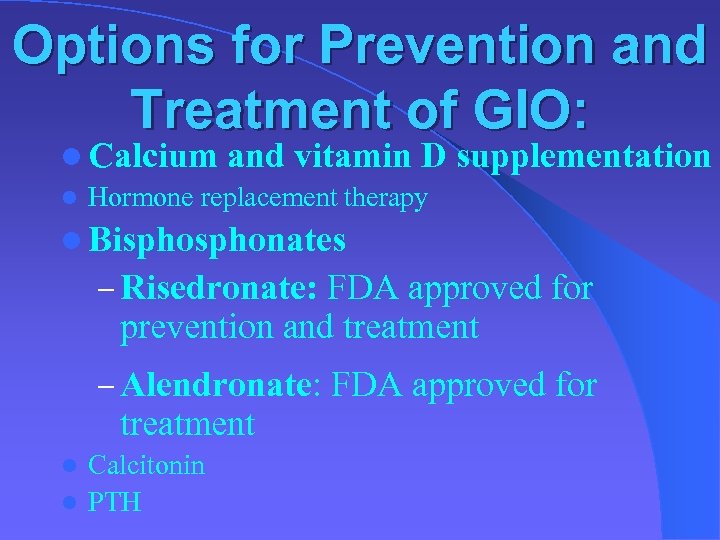
Options for Prevention and Treatment of GIO: l Calcium and vitamin D l Hormone replacement therapy supplementation l Bisphonates - Risedronate: FDA approved for prevention and treatment - Alendronate: FDA approved for treatment Calcitonin l PTH l
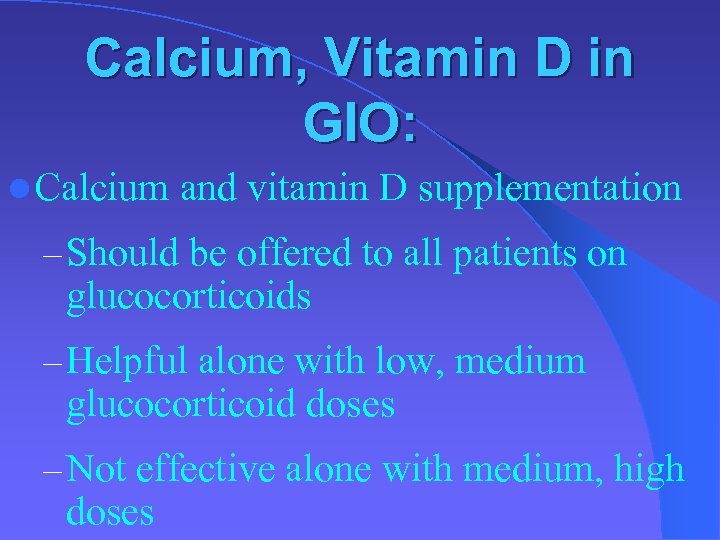
Calcium, Vitamin D in GIO: l Calcium and vitamin D supplementation – Should be offered to all patients on glucocorticoids – Helpful alone with low, medium glucocorticoid doses – Not effective alone with medium, high doses
Gain in bone mineral mass in prepubertal girls - Lancet 2001 l Milk extracted Ca caused long standing increase in bone mass accrual which lasts beyond the end of supplementation l RCT-double blind & placebo controlled – 116 of the 144 girls followed l Sponsored by Swiss NSF and Nestec
Way Forwards l. Audit of implementation of the guidelines l. More research That’s all folks
Скачать презентацию Nutritional Guidelines for Osteoporosis Sisira Siribaddana Director SLTR
c691f0deaad5d8c1c03709b3e27e8bc4.ppt