 Скачать презентацию NUTRITION LABELS Health-Davenport WHAT INFORMATION IS FOUND
4f0592fbaadd2d511c2d48d6d957181b.ppt
- Количество слайдов: 23



NUTRITION LABELS Health-Davenport
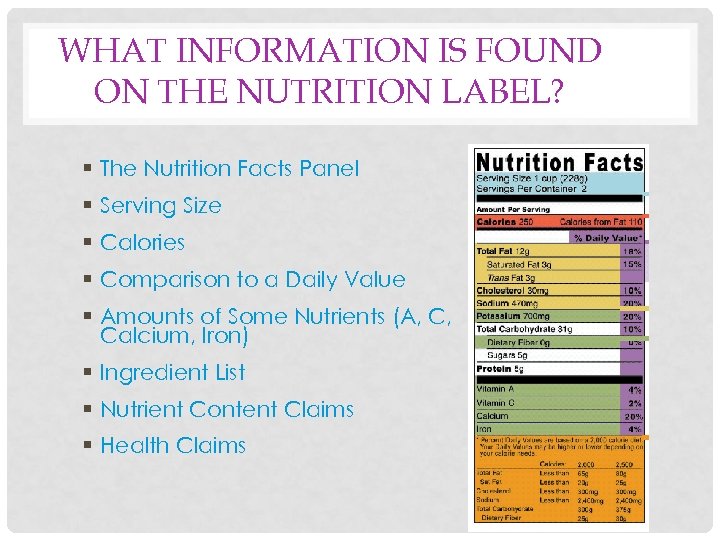
WHAT INFORMATION IS FOUND ON THE NUTRITION LABEL? § The Nutrition Facts Panel § Serving Size § Calories § Comparison to a Daily Value § Amounts of Some Nutrients (A, C, Calcium, Iron) § Ingredient List § Nutrient Content Claims § Health Claims
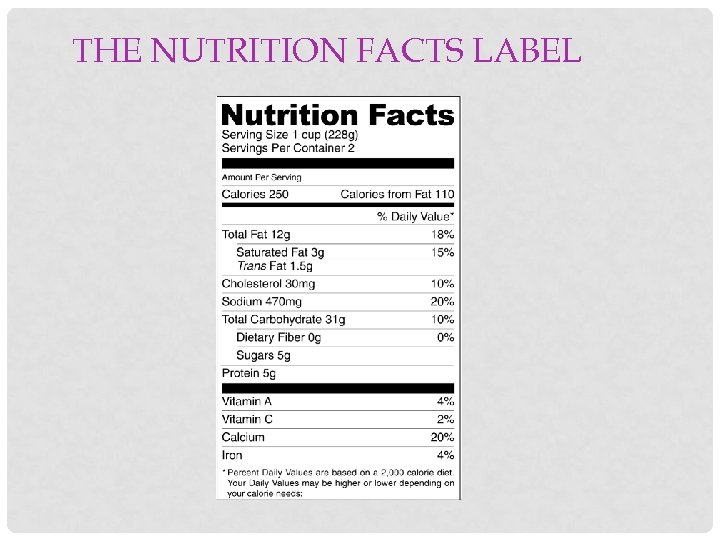
THE NUTRITION FACTS LABEL
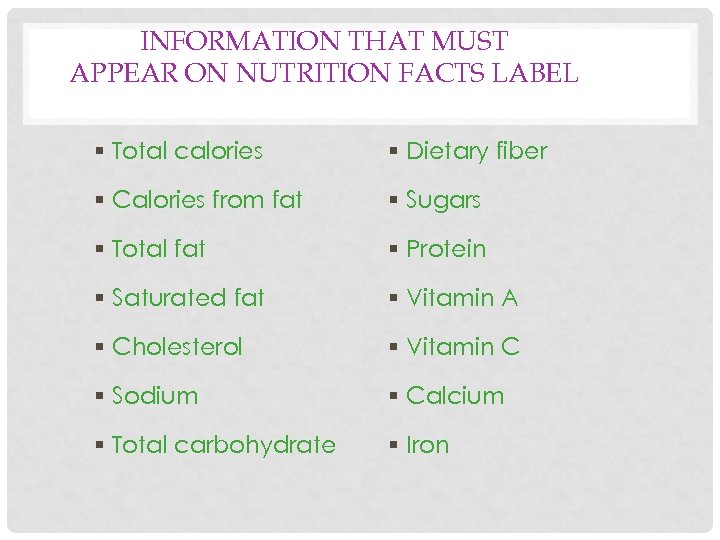
INFORMATION THAT MUST APPEAR ON NUTRITION FACTS LABEL § Total calories § Dietary fiber § Calories from fat § Sugars § Total fat § Protein § Saturated fat § Vitamin A § Cholesterol § Vitamin C § Sodium § Calcium § Total carbohydrate § Iron
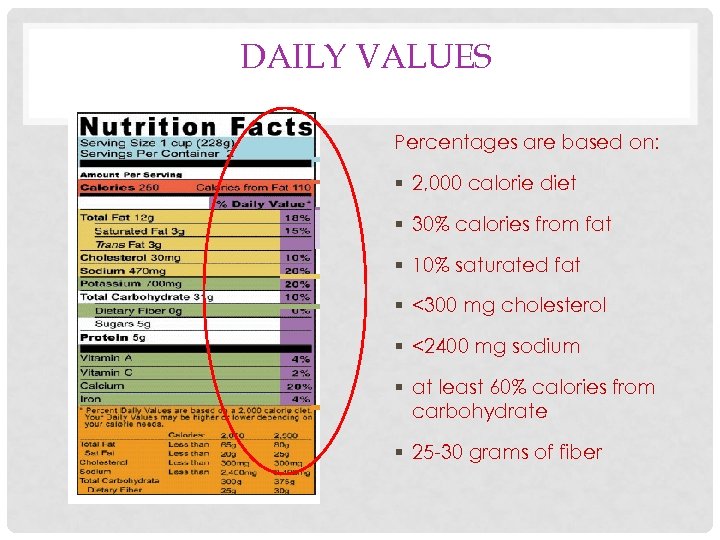
DAILY VALUES Percentages are based on: § 2, 000 calorie diet § 30% calories from fat § 10% saturated fat § <300 mg cholesterol § <2400 mg sodium § at least 60% calories from carbohydrate § 25 -30 grams of fiber
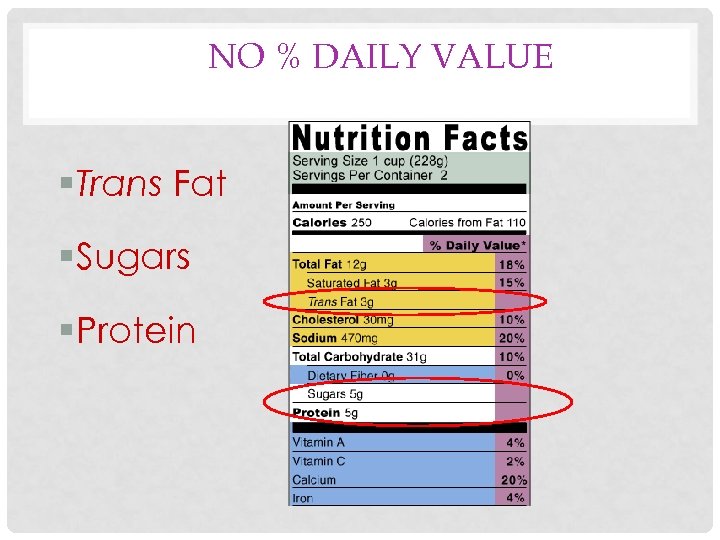
NO % DAILY VALUE § Trans Fat § Sugars § Protein
THE MOST IMPORTANT ASPECT OF A NUTRITION LABEL… • Serving Size • All measurement are given: per serving • Serving Size and Servings Per Container are also given • If you eat double the serving size listed, you need to double the calories, fat and nutrients. If you eat half the size shown, cut the calories and nutrients in half.
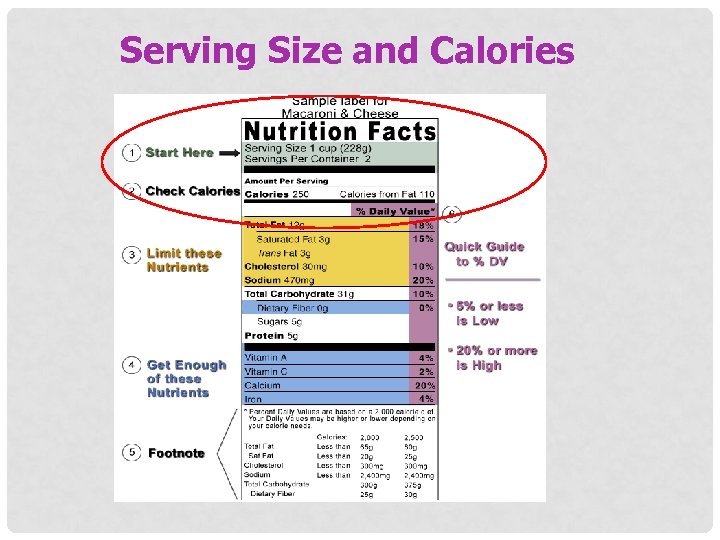
Serving Size and Calories
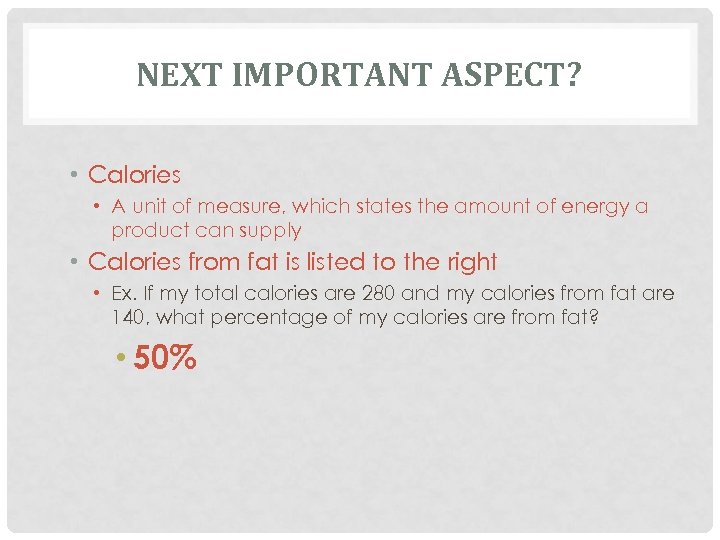
NEXT IMPORTANT ASPECT? • Calories • A unit of measure, which states the amount of energy a product can supply • Calories from fat is listed to the right • Ex. If my total calories are 280 and my calories from fat are 140, what percentage of my calories are from fat? • 50%
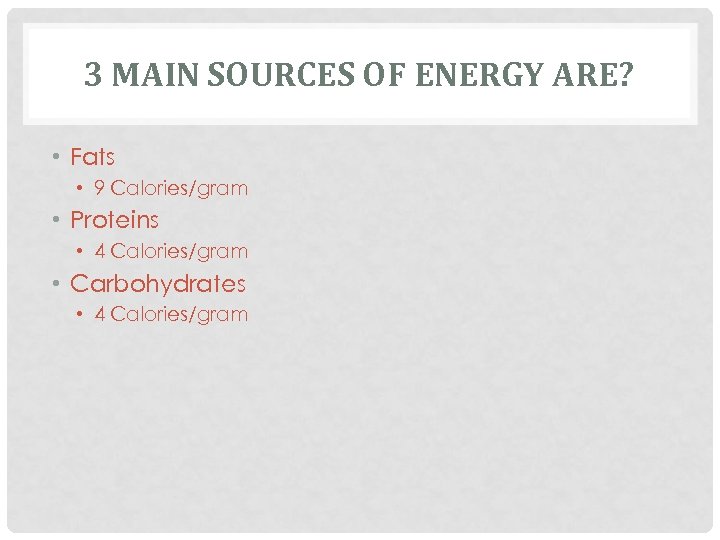
3 MAIN SOURCES OF ENERGY ARE? • Fats • 9 Calories/gram • Proteins • 4 Calories/gram • Carbohydrates • 4 Calories/gram
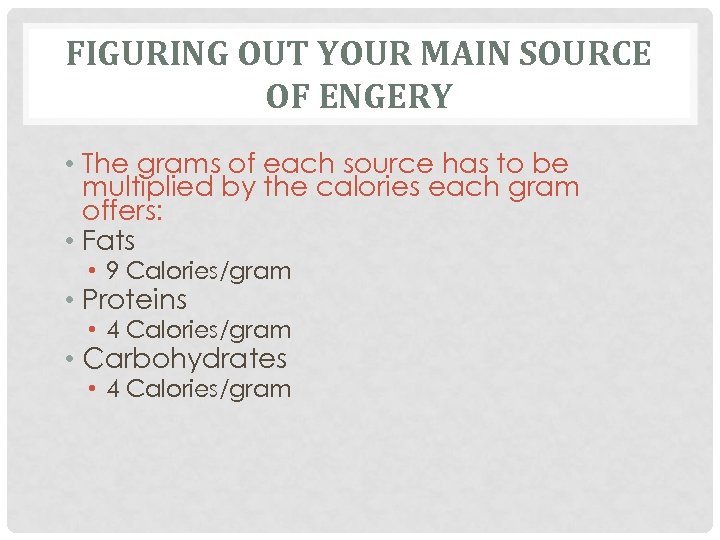
FIGURING OUT YOUR MAIN SOURCE OF ENGERY • The grams of each source has to be multiplied by the calories each gram offers: • Fats • 9 Calories/gram • Proteins • 4 Calories/gram • Carbohydrates • 4 Calories/gram
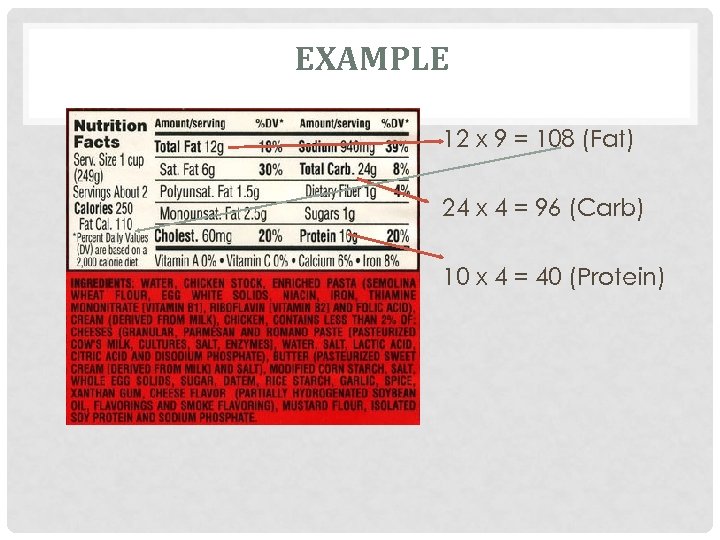
EXAMPLE 12 x 9 = 108 (Fat) 24 x 4 = 96 (Carb) 10 x 4 = 40 (Protein)
FAT? GOOD? BAD? • Essential in small amounts • The major kinds of fats in the foods we eat are saturated, polyunsaturated, monounsaturated and trans fatty acids. Saturated fats and trans fats raise blood cholesterol. Dietary cholesterol also raises blood cholesterol. A high level of cholesterol in the blood is a major risk factor for coronary heart disease, which leads to heart attack, and also increases the risk of stroke.
UNSATURATED FATS (INCLUDING POLY AND MONO): *HEALTHIER FAT These are found in plant foods and fish. These may be good for heart health. The best of the unsaturated fats are found in olive oil, peanut oil, canola oil, safflower oil albacore tuna, and salmon.
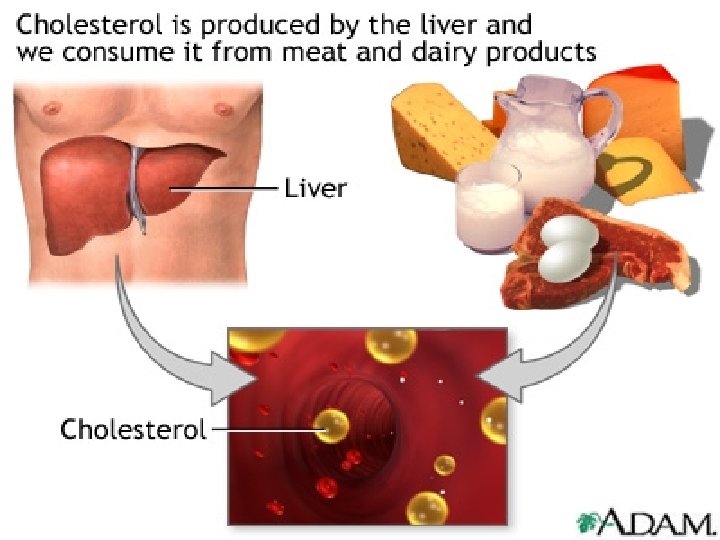
SATURATED FATS: *BAD FAT • These fats are found in meat and other animal products, such as butter, cheese, and all milk except skim. Saturated fats are also in palm and coconut oils, which are often used in commercial baked goods (the kind you buy at the store). Eating too much saturated fat can raise blood cholesterol levels and increase the risk of heart disease.
TRANS FATS: *BAD FAT • These fats are found in margarine, especially the sticks. Trans fats are also found in certain foods that you buy at the store or in a restaurant, such as snack foods, baked goods, and fried foods. When you see "hydrogenated" or "partially hydrogenated" oils on an ingredient list, the food contains trans fats. Like saturated fats, eating too much can raise cholesterol and increase the risk of heart disease.
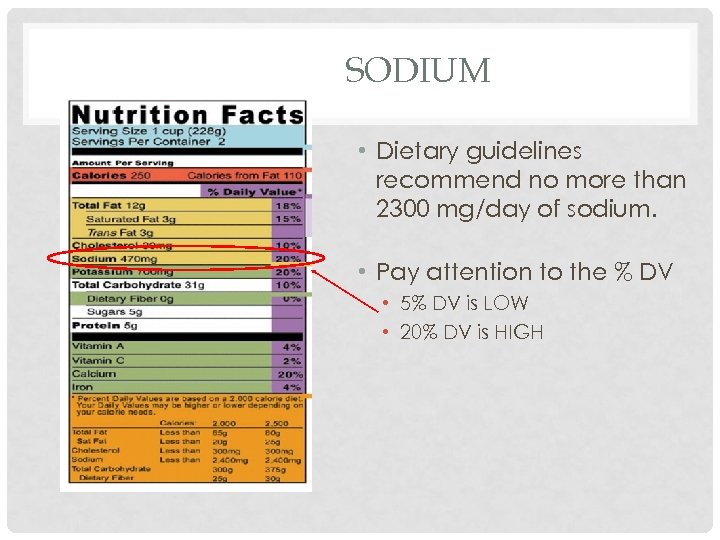
SODIUM • Dietary guidelines recommend no more than 2300 mg/day of sodium. • Pay attention to the % DV • 5% DV is LOW • 20% DV is HIGH
NEXT IMPORTANT ASPECT? • Cholesterol • A waxy substance found in blood and cells, may lead to heart disease • There are two types: • Low Density Lipoprotein and High Density Lipoprotein • LDL/HDL
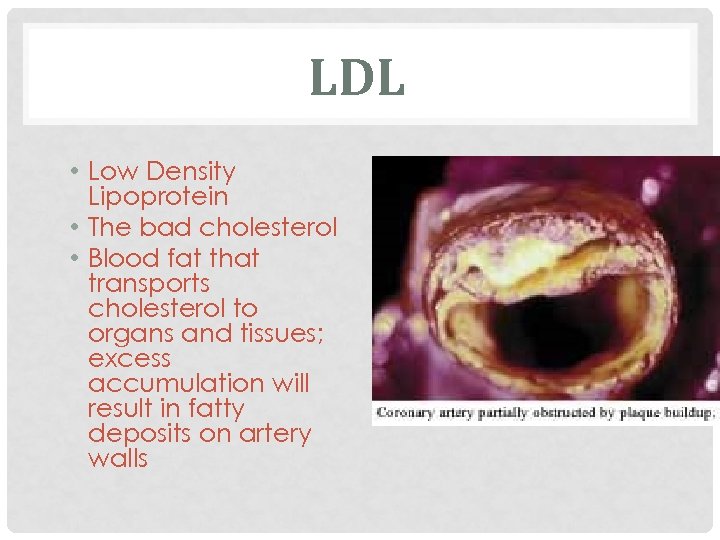
LDL • Low Density Lipoprotein • The bad cholesterol • Blood fat that transports cholesterol to organs and tissues; excess accumulation will result in fatty deposits on artery walls
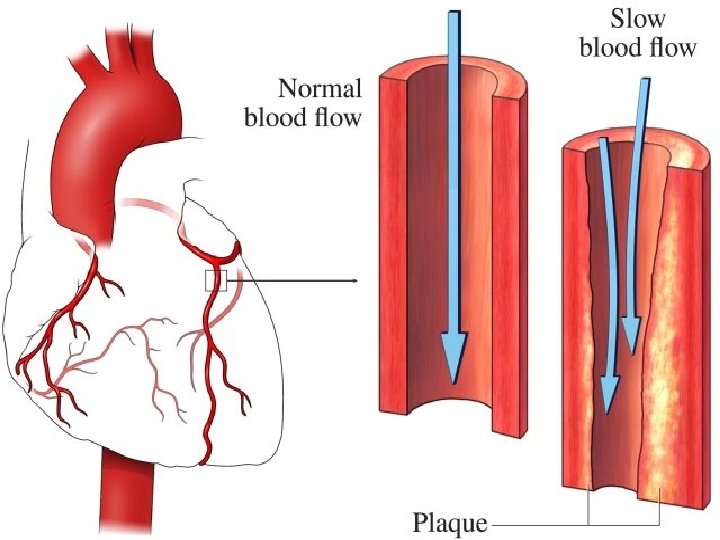
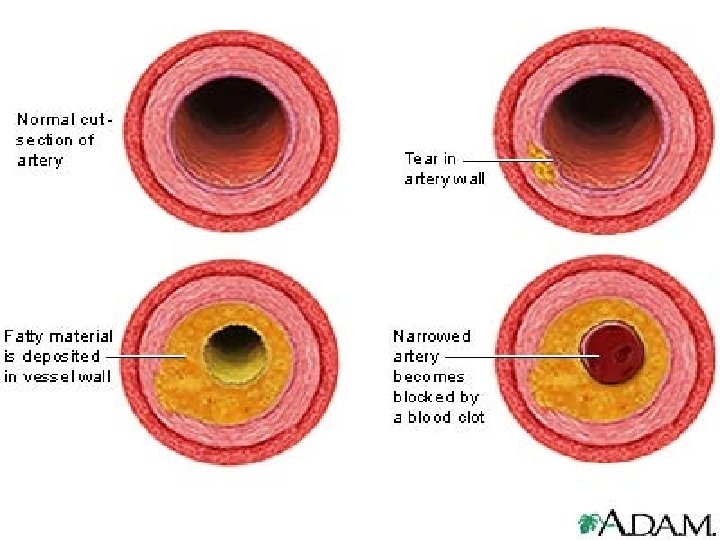
HDL • High Density Lipoprotein • The good cholesterol • Blood fat that helps transport cholesterol out of the arteries, helps prevent heart disease
Скачать презентацию NUTRITION LABELS Health-Davenport WHAT INFORMATION IS FOUND
4f0592fbaadd2d511c2d48d6d957181b.ppt