


 Скачать презентацию Nutrition Improvement Program Vehicles for Fortification Single vs
c5b9dae017912d4d992b455e349029a1.ppt
- Количество слайдов: 33
 Nutrition Improvement Program Vehicles for Fortification, Single vs. Multiple Fortification, Technology and Cost: Fortification of Cereals, Rice, Oil and Sugar Héctor Cori New Delhi, 7 January 2011. Click to edit Master title style
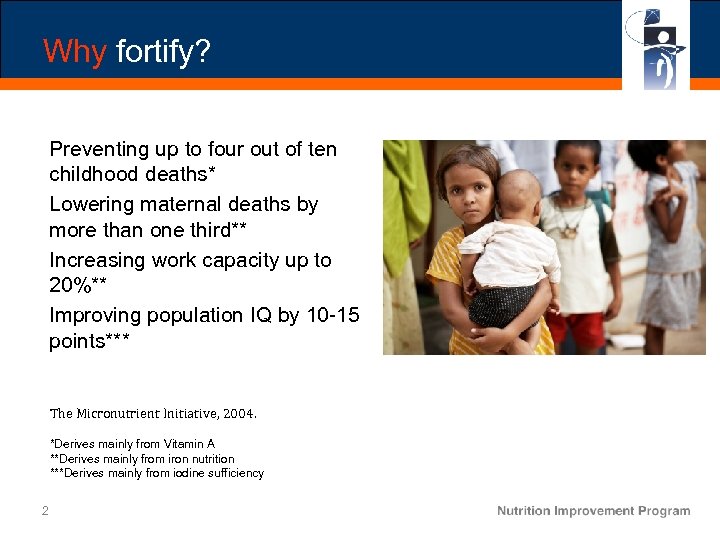 Why fortify? Preventing up to four out of ten childhood deaths* Lowering maternal deaths by more than one third** Increasing work capacity up to 20%** Improving population IQ by 10 -15 points*** The Micronutrient Initiative, 2004. *Derives mainly from Vitamin A **Derives mainly from iron nutrition ***Derives mainly from iodine sufficiency 2
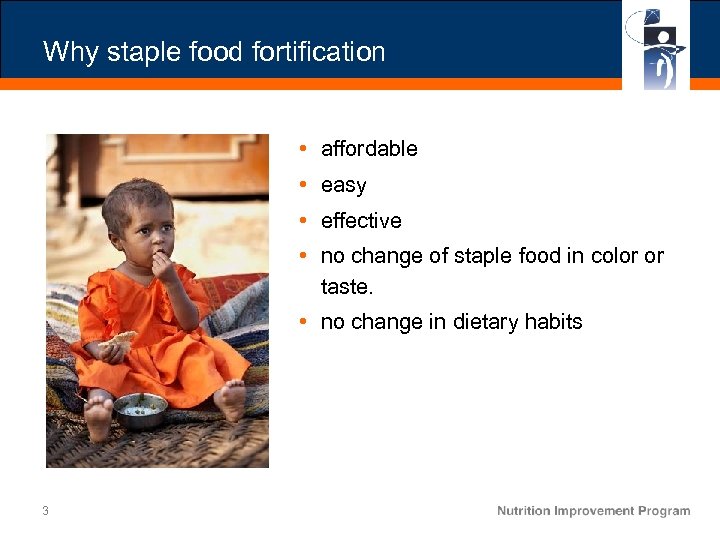 Why staple food fortification • affordable • easy • effective • no change of staple food in color or taste. • no change in dietary habits 3
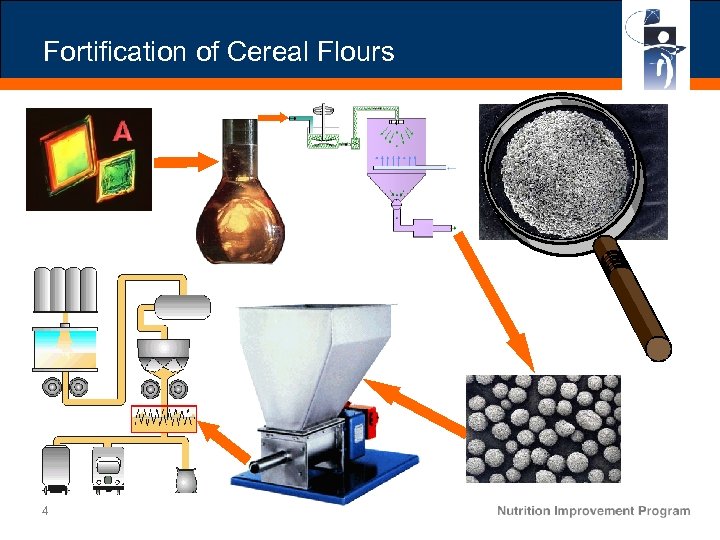 Fortification of Cereal Flours 4
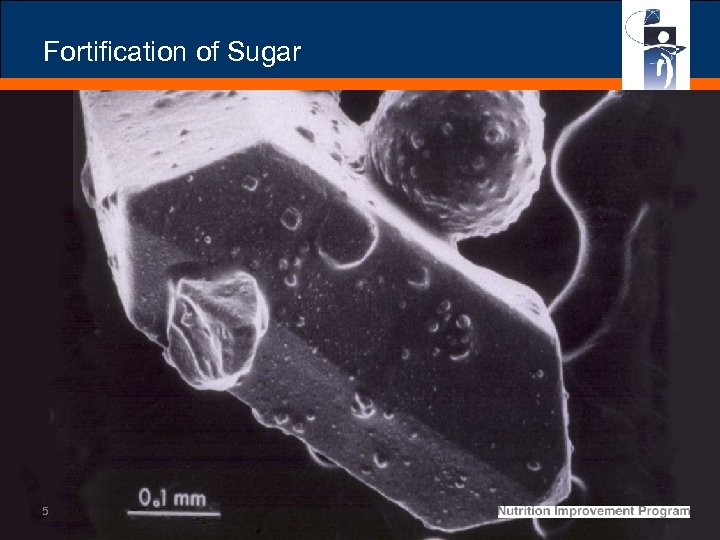 Fortification of Sugar 5
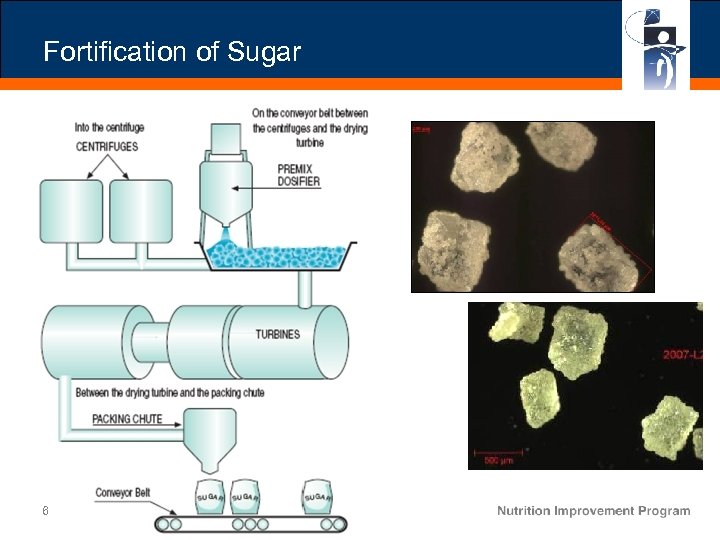 Fortification of Sugar 6
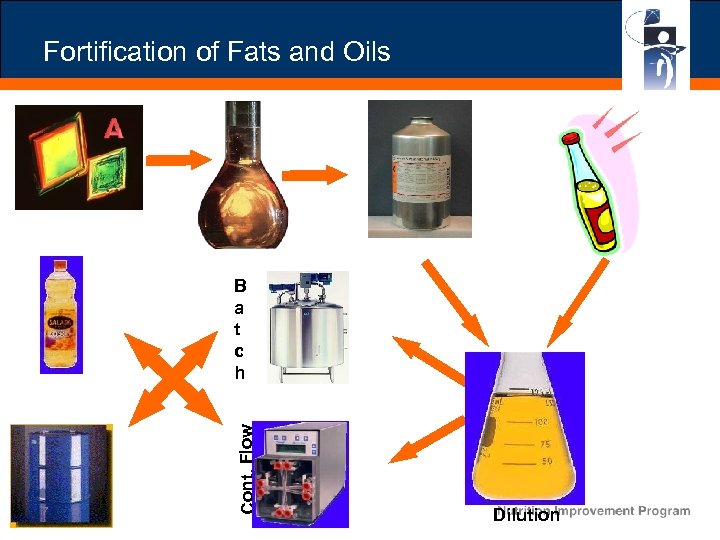 Fortification of Fats and Oils 7 Cont. Flow B a t c h Dilution
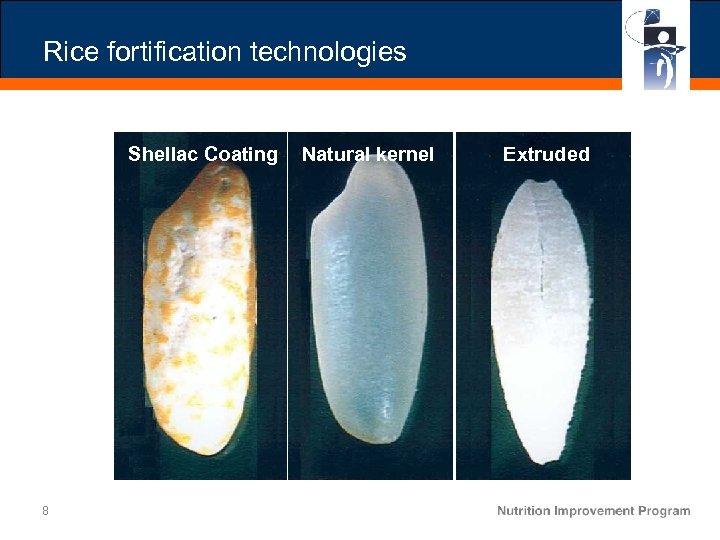 Rice fortification technologies Shellac Coating 8 Natural kernel Extruded
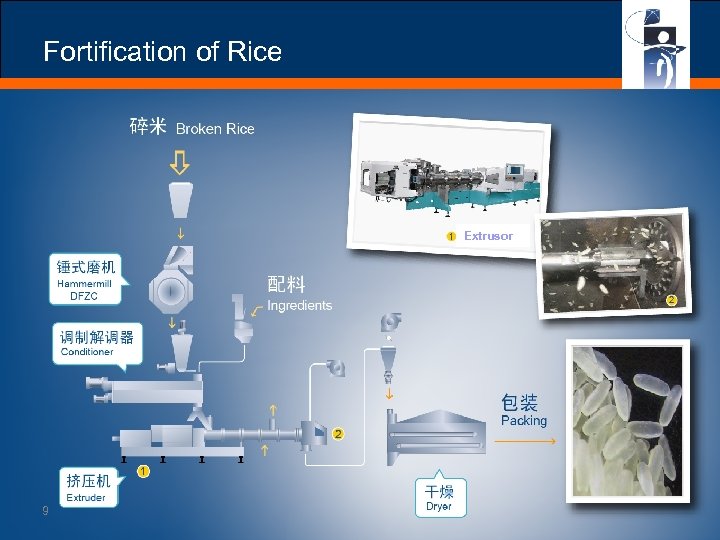 Fortification of Rice Extrusor 9
 Where is fortification implemented? 10
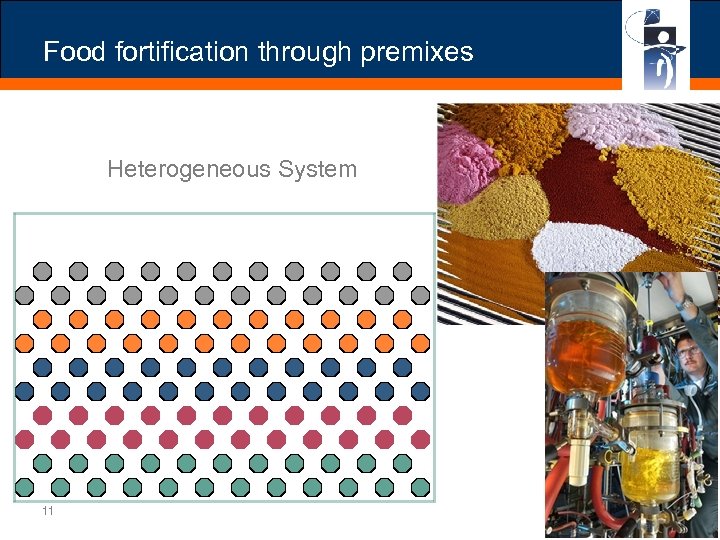 Food fortification through premixes Heterogeneous System 11
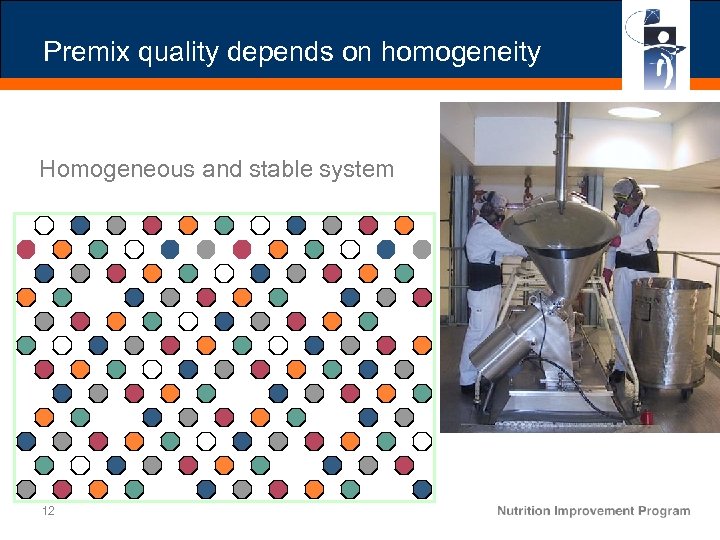 Premix quality depends on homogeneity Homogeneous and stable system 12
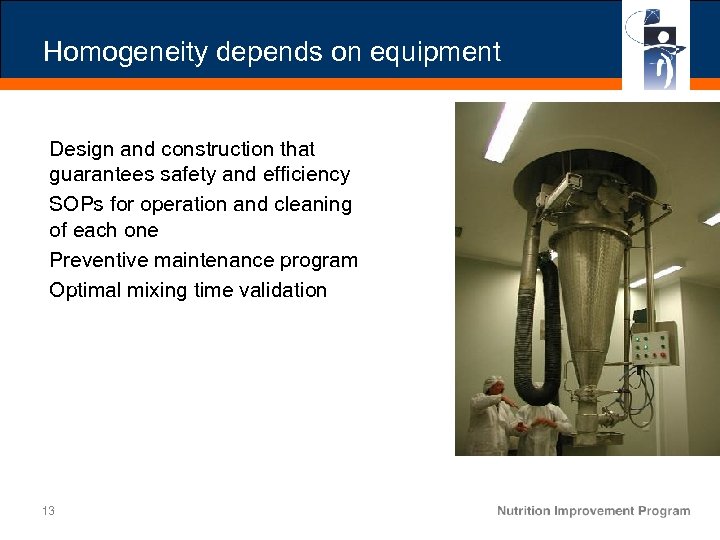 Homogeneity depends on equipment Design and construction that guarantees safety and efficiency SOPs for operation and cleaning of each one Preventive maintenance program Optimal mixing time validation 13
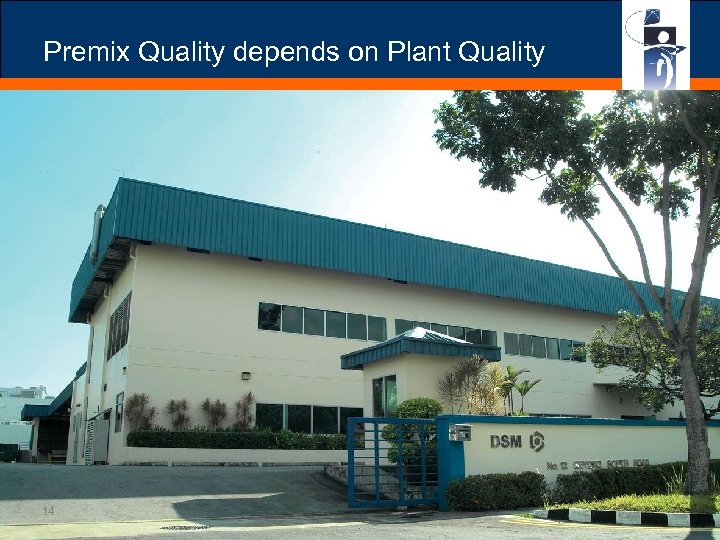 Premix Quality depends on Plant Quality 14
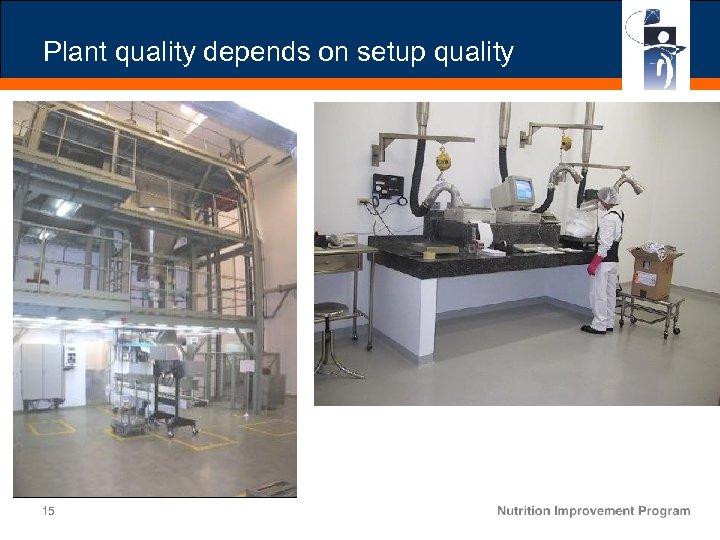 Plant quality depends on setup quality 15
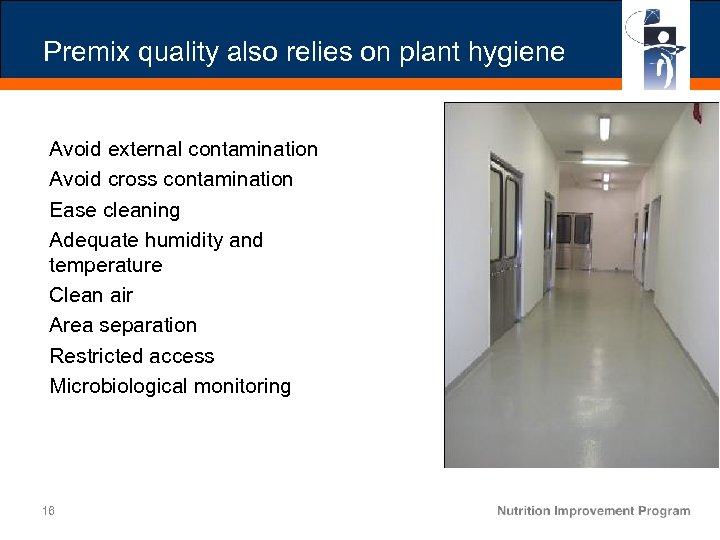 Premix quality also relies on plant hygiene Avoid external contamination Avoid cross contamination Ease cleaning Adequate humidity and temperature Clean air Area separation Restricted access Microbiological monitoring 16
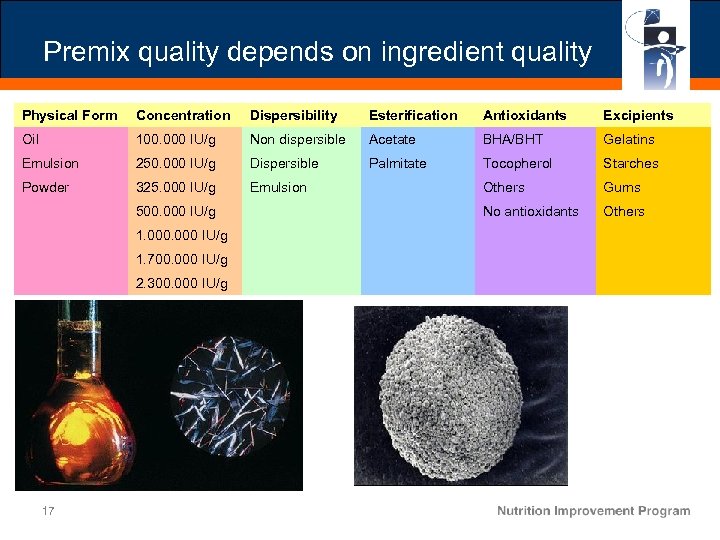 Premix quality depends on ingredient quality Physical Form Concentration Dispersibility Esterification Antioxidants Excipients Oil 100. 000 IU/g Non dispersible Acetate BHA/BHT Gelatins Emulsion 250. 000 IU/g Dispersible Palmitate Tocopherol Starches Powder 325. 000 IU/g Emulsion Others Gums 500. 000 IU/g No antioxidants Others 1. 000 IU/g 1. 700. 000 IU/g 2. 300. 000 IU/g 17
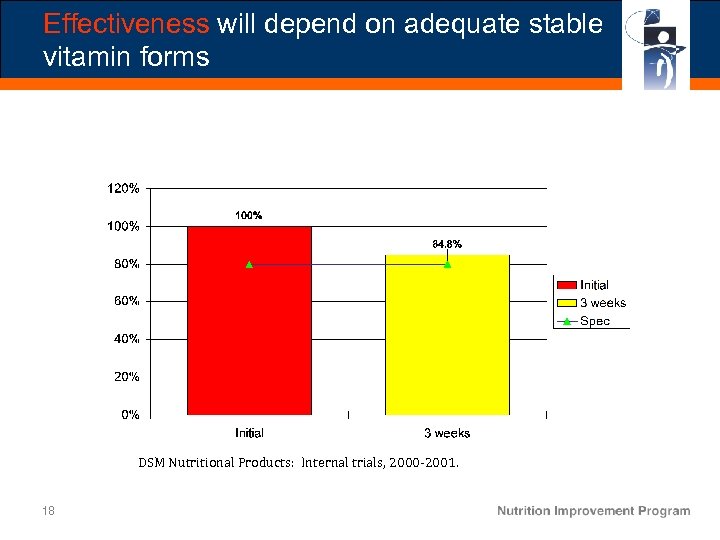 Effectiveness will depend on adequate stable vitamin forms DSM Nutritional Products: Internal trials, 2000 -2001. 18
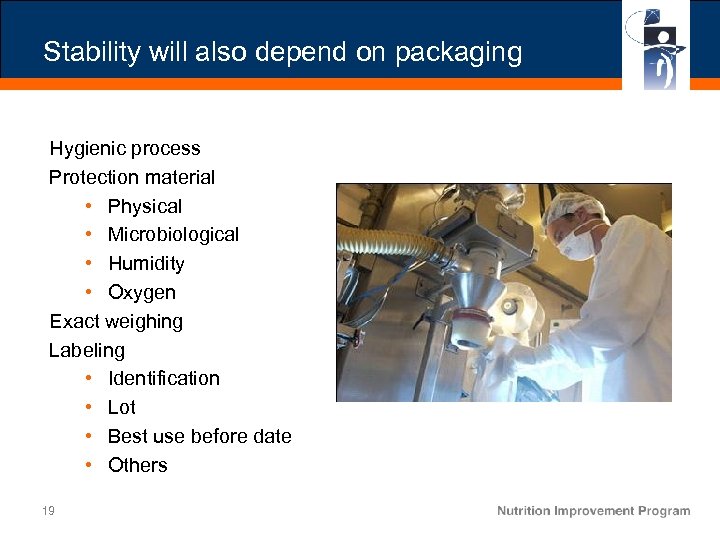 Stability will also depend on packaging Hygienic process Protection material • Physical • Microbiological • Humidity • Oxygen Exact weighing Labeling • Identification • Lot • Best use before date • Others 19
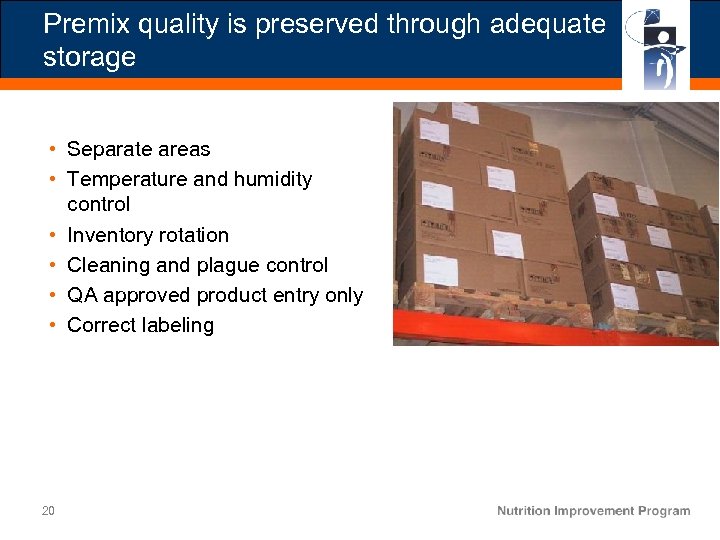 Premix quality is preserved through adequate storage • Separate areas • Temperature and humidity control • Inventory rotation • Cleaning and plague control • QA approved product entry only • Correct labeling 20
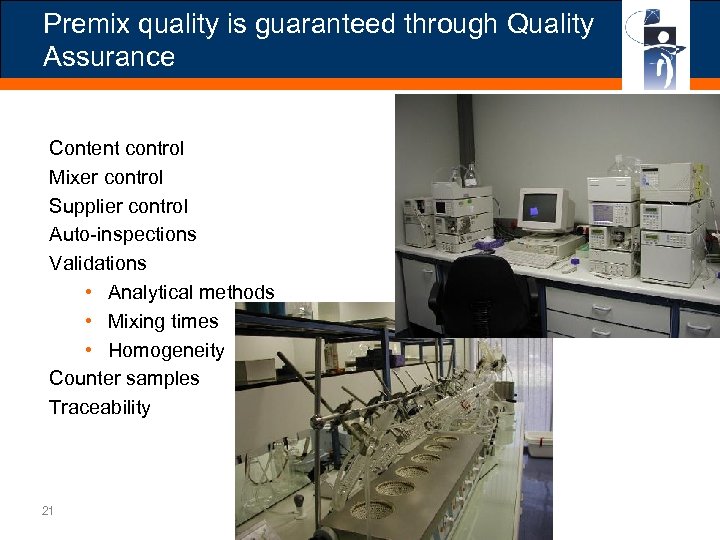 Premix quality is guaranteed through Quality Assurance Content control Mixer control Supplier control Auto-inspections Validations • Analytical methods • Mixing times • Homogeneity Counter samples Traceability 21
 Premix quality is proved through documentation Internal • Manufacturing order • Weight control • RM addition sequence • Equipments used • Operations description • Annotations • Authorizations • Analytical controls External • Specifications • Certificate of analysis • Others 22 Composition Sheets Manufacturing principles Specifications and Tests Product Data Sheets Stability data Safety Data Sheets Residual solvents GMO statements BSE statements Order Manual Kosher/Halal certificates
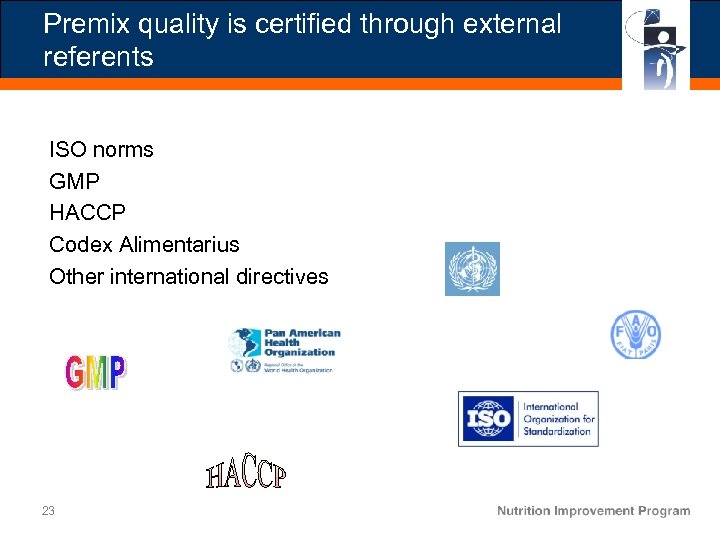 Premix quality is certified through external referents ISO norms GMP HACCP Codex Alimentarius Other international directives 23
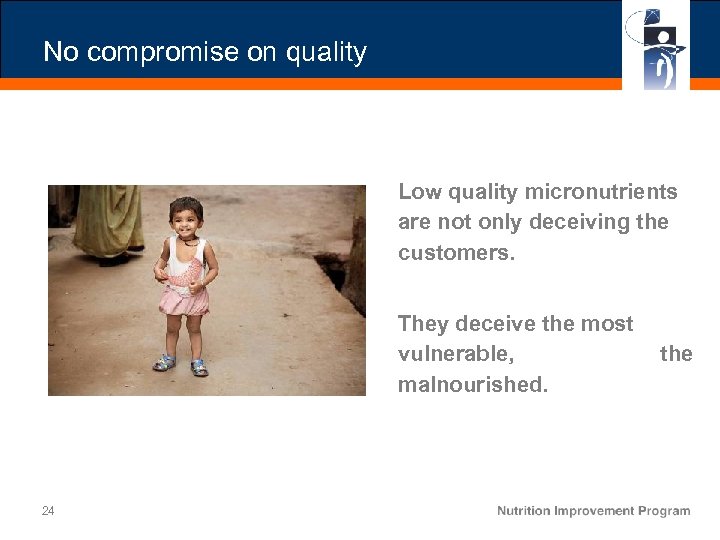 No compromise on quality Low quality micronutrients are not only deceiving the customers. They deceive the most vulnerable, malnourished. 24 the
 Avoid Tunnel Vision Nutrition 25
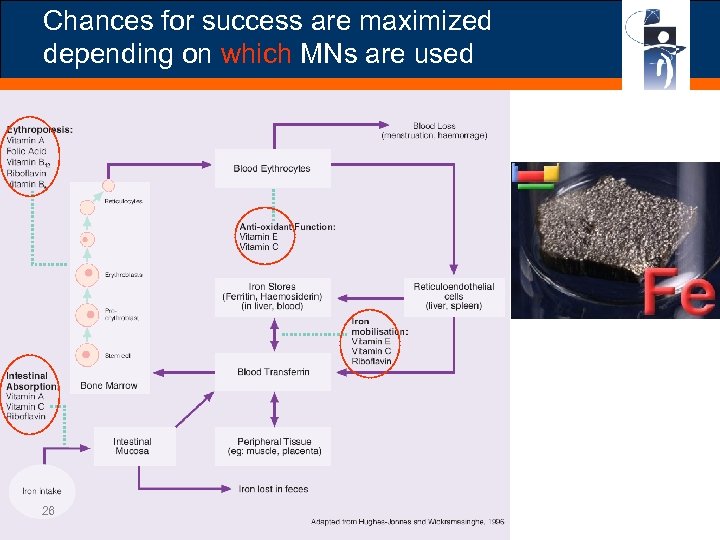 Chances for success are maximized depending on which MNs are used 26
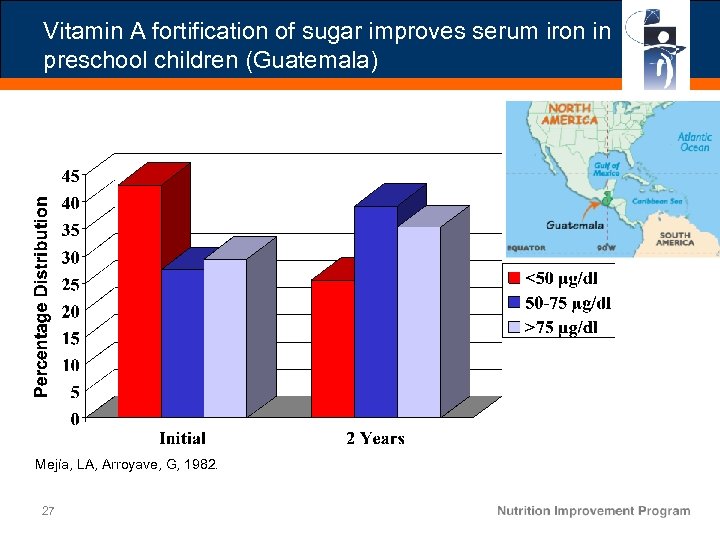 Vitamin A fortification of sugar improves serum iron in preschool children (Guatemala) Mejía, LA, Arroyave, G, 1982. 27
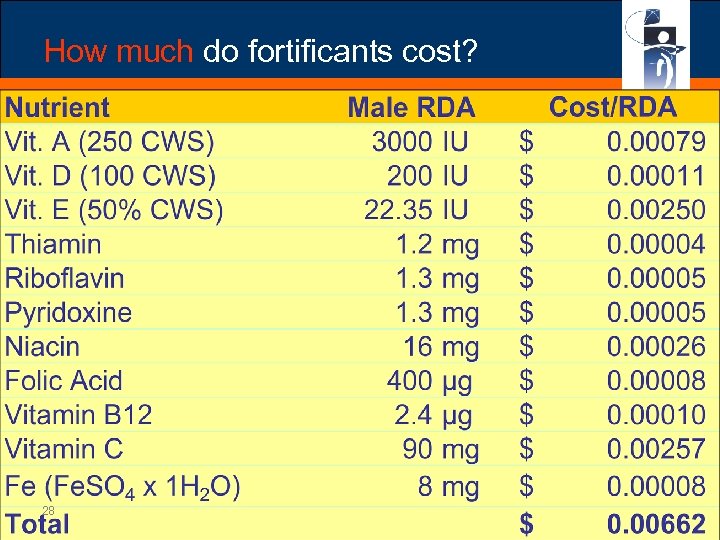 How much do fortificants cost? 28
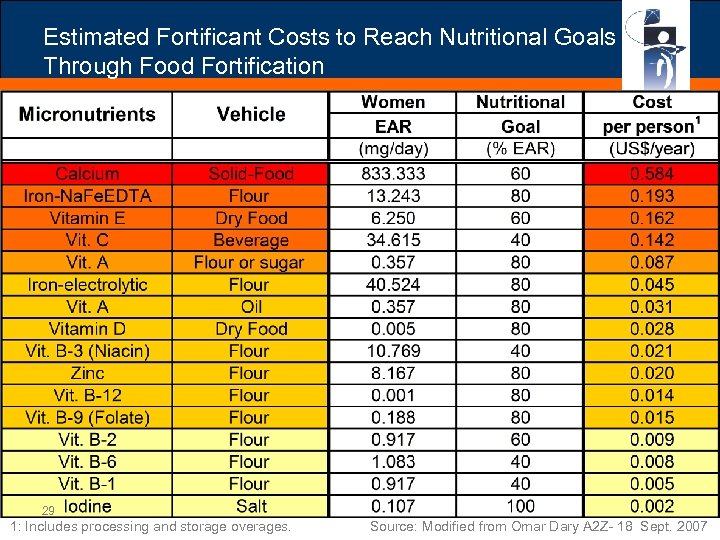 Estimated Fortificant Costs to Reach Nutritional Goals Through Food Fortification 29 1: Includes processing and storage overages. Source: Modified from Omar Dary A 2 Z- 18 Sept. 2007
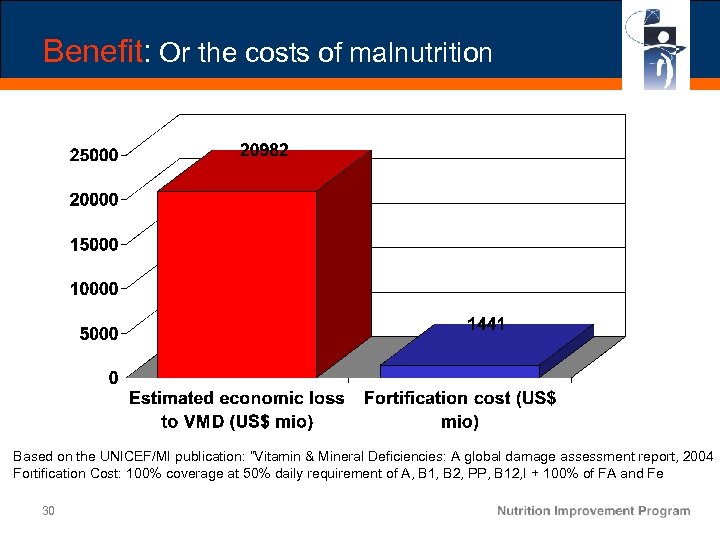 Benefit: Or the costs of malnutrition Based on the UNICEF/MI publication: “Vitamin & Mineral Deficiencies: A global damage assessment report, 2004 Fortification Cost: 100% coverage at 50% daily requirement of A, B 1, B 2, PP, B 12, I + 100% of FA and Fe 30
 Effective fortification is affordable, ineffective fortification is expensive. 31
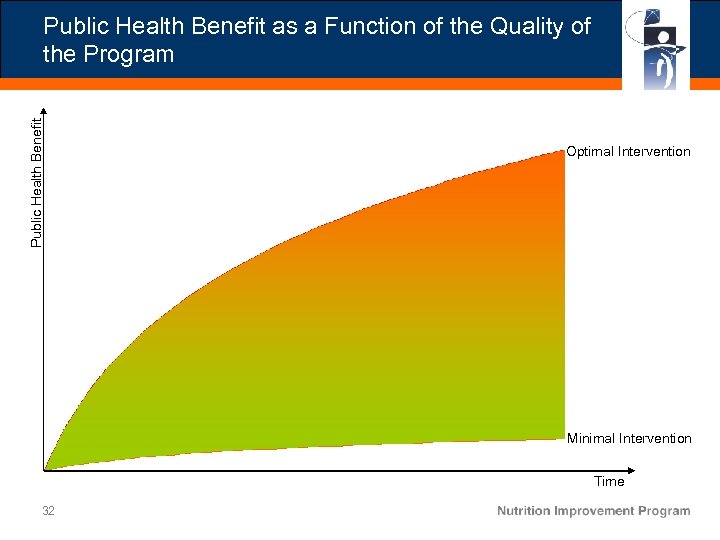 Public Health Benefit as a Function of the Quality of the Program Optimal Intervention Minimal Intervention Time 32
 Thank you. 33