


 Скачать презентацию Nutrition for Exercise 1 EDU 2 EXP Exercise
6c9347eccc11025f71f99b292f1b8c79.ppt
- Количество слайдов: 32
 Nutrition for Exercise 1 EDU 2 EXP Exercise & Performance
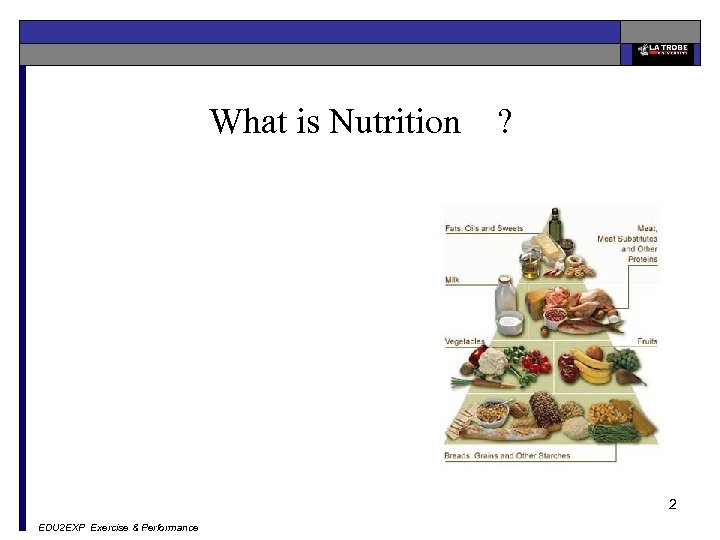 What is Nutrition ? 2 EDU 2 EXP Exercise & Performance
 Six Nutrient Classes • • • Carbohydrate Fat Protein Vitamins Minerals Water 3 EDU 2 EXP Exercise & Performance
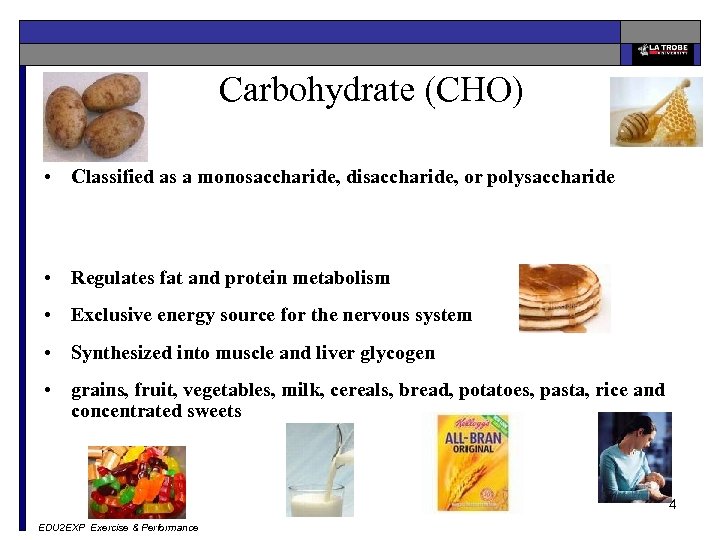 Carbohydrate (CHO) • Classified as a monosaccharide, disaccharide, or polysaccharide • Regulates fat and protein metabolism • Exclusive energy source for the nervous system • Synthesized into muscle and liver glycogen • grains, fruit, vegetables, milk, cereals, bread, potatoes, pasta, rice and concentrated sweets 4 EDU 2 EXP Exercise & Performance
 Carbs- The basics • Glucose is a type of monosaccharide that is in the food that we consume • Blood glucose is used to fuel the working muscles • Called glycogen when stored in muscles or the liver 5 EDU 2 EXP Exercise & Performance
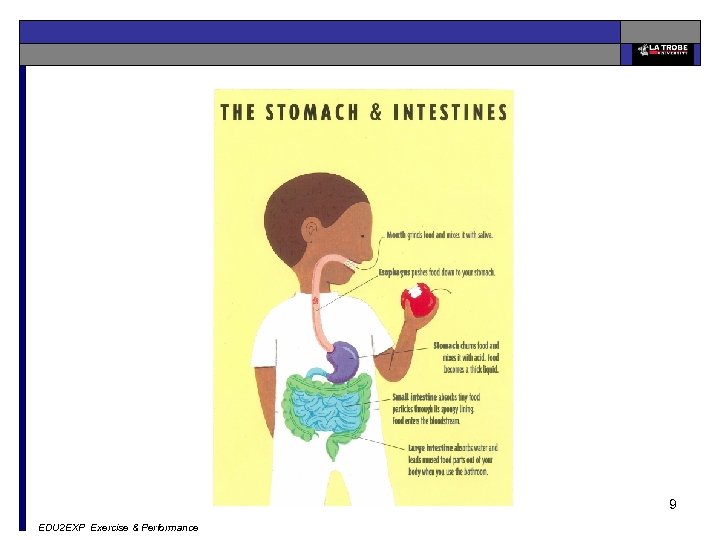
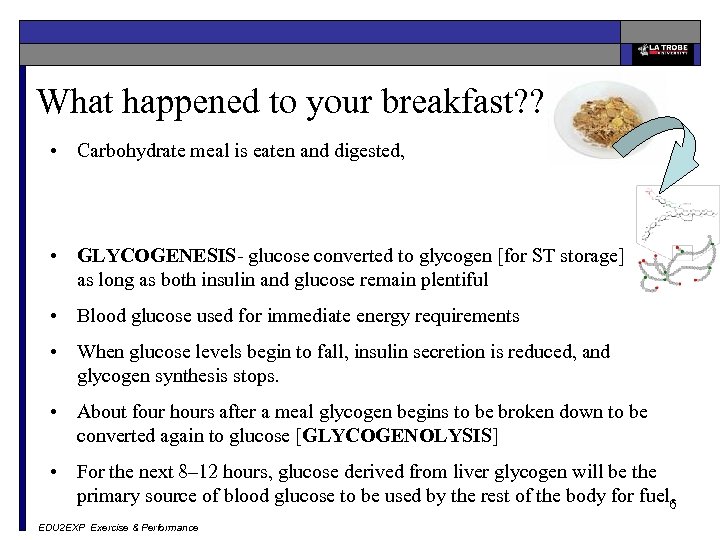 What happened to your breakfast? ? • Carbohydrate meal is eaten and digested, • GLYCOGENESIS- glucose converted to glycogen [for ST storage] as long as both insulin and glucose remain plentiful • Blood glucose used for immediate energy requirements • When glucose levels begin to fall, insulin secretion is reduced, and glycogen synthesis stops. • About four hours after a meal glycogen begins to be broken down to be converted again to glucose [GLYCOGENOLYSIS] • For the next 8– 12 hours, glucose derived from liver glycogen will be the primary source of blood glucose to be used by the rest of the body for fuel. 6 EDU 2 EXP Exercise & Performance
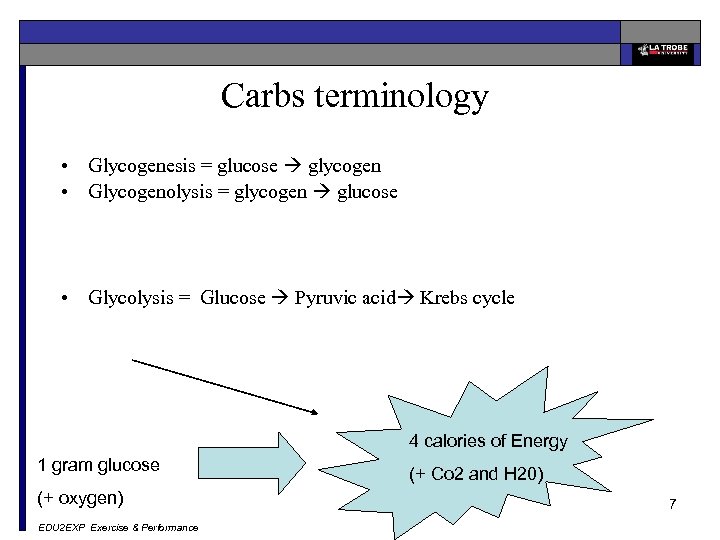 Carbs terminology • Glycogenesis = glucose glycogen • Glycogenolysis = glycogen glucose • Glycolysis = Glucose Pyruvic acid Krebs cycle 4 calories of Energy 1 gram glucose (+ oxygen) EDU 2 EXP Exercise & Performance (+ Co 2 and H 20) 7
 Storage • LIVER- Only the glycogen stored in the liver can be made accessible to other organs. 100– 120 g stored in an adult • MUSCLES- lower concentration (1% of the muscle mass), but the total amount exceeds that in liver. 8 EDU 2 EXP Exercise & Performance
 9 EDU 2 EXP Exercise & Performance
 10 EDU 2 EXP Exercise & Performance
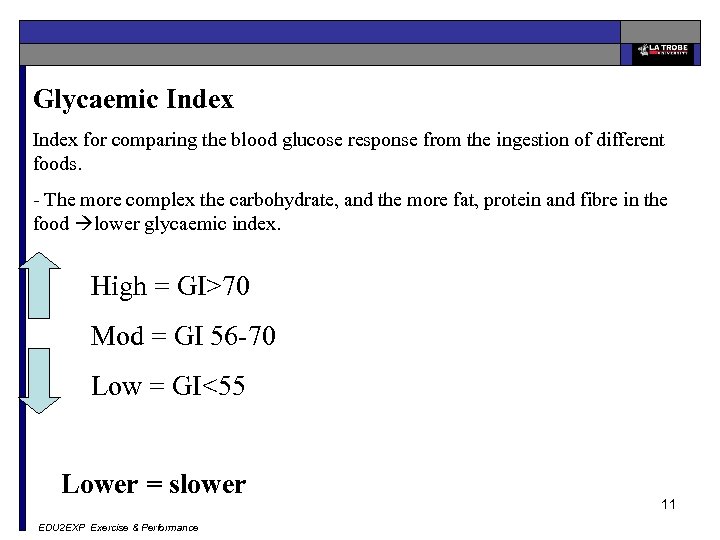 Glycaemic Index for comparing the blood glucose response from the ingestion of different foods. - The more complex the carbohydrate, and the more fat, protein and fibre in the food lower glycaemic index. High = GI>70 Mod = GI 56 -70 Low = GI<55 Lower = slower EDU 2 EXP Exercise & Performance 11
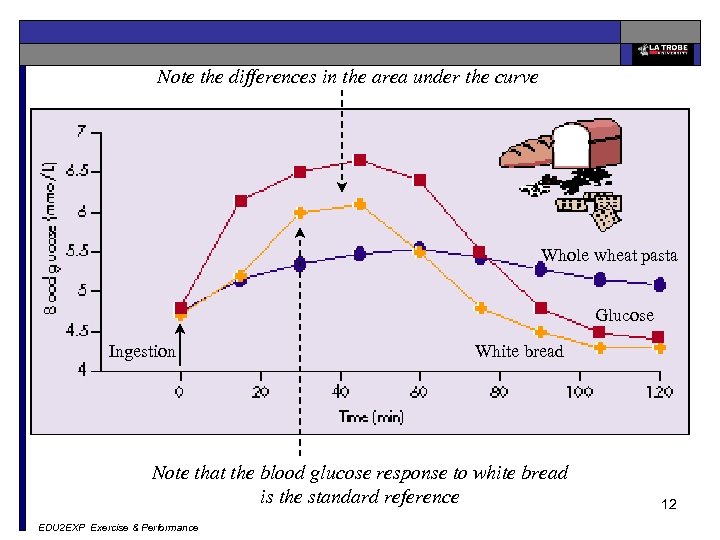 Note the differences in the area under the curve Whole wheat pasta Glucose Ingestion White bread Note that the blood glucose response to white bread is the standard reference EDU 2 EXP Exercise & Performance 12
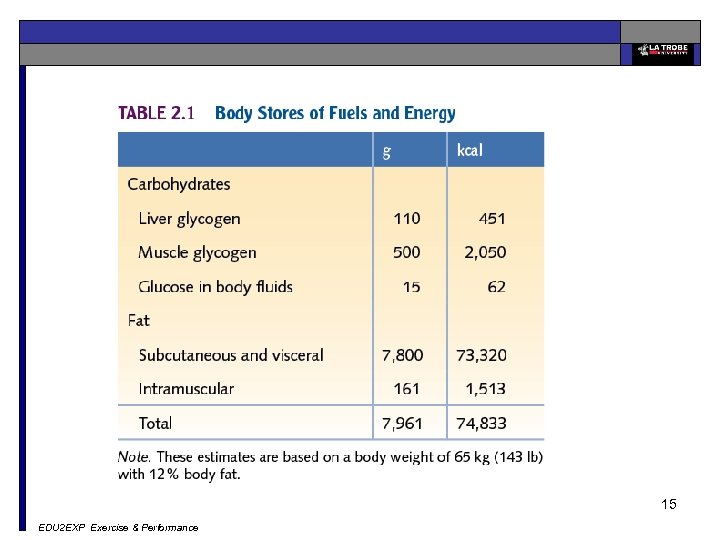
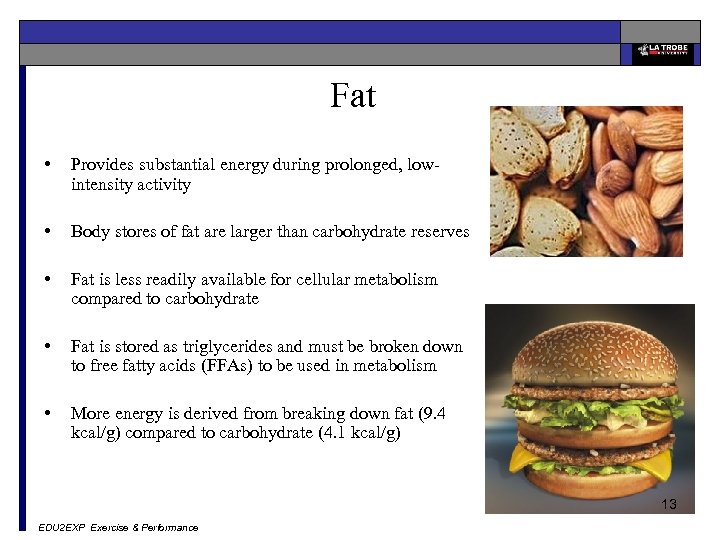 Fat • Provides substantial energy during prolonged, lowintensity activity • Body stores of fat are larger than carbohydrate reserves • Fat is less readily available for cellular metabolism compared to carbohydrate • Fat is stored as triglycerides and must be broken down to free fatty acids (FFAs) to be used in metabolism • More energy is derived from breaking down fat (9. 4 kcal/g) compared to carbohydrate (4. 1 kcal/g) 13 EDU 2 EXP Exercise & Performance
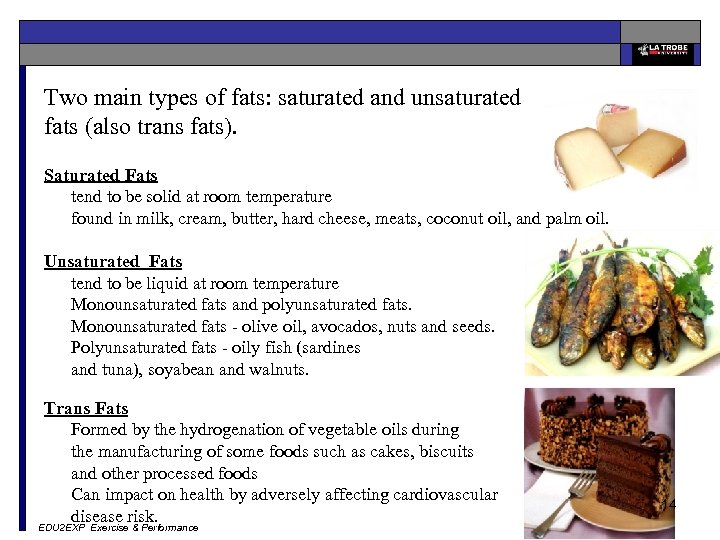 Two main types of fats: saturated and unsaturated fats (also trans fats). Saturated Fats tend to be solid at room temperature found in milk, cream, butter, hard cheese, meats, coconut oil, and palm oil. Unsaturated Fats tend to be liquid at room temperature Monounsaturated fats and polyunsaturated fats. Monounsaturated fats - olive oil, avocados, nuts and seeds. Polyunsaturated fats - oily fish (sardines and tuna), soyabean and walnuts. Trans Fats Formed by the hydrogenation of vegetable oils during the manufacturing of some foods such as cakes, biscuits and other processed foods Can impact on health by adversely affecting cardiovascular disease risk. EDU 2 EXP Exercise & Performance 14
 15 EDU 2 EXP Exercise & Performance
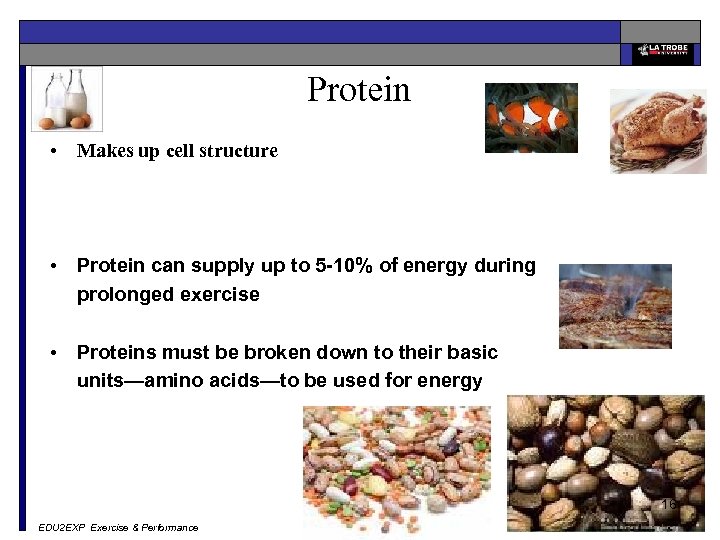 Protein • Makes up cell structure • Protein can supply up to 5 -10% of energy during prolonged exercise • Proteins must be broken down to their basic units—amino acids—to be used for energy 16 EDU 2 EXP Exercise & Performance
 Micronutrients • Vitamins - Promote growth, maintain health - Act as catalysts in chemical reactions (eg: energy release) • Minerals - 4% of body weight - eg: calcium, phosphorous, iron etc - Essential for normal cellular function Issues for Athletes – Iron, especially for women athletes – Calcium. 17 EDU 2 EXP Exercise & Performance
 Water • Makes up ~60% of a young man’s and ~50% of a young woman’s total body weight • Regulates body temperature • Maintains blood pressure 18 EDU 2 EXP Exercise & Performance
 Energy for Sport 19 EDU 2 EXP Exercise & Performance
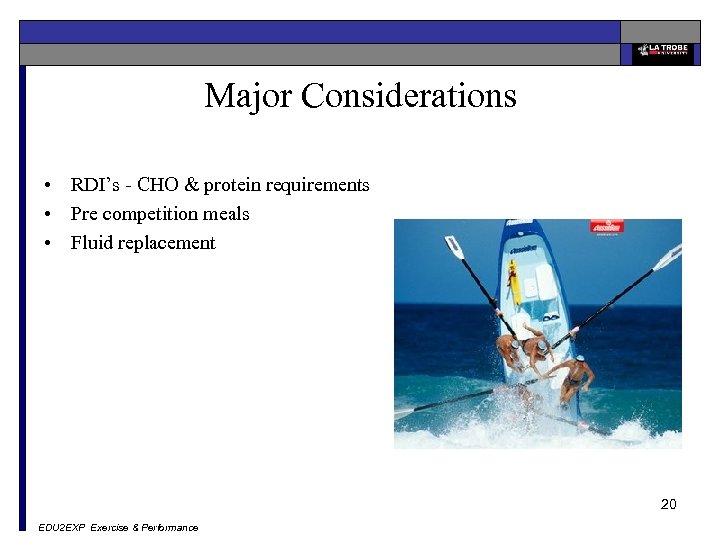 Major Considerations • RDI’s - CHO & protein requirements • Pre competition meals • Fluid replacement 20 EDU 2 EXP Exercise & Performance
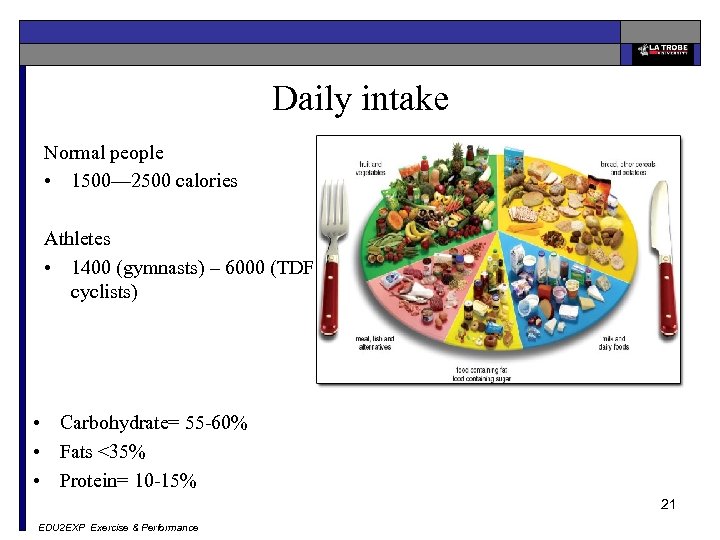 Daily intake Normal people • 1500— 2500 calories Athletes • 1400 (gymnasts) – 6000 (TDF cyclists) • Carbohydrate= 55 -60% • Fats <35% • Protein= 10 -15% 21 EDU 2 EXP Exercise & Performance
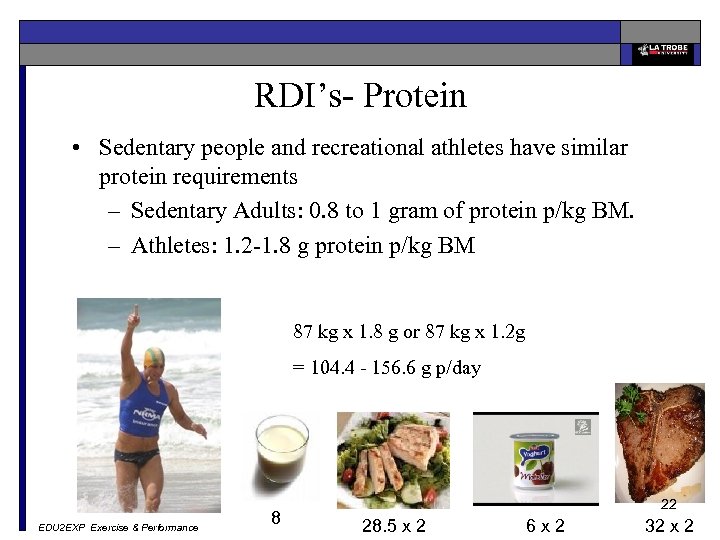 RDI’s- Protein • Sedentary people and recreational athletes have similar protein requirements – Sedentary Adults: 0. 8 to 1 gram of protein p/kg BM. – Athletes: 1. 2 -1. 8 g protein p/kg BM 87 kg x 1. 8 g or 87 kg x 1. 2 g = 104. 4 - 156. 6 g p/day EDU 2 EXP Exercise & Performance 8 22 28. 5 x 2 6 x 2 32 x 2
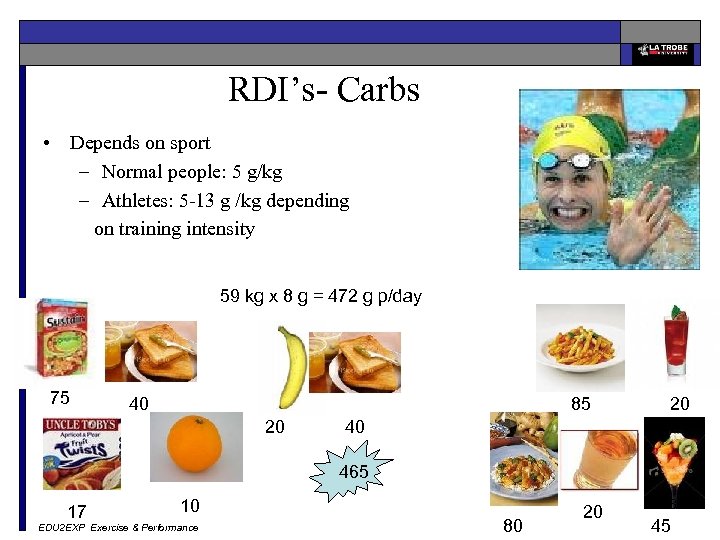 RDI’s- Carbs • Depends on sport – Normal people: 5 g/kg – Athletes: 5 -13 g /kg depending on training intensity 59 kg x 8 g = 472 g p/day 75 40 85 20 20 40 465 17 10 EDU 2 EXP Exercise & Performance 80 20 23 45
 Preparation for Competition- Carb loading • In general – Taper exercise, 50% CHO diet 1 st 3 days – V. low exercise, 80% CHO diet 3 days prior • Strict protocol – Depletion • Day 1 - Exhaustive exercise • Day 2, 3, 4 mod intensity training & low carb intake (100 g p/day) • Day 5, 6, 7 High CHO intake (400 -700 g) 24 EDU 2 EXP Exercise & Performance
 Day of Competition Nutrition • 2 -4 hours before= CHO meal – 200 -500 calories – 150 – 300 g carbohydrate (3 -5 g CHO p/kg BW) OR • 4 hours before – meal (200 g CHO) • 1 hour before- snack (100 g CHO) 25 EDU 2 EXP Exercise & Performance
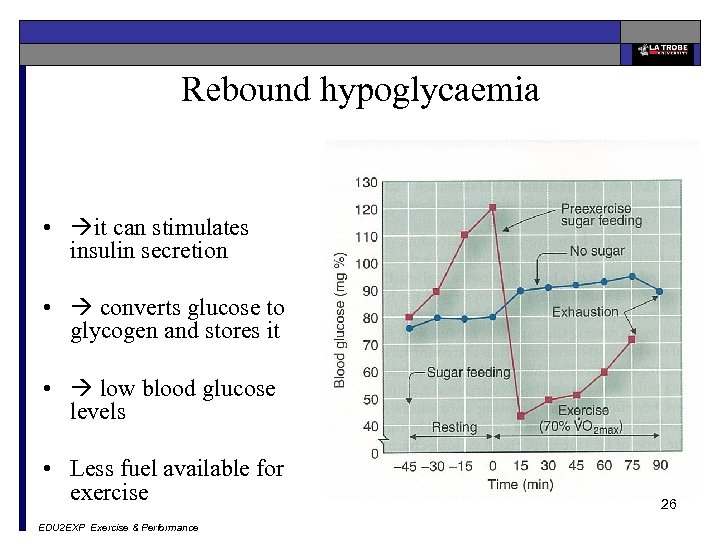 Rebound hypoglycaemia • it can stimulates insulin secretion • converts glucose to glycogen and stores it • low blood glucose levels • Less fuel available for exercise EDU 2 EXP Exercise & Performance 26
 Liquid Carbohydrate Ingestion Øwhere a glucose source is needed to support blood glucose ØAs long as it is consumed late in exercise when muscle glycogen stores are low it will not cause rebound hypoglycaemia Ø Need at least 45 g/CHO/Hr ØDuring hot and humid conditions, a lower [CHO] drink would allow greater volumes to be ingested. ØCHO should be mostly glucose EDU 2 EXP Exercise & Performance 27
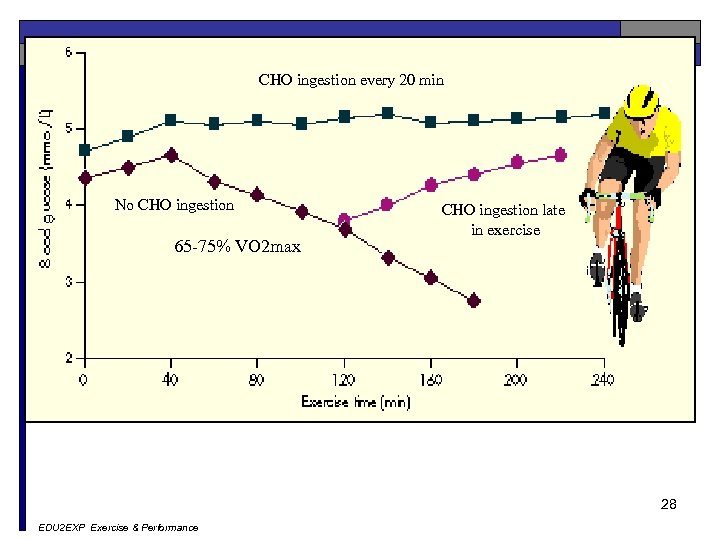 CHO ingestion every 20 min No CHO ingestion 65 -75% VO 2 max CHO ingestion late in exercise 28 EDU 2 EXP Exercise & Performance
 Post Competition • Depends on time and intensity – after low intensity exercise - 7 -9 mmol/kg/Hr – after high intensity exercise - ~ 15 mmol/kg/Hr • Important to consume 2 hours post exercise while rate of glycogen synthesis is high • Large carbohydrate rich meal • Rest • Rehydrate 29 EDU 2 EXP Exercise & Performance
 Liquids - Rehydration • Sweat rates increase with intensity of exercise • Can be up to 1 - 2. 8 L/hr – Sodium (Na), Potassium (K), Magnesium (Mg), Chlorine (Cl) • Loss of body weight > 3% = danger • Consume 500 -1000 ml per hour 30 EDU 2 EXP Exercise & Performance
 Fluids • 2 hours before: – 400 -600 ml fluid • During – 150 -350 ml every 15 -20 minutes – If > 1 hour- 4 -8% CHO plus Na and Cl • After – Continue H 2 O consumption- thirst not an accurate indicator – 900 -1200 ml for every kg lost – Caffeine, energy drinks and alcohol further dehydrate • Recommendations from text box in page 347 31 EDU 2 EXP Exercise & Performance
 Summary • Sports nutrition has a huge impact on performance • Nutrition and rehydration account for huge gains • Need to be careful of rebound hypoglycaemia • Expensive pills, potions and fads account for minute gains if any at all 32 EDU 2 EXP Exercise & Performance