


 Скачать презентацию Nutrition For Everyday Series- Lesson 3 Sodium and
fea836b9884f03724bab013d2eebf74e.ppt
- Количество слайдов: 14
 Nutrition For Everyday Series- Lesson 3 Sodium and Potassium in Your Diet The role it plays in high blood pressure Information Provided To You By: JFHQ Occupational Health Office
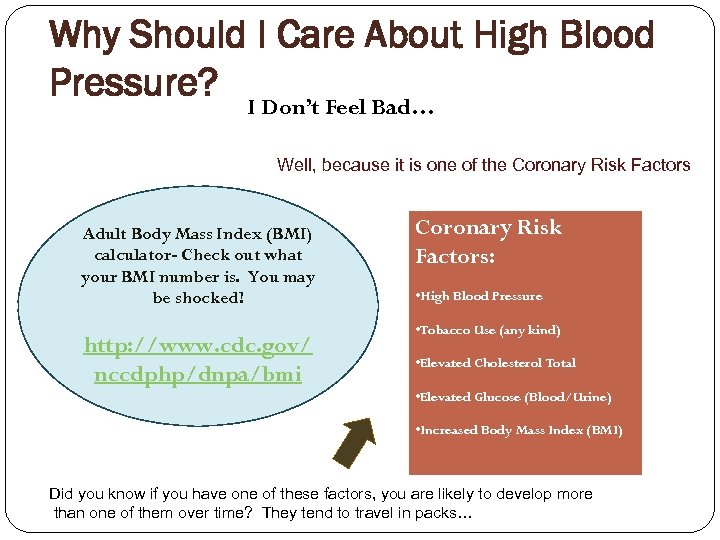 Why Should I Care About High Blood Pressure? I Don’t Feel Bad… Well, because it is one of the Coronary Risk Factors Adult Body Mass Index (BMI) calculator- Check out what your BMI number is. You may be shocked! http: //www. cdc. gov/ nccdphp/dnpa/bmi Coronary Risk Factors: • High Blood Pressure • Tobacco Use (any kind) • Elevated Cholesterol Total • Elevated Glucose (Blood/Urine) • Increased Body Mass Index (BMI) Did you know if you have one of these factors, you are likely to develop more than one of them over time? They tend to travel in packs…
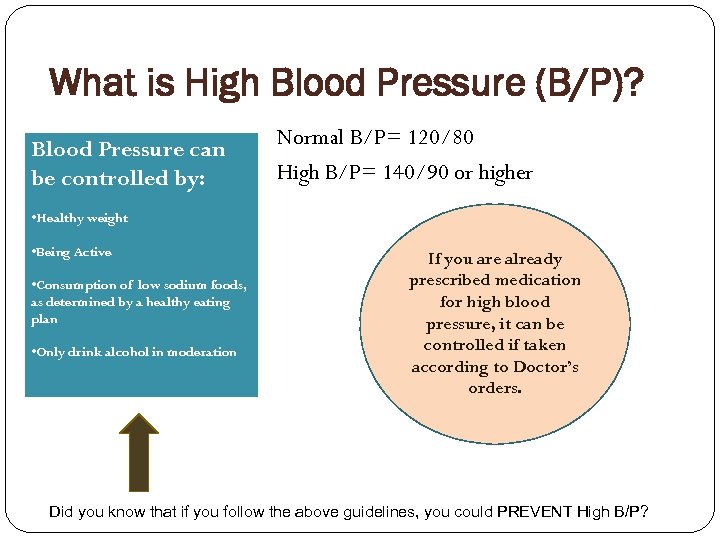 What is High Blood Pressure (B/P)? Blood Pressure can be controlled by: Normal B/P= 120/80 High B/P= 140/90 or higher • Healthy weight • Being Active • Consumption of low sodium foods, as determined by a healthy eating plan • Only drink alcohol in moderation If you are already prescribed medication for high blood pressure, it can be controlled if taken according to Doctor’s orders. Did you know that if you follow the above guidelines, you could PREVENT High B/P?
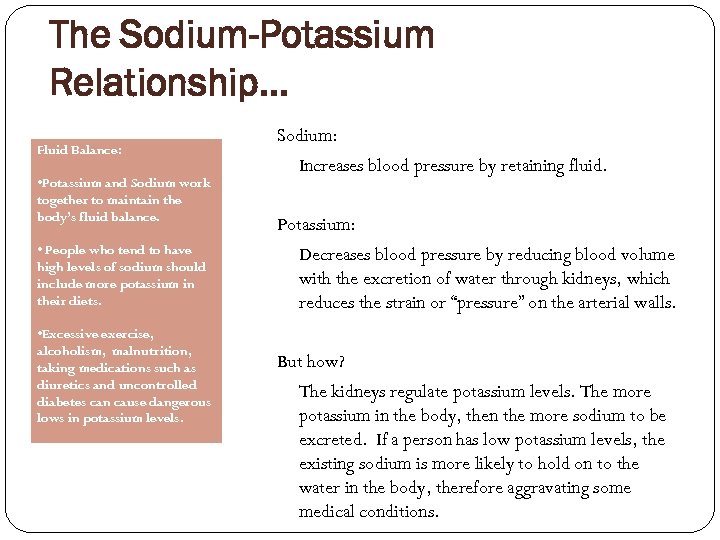 The Sodium-Potassium Relationship… Fluid Balance: • Potassium and Sodium work together to maintain the body’s fluid balance. • People who tend to have high levels of sodium should include more potassium in their diets. • Excessive exercise, alcoholism, malnutrition, taking medications such as diuretics and uncontrolled diabetes can cause dangerous lows in potassium levels. Sodium: Increases blood pressure by retaining fluid. Potassium: Decreases blood pressure by reducing blood volume with the excretion of water through kidneys, which reduces the strain or “pressure” on the arterial walls. But how? The kidneys regulate potassium levels. The more potassium in the body, then the more sodium to be excreted. If a person has low potassium levels, the existing sodium is more likely to hold on to the water in the body, therefore aggravating some medical conditions.
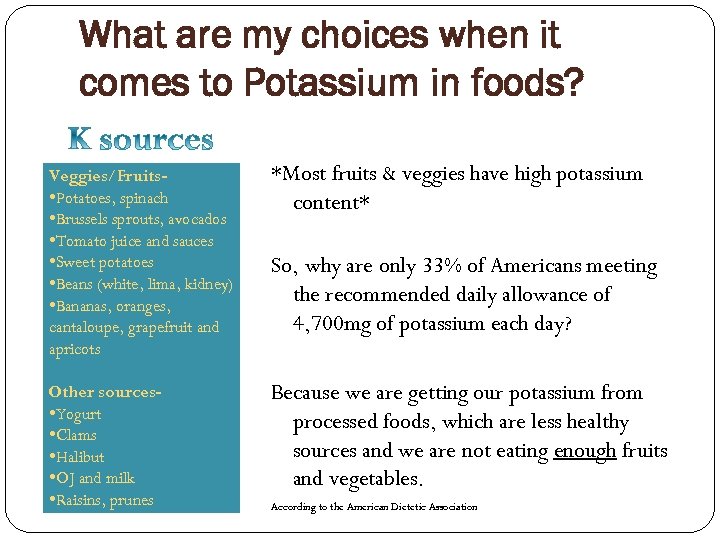 What are my choices when it comes to Potassium in foods? Veggies/Fruits • Potatoes, spinach • Brussels sprouts, avocados • Tomato juice and sauces • Sweet potatoes • Beans (white, lima, kidney) • Bananas, oranges, cantaloupe, grapefruit and apricots *Most fruits & veggies have high potassium content* Other sources • Yogurt • Clams • Halibut • OJ and milk • Raisins, prunes Because we are getting our potassium from processed foods, which are less healthy sources and we are not eating enough fruits and vegetables. So, why are only 33% of Americans meeting the recommended daily allowance of 4, 700 mg of potassium each day? According to the American Dietetic Association
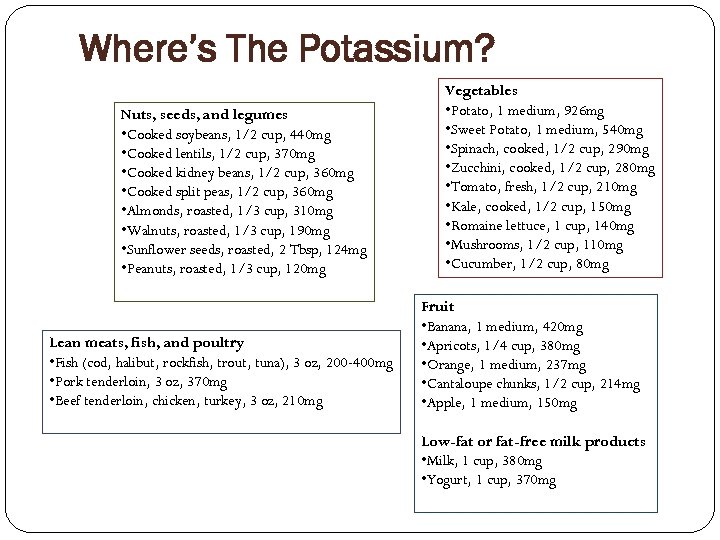 Where’s The Potassium? Nuts, seeds, and legumes • Cooked soybeans, 1/2 cup, 440 mg • Cooked lentils, 1/2 cup, 370 mg • Cooked kidney beans, 1/2 cup, 360 mg • Cooked split peas, 1/2 cup, 360 mg • Almonds, roasted, 1/3 cup, 310 mg • Walnuts, roasted, 1/3 cup, 190 mg • Sunflower seeds, roasted, 2 Tbsp, 124 mg • Peanuts, roasted, 1/3 cup, 120 mg Lean meats, fish, and poultry • Fish (cod, halibut, rockfish, trout, tuna), 3 oz, 200 -400 mg • Pork tenderloin, 3 oz, 370 mg • Beef tenderloin, chicken, turkey, 3 oz, 210 mg Vegetables • Potato, 1 medium, 926 mg • Sweet Potato, 1 medium, 540 mg • Spinach, cooked, 1/2 cup, 290 mg • Zucchini, cooked, 1/2 cup, 280 mg • Tomato, fresh, 1/2 cup, 210 mg • Kale, cooked, 1/2 cup, 150 mg • Romaine lettuce, 1 cup, 140 mg • Mushrooms, 1/2 cup, 110 mg • Cucumber, 1/2 cup, 80 mg Fruit • Banana, 1 medium, 420 mg • Apricots, 1/4 cup, 380 mg • Orange, 1 medium, 237 mg • Cantaloupe chunks, 1/2 cup, 214 mg • Apple, 1 medium, 150 mg Low-fat or fat-free milk products • Milk, 1 cup, 380 mg • Yogurt, 1 cup, 370 mg
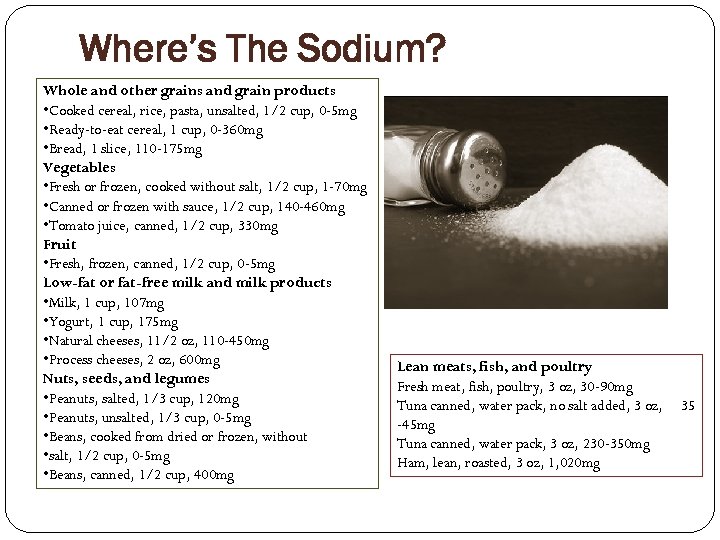 Where’s The Sodium? Whole and other grains and grain products • Cooked cereal, rice, pasta, unsalted, 1/2 cup, 0 -5 mg • Ready-to-eat cereal, 1 cup, 0 -360 mg • Bread, 1 slice, 110 -175 mg Vegetables • Fresh or frozen, cooked without salt, 1/2 cup, 1 -70 mg • Canned or frozen with sauce, 1/2 cup, 140 -460 mg • Tomato juice, canned, 1/2 cup, 330 mg Fruit • Fresh, frozen, canned, 1/2 cup, 0 -5 mg Low-fat or fat-free milk and milk products • Milk, 1 cup, 107 mg • Yogurt, 1 cup, 175 mg • Natural cheeses, 11/2 oz, 110 -450 mg • Process cheeses, 2 oz, 600 mg Nuts, seeds, and legumes • Peanuts, salted, 1/3 cup, 120 mg • Peanuts, unsalted, 1/3 cup, 0 -5 mg • Beans, cooked from dried or frozen, without • salt, 1/2 cup, 0 -5 mg • Beans, canned, 1/2 cup, 400 mg Lean meats, fish, and poultry Fresh meat, fish, poultry, 3 oz, 30 -90 mg Tuna canned, water pack, no salt added, 3 oz, -45 mg Tuna canned, water pack, 3 oz, 230 -350 mg Ham, lean, roasted, 3 oz, 1, 020 mg 35
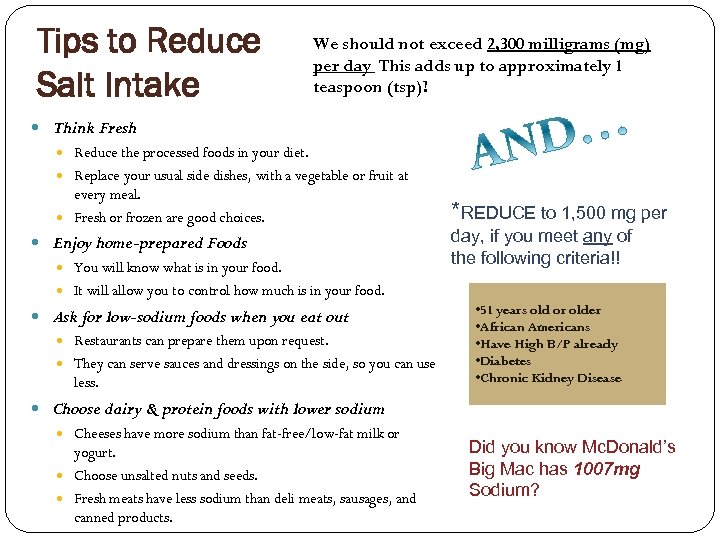 Tips to Reduce Salt Intake We should not exceed 2, 300 milligrams (mg) per day This adds up to approximately 1 teaspoon (tsp)! Think Fresh Reduce the processed foods in your diet. Replace your usual side dishes, with a vegetable or fruit at every meal. Fresh or frozen are good choices. Enjoy home-prepared Foods You will know what is in your food. It will allow you to control how much is in your food. Ask for low-sodium foods when you eat out Restaurants can prepare them upon request. They can serve sauces and dressings on the side, so you can use less. Choose dairy & protein foods with lower sodium Cheeses have more sodium than fat-free/low-fat milk or yogurt. Choose unsalted nuts and seeds. Fresh meats have less sodium than deli meats, sausages, and canned products. *REDUCE to 1, 500 mg per day, if you meet any of the following criteria!! • 51 years old or older • African Americans • Have High B/P already • Diabetes • Chronic Kidney Disease Did you know Mc. Donald’s Big Mac has 1007 mg Sodium?
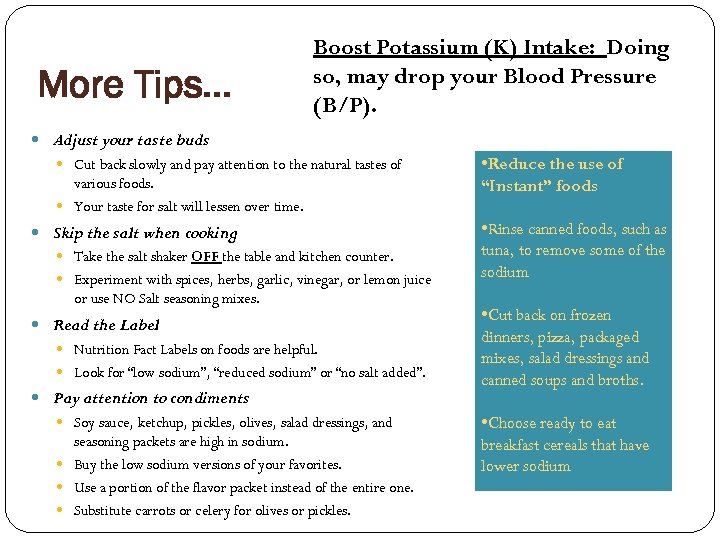 More Tips… Boost Potassium (K) Intake: Doing so, may drop your Blood Pressure (B/P). Adjust your taste buds Cut back slowly and pay attention to the natural tastes of various foods. Your taste for salt will lessen over time. Skip the salt when cooking Take the salt shaker OFF the table and kitchen counter. Experiment with spices, herbs, garlic, vinegar, or lemon juice or use NO Salt seasoning mixes. Read the Label Nutrition Fact Labels on foods are helpful. Look for “low sodium”, “reduced sodium” or “no salt added”. Pay attention to condiments Soy sauce, ketchup, pickles, olives, salad dressings, and seasoning packets are high in sodium. Buy the low sodium versions of your favorites. Use a portion of the flavor packet instead of the entire one. Substitute carrots or celery for olives or pickles. • Reduce the use of “Instant” foods • Rinse canned foods, such as tuna, to remove some of the sodium • Cut back on frozen dinners, pizza, packaged mixes, salad dressings and canned soups and broths. • Choose ready to eat breakfast cereals that have lower sodium
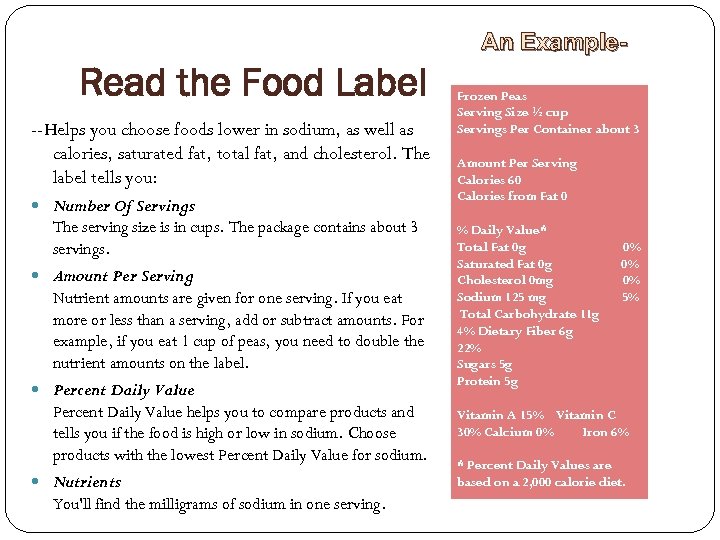 An Example- Read the Food Label --Helps you choose foods lower in sodium, as well as calories, saturated fat, total fat, and cholesterol. The label tells you: Number Of Servings The serving size is in cups. The package contains about 3 servings. Amount Per Serving Nutrient amounts are given for one serving. If you eat more or less than a serving, add or subtract amounts. For example, if you eat 1 cup of peas, you need to double the nutrient amounts on the label. Percent Daily Value helps you to compare products and tells you if the food is high or low in sodium. Choose products with the lowest Percent Daily Value for sodium. Nutrients You'll find the milligrams of sodium in one serving. Frozen Peas Serving Size ½ cup Servings Per Container about 3 Amount Per Serving Calories 60 Calories from Fat 0 % Daily Value* Total Fat 0 g Saturated Fat 0 g Cholesterol 0 mg Sodium 125 mg Total Carbohydrate 11 g 4% Dietary Fiber 6 g 22% Sugars 5 g Protein 5 g 0% 0% 0% 5% Vitamin A 15% Vitamin C 30% Calcium 0% Iron 6% * Percent Daily Values are based on a 2, 000 calorie diet.
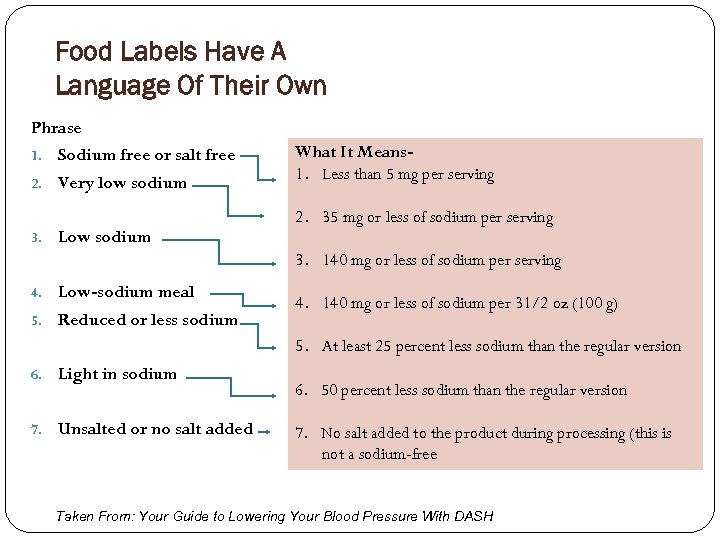 Food Labels Have A Language Of Their Own Phrase 1. Sodium free or salt free 2. Very low sodium 3. Low sodium What It Means 1. Less than 5 mg per serving 2. 35 mg or less of sodium per serving 3. 140 mg or less of sodium per serving 4. Low-sodium meal 5. Reduced or less sodium 4. 140 mg or less of sodium per 31/2 oz (100 g) 5. At least 25 percent less sodium than the regular version 6. Light in sodium 7. Unsalted or no salt added 6. 50 percent less sodium than the regular version 7. No salt added to the product during processing (this is not a sodium-free Taken From: Your Guide to Lowering Your Blood Pressure With DASH
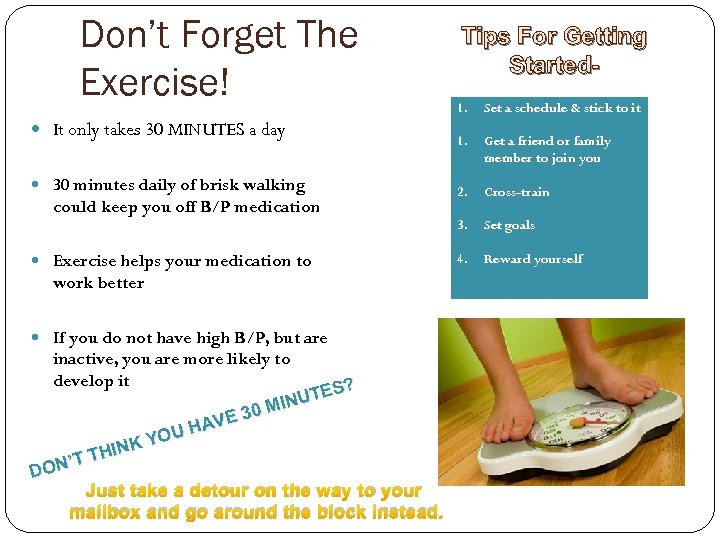 Don’t Forget The Exercise! It only takes 30 MINUTES a day 30 minutes daily of brisk walking could keep you off B/P medication Exercise helps your medication to work better If you do not have high B/P, but are inactive, you are more likely to develop it ? TES INU 30 M VE U HA YO INK TH N’T DO Just take a detour on the way to your mailbox and go around the block instead. Tips For Getting Started 1. Set a schedule & stick to it 1. Get a friend or family member to join you 2. Cross-train 3. Set goals 4. Reward yourself
 Catch us for Healthy Recipes! We will bring healthier versions of your favorites through this education series in the near future. Tune In Every Wednesday at 1130 on DCO Submit your ideas for topics to Capt Amy Blow at amy. blow@us. army. mil Questions?
 REFERENCES: Your Guide to Lowering High Blood Pressure, U. S. Department of Health and Human Services, National Institutes of Health, National Heart, Lung and Blood Institute. 10 Tips; Nutrition Education Series, U. S. Department of Agriculture, Center for Nutrition Policy and Promotion. Hungry Girl’s Death by Chocolate Cupcakes, Hungry Girl Inc, http: //www. hungrygirl. com , 18034 Ventura Blvd. #503, Encino, CA 91316.