Скачать презентацию Nutrition 526 — 2010 Framing Maternal Infant
8d3f25fd473490df3eacc7c9c1f688c9.ppt
- Количество слайдов: 63
 Nutrition 526 - 2010 Framing Maternal & Infant Nutrition
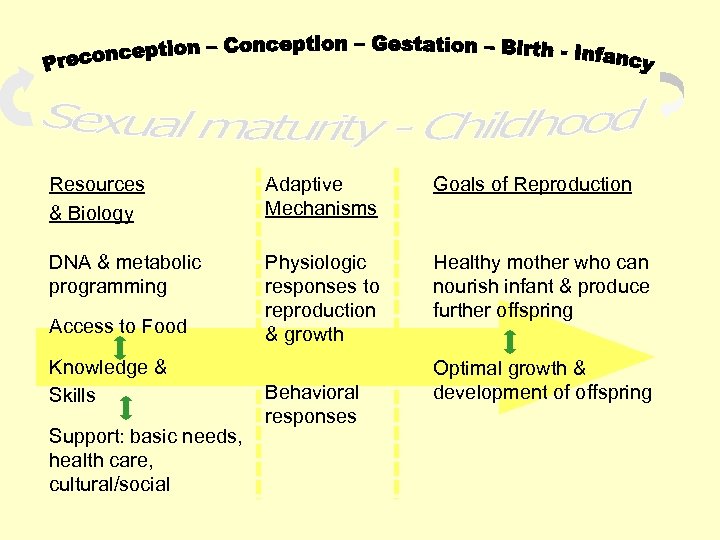 Resources & Biology Adaptive Mechanisms Goals of Reproduction DNA & metabolic programming Physiologic responses to reproduction & growth Healthy mother who can nourish infant & produce further offspring Access to Food Knowledge & Skills Support: basic needs, health care, cultural/social Behavioral responses Optimal growth & development of offspring
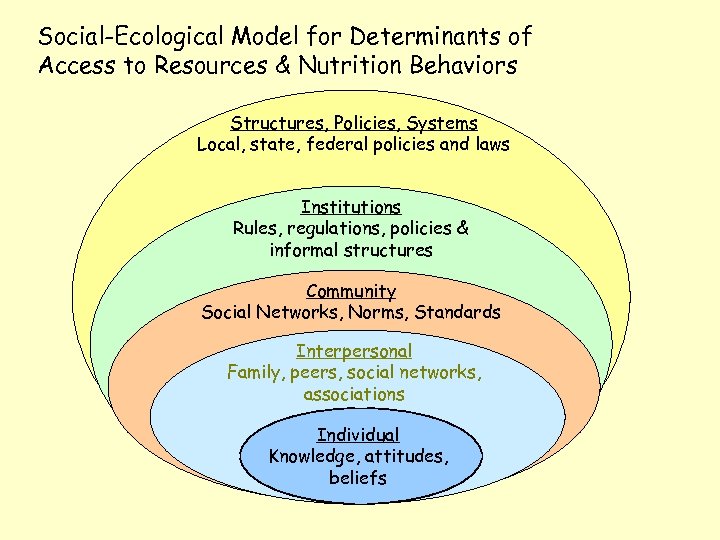 Social-Ecological Model for Determinants of Access to Resources & Nutrition Behaviors Structures, Policies, Systems Local, state, federal policies and laws Institutions Rules, regulations, policies & informal structures Community Social Networks, Norms, Standards Interpersonal Family, peers, social networks, associations Individual Knowledge, attitudes, beliefs
 Individual - Pregnancy • Physiology and Psychology of Pregnancy • Maternal Preconceptual status – Inter-generational programming • Diet in pregnancy: energy/weight gain, macro & micronutrients • Behaviors that impact nutritional status – – Substances: alcohol, caffeine, tobacco, drugs Physical activity Oral health Pregnancy intendedness • Stage of development: adolescence • High risk situations: GDM, PIH,
 Intrapersonal/Community • Social and cultural environments • Support from friends and family • Health and nutrition care providers
 Institutional • Hospital breastfeeding & formula policies • Child Care policies • School policies for pregnant and parenting teens • Worksite lactation policies
 Policy & Environment • Nutrition Assistance Programs for pregnancy, lactation and early childhood. • Insurance policies for lactation support • Parental leave policies

 Maternal-infant dyad
 A Public Health Approach to Maternal and Infant Health • Assessment • Policy Development • Assurance: Surveillance and monitoring progress towards goals
 Assessment • Pregnancy population characteristics • Maternal health indicators • Infant health indicators
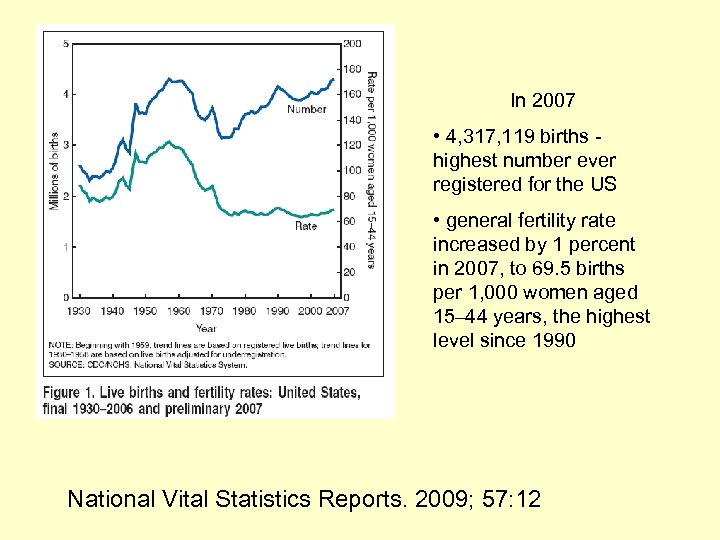 In 2007 • 4, 317, 119 births highest number ever registered for the US • general fertility rate increased by 1 percent in 2007, to 69. 5 births per 1, 000 women aged 15– 44 years, the highest level since 1990 National Vital Statistics Reports. 2009; 57: 12
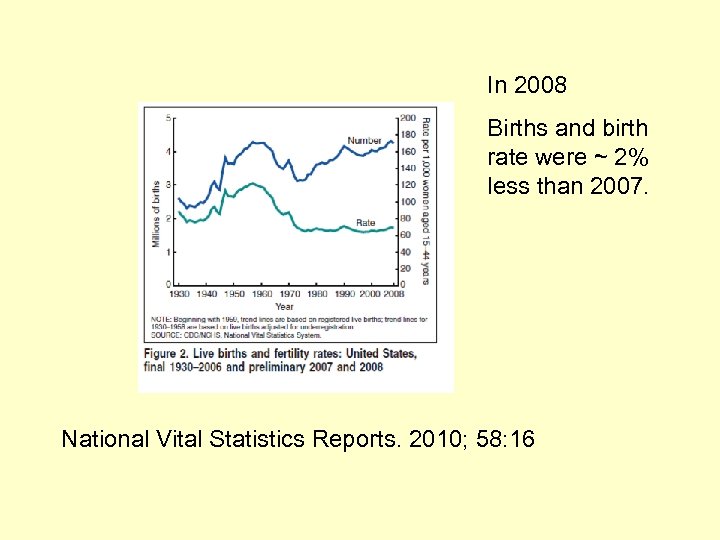 In 2008 Births and birth rate were ~ 2% less than 2007. National Vital Statistics Reports. 2010; 58: 16
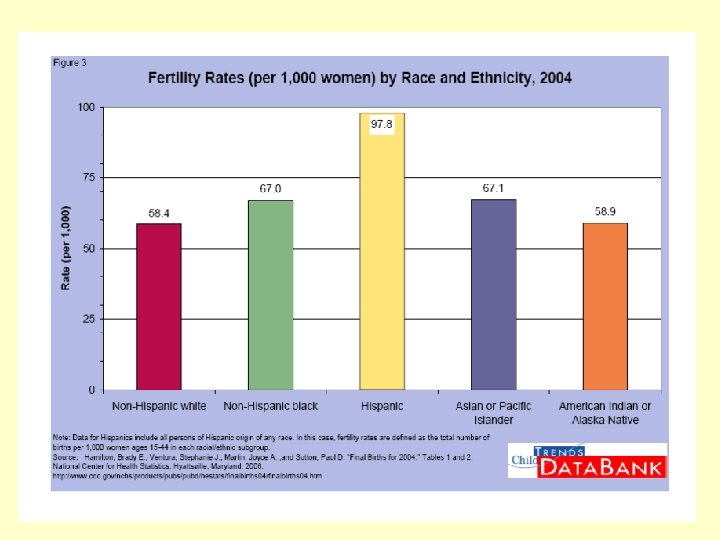
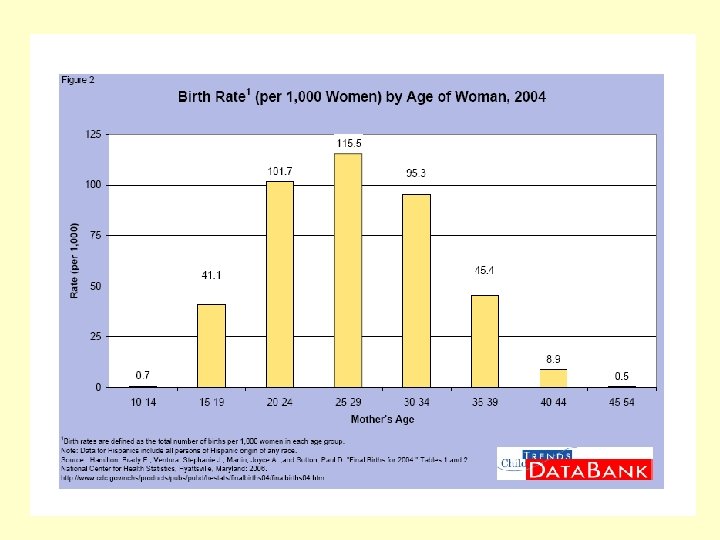
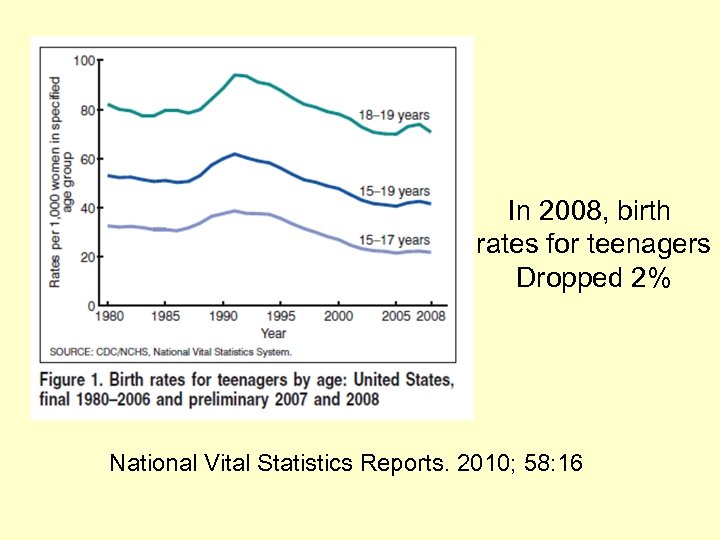 In 2008, birth rates for teenagers Dropped 2% National Vital Statistics Reports. 2010; 58: 16
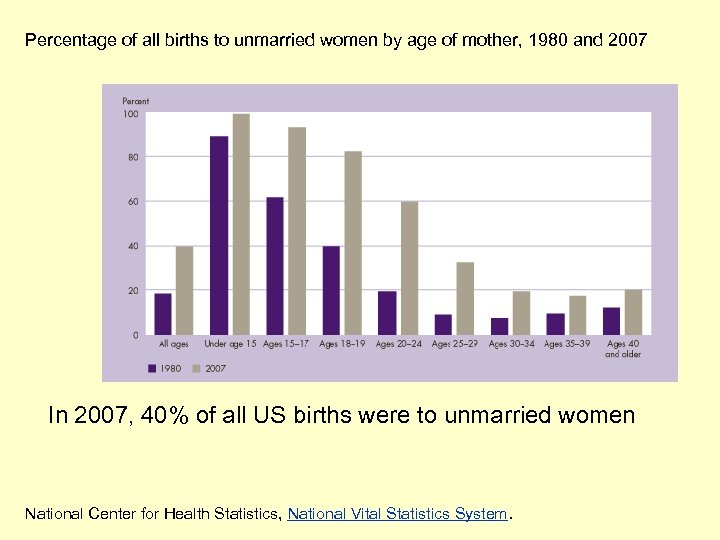 Percentage of all births to unmarried women by age of mother, 1980 and 2007 In 2007, 40% of all US births were to unmarried women National Center for Health Statistics, National Vital Statistics System.
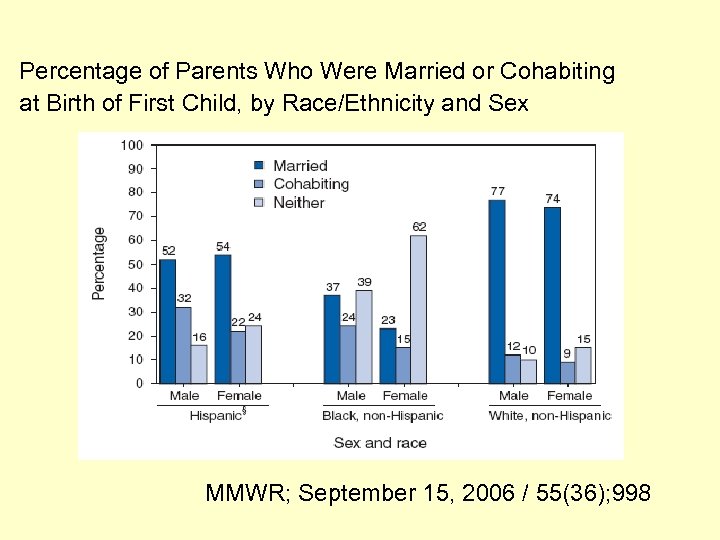 Percentage of Parents Who Were Married or Cohabiting at Birth of First Child, by Race/Ethnicity and Sex MMWR; September 15, 2006 / 55(36); 998
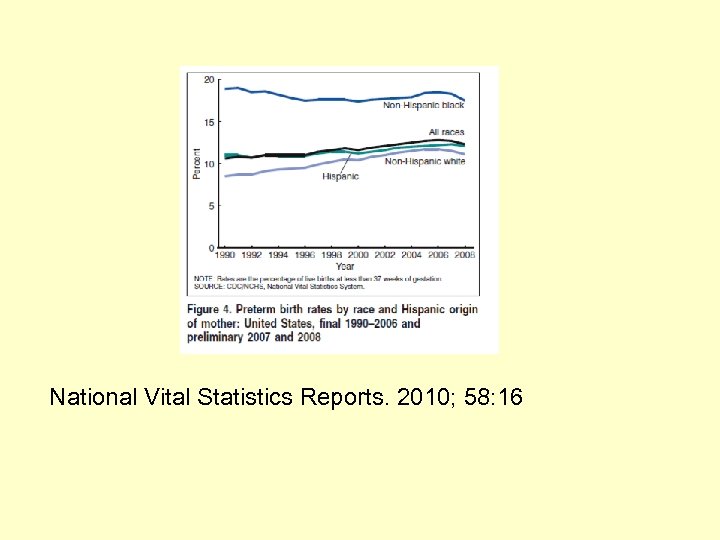 National Vital Statistics Reports. 2010; 58: 16
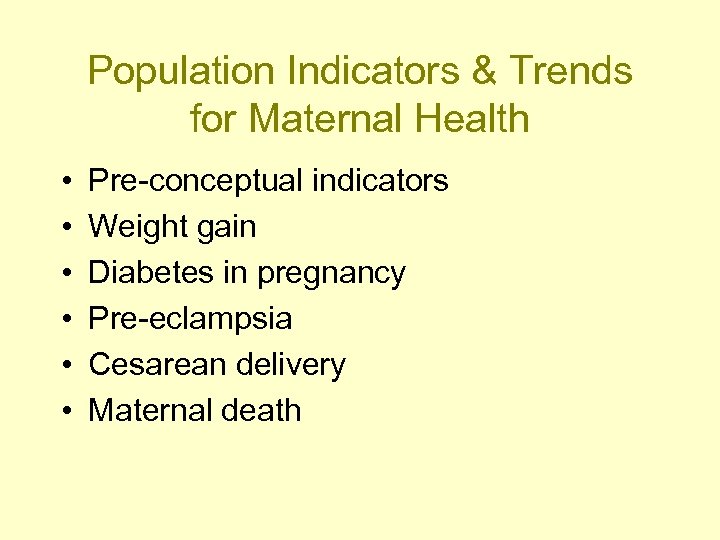 Population Indicators & Trends for Maternal Health • • • Pre-conceptual indicators Weight gain Diabetes in pregnancy Pre-eclampsia Cesarean delivery Maternal death
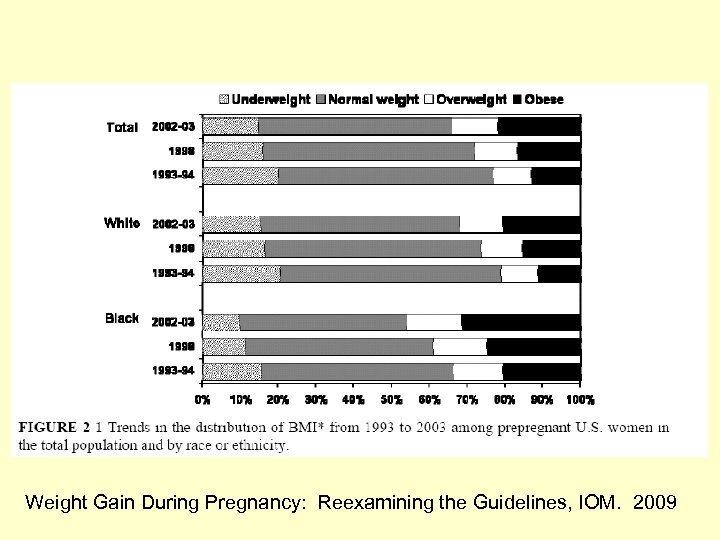 Weight Gain During Pregnancy: Reexamining the Guidelines, IOM. 2009
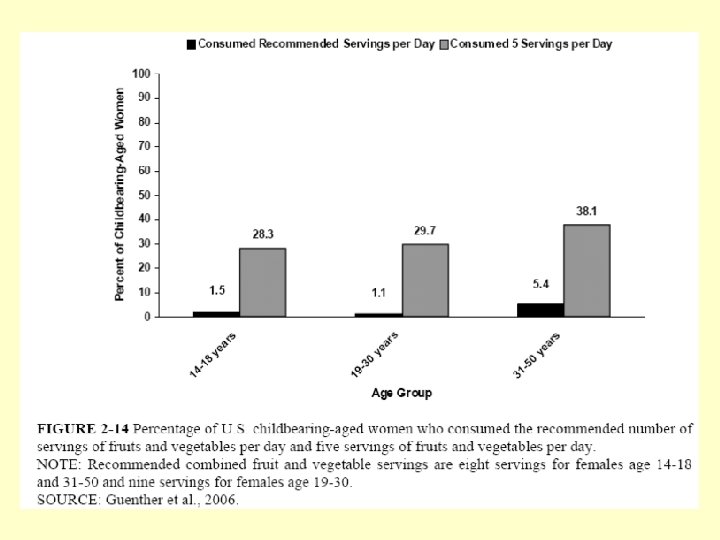
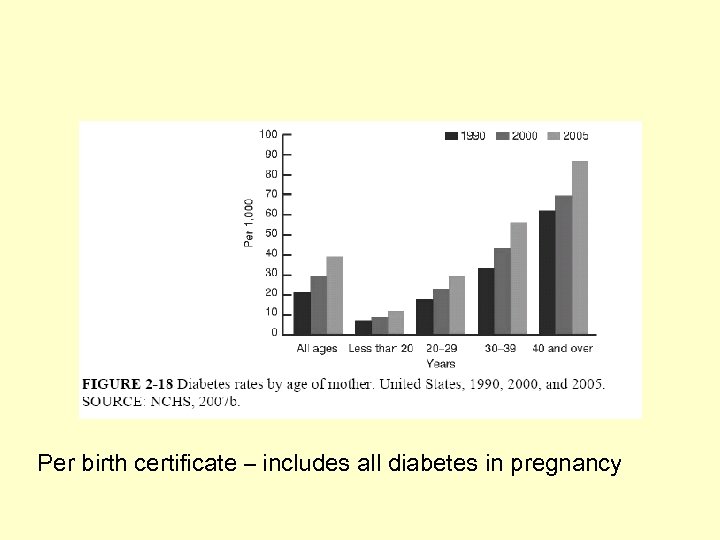 Per birth certificate – includes all diabetes in pregnancy
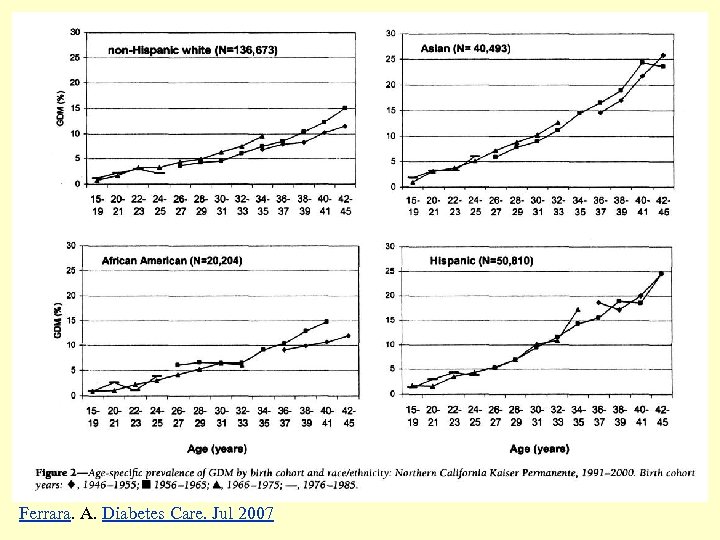 Ferrara. A. Diabetes Care. Jul 2007
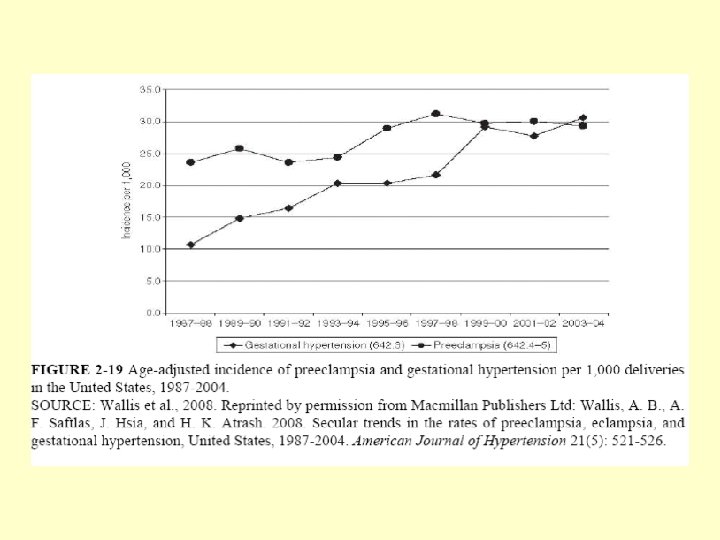
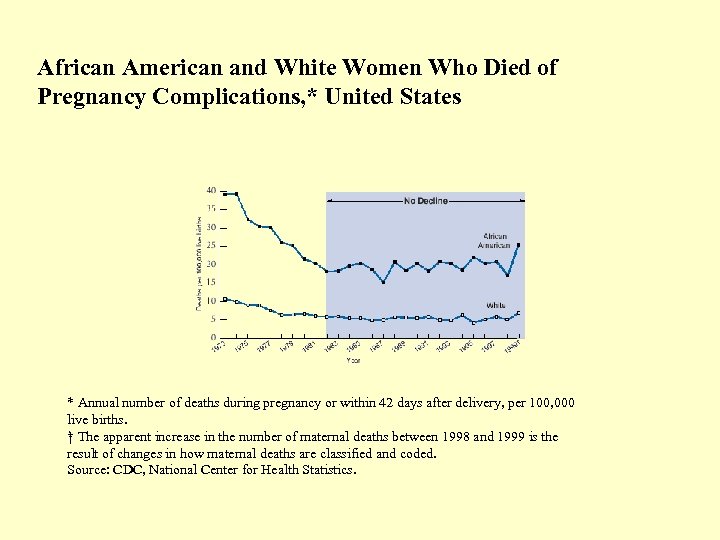 African American and White Women Who Died of Pregnancy Complications, * United States * Annual number of deaths during pregnancy or within 42 days after delivery, per 100, 000 live births. † The apparent increase in the number of maternal deaths between 1998 and 1999 is the result of changes in how maternal deaths are classified and coded. Source: CDC, National Center for Health Statistics.
 Population Indicators of Infant Health • Infant mortality • Birthweight • Gestational age
 Infant Mortality • Infant mortality rate – Deaths of infants aged under 1 year per 1, 000 or 100, 000 live births. The infant mortality rate is the sum of the neonatal and postneonatal mortality rates. • Neonatal mortality rate – Deaths of infants aged 0 -27 days per 1, 000 live births. The neonatal mortality rate is the sum of the early neonatal and late neonatal mortality rates • Postneonatal mortality rate – Deaths to infants aged 28 days-1 year per 1, 000 live births.
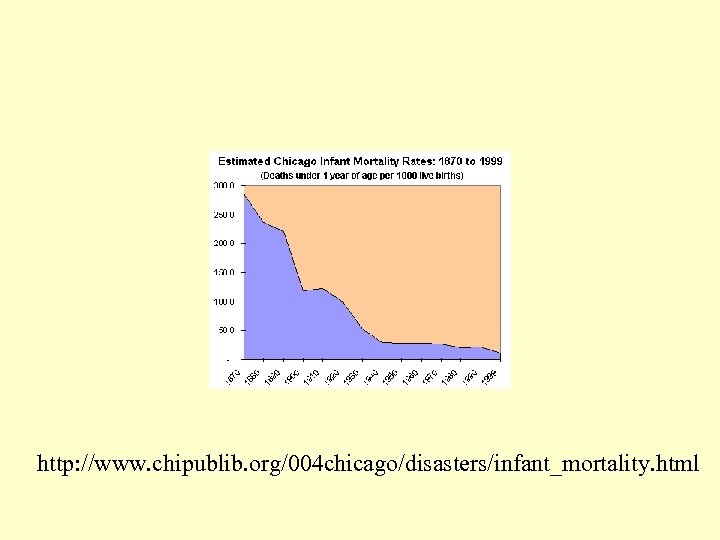 http: //www. chipublib. org/004 chicago/disasters/infant_mortality. html
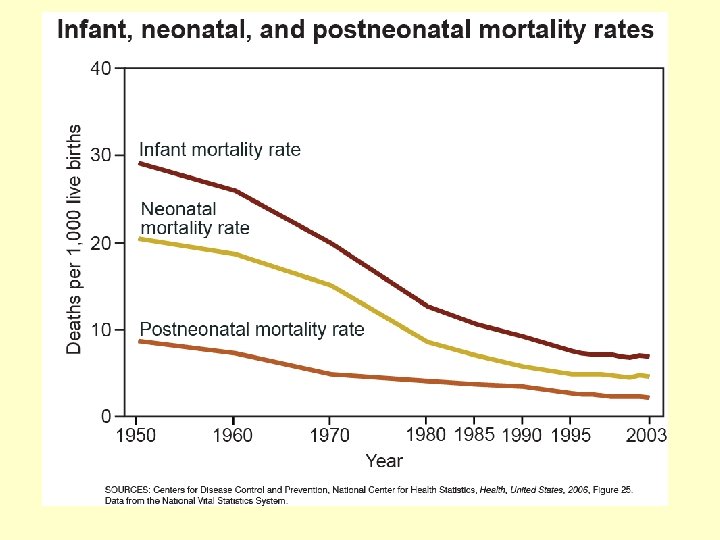
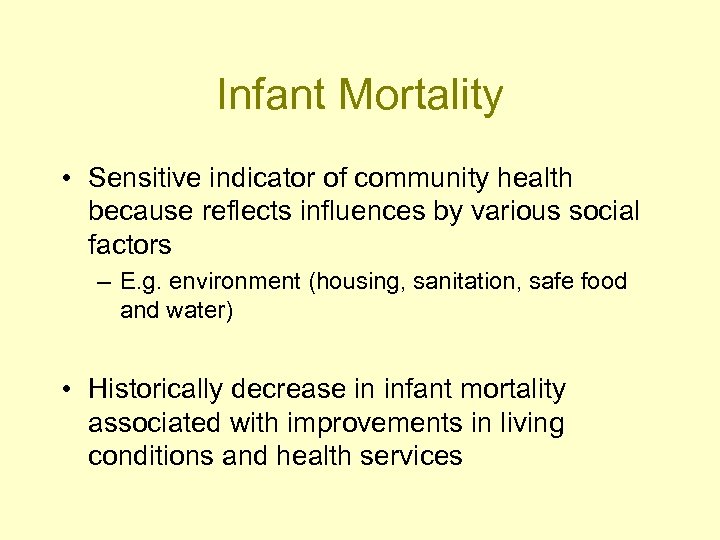 Infant Mortality • Sensitive indicator of community health because reflects influences by various social factors – E. g. environment (housing, sanitation, safe food and water) • Historically decrease in infant mortality associated with improvements in living conditions and health services
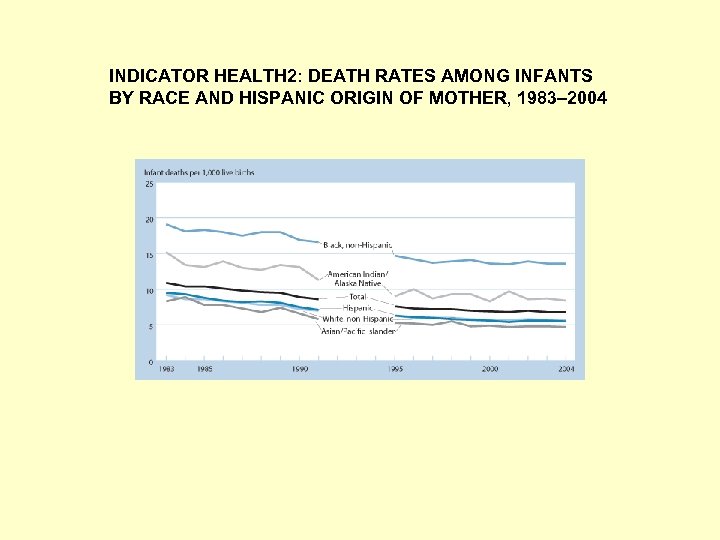 INDICATOR HEALTH 2: DEATH RATES AMONG INFANTS BY RACE AND HISPANIC ORIGIN OF MOTHER, 1983– 2004
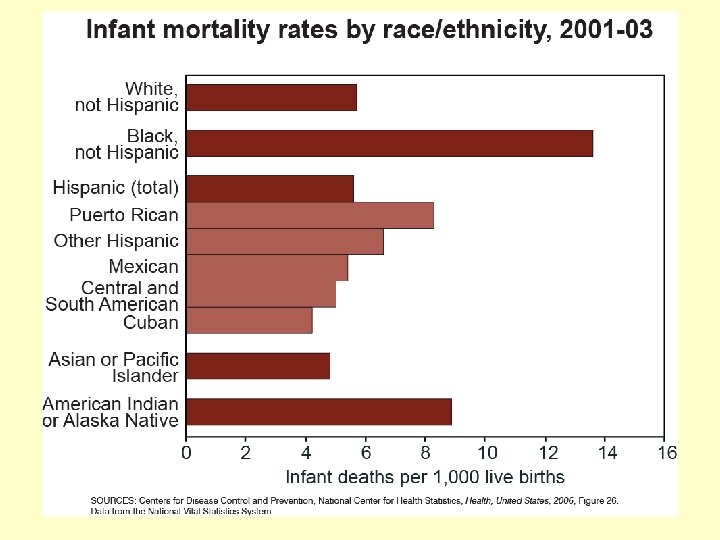
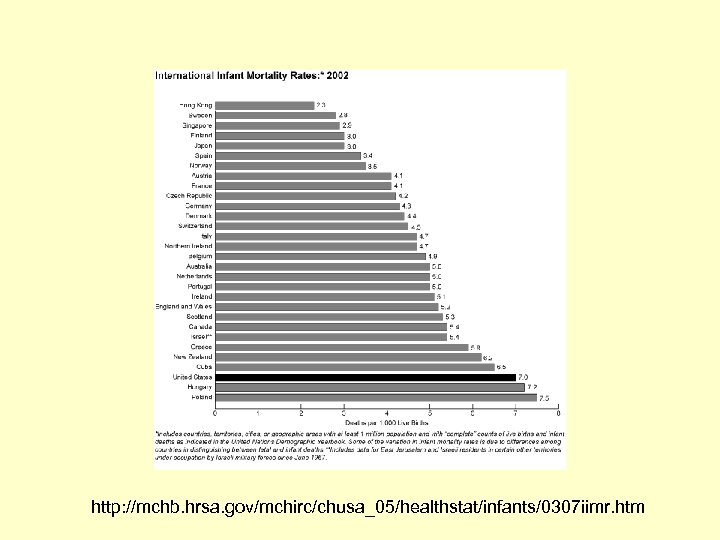 http: //mchb. hrsa. gov/mchirc/chusa_05/healthstat/infants/0307 iimr. htm
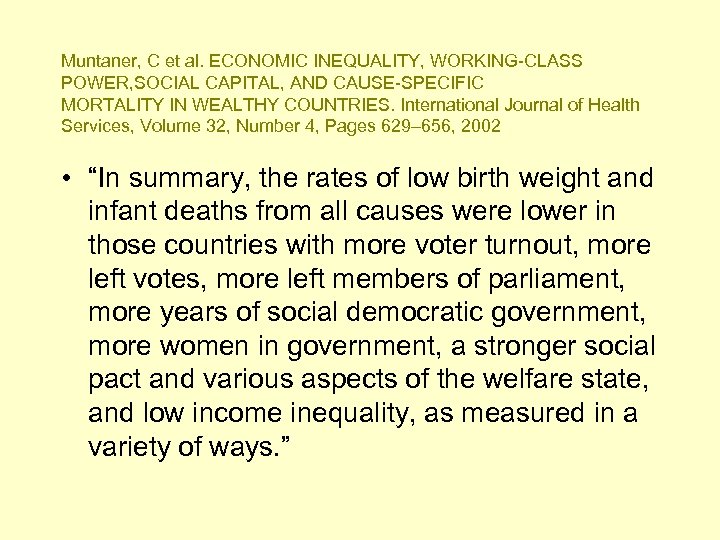 Muntaner, C et al. ECONOMIC INEQUALITY, WORKING-CLASS POWER, SOCIAL CAPITAL, AND CAUSE-SPECIFIC MORTALITY IN WEALTHY COUNTRIES. International Journal of Health Services, Volume 32, Number 4, Pages 629– 656, 2002 • “In summary, the rates of low birth weight and infant deaths from all causes were lower in those countries with more voter turnout, more left votes, more left members of parliament, more years of social democratic government, more women in government, a stronger social pact and various aspects of the welfare state, and low income inequality, as measured in a variety of ways. ”
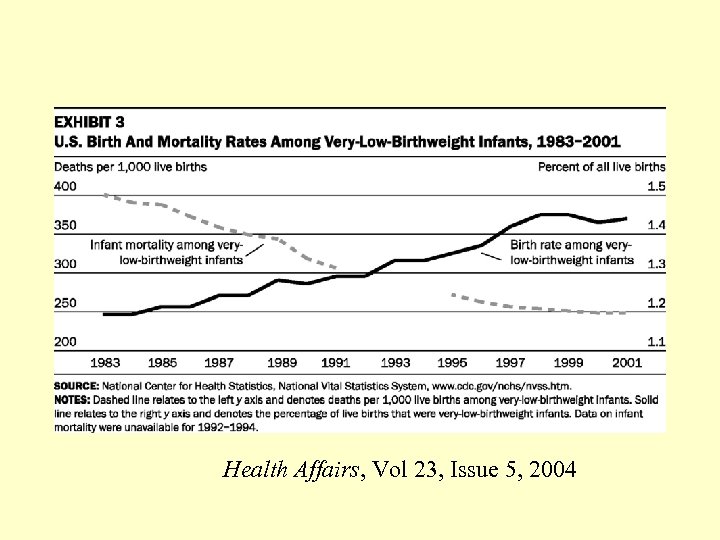 Health Affairs, Vol 23, Issue 5, 2004
 Birthweight
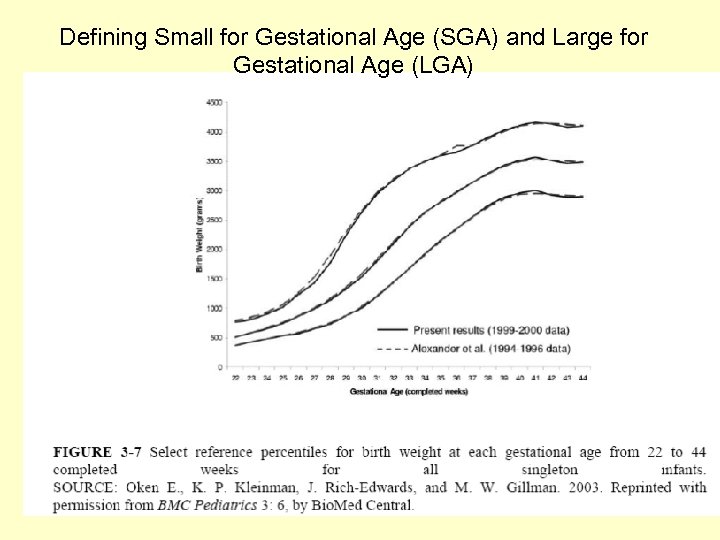 Defining Small for Gestational Age (SGA) and Large for Gestational Age (LGA)
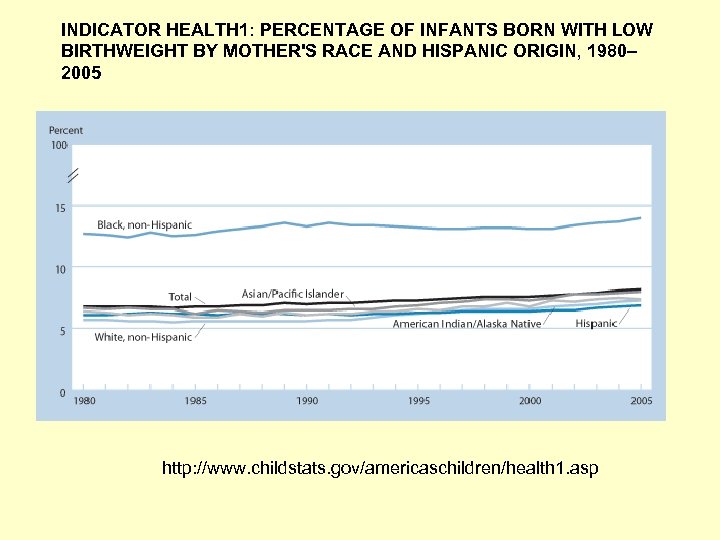 INDICATOR HEALTH 1: PERCENTAGE OF INFANTS BORN WITH LOW BIRTHWEIGHT BY MOTHER'S RACE AND HISPANIC ORIGIN, 1980– 2005 http: //www. childstats. gov/americaschildren/health 1. asp
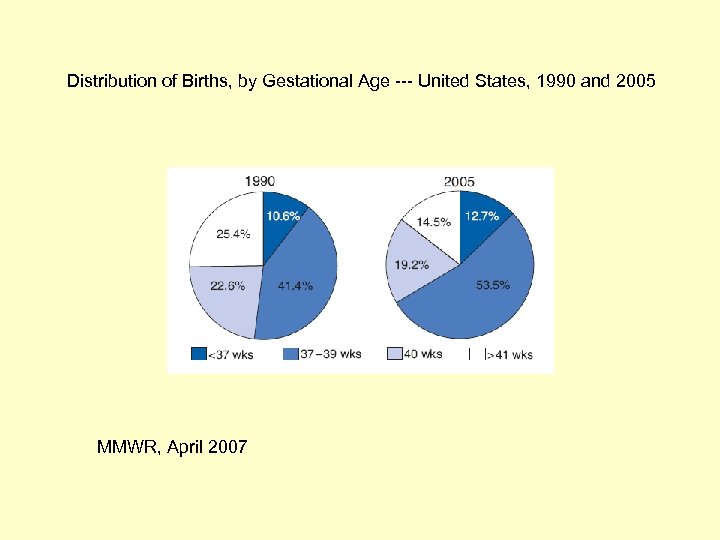 Distribution of Births, by Gestational Age --- United States, 1990 and 2005 MMWR, April 2007
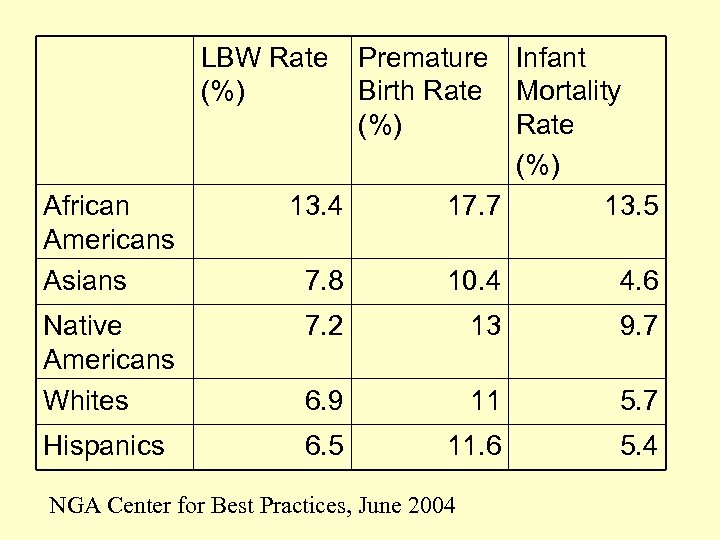 LBW Rate (%) African Americans Asians Premature Infant Birth Rate Mortality (%) Rate (%) 13. 4 17. 7 13. 5 7. 8 10. 4 4. 6 Native Americans Whites 7. 2 13 9. 7 6. 9 11 5. 7 Hispanics 6. 5 11. 6 5. 4 NGA Center for Best Practices, June 2004
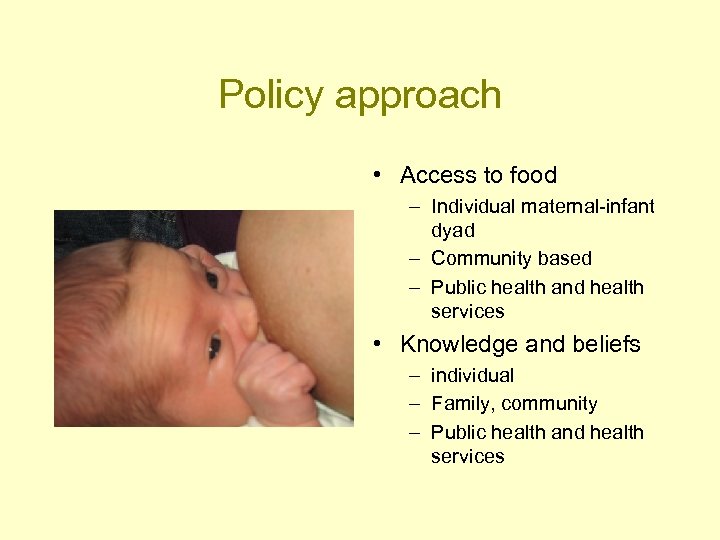 Policy approach • Access to food – Individual maternal-infant dyad – Community based – Public health and health services • Knowledge and beliefs – individual – Family, community – Public health and health services
 Determinants of infant feeding practices • Maternal employment • Health sector activities • Commercial availability and promotion of processed milks and cereals • Urbanization vs. . modernization • Poverty and maternal nutrition • Perceived insufficiency of breast milk
 History • Child welfare movements became noticeable in industrialized countries (U. S. and Western Europe – “Political, economic, and humanitarian motivations all converged to reduce the large wastage of child life”
 History • World War 1 and 2 – Recruits unfit for service – “weaklings”
 History • Child welfare movements directed toward general hygiene for disease prevention, dietary improvements, and antepartum care – Infant Stations: to provide clean milk, instruct new mothers on child/infant care, encourage breastfeed – Innovative approach in 1908 establishment of Division of Child Hygiene in NYC
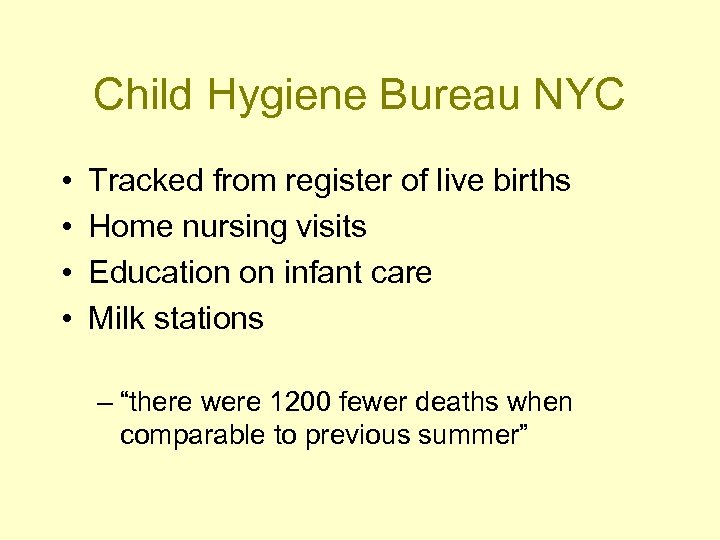 Child Hygiene Bureau NYC • • Tracked from register of live births Home nursing visits Education on infant care Milk stations – “there were 1200 fewer deaths when comparable to previous summer”
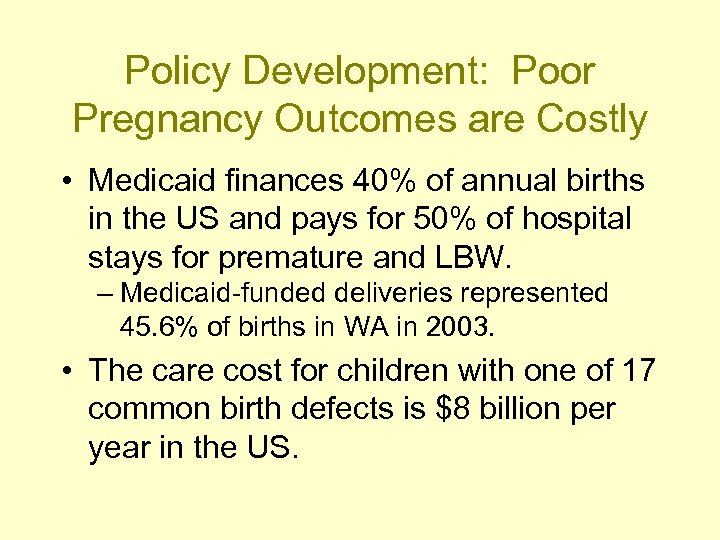 Policy Development: Poor Pregnancy Outcomes are Costly • Medicaid finances 40% of annual births in the US and pays for 50% of hospital stays for premature and LBW. – Medicaid-funded deliveries represented 45. 6% of births in WA in 2003. • The care cost for children with one of 17 common birth defects is $8 billion per year in the US.
 Assurance: Healthy People 2010 Goals Related to Maternal and Infant & Nutrition
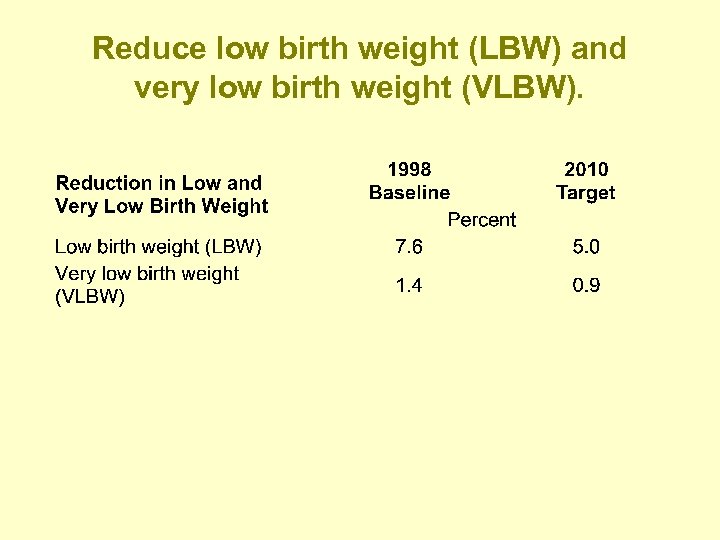 Reduce low birth weight (LBW) and very low birth weight (VLBW).
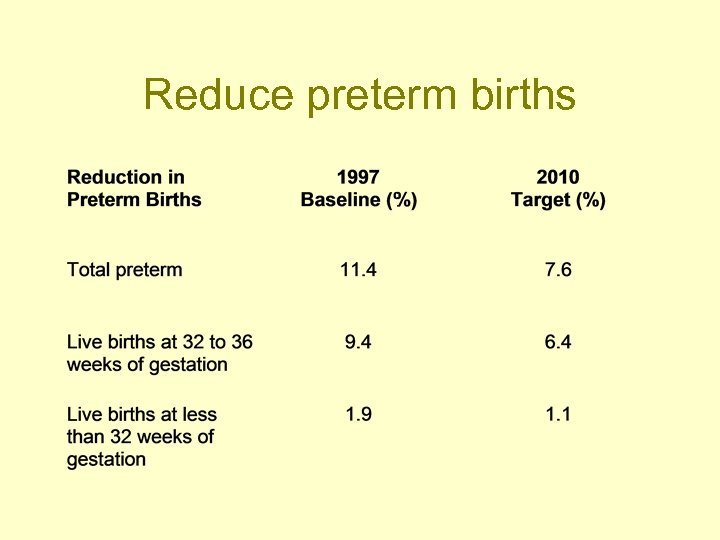 Reduce preterm births
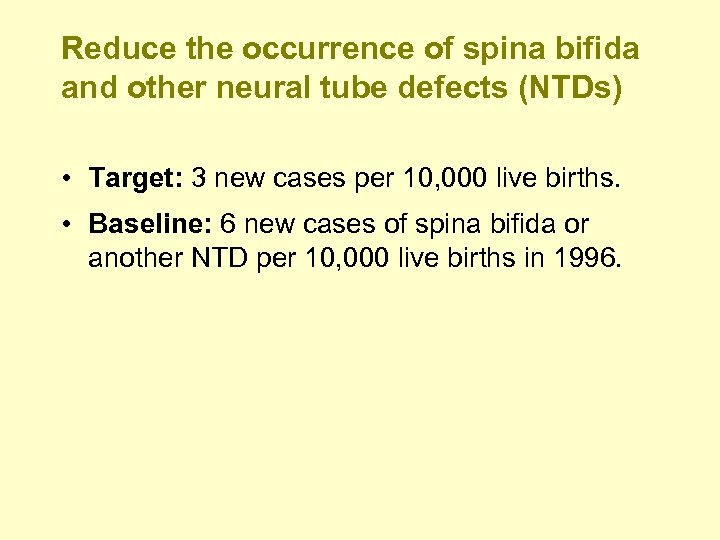 Reduce the occurrence of spina bifida and other neural tube defects (NTDs) • Target: 3 new cases per 10, 000 live births. • Baseline: 6 new cases of spina bifida or another NTD per 10, 000 live births in 1996.
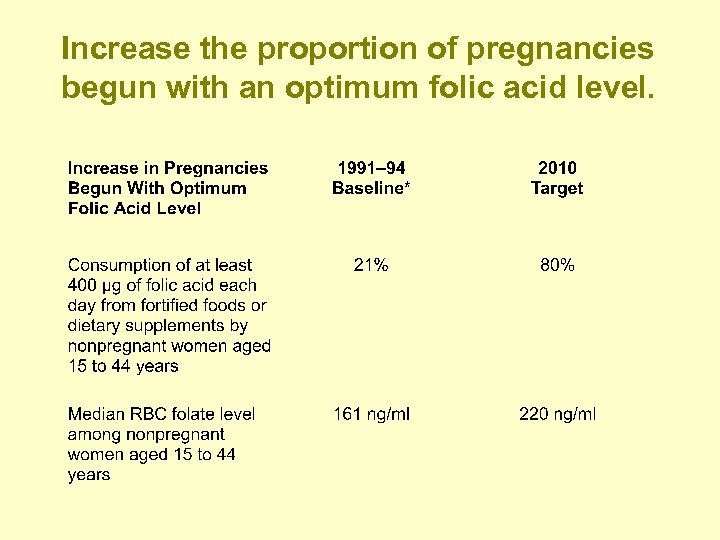 Increase the proportion of pregnancies begun with an optimum folic acid level.
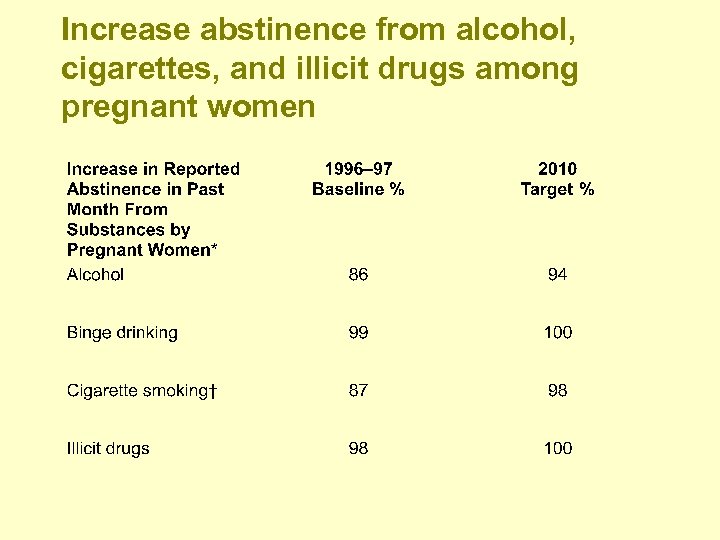 Increase abstinence from alcohol, cigarettes, and illicit drugs among pregnant women
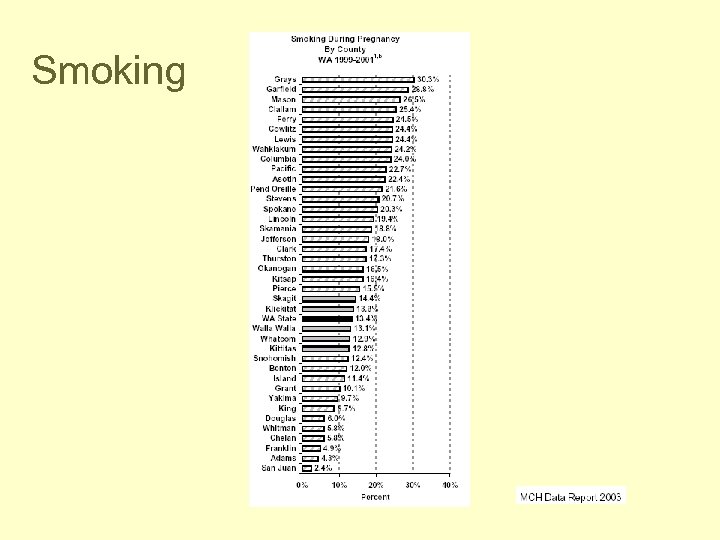 Smoking
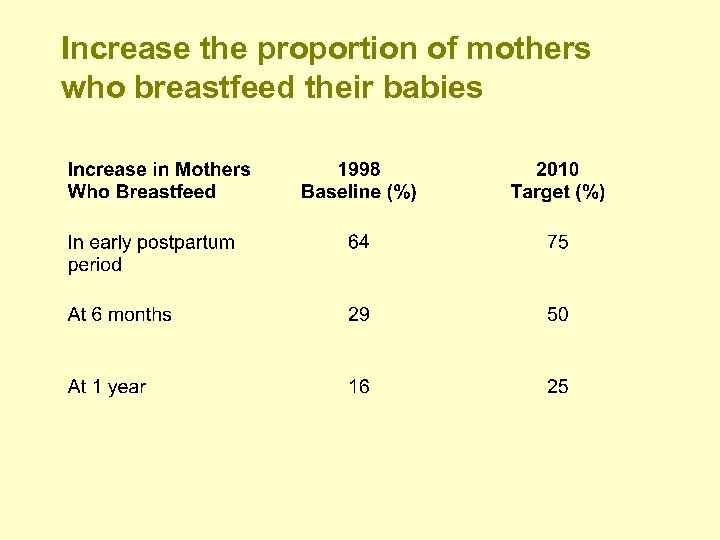 Increase the proportion of mothers who breastfeed their babies
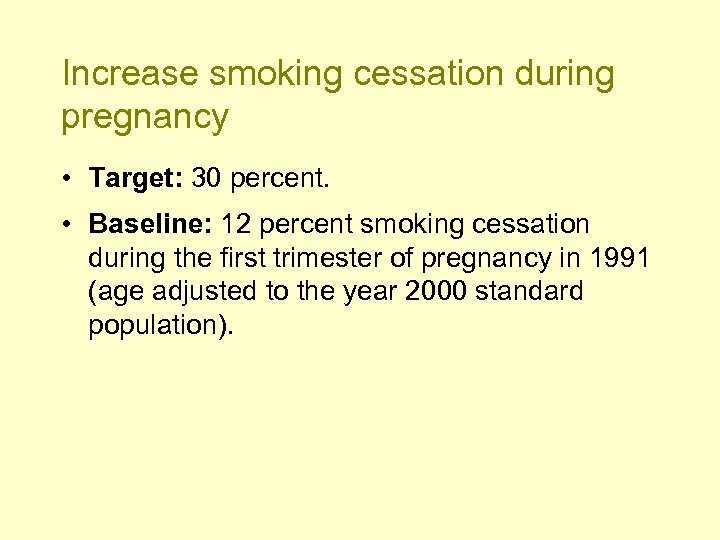 Increase smoking cessation during pregnancy • Target: 30 percent. • Baseline: 12 percent smoking cessation during the first trimester of pregnancy in 1991 (age adjusted to the year 2000 standard population).
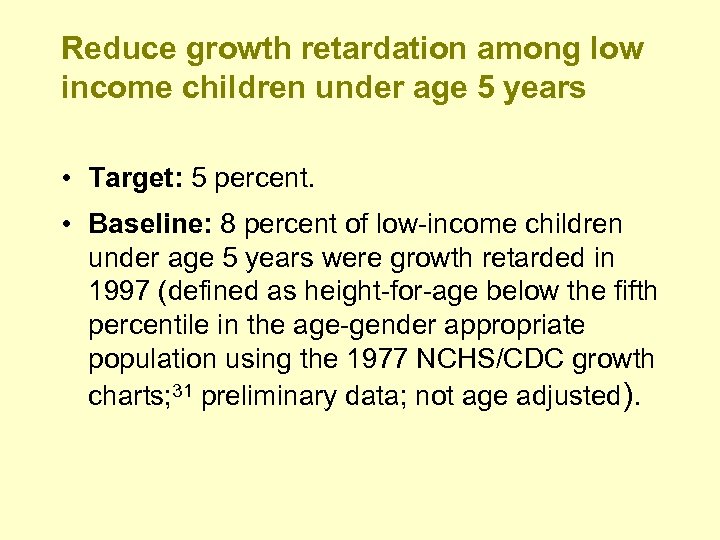 Reduce growth retardation among low income children under age 5 years • Target: 5 percent. • Baseline: 8 percent of low-income children under age 5 years were growth retarded in 1997 (defined as height-for-age below the fifth percentile in the age-gender appropriate population using the 1977 NCHS/CDC growth charts; 31 preliminary data; not age adjusted).
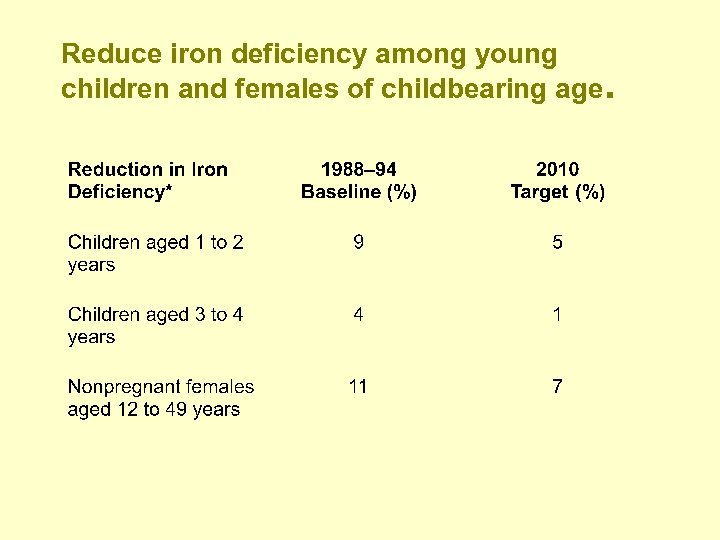 Reduce iron deficiency among young children and females of childbearing age.
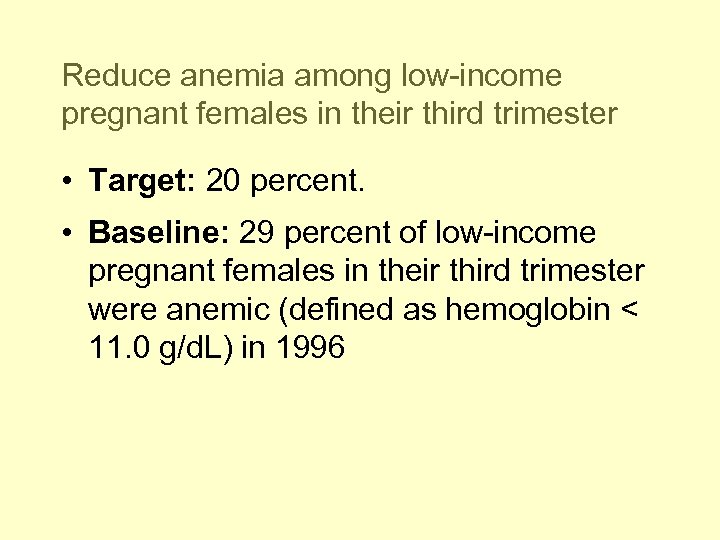 Reduce anemia among low-income pregnant females in their third trimester • Target: 20 percent. • Baseline: 29 percent of low-income pregnant females in their third trimester were anemic (defined as hemoglobin < 11. 0 g/d. L) in 1996
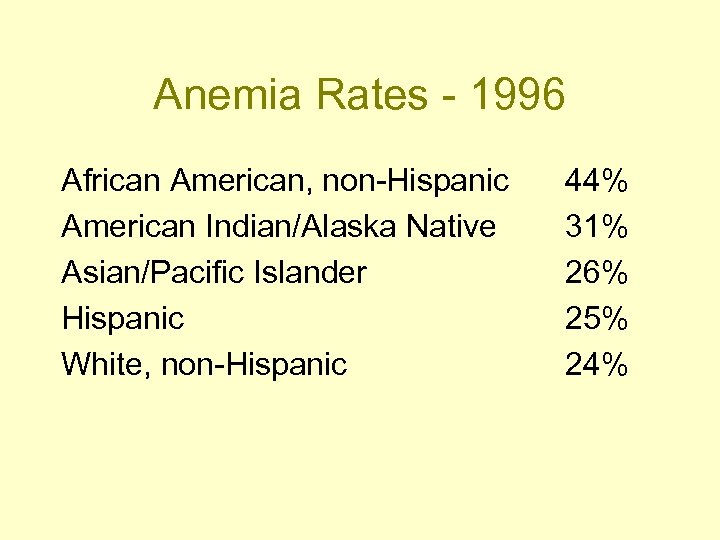 Anemia Rates - 1996 African American, non-Hispanic American Indian/Alaska Native Asian/Pacific Islander Hispanic White, non-Hispanic 44% 31% 26% 25% 24%
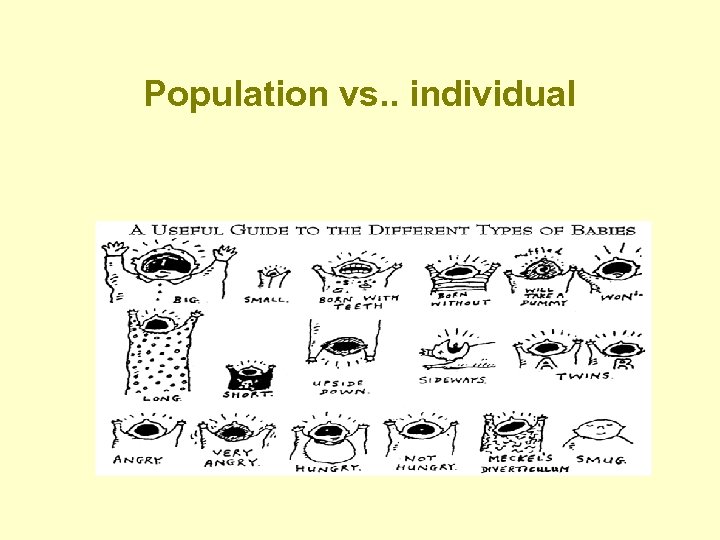 Population vs. . individual