


 Скачать презентацию NUMI xxgaooo MINOS Near Detector Hall and Access
76f2005d39b66d42dbc958585ed8fa33.ppt
- Количество слайдов: 18
 NUMI xxgaooo MINOS Near Detector Hall and Access Spaces Presented by Rob Plunkett Fermi National Accelerator Laboratory
 NUMI 2 Introduction • • • Physical Layout of Minos Shaft and Hall Access to Hall Video of hall Infrastructure and Services Hall Environment Conclusions
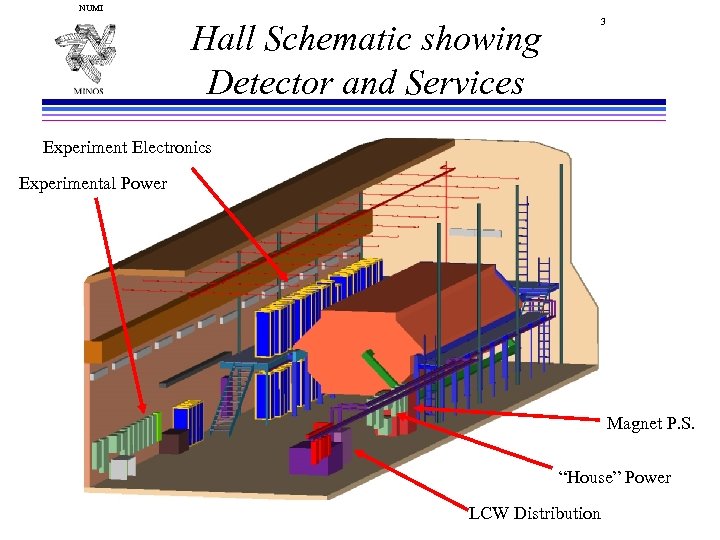 NUMI Hall Schematic showing Detector and Services 3 Experiment Electronics Experimental Power Magnet P. S. “House” Power LCW Distribution
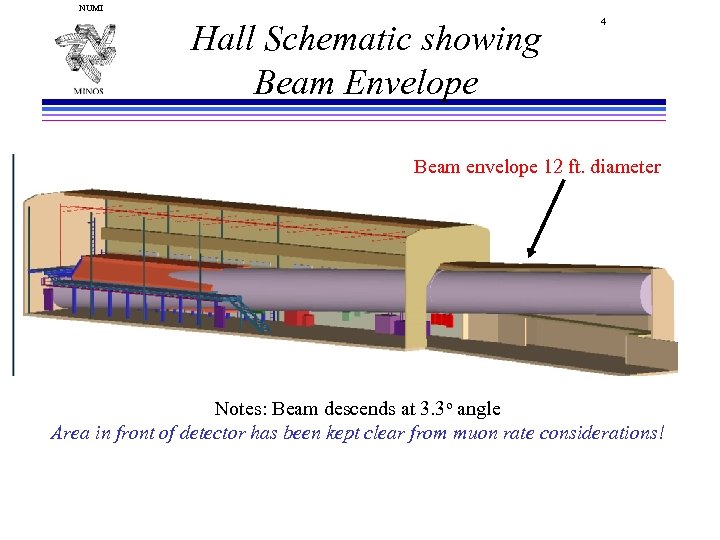 NUMI Hall Schematic showing Beam Envelope 4 Beam envelope 12 ft. diameter Notes: Beam descends at 3. 3 o angle Area in front of detector has been kept clear from muon rate considerations!
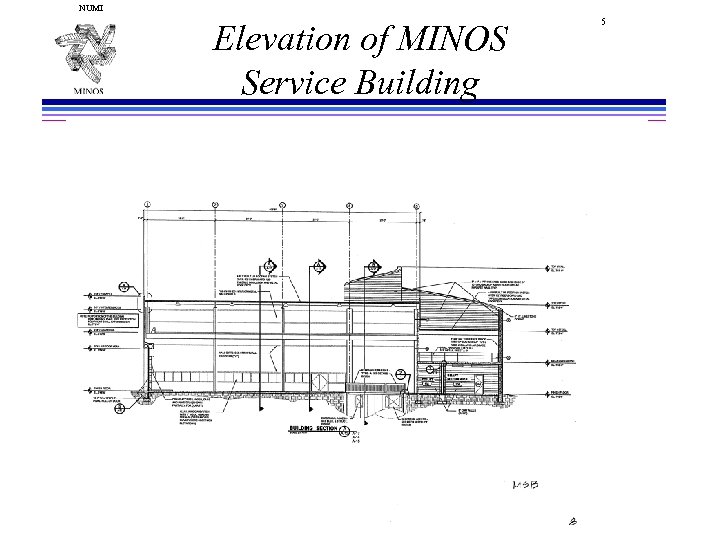 NUMI Elevation of MINOS Service Building 5
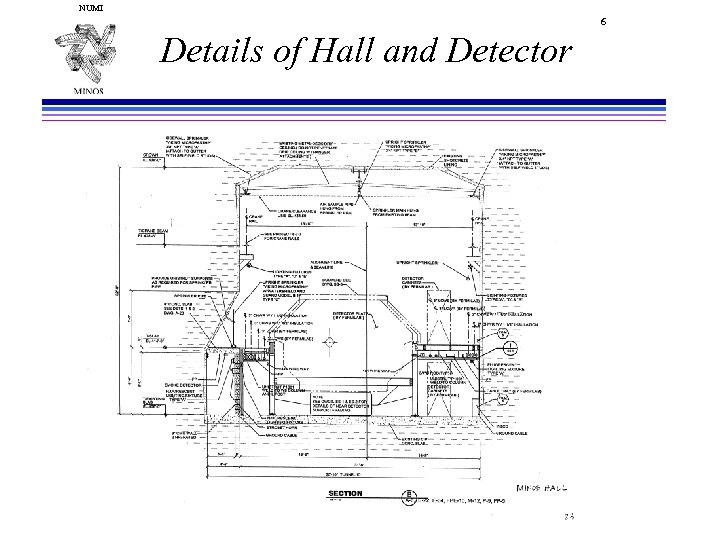 NUMI 6 Details of Hall and Detector
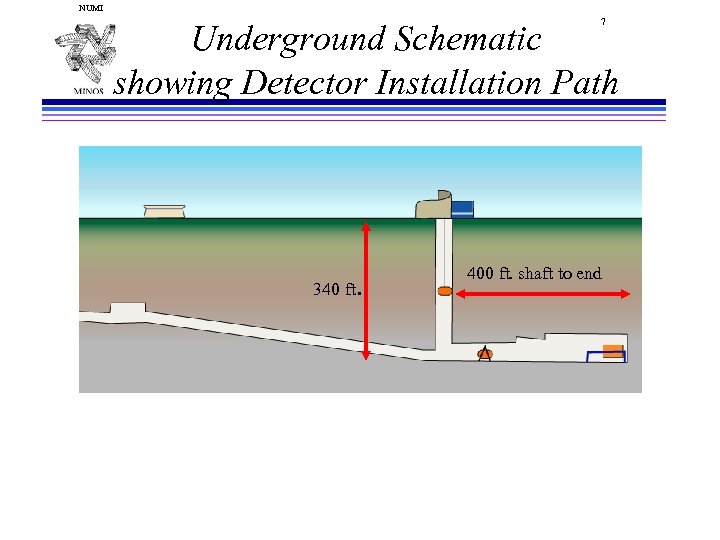 NUMI 7 Underground Schematic showing Detector Installation Path 340 ft. 400 ft. shaft to end
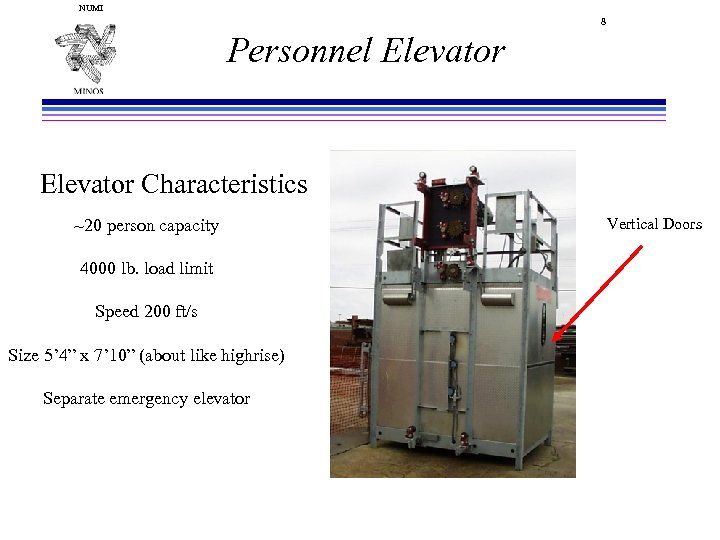 NUMI 8 Personnel Elevator Characteristics ~20 person capacity 4000 lb. load limit Speed 200 ft/s Size 5’ 4” x 7’ 10” (about like highrise) Separate emergency elevator Vertical Doors
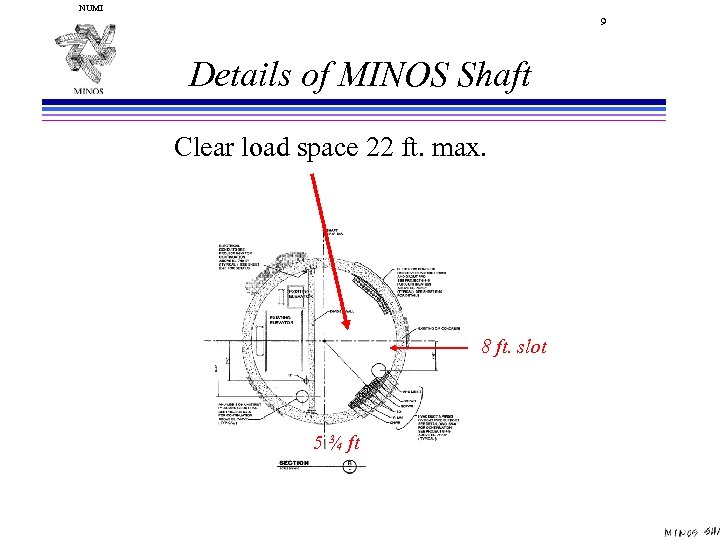 NUMI 9 Details of MINOS Shaft Clear load space 22 ft. max. 8 ft. slot 5 ¾ ft
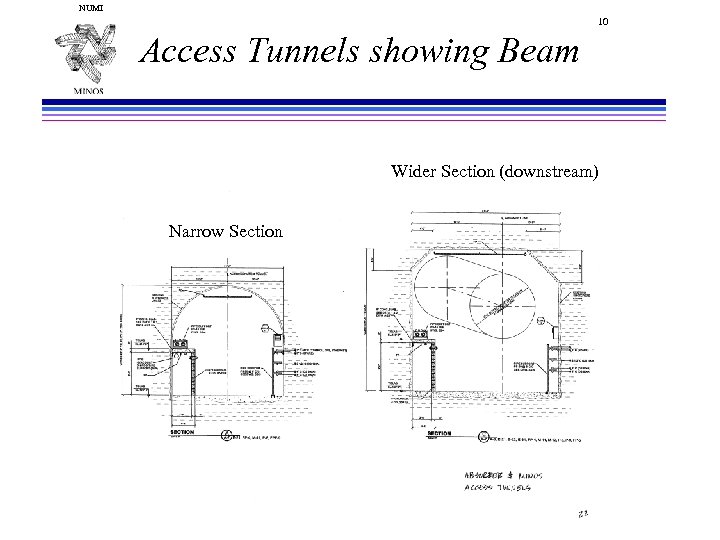 NUMI 10 Access Tunnels showing Beam Wider Section (downstream) Narrow Section
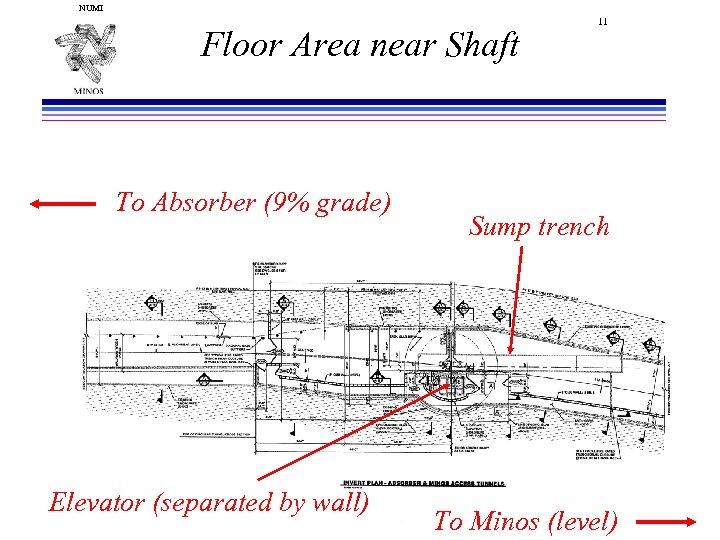 NUMI Floor Area near Shaft To Absorber (9% grade) Elevator (separated by wall) 11 Sump trench To Minos (level)
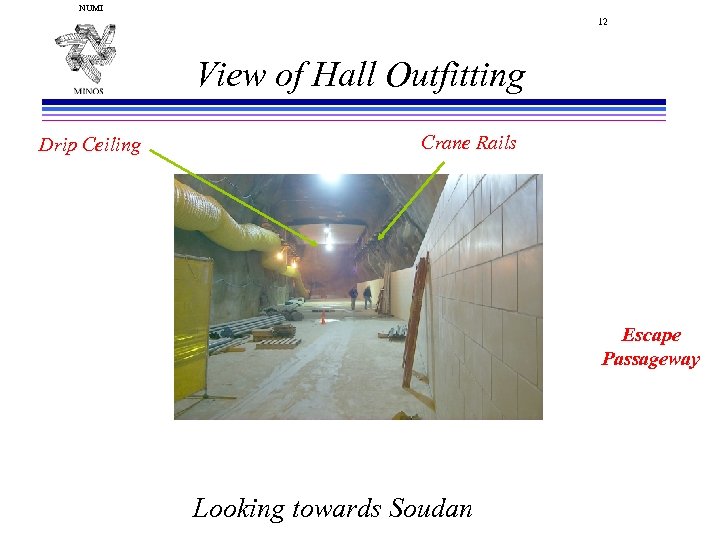 NUMI 12 View of Hall Outfitting Drip Ceiling Crane Rails Escape Passageway Looking towards Soudan
 NUMI 13 Equipment Cranes • There are cranes installed in both the MINOS service building and the MINOS hall. • For use lowering equipment down shaft: – – 15 ton capacity Speed 40 ft/min. Hook height 18’ 6” “Pitch and catch” control system • For assembling MINOS detector in hall: – 15 ton capacity – Hook height 22 ft.
 NUMI 14 Installed Electrical Power • Power in Minos Hall comes in “house power” and experimental “quiet power” varieties. Will focus on quiet power for now. • Sizing of capacity for quiet power in hall has been determined by the needs of the Minos Experiment. – Front-end electronics – DAQ electronics • Current experimental needs of the experiment are served by: – Two 75 KVA transformers ==> 150 KW. • Upstream panel board is sized for 600 A @ 480 V or 300 KW. • Upstairs transformer is 750 KVA.
 NUMI 15 Pumping and Water Control • Tunnel system will generate between 320 -400 gal/min. steadily. • All water is pumped out of MINOS shaft sump. – Target and decay pipe system drain to this point. • Before it is removed, water will serve as primary cooling for the underground equipment. • Pumping system based around redundancy. – Two well pumps, each with adequate capacity to handle job separately. – Third backup pump as well. – Emergency generator.
 NUMI 16 Installed Water Cooling • Cooling needs (LCW) of MINOS experiment include: – Direct Water cooling of front end ASIC electronics. – Cooling of MINOS magnet. – Cooling of magnet power supply • Our primary cooling water supply is expected to be the tunnel inflow. – One large unit Fan Coil (25 KW) for general hall environmental control – 4 units for supplemental electronics cooling @ 7 KW each. • • Heat exchanger for LCW sized for 150 KW. This is adequate but not generous for experiment. Little or no spare capacity – May need to add dehumidifiers – Loads usually come in higher than design. • Proposals would prudently plan for additional cooling. (My opinion). – Probably needs additional water supply
 NUMI 17 Expected Environmental Conditions • • • Temperature in Hall will be held at 60 -70 degrees F. Fan coil units with auxiliary heaters. Relative Humidity at 60% Egress corridor maintained at positive pressure w. r. t. hall. Basic air flow is from corridor into the hall, then exiting through vent to surface. • Drip ceiling covers area over MINOS detector only. • Remainder of hall will be quite dry anyway.
 NUMI 18 Conclusions • Needs of MINOS experiment will be well-met by the MINOS service building, shaft, and experimental hall. • Services have been sized to be appropriate. No extra cooling capacity. • Beam itself enters at an angle. Upstream section of hall has beam center about 10 feet above floor. • Experiment has specified a stay-clear drift space of 40 m upstream of detector, and this is reflected in the civil construction. Material in this area would require extensive simulation to understand its effects.