


 Скачать презентацию Nucleosome positioning sequence code 33 years of agony
d910a91df8a06bf651d6e5c76ac71e7e.ppt
- Количество слайдов: 62
 Nucleosome positioning sequence code: 33 years of agony and final picture Edward N. Trifonov University of Haifa, Israel Prague, Brno 2013
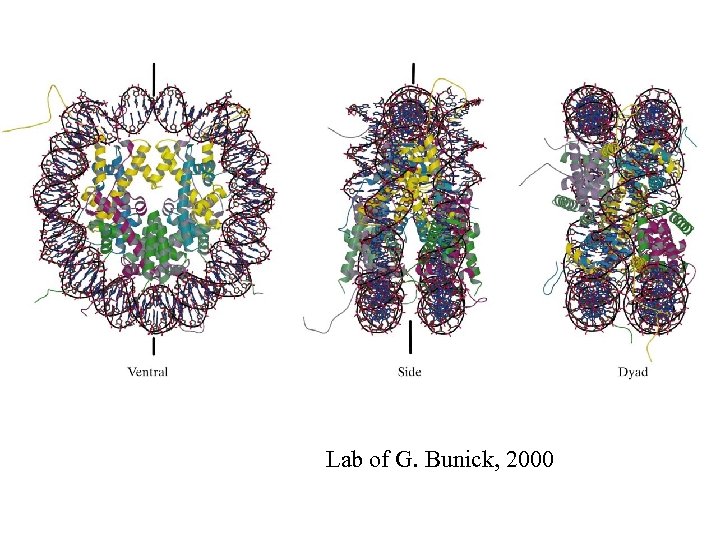 Lab of G. Bunick, 2000
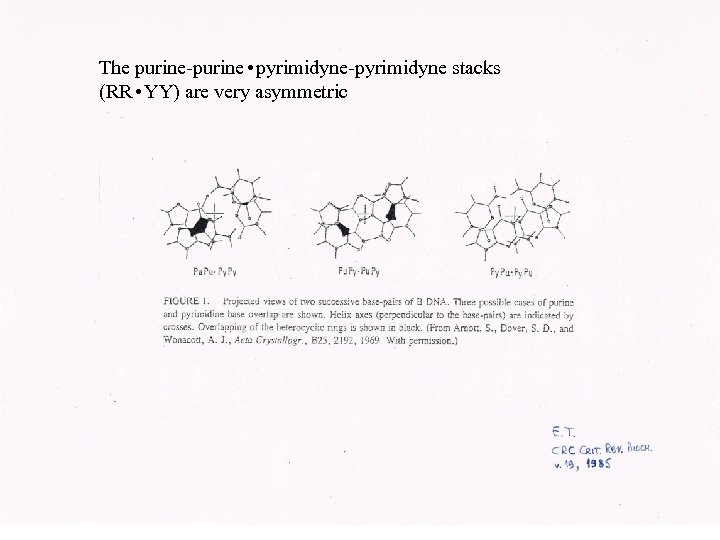
 DNA in the nucleosome is severely deformed. Neighboring base pairs become partially unstacked. Some of the dinucleotide stacks may be more deformable than others. This also depends on their rotational orientations.
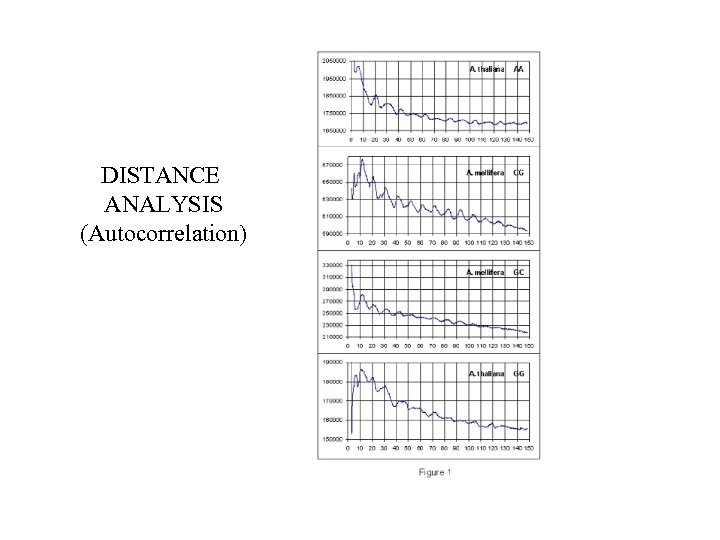
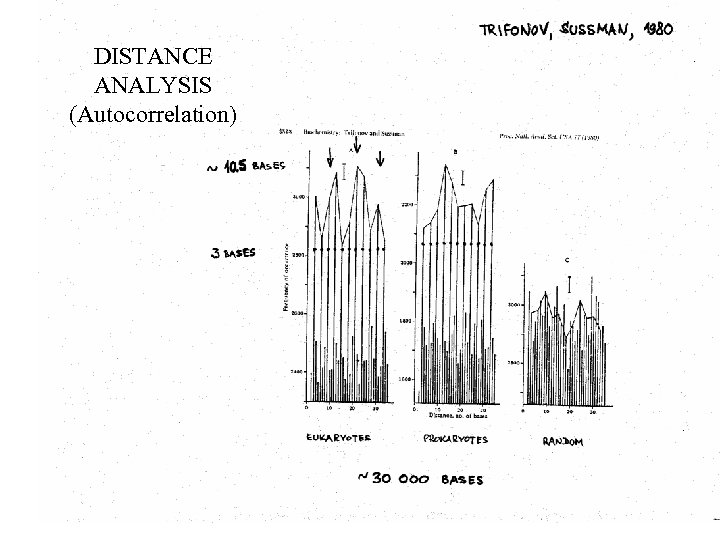 DISTANCE ANALYSIS (Autocorrelation)
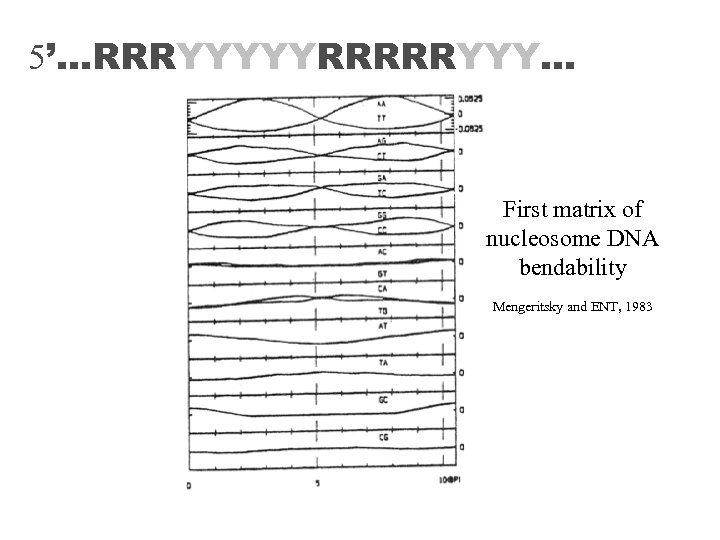 5’…RRRYYYYYRRRRRYYY… First matrix of nucleosome DNA bendability Mengeritsky and ENT, 1983
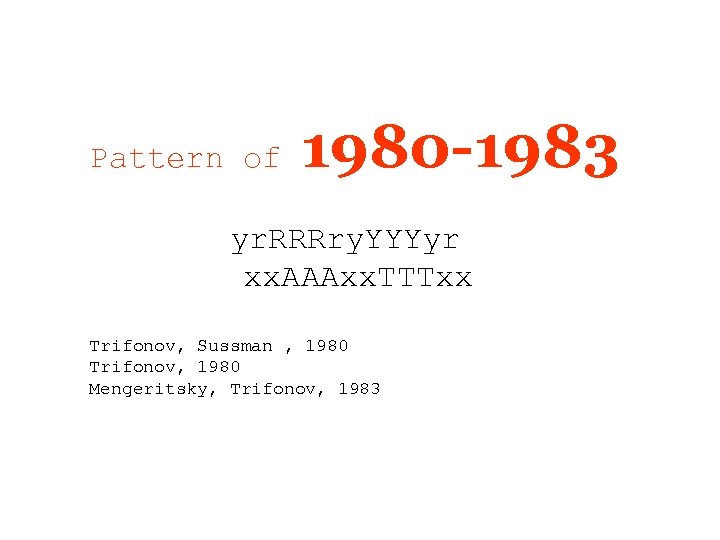 Pattern of 1980 -1983 yr. RRRry. YYYyr xx. AAAxx. TTTxx Trifonov, Sussman , 1980 Trifonov, 1980 Mengeritsky, Trifonov, 1983
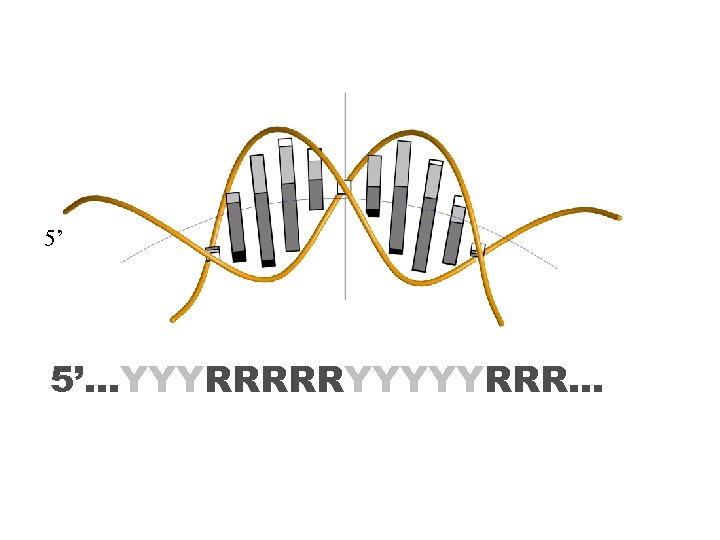 5’ 5’…YYYRRRRRYYYYYRRR…
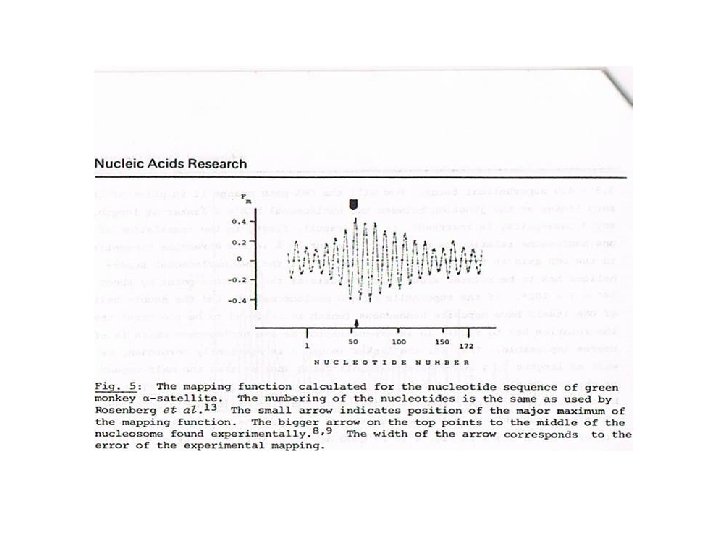
 This achievement in the single-base accuracy mapping of the nucleosomes has not been accepted by chromatin research community. The reasons: 1. Mistrust. The physics of the phenomenon and 2. multiple alternative positions of the nucleosome centers 3. are hard to grasp for non-physicists, and the sequences 4. did not show any obvious periodicity 5. 2. The chromatin research community was not ready yet 6. to conduct high resolution experimental studies
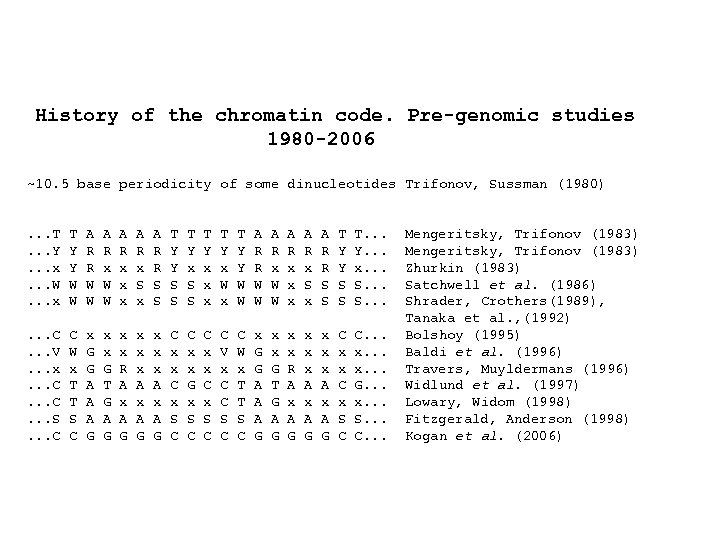 History of the chromatin code. Pre-genomic studies 1980 -2006 ~10. 5 base periodicity of some dinucleotides Trifonov, Sussman (1980). . . T. . . Y. . . x. . . W. . . x T Y Y W W A R R W W A R x x x A R x S x A R R S S T Y Y S S T Y x x x T Y x W x T Y Y W W A R R W W A R x x x A R x S x A R R S S T Y Y S S T. . . Y. . . x. . . S. . . C. . . V. . . x. . . C. . . S. . . C C W x T T S C x G G A A A G x x G T G A G x x R A x A G x x x A x A G C x x C x S C C x x G x S C C x x C x S C C V x C C S C C W x T T S C x G G A A A G x x G T G A G x x R A x A G x x x A x A G C x x C x S C C. . . x. . . G. . . x. . . S. . . C. . . Mengeritsky, Trifonov (1983) Zhurkin (1983) Satchwell et al. (1986) Shrader, Crothers(1989), Tanaka et al. , (1992) Bolshoy (1995) Baldi et al. (1996) Travers, Muyldermans (1996) Widlund et al. (1997) Lowary, Widom (1998) Fitzgerald, Anderson (1998) Kogan et al. (2006)
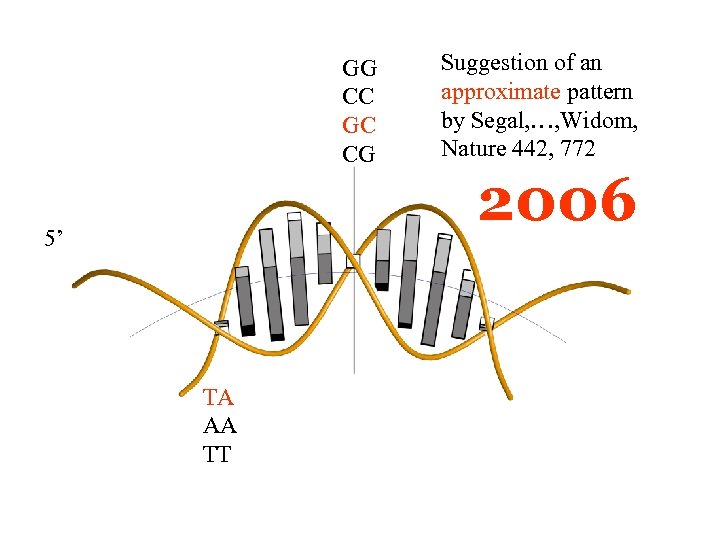 GG CC GC CG 5’ TA AA TT Suggestion of an approximate pattern by Segal, …, Widom, Nature 442, 772 2006
 The work of Segal et al. , 2006, was the first high throughput whole-genome analysis. It drew a lot of attention, and the approach became very fashionable in the chromatin community. But the emphasis was still on low resolution studies, maps of “occupancy”, where the alternative positions of the nucleosomes and rotational setting of DNA are not seen. No attempts were made to derive an exact nucleosome positioning sequence pattern from the whole genome sequences.
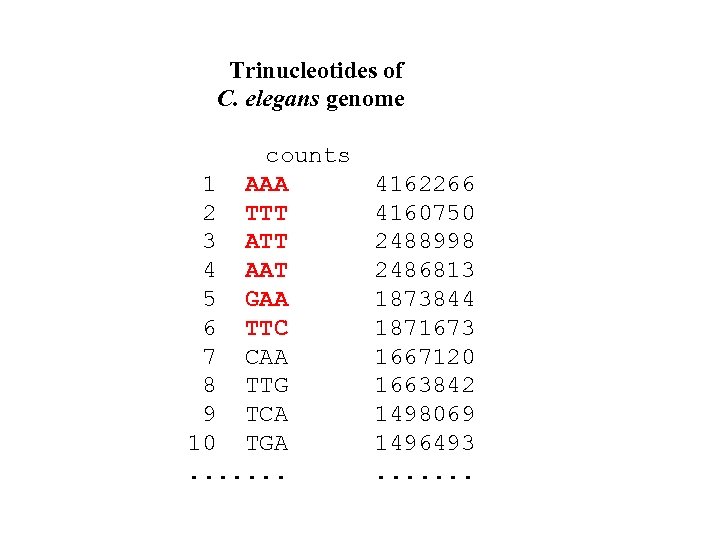
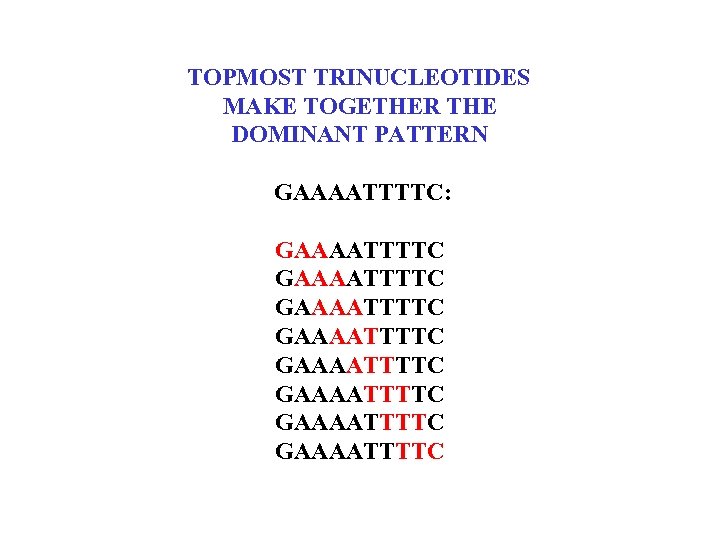
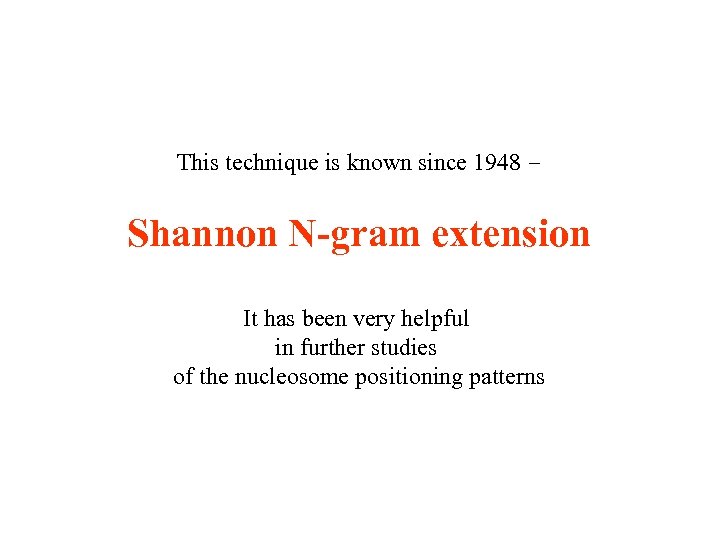
 When we joined the high througput efforts our primary task was to derive the detailed nucleosome positioning sequence pattern This involved three original techniques A. Signal regeneration from its parts B. B. Shannon N-gram extension C. C. Extraction and analysis of strong nucleosom
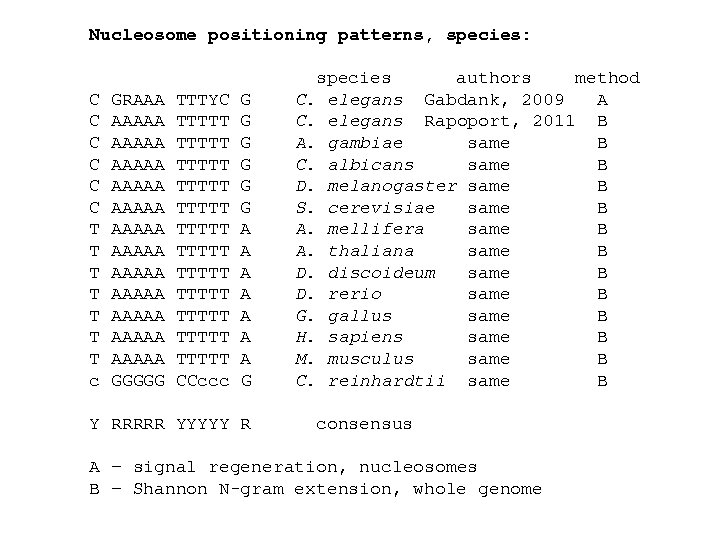 Nucleosome positioning patterns, species: C C C T T T T c GRAAA AAAAA AAAAA AAAAA GGGGG TTTYC TTTTT TTTTT TTTTT CCccc G G G A A A A G Y RRRRR YYYYY R species authors method C. elegans Gabdank, 2009 A C. elegans Rapoport, 2011 B A. gambiae same B C. albicans same B D. melanogaster same B S. cerevisiae same B A. mellifera same B A. thaliana same B D. discoideum same B D. rerio same B G. gallus same B H. sapiens same B M. musculus same B C. reinhardtii same B consensus A – signal regeneration, nucleosomes B – Shannon N-gram extension, whole genome
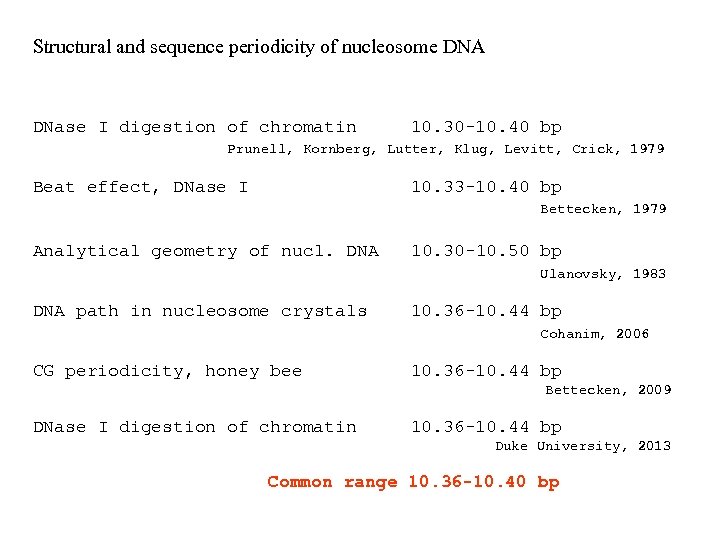 Structural and sequence periodicity of nucleosome DNA DNase I digestion of chromatin 10. 30 -10. 40 bp Prunell, Kornberg, Lutter, Klug, Levitt, Crick, 1979 Beat effect, DNase I 10. 33 -10. 40 bp Bettecken, 1979 Analytical geometry of nucl. DNA 10. 30 -10. 50 bp Ulanovsky, 1983 DNA path in nucleosome crystals 10. 36 -10. 44 bp Cohanim, 2006 CG periodicity, honey bee 10. 36 -10. 44 bp Bettecken, 2009 DNase I digestion of chromatin 10. 36 -10. 44 bp Duke University, 2013 Common range 10. 36 -10. 40 bp
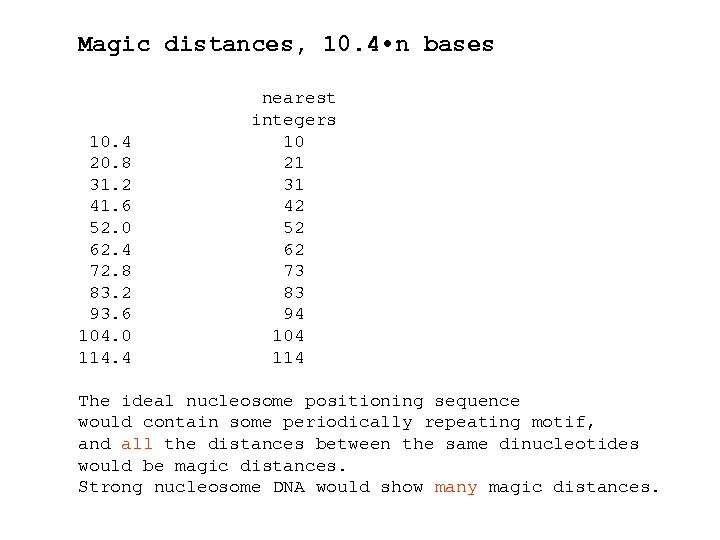 Magic distances, 10. 4 • n bases 10. 4 20. 8 31. 2 41. 6 52. 0 62. 4 72. 8 83. 2 93. 6 104. 0 114. 4 nearest integers 10 21 31 42 52 62 73 83 94 104 114 The ideal nucleosome positioning sequence would contain some periodically repeating motif, and all the distances between the same dinucleotides would be magic distances. Strong nucleosome DNA would show many magic distances.
 Lowary and Widom (1998) took large ensemble of synthetic DNA fragments with random sequences, and selected those of them which formed strong nucleosomes The sequences demonstrated very strong periodicity of TA dinucleotides
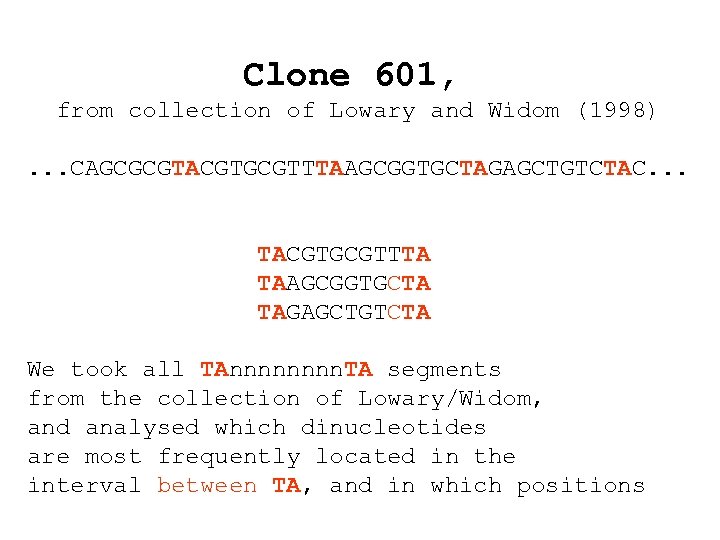 Clone 601, from collection of Lowary and Widom (1998). . . CAGCGCGTACGTGCGTTTAAGCGGTGCTAGAGCTGTCTAC. . . TACGTGCGTTTA TAAGCGGTGCTA TAGAGCTGTCTA We took all TAnnnn. TA segments from the collection of Lowary/Widom, and analysed which dinucleotides are most frequently located in the interval between TA, and in which positions
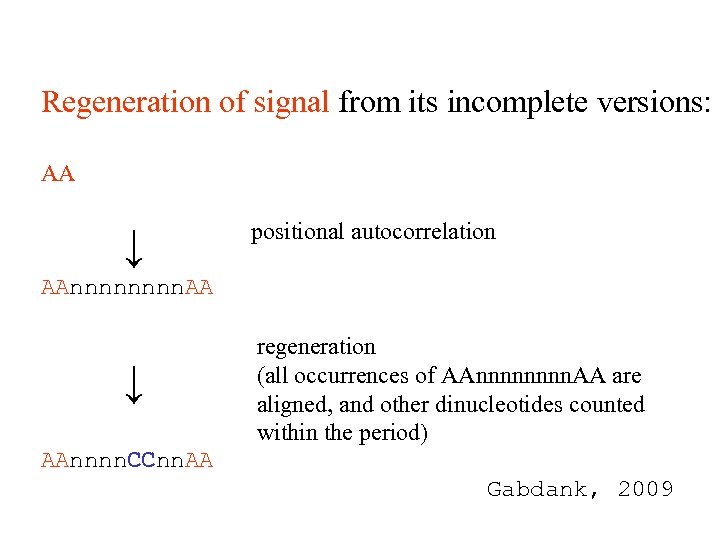 Regeneration of signal from its incomplete versions: AA ↓ positional autocorrelation AAnnnn. AA ↓ regeneration (all occurrences of AAnnnn. AA are aligned, and other dinucleotides counted within the period) AAnnnn. CCnn. AA Gabdank, 2009
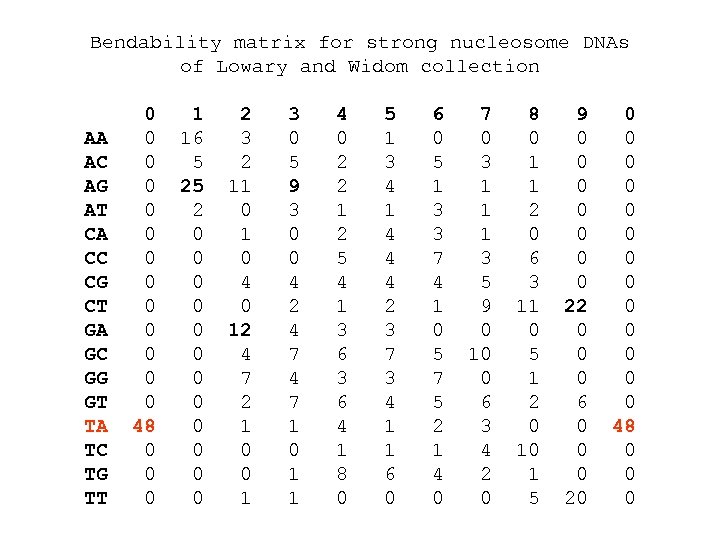 Bendability matrix for strong nucleosome DNAs of Lowary and Widom collection AA AC AG AT CA CC CG CT GA GC GG GT TA TC TG TT 0 0 0 0 48 0 0 0 1 16 5 25 2 0 0 0 2 3 2 11 0 4 0 12 4 7 2 1 0 0 1 3 0 5 9 3 0 0 4 2 4 7 1 0 1 1 4 0 2 2 1 2 5 4 1 3 6 4 1 8 0 5 1 3 4 1 4 4 4 2 3 7 3 4 1 1 6 0 5 1 3 3 7 4 1 0 5 7 5 2 1 4 0 7 0 3 1 1 1 3 5 9 0 10 0 6 3 4 2 0 8 0 1 1 2 0 6 3 11 0 5 1 2 0 10 1 5 9 0 0 0 0 22 0 0 0 6 0 0 0 20 0 0 0 48 0 0 0
 22. 5 min
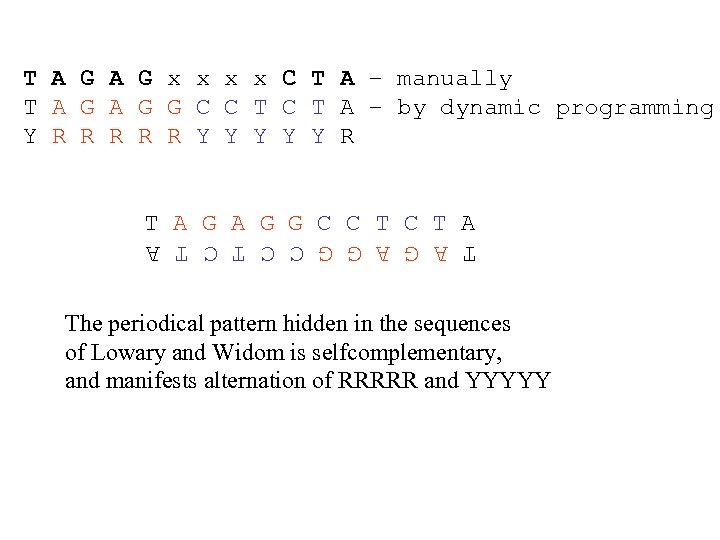 T A G x x C T A – manually T A G G C C T A – by dynamic programming Y R R R Y Y Y R T A G A G G C C T C T A The periodical pattern hidden in the sequences of Lowary and Widom is selfcomplementary, and manifests alternation of RRRRR and YYYYY
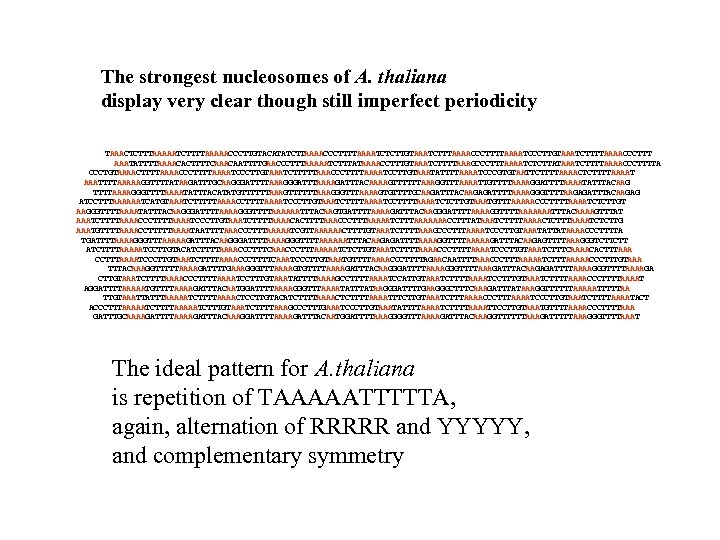 The strongest nucleosomes of A. thaliana display very clear though still imperfect periodicity TAAACTCTTTAAAAATCTTTTAAAAACCCTTGTACATATCTTAAAACCCTTTTAAAATCTCTTGTAAATCTTTAAAACCCTTTTAAAATCCCTTGTAAATCTTTTAAAACCCTTT AAATATTTTAAAACACTTTTCAAACAATTTTGAACCCTTTAAAAATCTTTATAAAACCTTTGTAAATCTTTTAAAGCCCTTTAAAATCTCTTATAAATCTTTTAAAACCCTTTTA CCCTGTAAAACTTTTAAAACCCTTTTAAAATCCCTTGTAAATCTTTTTAAACCCTTTTAAAATCCTTGTAAATATTTTAAAATCCCGTGTAATTCTTTTAAAACTCTTTTAAAATTTTAAAAAGGTTTTATAAGATTTGCAAGGGATTTTAAAGGGATTTAAAAGATTTACAAAAGTTTTTTAAAGGTTTAAAATTGTTTTAAAAGGATTTTAAAATATTTACAAG TTTTAAAAGGGTTTTAAAATATTTACATATGTTTTTTAAAGGGTTTAAAAGTGTTTTGCAAGATTTACAAGAGATTTTAAAAGGGTTTTAAGAGATTTACAAGAG ATCCTTTAAAAAATCATGTAAATCTTTTTAAAACCTTTTAAAATCCCTTGTAAATCTTTTAAAATCTCTTGTAAATGTTTAAAAACCCTTTTAAAATCTCTTGT AAGGGTTTTAAAATATTTACAAGGGATTTTAAAAGGGTTTTAAAAAATTTACAAGTGATTTTAAAAGATTTACAAGGGATTTTAAAAGGTTTTAAAAAAATTTACAAAAGTTTAT AAATCTTTTAAAACCCTTTTAAAATCCCTTGTAAATCTTTTAAAACACTTTTAAACCCTTTAAAAATCTTTAAAAAAACCTTTATAAATCTTTTAAAACTCTTTAAAATCTCTTG AAATGTTTTAAAACCTTTTTAAAATAATTTTAAACCCTTTAAAAATCGTTAAAAAACTTTTGTAAATCTTTTAAAGCCCTTTAAAATCCCTTGTAAATATTATAAAACCCTTTTA TGATTTTAAAAGGGTTTAAAAAGATTTACAAGGGATTTTAAAAGGGTTTTAAAAAATTTACAAGAGATTTTAAAAGGTTTTAAAAAGATTTACAAGAGTTTTAAAGGGTCTTCTT ATCTTTTAAAAATCCTTGTACATCTTTTAAAACCCTTTCAAACCCTTTAAAAATCTCTTGTAAATCTTTTAAAACCCTTTTAAAATCCCTTGTAAATCTTTCAAAACACTTTAAA CCTTTAAAATCCCTTGTAAATCTTTTAAAACCCTTTTCAAATCCCTTGTAAATGTTTTAAAACCCTTTTAGAACAATTTTAAACCCTTTAAAAATCTTTAAAAACCCTTTGTAAA TTTACAAAGGTTTTTAAAAGATTTTGAAAGGGTTTAAAAGTGTTTTAAAAGATTTACAAGGGATTTTAAAAGGGTTTTAAAGATTTACAAGAGATTTTAAAAGGGTTTTAAAAGA CTTGTAAATCTTTTAAAACCCTTTTAAAATCCTTTGTAAATATTTTAAAAGCCTTTTAAAATCCATTGTAAATCTTTTAAAATCCTTTGTAAATCTTTTAAAACCCTTTTAAAAT AGGATTTTAAAAATGTTTTAAAAGATTTACAATGGATTTTAAAAGGGTTTAAAATATTTATAAGGGATTTTGAAGGGCTTTCAAAGATTTATAAAGGTTTTTTAAAAATTTTTAA TTGTAAATTATTTAAAAATCTTTTAAAACTCCTTGTACATCTTTTAAAACTCTTTTAAAATTTCTTGTAAATCTTTAAAACCCTTTAAAATCCCTTGTAAATCTTTTAAAATACT ACCCTTTAAAAATCTTTGTAAATCTTTTAAAGCCCTTTGAAATCCCTTGTAAATATTTTAAAATCTTTTAAAATTCCTTGTAAATGTTTTAAAACCCTTTTAAA GATTTGCAAAAGATTTTAAAAGATTTACAAAGGATTTTAAAAGATTTACAATGGATTTTAAAGGGGTTTAAAAGATTTACAAAGGTTTTTTAAAGATTTTTAAAGGGTTTTAAAT The ideal pattern for A. thaliana is repetition of TAAAAATTTTTA, again, alternation of RRRRR and YYYYY, and complementary symmetry
 Before this picture was generated (Dec. last year) nobody ever had seen that the nucleosome sequences look, indeed, periodical
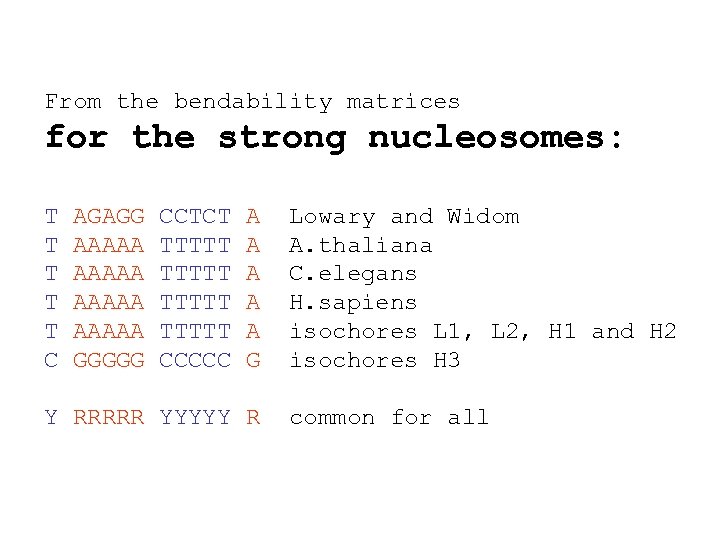 From the bendability matrices for the strong nucleosomes: T T T C AGAGG AAAAA GGGGG CCTCT TTTTT CCCCC A A A G Y RRRRR YYYYY R Lowary and Widom A. thaliana C. elegans H. sapiens isochores L 1, L 2, H 1 and H 2 isochores H 3 common for all
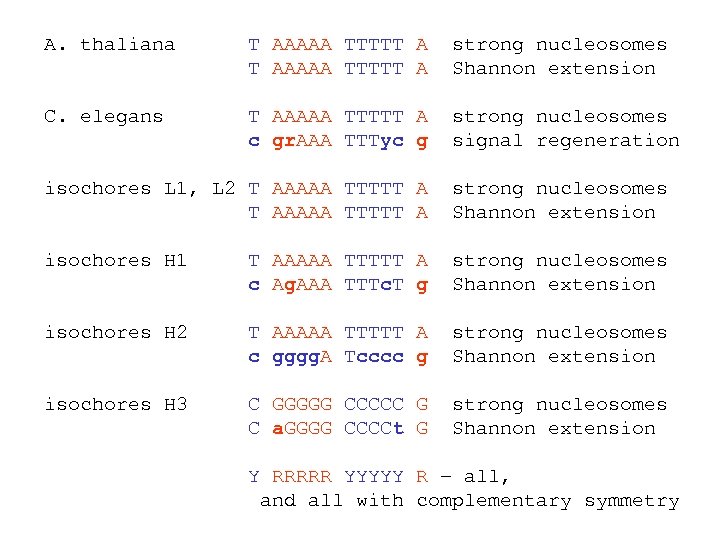 A. thaliana T AAAAA TTTTT A strong nucleosomes Shannon extension C. elegans T AAAAA TTTTT A c gr. AAA TTTyc g strong nucleosomes signal regeneration isochores L 1, L 2 T AAAAA TTTTT A strong nucleosomes Shannon extension isochores H 1 T AAAAA TTTTT A c Ag. AAA TTTc. T g strong nucleosomes Shannon extension isochores H 2 T AAAAA TTTTT A c gggg. A Tcccc g strong nucleosomes Shannon extension isochores H 3 C GGGGG CCCCC G C a. GGGG CCCCt G strong nucleosomes Shannon extension Y RRRRR YYYYY R – all, and all with complementary symmetry
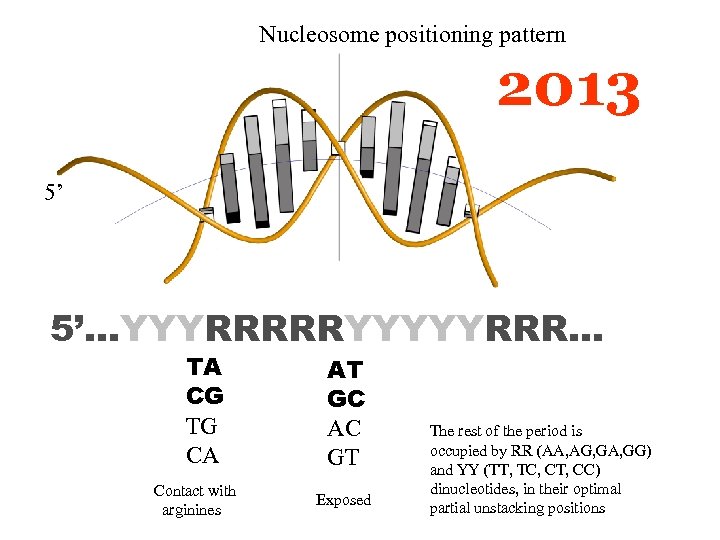 Nucleosome positioning pattern 2013 5’ 5’…YYYRRRRRYYYYYRRR… TA CG TG CA Contact with arginines AT GC AC GT Exposed The rest of the period is occupied by RR (AA, AG, GA, GG) and YY (TT, TC, CT, CC) dinucleotides, in their optimal partial unstacking positions
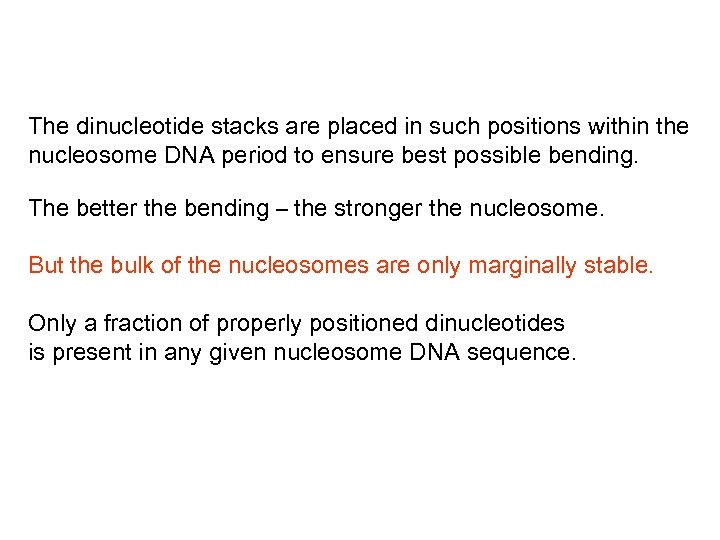 The dinucleotide stacks are placed in such positions within the nucleosome DNA period to ensure best possible bending. The better the bending – the stronger the nucleosome. But the bulk of the nucleosomes are only marginally stable. Only a fraction of properly positioned dinucleotides is present in any given nucleosome DNA sequence.
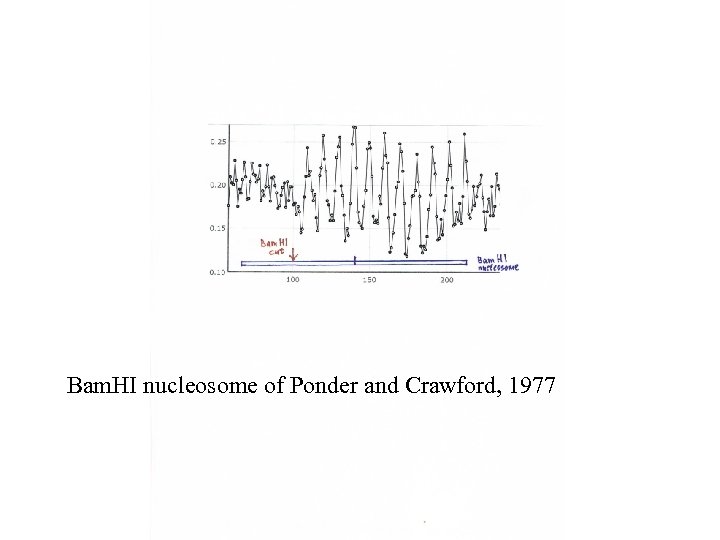
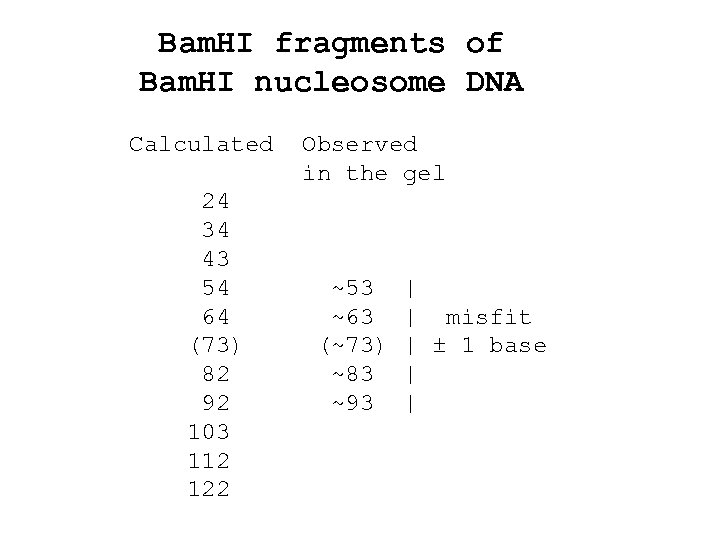
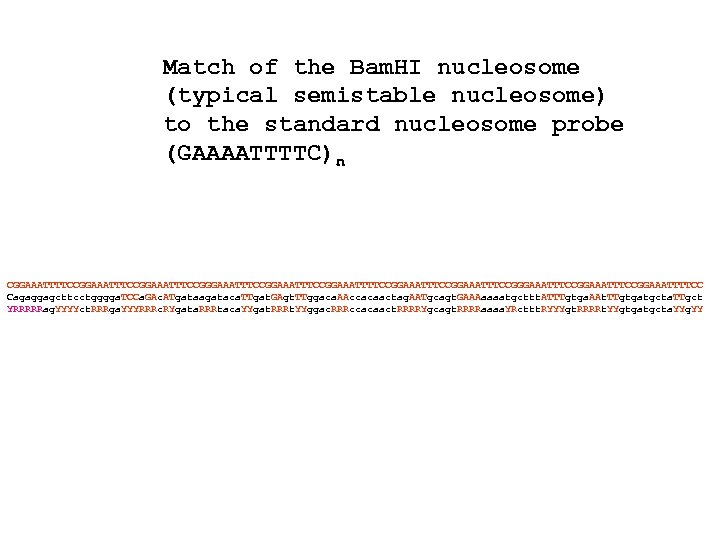 Match of the Bam. HI nucleosome (typical semistable nucleosome) to the standard nucleosome probe (GAAAATTTTC)n CGGAAATTTTCCGGAAATTTCCGGAAATTTCCGGGAAATTTCCGGAAATTTCCGGAAATTTTCC Cagaggagcttcctgggga. TCCa. GAc. ATgataagataca. TTgat. GAgt. TTggaca. AAccacaactag. AATgcagt. GAAAaaaatgcttt. ATTTgtga. AAt. TTgtgatgcta. TTgct YRRRRRag. YYYYct. RRRga. YYYRRRc. RYgata. RRRtaca. YYgat. RRRt. YYggac. RRRccacaact. RRRRYgcagt. RRRRaaaa. YRcttt. RYYYgt. RRRRt. YYgtgatgcta. YYg. YY
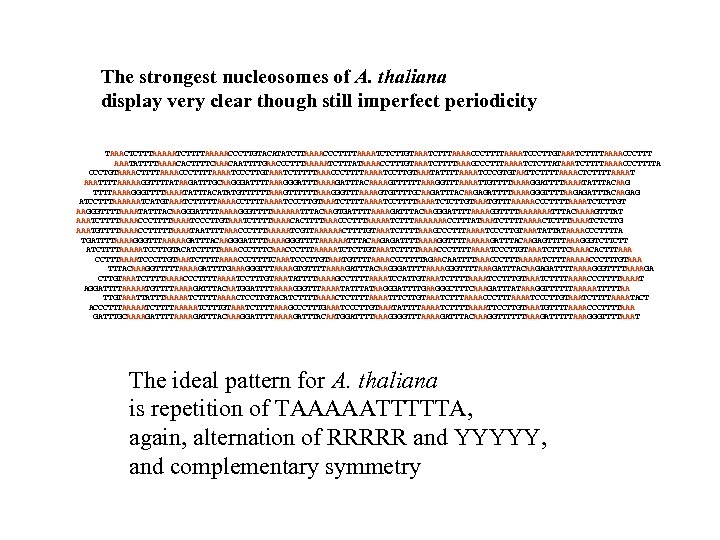 The strongest nucleosomes of A. thaliana display very clear though still imperfect periodicity TAAACTCTTTAAAAATCTTTTAAAAACCCTTGTACATATCTTAAAACCCTTTTAAAATCTCTTGTAAATCTTTAAAACCCTTTTAAAATCCCTTGTAAATCTTTTAAAACCCTTT AAATATTTTAAAACACTTTTCAAACAATTTTGAACCCTTTAAAAATCTTTATAAAACCTTTGTAAATCTTTTAAAGCCCTTTAAAATCTCTTATAAATCTTTTAAAACCCTTTTA CCCTGTAAAACTTTTAAAACCCTTTTAAAATCCCTTGTAAATCTTTTTAAACCCTTTTAAAATCCTTGTAAATATTTTAAAATCCCGTGTAATTCTTTTAAAACTCTTTTAAAATTTTAAAAAGGTTTTATAAGATTTGCAAGGGATTTTAAAGGGATTTAAAAGATTTACAAAAGTTTTTTAAAGGTTTAAAATTGTTTTAAAAGGATTTTAAAATATTTACAAG TTTTAAAAGGGTTTTAAAATATTTACATATGTTTTTTAAAGGGTTTAAAAGTGTTTTGCAAGATTTACAAGAGATTTTAAAAGGGTTTTAAGAGATTTACAAGAG ATCCTTTAAAAAATCATGTAAATCTTTTTAAAACCTTTTAAAATCCCTTGTAAATCTTTTAAAATCTCTTGTAAATGTTTAAAAACCCTTTTAAAATCTCTTGT AAGGGTTTTAAAATATTTACAAGGGATTTTAAAAGGGTTTTAAAAAATTTACAAGTGATTTTAAAAGATTTACAAGGGATTTTAAAAGGTTTTAAAAAAATTTACAAAAGTTTAT AAATCTTTTAAAACCCTTTTAAAATCCCTTGTAAATCTTTTAAAACACTTTTAAACCCTTTAAAAATCTTTAAAAAAACCTTTATAAATCTTTTAAAACTCTTTAAAATCTCTTG AAATGTTTTAAAACCTTTTTAAAATAATTTTAAACCCTTTAAAAATCGTTAAAAAACTTTTGTAAATCTTTTAAAGCCCTTTAAAATCCCTTGTAAATATTATAAAACCCTTTTA TGATTTTAAAAGGGTTTAAAAAGATTTACAAGGGATTTTAAAAGGGTTTTAAAAAATTTACAAGAGATTTTAAAAGGTTTTAAAAAGATTTACAAGAGTTTTAAAGGGTCTTCTT ATCTTTTAAAAATCCTTGTACATCTTTTAAAACCCTTTCAAACCCTTTAAAAATCTCTTGTAAATCTTTTAAAACCCTTTTAAAATCCCTTGTAAATCTTTCAAAACACTTTAAA CCTTTAAAATCCCTTGTAAATCTTTTAAAACCCTTTTCAAATCCCTTGTAAATGTTTTAAAACCCTTTTAGAACAATTTTAAACCCTTTAAAAATCTTTAAAAACCCTTTGTAAA TTTACAAAGGTTTTTAAAAGATTTTGAAAGGGTTTAAAAGTGTTTTAAAAGATTTACAAGGGATTTTAAAAGGGTTTTAAAGATTTACAAGAGATTTTAAAAGGGTTTTAAAAGA CTTGTAAATCTTTTAAAACCCTTTTAAAATCCTTTGTAAATATTTTAAAAGCCTTTTAAAATCCATTGTAAATCTTTTAAAATCCTTTGTAAATCTTTTAAAACCCTTTTAAAAT AGGATTTTAAAAATGTTTTAAAAGATTTACAATGGATTTTAAAAGGGTTTAAAATATTTATAAGGGATTTTGAAGGGCTTTCAAAGATTTATAAAGGTTTTTTAAAAATTTTTAA TTGTAAATTATTTAAAAATCTTTTAAAACTCCTTGTACATCTTTTAAAACTCTTTTAAAATTTCTTGTAAATCTTTAAAACCCTTTAAAATCCCTTGTAAATCTTTTAAAATACT ACCCTTTAAAAATCTTTGTAAATCTTTTAAAGCCCTTTGAAATCCCTTGTAAATATTTTAAAATCTTTTAAAATTCCTTGTAAATGTTTTAAAACCCTTTTAAA GATTTGCAAAAGATTTTAAAAGATTTACAAAGGATTTTAAAAGATTTACAATGGATTTTAAAGGGGTTTAAAAGATTTACAAAGGTTTTTTAAAGATTTTTAAAGGGTTTTAAAT The ideal pattern for A. thaliana is repetition of TAAAAATTTTTA, again, alternation of RRRRR and YYYYY, and complementary symmetry
 Cat in bushes. Courtesy of I. Gabdank
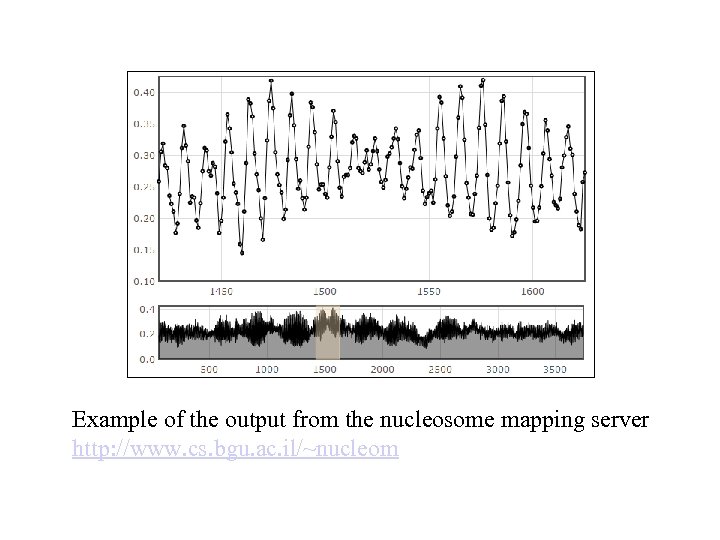 Example of the output from the nucleosome mapping server http: //www. cs. bgu. ac. il/~nucleom
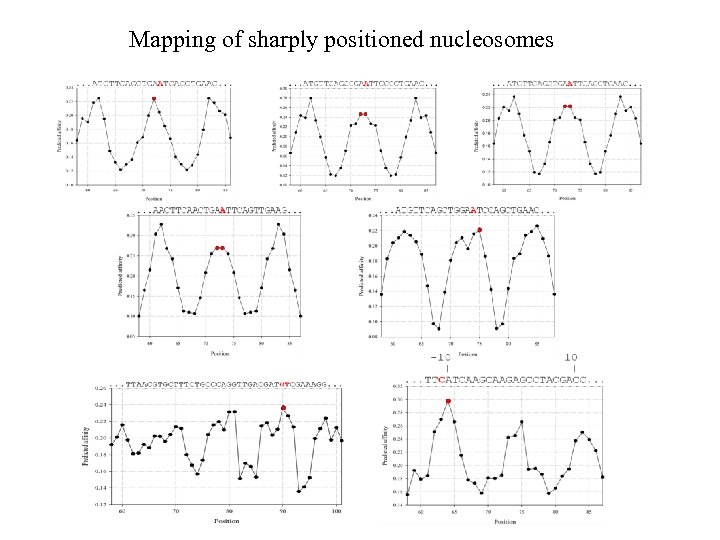 Mapping of sharply positioned nucleosomes
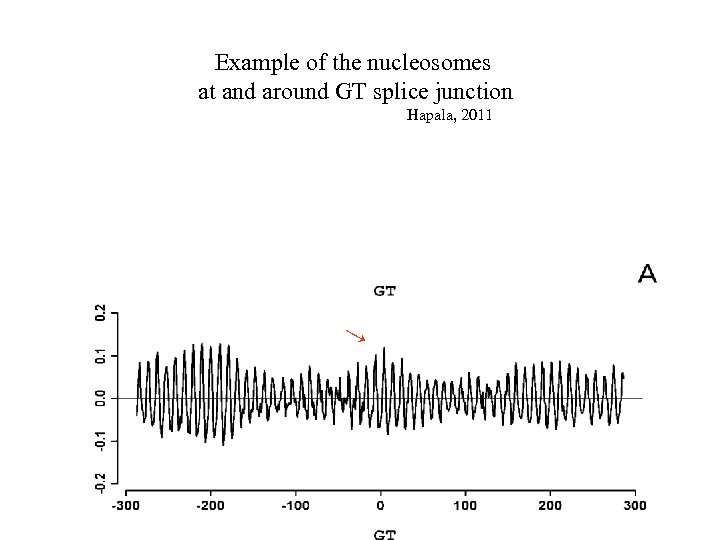
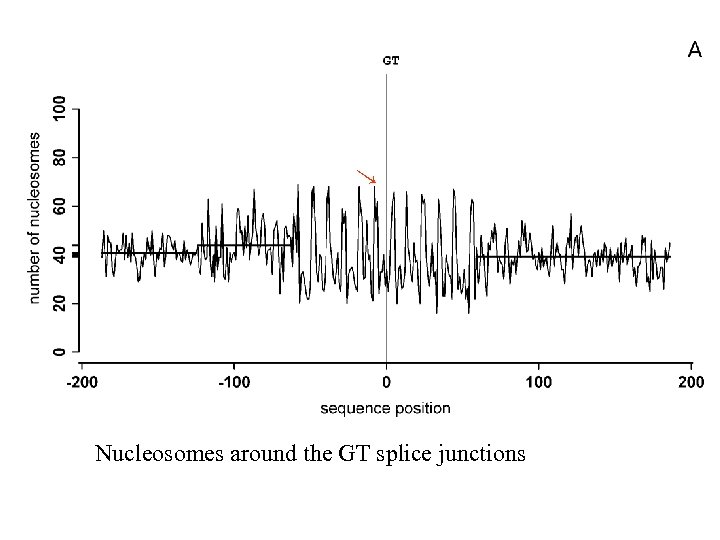 → Nucleosomes around the GT splice junctions
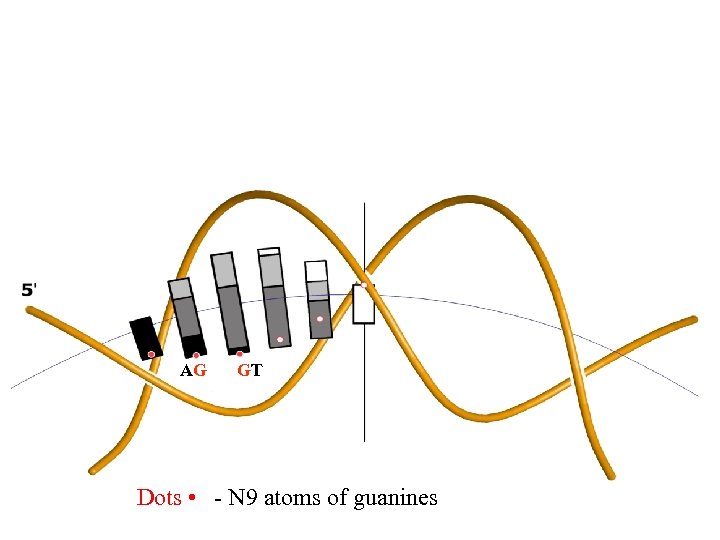 AG GT Dots • - N 9 atoms of guanines
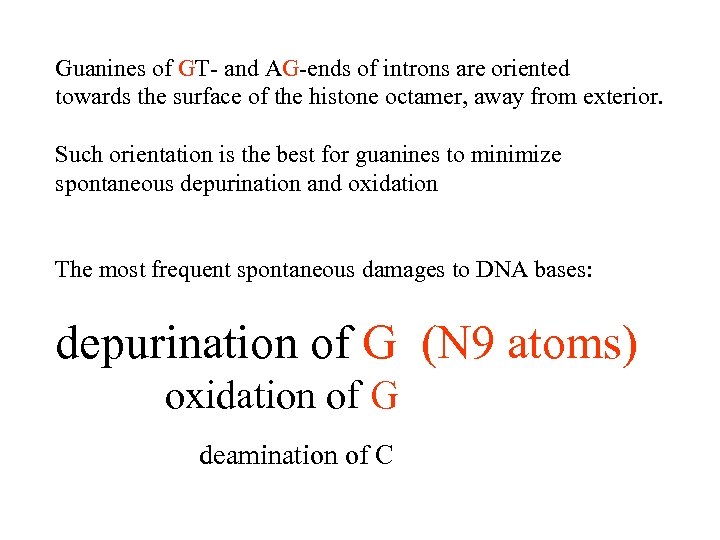 Guanines of GT- and AG-ends of introns are oriented towards the surface of the histone octamer, away from exterior. Such orientation is the best for guanines to minimize spontaneous depurination and oxidation The most frequent spontaneous damages to DNA bases: depurination of G (N 9 atoms) oxidation of G deamination of C
 Nucleosome DNA which carries promoter TATAAA box has two rotational settings encoded in the sequence (two peaks within one period)
 TATA-switch Two alternative positions of TATAAA box in the promoter nucleosomes are separated by 140 (220) degrees, which closely correspond to exposed and inaccessible orientations of the box. By shifting the DNA along its path by 4(6) bases, the promoter is switched ON or OFF. The switch (shift) may be triggered by remodelers or transcription factors.
 Today the single-base resolution nucleosome mapping is the only practical tool to study fine structure of chromatin and its role in factor binding, transcription, replication, DNA repair, transposition, recombination, apoptosis, chromatin domains, and more
 Immediate questions: Where in genomes the strong nucleosomes are located? What they are doing there? Tentative answer: Strong nucleosomes are chromatin organizers.
 ACKNOWLEDGEMENTS Recent contributions (2009 -2013): Idan Gabdank (Beer Sheva, Israel) Zakharia Frenkel (Haifa, Israel) Alexandra Rapoport (Haifa, Israel) Thomas Bettecken (München, Germany) Jan Hapala (Brno, Czech Republic) Bilal Salih (Haifa, Israel) Vijay Tripathi (Haifa, Israel) Earlier contributions (1980 -2008) Thomas Bettecken Joel Sussman Galina Mengeritsky Funding (2009 -2012) Levy Ulanovsky Alex Bolshoy Israel Science Foundation, Ilya Ioshikhes and South Moravian Program Amir Cohanim Fadil Salih Simon Kogan

 Why DNA binds to histone octamers by one side? It could be either intrinsic DNA curvature or better bending in one specific direction (deformational anisotropy of DNA) Both should be sequence-dependent
 The purine-purine • pyrimidyne-pyrimidyne stacks (RR • YY) are very asymmetric
 Nucleosome positioning sequence pattern is very weak (as the nucleosomes should be easy to unfold) The weak pattern overlaps with other messages (“noise”). That makes the signal/noise ratio very low. VERY large database of the nucleosome DNA sequences is needed, to extract and fully describe the signal It is easy, however, to detect the signal
 DISTANCE ANALYSIS (Autocorrelation)
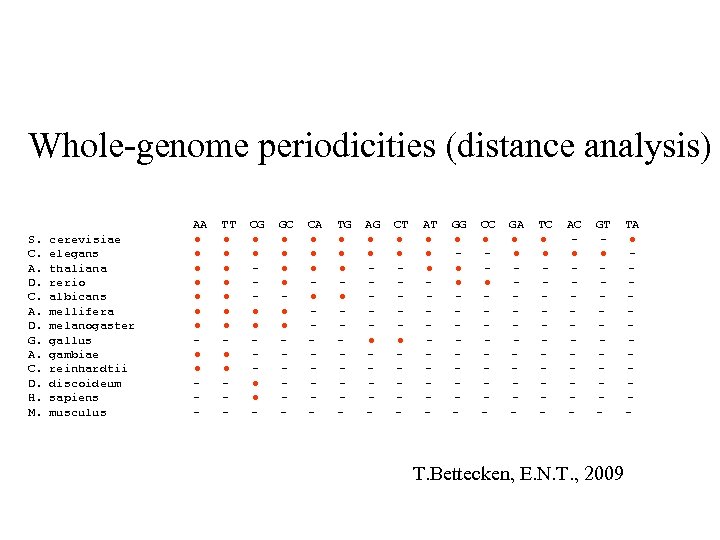 Whole-genome periodicities (distance analysis) S. C. A. D. G. A. C. D. H. M. cerevisiae elegans thaliana rerio albicans mellifera melanogaster gallus gambiae reinhardtii discoideum sapiens musculus AA ● ● ● ● ● - TT ● ● ● ● ● - CG ● ● ● - GC ● ● ● - CA ● ● - TG ● ● - AG ● ● ● - CT ● ● ● - AT ● ● ● - GG ● ● ● - CC ● ● - GA ● ● - TC ● ● - AC ● - GT ● - T. Bettecken, E. N. T. , 2009 TA ● -
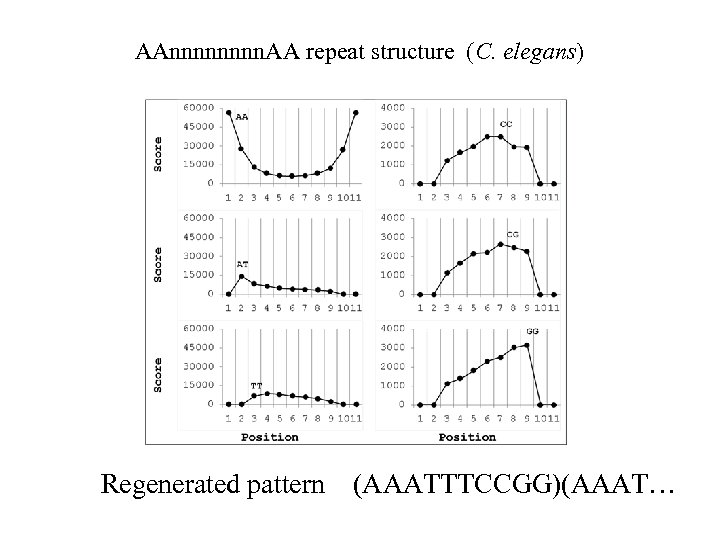 AAnnnn. AA repeat structure (C. elegans) Regenerated pattern (AAATTTCCGG)(AAAT…
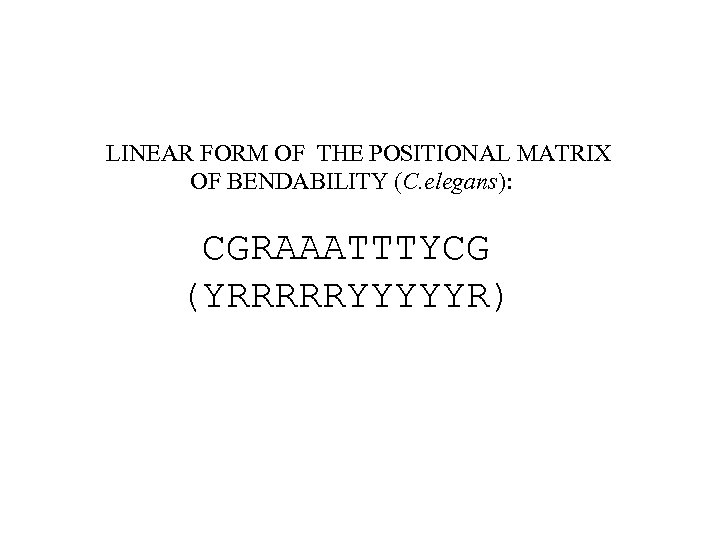
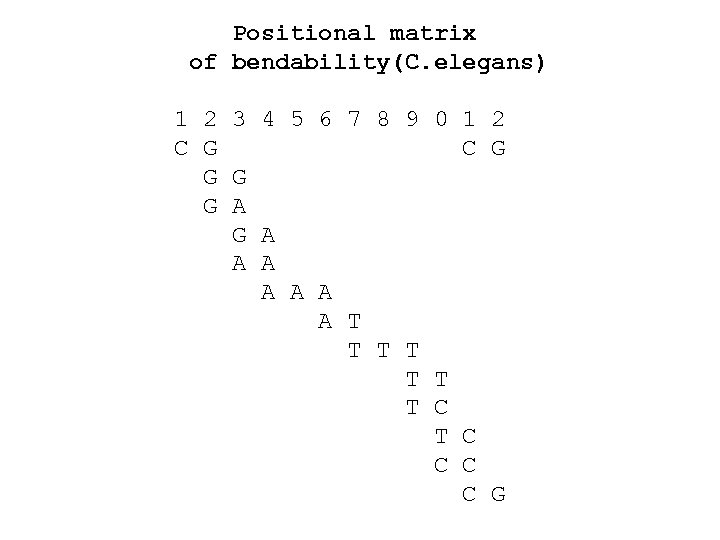 Positional matrix of bendability(C. elegans) 1 2 3 4 5 6 7 8 9 0 1 2 C G G G G A A A A T T T T C C C C G
 LINEAR FORM OF THE POSITIONAL MATRIX OF BENDABILITY (C. elegans): CGRAAATTTYCG (YRRRRRYYYYYR)
 Trinucleotides of C. elegans genome counts 1 AAA 2 TTT 3 ATT 4 AAT 5 GAA 6 TTC 7 CAA 8 TTG 9 TCA 10 TGA. . . . 4162266 4160750 2488998 2486813 1873844 1871673 1667120 1663842 1498069 1496493. . . .
 TOPMOST TRINUCLEOTIDES MAKE TOGETHER THE DOMINANT PATTERN GAAAATTTTC: GAAAATTTTC GAAAATTTTC
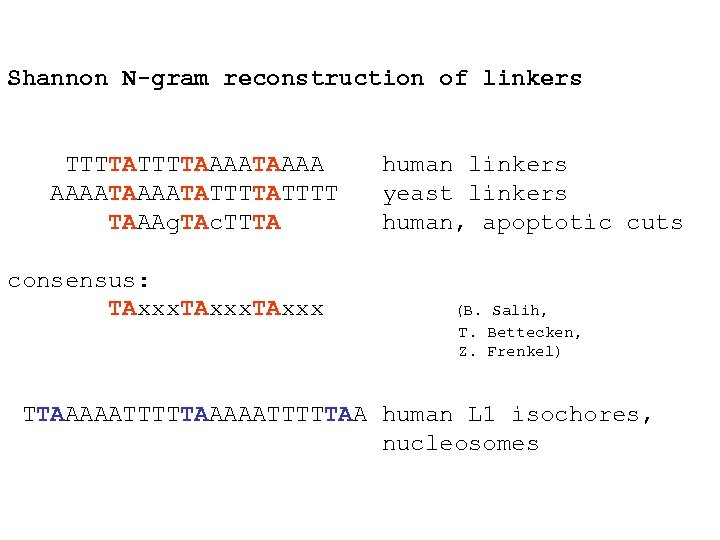
 This technique is known since 1948 – Shannon N-gram extension It has been very helpful in further studies of the nucleosome positioning patterns
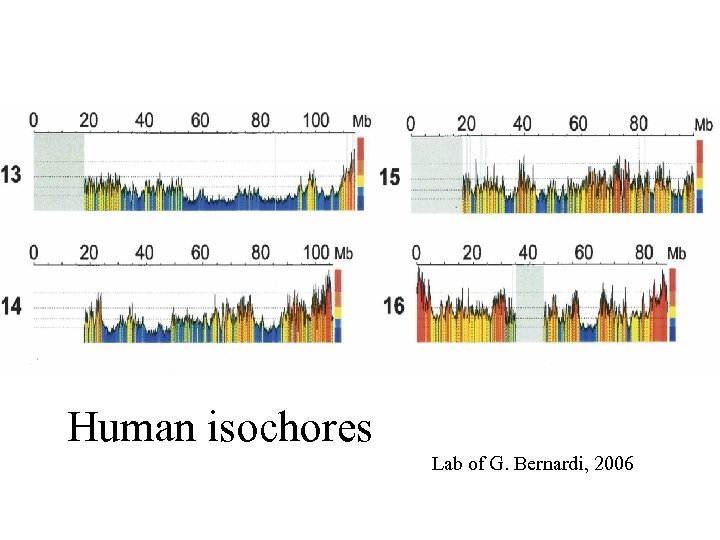 Human isochores Lab of G. Bernardi, 2006
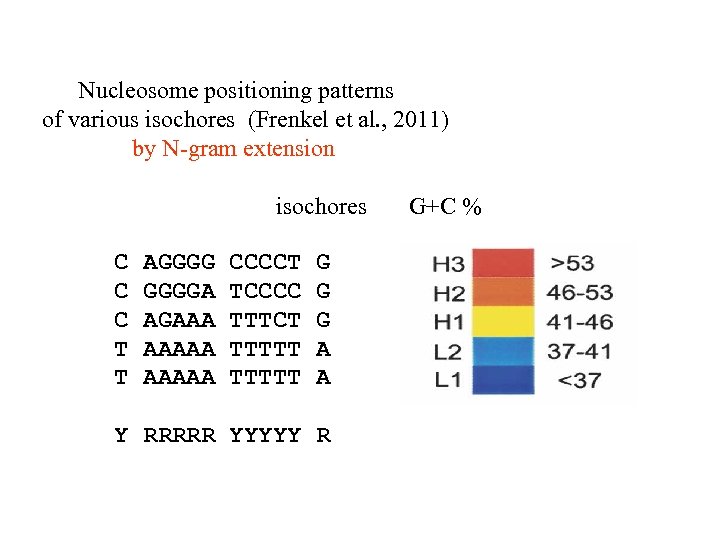 Nucleosome positioning patterns of various isochores (Frenkel et al. , 2011) by N-gram extension isochores C C C T T AGGGGA AGAAA AAAAA CCCCT TCCCC TTTCT TTTTT G G G A A Y RRRRR YYYYY R G+C %
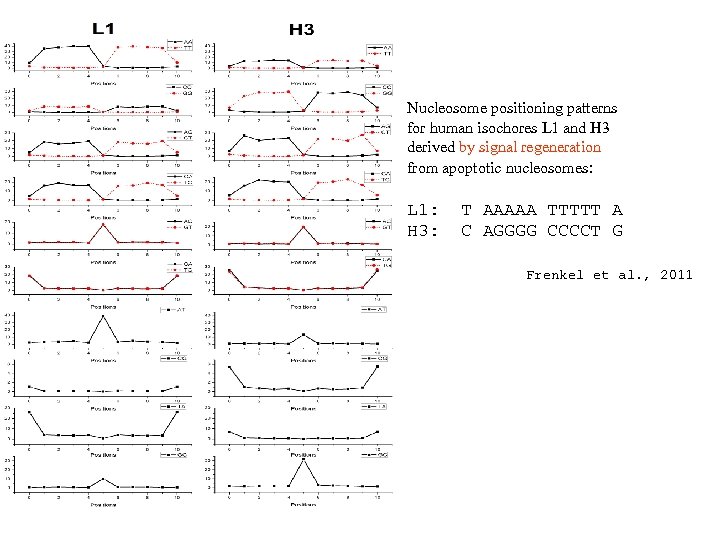 Nucleosome positioning patterns for human isochores L 1 and H 3 derived by signal regeneration from apoptotic nucleosomes: L 1: H 3: T AAAAA TTTTT A C AGGGG CCCCT G Frenkel et al. , 2011
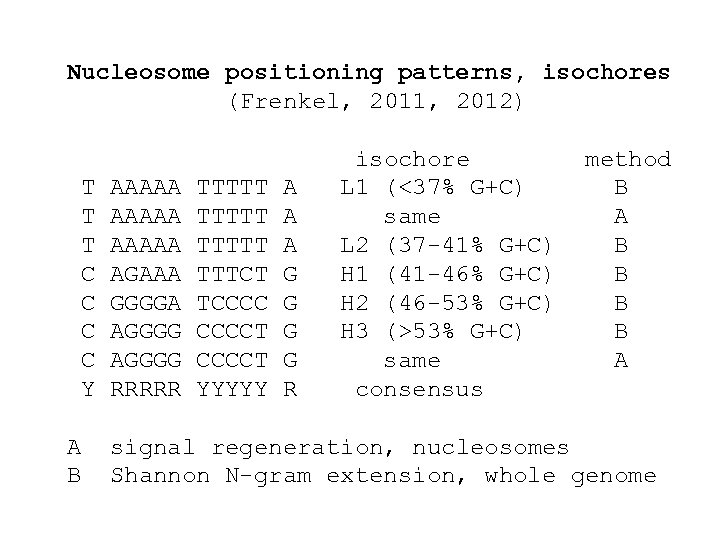 Nucleosome positioning patterns, isochores (Frenkel, 2011, 2012) T T T C C Y A B AAAAA AGAAA GGGGA AGGGG RRRRR TTTTT TTTCT TCCCCT YYYYY A A A G G R isochore L 1 (<37% G+C) same L 2 (37 -41% G+C) H 1 (41 -46% G+C) H 2 (46 -53% G+C) H 3 (>53% G+C) same consensus method B A B B A signal regeneration, nucleosomes Shannon N-gram extension, whole genome
 Shannon N-gram reconstruction of linkers TTTTAAAATAAAATATTTT TAAAg. TAc. TTTA consensus: TAxxx human linkers yeast linkers human, apoptotic cuts (B. Salih, T. Bettecken, Z. Frenkel) TTAAAAATTTTTAA human L 1 isochores, nucleosomes
 Bam. HI nucleosome of Ponder and Crawford, 1977
 Bam. HI fragments of Bam. HI nucleosome DNA Calculated 24 34 43 54 64 (73) 82 92 103 112 122 Observed in the gel ~53 ~63 (~73) ~83 ~93 | | misfit | ± 1 base | |
 Example of the nucleosomes at and around GT splice junction Hapala, 2011 →
 Plenty of various other nucleosome positioning patterns have been suggested during 30 years since the first observation of sequence periodicity. At the best they provide occupancy maps (resolution of ~15 bases). The (GRAAATTTYC)n and (RRRRRYYYYY)n are the only patterns that generate maps with single-base resolution, verified by crystal data. The future of the chromatin structure/function is with the high resolution studies.